Skip to content
Artwork for START
BusinessMarketingEntrepreneurship

START

Fondo

Fondo is an all-in-one accounting platform for startups. Get your books closed, taxes filed, and cash back from the IRS.

Play
  • 44 episodes
  • a few times a week
  • Avg 11 min
  • English
Counted on this page — what you have heard stays on this device, so it is not something the list can be paged by.
  • #102
    July 14 · 16 min

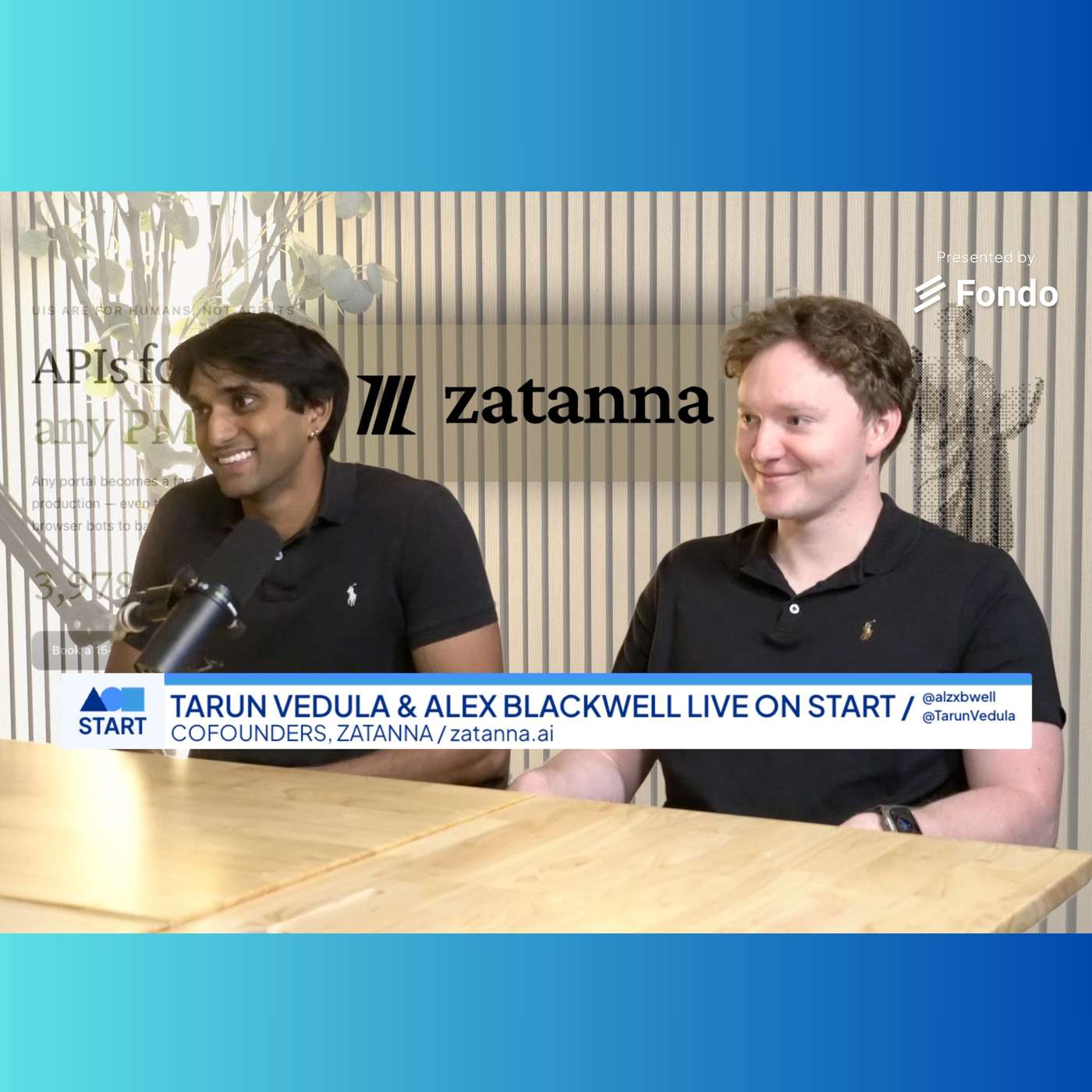
    START: Tarun Vedula & Alex Blackwell, Co-founders, Zatanna: “Turning all software into agent-first APIs”

    Right now most AI agents interact with software the way humans do They open a browser, look at a screenshot, and try to figure out what to click That's like ripping the LIDAR off a Waymo and handing it a camera Tarun & Alex kept running into this problem. They were building an AI receptionist for dentists, and at conference after conference people asked the same thing: do you integrate with X or Y platform? Seven other people were doing the same thing. None of them could integrate. Alex and Tarun could, because they knew how to reverse engineer network requests That's when they stopped digging for gold and started selling shovels Zatanna turns legacy software into APIs by working at the network layer. No browsers. No screenshots. Just requests 10x faster on the workflows they benchmarked. Near-zero browser costs. Reliability goes from 70% to nearly 100%. Computers shouldn't navigate the web like humans do. Humans use screens. Computers use requests "No browser bots to babysit" ‍ 🎙️ Tarun Vedula & Alex Blackwell, Co-founders, Zatanna on Fondo START ‍ 00:57 From jury research to API infrastructure 02:04 The "sell the shovels" realization 03:18 Why browser agents break at scale 04:42 Turning legacy systems into APIs 05:47 Why repetitive workflows shouldn't use browsers 06:37 Teaching AI agents to navigate like computers 08:34 Founder-market fit and knowing when to pivot 10:20 From sneaker bots to reverse engineering anti-bots 12:23 The future of AI vs anti-bot warfare 13:37 Why companies are still stuck at 70% reliability Check out www.zatanna.ai to learn more.
  • #127
    July 13 · 10 min

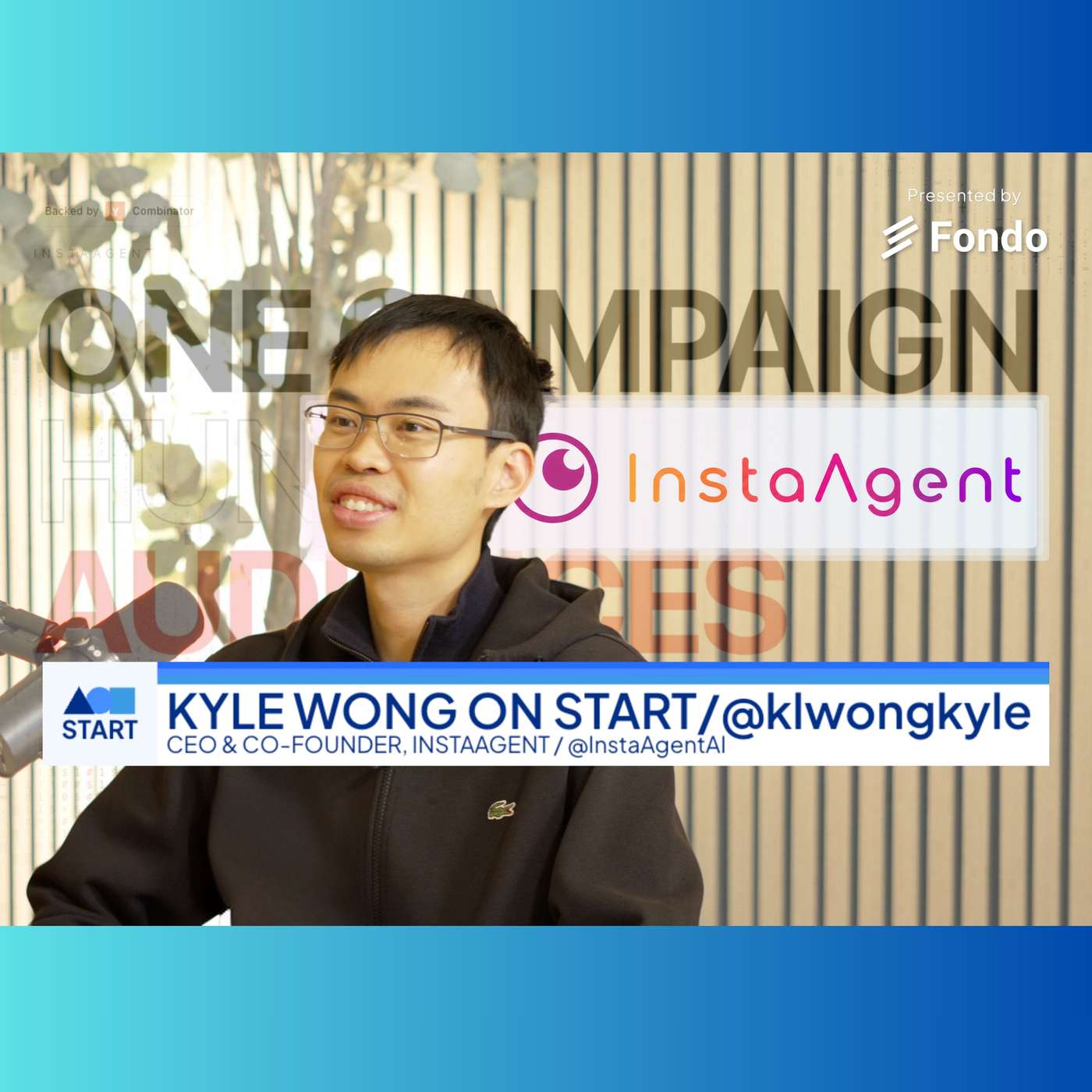
    START: Kyle Wong, Co-Founder & CEO, InstaAgent “Scale marketing campaigns across hundreds of personas”

    Before AI, marketing teams built five creatives for every campaign. Now they can generate fifty. But more content didn't solve marketing. It exposed a new bottleneck. Most of it is slop. AI solved the quantity problem. It created a quality problem. Kyle Wong and co-founder Colin Tseung built InstaAgent to solve the second one. A consumer brand hands InstaAgent a single marketing brief. From there, the team handles the strategy, the creative, the distribution, and the analytics. The result isn't 50 generic ads. It's personalized content built for hundreds of distinct audiences - each with its own messaging, creative, and targeting. Think about a global CPG company. One hundred SKUs. Ten countries. That's a thousand creative variations before you even start optimizing performance. The hard part isn't generating content anymore. It's knowing what to create. Anyone can pay $25 a month for an AI model. Very few know how to turn that model into marketing that actually performs. That's why InstaAgent isn't positioning itself as another self-serve AI tool. It's an AI-native marketing partner - combining human judgment with AI execution to produce creative that brands can actually scale. The market is responding. From $0 to $1M ARR in just 10 months. Enterprise customers including Nestlé and P&G. Enterprise sales cycles closing in less than a month. The first wave of AI made content abundant. The next wave will reward the companies that know exactly who that content is for. 🎙️ Kyle Wong, Co-Founder & CEO, InstaAgent on Fondo START pod 00:15 — What InstaAgent actually does: scaling one campaign across hundreds of personas 00:40 — The full loop from a single brief: strategy, creation, distribution, analytics 00:55 — Why the bet is on TikTok and Meta, where AI video is moving fastest 01:20 — The old way: five creatives per campaign, slow and expensive 01:39 — How AI multiplied output to 50 — and why most of it misses 02:06 — Moving upmarket from SMBs to enterprise names like Nestlé and P&G 02:30 — The CPG math that makes manual creative impossible: 100 SKUs, 10 countries 03:20 — Replacing the Canva-and-Photoshop resizing grind 03:44 — Why an agency model beats self-serve SaaS for AI creative 04:45 — On token-maxing and the tokens offer from Sam Altman at YC 05:47 — From eight years at Goldman to a game that hit 1M users in a month 07:20 — How a hot sauce brand used synthetic personas to broaden its audience ‍ Check out instaagent.com

  • #90
    July 10 · 9 min

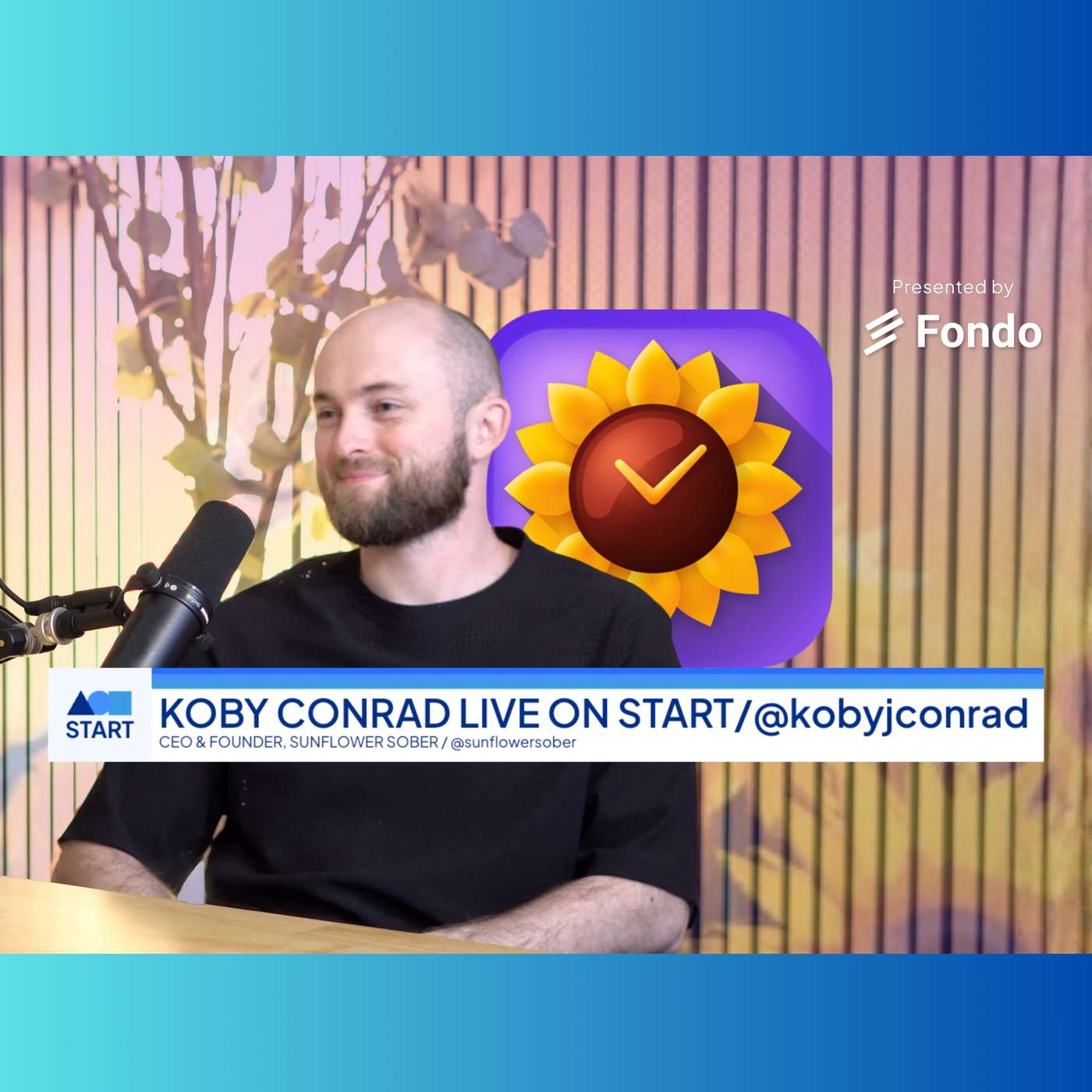
    START: Koby Conrad, Founder & CEO, Sunflower Sober: “The #1 AI Companion for sobriety"

    1.2 billion people struggle with addiction. There will never be enough clinicians to treat them. Koby Conrad believes AI changes that equation. His own story starts much smaller. High 24/7 from 19 to 24. He got sober. Taught himself to code. Built a side project called Sunflower. Years later, that side project became a VC-backed company with a much bigger ambition. Today, Sunflower has: → 500,000+ users and counting → Grown from 200 to 100,000 monthly active users in under 6 months → Reached a $1M run rate in about 10 months → Tracked 109 years of sobriety every single day → Expanded to users in almost every country, across 5 languages The product combines consumer software with clinical care. A consumer app featuring: An AI sponsor for addiction recovery Visual sobriety progression tracking A social network built for recovery CBT journaling and educational content across major addiction types Alongside a tele-therapy clinic: - Talk therapy in California and Texas, expanding nationwide with MAT - World-class doctors building the most effective protocols for addiction The mission began with one billion sober days. The team realized they'd reach that goal sooner than expected. So they raised the target. One trillion. Koby's growth philosophy mirrors the one behind his book, "Channels of Growth": Don't choose between product and distribution. Build both. Because at real scale, only a handful of growth channels matter. Find the one that fits your business—and optimize it relentlessly. His biggest prediction isn't about sobriety. It's about work. At Sunflower, they call it 'Operation Ender's Game' Map every task. Automate what AI can do today. Design for what AI will do tomorrow. The only role left? fleet operator. 🎙️ Koby Conrad, CEO & Founder, Sunflower Sober on Fondo START pod Chapters: 00:49 – Koby joins the show 01:10 – The pitch: a sobriety platform built for the age of ASI 01:35 – Sunflower's origin as a learn-to-code project 01:54 – Koby's own story: high 24/7 from 19 to 24 02:31 – From bootstrapped side project to VC-backed company 02:46 – Zero to $1M run rate in 10 months 03:00 – Tracking 109 years of sobriety every day 03:10 – Why the mission grew from one billion to one trillion days 03:52 – The growth framework: product and distribution, never one or the other 05:03 – The only channels that scale: virality, paid, organic audience 06:01 – Doing YC with his brother, from selling eggs to SF Compute 08:00 – Operation Ender's Game and the fleet operator future

  • #141
    July 8 · 9 min

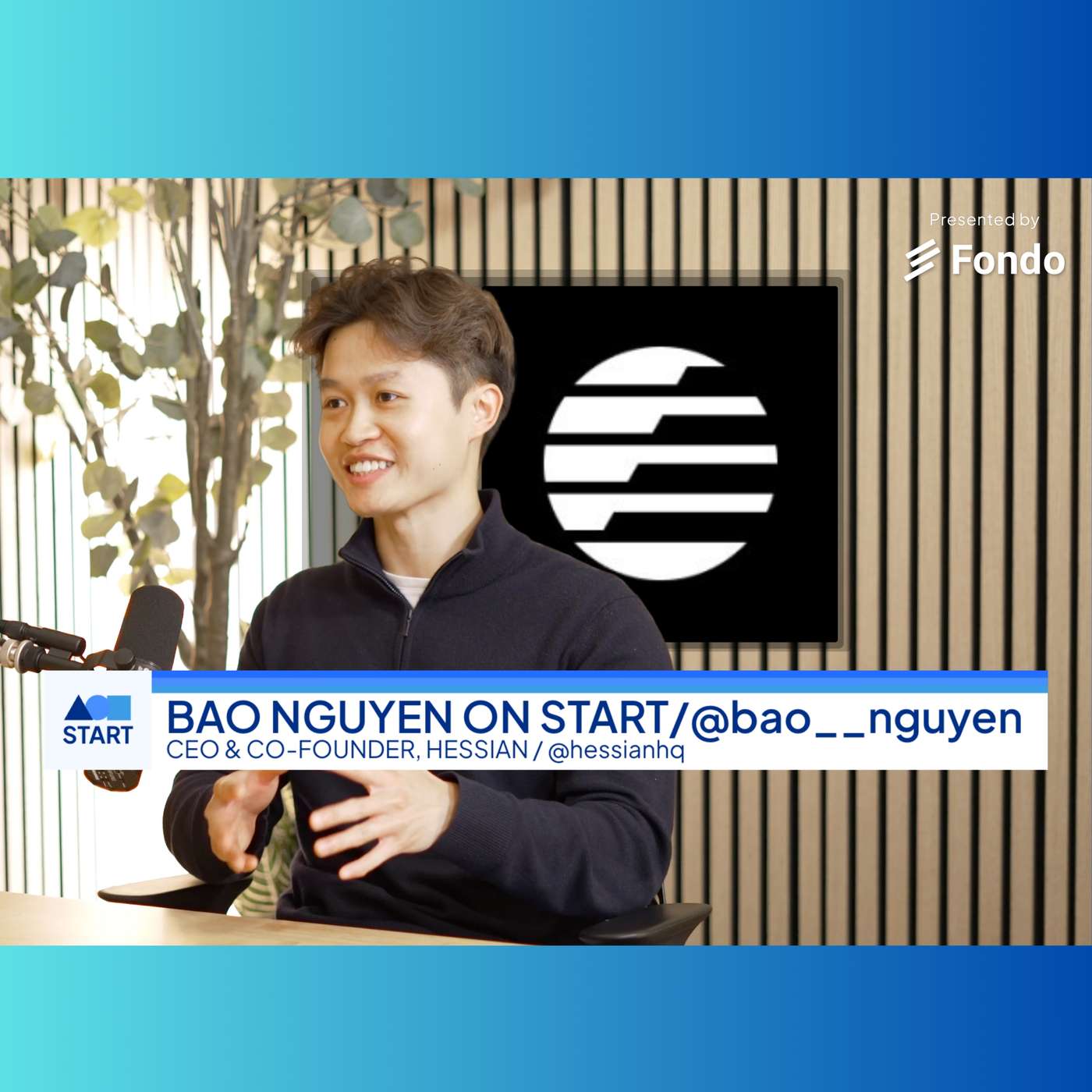
    START: Bao Nguyen, Co-Founder & CEO, Hessian “Forward-deployed AI Agents”

    Bao's job was automating other people's jobs. So he automated his own. His team used to forward deploy the old way — go into customers' offices, sit next to their teams, watch how the work actually got done, then build the automations by hand. Then they asked the obvious question: why are humans doing all of this? Now Hessian's AI agents construct a digital twin of your business, map your back-office workflows, and take the work over end-to-end — plugging into whatever you already use. Slack. HubSpot. Salesforce. No new dashboard. No workflow migration. No figure-it-out-yourself AI tooling. The thesis behind it is blunt: the future of enterprise AI isn't selling more SaaS. Businesses want to adopt AI. They don't know how. Another tool doesn't solve that problem — it adds to it. So the companies that win won't sell software. They'll sell outcomes. 🎙️ Bao Nguyen, Co-Founder & CEO, Hessian on Fondo START pod 01:28 — Introducing Hessian's vision for forward deployed AI agents that automate business operations. 01:58 — Why conversations with customers revealed that AI adoption is still a major challenge for mid-market companies. 02:34 — How Hessian evolved from a workflow orchestration platform into an AI-first automation company. 03:15 — The insight that led the team to replace traditional forward deployed engineering with AI agents. 03:57 — Why Hessian integrates into existing workflows instead of requiring companies to adopt another SaaS product. 04:28 — Bao's perspective on why enterprise AI is shifting toward outcome-based implementations rather than software licenses. 05:02 — Early customer results, including significant time savings and eliminating the need for a dedicated AI engineer. 05:34 — Meeting his co-founders at university and getting accepted into Y Combinator on their first application. 06:22 — The difference between building startups in London versus San Francisco, and why speed matters. 07:20 — The biggest lesson from Y Combinator: validating ideas with customers before investing heavily in product development. 08:05 — Thoughts on OpenAI's token offer and the changing economics of AI startups. 08:48 — Who Hessian is built for today and how the company approaches AI-powered back-office automation across different stages of growth. ‍ Check out hessian.sh

Showing 41–44 of 44 episodes