Skip to content
Artwork for START
BusinessMarketingEntrepreneurship

START

Fondo

Fondo is an all-in-one accounting platform for startups. Get your books closed, taxes filed, and cash back from the IRS.

Play
  • 57 episodes
  • Avg 11 min
  • English
Counted on this page — what you have heard stays on this device, so it is not something the list can be paged by.
  • #205
    Friday · 15 min

    START: Romàn Czerny, Co-Founder, Gojiberry: "AI Go-To-Market agents for B2B teams"

    Generating more leads won't help much if your sales team doesn't know which ones to call. A prospect engaging with a competitor might be evaluating alternatives. Someone discussing a specific business problem might be looking for a solution. A visitor landing on your website might be researching a purchase. Each interaction can be useful. But none of them automatically makes someone a qualified buyer. That's the problem Roman Czerny and his team are addressing with GojiBerry. Instead of asking salespeople to build prospect lists from scratch, GojiBerry uses an AI agent to identify buying signals and qualify potential customers. It can monitor engagement with competitors, track discussions around relevant keywords, and incorporate website visitor signals. Then it evaluates which prospects fit the company's target customer profile. Once qualified, GojiBerry can create personalized outreach and run automated LinkedIn and email campaigns. Sales teams receive notifications when prospects respond and can continue conversations directly through Slack. The goal is to spend less time identifying potential buyers and more time speaking with the right ones. Roman shared an example of a customer that now books 60% of its demos through GojiBerry. Rather than having salespeople create arbitrary prospect lists, the team uses GojiBerry to identify qualified leads and then calls those prospects directly. What's interesting is that Roman applies a similar philosophy to GojiBerry's own growth. The company publishes practical customer acquisition guides, distributes them widely, and then identifies qualified prospects among those who engage. The content generates attention. The qualification process determines where the sales effort goes. Roman says the resulting interest has grown to the point that the company doesn't have enough salespeople to contact everyone. It highlights an increasingly important distinction in sales. Finding people is getting easier. Knowing which people are worth contacting is where the real value lies. More leads aren't necessarily the answer. Better information about which leads to pursue can be far more useful. 🎙️ Romàn Czerny, Co-Founder, Gojiberry on Fondo START 01:12 Introducing GojiBerry and its AI sales agent 02:18 Finding potential customers in the right channels 03:27 Building a broad customer acquisition funnel 04:35 Identifying high-value customers through retention and spending 05:43 Making lead magnets accessible to more potential buyers 06:17 Creating valuable content that attracts prospects 07:08 Qualifying engaged prospects for sales outreach 08:24 Measuring customer acquisition through signups and revenue 09:32 Identifying buying signals through competitor engagement 10:24 Filtering prospects based on customer fit and intent 11:19 Automating personalized LinkedIn and email outreach 12:14 Managing sales conversations and responses through Slack 13:06 Generating 60% of customer demos through GojiBerry 14:22 Improving sales targeting with multiple data sources ‍ Check out gojiberry.ai
  • #211
    Friday · 16 min

    START: Michelle Cotter, CEO & Founder, Juritas: "Contract intelligence for the worlds most ambitious companies"

    Companies negotiate contracts to save money. Then lose money by forgetting what's in them. A business might spend months negotiating better pricing, favorable terms, and protections against unnecessary costs. Legal reviews the agreement. Procurement negotiates the deal. Finance approves it. Then everyone signs, files it away, and gets back to work. Meanwhile, the contract keeps working. Prices change. Renewal deadlines pass. Suppliers send invoices. Obligations come due. And the terms the company fought to secure aren't always reflected in what actually happens. Michelle Cotter noticed this problem early in her career at Dell. Almost everything a business does is governed by contracts. What it buys, what it sells, what it pays, and what it's entitled to receive. Those agreements contain an enormous amount of valuable business information. The problem is that signing a contract doesn't automatically put that information to use. After working at Revolut and later at legal AI company Legora, Michelle decided to build a company around that gap. She founded Juritas. Juritas is developing a platform that connects the terms businesses negotiate with the decisions they make afterward. It helps Finance, Procurement, and Legal teams track contractual obligations, monitor renewals, identify discrepancies in supplier pricing, and find opportunities to reduce costs. Instead of treating contracts as documents to be stored, Juritas treats them as information the business can act on. Michelle is building the company as a solo founder. She spent much of a year looking for the right co-founder before deciding she couldn't afford to keep waiting for one. She joined the Solo Founders program in San Francisco, raised a pre-seed round, and began assembling the capabilities she needed around her. It's a fitting approach for someone building a company around the value of following through. The point of negotiating a better deal isn't to get better terms on paper. It's to get a better deal in practice. 🎙️ Michelle Cotter, CEO & Founder, Juritas on Fondo START 01:12 Early influences and the decision to become a founder 03:17 Lessons from Revolut's high-performance culture 05:48 Identifying the hidden value in business contracts 07:53 Searching for a co-founder and deciding to build alone 09:14 Joining the Solo Founders program and relocating to San Francisco 11:24 Learning to fundraise through investor conversations 13:18 Understanding what investors look for in founding teams 14:26 Building the determination to succeed as a solo founder 15:12 Early customer validation and design partnerships 15:52 Exploring Juritas and its approach to contract intelligence Check out juritas.com

  • #178
    Thursday · 12 min

    START: Thomas Karatzas, Co-Founder & CEO, Terse "Durable Agent Infra"

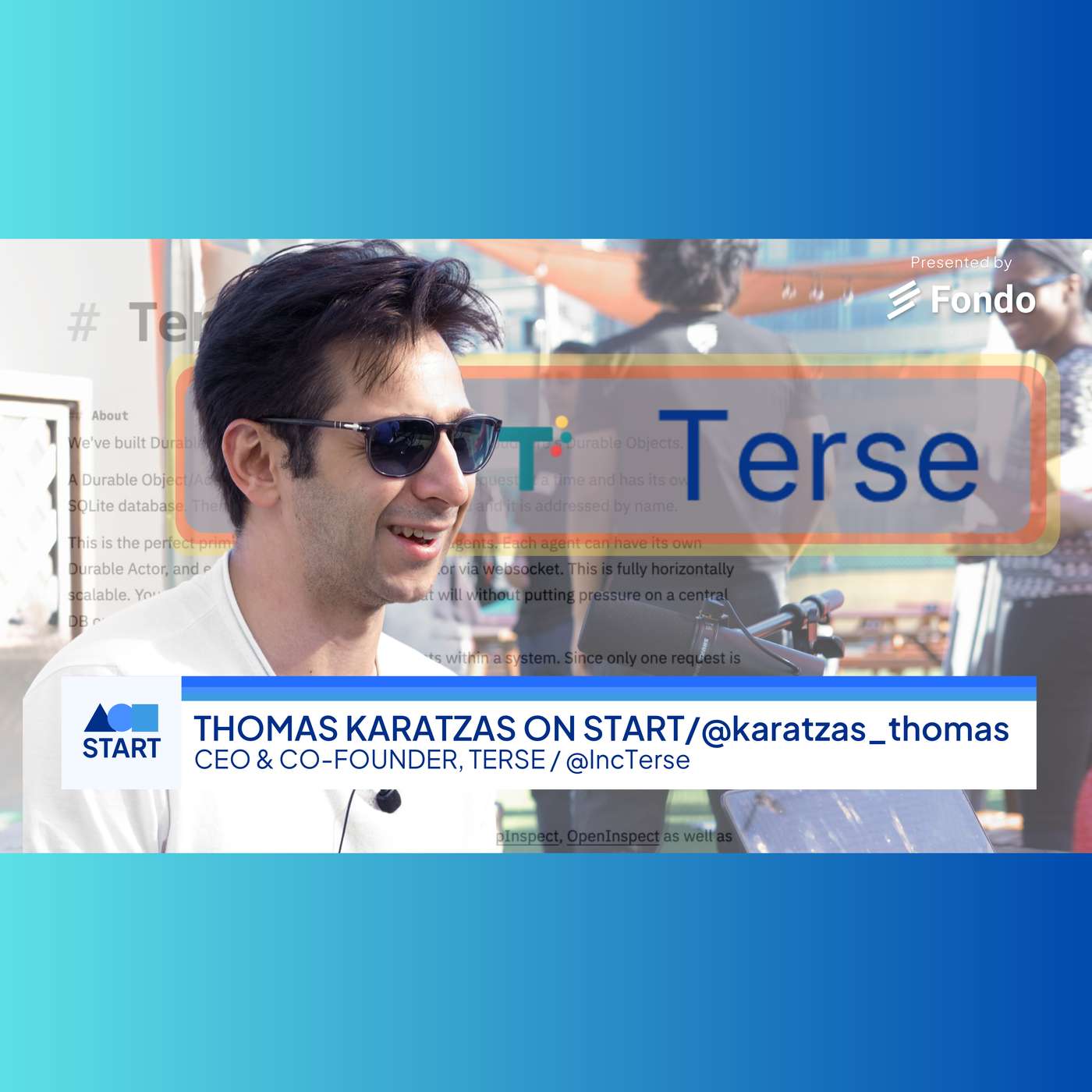
    A user running one AI agent had no problems. Running 10 at once exposed a problem that would change the direction of an entire startup. The issue started with something simple. A workflow automation tool let users take a CSV containing a list of people and run automated tasks on portions of that list. When someone ran a workflow once, everything worked. But some users wanted to run 10 workflows simultaneously. That's when things broke. Each agent would read the same saved position in the CSV before the others could update it. Instead of processing different records, multiple agents ended up doing the same work. For Thomas Karatzas, Co-Founder & CEO of Terse (YC F26), the problem revealed a much bigger opportunity. Coordinating multiple AI agents that share state requires infrastructure that handles concurrency, persistence, and recovery. Rather than continuing to build workflow automation tools, the team decided to build the underlying infrastructure. That became the new direction for Terse. Its solution is Durable Actors. Each actor gets its own persistent state and SQLite database, with requests coordinated to prevent the race conditions that caused the original problem. Consider an AI evaluation that takes 10 hours to complete. If the process crashes halfway through, developers without durable execution may lose their progress or struggle to recover it. With Terse, applications can persist state as work progresses, allowing interrupted tasks to recover without starting over. The same infrastructure supports coordinating large numbers of AI agents, managing shared application state, and building real-time applications where humans and agents work together. And Terse is making its actor runtime open source, giving developers the option to run the infrastructure themselves rather than relying exclusively on a hosted service. What began as a problem with 10 agents processing a CSV helped reveal an infrastructure challenge that becomes increasingly important as AI applications scale. Sometimes the most valuable part of a product is the infrastructure you had to build to make it work. 🎙️ Thomas Karatzas, Co-Founder & CEO, Terse on Fondo START ‍ 02:13 Building an LLM in Rust almost entirely by hand 03:24 Going from 100 to 1,200 GitHub stars overnight 04:17 How Terse started as a workflow builder 05:12 The concurrency problem that exposed a bigger opportunity 06:08 Pivoting toward durable infrastructure for AI agents 06:43 Why long-running tasks need persistent state 07:19 Coordinating large numbers of AI agents 07:54 Why Terse is embracing open source 09:47 Common infrastructure problems developers encounter with AI agents ‍ Check out www.useterse.ai

  • #189
    Thursday · 6 min

    START: Vedant Gaur, CEO & Founder, Latent: "Stop hallucinations before they reach your customers"

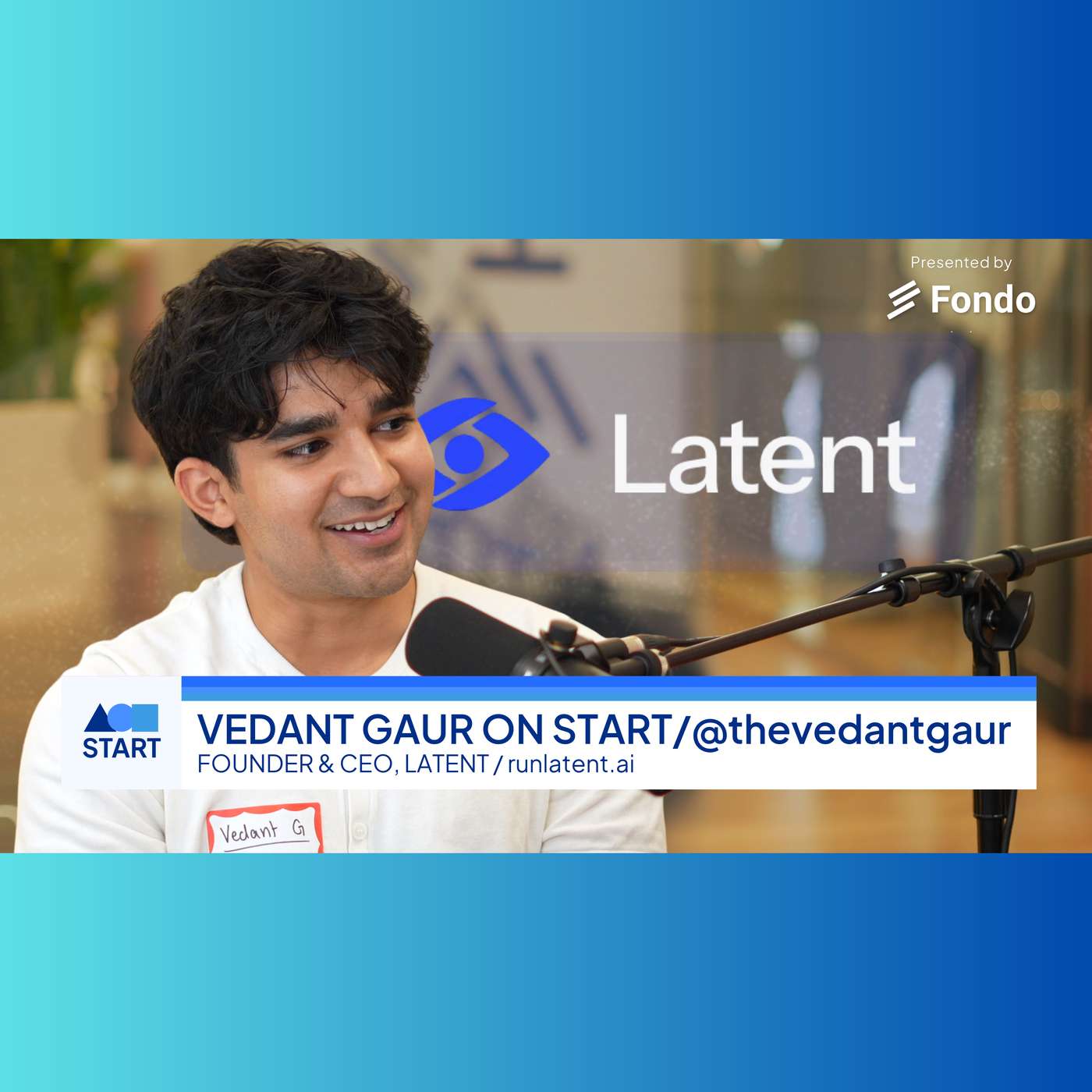
    An AI model can be completely wrong and sound just as confident as when it's right. That's a problem when your customers are relying on its answers. And catching those mistakes isn't as simple as asking another AI to double-check every response. Running a second frontier model on every output is expensive, especially at scale. So how do you catch mistakes before they reach your customers? That's the problem Vedant Gaur is tackling with Latent. Vedant compares the technology to a lie detector. Someone can tell a convincing story, but a polygraph looks beyond their words for signals that might suggest something is wrong. Latent applies a similar idea to AI. Its runtime observability technology examines signals from model behavior to identify potentially incorrect or problematic responses. Rather than relying solely on traditional output monitoring, Latent can flag suspicious answers, hold them for review, or route requests to a stronger model. And it can do this at a fraction of the cost of conventional AI evaluation. In Latent's own benchmarks, its system labeled answers 176 times faster and 660 times cheaper than using a frontier model as a judge. But detecting errors is only part of the opportunity. Latent also turns model outputs into labeled training data, helping teams identify recurring failures and improve their models over time. The idea grew out of a gap Vedant noticed during years of AI interpretability research. Major AI labs have sophisticated internal tools for understanding model behavior. But developers and enterprises building products on top of those models don't necessarily have access to the same capabilities. And when something goes wrong, simply trusting the underlying model provider isn't enough. Companies need greater visibility and accountability over the AI systems they deploy. Vedant began researching large language models before ChatGPT launched. Now, as a solo founder in Y Combinator, he's bringing that research to developers and enterprises through Latent. The goal is to make advanced model monitoring, evaluation, and improvement accessible beyond the biggest AI labs. Because when an AI makes a mistake, it's ultimately the company deploying it that has to answer for it. 🎙️Vedant Gaur, CEO & Founder, Latent on Fondo START 01:18 What Latent is building and how runtime AI observability works 01:43 Detecting and flagging problematic AI outputs before they reach customers 02:12 Why checking every AI response with a second frontier model is too expensive 02:37 How Latent uses a lie detector approach to identify potential AI mistakes 03:08 Why convincing but incorrect AI responses are difficult to detect 03:29 How analyzing model behavior can reveal signals of incorrect answers 03:46 Vedant's experience building Latent as a solo founder in Y Combinator 04:16 His background in AI interpretability research before ChatGPT launched 05:09 Why enterprises need greater accountability and visibility into AI behavior 05:38 How continuous runtime monitoring differs from traditional AI evaluations 05:56 Bringing advanced AI interpretability tools beyond the major research labs 06:07 Where developers and enterprises can get started with Latent Check out runlatent.ai

  • #200
    Wednesday · 6 min

    START: Claire Zhu, Co-Founder, lans: “Coworking day pass instantly near you”

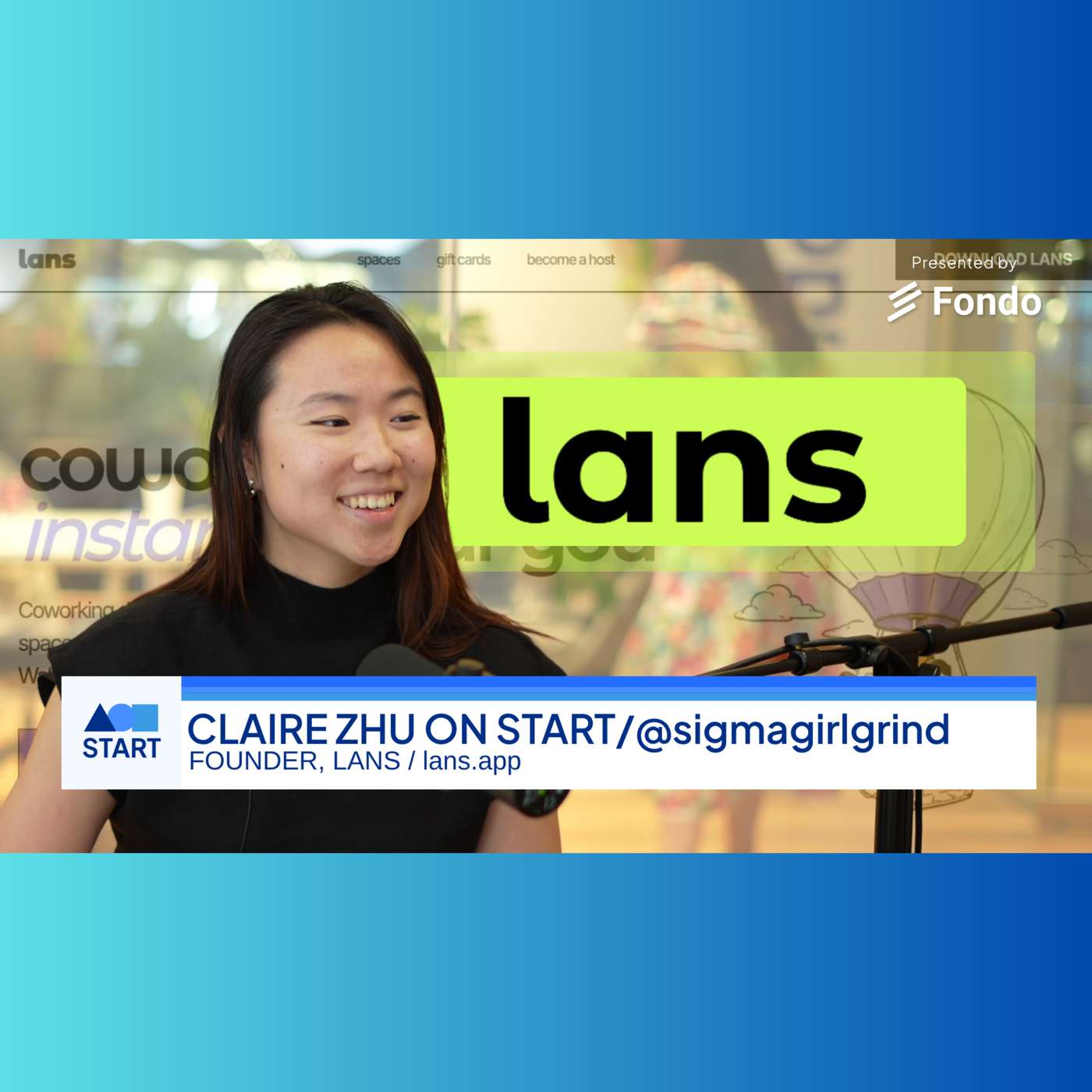
    A coworking space in San Francisco had 15 seats. Every day, it was full. That demand became the starting point for @lans_sf, a coworking platform co-founded by Claire Zhu. Claire was originally working on an entirely different startup when she met her future co-founder at a coworking space. He was helping a friend make the space profitable by changing its business model. Instead of monthly memberships, the space offered day passes. The approach worked. With roughly 15 seats occupied every day, they started running out of room for people who wanted to work there. Claire recognized an opportunity. Rather than turning people away, why not connect them with other coworking spaces that could accommodate them? She began onboarding additional locations in San Francisco, turning a solution for one workspace into a platform connecting people with coworking spaces across different cities. That became lans. The platform lets people discover coworking spaces, purchase day passes, and start working the same day without committing to a monthly membership. What started with a single 15-seat coworking space has grown into a nationwide network. Today, lans lists more than 400 bookable coworking spaces across over 250 U.S. cities, with day passes starting as low as $5. Claire also credits AI agents with making it easier to onboard new locations and expand the network. The company started with a simple observation: people wanted flexible places to work, and one location couldn't accommodate everyone. Instead of opening more coworking spaces themselves, Claire and her co-founder built a way to connect people with spaces that already exist. 🎙️Claire Zhu, Co-Founder of lans, on Fondo START with host Gauri Agarwal, Co-Founder & CTO of Koyal AI ‍ ‍ 01:03 How Claire met her future co-founder while working on a different startup in a coworking space 01:34 How a coworking space experimented with day passes instead of monthly memberships 02:08 Why a 15-seat coworking space filling up every day revealed an opportunity to expand 02:37 How Claire began onboarding additional coworking locations and using AI agents to support expansion 03:12 Why Claire moved from Georgia to San Francisco to pursue her startup ambitions 04:06 What makes San Francisco different, from its fast-moving startup environment to its concentration of ambitious founders 05:09 How backpacks became an unofficial uniform of San Francisco's startup community 05:43 How lans approaches customer acquisition through SEO, GEO, social media, and App Store discovery 06:04 How lans competes for visibility with established coworking brands like WeWork ‍ Check out lans.app

  • #166
    Wednesday · 10 min

    START: Marco Eterno, CEO & Co-Founder, Platonic Research on Fondo START

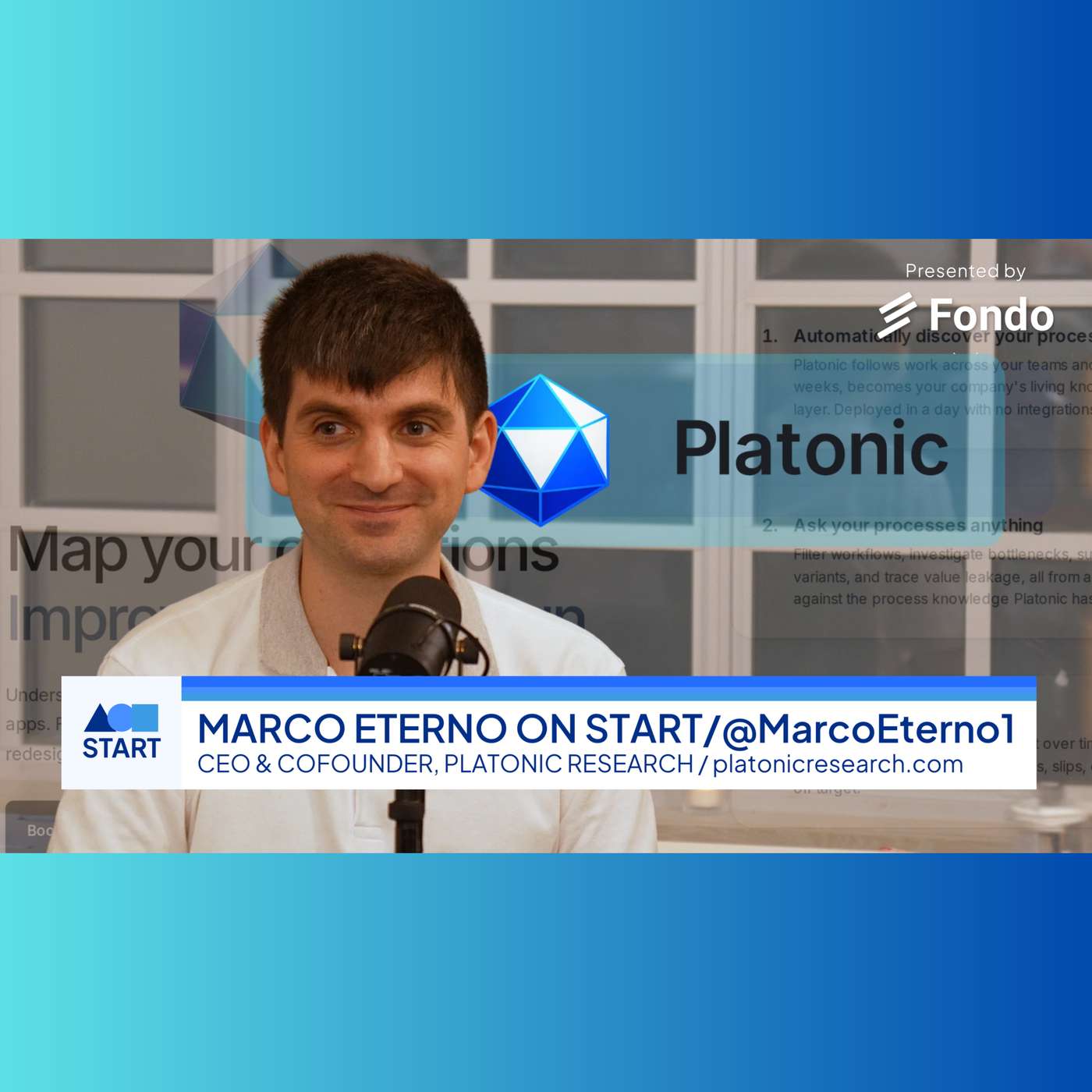
    Companies are investing heavily in AI automation. But many still don't know which processes they should automate. That's the problem Marco Eterno and his co-founders are tackling at Platonic Research. The original idea was to build AI agents that could replicate the work employees performed on their computers. But conversations with potential customers revealed a fundamental concern. Without understanding the processes behind an automation, companies couldn't confidently control it. So they decided to solve the visibility problem first. Platonic Research builds software that automatically discovers and maps how work happens across a company. Rather than relying on weeks of employee interviews or complicated integrations, its software observes activity across applications and uses AI to reconstruct the underlying workflows. It can identify bottlenecks, repeated manual work, and inefficiencies, helping companies understand which processes are worth improving or automating. And because the system continuously monitors how work gets done, companies can track changes and measure improvements over time. The team initially focused on boutique consulting firms, helping reduce hours spent interviewing employees and documenting processes. Now they're pursuing a broader opportunity: giving enterprise AI teams the operational intelligence they need to prioritize automation. The technology to automate enterprise workflows is advancing rapidly. The challenge is understanding where to apply it. That's the problem Platonic Research is solving. 🎙️ Marco Eterno, CEO & Co-Founder, Platonic Research on Fondo START with Guest Host: @gracegongGG Founder @ Smart Venture Media ‍ 01:18 Where the name Platonic Research comes from 01:37 How Platonic Research maps business processes 02:05 Why enterprise automation requires visibility and control 02:25 Helping companies identify automation opportunities and potential ROI 03:10 How AI turns employee activity into process maps 04:08 Why enterprise process analysis differs from recorded AI tasks 04:20 Helping consulting firms reduce manual process discovery 05:19 Expanding into private equity and enterprise AI transformation 05:40 How process mapping helps companies identify operational improvements 06:32 Marco's journey from physics and management consulting to enterprise AI 07:01 Why trust and data privacy matter in enterprise process intelligence 07:42 Building Platonic Research with six co-founders and an engineering-focused team 08:36 Why physics backgrounds translate well into AI research 09:09 Bridging the gap between AI capabilities and enterprise operations 09:51 Why AI-powered spam filtering remains underappreciated ‍ Check out platonicresearch.com

  • #203
    Tuesday · 13 min

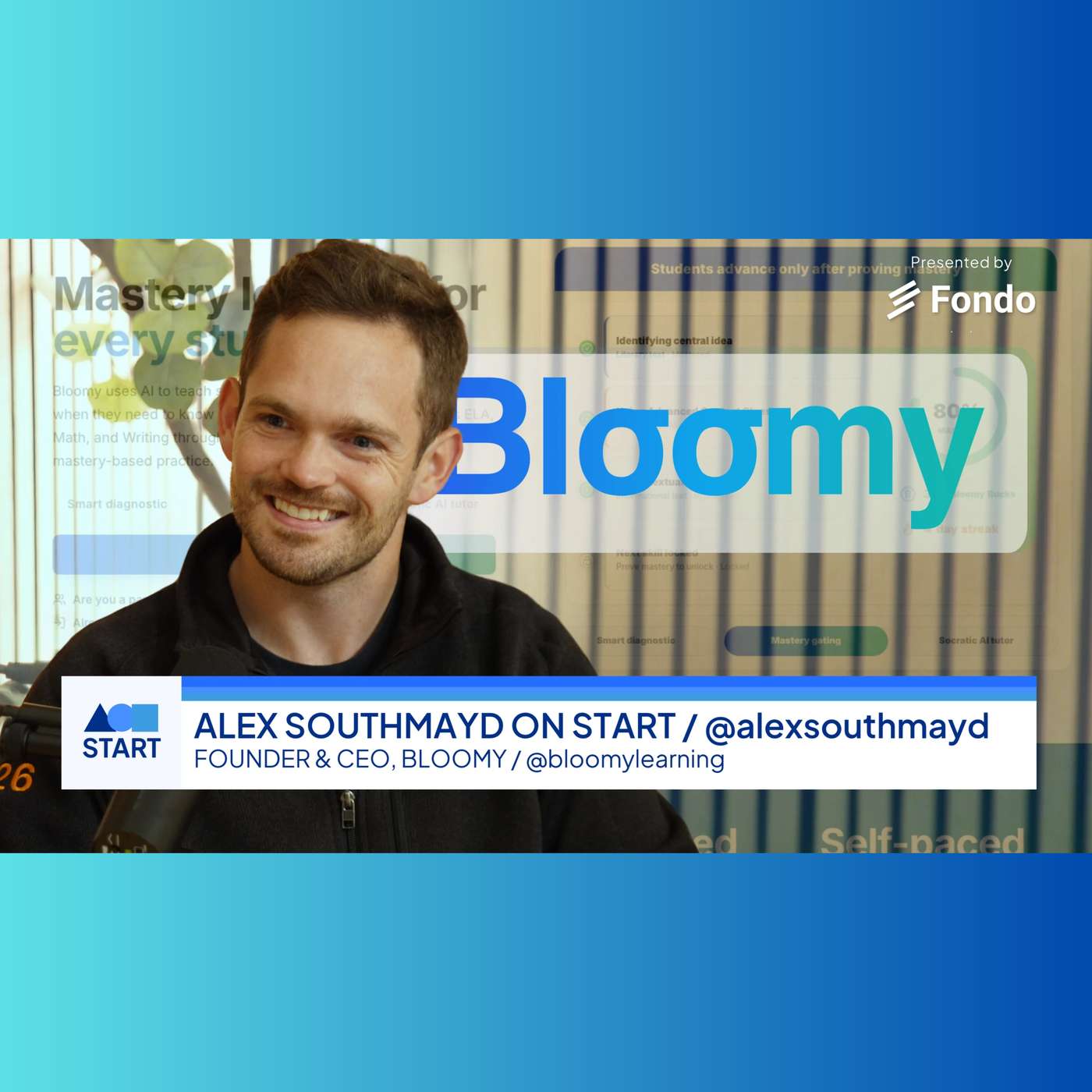
    START: Alex Southmayd, CEO & Founder, Bloomy: "Mastery learning for every student"

    At one California charter school, students now spend most of their English language arts learning time using an AI-powered learning platform. That platform is Bloomy (YC S26), founded by former teacher Alex Southmayd. The goal isn't to keep students in front of screens longer. It's to make individualized learning more effective, freeing up time for entrepreneurship, personal interests, and life skills. The idea builds on research dating back to 1984. Education researcher Benjamin Bloom found that students receiving one-on-one tutoring performed two standard deviations better than students in conventional classrooms. The challenge has always been making that level of individualized instruction accessible to every student. Bloomy uses AI to identify what students already understand, find gaps in their knowledge, and create personalized learning paths across English, math, and writing. Rather than simply giving answers, its AI tutor guides students through problems and requires them to demonstrate mastery before advancing. And the early results are promising. In a spring 2026 pilot at a Title I charter school, students who used Bloomy the most demonstrated approximately twice the academic growth of students who didn't use it. The findings are correlational, not a randomized controlled trial, but they offer an encouraging early signal. For Alex, the opportunity goes beyond improving academic performance. If students can master the same material in less time, schools can dedicate more of the day to developing the skills and interests that matter outside the classroom. 🎙️Alex Southmayd, CEO & Founder, Bloomy on Fondo START 01:57 Why education can have an outsized impact on a person's life 02:20 Lessons from teaching seventh-grade English 03:35 How Bloomy serves students, teachers, and schools 04:42 How Bloomy personalizes learning with AI 05:42 Benjamin Bloom's research on one-on-one tutoring 06:02 How AI makes individualized instruction more accessible 06:47 Why effective learning should mean less screen time 07:37 Rethinking education around entrepreneurship and life skills 07:55 How schools are implementing Bloomy 08:47 Early pilot results showing promising academic growth 09:45 The long-term vision for personalized education 10:35 How Bloomy's interactive AI tutor works 11:45 Challenges of conversational AI for young learners ‍ Check out bloomylearning.com

  • #172
    Tuesday · 13 min

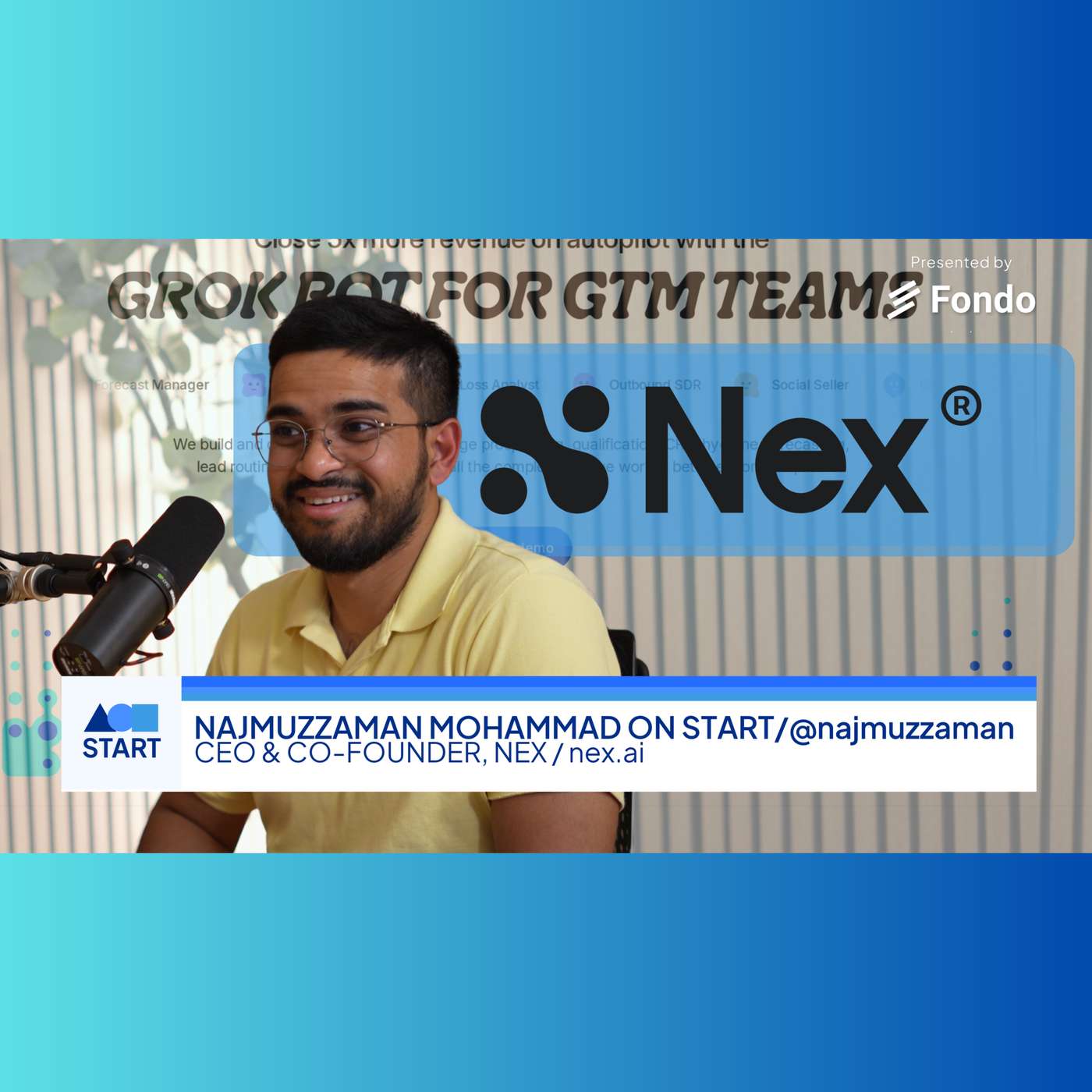
    START: Najmuzzaman Mohammad, CEO & Co-Founder, Nex: "AI for high volume GTM Engineering"

    The original plan was to compete with HubSpot. Then customers showed them a different opportunity. Before founding Nex, Najmuzzaman Mohammad worked as a product manager at HubSpot. His co-founder, Francisco Dias, spent a decade there and was one of the earliest engineers on the HubSpot CRM team. They knew the industry firsthand. So they started building an AI-native CRM to challenge the platform they knew so well. But after deploying their software and speaking with customers, they discovered a more immediate need. Companies wanted AI agents that could access information scattered across different systems and improve their existing revenue workflows. Without replacing the software they already used. So Nex changed direction. Instead of building an entirely new CRM, the team focused on AI agents that work with existing business systems. Today, Nex offers an AI GTM team with agents for prospecting, lead qualification, CRM management, forecasting, and revenue recovery. During one customer onboarding, Nex audited roughly 6,000 HubSpot records and completed the cleanup in just a few hours. Naz estimates that similar work can otherwise take four to six weeks and cost $30,000 to $40,000. They started with the ambition of building a better CRM. Customer conversations led them to an opportunity to make existing CRMs significantly more powerful. ‍ 🎙️Najmuzzaman Mohammad, CEO & Co-Founder, Nex on Fondo START ‍ 01:57 Naz's early startup experience and passion for building products 02:37 Leaving HubSpot to start his own company 03:08 Why Nex originally set out to challenge HubSpot 03:42 Choosing between building an entire CRM and focusing on customer needs 04:00 Using AI agents to improve existing CRM workflows 04:30 Strategies for successful Product Hunt launches 06:00 How Nex's YC launch video went viral and attracted NBC's attention 07:37 What stand-up comedy taught Naz about iteration and product development 08:46 Why founders should launch early with clear messaging 10:15 How Nex's AI agents automate revenue operations 10:35 Auditing roughly 6,000 HubSpot records during customer onboarding 11:36 Nex's outcome-based service model and AI agent economics Check out nex.ai

  • #161
    November 16 · 15 min

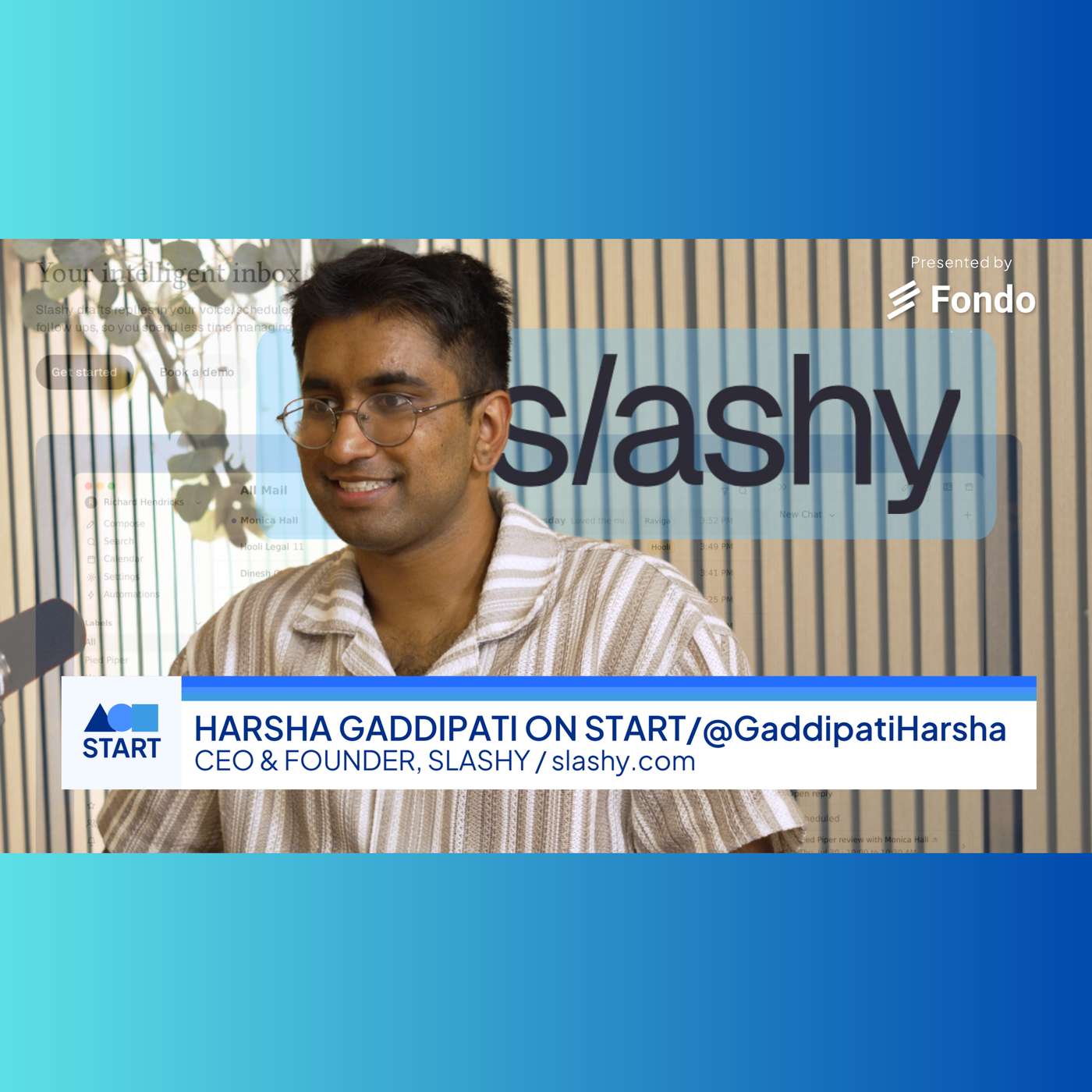
    START: Harsha Gaddipati, CEO & Co-Founder, Slashy: "Your intelligent inbox"

    AI isn't just helping people write emails faster. It's helping them send emails they otherwise never would have written. That's one of the insights Harsha Gaddipati discovered while building Slashy (YC S25). When training AI to write like someone, the obvious starting point is their sent folder. But your sent folder only contains the emails you had time to write. Consider a founder hiring for a position. They might want to respond to every applicant, but as applications pile up, many candidates never hear back. Not because the founder doesn't care, but because they don't have the time. With AI drafting personalized responses in their writing style, those conversations become much easier to manage. This is the problem Harsha and his team are addressing with Slashy. Slashy learns how you communicate, understands the context of your conversations, drafts replies in your voice, and manages follow-ups that might otherwise be forgotten. One Slashy customer reported reducing the time spent managing email from over three hours to roughly 30 minutes a day. But the more interesting opportunity goes beyond saving time. It's enabling people to respond to customers, follow up on conversations, and complete tasks they previously didn't have the capacity to handle. The real measure of productivity isn't just how much time you save. It's how much more you can get done. 🎙️ Harsha Gaddipati, CEO & Co-Founder, Slashy on Fondo START ‍ 01:25 Growing up in Wisconsin and starting on an assembly line 02:20 Building his own publication at 13 03:35 Interviewing for YC from a $70 Chinatown hotel 04:15 Building a general AI agent and reaching 10,000 users 04:50 Why the general agent struggled with retention 06:05 Calling hundreds of users to understand churn 07:45 Why general AI assistants struggle with professional workflows 08:55 Why computer use may become less important 10:30 Why partially completed tasks can create more work 11:00 Testing AI through executive assistant work and getting fired 12:20 Teaching AI to draft emails in a user's writing style 12:45 Helping people send emails they otherwise wouldn't 13:45 Automating inbox management, meeting prep, and follow-ups Check out slashy.com ‍

  • #169
    November 16 · 10 min

    START: Steve Rahimi, CEO & Co-Founder, Pango "Agentic OS for e-commerce operations"

    They analyzed 10 million internet domains to figure out whom to sell to, and what to say when someone answered the phone. The interesting part wasn't the size of the dataset. It was what they did with it. Steve Rahimi and his team at Pango identified e-commerce businesses and generated 52 columns of information about each company. Their software stack. Delivery operations. Return policies. Existing systems. By the time they contact a prospect, they already understand how the business operates and where problems might exist. Steve says their sales conversion rate is unusually high. He attributes part of that success to an overlooked advantage: operating in an industry that attracts relatively little attention despite the significant problems it presents. Shopify has become the standard for running the front end of an online store. But behind the storefront, e-commerce operations remain fragmented. A single retailer can use as many as 10 different software products to manage transportation, deliveries, returns, and logistics. Pango is building an AI operating system to consolidate those workflows. The software is designed to adapt to each retailer's operations in minutes, rather than requiring months of configuration. As Steve puts it: Shopify for the front end. Pango for the back end. There's an interesting connection between the product and how they're selling it. The fragmentation of e-commerce software creates the problem Pango is solving. It also creates an opportunity to understand prospective customers through publicly available information. Their advantage isn't simply having more data. It's knowing enough about each business to make a relevant pitch. And in an industry that attracts relatively little attention, that knowledge can be particularly valuable. 🎙️ Steve Rahimi, CEO & Co-Founder, Pango on Fondo START with Guest Host: @gracegongGG Founder @ Smart Venture Media 01:57 How navigating uncertainty shaped Steve’s approach to entrepreneurship 03:49 Why e-commerce’s front end is solved but the back end remains fragmented 04:42 Using AI to consolidate up to 10 different software tools 05:54 Pango’s go-to-market strategy using 10 million domains and 52 data points 07:40 Building software as a non-technical founder 08:30 Finding a technical co-founder through YC matching 09:28 Why ambitious founders are the greatest advantage of YC 10:10 How the YC environment pushes founders to grow faster ‍ Check out pango.ai

  • #210
    November 13 · 14 min

    START: Faiyam Rahman, CEO & Co-Founder, Blaze: "The AI CFO for Businesses"

    Blaze started by making it easier to move money. Now it's building a new way to manage it. Faiyam Rahman's journey into entrepreneurship started at 22, when he walked away from a place at a top medical school in New York. Coming from a family of doctors, medicine was the expected path. He'd excelled academically, completed the pre-med curriculum, and earned admission to a highly ranked medical school. But Faiyam began questioning whether becoming a doctor was the best way to use his abilities. His parents had pursued medicine to build financial security and provide opportunities for their family. Thanks to their sacrifices, Faiyam had the freedom to pursue a different path. He saw entrepreneurship as an opportunity to apply his abilities toward solving problems and making a meaningful impact on the world. Years later, he and his co-founder Luke saw an opportunity to improve cross-border payments using stablecoins. They applied to Y Combinator three times before getting in. Then came the hard part. Licensing. Infrastructure. Product development. Fraud prevention. They built and launched a payments product focused on Latin America. As AI transformed software, Faiyam saw an opportunity to take Blaze beyond cross-border payments. What if financial software could do more than help businesses move money? Instead of juggling multiple financial tools, what if businesses could manage their money through one AI? That's the vision behind Blaze's AI CFO. Connect your financial tools. Organize transactions. Reconcile your books. Prepare payments for approval. Forecast cash flow. One AI working across your financial operations. From moving money to helping businesses manage it. 🎙️ Faiyam Rahman, CEO & Co-Founder, Blaze on Fondo START ‍ 01:08 Introduction to Faiyam and Blaze 02:27 The path from medicine to entrepreneurship 04:12 Why he chose building over financial security 08:13 Meeting Luke and the road to YC 09:17 Building a stablecoin payments startup 11:09 Developing Blaze for cross-border payments 12:14 How AI changed the company's direction 13:07 Rethinking the relationship between AI and money 14:11 Building Blaze's AI CFO 16:09 Faiyam's long-term vision for financial technology Check out blaze.money

  • #202
    November 11 · 20 min

    START: Caelean Barnes, CEO & Co-Founder, Gauge: "The Agent-Led Growth Platform"

    Amazon blocked AI agents from shopping on its site. That might be the biggest opening Amazon’s competitors have ever had. More and more buying now starts with an agent. Caelean Barnes says Cloudflare reported that agent traffic overtook human traffic earlier this year. These agents read your docs, compare you with competitors and decide what to use without ever looking at your homepage. Companies that let agents in get chosen. Companies that block them get skipped. That’s the shift Gauge is built for. Gauge calls itself the Agent-Led Growth platform. Gauge helps companies get recommended and implemented by AI agents. Its customers include Perplexity, Strava, Airtable, Product Hunt, DigitalOcean, LendingTree, Timex, Supabase, PostHog, Mintlify, Clerk and OpenRouter. Agents don’t shop like people. They skip the homepage pitch and go straight to llms.txt, the docs and the reference pages. They get stuck at a credit card form, a sign-in or any step that needs a human. Gauge runs coding agents like Claude Code and Codex through real tasks against a company’s product. It then shows where the agents pick a competitor or give up. Gauge says the results are real: PostHog grew traffic from AI tools 41×, and Clerk tripled adoption of its CLI. Some people have stopped opening their software at all. Caelean met someone who hadn’t logged into Salesforce in six months because her agents were running it for her. His first step for founders is simple: point an agent at your website and see how far it gets. Built for humans. Chosen by agents. 🎙️ Caelean Barnes, CEO & Co-Founder, Gauge on Fondo START on Fondo START with David J Phillips, CEO and Founder, Fondo.com 01:15 What Gauge does 02:05 From eShares intern to Carta 03:25 How Carta grew by working with lawyers 05:15 Why companies are building for agents first 07:00 Asking agents instead of opening dashboards 08:00 Agents running Salesforce 10:00 Agent traffic overtakes human traffic 12:40 How agents decide what to use 15:05 Why docs and open onboarding win 16:00 How to make your product agent-ready ‍ Check out withgauge.com ‍

  • #179
    November 9 · 10 min

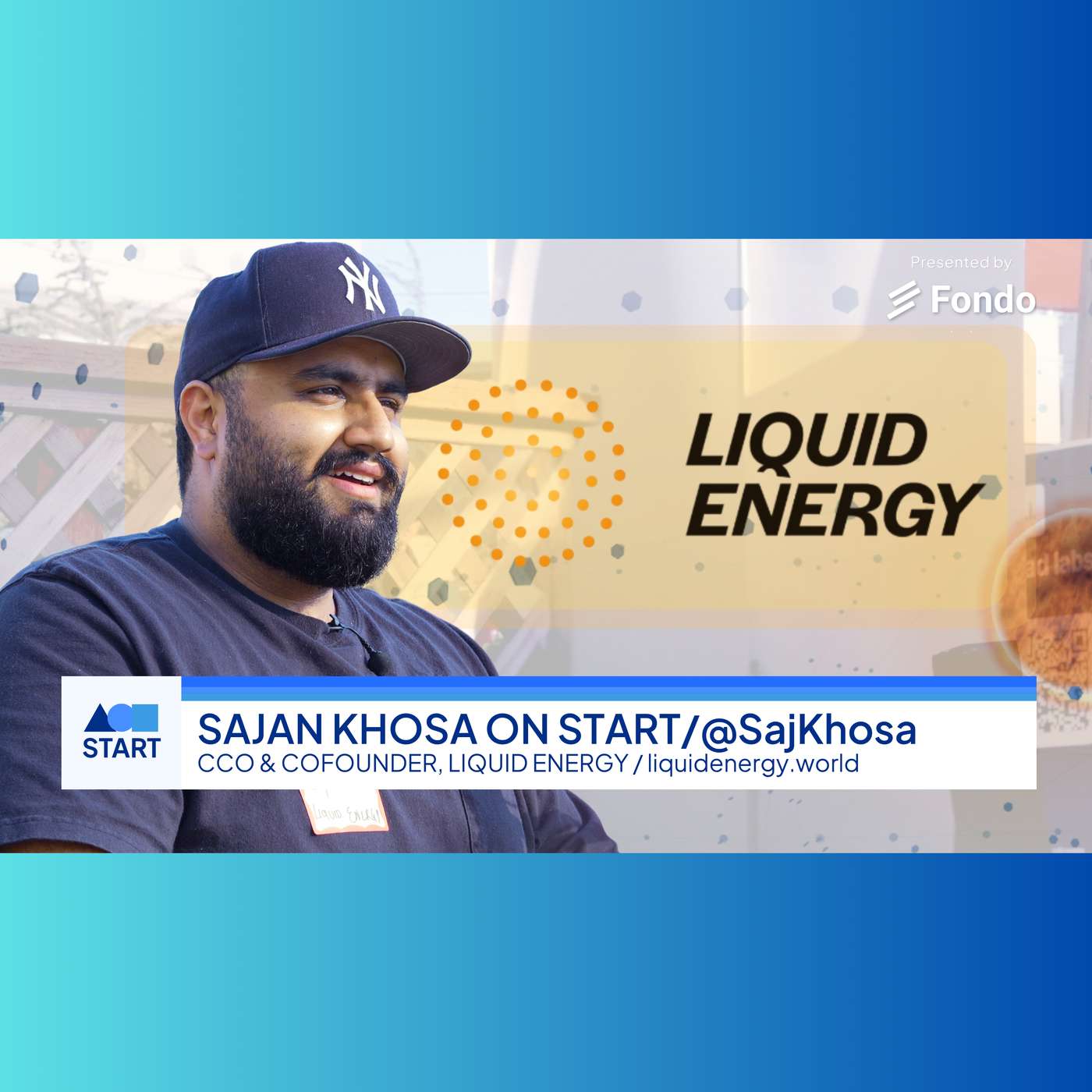
    START: Sajan Khosa, CCO & Co-Founder, Liquid Energy "AI inference powered by sunlight"

    "What Elon's doing in space, we're doing here on Earth." That's how Sajan Khosa describes Liquid Energy (YC F26) and its NanoDC: a solar-powered autonomous data center built for AI inference. NanoDCs are built at a factory and shipped to the site. Each unit generates its own power using solar and batteries, with panels that fold out like an accordion. The compute is cooled with patent-pending high-density air cooling and connects to the internet via Starlink. No construction. No grid interconnect. No water supply. Liquid Energy says NanoDC can be deployed anywhere on the planet in four weeks. Units are shipped to the site ready to be turned on in 30 minutes. Sajan says they can go from the first conversation to live inference in six weeks, compared with four to 12 months for traditional compute arrangements. Customers don't need to purchase the hardware. They sign a compute contract, Liquid Energy deploys the units, and additional capacity can be added by simply deploying more. And when asked what breaks first as AI demand scales - GPUs, the grid, or data centers - his answer was immediate: "The grid." Sunlight in. Tokens out. ‍ 🎙️ Sajan Khosa, CCO & Co-Founder, Liquid Energy on Fondo START with Guest Host: Kamran Karic, COO & Co-founder, Ploid ‍ 00:45 From conversation to live inference in six weeks 01:32 Turning data centers from a construction problem into a tech problem 02:28 Eliminating traditional infrastructure costs 03:17 Why GPUs aren't necessarily AI's biggest bottleneck 04:42 Deploying compute in harsh environments 05:14 Zero water consumption and ~85% lower cooling costs 06:29 Developing and testing the cooling technology 07:04 Why Liquid Energy is betting on solar 07:38 Why the electrical grid is AI's biggest bottleneck Check out www.liquidenergy.world

  • #181
    October 28 · 16 min

    START: Nora Xiao & J Yim, Co-Founders, Rollup: "Years of user context, in minutes."

    Your phone has years of context about you. Yet most new apps still start from zero. Where you go. What you eat. What you wear. How your interests change over time. J Yim and Nora Xiao saw an opportunity in all that information sitting in people's camera rolls. So they built Rollup. An SDK that turns photos into personal context, helping apps understand users without starting from scratch Photos stay on the phone, while apps gain insights into users' interests, habits, and preferences For example, screenshot six bomber jackets from different brands, and a shopping app could recognize what you're looking for without asking. But the real breakthrough came when other founders started asking to buy the technology powering Rollup's original shopping app. So J and Nora pivoted from building an app to selling the underlying SDK. Just nine days later, they reported six figures in contracted ARR and seven figures in pipeline revenue. Some customers even skipped the free trial and asked to pay immediately. Their vision? A future where every consumer app becomes a personal AI, powered by a deeper understanding of its users. They started by building one personalized shopping app. Now they're building the technology that could make every consumer app personal. 🎙️‍ Nora Xiao & J Yim, Co-Founders, Rollup, with Guest Host: Maanav Agrawal, CEO & Co-Founder, Memoir on Fondo START ‍ 01:08 Meet Rollup Co-Founders J Yim and Nora Xiao 02:13 Turning camera rolls into personal context 03:17 From shopping app to SDK 04:22 Unlocking the value of personal photos 05:11 Identifying moments, trends, and shopping intent 06:18 Six figures in contracted ARR after nine days 07:14 Finding product-market fit 08:16 The strategy behind Rollup's pivot 09:12 Building a strong co-founder relationship 10:21 What inspired J and Nora to become entrepreneurs 12:14 The future of personal AI 13:19 Expanding beyond photos 14:08 Privacy, on-device AI, and user trust Check it out at tryrollup.com

  • #155
    October 26 · 12 min

    START: Alex Kolchinski, Founder & CEO, ThunderPhone "Voice AI that nails the calls others fumble"

    AI coding agents learned how to build voice AI from the internet. That might be the problem. The standard approach is simple. Transcribe the caller. Send the text to a model. Turn the answer back into speech. Three steps. Countless posts and repositories. Repeated so often that coding agents tend to reproduce the same architecture. Alex Kolchinski's bet at ThunderPhone is that the default is already becoming obsolete. Instead of one fixed pipeline, his team mixes and matches models. Sometimes several cheaper ones instead of one expensive one. Sometimes audio goes straight to the LLM, skipping transcription entirely. Every decision comes down to three competing priorities: quality, speed, and cost. Alex calls it the Ferrari approach. While other teams have good reasons to build systems that work well enough to scale, ThunderPhone focuses on squeezing more performance out of every component. And there's a catch. Alex doesn't expect that technical advantage to last forever. Foundation models keep improving, and coding agents are beginning to figure out better architectures themselves. Until then, the edge is knowing what to build differently. ThunderPhone: "Voice AI that nails the calls others fumble" 🎙️ Alex Kolchinski, Founder & CEO, ThunderPhone on Fondo START 01:07 Why ThunderPhone moves beyond the standard voice AI pipeline 01:42 Navigating the tradeoff between quality, latency, and price 02:35 Why Storm prioritizes getting real customer calls right 03:45 How software and B2B changed Alex's founder playbook 04:45 Why the traditional three-step voice AI pipeline is becoming obsolete 05:00 How voice AI is outperforming humans on transactional calls 06:32 Why ThunderPhone isn't training its own foundation model 08:15 How two founders built the platform in 6–12 months and where coding agents fall short 09:30 The Model T versus Ferrari approach to building voice AI 10:15 Spark at 2¢, Bolt at 5¢, and Storm at 9¢ per minute ‍ Check out thunderphone.com

  • #157
    October 20 · 11 min

    START: George Rose, CEO & Co-Founder, Rise Reforming "Unlocking resilience for the chemical industry"

    The US produces enough biogas to make over $20 billion worth of chemicals a year 60% of it is wasted or flared in low-margin applications It comes off wastewater plants, farms and landfills Gas a large-scale chemical plant can't capture So Rise Reforming goes to the gas Its modular technology fits inside a shipping container and runs on-site The result is the cheapest feedstock and no fossil fuels as raw material Out come chemicals like dimethyl ether, methanol and dimethyl carbonate That last one has no domestic manufacturer in the US The three founders met studying molecular engineering at UChicago They got close over late-night problem sets Environmentalists turned engineers, drawn in by the chemical industry's 5% share of global emissions Then Y Combinator, to learn how to sell chemicals 1,800+ hours of stable syngas production First in the Americas to produce syngas from wastewater biogas A binding biogas supply agreement and a conditional DME offtake for its first commercial unit DME is first, targeting aerosol and propane starting in 2027 Rise Reforming sums it up in six words: "Unlocking resilience for the chemical industry" ‍ 🎙️ George Rose, Founder & CEO, Rise Reforming on Fondo START ‍ 00:45 Supply-secure chemicals from waste gases 01:45 Why centralized plants are exposed to conflicts and natural disasters 02:00 Making the chemicals where the waste is actually generated 02:32 Dimethyl carbonate and the lack of a single domestic manufacturer 03:04 DME, methanol, and the markets Rise Reforming is targeting 04:48 Environmentalists turned engineers 05:32 Green premium? 05:57 Price parity with the natural gas alternative 06:27 A new methanol process and the cheapest feedstock 07:05 Meeting cofounder at UChicago over late-night problem sets 08:25 Doing YC to learn how to sell chemicals Check out www.rise-reforming.com

  • #164
    October 19 · 12 min

    START: Melissa Bime, CEO & Founder, Infiuss Health: "AI-Powered clinical rehearsal. Run the trial before you run the trial."

    ‍A clinical trial at Stanford enrolled a patient living in Africa. He was never physically there. He had been diagnosed with a rare genetic disorder, and Stanford was running a trial for it. The research team gathered his genetic information and medical records. They monitored him remotely and enrolled him. The patient was Melissa Bime’s father. She was working at Stanford as a clinical trial nurse at the time. She had trained as a nurse in Cameroon and moved to the US, where she worked through the COVID vaccine trials. She says that was the spark. Why not build digital versions of patients and get them into clinical trials. That’s Infiuss Health. It builds medical digital twins from real-world and historical data. Trial teams rehearse a protocol across thousands of virtual patients before a single one enrolls. The twins flag who is likely to drop out mid-study. Who has a comorbidity that affects how the drug performs. Whether two hours of travel to a research site is feasible over two years. Infiuss reports up to a 30% reduction in sample size and design cycles 10x faster. During the recent Ebola outbreak, Infiuss helped companies running vaccine trials recruit patients with a specific genetic trait. Melissa’s long-term view is approval with a hundred patients instead of thousands. Her focus is small and mid-sized life science companies. Most have one or two drug candidates the entire company hinges on. Infiuss is built to give them more tries. "AI-Powered clinical rehearsal. Run the trial before you run the trial." 🎙️Melissa Bime, Founder, Infiuss Health on Fondo START ‍ 01:29 From nursing school in Cameroon to healthcare entrepreneurship 02:29 The diagnosis that changed everything 04:22 Building computational versions of real patients 05:27 Why clinical R&D costs billions and fails nine times out of ten 06:23 What digital patient twins can predict today 07:35 Cutting roughly six to eight months from the process 08:05 Approval with a hundred patients instead of thousands 08:59 A clinical trial without a control group 09:50 Why smaller life science companies need more chances to fail 10:21 “You shouldn’t have to go out of business ’cause you failed a clinical trial” 10:55 Finding the right genetic trait during the Ebola outbreak Check out infiuss.com

  • #185
    October 16 · 8 min

    START: Ludovic Granger, CEO & Co-Founder, Leadbay: "Qualified leads for agentic workflows"

    Most sales teams are competing for the same companies. Not necessarily because they're the best customers, but because they're the easiest to find. They have LinkedIn profiles, public hiring activity, and enough online signals to show up in every prospecting database. But plenty of good businesses don't leave that kind of trail. Ludo Granger kept noticing this when visiting customers. He'd look at their prospect databases and find that he could sometimes identify roughly three times as much additional market opportunity. The companies were there. The sales tools just weren't finding them. A hotel, a restaurant, or an early-stage startup might be a perfect customer. But if it's not generating the right online signals, it can be almost invisible to traditional prospecting software. That became the problem Ludo wanted to solve with Leadbay. Instead of relying only on the signals everyone else is tracking, Leadbay tries to learn how a good salesperson evaluates a company. It looks at your business, identifies what a promising customer might look like, and uses feedback from the leads you pursue to get better over time. But Ludo isn't trying to build another database with more companies in it. He thinks the way salespeople use databases is changing altogether. During SF Tech Week, he used Claude from his car to work with five highly qualified prospects rather than sorting through thousands of accounts. Then he told the agent how to handle outreach and follow-ups. That's the distinction he's betting on. Finding more companies matters, but knowing which ones are worth pursuing matters more. Especially when the person making that first decision isn't a person anymore. It's an agent. 🎙️ Ludovic Granger, CEO & Co-Founder, Leadbay on Fondo START with Guest Host: Kamran Karic, COO & Co-founder, Ploid (YC F26) 01:42 Why everyone is chasing the same companies 02:08 The untapped market traditional sales databases overlook 02:34 How Leadbay can expand a company's addressable market 02:51 Why startups should build something agents want 03:17 The shift from human interfaces to AI agents 03:48 How AI identifies promising businesses with limited online data 04:19 Teaching AI to recognize and improve lead quality 05:01 Finding five highly qualified prospects instead of 5,000 05:29 Trusting AI agents to coordinate outreach and follow-ups 07:04 Why qualified data is the fuel for AI-powered sales ‍ Check out leadbay.ai

  • #183
    October 15 · 12 min

    START: Faiz Vadakkumpadath & Niyaz Puzhikkunnath, Co-Founders, Papaya "Continuous optimization for AI agents"

    When everyone has access to the same AI models, what actually makes one AI product better than another? It's no longer just about the intelligence. It's about how reliably you put it to work. An agent that responds faster. Makes fewer mistakes. Delivers better outcomes for customers. That's the problem Niyaz Puzhikkunnath and Faiz Vadakkumpadath are tackling with Papaya (YC F26): continuously improving AI agents already running in production. After spending more than a decade developing their expertise at Amazon, the founders set out to build a company of their own. Their first product focused on data infrastructure. But as they began working with customers, they discovered something interesting. Customers liked the data product, but were especially interested in the AI agent harness the founders had built to make their system more reliable. Rather than asking customers to migrate their existing data infrastructure, they saw an opportunity to make that technology useful across a much broader range of applications. So they developed the harness into a standalone product, laying the foundation for Papaya. Today, Papaya analyzes how customers use production AI agents, identifies issues across prompts, context, caching, and tool calls, and opens pull requests with proposed fixes. It then tracks whether those changes actually improve quality, latency, and cost. Because knowing why your agent failed is only half the problem. Actually improving it is what matters. That's what Papaya is building toward: AI agents that get better over time, without engineers having to manually investigate and fix every issue. If you're running AI agents in production, check out what the team is building at papaya.fyi. 🎙️ Faiz Vadakkumpadath & Niyaz Puzhikkunnath, Co-Founders, Papaya on Fondo START with Guest Host: Maanav Agrawal, Founder & CEO, Memoir ‍ 01:43 How Papaya identifies problems in production AI agents and proposes fixes 02:49 Why fixing agents matters more than monitoring them 03:02 Why companies prioritize agent quality over cost 03:34 Papaya's early traction and first paying customers 04:58 Automating the traditional software debugging process 05:47 Why AI could eliminate the traditional maintenance phase 06:18 Why identifying agent failures isn't enough 06:39 Optimizing agents that power critical business workflows 07:46 How Niyaz's experience debugging agents at Amazon inspired Papaya 08:33 How customer feedback transformed a data platform into Papaya ‍ Check out papaya.fyi

  • #188
    October 14 · 11 min

    START: Simon Shu & Justin Sato, Co-Founders, Restart: "The AI company builder"

    How many companies die as an idea because the founder can't build the first version? That's who Simon Shu and Justin Sato have in mind with Restart, which they call the AI company builder. You describe the idea in plain language and Restart sharpens it, then builds a working web product while you watch the pages, copy, and design fill in on a live preview. It publishes to a real URL when you say so, and changes work the same way: say what should be different and watch it happen. Most people building on it are starting their first company, and most of them aren't engineers. They're making SaaS, consumer apps, marketplaces, e-commerce, service businesses, and local businesses; even a coffee shop and a restaurant right alongside apps. The whole thing started from one question: what will companies look like five years from now? Advanced AI will make companies, the economy, and society work in fundamentally different ways. In that world, what changes for workers? They should get to be creatives and visionaries, and Simon and Justin are building Restart so anyone can. Simon brings experience from Tesla and Scale AI. Justin studied CS at Stanford after doing physics and AI safety research, and he's worked in AI engineering at several startups, including Tomo. They met over poker in SF. Restart has already grown to around 50K users, largely through social, and the team keeps shipping and improving the product. There's a free plan with daily build credits, so you can start building today. 🎙️ Simon Shu & Justin Sato, Co-Founders, Restart on Fondo START with Guest Host: @peggy_wang, Founder & CEO, @sparkchat_so @digipals_app 01:40 Meeting at a founders-and-investors poker game in SF 02:15 The ride home where they started trading startup ideas 02:42 Building a startup always felt inevitable to both of them 03:27 Moving into Justin's Stanford dorm room 04:03 Grinding it out and raising a pre-seed round 04:20 The starting question: what will companies look like in five years? 04:55 Shipping before it's ready, and getting to ~50K users 05:18 Justin's LinkedIn post gets picked up by Indian news 05:35 The 20-iPhone content operation 06:21 "Restart is the AI company builder." 06:30 The early wedge: incorporation, payments, software 07:33 Who it's for: coffee shops, restaurants, and apps 07:58 What they love about SF 09:24 The guests flip it: what does the host think about AGI? 10:30 Simon on turning workers into creators in the AGI era 11:01 Justin on Restart's responsibility to make companies AI-native Try it at restart.new

Showing 1–20 of 57 episodes