Skip to content
Artwork for START
BusinessMarketingEntrepreneurship

START

Fondo

Fondo is an all-in-one accounting platform for startups. Get your books closed, taxes filed, and cash back from the IRS.

Play
  • 35 episodes
  • Avg 11 min
  • English
Counted on this page — what you have heard stays on this device, so it is not something the list can be paged by.
  • #129
    August 10 · 11 min

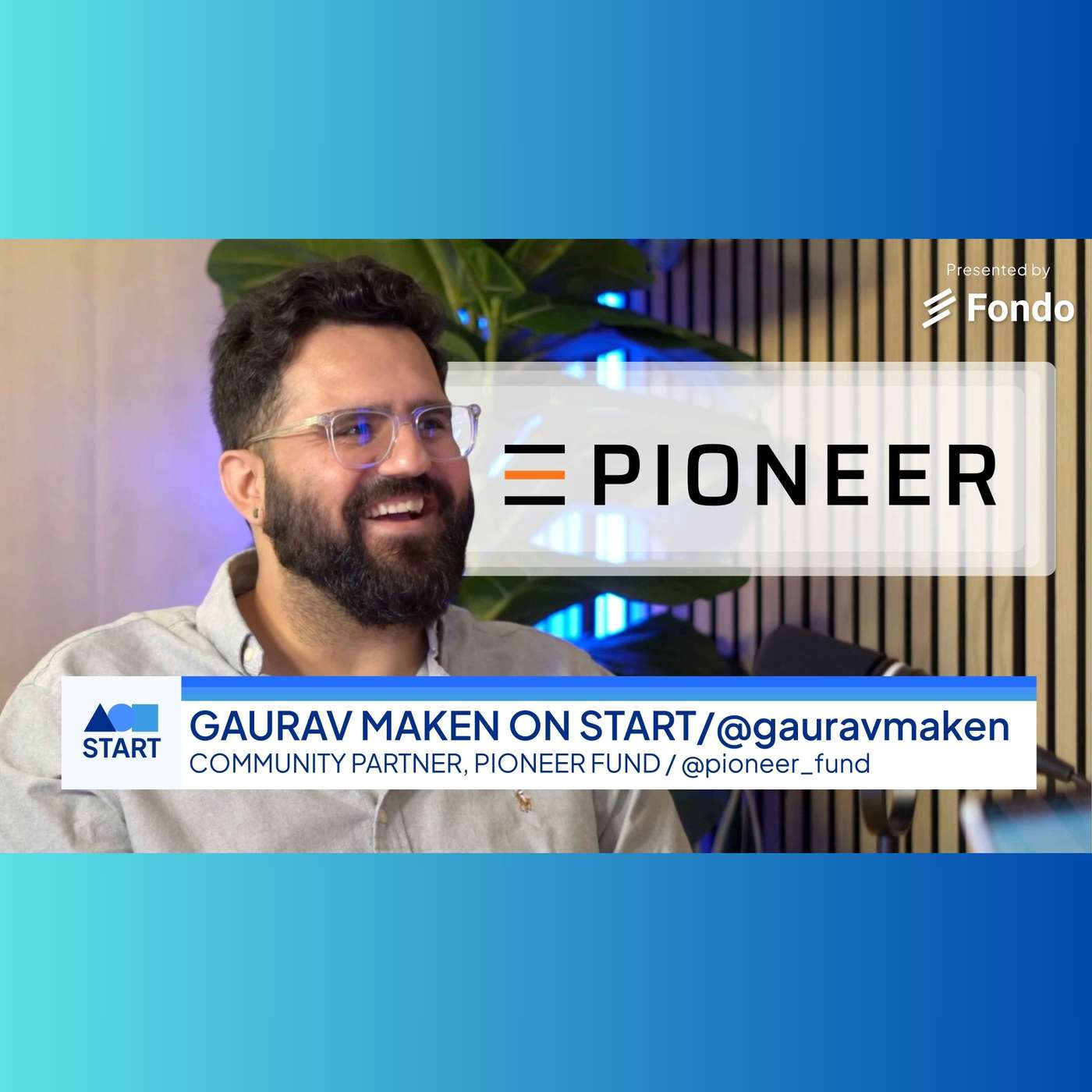
    START: Gaurav Maken, Community Partner, Pioneer Fund "500+ Y Combinator alumni investing in top Y Combinator startups"

    Pioneer Fund met Gaurav Maken at Y Combinator Demo Day, and today he works there as Community Partner. What stayed with him was the way the meeting ran. The people across the table were curious rather than performing, and they wanted to understand what he was building. That's carried into how Pioneer operates now. The team preps hard for every 30-minute founder meeting, several founder-investors join each call, and they'll tell a founder what they like and what they don't, because they've sat on the other side of that table and know how it feels to leave an investor meeting with "nothing". Then they hand the evaluation back. Pioneer sends a post-meeting survey asking founders how the conversation went. Many of them say Pioneer Fund understood their business better than anyone else they met while fundraising, despite some of those founders still getting a "no". Today Pioneer is backed by more than 500 Y Combinator alumni serving as Venture Partners, with 730 portfolio companies and 1,500+ portfolio founders behind it: a network of founders who stay involved long after the investment. It's still growing. VP spots mostly come through referral. And if you don't have one, reach out to Gaurav ‍ 🎙️ Gaurav Maken, Community Partner, Pioneer Fund on Fondo START pod ‍ 01:47 — How PG's essays led him to YC 02:04 — Instacart in 2015, then a grocery startup 02:22 — What the 2020 shutdown taught him 02:52 — Starting a mental performance clinic for founders 03:10 — The Demo Day meeting 03:26 — 500+ venture partners, 1,500+ backed founders 04:50 — The prep behind every 30-minute founder call 05:59 — The survey Pioneer sends after every meeting 06:47 — Expert hours 08:13 — How Jason built a system for investors 09:36 — What it takes to become a Pioneer Fund VP ‍ Check out www.pioneerfund.vc
  • #81
    August 7 · 10 min

    START: Aram Shatakhtsyan, Founder & CEO, Modelence "Build production-ready apps with AI"

    Every startup can build a demo. Then comes everything else: authentication, databases, hosting, monitoring, email, analytics, real-time infrastructure. None of it makes the demo, and every team rebuilds it anyway. Aram Shatakhtsyan spent nearly a decade scaling a startup and kept hitting the same thing. Too much engineering went into infrastructure that looked nearly identical from one product to the next. Modelence is a production-ready framework and cloud platform for the era of AI-generated software, where developers spend their time on product logic instead of rebuilding the same foundation. Generate a full-stack app from a prompt. Auth, database, and production deploys wired in from day one. Inspect, edit, and own the code. Deploy it to Modelence Cloud with production infrastructure, monitoring, scaling, and a custom domain, without assembling a stack of separate services. Prototypes are easy. Production isn't. We filmed this episode with Aram on January 23. Since then, the AI App Builder hit #2 Product of the Day on Product Hunt, and their new Mobile Builder launched in July. "Build production-ready apps with AI" ‍ 🎙️ Aram Shatakhtsyan, Co-Founder & CEO, Modelence on Fondo START pod ‍ 00:57 — The scaling challenges that inspired Modelence 01:22 — Why every startup keeps rebuilding the same infrastructure 02:01 — Why TypeScript became the foundation for AI-native development 03:06 — Building the TypeScript equivalent of Ruby on Rails 03:45 — Why infrastructure matters more than another AI app builder 04:18 — The difference between prototyping and production software 05:14 — Why today's frameworks weren't designed for AI coding agents 06:03 — Designing AI systems with guardrails instead of prompts 07:16 — The vision for production-ready AI applications 08:07 — What Aram hopes developers build with Modelence next ‍ Check out modelence.com

  • #94
    August 6 · 13 min

    START: Charu Sharma & Michael Mernagh, Co-founders, Fenrock AI: “The First AI Workspace for Banking Back Office”

    99% of U.S. banks aren't JPMorgan. All of them are regulated like it. The bottleneck isn't serving customers. It's everything that happens after. Loans. Compliance. Fraud investigations. Customer operations. The work keeps growing. Headcount doesn't. JPMorgan has tens of thousands of analysts. A community bank has a handful. That's the gap Fenrock AI is closing. Fenrock is building the first AI workspace for the banking back office. Built alongside U.S. bank CEOs. Designed for banks. One workspace for all of it. AI gathers the information. Organizes the evidence. Drafts the analysis. Prepares the report. The analyst reviews. The analyst decides. No rip-and-replace. No data migration. Just an AI workspace embedded into existing workflows. Every action is documented with bullet-proof audit logs. Built-in regulatory guidance. Reporting designed for examiners and boards. An analyst clears about 10 alerts a day. Fenrock is built for 20x that. Not by replacing people. By giving them capacity they've never had. Banks process more. Pass their exams. Improve efficiency ratios. And keep serving the communities that depend on them. 🎙️ Charu Sharma & Michael Mernagh, Co-Founders, Fenrock AI on Fondo START pod 01:16 — Fenrock AI's vision: AI agents for the banking back office 01:57 — Customer discovery leads from financial crime to banking compliance 02:33 — Why small and midsize banks became the focus 03:02 — Charu's early life and the experience that shaped her resilience 03:52 — Building multiple startups before founding Fenrock 04:18 — Michael's background building privacy-preserving machine learning at Apple 05:07 — Finding the right co-founder and choosing a long-term mission 06:03 — Pivoting the company and using YC to accelerate execution 07:37 — How YC raised the team's ambition and execution speed 08:36 — Building the first AI workspace for the banking back office 09:17 — Helping small banks meet regulatory expectations with AI 10:24 — Human-in-the-loop workflows, audit trails, and early customer impact Check out fenrock.ai

  • #146
    August 3 · 10 min

    START: Chloe Sow, Co-Founder, Infera "The operating system for your laboratory”

    Scientific discovery shouldn't slow down because of software. But every instrument in the lab ships its own, and someone has to learn all of them. Researchers don't want to memorize instrument interfaces. They want experiments to run. They want answers. They want data. That's the problem Infera is solving. Chloe Sow knows that side of it. Mechanical engineering at Harvard, research at Brigham and Women's, building medical devices and running the experiments by hand. Her co-founder Troy Cheng spent an entire research summer figuring out how to run his lab's experiments on one machine. That was the summer. So they built the thing they needed. Describe an experiment in plain English. Infera turns it into a validated, instrument-ready run across the equipment your lab already uses. One system for protocol logic. Vendor-specific scripts. Laboratory data. Inventory. Institutional knowledge. Today, running an experiment means going instrument by instrument. Tomorrow, one place for all of them. AI agents already design experiments and protocols. But nothing connects those designs to real laboratory instruments. One system. From intent to execution.‍ Infera: "Control lab instruments with natural language" 🎙️ Chloe Sow, Co-Founder, Infera on Fondo START pod ‍ 00:45 Claude Code for scientific instruments 01:27 Troy's entire job was one liquid handler 02:39 Every run captures a record. The missing layer between AI and instruments 03:12 Scientists pressing buttons without knowing the machine 04:22 Plain English to validated instrument-ready run. Academic labs and cores first 05:50 Every instrument ships its own closed software 06:02 Meeting at a virtual Caltech admit session 07:19 Applied to YC for feedback. Got in first try 08:35 Staying disciplined instead of chasing the SF event circuit ‍ Check out infera.bio

  • #117
    July 31 · 12 min

    START Nasrat Khalid - Founder & CEO, Aseel “Connecting artisans to global markets and enabling transparent aid”

    You can track a burrito from the restaurant to your door in real time You donate to a family in a crisis zone. Usually you get a thank-you email. That's where it ends. Nasrat Khalid couldn't understand why. We expect complete visibility when we order dinner. Why not when we're helping another human being? So he built Aseel. A platform for "everything do good" You buy a food package. You see exactly who receives it. You can ask for a photo of the delivery. You can exchange messages with the recipients, if they choose to participate. Instead of donating into a system and hoping, you know the aid reached the person who needed it. That's the whole idea. No plane ticket. No project. No abstraction. "Award-winning US-based platform connecting artisans to global markets and enabling transparent aid" ‍ 🎙️ Nasrat Khalid, Founder & CEO, Aseel on Fondo START ‍ 00:45 The platform for everything do good 02:25 The first 16 years, as a refugee 02:55 Why he left institutional aid to build Aseel 03:40 Leaving Afghanistan at 16 days old 04:05 No ID means no school, no bank account 04:35 Why identity comes before food 05:15 Seven years inside the World Bank 05:58 What happened to aid in Afghanistan after 2021 07:00 AidOS, for institutions 07:40 The Uber Eats insight 08:20 The $30 package you can trace to a family 09:35 Why he joined the residency 12:30 How to get started ‍ Check out aseelapp.com

  • #147
    July 28 · 20 min

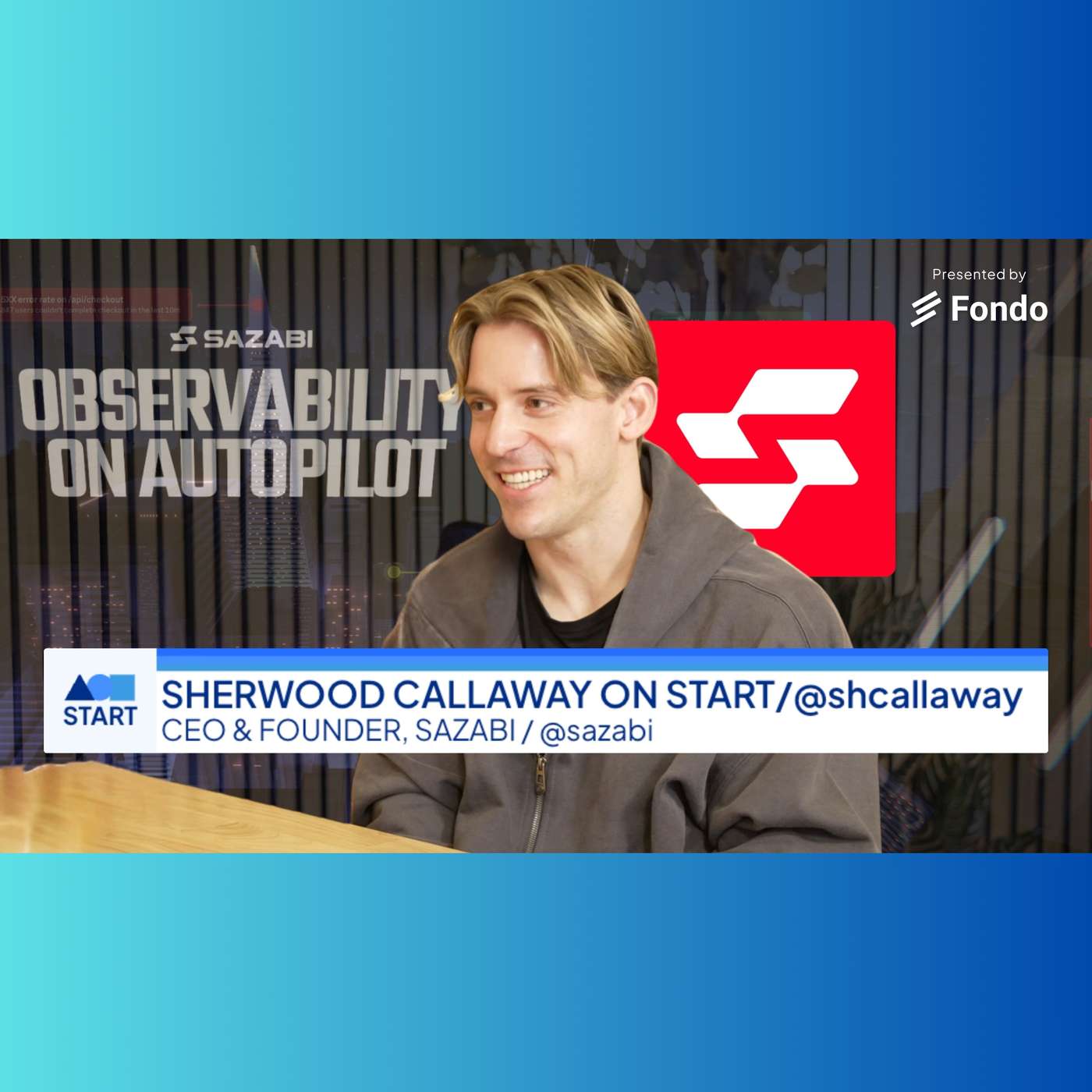
    START Sherwood Callaway, Founder & CEO, Sazabi “Observability On Autopilot”

    AI changed how software gets built. The tools we use after we ship haven't caught up. Code is getting cheaper. Production is getting harder. That's the gap Sherwood Callaway saw after building with Cursor and Claude Code. AI had transformed how software gets built, but when something broke in production, he was back clicking through observability tools that hadn't kept pace. Sazabi is built for AI-native engineering teams. → Autonomous alerts with root-cause context → Conversational debugging instead of endless dashboards → AI that learns your codebase, architecture, and past incidents AI is making it easier than ever to build software. Sazabi makes it just as easy to understand what's happening in production—helping engineering teams detect issues earlier, identify the root cause faster, and get back to shipping. Observability is becoming one of the most important layers of the AI software stack. ‍ 🎙️ Sherwood Callaway, Founder & CEO, Sazabi on Fondo START pod ‍ 01:08 — Building AI-native observability for fast-moving engineering teams 01:45 — Why AI made observability a much bigger problem 02:07 — "Code is basically free" 02:36 — Why architecture and product thinking are the new bottlenecks 03:09 — "Measure twice, cut once" — how Sazabi stays focused 03:35 — History major to Dev Bootcamp: turning down investment banking 05:50 — Joining Brex at employee 70 through hypergrowth to $12B 07:10 — Starting Brex's observability team — the seed of Sazabi 07:48 — What observability actually is (it started with 1960s rocket science) 09:45 — "I will leave Brex today" — the Dalton Caldwell moment 12:16 — Building one of the first production AI agents at 11x 13:33 — The Cursor vs. Datadog contrast that sparked Sazabi ‍ Check out www.sazabi.com

  • #145
    July 24 · 14 min

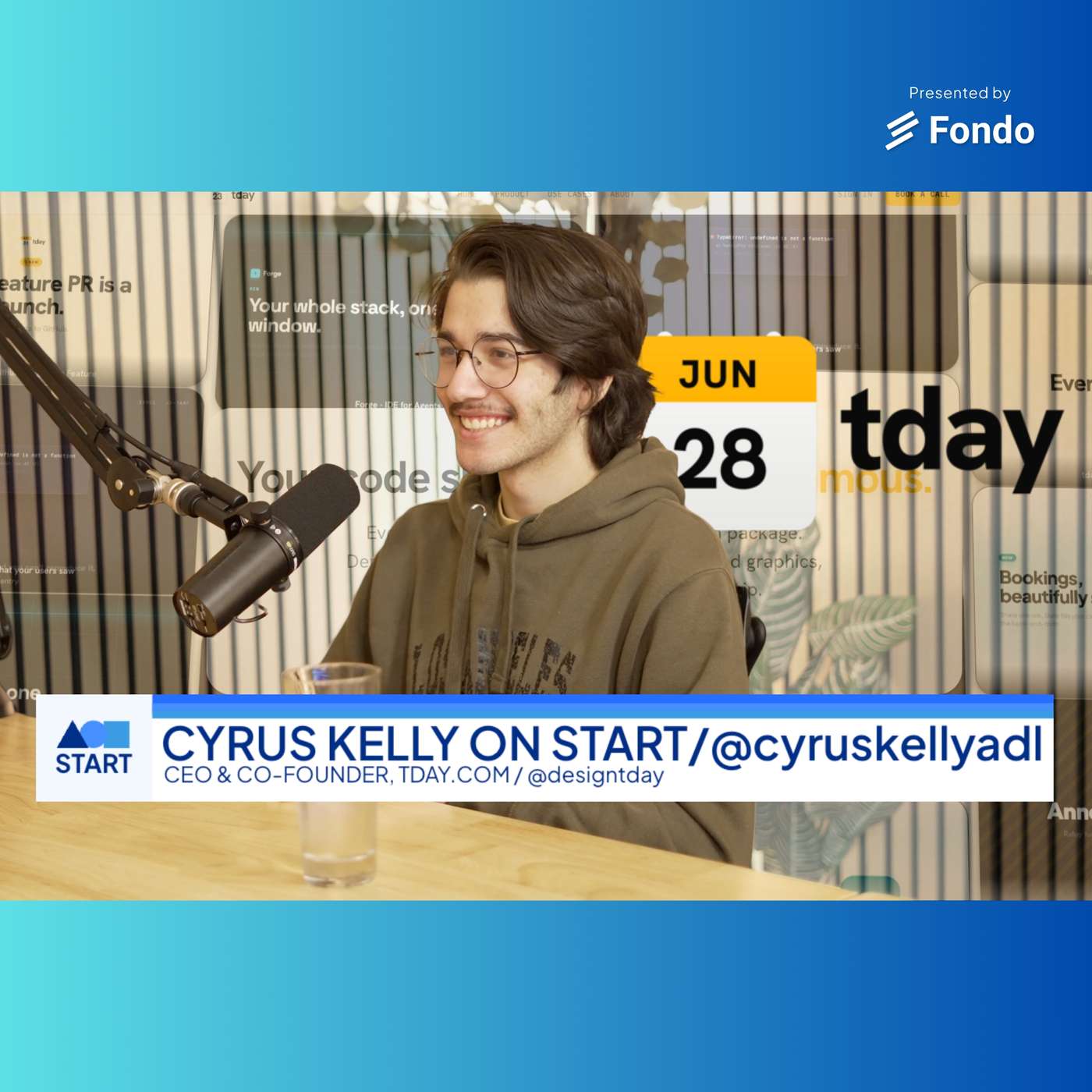
    START: Cyrus Kelly, Co-Founder & CEO, tday.com “AI that turns your product into on-brand marketing content”

    Your product didn't fail. No one saw it. The best product often loses Not because it's worse Because no one saw it Teams ship daily Marketing got faster too It just never stopped needing you Open the recorder. Fumble the demo. Redo it fifteen times. Edit Design Post Your flow is gone. So next time you don't bother That's how good products disappear Cyrus Kelly and co-founder David McDonough were involved in 11 startups. Every time, they became the marketing team Never once enjoyed it So they built tday Connect your GitHub repo Or point it at your product Every release becomes a demo video of the actual feature. On-brand graphics Published to your channels Ship an update and the demo updates itself Because it's tied to what your product does Not a one-time recording. Not three hours in tday instead of four hours in Canva. Minutes. Then never thinking about it again (unless you want to) The problem was never building It was that no one saw it Their mission is to make it so the best products do win. ‍ 🎙️ Cyrus Kelly, Co-Founder & CEO, Tday on Fondo START pod ‍ 00:20 — What tday does: marketing on autopilot for software companies 00:50 — Origin story: three engineers, 11 startups, always stuck doing marketing 01:35 — Why the best product doesn't always win 01:50 — Starting university at 13 02:15 — Building a student club platform with banking at 16 03:05 — The tech stack behind it 03:50 — Applying to YC four times 04:05 — Interviewing with Tom Blomfield 04:55 — How the product changed during the batch 05:35 — Not a better design tool: two minutes instead of hours 06:00 — Why repeated launches matter 06:30 — The idea of a product that records itself 06:50 — Who tday works best for 07:45 — Getting the domain 08:00 — What tday.com actually cost 08:45 — Eight months of waiting, and how the domain shaped the product 10:00 — Sam Altman offering $2 million in tokens 11:15 — Token maxing: agents running in parallel 12:20 — Where to find tday and Cyrus ‍ Check out tday.com

  • #71
    July 23 · 6 min

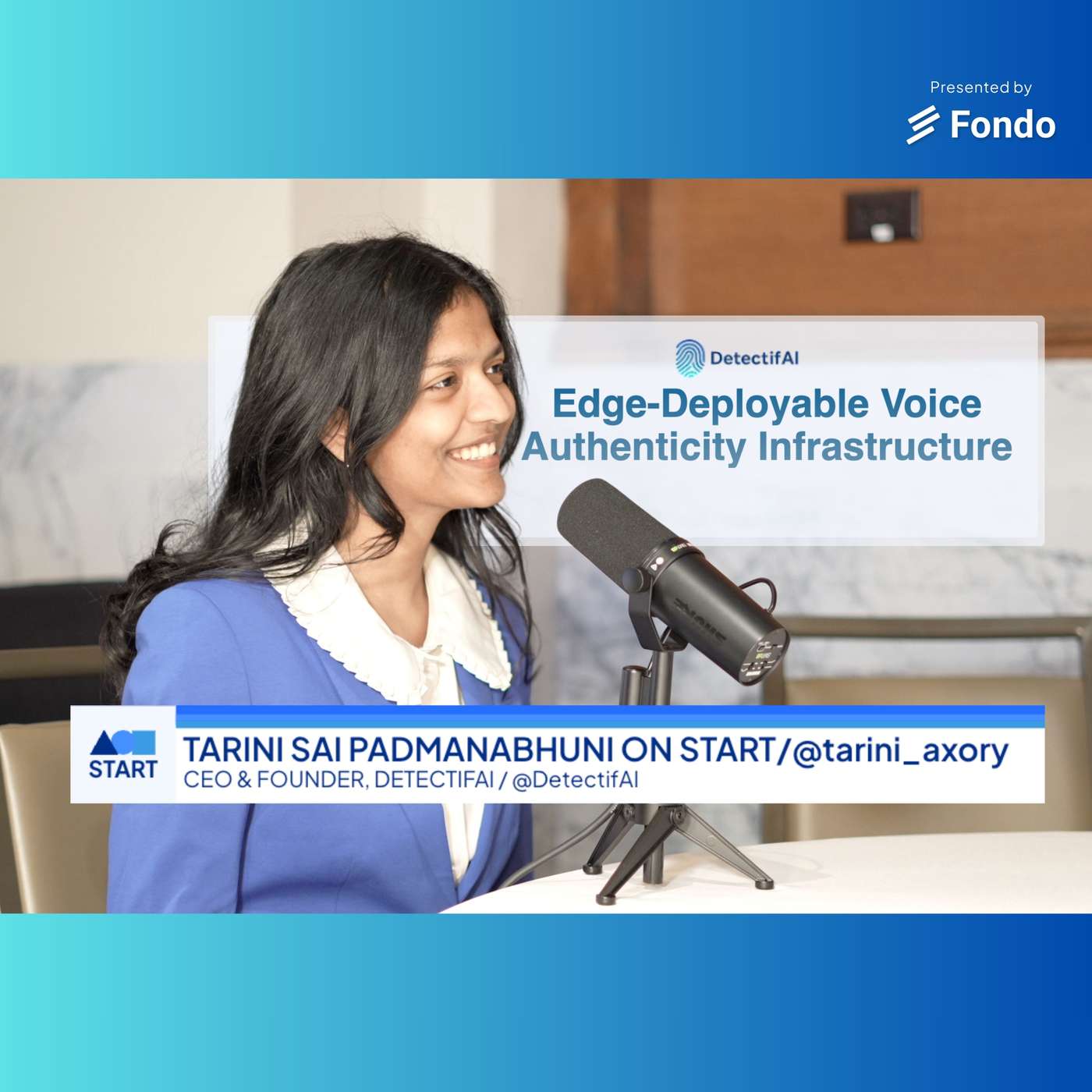
    START: Tarini Sai Padmanabhuni, Founder & CEO, DetectifAI “Real-time deepfake voice detection”

    A phone call used to mean trust. Now it could be AI. DetectifAI is building the next layer of cybersecurity for the AI era Not another chatbot Not another AI wrapper Foundational models built to detect audio deepfakes It started with something personal. Tarini's grandfather lost thousands of dollars to a simple deepfake. That moment became the reason to build. Tarini had already been in machine learning since grade six Nearly a decade studying how AI works She saw where the technology was headed - and what was missing Fraud has existed for a very long time Cybersecurity has existed for a very long time Deepfake detection is that same discipline extended into the AI world. Today, DetectifAI serves clients across banking, finance, security, telecoms, and OEMs An API that integrates into existing enterprise infrastructure And on mobile, it goes even deeper - into the OEM layer itself. Which makes the vision tangible. You answer a call. Your phone gives you a rolling update on whether that voice is likely AI or a real human Detection during the call. Not after the money is gone. The scale comes from where it's deployed. A single OEM integration can unlock protection for millions of people. And deepfake detection is only the first step. The larger vision is an anti-fraud landscape that helps people navigate scam calls, robocalls, and anything that falls under the purview of fraud. The next generation of AI companies won't just build intelligence They'll build trust 🎙️ Tarini Padmanabhuni, CEO, DetectifAI on Fondo START pod 00:57 Founder origin story 01:18 ML background 01:42 Audio deepfake detection 01:53 Enterprise customers 02:15 Growing AI fraud 02:39 AI cybersecurity 03:16 Enterprise integration 03:29 Telecom and OEM strategy 03:46 OEM distribution vision 04:13 Real-time call detection 04:33 Broader anti-fraud vision 04:58 AWS grant journey 05:31 Building in San Francisco 05:52 Residency experience 06:15 Advice for founders Check out detectif.ai

  • #130
    July 21 · 10 min

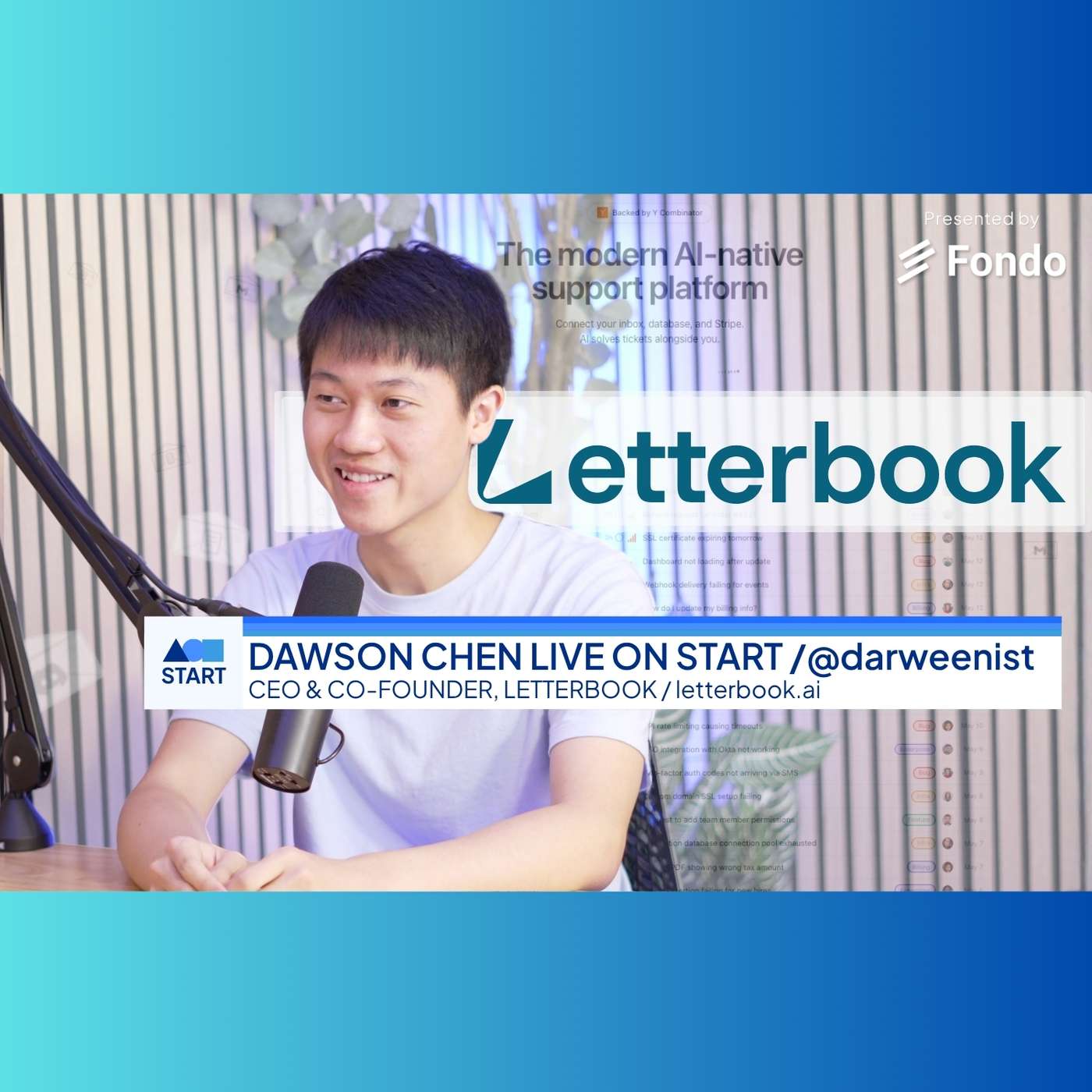
    START: Dawson Chen, CEO & Founder, Letterbook "AI-native customer support platform"

    100,000 users sounds like a dream Until you're personally answering 50+ support tickets a day... That was Dawson Chen. He'd scaled Martin, an AI personal assistant, to more than 100,000 users, but growth came with a new problem: Refund requests Subscription cancellations Login issues And the same support questions over and over again... To keep up, the team hired a virtual assistant and relied on tools like Zendesk and Freshdesk. But every ticket meant jumping between their inbox, Stripe, their database, and their knowledge base. The software wasn't built for how startups actually operate. So instead of accepting it, they built the tool they wished they'd had. Then shared it with a few founder friends. The response was immediate. That internal tool became Letterbook. Today, Letterbook is the AI-native alternative to Zendesk, Freshdesk, Zoho Desk, and Intercom - built specifically for startups. It connects to your inbox, Stripe, database, and knowledge base, then drafts a complete resolution for every support ticket: the reply, the refund, the cancellation, the next action. For many customers, 70–80% of tickets become a single approval instead of minutes of manual work. Their Product Hunt launch reached #3 Product of the Day. Most customer support platforms were built for enterprise support teams. Letterbook was built for founders. "The modern AI-native support platform" 🎙️ Dawson Chen, CEO & Founder, Letterbook on Fondo START pod ‍ 00:32 — From a 100,000-user AI app to discovering a support bottleneck 01:08 — Turning an internal tool into Letterbook 02:09 — Why AI-native support beats legacy help desks 02:47 — How context-aware AI drafts actions, not just replies 03:23 — Automating 70–80% of repetitive support work 04:20 — Why Letterbook is purpose-built for B2C startups 04:55 — Two YC founders, two co-founder breakups, one new company 06:42 — Building the default customer support platform for startups 08:08 — Lessons from launching to #3 on Product Hunt ‍ Check out www.letterbook.ai

  • #120
    July 17 · 25 min

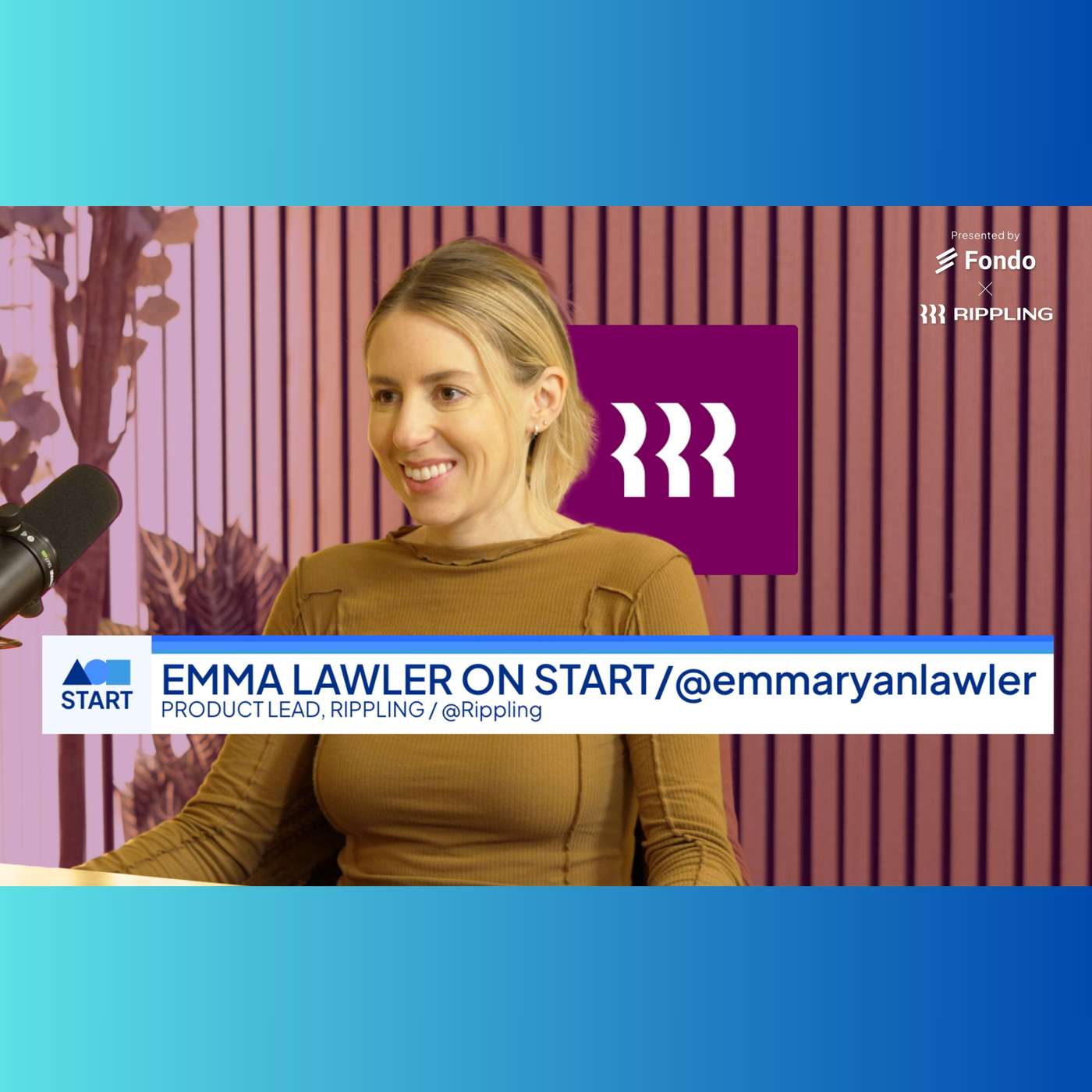
    START: Emma Lawler, Product Lead, Rippling "Rippling Automated Compliance"

    As a founder, Emma Lawler felt like SOC 2 was a major distraction from building. But when she started selling to enterprise logos, it became something that was impossible to ignore. Now, as Product Lead at Rippling, she channeled her first-hand experience of getting SOC 2 compliant to rethink how all automated compliance frameworks are run. It started with a retro. Every other SOC 2 vendor works the same way: Detect a problem Alert your team Fix it...somewhere else The problem with this checklist is that "somewhere else" requires dozens of additional integrations. Because these vendors are just reporting layers on top of your stack. Rippling is your stack. Which means most of your compliance evidence is collected before you start AND when there's a gap in compliance, Rippling fixes it. Unencrypted device --> encrypt it. Wrong app access --> de-provision automatically Incomplete security training --> gate system access until its done. Because compliance really isn't about the report. It's about operating your company securely -- and proving it without a yearly fire drill. Emma shares more about how her own founder journey influenced building Rippling's powerful new automated compliance product, available today for SOC 2 Type 1 and 2. 🎙️ Emma Lawler, Product Lead, Rippling on Fondo START pod ‍ 00:57 Introducing Rippling Automated Compliance 02:07 The evolution of compliance software 03:02 AI's role in compliance workflows 03:41 Understanding SOC 2 requirements 04:20 Compliance and enterprise procurement 05:03 Building secure operating practices 05:46 Product development at Rippling 06:28 Building with a lean team 07:15 Lessons from founding startups 08:55 Learning through product pivots 11:01 AI in modern product development 12:41 Planning and research with AI 16:05 Defining product-market fit 17:56 Using first-party data for compliance 21:35 Advice for early-stage founders ‍ Check out www.rippling.com/products/it/automated-compliance

  • #137
    July 15 · 5 min

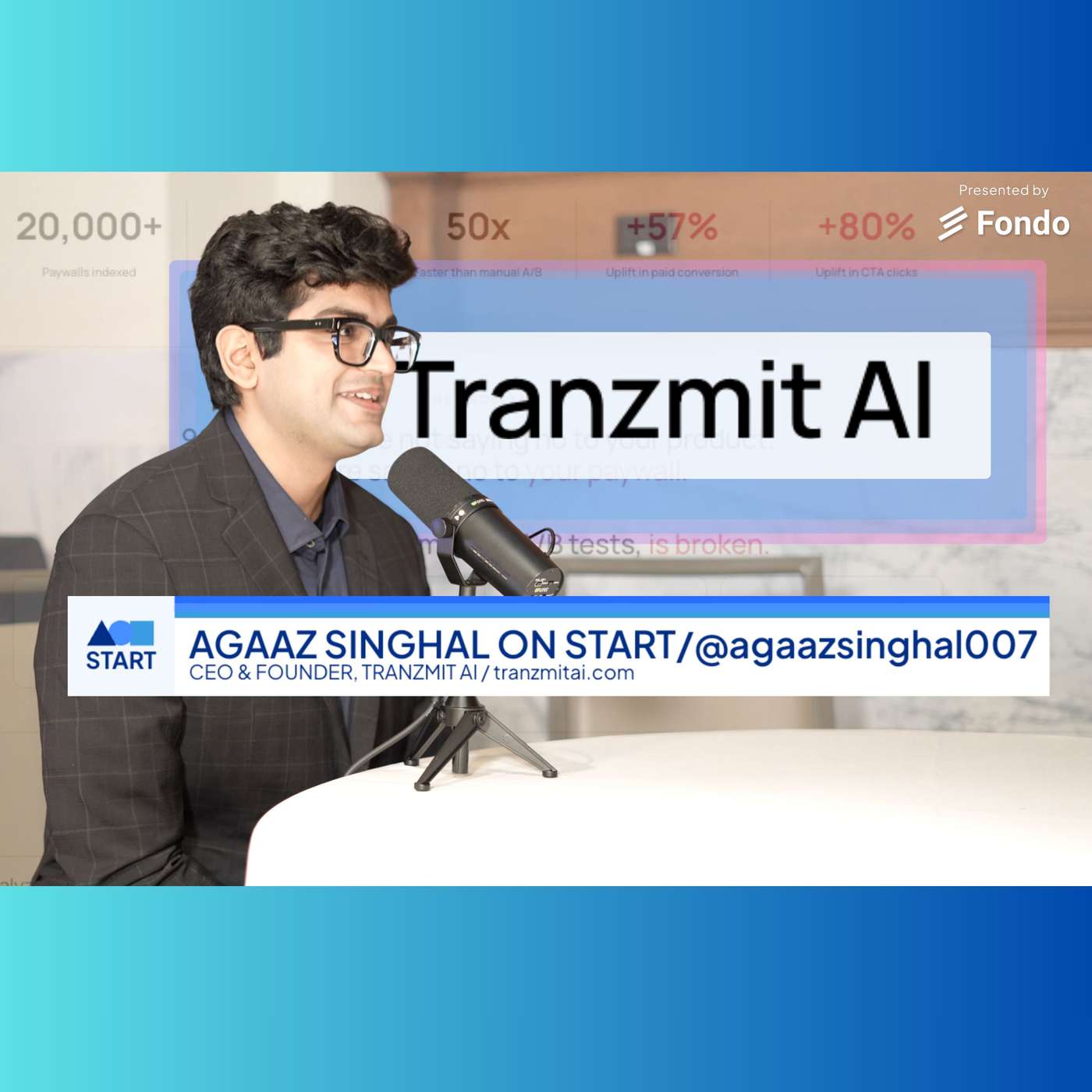
    START: Agaaz Singhal, Founder & CEO, Tranzmit AI "Self-improving AI paywalls"

    96% of users aren't saying no to your product. They're saying no to your paywall. And the only tool most teams have for that is manual A/B tests. Thousands of dollars per experiment. Weeks to trust one result. One variable at a time. Every test starts from zero. Stop guessing. Start compounding. Tranzmit AI builds, tests, and evolves paywalls instead. Analyze the behavioral data, generate variants, score them against simulation and conversion history, ship the winner with guardrails and auto-rollback. 50x faster than manual A/B. 25M paywall views a month feeding the loop. Every result sharpens the next one. Four months ago, Agaaz Singhal was pointing the same engine at the opposite end of the funnel. We recorded this episode in March, when Tranzmit sat on top of the cancel button: Detected at-risk customers before they cancelled Intervened with personalized conversations Identified the root cause of frustration Filed live Jira tickets for engineering Recovered customers who were ready to leave Five lines of code. Three-minute setup. Not just to stop churn. To understand it. Read the behavioral data, generate the intervention, measure it, loop. Same engine. The screen changed. In the episode Agaaz describes product teams flying blind for weeks, stitching together analytics dashboards while customers walked. Behavioral data, an intervention at the moment that decides revenue, measured and fed back. Same loop, pointed at the front door. Running 24/7. "Building self-improving software infrastructure" 🎙️ Agaaz Singhal, Founder, Tranzmit AI on Fondo START pod 00:26 Building AI product teams to reduce churn on consumer platforms 00:42 AI-native cancel buttons that understand why customers leave 01:11 Five lines of code. Three-minute implementation. 01:25 Predicting churn before users hit cancel 02:05 Recovering up to 28% of customers at the point of cancellation 02:35 Why product teams spend weeks trying to understand churn 03:20 Scaling a consumer platform to 700K monthly active users 03:35 The insight that led to building Tranzmit AI 03:50 Building in San Francisco at Founders Inc Check out tranzmitai.com

  • #102
    July 14 · 16 min

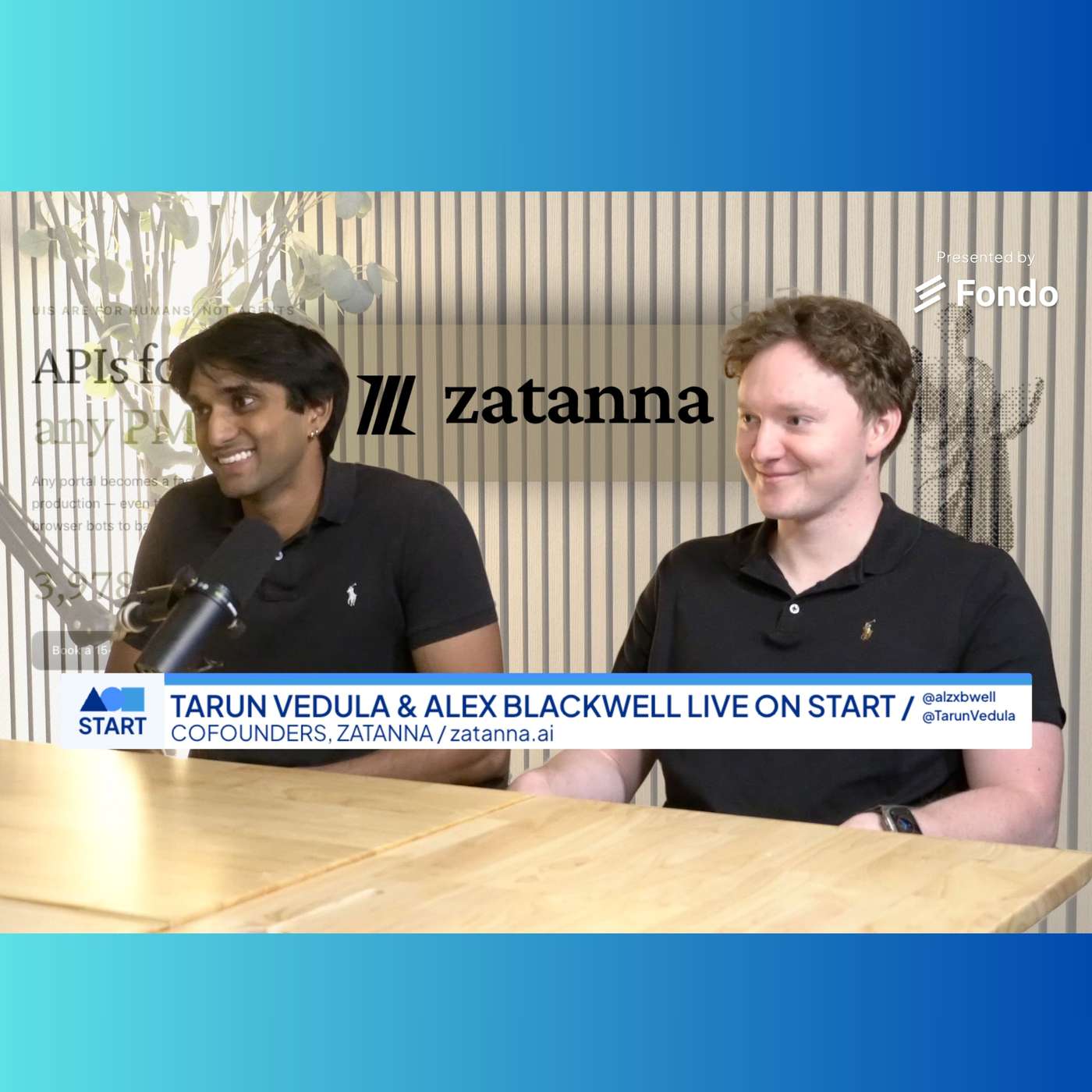
    START: Tarun Vedula & Alex Blackwell, Co-founders, Zatanna: “Turning all software into agent-first APIs”

    Right now most AI agents interact with software the way humans do They open a browser, look at a screenshot, and try to figure out what to click That's like ripping the LIDAR off a Waymo and handing it a camera Tarun & Alex kept running into this problem. They were building an AI receptionist for dentists, and at conference after conference people asked the same thing: do you integrate with X or Y platform? Seven other people were doing the same thing. None of them could integrate. Alex and Tarun could, because they knew how to reverse engineer network requests That's when they stopped digging for gold and started selling shovels Zatanna turns legacy software into APIs by working at the network layer. No browsers. No screenshots. Just requests 10x faster on the workflows they benchmarked. Near-zero browser costs. Reliability goes from 70% to nearly 100%. Computers shouldn't navigate the web like humans do. Humans use screens. Computers use requests "No browser bots to babysit" ‍ 🎙️ Tarun Vedula & Alex Blackwell, Co-founders, Zatanna on Fondo START ‍ 00:57 From jury research to API infrastructure 02:04 The "sell the shovels" realization 03:18 Why browser agents break at scale 04:42 Turning legacy systems into APIs 05:47 Why repetitive workflows shouldn't use browsers 06:37 Teaching AI agents to navigate like computers 08:34 Founder-market fit and knowing when to pivot 10:20 From sneaker bots to reverse engineering anti-bots 12:23 The future of AI vs anti-bot warfare 13:37 Why companies are still stuck at 70% reliability Check out www.zatanna.ai to learn more.

  • #127
    July 13 · 10 min

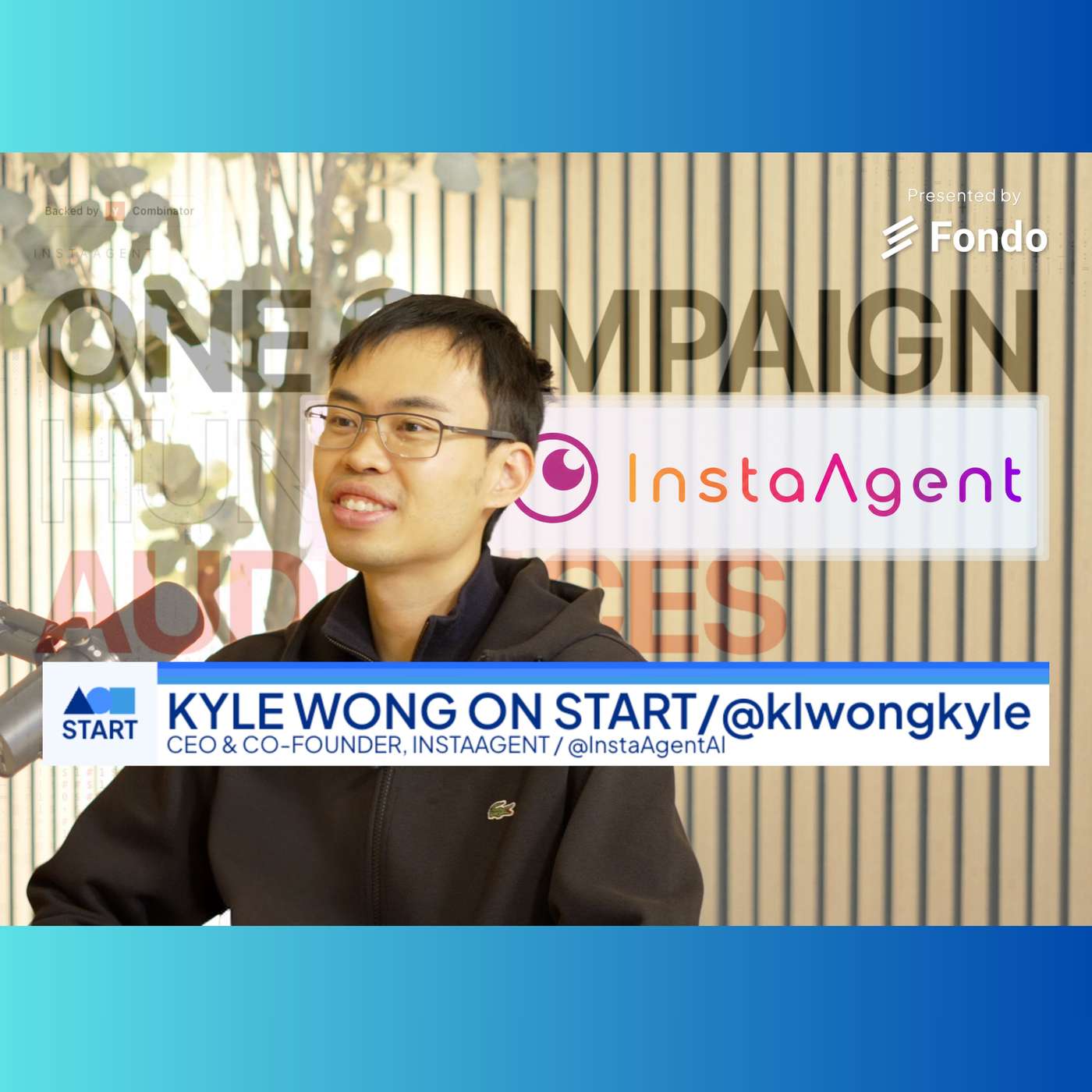
    START: Kyle Wong, Co-Founder & CEO, InstaAgent “Scale marketing campaigns across hundreds of personas”

    Before AI, marketing teams built five creatives for every campaign. Now they can generate fifty. But more content didn't solve marketing. It exposed a new bottleneck. Most of it is slop. AI solved the quantity problem. It created a quality problem. Kyle Wong and co-founder Colin Tseung built InstaAgent to solve the second one. A consumer brand hands InstaAgent a single marketing brief. From there, the team handles the strategy, the creative, the distribution, and the analytics. The result isn't 50 generic ads. It's personalized content built for hundreds of distinct audiences - each with its own messaging, creative, and targeting. Think about a global CPG company. One hundred SKUs. Ten countries. That's a thousand creative variations before you even start optimizing performance. The hard part isn't generating content anymore. It's knowing what to create. Anyone can pay $25 a month for an AI model. Very few know how to turn that model into marketing that actually performs. That's why InstaAgent isn't positioning itself as another self-serve AI tool. It's an AI-native marketing partner - combining human judgment with AI execution to produce creative that brands can actually scale. The market is responding. From $0 to $1M ARR in just 10 months. Enterprise customers including Nestlé and P&G. Enterprise sales cycles closing in less than a month. The first wave of AI made content abundant. The next wave will reward the companies that know exactly who that content is for. 🎙️ Kyle Wong, Co-Founder & CEO, InstaAgent on Fondo START pod 00:15 — What InstaAgent actually does: scaling one campaign across hundreds of personas 00:40 — The full loop from a single brief: strategy, creation, distribution, analytics 00:55 — Why the bet is on TikTok and Meta, where AI video is moving fastest 01:20 — The old way: five creatives per campaign, slow and expensive 01:39 — How AI multiplied output to 50 — and why most of it misses 02:06 — Moving upmarket from SMBs to enterprise names like Nestlé and P&G 02:30 — The CPG math that makes manual creative impossible: 100 SKUs, 10 countries 03:20 — Replacing the Canva-and-Photoshop resizing grind 03:44 — Why an agency model beats self-serve SaaS for AI creative 04:45 — On token-maxing and the tokens offer from Sam Altman at YC 05:47 — From eight years at Goldman to a game that hit 1M users in a month 07:20 — How a hot sauce brand used synthetic personas to broaden its audience ‍ Check out instaagent.com

  • #90
    July 10 · 9 min

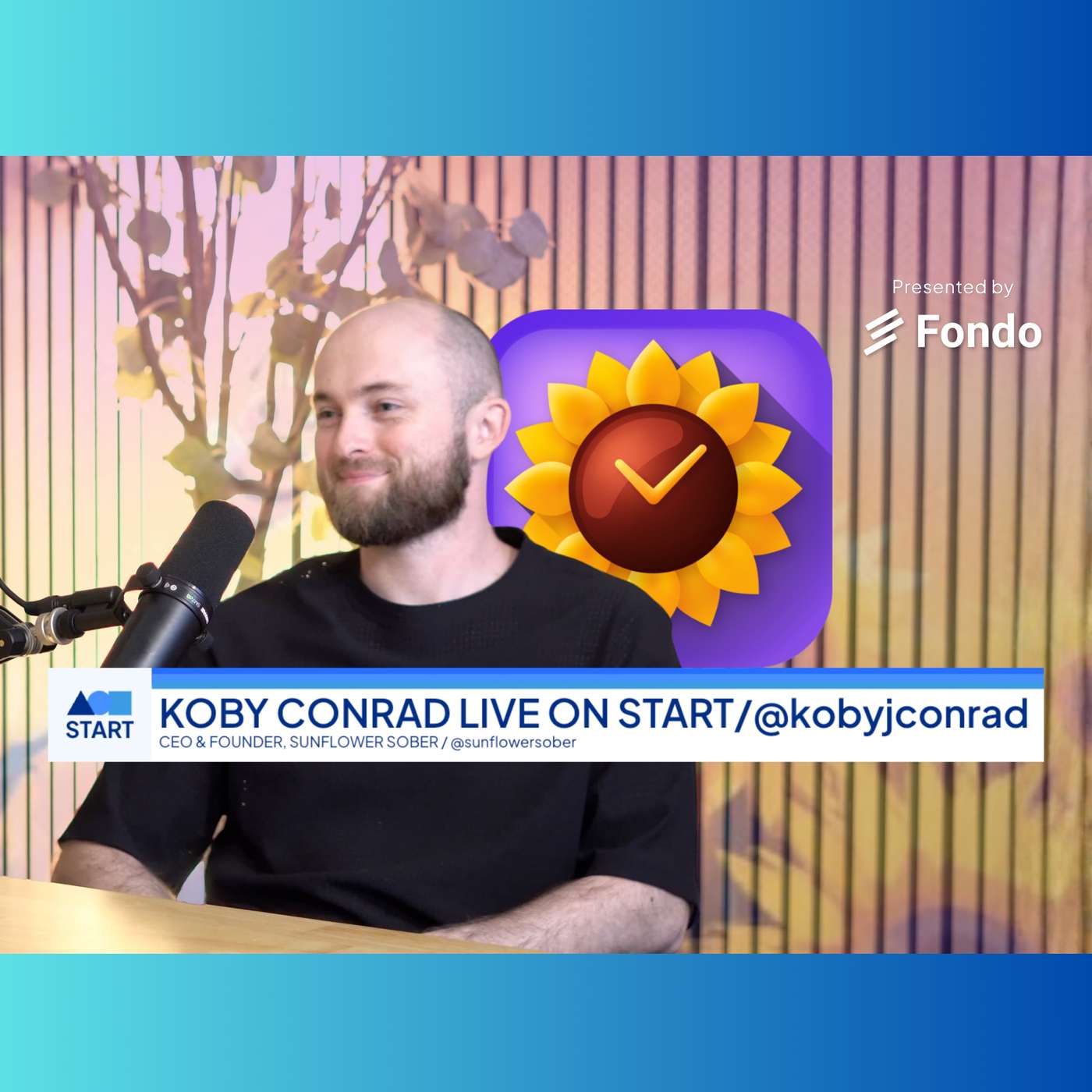
    START: Koby Conrad, Founder & CEO, Sunflower Sober: “The #1 AI Companion for sobriety"

    1.2 billion people struggle with addiction. There will never be enough clinicians to treat them. Koby Conrad believes AI changes that equation. His own story starts much smaller. High 24/7 from 19 to 24. He got sober. Taught himself to code. Built a side project called Sunflower. Years later, that side project became a VC-backed company with a much bigger ambition. Today, Sunflower has: → 500,000+ users and counting → Grown from 200 to 100,000 monthly active users in under 6 months → Reached a $1M run rate in about 10 months → Tracked 109 years of sobriety every single day → Expanded to users in almost every country, across 5 languages The product combines consumer software with clinical care. A consumer app featuring: An AI sponsor for addiction recovery Visual sobriety progression tracking A social network built for recovery CBT journaling and educational content across major addiction types Alongside a tele-therapy clinic: - Talk therapy in California and Texas, expanding nationwide with MAT - World-class doctors building the most effective protocols for addiction The mission began with one billion sober days. The team realized they'd reach that goal sooner than expected. So they raised the target. One trillion. Koby's growth philosophy mirrors the one behind his book, "Channels of Growth": Don't choose between product and distribution. Build both. Because at real scale, only a handful of growth channels matter. Find the one that fits your business—and optimize it relentlessly. His biggest prediction isn't about sobriety. It's about work. At Sunflower, they call it 'Operation Ender's Game' Map every task. Automate what AI can do today. Design for what AI will do tomorrow. The only role left? fleet operator. 🎙️ Koby Conrad, CEO & Founder, Sunflower Sober on Fondo START pod Chapters: 00:49 – Koby joins the show 01:10 – The pitch: a sobriety platform built for the age of ASI 01:35 – Sunflower's origin as a learn-to-code project 01:54 – Koby's own story: high 24/7 from 19 to 24 02:31 – From bootstrapped side project to VC-backed company 02:46 – Zero to $1M run rate in 10 months 03:00 – Tracking 109 years of sobriety every day 03:10 – Why the mission grew from one billion to one trillion days 03:52 – The growth framework: product and distribution, never one or the other 05:03 – The only channels that scale: virality, paid, organic audience 06:01 – Doing YC with his brother, from selling eggs to SF Compute 08:00 – Operation Ender's Game and the fleet operator future

  • #141
    July 8 · 9 min

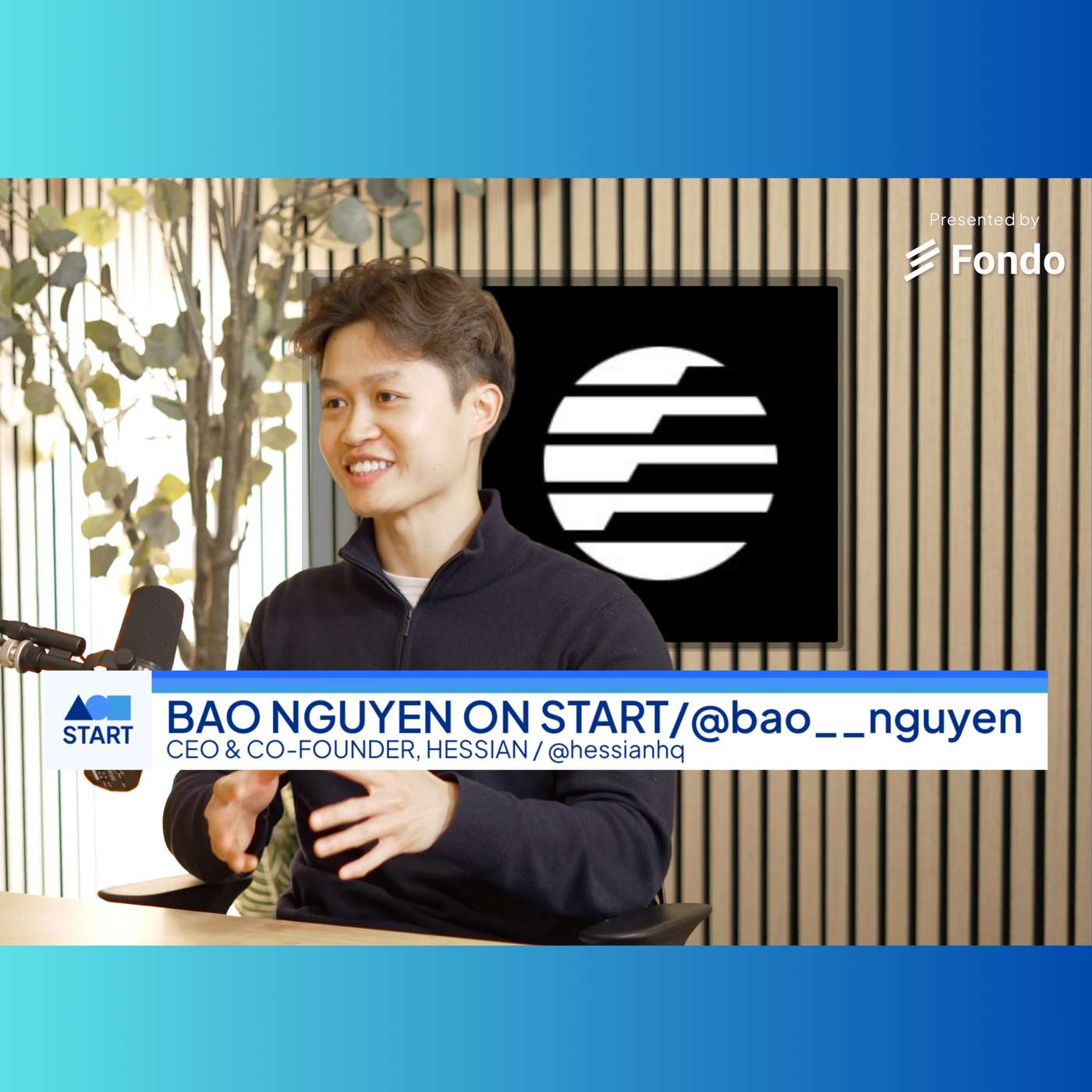
    START: Bao Nguyen, Co-Founder & CEO, Hessian “Forward-deployed AI Agents”

    Bao's job was automating other people's jobs. So he automated his own. His team used to forward deploy the old way — go into customers' offices, sit next to their teams, watch how the work actually got done, then build the automations by hand. Then they asked the obvious question: why are humans doing all of this? Now Hessian's AI agents construct a digital twin of your business, map your back-office workflows, and take the work over end-to-end — plugging into whatever you already use. Slack. HubSpot. Salesforce. No new dashboard. No workflow migration. No figure-it-out-yourself AI tooling. The thesis behind it is blunt: the future of enterprise AI isn't selling more SaaS. Businesses want to adopt AI. They don't know how. Another tool doesn't solve that problem — it adds to it. So the companies that win won't sell software. They'll sell outcomes. 🎙️ Bao Nguyen, Co-Founder & CEO, Hessian on Fondo START pod 01:28 — Introducing Hessian's vision for forward deployed AI agents that automate business operations. 01:58 — Why conversations with customers revealed that AI adoption is still a major challenge for mid-market companies. 02:34 — How Hessian evolved from a workflow orchestration platform into an AI-first automation company. 03:15 — The insight that led the team to replace traditional forward deployed engineering with AI agents. 03:57 — Why Hessian integrates into existing workflows instead of requiring companies to adopt another SaaS product. 04:28 — Bao's perspective on why enterprise AI is shifting toward outcome-based implementations rather than software licenses. 05:02 — Early customer results, including significant time savings and eliminating the need for a dedicated AI engineer. 05:34 — Meeting his co-founders at university and getting accepted into Y Combinator on their first application. 06:22 — The difference between building startups in London versus San Francisco, and why speed matters. 07:20 — The biggest lesson from Y Combinator: validating ideas with customers before investing heavily in product development. 08:05 — Thoughts on OpenAI's token offer and the changing economics of AI startups. 08:48 — Who Hessian is built for today and how the company approaches AI-powered back-office automation across different stages of growth. ‍ Check out hessian.sh

Showing 21–35 of 35 episodes