Skip to content
Artwork for START
BusinessMarketingEntrepreneurship

START

Fondo

Fondo is an all-in-one accounting platform for startups. Get your books closed, taxes filed, and cash back from the IRS.

Play
  • 29 episodes
  • Avg 11 min
  • English
Counted on this page — what you have heard stays on this device, so it is not something the list can be paged by.
  • #150
    Wednesday · 17 min

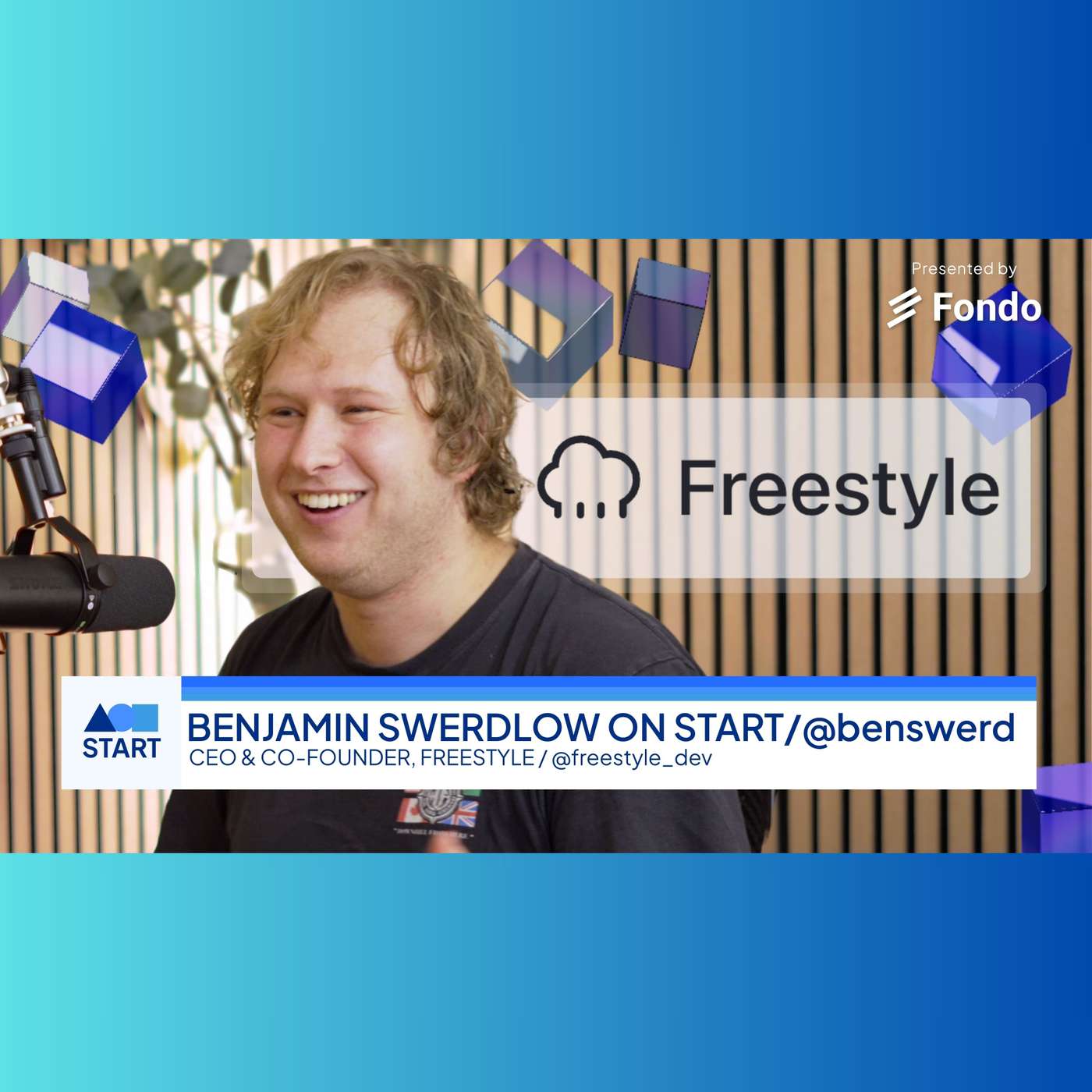
    START: Benjamin Swerdlow, CEO & Co-Founder, Freestyle: "Full Linux VMs for AI Agents. Built for complex tasks that run for hours, days, or weeks."

    “I don't believe Claude Code will exist in its current form in six months” Ben Swerdlow, founder of Freestyle, thinks coding agents are moving from local machines to the cloud, where a single task could get the attention of 20 agents at once. Each gets a complete copy of your stack, production environment included. Each can spend a week testing and refining its approach. You compare the results and take the best one forward. The economics aren’t there yet. Ben expects cost per task to fall another 99% over the next four years, making that level of parallel work practical. Freestyle builds the computers for it: full Linux VMs for tasks that run for hours, days, or weeks. Clone a running machine, memory included, and let agents pursue different approaches from the same starting point. Pause and resume with their state intact. Inside Freestyle, Ben already gives agents a week to find improvements to its VM technology. Roughly 700 tests and 90 metrics help the team judge whether the work made things better. He calls this goal engineering: define the outcome clearly, give agents time to work toward it, and measure whether they’re making progress. "Full Linux VMs for AI Agents" Built for complex tasks that run for hours, days, or weeks 🎙️ Benjamin Swerdlow, CEO & Co-Founder, Freestyle on Fondo START ‍ 00:57 Why coding agents could move from local to the cloud 02:22 From harness engineering to goal engineering 03:08 Giving agents a week to improve measurable results 04:13 Why defining the problem becomes the bottleneck 04:48 How early access to o1 changed Freestyle’s direction 05:51 Why frustrated sandbox users revealed a bigger opportunity 07:28 Giving agents a computer instead of building custom tools 08:12 Getting into YC 11:17 Snapshotting VMs and running agents in parallel 12:24 The economics of letting multiple agents attempt every task 13:26 How GPU supply could drive down agent costs 15:09 Try Freestyle and follow Ben Learn more at freestyle.sh
  • #167
    Tuesday · 12 min

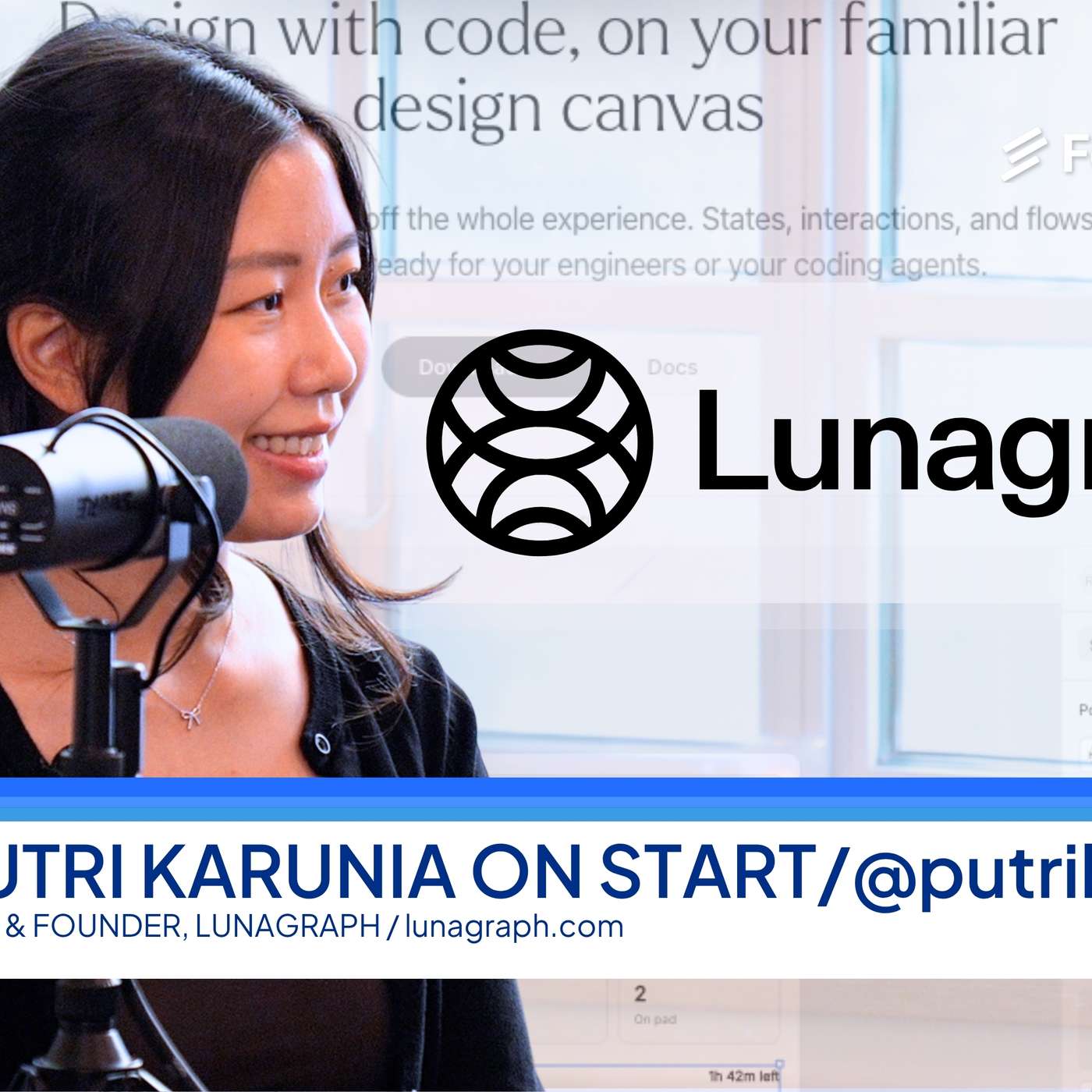
    START: Putri Karunia, CEO & Founder, Lunagraph "Design with code, on your familiar design canvas"

    For years designers made pictures of a product and engineers turned them into code AI changed that. Designers can now build with code themselves But their work is scattered. One of Putri Karunia's users told her he now spends only about 10% of his time in Figma. The rest is split across code, prototypes and code changes for engineers to review The AI coding tools also work one step at a time. Ask for something, get something back, ask again Design doesn't work that way. You try a few ideas side by side, keep the best and mix in parts of another Putri built Lunagraph for this. It's a design canvas where everything you place on it is real code You explore the way designers always have. Then click through the result to see how it actually works and share it with your team as a link Engineers get working code instead of a picture. They take the component they need and add it to the product "Design with code, on your familiar design canvas" Design, explore, and hand off the whole experience. States, interactions, and flows, all as React code, ready for your engineers or your coding agents. ‍ 🎙️ Putri Karunia, CEO & Founder, Lunagraph on Fondo START w/ Guest Host, Grace Gong, Founder, Smart Venture Media ‍ 01:42 Why the design canvas itself is made of code 03:12 Where designers work now that Figma isn't home 03:46 Why design exploration isn't linear and coding agents are 05:19 How Lunagraph differs from Lovable and Claude Design 06:21 Why a chat box can't describe a shadow 08:21 Why designers don't always need to open production PRs 09:16 Handing engineers working code instead of static designs 10:26 Building for the one-designer startup 10:55 Using Lunagraph daily on paying client work 11:25 Bring your own agent and pricing ‍ Check out www.lunagraph.com

  • #162
    Monday · 12 min

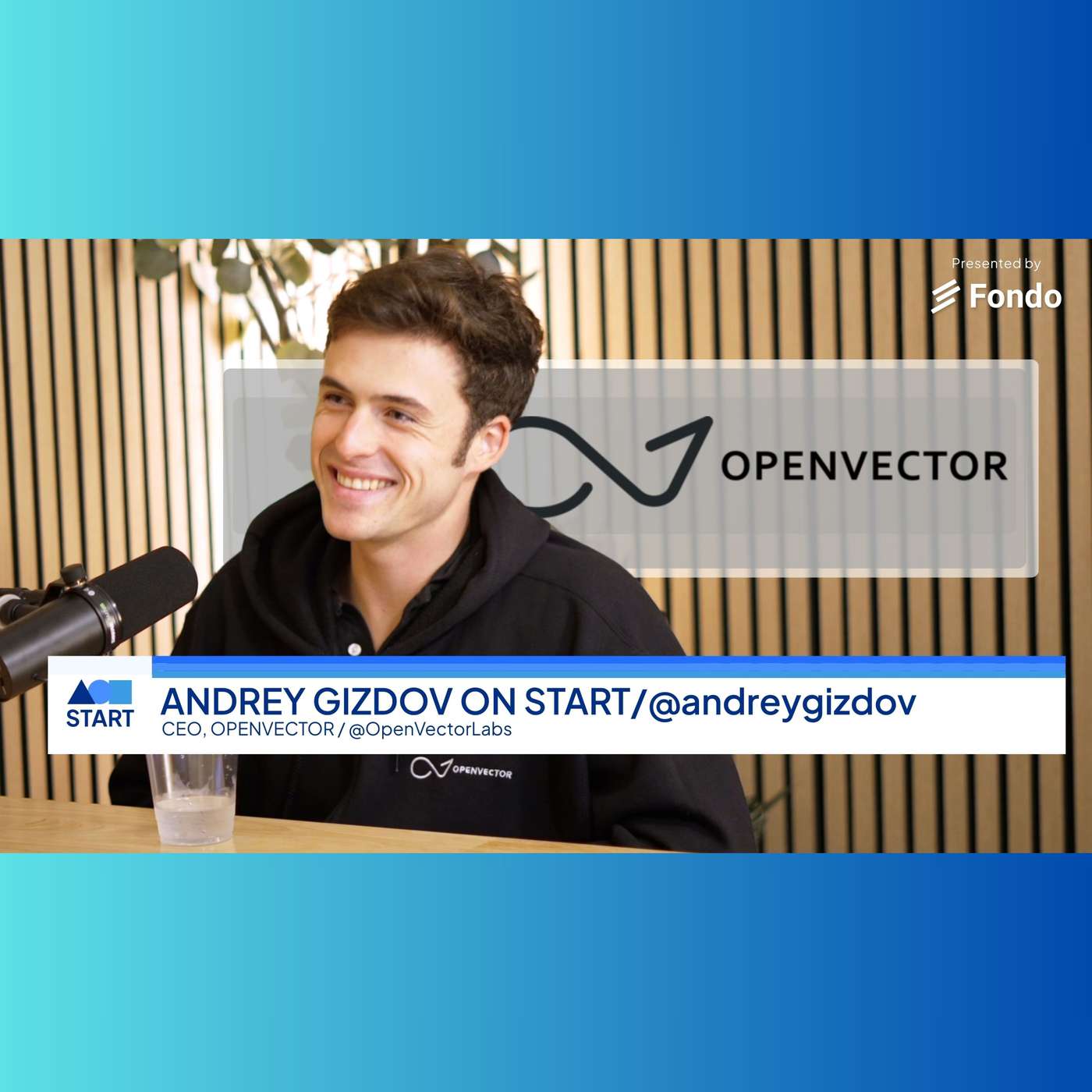
    START: Andrey Gizdov, CEO & Co-Founder, OpenVector: "Vision Language Action Systems for the Physical World"

    There are over a billion cameras in the world. They can all see. Almost none of them can tell you what they saw. Andrey Gizdov has been in computer vision since 2016, when CNNs were all the rage, researching real-time vision models. He met his co-founder Vishal Urlam at a hackathon. His co-founder had deployed cameras and IoT devices across India's power grid to monitor it. Then they went to conferences on cameras and intelligence and found the state of affairs grim. From that point, they knew this was a company that was going to exist. OpenVector connects what cameras see to what businesses do. Connect an existing camera and describe a workflow in plain English: Track a misplaced item. Check that an SOP was followed. Detect an unscanned item. Turn an empty shelf into a restocking task. When something needs attention, OpenVector can take the next step inside the software a business already uses - creating records, sending requests, updating tasks, or notifying someone to act. Vision → Language → Action. Doing that without replacing the existing camera infrastructure is the hard part. Historically, bandwidth and compute pushed vision systems onto on-prem hardware. And ripping out a customer's existing setup doesn't scale. Andrey says OpenVector has significantly reduced those requirements with almost no loss in accuracy. Today, the company describes its underlying technology as the world's fastest and lowest-bandwidth VLM engine. During YC, they sold to major companies, including some of the biggest gas-station operators in the country. The larger bet is that AI is moving out of the chat window and into the physical world. OpenVector is building the layer between what a camera sees and what a business does next. 🎙️Andrey Gizdov, CEO & Co-Founder, OpenVector on Fondo START 01:39 Harvard and the path into computer vision 02:42 Vision, language, action systems 03:08 Typed commands into camera workflows 03:17 Warehouse and subway use cases 05:15 Why build it now 05:35 Meeting his co-founder 06:02 The camera conference 06:19 Getting into YC, second try 06:38 How they got the domain 07:45 Biggest YC lesson: sales 08:05 Client ROI and talking price 09:23 Why nobody solved this sooner 10:25 Cutting bandwidth and compute 11:22 Foundation models for vision 11:42 AI moving to the physical world Check out openvector.com

  • #158
    September 18 · 12 min

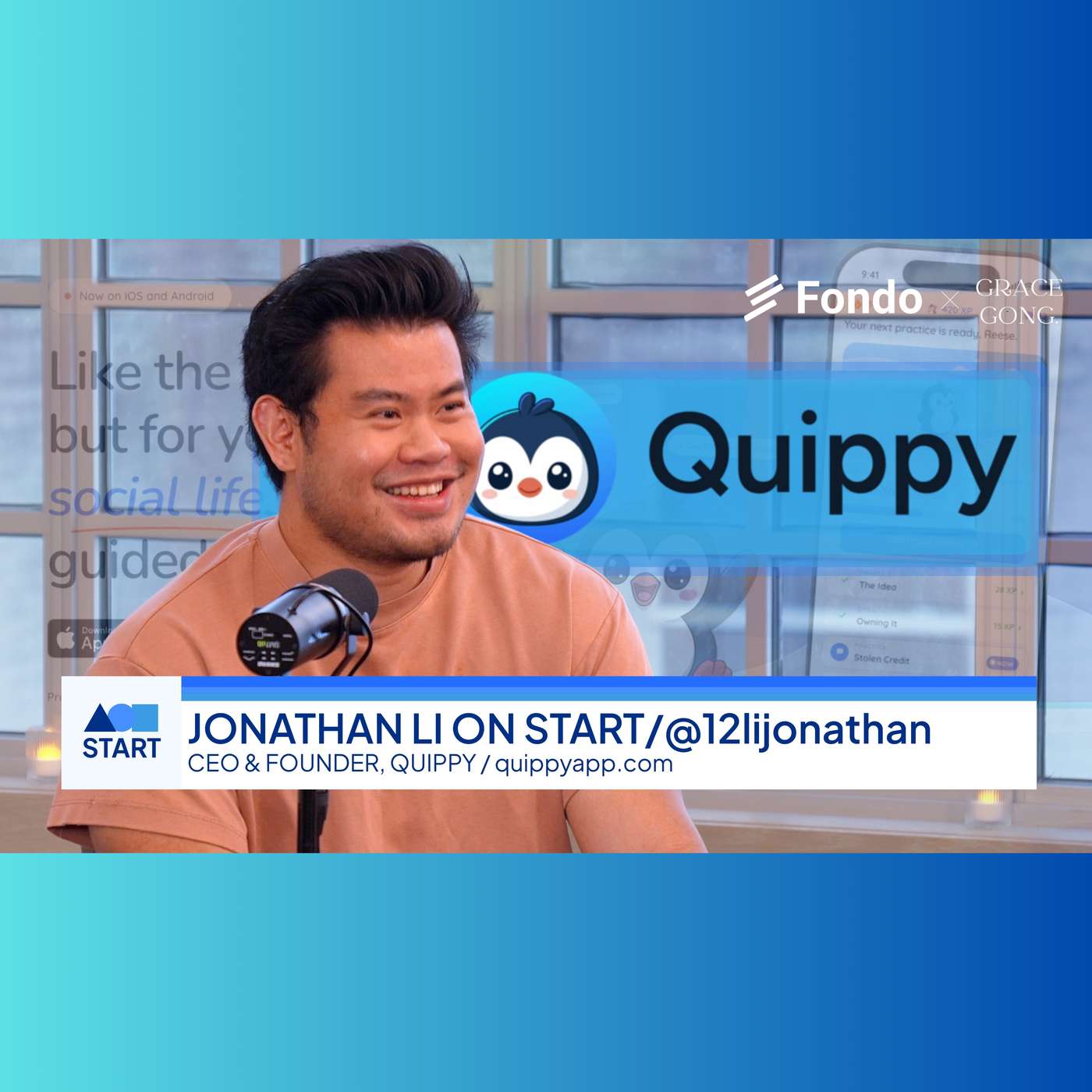
    START: Jonathan Li, Founder & CEO, Quippy "Helps build social skills through daily practice"

    Quippy lets you rehearse the conversation before you have it. Pushing back on a boss. A first date. Short practice scenarios, line-by-line feedback on what landed and what backfired, and the app turns your weak spots into drills. Then you do it again tomorrow, and it gets sharper each round because it's learning what you specifically keep getting wrong. Jonathan Li built the whole thing solo, and he's in the current Fall YC batch. His bet is on the habit, more so than the content. You can build a genuinely good curriculum for almost any skill and watch it go unused, because the bottleneck was never whether the lessons work. It's whether anyone opens the app on a Tuesday when nothing is forcing them to. Small consistent practice beats heroic bursts, and the heroic burst is what most products accidentally optimize for. So Quippy is built like a game, not a course. Consumer is a thin slice of his incoming batch. He thinks value has to trickle down to the consumer eventually, and he'd rather be early. 🎙️ Jonathan Li, Founder & CEO, Quippy on Fondo START w/ Guest Host, @gracegongGG, Founder, Smart Venture Media ‍ 01:15 Two and a half years as a PM at Duolingo 01:50 Leaving, a seven-month detour, and starting Quippy 02:45 Duolingo-inspired gamification applied to social skills 05:40 Why building a skill is a habit problem 05:55 How Quippy builds a personalized curriculum 06:50 Dating and work: where people actually use it 08:30 Two months heads down as a solo founder 10:15 Why consumer distribution comes down to volume of experiments ‍ Check out quippyapp.com

  • #149
    September 16 · 15 min

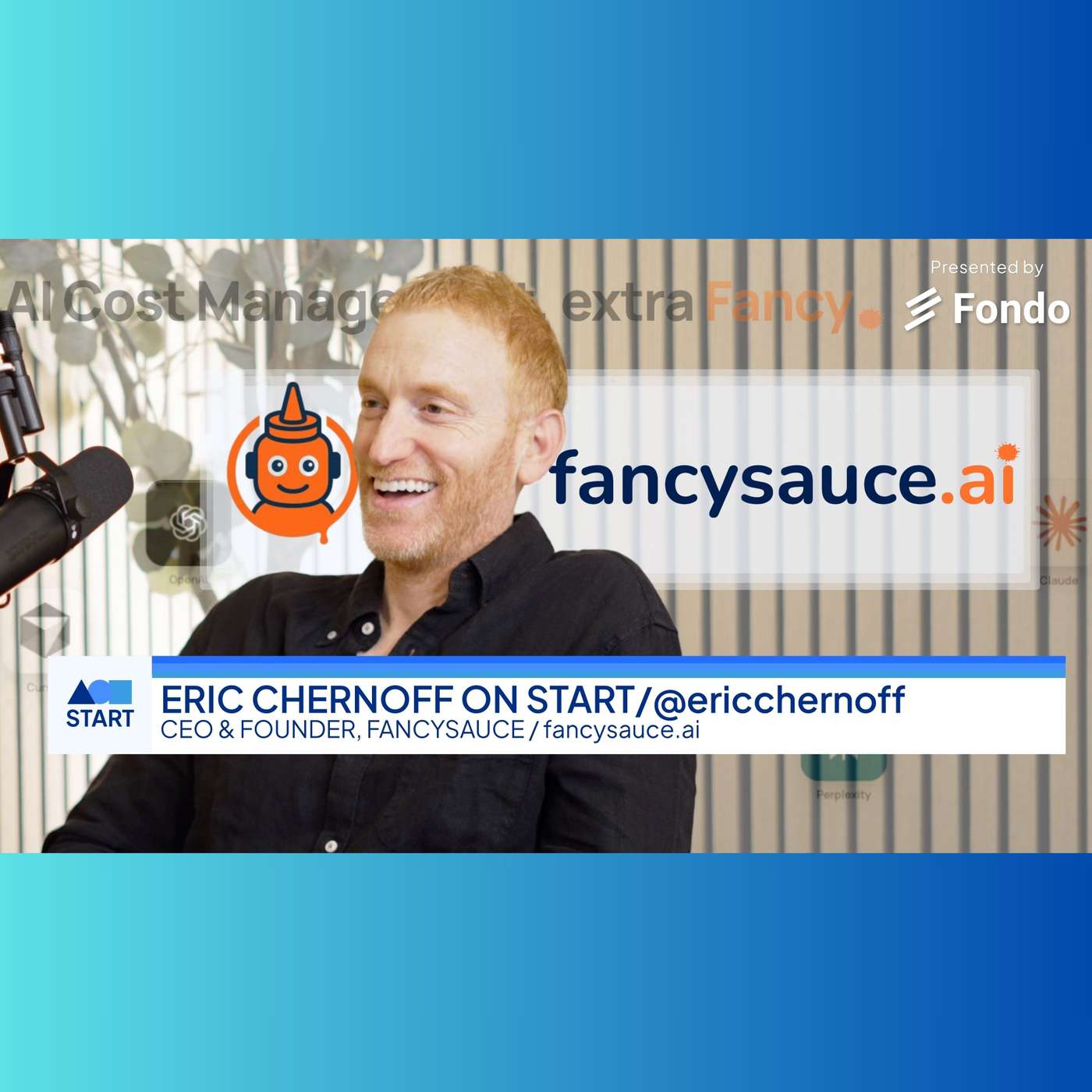
    START: Eric Chernoff, CEO & Founder, Fancysauce.ai "AI Cost Management, extra Fancy: Track usage, monitor ROI, and optimize spend across every AI workflow"

    A CFO at a publicly traded company on variable AI pricing: "This is introducing my worst nightmare, which is a blank check" Claude, Codex, Cursor, Devin, Gemini... Every workflow creates usage and every token creates cost, and unlike something like a Gong license, the price isn't fixed. That's the problem Eric Chernoff is building Fancysauce to solve: AI Cost Management, extra Fancy. Track usage, monitor ROI and optimize spend across every AI workflow. Fancysauce shows every token and ties it to the team, product, model and business value behind it. Spend lands in the right bucket, COGS or OPEX. Then you decide what to do about it. Eric sees a second shift in how companies organize work. He calls it "death of the org chart, birth of the work chart" A human can own a task while AI assists, or AI can own it while a human approves; some tasks go entirely to one side. Fancysauce maps that ownership across people and AI, with spend by team and project and waste, ROI and per-unit efficiency in real time. 🎙️ Eric Chernoff, CEO & Founder, Fancysauce.ai on Fondo START 01:57 Every token: tracking usage across Claude, Codex, Cursor, Devin, Gemini + more 03:22 Three lanes of AI spend: in-product AI, internal automation and individual usage 05:34 AI budgets by person, and understanding spend across every tool 06:30 Why the work chart replaces the org chart 07:13 Human-owned, AI-assisted vs. AI-owned, human-approved work 08:42 Why reporting to AI may happen at the task level, not the job level 10:49 The CFO problem: variable AI pricing with no fixed cost 13:14 Retain AI measured human work; Fancysauce measures work flowing through agents 15:01 Why big markets carry companies, and why Eric believes AI is an even bigger opportunity ‍ fancysauce.ai

  • #128
    September 4 · 6 min

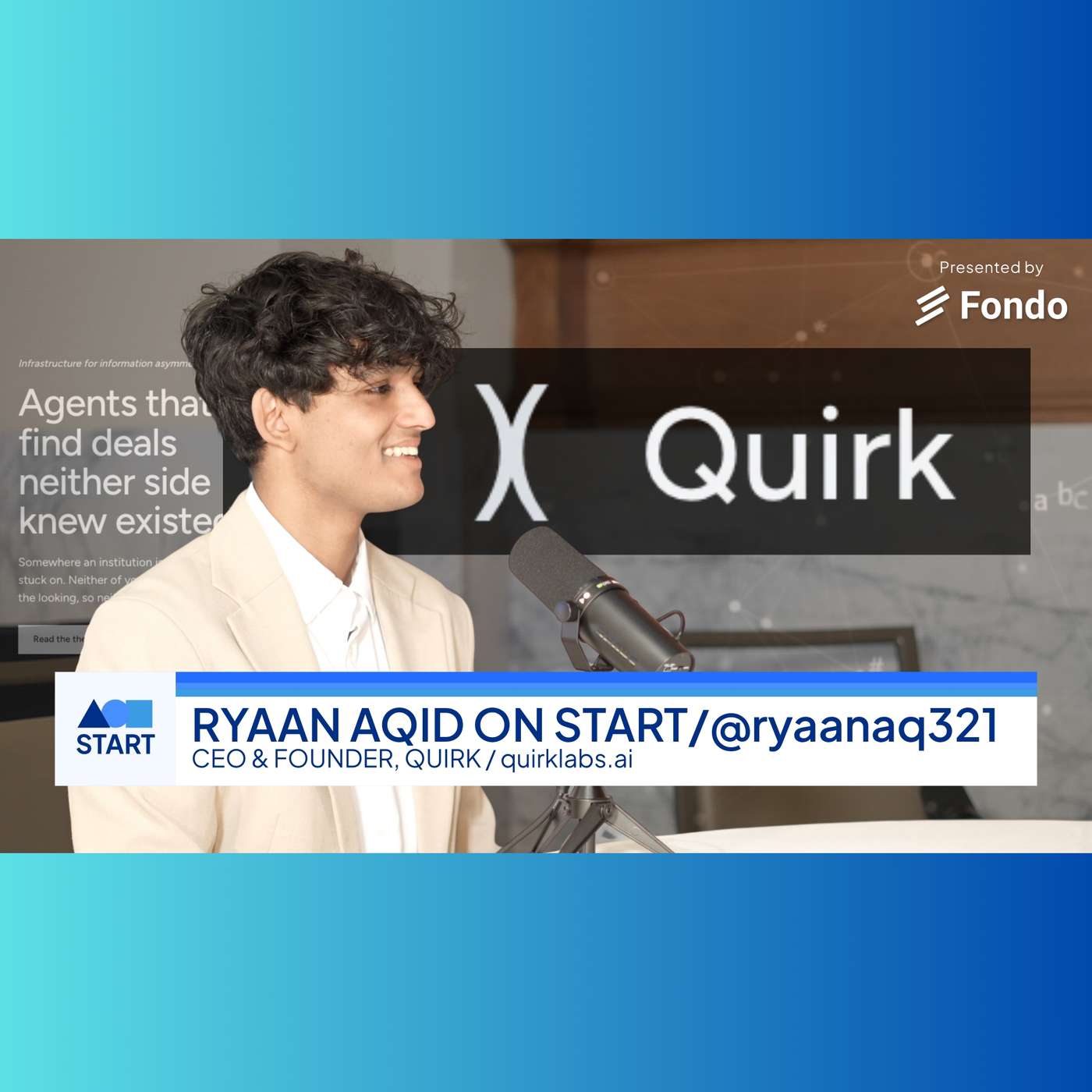
    START: Ryaan Aqid, Founder & CEO, Quirk “ Infrastructure for information asymmetry”

    Somewhere, someone already has the thing you're looking for. A dataset, a patent, a capability, a customer, an answer. Most of the time neither of you ever finds out. That's the problem Ryaan Aqid built Quirk around, and he first recognized it in Bangladesh, watching workers earning $50–100 a month while Upwork listed work paying ten times more. Nothing separated them except information. The opportunity already existed; the connection never happened. It runs through everything. Institutions sit on datasets they'll never open, companies shelve technology somebody else is desperate for, and entire markets fail to form because two people who'd have built something never met. Ryaan calls it the largest economy nobody can see: the things that were never made. Quirk builds infrastructure to dissolve that asymmetry, with agents that do the looking so neither side has to move first. Holding something you won't use? It works out who it's worth something to. Stuck? It finds whoever got past this a year ago, without you having to describe the problem. "Agents that find deals neither side knew existed." 🎙️ Ryaan Aqid, Founder & CEO, Quirk on Fondo START pod ‍ 01:05 Getting the buyers to say exactly what they needed ‍ 01:30 Building distribution through government relationships in Bangladesh ‍ 02:00 Why he thinks the average person's information gets sold through intermediaries ‍ 02:40 The high school nonprofit in Bangladesh ‍ 03:08 Realizing freelance platforms could 10x a worker's income ‍ 03:25 Moving people up Maslow's hierarchy of needs ‍ 04:05 Leaving Cornell two days after classes started ‍ 05:05 What's next and where to follow along ‍ Check out www.quirklabs.ai

  • #65
    September 3 · 9 min

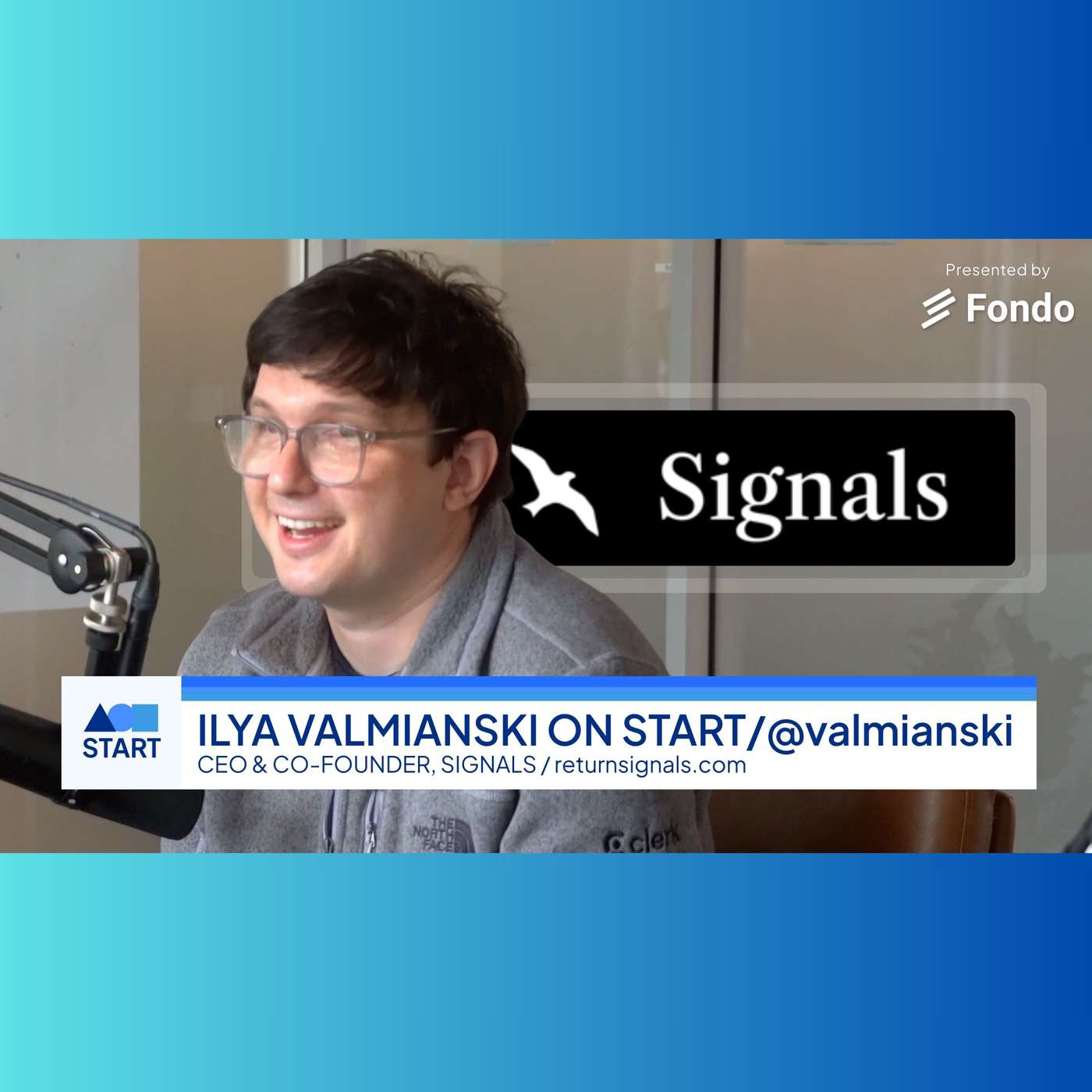
    START: Ilya Valmianski, CEO & Co-Founder, Signals "The AI store associate that turns buyers into regulars"

    Spend enough at a luxury house and someone actually calls to ask how the bag is working out. Ilya Valmianski brought that up on the show as the piece of retail everyone else quietly gave up on, less because it stopped working than because people are expensive and most brands can't put a store associate on every order. Signals makes that level of attention cheap enough to give every customer one. Today it looks like an AI store associate that reaches customers over iMessage after they buy. It answers sizing questions, recommends exchanges when something doesn't fit, flags when a sold-out item is back, remembers preferences, and works out what someone might want next. It's aimed at the relationship rather than the single sale. Their A/B tests against a holdout put it at roughly $30 of incremental repeat revenue per conversation. The problem underneath started with a number Ilya dropped early in the episode. Every year roughly $1.2 trillion of apparel and fashion sells online, and about $300 billion of it comes back. His argument is that most of those returns aren't buyer's remorse. People bought because they wanted the product. Then the sizing was off, nobody told them what to do about it, and the only obvious path on the screen said Return. Signals tries to get there first. Rather than processing refunds more efficiently, it opens a conversation that can turn a would-be refund into an exchange, and increasingly into a customer who keeps coming back. The bigger idea reaches well past ecommerce. Ilya calls it super-staffing: one customer support rep at a $20 million company spends the day putting out fires, but give that same company a thousand AI associates and the job stops resembling support. Everybody gets someone paying attention to them. He pointed at healthcare, where he worked before this. In nursing, he argues, the ideal staffing level is closer to 100× the current one. Brands have never lacked the data to treat you like a regular, only the staff to act on it. "The AI store associate that turns buyers into regulars" 🎙️ Ilya Valmianski, CEO & Co-Founder, Signals, on Fondo START 01:25 The $300B ecommerce returns problem 02:23 Bringing luxury concierge service to every customer 02:55 Why AI enables personalized support at scale 03:39 Early traction and YC growth ambitions 04:18 Turning refunds into exchanges 04:42 The economics of revenue retention 05:31 Why proactive support beats return portals 06:47 The concept of "super-staffing" 07:08 Reimagining customer support with AI 08:23 The real secret behind startup success ‍ Check out returnsignals.com

  • #152
    September 2 · 14 min

    START: Aoden Teo, CEO & Co-Founder, Miso Labs: "The most emotive foundation models for voice"

    Voice AI can pass a Turing test. For about a minute. That's a generated clip, though. Have a human actually talk back and the number collapses to six or seven seconds, roughly where generated voice sat three years ago. One reason, per Aoden Teo of Miso Labs: real conversation isn't turn-based. Around 20% of the time more than one person is speaking, and laughter drives a lot of that overlap, since you laugh at a joke while it's still being told. We also adjust our pacing toward whoever we're talking to without noticing we're doing it. Voice models struggle with all of this. Full-duplex voice, where a model listens and speaks at the same time, is still extremely early. So an agent can know your joke is funny and still have to wait until you've finished before it laughs, by which point the timing has killed it. Aoden describes a second consequence: agents get pushed toward almost "psychotically emotive" behavior. If they can only talk once you've stopped, they need some other way to show they were listening. You finish your sentence, and the thing goes "Hmm?" You've heard it. Underneath that sits an architecture problem. Voice models have to respond fast, which constrains how large they can be, and fast means something different here than it does in text. Working with an LLM like Claude, Aoden points out, you care how quickly it finishes your code, not how quickly it starts. Voice inverts that. Nobody needs 10 hours of audio generated in two seconds, because nobody can listen to 10 hours of audio in two seconds; what matters is reaction time. Most architectural decisions trade latency against throughput, and Aoden expects voice to keep moving away from LLM-style designs toward ones built around very low latency. Miso is already pushing on it. Miso-1 got 3,000 stars on GitHub and 5 million views on Twitter, and they record data in their own LA studio because the internet doesn't contain every kind of audio a voice model might need. Nobody has released a podcast of someone reading millions and millions of email addresses, and people still want voice models that can read email addresses aloud, so teams end up generating some very strange training data themselves. The clip isn't the hard part. The hard part starts when you talk back. "The most emotive foundation models for voice" 🎙️Aoden Teo, CEO & Co-Founder, Miso Labs on Fondo START 1:03 Miso-1: 3K+ GitHub stars + 5M X views 1:59 Why emotiveness matters for games, UGC + interactive products 3:06 Measuring progress in voice AI with longer Turing tests 4:01 Why interactive conversation is harder than generating convincing clips 5:08 Full-duplex voice, interruptions + why laughter matters 6:04 Latency vs. throughput - and why voice differs from LLMs 7:09 Miso's LA recording studio + the challenge of voice training data 9:02 Talking teddy bears, UGC, anime + unexpected voice AI use cases 10:19 From serious chess player to math obsession to building @MisoLabsAI 12:11 The surprise YC interview Check out misolabs.ai

  • #110
    August 25 · 7 min

    START: Zach Nieman, Founder, Snap Studio: “Unleash Your Studio - The Ultimate Portable Vocal Booth"

    It started with a dream. “Guys, let’s make it to the GRAMMYs.” 18 months later, he did it. Zach Nieman’s GRAMMY-Nominated production “Cali Coast (Psionics Remix)” by Soul Pacific led him to walk the red carpet and planted the seeds for his first startup. It all began when he was recording music at home. The gear was right. The room wasn't. Zach had the interface, the cables, the mics, and the chops to lay down a real take. He hit record and realized: “It sounded like garbage.” So he built a workaround: a frame with sound absorption blankets over it, enough to kill the reverb and get a usable signal he could mix in post. He told the guys “Let’s make this album so good that we get to the GRAMMYs.” The songs they tracked inside it made that dream come true. Then he put the booth away for over a year. It took fellow GRAMMY Nominated producer Josh Williams asking “whatever happened with that booth?” to get Zach to pull it back out and think product instead of prototype. Snap Studio is the commercialized product of that vision: a 360-degree acoustic isolation shield trusted by thousands of artists, singers, and voice actors worldwide. The popular Standard and XL models break down in minutes and fit into a duffel bag, making them perfect for storage or travel. Get Rolling Stone's #1 recommended portable recording booth here: www.snapstudio.com 🎙️ Zach Nieman, CEO & Founder, Snap Studio on Fondo START 01:08 Why San Francisco became the Hollywood of startups 02:08 The thing that decides whether a take is usable, and it isn't the gear 02:50 The recording that came back unusable 03:28 From a blanket-and-frame prototype to the Grammy red carpet 03:38 The question from a friend that restarted the whole project 03:58 Launching during COVID, when nobody could get to a studio Check it out at www.snapstudio.com

  • #60
    August 21 · 8 min

    START: Varun Agarwal, Founder, Envariant "Interpretability and reasoning infra for foundation models."

    Fine-tune a frontier LLM on addition and it handles one through five digits without breaking a sweat. Six digits, a friend of Varun's found performance collapsing to zero. The model had learned addition up to the length it saw in training and nothing underneath it, no rule it could extend. Varun calls it a fatal flaw, one he expects to surface in deep tech and safety-critical applications, and rather than argue about it he'd rather hand builders a way to look inside and check. You hand Envariant 50 examples where your model tells the truth and 50 where it hallucinates. It finds the surface inside the model where the difference lives, and from there you can amplify that behavior, suppress it, or trace what caused it. The same approach pulls out the principles a model has learned in a form a human can actually read, and generates the edge cases most likely to break them. Which is the part that traces straight back to biology. Varun was building foundation models to design synthetic viral genomes: DNA in, DNA out, and no way to tell what the thing had worked out about virology along the way. Figuring out how to read that back out became the company. ‍ 🎙️ Varun Agarwal, Founder, Envariant on Fondo START 02:02 An interpretability SDK for foundation model builders 02:34 Finding the right surface inside the model 02:47 Detecting hallucinations by finding internal model representations 04:00 Why scale and compute still dominate but are hitting walls 04:42 The 6-digit addition collapse and what it means for AI reasoning 06:02 Closing the gap from 95% demo to 99.99% production 07:37 From designing synthetic viral genomes to founding Envariant 08:15 thoughts on AGI Check out envariant.ai

  • #119
    August 20 · 5 min

    START: Abhinav Gopal & Darren Hsu , Co-Founders, Rubbrband "AI creative company"

    Hollywood-grade storytelling, startup-speed execution. Most AI ads feel disposable. Rubbrband is betting the future looks cinematic instead. Jeremy Lee, Abhinav Gopal, and Darren Hsu: 3 CS researchers out of Berkeley who loved film built video models for Hollywood. They got good enough at cinematic content that they now do it for some of the world's top brands, and they do it without the hundreds of thousands of dollars companies have been handing traditional ad studios. Discovery call, creative brief, script, production. Start to finish in weeks, not months. With real narrative and real pacing, the kind of thing that's actually worth watching. Everyone's figured out by now that cheap AI content makes taste worth more. The brands that win won't explain their product; they'll make you feel something. Smaller teams, faster launches, higher production value than traditional headcount & budget should allow for. That's the shift rubbrband is building for. 🎙️ Abhinav Gopal & Darren Hsu, Co-Founders, Rubbrband on Fondo START pod 00:45 What Rubbrband does 01:53 From Berkeley engineers to building AI models for Hollywood 02:30 The creative process behind every launch campaign 03:14 Hollywood-quality production for startups at a fraction of the cost 03:35 Why they're determined to avoid AI slop 04:17 Why AI video adoption is still in the early innings 04:55 Hollywood's growing adoption of AI 05:20 Where to find Rubbrband ‍ Check out www.rubbrband.com

  • #92
    August 18 · 9 min

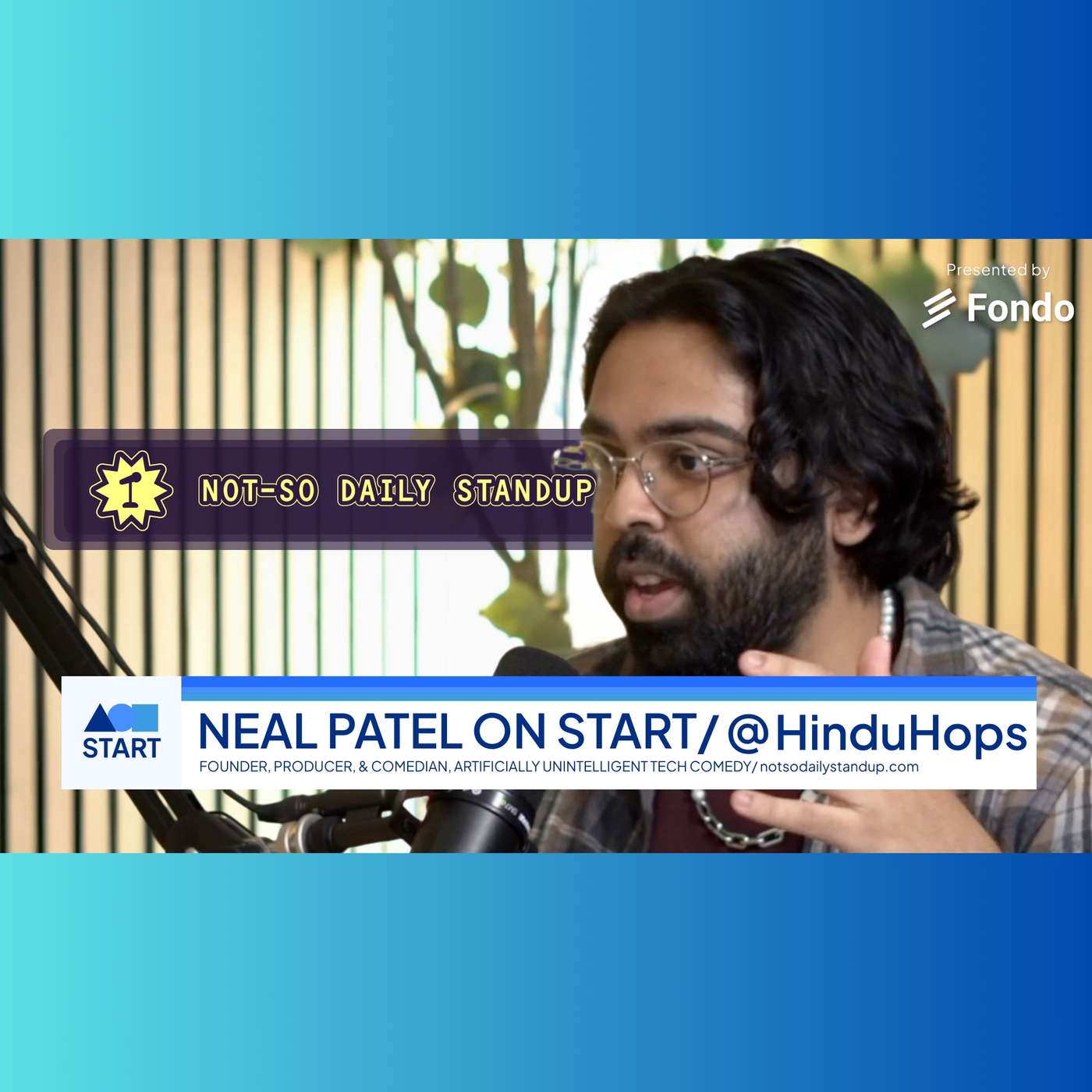
    START: Neal Patel, Founder, Producer, Comedian, Artificially Unintelligent Tech Comedy: “Tech stand up comedy shows”

    You can't do a joke about the Jira board at a normal comedy club. The audience won't know what the Jira board is, and explaining it kills the laugh before you get to it. Neal Patel wanted to do that set anyway. For years he worked two jobs, software engineer during the day and stand-up three or four nights a week in New York clubs at night. Plenty of the comedians he ran into were also in tech. Backstage they'd trade jokes about tech, about Jira, and all the little things that only people in the industry found funny, and none of it really worked once they stepped in front of a normal comedy audience. So in 2024 he built the room that didn't exist yet. Artificially Unintelligent puts engineers, PMs, founders, CEOs, and VCs who happen to be experienced comedians on the same bill as comics you've seen on Netflix, Hulu, HBO, NPR, Comedy Central, and in The New York Times. Hundreds and hundreds of people signed up for the first one. Ask him how the audience got that big that fast and he'll tell you he hates the question, because the honest answer is that he doesn't know. What he does know: put on a really good event with really cool people, invest heavily in design and branding so nobody files it under "another open mic," and never spend a single dollar on advertising or marketing. The rooms fill with founders, senior operators, cracked engineers, heads of finance, and operators from across the startup ecosystem. Open bar, themed drinks, designed end to end. Keeping the shows free is part of the philosophy, and sponsors are what make that possible. Neal would rather take one sponsor check than twenty bucks each from 200 people. Which gets at why he thinks the first open mic isn't the hard one. You go up convinced you're the funniest person alive, nobody laughs, and that's survivable. The second one is where it gets decided, because that's when you have to choose whether you're doing it again. He kept choosing it. Artificially Unintelligent now runs regularly in New York with shows in San Francisco, and Neal wants to spend more time in Los Angeles and Chicago too. 🎙️ Neal Patel, Founder, Producer, Comedian, Artificially Unintelligent Tech Comedy / notsodailystandup.com on Fondo START ‍ 1:25 Doing stand-up for years, and engineering for even longer 1:53 Meeting other comedians who also worked in tech 2:09 Wanting to tell jokes straight off the Jira board 2:17 Launching the first Artificially Unintelligent show in 2024 2:21 Hundreds and hundreds of people signed up for the first show 3:24 Never spending a single dime on advertising or marketing 4:37 Why he'd rather take one sponsor check than twenty bucks from 200 different people 6:12 Why the first open mic is easy -and the second is the hardest 7:56 Using an AI transcriber to capture joke ideas in real time 8:37 Why Artificially Unintelligent doesn't have a newsletter ‍ Check out notsodailystandup.com

  • #134
    August 14 · 10 min

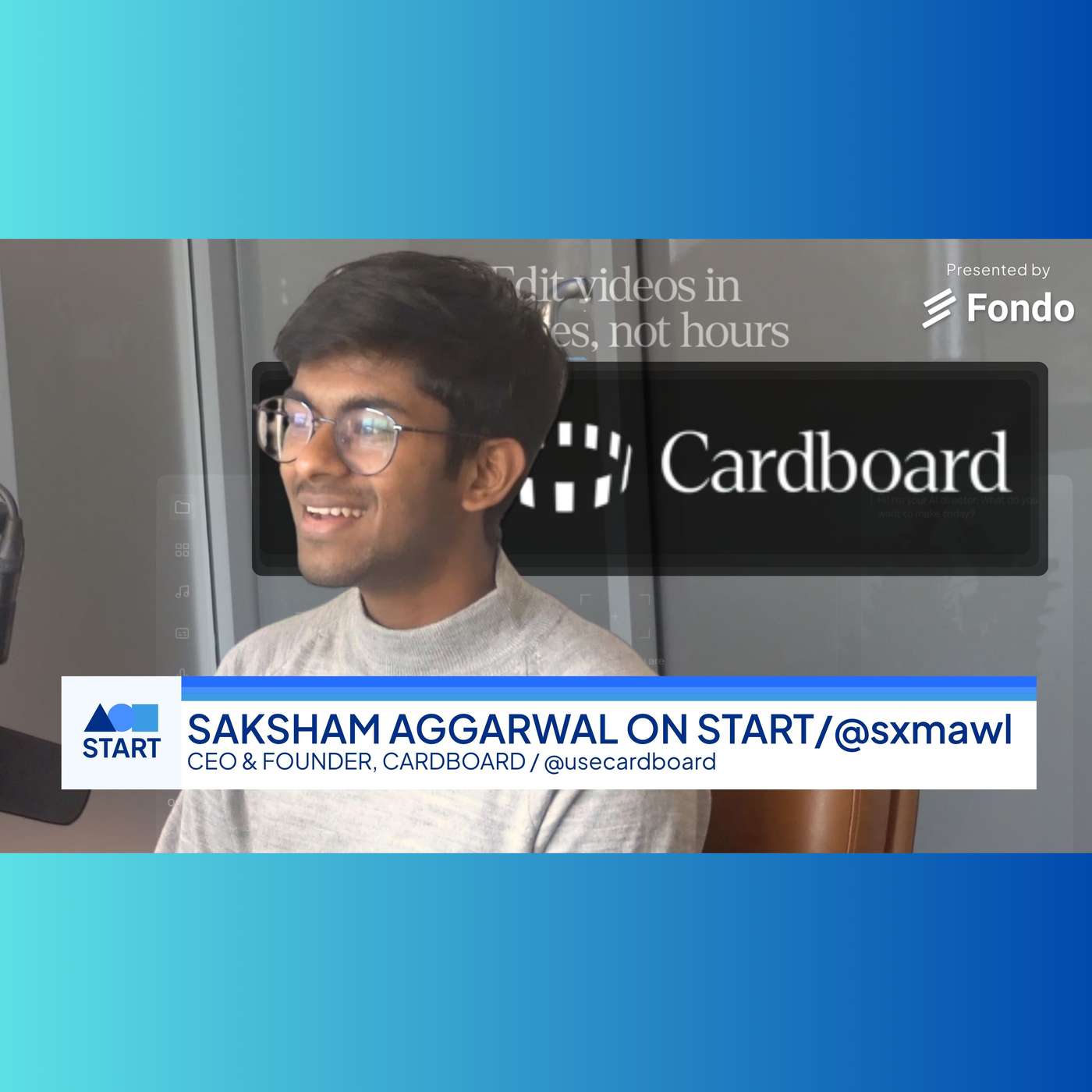
    START: Saksham Aggarwal, CEO & Founder, Cardboard "Agentic video editor"

    Creating video is getting easier. Finishing it isn't. AI writes code and you still review it before it ships. AI makes clips now, and someone still has to assemble them into something you'd actually publish. That's the layer cofounders Saksham and Ishan are building at Cardboard. Two engineers who met in school and taught themselves filmmaking in Bangalore by studying Apple's launch films. Saksham describes Cardboard simply: it's Cursor for video editing. There's no good VS Code for video, so they're building one. You throw your clips in and give it a goal, and it hands back a first cut in minutes. Brief it the way you'd brief a junior editor. Video isn't one problem, which is what makes the editor core hard. Screen recordings need different ML pipelines than talking heads or sports footage, so a routing model decides where each query goes. They don't want to be an AI feature inside the existing editor. They want to build the editor itself. ‍🎙️ Saksham Aggarwal, CEO & Founder, Cardboard on Fondo START ‍ 00:45 The Cursor comparison, and why editing is the product 01:10 Learning filmmaking by studying and recreating Apple's launch films in Bangalore 02:30 The YC launch that reached roughly half a million views 03:15 What WebGPU and multimodal models unlocked 04:40 Why they want to own the whole editor instead of plugging into Final Cut 05:10 AI-generated clips are a new camera—and they still need editing 05:50 Why video is one of AI's hardest multimodal problems 07:00 Briefing Cardboard like a junior editor 07:40 Why they stopped selling launch videos to focus on product ‍ Check out www.usecardboard.com

  • #80
    August 11 · 5 min

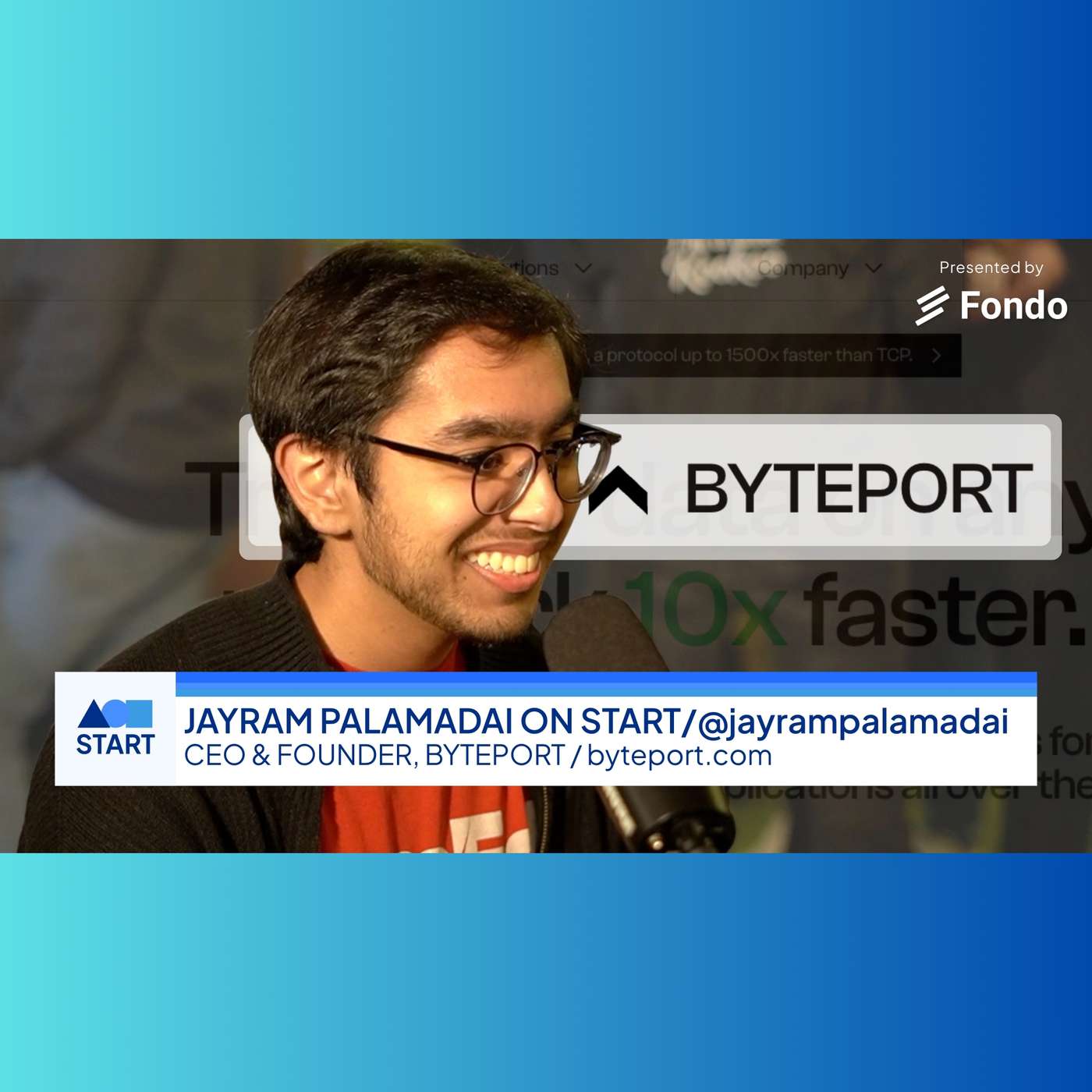
    START: Jayram Palamadai, Founder & CEO, Byteport: “Transfer data on any network 10x faster”

    30 petabytes of collider data. That was Jayram Palamadai's job at CERN, where he worked as a distributed computing engineer getting collider data out to physicists. At that scale you stop thinking about files and start questioning the protocol underneath them, so he designed a different architecture. That became Byteport. It's built on DART, a proprietary transport protocol developed by engineers out of CERN. TCP cuts its congestion window the moment it detects packet loss and then recovers slowly; DART holds near-constant throughput instead, roughly 98 Mbps on a 100 Mbps connection whatever the latency, jitter, or loss. In the field, Byteport has hit speeds up to 1,500× faster than TCP. It runs wherever critical infrastructure runs: on-premises, air-gapped, hybrid, cloud. And in those places a failed transfer isn't a file that shows up late. It's a training run stalled at the data-loading step, a satellite pass that comes and goes, a drone flying without the map it was supposed to have. Byteport runs in all of them. It holds up in intermittent connectivity, high latency, and contested RF. DART runs mission-critical networks spanning land, air, sea, and space. ‍🎙️ Jay Palamadai, Founder, Byteport on Fondo START ‍ 00:59 Byteport's faster file transfers 01:13 Moving 30 PB at CERN 01:24 Rethinking internet architecture 01:57 Launch day reflections 02:50 Driving to YC office hours 03:17 Getting into YC 03:45 The YC interview 04:35 What's next for Byteport ‍ Check out byteport.com

  • #129
    August 10 · 11 min

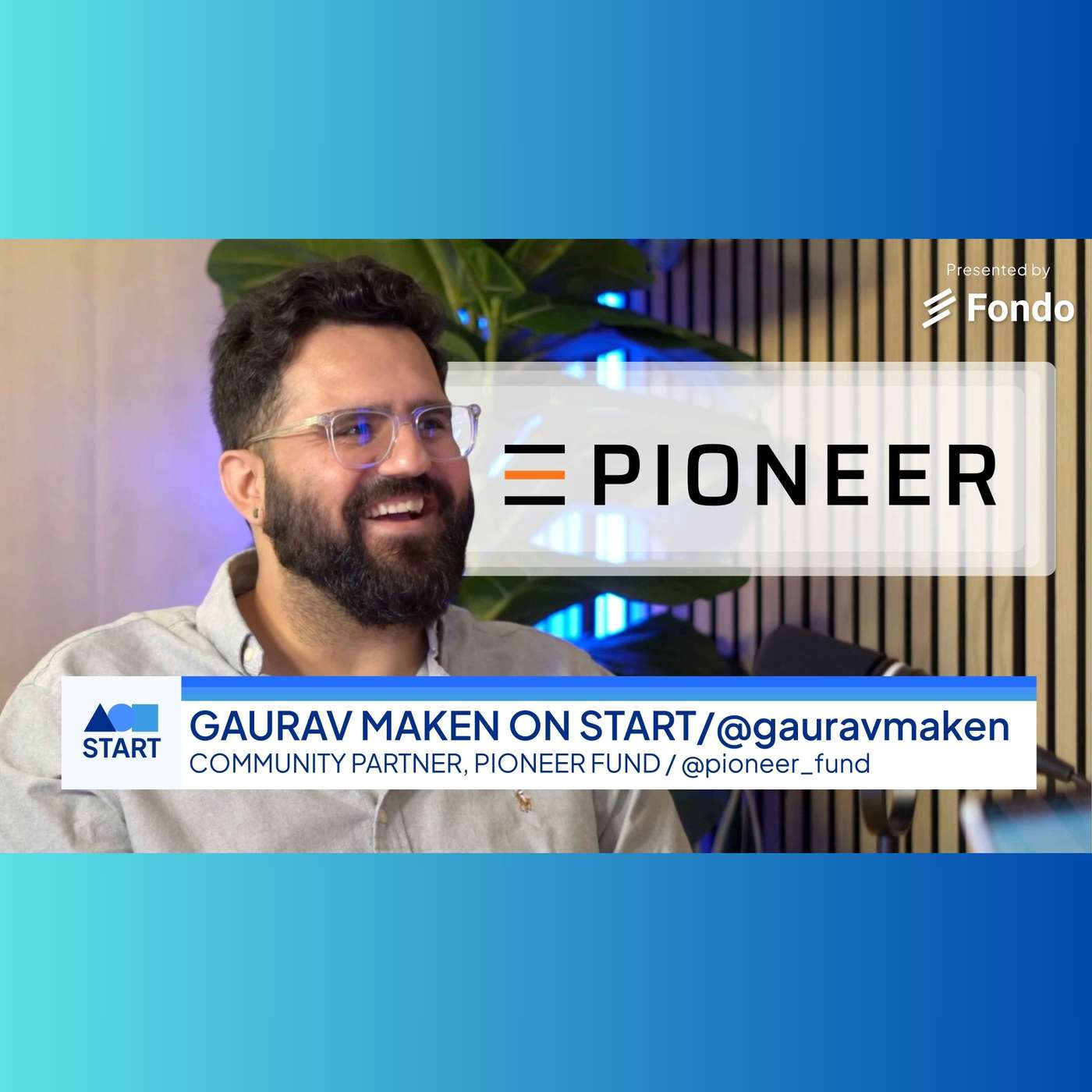
    START: Gaurav Maken, Community Partner, Pioneer Fund "500+ Y Combinator alumni investing in top Y Combinator startups"

    Pioneer Fund met Gaurav Maken at Y Combinator Demo Day, and today he works there as Community Partner. What stayed with him was the way the meeting ran. The people across the table were curious rather than performing, and they wanted to understand what he was building. That's carried into how Pioneer operates now. The team preps hard for every 30-minute founder meeting, several founder-investors join each call, and they'll tell a founder what they like and what they don't, because they've sat on the other side of that table and know how it feels to leave an investor meeting with "nothing". Then they hand the evaluation back. Pioneer sends a post-meeting survey asking founders how the conversation went. Many of them say Pioneer Fund understood their business better than anyone else they met while fundraising, despite some of those founders still getting a "no". Today Pioneer is backed by more than 500 Y Combinator alumni serving as Venture Partners, with 730 portfolio companies and 1,500+ portfolio founders behind it: a network of founders who stay involved long after the investment. It's still growing. VP spots mostly come through referral. And if you don't have one, reach out to Gaurav ‍ 🎙️ Gaurav Maken, Community Partner, Pioneer Fund on Fondo START pod ‍ 01:47 — How PG's essays led him to YC 02:04 — Instacart in 2015, then a grocery startup 02:22 — What the 2020 shutdown taught him 02:52 — Starting a mental performance clinic for founders 03:10 — The Demo Day meeting 03:26 — 500+ venture partners, 1,500+ backed founders 04:50 — The prep behind every 30-minute founder call 05:59 — The survey Pioneer sends after every meeting 06:47 — Expert hours 08:13 — How Jason built a system for investors 09:36 — What it takes to become a Pioneer Fund VP ‍ Check out www.pioneerfund.vc

  • #81
    August 7 · 10 min

    START: Aram Shatakhtsyan, Founder & CEO, Modelence "Build production-ready apps with AI"

    Every startup can build a demo. Then comes everything else: authentication, databases, hosting, monitoring, email, analytics, real-time infrastructure. None of it makes the demo, and every team rebuilds it anyway. Aram Shatakhtsyan spent nearly a decade scaling a startup and kept hitting the same thing. Too much engineering went into infrastructure that looked nearly identical from one product to the next. Modelence is a production-ready framework and cloud platform for the era of AI-generated software, where developers spend their time on product logic instead of rebuilding the same foundation. Generate a full-stack app from a prompt. Auth, database, and production deploys wired in from day one. Inspect, edit, and own the code. Deploy it to Modelence Cloud with production infrastructure, monitoring, scaling, and a custom domain, without assembling a stack of separate services. Prototypes are easy. Production isn't. We filmed this episode with Aram on January 23. Since then, the AI App Builder hit #2 Product of the Day on Product Hunt, and their new Mobile Builder launched in July. "Build production-ready apps with AI" ‍ 🎙️ Aram Shatakhtsyan, Co-Founder & CEO, Modelence on Fondo START pod ‍ 00:57 — The scaling challenges that inspired Modelence 01:22 — Why every startup keeps rebuilding the same infrastructure 02:01 — Why TypeScript became the foundation for AI-native development 03:06 — Building the TypeScript equivalent of Ruby on Rails 03:45 — Why infrastructure matters more than another AI app builder 04:18 — The difference between prototyping and production software 05:14 — Why today's frameworks weren't designed for AI coding agents 06:03 — Designing AI systems with guardrails instead of prompts 07:16 — The vision for production-ready AI applications 08:07 — What Aram hopes developers build with Modelence next ‍ Check out modelence.com

  • #94
    August 6 · 13 min

    START: Charu Sharma & Michael Mernagh, Co-founders, Fenrock AI: “The First AI Workspace for Banking Back Office”

    99% of U.S. banks aren't JPMorgan. All of them are regulated like it. The bottleneck isn't serving customers. It's everything that happens after. Loans. Compliance. Fraud investigations. Customer operations. The work keeps growing. Headcount doesn't. JPMorgan has tens of thousands of analysts. A community bank has a handful. That's the gap Fenrock AI is closing. Fenrock is building the first AI workspace for the banking back office. Built alongside U.S. bank CEOs. Designed for banks. One workspace for all of it. AI gathers the information. Organizes the evidence. Drafts the analysis. Prepares the report. The analyst reviews. The analyst decides. No rip-and-replace. No data migration. Just an AI workspace embedded into existing workflows. Every action is documented with bullet-proof audit logs. Built-in regulatory guidance. Reporting designed for examiners and boards. An analyst clears about 10 alerts a day. Fenrock is built for 20x that. Not by replacing people. By giving them capacity they've never had. Banks process more. Pass their exams. Improve efficiency ratios. And keep serving the communities that depend on them. 🎙️ Charu Sharma & Michael Mernagh, Co-Founders, Fenrock AI on Fondo START pod 01:16 — Fenrock AI's vision: AI agents for the banking back office 01:57 — Customer discovery leads from financial crime to banking compliance 02:33 — Why small and midsize banks became the focus 03:02 — Charu's early life and the experience that shaped her resilience 03:52 — Building multiple startups before founding Fenrock 04:18 — Michael's background building privacy-preserving machine learning at Apple 05:07 — Finding the right co-founder and choosing a long-term mission 06:03 — Pivoting the company and using YC to accelerate execution 07:37 — How YC raised the team's ambition and execution speed 08:36 — Building the first AI workspace for the banking back office 09:17 — Helping small banks meet regulatory expectations with AI 10:24 — Human-in-the-loop workflows, audit trails, and early customer impact Check out fenrock.ai

  • #146
    August 3 · 10 min

    START: Chloe Sow, Co-Founder, Infera "The operating system for your laboratory”

    Scientific discovery shouldn't slow down because of software. But every instrument in the lab ships its own, and someone has to learn all of them. Researchers don't want to memorize instrument interfaces. They want experiments to run. They want answers. They want data. That's the problem Infera is solving. Chloe Sow knows that side of it. Mechanical engineering at Harvard, research at Brigham and Women's, building medical devices and running the experiments by hand. Her co-founder Troy Cheng spent an entire research summer figuring out how to run his lab's experiments on one machine. That was the summer. So they built the thing they needed. Describe an experiment in plain English. Infera turns it into a validated, instrument-ready run across the equipment your lab already uses. One system for protocol logic. Vendor-specific scripts. Laboratory data. Inventory. Institutional knowledge. Today, running an experiment means going instrument by instrument. Tomorrow, one place for all of them. AI agents already design experiments and protocols. But nothing connects those designs to real laboratory instruments. One system. From intent to execution.‍ Infera: "Control lab instruments with natural language" 🎙️ Chloe Sow, Co-Founder, Infera on Fondo START pod ‍ 00:45 Claude Code for scientific instruments 01:27 Troy's entire job was one liquid handler 02:39 Every run captures a record. The missing layer between AI and instruments 03:12 Scientists pressing buttons without knowing the machine 04:22 Plain English to validated instrument-ready run. Academic labs and cores first 05:50 Every instrument ships its own closed software 06:02 Meeting at a virtual Caltech admit session 07:19 Applied to YC for feedback. Got in first try 08:35 Staying disciplined instead of chasing the SF event circuit ‍ Check out infera.bio

  • #117
    July 31 · 12 min

    START Nasrat Khalid - Founder & CEO, Aseel “Connecting artisans to global markets and enabling transparent aid”

    You can track a burrito from the restaurant to your door in real time You donate to a family in a crisis zone. Usually you get a thank-you email. That's where it ends. Nasrat Khalid couldn't understand why. We expect complete visibility when we order dinner. Why not when we're helping another human being? So he built Aseel. A platform for "everything do good" You buy a food package. You see exactly who receives it. You can ask for a photo of the delivery. You can exchange messages with the recipients, if they choose to participate. Instead of donating into a system and hoping, you know the aid reached the person who needed it. That's the whole idea. No plane ticket. No project. No abstraction. "Award-winning US-based platform connecting artisans to global markets and enabling transparent aid" ‍ 🎙️ Nasrat Khalid, Founder & CEO, Aseel on Fondo START ‍ 00:45 The platform for everything do good 02:25 The first 16 years, as a refugee 02:55 Why he left institutional aid to build Aseel 03:40 Leaving Afghanistan at 16 days old 04:05 No ID means no school, no bank account 04:35 Why identity comes before food 05:15 Seven years inside the World Bank 05:58 What happened to aid in Afghanistan after 2021 07:00 AidOS, for institutions 07:40 The Uber Eats insight 08:20 The $30 package you can trace to a family 09:35 Why he joined the residency 12:30 How to get started ‍ Check out aseelapp.com

  • #147
    July 28 · 20 min

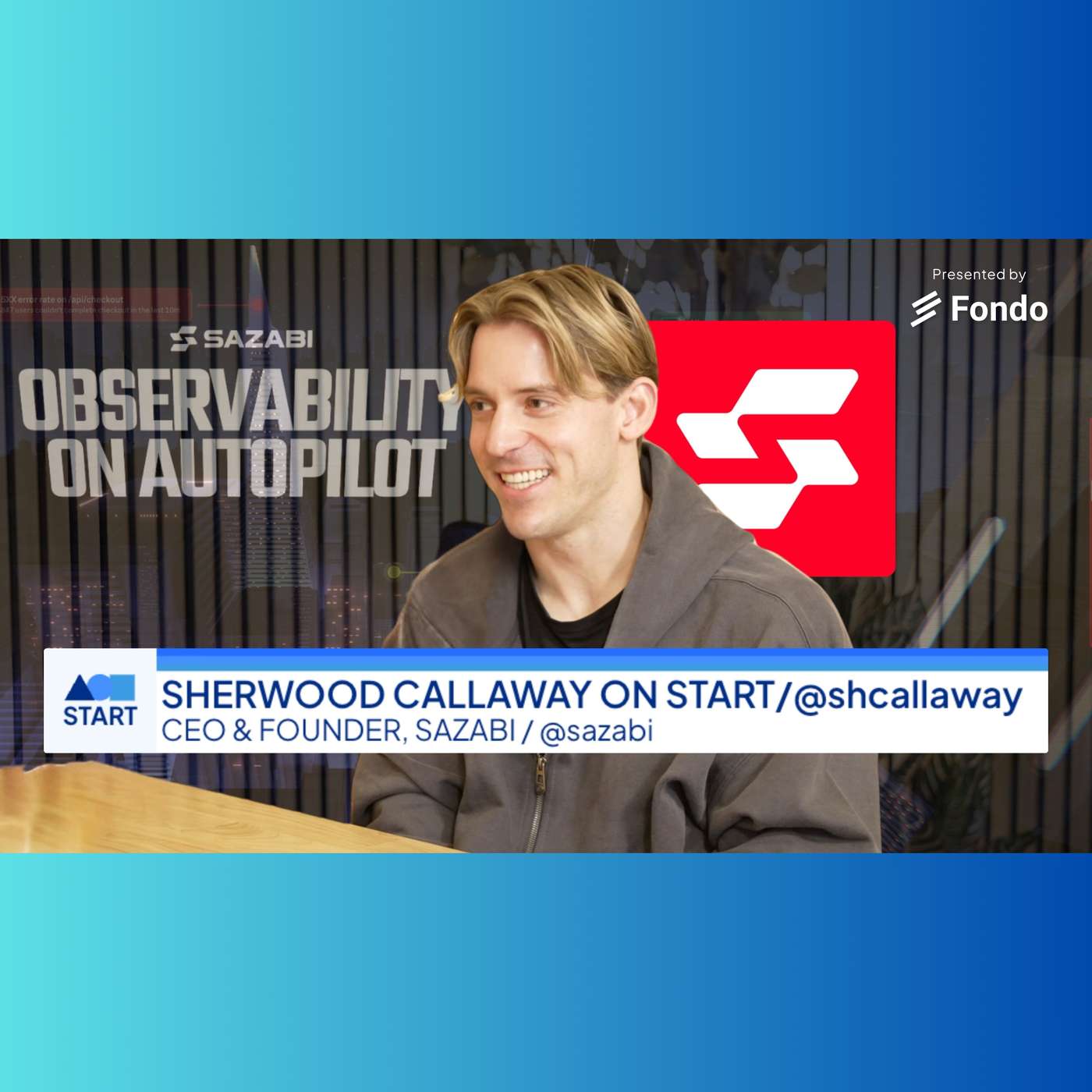
    START Sherwood Callaway, Founder & CEO, Sazabi “Observability On Autopilot”

    AI changed how software gets built. The tools we use after we ship haven't caught up. Code is getting cheaper. Production is getting harder. That's the gap Sherwood Callaway saw after building with Cursor and Claude Code. AI had transformed how software gets built, but when something broke in production, he was back clicking through observability tools that hadn't kept pace. Sazabi is built for AI-native engineering teams. → Autonomous alerts with root-cause context → Conversational debugging instead of endless dashboards → AI that learns your codebase, architecture, and past incidents AI is making it easier than ever to build software. Sazabi makes it just as easy to understand what's happening in production—helping engineering teams detect issues earlier, identify the root cause faster, and get back to shipping. Observability is becoming one of the most important layers of the AI software stack. ‍ 🎙️ Sherwood Callaway, Founder & CEO, Sazabi on Fondo START pod ‍ 01:08 — Building AI-native observability for fast-moving engineering teams 01:45 — Why AI made observability a much bigger problem 02:07 — "Code is basically free" 02:36 — Why architecture and product thinking are the new bottlenecks 03:09 — "Measure twice, cut once" — how Sazabi stays focused 03:35 — History major to Dev Bootcamp: turning down investment banking 05:50 — Joining Brex at employee 70 through hypergrowth to $12B 07:10 — Starting Brex's observability team — the seed of Sazabi 07:48 — What observability actually is (it started with 1960s rocket science) 09:45 — "I will leave Brex today" — the Dalton Caldwell moment 12:16 — Building one of the first production AI agents at 11x 13:33 — The Cursor vs. Datadog contrast that sparked Sazabi ‍ Check out www.sazabi.com

Showing 1–20 of 29 episodes