Skip to content
Artwork for Cool Worlds
ScienceEducationTechnology

Cool Worlds

Cool Worlds

Space, astronomy, exoplanets, astroengineering and the search for extraterrestrial life & intelligence.

The Cool Worlds Lab (http://coolworldslab.com), based at the Department of Astronomy, Columbia University, is a team of astronomers seeking to discover and understand alien worlds, particularly those where temperatures are cool enough for life, led by Professor David Kipping.

Links:
Subscribe!: https://www.youtube.com/channel/UCGHZpIpAWJQ-Jy_CeCdXhMA?sub_confirmation=1

Play
  • 165 episodes
  • daily
  • Avg 20 min
  • English
Counted on this page — what you have heard stays on this device, so it is not something the list can be paged by.
  • Monday · 7 min

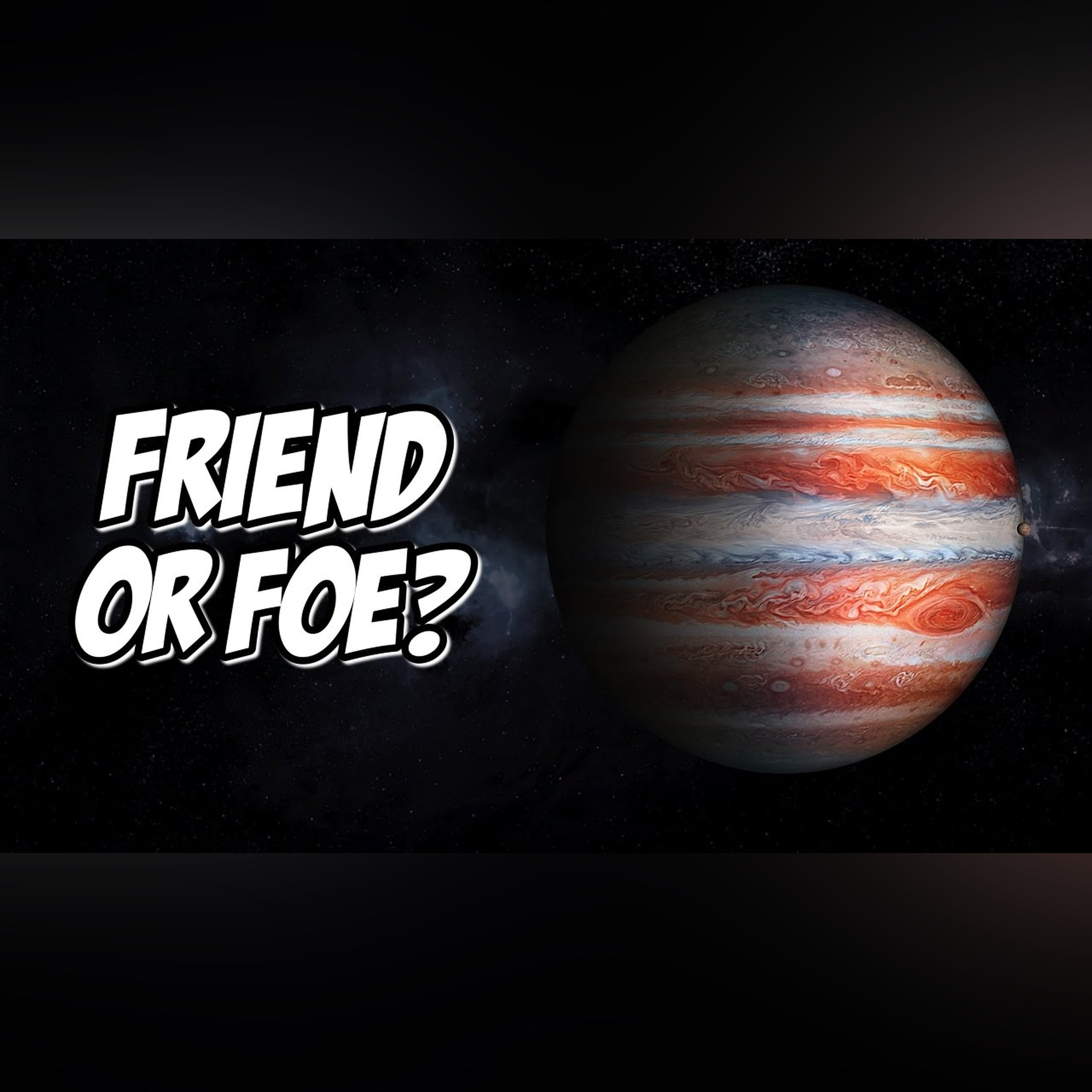
    Jupiter: Friend or Foe? | Elisa Quintana

    Jupiter is the King of the Solar System but exoplanet surveys have revealed that it's an unusual type of world. Just ~10% of Sun-like stars have planets of the same mass and orbit as Jupiter. So could the existence of Jupiter be somehow beneficial to emergence of complex life, like us, on other planets in the system? On the hand, maybe Jupiter's strong gravity should scatter asteroids towards us, perhaps making things worse? Dr Elisa Quintana from NASA Goddard dropped in to the Cool Worlds Lab and explained her research trying to resolve the mystery of Jupiter's role: friend or foe? ::More about this Video:: ► Quintana et al. (2016), "The Frequency of Giant Impacts on Earth-like Worlds": https://arxiv.org/abs/1511.03663 ► Johnson et al. (2010), "Giant Planet Occurrence in the Stellar Mass-Metallicity Plane": https://arxiv.org/abs/1005.3084 ► Cool Worlds Lab website: http://coolworlds.astro.columbia.edu ► Columbia University Department of Astronomy: http://www.astro.columbia.edu ► Outro music by Daft Punk "Harder, Better, Stronger, Faster": http://www.daftpunk.com and http://smarturl.it/DaftPunkiTunes ::Playlists For Channel:: Latest Cool Worlds Videos ► http://bit.ly/NewCoolWorlds Cool Worlds Research ► http://bit.ly/CoolWorldsResearch Guest Videos ► http://bit.ly/CoolWorldsGuests Q&A Videos ► http://bit.ly/CoolWorldsQA Science of TV/Film ► http://bit.ly/ScienceMovies ::Follow us:: SUBSCRIBE to the channel http://bit.ly/CoolWorldsSubscribe Cool Worlds Lab http://coolworlds.astro.columbia.edu Twitter https://twitter.com/david_kipping Instagram https://www.instagram.com/cool.worlds THANKS FOR WATCHING!! ヅ Learn more about your ad choices. Visit megaphone.fm/adchoices

  • Monday · 33 min

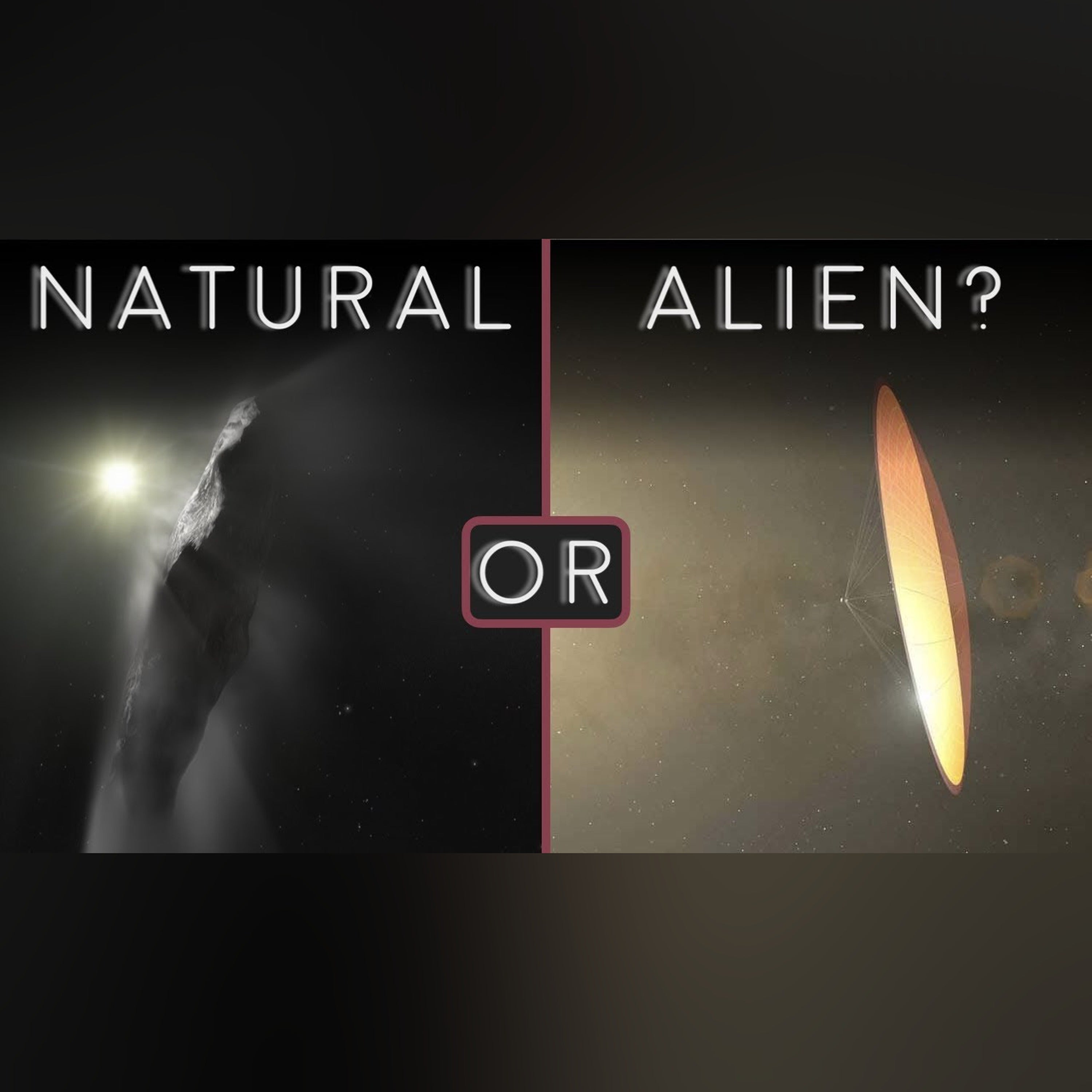
    Is 'Oumuamua Alien Technology?

    Three years ago, we detected the first interstellar object passing through the Solar System, `Oumuamua. Ever since, astronomers have been debating the origins of this strange body. Whilst many hypothesize an asteroid, the media is ablaze with the possibility that it could be alien technology. Join us today for a discussion of this theory and the counter-arguments proposed. Written & presented by Prof David Kipping. Thanks to Dr Sean Raymond for fact checking - check out his blog www.planetplanet.net and astro poetry book https://www.amazon.com/dp/B08LFZZWGZ You can now support our research program and the Cool Worlds Lab at Columbia University: https://www.coolworldslab.com/support Get Stash here! https://teespring.com/stores/cool-worlds-store Thank-you to our supporters K. Clark, T. Widdowson, D. Smith, S. Hackley, M. Sloan, L. Sanborn, K. Kantor, P. Herman, C. Bottaccini, D. Brunk, D. Daughaday, S. Fincher, J. Kindred, A. Jones, J. Allen, S. Baldwin, J. Black, S. Brownlee, D. Denholm, T. Dorais, G. Downton, E. Urrestarazu, G. Fulton, S. Griffiths, P. Halloran, J. Jurcevic, N. Kildal, J. Kobernick, W. Kobernick, V. Kremer, M. Lijoi, S. Loftin, B. Loizides, A. Maslyanchuk, B. Matson, O. Mcintyre, L. Mitchell, A. Pelletier, J. Rivillas, B. Robinson, Z. Star, L. Steely, E. Stefan-Matyus, M. Steven, E. West, B. York, T. Zanjonc, P. Gowd, S. Kelsey, P. Kommareddy, C. Wolfred, D. Vennel, E. Dessoi, F. Naeem, F. Rebolledo, H. Laging, J. Falls, P. Rutherford, T. Leger, L. Skov, D. Roberts, E. Wilson, I. Baskerville, J. Bassnett, J. Shackleford, I. Johnstone, G. Suter, I. Hopcraft, J. Valdes, P. Akrill-Misso, W. Robertson, E. Orman, G. Ingham, D. Van Hecke, J. Pilloff, T. Bernhard. D. Dianovszki, E. Cook, S. Mass, T. Richards, T. Lancaster, C. Stouffer, G. Benson, A. de Vaal, C. Diamantis, J. Wenzel, M. Elliot, M. Wallstab, S. Bialek, B. Thomson, B. Daniluk, B. Bowen, D. Jacobson, D. Lukens, G. Coogan, J. Bushong, M. Wacinski, M. O'Donnell, M. Forbes, S. Vystoropskyi, S. Carr, T. Laird, S. Lee, T. Tschopp W. van den Wollenberg, Z. Danielson, Z. Turner, E. Fernandes, E. Vinci, L. Holc, S. Grant, S. Seyer, J. Patrick-Saunders, P. Conroy, R. Clifton, C. Butler, M. Peraic, N. Cordova, P. Inkpen & K. Uyemura. ::References:: ► Loeb, A., 2018, "Six Strange Facts About`Oumuamua", Scientific American: https://arxiv.org/abs/1811.08832 ► The 'Oumuamua ISSI Team, 2019, "The Natural History of 'Oumuamua", Nature Astronomy, 3, 594: https://arxiv.org/abs/1907.01910 ► Bialy, S. & Loeb, A., 2018, "Could Solar Radiation Pressure Explain ‘Oumuamua’s Peculiar Acceleration?", ApJ, 868, 1: https://arxiv.org/abs/1810.11490 ► Siraj, A. & Loeb, A., 2019, "‘Oumuamua's Geometry Could Be More Extreme than Previously Inferred", RNAAS, 3, 15: https://iopscience.iop.org/article/10.3847/2515-5172/aafe7c ► Zhang, Y. & Lin, D., 2020, "Tidal fragmentation as the origin of 1I/2017 U1 (‘Oumuamua)", Nature Astronomy, 4, 852: https://www.nature.com/articles/s41550-020-1065-8 ► Engelhardt, T. et al., 2017, "An Observational Upper Limit on the Interstellar Number Density of Asteroids and Comets", AJ, 153, 133: https://arxiv.org/abs/1702.02237 ► Meech, K., et al., 2017, "A brief visit from a red and extremely elongated interstellar asteroid", Nature, 552, 378 ::Clips used:: See shorturl.at/glFLR ::Music:: Music used is licensed by SoundStripe.com (SS) [shorturl.at/ptBHI], or via Creative Commons (CC) Attribution License (https://creativecommons.org/licenses/by/4.0/), or with permission from the artist. ► "My Unbelief" by Hill licensed via SS ► "Cylinder Two" and "Cylinder Four" by Chris Zabriskie licensed under a CC Attribution license: http://chriszabriskie.com/cylinders/ ► "Painted Deserts" by Shimmer licensed via SS ► "Cylinder Five" by Chris Zabriskie licensed under a CC Attribution license: http://chriszabriskie.com/cylinders/ ► "Stories About The World That Once Wa Learn more about your ad choices. Visit megaphone.fm/adchoices

  • Monday · 22 min

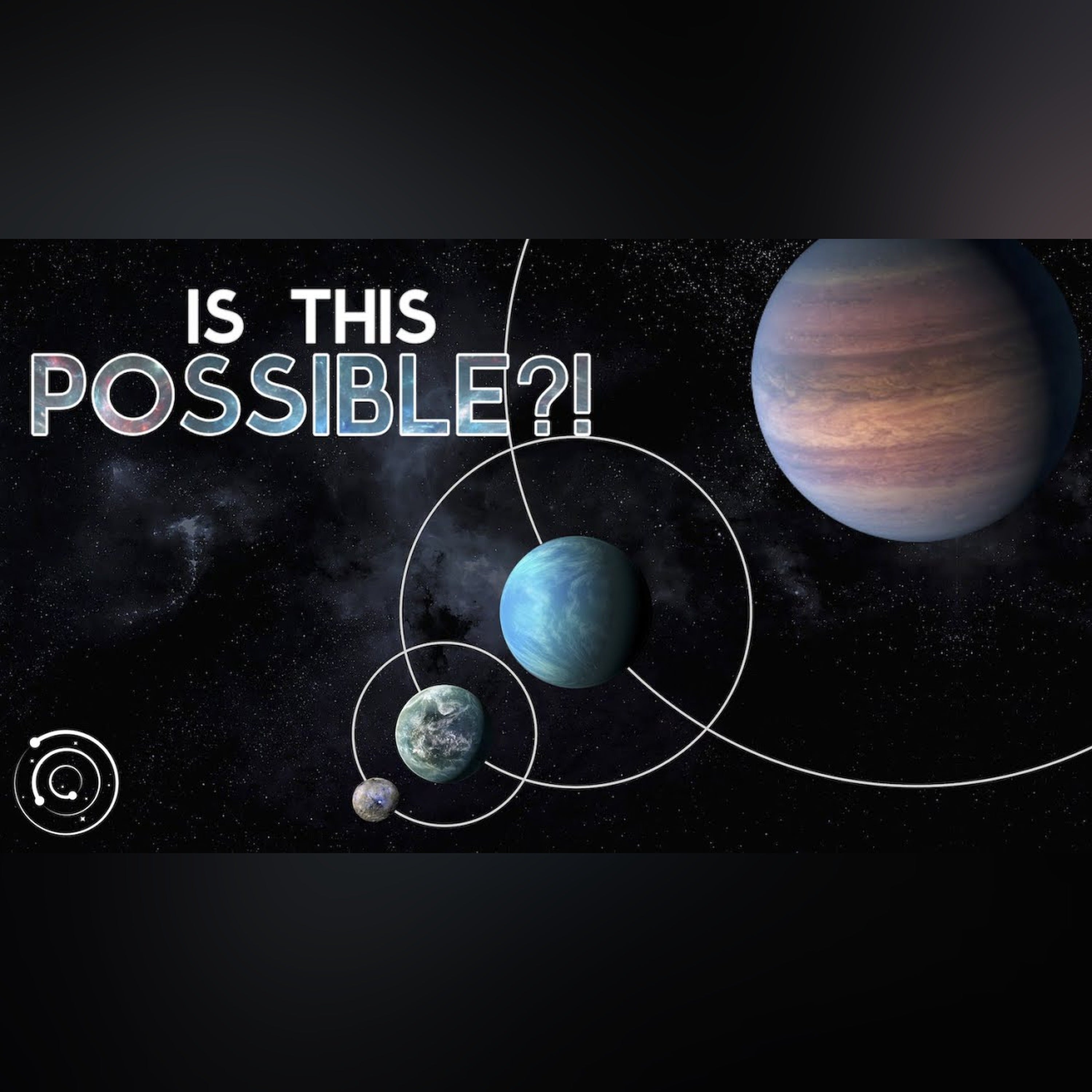
    Can Moons Have Moons?

    After the discovery of supersized exomoon candidates, many have been wondering - can moons have moons? And could *those* also have moons?! Today we dive into this fun little question and learn about the limits of satellites. Written & presented by Prof David Kipping → Support our research program: https://www.coolworldslab.com/support → Get Stash here! https://teespring.com/stores/cool-worlds-store THANK-YOU to our supporters D. Smith, M. Sloan, C. Bottaccini, D. Daughaday, A. Jones, S. Brownlee, N. Kildal, Z. Star, E. West, T. Zajonc, C. Wolfred, L. Skov, G. Benson, A. De Vaal, M. Elliott, B. Daniluk, M. Forbes, S. Vystoropskyi, S. Lee, Z. Danielson, C. Fitzgerald, C. Souter, M. Gillette, T. Jeffcoat, H. Jensen, J. Rockett, N. Fredrickson, D. Holland, E. Hanway, D. Murphree, S. Hannum, T. Donkin, K. Myers, A. Schoen, K. Dabrowski, J. Black, R. Ramezankhani, J. Armstrong, K. Weber, S. Marks, L. Robinson, F. Van Exter, S. Roulier, B. Smith, P. Masterson, R. Sievers, G. Canterbury, J. Kill, J. Cassese, J. Kruger, S. Way, P. Finch, S. Applegate, L. Watson, T. Wheeler, E. Zahnle, N. Gebben, J. Bergman, E. Dessoi, J. Alexander, C. Macdonald, M. Hedlund, P. Kaup, C. Hays, S. Krasner, W. Evans, D. Bansal, J. Curtin, J. Sturm, RAND Corp., I. Attard, M. Donovan, N. Corwin, M. Mangione, K. Howard, L. Deacon, G. Metts, G. Genova, R. Provost, B. Sigurjonsson, G. Fullwood, T. Mitchum, B. Reid & R. Lester. ::References:: ► Kollmeier, J. & Raymond, S. (2019), "Can Moons Have Moons?", MNRAS, 483, 80: https://arxiv.org/abs/1810.03304 ► Also check out Sean Raymond's excellent blog article! https://planetplanet.net/2018/10/09/can-moons-have-moons/ ::Music:: Music licensed by SoundStripe.com (SS) [shorturl.at/ptBHI], or via Creative Commons (CC) Attribution License (https://creativecommons.org/licenses/by/4.0/), or with permission from the artist ► Brad Hill - There Is but One Good (00:00) [https://open.spotify.com/album/4pmiXcyRpPlFjWjb45pYLx0] ► Falls - Life in Binary (4:08) ► Chris Zabriskie - Cylinder Four (8:50) ► Joachim Heinrich - Stjarna (12:05) ► Indive - Trace Correction (14:54) ::Film/TV clips used:: ► Sunshine (2007) Fox Searchlight Pictures ► First Man (2017) Universal Pictures ► Another Earth (2011) Fox Searchlight Pictures ► Moonfall (2022) Lionsgate ► Agora (2009) Focus Features International ► Outro clip by Sloan Digital Sky Survey, Berkeley Lab, Miguel Aragon, Mark Subbarao & Alex Szalay ::Chapters:: 00:00 Introduction 02:28 How are moons lost? 04:08 Tides 06:22 Moon Hill Spheres 07:19 Analytic Results 09:03 Iapetus 10:12 Giant exomoons 11:46 Moon moon moons 13:55 Final thoughts 14:54 Outro & credits #MoonMoons #SubMoons #CoolWorlds Learn more about your ad choices. Visit megaphone.fm/adchoices

  • Monday · 21 min

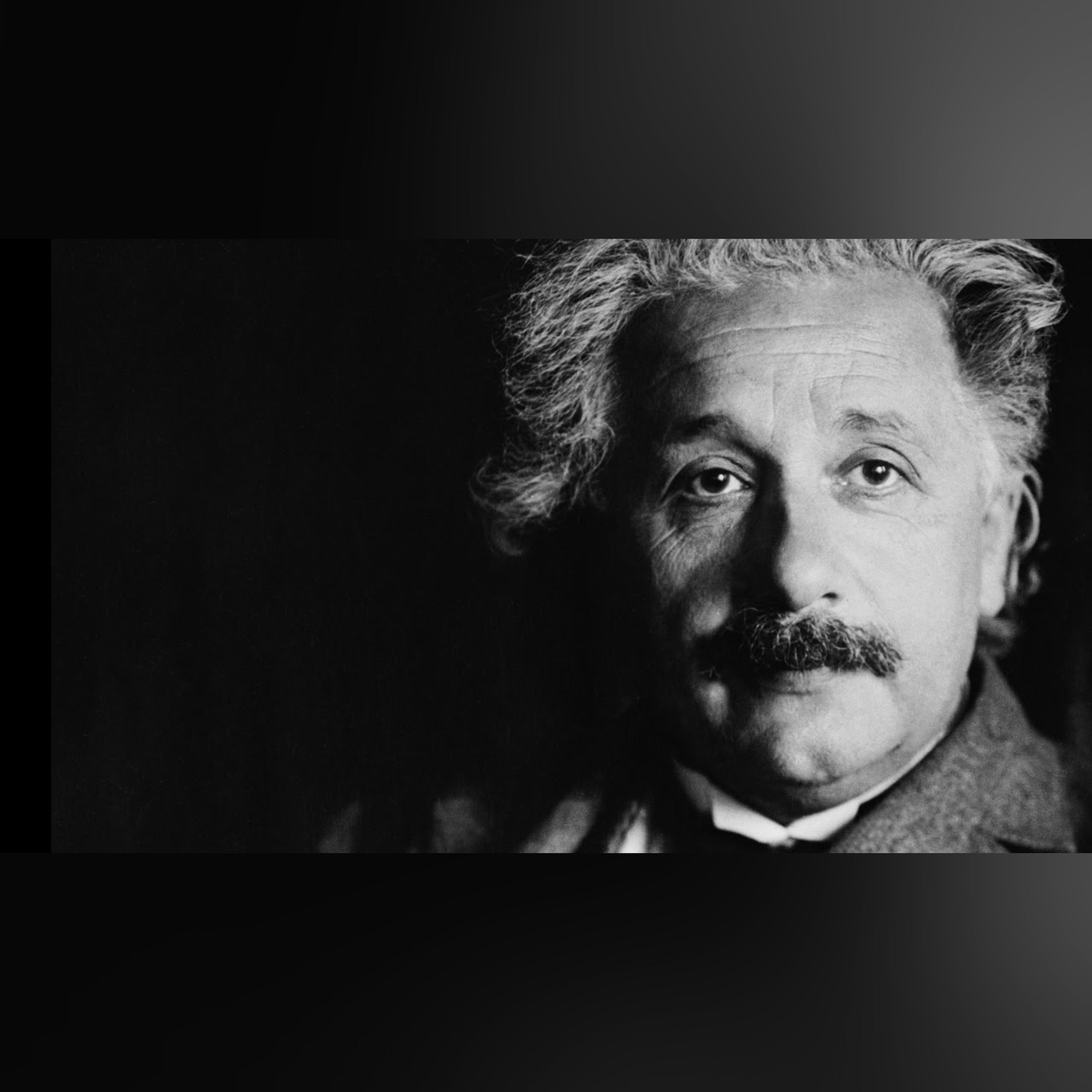
    Einstein's (small) mistake

    Breakthrough Starshot plans to accelerate a gram-mass spacecraft up to one-fifth the speed of light to reach nearby stars in our lifetimes. In a recent video (https://youtu.be/Ksb6Vh0BT_E), I discussed some work I'd taken on calculating how the speed of the spacecraft (a light sail) changes as one shines an intense laser beam on it. It turns out my equations differ with the predictions of the Breakthrough team, and indeed just about everyone whose worked on this problem all the way to Einstein himself, who treated it as an example calculation for relativity. Remarkably, there does appear to be a small mistake in this example calculation (but not relativity itself) and in this video I explain how I came across it, why I'm convinced it's right and the nature of serendipitous discovery. ::More about this Video:: ► The paper (now accepted for publication) is available here- David Kipping (2017), "Relativistic Light Sails": https://arxiv.org/abs/1704.04310 ► Asst Prof David Kipping homepage: www.davidkipping.com ► Philip Lubin (2016), "A Roadmap to Interstellar Flight": https://arxiv.org/abs/1604.01356 ► Kulkarni, Lubin & Zhang (2016), "Relativistic solutions to directed energy": http://proceedings.spiedigitallibrary.org/proceeding.aspx?articleid=2555764 ► Arthur Compton (1923), "A Quantum Theory of the Scattering of X-rays by Light Elements": https://journals.aps.org/pr/abstract/10.1103/PhysRev.21.483 ► Albert Einstein (1905), "Zur Elektrodynamik bewegter Körper": http://onlinelibrary.wiley.com/doi/10.1002/andp.19053221004/abstract ► Breakthrough Initiatives website: https://breakthroughinitiatives.org ► Cool Worlds Lab website: http://coolworlds.astro.columbia.edu ► Columbia University Department of Astronomy: http://www.astro.columbia.edu ► Background music by MelodySheep "Secrets of the Stars": https://www.youtube.com/watch?v=BuxFXHircaI ::Playlists For Channel:: Latest Cool Worlds Videos ► http://bit.ly/NewCoolWorlds Cool Worlds Research ► http://bit.ly/CoolWorldsResearch Guest Videos ► http://bit.ly/CoolWorldsGuests Q&A Videos ► http://bit.ly/CoolWorldsQA Science of TV/Film ► http://bit.ly/ScienceMovies ::Follow us:: SUBSCRIBE to the channel http://bit.ly/CoolWorldsSubscribe Cool Worlds Lab http://coolworlds.astro.columbia.edu Twitter https://twitter.com/david_kipping Instagram https://www.instagram.com/cool.worlds THANKS FOR WATCHING!! ヅ Learn more about your ad choices. Visit megaphone.fm/adchoices
  • Monday · 29 min

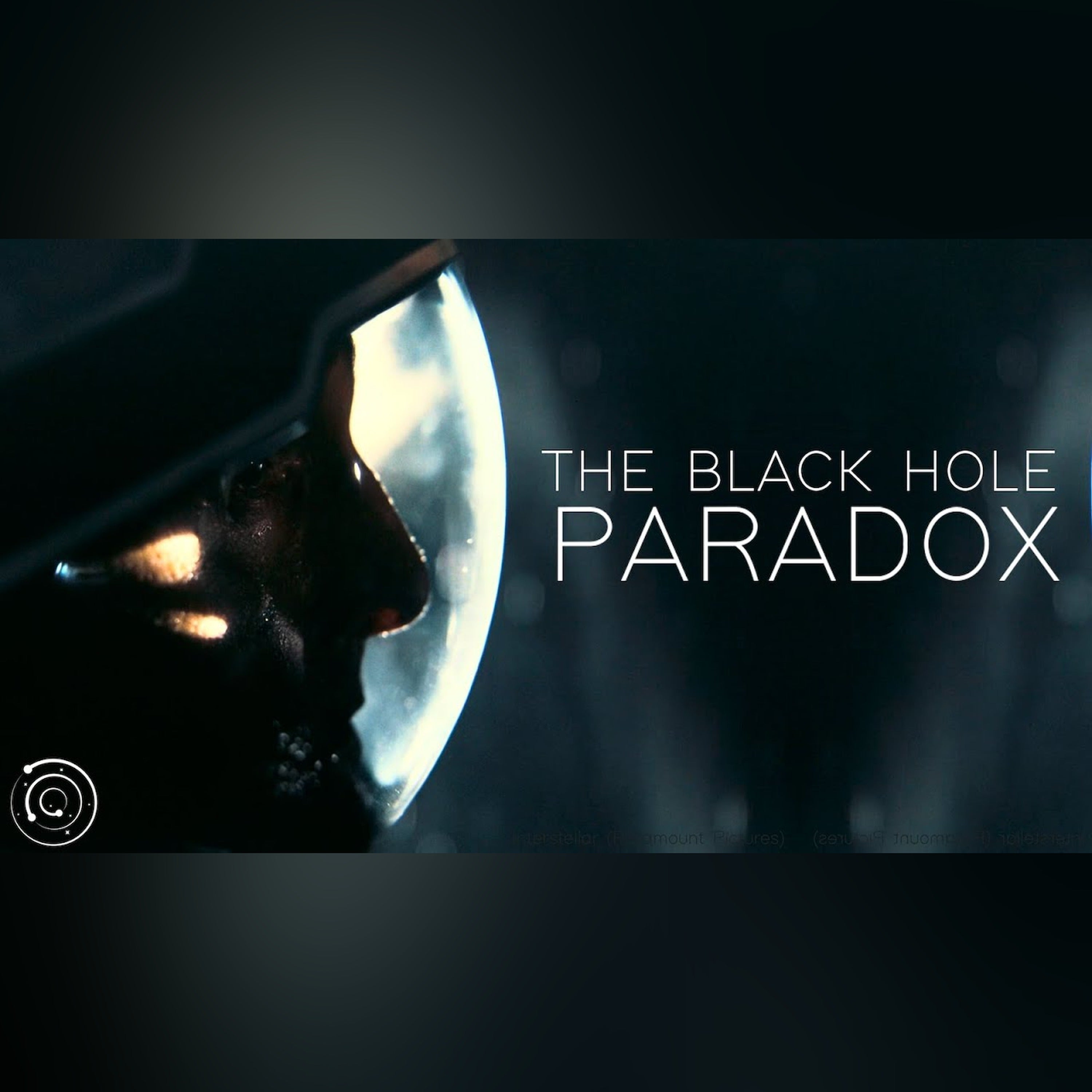
    Why Black Holes Break The Universe

    Thanks to Storyblocks for sponsoring this video! Download unlimited stock media at one set price with Storyblocks: http://storyblocks.com/CoolWorlds Today we explore a problem that has haunted theoretical physicists for decades and remains a topic of active debate - do black holes destroy information? A key precept in quantum theory is that information should be conserved, yet anything that falls into a black hole is seemingly obliterated. How can we reconcile our theories of gravity with that of the quantum world? And could the answer transform the way we look at the Universe... Written & presented by Prof. David Kipping. Special thanks to Prof Janna Levin for fact checking and for her wonderful book that inspired this video, "Black Hole Survival Guide" https://a.co/d/eqqP6z1 → Support our research: https://www.coolworldslab.com/support → Get merch: https://teespring.com/stores/cool-worlds-store → Check out our podcast: www.youtube.com/@CoolWorldsPodcast THANK-YOU to D. Smith, M. Sloan, L. Sanborn, C. Bottaccini, D. Daughaday, A. Jones, S. Brownlee, N. Kildal, Z. Star, E. West, T. Zajonc, C. Wolfred, L. Skov, G. Benson, A. De Vaal, M. Elliott, B. Daniluk, S. Vystoropskyi, S. Lee, Z. Danielson, C. Fitzgerald, C. Souter, M. Gillette, T. Jeffcoat, J. Rockett, D. Murphree, T. Donkin, K. Myers, A. Schoen, K. Dabrowski, J. Black, R. Ramezankhani, J. Armstrong, K. Weber, S. Marks, L. Robinson, S. Roulier, B. Smith, J. Cassese, J. Kruger, S. Way, P. Finch, S. Applegate, L. Watson, E. Zahnle, N. Gebben, J. Bergman, E. Dessoi, C. Macdonald, M. Hedlund, P. Kaup, C. Hays, W. Evans, D. Bansal, J. Curtin, J. Sturm, RAND Corp., M. Donovan, N. Corwin, M. Mangione, K. Howard, L. Deacon, G. Metts, R. Provost, B. Sigurjonsson, G. Fullwood, B. Walford, J. Boyd, N. De Haan, J. Gillmer, R. Williams, E. Garland, A. Leishman, A. Phan Le, R. Lovely, M. Spoto, A. Steele, K. Yarbrough, A. Cornejo, D. Compos, F. Demopoulos, G. Bylinsky, J. Werner, B. Pearson, S. Thayer, T. Edris, B. Seeley, F. Blood, M. O'Brien, P. Muzyka, D. Lee, J. Sargent, M. Czirr, F. Krotzer, I. Williams, J. Sattler, J. Smallbon, B. Reese, J. Yoder, O. Shabtay, X. Yao, S. Saverys, M. Pittelli, A. Nimmerjahn, C. Seay, D. Johnson, L. Cunningham, M. Morrow, M. Campbell, R. Strain, B. Devermont, & Y. Muheim. REFERENCES ► Bekenstein, J. 1972, "Black Holes and Entropy", Physical Review D: https://ui.adsabs.harvard.edu/abs/1973PhRvD...7.2333B ► Hawking, S. 1975, "Particle Creation by Black Holes", Communications In Mathematical Physics,: https://ui.adsabs.harvard.edu/abs/1975CMaPh..43..199H ► Hooft, G.'t, 1993, "Dimensional Reduction in Quantum Gravity", General Relativity & Quantum Cosmology: https://ui.adsabs.harvard.edu/abs/1993gr.qc....10026T ► Susskind, L. 1995, "The World as a Hologram", Journal of Mathematical Physics: https://ui.adsabs.harvard.edu/abs/1995JMP....36.6377S ► Maldacena, J. 1997, "The Large N Limit of Superconformal field theories and supergravity", Advances in Theoretical and Mathematical Physics: https://ui.adsabs.harvard.edu/abs/1998AdTMP...2..231M MUSIC Licensed by SoundStripe.com (SS) [shorturl.at/ptBHI], Artlist.io, via CC Attribution License (https://creativecommons.org/licenses/by/4.0/) or with permission from the artist. 0:00 Hill - The Travelers [https://open.spotify.com/track/5EfCXFyDpZmu0u6hM3ByjK?si=76241b8ce56747a4] 2:51 Chris Zabriskie - We Were Never Meant to Live Here 4:30 Hill - The Great Alchemist [https://open.spotify.com/track/3PAx36jIsKiQMT9CQsRk4G?si=c00e84291e664f8e] 9:33 Falls - Life in Binary 11:55 Hill - A Slowly Lifting Fog [https://open.spotify.com/track/0GgkyL3y22kFslT6wUsKlt?si=3f07e63c56674a21] 13:23 Falls - Ripley 17:06 Chris Zabriskie - Cylinder Seven 19:11 Joachim Heinrich - Y 21:32 Indive - Halo Drive CHAPTERS 0:00 Prologue 0:30 Black Holes 101 3:18 Storyblocks 4:30 Unitarity 6:19 Into the Black Hole 7:19 Hawking Radiation 9:33 Learn more about your ad choices. Visit megaphone.fm/adchoices
Showing 161–165 of 165 episodes