Skip to content
Artwork for Cool Worlds
ScienceEducationTechnology

Cool Worlds

Cool Worlds

Space, astronomy, exoplanets, astroengineering and the search for extraterrestrial life & intelligence.

The Cool Worlds Lab (http://coolworldslab.com), based at the Department of Astronomy, Columbia University, is a team of astronomers seeking to discover and understand alien worlds, particularly those where temperatures are cool enough for life, led by Professor David Kipping.

Links:
Subscribe!: https://www.youtube.com/channel/UCGHZpIpAWJQ-Jy_CeCdXhMA?sub_confirmation=1

Play
  • 165 episodes
  • daily
  • Avg 20 min
  • English
Counted on this page — what you have heard stays on this device, so it is not something the list can be paged by.
  • Monday · 12 min

    Red and White Dwarfs QandA

    Answers to your questions by Prof David Kipping from our "Proxima Planet Hunt" and "Polluted Dead Stars" videos (links below)! Thanks to all of you who posted questions, keep 'em coming, we love interacting with you all! ::More about this Video:: ► "Proxima Planet Hunt" video: https://youtu.be/z5LVcfzRDI8 ► "Polluted Dead Stars" video: https://youtu.be/MAeqIQd6BMM ► Dressing & Charbonneau (2015), "The Occurrence of Potentially Habitable Planets Orbiting M Dwarfs Estimated from the Full Kepler Dataset and an Empirical Measurement of the Detection Sensitivity": http://arxiv.org/abs/1501.01623 ► Veras (2015), "Post-main-sequence planetary system evolution": http://arxiv.org/abs/1601.05419 ► Outro music by Taylor Davis: https://www.youtube.com/watch?v=dl9kI1yQKZk ::Playlists For Channel:: Latest Cool Worlds Videos ► http://bit.ly/NewCoolWorlds Cool Worlds Research ► http://bit.ly/CoolWorldsResearch Guest Videos ► http://bit.ly/CoolWorldsGuests Q&A Videos ► http://bit.ly/CoolWorldsQA Science of TV/Film ► http://bit.ly/ScienceMovies ::Follow us:: SUBSCRIBE to the channel http://bit.ly/CoolWorldsSubscribe Cool Worlds Lab http://coolworlds.astro.columbia.edu Twitter https://twitter.com/david_kipping Instagram https://www.instagram.com/cool.worlds THANKS FOR WATCHING!! Learn more about your ad choices. Visit megaphone.fm/adchoices

  • Monday · 9 min

    The Signatures of Alien Life… or Not | Tiffany Jansen

    Astronomers are finding habitable exoplanets everywhere! We are now starting to think about the next step, how can we use our telescopes to look for signs of life on distant worlds? Cool Worlds Lab astronomer Tiffany Jansen talks about possible atmospheric signals that could indicate the presence of a biosphere, but also the abiotic sources that could fool us all. ::More about this Video:: ► Reinhard et al. (2017), "False negatives for remote life detection on ocean-bearing planets: Lessons from the early Earth": https://arxiv.org/abs/1702.01137 ► Hein et al. (2013), "Some inconvenient truths about biosignatures involving two chemical species on Earth-like exoplanets": https://arxiv.org/abs/1404.6531 ► Wordsworth & Pierrehumbert (2014), "Abiotic oxygen-dominated atmospheres on terrestrial habitable zone planets": https://arxiv.org/abs/1403.2713 ► Outro music by Taylor Davis: https://www.youtube.com/watch?v=dl9kI1yQKZk ::Playlists For Channel:: Latest Cool Worlds Videos ► http://bit.ly/NewCoolWorlds Cool Worlds Research ► http://bit.ly/CoolWorldsResearch Guest Videos ► http://bit.ly/CoolWorldsGuests Q&A Videos ► http://bit.ly/CoolWorldsQA Science of TV/Film ► http://bit.ly/ScienceMovies ::Follow us:: SUBSCRIBE to the channel http://bit.ly/CoolWorldsSubscribe Cool Worlds Lab http://coolworlds.astro.columbia.edu Twitter https://twitter.com/david_kipping Instagram https://www.instagram.com/cool.worlds THANKS FOR WATCHING!! Learn more about your ad choices. Visit megaphone.fm/adchoices

  • Monday · 10 min

    The First Exoplanet Claim: Captain William S Jacob

    In 1855, Captain William Stephen Jacob authored a paper in the Monthly Notices of the Royal Astronomical Society claiming that a planet likely existed in the binary star system 70 Ophiuchi. Although his claim ended being wrong, it's pretty remarkable that someone was even thinking about doing this with scientific methods at the time! Here we get into Jacob's claim, what went wrong, and what legacy this has left us with. ::More about this Video:: ► Captain William S Jacob, "On Certain Anomalies Presented by the Binary Star 70 Ophiuchi": http://adsabs.harvard.edu/abs/1855MNRAS..15..228J ► Information compiled about Captain William Stephen Jacob and family by his living descendant, Kenneth Jacob: http://www.myjacobfamily.com/favershamjacobs/williamstephenjacob.htm ► Thomas See, "Researches on the orbit of 70 Ophiuchi, and on a periodic perturbation in the motion of the system arising from the action of an unseen body": http://adsabs.harvard.edu/abs/1896AJ.....16...17S ► Forest Ray Moulton, "The limits of temporary stability of satellite motion, with an application to the question of the existence of an unseen body in the binary system 70 Ophiuchi": http://adsabs.harvard.edu/abs/1899AJ.....20...33M ► Outro music by Taylor Davis: https://www.youtube.com/watch?v=dl9kI1yQKZk ::Playlists For Channel:: Latest Cool Worlds Videos ► http://bit.ly/NewCoolWorlds Cool Worlds Research ► http://bit.ly/CoolWorldsResearch Guest Videos ► http://bit.ly/CoolWorldsGuests Q&A Videos ► http://bit.ly/CoolWorldsQA Science of TV/Film ► http://bit.ly/ScienceMovies ::Follow us:: SUBSCRIBE to the channel http://bit.ly/CoolWorldsSubscribe Cool Worlds Lab http://coolworlds.astro.columbia.edu Twitter https://twitter.com/david_kipping Instagram https://www.instagram.com/cool.worlds THANKS FOR WATCHING!! Learn more about your ad choices. Visit megaphone.fm/adchoices

  • Monday · 25 min

    Why Exomoons Are So Important

    Flexispot’s anniversary sale is here! Get up to 60% off with my code COOLWORLDS on orders over $500 at http://bit.ly/coolworlds10! Exoplanets was a transformative discovery for astronomy. Exomoons is the next. I’ve spent most of my career looking for exomoons and today I explain the five reasons why finding them isn’t just fascinating - it’s necessary. Written & presented by Prof. David Kipping. Edited by Jorge Casas. → Support our research: https://www.coolworldslab.com/support → Get merch: https://teespring.com/stores/cool-worlds-store → Check out our podcast: www.youtube.com/@CoolWorldsPodcast THANK-YOU to D. Smith, M. Sloan, L. Sanborn, C. Bottaccini, D. Daughaday, A. Jones, S. Brownlee, N. Kildal, Z. Star, E. West, T. Zajonc, C. Wolfred, L. Skov, G. Benson, A. De Vaal, M. Elliott, B. Daniluk, M. Forbes, S. Vystoropskyi, S. Lee, Z. Danielson, C. Fitzgerald, C. Souter, M. Gillette, T. Jeffcoat, J. Rockett, D. Murphree, T. Donkin, K. Myers, A. Schoen, K. Dabrowski, J. Black, R. Ramezankhani, J. Armstrong, K. Weber, S. Marks, L. Robinson, S. Roulier, B. Smith, J. Cassese, J. Kruger, S. Way, P. Finch, S. Applegate, L. Watson, E. Zahnle, N. Gebben, J. Bergman, E. Dessoi, C. Macdonald, M. Hedlund, P. Kaup, C. Hays, W. Evans, D. Bansal, J. Curtin, J. Sturm, RAND Corp., M. Donovan, N. Corwin, M. Mangione, K. Howard, L. Deacon, G. Metts, G. Genova, R. Provost, B. Sigurjonsson, G. Fullwood, B. Walford, J. Boyd, N. De Haan, J. Gillmer, R. Williams, E. Garland, A. Leishman, A. Phan Le, R. Lovely, M. Spoto, A. Steele, M. Varenka, K. Yarbrough, A. Cornejo, D. Compos, F. Demopoulos, G. Bylinsky, J. Werner, B. Pearson, S. Thayer, T. Edris, A. Harrison, B. Seeley, F. Blood, M. O'Brien, P. Muzyka, E. Loomans, D. Lee, J. Sargent, M. Czirr, F. Krotzer, I. Williams & J. Sattler. CHAPTERS 0:00 Reason 1 03:20 Reason 2 7:18 Sponsorship 8:50 Reason 3 10:48 Reason 4 12:33 Reason 5 16:26 The Future MUSIC Licensed by SoundStripe.com (SS) [shorturl.at/ptBHI], Artlist.io, via CC Attribution License (https://creativecommons.org/licenses/by/4.0/) or with permission from the artist. ► Hill - A Slowly Lifting Fog ► Falls - Life in Binary ► Chris Zabriskie - We Were Never Meant to Live Here ► Chris Zabriskie - Cylinder Two ► Hill - To The Quiet Drumming Inside My Head [https://open.spotify.com/track/1QAGagFWsbTZyGfAJxs06d] ► Hill - Chasing Out The Chaos [https://open.spotify.com/album/4pmiXcyRpPlFjWjb45pYLx] ► Joachim Heinrich - Y #astronomy #jwst #exoplanets Learn more about your ad choices. Visit megaphone.fm/adchoices

  • Monday · 7 min

    Jupiter: Friend or Foe? | Elisa Quintana

    Jupiter is the King of the Solar System but exoplanet surveys have revealed that it's an unusual type of world. Just ~10% of Sun-like stars have planets of the same mass and orbit as Jupiter. So could the existence of Jupiter be somehow beneficial to emergence of complex life, like us, on other planets in the system? On the hand, maybe Jupiter's strong gravity should scatter asteroids towards us, perhaps making things worse? Dr Elisa Quintana from NASA Goddard dropped in to the Cool Worlds Lab and explained her research trying to resolve the mystery of Jupiter's role: friend or foe? ::More about this Video:: ► Quintana et al. (2016), "The Frequency of Giant Impacts on Earth-like Worlds": https://arxiv.org/abs/1511.03663 ► Johnson et al. (2010), "Giant Planet Occurrence in the Stellar Mass-Metallicity Plane": https://arxiv.org/abs/1005.3084 ► Cool Worlds Lab website: http://coolworlds.astro.columbia.edu ► Columbia University Department of Astronomy: http://www.astro.columbia.edu ► Outro music by Daft Punk "Harder, Better, Stronger, Faster": http://www.daftpunk.com and http://smarturl.it/DaftPunkiTunes ::Playlists For Channel:: Latest Cool Worlds Videos ► http://bit.ly/NewCoolWorlds Cool Worlds Research ► http://bit.ly/CoolWorldsResearch Guest Videos ► http://bit.ly/CoolWorldsGuests Q&A Videos ► http://bit.ly/CoolWorldsQA Science of TV/Film ► http://bit.ly/ScienceMovies ::Follow us:: SUBSCRIBE to the channel http://bit.ly/CoolWorldsSubscribe Cool Worlds Lab http://coolworlds.astro.columbia.edu Twitter https://twitter.com/david_kipping Instagram https://www.instagram.com/cool.worlds THANKS FOR WATCHING!! ヅ Learn more about your ad choices. Visit megaphone.fm/adchoices

  • Monday · 33 min

    Is 'Oumuamua Alien Technology?

    Three years ago, we detected the first interstellar object passing through the Solar System, `Oumuamua. Ever since, astronomers have been debating the origins of this strange body. Whilst many hypothesize an asteroid, the media is ablaze with the possibility that it could be alien technology. Join us today for a discussion of this theory and the counter-arguments proposed. Written & presented by Prof David Kipping. Thanks to Dr Sean Raymond for fact checking - check out his blog www.planetplanet.net and astro poetry book https://www.amazon.com/dp/B08LFZZWGZ You can now support our research program and the Cool Worlds Lab at Columbia University: https://www.coolworldslab.com/support Get Stash here! https://teespring.com/stores/cool-worlds-store Thank-you to our supporters K. Clark, T. Widdowson, D. Smith, S. Hackley, M. Sloan, L. Sanborn, K. Kantor, P. Herman, C. Bottaccini, D. Brunk, D. Daughaday, S. Fincher, J. Kindred, A. Jones, J. Allen, S. Baldwin, J. Black, S. Brownlee, D. Denholm, T. Dorais, G. Downton, E. Urrestarazu, G. Fulton, S. Griffiths, P. Halloran, J. Jurcevic, N. Kildal, J. Kobernick, W. Kobernick, V. Kremer, M. Lijoi, S. Loftin, B. Loizides, A. Maslyanchuk, B. Matson, O. Mcintyre, L. Mitchell, A. Pelletier, J. Rivillas, B. Robinson, Z. Star, L. Steely, E. Stefan-Matyus, M. Steven, E. West, B. York, T. Zanjonc, P. Gowd, S. Kelsey, P. Kommareddy, C. Wolfred, D. Vennel, E. Dessoi, F. Naeem, F. Rebolledo, H. Laging, J. Falls, P. Rutherford, T. Leger, L. Skov, D. Roberts, E. Wilson, I. Baskerville, J. Bassnett, J. Shackleford, I. Johnstone, G. Suter, I. Hopcraft, J. Valdes, P. Akrill-Misso, W. Robertson, E. Orman, G. Ingham, D. Van Hecke, J. Pilloff, T. Bernhard. D. Dianovszki, E. Cook, S. Mass, T. Richards, T. Lancaster, C. Stouffer, G. Benson, A. de Vaal, C. Diamantis, J. Wenzel, M. Elliot, M. Wallstab, S. Bialek, B. Thomson, B. Daniluk, B. Bowen, D. Jacobson, D. Lukens, G. Coogan, J. Bushong, M. Wacinski, M. O'Donnell, M. Forbes, S. Vystoropskyi, S. Carr, T. Laird, S. Lee, T. Tschopp W. van den Wollenberg, Z. Danielson, Z. Turner, E. Fernandes, E. Vinci, L. Holc, S. Grant, S. Seyer, J. Patrick-Saunders, P. Conroy, R. Clifton, C. Butler, M. Peraic, N. Cordova, P. Inkpen & K. Uyemura. ::References:: ► Loeb, A., 2018, "Six Strange Facts About`Oumuamua", Scientific American: https://arxiv.org/abs/1811.08832 ► The 'Oumuamua ISSI Team, 2019, "The Natural History of 'Oumuamua", Nature Astronomy, 3, 594: https://arxiv.org/abs/1907.01910 ► Bialy, S. & Loeb, A., 2018, "Could Solar Radiation Pressure Explain ‘Oumuamua’s Peculiar Acceleration?", ApJ, 868, 1: https://arxiv.org/abs/1810.11490 ► Siraj, A. & Loeb, A., 2019, "‘Oumuamua's Geometry Could Be More Extreme than Previously Inferred", RNAAS, 3, 15: https://iopscience.iop.org/article/10.3847/2515-5172/aafe7c ► Zhang, Y. & Lin, D., 2020, "Tidal fragmentation as the origin of 1I/2017 U1 (‘Oumuamua)", Nature Astronomy, 4, 852: https://www.nature.com/articles/s41550-020-1065-8 ► Engelhardt, T. et al., 2017, "An Observational Upper Limit on the Interstellar Number Density of Asteroids and Comets", AJ, 153, 133: https://arxiv.org/abs/1702.02237 ► Meech, K., et al., 2017, "A brief visit from a red and extremely elongated interstellar asteroid", Nature, 552, 378 ::Clips used:: See shorturl.at/glFLR ::Music:: Music used is licensed by SoundStripe.com (SS) [shorturl.at/ptBHI], or via Creative Commons (CC) Attribution License (https://creativecommons.org/licenses/by/4.0/), or with permission from the artist. ► "My Unbelief" by Hill licensed via SS ► "Cylinder Two" and "Cylinder Four" by Chris Zabriskie licensed under a CC Attribution license: http://chriszabriskie.com/cylinders/ ► "Painted Deserts" by Shimmer licensed via SS ► "Cylinder Five" by Chris Zabriskie licensed under a CC Attribution license: http://chriszabriskie.com/cylinders/ ► "Stories About The World That Once Wa Learn more about your ad choices. Visit megaphone.fm/adchoices

  • Monday · 22 min

    Can Moons Have Moons?

    After the discovery of supersized exomoon candidates, many have been wondering - can moons have moons? And could *those* also have moons?! Today we dive into this fun little question and learn about the limits of satellites. Written & presented by Prof David Kipping → Support our research program: https://www.coolworldslab.com/support → Get Stash here! https://teespring.com/stores/cool-worlds-store THANK-YOU to our supporters D. Smith, M. Sloan, C. Bottaccini, D. Daughaday, A. Jones, S. Brownlee, N. Kildal, Z. Star, E. West, T. Zajonc, C. Wolfred, L. Skov, G. Benson, A. De Vaal, M. Elliott, B. Daniluk, M. Forbes, S. Vystoropskyi, S. Lee, Z. Danielson, C. Fitzgerald, C. Souter, M. Gillette, T. Jeffcoat, H. Jensen, J. Rockett, N. Fredrickson, D. Holland, E. Hanway, D. Murphree, S. Hannum, T. Donkin, K. Myers, A. Schoen, K. Dabrowski, J. Black, R. Ramezankhani, J. Armstrong, K. Weber, S. Marks, L. Robinson, F. Van Exter, S. Roulier, B. Smith, P. Masterson, R. Sievers, G. Canterbury, J. Kill, J. Cassese, J. Kruger, S. Way, P. Finch, S. Applegate, L. Watson, T. Wheeler, E. Zahnle, N. Gebben, J. Bergman, E. Dessoi, J. Alexander, C. Macdonald, M. Hedlund, P. Kaup, C. Hays, S. Krasner, W. Evans, D. Bansal, J. Curtin, J. Sturm, RAND Corp., I. Attard, M. Donovan, N. Corwin, M. Mangione, K. Howard, L. Deacon, G. Metts, G. Genova, R. Provost, B. Sigurjonsson, G. Fullwood, T. Mitchum, B. Reid & R. Lester. ::References:: ► Kollmeier, J. & Raymond, S. (2019), "Can Moons Have Moons?", MNRAS, 483, 80: https://arxiv.org/abs/1810.03304 ► Also check out Sean Raymond's excellent blog article! https://planetplanet.net/2018/10/09/can-moons-have-moons/ ::Music:: Music licensed by SoundStripe.com (SS) [shorturl.at/ptBHI], or via Creative Commons (CC) Attribution License (https://creativecommons.org/licenses/by/4.0/), or with permission from the artist ► Brad Hill - There Is but One Good (00:00) [https://open.spotify.com/album/4pmiXcyRpPlFjWjb45pYLx0] ► Falls - Life in Binary (4:08) ► Chris Zabriskie - Cylinder Four (8:50) ► Joachim Heinrich - Stjarna (12:05) ► Indive - Trace Correction (14:54) ::Film/TV clips used:: ► Sunshine (2007) Fox Searchlight Pictures ► First Man (2017) Universal Pictures ► Another Earth (2011) Fox Searchlight Pictures ► Moonfall (2022) Lionsgate ► Agora (2009) Focus Features International ► Outro clip by Sloan Digital Sky Survey, Berkeley Lab, Miguel Aragon, Mark Subbarao & Alex Szalay ::Chapters:: 00:00 Introduction 02:28 How are moons lost? 04:08 Tides 06:22 Moon Hill Spheres 07:19 Analytic Results 09:03 Iapetus 10:12 Giant exomoons 11:46 Moon moon moons 13:55 Final thoughts 14:54 Outro & credits #MoonMoons #SubMoons #CoolWorlds Learn more about your ad choices. Visit megaphone.fm/adchoices

  • Monday · 9 min

    Climate Emergency? Global Sea Ice at Anomalously Low Levels

    This week a plot showing the global sea ice over time went viral due to shockingly low levels, smashing previous records. The plot was so weird that we decided to check out the data for ourselves and see if it was legit. Indeed, we can reproduce this alarming plot and provide some links and scripts for any of you who want to go ahead and try yourselves. Here we get into why we think these kinds of weird observations may become more common in the future. ::More about this Video:: ► National Sea and Ice Data Center archive of sea ice extent data: https://nsidc.org/data/docs/noaa/g02135_seaice_index/ ► My Mathematica script used to generate a confirming plot: https://github.com/davidkipping/seaiceextent ► Two of the first tweets publicizing the viral plot, Zach Labe (https://twitter.com/ZLabe/status/798913080168095744) and Eric Holthaus (https://twitter.com/EricHolthaus/status/800067428419940352). ► Wipneus archive of plots: https://sites.google.com/site/arctischepinguin/home/sea-ice-extent-area/grf ► Eric Holthaus blog article about the viral plot: http://tinyletter.com/sciencebyericholthaus/letters/today-in-weather-climate-sea-ice-tipping-point-edition-monday-november-21th ► Guardian article on record Arctic temperatures: https://www.theguardian.com/environment/2016/nov/22/extraordinarily-hot-arctic-temperatures-alarm-scientists ► CNN article on record Arctic temperatures: http://www.cnn.com/2016/11/18/world/sea-ice-arctic-antarctic-lows/ ► Conrath at al. (1970), "The Infrared Interferometer Experiment on Nimbus 3": http://onlinelibrary.wiley.com/doi/10.1029/JC075i030p05831/abstract ► Gavin Schmidt explains "How we know that the Earth's climate is changing": https://youtu.be/mkT7IyUSjq0 ► Video background music by Nick Caville: https://www.youtube.com/watch?v=iv2WSDMBRxA ::Playlists For Channel:: Latest Cool Worlds Videos ► http://bit.ly/NewCoolWorlds Cool Worlds Research ► http://bit.ly/CoolWorldsResearch Guest Videos ► http://bit.ly/CoolWorldsGuests Q&A Videos ►http://bit.ly/CoolWorldsQA Science of TV/Film ► http://bit.ly/ScienceMovies ::Follow us:: SUBSCRIBE to the channel http://bit.ly/CoolWorldsSubscribe Cool Worlds Lab http://coolworlds.astro.columbia.edu Twitter https://twitter.com/david_kipping Instagram https://www.instagram.com/cool.worlds THANKS FOR WATCHING!! Learn more about your ad choices. Visit megaphone.fm/adchoices

  • Monday · 10 min

    Proxima b QandA - is Proxima b tidally locked?

    Thanks for all of your great comments and questions on our last two Proxima b videos! Here's a quick video covering some of the most common questions about Proxima b, such as: Is it tidally locked? Can we image it with Hubble? Can we take a photo with a flyby spaceship? ::More about this Video:: ► "Discovery of a Planet around our Nearest Star: Proxima b" Cool Worlds video by Dr Guillem Anglada: https://youtu.be/59ClESB1AqA ► "Proxima b: Transits, Habitability & How to Get There!" Cool Worlds video by Prof Kipping: https://youtu.be/tcc635lNRwY ► Video of zonal winds on a tidally locked planet taken from Merlis & Schneider (2010), "Atmospheric dynamics of Earth-like tidally locked aquaplanets": https://arxiv.org/abs/1001.5117 ► Leconte et al. (2015), "Asynchronous rotation of Earth-mass planets in the habitable zone of lower-mass stars": http://science.sciencemag.org/content/347/6222/632 ► Kreidberg & Loeb (2016), "Prospects for Characterizing the Atmosphere of Proxima Centauri b": http://arxiv.org/abs/1608.07345 ► Proxima b flyby video by the Planetary Habitability Laboratory, University of Puerto Rico at Arecibo: http://phl.upr.edu/press-releases/proxb ► Outro music by Taylor Davis: https://www.youtube.com/watch?v=dl9kI1yQKZk ::Playlists For Channel:: Latest Cool Worlds Videos ► http://bit.ly/NewCoolWorlds Cool Worlds Research ► http://bit.ly/CoolWorldsResearch Guest Videos ► http://bit.ly/CoolWorldsGuests Q&A Videos ► http://bit.ly/CoolWorldsQA Science of TV/Film ► http://bit.ly/ScienceMovies ::Follow us:: SUBSCRIBE to the channel http://bit.ly/CoolWorldsSubscribe Cool Worlds Lab http://coolworlds.astro.columbia.edu Twitter https://twitter.com/david_kipping Instagram https://www.instagram.com/cool.worlds THANKS FOR WATCHING!! Learn more about your ad choices. Visit megaphone.fm/adchoices
  • Monday · 21 min

    Einstein's (small) mistake

    Breakthrough Starshot plans to accelerate a gram-mass spacecraft up to one-fifth the speed of light to reach nearby stars in our lifetimes. In a recent video (https://youtu.be/Ksb6Vh0BT_E), I discussed some work I'd taken on calculating how the speed of the spacecraft (a light sail) changes as one shines an intense laser beam on it. It turns out my equations differ with the predictions of the Breakthrough team, and indeed just about everyone whose worked on this problem all the way to Einstein himself, who treated it as an example calculation for relativity. Remarkably, there does appear to be a small mistake in this example calculation (but not relativity itself) and in this video I explain how I came across it, why I'm convinced it's right and the nature of serendipitous discovery. ::More about this Video:: ► The paper (now accepted for publication) is available here- David Kipping (2017), "Relativistic Light Sails": https://arxiv.org/abs/1704.04310 ► Asst Prof David Kipping homepage: www.davidkipping.com ► Philip Lubin (2016), "A Roadmap to Interstellar Flight": https://arxiv.org/abs/1604.01356 ► Kulkarni, Lubin & Zhang (2016), "Relativistic solutions to directed energy": http://proceedings.spiedigitallibrary.org/proceeding.aspx?articleid=2555764 ► Arthur Compton (1923), "A Quantum Theory of the Scattering of X-rays by Light Elements": https://journals.aps.org/pr/abstract/10.1103/PhysRev.21.483 ► Albert Einstein (1905), "Zur Elektrodynamik bewegter Körper": http://onlinelibrary.wiley.com/doi/10.1002/andp.19053221004/abstract ► Breakthrough Initiatives website: https://breakthroughinitiatives.org ► Cool Worlds Lab website: http://coolworlds.astro.columbia.edu ► Columbia University Department of Astronomy: http://www.astro.columbia.edu ► Background music by MelodySheep "Secrets of the Stars": https://www.youtube.com/watch?v=BuxFXHircaI ::Playlists For Channel:: Latest Cool Worlds Videos ► http://bit.ly/NewCoolWorlds Cool Worlds Research ► http://bit.ly/CoolWorldsResearch Guest Videos ► http://bit.ly/CoolWorldsGuests Q&A Videos ► http://bit.ly/CoolWorldsQA Science of TV/Film ► http://bit.ly/ScienceMovies ::Follow us:: SUBSCRIBE to the channel http://bit.ly/CoolWorldsSubscribe Cool Worlds Lab http://coolworlds.astro.columbia.edu Twitter https://twitter.com/david_kipping Instagram https://www.instagram.com/cool.worlds THANKS FOR WATCHING!! ヅ Learn more about your ad choices. Visit megaphone.fm/adchoices
  • Monday · 22 min

    Our First Contact with Aliens Will Be Their Last Words

    For 72 hours, enjoy 15% OFF on all Hoverpens with code COOLWORLDS, or click on the link https://noviumdesign.shop/CoolWorlds - Free shipping to most countries. Also on Amazon: https://noviumdesign.shop/1HrMzs What is the most realistic way we'll detect an alien civilization? If the history of science and astronomy is any guide, there is a clear answer: The Eschatian Hypothesis. Written & presented by David Kipping → Support our research: https://www.coolworldslab.com/support → Get merch: https://crowdmade.com/collections/cool-worlds → Check out our podcast: www.youtube.com/@CoolWorldsPodcast THANK-YOU to D. Smith, C. Bottaccini, D. Daughaday, S. Brownlee, E. West, T. Zajonc, A. De Vaal, M. Elliott, B. Daniluk, S. Vystoropskyi, S. Lee, Z. Danielson, C. Fitzgerald, C. Souter, M. Gillette, J. Rockett, M. Sanford, T. Donkin, A. Schoen, K. Dabrowski, J. Armstrong, B. Smith, J. Bergman, C. Macdonald, M. Hedlund, N. Corwin, K. Howard, L. Deacon, G. Metts, R. Provost, G. Fullwood, N. De Haan, R. Williams, E. Garland, R. Lovely, D. Compos, F. Demopoulos, T. Edris, M. O'Brien, D. Lee, M. Czirr, I. Williams, B. Reese, A. Nimmerjahn, C. Seay, D. Johnson, L. Cunningham, M. Morrow, M. Campbell, B. Devermont, P. Borisoff, H. Schiff, J. Cos, C. Hansen, R. Chaffee, A. Ortiz, B. McMillan, B. Cartmell, J. Bryant, J. Obioma, M. Zeiler, S. Murray, S. Patterson, C. Kennedy, G. Le Saint, W. Ruf, A. Kochkov, B. Langley, P. Stevenson, T. Ford, A. Laroye, I. Venzor, R. Raszka, B. Gaalen, J. Alley, D. Aron, G. Thomsen, S. Shardool, A. Phan Le, N. Offor, A. Huch, J. Morrison, C. Fitzsimmons, W. Smith, A. Twyman, B. Burgess, B. Bueche, D. Hoffman, J. Murphy, J. Matters, R. Borbidge, A. Singh, S. Larter, M. Adler, B. Ross-Lee, C. Frederick, M. Farabee, P. Johnston, V. Popovski & J. Brooks. REFERENCES ► Kipping et al., 2025, "The Eschatian Hypothesis", RNAAS, accepted: https://arxiv.org/abs/2512.09970 MUSIC Licensed by SoundStripe.com (SS) [shorturl.at/ptBHI], Artlist.io, via CC Attribution License (https://creativecommons.org/licenses/by/4.0/) or with permission from the artist. You can see all of our past music here: https://open.spotify.com/playlist/0Bu2UQlKDb0KaeliLZUOZn 0:00 Hill - Fragile Beings 2:46 Hill - Stratus 7:42 Chris Zabriskie - Cylinder Four 10:51 Hill - To Accept the Partings That Must Come 13:40 Joachim Heinrich - Y CHAPTERS 0:00 Teaser 0:34 History 4:02 Supernovae 6:16 Novium 7:42 Eschatian Civilizations 11:00 Desperation 13:47 Anti-Hollywood 15:21 Credits & Outro #Aliens #FermiParadox #CoolWorlds Learn more about your ad choices. Visit megaphone.fm/adchoices
  • Monday · 29 min

    Why Black Holes Break The Universe

    Thanks to Storyblocks for sponsoring this video! Download unlimited stock media at one set price with Storyblocks: http://storyblocks.com/CoolWorlds Today we explore a problem that has haunted theoretical physicists for decades and remains a topic of active debate - do black holes destroy information? A key precept in quantum theory is that information should be conserved, yet anything that falls into a black hole is seemingly obliterated. How can we reconcile our theories of gravity with that of the quantum world? And could the answer transform the way we look at the Universe... Written & presented by Prof. David Kipping. Special thanks to Prof Janna Levin for fact checking and for her wonderful book that inspired this video, "Black Hole Survival Guide" https://a.co/d/eqqP6z1 → Support our research: https://www.coolworldslab.com/support → Get merch: https://teespring.com/stores/cool-worlds-store → Check out our podcast: www.youtube.com/@CoolWorldsPodcast THANK-YOU to D. Smith, M. Sloan, L. Sanborn, C. Bottaccini, D. Daughaday, A. Jones, S. Brownlee, N. Kildal, Z. Star, E. West, T. Zajonc, C. Wolfred, L. Skov, G. Benson, A. De Vaal, M. Elliott, B. Daniluk, S. Vystoropskyi, S. Lee, Z. Danielson, C. Fitzgerald, C. Souter, M. Gillette, T. Jeffcoat, J. Rockett, D. Murphree, T. Donkin, K. Myers, A. Schoen, K. Dabrowski, J. Black, R. Ramezankhani, J. Armstrong, K. Weber, S. Marks, L. Robinson, S. Roulier, B. Smith, J. Cassese, J. Kruger, S. Way, P. Finch, S. Applegate, L. Watson, E. Zahnle, N. Gebben, J. Bergman, E. Dessoi, C. Macdonald, M. Hedlund, P. Kaup, C. Hays, W. Evans, D. Bansal, J. Curtin, J. Sturm, RAND Corp., M. Donovan, N. Corwin, M. Mangione, K. Howard, L. Deacon, G. Metts, R. Provost, B. Sigurjonsson, G. Fullwood, B. Walford, J. Boyd, N. De Haan, J. Gillmer, R. Williams, E. Garland, A. Leishman, A. Phan Le, R. Lovely, M. Spoto, A. Steele, K. Yarbrough, A. Cornejo, D. Compos, F. Demopoulos, G. Bylinsky, J. Werner, B. Pearson, S. Thayer, T. Edris, B. Seeley, F. Blood, M. O'Brien, P. Muzyka, D. Lee, J. Sargent, M. Czirr, F. Krotzer, I. Williams, J. Sattler, J. Smallbon, B. Reese, J. Yoder, O. Shabtay, X. Yao, S. Saverys, M. Pittelli, A. Nimmerjahn, C. Seay, D. Johnson, L. Cunningham, M. Morrow, M. Campbell, R. Strain, B. Devermont, & Y. Muheim. REFERENCES ► Bekenstein, J. 1972, "Black Holes and Entropy", Physical Review D: https://ui.adsabs.harvard.edu/abs/1973PhRvD...7.2333B ► Hawking, S. 1975, "Particle Creation by Black Holes", Communications In Mathematical Physics,: https://ui.adsabs.harvard.edu/abs/1975CMaPh..43..199H ► Hooft, G.'t, 1993, "Dimensional Reduction in Quantum Gravity", General Relativity & Quantum Cosmology: https://ui.adsabs.harvard.edu/abs/1993gr.qc....10026T ► Susskind, L. 1995, "The World as a Hologram", Journal of Mathematical Physics: https://ui.adsabs.harvard.edu/abs/1995JMP....36.6377S ► Maldacena, J. 1997, "The Large N Limit of Superconformal field theories and supergravity", Advances in Theoretical and Mathematical Physics: https://ui.adsabs.harvard.edu/abs/1998AdTMP...2..231M MUSIC Licensed by SoundStripe.com (SS) [shorturl.at/ptBHI], Artlist.io, via CC Attribution License (https://creativecommons.org/licenses/by/4.0/) or with permission from the artist. 0:00 Hill - The Travelers [https://open.spotify.com/track/5EfCXFyDpZmu0u6hM3ByjK?si=76241b8ce56747a4] 2:51 Chris Zabriskie - We Were Never Meant to Live Here 4:30 Hill - The Great Alchemist [https://open.spotify.com/track/3PAx36jIsKiQMT9CQsRk4G?si=c00e84291e664f8e] 9:33 Falls - Life in Binary 11:55 Hill - A Slowly Lifting Fog [https://open.spotify.com/track/0GgkyL3y22kFslT6wUsKlt?si=3f07e63c56674a21] 13:23 Falls - Ripley 17:06 Chris Zabriskie - Cylinder Seven 19:11 Joachim Heinrich - Y 21:32 Indive - Halo Drive CHAPTERS 0:00 Prologue 0:30 Black Holes 101 3:18 Storyblocks 4:30 Unitarity 6:19 Into the Black Hole 7:19 Hawking Radiation 9:33 Learn more about your ad choices. Visit megaphone.fm/adchoices
  • Monday · 32 min

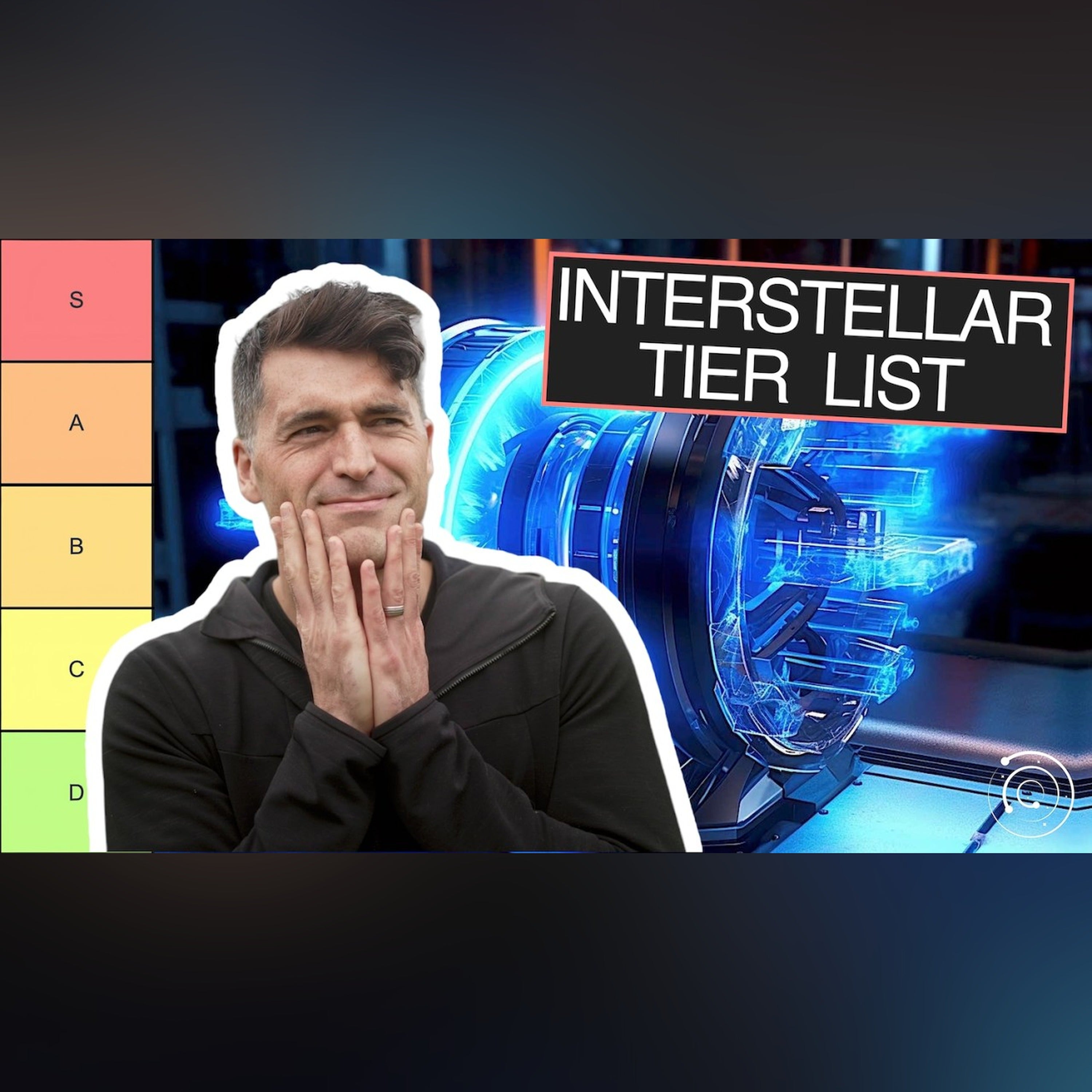
    Interstellar Propulsion Technologies - RANKED!

    Use code coolworlds at https://incogni.com/coolworlds to get an exclusive 60% off an annual Incogni plan. Many of you wanted me to talk about the different interstellar propulsion ideas out there so we figured a fun way to compare them all would be in a tier list! Today we take a look at 14 different methods proposed to explore the stars. Let us know your rankings down below in the comments. Written & presented by Prof. David Kipping. Edited by Jorge Casas. → Support our research: https://www.coolworldslab.com/support → Get merch: https://teespring.com/stores/cool-worlds-store → Check out our podcast: www.youtube.com/@CoolWorldsPodcast THANK-YOU to T. Widdowson, D. Smith, L. Sanborn, C. Bottaccini, D. Daughaday, S. Brownlee, E. West, T. Zajonc, A. De Vaal, M. Elliott, B. Daniluk, S. Vystoropskyi, S. Lee, Z. Danielson, C. Fitzgerald, C. Souter, M. Gillette, T. Jeffcoat, J. Rockett, D. Murphree, M. Sanford, T. Donkin, A. Schoen, K. Dabrowski, R. Ramezankhani, J. Armstrong, S. Marks, B. Smith, J. Kruger, S. Applegate, E. Zahnle, N. Gebben, J. Bergman, C. Macdonald, M. Hedlund, P. Kaup, W. Evans, N. Corwin, K. Howard, L. Deacon, G. Metts, R. Provost, G. Fullwood, N. De Haan, R. Williams, E. Garland, R. Lovely, A. Cornejo, D. Compos, F. Demopoulos, G. Bylinsky, J. Werner, S. Thayer, T. Edris, F. Blood, M. O'Brien, D. Lee, J. Sargent, M. Czirr, F. Krotzer, I. Williams, J. Sattler, B. Reese, O. Shabtay, X. Yao, S. Saverys, A. Nimmerjahn, C. Seay, D. Johnson, L. Cunningham, M. Morrow, M. Campbell, B. Devermont, Y. Muheim, A. Stark, C. Caminero, P. Borisoff, A. Donovan, H. Schiff, J. Cos, J. Oliver, B. Kite, C. Hansen, J. Shamp, & R. Chaffee. REFERENCES ► Kipping, D., 2024, "The Halo Drive: Fuel-Free Relativistic Propulsion of Large Masses via Recycled Boomerang Photons", JBIS: https://arxiv.org/abs/1903.03423 MUSIC Licensed by SoundStripe.com (SS) [shorturl.at/ptBHI], Artlist.io, via CC Attribution License (https://creativecommons.org/licenses/by/4.0/) or with permission from the artist. 0:00 Tamuz Dekel - Quiet Pull 2:55 Joachim Heinrich - Horizon 4:17 Joachim Heinrich - Stjärna 6:40 Hill - World of Wonder 7:46 Chris Zabriskie - The Oceans Continue to Rise 8:17 We Dream of Eden - Discovery 9:48 Chris Zabriskie - The Oceans Continue to Rise 11:11 Hill - Arctic Warmth 13:50 Hill - Northern Boards 17:25 Hill - Fragile 21:02 Hill - The Meek CHAPTERS 0:00 Intro 1:33 Chemical Rockets 3:31 Nuclear Thermal Rockets 5:55 Nuclear Pulse 8:20 Incogni 9:48 Solar Sails 12:15 Fission Sails 13:05 Laser Sails 14:47 Alcubierre Drive 15:24 Wormholes 16:09 Antimatter 17:28 Mind Upload 18:02 Negative Mass 18:42 Halo Drive 19:46 Ion Engine 20:32 Bussard Ramjet 21:03 Outro 22:51 Credits #InterstellarPropulsion #TierList #CoolWorlds Learn more about your ad choices. Visit megaphone.fm/adchoices
  • Monday · 7 min

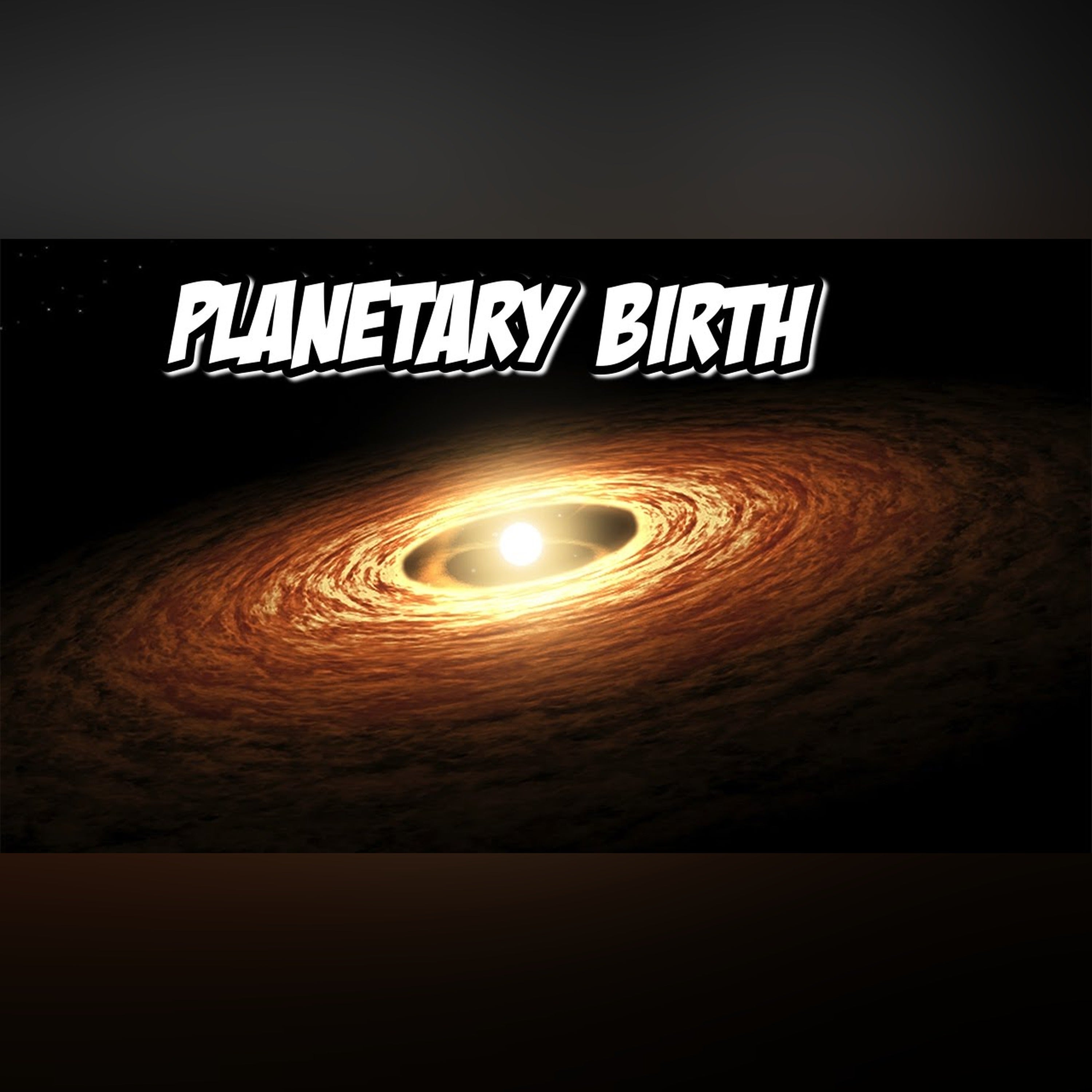
    Watching a Planet Being Born

    This week's guest video comes from Prof Catherine Espaillat from Boston University who came by the Cool Worlds Lab to talk about planet formation. Astronomers have been seeing disks of material around young stars, and even gaps in those disks implicating planets sweeping up the matter. Recently, the discovery of a planet inside one these gaps for the star LkCa 15 confirms that these gaps are indeed surely planets and the future of this relatively new research field looks set to blossom, as Catherine explains! ::More about this Video:: ► Prof Catherine Espaillat's group at BU: http://people.bu.edu/cce/ ► Kraus & Ireland (2011), "LkCa 15: A Young Exoplanet Caught at Formation?": https://arxiv.org/abs/1110.3808 ► Sallum et al. (2015), "Accreting Protoplanets in the LkCa 15 Transition Disk": https://arxiv.org/abs/1511.07456 ► Outro music by Taylor Davis: https://www.youtube.com/watch?v=dl9kI1yQKZk ::Playlists For Channel:: Latest Cool Worlds Videos ► http://bit.ly/NewCoolWorlds Cool Worlds Research ► http://bit.ly/CoolWorldsResearch Guest Videos ► http://bit.ly/CoolWorldsGuests Q&A Videos ► http://bit.ly/CoolWorldsQA Science of TV/Film ► http://bit.ly/ScienceMovies ::Follow us:: SUBSCRIBE to the channel http://bit.ly/CoolWorldsSubscribe Cool Worlds Lab http://coolworlds.astro.columbia.edu Twitter https://twitter.com/david_kipping Instagram https://www.instagram.com/cool.worlds THANKS FOR WATCHING!! Learn more about your ad choices. Visit megaphone.fm/adchoices
  • Monday · 9 min

    Proxima b Transit Search: Results!

    For the last month, the Cool Worlds Lab has been working hard to finish our analysis of space-based data to solve whether the recently discovered exoplanet, Proxima b, transits its parent star or not. Prof Kipping explains the roller-coaster of emotions in trying to solve this mystery and reveals the final answer. ::More about this Video:: ► Kipping et al. (2016), "No Conclusive Evidence for Transits of Proxima b in MOST photometry": https://arxiv.org/abs/1609.08718 ► Proxima b data and results are available to download at https://github.com/CoolWorlds/Proxima ► Outro music by Taylor Davis: https://www.youtube.com/watch?v=dl9kI1yQKZk ::Playlists For Channel:: Latest Cool Worlds Videos ► http://bit.ly/NewCoolWorlds Cool Worlds Research ► http://bit.ly/CoolWorldsResearch Guest Videos ► http://bit.ly/CoolWorldsGuests Q&A Videos ► http://bit.ly/CoolWorldsQA Science of TV/Film ► http://bit.ly/ScienceMovies ::Follow us:: SUBSCRIBE to the channel http://bit.ly/CoolWorldsSubscribe Cool Worlds Lab http://coolworlds.astro.columbia.edu Twitter https://twitter.com/david_kipping Instagram https://www.instagram.com/cool.worlds THANKS FOR WATCHING!! Learn more about your ad choices. Visit megaphone.fm/adchoices

  • Monday · 7 min

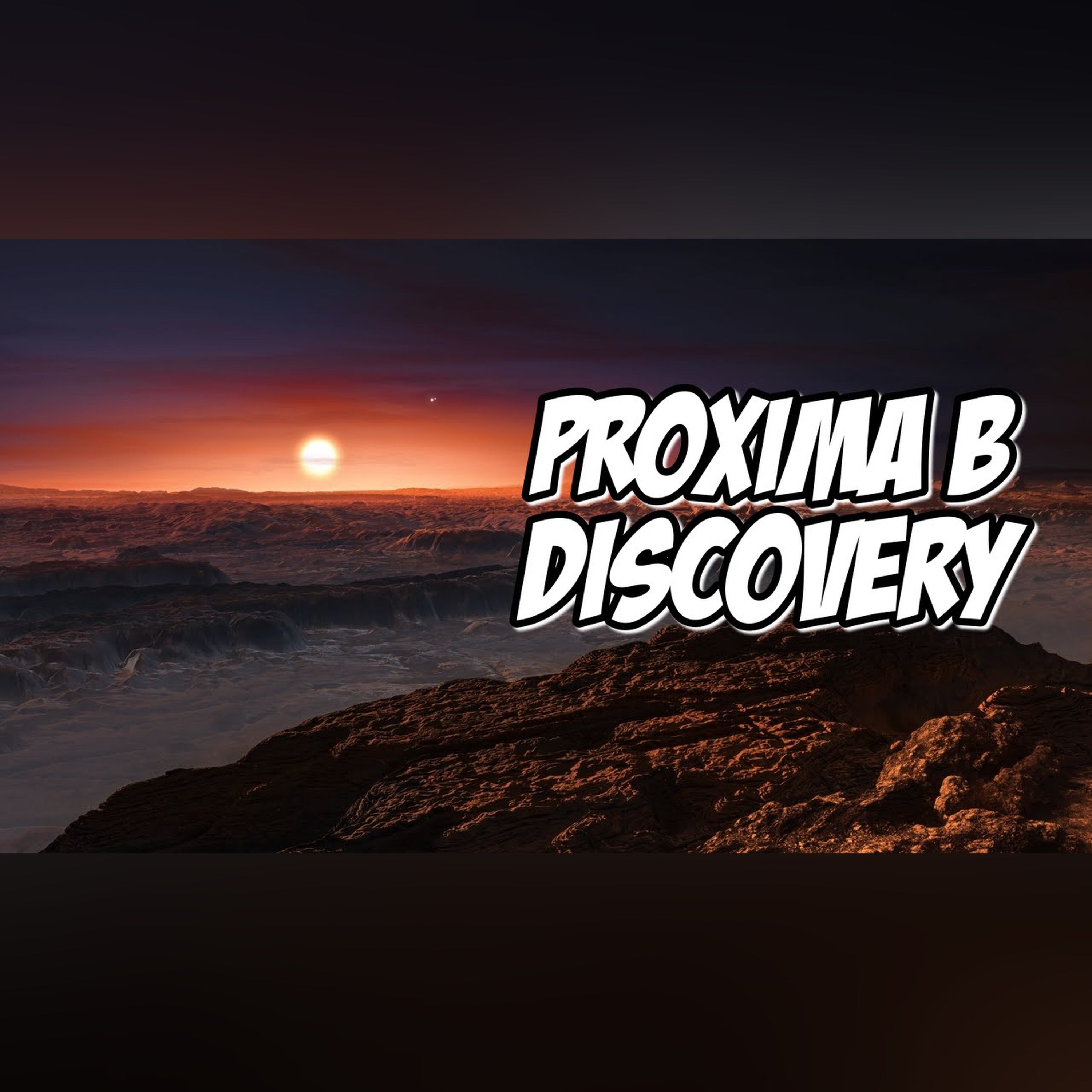
    Discovery of a Planet around our Nearest Star: Proxima b

    Dr Guillem Anglada gives the first remote Cool Worlds video to explain the very special discovery announced today by his team - a planet orbiting our nearest star. Dr Guillem Anglada walks you through the journey of discovery and what this detection means to him. Make sure you check out the Pale Red Project website below! ::More about this Video:: ► Pale Red Project: www.palereddot.org ► Anglada-Escude et al. (2016), "A terrestrial planet candidate in a temperate orbit around Proxima Centauri": https://arxiv.org/abs/1609.03449 ► Outro music by Taylor Davis: https://www.youtube.com/watch?v=dl9kI1yQKZk ::Playlists For Channel:: Latest Cool Worlds Videos ► http://bit.ly/NewCoolWorlds Cool Worlds Research ► http://bit.ly/CoolWorldsResearch Guest Videos ► http://bit.ly/CoolWorldsGuests Q&A Videos ► http://bit.ly/CoolWorldsQA Science of TV/Film ► http://bit.ly/ScienceMovies ::Follow us:: SUBSCRIBE to the channel http://bit.ly/CoolWorldsSubscribe Cool Worlds Lab http://coolworlds.astro.columbia.edu Twitter https://twitter.com/david_kipping Instagram https://www.instagram.com/cool.worlds THANKS FOR WATCHING!! Learn more about your ad choices. Visit megaphone.fm/adchoices
  • Monday · 25 min

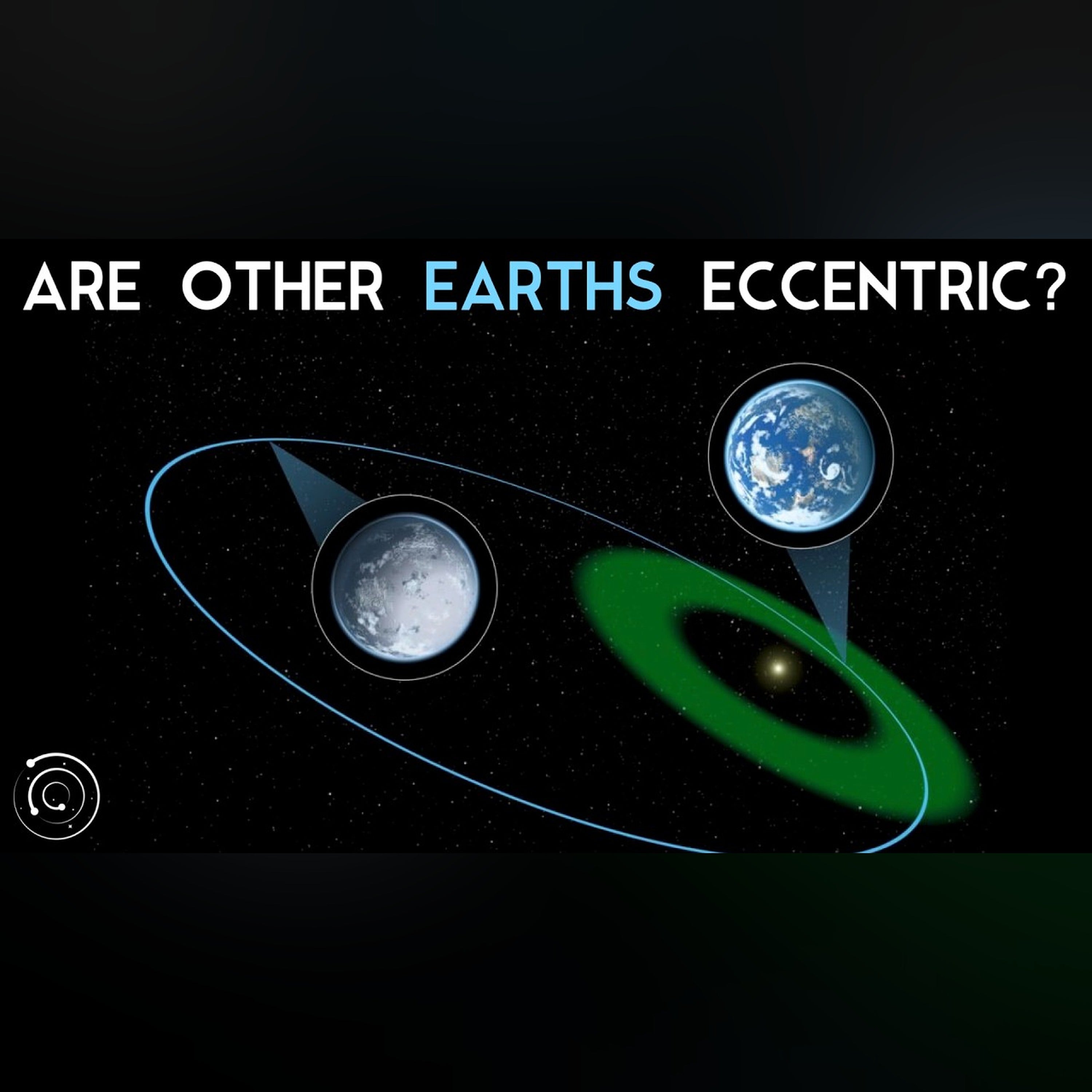
    Earth-Like Exoplanets Just Got Even More Earth-Like

    🌏 Get exclusive NordVPN deal here ➵ https://NordVPN.com/coolworlds It’s risk free with Nord’s 30 day money-back guarantee!✌ New research from the Cool Worlds Lab! Check out our explainer of this important new paper to be published in Nature Astronomy soon. Edited by Jorge Casas PAPER: https://arxiv.org/abs/2501.10571 MUSIC 0:00 Hill - Mourning Wakes 5:30 Hill - World of Wonder 6:38 Sid Acharya - Searching for Answers 8:36 Joachim Heinrich - Stjarna 10:22 Stephen Keech - Selha 12:36 Atlas - Waking Up 15:34 Hill - The Persecuted 18:43 Joachim Heinrich - Y CHAPTERS 0:00 Copernican Fallacy 2:13 Orbital Concerns 5:30 NordVPN 6:41 Exoplanets 8:46 Earth Proxies 9:47 Photo-eccentric 14:12 Stellar densities 16:49 Results 18:31 Big Picture 20:41 Outro & Credits #CoolWorlds #Exoplanets #Earth Learn more about your ad choices. Visit megaphone.fm/adchoices

  • Monday · 13 min

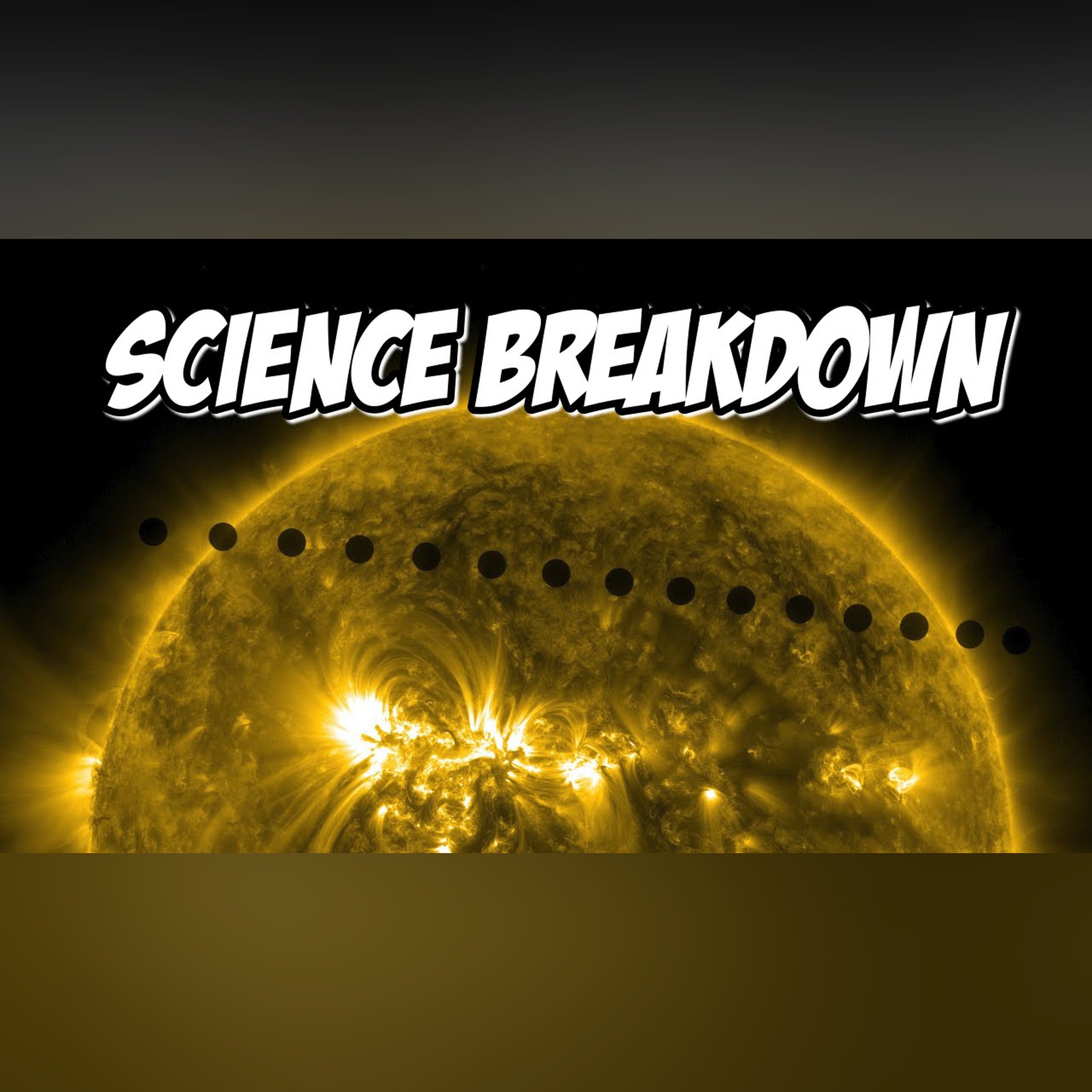
    Breakdown: How a Planet Weighs a Star

    A remarkable method in astronomy uses transiting exoplanets to measure the average density of the parent star. By comparing this value to other ways of measuring a star's density, astronomers can learn more about the planet, such as its orbital shape. Prof Kipping breaks down how this is possible in a simplified way and explains how "Asterodensity Profiling" is becoming an important tool in astronomy. ::More about this Video:: ► Cartoon list of Asterodensity Profiling effects: https://www.cfa.harvard.edu/~dkipping/AP_Cheat_Sheet.pdf ► Kipping (2014), "Characterizing Distant Worlds with Asterodensity Profiling": http://arxiv.org/abs/1311.1170 ► Outro music by Taylor Davis: https://www.youtube.com/watch?v=dl9kI1yQKZk ::Playlists For Channel:: Latest Cool Worlds Videos ► http://bit.ly/NewCoolWorlds Cool Worlds Research ► http://bit.ly/CoolWorldsResearch Guest Videos ► http://bit.ly/CoolWorldsGuests Q&A Videos ► http://bit.ly/CoolWorldsQA Science of TV/Film ► http://bit.ly/ScienceMovies ::Follow us:: SUBSCRIBE to the channel http://bit.ly/CoolWorldsSubscribe Cool Worlds Lab http://coolworlds.astro.columbia.edu Twitter https://twitter.com/david_kipping Instagram https://www.instagram.com/cool.worlds THANKS FOR WATCHING!! Learn more about your ad choices. Visit megaphone.fm/adchoices
  • Monday · 7 min

    Science of Thrones: How Long Could the Winter Last?

    Can we use science to explain the seasons and long winters in Game of Thrones? In GoT, based off George R. R. Martin's book series A Song of Ice and Fire, the seasons can last many years and their lengths vary unpredictable to even the Maesters. Astronomers are of course huge fans of science fiction and fantasy stories and have even come up with a way to explain how Westeros could experience such wild seasons. Prof Kipping explains how it works! ::More about this Video:: ► Kostov et al. (2013), "Winter is Coming": http://arxiv.org/abs/1304.0445 ► Outro music by Taylor Davis: https://www.youtube.com/watch?v=dl9kI1yQKZk ::Playlists For Channel:: Latest Cool Worlds Videos ► http://bit.ly/NewCoolWorlds Cool Worlds Research ► http://bit.ly/CoolWorldsResearch Guest Videos ► http://bit.ly/CoolWorldsGuests Q&A Videos ► http://bit.ly/CoolWorldsQA Science of TV/Film ► http://bit.ly/ScienceMovies ::Follow us:: SUBSCRIBE to the channel http://bit.ly/CoolWorldsSubscribe Cool Worlds Lab http://coolworlds.astro.columbia.edu Twitter https://twitter.com/david_kipping Instagram https://www.instagram.com/cool.worlds THANKS FOR WATCHING!! Learn more about your ad choices. Visit megaphone.fm/adchoices

  • Monday · 10 min

    The Science of Superman

    Can we explain how Superman can fly, or at least jump really high, using science? Professor Kipping explains the limits of how high an alien like Superman could jump on the Earth, using what we know about exoplanets to date. If you like these slightly different types of videos from our channel, let us know! ::More about this Video:: ► Rogers (2015), "Most 1.6 Earth-Radius Planets are not Rocky": http://arxiv.org/abs/1407.4457 ► Zeng & Sasselov (2015), "Mass-Radius Relation for Rocky Planets based on PREM": http://arxiv.org/abs/1512.08827 ► Militzer et al. (2008), "A Massive Core in Jupiter Predicted From First-Principles Simulations": http://arxiv.org/abs/0807.4264 ► Outro music by Taylor Davis: https://www.youtube.com/watch?v=dl9kI1yQKZk ::Playlists For Channel:: Latest Cool Worlds Videos ► http://bit.ly/NewCoolWorlds Cool Worlds Research ► http://bit.ly/CoolWorldsResearch Guest Videos ► http://bit.ly/CoolWorldsGuests Q&A Videos ► http://bit.ly/CoolWorldsQA Science of TV/Film ► http://bit.ly/ScienceMovies ::Follow us:: SUBSCRIBE to the channel http://bit.ly/CoolWorldsSubscribe Cool Worlds Lab http://coolworlds.astro.columbia.edu Twitter https://twitter.com/david_kipping Instagram https://www.instagram.com/cool.worlds THANKS FOR WATCHING!! Learn more about your ad choices. Visit megaphone.fm/adchoices
Showing 141–160 of 165 episodes