Skip to content
Artwork for Quantum Imaging Lab

Quantum Imaging Lab

Sanjay Arya, M.S.R.T. (R)(MR), MRSO

Quantum Imaging Lab, presented by Professor Sanjay Arya, M.S., R.T.(R)(MR), provides structured, exam-aligned audio learning for radiologic technology students preparing for the ARRT exam and educators supporting instruction.

Episodes cover core ARRT Content Specification areas including Image Production, Radiation Protection, Safety, and Procedures through focused microlearning.

Content reflects topics commonly taught in radiologic technology programs and supports ARRT certification and Continuing Qualifications Requirements (CQR).

© 2026 Quantum Imaging Lab.

Play
  • 38 episodes
  • a few times a week
  • Avg 47 min
  • English
Counted on this page — what you have heard stays on this device, so it is not something the list can be paged by.
  • S1 · E18
    Tuesday · 1 hr 7 min

    Episode 18: Section 5 — Patient Emergencies in Imaging | Microlearning 5.3 — Systemic Medical Emergencies

    A patient on the exam table suddenly stops breathing. There's no warning shot in a true emergency — only the moment you notice, and the moment you act. This episode covers the four major categories of systemic emergency — respiratory and airway, allergic and contrast reactions, cardiac and circulatory, and neurologic — and how to recognize and respond to each. These are the time-critical situations every radiologic technologist needs to be ready for, regardless of how routine the exam was supposed to be. Designed for radiologic technology students across all modalities — and just as useful for nursing students and anyone in a patient-facing healthcare role. Board-exam-relevant content, explained conversationally. 📘 Explore the full Patient Care and Professional Practice textbook, workbook, and section eBooks by Prof. Sanjay Arya — pick the format that fits your learning style: https://www.amazon.com/stores/Sanjay-Arya/author/B0H1147NP2
  • S1 · E17
    Saturday · 37 min

    Episode 17: Section 5 — Patient Emergencies in Imaging | Microlearning 5.2 — Emergency Recognition and First Response

    A patient suddenly grasps their throat and can't speak. You're the only clinician in the room, and the next few seconds depend entirely on what you do first. This episode builds the recognition-and-response framework every technologist needs — spotting early neurological, cardiovascular, and respiratory warning signs, activatingemergency protocols, and communicating clearly using SBAR. We apply this framework to the most common non-contrast emergencies: choking, vasovagal reactions, seizures, and cardiac or respiratory arrest. Designed for radiologic technology students across all modalities — and just as useful for nursing students and anyone in a patient-facing healthcare role. Board-exam-relevant content, explained conversationally. 📘 Explore the full Patient Care and Professional Practice textbook, workbook, and section eBooks by Prof. Sanjay Arya — pick the format that fits your learning style: https://www.amazon.com/stores/Sanjay-Arya/author/B0H1147NP2
  • S1 · E16
    October 1 · 48 min

    Episode 16: Section 5 — Patient Emergencies in Imaging | Microlearning 5.1 — Allergic Reactions and Latex Safety

    A patient mentions a latex allergy almost as an afterthought while you're setting up the room. Minutes later, redness and itching appear exactly where you'd expect if that detail hadbeen missed. This episode covers the immunological basis of allergic reactions and why latex sensitivity deserves particular attention in imaging — from gloves to IV access to airborneexposure. You'll learn to identify high-risk patient populations during pre-procedure assessment and distinguish true allergic reactions from irritant responses. Designed for radiologic technology students across all modalities — and just as useful for nursing students and anyone in a patient-facing healthcare role. Board-exam-relevant content, explained conversationally. 📘 Explore the full Patient Care and Professional Practice textbook, workbook, and section eBooks by Prof. Sanjay Arya — pick the format that fits your learning style: https://www.amazon.com/stores/Sanjay-Arya/author/B0H1147NP2
  • S1 · E15
    September 29 · 1 hr 2 min

    Episode 15: Section 4 — Clinical Monitoring and Contrast Safety | Microlearning 4.4 — Contrast Media: Safety, Reactions, and Documentation

    Mid-injection, a patient's face begins to swell and they start wheezing. What happens in the next sixty seconds tests everything you know about contrast safety. This episode completes the two-part contrast media series, focused entirely on reactions and response. We cover how to classify adverse reactions by severity, the immediate response sequence — stopping the injection, activating emergency protocols, supporting airway and circulation — and why thorough documentation matters as much as the response itself. Designed for radiologic technology students across all modalities — and just as useful for nursing students and anyone in a patient-facing healthcare role. Board-exam-relevant content, explained conversationally. 📘 Explore the full Patient Care and Professional Practice textbook, workbook, and section eBooks by Prof. Sanjay Arya — pick the format that fits your learning style: https://www.amazon.com/stores/Sanjay-Arya/author/B0H1147NP2
  • S1 · E14
    September 26 · 1 hr 18 min

    Episode 14: Section 4 — Clinical Monitoring and Contrast Safety | Microlearning 4.3 — Contrast Media: Foundations and Administration

    Two patients need contrast today — one is a healthy adult, the other has chronic kidney disease. The agent, the dose, and the precautions won't look the same for both. This episode covers the foundations of contrast media: positive versus negative agents, key properties like osmolality and viscosity, and the scheduling and consent considerationsthat come with contrast-based exams. We also cover how technologists adapt contrast choice for patients with reduced kidney function or other high-risk conditions. Designed for radiologic technology students across all modalities — and just as useful for nursing students and anyone in a patient-facing healthcare role. Board-exam-relevant content, explained conversationally. 📘 Explore the full Patient Care and Professional Practice textbook, workbook, and section eBooks by Prof. Sanjay Arya — pick the format that fits your learning style: https://www.amazon.com/stores/Sanjay-Arya/author/B0H1147NP2
  • S1 · E13
    September 24 · 46 min

    Episode 13: Section 4 — Clinical Monitoring and Contrast Safety | Microlearning 4.2 — Patient Support Equipment and Usage

    A patient arrives with oxygen tubing, a chest tube, and a power injector scheduled for contrast — all in the same exam. One wrong connection, and a routine setup becomes a serious problem. This episode covers the equipment radiologic technologists routinely encounter — oxygen therapy, suction, power injectors for contrast administration, and chest tubes — and the safe handling practices each requires, including why certain IV lines should never be used for contrast injection. You'll learn the compatibility and operational considerations that keep both equipment and patients safe. Designed for radiologic technology students across all modalities — and just as useful for nursing students and anyone in a patient-facing healthcare role. Board-exam-relevant content, explained conversationally. 📘 Explore the full Patient Care and Professional Practice textbook, workbook, and section eBooks by Prof. Sanjay Arya — pick the format that fits your learning style: https://www.amazon.com/stores/Sanjay-Arya/author/B0H1147NP2
  • S1 · E12
    September 22 · 51 min

    Episode 12: Section 4 — Clinical Monitoring and Contrast Safety | Microlearning 4.1 — Routine Monitoring and Vital Signs

    A post-surgical patient arrives for imaging looking stable — but their pulse is weak and irregular. In advancedimaging, the numbers sometimes tell you what the patient can't. This episode focuses on routine monitoring in settings where patients are frequently medically fragile. We cover the full set of vital signs including pulse oximetry, how to recognizeabnormal patterns like fever with tachycardia or sudden confusion, and how systematic assessment lets technologists intervene early and communicate effectively with the care team. Designed for radiologic technology students across all modalities — and just as useful for nursing students and anyone in a patient-facing healthcare role. Board-exam-relevant content, explained conversationally. 📘 Explore the full Patient Care and Professional Practice textbook, workbook, and section eBooks by Prof. Sanjay Arya — pick the format that fits your learning style: https://www.amazon.com/stores/Sanjay-Arya/author/B0H1147NP2
  • S1 · E11
    September 19 · 45 min

    Episode 11: Section 3 — Ergonomics and Patient Safety | Microlearning 3.2 — Patient Safety and Comfort

    A confused, elderly patient on the exam table suddenly starts to sit up unassisted. You're not in the room — yet. This is exactly the moment patient safety protocols are built around. This episode covers the everyday safety and comfort responsibilities that protect vulnerable patients — securingbelongings, using positioning aids, and recognizing who needs continuous supervision. We also cover the added vigilance required for patients with IV lines, oxygen tubing, or tracheostomy tubes, and why patients should never be left unattended. Designed for radiologic technology students across all modalities — and just as useful for nursing students and anyone in a patient-facing healthcare role. Board-exam-relevant content, explained conversationally. 📘 Explore the full Patient Care and Professional Practice textbook, workbook, and section eBooks by Prof. Sanjay Arya — pick the format that fits your learning style: https://www.amazon.com/stores/Sanjay-Arya/author/B0H1147NP2
  • S1 · E10
    September 17 · 51 min

    Episode 10: Section 3 — Ergonomics and Patient Safety | Microlearning 3.1 — Safe Patient Transfer and Body Mechanics

    A wheelchair isn't locked, and a patient starts to stand. One missed step in a transfer routine is all it takes for things to go wrong — for the patient or for you. This episode covers proper body mechanics and safe transfer techniques for patients across the full range of mobility — ambulatory, wheelchair, and stretcher. We discuss how posture, coordination, and equipment management come together to prevent technologist injury while preserving patient comfort and dignity during every transfer. Designed for radiologic technology students across all modalities — and just as useful for nursing students and anyone in a patient-facing healthcare role. Board-exam-relevant content, explained conversationally. 📘 Explore the full Patient Care and Professional Practice textbook, workbook, and section eBooks by Prof. Sanjay Arya — pick the format that fits your learning style: https://www.amazon.com/stores/Sanjay-Arya/author/B0H1147NP2
  • S1 · E9
    September 15 · 47 min

    Episode 9: Section 2 — Communication | Microlearning 2.4 — Patient Assessment and Vital Signs

    A patient's lips and nail beds take on a bluish tint during positioning. It's a subtle change — and recognizing it in the moment is the difference between routine and urgent. This episode covers how to assess a patient's physical condition and vital signs before and during imaging— temperature, pulse, respiration, and blood pressure — and how to distinguish normal findings from early warning signs like cyanosis or a weak, irregular pulse. You'll learn what actions to take when something doesn't look right, before it becomes an emergency. Designed for radiologic technology students across all modalities — and just as useful for nursing students and anyone in a patient-facing healthcare role. Board-exam-relevant content, explained conversationally. 📘 Explore the full Patient Care and Professional Practice textbook, workbook, and section eBooks by Prof. Sanjay Arya — pick the format that fits your learning style: https://www.amazon.com/stores/Sanjay-Arya/author/B0H1147NP2
  • S1 · E8
    September 12 · 37 min

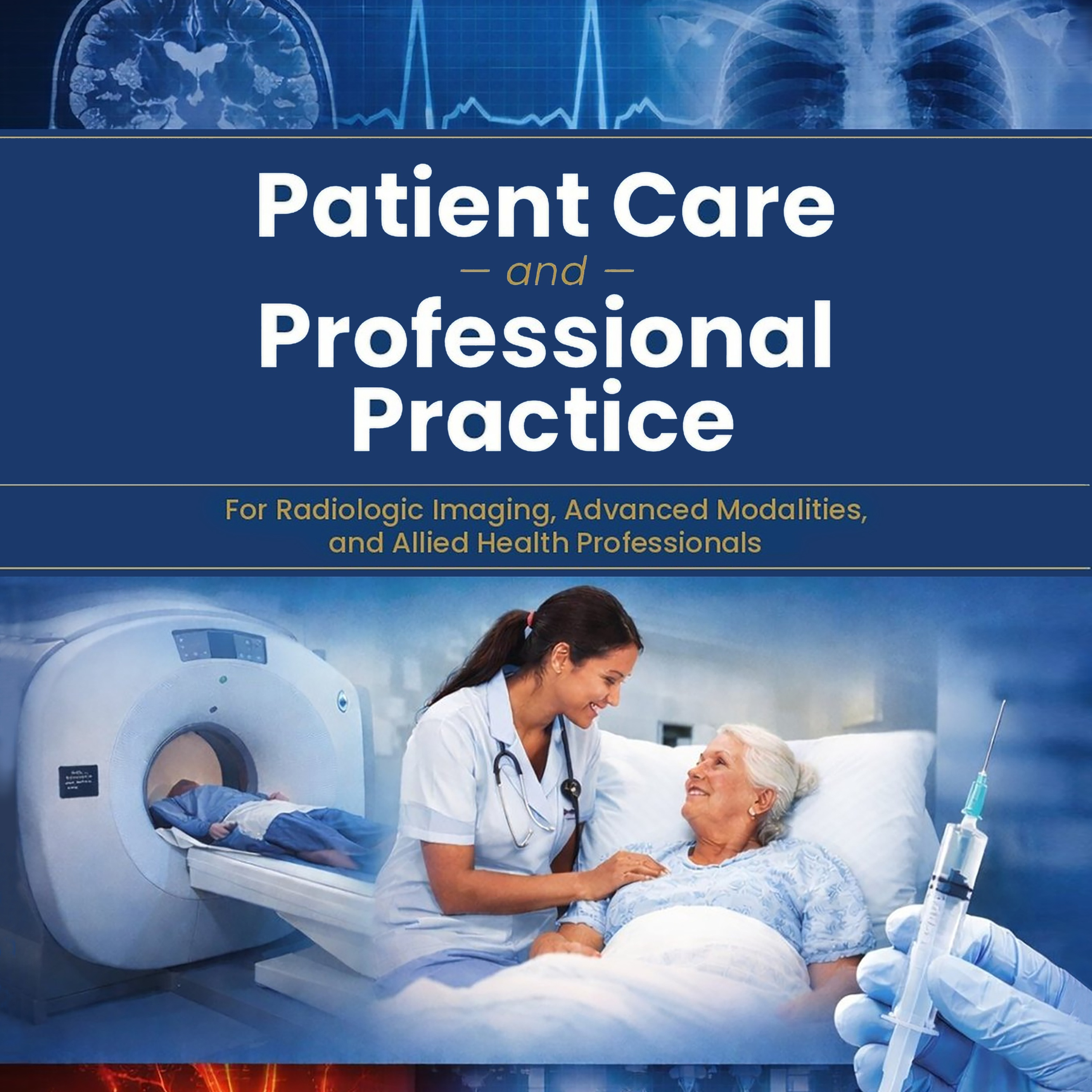
    Episode 8: Section 2 — Communication | Microlearning 2.3 — Patient Education and Aftercare Instructions

    A patient nods along to verbal aftercare instructions, then calls in a panic the next day because they don't remember any of it. Verbal explanations alone aren't always enough. This episode covers the two phases of patient education: preparing patients before a procedure with clear expectations, and delivering accurate aftercare instructions afterward, including why written handouts matter alongside verbal explanations. We also cover a simple technique — asking a patient to repeat instructions back in their own words — that catches misunderstandings before they become a problem. Designed for radiologic technology students across all modalities — and just as useful for nursing students and anyone in a patient-facing healthcare role. Board-exam-relevant content, explained conversationally. 📘 Explore the full Patient Care and Professional Practice textbook, workbook, and section eBooks by Prof. Sanjay Arya — pick the format that fits your learning style: https://www.amazon.com/stores/Sanjay-Arya/author/B0H1147NP2
  • S1 · E7
    September 10 · 43 min

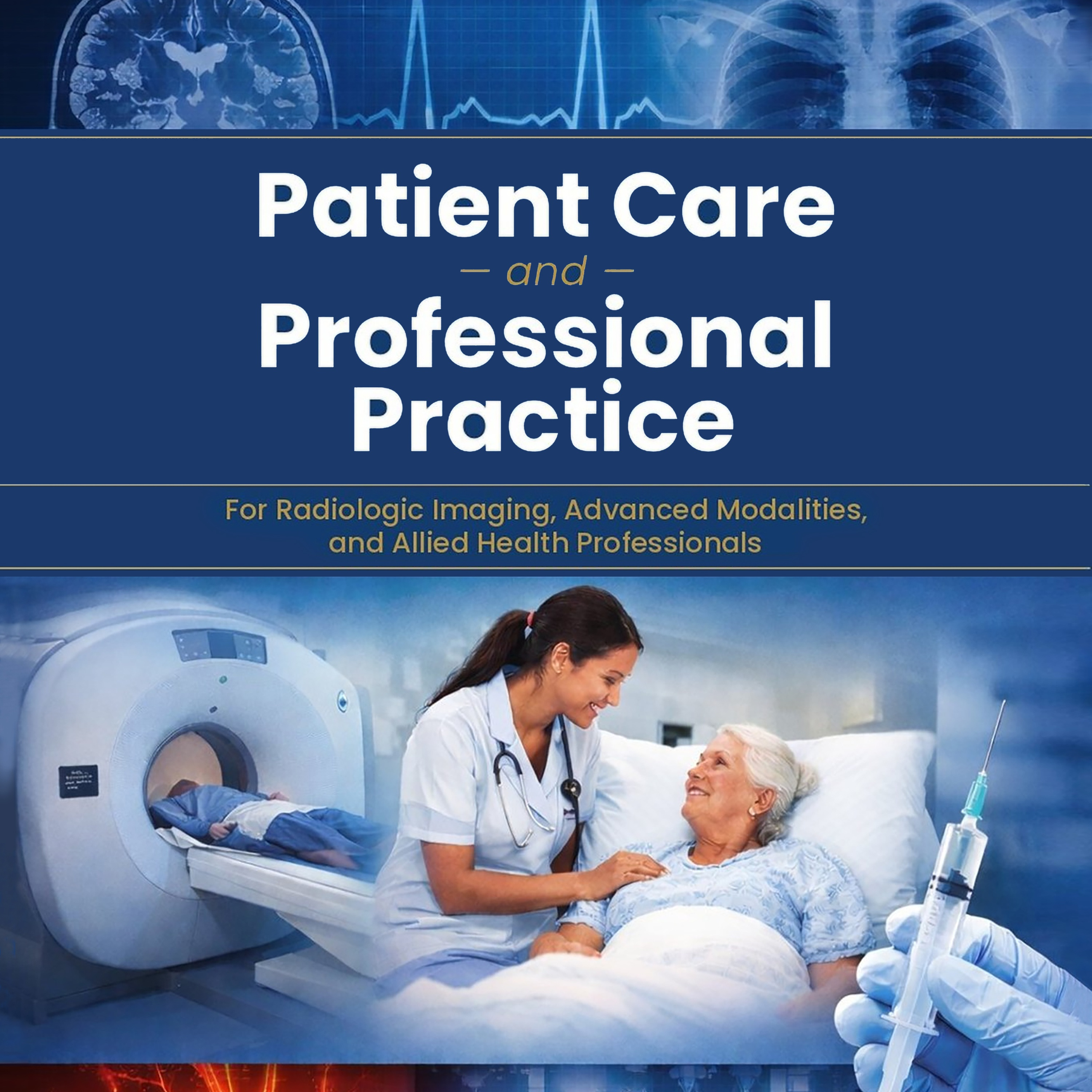
    Episode 7: Section 2 — Communication | Microlearning 2.2 — Verbal and Nonverbal Communication

    Two patients come in for the identical procedure. One technologist rushes through it with a flat tone; the other explains calmly and checks in along the way. Same exam, two completely different patient experiences. This episode breaks down how verbal choices — word choice, tone, pacing — work together with nonverbal signals like posture, facial expression, and eye contact to shape a patient's experience. We also cover a mistake that's easy to make without realizing it: discussing a patient casually once you think they're out of earshot. Designed for radiologic technology students across all modalities — and just as useful for nursing students and anyone in a patient-facing healthcare role. Board-exam-relevant content, explained conversationally. 📘 Explore the full Patient Care and Professional Practice textbook, workbook, and section eBooks by Prof. Sanjay Arya — pick the format that fits your learning style: https://www.amazon.com/stores/Sanjay-Arya/author/B0H1147NP2
  • S1 · E6
    September 8 · 36 min

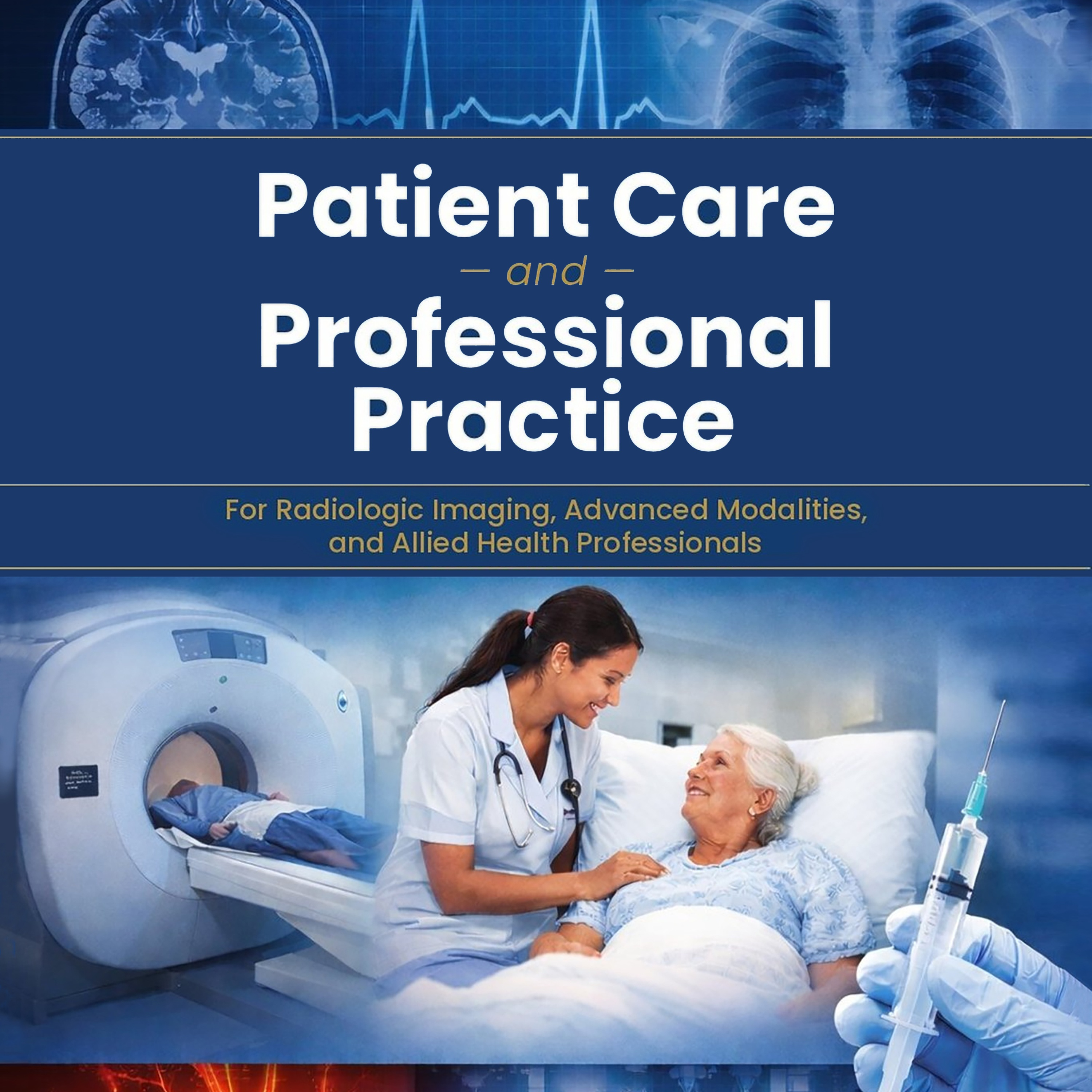
    Episode 6: Section 2 — Communication | Microlearning 2.1 — Effective Patient Communication

    A technologist calls out a patient's name in a crowded waiting room — and the wrong person starts to stand up. In patient care, a mix-up like this is exactly what identity verificationexists to prevent. This episode covers the fundamentals of effective patient communication — accurate identity verification using two independent identifiers, reviewing requisitions and medical history to catch mismatches before they become errors, and reading verbal and nonverbal cues that shape trust from the very first interaction. We also cover what to do when a requisition and the patient's own story don't quite line up. Designed for radiologic technology students across all modalities — and just as useful for nursing students and anyone in a patient-facing healthcare role. Board-exam-relevant content, explained conversationally. 📘 Explore the full Patient Care and Professional Practice textbook, workbook, and section eBooks by Prof. Sanjay Arya — pick the format that fits your learning style: https://www.amazon.com/stores/Sanjay-Arya/author/B0H1147NP2
  • S1 · E5
    September 5 · 47 min

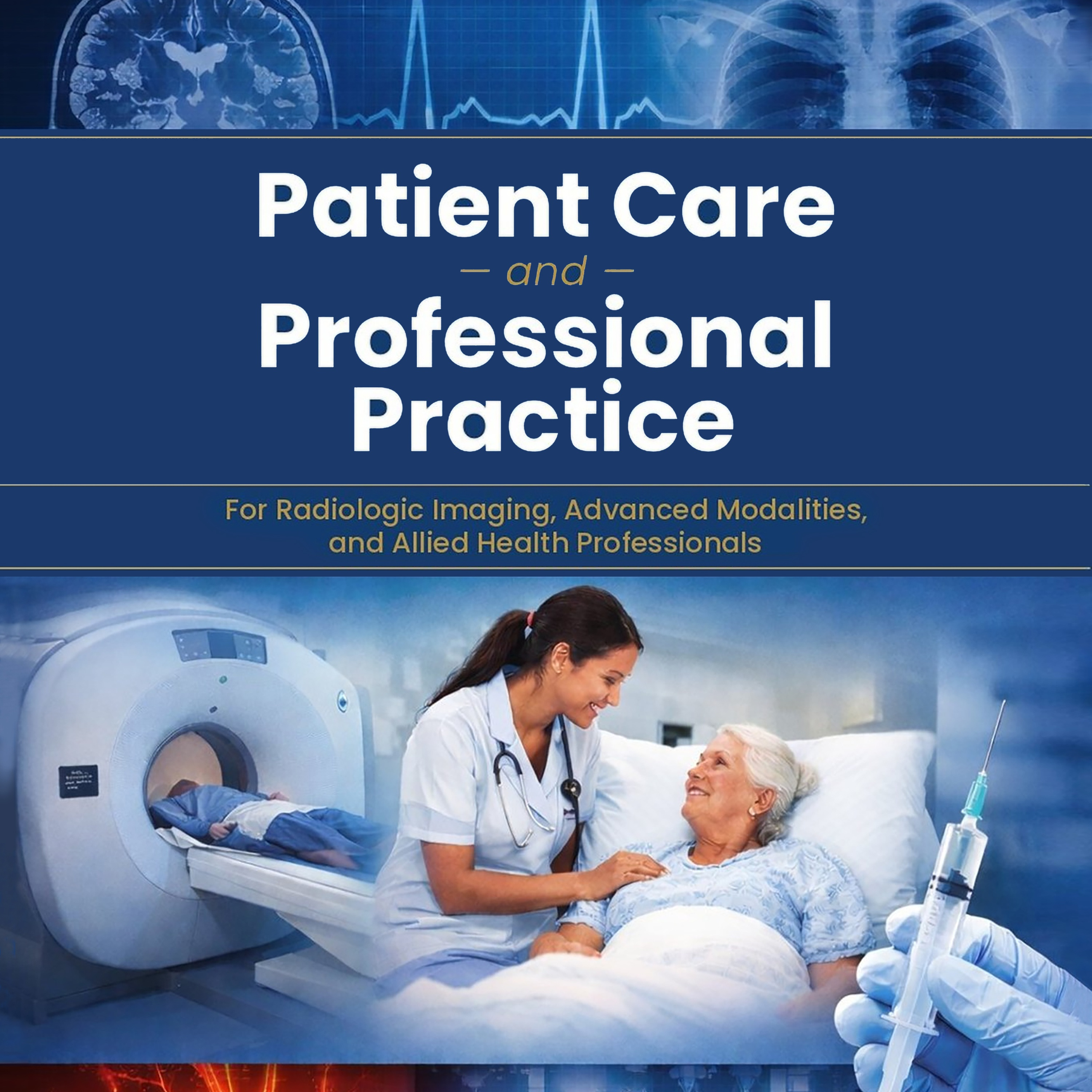
    Episode 5: Section 1 — Ethics and Law | Microlearning 1.5 — Legal Issues and Professional Responsibilities

    A patient asks to leave the room mid-exam. Do you let them go, or keep them there until you're done? Get this wrong, and it's not just a bad review — it could be false imprisonment. This episode covers the legal frameworks that shape daily practice — sources of law, public versus private law, and the intentional and negligent torts technologists can be exposed to, from assault and battery to simple negligence. We also cover the legal doctrines that determine liability when something goes wrong, and the documentation habits that protect both patients and technologists. Designed for radiologic technology students across all modalities — and just as useful for nursing students and anyone in a patient-facing healthcare role. Board-exam-relevant content, explained conversationally. 📘 Explore the full Patient Care and Professional Practice textbook, workbook, and section eBooks by Prof. Sanjay Arya — pick the format that fits your learning style: https://www.amazon.com/stores/Sanjay-Arya/author/B0H1147NP2
  • S1 · E4
    September 3 · 35 min

    Episode 4: Section 1 — Ethics and Law | Microlearning 1.4 — Patient Rights and Care Partnership

    A patient's advance directive says Do Not Resuscitate. Minutes before their scheduled procedure, they becomeunresponsive. What happens next isn't a judgment call — it's already been decided, if you know where to look. This episode traces the evolution from the original Patient's Bill of Rights to today's Patient Care Partnership, and shows how advance directives and surrogate decision-makingprotect patients who can't speak for themselves. We connect these frameworks directly to the ASRT Code of Ethics and ARRT Standards, showing how patient rights translate into real decisions during real procedures. Designed for radiologic technology students across all modalities — and just as useful for nursing students and anyone in a patient-facing healthcare role.Board-exam-relevant content, explained conversationally. 📘 Explore the full Patient Care and Professional Practice textbook, workbook, and section eBooks by Prof. Sanjay Arya — pick the format that fits your learning style: https://www.amazon.com/stores/Sanjay-Arya/author/B0H1147NP2
  • S1 · E3
    September 1 · 41 min

    Episode 3: Section 1 — Ethics and Law | Microlearning 1.3 — Patient Privacy and Confidentiality

    A workstation is left open at an empty desk, patient scans visible to anyone walking by. It takes one unlocked screen to turn a routine moment into a privacy violation. This episode covers what HIPAA actually requires in daily practice, the everyday moments — an unattended monitor, a hallway conversation, a discussion overheard during an urgent case — where privacy is easiest to compromise, and the cultural sensitivity that goes beyond the legal minimum, including how technologists handle requests like a same-gender provider. As the book puts it: curiosity or convenience never justifies breaching confidentiality. Designed for radiologic technology students across all modalities — and just as useful for nursing students and anyone in a patient-facing healthcare role. Board-exam-relevant content, explained conversationally. 📘 Explore the full Patient Care and Professional Practice textbook, workbook, and section eBooks by Prof. Sanjay Arya — pick the format that fits your learning style: https://www.amazon.com/stores/Sanjay-Arya/author/B0H1147NP2
  • S1 · E2
    August 31 · 37 min

    Episode 2: Section 1 — Ethics and Law | Microlearning 1.2 — Patient Consent and Legal Considerations

    An unresponsive trauma patient needs urgent imaging right now — but they can't say yes. Is proceeding without a signature the right call, or a legal risk? This episode breaks down thethree forms of consent — verbal, written, and implied — and exactly when eachone applies, from a routine exam to a higher-risk procedure. You'll learn whatmakes consent truly informed, why performing a procedure without valid consentcan carry serious legal consequences, and what a technologist is required to dothe moment a patient withdraws consent mid-procedure. Designedfor radiologic technology students across all modalities — and just as usefulfor nursing students and anyone in a patient-facing healthcare role.Board-exam-relevant content, explained conversationally. 📘 Explore the fullPatient Care and Professional Practice textbook, workbook, and section eBooksby Prof. Sanjay Arya — pick the format that fits your learning style: https://www.amazon.com/stores/Sanjay-Arya/author/B0H1147NP2
  • S1 · E1
    August 21 · 59 min

    Episode 1: Section 1 — Ethics and Law | Microlearning 1.1 — Ethics and Professional Conduct

    A patient refuses to remove a hearing aid before a scan. Do you push forward, or stop the exam? That single decision — and how the technologist actually handles it — sits at the center of everything this episode covers. This episode grounds you in thefour bioethical principles — autonomy, beneficence, nonmaleficence, and justice— that underlie every ethical standard in healthcare, then breaks down how ARRTtranslates that philosophy into practice through the aspirational Code ofEthics and the enforceable Rules of Ethics. You'll learn to tell ethical fromunethical conduct, understand what happens when the ARRT Ethics Committeereviews a violation, and walk away with the core competencies that defineprofessional practice. Designedfor radiologic technology students across all modalities — and just as usefulfor nursing students and anyone in a patient-facing healthcare role.Board-exam-relevant content, explained conversationally. 📘 Explore the fullPatient Care and Professional Practice textbook, workbook, and section eBooksby Prof. Sanjay Arya — pick the format that fits your learning style: https://www.amazon.com/stores/Sanjay-Arya/author/B0H1147NP2
  • S1 · E15
    July 6 · 49 min

    [Radiologic Physics] Ep 15 – X-ray Interactions with matter

    This episode examines what happens when x-ray photons enter the body — beginning with the foundational terms of primary radiation, transmission, exit radiation, and attenuation, and establishing how the four tissue factors of energy, thickness, atomic number, and mass density each govern how much of the beam is absorbed versus transmitted. Prof. Arya explains why differential absorption is the physical basis of radiographic contrast, and connects these principles directly to how radiographers select exposure factors to balance image quality against patient dose. The second half covers all five types of x-ray interactions with matter in sequence: coherent scattering, Compton scattering, photoelectric absorption, pair production, and photodisintegration — with emphasis on the two interactions that dominate diagnostic imaging. Compton scattering is traced from outer-shell ejection through recoil electron behavior and scatter angle, with attention to its role in radiographic fog and occupational exposure. Photoelectric absorption is analyzed through the photoelectron, the cascade effect, and the Z³ and 1/E³ probability relationships that make it essential for image contrast and the basis of contrast agent use. This episode aligns with the Radiation Physics and Radiobiology content category — specifically x-ray interactions with matter — of the ARRT Radiography Examination Content Specifications. Audio content is adapted from original instructional material developed by Professor Sanjay Arya, M.S., R.T.(R)(MR) for radiologic technology education. Part of the Radiologic Physics series — Quantum Imaging Lab. © 2026 Quantum Imaging Lab. All rights reserved.

  • S1 · E14
    June 29 · 55 min

    [Radiologic Physics] Ep 14 – X-ray Production and Emission

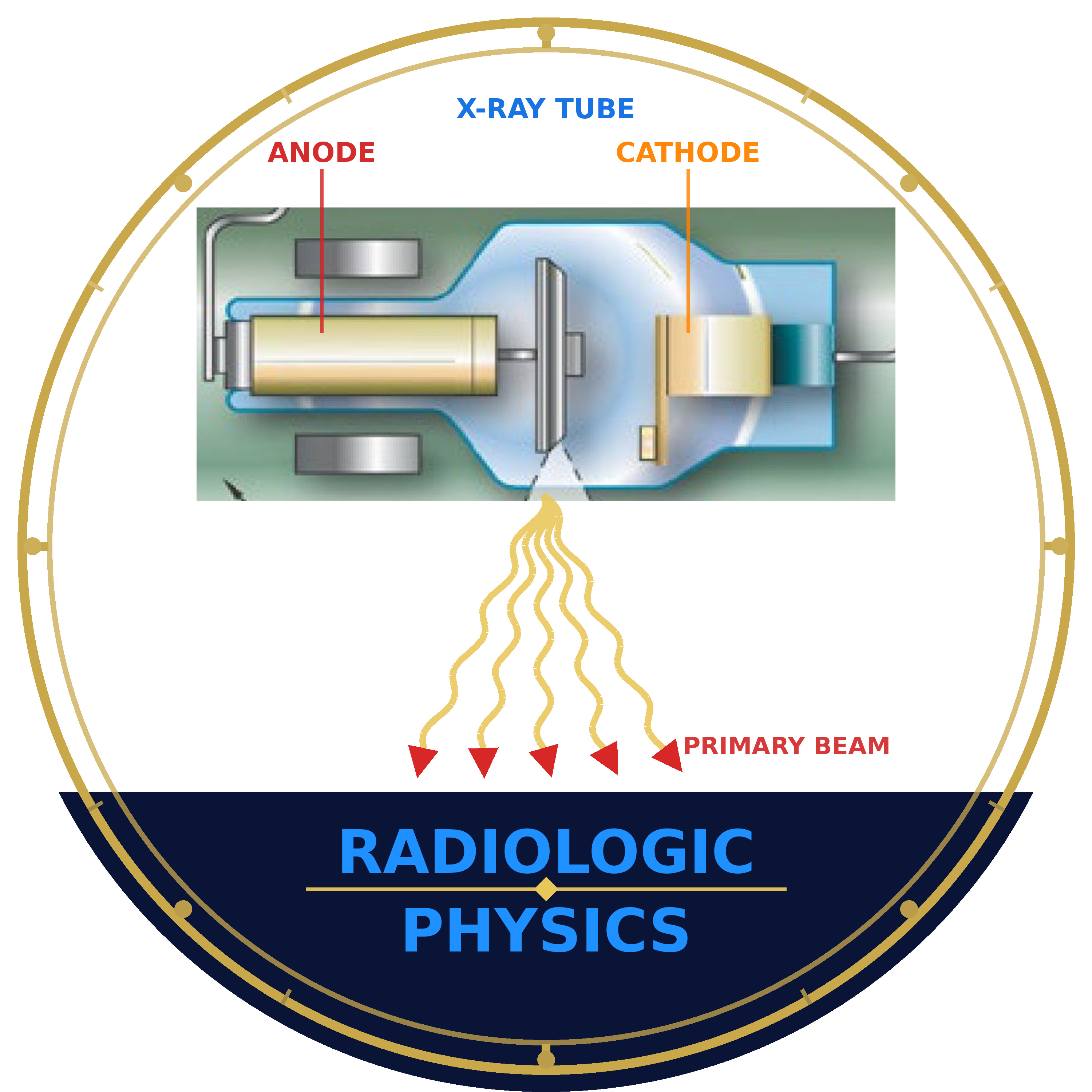
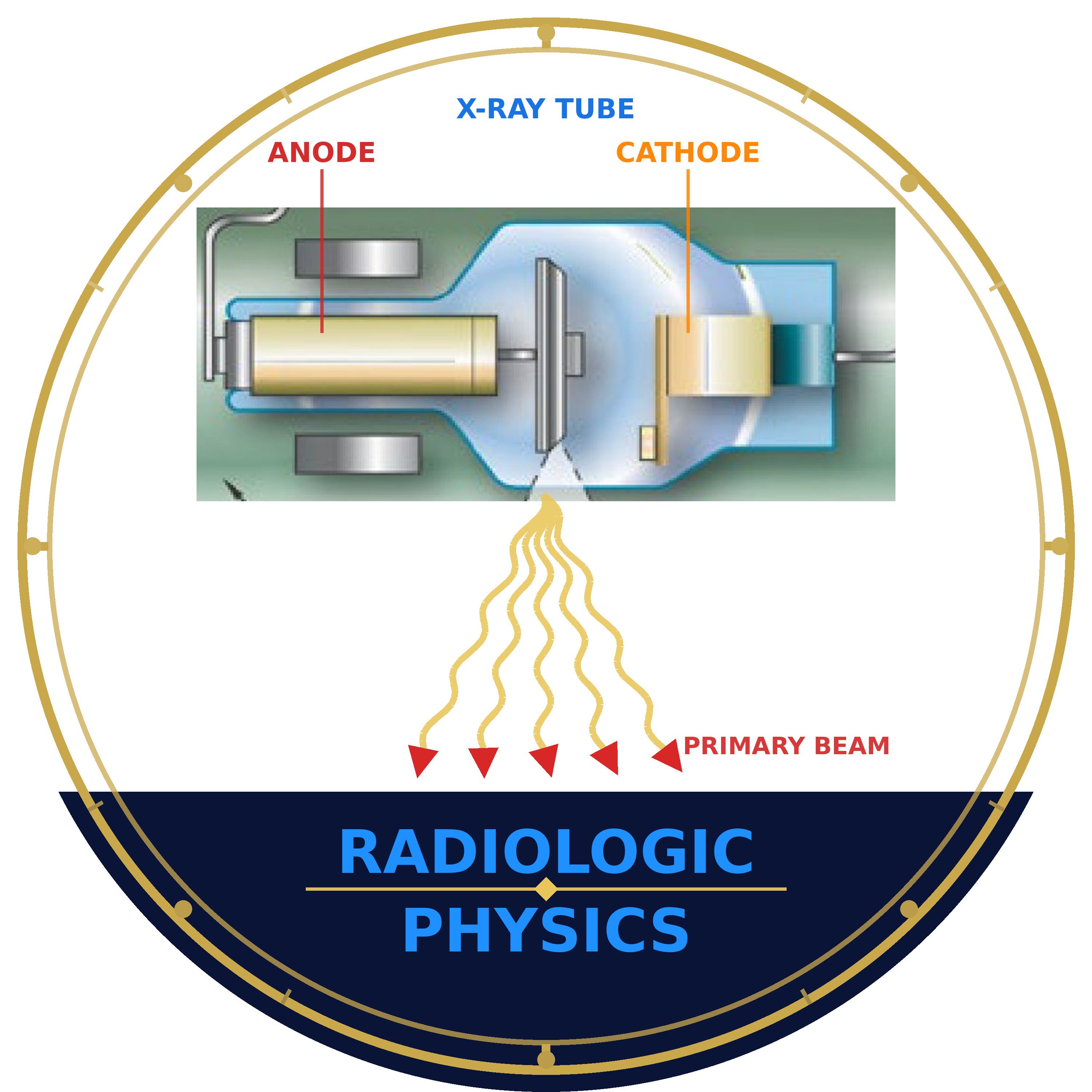
    This episode covers x-ray production — the process of converting electron kinetic energy into electromagnetic radiation at the anode of the x-ray tube. Prof. Arya explains why unrectified electron flow without sufficient energy would fail to produce diagnostic photons, tracing the three essential conditions required: a source of electrons via thermionic emission, acceleration through applied kVp, and a suitable high-Z target. The episode examines the inefficiency of x-ray production at diagnostic energies, introduces the efficiency formula (K × Z × kVp), and compares how tungsten, molybdenum, and gold targets differ in photon output and characteristic peak positions. The second half distinguishes Bremsstrahlung radiation — a continuous spectrum produced by nuclear field interactions — from characteristic radiation, which releases discrete photons through K-shell vacancy cascades unique to the target material. Each factor affecting the x-ray emission spectrum is analyzed in turn: mAs, kVp, added filtration, generator waveform, and target atomic number — with attention to whether each shifts beam quantity, beam quality, or both. The episode closes with half-value layer as the clinical measure of beam penetrability and its relationship to kVp. This episode aligns with the Equipment Operation and Quality Assurance content category — Radiographic Equipment subcategory — of the ARRT Radiography Examination Content Specifications. Audio content is adapted from original instructional material developed by Professor Sanjay Arya, M.S., R.T.(R)(MR) for radiologic technology education. Part of the Radiologic Physics series — Quantum Imaging Lab. © 2026 Quantum Imaging Lab. All rights reserved.

Showing 1–20 of 38 episodes