

FT

BusinessEntrepreneurship
Follow the Gradient
Follow the Gradient
Insider knowledge and real stories about how to build a business from Europe while staying sane. Each week founders Melanie Gabriel and Christian Woese dive deep into one specific topic on a founder's or startup operator's mind and share how to solve the challenge together with an expert. Follow the Gradient and stay tuned.
https://followthegradient.io/
- 20 episodes
- Avg 44 min
- English
- FT
 July 2 · 34 min
Why we never raised in 16 years | Tom Hanan, Webrepublic
Your clients have started asking why AI hasn't made you cheaper yet. The honest answer is not the one the vendors are selling. In this episode of Follow the Gradient, Christian Woese sits down with Tom Hanan, co-founder and CEO of Webrepublic, the largest independent owner-managed marketing agency in Switzerland. Tom started the company in 2009 with one other person, never raised outside capital, and has grown it to around 250 people running campaigns for clients including FIFA. This is a conversation about what actually changes when a services business meets AI, told by someone who runs the campaigns rather than the keynote. Tom is blunt about the gap between what clients expect from the technology and what it can really do, and about the second-order mess it is creating in the feeds. We talk about: Why a client asking for a 30 to 40% discount "because you have AI" is, in Tom's words, absolute bogus, when Webrepublic spends a seven-figure sum a year just to deploy the technology What AI actually delivers in an agency: not a smaller team, but the efficiency to manage four clients where you used to manage three Why most corporate AI spend fails, and the "Ferrari without a driver's license" problem when culture isn't ready to change its processes The "AI slop" thesis: how platform incentives reward a pink elephant swimming across a lake over anything with depth, and why quality placements become the scarce asset What 16 years of bootstrapping cost and bought, and why every VC's five-year plan to exit would have changed the company The "oomph factor" hiring rule, why he wants a mix of Captain Kirk, Yoda and Indiana Jones, and why a team has to be ready for chaos This is perspective over playbook. Tom has spent 16 years making the same set of choices, stay independent, keep the work in one place, refuse the easy discount, and the episode is about what those choices actually protect. Our biggest takeaways, including Tom's view on where founders and clients misjudge what AI will do to their costs: https://www.followthegradient.io/p/tom-hanan-podcast — Where to find Tom Hanan: LinkedIn: https://www.linkedin.com/in/tomhanan/ Webrepublic: https://www.webrepublic.com — 🎙 Follow the Gradient: conversations about building a business from Europe while staying sane. Follow us: Melanie: https://www.linkedin.com/in/melaniexgabriel/ Christian: https://www.linkedin.com/in/christian-woese/ Subscribe to our channels: Newsletter: https://www.followthegradient.io YouTube: https://www.youtube.com/@followthegradient LinkedIn: https://www.linkedin.com/company/followthegradient/ X: https://x.com/followgradient Instagram: https://www.instagram.com/followthegradient/
- FT
 June 4 · 37 min
We rebuild the whole company every six months | Olivia Elf, VP Ops at Sana
Most companies design their strategy to fit the org chart they already have. Sana built it the other way around, and rebuilt the org around the new strategy every six months for almost five years. In this episode of Follow the Gradient, Christian Woese sits down with Olivia Elf, VP of Operations at Sana, the Stockholm AI company acquired by Workday on November 4 2025 in a $1.1 billion deal. Olivia joined three months before the Series A as Chief of Staff, owned the London expansion as Director of Operations through Series B and Series C, and held the seat through the acquisition close. This is not an episode about what Sana sells. It is a retrospective on the operating decisions that the company made before it had a finished product, before it had a market, and before it had any of the brand recognition it ended up with. The principles that produced the outcome were set when there were 20 people in a room and most of the work was on a whiteboard. We talk about: The 666 rhythm Olivia set inside Sana, where every six years is a dream exercise, every six months is a new company strategy, and every six weeks is execution The DIBS process (data, insights, beliefs, bets) that every Sana employee contributes to before each new six-month plan, and how the org chart gets thrown up in the air every cycle The contrarian decision to hire generalists rather than specialists, and the specific failure mode (the local maximum) that specialists create The UK expansion mistake Olivia wouldn't repeat: hiring senior leaders into the new market instead of shipping a core team from Stockholm to seed the culture What changed inside the company between the Workday announcement on September 16 2025 and the close on November 4 2025 The leadership principle she reaches for most often, and why "defy gravity" works as a mental model for fighting mediocrity day by day This is perspective over playbook. Olivia has held one seat through a series A, a series B, a series C, an acquired sub-company, and a $1.1 billion exit. The patterns are operator-specific, not advice-shaped. Our biggest takeaways, including Olivia's view on why most companies design the org first and the strategy second: https://www.followthegradient.io/p/olivia-elf-podcast — 🎙 Follow the Gradient: conversations about building a business from Europe while staying sane. Follow us: Melanie: https://www.linkedin.com/in/melaniexgabriel/ Christian: https://www.linkedin.com/in/christian-woese/ Subscribe to our channels: Newsletter: https://www.followthegradient.io YouTube: https://www.youtube.com/@followthegradient LinkedIn: https://www.linkedin.com/company/followthegradient/ X: https://x.com/followgradient Instagram: https://www.instagram.com/followthegradient/ — 00:00 Introduction 01:41 Joining 3 months before Series A 04:29 The vision before the product 07:05 Building the UK market 11:16 The 666 rhythm and DIBS 14:11 Strategy first, org second 15:47 The hire she wouldn't make again 18:02 Hiring generalists, not specialists 21:41 Deploying AI inside the company 26:15 When Sana stopped being a startup 28:04 Every Sanian rewrites the company 30:12 Inside the Workday acquisition 31:28 Staying sane while scaling 34:41 Rapid fire
- FT
 May 28 · 43 min
Selling deep tech doesn't look like selling SaaS | Jan Goetz, IQM
Most co-CEO setups end quietly with a Sunday restructuring nobody talks about. IQM ran theirs publicly for 22 months and ended it on January 1st 2026. In this episode of Follow the Gradient, Christian Woese and Melanie Gabriel sit down with Dr. Jan Goetz, the sole CEO of IQM Quantum Computers and the founder taking the first European quantum company to a public listing. Jan co-founded IQM in 2018 as a spin-out from Aalto University and VTT in Finland. Eight years later he is taking it public on NYSE and Nasdaq Helsinki at a $1.8 billion valuation. This is not an episode about quantum technology. It is a retrospective on the deep-tech founder decisions that don't survive press releases: leadership structure under scaling pressure, fundraising mindset in fields with no commercial precedent, and the structural choices that distinguish a company built to last from one built to be acquired. We talk about: Why IQM moved to co-CEO in 2024 and back to sole CEO in 2026, and the failure mode of dual leadership that almost no public reversal post-mortem ever names The founder principle Jan applies to every scaling crisis: either transform yourself alongside the company (painful) or accept a specialised role (clarifying), but stop trying to do neither How four scientific co-founders raised €11 million in 2018 as Finland's largest seed round, and the product-mindset shift that separates fundable deep tech from another lab project Why IQM built its own chip factory, assembly line, and data centre in Europe instead of taking the cleaner path of being acquired by a US hyperscaler The reasoning behind a simultaneous Nasdaq New York and Nasdaq Helsinki listing, and why almost no other European company is choosing this route despite the obvious advantages What selling 21 quantum systems to supercomputing centres, ministries, and pension-fund-backed enterprises teaches founders about multi-stakeholder sales that the SaaS playbook completely misses This is perspective over playbook. Jan has been through the parts of the founder journey that founder-tweets compress into a single line: deciding to split a CEO role, deciding to put it back together, choosing a fast-follower strategy in an industry where the leaders are US hyperscalers, and managing a cap table with pension funds, sovereigns, and the parent company of Lidl on it. Our biggest takeaways, including Jan's view on why most founders misjudge when to split or rejoin the CEO role: https://www.followthegradient.io/p/jan-goetz-podcast — Where to find Jan Goetz: LinkedIn: https://fi.linkedin.com/in/jan-goetz/en IQM Quantum Computers: https://meetiqm.com/ — 🎙 Follow the Gradient: conversations about building a business from Europe while staying sane. Follow us: Melanie: https://www.linkedin.com/in/melaniexgabriel/ Christian: https://www.linkedin.com/in/christian-woese/ Subscribe to our channels: Newsletter: https://www.followthegradient.io YouTube: https://www.youtube.com/@followthegradient LinkedIn: https://www.linkedin.com/company/followthegradient/ X: https://x.com/followgradient Instagram: https://www.instagram.com/followthegradient/ — 00:00 Introduction Sole CEO on Jan 1, 2026 The 2-year co-CEO experiment Transform yourself or change role €11m seed: science vs product mindset Cap table of pension funds and Lidl Building a full-stack chip factory Dual NYSE and Helsinki listing Selling quantum to supercomputing centres Marathon, discipline, rapid fire
- FT
 May 7 · 35 min
The best European VC category is compliance | Andreas Schwarzenbrunner, Speedinvest
European pension funds allocate 0.1 percent to venture capital. American pension funds allocate 3 percent. That single number explains a decade of European tech. In this episode of Follow the Gradient, Christian Woese and Melanie Gabriel sit down with Andreas Schwarzenbrunner, General Partner at Speedinvest, who has been investing in early-stage European companies for more than a decade and now leads investments across the firm's Vienna, Munich, Berlin, London, and Paris offices. This is not a "state of European tech" conversation. Andreas walks through the structural mechanics that decide whether ambitious founders stay or leave: how capital actually flows between continents, why one 1970s American reform still defines the modern venture playbook, what would have realistically kept Peter Steinberger of OpenClaw in Vienna, and which single reform would unlock the rest if European policymakers could only do one. We talk about: The Peter Steinberger / OpenClaw moment and what European institutions failed to do when Mark Zuckerberg, Sam Altman, and others reached out and Europe stayed silent Why European pension funds allocate 0.1 percent to venture capital while US pension funds allocate 3 percent, and why the 1970s ERISA reform is the most under-discussed turning point in startup history Why a large share of the capital sitting inside US venture funds is European money that flows to Sandhill Road and back to European companies at a markup The four reforms Andreas would push (Solvency II, pension fund VC allocation, harmonized startup visas, EU Inc) and the only one that matters if you can pick just one Why "compliance software" is genuinely one of the best categories to build a European VC around, and what that tells us about the real regulatory tax What European founders consistently do better than American ones, and why being average at everything is the worst possible strategic posture for the continent What makes this conversation different is that Andreas refuses to talk about Europe in the abstract. He has been in the room with European Commission officials, in interviews with national TV, and on cap tables for the companies that decide whether the next decade of European tech happens here or somewhere else. He treats policy the way operators treat product: a system of incentives and decisions that either compounds or doesn't. Our biggest takeaways, including Andreas's view on which single reform would change Europe more than any policy debate of the last five years: https://www.followthegradient.io/p/andreas-schwarzenbrunner-podcast — Where to find Andreas Schwarzenbrunner: LinkedIn: https://www.linkedin.com/in/andreas-schwarzenbrunner/ X: https://x.com/schwabro Speedinvest: https://www.speedinvest.com/ Email: andreas@speedinvest.com — 🎙 Follow the Gradient: conversations about building a business from Europe while staying sane. Follow us: Melanie: https://www.linkedin.com/in/melaniexgabriel/ Christian: https://www.linkedin.com/in/christian-woese/ Subscribe to our channels: Newsletter: https://www.followthegradient.io YouTube: https://www.youtube.com/@followthegradient LinkedIn: https://www.linkedin.com/company/followthegradient/ X: https://x.com/followgradient Instagram: https://www.instagram.com/followthegradient/ — 00:00 Introduction 01:32 The Peter Steinberger moment and what Europe missed 06:20 The 0.1 percent vs 3 percent pension fund gap, explained 10:51 How European money flows to Sandhill Road and back at a markup 16:48 EU Inc, public procurement, and the 28th regime 26:18 What European founders do differently
- FT
 April 30 · 46 min
55 Employees, 3 Million Users, $0 Marketing Budget. Then a Miro Exit | Tony Beltramelli
What if every metric your product team is optimizing for is already a debt? Daily active users, monthly active users, weekly logins. They were all built for a world where humans were the primary users of software. That world is ending. In this episode of Follow the Gradient, Christian Woese and Melanie Gabriel sit down with Tony Beltramelli, co-founder of Uizard and now Head of Product (AI) at Miro. Tony has been building AI products since 2017, when his pix2code paper went viral and convinced him to turn a weekend research project into a company. Six years and 55 employees later, Uizard had over three million users and $3.5M ARR, and was acquired by Miro in June 2024. This is not a conversation about how to "do AI". It is a careful walk through the team-building, hiring, and integration decisions that determine whether an AI-native company actually ships and survives. Tony has lived both sides of the problem: building from a four-nationality founding team in Europe, and now turning a public-company platform into an AI-first product. We talk about: Why founders fall into the Henry Ford trap of assuming they understand the customer better than the customer does, and how Tony forced his team out of it The hire-only-when-it-hurts decision rule, and why it gets sharper, not weaker, now that AI agents can absorb the first wave of work How a four-nationality founding team turned Europe's fragmented talent map into an advantage by hiring per-city for what each city is actually good at What actually happens inside an M&A process: setting deadlines, leveraging investors for warm intros to executives, and telling employees last The counter-intuitive playbook for going AI-first inside a legacy company: separate the AI team, ship something end to end, then re-inject across the org Why daily and monthly active users are debt metrics in a world where AI agents are becoming the primary users of software The deeper thread here is not the technology. It is decision-making under uncertainty: when to listen to customers, when to keep building, when to hire, when to sell, and when to stop predicting altogether. Tony's framing is that the cost of turning ideas into reality is collapsing, which means the new differentiator is the curiosity to generate ideas worth executing on in the first place. Our biggest takeaways, including Tony's view on the one trait every product team needs to hire for in the next two years: https://www.followthegradient.io/p/tony-beltramelli-podcast — Where to find Tony Beltramelli: LinkedIn: https://www.linkedin.com/in/tony-beltramelli-513b1219/ Homepage: https://tonybeltramelli.com/ Miro: https://miro.com — 🎙 Follow the Gradient: conversations about building a business from Europe while staying sane. Follow us: Melanie: https://www.linkedin.com/in/melaniexgabriel/ Christian: https://www.linkedin.com/in/christian-woese/ Subscribe to our channels: Newsletter: https://www.followthegradient.io YouTube: https://www.youtube.com/@followthegradient LinkedIn: https://www.linkedin.com/company/followthegradient/ X: https://x.com/followgradient Instagram: https://www.instagram.com/followthegradient/ — 00:00 Introduction 01:31 The viral white paper that accidentally started a company 06:25 The Henry Ford trap and the cost of not listening to customers 09:07 Hire only when it hurts: the rule that scales into the AI era 11:34 Remote-first by necessity, with founders from four countries 16:50 Viral loops, waitlists, and growing to three million users on no marketing budget 19:27 The Miro inbound and running a structured M&A process 26:46 Why you tell your team about an acquisition last, not first 32:47 Going AI-first inside a legacy company: separate, then merge 37:43 Your users aren't human anymore: the end of DAU and MAU
- FT
 April 23 · 1 hr 5 min
$14bn profit, 150 employees: stablecoins are the real business model | Pascal Hügli
What if the real inflation rate is not 2-3%, but 7-10%? And what if most of your investments are not even keeping up? In this episode of Follow the Gradient, Melanie Gabriel and Christian Woese sit down with Pascal Hügli, crypto researcher, lecturer at a Swiss business school, and advisor at private bank Maerki Baumann in Zurich. Pascal has spent 10 years in the crypto space, watching use cases emerge, fail, and sometimes quietly become billion-dollar businesses. This is not a conversation about meme coins or market timing. It is a structured walkthrough of what has actually worked in crypto, why it matters for founders managing personal and company wealth, and where the technology is heading as AI agents reshape the internet. We talk about: Why money supply growth of 7-10% annually is the real hurdle rate every founder must beat, and why most traditional investments fall short How Tether became possibly the best business model ever created: $14bn in profit with 150 employees, holding government bonds and serving 400m users worldwide The Chris Dixon "casino vs. computer" framework: what counts as gambling, what counts as infrastructure, and why acknowledging both is the honest starting point Why blockchain transparency killed a Swiss insurance startup's competitive advantage, and how zero-knowledge proofs might solve this for future founders How stablecoins are disrupting cross-border payments, from SpaceX collecting Starlink fees in crypto to Revolut processing $10.5bn in stablecoin volume Why AI agents will need blockchain-based identity, micropayments, and trust layers to function in the emerging machine-to-machine economy This conversation is less about whether you should invest in crypto and more about understanding a monetary system that most founders never question. Pascal makes the case that the inflation you see reported is a fraction of the inflation affecting your purchasing power. Whether you agree or not, the numbers force you to reconsider your default assumptions about money. Our biggest takeaways, including Pascal's view on why founders systematically underestimate the hidden tax on their savings: https://www.followthegradient.io/p/pascal-huegli-podcast Where to find Pascal Hügli: LinkedIn: https://www.linkedin.com/in/pascal-huegli/ Maerki Baumann https://www.archip.ch/de https://www.linkedin.com/company/archipbymaerkibaumann https://www.youtube.com/ @archipbymaerkibaumann https://www.instagram.com/archipbymaerkibaumann/ — 🎙 Follow the Gradient: conversations about building a business from Europe while staying sane. Follow us: Melanie: https://www.linkedin.com/in/melaniexgabriel/ Christian: https://www.linkedin.com/in/christian-woese/ Subscribe to our channels: Newsletter: https://www.followthegradient.io YouTube: https://www.youtube.com/@followthegradient LinkedIn: https://www.linkedin.com/company/followthegradient/ X: https://x.com/followgradient Instagram: https://www.instagram.com/followthegradient/ — 00:00 Introduction 01:52 The impact of inflation for your money 06:51 The risks your money as an Entrepreneur faces 14:03 Successful business models in Crypto 20:52 Casino vs. computer: Chris Dixon's framework for separating signal from noise 30:04 Zero-knowledge proofs: proving something without revealing anything 33:17 Cross-border payments: how stablecoins are disrupting correspondent banking 38:26 Portfolio allocation: why 2-3% crypto improves risk-adjusted returns 42:32 The institutional adoption wave: Bank of America and beyond 49:47 AI agents, micropayments, and the machine-to-machine economy
- FT
 April 16 · 42 min
Germany's vertical AI opportunity is bigger than anyone admits | Gülsah Wilke, DN Capital
What happens when the person allocating capital has never been told they don't belong? The founders who face the most barriers often carry exactly the traits investors say they're looking for. In this episode of Follow the Gradient, Melanie and Christian sit down with Gülsah Wilke, Partner and Head of the German Office at DN Capital, one of Europe's leading venture capital firms managing over a billion euros. Gülsah is also the co-founder of 2hearts, Europe's largest platform for tech professionals with migration backgrounds, with nearly 5,000 members across 120 nationalities. The conversation moves between deeply personal territory and hard-nosed investment analysis. Gülsah traces her path from a Turkish guest worker family in Düren to the partnership table at DN Capital, unpacks why Germany's vertical AI opportunity is its most underpriced asset, and makes a data-backed case for why diversifying the investor base is not charity but a competitive edge. We talk about: How a Hauptschule recommendation from a biased teacher nearly derailed her career, and the family intervention that changed her trajectory Why 14% of German founders are immigrants but 23% of unicorn founders are, and what that gap costs the ecosystem The structural case for vertical AI in Germany: proprietary Mittelstand data that American LLMs will never access How Cognigy went from a Düsseldorf startup to a $955 million exit in enterprise AI, earning DN Capital a 22x return Why owning and deploying capital means deciding who gets a chance to succeed, and why the current investor base produces a similarity bias How AI is democratizing entrepreneurship by collapsing the time and capital needed to reach 1 million ARR This is not a conversation about corporate diversity programs. It is a conversation about what happens to capital allocation, innovation, and national competitiveness when the people making investment decisions all come from the same background. Gülsah brings a rare combination: the personal story of someone who navigated every structural barrier Germany offers, and the investment track record to back up her thesis with numbers. Our biggest takeaways, including Gülsah's argument for why diversifying investors matters more than diversifying founders: https://www.followthegradient.io/p/gulsah-wilke-podcast — Where to find Gülsah Wilke: LinkedIn: https://www.linkedin.com/in/guelsahwilke/ 2hearts: https://www.2heartscommunity.com/ DN Capital: https://www.dncapital.com/ — 🎙 Follow the Gradient: conversations about building a business from Europe while staying sane. Follow us: Melanie: https://www.linkedin.com/in/melaniexgabriel/ Christian: https://www.linkedin.com/in/christian-woese/ Subscribe to our channels: Newsletter: https://www.followthegradient.io YouTube: https://www.youtube.com/@followthegradient LinkedIn: https://www.linkedin.com/company/followthegradient/ X: https://x.com/followgradient Instagram: https://www.instagram.com/followthegradient/ — 00:00 Introduction 01:40 Why “everyone can make it” is flawed 09:03 The similarity bias in European VC 12:06 Diversity as ROI, not charity 14:11 Vertical AI: Germany's structural edge 18:28 SAP data as the unlock for enterprise AI 22:32 The Cognigy story: $955M exit, 22x return 26:41 AI democratizing access for underrepresented founders 30:41 2hearts: Europe's largest migrant founder community 36:35 The bird in the air: finding environments that fit your strengths
- FT
 April 9 · 40 min
"We need 10 DeepMinds" | Nicolas Autret on what's missing in European Deep Tech
Europe produced a €690 billion deep tech sector. So why does 70% of its late-stage funding still come from outside the continent? In this episode of Follow the Gradient, Melanie Gabriel and Christian Woese sit down with Nicolas Autret, partner at Walden Catalyst Ventures and co-author of the 2026 European Deep Tech Report. Nicolas has spent 23 years in European venture capital, held board seats at companies including Graphcore and ANYbotics, and invested through both corporate VC and independent funds across semiconductor, robotics, and AI. This is not a conversation about optimism or pessimism. It is a structural diagnosis of what prevents Europe's deep tech ecosystem from reaching escape velocity, told by someone who has watched it from the inside for over two decades. We talk about: Why Graphcore, once valued at nearly $3 billion and backed by over $700 million, could not keep pace with NVIDIA when AI models grew from 200 million to 1.5 trillion parameters in seven years The three structural gaps holding back Europe's deep tech flywheel: 70% of late-stage capital from non-European investors, 14 of 18 IPOs above €500M on NASDAQ, and 75% of M&A value captured by US acquirers Why European deep tech is only 4% below its 2021 peak while regular tech remains down 54%, and what is driving that resilience How European founders should structure their companies: keep headquarters and tech teams in Europe for talent and cost, build sales and partnerships in the US where the customers are Why European corporates suffer from "not invented here" syndrome and what it costs the startup ecosystem in lost customers and delayed adoption What must change in 10 years for European deep tech to succeed: late-stage funds, standardized university IP licensing, corporate-startup collaboration, and a cultural shift toward commercializing research Nicolas describes a continent that has the talent, the research, and the early-stage funding, but has not yet built the structural machinery to turn those inputs into global companies. Whether you agree with his diagnosis or not, the numbers make the gaps hard to ignore. Our biggest takeaways, including Nicolas's perspective on why European founders underestimate the structural constraints on scaling hard tech: https://www.followthegradient.io/p/nicolas-autret-podcast — Where to find Nicolas Autret: LinkedIn: https://www.linkedin.com/in/nautret/ X: https://x.com/nautret European Deep Tech Report 2026: https://europeandeeptechreport.com — 🎙 Follow the Gradient: conversations about building a business from Europe while staying sane. Follow us: Melanie: https://www.linkedin.com/in/melaniexgabriel/ Christian: https://www.linkedin.com/in/christian-woese/ Subscribe to our channels: Newsletter: https://www.followthegradient.io YouTube: https://www.youtube.com/@followthegradient LinkedIn: https://www.linkedin.com/company/followthegradient/ X: https://x.com/followgradient Instagram: https://www.instagram.com/followthegradient/ — 00:00 Introduction 01:38 CVC vs financial VC: what actually works for deep tech companies 04:53 Inside the Graphcore story: from European darling to SoftBank exit 09:05 Europe's late-stage capital gap: 70% from non-European investors 13:55 The flywheel that isn't spinning: exits, recycling, and reinvestment 15:13 What European deep tech founders should actually do right now 20:28 Deep tech resilience: only 4% below peak while regular tech crashed 26:50 University spin-outs: why fragmented IP processes hold Europe back 29:18 Munich, Zurich, Cambridge: why regional clusters matter 33:22 What must happen in 10 years for European deep tech to win
- FT
 April 2 · 55 min
Why I left Google after 12 years to compete against them | Max Buckley, Exa
What happens when the company that invented modern search cannot enter the fastest growing segment of its own market? On Follow the Gradient, Melanie Gabriel and Christian Woese sit down with Max Buckley, who spent 12.5 years and 10 teams at Google before leaving to open the Zurich research office for Exa, a $700 million AI search company with 70 people that is building search infrastructure for agents, not humans. This is not a conversation about whether AI will disrupt search. Max built Google's search systems from the inside. He walks through the exact commercial and technical reasons why Google charges $35 per thousand queries while smaller players charge $7, why the search API market is growing 10X year on year, and why Google's $400 billion consumer search revenue makes it structurally unable to compete. We talk about: Why Google charges 5X more for search API access than competitors, and how protecting $400 billion in consumer search revenue creates an innovator's dilemma that opens the door for 70-person startups How search built for agents differs fundamentally from search built for humans: complex queries with metadata filters, variable latency budgets, documentation versioning, and parallel execution The moment in November 2024 when coding agents crossed a threshold, turning 12-week junior engineer projects into 30-minute background tasks Why Max convinced Exa's founder to open in Zurich instead of keeping the team in San Francisco, and what 300 applications in weeks reveals about European AI talent density How Exa runs internal operations through a central AI system where sales teams describe bugs in plain English and get code fixes back without filing tickets Why Michael Porter's cluster theory explains how Google's 2003 decision to open a Zurich office seeded the talent ecosystem that now feeds its competitors This is a conversation about what happens when someone who spent a decade inside the machine steps out and looks at it from the other side. Not what Google gets wrong, but what it structurally cannot do. Our biggest takeaways, including Max's perspective on why the search market is splitting into two fundamentally different products: https://www.followthegradient.io/p/max-buckley-podcast — Where to find Max Buckley: LinkedIn: https://www.linkedin.com/in/maxbuckley/ Exa: https://exa.ai — 🎙 Follow the Gradient: conversations about building a business from Europe while staying sane. Follow us: Melanie: https://www.linkedin.com/in/melaniexgabriel/ Christian: https://www.linkedin.com/in/christian-woese/ Subscribe to our channels: Newsletter: https://www.followthegradient.io YouTube: https://www.youtube.com/@followthegradient LinkedIn: https://www.linkedin.com/company/followthegradient/ X: https://x.com/followgradient Instagram: https://www.instagram.com/followthegradient/ — 00:00 Introduction 01:26 From business intern to senior ML engineer at Google 08:36 What Exa actually builds and how it differs from Google 23:40 Can a 70-person company take on Google? 25:09 The Zurich AI talent cluster: 300 applications and counting 30:52 How Exa runs operations through a central AI brain 43:53 Making a startup in Europe: the exception vs the rule 48:14 Burnout, boundaries, and non-negotiable gym sessions
- FT
 March 26 · 53 min
"Organic growth won't get us to 100 million" | Francine Gervazio, Shiftmove
What do you do when organic growth cannot get you to 100 million ARR? In this episode of Follow the Gradient, Melanie Gabriel and Christian Woese sit down with Francine Gervazio, CEO of Shiftmove, and Wouter Hendriks, the company's CFO. Francine appeared on Follow the Gradient in Episode 2, when she was preparing to sell Avrios. Since then, Avrios merged with Vimcar to form Shiftmove, and the company has executed multiple acquisitions as part of a PE-backed buy-and-build strategy to reach 100M ARR. This is not a theoretical conversation about M&A. It is a CEO and CFO sitting next to each other, explaining the real mechanics of how they evaluate, finance, execute, and integrate acquisitions. Including the parts nobody talks about. We talk about: Why organic growth hit a wall in a fragmented market with 80% white space but slow adoption, and why buying became the logical path The three types of acquisitions: buying customers, opening geographies, and acquiring skills. Which ones work and which are a stretch How to finance acquisitions with debt vs equity, why debt is often better for founders, and what covenant headroom actually means The Rule of 40 is now the Rule of 50: how acquisition targets are evaluated against the combined financial profile Why every acquisition Wouter has done, he regretted not integrating faster. The case for day-one changes: blending communication tools, rebranding offices, aligning reporting immediately The biggest due diligence surprise: undocumented liabilities, customer promises nobody told you about, and the 15 people waiting for a promotion on day one Francine's integration philosophy: "If you're not aligned with the culture, I'd rather replace as soon as possible. Nobody is irreplaceable." How 5 executives from 5 nationalities use cultural awareness as a strategic tool: the Canadian builds trust, the Dutchman pushes execution, and the CEO reads the room Why middle management is the most powerful tool for spreading culture after an acquisition Our biggest takeaways, including Francine's view on why most founders underestimate the 18 months after an acquisition closes: https://www.followthegradient.io/p/francine-gervazio-wouter-hendriks-podcast — Where to find the guests: Francine Gervazio LinkedIn: https://www.linkedin.com/in/francinegervazio/ Wouter Hendriks LinkedIn: https://www.linkedin.com/in/wouter-hendriks-4432306a/ Shiftmove: https://www.shiftmove.com — 🎙 Follow the Gradient: conversations about building a business from Europe while staying sane. Follow us: Melanie: https://www.linkedin.com/in/melaniexgabriel/ Christian: https://www.linkedin.com/in/christian-woese/ Subscribe to our channels: Newsletter: https://www.followthegradient.io YouTube: https://www.youtube.com/@followthegradient LinkedIn: https://www.linkedin.com/company/followthegradient/ X: https://x.com/followgradient Instagram: https://www.instagram.com/followthegradient/ — 00:00 Introduction 01:32 From Avrios to Shiftmove: why organic growth was not enough 11:07 Financial architecture: debt vs equity and when to use which 20:53 How to know if your company can afford an acquisition 25:53 Due diligence surprises and the problems you inherit 32:58 Day one after acquisition: everything you hated is now yours 38:30 Integration speed: why faster is always better 40:46 Culture integration: values, middle management, and no politics 51:09 Rapid fire: the biggest mistakes in M&A
- FT
 March 19 · 47 min
Motherhood made me a stronger CEO | Julia Bösch, Outfittery
What happens when biology runs on a completely different clock than your company? In this episode of Follow the Gradient, Melanie Gabriel and Christian Woese sit down with Julia Bösch, co-founder and CEO of Outfittery. Julia built the company from zero to 300 employees across 10 markets, doubling revenue every year. In her early 30s, while the business was at full scale, she made a decision that had nothing to do with fundraising or product: she froze her eggs. This is not a conversation about whether founders can have it all. It is one of the most honest exchanges we have recorded about what it actually costs and what it actually takes to combine building a family with building a company. We talk about: Why Julia treated egg freezing as a strategic investment, not an insurance policy, and why she calls it the best investment of her life The advice from another female founder that reframed the "you'll just feel it" narrative: for some women, the clock never ticks and the decision must be planned Why partner choice is a career decision, not just a romantic one, and what it means to have a partner "confident enough" to be the primary caregiver How motherhood biologically rewired Julia's leadership: radical prioritization of energy over time, not just calendar management The practical infrastructure that makes baby and business possible: invest aggressively in support, renegotiate with your partner regularly, and accept that perfection is gone Why founding a company is actually easier than corporate for combining family, because founders can design their own setup This is not a playbook. It is two founders and a host sharing the decisions, trade-offs, and systems they built around one of the most personal tensions in entrepreneurship. Julia's take on what ambitious women often misjudge about timing, control, and the cost of waiting: https://www.followthegradient.io/p/julia-boesch-podcast — Where to find Julia Bösch: LinkedIn: https://www.linkedin.com/in/julia-b%C3%B6sch/ Company: https://www.outfittery.com — 🎙 Follow the Gradient: conversations about building a business from Europe while staying sane. Follow us: Melanie: https://www.linkedin.com/in/melaniexgabriel/ Christian: https://www.linkedin.com/in/christian-woese/ Subscribe to our channels: Newsletter: https://www.followthegradient.io YouTube: https://www.youtube.com/@followthegradient LinkedIn: https://www.linkedin.com/company/followthegradient/ X: https://x.com/followgradient Instagram: https://www.instagram.com/followthegradient/ — 00:00 Introduction 02:20 Egg freezing: Julia's decision in her early 30s 07:00 The process: hormone treatments, two cycles, and building Outfittery at the same time 10:24 Sharing the story publicly: why vulnerability was worth it 16:35 Baby and business: not an or, but an and 18:03 What male co-founders underestimate about the female founder experience 25:57 Partner choice as a career decision 28:09 The practical setup: nannies, shared calendars, and regular renegotiation 34:16 How motherhood made Julia a stronger CEO 36:10 Staying sane: coaches, psychologists, EO peer groups, and dancing 44:01 The 80th birthday exercise and WOOP framework for goal setting
- FT
 March 12 · 51 min
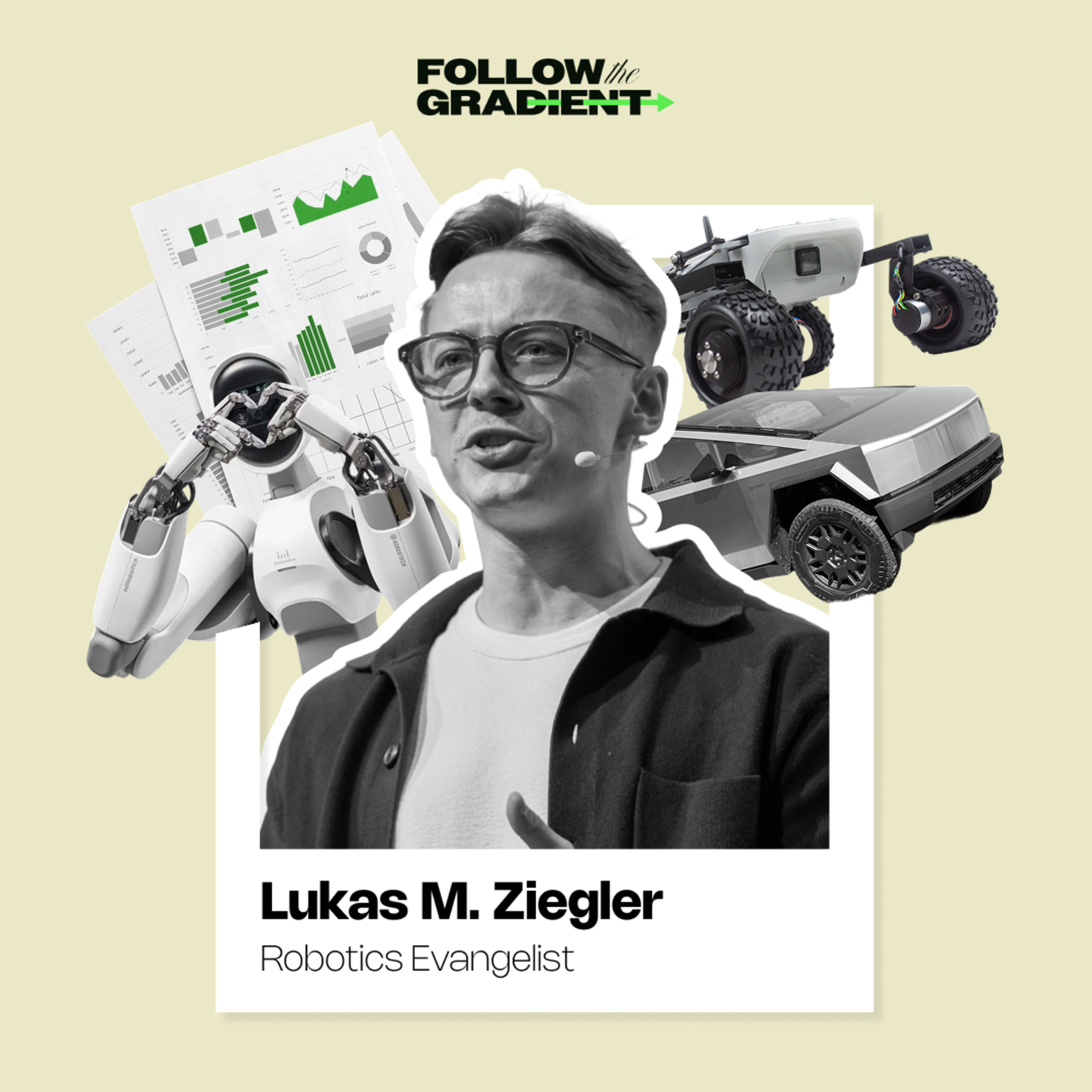
How Robotics Startups Actually Survive | #1 Robotics influencer Lukas Ziegler
What happens when a $39 billion humanoid bet can't do useful work, but a wheeled robot in a warehouse already turns a profit? In this episode of Follow the Gradient, Melanie and Christian sit down with Lukas Ziegler, robotics evangelist, triple venture partner, and the person whose content reaches over 100 million people a year. From programming cobots in Poland to advising robotics startups across three VC funds, Lukas has seen both the factory floor and the fundraising pitch. This conversation cuts through the humanoid hype to examine what actually generates industrial ROI, why simulation alone won't close the gap, and what European founders get wrong about choosing their investors. We talk about: Why 80% of humanoid functionality can be delivered by wheeled robots at a fraction of the cost, and why VCs still fund the other form The reliability cliff: how 95% success in the lab translates to destroyed ROI in 24/7 industrial operations Why narrowing your task scope until failure modes are countable is the real path from demo to production The sim-to-real gap: NVIDIA Cosmos helps you pre-train at scale, but real-world teleoperation data remains irreplaceable Why robotics founders should run due diligence on their investors, not just the reverse, especially with SaaS-focused VCs Poland's emergence as an underestimated AI and robotics hub, and where the European ecosystem actually holds structural advantages This is not a conversation about when robots will change the world. It is about the compounding decisions that separate robotics companies shipping revenue from those shipping demos. Our biggest takeaways, including Lukas's view on where robotics founders consistently misjudge their path to production: https://www.followthegradient.io/p/lukas-ziegler-podcast — Where to find Lukas M. Ziegler: LinkedIn: https://www.linkedin.com/in/zieglerr/ X: https://x.com/lukas_m_ziegler YouTube: https://www.youtube.com/@zieglerrr Newsletter: https://ziegler.substack.com/ — 🎙 Follow the Gradient: conversations about building a business from Europe while staying sane. Follow us: Melanie: https://www.linkedin.com/in/melaniexgabriel/ Christian: https://www.linkedin.com/in/christian-woese/ Subscribe to our channels: Newsletter: https://www.followthegradient.io YouTube: https://www.youtube.com/@followthegradient LinkedIn: https://www.linkedin.com/company/followthegradient/ X: https://x.com/followgradient Instagram: https://www.instagram.com/followthegradient/ — 00:00 Introduction 02:28 From programming robots to becoming the world's top robotics voice 05:10 The 80/20 rule: wheeled robots vs. humanoids 08:10 Safety gaps and the missing ISO standard for legged robots 12:03 How to Derive Real ROI From Robots 20:19 Reliability as a product: the path from 95% to 99.9% 26:35 Boring problems win: Zipline, Exotec, and narrow task mastery 29:17 Customer discovery: how to find the right robotic use case 33:32 Tesla's 8.4 billion miles of data and why it doesn't help robots 38:23 Europe in the global robotics race: talent, manufacturing, and EU Inc 47:08 Rapid fire: the questions that reveal if a robot is production-ready
- FT
 March 5 · 47 min
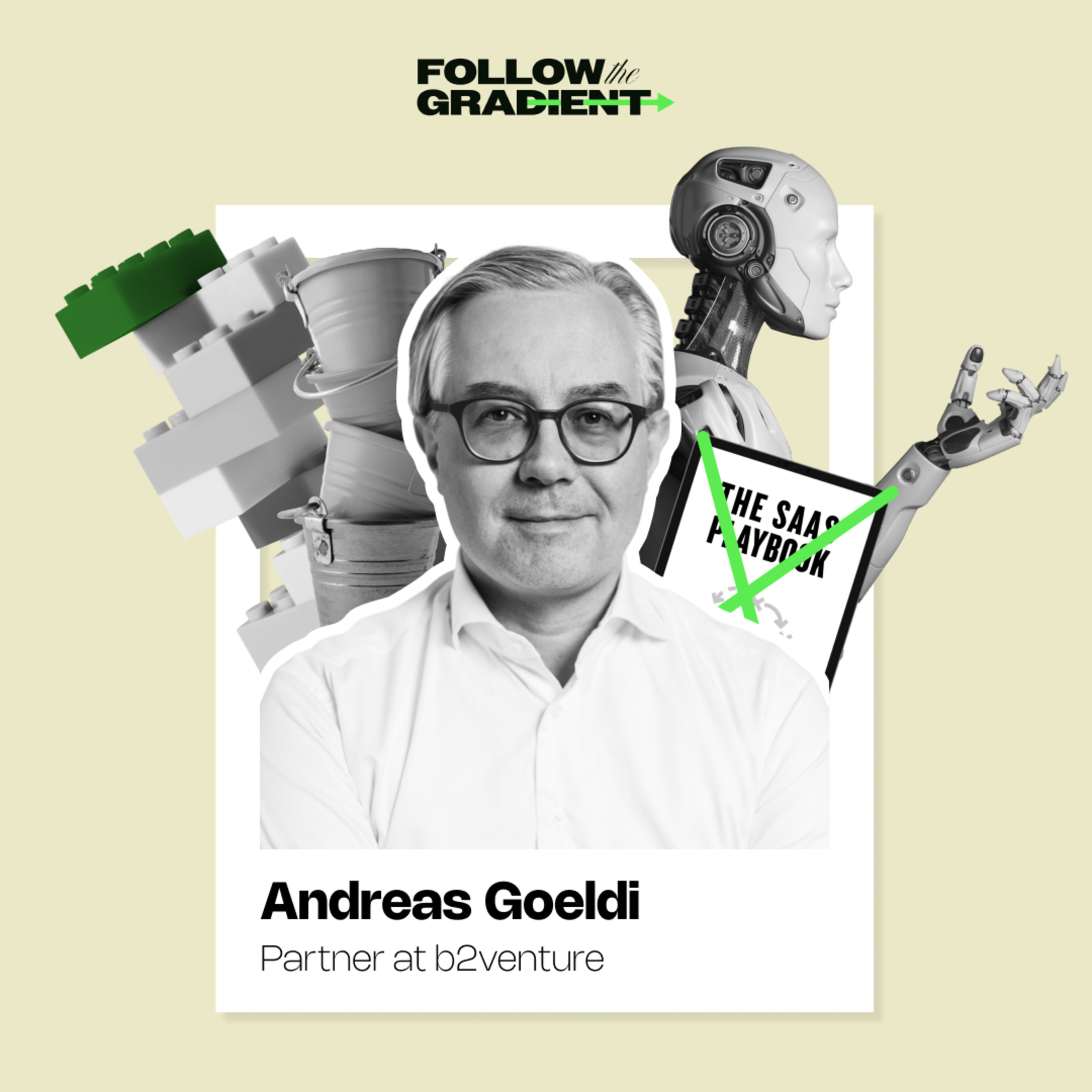
The SaaS playbook is dead. What replaces it? | Andreas Goeldi, b2venture
Most founders think they can save their SaaS business by sprinkling AI on top. They're wrong. The entire playbook that powered the last two decades of software is being rewritten. In this conversation on Follow the Gradient, Andreas Goeldi, Partner at b2venture and a serial entrepreneur with 30+ years in technology, breaks down how AI is fundamentally reshaping what software businesses look like, how they price, and who survives. This is not a conversation about AI features or hype cycles. It is a clear-eyed examination of which business models are emerging, which are dying, and what separates the founders who adapt from those who get left behind. We talk about: Why the traditional SaaS playbook with 80% margins is incompatible with real AI integration The shift from selling tools to selling outcomes, and why customers have always wanted this Two categories of AI startups that are almost guaranteed to fail How general-purpose agents are becoming the "Excel of AI" and eating niche products Why half of all developers refuse to use AI coding tools and what that means for their careers What happens to organizations when middle management layers start disappearing This episode is less about what AI can do and more about what it forces you to decide. Andreas brings the rare combination of someone who built companies for two decades before switching to investing in them, and his frameworks cut through the noise with uncomfortable clarity. Our biggest takeaways, including Andreas's reality check on where most founders are dangerously delusional about AI: https://www.followthegradient.io/p/andreas-goeldi-podcast Where to find Andreas Goeldi: LinkedIn: https://www.linkedin.com/in/agoeldi/ b2venture: https://www.b2venture.vc Blog (Innospective): https://innospective.net/ — 🎙 Follow the Gradient: conversations about building a business from Europe while staying sane. Follow us: Melanie: https://www.linkedin.com/in/melaniexgabriel/ Christian: https://www.linkedin.com/in/christian-woese/ Subscribe to our channels: Newsletter: https://www.followthegradient.io YouTube: https://www.youtube.com/@followthegradient LinkedIn: https://www.linkedin.com/company/followthegradient/ X: https://x.com/followgradient Instagram: https://www.instagram.com/followthegradient/ — 00:00 Introduction 02:22 The biggest delusion in AI right now 04:55 Four buckets of AI business models 07:58 AI pricing in times of vibe coding 13:55 The real moats left in AI: data, regulation, and user experience 17:48 Two startup ideas you should never build right now 22:17 What existing SaaS founders must do to survive 25:49 Why middle management is about to disappear 33:01 How AI is transforming venture capital from the inside 37:11 Do startups still need VCs when four people can hit millions? 43:03 Rapid fire: thin wrappers, CTO hiring, and European quality
- FT
 February 26 · 47 min
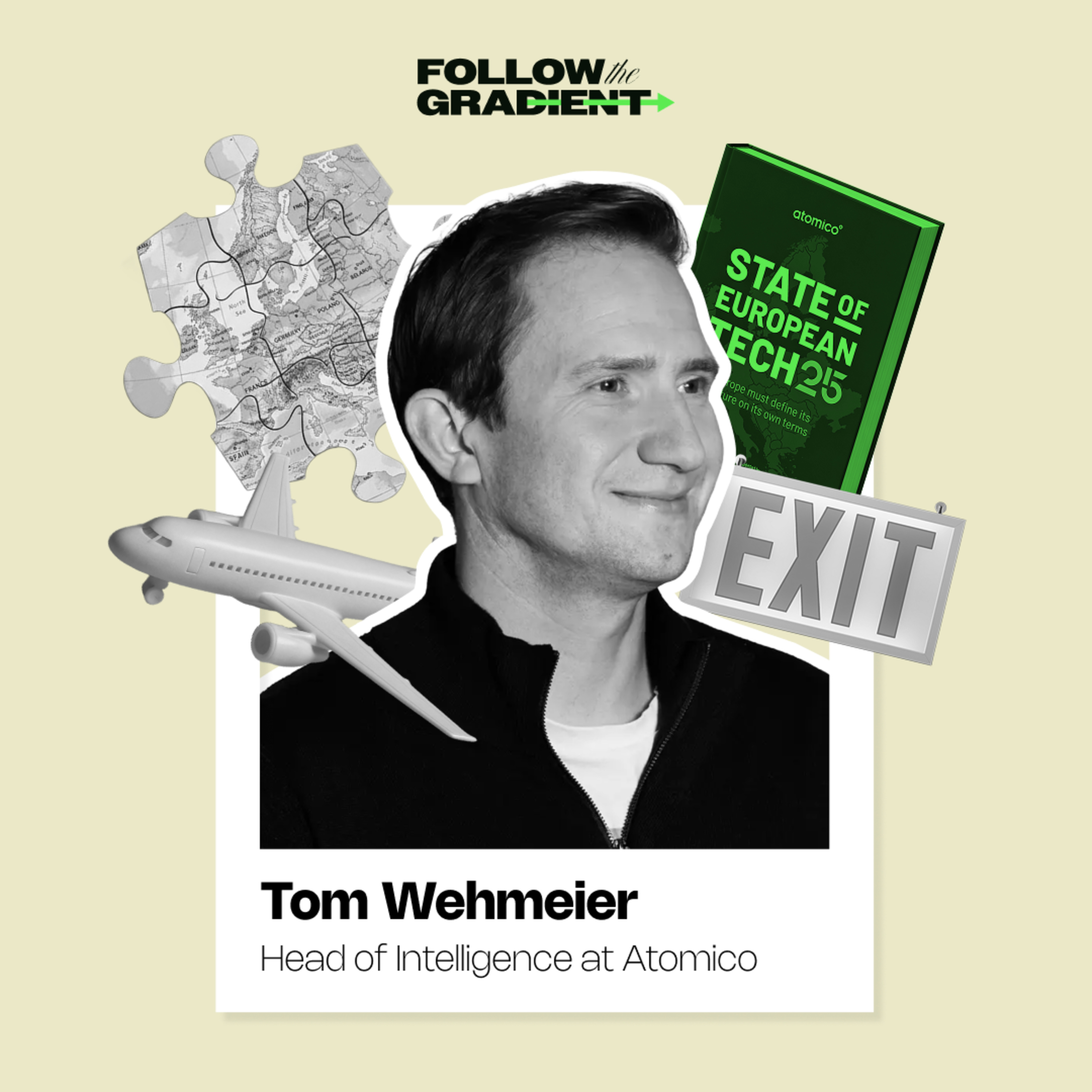
Europe's talent flywheel has finally kicked in | Tom Wehmeier, Atomico
Most European founders believe the ecosystem is catching up. What if the real constraint isn't capital or talent, but the collective psychology that keeps us from acting like we've already arrived? In this episode of Follow the Gradient, we sit down with Tom Wehmeier, Partner at Atomico and the architect behind the State of European Tech report for over a decade. Tom has a rare vantage point: he tracks ecosystem fundamentals through data and sees how they play out firsthand through Atomico's investment portfolio. This is a conversation about what the numbers actually say versus what founders feel, where European tech has genuinely compounded, and where fragility still hides in plain sight. We talk about: Why sentiment and belief remain Europe's most fragile infrastructure, even as fundamentals have never been stronger How talent is flowing from US megatech into European startups and why that shift took a decade to pay off The three things blocking pension funds from venture allocation, including one nobody talks about: in-house talent Why 30% of companies at Series C relocate abroad and the gravitational pull that drives it How breakout companies like DeepL, Lovable, and Framer share a common thread: narrative clarity Why fragmentation across European markets is what built global resilience in companies like Spotify and Booking This episode is not a cheerleading session. It is a clear-eyed look at where conviction is earned, where it is borrowed, and where the gap between data and narrative still needs closing. Our biggest takeaways, including Tom's view on what founders consistently misread about Europe's exit data: https://www.followthegradient.io/p/tom-wehmeier-podcast Where to find Tom Wehmeier: LinkedIn: https://www.linkedin.com/in/tomwehmeier/ Email: tom@atomico.com State of European Tech: https://stateofeuropeantech.com Atomico: https://atomico.com — 🎙 Follow the Gradient: conversations about building a business from Europe while staying sane. Follow us: Melanie: https://www.linkedin.com/in/melaniexgabriel/ Christian: https://www.linkedin.com/in/christian-woese/ Subscribe to our channels: Newsletter: https://www.followthegradient.io YouTube: https://www.youtube.com/@followthegradient LinkedIn: https://www.linkedin.com/company/followthegradient/ X: https://x.com/followgradient Instagram: https://www.instagram.com/followthegradient/ — 00:00 Introduction 03:07 Europe's ecosystem fundamentals have never been stronger 10:51 Where the friction shows up: go-to-market and fragmentation 13:21 What will improve soon vs what founders must design around 17:09 Europe's 4.6 million tech workers and where the talent advantage breaks down 19:52 The compounding talent flywheel across generations 24:38 Why 30% of companies relocate abroad at Series C 28:45 The pension fund bottleneck: perception, regulation, and talent 37:20 What breakout European companies do differently 43:59 Rapid fire
- FT
 February 19 · 48 min
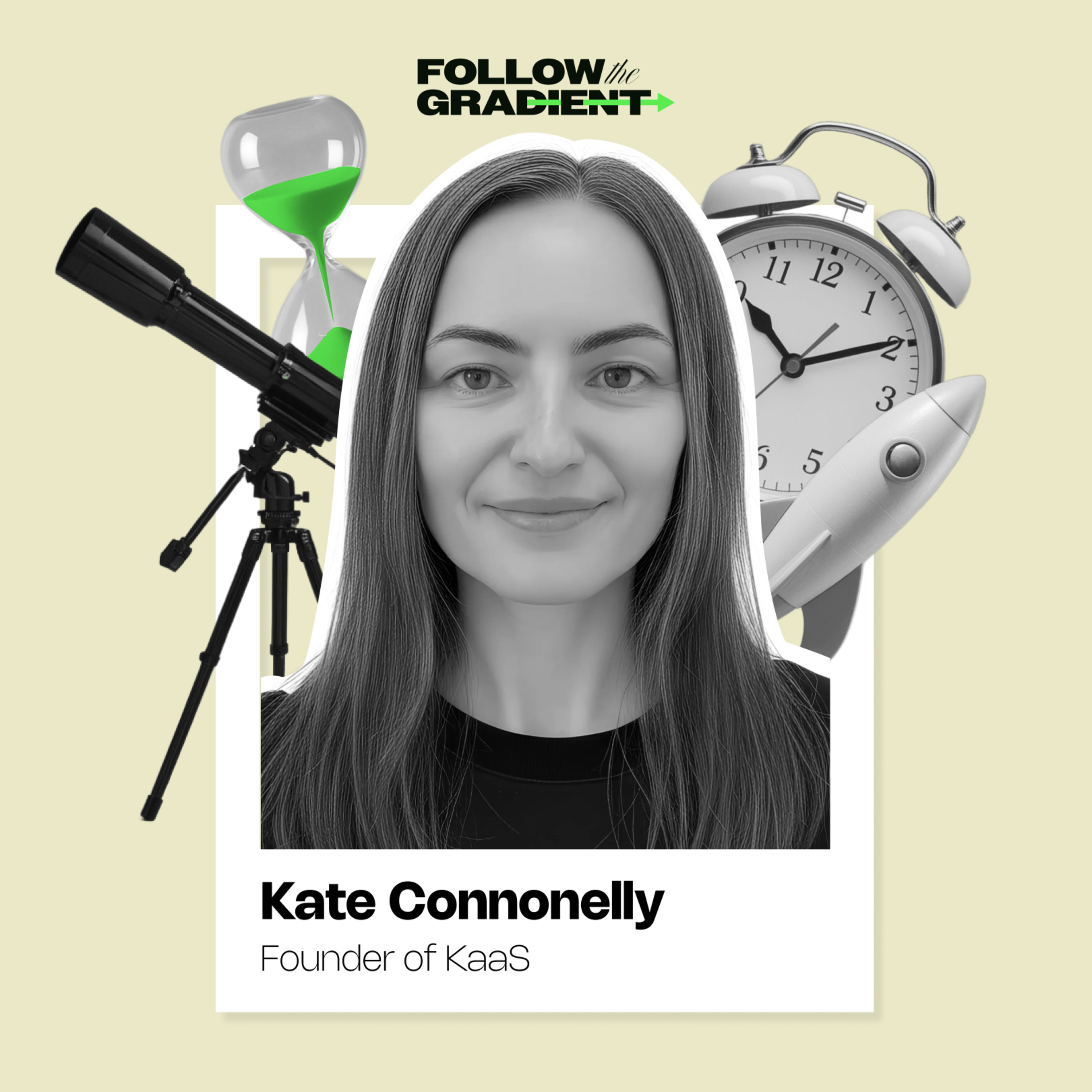
The Hire Most Founders Make Too Late | Kate Connolly, KaaS
Investors don't invest in you to be a very expensive administrator. So why are you still managing your own calendar at Series A? In this conversation on Follow the Gradient, Kate Connolly, founder of KaaS and former Chief of Staff at DeepMind, breaks down why most founders wait too long to get executive support and what it costs them when they do. This is not a conversation about hiring an assistant. It is about how operational leverage changes the speed of every decision a founder makes, from fundraising to hiring to product. We talk about: Why you cannot solve the strategy problem before you solve the operational problem The concrete difference between an EA and a chief of staff, and which one you actually need first What VCs privately tell Kate about founders who refuse to delegate How a 60-minute calendar audit can reveal where your week is leaking Why the most common chief of staff hires fail within months due to role scoping What great EAs do before they are asked, and how to interview for that instinct This is not a playbook for outsourcing tasks. It is a conversation about what changes in a company when the founder stops being the bottleneck, and what it takes to get out of your own way. Our biggest takeaways, including Kate's view on where founders misjudge their own leverage: https://www.followthegradient.io/p/kate-connolly-podcast — Where to find Kate Connolly: LinkedIn: https://www.linkedin.com/in/kateconnollylondon/ Website: https://withkaas.com — 🎙 Follow the Gradient: conversations about building a business from Europe while staying sane. Follow us: Melanie: https://www.linkedin.com/in/melaniexgabriel/ Christian: https://www.linkedin.com/in/christian-woese/ Subscribe to our channels: Newsletter: https://www.followthegradient.io YouTube: https://www.youtube.com/@followthegradient LinkedIn: https://www.linkedin.com/company/followthegradient/ X: https://x.com/followgradient Instagram: https://www.instagram.com/followthegradient/ — 00:00 Introduction 02:30 When founder mode becomes the bottleneck 07:29 EA vs Chief of Staff: defining the roles clearly 11:24 The 15-person chief of staff trap 14:46 The cost of waiting too long: velocity 17:08 The 60-minute calendar audit 19:09 Building your EA into a second brain 26:37 What to look for when hiring an EA 32:41 When everything compounds: 12-24 months in 34:41 Working with C Levels 46:01 Rapid fire
- FT
 February 12 · 40 min
Why Great Founders Fire Earlier Than They’re Comfortable With | Paddy Lambros, Dex CEO and ex Atomico
What actually breaks a startup first: moving too slowly, or hiring the wrong people too fast? Founders often think speed is the answer, until speed quietly becomes the problem. Follow the Gradient sits down with Paddy Lamb, Talent Partner at Atomico, who has helped scale teams from the first hire to hundreds of people across multiple continents. Drawing on a decade inside fast growing startups and venture portfolios, Paddy brings a grounded view on what really compounds and what quietly erodes a company early on. This conversation is less about hiring tactics and more about how founders make irreversible people decisions under pressure. It surfaces the trade offs behind growth, quality, accountability, and the standards that shape a company long after the first few hires. We talk about: Why hiring one month later is often cheaper than fixing a rushed hire for a year How to design early teams around capabilities instead of default job titles What strong employer branding looks like when you have no budget and no name Why hiring pipelines should be built to eliminate risk, not to collect yeses How to spot hunger and ownership without mistaking confidence for signal When holding on too long damages culture more than letting go early Rather than offering a checklist, this episode explores how founders think when the answers are unclear. It is about judgment calls, standards, and accepting discomfort as the price of building something that lasts. Our biggest takeaways, including Paddy’s view on where founders consistently misjudge people decisions: https://followthegradient.io/p/paddy-lambros-podcast-video — Where to find Paddy Lambros: LinkedIn: https://www.linkedin.com/in/patricklambros/ Dex: https://meetdex.ai/ — 🎙 Follow the Gradient: conversations about building a business from Europe while staying sane. Follow us: Melanie: https://www.linkedin.com/in/melaniexgabriel/ Christian: https://www.linkedin.com/in/christian-woese/ Subscribe to our channels: Newsletter: https://www.followthegradient.io YouTube: https://www.youtube.com/@followthegradient LinkedIn: https://www.linkedin.com/company/followthegradient/ X: https://x.com/followgradient Instagram: https://www.instagram.com/followthegradient/ — 00:00 Introduction 02:49 The journey from startup to VC 05:19 Hiring slower versus scaling at all costs 07:01 Deciding early roles from first principles 08:39 Attracting talent without brand or budget 11:40 Clarifying your employer value proposition 14:04 Structuring the hiring funnel like sales 17:56 Using case studies and workshops effectively 20:51 Evaluating hunger and long term potential 24:04 Onboarding for time to first value 26:44 Holding a high bar during probation 29:56 Executing layoffs with clarity and focus 35:56 Founder evolution and role layering over time
- FT
 February 5 · 41 min
Hustle Nearly Cost Me Everything | Adrian Locher, Serial Founder and Investor
Apply the concept of "Your personal Energy Audit" Adrian mentions here: https://followthegradient.io/p/how-to-protect-mental-health-with-the-energy-audit What happens when the traits that make you win are the same ones that quietly undo you? Most founders learn how to push. Few learn when stopping is the harder, necessary move. Follow the Gradient sits down with Adrian Locher, Managing Partner at Merantix Capital, a multi time founder and early stage investor who has seen the cost of relentless ambition firsthand. After exiting a previous company, Adrian pushed harder than ever, until burnout, depression, and personal loss forced a reset . This conversation explores how high performance actually works over decades, not months, and what founders miss when they treat endurance as a personal flaw rather than a design problem. We talk about: Burning out at the peak of success, not during failure Why founders’ greatest strengths often become their most dangerous liabilities The moment productivity collapses when fear quietly replaces curiosity Separating family time and work to eliminate the constant guilt loop Treating recovery as a non optional phase, not a reward Leading teams by modeling boundaries instead of preaching balance This episode is less about fixing habits and more about examining how founders relate to fear, ambition, and self worth when no playbook applies. It offers a lens for thinking clearly under pressure, before pressure turns personal. Our biggest takeaways, including Adrian’s view on what founders misread about endurance: https://followthegradient.io/p/adrian-locher-podcast-burnout — Where to find Adrian Locher: LinkedIn: https://www.linkedin.com/in/adrianlocher/ — 🎙 Follow the Gradient: conversations about building a business from Europe while staying sane. Follow us: Melanie: https://www.linkedin.com/in/melaniexgabriel/ Christian: https://www.linkedin.com/in/christian-woese/ Subscribe to our channels: Newsletter: https://www.followthegradient.io YouTube: https://www.youtube.com/@followthegradient LinkedIn: https://www.linkedin.com/company/followthegradient/ X: https://x.com/followgradient Instagram: https://www.instagram.com/followthegradient/ — 00:00 Introduction 03:52 Burnout at the peak of founder success 05:26 Ignoring early symptoms until everything stops 12:56 Therapy and structuring life around three buckets 20:09 Building companies as a marathon, not a grind 23:49 Leading through authenticity instead of toughness 28:06 Fear as a hidden driver of overperformance 32:25 Helping yourself before helping the company 33:58 Mentoring founders to avoid the lowest lows 37:48 Redefining success beyond money and status
- FT
 January 29 · 51 min
Europe Isn’t Behind, It’s Playing the Wrong Game | Judith Dada, Visionaries Club
What happens when Europe stops cheering itself on and starts taking responsibility for the outcome? In this episode of Follow the Gradient, we sit down with Judith Dada, Partner at Visionaries Club, to unpack one of the most uncomfortable conversations in European tech right now. Drawing on her work as an investor, writer, and ecosystem builder, Judith brings a rare mix of conviction and realism to questions many founders quietly avoid. This conversation is not about tactics or trend-chasing. It is about agency, moral responsibility, and what it really means to build companies in Europe at a moment when technology, geopolitics, and personal choices are colliding. We talk about: Why performative Euro-optimism can be just as damaging as constant pessimism The hidden risk of Europe settling for the application layer while conceding models and infrastructure How statistics about Europe obscure the difference between averages and outliers founders could still become What founders miss when they treat Europe like a marketplace instead of something they help build Why AI’s impact feels invisible to most organizations while accelerating at the frontier The personal cost of ambition, from childcare trade-offs to deciding when silence becomes complicity This episode offers a lens, not a manual. It explores how founders make decisions when the stakes are unclear, the odds are uneven, and opting out feels easier than staying in the fight. Our biggest takeaways, including Judith’s view on what founders fundamentally misjudge about responsibility and long-term impact: https://followthegradient.io/p/judith-dada-podcast — Where to find Judith Dada: https://www.linkedin.com/in/judith-dada/ Visionaries Club: https://visionaries.vc/ Opensource Nanny: https://opensourcenanny.com/ Relativity Collective: https://relativitycollective.com/ — 🎙 Follow the Gradient: conversations about building a business from Europe while staying sane. Follow us: Melanie: https://www.linkedin.com/in/melaniexgabriel/ Christian: https://www.linkedin.com/in/christian-woese/ Subscribe to our channels: Newsletter: https://www.followthegradient.io YouTube: https://www.youtube.com/@followthegradient LinkedIn: https://www.linkedin.com/company/followthegradient/ X: https://x.com/followgradient Instagram: https://www.instagram.com/followthegradient/ — 00:00 Introduction 02:30 Why European tech sovereignty suddenly feels urgent 05:39 Why realism and agency must coexist 08:58 Where Europe is too optimistic about AI layers 10:01 Why statistics don’t define Europe’s future 12:22 AI as a civilizational rather than technical shift 15:05 The widening gap between AI frontier and reality 20:12 Choosing hard problems despite low odds 25:29 Realizing no one else is driving the bus 27:56 From leaving Europe to fixing its foundations 30:21 Speaking up when silence feels safer 35:31 Parenting ambitious careers without pretending it’s easy 45:14 Building peer environments that raise ambition 48:37 Rapid fire questions
- FT
 January 22 · 50 min
Why Shipping Faster Isn’t Enough in the Age of AI | OpenAI’s Laura Modiano
What happens when Europe stops apologizing for its ambition and starts executing at full speed? Some founders still believe Europe’s biggest constraint is confidence. This conversation challenges that idea head on. Follow the Gradient sits down with Laura Modiano, Head of Startups EMEA at OpenAI, who works daily with founders across Europe, the Middle East, and Africa. She brings a rare vantage point from inside OpenAI and from years of supporting companies from first prototype to real scale. This episode is less about hype cycles and more about how ambition, technical depth, and feedback driven execution actually compound over time. Laura reflects on what changes when speed collapses, tools feel like coworkers, and founders are forced to rethink how they learn, unlearn, and decide under uncertainty. We talk about: Why European founders systematically underestimate how fast they can go with today’s AI tooling How collapsing build cycles shift the real bottleneck from ideas to decision quality The execution gap that appears after early traction and why “building small” becomes a hidden ceiling Why technical literacy is no longer optional even for application layer founders How Europe’s fragmented markets quietly train founders to think global from day one What great execution looks like when models evolve faster than product roadmaps Rather than offering a playbook, this episode zooms out on how founders make choices when the ground keeps moving. It’s about taste, timing, and knowing when to ship, when to pause, and when to discard assumptions that once worked but no longer fit. Our biggest takeaways, including Laura’s view on what founders consistently misjudge about speed and scale: https://followthegradient.io/p/laura-modiano-podcast — Where to find Laura Modiano: https://www.linkedin.com/in/laura-modiano/ Reach out at: startups@openai.com — 🎙 Follow the Gradient: conversations about building a business from Europe while staying sane. Follow us: Melanie: https://www.linkedin.com/in/melaniexgabriel/ Christian: https://www.linkedin.com/in/christian-woese/ Subscribe to our channels: Newsletter: https://www.followthegradient.io YouTube: https://www.youtube.com/@followthegradient LinkedIn: https://www.linkedin.com/company/followthegradient/ X: https://x.com/followgradient Instagram: https://www.instagram.com/followthegradient/ — 00:00 Introduction 02:03 Why Europe Produces Globally Competitive Founders 06:07 What Founders Miss About AI Acceleration 08:52 Building Real Companies Beyond Demo Culture 12:09 Why Technical Depth Wins In AI Startups 15:42 What Switzerland Gets Right About Ecosystems 20:01 Deciding Where To Build In Europe 23:01 What Strong Execution Looks Like Today 26:10 Discovering AI Use Cases Beyond Cost Cutting 28:55 Why Unlearning Becomes A Scaling Advantage 31:26 Maintaining Founder Intensity Without Burnout 41:40 Making High Stakes Decisions With Incomplete Data 44:57 Where Startups Should Focus As Models Advance 46:41 False Beliefs Holding European Founders Back