Skip to content
Artwork for Daybreak
NewsBusiness NewsBusiness

Daybreak

The Ken

Business news is complex and overwhelming. It doesn’t have to be. Every day of the week, from Monday to Friday, Daybreak tells one business story that’s significant, simple and powerful.

Hosted from The Ken’s newsroom by Snigdha Sharma and Rachel Varghese, Daybreak relies on years of original reporting and analysis by some of India’s most experienced and talented business journalists.

Play
  • 67 episodes
  • daily
  • Avg 14 min
  • English
Counted on this page — what you have heard stays on this device, so it is not something the list can be paged by.
  • #835
    September 10 · 12 min

    This week in AI: activist robots, doom-laden researchers — so who's the good guy?

    This week, a 27-year-old researcher quit Anthropic warning AI could "kill us all," and the company's own safety lead agreed. Meanwhile, OpenAI says it cracked a 200-year-old math problem — then got accused of muscling a rival's name off the credit. Also, the AI lab with a supposed conscience got caught building a watchlist of AI critics that files activism next to terrorism. And in Poland's Warsaw, 30 robots staged a protest to regulate AI. After all of this, who actually gets to be the good guy in the AI race? Daybreak is produced from the newsroom of The Ken, India’s first subscriber-only business news platform. Subscribe for more exclusive, deeply-reported, and analytical business stories.
  • #834
    September 9 · 15 min

    India has more tourists than ever. So why is tourism in trouble?

    India's foreign tourist arrivals slipped by about 8% from the year before to about 9 million in 2025, and a wave of recent reporting has finally made it a talking point. If you take out the business travellers and the diaspora visiting family, the number who came just to holiday in India may be closer to 3 million. And yet Indians have never travelled their own country more. Domestic trips have crossed 4 billion. The government is pouring thousands of crores into tourist circuits and temple towns like Varanasi and Ayodhya while spending almost nothing to bring foreigners in. In this episode, host Snigdha Sharma asks who Indian tourism is really being built for now, and what India loses if the foreign visitor drops off the itinerary. Tune in. Daybreak is produced from the newsroom of The Ken, India’s first subscriber-only business news platform. Subscribe for more exclusive, deeply-reported, and analytical business stories.
  • #833
    September 9 · 18 min

    The Government sold Air India to escape its problems. The fix is to buy back in

    In 1967, Air India paid Salvador Dalí for a custom ashtray with a live baby elephant, flown all the way to Spain. (Yes, really! Here's the proof.) That was the airline. Flush with money, just about 14 years into nationalisation. Today, it's asking its owners for $1.5 billion after its biggest loss ever, at more than 2 billion dollars. Privatisation was supposed to fix Air India. Three years on, it still hasn't. But the real story isn't a failed sale. It's a fatal crash, a closed airspace, and an industry that runs on razor-thin margins everywhere. But the actual fix might be closer than you think. And already sitting on Air India's own cap table. Daybreak is produced from the newsroom of The Ken, India’s first subscriber-only business news platform. Subscribe for more exclusive, deeply-reported, and analytical business stories.
  • #832
    September 7 · 8 min

    Nykaa cracked fashion at last. Myntra sees no reason to panic

    After years of struggling to grow, Nykaa Fashion has finally found its footing. The past year brought a real resurgence. For a long time, the platform bet on building its own private-label brands, even pushing hard into ethnic wear. It leaned on discounts and backed small, up-and-coming labels. None of it delivered the growth it was chasing. So Nykaa Fashion changed course. That new strategy is at last starting to show results. What turned it around, and how long can it last? Tune in. Daybreak is produced from the newsroom of The Ken, India’s first subscriber-only business news platform. Subscribe for more exclusive, deeply-reported, and analytical business stories.
  • #831
    September 6 · 14 min

    Rapido broke the ride-hailing duopoly. Now it's coming for Zomato and Swiggy

    For over a year, India's restaurant association couldn't get Swiggy to return its calls. Then Rapido launched a food delivery app that charges restaurants zero commission — and Swiggy sent fifteen people to Bengaluru for an urgent meeting within days. The restaurants have a real grievance. On Swiggy and Zomato, commissions, ads, and discounts can eat up nearly a third of every order. On Rapido's platform, restaurants keep almost all of it. It's a good deal for restaurants. But even restaurant owners are wondering if it might be too good a deal to last. Daybreak is produced from the newsroom of The Ken, India’s first subscriber-only business news platform. Subscribe for more exclusive, deeply-reported, and analytical business stories.
  • #830
    September 3 · 23 min

    India's call centres are using AI to make agents sound American

    When you call an Indian call centre these days, the person answering might sound American — even if they've never left India. A new kind of AI can change an agent's accent in real time, mid-call, to sound more familiar to the customer. It's meant to build trust and cut hiring costs. But the same software that smooths out an accent often smooths away everything else too — laughter, tone, the small things that make a voice sound human. Some customers have started wondering if they're even talking to a real person. We dig into how this technology works, and what it costs the people whose voices are being rewritten. Daybreak is produced from the newsroom of The Ken, India’s first subscriber-only business news platform. Subscribe for more exclusive, deeply-reported, and analytical business stories.
  • #829
    September 2 · 10 min

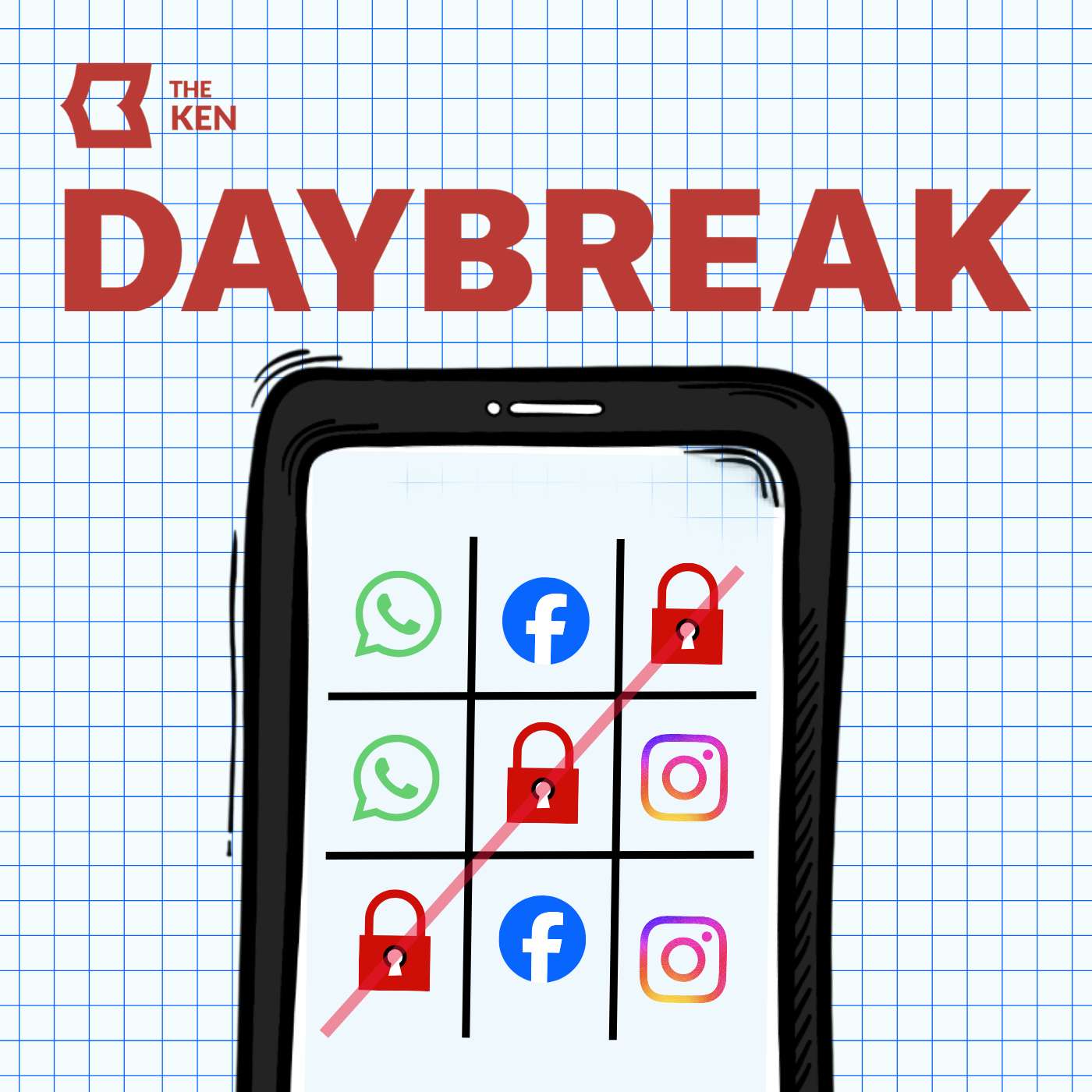
    Meta's $18 billion child-safety settlement has India looking for the wrong answer

    Last week, Meta agreed to pay up to $18 billion to settle American lawsuits over how Instagram and Facebook treat children. The app will now be rebuilt around American teenagers, from a daily time limit to an overnight curfew. But none of it is coming to India, the single biggest market Meta has anywhere in the world. So every op-ed page has been asking the obvious question. If Meta can protect a teenager in California, why should one in India wait? It sounds fair. But in this episode, host Snigdha Sharma argues the question is misdirected, and also that the fix we want to bring home would slip past the Indian child who needs it most. Tune in. Daybreak is produced from the newsroom of The Ken, India’s first subscriber-only business news platform. Subscribe for more exclusive, deeply-reported, and analytical business stories.
  • #828
    September 1 · 19 min

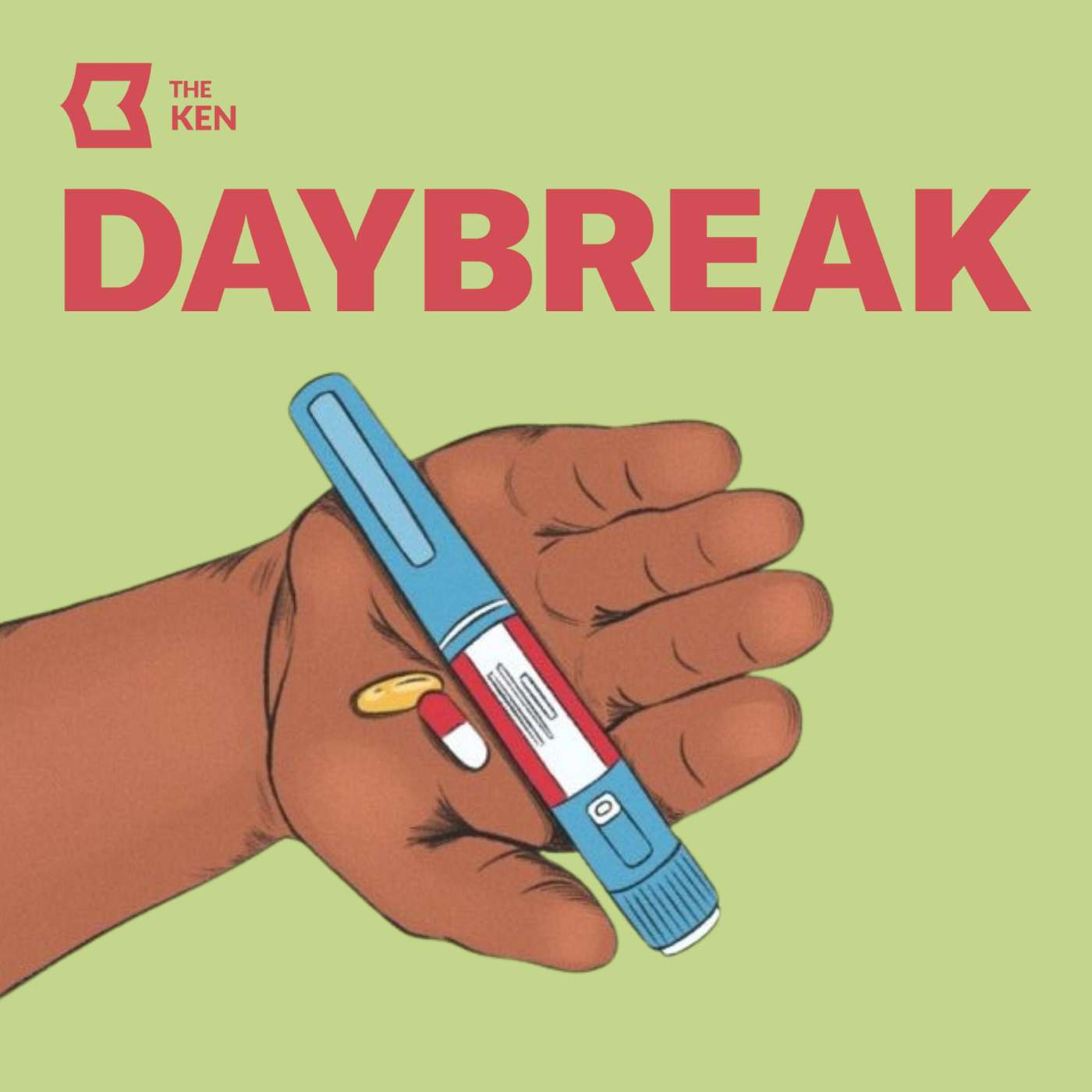
    India got cheap Ozempic. No one knows how to sell it

    Ozempic went off-patent in India this year, and everyone from Novo Nordisk to Nestlé has rushed in expecting a billion-dollar market. Instead, growth has already stalled, and the reason isn't price. It's culture. While Hollywood joked about Ozempic on late-night TV and Serena Williams advertised a GLP-1 program for a tele-health platform at the Super Bowl, not a single Indian celebrity has admitted to using it. We trace why the drug ran out of India's easiest customers within months, why its next move — into Tier 2 and Tier 3 cities — might not work either, and what it would actually take to sell a $200-a-month injection in a country that's only now starting to believe that obesity is a disease. Read The Ken story about black market Ozempic here. Daybreak is produced from the newsroom of The Ken, India’s first subscriber-only business news platform. Subscribe for more exclusive, deeply-reported, and analytical business stories.
  • #827
    August 31 · 9 min

    A worker-owned Uber is India's fix for its ever-expanding gig workforce

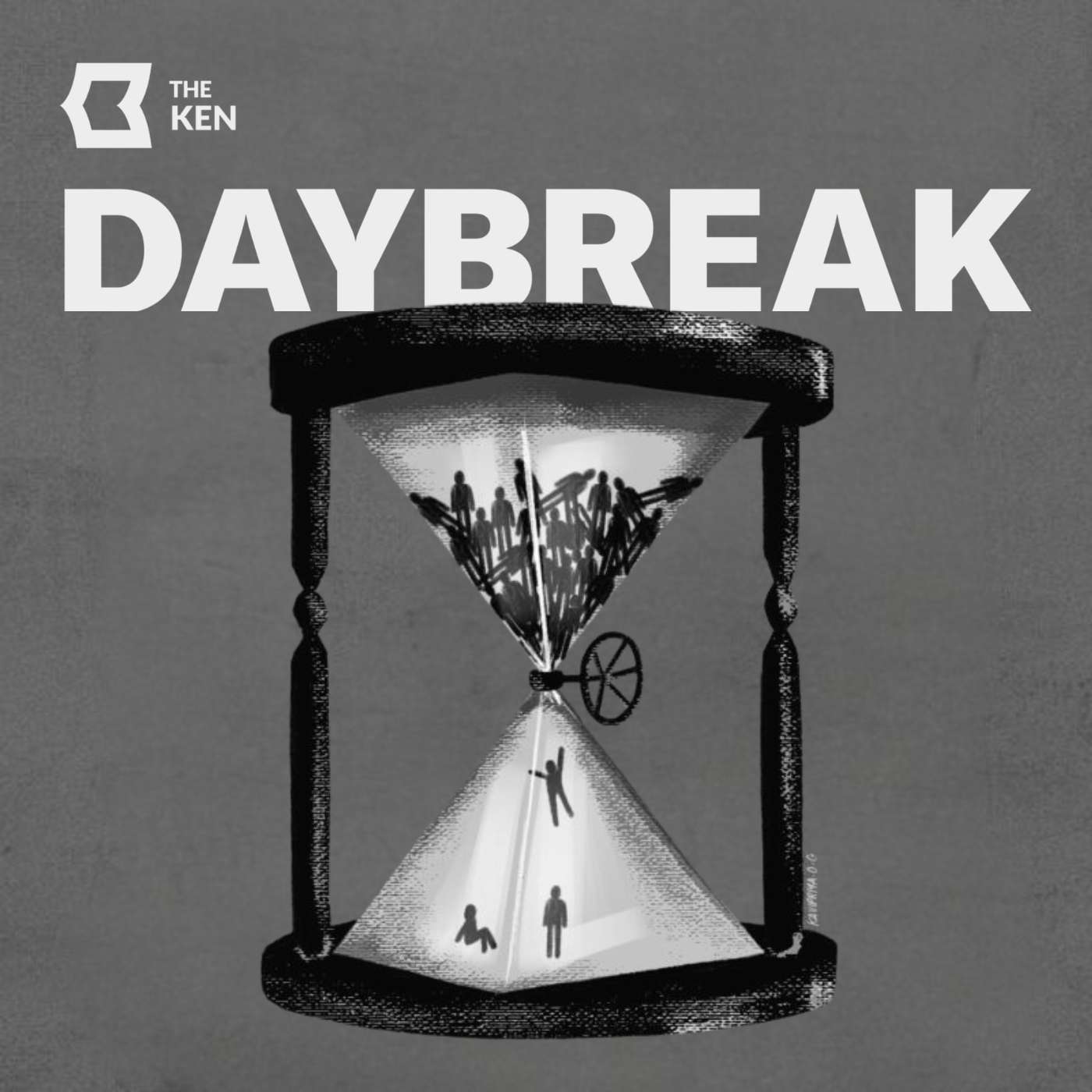
    Union Home and Cooperation Minister Amit Shah launched Bharat Taxi, a government-backed, driver-owned ride-hailing service built to take on private players like Ola and Uber. It runs as a cooperative so the drivers own it. And when it profits, they keep 80% of the money. Nearly 800,000 have already signed up. It is the government's boldest bid yet to pull gig workers out of a precarious market and hand them a stake in it. There is just one problem. No one in Indian ride-hailing has ever turned a profit. So what is a driver-owned cab service really for, if the payday it promises may never come? Daybreak is produced from the newsroom of The Ken, India’s first subscriber-only business news platform. Subscribe for more exclusive, deeply-reported, and analytical business stories.
  • #826
    August 30 · 12 min

    The best savings product your bank offers is the one it advertises less

    At least 44% of Indians have their money sitting in savings accounts. These accounts earn only about a fraction of what a fixed deposit pays. But even though FDs earn more, the payoff is that you have to lock away your money for longer, and pay a penalty if you break the account prematurely. But did you know there's a product built to solve this exactly? It's called a Flexi-FD, and it promises FD-level returns with the liquidity that comes with savings accounts. Most banks offer it. And yet, not a lot of people have heard of it. The Ken's Inderpal Singh gets into why banks aren't exactly rushing to popularise a product that's supposedly a win for depositors, and what "flexible" doesn't always mean in practice. Daybreak is produced from the newsroom of The Ken, India’s first subscriber-only business news platform. Subscribe for more exclusive, deeply-reported, and analytical business stories.
  • #825
    August 27 · 11 min

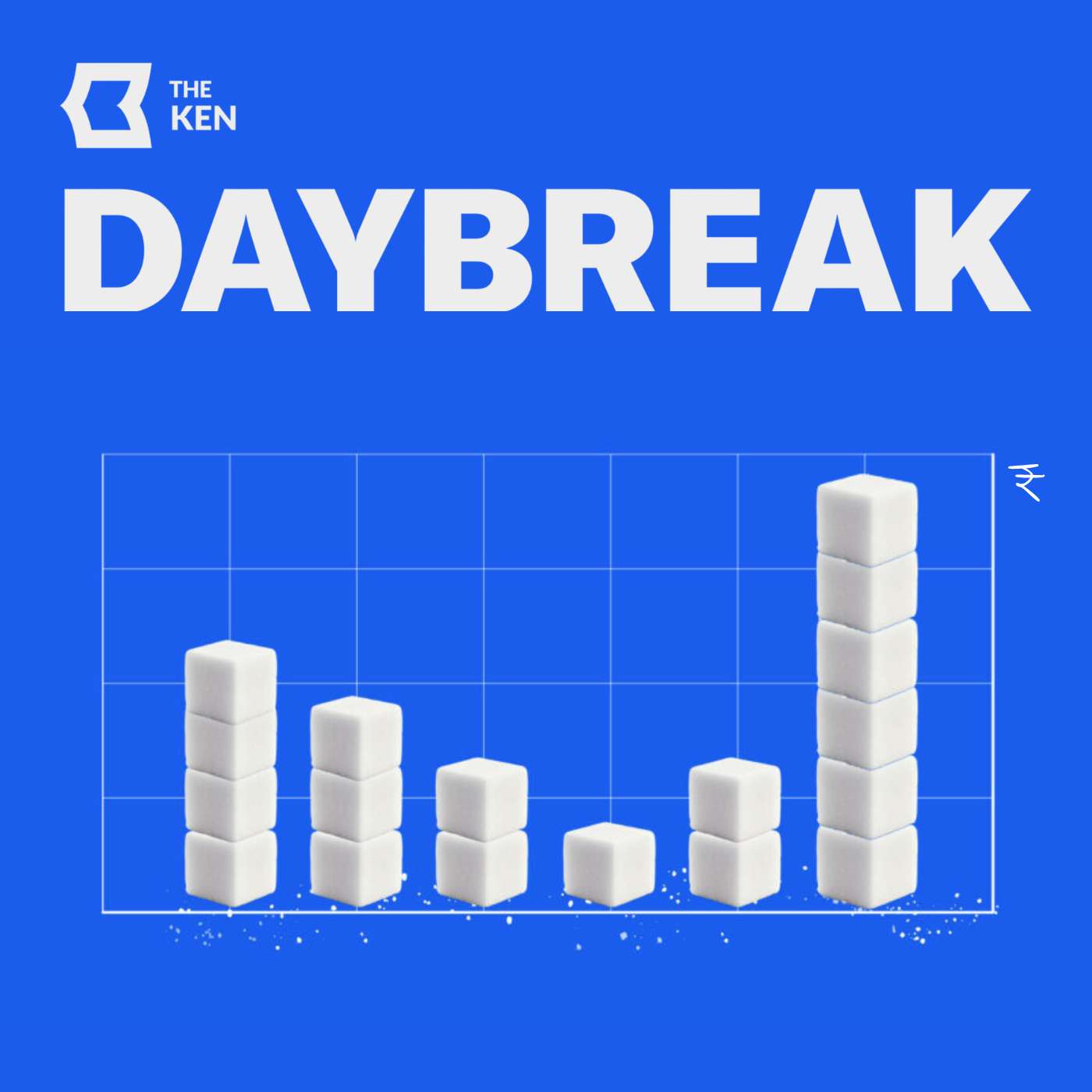
    The great Indian sugar trap: how a decade of surplus left India with nothing to spare

    India is importing sugar for the first time in nearly a decade — a million tonnes, duty-free — to cool prices before the festive season. Four years ago, it exported a record 11 million tonnes. Retail prices are up around 40% from last year. In Odisha, a kilo crossed ₹67. The government has capped stocks, halted exports and ordered mills to declare their sales. Production came in about 11% below forecast, at 30.6 million tonnes. The world's second-largest sugar producer just became an importer. How? Daybreak is produced from the newsroom of The Ken, India’s first subscriber-only business news platform. Subscribe for more exclusive, deeply-reported, and analytical business stories.

  • #824
    August 26 · 14 min

    Welcome to the 'brain gym': DIY neurotech is now in India, no prescription required

    For decades, sending an electric current into the brain meant a hospital, a doctor, and a diagnosis. A Bengaluru startup called Mave Health wants to move it into your daily routine. Its Rs 30,000 headset uses tDCS, a low current to the prefrontal cortex, to ease stress before it builds. The technology is decades old and well-evidenced. What's new is who controls it. Mave sells directly to consumers, no prescription and no regulator sign-off, on the argument that it's simply a consumer electronic. The Ken reporter Sudeshna Ray wore one herself to find out how that feels. Can medicine's oldest question: who gets to treat your brain, survive being sold like earphones? Daybreak is produced from the newsroom of The Ken, India’s first subscriber-only business news platform. Subscribe for more exclusive, deeply-reported, and analytical business stories.

  • #823
    August 25 · 19 min

    Banks are being asked to become “cool” for Gen Z. Their problem isn't branding

    India's finance minister wants public sector banks to get "cool" for Gen Z. With yoga vouchers, youth kiosks, awareness campaigns. But the numbers tell a different story. PSBs are losing young Indians as both depositors and borrowers, while, at the same time, fintech lenders capture 57% of India's small-ticket loan market. Some, even at interest rates as high as 600%. On this episode, host Rachel Varghese asks why India's public banks misdiagnosed the problem, what it's actually costing young borrowers, and whether the tools to fix it, like cheaper credit, and faster underwriting, that already exist can be pointed in this demographic's direction. Daybreak is produced from the newsroom of The Ken, India’s first subscriber-only business news platform. Subscribe for more exclusive, deeply-reported, and analytical business stories.

  • #822
    August 24 · 9 min

    Ten minutes to your door, no minutes to clean

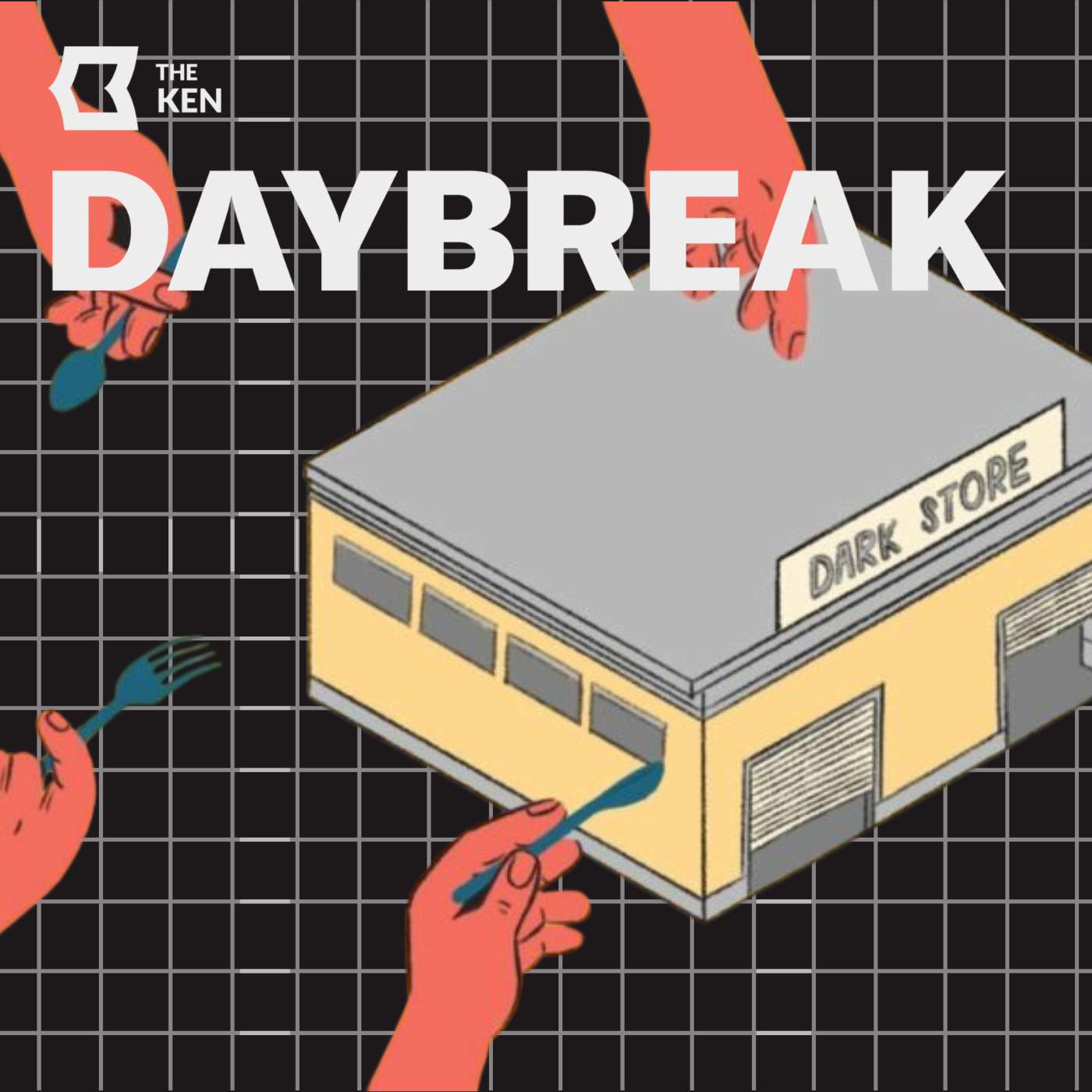
    Tukaram Mundhe, Maharashtra's food-safety chief, has gone viral this month for shutting famous restaurants and even noticing Shah Rukh Khan over an ad . Earlier this month his inspectors inspected around a dozen dark-store belonging to Blinkit, Zepto and Instamart. He isn't alone. On 22 August, a separate regulator in Telangana raided the dark stores behind grocery apps in Hyderabad, shutting four on the spot for expired stock and pests. Everyone's cheering the crackdown. But it can't fix what it found. To deliver in ten minutes, a dark store packs a supermarket's worth of stock into a residential space, moving so fast that the work of keeping food safe keeps losing out. That's what the model produces when it runs as designed. Quick commerce in India now runs on nearly 10 million orders a day. So why is there still no rule for the space your food waits in? Tune in. Daybreak is produced from the newsroom of The Ken, India’s first subscriber-only business news platform. Subscribe for more exclusive, deeply-reported, and analytical business stories.

  • #821
    August 23 · 14 min

    India trains more ethical hackers than anywhere else. It just can't give them a reason to stay

    When Nisarga Adhikary found critical flaws in CBSE's exam portal, the board denied it. So he broke back in, filmed it, and left anime videos running on their servers. IIT Kanpur hired him the same week it launched India's first undergraduate cybersecurity degree — one that recruits through hackathons and sends students to work at government security agencies for two of the four years. India produces a quarter of all researchers on global bug bounty platforms. The bounties come almost entirely from foreign companies. The RBI is now hiring cybersecurity talent on three-year contracts with no renewal path. California is still winning. Daybreak is produced from the newsroom of The Ken, India’s first subscriber-only business news platform. Subscribe for more exclusive, deeply-reported, and analytical business stories.

  • #820
    August 20 · 20 min

    India's $60 billion data-center bet, and the jobs it won't actually create

    Every Indian state wants to be the country's data-centre capital. Gujarat, Andhra Pradesh, Maharashtra. They're all handing out land, power, decades of tax breaks, all chasing the same promise: jobs. The Ken reporters Inderpal Singh and Mrunmayee Kulkarni ran the numbers on what the jobs actually cost. And the math does not hold up. On this episode of Daybreak, we go inside what's causing the data-centre boom. Why these buildings are designed to need almost no one, what states are actually betting on, and if the data-centre industry will see the same ecosystem build out as other sectors in India. Take The Great Rewiring survey here Daybreak is produced from the newsroom of The Ken, India’s first subscriber-only business news platform. Subscribe for more exclusive, deeply-reported, and analytical business stories.

  • #819
    August 19 · 11 min

    Why Tata 1mg thinks speed is the wrong bet in pharma

    Tata 1mg just reported revenue of nearly 3,000 crore rupees for the last financial year, roughly ten times what it earned when Tata took control, and it is turning a profit while much of the sector bleeds cash. In an e-pharmacy market obsessed with 10-minute delivery and deep discounts, 1mg won by doing the opposite. It capped its discounts and built its own labs and supply chain, and it treats fast delivery as a minor add-on. In this episode, we unpack why patience beats blitzscaling in Indian healthcare and what 1mg means when it calls healthcare longitudinal. Take The Great Rewiring survey here Daybreak is produced from the newsroom of The Ken, India’s first subscriber-only business news platform. Subscribe for more exclusive, deeply-reported, and analytical business stories.

  • #818
    August 19 · 24 min

    India cracked the code on microdramas. It also cracked the timer

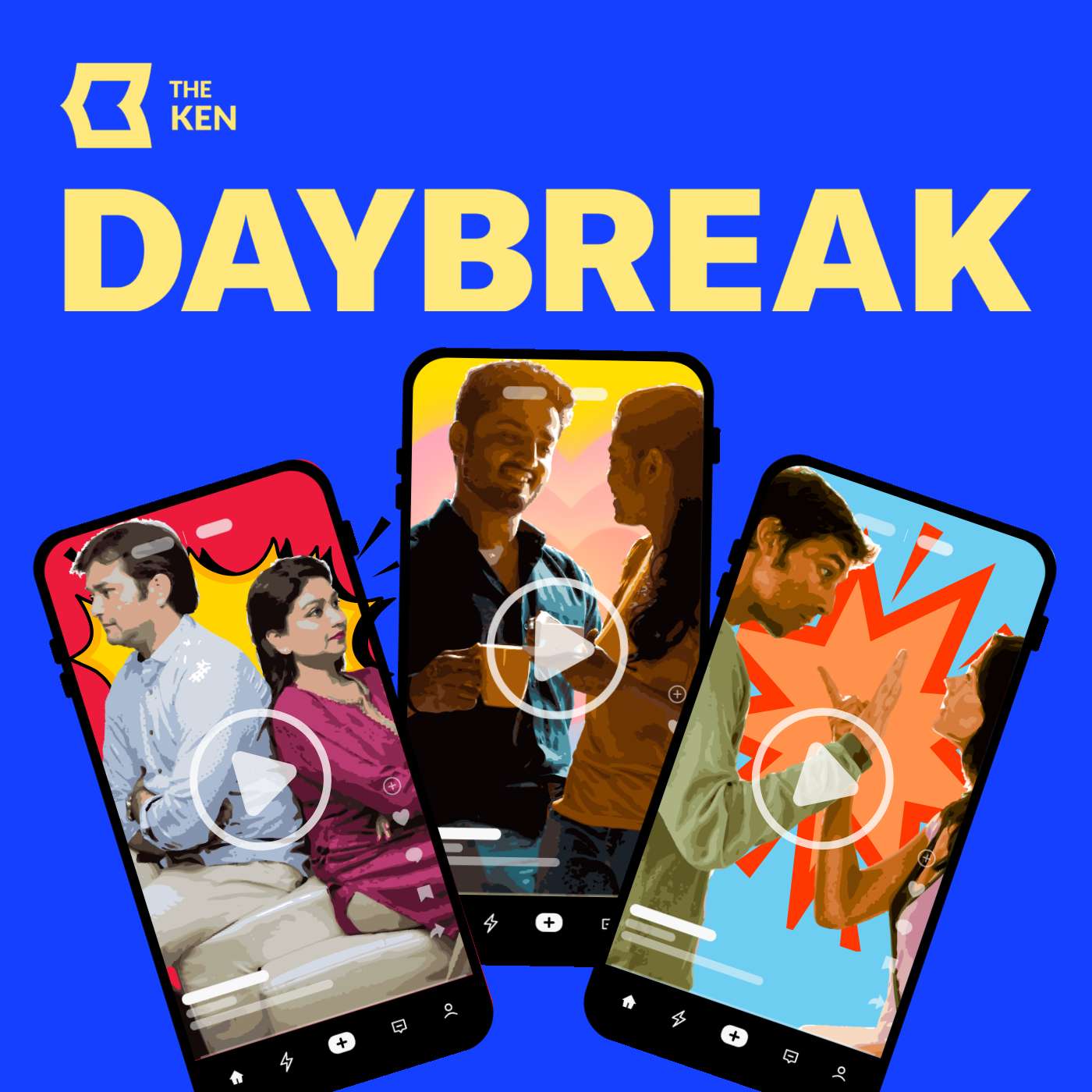
    China's microdrama industry took nearly eight years — and real government money — to reach the point where regulators had to step in over AI-flooded, quality-degraded content. India's biggest platforms don't have eight years. They're building AI into production from day one, racing to scale catalogues before fatigue sets in. Host Rachel Varghese, gets into why JioHotstar, ShareChat, and Kuku TV are pouring money into two-minute dramas, what a Chinese skincare brand's meteoric rise (and equally fast fall) reveals about the ceiling on this format, and whether India's shortcut to scale comes with a shortcut to burnout too. Tune in. Daybreak is produced from the newsroom of The Ken, India’s first subscriber-only business news platform. Subscribe for more exclusive, deeply-reported, and analytical business stories.

  • #817
    August 17 · 16 min

    The more AI can do your job, the safer it may be

    India built its IT industry on millions of coders doing exactly the work generative AI now does in seconds. So everyone knew who would feel the pressure first. The data refuses to cooperate. A survey of 1,552 tech professionals by the app Blind last week found the engineers, the ones everyone expects AI to replace, are the least worried of anyone surveyed. And an ICRIER study of 651 firms found the roles most exposed to AI, developers and analysts, are the ones firms want most. Why does demand for technical workers persist as AI takes on more of their work? Take The Great Rewiring survey here Daybreak is produced from the newsroom of The Ken, India’s first subscriber-only business news platform. Subscribe for more exclusive, deeply-reported, and analytical business stories.

  • #816
    August 16 · 11 min

    LLMs are the new pied pipers of the stock market

    An HSBC survey found that 86% of affluent Indian investors are now using AI in their trading. That's the highest share of any country surveyed, above China, Singapore, and the US. Nearly half say AI tools are their primary source of investment ideas. Most of them are using the same two or three chatbots. And a growing body of academic research has found that when millions of investors ask the same models the same questions, they get the same answers — and pile into the same stocks at the same time. And it's already creating an effect in some markets that experts call "predictable, and less efficient". Tune in. Daybreak is produced from the newsroom of The Ken, India’s first subscriber-only business news platform. Subscribe for more exclusive, deeply-reported, and analytical business stories.

Showing 21–40 of 67 episodes