Skip to content
Artwork for Daybreak
NewsBusiness NewsBusiness

Daybreak

The Ken

Business news is complex and overwhelming. It doesn’t have to be. Every day of the week, from Monday to Friday, Daybreak tells one business story that’s significant, simple and powerful.

Hosted from The Ken’s newsroom by Snigdha Sharma and Rachel Varghese, Daybreak relies on years of original reporting and analysis by some of India’s most experienced and talented business journalists.

Play
  • 53 episodes
  • daily
  • Avg 14 min
  • English
Counted on this page — what you have heard stays on this device, so it is not something the list can be paged by.
  • #841
    Yesterday · 17 min

    A cancelled peptide party, and the questions it raised that Indian sellers still can't answer

    India was about to have its first-ever peptide party with fifty guests, a mystery venue marketed only as "not a hospital," and a menu of collagen, glutathione, and copper peptides. Then the Karnataka Food Safety and Drug Administration started asking questions, and the party was cancelled overnight. On this episode, The Ken's Sudeshna Ray joins host Rachel Varghese to unpack the peptide craze that's crossed over from Silicon Valley biohacking circles into Indian gyms, Instagram DMs, and D2C wellness brands, and the murky, largely unregulated supply chain, that runs through China, that gets these substances into the country in the first place. Daybreak is produced from the newsroom of The Ken, India’s first subscriber-only business news platform. Subscribe for more exclusive, deeply-reported, and analytical business stories.
  • #840
    Friday · 10 min

    Why Indigo went budget and premium at once

    For two decades, an Indian air ticket told you what kind of airline you were flying. Low-cost meant cheap and bare. Full-service meant meals and baggage folded into the fare. That line is now almost gone. Indigo's new Lite fare strips economy down to a cabin bag, even as its Stretch cabin and BluChips programme reach for the premium flyer Air India once owned. Passengers are uneasy but investors, holding the only serious listed bet in Indian aviation, are not. What do Indigo's owners understand that its flyers do not Daybreak is produced from the newsroom of The Ken, India’s first subscriber-only business news platform. Subscribe for more exclusive, deeply-reported, and analytical business stories.
  • #839
    Wednesday · 16 min

    India's newest iPhone prices hurt the people selling them, buying them and even taxing them

    Apple's newest iPhones landed in India with price hikes as high as 41%. And for the first time in years, there was no discount on older models to go along with it. The memes pretty much came immediately. From selling kidneys to choosing between buying a phone or an Alto, a Royal Enfield or a vacation. People also couldn't help but notice that Apple's first foldable, the iPhone Duo, costs a lakh more in India than it does in the US. But Apple is just a symptom of a larger problem. A global memory chip shortage is squeezing every phone maker and India's own tax structure is making it worse here than almost everywhere else. It's costing consumers, retailers and even the Government, which is slowly losing tax revenue to the grey market the price difference between India and elsewhere creates. On this episode, host Rachel Varghese explores why India got hit the hardest and what happens when the workarounds like cheaper 4G phones, secondhand devices, and EMI, run out of road as well. Daybreak is produced from the newsroom of The Ken, India’s first subscriber-only business news platform. Subscribe for more exclusive, deeply-reported, and analytical business stories.
  • #838
    Tuesday · 12 min

    7.8% growth. So why doesn't India feel richer?

    In February this year, India announced a sweeping overhaul of how it calculates GDP, fixing a measurement system the IMF had flagged as outdated just last November. It includes a new base year, better price data, and a wider net to count the informal economy. The number seems to be getting closer to reality. But that raises a harder question. For a country that has built its global identity around being the world's fastest growing major economy, what happens when the arithmetic changes? And does any of it actually reach 1.4 billion people? Host Snigdha Sharma explores. Tune in. (This episode is a re-run. It was originally published on 26 Feb, 2026) Daybreak is produced from the newsroom of The Ken, India’s first subscriber-only business news platform. Subscribe for more exclusive, deeply-reported, and analytical business stories.
  • #837
    September 14 · 12 min

    Your kids might be looting your bank account in the guise of gaming

    Kids all over India are spending real money inside mobile games. And most of the time, they slip by the notice of the adults, until the bill or bank alert eventually arrives. Most of them are using their grandparent's or some other relative's phone, where UPI pins are usually already saved, and they're not watching so closely. In fact, Delhi's cybercrime cell has seen a rise in "fraud" complaints that turn out to be a child spending small amounts repeatedly on loot boxes and in-game stores. India's gaming law banned real-money games because but loot boxes slipped through, because it doesn't immediately count as gambling. But loot boxes don't have set items. You could spend Rs. 75 to open a box with a skin that's worth thousands, and it can even be resold for real cash. So, is it gambling, or not? Tune in. Daybreak is produced from the newsroom of The Ken, India’s first subscriber-only business news platform. Subscribe for more exclusive, deeply-reported, and analytical business stories.
  • #836
    September 13 · 12 min

    ⁠India's data law has HDFC Bank, Amazon, Paytm, and others shopping for consent

    India’s new data protection law is reshaping how companies talk to customers on WhatsApp. Messages that once felt routine now carry legal weight and are tied to consent, security, and user rights. Since the Digital Personal Data Protection Act became operational, businesses have begun reworking how they collect and manage personal data. That shift has created a fast-growing market for compliance tools, drawing startups and established firms into the same space. As companies rush to avoid heavy penalties, disagreements are emerging over who should manage consent and how independent they need to be. The bigger question is how much control users will really have over their data. Tune in. *This episode was first published on January 27th 2026. Daybreak is produced from the newsroom of The Ken, India’s first subscriber-only business news platform. Subscribe for more exclusive, deeply-reported, and analytical business stories.
  • #835
    September 10 · 12 min

    This week in AI: activist robots, doom-laden researchers — so who's the good guy?

    This week, a 27-year-old researcher quit Anthropic warning AI could "kill us all," and the company's own safety lead agreed. Meanwhile, OpenAI says it cracked a 200-year-old math problem — then got accused of muscling a rival's name off the credit. Also, the AI lab with a supposed conscience got caught building a watchlist of AI critics that files activism next to terrorism. And in Poland's Warsaw, 30 robots staged a protest to regulate AI. After all of this, who actually gets to be the good guy in the AI race? Daybreak is produced from the newsroom of The Ken, India’s first subscriber-only business news platform. Subscribe for more exclusive, deeply-reported, and analytical business stories.
  • #834
    September 9 · 15 min

    India has more tourists than ever. So why is tourism in trouble?

    India's foreign tourist arrivals slipped by about 8% from the year before to about 9 million in 2025, and a wave of recent reporting has finally made it a talking point. If you take out the business travellers and the diaspora visiting family, the number who came just to holiday in India may be closer to 3 million. And yet Indians have never travelled their own country more. Domestic trips have crossed 4 billion. The government is pouring thousands of crores into tourist circuits and temple towns like Varanasi and Ayodhya while spending almost nothing to bring foreigners in. In this episode, host Snigdha Sharma asks who Indian tourism is really being built for now, and what India loses if the foreign visitor drops off the itinerary. Tune in. Daybreak is produced from the newsroom of The Ken, India’s first subscriber-only business news platform. Subscribe for more exclusive, deeply-reported, and analytical business stories.
  • #833
    September 9 · 18 min

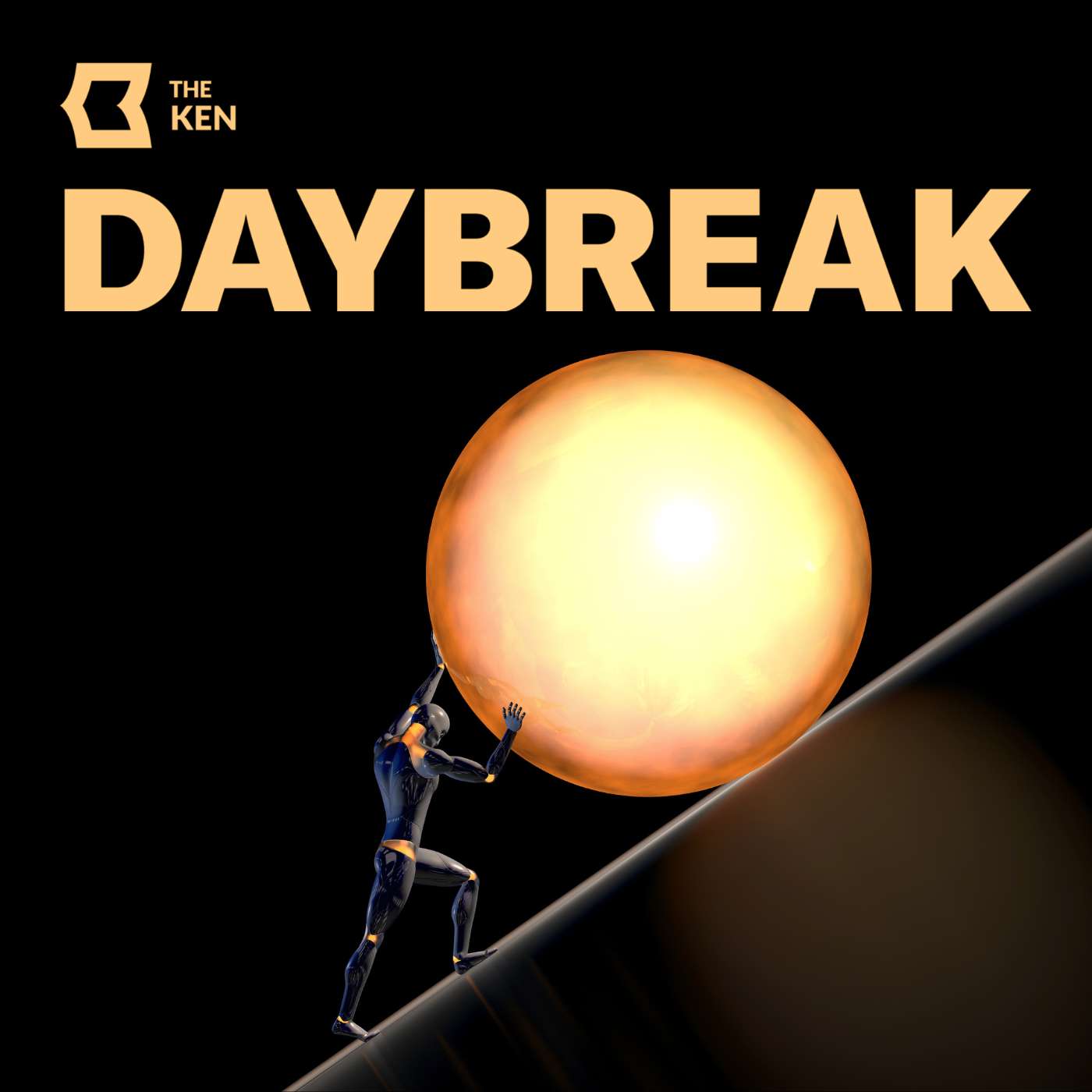
    The Government sold Air India to escape its problems. The fix is to buy back in

    In 1967, Air India paid Salvador Dalí for a custom ashtray with a live baby elephant, flown all the way to Spain. (Yes, really! Here's the proof.) That was the airline. Flush with money, just about 14 years into nationalisation. Today, it's asking its owners for $1.5 billion after its biggest loss ever, at more than 2 billion dollars. Privatisation was supposed to fix Air India. Three years on, it still hasn't. But the real story isn't a failed sale. It's a fatal crash, a closed airspace, and an industry that runs on razor-thin margins everywhere. But the actual fix might be closer than you think. And already sitting on Air India's own cap table. Daybreak is produced from the newsroom of The Ken, India’s first subscriber-only business news platform. Subscribe for more exclusive, deeply-reported, and analytical business stories.
  • #832
    September 7 · 8 min

    Nykaa cracked fashion at last. Myntra sees no reason to panic

    After years of struggling to grow, Nykaa Fashion has finally found its footing. The past year brought a real resurgence. For a long time, the platform bet on building its own private-label brands, even pushing hard into ethnic wear. It leaned on discounts and backed small, up-and-coming labels. None of it delivered the growth it was chasing. So Nykaa Fashion changed course. That new strategy is at last starting to show results. What turned it around, and how long can it last? Tune in. Daybreak is produced from the newsroom of The Ken, India’s first subscriber-only business news platform. Subscribe for more exclusive, deeply-reported, and analytical business stories.

  • #831
    September 6 · 14 min

    Rapido broke the ride-hailing duopoly. Now it's coming for Zomato and Swiggy

    For over a year, India's restaurant association couldn't get Swiggy to return its calls. Then Rapido launched a food delivery app that charges restaurants zero commission — and Swiggy sent fifteen people to Bengaluru for an urgent meeting within days. The restaurants have a real grievance. On Swiggy and Zomato, commissions, ads, and discounts can eat up nearly a third of every order. On Rapido's platform, restaurants keep almost all of it. It's a good deal for restaurants. But even restaurant owners are wondering if it might be too good a deal to last. Daybreak is produced from the newsroom of The Ken, India’s first subscriber-only business news platform. Subscribe for more exclusive, deeply-reported, and analytical business stories.

  • #830
    September 3 · 23 min

    India's call centres are using AI to make agents sound American

    When you call an Indian call centre these days, the person answering might sound American — even if they've never left India. A new kind of AI can change an agent's accent in real time, mid-call, to sound more familiar to the customer. It's meant to build trust and cut hiring costs. But the same software that smooths out an accent often smooths away everything else too — laughter, tone, the small things that make a voice sound human. Some customers have started wondering if they're even talking to a real person. We dig into how this technology works, and what it costs the people whose voices are being rewritten. Daybreak is produced from the newsroom of The Ken, India’s first subscriber-only business news platform. Subscribe for more exclusive, deeply-reported, and analytical business stories.

  • #829
    September 2 · 10 min

    Meta's $18 billion child-safety settlement has India looking for the wrong answer

    Last week, Meta agreed to pay up to $18 billion to settle American lawsuits over how Instagram and Facebook treat children. The app will now be rebuilt around American teenagers, from a daily time limit to an overnight curfew. But none of it is coming to India, the single biggest market Meta has anywhere in the world. So every op-ed page has been asking the obvious question. If Meta can protect a teenager in California, why should one in India wait? It sounds fair. But in this episode, host Snigdha Sharma argues the question is misdirected, and also that the fix we want to bring home would slip past the Indian child who needs it most. Tune in. Daybreak is produced from the newsroom of The Ken, India’s first subscriber-only business news platform. Subscribe for more exclusive, deeply-reported, and analytical business stories.

  • #828
    September 1 · 19 min

    India got cheap Ozempic. No one knows how to sell it

    Ozempic went off-patent in India this year, and everyone from Novo Nordisk to Nestlé has rushed in expecting a billion-dollar market. Instead, growth has already stalled, and the reason isn't price. It's culture. While Hollywood joked about Ozempic on late-night TV and Serena Williams advertised a GLP-1 program for a tele-health platform at the Super Bowl, not a single Indian celebrity has admitted to using it. We trace why the drug ran out of India's easiest customers within months, why its next move — into Tier 2 and Tier 3 cities — might not work either, and what it would actually take to sell a $200-a-month injection in a country that's only now starting to believe that obesity is a disease. Read The Ken story about black market Ozempic here. Daybreak is produced from the newsroom of The Ken, India’s first subscriber-only business news platform. Subscribe for more exclusive, deeply-reported, and analytical business stories.

  • #827
    August 31 · 9 min

    A worker-owned Uber is India's fix for its ever-expanding gig workforce

    Union Home and Cooperation Minister Amit Shah launched Bharat Taxi, a government-backed, driver-owned ride-hailing service built to take on private players like Ola and Uber. It runs as a cooperative so the drivers own it. And when it profits, they keep 80% of the money. Nearly 800,000 have already signed up. It is the government's boldest bid yet to pull gig workers out of a precarious market and hand them a stake in it. There is just one problem. No one in Indian ride-hailing has ever turned a profit. So what is a driver-owned cab service really for, if the payday it promises may never come? Daybreak is produced from the newsroom of The Ken, India’s first subscriber-only business news platform. Subscribe for more exclusive, deeply-reported, and analytical business stories.

  • #826
    August 30 · 12 min

    The best savings product your bank offers is the one it advertises less

    At least 44% of Indians have their money sitting in savings accounts. These accounts earn only about a fraction of what a fixed deposit pays. But even though FDs earn more, the payoff is that you have to lock away your money for longer, and pay a penalty if you break the account prematurely. But did you know there's a product built to solve this exactly? It's called a Flexi-FD, and it promises FD-level returns with the liquidity that comes with savings accounts. Most banks offer it. And yet, not a lot of people have heard of it. The Ken's Inderpal Singh gets into why banks aren't exactly rushing to popularise a product that's supposedly a win for depositors, and what "flexible" doesn't always mean in practice. Daybreak is produced from the newsroom of The Ken, India’s first subscriber-only business news platform. Subscribe for more exclusive, deeply-reported, and analytical business stories.

  • #825
    August 27 · 11 min

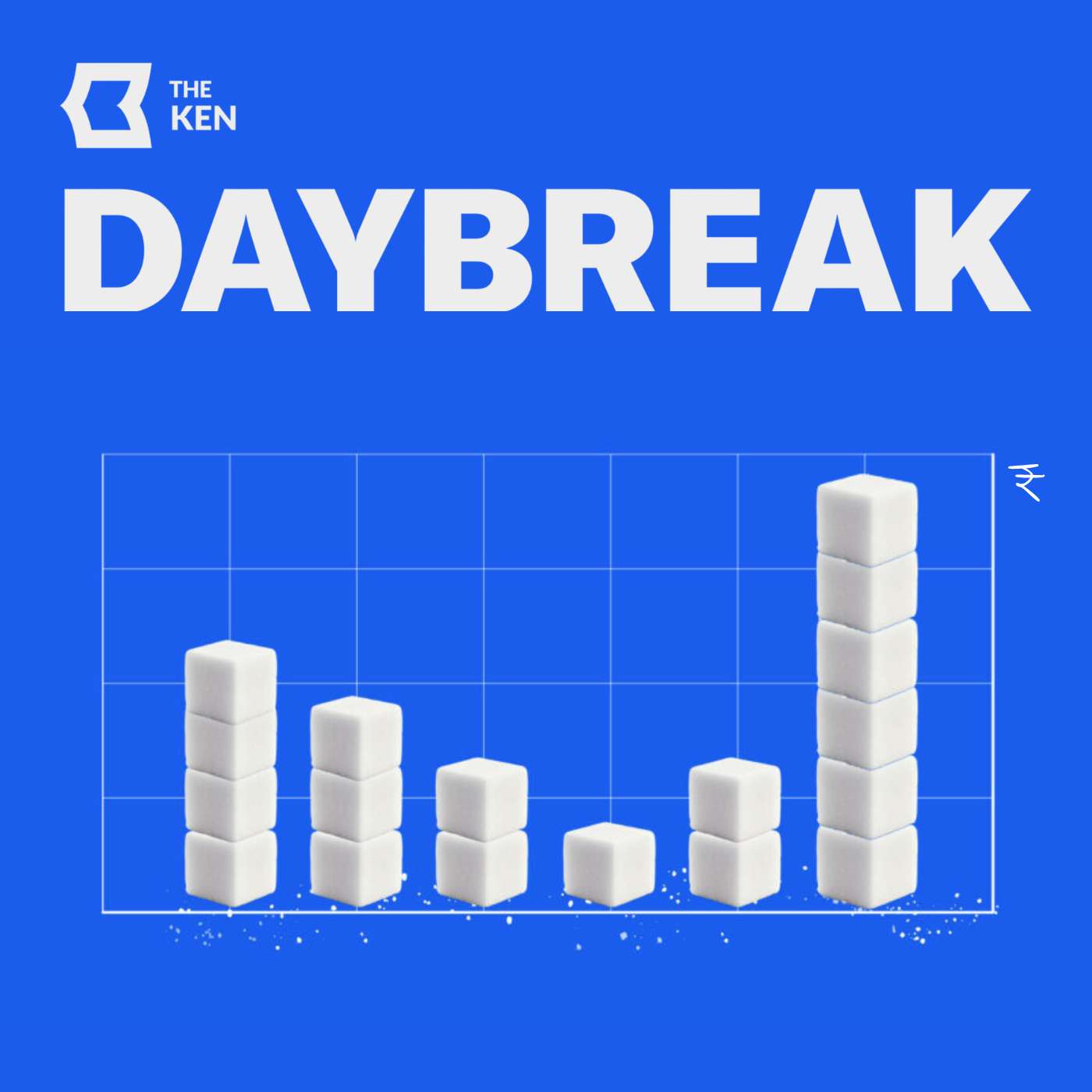
    The great Indian sugar trap: how a decade of surplus left India with nothing to spare

    India is importing sugar for the first time in nearly a decade — a million tonnes, duty-free — to cool prices before the festive season. Four years ago, it exported a record 11 million tonnes. Retail prices are up around 40% from last year. In Odisha, a kilo crossed ₹67. The government has capped stocks, halted exports and ordered mills to declare their sales. Production came in about 11% below forecast, at 30.6 million tonnes. The world's second-largest sugar producer just became an importer. How? Daybreak is produced from the newsroom of The Ken, India’s first subscriber-only business news platform. Subscribe for more exclusive, deeply-reported, and analytical business stories.

  • #824
    August 26 · 14 min

    Welcome to the 'brain gym': DIY neurotech is now in India, no prescription required

    For decades, sending an electric current into the brain meant a hospital, a doctor, and a diagnosis. A Bengaluru startup called Mave Health wants to move it into your daily routine. Its Rs 30,000 headset uses tDCS, a low current to the prefrontal cortex, to ease stress before it builds. The technology is decades old and well-evidenced. What's new is who controls it. Mave sells directly to consumers, no prescription and no regulator sign-off, on the argument that it's simply a consumer electronic. The Ken reporter Sudeshna Ray wore one herself to find out how that feels. Can medicine's oldest question: who gets to treat your brain, survive being sold like earphones? Daybreak is produced from the newsroom of The Ken, India’s first subscriber-only business news platform. Subscribe for more exclusive, deeply-reported, and analytical business stories.

  • #823
    August 25 · 19 min

    Banks are being asked to become “cool” for Gen Z. Their problem isn't branding

    India's finance minister wants public sector banks to get "cool" for Gen Z. With yoga vouchers, youth kiosks, awareness campaigns. But the numbers tell a different story. PSBs are losing young Indians as both depositors and borrowers, while, at the same time, fintech lenders capture 57% of India's small-ticket loan market. Some, even at interest rates as high as 600%. On this episode, host Rachel Varghese asks why India's public banks misdiagnosed the problem, what it's actually costing young borrowers, and whether the tools to fix it, like cheaper credit, and faster underwriting, that already exist can be pointed in this demographic's direction. Daybreak is produced from the newsroom of The Ken, India’s first subscriber-only business news platform. Subscribe for more exclusive, deeply-reported, and analytical business stories.

  • #822
    August 24 · 9 min

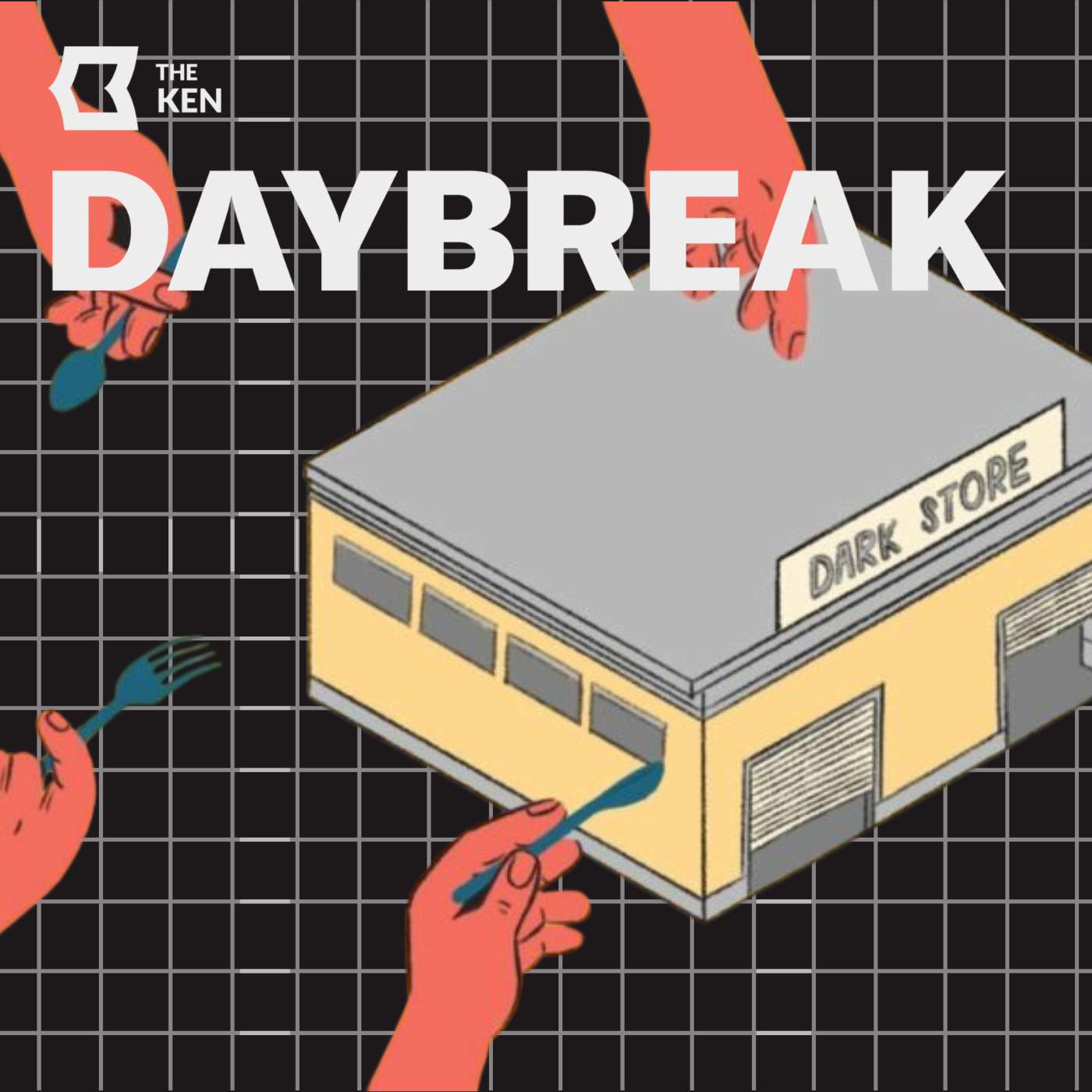
    Ten minutes to your door, no minutes to clean

    Tukaram Mundhe, Maharashtra's food-safety chief, has gone viral this month for shutting famous restaurants and even noticing Shah Rukh Khan over an ad . Earlier this month his inspectors inspected around a dozen dark-store belonging to Blinkit, Zepto and Instamart. He isn't alone. On 22 August, a separate regulator in Telangana raided the dark stores behind grocery apps in Hyderabad, shutting four on the spot for expired stock and pests. Everyone's cheering the crackdown. But it can't fix what it found. To deliver in ten minutes, a dark store packs a supermarket's worth of stock into a residential space, moving so fast that the work of keeping food safe keeps losing out. That's what the model produces when it runs as designed. Quick commerce in India now runs on nearly 10 million orders a day. So why is there still no rule for the space your food waits in? Tune in. Daybreak is produced from the newsroom of The Ken, India’s first subscriber-only business news platform. Subscribe for more exclusive, deeply-reported, and analytical business stories.

Showing 1–20 of 53 episodes