Skip to content
Artwork for Daybreak
NewsBusiness NewsBusiness

Daybreak

The Ken

Business news is complex and overwhelming. It doesn’t have to be. Every day of the week, from Monday to Friday, Daybreak tells one business story that’s significant, simple and powerful.

Hosted from The Ken’s newsroom by Snigdha Sharma and Rachel Varghese, Daybreak relies on years of original reporting and analysis by some of India’s most experienced and talented business journalists.

Play
  • 97 episodes
  • daily
  • Avg 14 min
  • English
Counted on this page — what you have heard stays on this device, so it is not something the list can be paged by.
  • #884
    Today · 11 min

    The UPI shortcut to US stocks is all gas and no brakes

    More and more Indians want a piece of American stocks, and the legal way in has become easier this year. But it’s still slow, and it doesn’t let you borrow to bet bigger. So a set of crypto platforms has stepped into that gap, letting traders bet on US stocks with heavy leverage, paid for through UPI. Because the rupees never get converted into dollars, the money never officially leaves India, and that puts these platforms in a legal grey zone. In this edition of The Ken's weekly Ka-Ching, read aloud by host Snigdha, Mutasim Khan looked at how this loophole works and why even people in the crypto industry are warning traders away from it. Tune in.

  • #883
    Yesterday · 12 min

    India cut the tax on Scotch. Customs is now asking: what counts as Scotch?

    India drinks more whisky than any country on earth. Yet, pure Scotch makes up only about 3% of the whisky Indians drink. And now, dozens of containers of it sit stuck at Indian ports. Today, host Rachel Varghese unpacks a disagreement inside the Indian government over what counts as Scotch under the India-UK trade pact, and what it means for what's actually in your bottle. From the designer Diwali editions to the blends behind India's best-selling whiskies. Tune in. Listen to our last episode on India's alcohol boom here. Daybreak is produced from the newsroom of The Ken, India’s first subscriber-only business news platform. Subscribe for more exclusive, deeply-reported, and analytical business stories.

  • #882
    Tuesday · 9 min

    Hospitals won’t pay for India’s medical inflation and insurers can’t

    India’s insurance regulator, Irdai, got over 2 lakh comments on its plan to cut agent commissions. It is expected to revise the proposals by December. The plan responds to medical costs rising 12-14% a year. Insurers spent up to Rs 118 for every Rs 100 of premiums in FY25. Meanwhile, hospitals have their own reasons to resist the standardisation of pricing. So the burden is shifting to agents and patients, through lower commissions and a proposed 10% co-pay. But moving costs around doesn’t make healthcare cheaper. Who should pay for India’s rising medical bills? Tune in. Daybreak is produced from the newsroom of The Ken, India’s first subscriber-only business news platform. Subscribe for more exclusive, deeply-reported, and analytical business stories.

  • #881
    Sunday · 12 min

    Why global betting giants are paying Indian data scouts to see games before bettors

    Gavin's job involves a seat in a stadium, two phones and only a few seconds to log everything that happens on the pitch. He's a sports data scout in Guwahati. And the data he records is what ends up on going to global betting platforms, before the broadcast catches up. Today, in Daybreak's video episode, The Ken's Sakshi Sadashiv and host Rachel Varghese explain who these scouts are, why a few seconds of delay is worth so much money, and how platforms keep people betting when the big tournaments season ends. Tune in. Bring Seetharaman to speak at your next event. Enquire here. Credits: Host: Rachel Varghese Journalist: Sakshi Sadashiv Direction: Rajiv CN Video Producer: Rajiv CN Daybreak is produced from the newsroom of The Ken, India’s first subscriber-only business news platform. Subscribe for more exclusive, deeply-reported, and analytical business stories.

  • #880
    November 12 · 11 min

    Engineering profits are slipping and L&T Tech is going all in on AI

    L&T Technology Services is making a big bet on AI to reverse a slide in its profit margins. The engineering services company has sold its Smart World and Communications business at a loss of Rs 350 crore, shifting its focus towards AI-led engineering projects. Meanwhile, AI agents are helping it automate software testing, process complex engineering data and cut project timelines. The shift is also changing how LTTS hires employees, structures teams and charges clients. But with competitors making similar moves and outcome-based billing bringing new risks, can AI deliver the profits LTTS is counting on? Tune in! Daybreak is produced from the newsroom of The Ken, India’s first subscriber-only business news platform. Subscribe for more exclusive, deeply-reported, and analytical business stories.

  • #879
    November 11 · 12 min

    Complan says it makes kids grow 2X faster. FSSAI wants to see the proof

    Complan's pitch to Indian parents has long been simple. It helps kids grow taller, faster. Last month, FSSAI asked its maker to show the studies behind it's claim: "clinically proven 2x growth". Nestle got a similar notice for two of its baby formulas. So did several other brands, as the FSSAI swept the industry, hitting products like atta to infant formula. So, why is the regulator going after brands that have been around for so long, so aggressively, and why now? Tune in. This episode was edited by Arnav Prakash. Daybreak is produced from the newsroom of The Ken, India’s first subscriber-only business news platform. Subscribe for more exclusive, deeply-reported, and analytical business stories.

  • #879
    November 11 · 12 min

    “Clinically proven” has sold for years on trust. FSSAI is finally asking what’s behind it

    Complan's pitch to Indian parents has long been simple: grow taller, faster. Last month, FSSAI asked its maker to show the studies behind "clinically proven 2x growth". Nestle got a similar notice. And so did many other brands, as the FSSAI swept the industry, hitting atta to infant formula. So, why is the regulator going after brands so aggressively, and why now? Tune in.

  • #878
    November 10 · 12 min

    India's jewellery makers are IPO-ing away to pay for gold

    Eight jewellery companies have listed on India’s main board this year. Many of them are the behind-the-scenes makers who supply to big brands like Malabar, Kalyan, and Senco. Investors have lapped them up. One issue was oversubscribed a hundred times. On paper, it’s easy to see why, because their profits are soaring. But they have to pay for gold upfront and wait months for retailers to pay them. In the end, their bank credit is almost wiped out. So most of what investors handed over is going into repaying loans and buying gold. In this edition of Long and Short from The Ken newsroom written by Debanjali Biswas and read aloud by Snigdha, we look at what exactly investors are buying into. Tune in. This episode was edited by Arnav Prakash. Daybreak is produced from the newsroom of The Ken, India’s first subscriber-only business news platform. Subscribe for more exclusive, deeply-reported, and analytical business stories.

  • #877
    November 10 · 11 min

    How the security deposit became a landlord’s free working capital

    This Diwali, gift The Ken! Tenants across India's six biggest metros have handed landlords Rs 1.26 trillion in security deposits, a new NoBroker study estimates. Around $15 billion of tenant money, refundable in name, sits in landlords' accounts earning interest for people it does not belong to. In this episode, host Snigdha Sharma ask what a deposit actually costs a renter, and arrives at a number: nearly a month's rent, every year. The same tenant who pays 2 months' deposit in Mumbai is asked for 10 in Bengaluru, and in Delhi NCR, about 4 in 10 never got their full deposit back. Renting was meant to be a phase. But with home ownership drifting out of reach, tenants may be extending this loan for decades. Tune in. Recommendations: It sucks to be a tenant in Bengaluru right now *This episode was originally published on July 17, 2026. Daybreak is produced from the newsroom of The Ken, India’s first subscriber-only business news platform. Subscribe for more exclusive, deeply-reported, and analytical business stories.

  • #876
    November 8 · 11 min

    A $12B R&D fund was meant to turbocharge startup funding. It did the opposite

    India's RDI fund of Rs. 1 lakh crore was launched to give patient capital to deep-tech startups. A year later the cash, is barely flowing. Out of 162 alternate investment funds, only 2 government intermediaries have approved letters, and most of their startups are still waiting. Fund managers say that they've experienced radio silence after applications, allegations of conflict of interests, and return expectations that don't suit R&D focused companies. Meanwhile, overall startup funding is also down. So, why did the fund meant to speed things up end up slowing everything down? Tune in. Daybreak is produced from the newsroom of The Ken, India’s first subscriber-only business news platform. Subscribe for more exclusive, deeply-reported, and analytical business stories.

  • #875
    November 5 · 16 min

    Why India’s airlines are flying less and charging you more

    “Don’t travel by air.” That was a Supreme Court judge’s response on Monday, when a petitioner asked for an urgent cap on airfares before Diwali, Bhai Dooj and Chhath. Airlines blame jet fuel, and they have a point. Jet fuel in Delhi costs about 46% more than it did a year ago, and fuel now makes up nearly 40% of IndiGo’s costs. But fuel alone can’t explain a ticket that costs four times the usual price. Here’s the stranger part: fewer Indians are flying. Domestic passenger numbers have fallen for four months in a row. Instead of cutting fares to win flyers back, airlines have cut flights, and by more than passengers have fallen. In today’s episode, host Snigdha Sharma breaks down the airline maths behind fewer flights and costlier tickets and what could help. Tune in. Daybreak is produced from the newsroom of The Ken, India’s first subscriber-only business news platform. Subscribe for more exclusive, deeply-reported, and analytical business stories.

  • #874
    November 4 · 14 min

    At IITs, a long-brewing ‘culture war’ between engineering and humanities boils over

    At India's premier engineering schools, the humanities and social sciences or HSS have become a put-down. "Oh, you're being so HSS" is what students say to anyone seen as too "woke". This tension has now surfaced again at IIT Bombay where the protests following the passing away of student Sahil Wakode, were largely lead by humanities doctoral students. Engineers describe a "hyper-apolitical" campus, while humanities faculty say that the division comes from a shallow idea of education. Critics outside the campus though, have questioned the need for humanities in these institutes in the first place, and have called for the departments to be shut, though humanities have been part of the plan for IITs since 1945. So, why does the IIT humanities student draw so much hostility, and why can't they talk it out? Tune in. Daybreak is produced from the newsroom of The Ken, India’s first subscriber-only business news platform. Subscribe for more exclusive, deeply-reported, and analytical business stories.

  • #873
    November 4 · 8 min

    Gen Z wants to own a home. The math says inherit one

    India’s homes cost 11 times annual income, more than double the affordability benchmark, and real wages fell 4% between 2012 and 2024. For Gen Z, buying a house on a salary alone barely adds up. Inheritance is filling some of the gap, with gift deed registrations rising sharply in Mumbai, Pune and Delhi. But family property often comes late, comes split, or comes with conditions. What happens to the much larger group with no property to inherit at all? Daybreak is produced from the newsroom of The Ken, India’s first subscriber-only business news platform. Subscribe for more exclusive, deeply-reported, and analytical business stories.

  • #872
    November 2 · 12 min

    Vodafone Idea’s losses are halving and its stores are buzzing. The hard part comes next

    For years, Vodafone Idea (Vi) kept losing subscribers. Since February, that’s stopped, and the company is now pushing hard with unlimited data, family plans and stacked offers, even roping in Shah Rukh Khan. Its losses are shrinking, AGR dues are falling and margins are at a decade high. But Airtel and Jio are still growing far faster, and Vi’s market share keeps slipping. In this episode, we look at what’s changed on the ground, the ₹45,000 crore capex plan still awaiting funding, and whether Vi can hold on to the customers it’s winning. Daybreak is produced from the newsroom of The Ken, India’s first subscriber-only business news platform. Subscribe for more exclusive, deeply-reported, and analytical business stories.

  • #871
    November 1 · 15 min

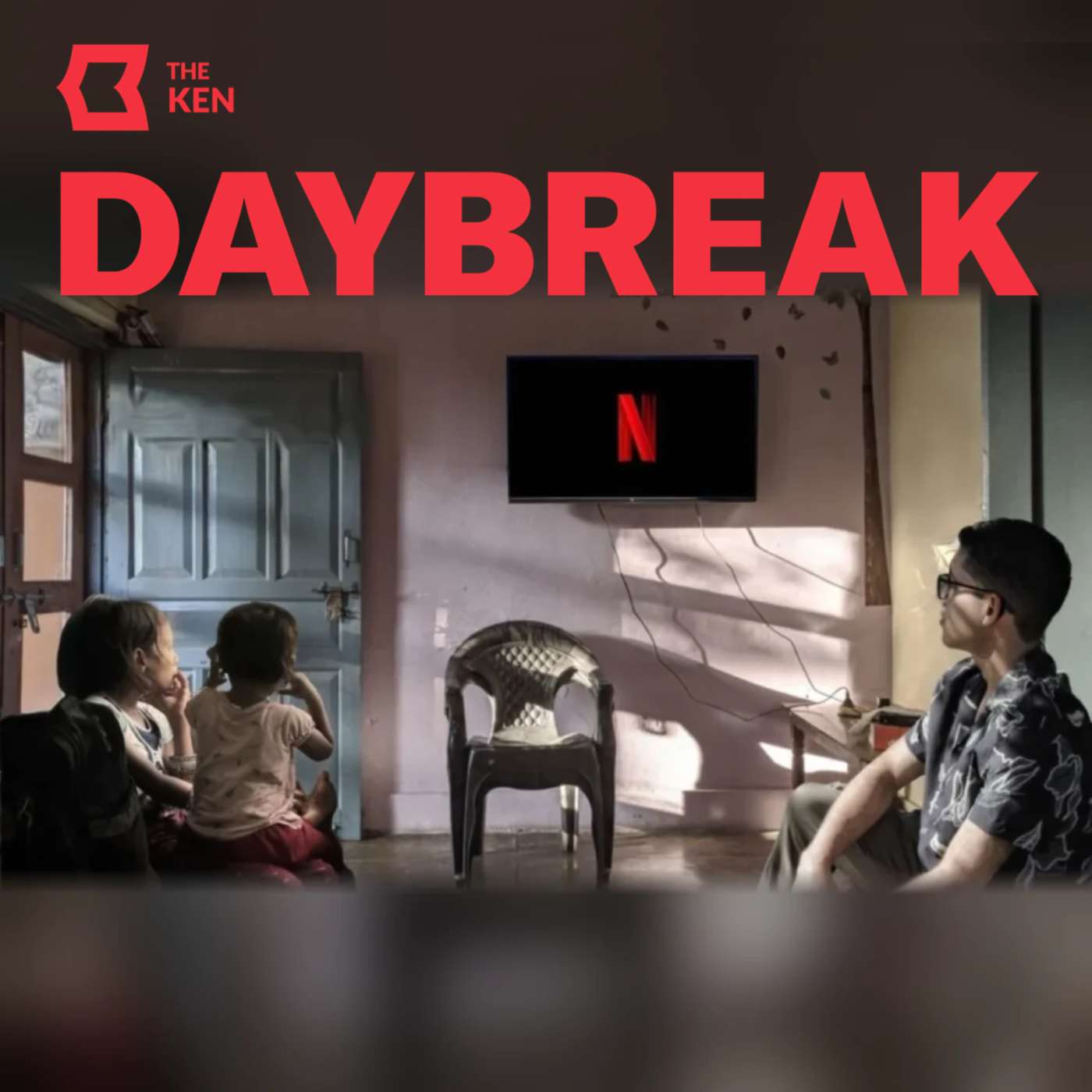
    Sacred Games put Netflix India on the map. Roadies is how it plans to stay there

    Netflix paid 175 crore for the Hindi version of a single blockbuster. For a season of Roadies, the college-favourite reality show, it reportedly paid 18 and even agreed to share it with rival JioHotstar, something you wouldn't expect a platform built on exclusivity to do. Today, on our first video episode of Daybreak, we look at the platform that made its name on shows like Sacred Games and Lust Stories ended up here. The answer runs through the family living room, a growing fear of offending someone, and how often you open the app. The question is: is the pivot working? And, what does it cost? Credits: Host: Rachel Varghese Journalist: Debanjali Biswas Direction: Rajiv CN Video Producer: Rajiv CN Daybreak is produced from the newsroom of The Ken, India’s first subscriber-only business news platform. Subscribe for more exclusive, deeply-reported, and analytical business stories.

  • #870
    October 29 · 14 min

    How to ‘manufacture’ an Ivy League applicant

    Getting into a top American university has become a mountain of research papers, social projects and competitions. And wealthy Indian families are now starting the climb when kids are 14. In this episode, host Rachel Varghese reads out Vishnu Prakash's piece from The Ken's newsletter, Make India Competitive Again: "How to 'manufacture' an Ivy League applicant". It looks at why premium consultancies more than Rs. 5 lakh a year are booming, even as Indian departures abroad fall, what an anxious parent's money actually buys, and who really does the work behind a student's "personal profile". Daybreak is produced from the newsroom of The Ken, India’s first subscriber-only business news platform. Subscribe for more exclusive, deeply-reported, and analytical business stories.

  • #869
    October 28 · 24 min

    JioHotstar’s real overseas rival is a $10 per month pirate box

    JioStar has taken JioHotstar to the UK, Canada, Singapore and the Middle East. It's chasing roughly 37 million Indians living abroad, and their taste for content from back home. But frustrated by geolocked content and a lack of accessibility for regional content, many of those viewers have turned to less legal options. One of them is an unlicensed box that can cost as little $10 a month, and come with 5000 channels and access to the libraries of major OTT players. We spoke to eight households about what they watch, why streaming rights and shared logins make things complicated, what the box offers that apps don't, and if what JioHotstar is offering instead can match up to it. Tune in. Daybreak is produced from the newsroom of The Ken, India’s first subscriber-only business news platform. Subscribe for more exclusive, deeply-reported, and analytical business stories.

  • #868
    October 27 · 10 min

    India's instant home help boom has a pricing problem

    Investors are calling India's home-services market quick commerce's next big moment. Instahelp, Snabbit, and Pronto are betting big on it. They're sending trained workers to your door in under 10 minutes, at prices cheaper than a coffee. Orders, naturally, are in the millions. But the difference is that quick commerce eventually figured out how to make money. Here, on the other hand, 82% of consumers have already said they won't pay more than Rs 200 an hour. And on every order placed today, the market leader is losing twice what it earns. So who exactly is this boom working for? Tune in. *This episode was originally published on 29th April 2026 Daybreak is produced from the newsroom of The Ken, India’s first subscriber-only business news platform. Subscribe for more exclusive, deeply-reported, and analytical business stories.

  • #867
    October 26 · 11 min

    Without a UPI, Africa pays a toll on cash. Airtel Money collects it

    Airtel Money is now trading in London, valued at about $7 billion. The African mobile-money company made $373 million in profit last financial year. It is based on a simple model. Depositing cash is free. Customers pay mainly when they take money out as cash, and sometimes when they send it. In markets where most adults have no bank account, those fees add up. Bharti Airtel's Indian business, Airtel Payments Bank, takes a roughly similar cut. But it only made $12 million. Most of this difference comes down to UPI, which moves money in India for free. Now Airtel Money's own markets are building their versions of UPI. What happens to its toll on cash? Also listen to: Why your Diwali shopping is more important than implementing MDR on UPI Daybreak is produced from the newsroom of The Ken, India’s first subscriber-only business news platform. Subscribe for more exclusive, deeply-reported, and analytical business stories.

  • #866
    October 25 · 11 min

    Ajio wants to course-correct, but Reliance Retail’s shadow looms large

    Reliance has a lot to celebrate. The bidding for Jio IPO closed on Friday, more than 20 times subscribed, and with India's biggest valuation ever; the shares will list on Wednesday. But the Ambani empire is bigger than just Jio, and not every member of the conglomerate is getting attention. Take Ajio, which is heading into the competition of festive season with falling traffic, trimmed marketing and discounts, and big brands focusing more on Myntra. The new CEO of digital business, including Ajio, is Sandeep Karwa. He has the right experience, but executives told The Ken that the investment necessary hasn't arrived yet, and Reliance's control on decisions and payments limit his freedom. In this read aloud of Nuha Bubere's newsletter edition of Trade Tricks by host Rachel Varghese, we look at whether Karwa can turn Ajio around. Daybreak is produced from the newsroom of The Ken, India’s first subscriber-only business news platform. Subscribe for more exclusive, deeply-reported, and analytical business stories.

Showing 1–20 of 97 episodes