Skip to content
Artwork for App Minded
BusinessEntrepreneurshipTechnology

App Minded

Nina Kolari

From Vibe Coders to Developers Building Apps. From idea to install, growth to community.

App Minded is a podcast about building and launching apps with AI, especially when you’re not a traditional developer.

Hosted by Nina Kolari, App Minded goes behind the scenes with founders, creators and app builders who are turning ideas into real mobile and web apps using AI tools, vibe coding and new ways of building software.

Each episode explores the actual journey from idea to app: how the idea started, how the product was built, which AI tools were used, what went wrong, how they launched, found users and figured out what to build next.

You’ll hear about AI app development, vibe coding, iOS and web apps, app ideas, validation, product design, launching, app marketing, monetization and growing an app after launch.

No computer science degree required. No pretending everything worked perfectly the first time.

If you’re wondering whether you can build an app with AI, how non-technical founders are creating apps, or what it really takes to go from an idea to a launched product, App Minded is for you.

Play
  • 9 episodes
  • Avg 43 min
  • English
  • #8
    Saturday · 45 min

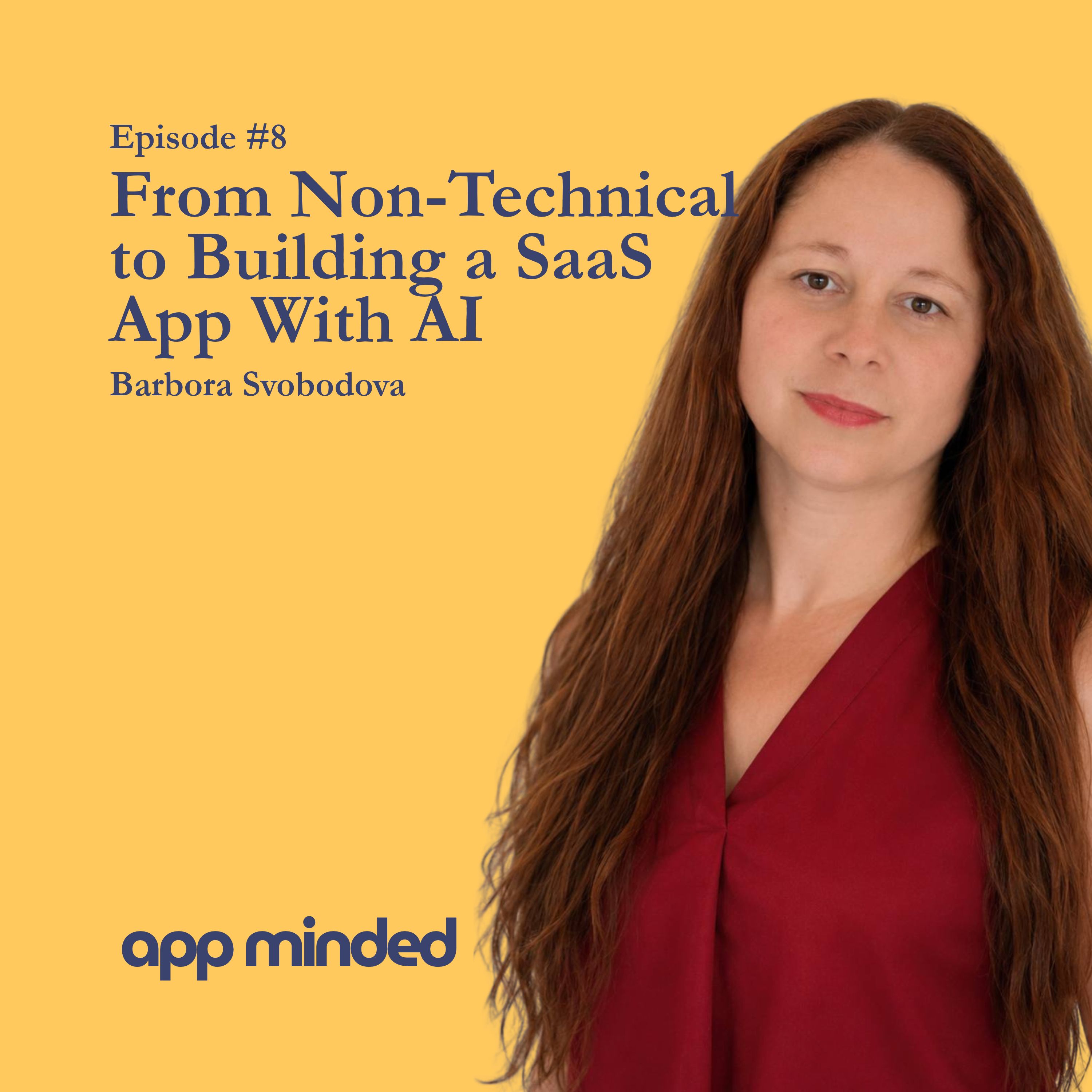
    From Non-Technical to Building a SaaS App With AI

    Can you build a real app with AI without a technical background? And what happens after you actually ship it? In this episode of App Minded, Nina Kolari talks with Barbora Svobodova, a biochemist turned tech entrepreneur and co-founder of Xroad Studio, an AI-powered content creation and distribution platform. Barbora shares how she moved from science into tech, learned to build apps with AI, and built the first version of Xero Studio in Cursor. That version eventually grew to around 70,000 lines of code before she decided to scrap it and rebuild from scratch. We talk about what that experience taught her about AI app development, vibe coding, product-market fit, user feedback and feature bloat. Barbora explains why she now builds around what paying customers actually use rather than what she thinks they might want. We also get into one of the hardest parts of launching an app: distribution. Barbora shares how Xero Studio got its first customers, why content distribution became a major part of the product, and why building the app itself is only one part of creating a successful software business. We also discuss the opportunities AI is creating for non-technical founders and women in tech. You no longer need a traditional software development background to test an idea, build an MVP and put a real product in front of customers. But building is only the beginning. In this episode: Building an app with AI without a technical background Going from biochemistry to tech entrepreneurship Building Xero Studio with Cursor and AI Why Barbora scrapped her first 70,000-line version Using customer feedback to decide what to build Avoiding feature bloat in app development Finding your first paying customers Content creation vs. content distribution Marketing and distribution for new apps Compliance and regulations when building software Why community matters when learning to build Women building apps and businesses with AI What Barbora would do differently starting again App Minded is a podcast about people turning ideas into real apps with AI. We talk about what they built, how they built it, what worked, what didn't, and how they find customers after they ship.

    • Transcript
  • #7
    Tuesday · 48 min

    Building Apps with AI: What I Learned Along the Way

    Embracing AI: How to Amplify Your Skills and Build Impactful Apps AI is becoming part of how we work, but many professionals are still figuring out how to use it without feeling overshadowed by it. In this episode, Cynthia Vazuqez, AI strategy consultant and founder of Lead with Impact, shares her philosophy of amplification over automation and how she uses AI to enhance skills, solve problems, and build impactful apps. The Importance of Amplification, Not Automation Cynthia Vazuqez describes herself as a lifelong learner who has trained over 1,800 professionals on integrating AI into their workflows. Her approach is simple: AI should accelerate human potential rather than replace it. Why Choose Amplification? Enhancing Efficiency: AI tools can streamline work. When Cynthia first used AI for proofreading communications in high-stakes environments, she found it saved time while improving the quality of her work. Learning and Growth: AI can act as a thought partner, challenging you to think critically and creatively. Asking the right questions can uncover insights and fill gaps in your knowledge. Building Your First App with AI Cynthia’s journey into app development began with a desire to create tools that bring clarity and support people in their daily lives. One of her first projects was an app designed to help users focus on their weekly goals while accounting for personal factors that affect productivity. Key Features of the Clarity App Personalized Goal Setting: The app considers users' mental and emotional states alongside their commitments, then suggests what to prioritize. Holistic Approach: By considering personal circumstances, the app helps users balance their goals with their well-being and recognize when rest may be needed. The Iterative Learning Process Cynthia emphasizes that building apps isn’t just about launching. It’s about learning and iterating. Platforms and tools constantly evolve, requiring builders to adapt their designs and functionality. Lessons from Iteration Understanding Tool Limitations: Builders need to understand the tools they use. Cynthia learned firsthand how platform credit systems can create unexpected costs when they aren’t managed carefully. Embracing Change: The tech landscape moves quickly. Keeping up with new features and capabilities can improve both the quality and efficiency of your builds. Finding Problems to Solve A crucial part of app development is identifying real problems worth solving. Cynthia encourages aspiring builders to look at their own experiences for potential app ideas. Strategies for Identifying Problems Personal Experience: Many useful apps start with a problem the founder has experienced or witnessed. Cynthia’s app for federal employees navigating career transitions grew from seeing colleagues struggle during layoffs. Market Research: Before building, look at what already exists. Understanding competing solutions helps refine your idea and identify where you can offer something better.

    • Transcript
  • #6
    September 5 · 45 min

    How To Build A Thrifting App With Claude And Replit (No Code)

    Transforming your passion for app development into a successful venture can be a challenging yet rewarding journey. In this blog post, we’ll explore the insights shared by Chiara Barden, an experienced HR professional turned AI enthusiast and app developer, during her conversation with Nina Kolari. Chiara's unique perspective on app development, particularly her journey in creating the AI Treasure Hunter app, offers valuable lessons for aspiring developers and anyone interested in leveraging AI in their projects. Understanding the Journey into App Development Chiara Barden's background is diverse, ranging from HR to AI. With over 20 years in the HR space, she transitioned into app development fueled by her passion for technology and personal experiences. Her story exemplifies how a background in one field can provide unique insights into another, particularly in tech. Chiara emphasizes the importance of understanding the needs of your target audience, a principle she applied when developing her app. Finding Inspiration in Personal Experiences The idea for the AI Treasure Hunter app stemmed from Chiara's childhood experiences of thrifting with her family. The desire to know the worth of items during these trips inspired her to create an app that helps users discover the value of thrifted goods. This personal connection to her app's mission highlights how personal experiences can drive innovation and creativity in app development. Leveraging AI for User Empowerment Chiara's approach to AI is rooted in her belief that technology should empower users rather than overwhelm them. She has developed workshops that teach both students and professionals how to utilize AI effectively without the intimidation often associated with tech tools. By simplifying AI concepts, Chiara ensures that her audience can harness the power of AI to enhance their productivity and creativity. Key Insights for Aspiring App Developers Identify Your Audience: Understanding who will use your app is crucial. Chiara's focus on thrifting enthusiasts guided her app's features and functionality. Draw from Personal Experience: Your unique background can inspire innovative app ideas. Chiara's childhood memories directly influenced her app's concept. Simplify Technology: Make technology accessible. Chiara’s workshops show that teaching users how to engage with AI can demystify the process and encourage adoption. Iterate Based on Feedback: Chiara continually refines her app based on user feedback, illustrating the importance of adaptability in app development. Conclusion Creating an app is more than just coding; it's about understanding the user's needs and drawing from personal experiences to create something meaningful. Chiara Barden's journey highlights the potential for anyone, regardless of their technical background, to make an impact in the tech world. As you embark on your app development journey, remember to stay curious, seek feedback, and let your experiences guide you. Key Takeaways Understand your audience and their needs. Use personal experiences as a foundation for your app ideas. Teach and simplify technology for better user engagement. Iterate and adapt based on user feedback for continuous improvement. Find more about Chiara on her website https://www.betterbydesignai.com/

    • Transcript
  • #5
    August 26 · 58 min

    How to Build an App With No Coding Experience Using Lovable and Claude

    In this conversation, Christina Moore shares her journey from being laid off to diving into the world of AI and app development. She discusses her experience participating in a hackathon, where she built a book club app aimed at simplifying the logistics of hosting book clubs. Christina emphasizes the importance of community, collaboration with AI tools like Claude, and her design philosophy focused on user experience. The conversation also touches on the challenges of building a functional app within a limited timeframe and the integration of AI features to enhance user interaction. In this conversation, Christina Moore shares her experience participating in a hackathon where she developed an app. She discusses her preparation strategies, the importance of community support, the emotional journey during submission, and the valuable feedback she received. Christina reflects on her growth as a developer and her future aspirations, including plans for her app and her career. Check out Swan Society Bookclub Management app.

    • Transcript
  • #4
    August 5 · 45 min

    How to Build an iPhone App With No Tech Background

    In this conversation, Samantha Black shares her journey from being an education professional to becoming an app developer without a technical background. She discusses the challenges she faced while building her apps, the tools she used, and the learning process involved in navigating app development and submission. The conversation highlights the importance of problem-solving, the role of AI in development, and the continuous learning curve that comes with creating technology solutions for educational purposes. In this conversation, Nina Kolari and Samantha Black explore the journey of app development, particularly focusing on the empowerment of women in tech. They discuss the challenges and innovations in creating apps, the importance of marketing strategies, and the value of feedback and iteration. Samantha shares her experiences in launching her app, Earnling, and emphasizes the significance of starting projects even when one feels unprepared. The discussion highlights the unique perspectives women bring to tech and the practical solutions they create to address everyday problems. Find more about Samantha's app Earnling here. Takeaways Samantha transitioned from education to app development. She created an app to help her daughter with math homework. The app development process involved significant problem-solving. Samantha used AI tools like Claude to assist in coding. Navigating the App Store submission was a complex process. She learned from bugs and challenges during development. Samantha emphasized the importance of financial literacy for kids. The coding aspect was easier compared to marketing the app. AI tools can enhance the learning experience in app development. Samantha's journey reflects the power of perseverance and continuous learning. You have to have the patience and the idea. The gap between being a developer and having a good idea is smaller. Women can just sit down and fix problems now. It's so cool to watch what women create. Don't let your ideas stop you from launching. Ship before you think you should. You just have to be willing to learn. Pinterest is the secret weapon to success. It's important to recognize your accomplishments. Feedback is crucial for improvement.

    • Transcript
  • #3
    July 23 · 50 min

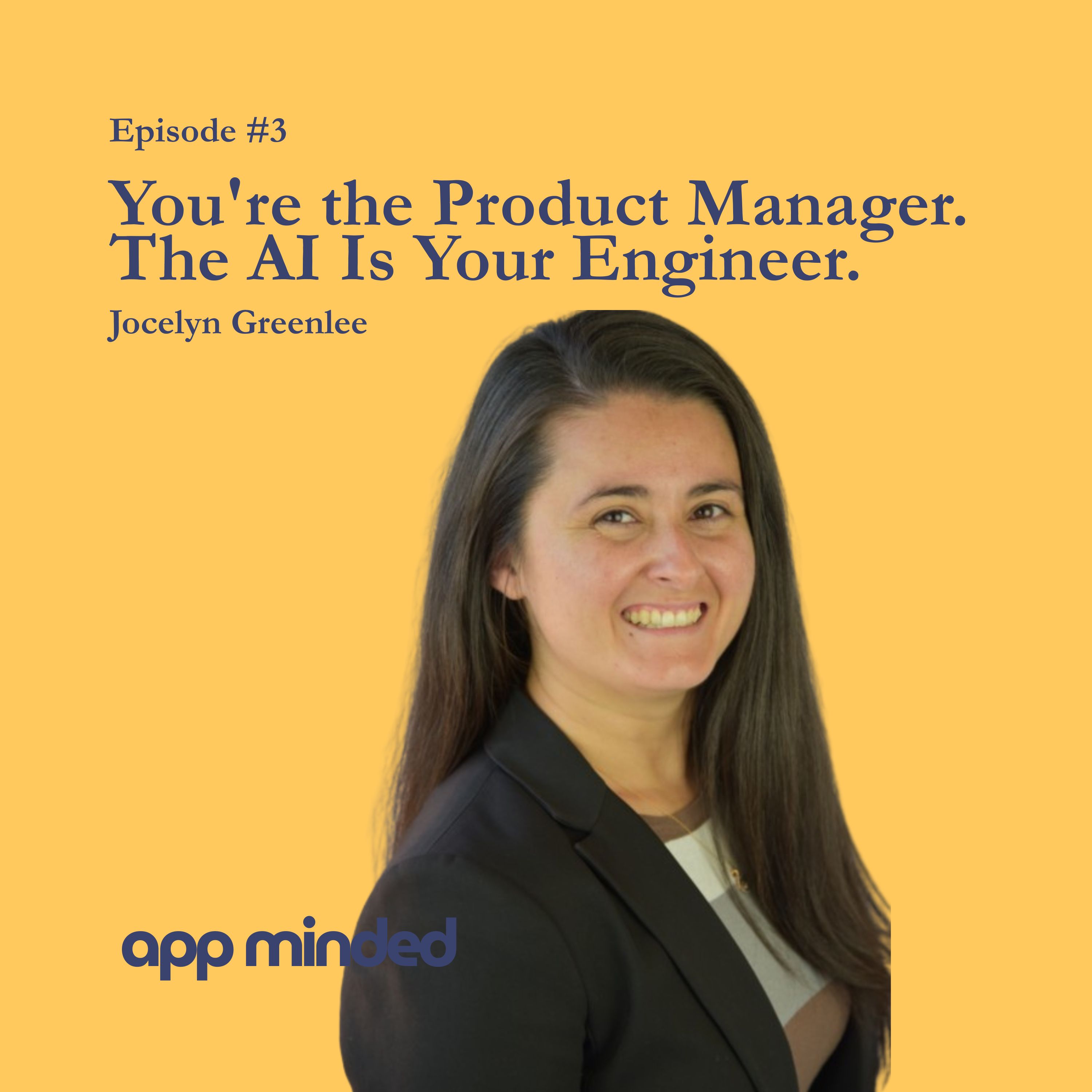
    How To Build An App With Replit: You're the Product Manager. The AI Is Your Engineer.

    Jocelyn Greenlee was gifted three chickens and had nowhere to put them. Raccoons in the neighbourhood, no coop for sale anywhere, and every DIY plan she found was more complicated than she could pull off. So she pulled her car over on the side of the road and decided to build an app instead. Two days later she had something that worked. A few weeks after that, Bildara was live on the App Store — snap a photo, get the materials, measurements, shopping list and safety notes. She has no coding background. She works in SEO by day. In this episode she walks through how she thinks about it: you're the product manager, the AI is your engineer. You describe what you want, it builds, you tell it what's broken. We get into the parts that broke, the App Store rejection she fixed in fifteen minutes, why she stopped waiting for the logo to be perfect, and the thing she says surprised her most — not the app, but what shipping it did to her confidence. The chickens are fine. They love the coop. You can find Buildara on the App Store.

    • Transcript
  • #2
    July 15 · 47 min

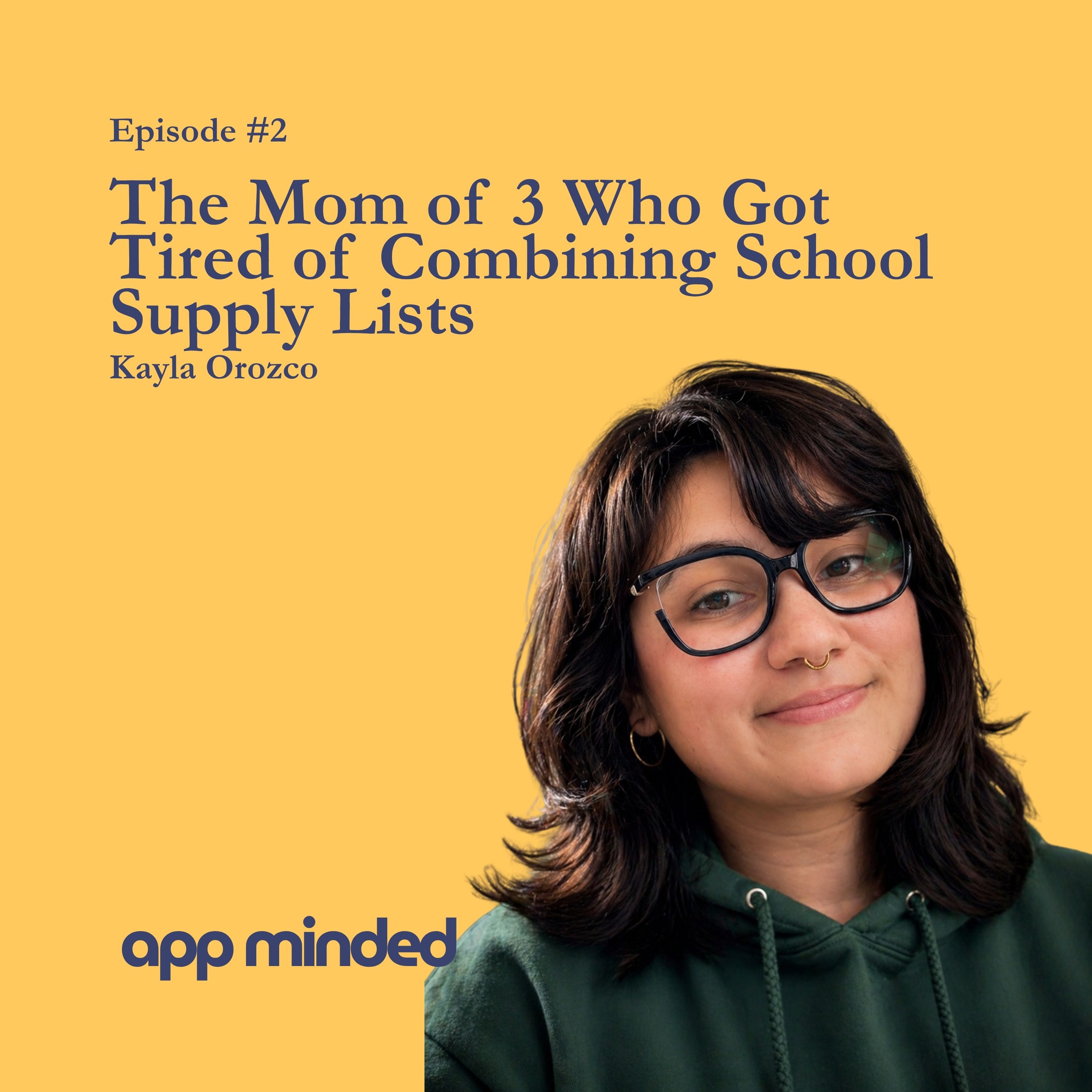
    How to Build First App With AI: She Got Tired of Combining School Supply Lists

    Kayla had never built an app before. Eight and a half weeks later, it was live in the App Store. Every year, three kids meant three school supply lists in three different formats. And every year, she did the mental work of merging them by hand. She got tired of it. So she built the fix. In this episode, Kayla Orozco walks through how a conversation designer with zero coding background shipped a real iOS app while working full-time and raising three kids. You'll hear: Why she chose iOS first, and how she decided app over website How Claude became her thinking partner and pushed back on her own scope creep The one mistake she'd undo (vibe coding everything into a single file) Her three rounds of testing, from low-fi prototype to TestFlight beta How she handled backend security when Instagram kept telling her vibe-coded apps get hacked The two-part pricing model she built, founding member first, subscription later What she'd tell you if you have an idea sitting in your notes app right now Her advice for anyone waiting for the "right time"? Try. Most people never do. Download her app at schoolsupply.app or search for it in the App Store and PlayStore.

    • Transcript
  • #1
    July 8 · 49 min

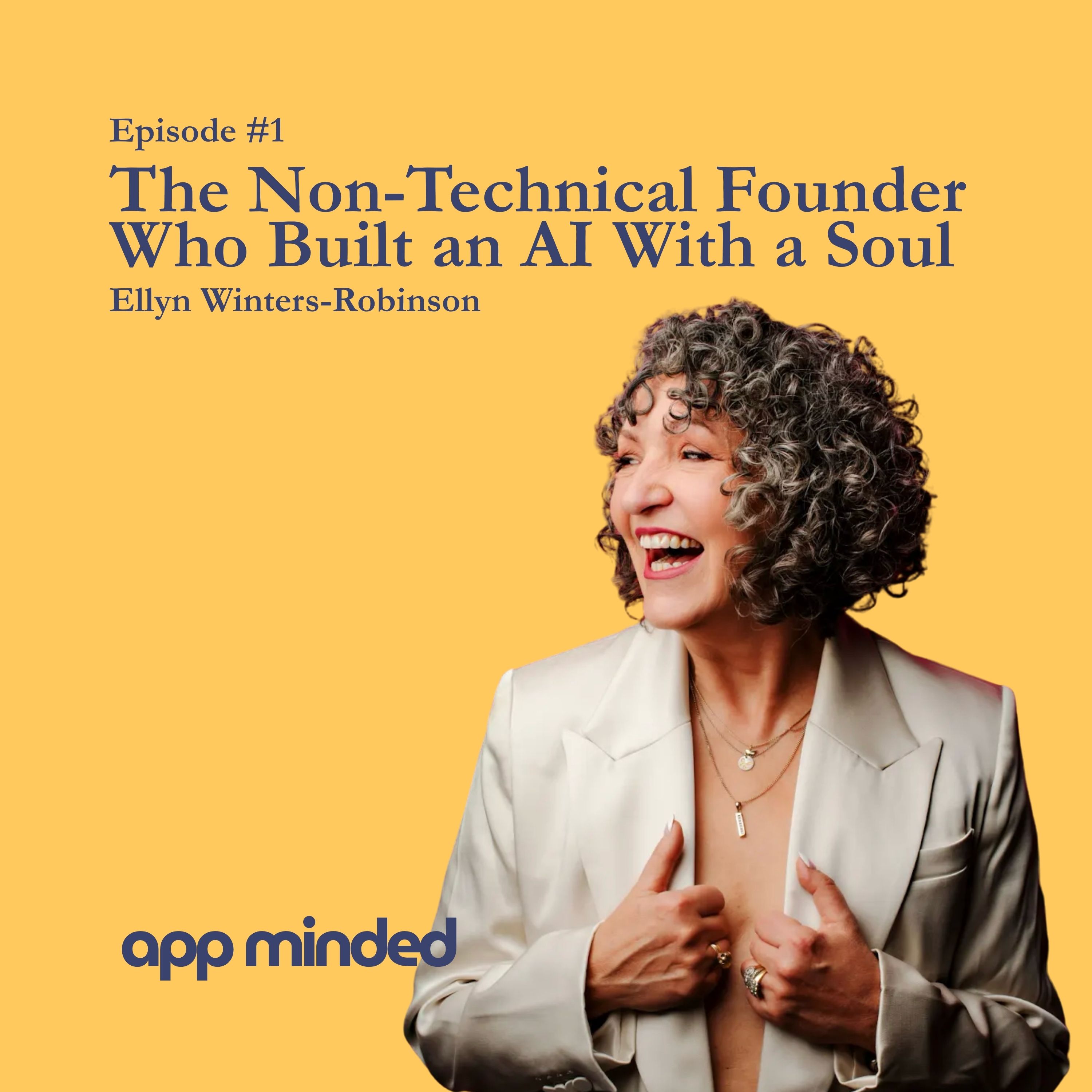
    The Non-Technical Founder Who Built an AI With a Soul

    Ellyn Winters-Robinson — tech marketer turned breast cancer patient turned founder of AskEllyn.ai, the first AI companion for people impacted by breast cancer. Ellyn Winters-Robinson spent her career in tech marketing — until a breast cancer diagnosis exposed a gap she couldn't ignore: patients get world-class medical treatment but almost no support for the emotional, day-to-day reality of the disease. So she built it herself. In this episode of App Minded, Ellyn shares how she went from patient to founder, building AskEllyn.ai, an AI companion designed specifically for people impacted by breast cancer. We talk about the neglect of women's health, why patients are becoming builders out of necessity, and what it actually takes to turn a personal crisis into a product that helps thousands of others. If you're curious about AI in healthcare, women's health innovation, or how founders build from lived experience, this one's for you.

    • Transcript
  • July 7 · 3 min

    Introduction

    Welcome to the first episode of App Minded. This is a slightly different episode because before we jump into conversations with other builders, I wanted to share my own story —how I went from never having written a line of code to building and shipping apps with AI. I’ll tell you why I started this podcast, what I learned along the way, and why I believe we’re at a moment where more people than ever can turn their ideas into real products. Let’s get into it. Connect with me on Instagram.

    • Transcript
Showing 1–9 of 9 episodes