Skip to content

Design

Every show filed under design, ranked by what listeners actually play.

537
shows
0
subcategories
10
new this week

Most subscribed

in design · refreshed hourly

Newest episodes

last seven days
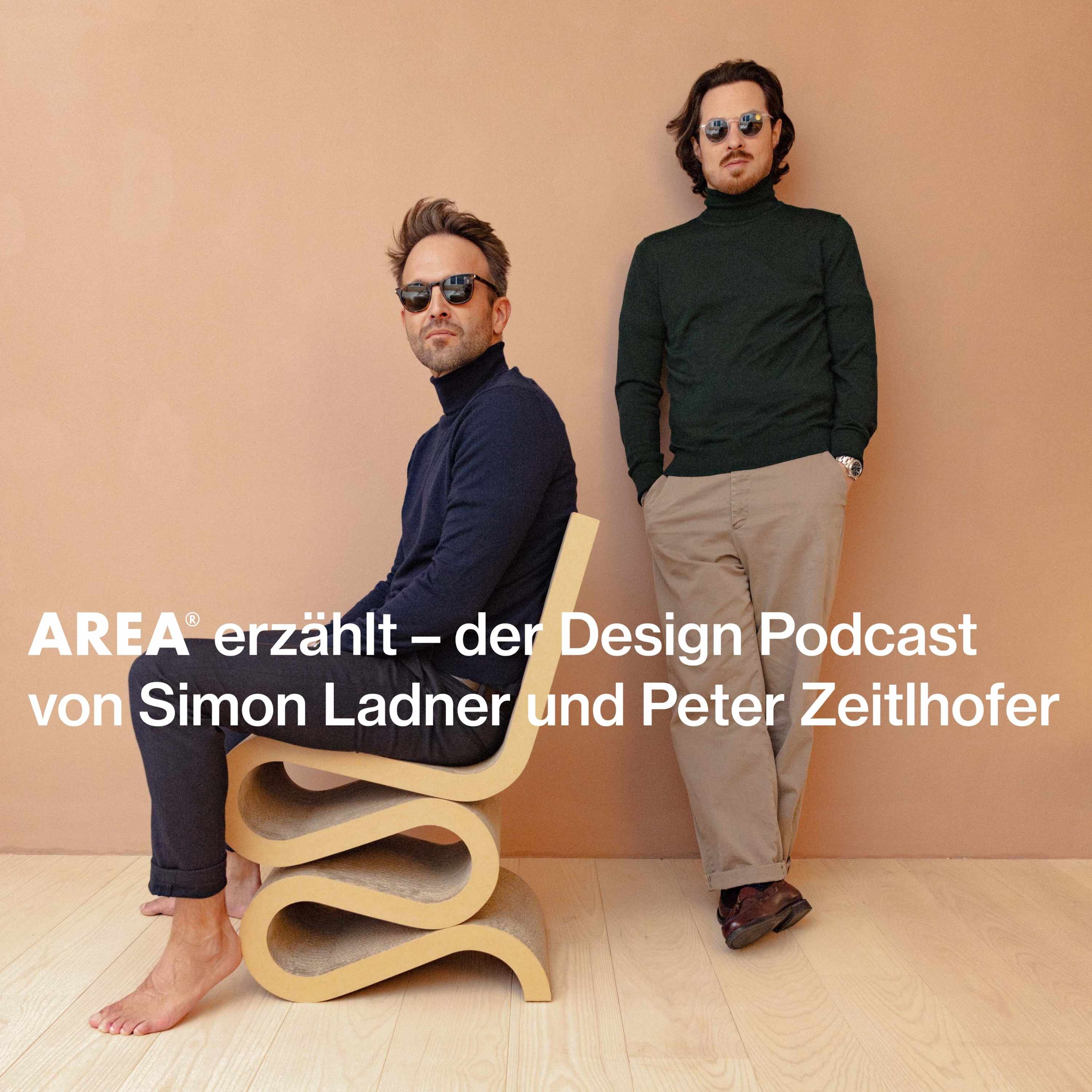
  • AREA erzählt - der Design Podcast

    #22 Jasper Morrison

    Warum gutes Design nicht schreien muss

    Yesterday · 1 hr 9 min
  • Build Beautiful

    The Breakdown That Became a Breakthrough — Alexandra Kidd on Rebuilding a Life and a Business

    Send us your feedback, thoughts or comments! Introduction In a small studio above McClay Street in Potts Point, Alexandra Kidd has spent more than 20 years shaping how Australian homes can feel. What began as a solo practice has grown, slowly and deliberately, into an all-women studio of twelve. But beneath the elegant, celebrated work sits a story most successful founders never tell: a breakdown at the end of 2018 that stopped her mid-conversation on a building site, and the slow, honest rebuild that followed. In This Episode, We Explore: * Her childhood roots in design, and the belief that a "perfect home" could heal a broken one * Scaling from one project to thirty, and holding every decision herself * The 2018 breakdown, and why a friend reframed it as a breakthrough * What twelve months of recovery actually looked like * The shame she carried, and speaking about it publicly for the first time * Rebuilding the business with real structure, delegation and boundaries * Launching her Atelier, a passion project in collectible glass, after 20 years in business Why This Conversation Matters Most founder stories celebrate the climb. This one is honest about the cost of it. Alexandra built one of Sydney's most respected design studios by believing she had to do everything herself, until her body made the decision for her. Her recovery wasn't about bouncing back. It was about becoming someone new, someone who asks for help, sets boundaries, and stays authentic in both business and life. About Alexandra Alexandra Kidd is the founder of her eponymous Sydney-based interior design studio, now an all-women team of twelve. In 2024, she launched Atelier, a passion project creating collectible, Australian-made glass lighting in collaboration with local artisans. 🎧 Listen to the full episode now. Follow @buildbeautiful_podcast for a new conversation every fortnight. Proudly supported by Tappeti Fine Hand-Crafted Rugs. To get in touch with Build Beautiful or to follow us head to our socials: on Instagram on Facebook on LinkedIn If you'd like to be on the podcast, or want to collaborate with Build Beautiful feel free to contact us on buildbeautifulpodcast@gmail.com.

    Yesterday · 44 min
  • Experience in Golf Clubhouse Design

    What Kuo Got Right, And What He Missed

    A Response to Howard Kuo's Essay on International Club Design Howard Kuo's Spring/Summer 2026 Forum essay argues that domestic private clubs have lessons to learn from international club models — and on several counts, he's correct. But the essay treats design as if design were the primary lever, when in reality it is a mid-level lever in a much larger system that includes business model, operational culture, labor economics, historical context, and membership identity. The stronger critique of the piece is not that any specific observation is wrong, but that the framework implies international design gestures are more transferable than they actually are — and that implication can lead clubs in directions their memberships do not want to go. Topics discussed: Kuo's central distinction between the hospitality-driven international model (where each amenity must function as a standalone revenue center) and the recurring-dues domestic model (where amenities serve member retention rather than individual profitability); the international club's obligation to design for first-time users versus the domestic club's reliance on member familiarity with the environment; Kuo's argument for elevating the domestic arrival sequence, and why the architecture of familiarity chronically under-serves even long-tenured members; the American grill room as an underappreciated design pattern that international clubs lack; hybrid social-work spaces as a genuine trend with real architectural implications; what Kuo stops short of exploring, including the gap between business models and imported design vocabularies, the cultural specificity of Beijing versus Algarve versus Riyadh versus Adriatic contexts being flattened into a single "international model," and the asymmetry between resort-scale new-build projects and constrained domestic renovations; what is actively missing from the argument, including the specific design gestures that do not transfer (service formality, staffing ratios built on lower international labor costs, regional architectural vocabularies that become pastiche when relocated); the risk that chasing the resort and destination model actively erodes the sense of belonging that defines the domestic club's value proposition; the role of inherited history and tradition in domestic renovation as a constraint and a value that international new-build projects are unencumbered by; why design that outpaces operational capacity makes shortfalls louder rather than quieter; and the three questions every board should ask before accepting an international reference — does the business model match, can the operational and staffing model be supported, and does the aesthetic vocabulary belong in this building. The takeaway: international references are prompts, not prescriptions. The real work is not identifying what a club in Portugal or Beijing does well — it is determining, project by project and club by club, which of those practices can be authentically adapted to a specific domestic club's identity, budget, membership, and history, and which will produce awkward imitation that the members feel even when they can't articulate why. Connect with us: LinkedIn: linkedin.com/in/egcd/ | Fountain: fountain.fm/show/yzI5IQdvhrChoCRj3htR

    Yesterday · 28 min
  • Café Horta

    Gaspard Melville - Bruxelles et l'Art Nouveau

    Gaspard Melville fait revivre l’histoire de Bruxelles à travers ses archives photographiques colorisées, offrant un nouveau regard sur une ville que l’on croit connaître. Dans la maison-atelier de Victor Horta, il remonte aux origines d’un mouvement q...

    Yesterday · 17 min

All Design537