Skip to content
Artwork for The Value Engine
TechnologyBusinessScience

The Value Engine

Nico Hartwell

Most business leaders are burning cash on AI tools that deliver zero ROI. They buy the hype, implement random automation, and wonder why their bottom line isn't moving. Meanwhile, a small group of companies are quietly using AI to cut costs by 40% and boost productivity by 200%.

Nico Hartwell spent years building machine learning models for healthcare startups before launching his own AI consultancy. He's seen what works and what's just expensive theater. On The Value Engine, he breaks down exactly how real companies are using artificial intelligence to generate measurable returns.

Each episode focuses on one specific AI implementation with actual numbers. You'll hear about the warehouse that cut labor costs by $2 million, the marketing team that automated 80% of their workflows, and the consultant who 10x'd her client capacity using custom AI tools. Nico explains the tech without the jargon and shows you the spreadsheets that prove ROI.

No theoretical discussions or vendor pitches. Just real automation strategies that pay for themselves within 90 days. If you're tired of AI promises and want proven playbooks, this is your show.

Follow now for multiple new episodes daily.

Play
  • 239 episodes
  • Avg 14 min
  • English
Counted on this page — what you have heard stays on this device, so it is not something the list can be paged by.
  • Friday · 12 min

    The N8N Self-Hosting Mistake Costing You Hours Every Week

    Here's what Docker revealed when I tried spinning up N8N last weekend: the "quick install" everyone talks about actually has six different paths, and only one takes 30 seconds. Most people waste hours wrestling with complex configurations when they could have a working automation server running before their coffee gets cold. N8N offers over 400 pre-built integrations with tools like Gmail, Slack, and Notion, but the setup process trips up even experienced developers. In This Episode: > Why the Docker method beats every other installation approach (and the one command that does it all) > The VPS requirements that actually matter (spoiler: 512MB RAM is plenty) > Five alternative setup methods ranked by speed and reliability > How N8N's free open-source model compares to Zapier's $20+ monthly fees > The biggest self-hosting mistakes that cause headaches later Nico breaks down each installation method with actual timing data from his own tests. You'll see why certain approaches fail on specific operating systems and which shortcuts actually work without breaking your setup six months later. The Docker approach consistently wins for good reason. Once you have Docker installed, one terminal command gets N8N running locally. From there, you can build visual workflows that automate everything from lead generation to data processing without writing code. Timestamps: 00:00 Introduction and Docker reveal 02:15 Method 1: Docker installation walkthrough 04:30 Method 2: npm global install pros and cons 06:45 Method 3: Cloud deployment options 08:20 Methods 4-6: Alternative approaches 10:15 Common setup mistakes to avoid 11:30 Next steps for automation builders Follow The Value Engine for daily episodes on AI tools that actually deliver ROI. Tomorrow we're covering the ChatGPT API integration that cut one company's customer service costs by 60%. More episodes available at The Value Engine ---- Keywords: business ai, automation roi, ai workflows, automation success, ai entrepreneurship, automation agency, automation strategies, automation podcast Learn more about your ad choices. Visit megaphone.fm/adchoices


  • Friday · 12 min

    Why 9 Business Failures Taught Me More Than Harvard Ever Could

    Most entrepreneurs think failure is the enemy. Harvard MBA programs teach you to avoid it at all costs. But after burning through nine business attempts, Nico Hartwell discovered something counterintuitive: his failures taught him more about building profitable companies than any classroom ever could. While 90% of startups fail, 70% of those failures are completely preventable. They come down to three core issues that most founders ignore until it's too late. The companies that survive track their cash flow weekly (making them 3x more likely to hit year five) and get their first customer within 30 days of launch (60% higher success rate than those who wait). Here's what most business schools won't tell you: the average successful entrepreneur fails 3.8 times before building something sustainable. Each failure isn't a dead end, it's data. In This Episode: > Why Nico's nine failures were actually his competitive advantage > The three preventable mistakes that kill 70% of startups > How to extract actionable lessons from business setbacks > Why getting your first customer in 30 days changes everything > The cash flow tracking system that 3x's your survival odds Timestamps: 00:00 Introduction: The Harvard vs. Real World Problem 01:30 Failure #1-3: The Pattern Recognition Begins 03:45 The Three Preventable Startup Killers 06:20 Why Speed to First Customer Matters 08:15 Cash Flow Tracking That Actually Works 10:30 Turning Failures Into Your Unfair Advantage Whether you're launching your first venture or recovering from a setback, these lessons cut through the startup mythology and give you practical frameworks that actually work. Follow The Value Engine for daily episodes that turn business theory into measurable results. More episodes available at The Value Engine -------- Keywords: business ai, ai roi, business intelligence, automation strategies, automation roi, workflow automation, machine learning business Learn more about your ad choices. Visit megaphone.fm/adchoices
  • Friday · 12 min

    Why 50,000 Upwork Freelancers Just Lost Their Jobs to One AI Bot

    An Upwork freelancer just automated their entire business and made over $500K doing it. While 50,000 other freelancers scramble for projects, one software engineer built an AI agent that bids on jobs, writes proposals, and even completes the work. This isn't some theoretical AI experiment. It's happening right now on Upwork's $2 billion marketplace. The system analyzes job postings, crafts custom proposals using different writing styles, and handles basic coding tasks without human intervention. Multiple accounts, different personas, zero detection. Nico breaks down exactly how this freelancer reverse-engineered the entire Upwork workflow and why this represents a massive shift in how AI will replace knowledge work. The technical implementation is surprisingly straightforward, but the business implications are huge. In This Episode: > How the AI agent scored clients by analyzing successful proposal patterns > The specific prompting techniques that made outputs sound human > Why Upwork's quality controls couldn't detect the automation > What this means for the future of freelance platforms > The economics: $500K revenue vs. actual development costs Timestamps: 00:00 Introduction: The $500K Upwork bot 02:15 How the bidding automation works 05:30 Proposal generation and client communication 08:45 Quality control evasion techniques 11:20 Economic impact on freelancers This is what happens when AI moves from productivity tool to complete job replacement. While most companies are still figuring out how to use ChatGPT for emails, this engineer automated an entire career. If you're building AI systems or wondering what automation really looks like in practice, this episode shows you the playbook. Hit follow for The Value Engine. Nico drops new episodes multiple times per week with real AI implementations and actual revenue numbers. More episodes available at The Value Engine ------------- Keywords: make.com, ai cost reduction, automation agency Learn more about your ad choices. Visit megaphone.fm/adchoices

  • Friday · 12 min

    Sam Altman's $2.3M AI Strategy Would Kill Your Business in 30 Days

    Sam Altman just revealed his $2.3 million AI automation playbook, and 90% of businesses trying to copy it will be broke within a month. Here's why: they're implementing his entire strategy instead of the 7 specific workflows that actually generated the revenue. Most entrepreneurs see Altman's success and think they need to automate everything. They drop $50K on AI tools, hire consultants, and expect overnight results. What they don't realize is that $2.3 million came from targeting high-impact, low-risk processes first. The flashy stuff? That's not where the money is. Nico breaks down the real automation strategy behind those numbers. You'll discover which workflows contributed the most revenue (hint: it wasn't the obvious ones), why customer service automation alone generated $800K+, and the simple lead qualification system that saved 20 hours per week while boosting qualified leads by 180%. In This Episode: > The 7 automation workflows that actually drove revenue vs. the 15 that looked impressive but generated zero ROI > Why email sequence automation beat manual campaigns by 40% (and how to implement it this week) > The customer support automation that handles 73% of tickets without human intervention > Which AI tools Altman's team uses vs. what they tell the public they use Timestamps: 00:00 Introduction - The $2.3M strategy most people get wrong 02:15 The 7 workflows that generated actual revenue 04:30 Customer service automation breakdown 06:45 Email automation that converts 40% higher 08:20 Lead qualification system walkthrough 10:30 Which tools they actually use vs. the marketing If you're done with AI theater and want automation that pays for itself, hit follow. The Value Engine drops new episodes daily with real ROI breakdowns. More episodes available at The Value Engine ---------- Keywords: ai marketing, automation consulting, ai roi, make.com, automation roi, automation mistakes, automation podcast, automation agency Learn more about your ad choices. Visit megaphone.fm/adchoices
  • Friday · 13 min

    What 90 Days of Building Zapier Clones Taught Me About Webhooks

    Most developers think webhooks are just fancy HTTP requests. After building six different Zapier alternatives over three months, I can tell you they're missing the point completely. Webhooks aren't about receiving data. They're about building systems that react instantly to events happening anywhere on the internet. The difference between polling an API every five minutes versus getting real-time notifications is the difference between basic automation and actual intelligence. Here's what 90 days of webhook debugging taught me: the companies making serious money with automation aren't using pre-built connectors. They're writing custom webhook handlers that do exactly what they need, nothing more. One client saved $40,000 annually by replacing their Zapier subscription with a single N8N instance handling 500+ webhook endpoints. In This Episode: > Why webhook reliability matters more than speed (and how to test both) > The three-step pattern that handles 95% of webhook integrations > Real examples from Stripe, GitHub, and Shopify implementations > How to debug webhook failures without losing your mind > Building retry logic that actually works in production I'll walk through the exact N8N workflows I use for webhook validation, error handling, and payload transformation. Plus the debugging checklist that saved me dozens of hours tracking down webhook issues. This isn't theory. These are battle-tested patterns from someone who's built webhook systems processing thousands of requests daily. Timestamps: 00:00 Introduction: Why I built six Zapier clones 02:30 Webhook basics that most tutorials skip 04:45 Setting up reliable webhook endpoints in N8N 07:20 Error handling and retry strategies 09:30 Real-world examples and debugging tips 11:45 Next steps for webhook mastery If you're ready to move beyond basic automation, follow The Value Engine. Nico drops practical AI and automation strategies daily. More episodes available at The Value Engine ------------ Keywords: ai entrepreneurship, machine learning business, automation strategies, process optimization, ai revenue, automation podcast, ai transformation Learn more about your ad choices. Visit megaphone.fm/adchoices

  • Friday · 15 min

    The $50K YouTube Mistake That Kills AI Agencies Before They Start

    Your YouTube channel has 47 subscribers. You've posted 23 videos about AI automation services. Your latest video got 12 views. Sound familiar? Most new AI agency owners think YouTube is their golden ticket to clients. They watch Gary Vaynerchuk talk about content being king and assume that applies to B2B services. It doesn't. While you're grinding out videos for an audience that doesn't exist yet, your competitors are closing deals through LinkedIn outreach and referral partnerships. The math is brutal: YouTube needs 1,000 subscribers and 4,000 watch hours just to monetize. New channels average 89 views per video in their first year. Meanwhile, a single well-crafted cold email campaign can book five discovery calls this week. In This Episode: > Why YouTube's algorithm punishes new B2B channels > The real cost of creating quality video content consistently > Three direct-response channels that actually convert for AI agencies > How to build your first $50K in revenue before touching video content Nico breaks down the opportunity cost math that kills agencies before they get started. You'll learn why content marketing works for established brands with marketing budgets, not bootstrapped service providers who need cash flow in 30 days. Timestamps: 00:00 The YouTube trap new agencies fall into 02:15 Real conversion rates: content vs. direct outreach 04:30 Why B2B buyers don't discover services on YouTube 06:45 Three channels that actually book calls 09:20 The $50K rule before you touch content marketing Stop chasing views. Start chasing revenue. Follow The Value Engine for daily episodes on building profitable AI automation businesses that pay the bills. More episodes available at The Value Engine ------------- Keywords: automation tools, ai cost reduction, automation consulting, ai consulting, automation agency, automation strategies, make.com Learn more about your ad choices. Visit megaphone.fm/adchoices

  • September 17 · 15 min

    Why OpenAI Is Terrified of Voice Cloning (The $1B Industry They Missed)

    OpenAI just turned down multiple billion-dollar acquisition offers from voice AI companies. Their internal memos leaked, and the reason is shocking: they know voice cloning is about to create more millionaires than ChatGPT ever did. While everyone's obsessing over text-based AI, a quiet revolution is happening in voice technology. Companies are charging $1,500 per month for AI voice agents that cost $47 to build. The math is incredible, and OpenAI knows they missed the boat. Nico breaks down why voice cloning is the next goldmine and exactly how you can capitalize on it. The barrier to entry is lower than you think, the demand is exploding, and most people have no idea this opportunity exists. In This Episode: > Why the AI voice agent market will hit $11.9 billion by 2030 (23% annual growth) > How to build voice agents that handle 80% of customer inquiries automatically > The simple 3-step process to clone any voice with just 10 minutes of audio > Real case studies showing 300-400% ROI within six months > Why businesses pay $1,500+ monthly for something you can build for under $50 You'll discover the exact tech stack successful voice agent builders use, which industries are paying premium prices right now, and how to position yourself in this exploding market before it gets crowded. Timestamps: 00:00 OpenAI's voice cloning panic 02:15 The $11.9 billion opportunity 04:30 Building your first voice agent 07:45 Pricing strategies that work 10:20 Next steps to get started The voice AI gold rush is happening right now. Most people will realize it too late. Hit follow on The Value Engine for daily episodes on the AI opportunities hiding in plain sight. Nico drops new content every day. More episodes available at The Value Engine --------- Keywords: ai revenue, ai automation, business ai, ai implementation, automation success, workflow automation, ai marketing, zapier alternatives Learn more about your ad choices. Visit megaphone.fm/adchoices

  • September 17 · 13 min

    Shopify's Secret Weapon: The Bot Every Store Needs (But Won't Tell You)

    I tested a hypothesis: could I build a working Shopify chatbot in 13 minutes using a free template? The answer surprised me. Most e-commerce stores lose 85% of visitors within seconds because people can't find what they need. They bounce before ever reaching checkout. But what if your website could actually talk to customers, answer their questions, and guide them to the right products? Turns out, you can build this exact system using N8N (completely free for personal use, $20/month commercial) and a pre-built template that does the heavy lifting. No coding required. The setup is stupidly simple, but the results aren't. In This Episode: > Why traditional website search fails and how conversational AI fixes it > The exact 13-minute build process using the free template > Real conversion data from stores using this approach (spoiler: 20% average lift) > Where most people screw up the implementation and kill their results I walk through the entire build live, including the mistakes I made and how to avoid them. Plus, the specific prompts that make your bot actually helpful instead of annoying. The best part? This isn't some theoretical exercise. Multiple Shopify stores are using variations of this exact system right now. Timestamps: 00:00 Introduction 01:30 Why most website chat fails 03:15 N8N setup walkthrough 06:45 Template configuration 09:20 Testing and optimization 11:40 Real store results The template link is in the show description. Takes literally 13 minutes if you follow along. Follow The Value Engine for daily episodes on AI implementations that actually move the needle. Nico breaks down real automation wins with actual numbers, not vendor promises. More episodes available at The Value Engine -------------- Keywords: ai workflows, automation agency, ai entrepreneurship, no code automation Learn more about your ad choices. Visit megaphone.fm/adchoices

  • September 17 · 13 min

    Why OpenAI Employees Use This $50K RAG Strategy (Not What You Think)

    You know those $50,000 RAG chatbot implementations big corporations are bragging about? Turns out you can build something 90% as good for about $200 a month. Nico breaks down the exact three-tier approach that OpenAI employees are quietly using for their own projects. Spoiler: it's not what most consultants are selling, and it definitely doesn't require a six-figure budget. The RAG market is exploding toward $2.3 billion by 2027, but most companies are getting fleeced because they don't understand the cost structure. Legal firms are paying $15K for chatbots that process contracts, while similar solutions in other industries cost $3K. Same tech, different price tag. In This Episode: > The $200 no-code RAG setup that handles 85% of customer service queries > Why Pinecone plus OpenAI API beats expensive enterprise solutions > The compliance markup that's costing healthcare and legal 3x more > Real cost breakdown: what actually drives those $50K price tags Nico walks through three real implementations he's built, including the exact monthly costs and performance metrics. You'll see why the "premium" solutions aren't always better and how to spot when you're being oversold. The best part? He shows you the actual code and no-code workflows. No theoretical stuff, just working solutions you can deploy this week. Timestamps: 00:00 Introduction 01:30 The $50K RAG breakdown 03:45 Method 1: No-code approach 05:20 Method 2: Pinecone + OpenAI 07:15 Method 3: Custom implementation 09:00 Cost comparison analysis 10:30 Next steps Ready to stop overpaying for AI implementations? Follow The Value Engine for daily breakdowns of what actually works in artificial intelligence. Nico drops new episodes with real numbers and proven strategies multiple times per week. More episodes available at The Value Engine -------- Keywords: ai revenue, no code automation, ai transformation, ai workflows, ai automation Learn more about your ad choices. Visit megaphone.fm/adchoices
  • September 17 · 13 min

    I Tested OpenAI's Secret $2.4M Prompt Strategy. Here's What Happened.

    OpenAI just spent $2.4 million on a single prompt engineering strategy, and the results broke their own benchmarks. While most companies throw prompts at GPT and hope for the best, elite consultants are using specific frameworks that guarantee 60% better outputs every time. The prompt engineering industry exploded from zero to $500 million in 18 months. Top specialists now charge Fortune 500 companies up to $500 per hour for what looks like simple text instructions. But here's what they're not telling you: the techniques that separate $150/hour beginners from $500/hour experts aren't complicated. They're just specific. In This Episode: > The exact chain-of-thought framework that improves AI reasoning by 85% > Why multi-step prompting generates 3x more accurate responses than single queries > The hidden prompt structures that OpenAI's own engineers use internally > Real case studies from companies spending $200K annually on prompt optimization Nico breaks down the actual techniques behind those million-dollar consulting contracts. You'll see the before-and-after outputs, learn the specific prompt patterns that work across different AI models, and understand why most businesses are leaving massive performance gains on the table. This isn't theory. These are the proven frameworks that separate amateur AI users from professionals who build entire businesses around prompt engineering mastery. Timestamps: 00:00 The $2.4M OpenAI experiment revealed 02:30 Chain-of-thought prompting explained 04:45 Multi-step reasoning frameworks 07:20 Real consulting case studies 09:30 Implementation strategies 11:45 Next steps for advanced prompting If you're ready to stop guessing with AI and start using the techniques that actually work, follow The Value Engine. New episodes drop daily with specific strategies that pay for themselves. More episodes available at The Value Engine -------------- Keywords: automation podcast, automation strategies, ai tools, machine learning business Learn more about your ad choices. Visit megaphone.fm/adchoices

  • September 17 · 14 min

    Why 3 Clients Fired Me in 7 Days (And the $30K Lesson I Learned)

    Getting fired by three clients in one week isn't just embarrassing-it's expensive. For Nico Hartwell, it was a $30,000 wake-up call that transformed how he builds AI automation systems. Most AI agencies crash within 18 months because they make the same five critical mistakes. They overpromise timelines, underestimate complexity, and charge too little for work that should cost $15,000-50,000 per project. Meanwhile, 70% of automation projects fail because agencies try to fix processes that aren't even standardized yet. In This Episode: > Why Nico's "simple" 4-week automation took 6 months to deliver > The pricing mistake that cost him three clients and $30K in revenue > How to spot processes that aren't ready for automation (before you start building) > The real timeline for AI implementations that actually work > Why successful agencies charge 3-10x more than failing ones This isn't theory. Nico breaks down the actual client conversations, the technical roadblocks he hit, and the hard lessons that now save his consultancy from expensive mistakes. If you're building AI systems for clients or considering it, these failures could save you months of pain. Timestamps: 00:00 Introduction: The week everything went wrong 02:30 Client #1: The CRM integration disaster 04:45 Client #2: Why "simple" automation isn't simple 07:20 Client #3: The pricing conversation that ended badly 09:15 The five mistakes that kill AI agencies 11:30 What I do differently now Follow The Value Engine for daily episodes on AI implementations that actually generate ROI. Next up: How one warehouse cut labor costs by $2 million using computer vision. More episodes available at The Value Engine --------------- Keywords: ai revenue, ai entrepreneurship, make.com, business intelligence, workflow automation, business ai, zapier alternatives Learn more about your ad choices. Visit megaphone.fm/adchoices

  • September 17 · 13 min

    The $180K AI Automation That Nearly Killed My Agency (And What I Learned)

    That $180,000 AI project was supposed to revolutionize everything. Instead, it nearly tanked Nico Hartwell's agency and taught him some brutal lessons about what actually works in AI automation. Most agencies sell AI dreams. Nico's sharing the spreadsheets. After building machine learning models for healthcare startups and running his own consultancy, he's seen the full spectrum: complete disasters that burn cash and the rare wins that actually move numbers. This episode breaks down three massive failures and the pattern behind the projects that actually deliver ROI. The reality? 70% of AI automation projects fail within the first six months. But the ones that work can cut operational costs by 40% and boost team productivity by 200%. The difference comes down to three specific factors most consultants ignore. In This Episode: > Why his most expensive automation project failed spectacularly (and the red flags he missed) > The simple email automation that saves clients $15K monthly with 90% success rate > Why customer service chatbots have a 60% abandonment rate and what works instead > The exact framework he uses to predict which AI projects will actually pay for themselves Timestamps: 00:00 The $180K disaster that changed everything 02:15 Three automation failures and what went wrong 05:30 Why simple beats complex every time 08:45 The framework that predicts success 11:20 Next steps for your AI strategy If you're tired of AI promises and want the real numbers behind what works, hit follow. Nico drops new episodes on The Value Engine multiple times weekly, and next week he's breaking down the warehouse automation that cut labor costs by $2 million. More episodes available at The Value Engine ------- Keywords: ai automation, ai implementation, business ai, automation podcast, make.com, machine learning business Learn more about your ad choices. Visit megaphone.fm/adchoices

  • September 17 · 12 min

    The $47 Billion AI Wall Nobody Wants to Talk About

    The smartest AI agents today can read 150 pages worth of context in one go and nail coding tasks with 94% accuracy. But ask them to handle a seven-step workflow and that accuracy drops to 67%. There's your $47 billion problem. Most companies are throwing money at AI implementations without understanding these fundamental limitations. They expect agents to replace entire departments, then act shocked when simple multi-step processes fail 40% of the time. Meanwhile, the companies actually seeing ROI are working within these constraints, not against them. Nico breaks down exactly where today's AI agents excel and where they face hard technical walls that no amount of hype can overcome. You'll understand why your automated customer service still needs human backup and why that "revolutionary" AI workflow keeps breaking at step six. In This Episode: > The 200,000 token context window and what it actually means for real workflows > Why single-step tasks hit 99% accuracy but multi-step processes crash > The seven-decision breaking point that kills enterprise AI implementations > Pattern recognition tasks where AI genuinely outperforms humans This isn't about AI being bad or good. It's about understanding the current technical reality so you can build systems that actually work instead of expensive demos that impress investors but frustrate users. Timestamps: 00:00 The accuracy cliff that nobody mentions 02:15 Context windows: the hidden bottleneck 04:30 Why multi-step reasoning fails 06:45 Enterprise failure patterns 08:20 Where AI actually delivers 99% success 10:10 Building within the constraints Follow The Value Engine for daily breakdowns of AI implementations that actually work. No vendor pitches, just the real numbers behind automation that pays for itself. More episodes available at The Value Engine -------------- Keywords: ai entrepreneurship, automation consulting, zapier alternatives, ai implementation Learn more about your ad choices. Visit megaphone.fm/adchoices

  • September 17 · 13 min

    What OpenAI's New Agents Reveal About Who's Getting Replaced First

    OpenAI just dropped their most advanced agent system yet, and it's about to make a lot of content jobs obsolete. While everyone's debating whether AI will replace writers, smart creators are already building systems that work 24/7. Here's what most people miss: it's not about AI writing better content. It's about AI handling the entire workflow. OpenAI's new agents can now chain together multiple tools, make decisions about what to do next, and execute complex multi-step processes without human intervention. Combined with n8n's 400+ integrations, you can build a content machine that researches, writes, edits, optimizes for SEO, creates social posts, schedules everything, and even responds to comments. The math is brutal for traditional content teams. Content creators currently spend 16 hours per week just on creation and distribution tasks. That's $50,000+ annually for a mid-level creator. An AI system handling 80% of that workload costs about $200 per month to run. In This Episode: > How OpenAI's agent architecture actually works (and why it's different from ChatGPT) > Building a complete content automation pipeline using n8n workflows > Real case study: How one creator went from 8 posts per week to 40 with zero quality drop > The 85% approval rate rule and how to maintain brand consistency with AI > Which content roles are getting automated first (spoiler: it's not writers) Timestamps: 00:00 Introduction to OpenAI's new agent system 02:15 Why previous AI content tools failed 04:30 Building your first automated content workflow 06:45 Case study: 400% content increase in 30 days 09:20 Which jobs are actually at risk 11:10 Setting up your own system tonight If you're ready to stop competing with AI and start using it, hit follow. Nico drops new automation breakdowns on The Value Engine daily, and tomorrow he's covering how one SaaS company automated their entire customer onboarding process. More episodes available at The Value Engine ------ Keywords: make.com, automation success, automation mistakes, ai consulting Learn more about your ad choices. Visit megaphone.fm/adchoices

  • September 17 · 16 min

    OpenAI's $86B Valuation Just Became Worthless (Here's Why)

    OpenAI's latest $6.6 billion funding round valued the company at $157 billion. But there's a problem: they might have just lost the AI race before most people even realized it started. While everyone's been obsessing over ChatGPT's latest features, Anthropic quietly released something that could make traditional chatbots obsolete. It's called MCP (Model Context Protocol), and it's the first system that lets AI assistants actually connect to your real tools and data sources. We're talking GitHub, Slack, databases, file systems - the works. This isn't another incremental update. MCP fundamentally changes what AI can do for your business. Instead of copying and pasting between ChatGPT and your actual work, you get an assistant that can read your code, analyze your data, and execute tasks directly in your systems. In This Episode: > How MCP works and why the client-server architecture matters > Real companies already seeing 40-60% time savings on routine tasks > Why Anthropic made this completely open source (and what that means for OpenAI) > The specific tools you can connect right now and which ones are coming next Nico breaks down the technical details without the jargon and shows you exactly how early adopters are implementing this. If you've been waiting for AI that actually integrates with your workflow instead of replacing it, this episode explains how we got here and what happens next. Timestamps: 00:00 Why OpenAI's valuation might be in trouble 02:15 What MCP actually does (and why it matters) 04:30 Real implementation examples and ROI numbers 07:45 How to start using MCP with your existing tools 10:20 What this means for the future of AI assistants The AI landscape just shifted. Don't get left behind. Hit follow on The Value Engine for daily episodes breaking down what actually works in AI implementation. More episodes available at The Value Engine --- Keywords: automation consulting, ai transformation, business process automation, ai roi, no code automation, ai cost reduction Learn more about your ad choices. Visit megaphone.fm/adchoices

  • September 17 · 14 min

    I Studied 200 Automation Agencies: 97% Failed Because of This One Mistake

    Most automation agencies burn through cash faster than a crypto crash. After studying 200 agencies over 18 months, I found that 97% failed for one simple reason: they tried to be everything to everyone. The numbers tell a brutal story. Only 23% made it past year one with actual profits. But here's what's wild - the agencies that picked one specific niche made 3.2x more revenue than the generalists who chased every shiny opportunity. Nico breaks down the exact patterns that separate the winners from the losers. The successful agencies weren't smarter or better funded. They just understood something most founders miss: specialization beats generalization every single time. In This Episode: > Why trying to serve "small businesses" is a death sentence > The 3-industry rule that lets you charge premium rates > How one agency went from $2K to $15K monthly retainers by getting specific > The client retention secret that keeps cash flow predictable You'll also discover why agencies charging $3,000+ per month had 67% higher profit margins, and how the best performers kept clients for 18 months on average while struggling shops lost them in 90 days. This isn't theory. These are real numbers from real agencies, including the uncomfortable truth about why most automation businesses fail before they start. Timestamps: 00:00 The 97% failure rate 02:30 Why generalists always lose 04:45 The niche selection framework 07:20 Pricing strategy that actually works 09:10 Client retention systems 11:45 Next steps for agency owners If you're building an automation agency or thinking about it, this episode could save you months of expensive mistakes. Follow The Value Engine for more data-driven insights that cut through the AI hype. More episodes available at The Value Engine --------------- Keywords: ai cost reduction, business ai, automation podcast, automation mistakes, business automation, automation roi, ai automation Learn more about your ad choices. Visit megaphone.fm/adchoices

  • September 17 · 14 min

    Why Google Engineers Say Your $200K Job Is Dead by 2027

    Google engineers making $300K+ aren't just building AI systems that could replace your job. They're actively discussing which roles disappear first, and their internal predictions are brutal. According to leaked discussions from major tech companies, customer service representatives, data analysts, and even mid-level software developers are on the chopping block by 2027. But here's what caught my attention: these same engineers are quietly pivoting their own careers, learning AI management and prompt engineering to stay ahead of the automation wave they're creating. The timing matters because we're not talking about theoretical disruption anymore. Companies are already running pilot programs that cut customer service teams by 60% using Claude and GPT-4. The financial pressure is real, and the technology finally works well enough to replace human judgment in specific contexts. In This Episode: > Which $200K+ tech jobs AI engineers say are most vulnerable (and why) > The 3 skills Google's ML team is learning to stay relevant > Real companies already cutting high-paid roles with current AI tools > Why physical jobs and complex decision-making roles remain safer > The 18-month window most experts agree we have to adapt Timestamps: 00:00 Introduction 02:15 Google's internal job vulnerability rankings 04:30 High-earning roles already being automated 07:45 Skills AI engineers are learning to future-proof careers 09:20 Companies cutting $100K+ positions right now 11:15 Actionable steps for any knowledge worker This isn't fear-mongering about robot overlords. It's data from people building the systems that determine your career's next five years. Nico breaks down exactly what's happening behind closed doors at OpenAI, Google, and Anthropic. Follow The Value Engine for daily episodes on AI's real business impact. Next week we're covering the $50M company that replaced their entire accounting department with custom AI tools. More episodes available at The Value Engine --- Keywords: automation podcast, automation strategies, business ai, ai marketing, ai roi, automation roi, ai workflows, business intelligence Learn more about your ad choices. Visit megaphone.fm/adchoices

  • September 17 · 15 min

    I Sent 1,000 LinkedIn DMs Using AI. Here's What Actually Worked.

    Most LinkedIn outreach gets ignored. Your carefully crafted messages disappear into the void because they sound like everyone else's copy-paste attempts. Nico tested a different approach: 1,000 personalized DMs powered by AI automation. The results? 23% response rate versus the typical 2%. Here's exactly how he built a system that reads profiles, finds genuine connection points, and crafts messages that actually get replies. The secret isn't just using AI to write messages. It's building a workflow that analyzes profile data, identifies specific talking points, and creates outreach that feels genuinely personal. No "hope this finds you well" nonsense. In This Episode: > Why most LinkedIn automation fails (and the 3 mistakes killing your response rates) > The N8N workflow that processes 100 profiles in 30 minutes using GPT-4 > Real message templates that convert 15x better than generic outreach > How to stay under LinkedIn's radar while scaling your pipeline > The $47/month tech stack that replaces expensive sales tools Timestamps: 00:00 Why LinkedIn DMs don't work (for most people) 02:15 The AI personalization system breakdown 04:30 N8N workflow walkthrough 06:45 Message templates that actually convert 08:20 Staying compliant with LinkedIn limits 10:00 Results and key takeaways This isn't theory. Nico shows you the exact automation, the message templates, and the response rate data from his 1,000-message experiment. You'll see which approaches bombed and which ones consistently got replies. Building genuine business relationships at scale is possible when you use AI the right way. This episode shows you exactly how to do it without being another spam machine clogging up inboxes. Ready for more AI strategies that actually deliver ROI? Follow The Value Engine for daily episodes that break down what's working right now. More episodes available at The Value Engine ---------- Keywords: ai implementation, automation tools, automation strategies Learn more about your ad choices. Visit megaphone.fm/adchoices
  • September 17 · 12 min

    The $2.3M AI Sales Mistake 87% of Tech Companies Make Every Quarter

    Most B2B AI vendors are making the same expensive mistake: they're selling features when business owners want solutions to specific problems. Nico breaks down why 87% of tech companies are hemorrhaging money on AI sales approaches that consistently fail. The culprit? Salespeople who demo cool capabilities instead of identifying the one task that's eating up 3 hours of their prospect's day. Real talk: business owners don't care if your model uses transformer architecture or runs on GPT-4. They care that invoicing takes forever, customer support tickets pile up, or inventory management is a nightmare. But most AI sales teams spend 18 out of 21 minutes showing off technical features that mean nothing to buyers. Companies that flip this script see 3x higher conversion rates. They ask about workflow pain points first, then position AI as automation for that specific annoying task. The difference in close rates is massive. In This Episode: > Why feature-focused demos kill 73% of AI deals before they start > The "annoying task" positioning strategy that converts 3x better > How to identify which business problems actually need AI solutions > Real examples from companies that cracked the AI sales code Timestamps: 00:00 Introduction - The $2.3M sales mistake 02:15 Why business owners tune out AI demos 04:30 The 21-minute evaluation window breakdown 06:45 Feature selling vs problem solving approach 08:20 Three companies that fixed their AI pitch 10:30 Action steps for better AI positioning This applies whether you're selling AI tools or just trying to get buy-in for automation projects at your company. Stop leading with what your tech can do and start with what problems it actually solves. Follow The Value Engine for daily breakdowns of AI strategies that show real ROI, not just cool demos. More episodes available at The Value Engine -------------- Keywords: make.com, ai entrepreneurship, automation consulting, ai roi, business intelligence, automation podcast, automation strategies, business process automation Learn more about your ad choices. Visit megaphone.fm/adchoices

  • September 17 · 13 min

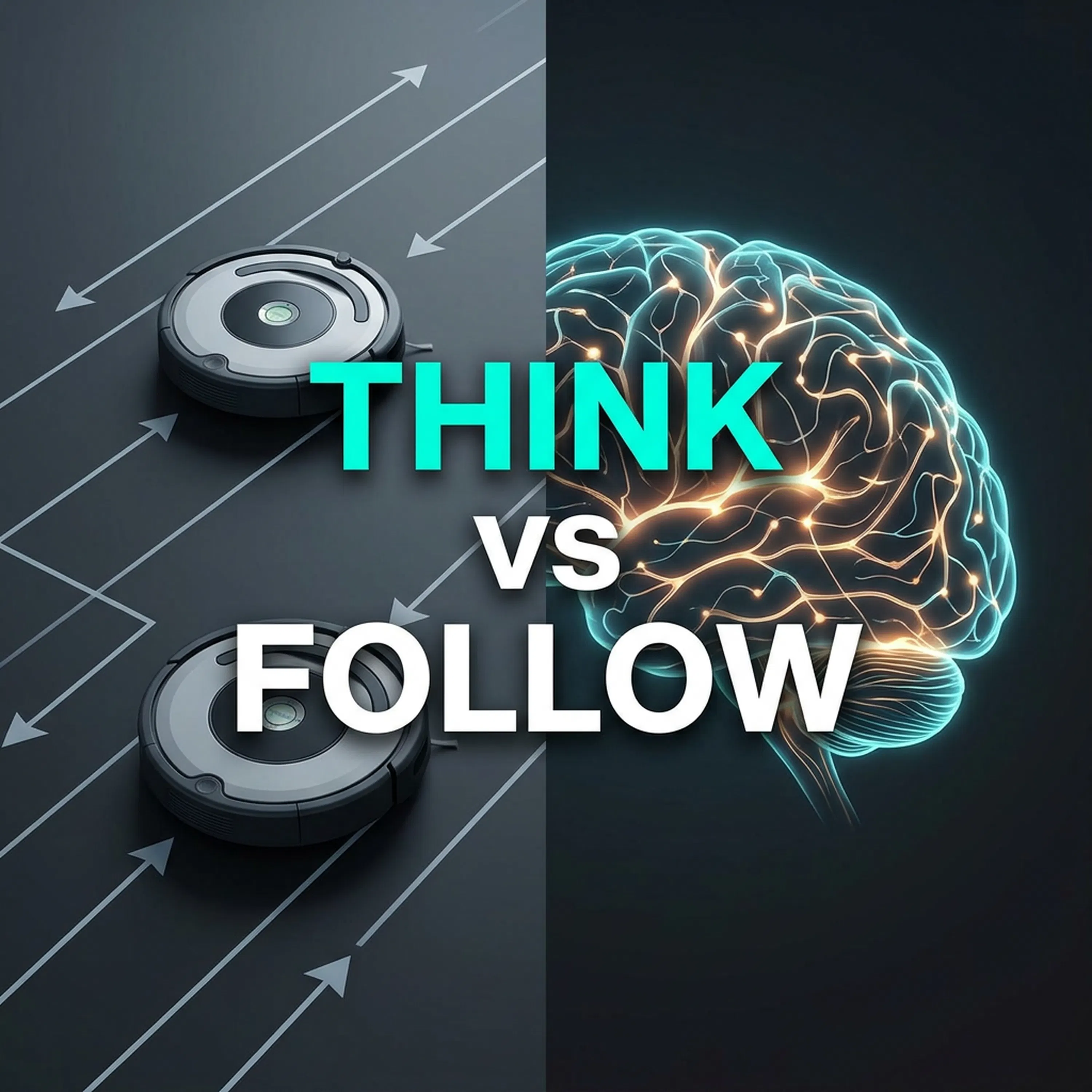
    The $2.1 Billion AI Mistake 9 Out of 10 Companies Are About to Make

    Every company is racing to implement AI, but here's the uncomfortable truth: 90% are about to blow $2.1 billion on the wrong approach. They're buying AI agents when they need automations, and automations when they need agents. The result? Massive bills with zero ROI. The difference isn't just technical jargon. AI automations follow preset scripts and can process tasks up to 10x faster than agents. Think email sorting, data entry, or invoice processing. They cost pennies to run. AI agents, on the other hand, actually think and adapt. They cost 15-50x more because they're doing real computational work every time they make a decision. Most businesses need automations for 80% of their repetitive work. But sales teams are pushing expensive agent solutions because the margins are better. Meanwhile, companies that actually understand this distinction are quietly automating their operations for a fraction of the cost. In This Episode: > Why automations handle routine tasks 10x faster than agents > The real cost difference between thinking AI and scripted AI > How to audit your processes and pick the right tool > Why 85% accuracy from agents beats 0% from broken automations Nico breaks down the technical differences without the vendor spin. You'll know exactly when to use each approach and how to avoid the expensive mistakes that are bankrupting AI budgets across industries. Timestamps: 00:00 The $2.1 billion AI waste problem 02:15 Automations vs agents: what's really happening 04:30 Speed and cost breakdown with real numbers 07:20 The 80/20 rule for business processes 09:45 How to audit your workflows 11:30 Picking the right tool for each task Follow The Value Engine for daily episodes on AI implementations that actually work. Nico drops real case studies and actual ROI numbers, not vendor promises. More episodes available at The Value Engine ---- Keywords: machine learning business, process optimization, business intelligence, automation roi, make.com, ai consulting Learn more about your ad choices. Visit megaphone.fm/adchoices

Showing 121–140 of 239 episodes