
Skip to content
Artwork for The Raise Your Average™ Podcast

The Raise Your Average™ Podcast

AdvisorAnalyst.com

This is Raise Your Average, dedicated to making you a better long term investor. Join us and our co-hosts from ReSolve Asset Management, as we sit down with some of the most interesting names in finance to discuss and debate macro, markets, investment strategies, and more.

Play
  • 22 episodes
  • Avg 1 hr 13 min
  • English
Counted on this page — what you have heard stays on this device, so it is not something the list can be paged by.
  • #103
    October 2 · 1 hr 39 min

    Russia, China, Iran, Energy: Why Every Western Move Makes Things Worse | Doomberg

    Every move the West makes seems to make things worse — and Doomberg explains exactly why. Pierre Daillie and Mike Philbrick sit down with Doomberg, one of Substack's most incisive financial and energy analysts, for a wide-ranging conversation that connects diesel shortages, European energy vulnerability, the Iran war, rare earth attrition, Taiwan's fragile energy grid, and a provocative case for why World War III may have already begun in 2014. Doomberg brings his signature blend of industrial experience, geopolitical realism, and premise-first thinking to a set of questions most Western commentators won't touch: Is Russia genuinely a formidable power worthy of deference? Is China running a long game of weapons attrition through proxy wars? And what should investors be doing before these fragile dominoes begin to fall? Chapters 1:30 — Intro: The West's wars, the energy crisis, and who came out ahead 6:30 — Welcome: Doomberg joins; diesel export ban and Ukraine strikes 9:30 — Geopolitical checkers: Every Western move makes things worse 10:30 — Trump's 1980s worldview and the myth of escalation dominance 13:30 — Inside the room: Why smart institutions make catastrophic decisions 21:30 — Guyana vs. Venezuela: How small nations navigate great-power neighbors 29:00 — Europe's twin crisis: Natural gas and diesel heading into winter 32:00 — Reading Putin: Why you should go to the source 38:00 — Ukraine as a civil war: The electoral map no one talks about 46:00 — World War III started in 2014: The end of the post-WWII architecture 53:30 — Taiwan: 12 days of natural gas, 98% hydrocarbon imports, indefensible 1:06:00 — China's rare earth strategy and the war of attrition thesis 1:13:00 — Missile production gaps and the arithmetic of Western defense 1:21:00 — While the West postures, Russia and China are quietly winning 1:27:00 — The Western Hemisphere oil thesis: All You Can Eat 1:32:00 — The Doomberg book: Thinking like a sovereign person, fall 2027 #Doomberg #EnergyGeopolitics #RaiseYourAverage #RussiaUkraine #EuropeanEnergyCrisis #GeopoliticalRisk #OilMarkets #TaiwanStrait #ChinaStrategy #NATOEurope #InvestingIn2026 #MacroInvesting #EnergyInvesting #DieselShortage #RareEarths #SovereignThinking #FinancePodcast #GlobalMacro #AdvisorAnalyst #InsightIsCapital


  • #102
    September 25 · 1 hr 10 min

    Wesley Gray: The Invisible Risks Inside Every Portfolio

    What if the portfolio your clients think they own is actually just an expensive S&P 500 clone in disguise? In this episode of Raise Your Average, hosts Pierre Daillie (Managing Director, AdvisorAnalyst.com) and Mike Philbrick (CEO, ReSolve Asset Management) sit down with Wesley Gray, PhD (CEO and CIO, Alpha Architect) for a wide-ranging, no-nonsense conversation on factor investing, portfolio construction, and why the biggest threat to advisor value is hiding in plain sight. Wes brings his trademark Marine-meets-PhD directness to topics every advisor needs to hear: from the resurgence of value, to the behavioral and tax traps that quietly vaporize investor returns, to why transparency and process discipline are the only edges that compound over time. Chapters 0:00 The wirehouse portfolio problem: what a look-through analysis reveals 1:00 Introducing Wesley Gray, PhD, former Marine intelligence officer and founder of Alpha Architect 4:00 Value investing is back: what the resurgence of QVAL tells us about patience and premiums 7:00 Crawl, walk, run: sizing factor strategies so clients actually stay invested 13:00 The real return killers: taxes, frictional costs, and the liquidity trap 19:00 Capital efficiency: why concentrated factor exposure beats closet indexing 26:00 Line item vs. portfolio allocation: the tracking error conversation advisors must have 33:00 Portfolio X-ray: using look-through analysis to win clients and expose hidden costs 39:00 QVAL deep dive: how academic factor research translates into a real portfolio 46:00 Quantitative vs. discretionary management: why process beats gut instinct 53:00 Luck, skill, and the evidence-based process that makes you look lucky over time 58:00 How to hire, trust, and fire a quant manager 1:05:00 Human nature, behavioral finance, and why factor investing will always be boutique 1:08:00 What advisors get wrong when introducing a factor strategy to clients #FactorInvesting #ValueInvesting #AlphaArchitect #WesleyGray #RaiseYourAverage #ETFinvesting #PortfolioConstruction #QuantInvesting #BehavioralFinance #WealthManagement #AdvisorAnalyst #FinancialAdvisor #TaxEfficientInvesting #ReturnStacking #QVAL #EvidenceBasedInvesting #IndexFunds #ActiveManagement #FiduciaryAdvisor #InvestmentStrategy ```

  • #101
    September 4 · 1 hr 15 min

    Corgi Invest's Jeff Weniger: Big Wall of Worry, Fears, No Bubble. Not Yet.

    What if the firm disrupting the ETF industry launched 197 funds in its first year — and priced them cheaper than Vanguard? Jeff Weniger, Chief Investment Strategist at Corgi Invest, joins hosts Pierre Daillie and Mike Philbrick on Raise Your Average for a wide-ranging conversation that moves from the macro landscape of mid-2026 — rising yields, a surprisingly hot economy, and the great AI infrastructure build-out — to the audacious product shelf of one of the ETF industry's boldest new entrants. Jeff brings his trademark macro clarity, market history, and plain-spoken honesty to a conversation that covers bubbles, bond vigilantes, copper, fiscal profligacy, and the case for precision over breadth in portfolio construction. Timestamped Chapters 00:00 — Bubbles as a feature of capital formation: railroads, dark fiber, and the AI build-out 06:00 — Introducing Jeff Weniger and Corgi Invest: 197 ETFs, a war machine, and a price war 07:00 — Where are we in the cycle? The economy may be running hotter than you think 11:00 — Rising long-term yields: fiscal profligacy or economic strength? The gold and Bitcoin argument 18:00 — The new Fed under Kevin Warsh: protecting the plumbing, not the price 20:00 — Rising yields as opportunity: Jesse Livermore, the 10-year benchmark, and round number psychology 27:00 — De-equitization, the SpaceX IPO, and what a wall of worry actually looks like 31:00 — Are we in a bubble? Pets.com vs. GameStop vs. Nvidia: which was actually crazier? 38:00 — The Nifty 50, Toronto condos, and how long it takes markets to bubble again 42:00 — The Mag Seven is just chilling: why no giddy tape may mean no bubble 45:00 — Dr. Copper, energy's comeback, and the capacity inputs the market is ignoring 48:00 — Nominal GDP, CPI, and Scott Bessent's bet on growing out of the debt burden 52:00 — Apartment rents, the K-shaped economy, and what CPI is really telling you 57:00 — Jeff's eighth day at Corgi: the story of a tech unicorn that decided to launch ETFs 01:00:00 — The Corgi product shelf: thematics, leveraged funds, buffers, and beta at cost 01:01:00 — Buffer ETFs explained: who they're for and why 30 bps beats the field 01:06:00 — Competing on expense ratio against Vanguard and BlackRock: no false illusions 01:11:00 — The T-bill play: five basis points vs. nine — and why every basis point matters More... Corgi Invest Jeff Weniger on Linkedin #RaiseYourAverage #ETFinvesting #JeffWeniger #CorgiInvest #BufferETFs #MacroInvesting #InterestRates2026 #AIboom #ThematicETFs #BondMarket #WealthManagement #AdvisorInvesting #FinancialAdvisor #MarketOutlook2026 #AdvisorAnalyst #PierreDaillie #MikePhilbrick #ETFstrategy #PortfolioConstruction #CopperBull

  • #100
    August 21 · 1 hr 14 min

    Ric Edelman: What everyone gets wrong about Bitcoin in 2026

    Ric Edelman was early on Bitcoin. He was right. Now he explains why the argument has changed completely. Ric Edelman, founder of Edelman Financial Engines (one of the largest independent RIA Firms in the U.S.), the Digital Assets Council of Financial Professionals (DACFP) and one of the architects of modern independent wealth management, joins Pierre Daillie and Mike Philbrick on Raise Your Average for a searching, unvarnished conversation about where the digital asset story actually stands today. With Bitcoin off roughly 50% from its peak and public attention captured by AI, Edelman reframes what this moment demands of advisors and investors. He traces the arc from being booed off stages in 2013 to watching Morgan Stanley tell its sixteen thousand advisors to allocate two to four percent to crypto, and argues that the real inflection point has already passed. The conversation moves well beyond price, covering the quiet institutionalization of blockchain rails inside the largest banks on earth, why a 90-year-old client may have every reason to own crypto, how advisors are quietly losing clients to an asset class they refuse to understand, and why the stalling of the CLARITY Act exposes a more troubling political dynamic than most observers have admitted. Chapters 00:00 – Introduction: why most Bitcoin opinions haven't been earned 01:00 – Who is Ric Edelman? DACFP, Edelman Financial Engines, and the long conviction 07:00 – Bitcoin's 50% drawdown in context: behavioral lessons that apply to every asset class 09:00 – Why AI stole crypto's thunder (and why that may be an opportunity) 11:00 – Ric's origin story: from "digital what?" in 2012 to founding DACFP 16:00 – Bitcoin vs. Amazon: the chart that changes the conversation 19:00 – The CLARITY Act: why it stalled, who to blame, and why it may not matter 22:00 – How allocator sentiment has shifted from passion to shrug (and why that's healthy) 25:00 – TradFi adoption: JP Morgan, Goldman, Morgan Stanley, and the race to tokenize 28:00 – The training gap: why the C-suite is ready but advisors still can't answer client questions 32:00 – Beyond Bitcoin ETFs: 200+ crypto products advisors don't know exist 35:00 – Why older advisors say "why bother?" and why that logic is quietly destroying their books 40:00 – The 90-year-old client: asset allocation in the image of your heirs 48:00 – Tokenization and stablecoins: the plumbing that changes everything 54:00 – Real-world use cases: casinos, capital efficiency, and the velocity of money 57:00 – The American blind spot: why two billion people see crypto as a lifeline 01:01:00 – Why Wall Street didn't die: it adopted the rails instead 01:05:00 – Trump, the CLARITY Act ethics clause, and the politics of crypto self-dealing 01:09:00 – Where to start: DACFP, the CBDA designation, and The Truth About Crypto 01:13:00 – Final thought: crypto as the most intellectually interesting asset class alive DACFP - Digital Assets Council of Financial Professionals Ric Edelman on Linkedin #Bitcoin #CryptoForAdvisors #DigitalAssets #DACFP #RicEdelman #BitcoinETF #Tokenization #Stablecoins #ClarityAct #CryptoRegulation #WealthManagement #FinancialAdvisors #RIA #BlockchainAdoption #CryptoEducation #RaiseYourAverage #InvestmentAdvisors #PortfolioAllocation #BitcoinAllocation #CryptoInvesting #CBDA #FinancialPlanning #AdvisorTech #CryptoMarket #BitcoinBehavior

  • #99
    July 31 · 1 hr 26 min

    Is the Biggest Investing Solution Becoming the Market's Biggest Problem?

    If markets no longer price value, then what's actually setting the price? Raise Your Average hosts Pierre Daillie and Adam Butler sit down with Michael Green, Chief Strategist and Portfolio Manager at Simplify Asset Management, for a deep dive into the passive investing thesis he has spent over a decade researching, defending, and stress testing. Green argues that trillions of dollars flowing automatically into index funds via 401(k)s, RSPs, and defined contribution plans have created a market where price no longer reflects judgment about value. He walks through the mechanics of the "inelastic market hypothesis," the outsized role of leveraged and levered sector ETFs like SOXL, the Grossman-Stiglitz framework and why its core assumptions no longer hold, and why active and value investing have become structurally disadvantaged in the current regime. The conversation also covers the 2026 macro backdrop of a US-Iran conflict, an oil shock, and equities at all-time highs despite it, the risk of a passive "end stage," and where genuine diversification (like managed futures) still fits. It's a candid, occasionally combative, and consistently illuminating discussion for anyone trying to understand why markets are behaving in ways that don't match historical patterns. Chapters 00:00 – Introduction: has the market stopped pricing risk? 08:00 – Welcome to Michael Green; setting up 2026's contradictions 09:00 – The 50-year shift into "all equities all the time" 10:00 – How ETF mechanics reduce market elasticity 12:00 – Why pod shops and passive flows ignore fundamentals entirely 13:00 – Leveraged sector ETFs (SOXL) aren't really passive 15:00 – Echoes of the dot-com bubble: 1999 vs. today 18:00 – Circular funding and Mag Seven earnings 41:00 – Momentum, autocorrelation, and portfolio construction under passive dominance 44:00 – Pushback from the Financial Times and mainstream finance media 44:30 – Malkiel's Paradox of Skill and the Grossman-Stiglitz framework, unpacked 47:00 – Why the "equal endowment" assumption is false 49:00 – The large-stack player sets the terms of the market 50:00 – The Inelastic Market Hypothesis (Gabaix and Koijen) and Green's updated multiplier estimates 52:00 – Facilitators vs. correctors: why Citadel and Jane Street are thriving 55:00 – The Newtonian vs. quantum physics analogy for market scale 57:00 – GameStop, Michael Saylor, and self-liquidating vehicles 1:13:00 – Market cap concentration data and transaction cost asymmetries 1:15:00 – Why cap weighting has flipped from historically losing to structurally winning 1:17:00 – Stein's Law and the coming correction 1:18:00 – Why value investing is a "negative selection criteria" right now 1:21:00 – Where active investors can still add value: becoming facilitators 1:22:00 – Managed futures as liquidity provision and portfolio ballast 1:25:00 – Capacity constraints and closing thoughts #MichaelGreen #PassiveInvesting #RaiseYourAverage #SimplifyAssetManagement #ETFs #IndexFunds #MarketStructure #InelasticMarketHypothesis #ActiveManagement #ValueInvesting #ManagedFutures #Macro #InvestingPodcast #StockMarket #FinancePodcast #WallStreet #PortfolioManagement #MarketBubble #AdvisorAnalyst

  • #98
    July 3 · 1 hr 18 min

    Why 0% in Bitcoin & Blockchain is Actually a Riskier Bet Than 1%

    Bitcoin is down 50% from its highs — but Bitwise CIO Matt Hougan says the price is the least important thing happening in crypto right now. In this episode of Raise Your Average, hosts Pierre Daillie and Mike Philbrick sit down with Matt Hougan, Chief Investment Officer at Bitwise Asset Management, to make sense of the 2026 crypto winter. Hougan argues this is "the best winter ever" for crypto: prices are down, but the fundamentals, regulatory clarity, and institutional infrastructure are stronger than in any prior cycle. The conversation moves from Bitcoin's role as scarce, digital hard money to the quieter, faster-moving story underneath it: stablecoins and tokenization rebuilding the plumbing of global finance. Hougan walks through why the "neutral" Bitcoin allocation isn't zero, why advisors and institutions get stuck at the finish line even after months of due diligence, and how blockchain rails already move money and assets faster and cheaper than traditional banking. The episode closes with a deep dive into agentic AI, exploring how autonomous AI agents transacting 24/7 could become the largest driver of blockchain activity yet, and what that means for Bitcoin, Ethereum, Solana, Chainlink, and Bittensor. A must-listen for advisors trying to figure out how to talk to clients about crypto without the noise. Timestamped Chapters 00:00 – Cold open: crypto winter and Bitcoin at $62K 06:30 – Welcome, Matt Hougan (Bitwise CIO) 09:00 – SpaceX's IPO vs. Bitcoin's entire market cap 10:40 – Why this is "the best crypto winter ever" 16:40 – Institutions take 8 meetings to allocate — then freeze 17:16 – The sticky-note trick for disciplined buying 19:14 – Crawl, walk, run: a systematic approach to allocation 20:32 – Why the neutral Bitcoin position is 1-2%, not zero 22:29 – Bitcoin vs. gold: scarcity, cash flow, and correlation 26:08 – Blockchain 101: Bitcoin vs. Ethereum vs. Solana 27:23 – Stablecoins and tokenization, explained simply 29:31 – Investing in tokens vs. the companies building on them 32:26 – What's really holding back adoption (the AI "black hole") 34:50 – SEC Chair Paul Atkins on tokenizing all stocks and bonds 41:42 – Instant settlement and the velocity of money (casino example) 46:12 – Inverting the objections: why the old system is the strange one 49:07 – Do you actually own your stocks? Distributed ownership explained 58:27 – Agentic AI meets tokenization: Bitcoin, Ethereum, Solana, Chainlink, Tao 1:05:05 – Digital natives and the next generation of finance 1:07:08 – Advisor takeaways: how to talk to clients about crypto 1:09:02 – The final case for a portfolio allocation 1:11:06 – Free Bitwise resources for advisors 1:14:23 – Bitwise's product lineup, including its flagship index fund 1:16:36 – Where to find Matt Hougan Matt Hougan on Linkedin Bitwise Asset Management #Bitcoin #Crypto #MattHougan #BitwiseAssetManagement #CryptoWinter #Tokenization #Stablecoins #AgenticAI #Ethereum #Solana #Chainlink #DigitalAssets #FinancialAdvisors #WealthManagement #CryptoInvesting #BitcoinAllocation #RaiseYourAverage #InsightIsCapital #CryptoNews #Blockchain #AIandCrypto #PortfolioManagement #InvestmentStrategy #DigitalGold ```

  • #97
    June 19 · 1 hr 22 min

    David Dziekanski: The End of the Options-Based Income ETF Trade-Off

    The options income ETF industry just crossed $1 trillion in assets — and almost nobody is talking about the structural flaw buried inside every one of those products. David Dziekanski, co-founder, CEO, and CIO of Quantify Funds, spent nearly two decades building ETFs — more than 75 of them — before he saw a gap so fundamental he had to build something entirely new. In this episode of Raise Your Average, Pierre Daillie and Mike Philbrick sit down with David to examine what covered call and derivative income ETFs get wrong, why most investors don't realize it, and how Quantify's Stacked Income fund family — powered by Return Stacked ETFs and Convexitas as options sub-advisor — attempts to deliver income, full upside exposure, and genuine diversification without asking investors to choose between them. ⏱ Chapters 00:00 — Introduction: The $1 trillion problem hiding in options income ETFs 03:00 — David Dziekanski: Career background, Tidal Financial Group, and the founding thesis of Quantify Funds 05:00 — The three design flaws of derivative income ETFs: income targeting, formulaic strategies, and lack of benchmarking 10:00 — Why covered call ETFs became popular — and why advisors accepted the trade-off for so long 13:00 — Delta drift explained: how a 0.74 delta on day one becomes 0.54 by month-end without any manager decision 17:00 — Negative alpha in plain sight: why most covered call products underperform even a T-bill + equity blend 20:00 — Convexitas's three-step options framework: implied vs. realized vol, skew profiling, and tenor selection 24:00 — The core thesis: income without sacrificing total return — ending the trade-off 27:00 — Return stacking as capital efficiency: A + B in a single dollar, and imposed diversification 30:00 — Distribution policy: why Quantify lowers payouts in drawdowns and tops up on rebounds 53:00 — Fee structure: 114 bps on 200% exposure = 57 bps unlevered, and why that beats the competition 55:00 — Daily trade transparency: how Quantify posts options rationale on X every trading day 59:00 — Building behavioral stickiness: transparency, distributions, and investor intuition 01:01:00 — The advisor conversation: aha moments and the covered call education gap 01:05:00 — Simplicity vs. complexity: blind spots are the cost of simple option strategies 01:09:00 — Quantify as "version 3.0" of options income — crawl, walk, run adoption framework 01:11:00 — BTGD, ISBG, ISSB: the Bitcoin + gold stacking thesis and currency debasement 01:15:00 — Gold, Bitcoin, and scarcity assets: what comes after the bazooka 01:22:00 — Closing: why the derivative income category exists, and where it needs to go Links & Resources Quantify Funds: quantifyfunds.com Daily trade rationale: Quantify Funds on X (Twitter) Return Stacked ETFs: returnstackedetfs.com Convexitas: convexitas.com #OptionsIncome #CoveredCallETF #ReturnStacking #ETFinvesting #QuantifyFunds #Convexitas #VolatilityHarvesting #BitcoinETF #GoldETF #IncomeInvesting #DividendETF #OptionsStrategy #WealthManagement #AlternativeInvesting #FinancialAdvisor #RaiseYourAverage #ETFEducation #ImpliedVolatility #OptionsAlpha #CurrencyDebasement #PortfolioConstruction #CapitalEfficiency #RetailInvestor #PassiveIncome #SmartBeta

  • #96
    June 12 · 1 hr 3 min

    Justin Huhn: Uranium is the Missing Layer Beneath the AI Trade

    Most portfolios already own the AI trade — but almost none own the energy underneath it, and that's exactly where the next big opportunity lives. In this episode of Raise Your Average, hosts Pierre Daillie and Mike Philbrick sit down with Justin Huhn, Founder, Lead Analyst and Editor of Uranium Insider, to unpack why uranium is the missing layer beneath the AI trade — and why the structural supply-demand imbalance in the nuclear fuel cycle may be one of the most consequential and overlooked investment opportunities of the decade. Justin traces uranium's journey from a forgotten commodity trading near $18/lb in 2017 to today's spot price of $85 — and explains why the bull case is more durable now than ever. The convergence of AI data center power demand, Western electricity grid strain, reactor life extensions, hyperscaler nuclear power agreements, and a deeply undersupplied fuel cycle has created a structural setup that, in Justin's view, doesn't require the AI tailwind to deliver significantly higher uranium prices. That tailwind is, as he puts it, "a bonus." The conversation covers the full uranium fuel cycle — from mine to reactor — including why supply simply cannot respond as quickly as demand, why utilities are systematically late to contract, how hyperscalers like Microsoft, Google and Amazon entering the nuclear fuel market is a landmark signal, and how advisors can think about positioning uranium as an infrastructure-adjacent hedge on the AI power squeeze. ⏱ Chapters 00:00 — Introduction: AI, energy crisis, and the nuclear renaissance 04:04 — Why nuclear is the only power source AI infrastructure actually needs 09:07 — Justin Huhn: from $18/lb uranium to the global nuclear renaissance 13:50 — Safety, carbon, and why the anti-nuclear narrative finally broke 16:16 — Western electricity demand awakens: AI and electrification converge 21:32 — U.S. grid stress: data centers testing the limits of existing infrastructure 23:40 — Every U.S. reactor getting life extended; hyperscalers entering the fuel cycle 26:39 — What Microsoft, Google and Amazon signing nuclear deals actually signals 28:49 — Supply vs. demand: why uranium can't be turned on like an oil well 34:44 — Why uranium price is almost irrelevant to reactor restart decisions 39:17 — How utilities contract uranium: long-term deals, herd behaviour and missed timing 44:57 — Why utilities have been "utterly wrong" about price trajectory — and why that matters 50:35 — How Uranium Insider models supply and demand out to 2040 52:40 — The dynamic trading model: doubling money while outperforming ETFs by 50–60% 53:10 — Reading the physical market, sentiment signals, and RSI for trade timing 57:54 — Uranium as an advisor portfolio play: the AI-adjacent energy infrastructure trade 59:07 — SMR demand, OPG Darlington, and what the next leg of the cycle looks like #Uranium #NuclearEnergy #AIInfrastructure #EnergyInvesting #UraniumInsider #NuclearRenaissance #DataCenterPower #SmallModularReactors #UraniumBullMarket #RaiseYourAverage #CriticalMinerals #EnergyTransition #NuclearStocks #UraniumMining #PowerGrid #AIDataCenters #AlternativeEnergy #PortfolioConstruction #InvestmentStrategy #FinancePodcast

  • #95
    May 22 · 1 hr 18 min

    Larry Swedroe: The Adaptive Market & The Undiversified Investor

    Larry Swedroe has spent 30 years proving the market will almost always beat you — and in this episode, he explains why that's about to become even more true. In this episode of Raise Your Average, hosts Pierre Daillie and Mike Philbrick sit down with legendary evidence-based investing author and outsourced CIO Larry Swedroe for a wide-ranging masterclass on where markets are heading and what investors must do to survive them. Swedroe breaks down how AI is accelerating market efficiency rather than unlocking alpha, why the 60/40 portfolio carries far more equity risk than most investors realize, and why true hyper-diversification — across private credit, reinsurance, return stacking, and long-short factor strategies — is the only credible response to a world where correlation assumptions break at exactly the wrong moment. He confronts the behavioral mistakes social media is making worse, challenges advisors to stress-test risk tolerance with real dollar numbers, and argues the future of wealth management belongs to those who master alternatives. ⏱ Chapters 00:00 — Cold Open: AI and the Adaptive Markets Hypothesis 02:00 — Welcome to Larry Swedroe 03:00 — Post-Retirement Life: Consulting, Writing, and Giving Back 09:00 — AI and Market Efficiency: Does Technology Create or Destroy Alpha? 11:00 — Factor Model History: CAPM, Fama-French, and Shrinking Active Alpha 14:00 — Warren Buffett's Disappearing Alpha 21:00 — The Danger of AI Data Mining and False Correlations 23:00 — What Makes a Factor Worth Owning: Persistent, Pervasive, Robust 28:00 — Leverage Aversion: When a Little Is Good and a Lot Is Dangerous 30:00 — Private Credit and the Case for Senior Secured Loans 31:00 — Return Stacking and Portable Alpha 34:00 — Hyper-Diversification: Why Your 60/40 Is Really 90/10 in Risk Terms 39:00 — The 40-Year Period Growth Stocks Underperformed Long Treasuries 40:00 — Reinsurance and AQR Style Premium: Self-Healing Assets and Impatience 45:00 — The Real Definition of Diversification: Something Is Always Hurting 47:00 — Good Advisors Are People Managers, Not Money Managers 54:00 — Stress-Testing Risk Tolerance with Real Dollar Numbers 56:00 — Monte Carlo and the True Cost of Avoiding Alternatives 59:00 — Trend Following: Clustered Returns and Why You Buy Insurance at a Cost 01:05:00 — Behavioral Mistakes in the Age of Social Media 01:07:00 — Information vs. Value-Relevant Information: Why Reddit Won't Make You Rich 01:11:00 — The Future of Advisory Practice: Wealth Management and the Next Decade #EvidenceBasedInvesting #FactorInvesting #MarketEfficiency #AIInvesting #ReturnStacking #BehavioralFinance #WealthManagement #AlternativeInvestments #PortfolioConstruction #FinancialAdvisor #RaiseYourAverage #LarrySwedroe #RetirementPlanning #ManagedFutures #TrendFollowing #PrivateCredit #Reinsurance #HyperDiversification #InvestmentStrategy #FinancePodcast #IndexInvesting #FactorPremium #ActiveVsPassive #AdvisorAnalyst #MikePhilbrick #PierreDaillie #LongShortStrategy #MonteCarloSimulation #SequenceOfReturnsRisk #PortfolioRisk

  • #94
    May 15 · 1 hr 30 min

    The Covered Call ETF Gap | Zed Francis and Devin Anderson

    Most investors think they understand what they own — Devin Anderson and Zed Francis of Convexitas are here to prove they don't, and to show what the next generation of derivative investing actually looks like. Pierre Daillie and Mike Philbrick welcome Devin Anderson and Zed Francis, Co-Founders of Convexitas, for a masterclass in derivative investing that challenges everything advisors and investors think they know about covered calls, buffered ETFs, and options-based income strategies. Drawing on deep institutional backgrounds — Devin from two decades at Deutsche Bank's equity derivatives structuring desk, and Zed from UBS credit trading, distressed hedge funds, and Legal & General — the two founders lay bare the hidden complexity lurking inside "simple" yield products that dominate today's wealth management landscape. The conversation pulls no punches: the hockey-stick diagrams used to explain covered call ETFs at point-of-sale actively mask real-time risk exposures that can shift dramatically intraday. A product sold as "half the risk of equities" can quietly become nearly full equity exposure within hours of a 1% market move — and most advisors and clients have no idea. Devin and Zed argue this isn't a reason to abandon these products, but a powerful case for active, continuous derivative management that delivers what the product actually promised. The founders introduce Convexitas's philosophy: that the options market is structurally mispriced, and that most yield-seeking investors are sitting on the wrong side of that mispricing. They walk through the SMA-based approach — designed to generate accessible liquidity precisely when markets crash, enabling advisors to rebalance into distressed assets rather than being frozen by tax friction, behavioral paralysis, or trapped capital in fund wrappers. From the mechanics of short volatility to the case for unfunded overlays, return stacking, and Warren Buffett's alpha decoded through Fama-French factors, this episode is essential listening for any advisor navigating the derivative income revolution. Chapters 00:00 — Introduction: The income wave reshaping wealth management 04:52 — Meet Devin Anderson & Zed Francis: Career arcs and the founding of Convexitas 12:16 — What investors actually own: The hidden complexity inside covered call ETFs 16:18 — Real-time risk exposure: How moneyness shifts dramatically intraday 19:17 — The silent danger: Stacking short volatility across multiple products 28:00 — Structural mispricing in the options market: Why sellers face a systemic disadvantage 38:00 — Investment products vs. trading instruments: A critical distinction for advisors 43:08 — The income stack: Gaining Gold and Bitcoin exposure with capital efficiency 50:43 — First-gen vs. next-gen: From buffered ETFs to actively managed derivative overlays 57:08 — Tax efficiency, rebalancing, and the SMA advantage 01:18:06 — Why accessible capital is the biggest benefit of risk mitigation — not mark-to-market 01:23:53 — Buying when there's blood in the streets: Liquidity, structure, and Warren Buffett's alpha 01:26:37 — Final outlook: Inflation, financialization, and the binary tail risks ahead #CoveredCallETF #BufferedETF #DerivativeInvesting #OptionsTrading #WealthManagement #VolatilityHarvesting #ReturnStacking #TailRiskHedge #FinancialAdvisors #IncomeInvesting #PortfolioConstruction #AlternativeInvestments #RiskManagement #TaxEfficientInvesting #SMAInvesting #RaiseYourAverage #Convexitas #InvestmentStrategy #OptionsEducation #AdvisorAlpha Copyright © AdvisorAnalyst

  • #93
    May 8 · 1 hr 8 min

    Dave Nadig: The ETF Bubble Nobody is Talking About

    The ETF industry has never been more powerful — or more crowded. Dave Nadig, President & Director of Research at ETF.com, joins Pierre Daillie and Mike Philbrick for a no-holds-barred conversation on the structural risks building beneath the surface of the world's most successful financial innovation. From a potential flood of mutual fund conversions to single-stock leverage ETFs, prediction market shenanigans, private credit illiquidity traps, tokenization timelines, AI's impact on the investment industry, and the quiet erosion of the ETF's greatest strength — simplicity — this is the ETF conversation the industry isn't having. ⏱ Chapters 00:00 — Introduction: Dave Nadig, President & Director of Research, ETF.com 00:46 — The Mutual Fund-to-ETF Conversion Flood: 5,000 Funds in the Pipeline 03:12 — The Plumbing Stress Test: Market Makers, Lead Market Makers & Capacity Limits 05:40 — Too Many Tickers: When Choice Becomes Paralysis 07:51 — The Case FOR Mutual Funds: Where the Structure Still Wins 10:34 — Private Credit ETFs: Retail Bag-Holding at the End of the Cycle? 13:06 — Private Equity ETFs, SpaceX Shenanigans & Liquidity Illusions 18:02 — ETF Proliferation: More Tickers Than Stocks 19:50 — The K-Shaped ETF Innovation Curve: Institutional Genius vs. Levered Junk 22:26 — Prediction Markets, Kalshi & Single-Counterparty Risk 25:04 — AI in Investment Management: Hype vs. Genuine Edge 27:18 — Tokenization: When Does It Actually Matter for Retail? 29:38 — Atomic Settlement, Blockchain, and the DTCC's Big Project 33:27 — Crypto, Prediction Markets & Where the Money Is Really Going 36:11 — 24/7 Equity Markets: Opportunity or Chaos? 45:25 — The Kitchen Drawer Metaphor: Good Tools vs. Junk Drawer ETFs 48:00 — Covered Call ETFs & the Yield Illusion: Total Return Is the Litmus Test 50:40 — How to Spot Extractive Products vs. Genuine Innovation 54:52 — Why Dave Came Back to ETF.com — and Why He Won't Stay in a Box 01:00:02 — ETF.com 3.0: Content, Pop-Up Events & the ETF Beach House 01:03:02 — The ETF Industry's Obligation: Keeping It From Going Extractive 01:07:13 — Where to Find Dave Nadig: ETF Zoo Podcast, Excess Returns & More #ETF #ETFinvesting #DaveNadig #ETFcom #RaiseYourAverage #PassiveInvesting #MutualFunds #PrivateCredit #Tokenization #MarketStructure #LeveredETF #CoveredCallETF #PredictionMarkets #InvestingEducation #WealthManagement #FinancialAdvisors #ETFbubble #PortfolioConstruction #AIinvesting #IndexFunds

  • #92
    April 24 · 1 hr 16 min

    Paul Kornfeld: Don't Fight the Market—Align With It

    When cash is outranking U.S. equities and gold sells off when it's supposed to rally, the advisors holding up aren't reacting faster — they're working from a better framework. In this episode of Raise Your Average, host Pierre Daillie sits down with Paul Kornfeld, Portfolio Manager and Director of Technology Services at SIA Wealth Management, for a wide-ranging conversation on what the firm's rules-based relative strength system is signalling right now — and why those signals have been readable for over a year. Paul walks through SIA's point-and-figure methodology, explaining how millions of pairwise asset comparisons cut through geopolitical noise and behavioural bias to reveal where money is actually flowing. From the Canada-vs.-U.S. rotation that started in April 2024, to the semiconductor-vs.-software divergence that flagged the SaaS repricing before most advisors saw it coming, to a candid story about a Calgary advisor group with zero energy exposure in an oil boom — this episode is a masterclass in process-driven investing. Paul and Pierre also look ahead to the durable themes likely to define the next 12–18 months: real assets over financial assets, international over U.S. broad indices, AI infrastructure over AI software, and the looming wildcard of North American trade renegotiation in Q3. ⏱ Chapters 00:00 — Introduction: Markets whipsawing, cash beating U.S. equities 01:00 — Welcome Paul Kornfeld: Real rotation or relief rally? 01:40 — What advisors are asking right now 04:36 — SIA's methodology: Relative strength, point-and-figure, opportunity cost 07:12 — The goal is alignment, not prediction 12:32 — Risk management: The equity action call and the traffic-light model 14:01 — Asset class rankings: Cash above U.S. equity, commodities pulling back 15:39 — The rotation that started April 2024: International overtakes U.S. 17:51 — One takeaway: Reevaluate your U.S. equity weight vs. international 21:48 — Gold's anatomy: The longest gold rally Paul has seen 29:14 — Tactical sleeves: How advisors can outsource the hard calls 31:51 — Canada vs. U.S. sector breakdown: Energy, financials, IT divergence 33:44 — Software vs. semiconductors: The SaaS reckoning since ChatGPT 40:02 — Data infrastructure: The durable AI theme the market keeps pricing in 40:38 — Point-and-figure in action: Salesforce sell signal, CSCO buy signal 44:47 — S&P 100 positioning: Semis dominate the top five right now 50:06 — Keep politics out of your investing 50:56 — TSX60: Energy, mining, chemicals — and the Kinross success story 54:13 — The Calgary story: Zero energy exposure in an oil boom 56:57 — Buying insurance vs. making a call: Aligning without predicting 59:49 — U.S. equities at 65% of global market cap: Is the world overweight? 01:03:39 — Durable signals for the next 12–18 months 01:05:59 — Real assets, domestic production, AI infrastructure as core theme 01:07:16 — Q3 trade negotiations: The biggest wildcard for positioning 01:08:47 — Biggest surprise in 12 months: AI disruption, faster than anyone expects 01:14:28 — Where to find SIA Wealth and SICharts #RelativeStrength #SIAWealth #SectorRotation #PortfolioManagement #InvestingStrategy #CanadianInvesting #WealthManagement #TacticalAllocation #MomentumInvesting #AIInvesting #GoldBullMarket #EnergyStocks #Semiconductors #SaaSStocks #FinancialAdvisor #InvestmentAdvisor #RaiseYourAverage #MarketRotation #PointAndFigure #BehavioralFinance #EtfInvesting #TSX #SP500 #MacroInvesting #ActiveManagement Find SIA Wealth Management:siawealth.com | siacharts.com

  • #91
    April 22 · 1 hr 34 min

    The Party Always Ends: How to Build a Portfolio for the Morning After | Meb Faber

    The party always ends — and Meb Faber, one of the most data-driven voices in global investing, says the evidence is now undeniable that the decade-long US equity dominance is giving way to something very different. SUMMARY On this episode of Raise Your Average, hosts Pierre Daillie and Mike Philbrick sit down with Meb Faber — co-founder and CIO of Cambria Investment Management, prolific researcher, and host of The Meb Faber Show — for a wide-ranging conversation about what investors and financial advisors must rethink as the rules of the game quietly change beneath their feet. With US equity concentration at historic extremes, inflation proving stickier than expected, and geopolitical disorder accelerating structural shifts already underway, Meb makes the case that the era of a US-heavy 60/40 portfolio solving everything is in the rearview mirror. He challenges the deeply ingrained recency bias that has left most North American investors dangerously underweight in international equities and real assets — and explains what the data actually says about where opportunity is emerging. The conversation moves from big-picture regime change into highly practical territory: how to build a portfolio that survives behaviorally, not just mathematically; how to think about concentrated, low-basis positions and the tax traps hiding inside the gains of the last 15 years; and why "tax alpha" may be the most overlooked and underutilized edge in wealth management today. Meb also shares how he's deploying AI in his own practice — including a custom-trained GPT built on his entire body of work — and what advisors should be borrowing from that playbook right now. ⏱️ CHAPTERS 00:00 — Welcome & banter: tacos, spicy food, and market chaos 08:00 — Meb joins; framing the moment: Venezuela to tariffs to Iran 13:00 — A regime change? Dissecting the end of the 40-year bull run 15:00 — The bull market in diversification: foreign markets doing 30%+ while the S&P stalls 17:00 — What advisors are underweight: ex-US equities and real assets 20:00 — How to explain a generational shift to clients without jargon 24:00 — Global diversification: the evidence from 15 famous portfolios 27:00 — The 20% annual spread problem and why tracking error breaks investors 30:00 — Portfolio vulnerabilities in the cap-weighted US-dominant model 31:00 — Opportunities: global value, small cap, fixed income niches, real assets 35:00 — The "fat" portfolio: three ingredients every investor needs 40:00 — Utilities, dividends, and the tortoise-vs-hare reversal 44:00 — Behavioral investing: why systematic strategies exist 48:00 — The concentrated position trap: identity, emotion, and the sell decision 51:00 — Systematic rebalancing: lessons from Cambria's early days 53:00 — "The easy money's been made" — market phrases Meb despises 55:00 — Deep value and what it takes to be a missionary, not a mercenary 58:00 — The best active managers and why they always close the door at the top 1:00:00 — When the penthouse becomes the outhouse 1:04:00 — The Groucho Marx rule: would you buy what you already own? 1:10:00 — Drawdown, pain tolerance, and the real test of a portfolio 1:17:00 — Concentrated low-basis positions: the tax trap hiding in plain sight 1:19:00 — 100 years of stock data: what the best-performing stocks actually returned 1:22:00 — Tax strategies: 351 exchanges, direct indexing, QSBS, and box spreads 1:27:00 — AI in practice: Meb's custom ChatGPT and how advisors should use AI now 1:30:00 — Behavioral AI: what happens when the bot knows you better than you do 1:32:00 — Closing thoughts: raising your average in a noisier, more complex world</p> #MebFaber #CambriaInvestments #GlobalDiversification #PortfolioConstruction #ValueInvesting #TrendFollowing #6040Portfolio #TaxAlpha #ConcentratedPositions #DirectIndexing #RealAssets #InternationalStocks #RegimeChange #FinancialAdvisor #WealthManagement #InvestingStrategy #RaiseYourAverage #AIInvesting #BehavioralFinance #LongTermInvesting #ETFinvesting #SmartBeta #FactorInvesting #MarketOutlook2026 #AdvisorAnalyst

  • #90
    March 27 · 1 hr 13 min

    Alfonso Peccatiello: You're not diversified. You just think you are.

    The bond market — not equities — is the most fragile and most misunderstood foundation of your entire portfolio, and most investors have no idea what's coming. Episode Summary Pierre Daillie and Mike Philbrick sit down with Alfonso Peccatiello — former ING bond portfolio manager of $20 billion and founder of macro hedge fund Palinuro Capital — for a masterclass in navigating a world where the old rules no longer apply. With decades of disinflation now behind us, Alfonso makes the case that the classic 60/40 portfolio is structurally ill-equipped for today's macro regime. Drawing from his own eight-quadrant savings portfolio model, he walks through how investors should think about building resilient, all-weather portfolios using risk parity principles, leverage as a diversification tool, and a mix of equities, bonds, gold, CTAs, and the U.S. dollar. The conversation shifts to the current geopolitical shock — a potential disruption in global oil supply through the Strait of Hormuz — and why taking directional risk in a nonlinear, unpredictable event is closer to gambling than investing. Alfonso closes with a bold macro outlook: the most underappreciated story of the next year may not be the U.S. at all, but the rest of the world. 3 Key Takeaways 1. The 60/40 Is Structurally Broken. The 40-year disinflationary tailwind that made bonds a reliable hedge for equities is over. In today's high-debt, inflation-prone environment, stocks and bonds can fall together — as 2022 proved — making traditional portfolio construction dangerously inadequate. 2. Leverage Is a Defense, Not a Weapon. Alfonso's eight-quadrant framework uses leverage not to chase returns, but to free up capital for genuine diversifiers: gold, CTAs, macro hedge funds, and long USD exposure — each sized to contribute equal units of risk across inflation, deleveraging, and growth scenarios. 3. When You Can't Predict the Variable, Don't Take the Risk. In a geopolitical supply shock like a Strait of Hormuz closure, no amount of macro skill gives you an edge. The honest answer is to reduce risk, not gamble on a nonlinear binary outcome — a lesson most active managers ignore. ⏱️ Timestamped Chapters 00:00 Intro: Why the macro regime has shifted 00:56 Decades of debt, fiscal dominance & bond market fragility 15:15 Welcome Alfonso Peccatiello / Palinuro Capital 17:00 The eight-quadrant portfolio model explained 22:21 Are Treasuries actually fragile? 33:50 Using leverage defensively to unlock diversification 36:40 Building blocks: equities, bonds, and positive drift 38:29 Protecting against inflation: gold, commodities & CTAs 40:28 Protecting against deleveraging: the U.S. dollar's hidden role 43:28 Correlation math: why uncorrelated assets reduce total risk 45:24 How to size gold, bonds, and carry in a real portfolio 50:53 Tracking error: the behavioral trap that kills diversification 56:12 The savings portfolio: risk parity in practice 58:00 The 4% rule, path dependency & why drawdown size matters 1:00:06 Current positioning: geopolitical oil shock & the Strait of Hormuz 1:08:16 The most crowded trade in the world right now 1:10:20 What will surprise markets most in the next 12 months? 1:12:24 Closing thoughts & farewell #MacroInvesting #PortfolioConstruction #BondMarket #RiskParity #AlphonsoPeccatiello #GlobalMacro #Inflation #60_40Portfolio #GoldInvesting #CTAStrategy #FiscalDominance #GeopoliticalRisk #InvestingStrategy #WealthManagement #RaiseYourAverage #FinancialAdvisor #AssetAllocation #RetirementPlanning #MacroHedgeFund #InvestingIn2025

  • #89
    March 20 · 1 hr 41 min

    Rotation, Int'l Stocks, Defense-Tech, Japan, USD and the Gold Gap with Jeremy Schwartz and Jeff Weniger

    While everyone is arguing about AI disrupting software stocks, WisdomTree's Jeremy Schwartz and Jeff Weniger quietly explain why the most important market story of 2026 has nothing to do with the SaaS selloff — and everything to do with where capital is actually moving. WisdomTree Global CIO Jeremy Schwartz and Head of Equity Strategy Jeff Weniger join Pierre Daillie and Mike Philbrick on Raise Your Average to cut through the noise of the AI disruption panic and make the case for a broader, more structural story unfolding in global markets. From the defense tech supercycle reshaping international equity allocations, to the gold gap most North American portfolios haven't fixed, to a contrarian call on the US dollar at a moment of record-extreme bearish positioning — this conversation covers the ideas that matter most for advisors and investors navigating 2026. Japan, small caps, monetary policy lag, and the behavioral biases keeping investors anchored to a 15-year-old playbook all come into the discussion. If you manage money for clients — or your own — this episode is essential listening. CHAPTERS 00:00 — Introduction & what's happening in markets right now 08:16 — Guests join: Jeremy Schwartz & Jeff Weniger on the SaaSpocalypse 10:27 — Is the AI disruption panic overblown? The BlackBerry parallel 16:09 — Rotation: structural shift or head fake? 19:35 — AI, jobs, and the history of innovation 28:09 — Who actually benefits from the AI buildout? 31:50 — The 15-year mega-cap tech bull market is ending — here's what's next 32:39 — Jeremy Schwartz introduces the defense tech supercycle 35:36 — The dollar: why Weniger is a contrarian bull right now 40:30 — Gold: the 10–12% neutral allocation most portfolios are missing 44:29 — Why the gold-dollar relationship has changed 46:34 — Bitcoin liquidation and the case for gold & silver in 2026 48:06 — The gold gap: US investors vs. European investors 51:14 — International flows: the 80/20 problem and how to fix it 55:53 — Japan: the most underowned trade of the decade 57:07 — Currency hedging, volatility, and the case for DXJ 01:01:45 — Is US mega-cap dominance cracking or just pausing? 01:04:16 — The biggest mistake advisors make translating macro into allocation 01:05:26 — The Fed lag effect: why 2026 may surprise to the upside 01:14:02 — Japan deep dive: debt-to-GDP, Buffett's trade, and OPPJ 01:20:41 — Jeremy's top idea: the Japan Opportunities Fund (OPPJ) 01:26:28 — Jeff's top idea: the contrarian dollar trade and small caps 01:30:37 — Market internals: why most portfolios are actually in the black 01:35:14 — What surprises advisors most in the next 12 months? 01:39:22 — Uncertainty vs. actual losses — the disconnect in 2026 01:40:27 — Closing thoughts & thank you 5 Key Takeaways 1. Market is healthier than the headlines suggest. Ten of eleven S&P sectors were positive over the prior three months. Mid and small caps were outperforming large by 500–700 basis points. Most diversified portfolios were in the black — the pain is concentrated in software and AI-disruption names, not the market as a whole. 2. The defense tech supercycle is the structural story most advisors are missing. Rising defense budgets across NATO, Japan, Korea, and India are the seed capital for the next generation of global technology — just as DARPA spending gave us the internet and the cell phone. Europe and Japan are becoming technology investment destinations in their own right. 3. Gold belongs at 10–12% in a neutral portfolio — and almost no one is there. US investors allocate less than 2% of ETF assets to commodities versus four to five times that in Europe. Falling yields, Bitcoin liquidation flows, and persistent central bank buying from Asia make 2026 one of the strongest setups for gold in years. 4. Dollar bearishness has reached historically extreme levels — a classic contrarian signal. BofA's Fund Manager Survey showed record negative dollar positioning. Every major economy is now running large deficits, weakening the relative case for selling dollars. Weniger's best idea for the next 12 months: the greenback surprises to the upside. 5. Japan remains the most underowned and underappreciated equity market in the world. Currency-hedged Japanese equities have compounded at 14–15% annually since 2012, driven by real earnings and dividend growth — not multiple expansion. Japanese equities trade at 15–16x earnings with competitive earnings growth. The biggest mistake: betting on the yen rather than hedging it. #WisdomTree #RaiseYourAverage #GlobalMacro #InternationalStocks #JapanEquities #GoldInvesting #DefenseTech #MarketRotation #PortfolioStrategy #AssetAllocation #AIInvesting #SmallCaps #CurrencyHedging #InvestingIn2026 #FinancialAdvisors

  • #86
    February 24 · 1 hr 38 min

    Energy Is Destiny: War, China, Gold, Canada & the 60/40 Era

    If energy is destiny and stockpiles signal intent, then this episode may completely change how you see oil, gold, China, Canada—and your portfoliIn this high-conviction macro deep dive, hosts Pierre Daillie and Mike Philbrick sit down with returning guest Doomberg to dismantle the comfortable narratives investors use to understand energy, geopolitics, and portfolio construction. Doomberg reframes the global order through a resource-first lens: energy is destiny, stockpiles signal intent, and technology is rewriting the rules of commodities. From Venezuela and Guyana to China’s war rations, from shale’s molecular revolution to Saskatchewan’s overlooked strategic wealth, this episode challenges the assumptions underpinning the traditional 60/40 portfolio. If the last 50 years were defined by efficiency, globalization, and financialization, the next regime may be defined by resilience, reshoring, and resource leverage. This is not just a discussion about oil. It’s about power. 🔑 3 Key Takeaways 1. Energy Is No Longer “Just Oil” Shale has fundamentally changed hydrocarbon markets. Crude oil, natural gas, and natural gas liquids are co-produced — meaning price signals can no longer be analyzed in isolation. • What CNBC calls “oil” is no longer just crude. Natural gas arbitrage, LNG flows, and AI-driven electricity demand are quietly reshaping global pricing dynamics. 2. The World Is Quietly Re-Industrializing Doomberg argues we are witnessing a regime shift: • Deflationary outsourcing → inflationary reshoring • Strong dollar orthodoxy → weaker dollar tolerance • Efficiency → resilience Trump’s trade posture, sovereign capital repositioning, gold’s breakout, and private infrastructure flows all point toward one theme: industrial renaissance is attempting to replace financial engineering. Implication: The classic 60/40 portfolio may be structurally underexposed to energy, infrastructure, and real assets. 3. China Is Acting Like a Wartime Economy China is stockpiling oil, metals, grains, and gold at unprecedented levels. That behavior can be interpreted two ways: • Defensive hardening • Pre-offensive preparation Either way, the signal is clear: global trade assumptions are shifting toward fragmentation and strategic leverage. Implication: Resource-rich jurisdictions (e.g., Saskatchewan) become strategically relevant in a “might-is-right” world. 🕒 Timestamped Chapters 00:00 – Introduction: Energy Is Destiny 01:56 – Venezuela, Guyana & Resource-First Thinking 05:08 – Why Markets Misprice Geopolitical Risk 08:07 – Europe’s Deindustrialization Problem 12:06 – Weak Dollar, Gold & the Industrial Pivot 14:30 – Political Constraints & Capital Cycles 20:24 – How to Separate Signal from Propaganda 26:10 – The Molecular Shift in Oil Markets 33:18 – Natural Gas vs Crude: The Arbitrage Story 37:52 – Propane, Engine Switching & Energy Substitution 40:17 – Energy Exposure & the 60/40 Portfolio 46:01 – Why Producers Are Price Takers 48:25 – China’s “War Rations” Strategy 53:29 – Entering a “Might Is Right” Regime 56:03 – Inverting the 50-Year Investment Playbook 01:05:00 – Saskatchewan: Strategic Resource Wealth 01:13:21 – Canada, Culture & Capital Formation Where to find Doomberg

  • #87
    February 24 · 55 min

    AI is Splitting the Market - The Hidden Winners Beyond NVIDIA with Ivana Delevska

    AI isn’t just about Nvidia anymore — it’s quietly rewiring the entire industrial economy, and most investors don’t even realize where the real money will be made. In this episode of Raise Your Average, hosts Pierre Daillie and Mike Philbrick sit down with Ivana Delevska, Founder and CIO of Spear Advisors, to unpack how AI is splitting the market — creating massive dispersion between winners and losers — and why passive index exposure may no longer be enough. While most investors believe they’re diversified through Nasdaq or S&P 500 index funds, Delevska explains that passive exposure is heavily concentrated in mega-cap hyperscalers. The real opportunity, she argues, lies deeper in the AI value chain — in networking, optical components, semiconductor capital equipment, electrification, cybersecurity infrastructure, and even space. This conversation goes beyond the hype cycle. Delevska outlines why AI CapEx — projected to reach $600B this year — is fundamentally different from past tech cycles. The sheer dollar magnitude is forcing multi-year infrastructure buildouts, creating 10-year visibility rather than the traditional 3–5 year tech cycle. Yet while hardware beneficiaries remain durable, SaaS and application-layer companies face real disruption risk as AI-native competitors rapidly reshape the software landscape. For investors, this isn’t about abandoning mega-cap tech — it’s about understanding dispersion. In an AI-driven world, alpha will increasingly come from identifying where capital is flowing, how physical constraints shape adoption, and which companies sit at the most critical points in the industrial tech stack. 🔑 3 Key Takeaways 1️⃣ Passive Exposure Isn’t True AI Diversification Owning the Nasdaq or S&P 500 mostly means owning hyperscalers. The broader AI opportunity extends into semiconductor equipment, optical networking, power infrastructure, cybersecurity, and industrial tech — areas largely underrepresented in passive indices. 2️⃣ AI CapEx Is Structurally Different This Time With hyperscalers spending ~$600B annually, the infrastructure buildout has 10-year visibility due to land, power, and supply constraints. This isn’t a short tech cycle — it’s a physical industrial transformation. 3️⃣ Massive Dispersion = Massive Alpha Potential AI will create both winners and losers. Hardware suppliers and infrastructure players may benefit from durable demand, while legacy SaaS and application companies risk disruption. Stock selection and disciplined process matter more than ever. ⏱️ Timestamped Chapters 00:00 – Introduction & Why This Conversation Matters 02:00 – $600B in AI CapEx: Where Is the Money Going? 04:00 – Why Industrial Tech Was Underinvested for 15 Years 07:00 – The Myth of Diversification in Passive AI Exposure 12:00 – Networking, Optical, Semi Cap Equipment: Hidden Winners 16:00 – SaaS Under Pressure: AI Disruption in Software 19:00 – Spear’s Mental Model for Navigating the AI Stack 22:00 – Space, Electrification & Defense as AI Enablers 31:00 – The Physical World Bottleneck: S-Curves vs J-Curves 33:00 – Dispersion, Alpha & Why Active Management Matters 48:00 – Behavioral Mistakes Investors Make in Tech Cycles 51:00 – What Could Break the AI Thesis? 54:00 – Closing Thoughts & SPEAR ETF (SPRX) #AIInvesting #ArtificialIntelligence #StockMarket #TechStocks #Semiconductors #IndustrialTech #Cybersecurity #DataCenters #ActiveManagement #ETFInvesting #GrowthStocks #SPRX #LongTermInvesting #InvestmentStrategy #RaiseYourAverage Copyright © AdvisorAnalyst.com

  • #85
    Aug 28, 2025 · 1 hr 6 min

    The 4th Turning of Markets: Paradigm C, Inflation, Debt & Investing in 2025 with Darius Dale

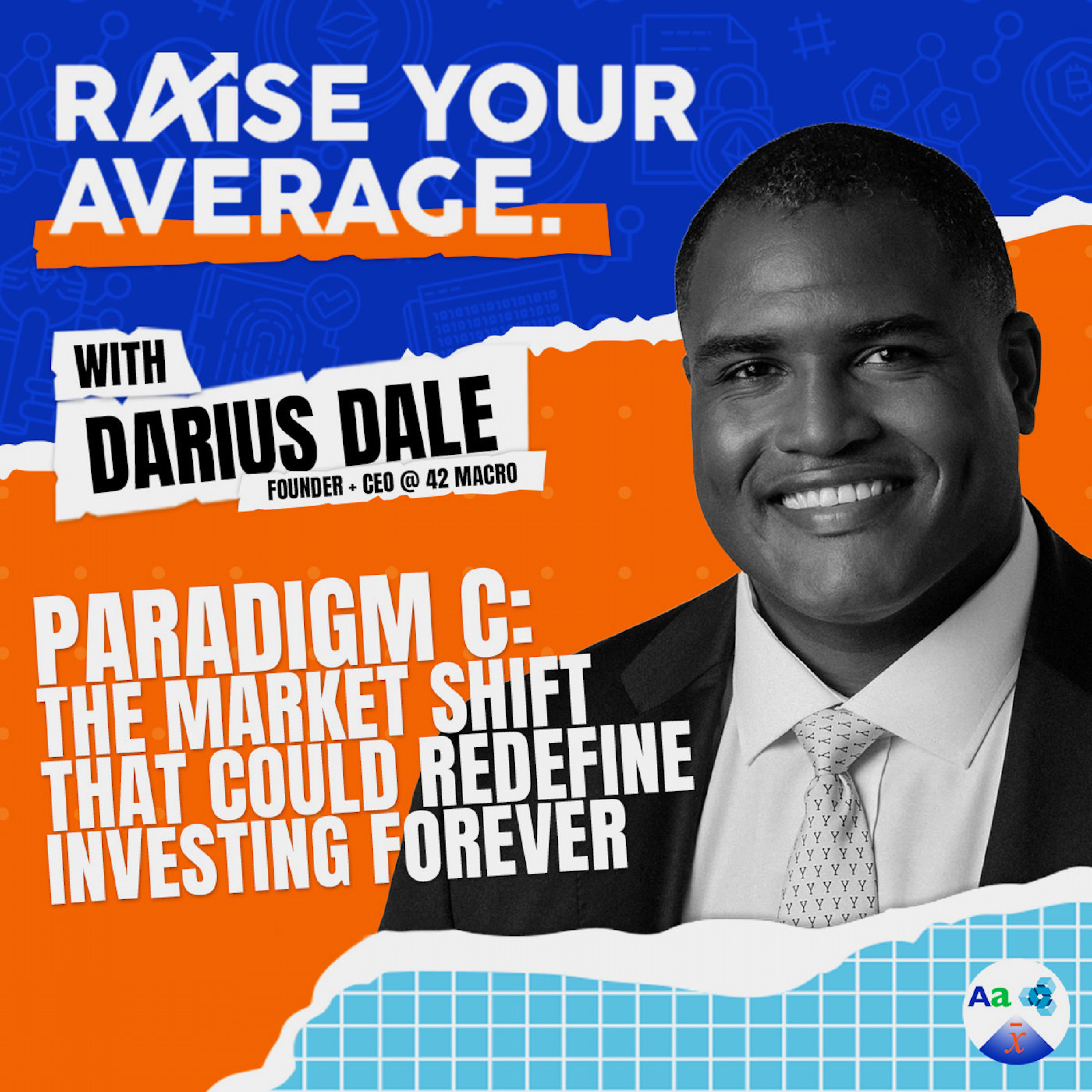
    What if everything you thought you knew about the Fed, fiscal policy, and recession playbooks is already obsolete? In this episode, Darius Dale reveals why the U.S. economy has entered “Paradigm C” — a regime of fiscal dominance, deregulation, and coordinated support — and what it means for portfolios, the Fed, and your financial future.📖 Episode SummaryIn this powerhouse conversation, hosts Pierre Daillie, Mike Philbrick, and Adam Butler welcome back Darius Dale, Founder of 42 Macro LLC, to dissect the seismic shifts reshaping markets in 2025.Dale explains why April’s bond market shock was the most important event since Lehman, forcing the U.S. into Paradigm C: a policy mix of fiscal dominance, deregulation, and an implicit partnership between the Treasury and the Fed. He argues that recession is no longer bullish for Treasuries, that the Fed’s outdated 2% inflation target is crushing those at the bottom of the “K-shaped” economy, and that retail investors have a once-in-a-generation edge over institutions if they stop chasing factor bets.From the decline of U.S. exceptionalism risk to the emergence of financial repression, Dale outlines why the simple KISS portfolio — may be the smartest way to retire on time and comfortably.This is a must-listen for advisors, investors, and anyone trying to navigate the most uncertain macro environment in decades.🔑 4 Key Takeaways1. Paradigm C Defined – The U.S. has shifted to a regime of fiscal dominance and deregulation, aiming to “outgrow” its debt problem rather than cut or print immediately.2. The End of Old Playbooks – Recession is now bearish for Treasuries, Fed independence is eroding, and the 2% inflation target is increasingly destructive.3. The Retail Investor Advantage – Unlike institutions, individuals can flexibly shift exposure, avoid factor risks, and stick to a simplified but powerful asset mix.4. The KISS Portfolio – Darius champions a three-part framework as the most effective way to capture upside while hedging against fiscal repression and monetary debasement.📺 Timestamped Chapters00:00 – Introduction & Darius Dale’s mission at 42 Macro05:00 – Paradigm A → B → C: How policy shifted after April’s bond shock13:00 – Fiscal dominance explained: deficits, tariffs, and untouchable spending20:00 – Why the Fed has lost independence and why inflation targeting is broken30:00 – K-shaped economy: winners at the top, losers at the bottom40:00 – The dollar’s future, sector plays, and EM opportunities46:00 – The KISS portfolio: why retail investors should stop chasing factors55:00 – Reactions, testimonials, and the simplicity that worksMore...42 Macro LLCDarius Dale on Linkedin

  • #84
    Aug 26, 2025 · 1 hr 22 min

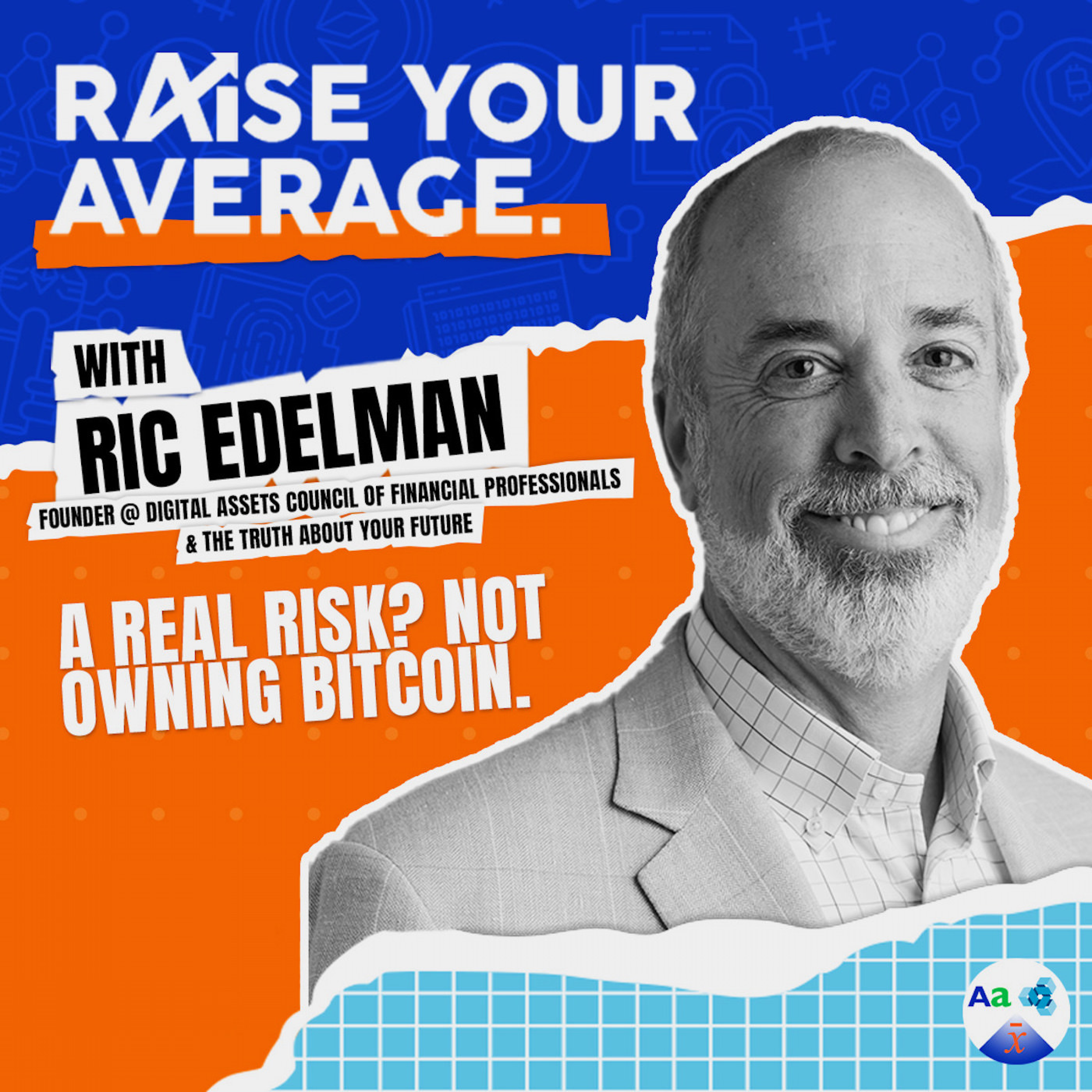
    Ric Edelman - A Real Risk - Not owning bitcoin

    What if the riskiest move in your portfolio isn’t owning crypto—but ignoring it? In this episode of Raise Your Average, hosts Pierre Daillie and Mike Philbrick sit down with legendary advisor, founder of the largest US RIA firm, author, and futurist Ric Edelman, Founder of DACFP (Digital Assets Council of Financial Professionals). Edelman, long known as a trusted voice in personal finance, now makes his most provocative case yet: advisors and investors may need to rethink the role of crypto—moving beyond token allocations toward a meaningful presence in portfolios. Ric explains why today’s environment—marked by regulatory clarity, institutional adoption, and longer human lifespans—has shifted the crypto conversation from speculation to necessity. He argues that traditional 60/40 models are broken in a world of longevity risk, rising rates, and monetary debasement, and calls for a bold reallocation: 80/20 with up to half of the equity/growth sleeve in crypto-related equities and including somewhere between 10% and 40% allocated of that directly to bitcoin and other digital assets e.g. Ethereum, Solana, etc. The conversation spans regulatory breakthroughs, the psychology of allocation, fiduciary responsibility, and the mindset shifts advisors must embrace. As Edelman puts it, “Not owning crypto today is effectively shorting it.” This episode is a must-watch for financial professionals navigating the future of portfolio construction. 🔑 Key Takeaways 1. From Fringe to Foundational – With regulatory clarity under the Trump administration and institutional adoption accelerating, crypto is no longer a speculative bet but an investable, regulated asset class. 2. Longevity Changes Everything – Advances in healthcare and aging science mean people will live far longer, forcing portfolios to outlast retirements that could stretch 40+ years; Edelman argues this demands higher equity and crypto allocations. 3. The New 80/20 – The classic 60/40 portfolio has reached its limits; Edelman calls for 80% equities—with bitcoin and crypto-related equities making up as much as half of that equity sleeve with between a low of 10% to high of 40% directly allocated to bitcoin—for true long-term resilience. 4. Advisor Imperative – Compliance officers are shifting from resistance to acceptance as rules clarify, but Edelman warns that advisors who stay at zero risk reputational damage as clients begin to demand crypto exposure. ⏱️ Timestamped Chapters 00:00 – Ric Edelman on diversification myths and hidden biases 02:00 – Why crypto deserves a 3%+ passive allocation 04:00 – Ric’s bold new thesis: 10–40% crypto allocation 07:00 – Regulatory clarity and the Trump administration’s policy shift 12:00 – Why low single-digit crypto allocations underserve investors 18:00 – Compliance barriers and regulatory breakthroughs 22:00 – The best time in Bitcoin’s history to invest 27:00 – Longevity risk: why retirement planning must change 31:00 – The end of 60/40: why 80/20 with crypto is the future 40:00 – Demographics, pensions, and the failing glide path model 50:00 – Crypto allocation frameworks: Bitcoin, Ethereum, picks & shovels 56:00 – Why crypto is safer now than ever before 1:03:00 – Volatility as a feature, not a bug 1:08:00 – Behavioral hurdles and myths keeping investors sidelined 1:13:00 – Advisors’ fiduciary duty in the new landscape 1:17:00 – Final thoughts: longevity, technology, and the advisor imperative More... • DACFP (Digital Assets Council of Financial Professionals) • Ric Edelman's Bitcoin Allocation Strategy • Earn your CBDA (Certified in Blockchain and Digital AssetsSM) Designation#CryptoInvesting#BitcoinETF#DigitalAssets#FinancialAdvisors#WealthManagement#PortfolioStrategy#CryptoAdoption#RaiseYourAverage#FutureOfFinance#CryptoEducation

  • #83
    Aug 13, 2025 · 25 min

    Stacking Strategic Gold and Bitcoin with RSSX with ReSolve's Mike Philbrick

    In a world where inflation, currency debasement, and geopolitical shocks threaten portfolios, what if you could keep your core equity exposure and add the asymmetric upside of Bitcoin and the timeless stability of gold—without triggering investor panic or selling winners? In this episode, host Pierre Daillie sits down with Mike Philbrick, CEO at ReSolve Asset Management, co-founders, along with Newfound Research, of the Return Stacked ETFs Suite, to unpack a strategy that’s been in the institutional playbook for decades but is now accessible to everyday investors: return stacking. Against today’s backdrop of persistent inflation, volatile markets, and shifting perceptions of alternative assets, Philbrick explains why gold and Bitcoin are moving from “fringe” to “foundational” in modern portfolios—and how the RSSX ETF offers a disciplined, behaviorally resilient way to integrate them without sacrificing the stocks and bonds investors know and trust. From the behavioral traps that cause investors to abandon diversifiers at the worst moments, to the portfolio math that shows how modest allocations can improve returns and reduce risk, this conversation delivers both the “why” and the “how” of strategic diversification. Philbrick also addresses the shifting reputational risk for advisors—from owning Bitcoin to not owning it—and the growing regulatory clarity that’s opening the floodgates for institutional adoption. Whether you’re an advisor, allocator, or investor who wants to strengthen a core portfolio without selling winners, this episode offers a blueprint for adding crisis alpha before the next crisis hits. 4 Key Takeaways: • From Fringe to Foundational: Gold’s centuries-old role as a store of value and Bitcoin’s fixed-supply, asymmetric upside make them compelling diversifiers in today’s inflationary, volatile environment. • Behavioral Risk Management: Return stacking helps avoid the tracking error and emotional selling that often plague diversifier allocations. • RSSX Structure: The ETF delivers 100% S&P 500 exposure plus an 80/20 gold-Bitcoin overlay, equal risk-weighted to manage volatility and rebalanced for efficiency. • Shifting Reputational Risk: Advisors now face greater professional risk in not understanding or allocating to Bitcoin and gold than in owning them—especially as regulatory clarity improves. Timestamps: 00:00 – Why uncorrelated assets matter now 02:00 – Gold and Bitcoin as strategic, not just tactical, diversifiers 04:30 – Behavioral challenges of sticking with diversifiers 06:00 – Return stacking explained: adding without selling 08:00 – Volatility context: stocks, gold, Bitcoin 10:00 – Inside the RSSX ETF structure and allocation 12:00 – Implementation examples for advisors and investors 14:00 – Rebalancing mechanics and volatility adjustments 15:30 – Diversifying before the crisis, not after 17:00 – Small starts and building from a position of strength 19:00 – Institutional adoption trends and parallels 21:00 – Reducing tracking error and client friction 22:00 – The reputational risk shift for advisors 23:30 – Regulatory clarity and institutional green lights 24:30 – The mission: improve outcomes without sacrificing core equity engines More... 🧠 Learn more at: https://returnstacked.com 📘 Read more at: https://investresolve.com 📊 ETFs: RSSX (Stocks + Gold & Bitcoin) #PortfolioDiversification #ReturnStacking #GoldInvestment #BitcoinStrategy #InflationHedge #AsymmetricUpside #ETFInvesting #BehavioralFinance #WealthManagement #InvestmentStrategies #MikePhilbrick #ReSolveAssetManagement #RSSXETF

Showing 1–20 of 22 episodes