Skip to content
Artwork for The Neon Show
BusinessEntrepreneurship

The Neon Show

Siddhartha Ahluwalia

Hi, I am your host Siddhartha! I have been an entrepreneur from 2012-2017 building two products AddoDoc and Babygogo. After selling my company to SHEROES, I and my partner Nansi decided to start up again. But we felt unequipped in our skillset in 2018 to build a large company. We had known 0-1 journey from our startups but lacked the experience of building 1-10 journeys. 

Hence was born the Neon Show (Earlier 100x Entrepreneur) to learn from founders and investors, the mindset to scale yourself and your company. This quest still keeps us excited even after 5 years and doing 200+ episodes. 

We welcome you to our journey to understand what goes behind building a super successful company. Every episode is done with a very selfish motive, that I and Nansi should come out as a better entrepreneur and professional after absorbing the learnings. 


Play
  • 29 episodes
  • weekly
  • Avg 1 hr 4 min
  • English
Counted on this page — what you have heard stays on this device, so it is not something the list can be paged by.
  • S1 · E397
    Thursday · 1 hr 10 min

    Which SaaS Companies Will Survive Anthropic and OpenAI? | Tim Guleri, Sierra Ventures

    Tim Guleri has spent 25 years in venture capital. Before that, he built companies with $3.8B in combined exits. And before that, he was a Punjabi guy selling Bibles door to door in the US. In this episode, we go deep into AI, venture capital, fundraising, SaaS, Silicon Valley and how great investors actually make decisions. We discuss the Gatorade Rule for equity, why Airtable sold for 2x, why 9–5 fails in Silicon Valley, why revenue durability matters more than hyperspeed growth, why Tim still operates at 120% all the time, how Sierra selects 30 companies out of 30,000, and how he missed Salesforce. Listen to this conversation to learn what it takes to win gold in the Olympics of tech. 00:00 Selling Bibles to $3.8B in Exits 01:03 Operating with Only One Gear 03:02 The Founder LOVE Framework 05:17 Four Audiences Every Founder Must Win 07:24 My $100B Mistake: Salesforce 10:42 Avoid Building Companies with 'Stretch Marks' 13:10 The Gatorade Theory of Startup Funding 15:46 Don’t Chase the Next Anthropic 18:22 Raising Sierra’s 14th Fund 19:31 Is AI Really Killing SaaS? 24:30 Golden Age of Indian Entrepreneurs 29:36 How Sierra Selects 30 Out of 30,000 32:11 "We Are Street Fighters" 35:34 Why Real Work Happens After Hours 35:57 Why He Refused to Retire After a $3B Exit 37:24 What 25 Years in Venture Teaches You 40:28 Silicon Valley Has an IPO Problem 44:00 How a VC Firm Survives for 100 Years 46:07 Is 3x Growth Still Enough? 50:49 Why Party Rounds Ruin Startups 56:32 Investing in Pre-Revenue Startups 59:10 Why Great VCs Need Killer Instinct 01:04:55 How Sierra Moves Fast ------------- India’s talent has built the world’s tech—now it’s time to lead it. This mission goes beyond startups. It’s about shifting the center of gravity in global tech to include the brilliance rising from India. What is Neon Fund? We invest in seed and early-stage founders from India and the diaspora building world-class Enterprise AI companies. We bring capital, conviction, and a community that’s done it before. Subscribe for real founder stories, investor perspectives, economist breakdowns, and a behind-the-scenes look at how we’re doing it all at Neon. ------------- Check us out on: Website: https://neon.fund/ Instagram: / theneonshoww LinkedIn: https://www.linkedin.com/company/neon-fund Twitter: https://x.com/TheNeonShoww Connect with Siddhartha on: LinkedIn: / siddharthaahluwalia Twitter: https://x.com/siddharthaa7 ------------- This video is for informational purposes only. The views expressed are those of the individuals quoted and do not constitute professional advice. Send us Fan Mail

    • Transcript
  • S1 · E396
    September 25 · 56 min

    “Yes.” Building Claude Code for Marketing | Kashish, Hightouch

    Now, everyone’s talking about building AI harnesses and context layers. Kashish has been building these for years and Hightouch has now reached a stage where they are challenging giants like Adobe and Salesforce while crossing $100M in revenue. In this episode we discussed how and why LLMs like ChatGPT and Gemini are failing marketing teams at enterprises, why marketing is a coding problem, what makes a harness “ thick”, why it’s a CEO’s job to be Chief Pipeline Generator in early years, controversial decisions that worked perfectly for Hightouch and why now is the time for 100x Marketer. Listen to the episode to look into the future of marketing 00:00 Quitting VC to become a Founder 01:35 Travel Startup with Terrible Margins 03:25 From Slack Agents to Customer Data 04:31 Saving a Bank $6M on "Unmarketing" 05:45 Why Make Composable CDP? 07:53 Why Every Other CDP Was Broken 11:33 Where Hightouch Creates Real ROI 12:48 Agents That Surface Revenue 16:47 Inside a Multi-Million Dollar Enterprise Rollout 21:41 Will AI Replace Marketers? 25:18 Why Skipped SMBs for Fortune 500 26:54 The Rippling Model of Running a Startup 27:48 Going Multi-Product Early 29:38 The 100x Marketer 33:03 Unstructured Data, Lead Lists & Synthetic Signals 34:49 How AI Launches Ads in New Markets 36:13 Does Marketing Success Guarantee Revenue? 38:07 What Is a "Marketing Harness"? 40:52 Thick Harness vs. Thin Harness 45:10 How Hightouch Fits Into the Enterprise Stack 46:54 Controversial Founder Decisions 49:15 Building the Company of Tomorrow 52:07 AI, GTM and Sales ------------- India’s talent has built the world’s tech—now it’s time to lead it. This mission goes beyond startups. It’s about shifting the center of gravity in global tech to include the brilliance rising from India. What is Neon Fund? We invest in seed and early-stage founders from India and the diaspora building world-class Enterprise AI companies. We bring capital, conviction, and a community that’s done it before. Subscribe for real founder stories, investor perspectives, economist breakdowns, and a behind-the-scenes look at how we’re doing it all at Neon. ------------- Check us out on: Website: https://neon.fund/ Instagram: https://www.instagram.com/theneonshoww/ https: https://www.linkedin.com/company/neon-fund Twitter: https://x.com/TheNeonShoww Connect with Siddhartha on: LinkedIn: https://www.linkedin.com/in/siddharthaahluwalia/ Twitter: https://x.com/siddharthaa7 ------------- This video is for informational purposes only. The views expressed are those of the individuals quoted and do not constitute professional advice. Send us Fan Mail

    • Transcript
  • S1 · E395
    September 22 · 1 hr 5 min

    Anthropic, Sequoia Investor: 55x Returns in 18 Months, Is Anthropic Worth Trillions? | Vishal Verma

    How do investors(LPs) invest in investors(VCs) when the world is changing so fast? Vishal Verma has invested in 20+ VC(Sequoia, Kleiner Perkins, Lightspeed, General Catalyst) funds and has seen 4 market cycles. Vishal has spent decades investing in and alongside some of the biggest venture funds in Silicon Valley. In this episode, we cover the less talked about side of venture ecosystem: LPs, family offices, access, co-investments, fund cycles and how VC has changed. We also discuss Anthropic, SpaceX, trillion-dollar IPOs, the shrinking Silicon Valley middle class, why large VC funds can no longer make small bets, roll-up strategies and what Vishal has learned from investing through multiple market cycles. Watch this episode to learn how venture ecosystem works 00:00 From ISRO to Silicon Valley 04:06 From Operator to Investor 05:58 The Early Sequoia Bet 08:07 From $300M to $15B Funds 12:24 Access Matters More Than Capital 15:02 Building Redwood Collective 19:10 Trillion-Dollar IPOs 27:24 How Silicon Valley’s Mafias Compound 31:30 How VC Returns Changed 34:02 The Disappearing Middle Class 36:14 Why People Are Leaving California 37:36 Why Big Funds Can’t Make Small Bets 39:30 Why Unicorns Aren’t Enough Anymore 40:18 What Happens After the IPO 43:02 VC Firms Becoming Financial Giants? 45:56 Why He Ignores IRR 49:25 Is AI a Commodity? 53:10 Next Generation of VC Funds 59:00 Inside the Roll-Up Strategy 01:02:36 Surviving Four Market Cycles ------------- India’s talent has built the world’s tech—now it’s time to lead it. This mission goes beyond startups. It’s about shifting the center of gravity in global tech to include the brilliance rising from India. What is Neon Fund? We invest in seed and early-stage founders from India and the diaspora building world-class Enterprise AI companies. We bring capital, conviction, and a community that’s done it before. Subscribe for real founder stories, investor perspectives, economist breakdowns, and a behind-the-scenes look at how we’re doing it all at Neon. ------------- Check us out on: Website: https://neon.fund/ Instagram: https://www.instagram.com/theneonshoww/ LinkedIn: https://www.linkedin.com/company/beneon/ Twitter: https://x.com/TheNeonShoww Connect with Siddhartha on: LinkedIn: https://www.linkedin.com/in/siddharthaahluwalia/ Twitter: https://x.com/siddharthaa7 ------------- This video is for informational purposes only. The views expressed are those of the individuals quoted and do not constitute professional advice. Send us Fan Mail

    • Transcript
  • S1 · E394
    September 18 · 1 hr 5 min

    Why OpenAI Has No Moat & LLM Prices Will Collapse | Avinash Lakshman, Weilliptic

    What if we are looking at the wrong layer? Avinash helped build Dynamo at Amazon, created Cassandra at Facebook, two of the most widely used distributed systems in the industry. Later he founded Hedvig, which was acquired for $225M with a team of under 15 engineers. Now with Weilliptic he is building the infrastructure layer for a world run by autonomous AI agents. In this episode Avinash explains why he believes open-weight models will win, why LLMs will become commodities, why Python will become a serious problem for data-centers as millions of agents come online, why enterprises will need an immutable audit trail for agents, and what happens when a 10-person company starts running 1,000 autonomous agents. Watch this episode to to understand the business and tech of AI infrastructure. 00:00 Is AI Infra in a Bubble? 03:08 The Missing Path to Profits 06:06 What Actually is AI Infrastructure? 08:41 Why Cloud Never Got Cheaper 11:42 The Cloud Lock-In Trap 15:21 Inference Providers Will Consolidate 19:58 AI Has a Python Problem 25:50 Rust + WASM is the Future of AI Security 27:08 From Dynamo to Cassandra to Hedvig 29:27 Why Avinash Started Welleptic 32:43 Solving Data and Compute Sovereignty 36:53 AI Needs an Audit Ledger 39:17 Why Avinash Started Hedvig 40:15 Building for the Multi-Cloud World 41:50 $52M Raised, Only 15 Engineers 43:01 Why Infrastructure Takes Time to Sell 44:52 The $225M Acquisition 46:00 What Makes a Good Deal? 50:07 How Hedvig Grew to $15M+ ARR 57:44 How Welleptic Makes Money 01:00:43 When 10 Employees Run 1,000 Agents ------------- India’s talent has built the world’s tech—now it’s time to lead it. This mission goes beyond startups. It’s about shifting the center of gravity in global tech to include the brilliance rising from India. What is Neon Fund? We invest in seed and early-stage founders from India and the diaspora building world-class Enterprise AI companies. We bring capital, conviction, and a community that’s done it before. Subscribe for real founder stories, investor perspectives, economist breakdowns, and a behind-the-scenes look at how we’re doing it all at Neon. ------------- Check us out on: Website: https://neon.fund/ Instagram: https://www.instagram.com/theneonshoww/ LinkedIn: https://www.linkedin.com/company/beneon/ Twitter: https://x.com/TheNeonShoww Connect with Siddhartha on: LinkedIn: https://www.linkedin.com/in/siddharthaahluwalia/ Twitter: https://x.com/siddharthaa7 ------------- This video is for informational purposes only. The views expressed are those of the individuals quoted and do not constitute professional advice. Send us Fan Mail

    • Transcript
  • S1 · E393
    September 15 · 42 min

    The Big Problem with GPUs and How To Solve It | Randolph and Kandan, MantisGrid AI

    We don't want the industry to fall apart, that's why we started this company. 6 months ago, everyone was talking about model deployment. Now everyone has moved on to agentic AI deployment and autonomous agent swarms. But all of this is running on an infrastructure that itself is not automated. And this underlying infrastructure has massive GPU cluster systems. If even one GPU fails the whole training workload fails. You can't have 100,000 employees managing 100,000 GPUs. But LLMs are not the right solution for managing the infrastructure. Kandan and Randolph have spent decades operating large-scale telecom and cloud infrastructure, in a world where pagers used to run lives of people managing it. With MantisGrid they have come together to build 'The' model for AI infrastructure. Watch the episode to understand why making AI infrastructure autonomous is so important, why LLMs are not the answer, and what it takes to build the systems that will keep millions of agents running. 00:00 — Invisible Infrastructure Behind AI 01:05 — The Pager Nightmare 04:01 — The GPU Problem Nobody's Solving 05:38 — The Cloud Infrastructure Story 07:53 — Why Just Watching Isn't Enough 09:35 — Building the Waymo of AI Infrastructure 15:00 — How an Autonomous AI Infra System Works 20:35 — What Happens to DevOps? 22:46 — Why LLMs Shouldn’t Run Production 29:14 — The Path to a Billion Dollars 32:06 — The Problem Hyperscalers Can’t Solve 37:03 — Earning Trust to Run Infrastructure 39:55 — When Agents Start Managing Agents ------------- India’s talent has built the world’s tech—now it’s time to lead it. This mission goes beyond startups. It’s about shifting the center of gravity in global tech to include the brilliance rising from India. What is Neon Fund? We invest in seed and early-stage founders from India and the diaspora building world-class Enterprise AI companies. We bring capital, conviction, and a community that’s done it before. Subscribe for real founder stories, investor perspectives, economist breakdowns, and a behind-the-scenes look at how we’re doing it all at Neon. ------------- Check us out on: Website: https://neon.fund/ Instagram: https://www.instagram.com/theneonshoww/ LinkedIn: https://www.linkedin.com/company/beneon/ Twitter: https://x.com/TheNeonShoww Connect with Siddhartha on: LinkedIn: https://www.linkedin.com/in/siddharthaahluwalia/ Twitter: https://x.com/siddharthaa7 ------------- This video is for informational purposes only. The views expressed are those of the individuals quoted and do not constitute professional advice. Send us Fan Mail

    • Transcript
  • S1 · E392
    September 10 · 1 hr 9 min

    Why The Next $100B AI Opportunity Is Context Engine| Prukalpa Sankar, Atlan

    Context has become one of the busiest categories in AI. Every CIO now wants context Engine. Every legacy data catalog and knowledge graph platform has started calling itslef a "context platform”. At the same time reports say that 60% of CEOs say they’ve got $0 benefit from AI. To understand the nuances, on this episode we have Prukalpa, Founder of Atlan. Atlan started solving this problem back in 2020, long before it became the hottest category. And today it counts 20% of the Fortune 500 as customers with an 85% competitive win rate. Prukalpa explains how context for agents requires knowledge, expertise, and norms, why Gartner’s “context is king” made the category hot but also created confusion in the market, and why companies now treat context as strategic IP. 00:00 Context Is King 03:20 From Data To Agents 05:00 Scaling To 200 Customers 06:37 Product Market Fit Truths 11:19 Landing The First Customers 18:44 Data Teams Couldn’t Trust Their Data 21:07 Building the Enterprise Brain 26:19 Problem With Horizontal Products 30:21 Why CIOs Buy Context Now 34:59 Positioning in a New Category 36:33 Context as a Business Asset 37:20 The Shared Enterprise Brain 40:50 Shaping the Category 41:22 What is AI Native? 43:21 Self Improving Company 46:50 Team Patterns of Frontier Companies 48:42 Judgment and Taste Matter More Now 50:04 Atlan AI Experiments 50:59 Building Investor Network 55:14 Waterbridge to Peak XV to Insight 59:37 Don’t Rush to Find PMF 01:01:57 Everyone Must Build 01:06:17 Real Bottleneck to Scale Isn't Sales ------------- India’s talent has built the world’s tech—now it’s time to lead it. This mission goes beyond startups. It’s about shifting the center of gravity in global tech to include the brilliance rising from India. What is Neon Fund? We invest in seed and early-stage founders from India and the diaspora building world-class Enterprise AI companies. We bring capital, conviction, and a community that’s done it before. Subscribe for real founder stories, investor perspectives, economist breakdowns, and a behind-the-scenes look at how we’re doing it all at Neon. ------------- Check us out on: Website: https://neon.fund/ Instagram: https://www.instagram.com/theneonshoww/ LinkedIn: https://www.linkedin.com/company/beneon/ Twitter: https://x.com/TheNeonShoww Connect with Siddhartha on: LinkedIn: https://www.linkedin.com/in/siddharthaahluwalia/ Twitter: https://x.com/siddharthaa7 ------------- This video is for informational purposes only. The views expressed are those of the individuals quoted and do not constitute professional advice. Send us Fan Mail

    • Transcript
  • S1 · E391
    September 8 · 50 min

    The Unusual Strategy That Helps ArmorCode Grow 100% YOY | Nikhil Gupta

    “You have to take crazy risks” Nikhil Gupta got fired at 42, made his first VC pitch in 2000, got the idea for ArmorCode while buying toilet paper during the pandemic and received his first VC cheque in 2020. Today ArmorCode has raised $81M, grown 100% year-over-year, and counts some of the world's largest enterprises as customers. Nikhil Gupta, Founder & CEO of ArmorCode, shares why he studied 7,000 security companies before starting up, why 3 early customers can be the "kiss of death" for startups, why customers don’t always tell founders the truth, why developers hate security tools and why security is the ultimate bottleneck to AI’s growth. This conversation is as much about enterprise security as it is about a founder’s conviction and refusing to give up on a dream. ------------- India’s talent has built the world’s tech—now it’s time to lead it. This mission goes beyond startups. It’s about shifting the center of gravity in global tech to include the brilliance rising from India. What is Neon Fund? We invest in seed and early-stage founders from India and the diaspora building world-class Enterprise AI companies. We bring capital, conviction, and a community that’s done it before. Subscribe for real founder stories, investor perspectives, economist breakdowns, and a behind-the-scenes look at how we’re doing it all at Neon. ------------- Check us out on: Website: https://neon.fund/ Instagram: https://www.instagram.com/theneonshoww/ LinkedIn: https://www.linkedin.com/company/beneon/ Twitter: https://x.com/TheNeonShoww Connect with Siddhartha on: LinkedIn: https://www.linkedin.com/in/siddharthaahluwalia/ Twitter: https://x.com/siddharthaa7 ------------- This video is for informational purposes only. The views expressed are those of the individuals quoted and do not constitute professional advice. Send us Fan Mail

    • Transcript
  • S1 · E390
    September 3 · 1 hr 2 min

    Why Even a $100 Billion Company Wouldn't Be Big Enough | Tanay Tandon

    How do you fix a $5 Trillion Industry which wastes $500 Billion on mouse clicks every year? By not considering even a $100 Billion company a success. By hiring people who are heat-seeking missiles for pain. By questioning every default. By solving hard problems, then choosing even harder ones. By moving with an urgency that surprises everyone but you. In this episode, Tanay Tandon, Co-Founder & CEO, Commure explains why US healthcare is a massive but inefficient market, which pays ~$500B in administrative “work tax,” and how language models and agentic software can automate much of that work, make healthcare feel like a Waymo, and give healthcare professionals more time to focus on actual care. Watch this episode to learn what it takes to build and win in a massive, inefficient market. 00:00 - Heat-Seeking Missiles for Pain 01:30 - Speed Above Everything 03:11 - The $5 Trillion Healthcare Problem 03:56 - Epic Wasn't Built for AI 06:13 - The $500 Billion Admin Leak 07:24 - Why Healthcare Moves Slowly 10:14 - Why Hospitals Are Hard to Sell To 12:09 - The Real Opportunity Is Labour 13:41 - Point Solution or Platform? 15:16 - One Customer Pays $100 Million 22:46 - More Bad Days Than Good Days 25:18 - AI Changed the Healthcare Game 28:40 - Incentives Matter More Than Technology 30:24 - Healthcare's App Store Moment 32:20 - Why $100 Billion Isn't Big Enough 36:19 - Who Takes the Blame When AI Gets It Wrong? 38:32 - The Waymo Moment for Healthcare 39:46 - How the Best Startups Hire 42:12 - Customer Obsession Beats Everything 43:52 - Stop Paying the AI Experiment Tax 51:10 - Insurance Companies Are Terrific Enemies 55:34 - The Hidden Opportunities in Healthcare 59:35 - How to Win AI Talent War ------------- India’s talent has built the world’s tech—now it’s time to lead it. This mission goes beyond startups. It’s about shifting the center of gravity in global tech to include the brilliance rising from India. What is Neon Fund? We invest in seed and early-stage founders from India and the diaspora building world-class Enterprise AI companies. We bring capital, conviction, and a community that’s done it before. Subscribe for real founder stories, investor perspectives, economist breakdowns, and a behind-the-scenes look at how we’re doing it all at Neon. ------------- Check us out on: Website: https://neon.fund/ Instagram: https://www.instagram.com/theneonshoww/ LinkedIn: https://www.linkedin.com/company/beneon/ Twitter: https://x.com/TheNeonShoww Connect with Siddhartha on: LinkedIn: https://www.linkedin.com/in/siddharthaahluwalia/ Twitter: https://x.com/siddharthaa7 ------------- This video is for informational purposes only. The views expressed are those of the individuals quoted and do not constitute professional advice. Send us Fan Mail

    • Transcript
  • S1 · E389
    August 27 · 50 min

    The AI Moat Everyone is Ignoring | Phalgun Kompalli, Founder UpGrad and Bodhium Labs

    When brands can't figure out how LLMs are ranking them, what do they do? upGrad raised close to $800M, made year long online degrees mainstream in India when everyone said it wasn't possible, and in the process became a trusted brand in Indian education. Phalgun Kompalli is the co-founder of upGrad. Now, on his second founder journey, he is helping brands become visible to AI. In this episode, Phalgun shares why he chose to build an AI company, how Bodhium Labs helps brands influence LLMs, why lazy marketing is dead and why AI services can be more defensible than AI products. He also shares hard-won lessons from upGrad, from expanding into too many markets at once, to hiring far too fast, to discovering that a highly valuable brand can be worth nothing to a customer. 00:00 Founding UpGrad 02:55 Why We Bet on LLMs 06:35 The GEO Moat 10:18 Inside the LLM 12:07 Why Services Won Early 13:35 Building an AI Research Lab 18:46 Why India Sells Differently 22:11 From Consultant to Founder 26:50 The Early Hiring Lessons 26:55 International Expansion Mistakes 27:47 The EdTech Boom and Bust 31:12 How We Found Product-Market Fit 32:59 Supply Before Demand 34:58 Differentiation Is Not Enough 36:29 Borrowing Trust to Scale 38:01 Why Offline Still Matters 40:55 Why Cambridge Lost to MICA 45:33 Raising the First Big Round 46:42 The Pain of Starting Again 48:31 The Future of AI + Education ------------- India’s talent has built the world’s tech—now it’s time to lead it. This mission goes beyond startups. It’s about shifting the center of gravity in global tech to include the brilliance rising from India. What is Neon Fund? We invest in seed and early-stage founders from India and the diaspora building world-class Enterprise AI companies. We bring capital, conviction, and a community that’s done it before. Subscribe for real founder stories, investor perspectives, economist breakdowns, and a behind-the-scenes look at how we’re doing it all at Neon. ------------- Check us out on: Website: https://neon.fund/ Instagram: / theneonshoww LinkedIn: / beneon Twitter: https://x.com/TheNeonShoww Connect with Siddhartha on: LinkedIn: / siddharthaahluwalia Twitter: https://x.com/siddharthaa7 ------------- This video is for informational purposes only. The views expressed are those of the individuals quoted and do not constitute professional advice. Send us Fan Mail

    • Transcript
  • S1 · E388
    August 22 · 59 min

    Anthropic & OpenAI Have Changed What Moving Fast Means | Krishna M, Elevation Capital

    When frontier labs can build everything, when moving fast doesn't mean what it used to, and when what was impossible can now be done in days, what do you build and how do you build it? Krishna M is an AI Partner at Elevation Capital. He has seen the 0-to-1 journey twice as a founder and has also experienced what large-scale building looks like at tech giants like Meta and Cohesity. In this episode, we discuss why a founder's fearlessness and ambition will define the destiny of the company far more than technical skills. Krishna shares how Indian founders have come a long way and now build like they know no fear. We then explore how OpenAI and Anthropic have changed what it takes to build startups, and what founder traits are needed to create outlier companies in this era. Watch this episode to understand the new definition of startup speed and what to build when frontier labs can build entire product categories themselves. 01:00 From 2x Founder to AI Investor 03:37 Why Bet on the US-India Corridor 07:07 Can Indian Founders Build Giants? 10:13 What Makes Krishna Bet on a Founder? 12:33 The Founder Traits That Matter in AI 14:18 Why Speed Is the New GTM 17:52 The New AI Founder 19:13 How Krishna Builds Conviction 23:26 Why Elevation Bet on Portkey 28:20 How Elevation Evaluates AI Startups 31:17 The AI Security Opportunity 32:04 Your PMF Can Die in a Quarter 32:57 Why Open Source Still Matters 34:11 India's Infrastructure Advantage 36:51 Where the Next AI Opportunities Are 41:35 What Matters Beyond Revenue 43:36 Why India + US Is a Powerful Combination 44:59 What Cohesity Taught Him About Scale 47:13 Selling Data to Broke Professors 50:18 Why Two Weeks in SF Won't Work 52:06 Fundraising Trap Founders Miss 56:47 Outliers Aren't Well-Rounded 58:49 "We're Wrong More Than We're Right" ------------- India’s talent has built the world’s tech—now it’s time to lead it. This mission goes beyond startups. It’s about shifting the center of gravity in global tech to include the brilliance rising from India. What is Neon Fund? We invest in seed and early-stage founders from India and the diaspora building world-class Enterprise AI companies. We bring capital, conviction, and a community that’s done it before. Subscribe for real founder stories, investor perspectives, economist breakdowns, and a behind-the-scenes look at how we’re doing it all at Neon. ------------- Check us out on: Website: https://neon.fund/ Instagram: / theneonshoww LinkedIn: / beneon Twitter: https://x.com/TheNeonShoww Connect with Siddhartha on: LinkedIn: / siddharthaahluwalia Twitter: https://x.com/siddharthaa7 ------------- This video is for informational purposes only. The views expressed are those of the individuals quoted and do not constitute professional advice. Send us Fan Mail

    • Transcript
  • S1 · E387
    August 14 · 1 hr 7 min

    ChatGPT Killed My $50M ARR Business Overnight | Swapnil Jain Observe Al

    Observe AI raised $125M from SoftBank at an $850M valuation, went on to cross $50M ARR, and worked with some of the world's largest enterprises. But after 10 months everything changed. From a growth stage startup, Observe became an early stage startup, not because they did anything wrong, but because world changed forever very fast. In this episode, Swapnil, Founder & CEO of Observe AI candidly shares what it takes to rebuild a company after you have already built it, why changing people and culture are harder than changing the product, why today's AI winners could disappear as the technology stack changes, and why he thinks we are still in the first innings of AI. This conversation is as much about AI as it is about a founder's drive to win. Chapter Markers 00:00 ChatGPT Made Our $850M Startup Irrelevant 00:38 From SaaS to AI Agents 04:30 Growing Fast, But Also Dying 07:36 Why VCs Bet $200M+ on Observe 09:26 FOMO Made Me a Founder 13:30 We Had Users, But No Buyers 15:27 Why BPOs Were the Wrong Market 17:26 “I’ll Never Sell in India” 22:30 YC Made Me Think Bigger 27:22 From $1M to $50M ARR 30:13 Building AI Before ChatGPT 31:11 The Birth of Observe 2.0 32:18 When ChatGPT Changed Everything 33:15 When AI Agents Take Over 34:58 Rebuilding a $50M ARR Product 35:47 When Co-Founders Leave 38:50 Will AI Actually Kill Support Jobs? 43:51 “AI ARR Is Not Real” 45:45 Most Pre-AI Companies Are Bloated 47:34 Learning GTM by Doing It 51:24 Changing Product Is The Easy Part 58:29 Why Voice AI Is Just the Beginning 01:01:25 The Founder Playbook 01:04:10 What Makes a Great Product? 01:05:37 “I’m Here to Win” ------------- India’s talent has built the world’s tech—now it’s time to lead it. This mission goes beyond startups. It’s about shifting the center of gravity in global tech to include the brilliance rising from India. What is Neon Fund? We invest in seed and early-stage founders from India and the diaspora building world-class Enterprise AI companies. We bring capital, conviction, and a community that’s done it before. Subscribe for real founder stories, investor perspectives, economist breakdowns, and a behind-the-scenes look at how we’re doing it all at Neon. ------------- Check us out on: Website: https://neon.fund/ Instagram: / theneonshoww LinkedIn: / beneon Twitter: https://x.com/TheNeonShoww Connect with Siddhartha on: LinkedIn: / siddharthaahluwalia Twitter: https://x.com/siddharthaa7 ------------- This video is for informational purposes only. The views expressed are those of the individuals quoted and do not constitute professional advice. Send us Fan Mail

    • Transcript
  • S1 · E386
    August 7 · 58 min

    The Al Lab Founder Who Sees The Future First | Karan Goel, Founder & CEO of Cartesia

    Karan is the co-founder and CEO of Cartesia, an AI model lab building the next generation of real-time voice intelligence. In this episode, Karan explains what all goes into building an AI Lab company; from massive datasets to pre-training to post-training to inference engines, plus a heavy dose of relentless evaluation, and obsession with every layer of the stack. We also discuss why existing AI benchmarks are not very helpful, why latency is voice AI’s biggest enemy, and why maintaining context across long conversations is one of the hardest unsolved problems. Apart from the cutting edge tech, this conversation explores Karan’s journey from researcher to founder, building Cartesia with a five-person founding team, raising capital, and realizing why first-time founders waste years focusing on things that ultimately don’t matter. If you want a glimpse into the future of AI, watch this episode. 00:00 Trailer 01:35 From DPS to Stanford to Cartesia 02:35 From Counter-Strike to AI 04:28 Another Research Paper Wasn’t Enough 06:48 The Story Behind “Cartesia” 07:17 Building a Company With Five Technical Founders 09:55 From Research Project to Startup 13:54 Cartesia’s Audacious Vision for 2035 15:07 What It Takes to Build an AI Model Company 18:55 Why Faster AI Doesn’t Have to Be Worse 24:12 AI Still Has a Memory Problem 27:14 Why Context Builds Trust 27:50 Will AI Replace Entire Account Teams? 29:16 Hold Music Is Now a Salesman 30:30 Designing AI That Feels Personal 31:31 Building With Cartesia 34:48 Voice AI’s Enemy #1: Latency 38:50 Why AI Labs See the Future First 41:32 Finding Product Market Fit 45:34 Great Products Don’t Need Much Marketing 48:12 Very Few Things Matter 52:26 How Big Can Voice AI Get 55:53 Fundraising And Mission 58:15 What Cartesia Is Ultimately Building ------------- India’s talent has built the world’s tech—now it’s time to lead it. This mission goes beyond startups. It’s about shifting the centre of gravity in global tech to include the brilliance rising from India. What is Neon Fund? We invest in seed and early-stage founders from India and the diaspora building world-class enterprise AI companies. We bring capital, conviction, and a community that’s done it before. Subscribe for real founder stories, investor perspectives, economist breakdowns, and a behind-the-scenes look at how we’re doing it all at Neon. ------------- Check us out on: Website: https://neon.fund/ Instagram: https://www.instagram.com/theneonshoww/ LinkedIn: https://www.linkedin.com/company/beneon/ Twitter: https://x.com/TheNeonShoww Connect with Siddhartha on: LinkedIn: https://www.linkedin.com/in/siddharthaahluwalia/ Twitter: https://x.com/siddharthaa7 ------------- This video is for informational purposes only. The views expressed are those of the individuals quoted and do not constitute professional advice. Send us Fan Mail

    • Transcript
  • S1 · E385
    July 31 · 1 hr 18 min

    Is Your Startup Model Proof? Vijay Krishnan Turing Founder & CTO On What Startups Should Build to Win

    What if the company quietly making OpenAI, Google, Anthropic, and Meta's models smarter was founded in India? Turing is one of the companies shaping how AI is advancing. It started in 2018 as a talent platform that found the top 1% of the world's engineers, became a unicorn in 2021, and then made a bet almost nobody understood at the time. In early 2022, long before ChatGPT existed, Turing began helping OpenAI improve its models by feeding human expertise directly into training. Today its network of more than four million vetted engineers and domain experts powers the post-training and evaluation work behind the frontier labs, and the company crossed roughly 300 million dollars in revenue while staying profitable, at a 2.2 billion dollar valuation. Vijay Krishnan is the co-founder and CTO. He was an NLP researcher at Stanford back when almost no one believed that predicting the next word could ever turn into reasoning, and he explains why running a modern model company without human-in-the-loop data is like entering a race with three tyres instead of four. He walks through how a model is actually taught to use software like Salesforce, why coding became the beachhead for every lab, and what changed for Turing the moment Scale AI was absorbed into Meta. The conversation then turns to the question every founder is now asked in the room. What is your moat against Claude? Vijay's answer is to go deeper than the frontier labs can reach, into the outcome you own and the context that lives inside an enterprise. If you are excited about how AI actually gets built, who really trains the models, and how to build a company that survives the labs, this episode is for you. 00:00 - Trailer 02:20 - The Indian company quietly behind OpenAI, Google, and Anthropic 04:50 - How Turing went from a talent platform to a unicorn to an AI research partner 08:20 - The bet nobody understood 11:50 - Why a model company without human data is "racing on three tyres" 15:50 - Why coding became the beachhead for every frontier lab 19:50 - What changed for Turing the day Meta bought Scale AI 23:50 - "What is your moat against Claude?" 29:50 - Will AI create more lawyers, not fewer? 34:50 - The teams where engineers haven't written code in six months 39:50 - 16% of the Philippines' GDP is under threat from AI? 43:50 - How you actually teach a model to use Salesforce 49:50 - How robots are taught real-world work 54:50 - Why million-dollar researcher packages are breaking startup hiring 59:50 - The one kind of AI company that gets stronger as the models improve 1:04:50 - Product vs. services, and the trap that quietly kills AI startups ------------- India’s talent has built the world’s tech—now it’s time to lead it. This mission goes beyond startups. It’s about shifting the centre of gravity in global tech to include the brilliance rising from India. What is Neon Fund? We invest in seed and early-stage founders from India and the diaspora building world-class enterprise AI companies. We bring capital, conviction, and a community that’s done it before. Subscribe for real founder stories, investor perspectives, economist breakdowns, and a behind-the-scenes look at how we’re doing it all at Neon. ------------- Check us out on: Website: https://neon.fund/ Instagram: https://www.instagram.com/theneonshoww/ LinkedIn: https://www.linkedin.com/company/beneon/ Twitter: https://x.com/TheNeonShoww Connect with Siddhartha on: LinkedIn: https://www.linkedin.com/in/siddharthaahluwalia/ Twitter: https://x.com/siddharthaa7 ------------- This video is for informational purposes only. The views expressed are those of the individuals quoted and do not constitute professional advice. Send us Fan Mail

    • Transcript
  • S1 · E384
    July 28 · 54 min

    How 1% Stay Rich - What India's Richest Families Do With Their Money That 99% Don't | Rohit Sarin, Client Associates

    How do India's wealthiest families actually manage their money, and why does the man who looks after roughly ₹50,000 crore of it own zero stocks himself? Rohit Sarin is the co-founder of Client Associates, which he started in 2002 as India's first multi-family office and has grown into the largest in the country, managing around ₹50,000 crore for more than 1,100 wealthy families. The firm acts as a personal CFO for a family's entire wealth, doing for a household what a finance chief does for a company. He built it the hard way. He left a senior banking career at Deutsche Bank and Kotak, walked away from a full salary into a negative net worth, and took no salary in the first year so every rupee could go into building revenue. The firm's first working machine was an old computer he won at a Deutsche Bank auction. His most contrarian view is about how ordinary Indians treat the markets. He believes trading is a zero-sum game, and the data backs him. A SEBI study found that 93 per cent of individual F&O traders lost money over three years, worth more than ₹1.8 lakh crore, with only about one per cent earning a meaningful profit. Rohit made money on seven of ten trades and still ended underwater because the three losses wiped out all seven gains, so he closed his demat account entirely. He reads the AI boom the same way, as a bubble much like the dot-com era where a rare Amazon survives, and points to Byju's as a reminder of what happens when growth runs ahead of discipline. What the rich do differently is stay patient. They spend on their needs and rarely on their wants, and their real goal is to stay rich across generations rather than to get rich quickly. His own line for it is that wealth is a gift given by the impatient to the patient. He is equally clear that this is India's century, that the country has just crossed the income level where consumption compounds, and that the next ten years may be its best for anyone who starts investing early. He lays it all out in his book, Unlocking Wealth: Secrets to Getting Rich at Any Age. If you are excited about how India's richest families think about money and where India's next decade is headed, this episode is for you. 00:00 - Trailer 01:50 - The personal CFO for India's richest families 03:50 - Quitting a full salary for a negative net worth 05:20 - The old computer he won at a Deutsche Bank auction 06:50 - The first clients and the two crore bar he borrowed from Merrill 09:20 - How many dollar-millionaires India really has 11:50 - The income level where a country's wealth suddenly compounds 14:20 - What is really driving India's wealth creation 16:50 - How old-money families decide who controls the wealth 19:50 - The tech gap that changed who leads a family office 22:50 - Is the AI boom just the dotcom bubble again 26:50 - Why he is telling family offices to sit out AI for now 30:50 - The asset classes the ultra-rich actually hold 33:50 - Why the rich are moving money beyond India 37:50 - The one thing the ultra-rich do that the 99% do not 41:50 - His relationship with wealth, and needs versus wants 44:50 - Advice to first-generation founders who just got rich 48:50 - Why this is India's century and its best decade 52:50 - 93% lose money trading, and the demat account he closed 55:50 - The book he wrote for every young Indian 57:50 - Rapid fire: the best investment he has ever made ------------- India’s talent has built the world’s tech—now it’s time to lead it. This mission goes beyond startups. It’s about shifting the centre of gravity in global tech to include the brilliance rising from India. What is Neon Fund? We invest in seed and early-stage founders from India and the diaspora building world-class enterprise AI companies. We bring capital, conviction, and a community that’s done it before. Subscribe for real founder stories, investor perspectives, economist breakdowns, and a behind-the-scenes look at how we’re doing it all at Neon. ------------- Check us out on: Website: https://neon.fund/ Instagram: https://www.instagram.com/theneonshoww/ LinkedIn: https://www.linkedin.com/company/beneon/ Twitter: https://x.com/TheNeonShoww Connect with Siddhartha on: LinkedIn: https://www.linkedin.com/in/siddharthaahluwalia/ Twitter: https://x.com/siddharthaa7 ------------- This video is for informational purposes only. The views expressed are those of the individuals quoted and do not constitute professional advice. Send us Fan Mail

    • Transcript
  • S1 · E383
    July 24 · 1 hr 11 min

    Why Even With Great Products AI Startups Lose with 3x Founder Mahesh Ram, ex-Zoom AI

    What does a founder learn from watching the CEO of a 32 billion dollar company make his biggest AI bets from the inside? Mahesh Ram has built and sold three companies. Thomson Reuters acquired his first, GlobalEnglish went to Pearson after teaching English to more than ten million people at companies like IBM and HP, and Solvvy, one of the first conversational AI companies, was bought by Zoom in 2022. He then spent two and a half years heading AI products at Zoom, sitting beside founder Eric Yuan as the company raced Microsoft into the AI era. In this conversation, Mahesh takes apart the three decisions that put Zoom ahead. Eric refused to charge for AI Companion because he believed everyone in the world should have AI, he publicly promised to never train models on customer data; and he built a model-agnostic layer instead of betting the company on any single lab. Zoom shipped weeks before Microsoft Copilot. Mahesh also shares the operating habits that made it possible, from the five-part rule Eric demands on every decision to the radical transparency that turned his own team into owners. He is just as direct about the question every founder now asks: whether OpenAI or Anthropic will simply take their market. He answers that the model companies cannot see the hundreds of custom applications running quietly inside every enterprise, so the durable business is the one that owns the messy, multi-party workflows they will never touch. On the wider fear that AI will kill SaaS, he thinks the shift is real but that Silicon Valley badly overestimates how fast it arrives, which leaves a huge opening for founders willing to go out and become the educators their market trusts. He closes on what he has learned selling three companies, why the best ones are bought and never sold, and the community of Indian origin founders he now runs that grew from three hundred people to more than two thousand in a single year. If you are excited about building enduring AI and software companies, this episode is for you. 00:00 - Trailer 01:27 - The three time founder who keeps destroying complexity 03:08 - Two billion people learning English with no teacher 04:45 - Building conversational AI before anyone knew what AI was 07:21 - How Zoom came to acquire Solvvy 11:08 - Working with Eric Yuan, a true force of nature 13:43 - The three bold AI bets that beat Microsoft to market 15:09 - Why Eric made Zoom's AI free and refused to touch your data 17:29 - The five part rule Eric demands on every decision 21:25 - Radical transparency: share everything except one thing 23:32 - What Mahesh would build differently today 29:05 - The moat question: how do you survive OpenAI and Anthropic 35:33 - What Claude and OpenAI can never see inside a company 41:01 - Will AI kill SaaS? And why Silicon Valley is too early 42:25 - Become the educator: the biggest opening for founders 45:39 - The Indian founder community that 10x'd in a year 52:43 - Where the founder DNA actually came from 1:00:42 - Why he has no regrets building Solvvy too early 1:01:57 - What actually gets a startup acquired 1:05:14 - Why you keep the acquisition circle very tight 1:07:47 - The real job in enterprise sales: get your buyer promoted ------------- India’s talent has built the world’s tech—now it’s time to lead it. This mission goes beyond startups. It’s about shifting the centre of gravity in global tech to include the brilliance rising from India. What is Neon Fund? We invest in seed and early-stage founders from India and the diaspora building world-class enterprise AI companies. We bring capital, conviction, and a community that’s done it before. Subscribe for real founder stories, investor perspectives, economist breakdowns, and a behind-the-scenes look at how we’re doing it all at Neon. ------------- Check us out on: Website: https://neon.fund/ Instagram: https://www.instagram.com/theneonshoww/ LinkedIn: https://www.linkedin.com/company/beneon/ Twitter: https://x.com/TheNeonShoww Connect with Siddhartha on: LinkedIn: https://www.linkedin.com/in/siddharthaahluwalia/ Twitter: https://x.com/siddharthaa7 ------------- This video is for informational purposes only. The views expressed are those of the individuals quoted and do not constitute professional advice. Send us Fan Mail

    • Transcript
  • S1 · E382
    July 21 · 1 hr 16 min

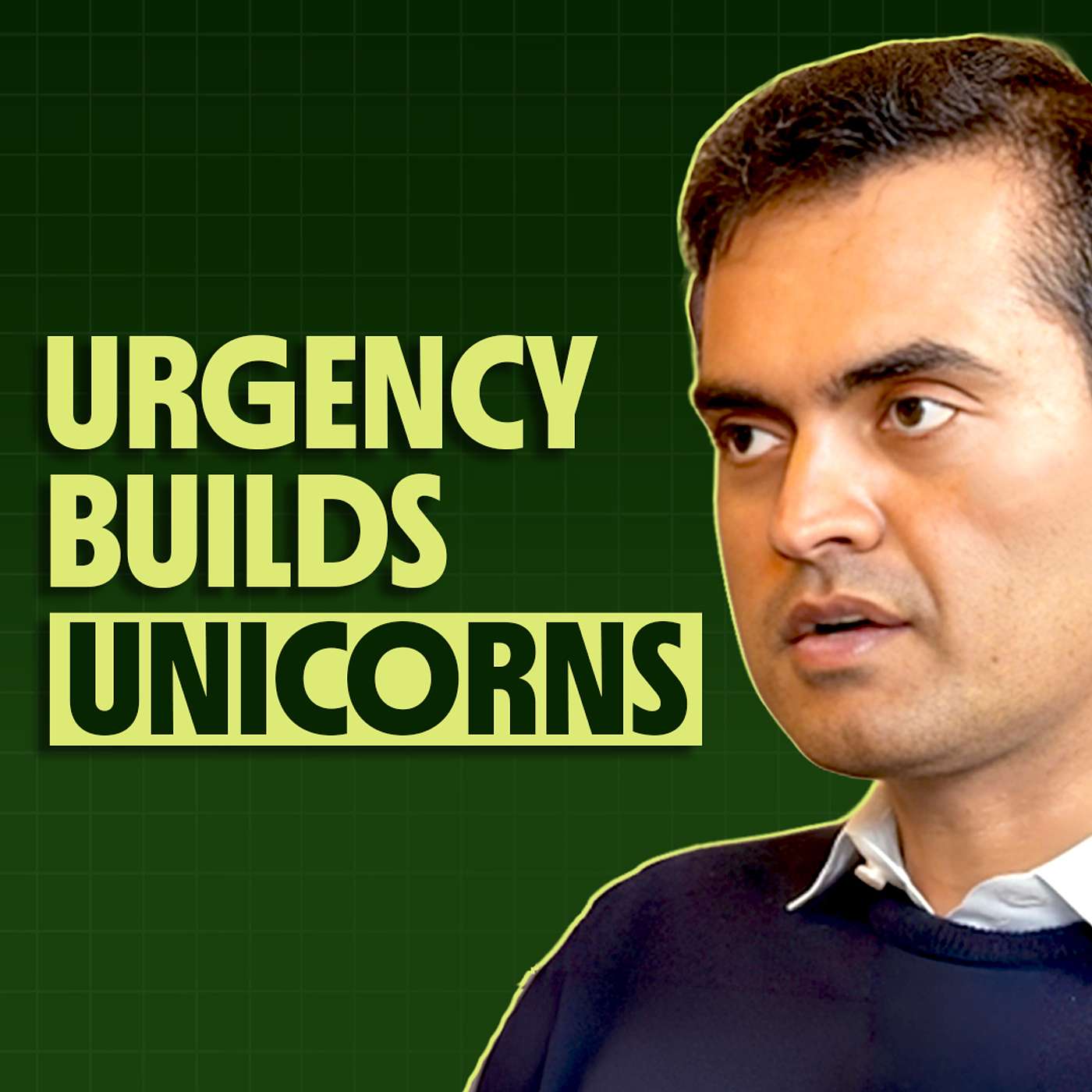
    The #1 Mistake Killing B2B Startups | Arun Penmetsa, Storm Ventures

    Can the biggest AI labs simply walk into any market and replace the software companies already sitting there? Storm Ventures has spent 26 years building an answer for B2B founders. The firm has made close to 200 investments, backed 11 unicorns, and produced some of the cleanest enterprise exits in Silicon Valley, from AirGap Networks selling to Zscaler to earlier winners like Marketo and MobileIron. Its portfolio today runs from Tekion in automotive retail to Atomicwork in IT service management, Krisp in voice AI, and Synthpop in healthcare. Arun Penmetsa is a Partner at the firm. He built enterprise software at Oracle and Google before moving into venture, and he now leads Storm's work in AI, security, and digital health. In this conversation, he is unusually specific about how the decisions actually get made. He meets ten to twelve founders every week; the entire partnership makes only six to eight investments a year, and the single filter he trusts most is urgency. If a buyer can comfortably wait six to twelve months, the pain is not real, and the company is already in trouble. Arun is direct about the question every AI founder now gets asked, which is whether OpenAI or Anthropic will simply take their market. He answers that the foundation model companies will own a handful of core verticals and leave the rest, so the durable business is the one that owns the full stack between the model and the interface and delivers a real outcome inside law, healthcare, construction, or a market as unglamorous as convenience retail. He also lays out where he is placing his next bets, from physical AI and humanoid robots that can retool an assembly line on the fly to vertical companies like Tote that rebuild the software running gas stations and corner stores, where a single day of downtime can cost an owner tens of thousands of dollars. If you are excited about building enduring B2B and AI companies, this episode is for you. 00:00 - Trailer 01:21 - The 26-year-old B2B fund behind AirGapp, Marketo and Tekion 02:47 - The patterns Storm has seen repeat across 200 investments 05:37 - What actually drove seven clean exits 06:37 - The airgap story: the agentless bet that Zscaler bought 13:10 - The one signal Arun trusts more than pedigree 14:37 - Where the moats survive once the models get this good 18:01 - Why Storm backed Atomicwork against ServiceNow 20:00 - Two weeks to decide: how the fastest deals happen 25:27 - The cold email that gets a venture partner to reply 28:52 - The funnel: 500 founders a year, 6 to 8 checks 35:31 - Why Stanford on the resume buys you nothing here 38:13 - The pattern behind every 4 billion dollar outcome 40:44 - The question every AI founder gets: can OpenAI replace you 46:16 - The mistakes that killed companies Arun believed in 50:14 - The million-dollar wall every B2B founder hits 53:30 - Why buyers have already decided before they call you 58:12 - AI agents that stay on a one-hour insurance call 1:08:33 - Physical AI: assembly lines that rebuild themselves 1:12:39 - Tote: the fuel pump they built to win gas stations ------------- India’s talent has built the world’s tech—now it’s time to lead it. This mission goes beyond startups. It’s about shifting the centre of gravity in global tech to include the brilliance rising from India. What is Neon Fund? We invest in seed and early-stage founders from India and the diaspora building world-class enterprise AI companies. We bring capital, conviction, and a community that’s done it before. Subscribe for real founder stories, investor perspectives, economist breakdowns, and a behind-the-scenes look at how we’re doing it all at Neon. ------------- Check us out on: Website: https://neon.fund/ Instagram: https://www.instagram.com/theneonshoww/ LinkedIn: https://www.linkedin.com/company/beneon/ Twitter: https://x.com/TheNeonShoww Connect with Siddhartha on: LinkedIn: https://www.linkedin.com/in/siddharthaahluwalia/ Twitter: https://x.com/siddharthaa7 ------------- This video is for informational purposes only. The views expressed are those of the individuals quoted and do not constitute professional advice. Send us Fan Mail

    • Transcript
  • S1 · E381
    July 17 · 58 min

    Gaurav Jain on Building $500M Fund, Missing Ramp and Backing Irrational Founders

    Gaurav Jain has seen more than 10,000 startups, built the world's largest pre-seed fund, backed startups like Gamma, Hightouch and Goldcast and has missed Ramp(you can't be a great investor without having a great anti-portfolio :)) A decade ago, when Gaurav started Afore Capital, pre-seed wasn't even a recognized category. Today, pre-seed is what some of the world's most ambitious startups raise as their very first institutional capital. When Gaurav Jain and Anamitra Banerji started the firm ten years ago, "pre-seed" was almost a slight, a label for founders who couldn't raise a proper seed round. They set out to build the world's largest pre-seed fund anyway, closing $47 million on a $40 million target, and every fund since has closed above plan. Afore now runs more than $500 million across four funds. In this conversation Gaurav shares his journey from Dehradun to Silicon Valley and every lesson learned about backing great startups. Like how being in the very best companies matters more than anything else. He is also convinced that the genuine bottleneck is talent. There is a great deal of money in the world and very few people who can build something truly large, which is why at the earliest stage founders tend to choose their investors as much as investors choose them. If you want to understand how the earliest checks actually get written, and what it really costs to say no, this episode is worth your time. 00:00 - Trailer 01:00 - From Dehradun to Google to starting Afore 02:08 - The Waterloo co-op that talked him out of every job 03:18 - Back when "pre-seed" was an insult 05:44 - When Sequoia said "I guess we're pre-seed investors too" 07:26 - Afore's three products, and the experiments that failed 09:01 - Hightouch was a travel company when they invested 11:02 - Goldcast: no visa, no money, funded anyway 12:07 - The through line is always the team 14:44 - The Ramp miss 17:24 - "Founders pick us more than we pick them" 18:45 - The constraint isn't capital, it's talent 22:24 - The Solana miss, when it was still Loom Protocol 24:46 - Ramp's Super Bowl ad, the buses, his wife's business 25:32 - What he looks for in founders 28:50 - Coachability, happy ears, and the Mom Test 31:28 - The biggest mistake: falling in love with the idea 35:04 - The three things that matter, and "50% of zero is still zero" 39:25 - "100% storytelling, 0% data" 41:25 - Investing in India, and the fear of being dumb capital 44:41 - "Sign the deal before Monday" 47:26 - One engineer now does the job of 20 51:43 - Raising from LPs, the undiscussed part of VC ------------- India’s talent has built the world’s tech—now it’s time to lead it. This mission goes beyond startups. It’s about shifting the center of gravity in global tech to include the brilliance rising from India. What is Neon Fund? We invest in seed and early-stage founders from India and the diaspora building world-class Enterprise AI companies. We bring capital, conviction, and a community that’s done it before. Subscribe for real founder stories, investor perspectives, economist breakdowns, and a behind-the-scenes look at how we’re doing it all at Neon. ------------- Check us out on: Website: https://neon.fund/ Instagram: https://www.instagram.com/theneonshoww/ LinkedIn: https://www.linkedin.com/company/beneon/ Twitter: https://x.com/TheNeonShoww Connect with Siddhartha on: LinkedIn: https://www.linkedin.com/in/siddharthaahluwalia/ Twitter: https://x.com/siddharthaa7 ------------- This video is for informational purposes only. The views expressed are those of the individuals quoted and do not constitute professional advice. Send us Fan Mail

    • Transcript
  • S1 · E380
    July 14 · 1 hr 7 min

    And How Matic Sold 6000 Robots with Zero Marketing | Navneet Dalal & Mehul Nariyawala

    What does it actually take to build a robot that cleans your home when everyone before has failed? Matic is a home robot that sweeps and mops your floors, navigating entirely with cameras, no LIDAR. It shipped its first unit in 2024 and has since sold 6,000 units at ~2,000 a month, almost entirely by word of mouth. And is now the largest consumer robotics company shipping in the United States. Navneet Dalal (a computer-vision pioneer who co-invented HOG) and Mehul Nariyawala met building Flutter, a gesture-recognition app that became #1 in 72 countries and was acquired by Google, where they then worked on Nest cameras and shipped one of the first deep learning algorithms in the wild. Matic is the company they decided would be their last: they wrote "Not For Sale" on the wall on day one and built it to last 20 to 30 years. Their bet was deliberately contrarian. They chose the "unsexy" floor-cleaning market, a category with a net promoter score of -1 that people keep buying anyway (21 million robot vacuums sold in 2024), because entering an existing market beats creating a new one and because it's the foundation for true indoor autonomy. Then they put roughly $35 million of their own money in, about 70% of their net worth, with no plan B. Along the way they lay out a full worldview: why robotics is 100x harder than software (the demo is only the first 20% of the work); why humanoids doing your chores are still 5 to 20 years away (the data problem), why no consumer hardware sells above $2,000; and the skin-in-the-game philosophy captured by his late father's advice: "Sell your home if you have to, but keep the company alive." If you're excited about how home robots actually get built and what it really takes to bet everything on hard tech, this episode is for you. 00:00 - Trailer 01:08 - When they quit Google to start Matic 03:30 - Solving home cleaning with cameras only — no LIDAR 04:46 - The $35M bet: funding Matic themselves 07:36 - What a "level 5" robot in your home really means 08:00 - Why they started with floor cleaning — on purpose 09:45 - The rule: never create a new market with your first product 10:02 - iPod, iPhone, Tesla — all entered existing markets 11:38 - Why new hardware gives you only one shot 13:02 - "Make something people NEED, not want" 16:25 - Why the demo is only 20% of robotics 18:50 - Teaching a robot like raising a child 21:30 - How far are humanoids from real homes? 22:22 - The data problem: "500 years of driving data a day" 22:56 - 90% in the lab, 60% in the real world 26:49 - Why no consumer device sells above $2,000 27:38 - Would you buy a $10,000 humanoid — for what? 28:47 - "History rhymes": General Magic to the iPhone 29:38 - Earning trust after 20 years of broken robot promises 30:31 - Shipping the first robot 30:45 - 6,000 units, all word of mouth, zero marketing 31:10 - Why they're US-only for now 31:50 - The investors: Sutter Hill to the Collison brothers 33:20 - Two companies, both acquired by Google 35:00 - The Flutter story: #1 app in 72 countries 35:25 - Why nobody believed machine learning worked in 2011 38:40 - Microsoft Kinect: 8 million units in 60 days 40:30 - The Google acquisition — and the $35M number 44:40 - The near-death moment: switching to NVIDIA 53:10 - iRobot's bankruptcy and what it means for Matic 53:55 - The real scale of robotics: 21M robot vacuums a year 57:45 - Putting 70% of their net worth on the line 58:40 - His father's advice: "sell your home, keep the company" ------------- India’s talent has built the world’s tech—now it’s time to lead it. This mission goes beyond startups. It’s about shifting the center of gravity in global tech to include the brilliance rising from India. What is Neon Fund? We invest in seed and early-stage founders from India and the diaspora building world-class Enterprise AI companies. We bring capital, conviction, and a community that’s done it before. Subscribe for real founder stories, investor perspectives, economist breakdowns, and a behind-the-scenes look at how we’re doing it all at Neon. ------------- Check us out on: Website: https://neon.fund/ Instagram: / theneonshoww LinkedIn: / beneon Twitter: https://x.com/TheNeonShoww Connect with Siddhartha on: LinkedIn: / siddharthaahluwalia Twitter: https://x.com/siddharthaa7 ------------- This video is for informational purposes only. The views expressed are those of the individuals quoted and do not constitute professional advice. Send us Fan Mail

    • Transcript
  • S1 · E379
    July 9 · 1 hr 9 min

    How to Solve AI's Biggest Problem | Atin Sanyal, Galileo

    How do you know whether an AI agent is doing its job or quietly failing in production? Galileo is building the trust layer for AI. Its evaluation and observability platform is how enterprises measure whether the output of an LLM or an agent is good or bad. Galileo started before "LLM" was even a word. When Atin showed his prototype to Stanford's Chris Ré, his own first question was "what is a language model?" Today its customers include Reddit, Airbnb, P&G, Comcast, and six of the Fortune 50. Atin spent a decade in big tech before co-founding Galileo with Vikram Chatterji in early 2021. He worked on the knowledge graphs behind Siri at Apple, then became one of the leads and architects of Michelangelo, Uber's AI platform, that hosts thousands of models across pricing, ETA, and demand. That Uber experience taught him the lesson the whole company is built on; that in AI, observability and evaluation are the real bottleneck, and bad data is catastrophic. As ChatGPT turned every AI output into something a user sees directly, the measurement problem went from academic to mission-critical. So Atin made a contrarian bet: instead of using giant LLMs to judge other LLMs, Galileo built Luna, small 1-3B parameter models that run evals at breakthrough latencies of 100 milliseconds and below. If you are excited about how AI actually gets shipped, trusted, and controlled inside real enterprises, this episode is for you. 00:00 - Trailer 01:14 - From India to Apple, Uber, and Galileo 01:34 - Where the name "Galileo" came from 02:38 - Building Siri's early knowledge graphs at Apple 03:29 - Becoming an architect of Uber's Michelangelo 05:15 - Why every AI output is now mission-critical 06:45 - How Atin and Vikram zeroed in on Galileo 07:42 - "What is a language model?" 09:38 - Building the world's first feature store at Uber 11:27 - Language models and tokens, explained simply 14:19 - Where the observability insight came from 15:53 - Quantifying uncertainty and hallucinations 16:36 - The first customers and first use case 19:15 - How the product evolved from a data scientist tool 23:18 - Why ChatGPT changed everything for Galileo 23:57 - The enterprise AI adoption curve, 2021 to 2026 26:35 - Why they built the Luna model 28:32 - Turning LLM "writers" into "calculators" 28:51 - Attacking the latency problem 31:48 - Luna: the modeling and infrastructure innovation 33:09 - What evals are, and why they blew up 34:26 - The case for small language models 36:58 - What "general reasoning" really means 40:39 - AI usage is exploding — and why that matters 43:08 - Online vs offline: the "it worked on my machine" problem 44:33 - The evals flywheel and evals-driven development 46:56 - Galileo in a nutshell 47:39 - What real agents in production look like today 49:30 - A sales intelligence platform, powered by Galileo 50:47 - The agent control product 52:12 - Building GTM as a hardcore engineer from India 54:43 - Garbage in, garbage out: nailing the ICP 55:42 - How the pitch changed from customer 1 to 20 57:27 - Why Atin switched from CTO to CPO ------------- India’s talent has built the world’s tech—now it’s time to lead it. This mission goes beyond startups. It’s about shifting the center of gravity in global tech to include the brilliance rising from India. What is Neon Fund? We invest in seed and early-stage founders from India and the diaspora building world-class Enterprise AI companies. We bring capital, conviction, and a community that’s done it before. Subscribe for real founder stories, investor perspectives, economist breakdowns, and a behind-the-scenes look at how we’re doing it all at Neon. ------------- Check us out on: Website: https://neon.fund/ Instagram: https://www.instagram.com/theneonshoww/ LinkedIn: https://www.linkedin.com/company/beneon/ Twitter: https://x.com/TheNeonShoww Connect with Siddhartha on: LinkedIn: https://www.linkedin.com/in/siddharthaahluwalia/ Twitter: https://x.com/siddharthaa7 ------------- This video is for informational purposes only. The views expressed are those of the individuals quoted and do not constitute professional advice. Send us Fan Mail

    • Transcript
  • S1 · E378
    July 7 · 55 min

    Beating SBI, 1% NPAs & India's Massive Loan Gap I Victor Senpaty Co-Founder Propelld

    Who is funding the students that India's banks won't touch? Propelld is one of India's largest education-focused lenders, giving loans to roughly 1.5 lakh students every year — matching SBI — with a team a fraction of the size and no branch network. In a single financial year it now disburses more education loans than SBI did in six years of its history. Victor started Propelld in 2016 with a thesis born out of a Milton Friedman paper: a good student should never have to walk away from a good opportunity just because they don't have the money. Propelld hit its stride by going exactly where traditional lenders refuse to — 70% of its borrowers come from tier-3 cities, a segment banks treat as too risky. Instead of chasing the safe 1% of students at IITs and IIMs, Victor made a bet most lenders never make. He built the ability to underwrite the end-use itself — a "Crystal score" for institutes and courses that measures employability and real ROI. The result: NPAs held at ~1%, roughly one-tenth of what banks see the moment they step outside tier-1. Victor has a clear view of where lending goes next. In a post-LLM world, risk, distribution, and fulfillment get radically more efficient — one person already drives ₹50 crore of disbursal a year, and OPEX is projected to fall toward 2% at ₹6,000 crore AUM. His ranking never changes: NPAs first, unit economics second, growth third. If you are excited about how AI is rebuilding lending — and who gets to dream bigger because of it — this episode is for you. 00:00 - Trailer 00:50 - The two numbers that tell Propelld's story 01:55 - Why 70% of borrowers come from tier-3 cities 02:21 - How NPAs stay at 1% 02:52 - Why education is a great asset class 04:04 - Building a "Crystal score" for institutes and courses 05:31 - End-use control: why an education loan isn't a personal loan 06:27 - Why banks only lend to IITs and IIMs 08:36 - Measuring employability to underwrite the end-use 10:23 - 10 years at the intersection of fintech and edtech 11:46 - Why education financing is only ~5% penetrated 17:53 - Do India's graduate really not get a job? 21:12 - The 8% data point, and quantifying ROI 22:24 - The social mobility no one can price 25:39 - From IIT Madras and a global bank to building Propelld 27:41 - How the post-LLM world rewires lending 30:26 - How fast an institute gets onboarded and a loan disbursed 32:12 - Profitable at a ₹1 lakh ticket size 34:13 - The financials: doubling revenue, holding costs flat to FY30 37:19 - Lending as an ecosystem enabler, not just a loan 39:33 - The most valuable courses in a post-LLM world 41:40 - The bet on arts graduates as coding gets commoditized 43:32 - The Milton Friedman paper that started it all 46:53 - 100 investors, and the few who said yes 48:33 - Co-founding with school friends since class 6 50:24 - Settling disagreements over food and Hampi trips 51:31 - The most common mistake fintech founders make 52:51 - The one metric that ranks above everything: NPAs ------------- India’s talent has built the world’s tech—now it’s time to lead it. This mission goes beyond startups. It’s about shifting the center of gravity in global tech to include the brilliance rising from India. What is Neon Fund? We invest in seed and early-stage founders from India and the diaspora building world-class Enterprise AI companies. We bring capital, conviction, and a community that’s done it before. Subscribe for real founder stories, investor perspectives, economist breakdowns, and a behind-the-scenes look at how we’re doing it all at Neon. ------------- Check us out on: Website: https://neon.fund/ Instagram: https://www.instagram.com/theneonshoww/ LinkedIn: https://www.linkedin.com/company/beneon/ Twitter: https://x.com/TheNeonShoww Connect with Siddhartha on: LinkedIn: https://www.linkedin.com/in/siddharthaahluwalia/ Twitter: https://x.com/siddharthaa7 ------------- This video is for informational purposes only. The views expressed are those of the individuals quoted and do not constitute professional advice. Send us Fan Mail

    • Transcript
Showing 1–20 of 29 episodes