Skip to content
Artwork for The Marketing Engineer
BusinessMarketingManagement

The Marketing Engineer

Profound

The show for marketers who build. Marketing Engineers pair creativity with systems thinking. They have a marketer’s instincts and creativity with the technical ability to bring their ideas to life. They’re architects, agentic operators, and craftspeople with high taste.

Hear directly from practitioners and leaders who've reorganized how their teams operate, built marketing workflows for scale and quality, and invented capabilities that didn't exist before.

From Profound, the company building the workbench for the Marketing Engineer.

New episodes every two weeks.

Play
  • 15 episodes
  • fortnightly
  • Avg 35 min
  • English
  • #14
    Yesterday · 35 min

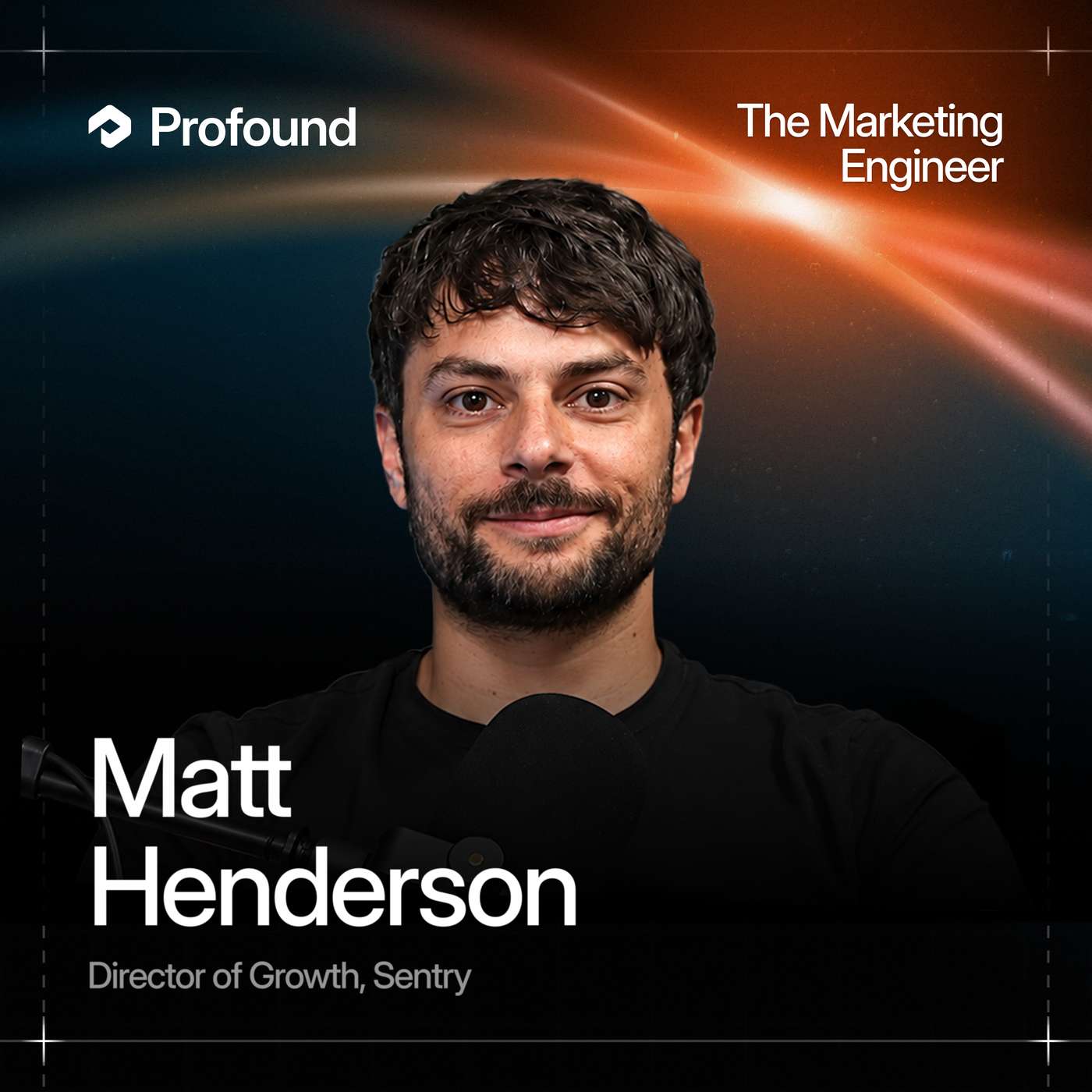
    70% of Sentry’s Signups Now Come From AI Search. Here’s How | Matt Henderson

    In just a few quarters, AI search went from driving 15–20% of Sentry's new signups to nearly 70%, becoming the company's largest acquisition channel. Behind that growth is a marketing strategy that combines brand awareness, AI search optimization, and a new approach to creating content that both people and AI agents can use. Matt Henderson, Director of Growth at Sentry, joins Nick Lafferty, Founding Marketing Engineer at Profound, to discuss how Sentry became one of the tools AI consistently recommends and what other marketers can learn from its approach. They explore how Sentry is improving its visibility in AI search, why the company invests 70% of its growth budget in brand awareness, and how moving away from a traditional CMS has helped the team ship website updates faster. Matt also shares how Sentry is creating content specifically for AI agents, building custom tools to scale influencer marketing, and using AI to rethink how its growth team operates. We discuss: How Sentry went from getting 15–20% of its signups from AI search to nearly 70% Why AI search is reshaping the traditional marketing funnel How Sentry tracks and improves its visibility in AI recommendations Why Sentry invests 70% of its growth budget in brand awareness How removing its traditional CMS helped Sentry ship website updates faster How Sentry creates content that AI agents can discover and use Why influencer marketing is becoming increasingly valuable for AEO How Matt built custom AI tools to scale Sentry's influencer marketing program Why Sentry acquired the Syntax podcast as part of its brand awareness strategy How AI is changing the skills marketers need to succeed Connect with Matt: LinkedIn: https://www.linkedin.com/in/matthewjhenderson/ Matt’s Substack: https://hendersonmatthew.substack.com/ Sentry: https://www.linkedin.com/company/getsentry/ Connect with Profound: Website: https://tryprofound.com LinkedIn: https://www.linkedin.com/company/tryprofound/ X: https://x.com/tryprofound Read the Marketing Engineer Manifesto: https://www.tryprofound.com/marketing-engineer Profound University: https://university.tryprofound.com/ The Marketing Engineer is a show for practitioners figuring out in real time what it means to market at the frontier. New episodes every two weeks.
  • #13
    November 11 · 44 min

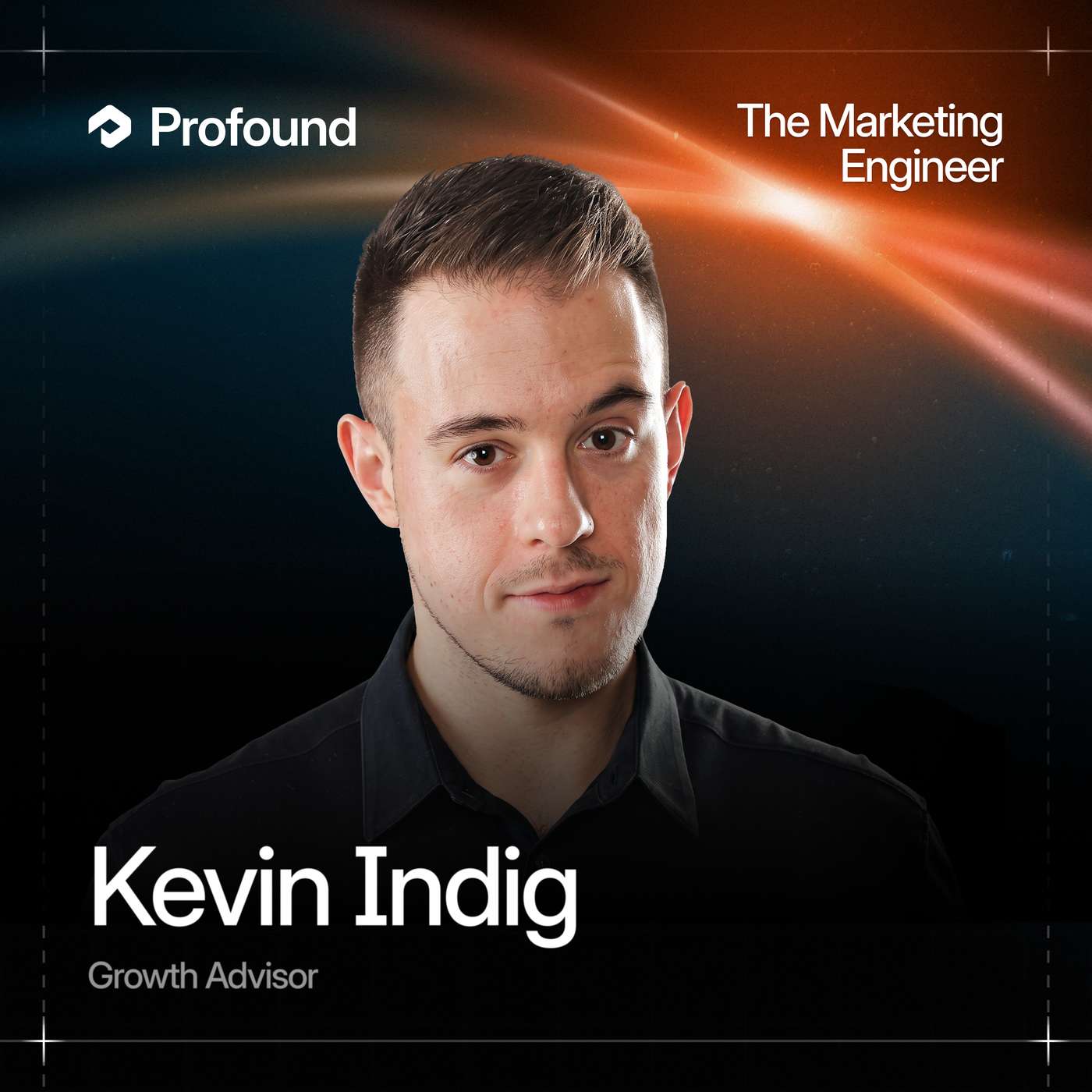
    What This New Study Reveals About How People Shop With ChatGPT | Kevin Indig

    ChatGPT is changing how people research products, compare options, and decide what to buy. A new study offers a closer look at how consumers use AI recommendations to make those decisions. In a research collaboration between Kevin Indig, Profound, and Eric Van Buskirk of Clickstream Solutions, 56 participants completed 221 product-comparison tasks in ChatGPT. The researchers found that participants often formed shortlists without visiting other websites, rarely verified AI-generated claims externally, and frequently considered brands suggested by ChatGPT. Kevin joins Josh Blyskal, Founding AI Strategist at Profound, to discuss what the findings reveal about the participants' behavior and what they could mean for the future of SEO, AEO, and marketing. They explore how AI-generated shortlists influence which brands consumers consider, why brand trust still plays an important role, and how marketers can improve their visibility in AI search. Kevin also shares his perspective on the challenges of measuring AI's influence on purchases, early observations and opportunities around advertising in ChatGPT, and how brands can adapt their strategies as consumer behavior evolves. We discuss: How the study examined consumer buying behavior in ChatGPT Why participants often relied on ChatGPT's recommendations without external verification The influence of AI-generated shortlists on which brands participants considered Why brand trust can outweigh a top recommendation from ChatGPT ChatGPT's potential to reshape the traditional marketing funnel The importance of focusing on search intent rather than exact prompts How brands can use query fan-outs to improve their AI search visibility The challenges of measuring AI search's influence through traditional attribution Early observations and opportunities around advertising in ChatGPT Strategies for adapting SEO and AEO as consumer behavior evolves Read the full study here: https://www.tryprofound.com/blog/the-shortlist-is-the-new-shelf Connect with Kevin: LinkedIn: https://www.linkedin.com/in/kevinindig/ Growth Memo: https://www.growth-memo.com/ Connect with Profound: Website: https://tryprofound.com LinkedIn: https://www.linkedin.com/company/tryprofound/ X: https://x.com/tryprofound Read the Marketing Engineer Manifesto: https://www.tryprofound.com/marketing-engineer Profound University: https://university.tryprofound.com/ The Marketing Engineer is a show for practitioners figuring out in real time what it means to market at the frontier. New episodes every two weeks.
  • #12
    November 4 · 38 min

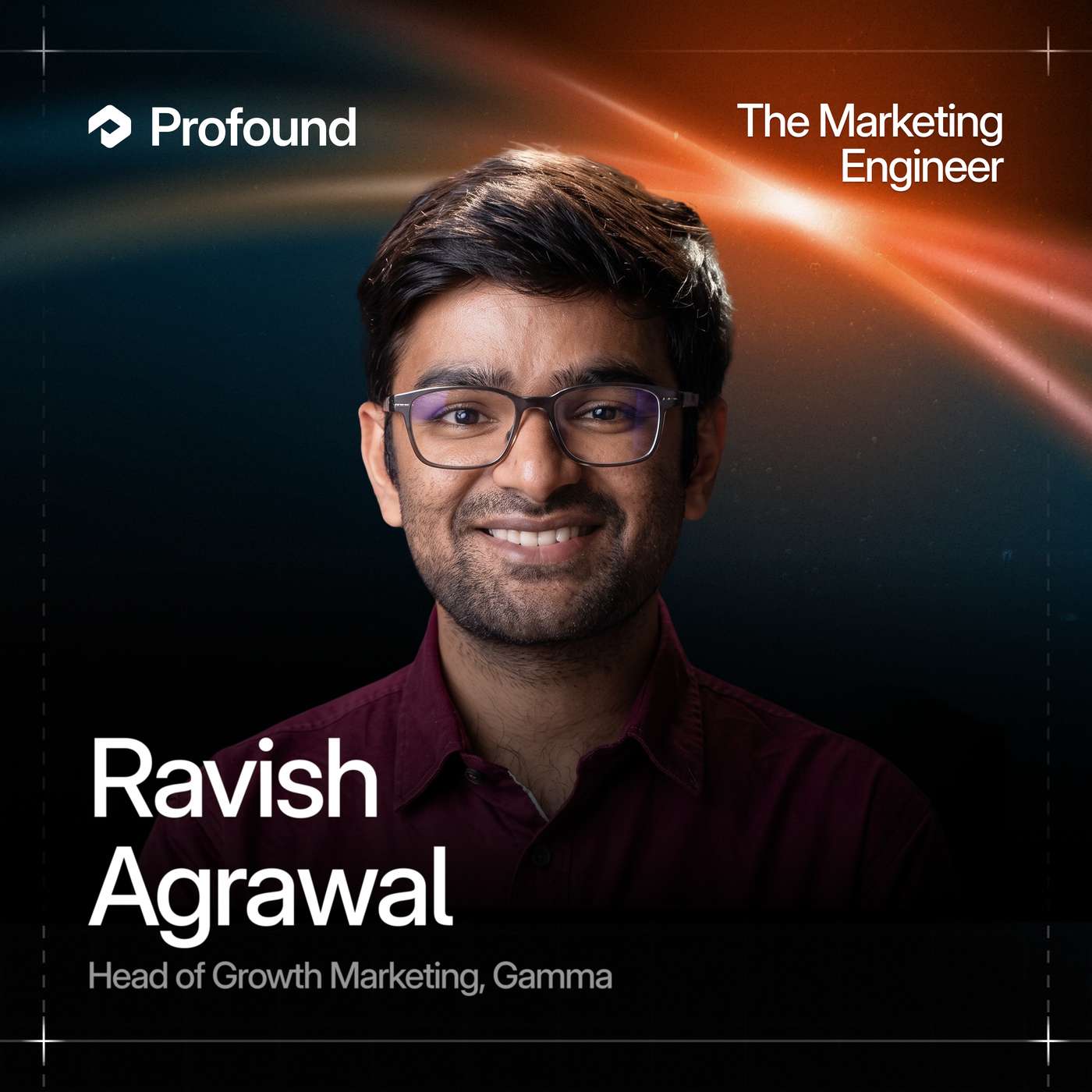
    How Gamma Made AI Search a Top Acquisition Channel | Ravish Agrawal

    AI search has become one of Gamma's biggest growth channels, and behind it is a system built to continuously track performance, identify opportunities, and turn insights into new content. Ravish Agrawal, Head of Growth Marketing at Gamma, joins Nick Lafferty to share how he’s building an automated SEO and AEO operation using Claude, connecting marketing tools through MCPs and finding new ways to scale growth with a lean team. Ravish also gets into how Gamma measures the impact of AI search, what it takes to discover growth opportunities before competitors do, and why the next generation of marketers will need to combine technical skills with creativity and good judgment. We discuss: How Gamma turned AI search into one of its top three acquisition channels How Ravish built an automated SEO and AEO factory using Claude How Gamma uses MCPs to connect marketing tools, data and workflows Why finding growth opportunities before competitors is so important How Gamma measures AI search performance and navigates attribution challenges What Ravish learned from experimenting with ChatGPT ads Why Gamma is hiring for new roles like AI creative strategist How AI is changing the skills and responsibilities of growth marketers Why Ravish believes human judgment and creativity should never be fully automated Connect with Ravish: LinkedIn: https://www.linkedin.com/in/ravishagrawal Gamma: https://gamma.app/ Connect with Profound: Website: https://tryprofound.com LinkedIn: https://www.linkedin.com/company/tryprofound/ X: https://x.com/tryprofound Read the Marketing Engineer Manifesto: https://www.tryprofound.com/marketing-engineer Profound University: https://university.tryprofound.com/ The Marketing Engineer is a show for practitioners figuring out in real time what it means to market at the frontier. New episodes every two weeks.
  • #11
    October 21 · 36 min

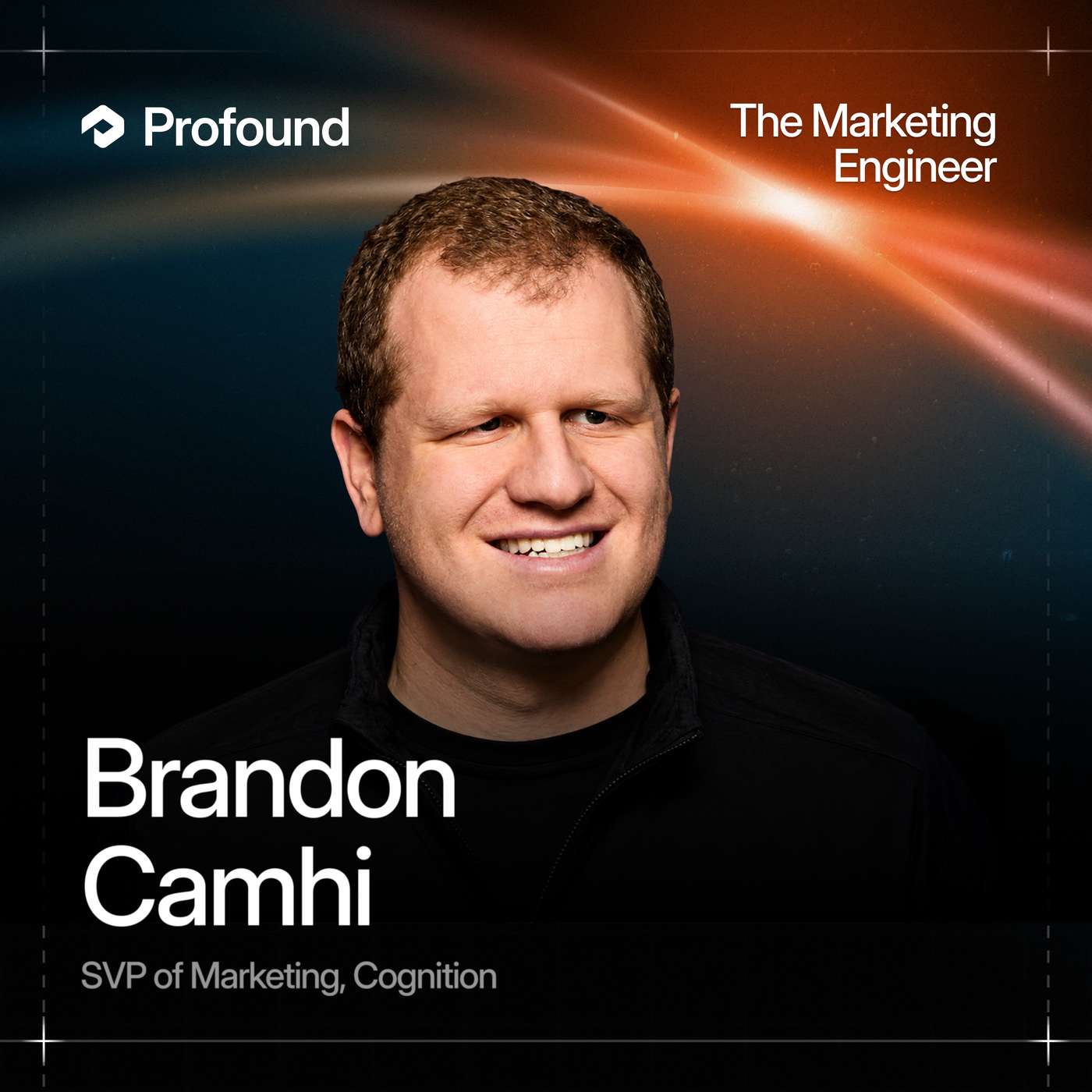
    The New Rules of Building a High-Growth Marketing Team | Brandon Camhi, Cognition

    Cognition crossed $1 billion in revenue run rate in roughly two years. Now, its new SVP of Marketing, Brandon Camhi, is taking on the challenge of scaling its marketing organization to match the company's rapid growth. With the company growing at an incredible pace, Brandon is rethinking how a modern marketing organization should operate. He's recruiting some of the best talent in the industry, challenging traditional org structures, and putting AI to work across the entire function. One of his first moves? Launching a $10 million billboard campaign across 14 cities in just one week. In this episode, Brandon joins Profound’s Trevor Pyle to share what he learned scaling marketing at Rippling and how he’s applying those lessons at Cognition. They get into the AI-powered workflows his team is building, why he believes brand investment should start early, how AEO fits into the bigger picture, and why he isn't worried about AI replacing CMOs. We discuss: The first priorities when taking over marketing at a billion-dollar company How a $10 million global billboard campaign came together in just one week Why Brandon is rethinking traditional marketing org charts The unconventional recruiting approach he uses to attract top talent What he learned from his biggest mistakes at Rippling How Cognition uses Devin to streamline paid ads, lead management, and internal reporting Why high-quality storytelling matters in enterprise marketing How AEO connects to everything from customer reviews to social media The interview exercise Brandon considers more valuable than a case study Why he isn't worried about AI replacing CMOs Connect with Brandon: LinkedIn: https://www.linkedin.com/in/bcamhi/ Cognition: https://cognition.com/ Connect with Profound: Website: https://tryprofound.com LinkedIn: https://www.linkedin.com/company/tryprofound/ X: https://x.com/tryprofound Read the Marketing Engineer Manifesto: https://www.tryprofound.com/marketing-engineer Profound University: https://university.tryprofound.com/ The Marketing Engineer is a show for practitioners figuring out in real time what it means to market at the frontier. New episodes every two weeks.
  • #10
    October 14 · 39 min

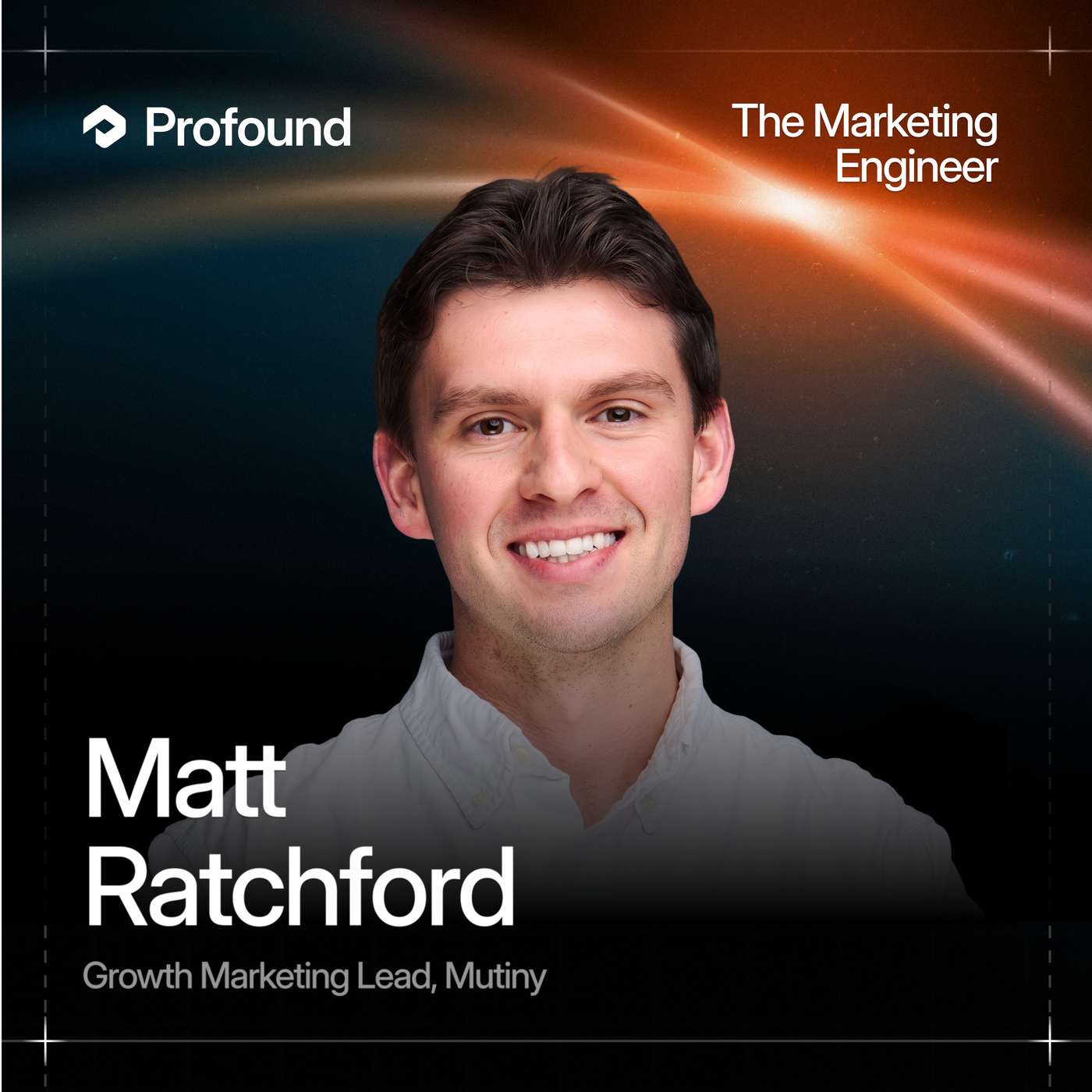
    How Much Can One Marketer Do With AI? | Matt Ratchford, Mutiny

    One headline change increased Mutiny’s signups by 71 percent overnight. For Matt Ratchford, the company’s entire growth marketing team, it was another lesson in how much leverage a solo marketer can create by focusing on the right problems. Matt has been helping rebuild Mutiny’s narrative after a pivot from website personalization to an AI sales assistant. Working as a team of one has forced him to be ruthless about prioritization and deliberate about where AI actually adds leverage, shaping everything from Mutiny’s AEO strategy and content systems to its website messaging. Matt explains how he runs growth in six-to-eight-week bets, why he still cold outreaches to people every day to learn faster, how Mutiny is building systems around AI search and content distribution, and why the best marketers will combine deep domain expertise with the ability to use AI across a much broader range of work. We discuss: How Matt runs growth at Mutiny as a one-person marketing team Why AI can accelerate you in the wrong direction if the process is broken The six-to-eight-week bet system he uses to prioritize what to work on The headline change that increased signups by 71 percent overnight How Mutiny is rebuilding its narrative for the AI search era Why Matt still cold outreaches to people every day to learn faster Building AEO and content distribution systems around a team of one Why deep domain expertise still matters in an AI-powered marketing team Connect with Matt: LinkedIn: https://www.linkedin.com/in/matt-ratchford-940019142/ Mutiny: https://www.mutinyhq.com/ Connect with Profound: Website: https://tryprofound.com LinkedIn: https://www.linkedin.com/company/tryprofound/ X: https://x.com/tryprofound Read the Marketing Engineer Manifesto: https://www.tryprofound.com/marketing-engineer Profound University: https://university.tryprofound.com/ Resources Mentioned: Matt’s Substack Newsletter: https://mattratchford.substack.com/ The Marketing Engineer is a show for practitioners figuring out in real time what it means to market at the frontier. New episodes every two weeks.
  • #9
    September 30 · 39 min

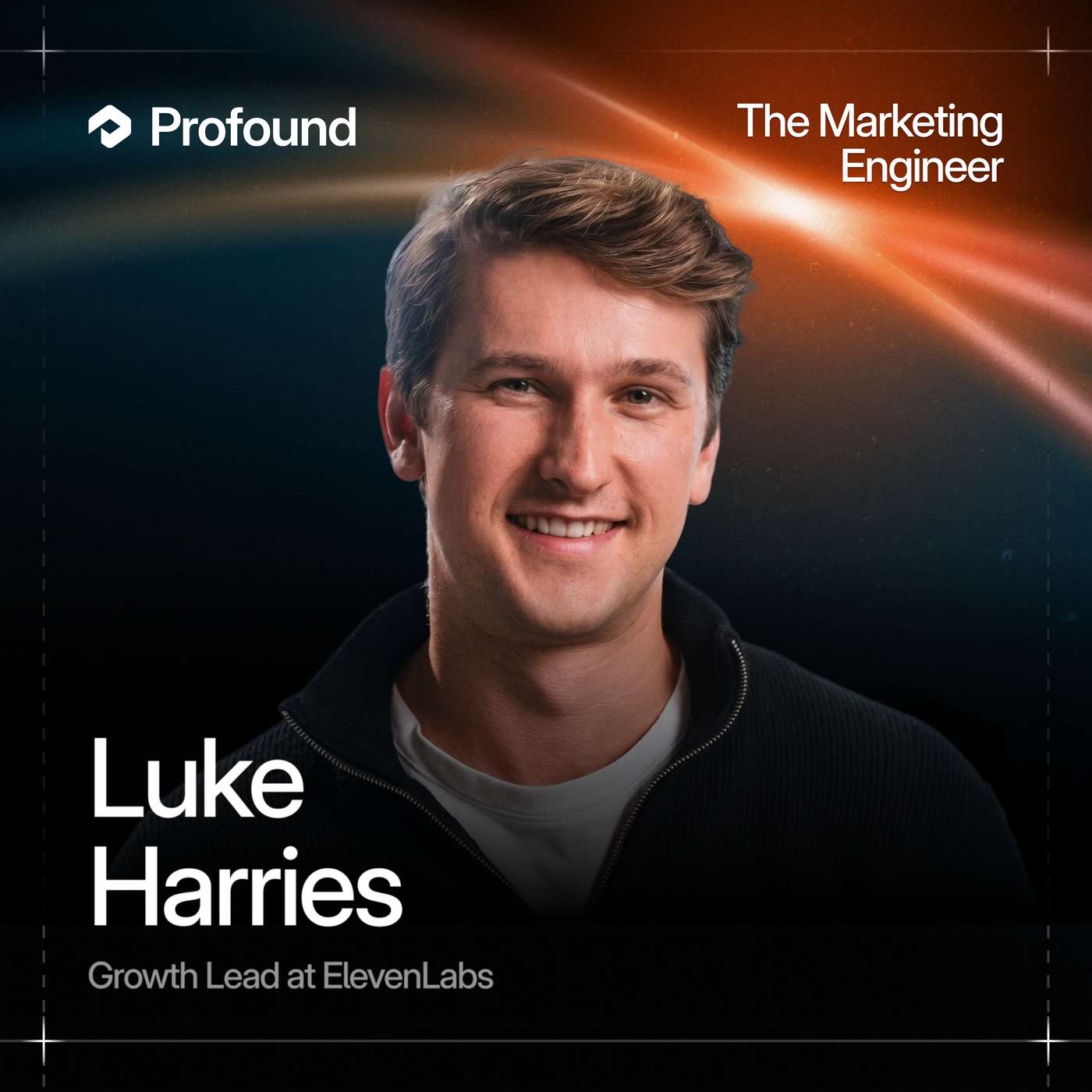
    From $100K to $8M Pipeline With AI | Luke Harries, ElevenLabs

    Until this year, webinars at ElevenLabs were mostly ad hoc, run by whoever on the sales team had the bandwidth. Then one person used AI to turn the process into a real system, taking the pipeline from about $100,000 to more than $8 million by the end of H1. That’s just one example of how ElevenLabs is using AI to rethink marketing. Luke Harries, who leads growth at the company behind some of the most realistic AI voice models in the world, shares how that thinking extends beyond webinars, from replacing a $40,000 ad localization tool with an AI system that drove $3 million in incremental revenue, to turning this internal tool into a full-fledged product other companies can now use for themselves. Luke breaks down what’s working, how they’re measuring AI ROI, and what this shift could mean for the future of marketing. We discuss: Why ElevenLabs built its own internal Marketing Engineer role The real test for whether a background agent is actually working How one webinar system took pipeline from $100,000 to $8 million How they replaced a $40,000 localization tool with AI How a wave of one-star reviews turned into a $10 million ARR product Why international expansion breaks most SDR systems, and how AI fixed it Connect with Luke: LinkedIn: https://www.linkedin.com/in/luke-harries/ ElevenLabs: https://elevenlabs.io/ Connect with Profound: Website: https://tryprofound.com LinkedIn: https://www.linkedin.com/company/tryprofound/ X: https://x.com/tryprofound Read the Marketing Engineer Manifesto: https://www.tryprofound.com/marketing-engineer Profound University: https://university.tryprofound.com/ The Marketing Engineer is a show for practitioners figuring out in real time what it means to market at the frontier. New episodes every two weeks.
  • #8
    September 16 · 38 min

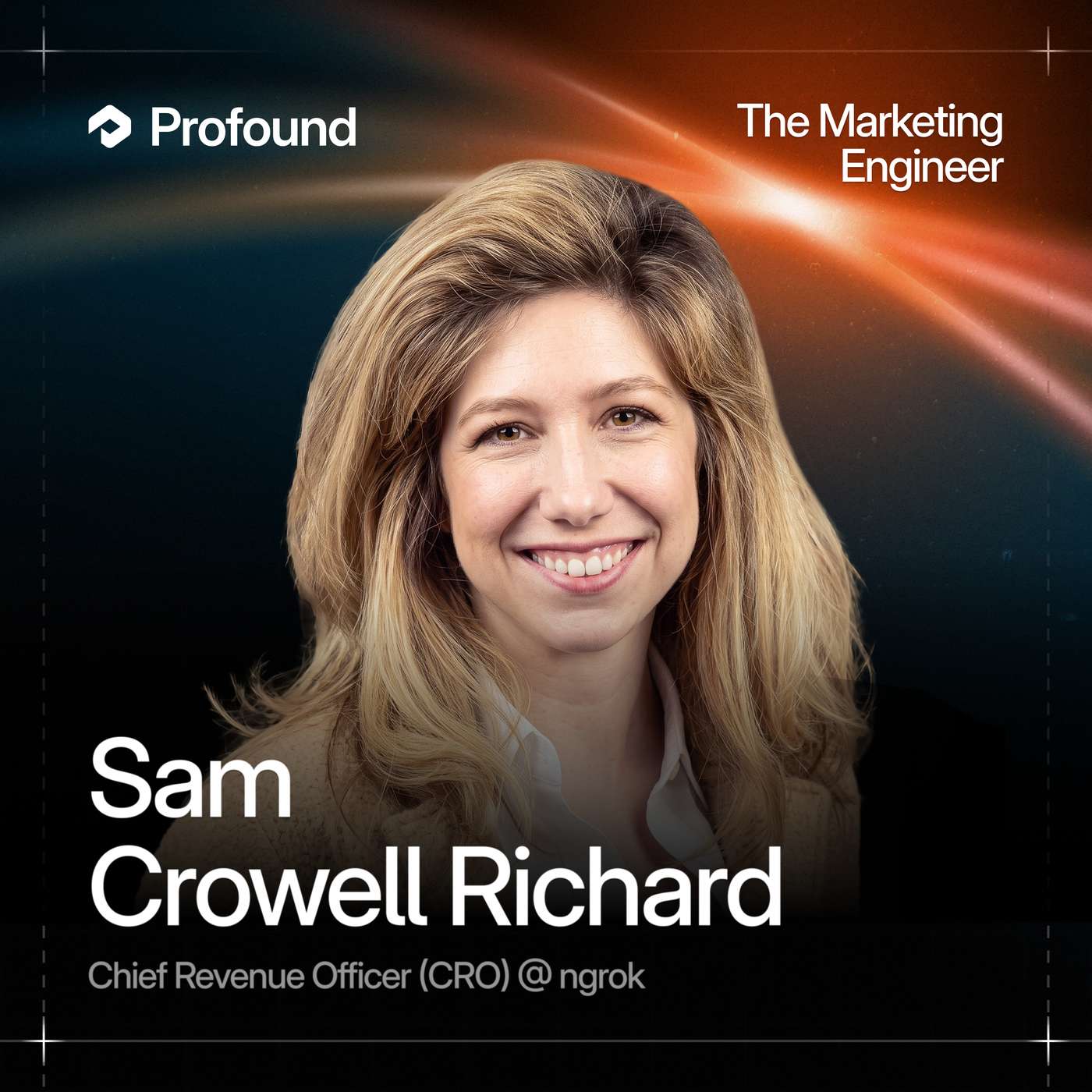
    Inside the AI Operating System of a Modern CRO | Sam Richard, ngrok

    She used to lose an hour every morning checking dashboards and manually looking for trends. Today, Sam Richard, Chief Revenue Officer at ngrok, has replaced that routine with an AI system that does it for her. It's one of many systems she's built to give herself more leverage. From managing her family's schedule to monitoring product and customer signals at ngrok, she's constantly looking for repetitive work she can hand off to AI. Sam explains how she decides between local and frontier models, how LLMs are changing customer acquisition at ngrok, and why she believes the best way to start with AI is simply narrating your day and letting it find the bottlenecks. We discuss: How she automated her morning dashboard review Choosing between local and frontier models The household AI assistant she built for her family The AEO and SEO experiments behind ngrok's website rebuild Why ngrok referrals from LLMs are growing 40 percent month over month Her advice for any growth leader getting started with AI Connect with Sam: X: https://x.com/SamCRichard LinkedIn: https://www.linkedin.com/in/sam-crowell-richard/ ngrok: https://ngrok.com Connect with Profound: Website: https://tryprofound.com LinkedIn: https://www.linkedin.com/company/tryprofound/ X: https://x.com/tryprofound Read the Marketing Engineer Manifesto: https://www.tryprofound.com/marketing-engineer Profound University: https://university.tryprofound.com/ The Marketing Engineer is a show for practitioners figuring out in real time what it means to market at the frontier. New episodes every two weeks.
  • #7
    September 2 · 32 min

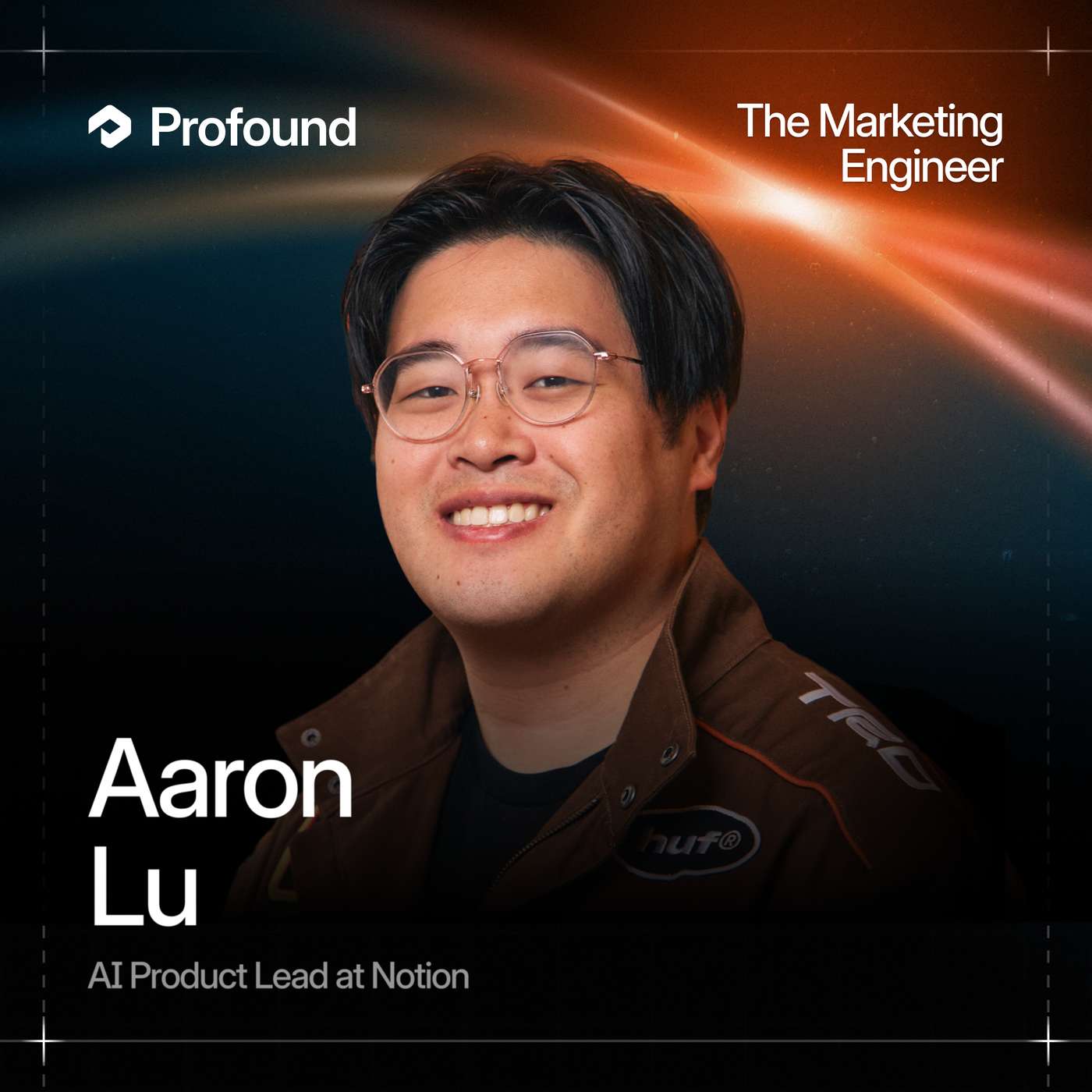
    How Notion Uses AI Agents to Run Smarter Ad Campaigns | Aaron Lu

    I agents are bringing a new level of automation to ad operations. Aaron Lu, AI Product Lead at Notion, shares how his team is using AI across growth marketing, building agents that automate workflows, monitor spend in real time, and enable capabilities that advertising platforms don't support natively. Aaron explains how he decides what should become an AI agent versus a simple automation, how he builds feedback loops that improve agents over time, and what it takes to orchestrate multiple agents. He also breaks down the competitor-monitoring system that won Profound's Marketing Engineering Hackathon and how building with parallel agents changed his workflow. We discuss: How a marketer's job shifted from doing the work to designing AI systems Why a good cost-per-lead number can still hide wasted ad spend The swarm of AI agents running Notion's ad operations How he built an AI agent for LinkedIn dayparting, a feature the platform doesn't natively support The creative duplication agent that saves a day of work every week What he would do differently on his hackathon-winning project How to decide what to automate first Connect with Aaron: LinkedIn: https://www.linkedin.com/in/aaron-lu/ Notion: https://www.notion.com/ Connect with Profound: Website: https://tryprofound.com LinkedIn: https://www.linkedin.com/company/tryprofound/ X: https://x.com/tryprofound Read the Marketing Engineer Manifesto: https://www.tryprofound.com/marketing-engineer Profound University: https://university.tryprofound.com/ The Marketing Engineer is a show for practitioners figuring out in real time what it means to market at the frontier. New episodes every two weeks.

  • #6
    August 20 · 40 min

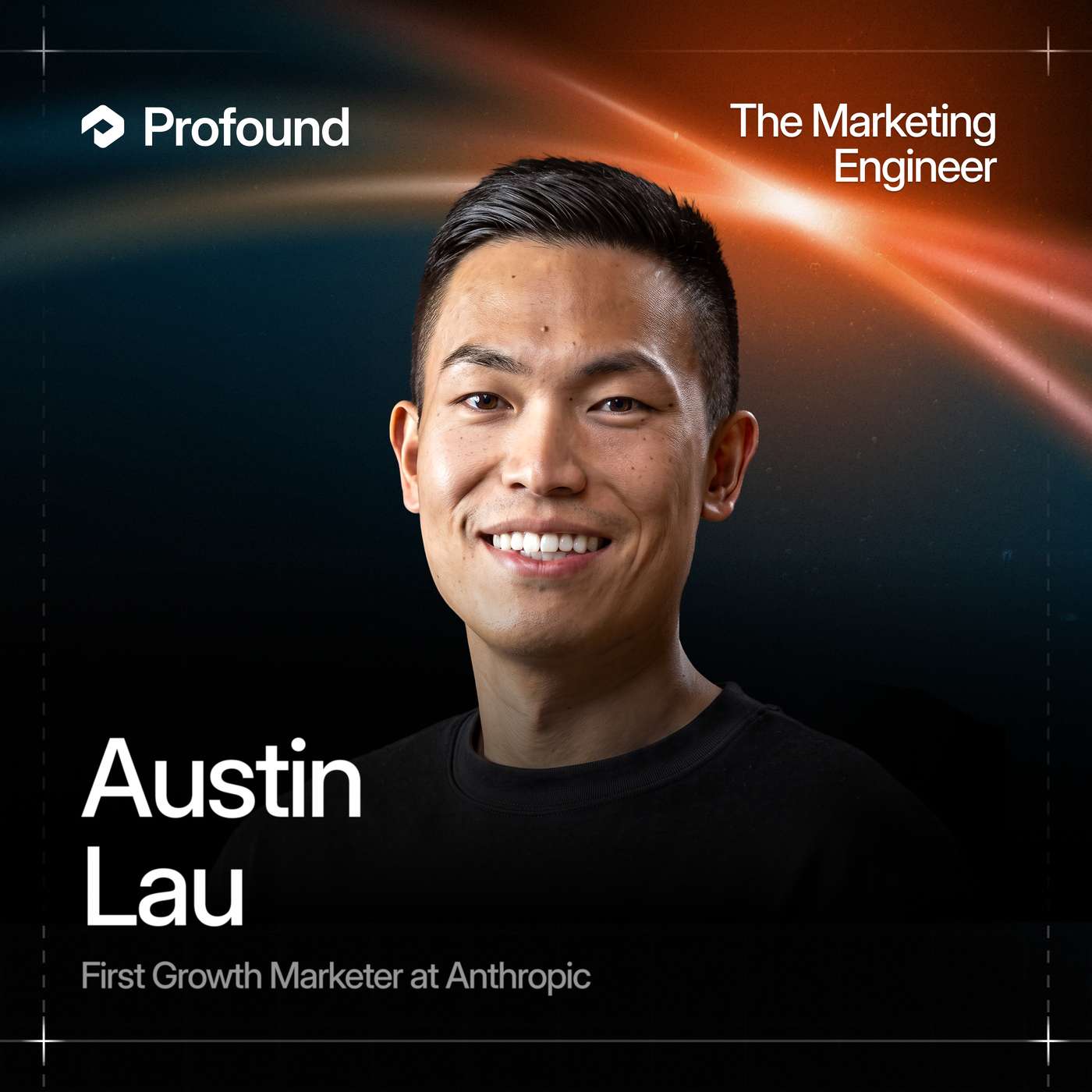
    How Anthropic’s First Growth Marketer Builds with Claude | Austin Lau

    Austin Lau was a non-technical marketer when he started experimenting with Claude to write custom Google Ads scripts, pasting in code, running it, and iterating through errors until it worked. At the time, he had joined Anthropic as its first growth marketer. His experimentation reshaped how he thought about his own role and the future of marketing. He went from doing everything manually to building budget dashboards, daily briefings, and campaign automations, while developing a framework for what to automate and what to leave alone. Austin explains why AI is turning marketers into builders, giving them the technical leverage to become Marketing Engineers, when to use Cowork versus Claude Code, and the “blast radius” test he runs before letting agents touch any live campaigns. We discuss: Why marketers are positioned to become Marketing Engineers The shift from managing campaigns to managing a fleet of agents The “blast radius” test he runs before automating anything Why you don’t need 50+ AI skills When a skill is actually worth building, and when it just adds noise Building a live budget dashboard inside Claude Cowork The Google Ads script that turned him from a marketer into a builder How to know when to reach for Claude Code versus Claude Cowork Connect with Austin: LinkedIn: https://www.linkedin.com/in/austinlau1/ Connect with Profound: Website: https://tryprofound.com LinkedIn: https://www.linkedin.com/company/tryprofound/ X: https://x.com/tryprofound Read the Marketing Engineer Manifesto: https://www.tryprofound.com/marketing-engineer Profound University: https://university.tryprofound.com/ Resources Mentioned: Austin’s Claude Cowork Guide: https://claude.com/blog/best-practices-for-getting-started-with-claude-cowork The Marketing Engineer is a show for practitioners figuring out in real time what it means to market at the frontier. New episodes every two weeks.

  • #5
    August 5 · 50 min

    Why You Should Stop Using One AI Model for Everything | Andy McCutcheon, Block

    Andy McCutcheon is the GTM AI Lead at Block, and spends much of his time convincing colleagues who have never opened a terminal that they can build their own tools. At a company of six thousand people, that means weekly office hours, casual working sessions where he shares his screen live and lets people watch him think, and a running answer for anyone who says they don't know where to start: you have to be bad at something before you can be good at it. Block’s internal skills marketplace now holds three thousand tools, many of them built by people who found their way in through office hours just like Andy's. We discuss: Getting non-technical teams comfortable building with AI What it takes to contribute to an internal marketplace of three thousand skills and tools Why Andy tells people they have to be bad at something before they can be good at it What goes into building an MCP server that people can actually talk to conversationally Two slash commands that give his AI agent memory between sessions The personal newsletter that runs AI research every night while he sleeps Connect with Andy: LinkedIn: https://www.linkedin.com/in/andysmccutcheon/ Block: https://block.xyz/ Connect with Profound: Website: https://tryprofound.com LinkedIn: https://www.linkedin.com/company/tryprofound/ X: https://x.com/tryprofound Read the Marketing Engineer Manifesto: https://www.tryprofound.com/marketing-engineer Profound University: https://university.tryprofound.com/ Resources Mentioned: Andy's Skills Library: https://github.com/andymccutcheon/skills The Marketing Engineer is a show for practitioners figuring out in real time what it means to market at the frontier. New episodes every two weeks.

  • #4
    July 22 · 37 min

    The Collaborative AI System Every Marketing Team Will Soon Need | Lucy Hoyle, Carta

    Most marketing teams are still working across disconnected systems, scattered context, and workflows that break down as they grow. Lucy Hoyle, Senior Content Engineer at Carta, set out to solve that problem. At Profound's Marketing Engineering Hackathon, she built a prototype she calls the “marketing brain.” A shared context layer that transforms siloed workflows into systems that enable collaboration, while giving teams a common source of truth that continuously evolves. That prototype became the seed of a full operating system now rolling out across Carta's entire marketing team. In this episode, Lucy explains how she built the prototype, the challenges she faced along the way, and concepts like context rot and token discipline that are shaping where marketing teams are headed over the next few years. We discuss: What context rot actually is and why too much information can make AI worse BM25: The keyword-based search library Lucy used to filter the information Claude ingests How a hackathon prototype evolved into a company-wide Marketing OS The pitch strategy Lucy recommends to get buy-in from executives Why “Have you asked Claude” became Carta’s unofficial rule Connect with Lucy: LinkedIn: https://www.linkedin.com/in/lucy-hoyle-883381138/ Carta: https://carta.com Connect with Profound: Website: https://tryprofound.com LinkedIn: https://www.linkedin.com/company/tryprofound/ X: https://x.com/tryprofound Read the Marketing Engineer Manifesto: https://www.tryprofound.com/marketing-engineer Profound University: https://university.tryprofound.com/ Resources Mentioned: Profound’s Agent Marketplace: https://www.tryprofound.com/agent-templates The Profound brand kit & product messaging agent Lucy built at the Profound Marketing Engineering Hackathon: https://hub.tryprofound.com/hubfs/Lucy%20-%20Marketing%20Engineer%20Hackathon%20Files.zip Rank-BM25, the open source Python library Lucy used to filter context for Claude: https://pypi.org/project/rank-bm25/ and https://github.com/dorianbrown/rank_bm25 Lucy’s Marketing Brain Hackathon Presentation: https://shorturl.at/AvKDU The Marketing Engineer is a show for practitioners figuring out in real time what it means to market at the frontier. New episodes every two weeks.

  • #3
    July 9 · 24 min

    Building 90 AI Agents Inside a $2B ARR Marketing Team | Holly Chen, Samsara

    Samsara is one of the most advanced examples of AI adoption inside the marketing team of a large public company. Holly Chen, VP of Growth Marketing, shares the marketing team’s approach. A big part of their success came from a deliberate three-phase rollout that moved the marketing organization from a leadership mandate to company-wide enablement and, ultimately, sustained momentum. The whole approach runs on a bottoms-up philosophy: the people closest to the pain points are the ones building the solutions, rather than AI development being centralized within a small team. Holly also shares how AI has changed the way her team hires, why she looks for a specific kind of AI fluency in candidates, and why she believes every marketer needs to become a Marketing Engineer. We discuss: The three-stage rollout: mandate, enablement, and sustained momentum Why bottoms-up AI adoption outlasts top-down mandates How a 230-person team built 90 AI agents (and how they keep them running) Samsara’s AI governing body The hackathons and monthly AI Power Hour that keep teams building Why Holly values judgment over taste in the age of AI The biggest hiring mistake marketers make in the AI era Connect with Holly LinkedIn: https://www.linkedin.com/in/holly Samsara: https://www.samsara.com Connect with Profound Website: https://tryprofound.com LinkedIn: https://www.linkedin.com/company/tryprofound/ X: https://x.com/tryprofound Read the Marketing Engineer Manifesto: https://www.tryprofound.com/marketing-engineer Profound University: https://university.tryprofound.com/ Resources Mentioned Gong: https://www.gong.io Playwright: https://playwright.dev Gumloop: https://www.gumloop.com/ Holly’s Substack: https://hollychen.substack.com The Marketing Engineer is a show for practitioners figuring out in real time what it means to market at the frontier. New episodes every two weeks.

  • #2
    June 24 · 28 min

    Why Figma is Winning in the Age of AI Search with Reema Batta

    Figma is shipping products at a pace most marketing teams can barely track. Reema Batta, VP of Growth Marketing, is the person responsible for making sure they can actually keep up. Part of how they do it: a context layer. Every product Figma launches now comes with structured positioning, messaging, and value props that channel teams can reference directly, without a meeting or Slack chain. The coordination tax, as she calls it, is something she has systematically engineered out of the workflow. Reema also explains why Figma's AI-generated content is outperforming human-written pages, why the bottleneck in marketing is moving upstream to judgment, and how she thinks about prioritization when the product roadmap never slows down. We discuss: How the marketing funnel is being compressed inside AI conversations The context layer that keeps channel teams current without another meeting Why AI-generated content is outperforming human-written pages Tokenmaxxing as a phase-one metric, and what comes after it How Reema interviews for systems-thinking skills Why strong judgment is quickly becoming a marketer’s most important attribute Connect with Reema: LinkedIn: https://www.linkedin.com/in/reema-batta/ Figma: https://www.figma.com Connect with Profound: Website: https://tryprofound.com LinkedIn: https://www.linkedin.com/company/tryprofound/ X: https://x.com/tryprofound Read the Marketing Engineer Manifesto: https://www.tryprofound.com/marketing-engineer Profound University: https://university.tryprofound.com/ Resources Mentioned: Figma Config: https://config.figma.com Figma: https://www.figma.com Profound’s Zero Click Event: https://www.tryprofound.com/zeroclick Marketing Engineer Job Board: https://www.marketingengineer.jobs/ The Marketing Engineer is a show for practitioners figuring out in real time what it means to market at the frontier. New episodes every two weeks.

  • #1
    June 10 · 42 min

    Inside the AI Marketing OS Running Wispr Flow's Growth Team with Matt Swulinski

    Until recently, Matt was the only person running all of Wispr Flow’s marketing execution solo. Meta and Google Ads, newsletter sponsorships, landing pages… it was all on him, and the company was growing fast. Handling everything manually became impossible. But instead of hiring, Matt decided to build. The result? An agent-powered marketing OS that now runs across a team of nearly 20. It handles 100 newsletter sponsorships a month, automates the admin that was eating 10–20% of everyone's week, and made several planned hires unnecessary. We discuss: How marketing and growth teams are evolving in real time Why the marketers of the future will be “systems thinkers” The reason most marketers don’t utilize AI tools to their full potential How he scaled a personal OS into something his whole team runs on The newsletter sponsorship system that runs itself Matt’s session start and end workflows that keep Claude Code sessions from spiraling into chaos ***Connect with Matt*** LinkedIn: https://www.linkedin.com/in/mswulinski/ Wispr Flow: https://wisprflow.ai/ ***Connect with Profound*** Website: https://tryprofound.com LinkedIn: https://www.linkedin.com/company/tryprofound/ X: https://x.com/tryprofound Read the Marketing Engineer Manifesto: https://www.tryprofound.com/marketing-engineer Profound University: https://university.tryprofound.com/ ***Resources Mentioned*** Matt’s Claude Skills Explainer document: https://drive.google.com/file/d/1UuQoeQSzXoc6hH055lbz0h9P6QLYciUT/view?usp=sharing Matt’s Claude Skills Files: Session Start, Session End, and the Sponsorship Copy Waterfall (Drop them into Claude Code to try them): https://hub.tryprofound.com/hubfs/wispr-flow-claude-skills.zip Dub.co for affiliate and tracking link management: https://dub.co/ Claude Code: what Matt used to build his marketing OS: https://claude.ai/code Wispr Flow: Matt's company; voice-to-text tool he uses to dictate prompts across all his sessions https://wisprflow.ai/ VS Code, where Matt runs his Claude Code sessions: https://code.visualstudio.com/ Linear, the project management tool integrated into Matt's OS for task assignment: https://linear.app/ Hex: Matt's BI tool, referenced when pulling live data into reports https://hex.tech/ GitHub: used to version control and share the Wispr Flow Marketing OS across the team https://github.com/ Logitech MX Master 4 Mouse, the hardware Matt uses to navigate between sessions hands-free with Wispr Flow: https://shorturl.at/FlKsu The Marketing Engineer is a show for practitioners figuring out in real time what it means to market at the frontier. New episodes every two weeks.

  • June 8 · 1 min

    Introducing: The Marketing Engineer

    Meet the marketer who builds. Marketing Engineers pair creativity with systems thinking, combining a marketer's instincts with technical ability to bring ideas to life. They're architects, agentic operators, and craftspeople with high taste. In the episodes ahead, you'll hear directly from practitioners and leaders who've reorganized how their teams operate, built marketing workflows for scale and quality, and invented capabilities that didn't exist before. This is The Marketing Engineer, from Profound. New episodes every two weeks. Connect with Profound: Website: https://tryprofound.com LinkedIn: https://www.linkedin.com/company/tryprofound/ X: https://x.com/tryprofound Read the Marketing Engineer Manifesto: https://www.tryprofound.com/marketing-engineer Profound University: https://www.tryprofound.com/

Showing 1–15 of 15 episodes