Skip to content
Artwork for The Entrepreneur’s Studio
BusinessEntrepreneurship

The Entrepreneur’s Studio

The Entrepreneur’s Studio

No matter how much you prepare, surprises are guaranteed when you run your own business. Who better to learn from than the people who have stood in your shoes? Success is not accident. Level up with the Entrepreneur’s Studio – an on-demand suite of lessons, tools and tips from entrepreneurs who have been there before, to help you to run and grow a better business.

Play
  • 26 episodes
  • weekly
  • Avg 28 min
  • English
Counted on this page — what you have heard stays on this device, so it is not something the list can be paged by.
  • Tuesday · 28 min

    Vulnerability, Reinvention, and Showing Up | John Stamos

    What if reinvention isn’t about having the perfect plan but about being willing to show up, take a risk, and see what happens? John Stamos has spent decades in an industry where staying relevant can be just as difficult as becoming successful in the first place. But his career has been defined by something more enduring than a carefully calculated plan: resilience, curiosity, and a willingness to keep saying yes. In Part 2 of our conversation with John Stamos, we go deeper into the lessons behind his longevity and reinvention. John opens up about the role vulnerability has played in his life, the unexpected opportunities that have shaped his career, and why sometimes the best thing you can do is simply show up and do the work. From the failures that didn't go according to plan to the opportunities that arrived completely by surprise, John shares what he's learned about staying open to what's next. For entrepreneurs and leaders, there's a powerful lesson here: you don't always need to know exactly where you're going. But you do need to keep showing up. Key Points Why vulnerability can become a source of strength rather than weakness. How resilience and reinvention often come from saying yes to unexpected opportunities. Why showing up, working hard, and doing the fundamentals well can create opportunities you couldn't have planned for. How failure can become part of the process rather than a defining moment. Quote from the Episode "I try to give 100% to everything I'm doing." — John Stamos https://www.auris.io/ Follow The Entrepreneur’s Studio so you never miss an episode: Apple Podcasts: https://podcasts.apple.com/ Spotify: https://open.spotify.com/ Youtube: http://www.youtube.com Instagram: http://www.instagram.com The Entrepreneur’s Studio is sponsored by Auris, helping small and mid-sized businesses simplify payroll and HR with powerful tools and real human support. Learn more at https://www.auris.io

    • Transcript
  • September 22 · 24 min

    Gratitude, Family, and The Making of Uncle Jesse | John Stamos

    What if the real measure of success isn’t how many people know your name, but how you treat the busboy like your best customer, show up for your family, and lead every day with gratitude? John Stamos has spent decades in the spotlight, but his perspective on success has become less about fame and achievement and more about gratitude, family, and appreciating the life right in front of you. In Part 1 of this special two-part conversation, John Stamos sits down with Chris Allen to talk about the people and experiences that shaped him; from working in his father's restaurants and learning discipline at an early age, to the unexpected journey that made him Uncle Jesse. John opens up about becoming a father, the importance of being present for his family, and the gratitude practice that helps him recognize just how extraordinary his life has become. He reflects on the opportunities he never could have imagined as a kid, from playing with the Beach Boys to appearing alongside the Muppets and why he believes there is always something to be grateful for. For entrepreneurs and leaders, John's story offers a reminder that achievement is only one part of a meaningful life. The people we serve, the people we love, and the perspective we bring to each day may ultimately matter far more than the recognition that comes with success. Key Points How John's father shaped his work ethic, discipline, and early entrepreneurial perspective. Why becoming a husband and father fundamentally changed John's definition of what matters. The unexpected journey behind the creation of Uncle Jesse and John's evolving relationship with Full House. How practicing gratitude can change the way we experience success, opportunity, and everyday life. Quote from the Episode “No matter where you're at, there's something to be grateful for.” — John Stamos https://www.auris.io/ Follow The Entrepreneur’s Studio so you never miss an episode: Apple Podcasts: https://podcasts.apple.com/ Spotify: https://open.spotify.com/ Youtube: http://www.youtube.com Instagram: http://www.instagram.com The Entrepreneur’s Studio is sponsored by Auris, helping small and mid-sized businesses simplify payroll and HR with powerful tools and real human support. Learn more at https://www.auris.io

    • Transcript
  • September 15 · 33 min

    Why Story Works: The Science Behind Memorable Brands | Dr. J.J. Peterson

    Why do some brands get remembered while others get ignored? Dr. J.J. Peterson says the answer is in the story. In a world filled with more content, more marketing messages, and now more AI-generated communication than ever before, getting people to pay attention is harder than ever. But Dr. J.J. Peterson believes the answer isn't simply creating more content. It's understanding how the human brain responds to story and using that understanding to create messages people can connect with, remember, and act on. Dr. J.J. Peterson is the founder of Conscious Brand Agency and a leading voice in brand messaging and marketing strategy. His work focuses on helping organizations clarify their message and use story to create stronger connections with the people they serve. In this second conversation with J.J., host Chris Allen and J.J. explore the science behind why story works, including the concept of narrative transportation, the process that occurs when people see themselves inside a story and become more engaged with its message. They explore why customers are more likely to connect with brands when they can see themselves in the story, why clarity and consistency help keep people engaged, and how storytelling can help businesses move beyond simply building a customer base to creating a loyal tribe. J.J. breaks down the seven elements of a compelling story and explains how businesses can apply them to their marketing, why AI-generated content can diminish trust when it lacks a clear human point of view, and why showing up with generosity and a strong perspective can create deeper loyalty. Key Points • Why story works: How narrative transportation allows people to see themselves in a story and why the better the story makes sense, the more powerfully it can influence thoughts and actions. • Why some brands are remembered: Why effective marketing isn't about dumping more information on customers, but organizing the right information into a clear, coherent story that people can understand and remember. • How brands build loyalty: Why a clear point of view, generosity, and a commitment to helping customers win can turn a customer list into something much more valuable—a loyal tribe. Quote from the Episode “Stories are actually formulaic. And it's not about being entertaining. It's not about even being liked. It is about being remembered.” — Dr. J.J. Peterson Resources & Links Dr. J.J. Peterson Website: https://www.drjjpeterson.com/ LinkedIn: https://www.linkedin.com/in/dr-j-j-peterson-1b4011a2/ If this conversation changed the way you think about storytelling, marketing, and building lasting customer relationships, subscribe to The Entrepreneur's Studio and leave a review wherever you listen to podcasts. Then share this episode with a business owner, entrepreneur, or marketer who wants to create a brand people don't just notice—but remember and believe in. https://www.auris.io/ Follow The Entrepreneur’s Studio so you never miss an episode: Apple Podcasts: https://podcasts.apple.com/ Spotify: https://open.spotify.com/ Youtube: http://www.youtube.com Instagram: http://www.instagram.com The Entrepreneur’s Studio is sponsored by Auris, helping small and mid-sized businesses simplify payroll and HR with powerful tools and real human support. Learn more at https://www.auris.io

    • Transcript
  • September 8 · 35 min

    Why Great Leaders Tell Better Stories | Dr. J.J. Peterson

    Every leader is telling a story. The question is whether it's a story people want to follow. Dr. J.J. Peterson is the founder of Conscious Brand Agency and a leading voice in brand messaging and marketing strategy. Over the past two decades, he has helped thousands of brands find their voice and grow their impact, working with organizations including Microsoft and Certified Angus Beef and thought leaders such as Amy Porterfield and Will Guidara. In this first of two conversations, host Chris Allen and J.J. explore why storytelling isn't just a marketing tactic; it's one of the most overlooked leadership skills in business. They explore how the stories leaders tell can shape culture, influence behavior, and determine whether people choose to follow a vision. J.J. also explains his framework of the hero, villain, victim, and guide, and why the most effective leaders position themselves as the guide rather than the hero. Key Points • Why effective leadership communication requires more than information, and how a clear, compelling narrative can help align people around a shared vision. • How understanding what your audience wants and the problems they're experiencing can make communication more relevant, memorable, and effective. • Why empathy and authority must work together in leadership, and how intentionally creating moments of joy can increase creativity, connection, problem-solving, and productivity. Quote from the Episode "The best leaders position themselves as the guide, not the hero." — Dr. J.J. Peterson Resources & Links Dr. J.J. Peterson Website: https://www.drjjpeterson.com/ LinkedIn: https://www.linkedin.com/in/dr-j-j-peterson-1b4011a2/ If this conversation changed the way you think about leadership, storytelling, communication, and influencing others, subscribe to The Entrepreneur's Studio and leave a review on Apple podcasts. Then share this episode with a business owner, leader, or entrepreneur who could benefit from learning how to become a better guide for the people they serve. https://www.auris.io/ Follow The Entrepreneur’s Studio so you never miss an episode: Apple Podcasts: https://podcasts.apple.com/ Spotify: https://open.spotify.com/ Youtube: http://www.youtube.com Instagram: http://www.instagram.com The Entrepreneur’s Studio is sponsored by Auris, helping small and mid-sized businesses simplify payroll and HR with powerful tools and real human support. Learn more at https://www.auris.io

    • Transcript
  • September 1 · 31 min

    The Voice Holding You Back: How to Overcome Imposter Syndrome | Tina Robinson

    What if the biggest thing holding you back isn't a lack of ability or experience, but the voice in your head telling you that you don't belong? Imposter syndrome can keep us small, keep us stuck, and prevent us from living up to our full potential. And while it may feel deeply personal, it can have a very real impact on our careers, our leadership, and the decisions we make at work. Tina Robinson is the founder of WorkJoy Executive and Leadership Coaching and a former corporate executive who spent more than two decades climbing the corporate ladder before realizing that the success she had worked so hard to achieve wasn't actually what she wanted. Today, she helps leaders develop greater self-awareness, quiet their inner critics, and become more confident in using their voices. In this episode, host Chris Allen and Tina explore how imposter syndrome shows up in our careers and why even accomplished, experienced professionals can struggle with feelings of not being enough. They unpack the difference between evidence and the stories we tell ourselves, how to recognize and "name" the inner critic, and why surrounding yourself with a trusted personal board of directors can help you see yourself more clearly. Tina also shares practical tools for quieting the voice of self-doubt and explains how leaders can create environments where people feel safe enough to speak up, share imperfect ideas, and use their voices. Key Points • Why imposter syndrome can keep capable people small, hold them back from opportunities, and prevent them from reaching their full potential. • How to distinguish between the evidence of what is actually happening and the stories our inner critics tell us—and how naming that inner critic can take away some of its power. • Why leaders have a responsibility to create environments where people feel safe to speak up, while individuals must also learn to quiet their own inner critics and trust their voices. Quote from the Episode "Imposter syndrome can keep us small. It can keep us stuck. It can hold us back in our career." — Tina Robinson Resources & Links Tina Robinson Website: https://workjoycoaching.com/ LinkedIn: https://www.linkedin.com/in/tinarobinsonspeaks/ If this conversation challenged the way you think about imposter syndrome, self-awareness, and finding your voice, subscribe to The Entrepreneur's Studio and leave a review wherever you listen to podcasts. Then share this episode with a business owner, leader, or professional who could use a reminder that their inner critic doesn't always tell the truth. Follow The Entrepreneur’s Studio so you never miss an episode: Apple Podcasts: https://podcasts.apple.com/ Spotify: https://open.spotify.com/ Youtube: http://www.youtube.com Instagram: http://www.instagram.com https://www.auris.io/ Follow The Entrepreneur’s Studio so you never miss an episode: Apple Podcasts: https://podcasts.apple.com/ Spotify: https://open.spotify.com/ Youtube: http://www.youtube.com Instagram: http://www.instagram.com The Entrepreneur’s Studio is sponsored by Auris, helping small and mid-sized businesses simplify payroll and HR with powerful tools and real human support. Learn more at https://www.auris.io

    • Transcript
  • August 25 · 35 min

    Building a Billion-Dollar Industry Before It Existed | Blake Lawrence

    What if the biggest business opportunity of your career didn't exist yet? Long before college athletes could earn money through NIL, Blake Lawrence saw a future that everyone else thought was impossible. Instead of waiting for the rules to change, he spent years building the technology and infrastructure that would eventually power one of the fastest-growing industries in sports. Blake Lawrence is the co-founder of Opendorse, the leading athlete marketplace and NIL technology platform used by more than 200,000 athletes worldwide. A former Nebraska linebacker whose football career ended unexpectedly after multiple concussions, Blake transformed personal adversity into a mission to help athletes build careers that extend far beyond the game. In this episode, Blake shares the entrepreneurial journey behind Opendorse, the risks of building a company years before its market existed, and what founders can learn about betting on the future. He also explains how NIL is transforming college athletics, why today's student-athletes are becoming entrepreneurs at 18 years old, and what business leaders can learn from hiring athletes and investing in personal brands. Key Points Why building for the future often means solving problems before the market exists. How NIL is creating a new generation of entrepreneurs by teaching athletes business, branding, and financial responsibility. Why founders should embrace coaching, build around core values, and know when it's time to bring in experienced leadership. Quote from the Episode "You never know when your last play is going to be... so make the most of every opportunity." — Blake Lawrence Resources & Links Blake Lawrence Website: https://opendorse.com LinkedIn: https://www.linkedin.com/in/blakelawrence/ X: https://x.com/blakelawrence If this conversation challenged the way you think about entrepreneurship, leadership, and building for the future, subscribe to The Entrepreneur's Studio and leave a review wherever you listen to podcasts. Then share this episode with an entrepreneur, founder, coach, or student-athlete who could benefit from Blake's perspective on creating opportunity before everyone else sees it. https://www.auris.io/ https://www.auris.io/ Follow The Entrepreneur’s Studio so you never miss an episode: Apple Podcasts: https://podcasts.apple.com/ Spotify: https://open.spotify.com/ Youtube: http://www.youtube.com Instagram: http://www.instagram.com The Entrepreneur’s Studio is sponsored by Auris, helping small and mid-sized businesses simplify payroll and HR with powerful tools and real human support. Learn more at https://www.auris.io

    • Transcript
  • August 18 · 32 min

    Why Great Employees Really Leave | Dick Finnegan

    Employee turnover isn't just expensive, it's often preventable. In this episode of The Entrepreneur's Studio, Chris Allen sits down with employee retention expert Dick Finnegan to discuss why most organizations approach retention the wrong way. Drawing from decades of experience helping companies around the world reduce turnover, Dick explains why accountability starts with managers—not HR—and why building trust is the single biggest factor in keeping great employees. From practical leadership frameworks to unforgettable stories from global consulting engagements, this conversation is packed with actionable advice for founders, executives, HR leaders, and people managers who want to build stronger teams and reduce costly turnover. In this episode, you'll learn: Why manager accountability has a greater impact on retention than employee engagement surveys. How Stay Interviews uncover issues before employees decide to leave. Practical leadership habits that build trust, improve engagement, and reduce turnover. Resources & Links Learn more about Dick Finnegan: https://www.finneganinstitute.com/ https://www.auris.io/ Follow The Entrepreneur’s Studio so you never miss an episode: Apple Podcasts: https://podcasts.apple.com/ Spotify: https://open.spotify.com/ Youtube: http://www.youtube.com Instagram: http://www.instagram.com The Entrepreneur’s Studio is sponsored by Auris, helping small and mid-sized businesses simplify payroll and HR with powerful tools and real human support. Learn more at https://www.auris.io

    • Transcript
  • August 11 · 31 min

    The Hidden Cost of How You Pay People | Nicole Armstrong

    Pay isn't just a number on a paycheck. It's one of the clearest signals employees receive about how much their work is valued. Yet many organizations unknowingly rely on outdated compensation systems that create mistrust, increase turnover, and make hiring even more difficult. In this episode of The Entrepreneur's Studio, Chris Allen sits down with Nicole Armstrong, Founder & CEO of Ellequate, to explore the hidden costs of outdated compensation systems and why the best companies are building transparent, data-driven pay strategies that strengthen culture and improve performance. Whether you're a founder, CEO, HR leader, or people manager, this conversation offers actionable insights for creating compensation practices that strengthen culture, improve retention, and better align pay with organizational strategy. In this episode, you'll learn: Why market-based compensation alone often creates long-term pay inequities. How transparent and explainable pay systems improve trust, retention, and hiring. Practical steps leaders can take to build compensation strategies that reflect the true value of work. Resources & Links Connect with Nicole Armstrong LinkedIn: https://www.linkedin.com/in/nicole-armstrong/ Eloquate: https://eloquate.ai/ https://www.ellequate.com/fair-pay-index https://www.auris.io/ Follow The Entrepreneur’s Studio so you never miss an episode: Apple Podcasts: https://podcasts.apple.com/ Spotify: https://open.spotify.com/ Youtube: http://www.youtube.com Instagram: http://www.instagram.com The Entrepreneur’s Studio is sponsored by Auris, helping small and mid-sized businesses simplify payroll and HR with powerful tools and real human support. Learn more at https://www.auris.io

    • Transcript
  • August 4 · 22 min

    Family, Leadership, and Playing The Long Game | Mario Lopez

    What if the secret to long-term success isn't working harder, but staying true to who you are? In Part Two of our conversation, Mario Lopez shares why the strongest careers are built on strong values. From family and leadership to authenticity and relationships, he explains how playing the long game has shaped both his personal life and professional success. Mario Lopez is an actor, television host, entrepreneur, and bestselling author whose career has spanned more than 40 years. Best known for his role as A.C. Slater on Saved by the Bell, Mario has become one of entertainment's most enduring personalities through his work as a television host, producer, radio personality, and entrepreneur. In Part Two, the conversation shifts from career to character. Mario shares how meaningful relationships have created unexpected opportunities throughout his career, why his wife has been the anchor behind his success, and how leading by example has shaped the way he parents and builds teams. He also discusses protecting your personal brand by saying "no" to opportunities that don't align with your values, surrounding yourself with the right people, and why authenticity, not trends, is the key to lasting influence. Key Points Why relationships, humility, and a strong reputation often create the greatest opportunities. How family, leadership, and surrounding yourself with the right people provide the foundation for long-term success. Why authenticity, consistency, and playing the long game will always outlast chasing the latest trend. Quote from the Episode "The audience is smart. They respond to authenticity. They can tell when someone's phony and someone's not." — Mario Lopez Resources & Links Mario Lopez Website: https://www.mariolopez.com Instagram: https://www.instagram.com/mariolopez If this conversation encouraged you to think differently about leadership, relationships, and building a life of lasting impact, subscribe to The Entrepreneur's Studio and leave a review wherever you listen to podcasts. Then share this episode with a leader, entrepreneur, or friend who could benefit from Mario's reminder that the strongest brands—and the strongest lives—are built by staying true to who you are. https://www.auris.io/ Follow The Entrepreneur’s Studio so you never miss an episode: Apple Podcasts: https://podcasts.apple.com/ Spotify: https://open.spotify.com/ Youtube: http://www.youtube.com Instagram: http://www.instagram.com The Entrepreneur’s Studio is sponsored by Auris, helping small and mid-sized businesses simplify payroll and HR with powerful tools and real human support. Learn more at https://www.auris.io

    • Transcript
  • July 28 · 26 min

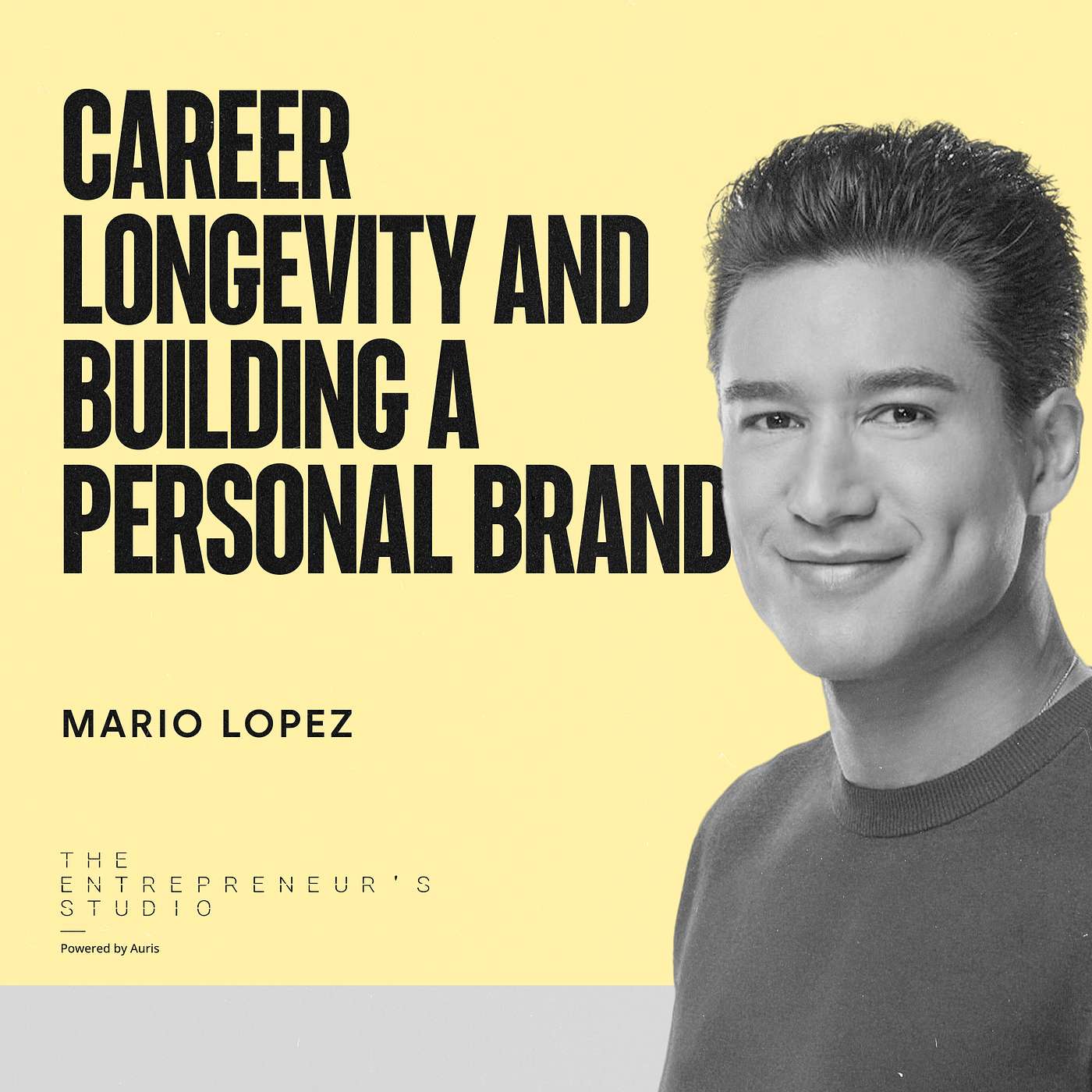
    Career Longevity and Building A Personal Brand | Mario Lopez

    How do you build a career that lasts for decades instead of chasing your next success? Most people know Mario Lopez as A.C. Slater from Saved by the Bell, but that role was only the beginning. In this episode, Mario shares the mindset, discipline, and personal branding principles that helped him reinvent himself and build a career that has remained relevant for more than four decades. Mario Lopez is an actor, television host, entrepreneur, and bestselling author whose career has spanned more than 40 years. Best known for his role as A.C. Slater on Saved by the Bell, Mario has successfully evolved into one of entertainment's most recognizable personalities as the longtime host of Access Hollywood, a nationally syndicated radio host, producer, and entrepreneur. Success isn't built on one defining moment. It's built through continual reinvention. In Part One of this conversation, Mario reflects on growing up as the son of Mexican immigrants, navigating the challenges of child stardom, and learning to pivot when opportunities changed. He shares how Dick Clark challenged him to think beyond acting and build the Mario Lopez brand, along with the daily disciplines and values that have fueled his longevity in entertainment and business. Key Points Why your greatest success should never become your identity—and how learning to pivot creates long-term opportunities. The mentorship from Dick Clark that transformed Mario's approach to personal branding and career longevity. Why discipline, consistency, and staying true to your values matter more than chasing trends. "Once people are comfortable being in their living room with you as yourself, then you can be there for the next 50 years." — Mario Lopez Resources & Links Mario Lopez Website: https://www.mariolopez.com Instagram: https://www.instagram.com/mariolopez Be sure to join us next week for Part Two of our conversation with Mario, where we move beyond career strategy and explore the values, relationships, and leadership principles that have shaped both his personal life and professional success. https://www.auris.io/ Follow The Entrepreneur’s Studio so you never miss an episode: Apple Podcasts: https://podcasts.apple.com/ Spotify: https://open.spotify.com/ Youtube: http://www.youtube.com Instagram: http://www.instagram.com The Entrepreneur’s Studio is sponsored by Auris, helping small and mid-sized businesses simplify payroll and HR with powerful tools and real human support. Learn more at https://www.auris.io

    • Transcript
  • July 21 · 31 min

    AI Implementation and The Modern Workplace | Arturo Ferreira

    How do you prepare your business for AI when the biggest challenge isn't the technology, but the people expected to use it? Artificial intelligence is changing the way organizations operate, but successful implementation requires far more than new software. It demands new ways of thinking, new habits, and leaders who can help people adapt to a rapidly changing workplace. Arturo Ferreira is an AI educator, business owner, and workplace strategist who helps organizations navigate the intersection of artificial intelligence, leadership, and the future of work. Drawing from his experience implementing AI inside businesses, Arturo focuses on helping leaders move beyond the hype to build practical, responsible strategies for AI adoption. In this episode, host Chris Allen and Arturo explore why AI implementation is ultimately a leadership challenge rather than a technology challenge. They unpack how large language models actually work, why critical thinking is becoming more valuable—not less—in an AI-driven world, and what organizations can do today to build cultures that embrace innovation while keeping people at the center. Arturo also shares practical guidance for business owners, HR leaders, and employees who want to prepare themselves for the next wave of workplace transformation. Key Points Why successful AI implementation depends more on culture, leadership, and human adoption than on the technology itself. How leaders can build AI-ready organizations by creating governance, developing internal champions, and helping employees learn to think alongside AI. Why critical thinking, curiosity, and adaptability will become the most valuable competitive advantages in the modern workplace. Quote from the Episode "AI isn't taking anybody's jobs… it's coming for a lot of job processes." — Arturo Ferreira Resources & Links Arturo Ferreira LinkedIn: https://www.linkedin.com/in/arturoferreira/ If this conversation challenged the way you think about AI, leadership, and the future of work, subscribe to The Entrepreneur's Studio and leave a review wherever you listen to podcasts. Then share this episode with a business owner, executive, or team leader who's looking to build an organization that's ready for what's next. https://www.auris.io/ Follow The Entrepreneur’s Studio so you never miss an episode: Apple Podcasts: https://podcasts.apple.com/ Spotify: https://open.spotify.com/ Youtube: http://www.youtube.com Instagram: http://www.instagram.com The Entrepreneur’s Studio is sponsored by Auris, helping small and mid-sized businesses simplify payroll and HR with powerful tools and real human support. Learn more at https://www.auris.io

    • Transcript
  • July 14 · 30 min

    Disrupting HR: Lessons in Curiosity, Influence, and Building a Global Movement | Jennifer McClure

    Jennifer McClure, founder of Disrupt HR, explains why curiosity, not authority, is what earns leaders influence. Topics Covered: • How Jennifer went from corporate HR to founding a global movement • Why a “seat at the table” isn’t the same as having influence • The difference between giving advice and real coaching • What it means to lead as a “strategic” HR leader After nearly two decades in corporate HR, Jennifer McClure kept running into the same wall: being in the room wasn’t the same as being heard. What she learned instead changed how she leads and eventually launched a global movement. Jennifer believes HR is the most important job in any company, not because of rank, but because it’s the one role that touches every employee. That conviction led her to found Disrupt HR in 2013, now 170+ communities strong in 28 countries. Her biggest shift came from blunt feedback: people didn’t want her in meetings because she only pointed out what couldn’t be done. Her fix was simple; ask “tell me more” before reacting, even when she disagreed. That one habit turned her from a roadblock into someone people actively wanted in the room. Takeaways: • Curiosity beats advice • A seat at the table means nothing without influence • Every business goal, from revenue to quality, is really a people problem “Curiosity is an amazing thing to have in your toolkit — to build relationships, grow your influence, build trust, and get to the best solution. Always lead with curiosity.” — Jennifer McClure Connect with Jennifer McClure: Website: https://jennifermcclure.net/ DisruptHR: https://disrupthr.co/ LinkedIn: https://www.linkedin.com/in/jennifermcclure/ https://www.auris.io/ Follow The Entrepreneur’s Studio so you never miss an episode: Apple Podcasts: https://podcasts.apple.com/ Spotify: https://open.spotify.com/ Youtube: http://www.youtube.com Instagram: http://www.instagram.com The Entrepreneur’s Studio is sponsored by Auris, helping small and mid-sized businesses simplify payroll and HR with powerful tools and real human support. Learn more at https://www.auris.io

    • Transcript
  • July 7 · 12 min

    Three Principles of Radical Hospitality | Will Guidara

    Restaurateur and author Will Guidara breaks down the three principles behind “unreasonable hospitality,” and how any entrepreneur can use them to turn ordinary moments into the reason people come back. Topics Covered: • The night that pushed Will to rethink what “being the best” actually means • The three principles behind “unreasonable hospitality” • Why the best ideas should come from your frontline, not from the top What makes someone remember your business a year later? Not the menu, not the décor, it’s usually one small, specific moment where they felt truly seen. In this ‘replay’ episode of The Entrepreneur’s Studio, Will Guidara, co-founder of Eleven Madison Park and author of the bestseller Unreasonable Hospitality, unpacks the night that changed his entire approach to building a business people fall in love with. Will believes that being “the best” was never really about the product. After his restaurant landed dead last on a list of the world’s top 50, he committed to a different kind of excellence: one built on relationships rather than rankings. That shift led to a single, almost accidental gesture; a two-dollar hot dog served between courses at a three-Michelin-star table that reshaped how he thought about hospitality altogether. From that moment, Will distilled three principles that any team can apply: be fully present with the person in front of you, take the work seriously without taking yourself too seriously, and treat every gesture as one-size-fits-one rather than one-size-fits-all. He’s candid that the generic versions of these ideas, a free dessert or a templated thank-you, rarely move people. It’s the specificity that does. For entrepreneurs and small business owners, the actionable shift is structural: stop centralizing your best ideas in one role or one person. Will created a position called the Dreamweaver to help execute ideas, but he’s emphatic that the ideas themselves must come from the people closest to the customer, the servers or the hosts. Empower that layer of your team, he argues, and you turn employees from order-takers into product designers. Takeaways: • Audit every touchpoint in your customer journey • Personalize, don’t "templatize" • Push decision-making down to the people who are closest to your customer “Unreasonable hospitality is one size fits one. The greatest gestures are bespoke to the person receiving them.” — Will Guidara Listen to the full conversation with Will Guidara from Season 3 here. https://www.auris.io/resources/entrepreneurs-studio/podcast/s03-e01-will-guidara/ https://www.auris.io/ Follow The Entrepreneur’s Studio so you never miss an episode: Apple Podcasts: https://podcasts.apple.com/ Spotify: https://open.spotify.com/ Youtube: http://www.youtube.com Instagram: http://www.instagram.com The Entrepreneur’s Studio is sponsored by Auris, helping small and mid-sized businesses simplify payroll and HR with powerful tools and real human support. Learn more at https://www.auris.io

    • Transcript
  • June 30 · 18 min

    The Business Behind The Brand | Mark Manson

    Mark Manson pulls back the curtain on the business behind the brand and why owning your audience beats chasing Hollywood every time. Topics Covered: How Mark built a 10-million-follower, $5M media company from his personal brand Why he walked away from traditional media deals and what that cost him The attention model powering modern creator businesses How AI is reshaping content strategy, ideation, and operations Most people know Mark Manson as the author of The Subtle Art of Not Giving a F*ck. But behind the bestsellers, the movie deal, and the Hollywood meetings was a slow, expensive realization: the old media world wasn't the prize, it was a distraction. In this segment of his interview on The Entrepreneur's Studio, Mark shares exactly how he made the pivot to becoming a media company CEO, and what entrepreneurs can learn from the new rules of distribution. Mark's wake-up call came from a Zoom meeting with Universal's marketing team and a "plan" that boiled down to one thing: Mark's Instagram. That moment crystallized something that took him years to accept. Traditional media had prestige, but creators had leverage. The audience was the asset, and he'd been giving it away for pennies. So he rebuilt from the ground up. Today, Mark's company publishes approximately 400 pieces of content a month across every major platform, employs 23 full-time team members, and is on track to hit $5 million in revenue. The model isn't unique, he says—but it is largely invisible to outsiders who only see the one TikTok that showed up in their feed. For entrepreneurs and creators, the insight is clear: distribution is no longer something you rent from a network or a studio. You can own it. Whether that means a newsletter, a YouTube channel, or a podcast, the companies winning right now are the ones building direct relationships with their audiences—and using tools like AI to scale what's working. What You'll Take Away: Why the audience is the most valuable business asset a creator can own How to spot the difference between prestige opportunities and real leverage What it actually takes to build a content engine at scale Where AI genuinely helps (and where it still frustrates) "If you're a creative marketing person, it is a really, really exciting time to be alive. It feels like the world's your oyster in some ways." — Mark Manson https://www.auris.io/ Follow The Entrepreneur’s Studio so you never miss an episode: Apple Podcasts: https://podcasts.apple.com/ Spotify: https://open.spotify.com/ Youtube: http://www.youtube.com Instagram: http://www.instagram.com The Entrepreneur’s Studio is sponsored by Auris, helping small and mid-sized businesses simplify payroll and HR with powerful tools and real human support. Learn more at https://www.auris.io

    • Transcript
  • June 23 · 43 min

    Why Specialization Wins: Building a Creative Agency That Does Less and Earns More | Randall Hartman

    Groundwrk founder Randall Hartman shares how he built a thriving creative agency by doing fewer things and doing them at a level most shops can't touch. Topics Covered: • Why specialization beats the full-service agency model • How Groundwrk uses AI as a strategic tool, not a shortcut • The ethics of pricing, referrals, and growing a profitable creative business What does it take to build a creative agency that wins big-brand clients without a big-agency footprint? Randall Hartman didn't set out to reinvent the agency model, he just got tired of being busy and broke. After climbing the ranks at some of Denver's most respected shops, he launched Groundwrk with one clear mandate: specialize deeply, stay lean, and never grow a nonprofitable business. Randall's philosophy starts before the first design file is ever opened. Every project kicks off with a stakeholder survey that goes well beyond asking clients what they think they do best. Groundwrk talks to internal teams, leadership, new hires, and, critically, the client's own customers. The result is a clear picture of what's making a brand stick, and where the gaps are hiding. It's a process that turns website projects into something much closer to brand audits. On AI, Randall draws a sharp line between "lazy AI" and "strategic AI." Lazy AI is a quick prompt and a generic output. Strategic AI means uploading everything; call recordings, research docs, stakeholder feedback, so the tool becomes a genuine thinking partner. Groundwrk uses AI across copywriting, project management, business development, and even financial reporting. And they disclose it to clients. Transparency, Randall says, is just another part of the brand promise. The hardest lesson, and maybe the most honest, is on pricing and ethics. Randall openly wrestles with what it means to charge fairly, refer the right partners (not the highest-paying ones), and build something that nets money at the end of the month. He's a self-described Type 2 on the Enneagram, which means the instinct to please is always in tension with the instinct to protect the business. Watching him work through that tension out loud is one of the more refreshing things you'll hear on entrepreneurship. In this episode, you'll learn: • Why saying no to digital marketing made Groundwrk more competitive, not less • How to use a stakeholder survey to uncover what's really making a brand sticky • What "lazy AI" vs. "strategic AI" looks like in a real creative workflow "The answer is in specialization. You don't have time to learn it all. Be the expert. Obsess over it." — Randall Hartman https://www.auris.io/ Follow The Entrepreneur’s Studio so you never miss an episode: Apple Podcasts: https://podcasts.apple.com/ Spotify: https://open.spotify.com/ Youtube: http://www.youtube.com Instagram: http://www.instagram.com The Entrepreneur’s Studio is sponsored by Auris, helping small and mid-sized businesses simplify payroll and HR with powerful tools and real human support. Learn more at https://www.auris.io

    • Transcript
  • June 16 · 29 min

    Building Legacy Craftsmanship In a Templated World | Brad Liber of Caliber Luxury Homes

    How Caliber founder Brad Liber built a reputation-first luxury home building company by choosing relationships over repeatability and never building the same house twice. Topics Covered: • Why trust is the first thing worth building in business and in homes • How a lifestyle-first philosophy reshapes the client relationship from day one • What “craftsmanship in a templated world” really means and why it’s a competitive advantage What if the most valuable thing you build isn’t the structure itself but the life it makes possible? For Brad Liber, founder of Caliber, a Denver-based luxury custom home builder, that question isn’t philosophical. It’s the operating principle behind nearly two decades of work and 200+ homes, every single one built from scratch. Brad entered the industry with no family legacy in construction and no local name recognition. What he had was a childhood instinct for how spaces should feel; sketching floor plans at the dining room table at nine years old and a college education in resort management that taught him something most builders never think about: why people go where they go, what they do when they get there, and what brings them back. That framework became the foundation of Caliber’s design philosophy. A home isn’t just shelter. It’s the place someone can’t wait to return to. In this conversation, Brad is candid about the tension between growth and craft. Stamping out the same plans across different lots would have been faster and more profitable, but he refused. Every Caliber project gets a design built around its land, its sun orientation, its trees, and its people. That level of attention is grueling, he admits, and it goes against plenty of business advice. But it’s also what turned Caliber from a company with a name into a brand with a reputation that clients talk about at dinner parties and recommend to friends. For entrepreneurs building service-based businesses, Brad’s approach offers a blueprint beyond construction. He describes trust as the first building block. His team surveys their subcontractors. They hold walkthroughs mid-build and communicate to the customer every step of the process. The result isn’t just satisfied clients, it’s advocates. In this episode, you’ll learn: • How to build a brand that earns word-of-mouth without asking for it • Why radical transparency with clients creates loyalty that outlasts the project • Why doing less, but doing it with complete commitment, compounds into something bigger than scale ever could “We’ve never built the same house twice. It’s intentional and it’s grueling and it’s against a lot of advice, but it’s because we want to. That is the craftsmanship we’re looking for.” — Brad Liber https://www.auris.io/ Follow The Entrepreneur’s Studio so you never miss an episode: Apple Podcasts: https://podcasts.apple.com/ Spotify: https://open.spotify.com/ Youtube: http://www.youtube.com Instagram: http://www.instagram.com The Entrepreneur’s Studio is sponsored by Auris, helping small and mid-sized businesses simplify payroll and HR with powerful tools and real human support. Learn more at https://www.auris.io

    • Transcript
  • June 9 · 22 min

    The Psychology of Making Better Decisions | Mark Manson

    The Entrepreneur's Studio The Psychology of Better Decisions | Mark Manson Why your daily behavior reveals what you actually want and what to do when your actions and your goals don't match. Topics Covered: Why what you're willing to give up matters more than what you want How bad definitions keep people optimizing for the wrong things The "minimum viable action" method for breaking through inertia Most of us believe we know what we want. We say it out loud, we write it in journals, we set the goal. But what if the clearest signal of what you actually want isn't what you say — it's what you do? In this Reflections episode of The Entrepreneur's Studio, bestselling author Mark Manson cuts through the noise of conventional goal-setting to reveal a more honest and more useful way to understand yourself. Mark's core argument is quietly radical: wanting something and wanting the cost of that thing are two completely different experiences. The people who actually achieve their goals aren't the ones with the most desire, they're the ones who genuinely enjoy the struggle that comes with it. When there's a gap between your stated ambitions and your daily behavior, he says, the behavior is telling you the truth. That gap often comes down to what Mark calls a "legibility problem." If you're optimizing for a poorly defined outcome in business, in health, in relationships, no amount of effort will get you where you want to go. The fix isn't more hustle. It's stepping back to question whether the goal you're chasing is actually the right one, using what he calls the "Why Game": asking why, repeatedly, until your motivation either loops back to something genuine or unravels into something worth examining. For entrepreneurs and business owners, the practical takeaway is direct: stop waiting for motivation to arrive before you act. Start small enough that it's almost embarrassing. Show up. Do one thing. Because momentum doesn't come from inspiration; it comes from movement. Why your behavior is a more honest signal of your values than your words How to use the "minimum viable action" to build momentum when you're stuck Why asking "why" repeatedly can reveal whether you're chasing the right goal "If your behavior is not lining up with the things that you say you want, then you're probably just kidding yourself." — Mark Manson https://www.auris.io/ Follow The Entrepreneur’s Studio so you never miss an episode: Apple Podcasts: https://podcasts.apple.com/ Spotify: https://open.spotify.com/ Youtube: http://www.youtube.com Instagram: http://www.instagram.com The Entrepreneur’s Studio is sponsored by Auris, helping small and mid-sized businesses simplify payroll and HR with powerful tools and real human support. Learn more at https://www.auris.io

    • Transcript
  • June 2 · 30 min

    The Hidden Cost of Extreme Success | Mark Manson

    What nobody tells you about achieving your biggest goal and what to do when the dream you built your life around suddenly disappears. Topics Covered: • The three pillars of extreme success—and why they're rarer than you think • Altitude sickness: the grief that follows achieving massive goals • The two mountains of ambition—and the valley you must cross between them What happens when you spend a decade grinding toward one defining goal and then you actually achieve it? For most entrepreneurs, that question stays hypothetical. For Mark Manson, author of The Subtle Art of Not Giving a F*ck, it became a disorienting reality. His book sold 20 million copies. He became one of the most widely read voices on the planet. And then, almost immediately, he had no idea what to do with himself. Manson believes extreme success isn't the product of morning routines or productivity hacks. He identifies three genuine prerequisites: a contrarian idea that most people dismiss as ridiculous, the conviction that you're right and they're wrong, and the willingness to go all in—no hedging, no diversification, no safety net. The Buffetts, the Gates, the Zuckerbergs didn't spread their bets. They found the one thing and put everything on it. That's a high bar, and Manson doesn't pretend otherwise. But what happens after the mountain is climbed? Manson describes a phenomenon named by Quincy Jones and shared by nearly every extremely successful person he's spoken to, called "altitude sickness." When you ascend too fast, your identity hasn't caught up with your circumstances. The goal that organized your entire adult life is gone. Everyone around you assumes this is the best thing that's ever happened. So you say nothing, sit in the listlessness, and quietly wonder whether you've already peaked at 32. For small business owners and entrepreneurs, Manson offers the frame of David Brooks' Second Mountain: the idea that after you've secured the status and financial stability of the first mountain, there's a deeper climb waiting, one driven not by external validation but by purpose, contribution, and mastery. The only way to reach it is through the valley in between. That disorienting period isn't failure. It's the transition. And knowing it's coming, Manson says, changes everything. In this episode, you'll learn: • Why extreme success requires a contrarian idea, conviction, and an all-in bet, not habits or hacks • How to recognize altitude sickness in yourself and why it's more common than anyone admits • The difference between first-mountain goals (resume) and second-mountain goals (eulogy) - drawing from David Brooks concepts. “When you accomplish one of those massive goals, you lose that goal. You wake up the next day and you're like, I have nothing to work on.” — Mark Manson https://www.auris.io/ Follow The Entrepreneur’s Studio so you never miss an episode: Apple Podcasts: https://podcasts.apple.com/ Spotify: https://open.spotify.com/ Youtube: http://www.youtube.com Instagram: http://www.instagram.com The Entrepreneur’s Studio is sponsored by Auris, helping small and mid-sized businesses simplify payroll and HR with powerful tools and real human support. Learn more at https://www.auris.io

    • Transcript
  • May 26 · 7 min

    Reflections: Remember The Fisherman | Andre' Janusz

    The Entrepreneur’s Studio Andre' Janusz: Remember The Fisherman Why protecting the relationships that made your business meaningful matters more than chasing endless growth. Topics Covered: Why intentional smallness can be a competitive advantage The Parable of the Fisherman and what it reveals about growth and purpose How every step toward scale introduces friction — or connection At what point does growing your business begin to cost you the very things that made you want to build it in the first place? That’s the question at the heart of this reflections episode with Andre Janusz, founder of Logan House Coffee Roasters, a founder who made a deliberate choice to stay small and is clearer than ever about why. Andre shares a story he keeps written in his Moleskine as a daily reminder: the Parable of the Fisherman. An investment banker encounters a Mexican fisherman with a modest catch and immediately sees inefficiency. He lays out a grand plan, more boats, a bigger operation, an IPO, only for the fisherman to ask the obvious question: “And then what?” The answer, of course, is the life the fisherman already has. For Andre, the answer lives in relationships with guests, with teammates, with the community Logan House serves. Scale, by its nature, puts people, bots, or processes between you and those connections. Every new wholesale account, every new location, introduces what Andre calls friction. The question he asks before every next step isn’t “can we grow?” but “can we grow without losing what made this worth doing?” That tension is one every small business owner knows intimately. Chris Allen frames it well: to stay small isn’t to stay stagnant, it’s to stay highly connected to your why. And for founders building something meaningful, knowing what you’re unwilling to trade away may be the most important strategic decision you ever make. Why intentional growth requires knowing what you’re not willing to scale How relationships — not revenue — define what makes a business worth building Why friction between you and your customer is a sign something important is being lost “There’s no point in making a profit if you’re not also making a difference.” — Andre Janusz If this episode made you stop and think about your own growth decisions, share it with a fellow founder who’s navigating the same questions. Subscribe to The Entrepreneur’s Studio for weekly conversations with entrepreneurs building businesses on their own terms. https://www.auris.io/ Follow The Entrepreneur’s Studio so you never miss an episode: Apple Podcasts: https://podcasts.apple.com/ Spotify: https://open.spotify.com/ Youtube: http://www.youtube.com Instagram: http://www.instagram.com The Entrepreneur’s Studio is sponsored by Auris, helping small and mid-sized businesses simplify payroll and HR with powerful tools and real human support. Learn more at https://www.auris.io

    • Transcript
  • May 19 · 41 min

    The Craft of Connection: How Logan House Coffee Built a Customer-First Business | Andre Janusz

    The Entrepreneur’s Studio The Craft of Connection: How Logan House Coffee Built a Customer-First Business | Andre Janusz How Andre Janusz built Logan House Coffee by prioritizing human connection, community, and a service model that turns everyday transactions into meaningful relationships. Topics Covered: • Building a customer-first business rooted in genuine connection • Scaling a service-driven brand without losing authenticity • Using feedback and relationships to guide growth What happens when a search for purpose turns into a thriving business built on connection? In this episode, Andre Janusz shares how Logan House Coffee grew from a simple idea into a multi-location brand by focusing on people first, not just product. Andre Janusz is the founder of Logan House Coffee, a Denver-based coffee company known for its hospitality-driven approach and commitment to creating meaningful customer experiences. What began as a direct-to-consumer coffee delivery model has evolved into a growing network of cafes built around community, connection, and intentional service. In this conversation, Andre shares the unconventional journey that led him to coffee, including a motorcycle trip that unexpectedly turned into an apprenticeship and ultimately a new career path. He breaks down the philosophy behind Logan House’s service model, where every guest is meant to feel welcome, appreciated, heard, and cared for from the moment they walk in. He also discusses the realities of scaling a people-first business in a competitive industry, from hiring and developing team members to embracing turnover as a way to help people grow into their next chapter. Andre explains how staying close to customers, listening actively, and making small daily improvements have shaped the company’s growth. Finally, Andre reflects on the importance of presence and connection in leadership. By staying engaged with both employees and customers, he’s been able to build a business that not only scales, but continues to feel personal at every level. • Why creating genuine human connection is a competitive advantage in any industry • How small, consistent improvements compound into meaningful business growth • Why staying close to customers leads to better decisions and stronger businesses “The best thing for the business is the owner’s footsteps. Being present, listening, and connecting—that’s where the real growth happens.” — Andre Janusz If you enjoyed this conversation, subscribe to The Entrepreneur’s Studio and share this episode with a fellow entrepreneur who is focused on building something meaningful, not just scalable. https://www.auris.io/ Follow The Entrepreneur’s Studio so you never miss an episode: Apple Podcasts: https://podcasts.apple.com/ Spotify: https://open.spotify.com/ Youtube: http://www.youtube.com Instagram: http://www.instagram.com The Entrepreneur’s Studio is sponsored by Auris, helping small and mid-sized businesses simplify payroll and HR with powerful tools and real human support. Learn more at https://www.auris.io

    • Transcript
Showing 1–20 of 26 episodes