Skip to content
Artwork for TED-Ed
EducationScienceTechnology

TED-Ed

TED-Ed

TED-Ed’s mission is to create lessons worth sharing. Feed and expand your curiosity with our award-winning animated shorts - published on YouTube and available with supplemental learning materials on ed.ted.com.

Want to suggest an idea for a TED-Ed animation, nominate an educator or animator? Visit our website at: http://ed.ted.com/get_involved.

Consider backing us on Patreon. By doing so, you directly support our nonprofit mission to create free, high-quality educational content: https://www.patreon.com/teded

For more information on using TED-Ed content for commercial purposes (e.g. employee learning, in a film, or in an online course), please submit a Media Request using this link: https://media-requests.ted.com/

Play
  • 1,797 episodes
  • daily
  • Avg 9 min
  • English

Episodes 1,797

Counted on this page — what you have heard stays on this device, so it is not something the list can be paged by.
  • September 27 · 10 min

    How to biohack your cells to fight cancer - Greg Foot

    Check out the science of biohacking, where biologists go into a patient’s genetic code and reprogram their immune system to recognize and fight cancer cells. -- The human body is made up of about 30 trillion cells that carry a code which has been duplicated over and over for billions of years - with varying degrees of accuracy. So what happens when the system breaks down and the machinery turns on itself, leading to cancer? Greg Foot dives into the science of how biologists are biohacking the human body to try to fix the seemingly unfixable. Lesson by Greg Foot, directed by Pierangelo Pirak. Produced for TED-Ed by https://www.sciencemedia.studio and NIHR University College London Hospitals Biomedical Research Centre. Sign up for our newsletter: http://bit.ly/TEDEdNewsletter Support us on Patreon: http://bit.ly/TEDEdPatreon Follow us on Facebook: http://bit.ly/TEDEdFacebook Find us on Twitter: http://bit.ly/TEDEdTwitter Peep us on Instagram: http://bit.ly/TEDEdInstagram View full lesson: https://ed.ted.com/lessons/how-to-biohack-your-cells-to-fight-cancer-greg-foot Thank you so much to our patrons for your support! Without you this video would not be possible! Dan Paterniti, Jerome Froelich, Tyler Yoshizumi, Martin Stephen, Justin Carpani, Faiza Imtiaz, Khalifa Alhulail, Tejas Dc, Benjamin & Shannon Pinder, Srikote Naewchampa, Sage Curie, Exal Enrique Cisneros Tuch, Ana Maria, Vignan Velivela, Ahmad Hyari, eden sher, Travis Wehrman, Louisa Lee, Kiara Taylor, Аркадий Скайуокер, Milad Mostafavi, Rob Johnson, Clarence E. Harper Jr., Mihail Radu Pantilimon, Karthik Cherala, haventfiguredout , Violeta Cervantes, Elaine Fitzpatrick, Lyn-z Schulte, cnorahs, Henrique 'Sorín' Cassús, Tim Robinson, Jun Cai, Joichiro Yamada, Paul Schneider, Amber Wood, Ophelia Gibson Best, Cas Jamieson, Michelle Stevens-Stanford, Phyllis Dubrow, Andreas Voltios, Eunsun Kim, Philippe Spoden, Samantha Chow, Ayala Ron, Manognya Chakrapani, Simon Holst Ravn, Doreen Reynolds-Consolati, Rakshit Kothari and Melissa Sorrells. Learn more about your ad choices. Visit megaphone.fm/adchoices

  • September 27 · 5 min

    Spotting grizzly bears from space - David Laskin

    View full lesson: http://ed.ted.com/lessons/tracking-grizzly-bears-from-space-david-laskin Grizzly bears have adapted cleverly to their diminishing habitat by developing a mostly vegetarian diet in sync with plant growing seasons. Using NASA satellites, scientists track the shifting, interrelated patterns of grizzlies and plants. David Laskin explains how this data can help protect the threatened bears. Lesson by David Laskin, animation by TED-Ed. Learn more about your ad choices. Visit megaphone.fm/adchoices

  • September 27 · 23 min

    Request a more open-source government - Beth Noveck

    What can governments learn from the open-data revolution? In this stirring talk, Beth Noveck, the former deputy CTO at the White House, shares a vision of practical openness -- connecting bureaucracies to citizens, sharing data, creating a truly participatory democracy. Imagine the "writable society." Talk by Beth Noveck. Learn more about your ad choices. Visit megaphone.fm/adchoices

  • September 27 · 5 min

    What is chemical equilibrium? - George Zaidan and Charles Morton

    View full lesson: https://ed.ted.com/lessons/if-molecules-were-people-george-zaidan-and-charles-morton When molecules collide, chemical reactions can occur -- causing major structural changes akin to getting a new arm on your face! George Zaidan and Charles Morton playfully imagine chemical systems as busy city streets, and the colliding molecules within them as your average, limb-swapping joes. Lesson by George Zaidan and Charles Morton, animation by Neighbor. Learn more about your ad choices. Visit megaphone.fm/adchoices

  • September 27 · 9 min

    Can the ocean run out of oxygen? - Kate Slabosky

    Get to know how a healthy marine ecosystem functions, and what creates the lethal conditions that lead to dead zones. -- For most of the year, the Gulf of Mexico is teeming with marine life, from tiny crustaceans to massive whales. But every summer, disaster strikes. Around May, animals begin to flee the area. And soon, creatures that can’t swim or can’t swim fast enough begin to suffocate and die off in massive numbers. What's going on? Kate Slabosky dives into the lethal conditions that create dead zones. Lesson by Kate Slabosky, directed by Mette Ilene Holmriis. Animator's website: http://metteilene.com/ Producer's website: https://animationworkshop.via.dk/ Sign up for our newsletter: http://bit.ly/TEDEdNewsletter Support us on Patreon: http://bit.ly/TEDEdPatreon Follow us on Facebook: http://bit.ly/TEDEdFacebook Find us on Twitter: http://bit.ly/TEDEdTwitter Peep us on Instagram: http://bit.ly/TEDEdInstagram View full lesson: https://ed.ted.com/lessons/can-the-ocean-run-out-of-oxygen-kate-slabosky Thank you so much to our patrons for your support! Without you this video would not be possible! Hugo Legorreta, Zhexi Shan, Gustavo Mendoza, Bárbara Nazaré, Josh Engel, Natalia Rico, Andrea Feliz, Eysteinn Guðnason, Bernardo Paulo, Victor E Karhel, Sydney Evans, Latora Slydell, Oyuntsengel Tseyen-Oidov, Noel Situ, Elliot Poulin, emily lam, Juan, Jordan Tang, Kent Logan, Alexandra Panzer, Laura Cameron Keith, Jen, Ellen Spertus, Cailin Ramsey, Markus Goldhacker, Leora Allen, Andras Radnothy, Chris, Arpita Singh, Vijayalakshmi , Marc Bilodeau, Peng, Tzu-Hsiang, paul g mohney, Maya Toll, Sebastian Regez, Bruno Hannud, Andreas Voltios, Shubham Arora, Ugur Doga Sezgin, Akinola Emmanuel, Kyanta Yap, Ricardo Rendon Cepeda, Ana Maria, Benjamin & Shannon Pinder, Ernest Chow, Bela Namyslik, Alan Froese, Anika Westburg, Nick Cozby and Shawar Khan. Learn more about your ad choices. Visit megaphone.fm/adchoices

  • September 27 · 5 min

    The science of macaroni salad: What's in a molecule? - Josh Kurz

    View full lesson: http://ed.ted.com/lessons/the-science-of-macaroni-salad-what-s-in-a-molecule-josh-kurz What do macaroni salad and gasoline have in common? They are made of exactly the same stuff -- specifically, the same atoms, just rearranged. So, while we put the former in our mouths and the latter in our cars, they are really just variations on the same atomic theme. Josh Kurz breaks macaroni salad down to its smallest chemical components. Lesson and animation by Josh Kurz. Learn more about your ad choices. Visit megaphone.fm/adchoices
  • September 27 · 7 min

    How do wind turbines work? - Rebecca J. Barthelmie and Sara C. Pryor

    Explore how wind turbines convert wind into electricity, and the challenges of powering the world entirely with wind energy. -- Every 24 hours, wind generates enough kinetic energy to produce roughly 35 times more electricity than humanity uses each day. And unlike coal or oil, this resource is totally renewed each day. So how can we harness this incredible amount of energy, and is it possible to create a world powered entirely by wind? Rebecca Barthelmie and Sara Pryor dig into the science of wind turbine technology. Lesson by Rebecca J. Barthelmie & Sara C. Pryor, directed by Gavin Edwards, Movult. Support Our Non-Profit Mission ---------------------------------------------- Support us on Patreon: http://bit.ly/TEDEdPatreon Check out our merch: http://bit.ly/TEDEDShop ---------------------------------------------- Connect With Us ---------------------------------------------- Sign up for our newsletter: http://bit.ly/TEDEdNewsletter Follow us on Facebook: http://bit.ly/TEDEdFacebook Find us on Twitter: http://bit.ly/TEDEdTwitter Peep us on Instagram: http://bit.ly/TEDEdInstagram ---------------------------------------------- Keep Learning ---------------------------------------------- View full lesson: https://ed.ted.com/lessons/how-do-wind-turbines-work-rebecca-j-barthelmie-and-sara-c-pryor Dig deeper with additional resources: https://ed.ted.com/lessons/how-do-wind-turbines-work-rebecca-j-barthelmie-and-sara-c-pryor#digdeeper Animator's website: https://www.movult.com/ ---------------------------------------------- Thank you so much to our patrons for your support! Without you this video would not be possible! Rohan Gupta, Begum Tutuncu, Ever Granada, Mikhail Shkirev, Brian Richards, Cindy O., Jørgen Østerpart, Tyron Jung, Carolyn Corwin, Carsten Tobehn, Katie Dean, Ezgi Yersu, Gerald Onyango, alessandra tasso, Côme Vincent, Doreen Reynolds-Consolati, Manognya Chakrapani, Ayala Ron, Samantha Chow, Eunsun Kim, Phyllis Dubrow, Ophelia Gibson Best, Paul Schneider, Joichiro Yamada, Henrique 'Sorín' Cassús, Lyn-z Schulte, Elaine Fitzpatrick, Karthik Cherala, Clarence E. Harper Jr., Clarissa Bartolini-Toro, Vignan Velivela, Ana Maria, Exal Enrique Cisneros Tuch, Srikote Naewchampa, Tejas Dc, Khalifa Alhulail, Martin Stephen, Dan Paterniti, Jose Henrique Leopoldo e Silva, Elnathan Joshua Bangayan, Jayant Sahewal, Mandeep Singh, Abhijit Kiran Valluri, Morgan Williams, Kris Siverhus, Devin Harris, Pavel Zalevskiy, Karen Goepen-Wee, Filip Dabrowski and Barbara Smalley. Learn more about your ad choices. Visit megaphone.fm/adchoices

  • September 27 · 21 min

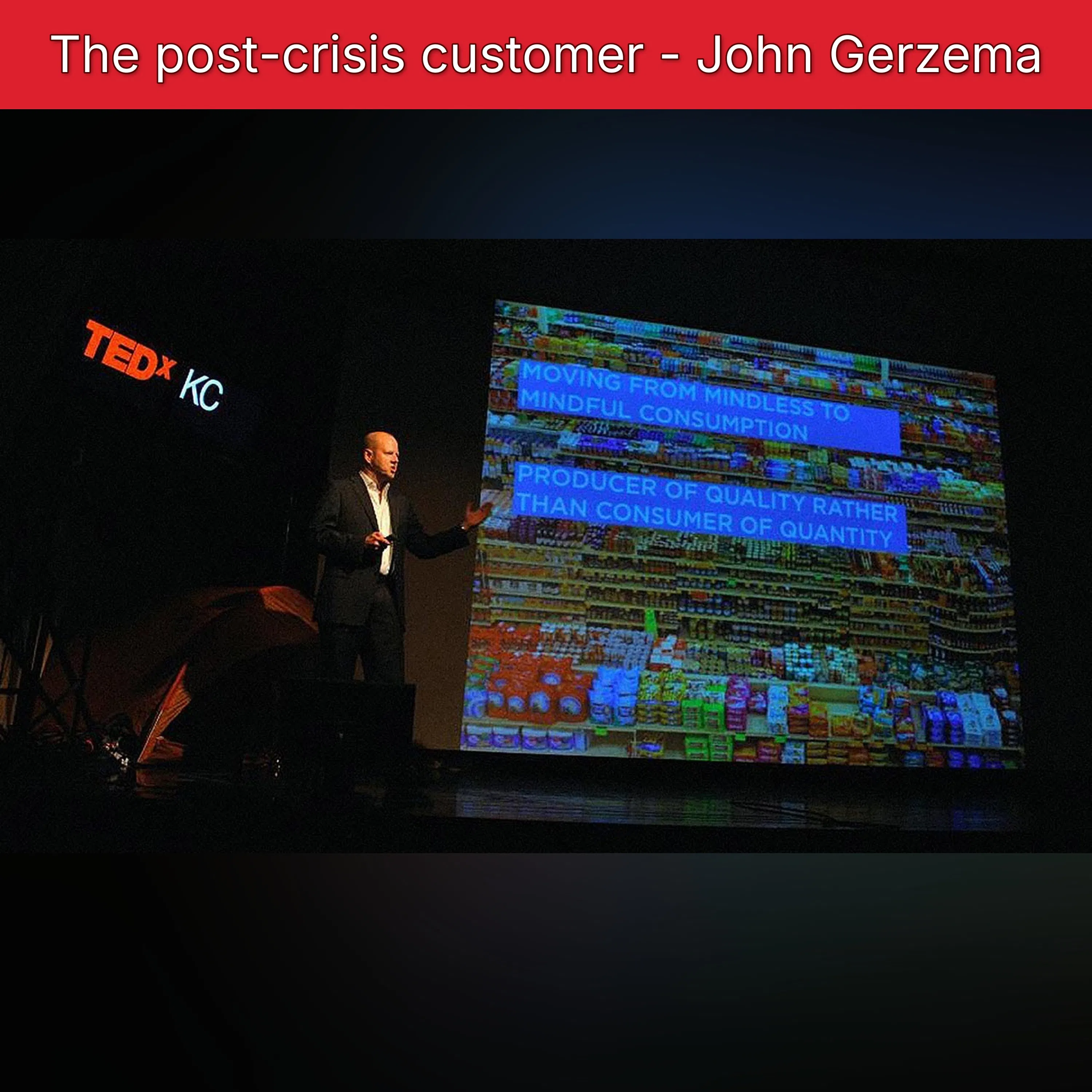
    The post-crisis customer - John Gerzema

    John Gerzema says there's an upside to the recent financial crisis -- the opportunity for positive change. In this talk, he identifies four major cultural shifts driving new consumer behavior and shows how businesses are evolving to connect with thoughtful spending. (Filmed at TEDxKC.) Talk by John Gerzema. Learn more about your ad choices. Visit megaphone.fm/adchoices

  • September 27 · 7 min

    Why doesn’t the Leaning Tower of Pisa fall over? - Alex Gendler

    Dig into the 800 year history and architecture of the Leaning Tower of Pisa and find out what gives the tower its infamous tilt. -- In 1990, the Italian government enlisted top engineers to stabilize Pisa’s famous Leaning Tower. There’d been many attempts during its 800 year history, but computer models revealed the urgency of their situation. The tower would topple if it reached an angle of 5.44 degrees— and it was currently leaning at 5.5. What gives the tower its infamous tilt? Alex Gendler explores the monument's history. Lesson by Alex Gendler, directed by Aim Creative Studios. Animator's website: http://aimcreativestudios.com/ Sign up for our newsletter: http://bit.ly/TEDEdNewsletter Support us on Patreon: http://bit.ly/TEDEdPatreon Follow us on Facebook: http://bit.ly/TEDEdFacebook Find us on Twitter: http://bit.ly/TEDEdTwitter Peep us on Instagram: http://bit.ly/TEDEdInstagram View full lesson: https://ed.ted.com/lessons/why-doesn-t-the-leaning-tower-of-pisa-fall-over-alex-gendler Thank you so much to our patrons for your support! Without you this video would not be possible! David Matthew Ezroj, Sweetmilkcoco, Raphaël LAURENT, Joe Meyers, Farah Abdelwahab, Brian Richards, Divina Grace Dar Santos, Jessie McGuire, Abdullah Altuwaijri, Sarah Burns, Clement, Hadi Salahshour, FAWWAZ GHUWAIDI, Dino Biancolini, Reagen O'Connor, Nicu Boanda, Cindy O., Karla Brilman, Jørgen Østerpart, Sergi Páez, rakesh Katragadda, Carolyn Corwin, Charlene You, Boris Langvand, Exal Enrique Cisneros Tuch, Carsten Tobehn, Kin Lon Ma, Katie Dean, Ezgi Yersu, Eunsun Kim, Katrina Harding, Gerald Onyango, alessandra tasso, Astia Rizki Safitri, Côme Vincent, Antony Lee, Melissa Sorrells, Rakshit Kothari, Doreen Reynolds-Consolati, Simon Holst Ravn, Manognya Chakrapani, Ayala Ron, Samantha Chow, Philippe Spoden, Phyllis Dubrow, Michelle Stevens-Stanford, Cas Jamieson, Ophelia Gibson Best, Amber Wood and Paul Schneider. Learn more about your ad choices. Visit megaphone.fm/adchoices
  • September 27 · 9 min

    From Aaliyah to Jay-Z: Captured moments in hip-hop history - Jonathan Mannion

    View full lesson: http://ed.ted.com/lessons/from-aaliyah-to-jay-z-captured-moments-in-hip-hop-history-jonathan-mannion Jonathan Mannion once convinced rapper DMX to climb into a pool of blood -- all in pursuit of the perfect photo. In this passionate TEDYouth talk, the photographer shares how fighting for the moments he needs to capture has helped him tell the stories of Biggie, Jay-Z, Aaliyah and other hip-hop greats. Talk by Jonathan Mannion. Learn more about your ad choices. Visit megaphone.fm/adchoices

  • September 27 · 8 min

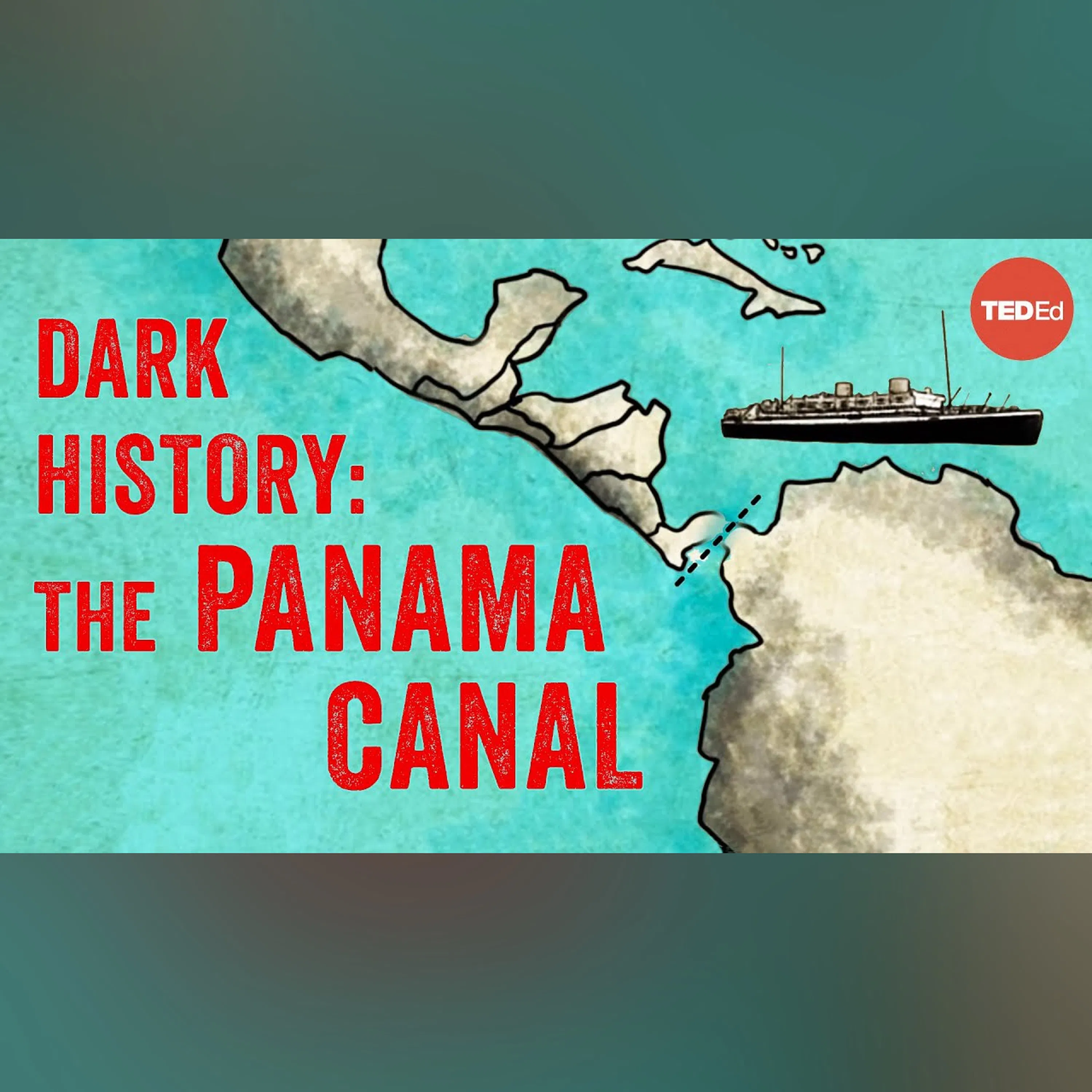
    Demolition, disease, and death: Building the Panama Canal - Alex Gendler

    Discover what it took to build the Panama Canal, and how this colossal construction project changed the region. -- In the 19th century, the California gold rush brought thousands of settlers to America's west coast. But finding gold may have been easier than transporting it back east. The only hope for avoiding a grueling six month wagon journey was to travel the narrowest portion of the continent — the 48-kilometer Isthmus of Panama. Alex Gendler details the creation of the Panama Canal. Lesson by Alex Gendler, directed by Cabong Studios. Support Our Non-Profit Mission ---------------------------------------------- Support us on Patreon: http://bit.ly/TEDEdPatreon Check out our merch: http://bit.ly/TEDEDShop ---------------------------------------------- Connect With Us ---------------------------------------------- Sign up for our newsletter: http://bit.ly/TEDEdNewsletter Follow us on Facebook: http://bit.ly/TEDEdFacebook Find us on Twitter: http://bit.ly/TEDEdTwitter Peep us on Instagram: http://bit.ly/TEDEdInstagram ---------------------------------------------- Keep Learning ---------------------------------------------- View full lesson: https://ed.ted.com/lessons/demolition-disease-and-death-building-the-panama-canal-alex-gendler Dig deeper with additional resources: https://ed.ted.com/lessons/demolition-disease-and-death-building-the-panama-canal-alex-gendler#digdeeper Animator's website: https://www.cabongstudios.com.br/ ---------------------------------------------- Thank you so much to our patrons for your support! Without you this video would not be possible! Fernando A. Endo, Courtney Marcott, Anna-Alicia Brooks, Mustafa, Helen Lee, pam morgan, sarim haq, Juan Pablo Rodriguez Morales, ANNE FINE, Gerardo Castro, Siddharth Toshniwal, Justice Boehmer, Michel-Ange Hortegat, Enes Kirimi, Amaury BISIAUX BISIAUX, Aravind C V, ND, Samyogita Hardikar, Vanessa Graulich, Vandana Gunwani, LvL042, Abdulmohsin Almadi, Andrew Brodski, John van den Berg, Anandha Krishnan, Geoffrey Bultitude, Mi Mi, Thomas Rothert, Christopher McVay, Izhari Ishak Aksa, Declan Manning, Javier Aldavaz, Ivan Yeung, Jaime Camacho, Irene Au, Роман Валесюк, LunarQueen, Iza, Brian Elieson, Paul, Grayson Garbarino, Oge O, Weronika Falkowska, Stefano Esposito, Nevin Spoljaric, Yvonne Feijoo, Sid Chanpuriya, Arjay Arcinue Dineros, Anoom Yasmin and Laura Johnson. Learn more about your ad choices. Visit megaphone.fm/adchoices

  • September 27 · 8 min

    How does chemotherapy work? - Hyunsoo Joshua No

    Discover how chemotherapy drugs use cytotoxic agents to attack cancer cells and the impact they have on your body. -- During World War I, scientists were trying to develop an antidote to the poisonous yellow cloud known as mustard gas. They discovered the gas was irrevocably damaging the bone marrow of affected soldiers. This gave the scientists an idea: cancer cells and bone marrow both replicate rapidly. Could mustard gas be used to fight cancer? Hyunsoo No details the discovery and development of chemotherapy. Lesson by Hyunsoo Joshua No, directed by Artrake Studio. Animator's website: https://www.artrake.com Sign up for our newsletter: http://bit.ly/TEDEdNewsletter Support us on Patreon: http://bit.ly/TEDEdPatreon Follow us on Facebook: http://bit.ly/TEDEdFacebook Find us on Twitter: http://bit.ly/TEDEdTwitter Peep us on Instagram: http://bit.ly/TEDEdInstagram View full lesson: https://ed.ted.com/lessons/how-does-chemotherapy-work-hyunsoo-joshua-no Thank you so much to our patrons for your support! Without you this video would not be possible! Jun Cai, Tim Robinson, Henrique 'Sorín' Cassús, cnorahs , Lyn-z Schulte, Elaine Fitzpatrick, Karthik Cherala, Clarence E. Harper Jr., Milad Mostafavi, Аркадий Скайуокер, Kiara Taylor, Louisa Lee, eden sher, Vignan Velivela, Sage Curie, Srikote Naewchampa, Tejas Dc, Khalifa Alhulail, Faiza Imtiaz, Martin Stephen, Jerome Froelich, Dan Paterniti, Jose Henrique Leopoldo e Silva, Mullaiarasu Sundaramurthy, Elnathan Joshua Bangayan, Caleb ross, Duo Xu, Quinn Shen, Marvin Vizuett, Sid , Marylise CHAUFFETON, Karen Goepen-Wee, Sama aafghani, Mandeep Singh, Abhijit Kiran Valluri, Morgan Williams, Kris Siverhus, Jason Weinstein, Tony Trapuzzano, Devin Harris, Brandy Jones, Shawn Quichocho, Gi Nam Lee, Joy Love Om, Miloš Stevanović, Ghassan Alhazzaa, Yankai Liu, Pavel Zalevskiy, Claudia Mayfield and Stephanie Perozo. Learn more about your ad choices. Visit megaphone.fm/adchoices

  • September 27 · 7 min

    What's wrong with our food system - Birke Baehr

    View full lesson: http://ed.ted.com/lessons/what-s-wrong-with-our-food-system-birke-baehr 11-year-old Birke Baehr presents his take on a major source of our food -- far-away and less-than-picturesque industrial farms. Keeping farms out of sight promotes a rosy, unreal picture of big-box agriculture, he argues, as he outlines the case to green and localize food production. (Filmed atTEDxNextGenerationAshevillen.) Talk by Birke Baehr. Learn more about your ad choices. Visit megaphone.fm/adchoices

  • September 27 · 6 min

    What do dumplings look like throughout the world? - Miranda Brown

    Trace the diverse and delicious history of dumplings, from their first recorded origins to their spread across the Asian continent and beyond. -- As archaeologists pored over ancient tombs in western China, they discovered some surprisingly well-preserved and familiar relics. Though hardened over 1,000 years, there sat little crescent-shaped dumplings. So who invented these plump pockets of perfection, and how did they spread across the world? Miranda Brown traces the tangled, mysterious historical web of dumplings. Lesson by Miranda Brown, directed by Léon Moh-Cah, Andi Concha. This video made possible in collaboration with Marriott Hotels Learn more about how TED-Ed partnerships work: https://bit.ly/TEDEdPartners Support Our Non-Profit Mission ---------------------------------------------- Support us on Patreon: http://bit.ly/TEDEdPatreon Check out our merch: http://bit.ly/TEDEDShop ---------------------------------------------- Connect With Us ---------------------------------------------- Sign up for our newsletter: http://bit.ly/TEDEdNewsletter Follow us on Facebook: http://bit.ly/TEDEdFacebook Find us on Twitter: http://bit.ly/TEDEdTwitter Peep us on Instagram: http://bit.ly/TEDEdInstagram ---------------------------------------------- Keep Learning ---------------------------------------------- View full lesson: https://ed.ted.com/lessons/a-brief-history-of-dumplings-miranda-brown Dig deeper with additional resources: https://ed.ted.com/lessons/a-brief-history-of-dumplings-miranda-brown#digdeeper Animator's website: https://nananastudio.com ---------------------------------------------- Thank you so much to our patrons for your support! Without you this video would not be possible! Javid Gozalov, Kyanta Yap, Rebecca Reineke, William Biersdorf, Patricia Alves Panagides, Yvette Mocete, Cyrus Garay, Samuel Barbas, LadyGeek, Curtis Light, Dianne Palomar, Marin Kovachev, Fahad Nasser Chowdhury, Penelope Misquitta, Hans Peng, Gaurav Mathur, Erik Biemans, Tony, Michelle, Katie and Josh Pedretti, Sunny Patel, Hoai Nam Tran, Stina Boberg, Kack-Kyun Kim, Michael Braun-Boghos, zjweele13, Jurjen Geleijn, Anna-Pitschna Kunz, Edla Paniguel, Thomas Mungavan, Jaron Blackburn, Venkat Venkatakrishnan, ReuniteKorea, Aaron Henson, Rohan Gupta, Begum Tutuncu, Mikhail Shkirev, Brian Richards, Cindy O., Jørgen Østerpart, Tyron Jung, Carolyn Corwin, Carsten Tobehn, Katie Dean, Ezgi Yersu, Gerald Onyango, alessandra tasso, Côme Vincent, Doreen Reynolds-Consolati, Manognya Chakrapani, Ayala Ron and Eunsun Kim. Learn more about your ad choices. Visit megaphone.fm/adchoices

  • September 27 · 5 min

    What creates a total solar eclipse? - Andy Cohen

    Explore the science of what causes total solar eclipses, and find out how civilizations throughout history reacted to them. -- How can the shadow of the tiny moon eclipse the sight of the gargantuan sun? By sheer coincidence, the disc of the sun is 400x larger than the disc of the moon, but it's 390x farther from Earth -- which means that when they align just right, the moon blocks all but the sun's glowing corona. Andy Cohen details this extraordinary celestial phenomenon (and when it will next occur). Lesson by Andy Cohen, animation by Bevan Lynch. Support Our Non-Profit Mission ---------------------------------------------- Support us on Patreon: http://bit.ly/TEDEdPatreon Check out our merch: http://bit.ly/TEDEDShop ---------------------------------------------- Connect With Us ---------------------------------------------- Sign up for our newsletter: http://bit.ly/TEDEdNewsletter Follow us on Facebook: http://bit.ly/TEDEdFacebook Find us on Twitter: http://bit.ly/TEDEdTwitter Peep us on Instagram: http://bit.ly/TEDEdInstagram ---------------------------------------------- Keep Learning ---------------------------------------------- View full lesson: http://ed.ted.com/lessons/what-creates-a-total-solar-eclipse-andy-cohen Dig deeper with additional resources: https://ed.ted.com/lessons/what-creates-a-total-solar-eclipse-andy-cohen/digdeeper ---------------------------------------------- Learn more about your ad choices. Visit megaphone.fm/adchoices

  • September 27 · 7 min

    Hagfish: Nature's slimiest creatures - Noah R. Bressman and Douglas Fudge

    Discover the extraordinary capabilities of hagfish, the slime-producing fish that has survived on Earth for over 300 million years. -- In 2017, a truck screeched to a halt. One of its containers slid off, hit a car, and spilled its contents— thousands of kilograms of hagfish. The result of this accident was an absolute mess: the highway was coated in a thick slime that took the fire department 7 hours to clear. How did these creatures create this stupendous supply of slime? Noah R. Bressman and Douglas Fudge investigate. Lesson by Noah R. Bressman and Douglas Fudge, directed by Denys Spolitak. Support Our Non-Profit Mission ---------------------------------------------- Support us on Patreon: http://bit.ly/TEDEdPatreon Check out our merch: http://bit.ly/TEDEDShop ---------------------------------------------- Connect With Us ---------------------------------------------- Sign up for our newsletter: http://bit.ly/TEDEdNewsletter Follow us on Facebook: http://bit.ly/TEDEdFacebook Find us on Twitter: http://bit.ly/TEDEdTwitter Peep us on Instagram: http://bit.ly/TEDEdInstagram ---------------------------------------------- Keep Learning ---------------------------------------------- View full lesson: https://ed.ted.com/lessons/the-world-s-slimiest-animal-noah-r-bressman-and-douglas-fudge Dig deeper with additional resources: https://ed.ted.com/lessons/the-world-s-slimiest-animal-noah-r-bressman-and-douglas-fudge#digdeeper Animator's website: https://vimeo.com/user50965180 ---------------------------------------------- Thank you so much to our patrons for your support! Without you this video would not be possible! Francisco Amaya, Daisuke Goto, Matt Switzler, Peng, Tzu-Hsiang, Bethany Connor, Jeremy Shimanek, Mark Byers, Avinash Amarnath, Xuebicoco, Rayo, Po Foon Kwong, Boffin, Jesse Jurman, Scott Markley, Elija Peterson, Ovidiu Mrd, paul g mohney, Steven Razey, Nathan Giusti, Helen Lee, Anthony Benedict, Karthik Balsubramanian, Annastasshia Ames, Amy Lopez, Vinh-Thuy Nguyen, Liz Candee, Ugur Doga Sezgin, Karmi Nguyen, John C. Vesey, Yelena Baykova, Nick Johnson, Carlos H. Costa, Jennifer Kurkoski, Ryan B Harvey, Akinola Emmanuel, Jose Arcadio Valdes Franco, Sebastiaan Vleugels, Karl Laius, JY Kang, Abhishek Goel, Heidi Stolt, Nicole Sund, Karlee Finch, Mario Mejia, Denise A Pitts, Doug Henry, Keven Webb, Mihai Sandu, Deepak Iyer and Javid Gozalov. Learn more about your ad choices. Visit megaphone.fm/adchoices

  • September 27 · 7 min

    What is the least common color found in nature? - Victoria Hwang

    Discover what colors are the most rare to see in nature, and how physics and evolution drive their scarcity. -- Plants, animals, or minerals found in nature bear almost every color imaginable. There are two factors that influence what hues you see in the wild: physics and evolution. So, which colors are you least likely to see in the natural world? Victoria Hwang explores one of nature’s rarest spectacles. Lesson by Victoria Hwang, directed by Tamara Bogovac, Artrake Studio. 2:33 - Image referenced from paper by Eric R. Dufresne, Heeso Noh, Vinodkumar Saranathan, Simon G. J. Mochrie, Hui Cao and Richard O. Prum, photograph of Plum-throated Cotinga (Cotinga maynana) by Thomas Valqui, https://rsc.li/3xyhxGu Support Our Non-Profit Mission ---------------------------------------------- Support us on Patreon: http://bit.ly/TEDEdPatreon Check out our merch: http://bit.ly/TEDEDShop ---------------------------------------------- Connect With Us ---------------------------------------------- Sign up for our newsletter: http://bit.ly/TEDEdNewsletter Follow us on Facebook: http://bit.ly/TEDEdFacebook Find us on Twitter: http://bit.ly/TEDEdTwitter Peep us on Instagram: http://bit.ly/TEDEdInstagram ---------------------------------------------- Keep Learning ---------------------------------------------- View full lesson: https://ed.ted.com/lessons/what-is-the-rarest-color-in-nature-victoria-hwang Dig deeper with additional resources: https://ed.ted.com/lessons/what-is-the-rarest-color-in-nature-victoria-hwang#digdeeper Animator's website: https://www.artrake.com ---------------------------------------------- Thank you so much to our patrons for your support! Without you this video would not be possible! Conder Shou, BrushReads, Matt Kennedy, Jonah Dobbs, ntiger, Noname, Hansan Hu, Cameron Burkle, Dhanwanth Varadhan, David D, Zuko Gameplays, Jonathan Bates JBZ, Aria Smith, Mac Hyney, Keith Ellison, robin valero walters, Camehira, Lynne Truesdale, Gatsby Dkdc, Matthew Neal, Jayson Gasper Ayson, Maxwell Ramsby, Dmitry Yuryev, Denis Chon, Julian Oberhofer, Monte Carroll, Eddy, Jay M, Constantino Victor Delgado, Andrea Galvagni, Andrew Tweddle, Laurel-Ann Rice, Fernando A. Endo, Helen Lee, pam morgan, sarim haq, Juan Pablo Rodriguez Morales, ANNE FINE, Gerardo Castro, Siddharth Toshniwal, Michel-Ange Hortegat, Enes Kirimi, Amaury BISIAUX, ND, Samyogita Hardikar, Vanessa Graulich, Vandana Gunwani, Abdulmohsin Almadi, Andrew Brodski and AJ Lyon. Learn more about your ad choices. Visit megaphone.fm/adchoices

  • September 27 · 7 min

    The wild world of carnivorous plants - Kenny Coogan

    Venus fly traps, bladderworts and sundews, oh my! Learn about carnivorous plants and their predatory antics to lure, trap and digest prey. -- Around the world there are more than 600 plant species that supplement a regular diet of sunlight, water and soil with insects, frogs and even rats. Flies, tadpoles and beetles fall prey to the remarkable, predatory antics of carnivorous plants. What exactly are carnivorous plants and how do they trap their prey? Kenny Coogan dives into the world of these flesh-eating tricksters. Lesson by Kenny Coogan, directed by Lisa LaBracio. Sign up for our newsletter: http://bit.ly/TEDEdNewsletter Support us on Patreon: http://bit.ly/TEDEdPatreon Follow us on Facebook: http://bit.ly/TEDEdFacebook Find us on Twitter: http://bit.ly/TEDEdTwitter Peep us on Instagram: http://bit.ly/TEDEdInstagram View full lesson: https://ed.ted.com/lessons/the-wild-world-of-flesh-eating-plants-kenny-coogan Thank you so much to our patrons for your support! Without you this video would not be possible! Antony Lee, Husain Mohammad, Max Shuai Tang, Côme Vincent, Astia Rizki Safitri, Alan Froese, alessandra tasso, Gerald Onyango, Katrina Harding, Ezgi Yersu, Al the Scottish Wildcat, Katie Dean, Kin Lon Ma, Carsten Tobehn, Boris Langvand, Jeremy Fryd, Charlene You, Carolyn Corwin, rakesh Katragadda, Sergi Páez, Jørgen Østerpart, Karla Brilman, Cindy O., Nicu Boanda, Reagen O'Connor, Sabrina Gonzalez, Dino Biancolini, FAWWAZ GHUWAIDI, Hadi Salahshour, Clement, Sarah Burns, Abdullah Altuwaijri, Jessie McGuire, Divina Grace Dar Santos, Brian Richards, Farah Abdelwahab, Joe Meyers, Mikhail Shkirev, Raphaël LAURENT, Malcolm Callis, Sweetmilkcoco, David Matthew Ezroj, Ever Granada, fatima kried, Begum Tutuncu, Mehmet Sencer KARADAYI, Christian Kurch, SungGyeong Bae, Luis Felipe Ruiz Langenscheidt and Joe Huang. Learn more about your ad choices. Visit megaphone.fm/adchoices

  • September 27 · 5 min

    How do you select where to go in a zombie apocalypse? - David Hunter

    View full lesson: http://ed.ted.com/lessons/how-do-you-decide-where-to-go-in-a-zombie-apocalypse-david-hunter Can geography save your life in case of, say, a zombie apocalypse? Understanding the push and pull factors that create geographic movement -- or how people, resources, and even ideas travel -- might help you determine the location that's best for survival. David Hunter playfully analyzes the geography skills that you'd need to escape the zombies. Lesson by David Hunter, animation by Provincia Studio. Learn more about your ad choices. Visit megaphone.fm/adchoices

  • September 27 · 6 min

    A brief history of plural word...s - John McWhorter

    View full lesson here: http://ed.ted.com/lessons/a-brief-history-of-plural-word-s-john-mcwhorter All it takes is a simple S to make most English words plural. But it hasn't always worked that way (and there are, of course, exceptions). John McWhorter looks back to the good old days when English was newly split from German -- and books, names and eggs were beek, namen and eggru! Lesson by John McWhorter, animation by Lippy. Learn more about your ad choices. Visit megaphone.fm/adchoices

Showing 1,541–1,560 of 1,797 episodes