Skip to content
Artwork for TED-Ed
EducationScienceTechnology

TED-Ed

TED-Ed

TED-Ed’s mission is to create lessons worth sharing. Feed and expand your curiosity with our award-winning animated shorts - published on YouTube and available with supplemental learning materials on ed.ted.com.

Want to suggest an idea for a TED-Ed animation, nominate an educator or animator? Visit our website at: http://ed.ted.com/get_involved.

Consider backing us on Patreon. By doing so, you directly support our nonprofit mission to create free, high-quality educational content: https://www.patreon.com/teded

For more information on using TED-Ed content for commercial purposes (e.g. employee learning, in a film, or in an online course), please submit a Media Request using this link: https://media-requests.ted.com/

Play
  • 1,781 episodes
  • daily
  • Avg 9 min
  • English

Episodes 1,781

Counted on this page — what you have heard stays on this device, so it is not something the list can be paged by.
  • September 26 · 8 min

    The fish that walk on land - Noah R. Bressman

    Explore the challenges facing amphibious fish when they leave water and the ingenious ways they survive on land. -- We think of fish as completely aquatic animals. But there are actually hundreds of fish species that are amphibious, meaning that they possess adaptations that enable them to survive on land. Once on land, however, they face suffocation, drying up, and being hunted by land predators. So why do fish make the exodus from water to land? Noah R. Bressman explores the ingenious ways these fish survive. Lesson by Noah R. Bressman, directed by Anna Benner. Animator's website: https://annabennerstudio.com/ Sound designer's website: http://www.tschernuth.com/ Sign up for our newsletter: http://bit.ly/TEDEdNewsletter Support us on Patreon: http://bit.ly/TEDEdPatreon Follow us on Facebook: http://bit.ly/TEDEdFacebook Find us on Twitter: http://bit.ly/TEDEdTwitter Peep us on Instagram: http://bit.ly/TEDEdInstagram View full lesson: https://ed.ted.com/lessons/the-fish-that-walk-on-land-noah-r-bressman Thank you so much to our patrons for your support! Without you this video would not be possible! Mehmet Yusuf Ertekin, Arlene Weston, phkphk123321, Jennifer Kurkoski, Ryan B Harvey, Austin Randall, Abhishek Bansal, Jayant Sahewal, Dian Atamyanov, igor romanenko, Jose Arcadio Valdes Franco, Brandy Sarver, Guy Hardy, Tu-Anh Nguyen, Karl Laius, Madee Lo, JY Kang, Marc Bou Zeid, Abhishek Goel, Charles A Hershberger, Coenraad Keuning, Robert Seik, Heidi Stolt, Alexis Hevia, Todd Gross, Brady Jones, Christina Salvatore, Zhong Ming Zenny Tan, Karisa Caudill, Bruno Pinho, Derek Drescher, Mihail Radu Pantilimon, Amin Shahril, Mohamed Elsayed, Barthélémy Michalon, Chumi Ogbonna, Karlee Finch, Mohammad Said, jj5252, Kelvin Lam, Mauricio Basso, Athena Grace Franco, Tirath Singh Pandher, Melvin Williams, Tsz Hin Edmund Chan, Nicolas Silva, Raymond Lee, Kurt Almendras, Denise A Pitts and Abdallah Absi. Learn more about your ad choices. Visit megaphone.fm/adchoices

  • September 26 · 8 min

    The Train Heist | Think Like A Coder, Ep 4

    The adventure continues! Episode 4: The trio plot how they can steal the first artifact— the Node of Power. Can they take it without being discovered? -- This is episode 4 of our animated series “Think Like A Coder.” This 10-episode narrative follows a girl, Ethic, and her robot companion, Hedge, as they attempt to save the world. The two embark on a quest to collect three artifacts and must solve their way through a series of programming puzzles. Lesson by Alex Rosenthal, directed by Kozmonot Animation Studio. Supported by Endless: https://endlessnetwork.com A special thank you to the programmers who assisted in the development of this series: Eric Wastl, Sara Kladky, Ryan Harvey, Dan Bernier, Eden Girma, Matt Gruskin, and James Griffith. And thanks to Eric Wastl, whose puzzle from the 2015 Advent of Code inspired the challenge in this episode. http://bit.ly/AdventOfCode1 Sign up for our newsletter: http://bit.ly/TEDEdNewsletter Support us on Patreon: http://bit.ly/TEDEdPatreon Follow us on Facebook: http://bit.ly/TEDEdFacebook Find us on Twitter: http://bit.ly/TEDEdTwitter Peep us on Instagram: http://bit.ly/TEDEdInstagram View full lesson: https://ed.ted.com/lessons/the-train-heist-think-like-a-coder-ep-4 Thank you so much to our patrons for your support! Without you this video would not be possible! Joe Giamartino, Filip Dabrowski, Barbara Smalley, Megan Douglas, Tim Leistikow, Andrés Melo Gámez, Renhe Ji, Ka-Hei Law, Michal Salman, Peter Liu, Mark Morris, Catherine Sverko, Misaki Sato, Tan YH, Ph.D., Rodrigo Carballo, SookKwan Loong, Bev Millar, Merit Gamertsfelder, Lex Azevedo, Noa Shore, Taylor Hunter, Kyle Nguyen, MJ Tan Mingjie, Cristóbal Moenne, Goh Xiang Ting Diana, Kevin Wong, Dawn Jordan, Yanira Santamaria, Prasanth Mathialagan, Savannah Scheelings, Susan Herder, Samuel Doerle, David Rosario, Dominik Kugelmann, Siamak H, Tracey Tobkin, Dwight Tevuk, Anthony Kudolo, Mrinalini, Yanuar Ashari, Ivan Todorović, Alex Schenkman, Brittiny Elman, Ryohky Araya, Paul Coupe, David Douglass, Ricardo Paredes, Bill Feaver, Eduardo Briceño and Arturo De Leon. Learn more about your ad choices. Visit megaphone.fm/adchoices
  • September 26 · 14 min

    Using nature to grow batteries - Angela Belcher

    Inspired by an abalone shell, Angela Belcher programs viruses to make elegant nanoscale structures that humans can use. Selecting for high-performing genes through directed evolution, she's produced viruses that can construct powerful new batteries, clean hydrogen fuels and record-breaking solar cells. In her talk, she shows us how it's done. (Filmed at TEDxCaltech.) Talk by Angela Belcher. Learn more about your ad choices. Visit megaphone.fm/adchoices

  • September 26 · 7 min

    The rise and fall of the medieval Islamic Realm - Petra Sijpesteijn and Birte Kristiansen

    Trace the rise and fall of the Islamic Empire, from the prophet Muhammad in the 7th century to the sacking of Baghdad. -- In the 7th century CE, the prophet Muhammad united the people of the Arabian Peninsula through the formation of Islam. Over the next 30 years, caliphs conquered vast areas beyond Arabia, including their mighty neighbors the Persians and Byzantines. But an empire this vast was at risk of conflict and fracture. Petra Sijpesteijn and Birte Kristiansen detail the rise and fall of the Islamic Empire. Lesson by Petra Sijpesteijn & Birte Kristiansen, directed by Elahe Baloochi, Fardi Mahmoodi. Support Our Non-Profit Mission ---------------------------------------------- Support us on Patreon: http://bit.ly/TEDEdPatreon Check out our merch: http://bit.ly/TEDEDShop ---------------------------------------------- Connect With Us ---------------------------------------------- Sign up for our newsletter: http://bit.ly/TEDEdNewsletter Follow us on Facebook: http://bit.ly/TEDEdFacebook Find us on Twitter: http://bit.ly/TEDEdTwitter Peep us on Instagram: http://bit.ly/TEDEdInstagram ---------------------------------------------- Keep Learning ---------------------------------------------- View full lesson: https://ed.ted.com/lessons/the-rise-and-fall-of-the-medieval-islamic-empire-petra-sijpesteijn-birte-kristiansen Dig deeper with additional resources: https://ed.ted.com/lessons/the-rise-and-fall-of-the-medieval-islamic-empire-petra-sijpesteijn-birte-kristiansen#digdeeper ---------------------------------------------- Thank you so much to our patrons for your support! Without you this video would not be possible! Mark Morris, Misaki Sato, EdoKun, SookKwan Loong, Bev Millar, Lex Azevedo, Michael Aquilina, Jason A Saslow, Yansong Li, Cristóbal Moenne, Dawn Jordan, Prasanth Mathialagan, Samuel Doerle, David Rosario, Dominik Kugelmann - they-them, Siamak Hajizadeh, Ryohky Araya, Mayank Kaul, Christophe Dessalles, Heather Slater, Sandra Tersluisen, Zhexi Shan, Bárbara Nazaré, Andrea Feliz, Victor E Karhel, Sydney Evans, Latora, Noel Situ, emily lam, Sid, Niccolò Frassetto, Mana, I'm here because of Knowledge Fight Facebook group., Linda Freedman, Edgardo Cuellar, Jaspar Carmichael-Jack, Michael Burton, VIVIANA A GARCIA BESNE, The Vernon's, Olha Bahatiuk, Jesús Bíquez Talayero, Chels Raknrl, Sai Pranavi Jonnalagadda, Stuart Rice, Jing Chen, Vector-Dopamine math, Jasper Song, Giorgio Bugnatelli, Chardon and Eddy Trochez. Learn more about your ad choices. Visit megaphone.fm/adchoices

  • September 26 · 8 min

    Can you solve the sorting hat riddle? - Dan Katz and Alex Rosenthal

    Practice more problem-solving at https://brilliant.org/TedEd/ -- It’s your first day at Magnificent Marigold’s Magical Macademy. But before you can learn your first spell you must get through the sorting ceremony. And the sorting hat has chosen you for a special challenge. The Macademy had 8 founders who established four houses, and there was once a mysterious fifth house. Can you figure out who founded what? Dan Katz and Alex Rosenthal show how. Lesson by Dan Katz and Alex Rosenthal, directed by Artrake Studio. Animator's website: https://www.artrake.com Sign up for our newsletter: http://bit.ly/TEDEdNewsletter Support us on Patreon: http://bit.ly/TEDEdPatreon Follow us on Facebook: http://bit.ly/TEDEdFacebook Find us on Twitter: http://bit.ly/TEDEdTwitter Peep us on Instagram: http://bit.ly/TEDEdInstagram View full lesson: https://ed.ted.com/lessons/can-you-solve-the-sorting-hat-riddle-dan-katz-and-alex-rosenthal Thank you so much to our patrons for your support! Without you this video would not be possible! Dee Wei, Richard A Berkley, Tim Armstrong, Daniel Nester, Hashem Al, denison martins fernandes, Doug Henry, Arlene Spiegelman, Michał Friedrich, Joshua Wasniewski, Maryam Dadkhah, Kristiyan Bonev, Keven Webb, Mihai Sandu, Deepak Iyer, Javid Gozalov, Emilia Alvarado, Jaime Arriola, Mirzat Tulafu, Lewis Westbury, Felipe Hoff, Rebecca Reineke, Cyrus Garay, Victoria Veretilo, Michael Aquilina, William Biersdorf, Patricia Alves Panagides, Valeria Sloan Vasquez, Mike Azarkman, Yvette Mocete, Pavel Maksimov, Victoria Soler-Roig, Betsy Feathers, Samuel Barbas, Therapist Gus, Sai Krishna Koyoda, Elizabeth Parker, William Bravante, Irindany Sandoval, Mark wisdom, Brighteagle, Beatriz Inácio, Mighterbump, Pamela Harrison, Maija Chapman, Liana Switzer, Curtis Light, The Brock, Dianne Palomar and Edgar Campos Barrachina. Learn more about your ad choices. Visit megaphone.fm/adchoices
  • September 26 · 25 min

    A new approach to identifying autism - Ami Klin

    View full lesson: http://ed.ted.com/lessons/a-new-way-to-diagnose-autism-ami-klin Early diagnosis of autism spectrum disorder can improve the lives of everyone affected, but the complex network of causes make it incredibly difficult to predict. At TEDxPeachtree, Ami Klin describes a new early detection method that uses eye-tracking technologies to gauge babies' social engagement skills and reliably measure their risk of developing autism. (Filmed at TEDxPeachTree.) Talk by Ami Klin. Learn more about your ad choices. Visit megaphone.fm/adchoices

  • September 26 · 6 min

    Why should you read “Lord of the Flies” by William Golding? - Jill Dash

    Explore William Golding’s timeless satire, “Lord of the Flies,” which follows a group of shipwrecked boys as they descend into anarchy. -- After witnessing the atrocities of his fellow man in World War II, William Golding was losing his faith in humanity. Later, during the Cold War, as superpowers began threatening one another with nuclear annihilation, he was forced to interrogate the very roots of human nature and violence. These musings would inspire his first novel: “Lord of the Flies.” Jill Dash dives into the timeless satire. Lesson by Jill Dash, directed by Lucy Animation Studio. Animator's website: https://www.silviaprietov.com Sign up for our newsletter: http://bit.ly/TEDEdNewsletter Support us on Patreon: http://bit.ly/TEDEdPatreon Follow us on Facebook: http://bit.ly/TEDEdFacebook Find us on Twitter: http://bit.ly/TEDEdTwitter Peep us on Instagram: http://bit.ly/TEDEdInstagram View full lesson: https://ed.ted.com/lessons/why-should-you-read-lord-of-the-flies-by-william-golding-jill-dash Thank you so much to our patrons for your support! Without you this video would not be possible! Della Palacios, Vik Nagjee, Hiroshi Uchiyama, Adi V, Andrew Bosco, Craig Sheldon, Rishi Pasham, Joanne Luce, Jason A Saslow, Mary Sawyer, Scott Gass, Ruth Fang, Mayank Kaul, Kathryn J Hammond, Max Shuai Tang, Terry Minion, Sami Khan, Rob Johnson, Abdullah Abdulaziz, Angelo Urzua-Milla, Tommy Lewis, leorene , Mahina Bachiller, Marcus Andre Nery, Bruce Vieira Lopes, Chef, Charmaine Hanson, Michael Goldberg, Lydia Pflieger, Paul Aldred-Bann, Manav parmar, Susan Wang, Utkarsh Dubey, Thawsitt , Xuebicoco, Jezabel, Maeve, Kim Humphrey, Kristen Damas, JackKeyton, Matthew D. Vigil, Amin Shahril, Adriano Fontes, Xiao Yu, Fatima Kried, Aravind Battaje, Melissa Suarez, Jason Duncan and Brian A. Dunn. Learn more about your ad choices. Visit megaphone.fm/adchoices

  • September 26 · 18 min

    What doctors don't know about the medicines they dispense - Ben Goldacre

    When a new drug gets tested, the results of the trials should be published for the rest of the medical world -- except much of the time, negative or inconclusive findings go unreported, leaving doctors and researchers in the dark. In this impassioned talk, Ben Goldacre explains why these unreported instances of negative data are especially misleading and dangerous. Talk by Ben Goldacre. Learn more about your ad choices. Visit megaphone.fm/adchoices

  • September 26 · 23 min

    A radical experiment in empathy - Sam Richards

    By leading the Americans in his audience step by step through the thought process, sociologist Sam Richards sets an extraordinary challenge: can they understand -- not approve of, but understand -- the motivations of an Iraqi insurgent? And by extension, can anyone truly understand and empathize with another? (Filmed at TEDxPSU.) Talk by Sam Richards. Learn more about your ad choices. Visit megaphone.fm/adchoices

  • September 26 · 5 min

    What is the world wide web? - Twila Camp

    View full lesson: http://ed.ted.com/lessons/what-is-the-world-wide-web-twila-camp The world wide web is used every day by millions of people for everything from checking the weather to sharing cat videos. But what is it exactly? Twila Camp describes this interconnected information system as a virtual city that everyone owns and explains how it's organized in a way that mimics our brain's natural way of thinking. Lesson by Twila Camp, animation by Flaming Medusa Studios Inc. Learn more about your ad choices. Visit megaphone.fm/adchoices

  • September 26 · 6 min

    The hidden cost of gold - Lyla Latif

    Dig into how foreign corporations exploit African nations like Mali for their gold mining, and often rob them of proper compensation. -- In 2020, Mali produced over 71 tons of gold— an amount worth billions of dollars. But Mali saw only $850 million dollars from that gold. And this situation isn’t unique: a number of other gold-rich countries in Africa aren’t seeing the income they should given the price of gold. So, what’s going on? Lyla Latif digs into how foreign corporations exploit African nations for their resources. Lesson by Lyla Latif, directed by Jeffig Le Bars, JetPropulsion.space Support Our Non-Profit Mission ---------------------------------------------- Support us on Patreon: http://bit.ly/TEDEdPatreon Check out our merch: http://bit.ly/TEDEDShop ---------------------------------------------- Connect With Us ---------------------------------------------- Sign up for our newsletter: http://bit.ly/TEDEdNewsletter Follow us on Facebook: http://bit.ly/TEDEdFacebook Find us on Twitter: http://bit.ly/TEDEdTwitter Peep us on Instagram: http://bit.ly/TEDEdInstagram ---------------------------------------------- Keep Learning ---------------------------------------------- View full lesson: https://ed.ted.com/lessons/the-true-cost-of-gold-lyla-latif Dig deeper with additional resources: https://ed.ted.com/lessons/the-true-cost-of-gold-lyla-latif#digdeeper Animator's website: https://jetpropulsion.space Composer website: https://soundcloud.com/aim-music ---------------------------------------------- Thank you so much to our patrons for your support! Without you this video would not be possible! Matthew Neal, Denis Chon, Julian Oberhofer, Monte Carroll, Eddy, Jay M, Constantino Victor Delgado, Andrea Galvagni, Andrew Tweddle, Laurel-Ann Rice, Fernando A. Endo, Helen Lee, pam morgan, sarim haq, Gerardo Castro, Michel-Ange Hortegat, Enes Kirimi, Amaury BISIAUX, ND, Samyogita Hardikar, Vanessa Graulich, Vandana Gunwani, Abdulmohsin Almadi, AJ Lyon, Geoffrey Bultitude, Mi Mi, Thomas Rothert, Brian Elieson, Oge O, Weronika Falkowska, Nevin Spoljaric, Sid Chanpuriya, Anoop Varghese, David Yastremski, Noah Webb, Roberto Chena, Oliver Koo, Luke Pisano, Andrea Gordon, Aleksandar Donev, Nicole Klau Ibarra, Jesse Lira, Ezekiel Raui, Petr Vacek, Dennis, Olivia Fu, Kari Teffeau, Cindy Lai, Rajath Durgada Manjunath and Dan Nguyen. Learn more about your ad choices. Visit megaphone.fm/adchoices
  • September 26 · 8 min

    Why people fall for misinformation - Joseph Isaac

    How does a fact become a misconception? Dig into the world of misinformation to see how facts can become distorted and misleading. -- In 1901, David Hänig published research that led to what we know today as the taste map: an illustration that divides the tongue into four separate areas. It has since been published in textbooks and newspapers. There is just one problem: the map is wrong. So how do misconceptions like this spread, and what makes a fake fact so easy to believe? Joseph Isaac dives into the world of misinformation. Lesson by Joseph Isaac, directed by CUB Animation. Animator's website: http://cubanimation.com/en/intro-en/ Sign up for our newsletter: http://bit.ly/TEDEdNewsletter Support us on Patreon: http://bit.ly/TEDEdPatreon Follow us on Facebook: http://bit.ly/TEDEdFacebook Find us on Twitter: http://bit.ly/TEDEdTwitter Peep us on Instagram: http://bit.ly/TEDEdInstagram View full lesson: https://ed.ted.com/lessons/why-people-fall-for-misinformation-joseph-isaac Thank you so much to our patrons for your support! Without you this video would not be possible! Maria Lerchbaumer, Ever Granada, Marin Kovachev, Ravi S. Rāmphal, Penelope Misquitta, Tekin Gültekin, Jhuval, Hans Peng, Gaurav Mathur, Erik Biemans, Tony, Michelle, Katie and Josh Pedretti, Vaibhav Mirjolkar, Thomas Bahrman, Allan Hayes, Aidan Forero, Uday Kishore, Mikhail Shkirev, Devesh Kumar, Sunny Patel, Anuj Tomar, Lowell Fleming, David Petrovič, Hoai Nam Tran, Stina Boberg, Alexandrina Danifeld, Kack-Kyun Kim, Travis Wehrman, haventfiguredout, Caitlin de Falco, Ken, zjweele13, Anna-Pitschna Kunz, Edla Paniguel, Elena Crescia, Thomas Mungavan, Alejandro Cachoua, Jaron Blackburn, Yoga Trapeze Wanderlust, Sandy Nasser, Venkat Venkatakrishnan, Nicolle Fieldsend-Roxborough, John Saveland, Jason Garcia, Robson Martinho, Martin Lau, Senjo Limbu, Joe Huang, SungGyeong Bae, Christian Kurch, Begum Tutuncu. Learn more about your ad choices. Visit megaphone.fm/adchoices
  • September 26 · 5 min

    What is the shape of a molecule? - George Zaidan and Charles Morton

    View full lesson: http://ed.ted.com/lessons/what-is-the-shape-of-a-molecule-george-zaidan-and-charles-morton A molecule is nearly all empty space, apart from the extremely dense nuclei of its atoms and the clouds of electrons that bond them together. When that molecule forms, it arranges itself to maximize attraction of opposite charges and minimize repulsion of unlike. George Zaidan and Charles Morton shape our image of molecules. Lesson by George Zaidan and Charles Morton, animation by Bevan Lynch. Learn more about your ad choices. Visit megaphone.fm/adchoices

  • September 26 · 15 min

    A whistleblower you haven't heard - Geert Chatrou

    In this engaging talk, world champion whistler Geert Chatrou performs the whimsical "Eleonora" by A. Honhoff, and his own "Fête de la Belle." In a fascinating interlude, he talks about what brought him to the craft. (Filmed at TEDxRotterdam .) Talk by Geert Chatrou. Learn more about your ad choices. Visit megaphone.fm/adchoices

  • September 26 · 8 min

    Can the economy expand forever?

    Is infinite economic growth possible on a planet with finite resources? Explore how countries can balance efficiency with sustainability. -- Many economists think that an eternally growing economy is necessary to keep improving people’s lives, and that if the global economy stops growing, people would fight more over the fixed amount of value that exists, rather than working to generate new value. Which raises the question: is infinite growth possible on a finite planet? Explore how economies can balance efficiency with sustainability. Directed by Kevin Herrmann, AIM Creative Studios. This video made possible in collaboration with World Economic Forum Learn more about how TED-Ed partnerships work: https://bit.ly/TEDEdPartners Support Our Non-Profit Mission ---------------------------------------------- Support us on Patreon: http://bit.ly/TEDEdPatreon Check out our merch: http://bit.ly/TEDEDShop ---------------------------------------------- Connect With Us ---------------------------------------------- Sign up for our newsletter: http://bit.ly/TEDEdNewsletter Follow us on Facebook: http://bit.ly/TEDEdFacebook Find us on Twitter: http://bit.ly/TEDEdTwitter Peep us on Instagram: http://bit.ly/TEDEdInstagram ---------------------------------------------- Keep Learning ---------------------------------------------- View full lesson: https://ed.ted.com/lessons/can-the-economy-grow-forever Dig deeper with additional resources: https://ed.ted.com/lessons/can-the-economy-grow-forever#digdeeper Animator's website: http://aimcreativestudios.com Music: https://soundcloud.com/aim-music ---------------------------------------------- Thank you so much to our patrons for your support! Without you this video would not be possible! OnlineBookClub.org, Eric Shear, Leith Salem, Omar Hicham, Adrian Rotaru, Brad Sullivan, Karen Ho, Niklas Frimberger, Hunter Manhart, Nathan Nguyen, Igor Stavchanskiy, James R DeVries, Grace Huo, Diana Huang, Chau Hong Diem, Orlellys Torre, Corheu, Thomas Mee, Maryann H McCrory, Blas Borde, John Hellmann, Poompak Meephian, Chuck Wofford, Adam Pagan, Wes Winn, Conder Shou, ntiger, Noname, Hansan Hu, David D, Mac Hyney, Keith Ellison, robin valero walters, Lynne Truesdale, Gatsby Dkdc, Matthew Neal, Denis Chon, Julian Oberhofer, Monte Carroll, Eddy, Jay M, Constantino Victor Delgado, Andrea Galvagni, Andrew Tweddle, Laurel-Ann Rice, Fernando A. Endo, Helen Lee, pam morgan, sarim haq and Gerardo Castro. Learn more about your ad choices. Visit megaphone.fm/adchoices

  • September 26 · 8 min

    Are all of your memories real? - Daniel L. Schacter

    Dig into the psychology of how memories are susceptible to false information and why we shouldn’t treat them as truth. -- In a 1990’s study, participants recalled getting lost in a shopping mall as children. Some shared these memories in vivid detail, but there was one problem: none of these people had actually gotten lost in a mall. They produced these false memories after psychologists told them they’d gotten lost and parents confirmed it. So what’s going on? Daniel L. Schacter explores the fallibility of our memory. Lesson by Daniel L. Schacter, directed by AIM Creative Studios. Animator's website: http://aimcreativestudios.com/ Sign up for our newsletter: http://bit.ly/TEDEdNewsletter Support us on Patreon: http://bit.ly/TEDEdPatreon Follow us on Facebook: http://bit.ly/TEDEdFacebook Find us on Twitter: http://bit.ly/TEDEdTwitter Peep us on Instagram: http://bit.ly/TEDEdInstagram View full lesson: https://ed.ted.com/lessons/are-all-of-your-memories-real-daniel-l-schacter Thank you so much to our patrons for your support! Without you this video would not be possible! David Matthew Ezroj, Sweetmilkcoco, Raphaël LAURENT, Joe Meyers, Farah Abdelwahab, Brian Richards, Divina Grace Dar Santos, Jessie McGuire, Abdullah Altuwaijri, Sarah Burns, Clement, Hadi Salahshour, FAWWAZ GHUWAIDI, Dino Biancolini, Reagen O'Connor, Nicu Boanda, Cindy O., Karla Brilman, Jørgen Østerpart, Sergi Páez, rakesh Katragadda, Carolyn Corwin, Charlene You, Boris Langvand, Exal Enrique Cisneros Tuch, Carsten Tobehn, Kin Lon Ma, Katie Dean, Ezgi Yersu, Eunsun Kim, Katrina Harding, Gerald Onyango, alessandra tasso, Astia Rizki Safitri, Côme Vincent, Antony Lee, Melissa Sorrells, Rakshit Kothari, Doreen Reynolds-Consolati, Simon Holst Ravn, Manognya Chakrapani, Ayala Ron, Samantha Chow, Philippe Spoden, Phyllis Dubrow, Michelle Stevens-Stanford, Cas Jamieson, Ophelia Gibson Best, Amber Wood and Paul Schneider. Learn more about your ad choices. Visit megaphone.fm/adchoices
  • September 26 · 19 min

    The secret mechanisms of the adolescent brain - Sarah-Jayne Blakemore

    View full lesson: http://ed.ted.com/lessons/the-mysterious-workings-of-the-adolescent-brain-sarah-jayne-blakemore Why do teenagers seem so much more impulsive, so much less self-aware than grown-ups? Cognitive neuroscientist Sarah-Jayne Blakemore compares the prefrontal cortex in adolescents to that of adults, to show us how typically "teenage" behavior is caused by the growing and developing brain. Talk by Sarah-Jayne Blakemore. Learn more about your ad choices. Visit megaphone.fm/adchoices

  • September 26 · 5 min

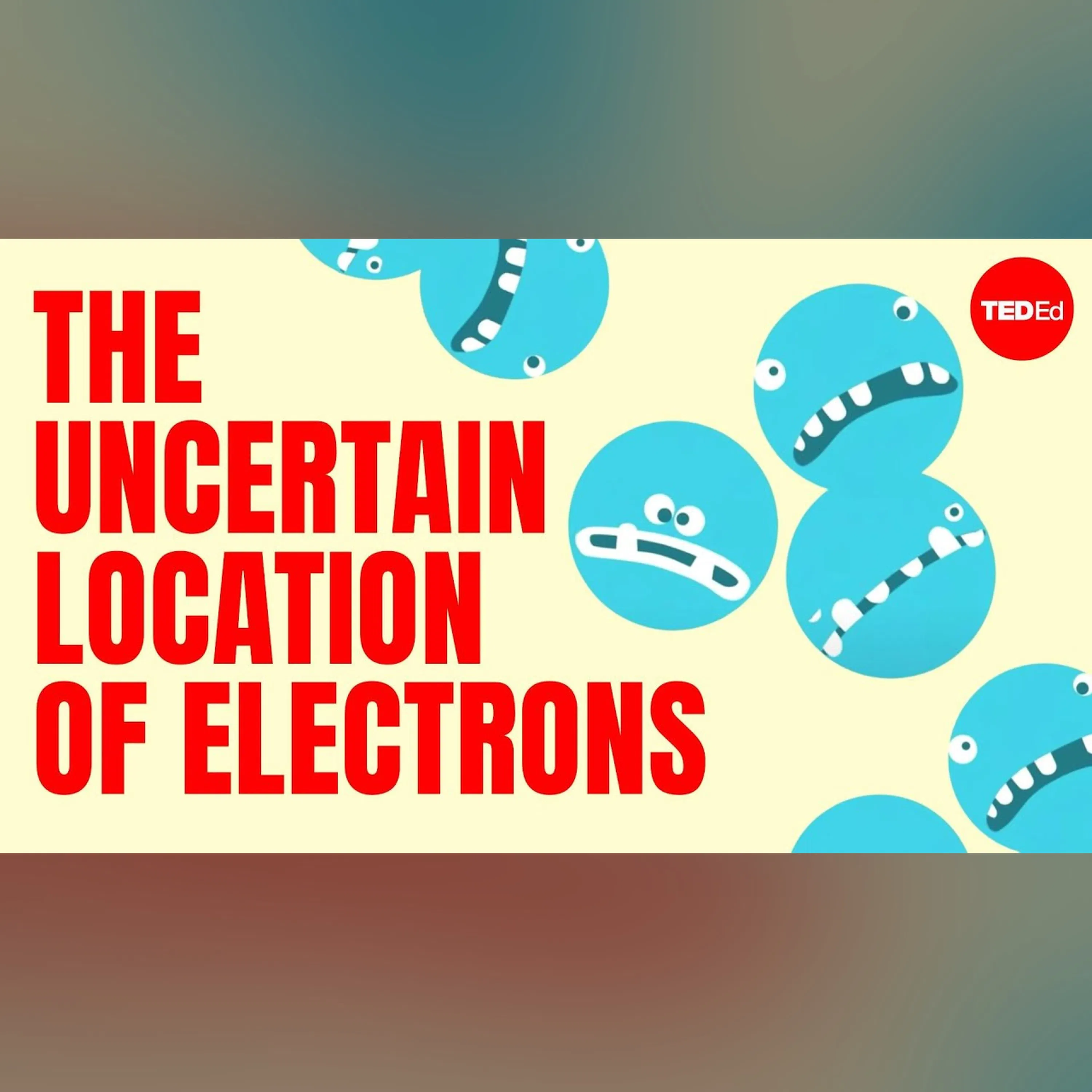
    The uncertain location of electrons - George Zaidan and Charles Morton

    View full lesson: http://ed.ted.com/lessons/the-uncertain-location-of-electrons-george-zaidan-and-charles-morton The tiny atoms that make up our world are made up of even tinier protons, neutrons and electrons. Though the number of protons determine an atom's identity, it's the electrons -- specifically, their exact location outside the nucleus -- that particularly perplex scientists. George Zaidan and Charles Morton show how to make an educated guess of where those itty-bitty freewheeling electrons might be. Lesson by George Zaidan and Charles Morton, animation by Karrot Animation. Learn more about your ad choices. Visit megaphone.fm/adchoices

  • September 26 · 6 min

    What is a butt tuba and why is it in medieval art? - Michelle Brown

    Uncover the rich history of illuminated manuscripts and the often bizarre images that filled the margins of medieval books. -- A rabbit attempts to play a church organ, while a knight fights a giant snail and a naked man blows a trumpet with his rear end. These bizarre images, painted with squirrel-hair brushes on vellum or parchment by monks, nuns and urban craftspeople, populate the margins of the most prized books from the Middle Ages. Michelle Brown explores the rich history and tradition of illuminated manuscripts. Lesson by Michelle Brown, directed by WOW-HOW Studio. Sign up for our newsletter: http://bit.ly/TEDEdNewsletter Support us on Patreon: http://bit.ly/TEDEdPatreon Follow us on Facebook: http://bit.ly/TEDEdFacebook Find us on Twitter: http://bit.ly/TEDEdTwitter Peep us on Instagram: http://bit.ly/TEDEdInstagram View full lesson: https://ed.ted.com/lessons/what-is-a-butt-tuba-and-why-is-it-in-medieval-art-michelle-brown Thank you so much to our patrons for your support! Without you this video would not be possible! Vaibhav Mirjolkar, Tony, Michelle, Katie and Josh Pedretti, Erik Biemans, Gaurav Mathur, Sameer Halai, Hans Peng, Tekin Gültekin, Hector Quintanilla, Raheem , Penelope Misquitta, Ravi S. Rāmphal, Fahad Nasser Chowdhury, Marin Kovachev, Roman Pinchuk, Maria Lerchbaumer, Edgar Campos Barrachina, Dianne Palomar, The Brock, Curtis Light, Ernest Chow, Liana Switzer, Maija Chapman, Pamela Harrison, Mighterbump, Beatriz Inácio, Robert Hargis, Soma Ali, Mark wisdom, Ai Ejima, Irindany Sandoval, William Bravante, Elizabeth Parker, Sai Krishna Koyoda, Therapist Gus, Samuel Barbas, Betsy Feathers, Victoria Soler-Roig, Pavel Maksimov, Barbara Younker, Cyrus Garay, Yvette Mocete, Mike Azarkman, Valeria Sloan Vasquez, Patricia Alves Panagides, William Biersdorf, Michael Aquilina, Kshitij Shah, Mohammad Said, Victoria Veretilo and Rebecca Reineke. Learn more about your ad choices. Visit megaphone.fm/adchoices

  • September 26 · 20 min

    Why you will fail to have a great career - Larry Smith

    In this funny and blunt talk, Larry Smith pulls no punches when he calls out the absurd excuses people invent when they fail to pursue their passions. (Filmed at TEDxUW.) Talk by Larry Smith. Learn more about your ad choices. Visit megaphone.fm/adchoices

Showing 1,501–1,520 of 1,781 episodes