Skip to content
Artwork for STRAT
BusinessManagementGovernmentHistory

STRAT

Mutual Broadcasting System LLC

STRAT – Strategic Risk Assessment Talk, is a forum with a preparedness mindset. Mitigating risks, creating systems of prevention and recovery to deal with potential threats, and understanding the objectives of a Business Continuity Plan. This is the podcast for leaders who are committed to being prepared. The program is hosted by retired Marine Corps intelligence officer and strategic risk assessment professional Hal Kempfer and investment banker Mark Mansfield.

Play
  • 31 episodes
  • weekly
  • Avg 24 min
  • English
Counted on this page — what you have heard stays on this device, so it is not something the list can be paged by.
  • S5 · E47
    Today · 21 min· Video

    STRAT | 29 OCT 2026 | Military Preparing for Catastrophic Events Here at Home

    What happens when the power grid fails and supply lines stop? On this episode of STRAT, retired Marine Intelligence Officer LtCol. Hal Kempfer examines military preparations for catastrophic disruptions at home and the growing emphasis on civilian readiness abroad. He explores the FORTRESS initiative outlined for U.S. bases, including independent energy, water, fuel, communications, and essential supplies. From microgrids and battery storage to emergency stockpiles, Kempfer connects military resilience with practical household planning. The discussion also covers preparedness efforts across Europe and Japan, where emergency kits help families weather disasters, cyberattacks, and infrastructure failures. Learn why water, medicine, evacuation routes, and regularly refreshed supplies deserve attention, and how sensible preparation can strengthen resilience without panic when everyday systems suddenly become unavailable during a major emergency. Takeaways: FORTRESS targets 90 days of essential military base operations. Microgrids and batteries support energy independence during infrastructure failures. Independent water, fuel, and communications strengthen military resilience. European and Japanese preparedness efforts emphasize household emergency supplies. Preparedness addresses disasters, cyberattacks, conflict, and supply disruptions. Water and medicine deserve special attention in emergency planning. Build stockpiles gradually and refresh supplies every six months. Pair emergency supplies with a clear evacuation plan. #STRATPodcast #HalKempfer #MutualBroadcastingSystem #StrategicRiskAnalysis #MilitaryPreparedness #FORTRESSInitiative #EmergencyPreparedness #MilitaryResilience #NationalSecurity #InfrastructureResilience #EnergyIndependence #Microgrids #SupplyChainResilience #CyberThreats #DisasterPreparedness #HouseholdPreparedness #EmergencySupplies #EvacuationPlanning #CivilianReadiness #StrategicStockpiles

  • S5 · E46
    October 22 · 29 min· Video

    STRAT | 21 OCT 2026 | Defeating the Houthis

    What would it take to defeat the Houthis, and why could the campaign last for years? On STRAT, retired Marine intelligence officer LtCol. Hal Kempfer examines the Houthi threat to Saudi Arabia and the strategic choices facing a Saudi-led coalition. He explores how Iranian-supplied drones and missiles threaten infrastructure, investment, and regional security, while assessing the potential role of international military support. Kempfer outlines a possible campaign centered on securing Yemen’s cities, ports, and transportation corridors, disrupting weapons supplies, and pressuring Houthi forces in mountainous terrain. The discussion also considers lessons from Ukraine’s evolving drone war, the importance of stronger air defenses, and the growing role of autonomous systems. Beyond battlefield operations, Kempfer examines how diplomacy, tribal alliances, and support for Yemen’s internationally recognized government could shape the outcome. Listen for an assessment of the resources, risks, and sustained commitment that campaign could demand from Saudi Arabia and its partners. Takeaways: Houthi drones and missiles threaten Saudi infrastructure and investment. Iranian weapons supply lines represent a critical Houthi vulnerability. Cities, ports, and transportation corridors anchor Yemen’s strategic landscape. Mountainous terrain complicates military operations and Houthi supply routes. Ukraine’s drone war offers lessons for Saudi air defenses. International military support could strengthen Saudi defensive capabilities. Diplomacy and tribal alliances could influence the campaign’s outcome. Defeating the Houthis could require years of sustained commitment. #STRATPodcast #HalKempfer #MutualBroadcastingSystem #StrategicRiskAnalysis #DefeatingTheHouthis #Houthis #Yemen #SaudiArabia #Iran #MiddleEastSecurity #RedSeaSecurity #DroneWarfare #MissileDefense #MilitaryStrategy #RegionalSecurity #Geopolitics #DefenseTechnology #SupplyLines #StrategicAssessment #InternationalRelations

  • S5 · E45
    October 18 · 25 min· Video

    STRAT | 18 OCT 2026 | Ukraine, Russia and US at a Crossroads

    Ukraine, Russia and the United States face a pivotal moment as shifting energy policy strains alliances and complicates the search for peace. Retired Marine Intelligence Officer LtCol. Hal Kempfer examines President Trump’s relationship with President Zelenskyy, the legacy of Trump’s first impeachment, and the strategic consequences of Washington’s changing approach to Moscow. This episode explores Russian sanctions, a controversial diesel agreement, and how conflict with Iran and disruptions in the Strait of Hormuz shape global fuel markets. Kempfer also discusses reported satellite service restrictions affecting Ukraine, competing accounts of an energy ceasefire, and Europe’s efforts to respond to uncertainty over American support. With congressional criticism mounting and midterm elections approaching, the conversation considers what these developments could mean for NATO, American credibility, defense partnerships, and adversaries including China, Iran, and North Korea. Join STRAT for an assessment of the risks, political calculations, and wider consequences of this foreign policy crossroads. Takeaways: Trump’s impeachment history provides context for current Ukraine tensions. Russia sanctions waivers raise questions about American strategic priorities. The diesel deal faces supply constraints and political scrutiny. Conflict with Iran complicates global energy markets. Reported satellite restrictions highlight Ukraine’s reliance on American technology. Competing ceasefire accounts reveal deep distrust between the parties. European allies weigh responses to unpredictable American support. Policy shifts carry consequences for NATO and American credibility. #STRATPodcast #HalKempfer #MutualBroadcastingSystem #StrategicRiskAnalysis #Ukraine #Russia #USForeignPolicy #DonaldTrump #VolodymyrZelenskyy #VladimirPutin #RussiaSanctions #DieselDeal #EnergySecurity #StraitOfHormuz #IranConflict #Starlink #Starshield #NATO #Geopolitics #GlobalSecurity

  • S5 · E44
    October 12 · 24 min· Video

    STRAT | 11 OCT 2026 | The Russian Diesel Deal Dilemma

    Can buying Russian diesel ease America’s fuel crunch, or will it deepen a strategic crisis? In this episode of STRAT, retired Marine Intelligence Officer LtCol. Hal Kempfer examines the proposed Russian diesel deal and the legal, political, and security questions surrounding it. He explores bipartisan congressional opposition, allied concerns, and the implications for Ukraine’s defense and efforts to constrain Moscow’s energy revenues. Kempfer also looks beyond the headlines to the pressures driving diesel shortages: conflict involving Iran, disruptions through the Strait of Hormuz, damage to Gulf refineries, and constrained refining capacity. The discussion considers whether Russia can deliver meaningful supplies, how energy ceasefire claims affect diplomacy, and why promised imports may offer limited relief at the pump. From global supply chains to domestic politics, this episode assesses the risks of a controversial energy bargain and what it could mean for consumers, American credibility, and the broader balance of power abroad. Takeaways: Russian diesel purchases face legal challenges and bipartisan opposition. Allied objections complicate the proposed Russian energy deal. Diesel shortages reflect broader disruptions across global energy markets. Strait of Hormuz disruptions threaten critical refined fuel supplies. Gulf refinery damage adds pressure to global diesel availability. Russia’s export capacity raises questions about promised deliveries. Energy ceasefire claims face scrutiny amid continued infrastructure attacks. Domestic refining constraints complicate efforts to lower diesel prices. #STRATPodcast #HalKempfer #MutualBroadcastingSystem #StrategicRiskAnalysis #RussianDiesel #DieselDeal #EnergySecurity #DieselPrices #RussiaUkraineWar #EnergyPolicy #OilSanctions #StraitOfHormuz #GlobalEnergyMarkets #FuelSupply #RefiningCapacity #Geopolitics #CongressionalOpposition #EnergyCeasefire #SupplyChainDisruptions #StrategicRisk

  • S5 · E43
    October 6 · 26 min· Video

    STRAT | 06 OCT 2026 | California’s “Illegal Domestic Spying” Imbroglio

    Retired Marine Intelligence Officer LtCol. Hal Kempfer examines California’s “illegal domestic spying” controversy and the questions it raises about homeland security training, federal funding, and government accountability. Drawing on his account of a 2008 training moratorium and later court testimony, Kempfer explores conflicting explanations for why a counterterrorism course was halted, then allowed to continue. He asks whether disputed curriculum taught nationwide could have affected investigations, evidence, and subsequent court decisions. The episode considers two competing possibilities: officials accurately described unlawful surveillance training, or their testimony misrepresented the FBI’s assessment. Kempfer also discusses the legacy of COINTELPRO, constitutional protections, and potential consequences for California agencies and federal partners. Throughout, he argues that unresolved allegations warrant clarification, transparency, and scrutiny. Join STRAT for a provocative discussion of institutional responsibility, the integrity of public safety training, and why the answers could matter far beyond California’s borders for communities and agencies across America. Takeaways: Kempfer questions conflicting explanations for California’s counterterrorism training moratorium. State testimony attributed disputed surveillance concerns to the FBI. Continued training raises questions about oversight and curriculum safeguards. Alleged surveillance practices could have implications for investigations nationwide. COINTELPRO’s legacy underscores the importance of protecting civil liberties. Federal funding disputes add another dimension to institutional accountability. Potential legal consequences depend on resolving the underlying allegations. Kempfer calls for clarification from California and federal agencies. #STRATPodcast #HalKempfer #MutualBroadcastingSystem #StrategicRiskAnalysis #California #DomesticSpying #HomelandSecurity #Counterterrorism #IntelligenceTraining #FusionCenters #FederalFunding #GovernmentAccountability #CivilLiberties #ConstitutionalRights #COINTELPRO #FBI #DHS #LawEnforcement #PublicSafety #SurveillanceOversight

  • S5 · E42
    October 1 · 33 min· Video

    STRAT | 01 OCT 2026 | 9-11 Remembered, and How California Countered Counterterrorism

    Twenty-five years after September 11, retired Marine Intelligence Officer LtCol. Hal Kempfer reflects on the attacks and examines California’s evolving approach to terrorism prevention. Drawing on his experience with the Terrorism Early Warning program, he traces the origins of Terrorism Liaison Officer training and explains how public safety partnerships helped identify potential threats. Kempfer alleges that funding priorities, conflicts of interest, and bureaucratic decisions weakened training, reduced suspicious activity reporting, and undermined regional preparedness. He connects those concerns to missed warning signs surrounding subsequent attacks, including the 2015 San Bernardino massacre, while arguing that prevention requires sustained education and cooperation. The conversation also considers accountability, institutional retaliation, and the risks posed by violent extremism and hybrid warfare. This anniversary episode asks what lessons from September 11 remain unlearned, and why effective intelligence sharing, training, and public vigilance still matter for protecting communities against today’s increasingly complex and evolving security threats. Takeaways: Remembering September 11 means examining enduring gaps in prevention. Kempfer traces California’s Terrorism Early Warning program origins. Terrorism Liaison Officers help public safety professionals recognize threats. Suspicious activity reporting supports early intervention and threat assessment. Kempfer alleges funding priorities undermined essential counterterrorism training. San Bernardino highlights Kempfer’s concerns about missed warning signs. Institutional accountability and cooperation remain central to effective prevention. Violent extremism and hybrid warfare demand sustained threat awareness. #STRATPodcast #HalKempfer #MutualBroadcastingSystem #StrategicRiskAnalysis #September11 #NeverForget #California #Counterterrorism #TerrorismPrevention #HomelandSecurity #TerrorismEarlyWarning #TerrorismLiaisonOfficer #PublicSafety #IntelligenceSharing #SuspiciousActivityReporting #SanBernardino #LawEnforcementTraining #GovernmentAccountability #ViolentExtremism #HybridWarfare

  • S5 · E41
    September 28 · 27 min· Video

    STRAT | 27 SEP 2026 | CRINK on the Brink

    Could mounting economic and security pressures fracture the informal alignment of China, Russia, Iran, and North Korea? On this episode of STRAT, retired Marine Intelligence Officer LtCol. Hal Kempfer examines CRINK and the dependencies connecting four American adversaries. Kempfer explores how war, sanctions, disrupted energy revenues, and domestic strains could weaken Russia and Iran, with consequences for North Korea and China. He considers the role of hybrid warfare, the vulnerabilities of interconnected economies, and the potential regional fallout if a member’s government loses its grip on power. Looking beyond conflicts, the discussion asks how Western democracies should prepare for sudden political transitions and what lessons the Soviet Union’s collapse offers policymakers today. From military logistics to global supply chains, this strategic risk assessment examines how instability could spread across CRINK and why planning for possible upheaval matters before a crisis forces the world to respond under pressure with limited options. Takeaways: CRINK connects China, Russia, Iran, and North Korea. Mutual dependencies could spread instability across all four countries. Hybrid warfare extends confrontation beyond conventional battlefields. Kempfer examines Russia’s economic pressures and military vulnerabilities. Iran’s economic strains could threaten the regime’s stability. North Korea’s Russian ties could become a strategic vulnerability. China’s debt and property risks complicate its strategic outlook. Western democracies should prepare for potential political transitions. #STRATPodcast #HalKempfer #MutualBroadcastingSystem #StrategicRiskAnalysis #CRINK #China #Russia #Iran #NorthKorea #Geopolitics #HybridWarfare #GlobalSecurity #EconomicInstability #RegimeChange #WesternDemocracies #UkraineWar #EnergySecurity #SupplyChains #ForeignPolicy #StrategicPlanning

  • S5 · E40
    September 23 · 27 min· Video

    STRAT | 23 SEP 2026 | What Happens in Vegas… Happens in Cuba?!

    Could a transformed Cuba redraw the economic map of the American Southwest? On STRAT, retired Marine intelligence officer LtCol. Hal Kempfer explores a scenario in which a capitalist, pro-American Cuba emerges as a major destination for tourism, investment, and development. From Havana’s potential revival as a casino resort destination, and possibly a new convention hub, to opportunities in manufacturing, technology, and renewable energy, Kempfer considers how change just 90 miles from Florida could reshape competition across the region. He examines what that future might mean for Las Vegas resorts, Nevada’s workforce, local tax revenues, and cities facing growing pressure on water resources. The discussion also explores possible trade and security arrangements that could influence investor confidence, while drawing comparisons with Eastern Europe’s economic transformation after the Cold War. This episode challenges business leaders and communities to think ahead about geopolitical shifts, emerging markets, and the strategic risks of assuming today’s competitive advantages will endure indefinitely. Takeaways: A transformed Cuba could reshape tourism and investment competition. Havana could challenge Las Vegas for casinos and conventions. Tourism shifts could pressure Nevada’s jobs and tax revenues. Potential security arrangements could influence investor confidence in Cuba. Trade opportunities could attract manufacturing and technology investment. Water constraints could challenge the American Southwest’s economic competitiveness. Cuba’s renewable energy potential could attract new development. Planning for geopolitical change matters before competitive advantages erode. #STRATPodcast #HalKempfer #MutualBroadcastingSystem #StrategicRiskAnalysis #Cuba #Havana #LasVegas #Geopolitics #Tourism #Investment #EconomicDevelopment #CasinoResorts #EmergingMarkets #AmericanSouthwest #Manufacturing #RenewableEnergy #WaterResources #Trade #Security #BusinessStrategy

  • S5 · E39
    September 18 · 30 min· Video

    STRAT | 18 SEP 2026 | Russia’s War With NATO

    In this episode of STRAT, retired Marine intelligence officer LtCol. Hal Kempfer examines what the program describes as an escalating Russian hybrid warfare campaign targeting NATO countries—and increasingly reaching into the United States. From a newly disclosed federal murder-for-hire case to alleged sabotage, cyberattacks, drone incursions, GPS jamming, infrastructure disruption, and political interference, Kempfer explores the tactics being attributed to Russian intelligence and proxy networks. The discussion looks at recent incidents across Europe, including threats to airports, communications cables, energy infrastructure, aviation, and maritime operations. Kempfer also examines how operatives may recruit third-party proxies through encrypted platforms while maintaining layers of plausible deniability. Finally, STRAT considers the strategic purpose behind gray-zone warfare: applying economic, social, and political pressure while remaining below the threshold of conventional military conflict—and what continued Russian pressure could mean for NATO, Ukraine, Europe, and American national security. Takeaways: Russia is accused of expanding hybrid operations against NATO. Gray-zone warfare operates below conventional military conflict thresholds. Critical infrastructure remains a major target of sabotage. Drones increasingly challenge NATO airspace and civilian infrastructure. Cyberattacks threaten maritime transportation and vital supply chains. Proxy recruitment can provide intelligence services plausible deniability. GPS jamming threatens European aviation and maritime navigation. Hybrid warfare combines physical, cyber, political, and information operations. #STRATPodcast #HalKempfer #MutualBroadcastingSystem #StrategicRiskAnalysis #Russia #NATO #HybridWarfare #GrayZoneWarfare #NationalSecurity #RussiaUkraineWar #Ukraine #EuropeanSecurity #CyberWarfare #CyberSecurity #MilitaryIntelligence #GRU #Geopolitics #GlobalSecurity #InfrastructureSecurity #ForeignPolicy

  • S5 · E38
    September 12 · 20 min· Video

    STRAT | 12 SEP 2026 | What About Bab…el-Mandeb

    The Bab el-Mandeb Strait is one of the world’s most strategically important maritime chokepoints—and renewed Houthi activity could make it even more consequential. In this episode of STRAT, retired Marine Intelligence Officer LtCol. Hal Kempfer examines the Houthis’ reported expansion along Yemen’s Red Sea coast and the strategic importance of controlling territory overlooking this vital shipping corridor. Hal explains how disruption at Bab el-Mandeb reverberates through the Suez Canal, global shipping routes, energy markets, and international supply chains. He traces Yemen’s complicated history of civil war and foreign intervention while examining Iran’s relationship with the Houthis and the implications for Saudi Arabia and regional security. With maritime commerce, oil transportation, military alliances, and Iran’s regional proxy network all intersecting around this narrow waterway, Hal assesses what Saudi Arabia and its partners may do next—and why developments in Yemen could have consequences extending far beyond the Red Sea. Takeaways: Bab el-Mandeb remains a critical global maritime chokepoint. Houthi coastal gains strengthen maritime surveillance capabilities. Red Sea disruption threatens international shipping and supply chains. Longer African routes substantially increase shipping costs and transit. Yemen’s history complicates prospects for another foreign intervention. Saudi Arabia faces increasing pressure to confront Houthi expansion. Iranian proxy relationships magnify Yemen’s broader strategic importance. Houthi developments could reshape Middle Eastern security calculations. #STRATPodcast #HalKempfer #MutualBroadcastingSystem #StrategicRiskAnalysis #BabElMandeb #RedSea #Houthis #Yemen #SaudiArabia #Iran #MaritimeSecurity #GlobalTrade #SuezCanal #MiddleEast #Geopolitics #NationalSecurity #EnergySecurity #Shipping #StrategicIntelligence #RiskAssessment

  • S5 · E37
    September 7 · 26 min· Video

    STRAT | 07 SEPT 2026 | The Other 1989

    Could the geopolitical upheavals of 1989 offer a roadmap for understanding what is happening today? In this episode of STRAT, retired Marine intelligence officer LtCol. Hal Kempfer revisits two defining events of that extraordinary year: the Tiananmen Square protests in China and the collapse of the Berlin Wall. He examines how governments that once appeared firmly entrenched confronted economic pressure, popular unrest, and rapidly changing political realities. Kempfer then turns to today’s strategic landscape, exploring mounting pressures facing Iran, Cuba, and Russia and asking whether economic isolation, military conflict, sanctions, and internal dissatisfaction could produce similarly unexpected transformations. With Iran enduring a prolonged conflict, Cuba confronting a deep economic crisis, and Russia experiencing growing wartime economic strains, Kempfer considers whether seemingly durable regimes can reach critical tipping points with remarkable speed. The central question: Could the international system be approaching another historic moment when assumptions about political stability suddenly prove dangerously wrong? Takeaways: 1989 demonstrated how quickly seemingly permanent political systems can change. Tiananmen showed authoritarian governments can survive enormous internal pressure. Berlin demonstrated popular movements can overwhelm entrenched political structures. Economic deterioration can become a powerful catalyst for political instability. Cuba faces severe economic pressure and diminishing traditional support. Iran confronts war, sanctions, economic damage, and internal pressures. Ukrainian strikes are increasing economic pressures within wartime Russia. Strategic tipping points often become obvious only after they occur. #STRATPodcast #HalKempfer #MutualBroadcastingSystem #StrategicRiskAnalysis #TheOther1989 #Geopolitics #GlobalSecurity #NationalSecurity #StrategicIntelligence #Iran #Cuba #Russia #Ukraine #TiananmenSquare #BerlinWall #ForeignPolicy #GlobalRisk #IntelligenceAnalysis #WorldAffairs #StrategicAssessment

  • S5 · E36
    August 26 · 26 min· Video

    STRAT | 26 AUG 2026 | Ukraine’s Strategic Gambit

    Ukraine’s deep-strike campaign is reaching farther into Russia, targeting refineries, warehouses, defense plants, air-defense systems, and critical infrastructure with growing frequency. In this episode of STRAT, retired Marine intelligence officer LtCol. Hal Kempfer examines whether Ukraine’s expanding drone and missile program has created a strategic inflection point for Vladimir Putin. Kempfer explores the pressure on Russian air defenses, the economic consequences of disrupted energy and commercial networks, mounting battlefield casualties, labor shortages, and growing strains within Russia’s political elite. He also considers the risks surrounding possible mobilization, escalation involving NATO, and the Kremlin’s ability to maintain public confidence as attacks reach deeper into Russian territory. Finally, Kempfer examines the broader strategic implications of Ukraine’s campaign, including parallels with American pressure on Iran, and asks whether Kyiv’s evolving approach to long-range warfare could ultimately reshape the conflict, destabilize Putin’s regime, and influence how future wars are fought for years worldwide. Takeaways: Ukraine’s deep strikes are stretching Russian air defenses dangerously thin. Critical infrastructure attacks are increasing economic pressure across Russia. Putin faces mounting political risks from potential mass mobilization. Ukrainian strikes increasingly threaten Russia’s energy and commercial networks. Russian casualties and labor shortages compound Kremlin economic pressures. Continued escalation could increase risks of confrontation involving NATO. Ukraine’s campaign demonstrates warfare’s growing emphasis on strategic disruption. Putin’s greatest long-term threat may ultimately emerge from within Russia. #STRATPodcast #HalKempfer #MutualBroadcastingSystem #StrategicRiskAnalysis #UkrainesStrategicGambit #UkraineWar #Ukraine #Russia #Putin #VladimirPutin #DeepStrike #DroneWarfare #StrategicWarfare #RussiaUkraineWar #NATO #Geopolitics #NationalSecurity #MilitaryIntelligence #GlobalSecurity #StrategicAnalysis

  • S5 · E35
    August 22 · 35 min· Video

    STRAT | 22 AUG 2026 | Economic D-Day with Iran

    In this episode of STRAT, retired Marine intelligence officer LtCol. Hal Kempfer examines what the White House is calling “Economic D-Day,” a major escalation of economic pressure against Iran. Kempfer assesses why anticipated public resistance to Tehran’s government has not materialized, how months of conflict have strained regional security and U.S. air-defense inventories, and why Washington may now see economic collapse as its most viable strategic lever. The discussion explores Iran’s inflation crisis, the rial’s decline, oil flows through and around the Strait of Hormuz, efforts to close financial and trading backdoors, and the critical role of Gulf allies. Kempfer also considers whether intensified sanctions could fracture Iran’s security apparatus, revive domestic unrest, and ultimately produce regime change without an official declaration of that objective. Finally, he examines the risks of escalation, propaganda, covert action, strategic deception, and the consequences of failure for U.S. credibility worldwide and future diplomacy abroad. Takeaways: Washington shifts toward intensified economic pressure against Iran. Iran’s economic crisis could become a strategic breaking point. Domestic unrest remains critical to Tehran’s long-term stability. U.S. air-defense inventories face significant pressure from regional conflict. Gulf allies could determine whether economic sanctions truly succeed. Closing Iranian financial backdoors becomes a central U.S. objective. Economic collapse could potentially trigger fractures within security forces. Regime change may emerge without becoming declared American policy. #STRATPodcast #HalKempfer #MutualBroadcastingSystem #StrategicRiskAnalysis #EconomicDDay #Iran #IranConflict #IranEconomy #EconomicWarfare #EconomicSanctions #USForeignPolicy #StraitOfHormuz #MiddleEastSecurity #Geopolitics #NationalSecurity #RegimeChange #StrategicIntelligence #GlobalSecurity #MarineIntelligence #RiskAssessment

  • S5 · E34
    August 20 · 28 min· Video

    STRAT | 19 AUG 2026 | Consequence Management and the Super El Nino

    In this episode of STRAT, retired Marine intelligence officer LtCol. Hal Kempfer examines consequence management and warns of the risks he associates with a potential Super El Niño. Drawing on decades of work with military commands, FEMA, DHS, intelligence organizations, and state and local agencies, Kempfer traces the evolution of all-hazards consequence management and argues that critical gaps remain in disaster intelligence and decision support. He revisits lessons from Hurricane Katrina, the development and abandonment of CPG-502, and the intended role of state and local fusion centers in helping leaders understand threats, damage, and cascading consequences. Kempfer also explores California’s historic flood vulnerability, including the catastrophic storms of 1861–62, and considers what extreme precipitation could mean for infrastructure, supply chains, businesses, governments, and communities today. His central message: preparedness must go beyond assurances. Leaders need realistic assessments, integrated intelligence, mitigation planning, and action before a major disaster actually arrives unexpectedly. Takeaways: Consequence management prepares organizations for natural and manmade disasters. Disaster intelligence provides leaders critical information for timely decisions. Hurricane Katrina exposed major gaps in federal disaster preparedness. CPG-502 sought stronger state and local disaster intelligence capabilities. Kempfer argues CPG-502 was never adequately implemented nationwide. California’s historic floods demonstrate the catastrophic potential of extreme rainfall. Super El Niño could severely challenge existing emergency preparedness systems. Businesses must prepare for workforce, infrastructure, and supply disruptions. #STRATPodcast #HalKempfer #MutualBroadcastingSystem #StrategicRiskAnalysis #ConsequenceManagement #SuperElNino #DisasterPreparedness #EmergencyManagement #DisasterIntelligence #NationalSecurity #RiskAssessment #CrisisManagement #EmergencyPreparedness #CaliforniaFlooding #ExtremeWeather #HomelandSecurity #FEMA #DisasterResponse #CriticalInfrastructure #StrategicIntelligence

  • S5 · E33
    August 14 · 22 min· Video

    STRAT | 14 AUG 26 | Drones Across The Homeland

    Drones are transforming the security landscape across the American homeland, creating opportunities for first responders while introducing rapidly evolving threats to military installations, critical infrastructure, public safety, major venues, and communities. This STRAT episode examines warnings from U.S. Northern Command and NORAD leaders that existing sensor and interception capabilities may not be sufficient to confront modern drone swarms launched from within U.S. territory. Host Hal Kempfer explores lessons from Ukraine, the disruption unauthorized drones can cause during wildfire operations, and their growing use by criminal smuggling networks. It also examines the expansion of Drone as First Responder programs, which can provide emergency personnel with valuable situational awareness before crews arrive. From terrorism and espionage to public safety and emergency response, drones are reshaping risk assessment. The central message is urgent: governments, infrastructure operators, security professionals, and major venues must develop dynamic counter-UAS plans before the next major incident occurs on American soil. Takeaways: America’s drone defenses face significant sensor and interception gaps. Future drone attacks could originate from within U.S. borders. Ukraine demonstrates drones can challenge advanced conventional military forces. Unauthorized drones can disrupt and endanger critical emergency operations. Criminal networks increasingly exploit drones for smuggling and contraband. First responder drones can dramatically improve emergency situational awareness. Critical infrastructure and major venues need counter-UAS planning now. Drone preparedness must anticipate evolving threats, not yesterday’s attacks. #STRATPodcast #HalKempfer #MutualBroadcastingSystem #StrategicRiskAnalysis #DroneSecurity #HomelandSecurity #DroneThreats #CounterUAS #DroneWarfare #DroneSwarms #NationalSecurity #PublicSafety #CriticalInfrastructure #EmergencyResponse #DroneTechnology #FirstResponderDrones #MilitaryIntelligence #SecurityPreparedness #ThreatAssessment #UnmannedAircraftSystems

  • S5 · E32
    August 7 · 27 min· Video

    STRAT | 06 AUG 2026 | Missile Mayhem From Absent Ammo

    This episode of STRAT with retired Marine Intelligence Officer Hal Kempfer examines the growing shortage of advanced air defense interceptors and the strategic consequences for conflicts in Ukraine, the Middle East, and future U.S. military readiness in East Asia. Kempfer explores how Patriot and THAAD missile inventories have been depleted faster than they can be replaced, exposing vulnerabilities created by years of limited production capacity. The discussion highlights the enormous cost imbalance between intercepting inexpensive drones with multimillion-dollar missiles, while explaining why increasing production will take years. The episode also analyzes Ukraine's urgent need to destroy Russian missile launchers before they fire, the role Starlink could play in enabling precision targeting, and the political complications surrounding that request. Finally, the conversation looks ahead to emerging technologies such as directed-energy weapons while emphasizing that today's conflicts are rapidly redefining modern warfare and forcing governments to rethink defense industrial capacity, military preparedness, and strategic priorities before the next major crisis. Takeaways: Patriot and THAAD remain the backbone of U.S. and allied ballistic missile defense. Missile inventories have been depleted faster than production can replace them. Ukraine's efficient Patriot employment contrasts with higher interceptor usage elsewhere. Using multimillion-dollar interceptors against inexpensive drones is economically unsustainable. Expanding missile production is underway but meaningful increases remain years away. Ukraine increasingly depends on destroying launchers before missiles are fired. Starlink has become part of a larger strategic and political debate over battlefield connectivity. Future conflicts will require stronger defense industrial capacity alongside emerging technologies like directed-energy weapons. #STRATPodcast #HalKempfer #MutualBroadcastingSystem #StrategicRiskAnalysis #MissileDefense #PatriotMissiles #THAAD #Ukraine #Russia #Iran #AirDefense #MilitaryStrategy #NationalSecurity #DefenseIndustry #MissileProduction #DroneWarfare #EastAsia #Geopolitics #StrategicRisk #GlobalSecurity

  • S5 · E31
    August 3 · 26 min· Video

    STRAT | 03 AUG 2026 | Iran Stalemate & Russian Reality Check

    This STRAT episode examines two of the world's most dangerous security flashpoints as events accelerate in both the Middle East and Eastern Europe. The discussion with Retired Marine Intelligence Officer Hal Kempfer explores reports of a possible U.S.-Israeli strike on Iran that was reportedly halted amid conflicting claims of diplomatic progress, while analyzing the growing threat posed by Iran and its regional proxy forces to critical shipping lanes, Gulf infrastructure, and vital desalination facilities that millions depend upon for fresh water. Attention then shifts to Ukraine, where increasingly effective deep strikes inside Russia are reshaping the battlefield and challenging public confidence in Vladimir Putin's leadership. The episode also reviews Russia's mounting military and economic pressures, Ukraine's growing air defense challenges, and historical parallels that could signal significant political instability in Moscow. Throughout the conversation, listeners gain strategic context behind rapidly changing global events and the risks these conflicts pose to regional stability, international commerce, energy security, and the broader geopolitical landscape. Takeaways: The possibility of renewed U.S.-Israeli military action against Iran remains a significant strategic concern. Iran and its proxy network continue threatening critical Gulf energy infrastructure and international shipping routes. Gulf nations are increasingly focused on protecting desalination facilities that are essential for civilian survival. Regional cooperation among Gulf states appears to be strengthening in response to shared security threats. Ukraine's expanding long-range strikes are bringing the war directly into Russia's population centers. Russia faces increasing military, economic, and political pressure as battlefield realities worsen. Ukraine's shortage of Patriot interceptors presents growing challenges against Russian missile attacks. Historical comparisons suggest Russia could face increasing internal instability if current trends continue. #STRATPodcast #HalKempfer #MutualBroadcastingSystem #StrategicRiskAnalysis #Iran #Russia #Ukraine #MiddleEast #Geopolitics #NationalSecurity #MilitaryAnalysis #GlobalSecurity #ForeignPolicy #Defense #EnergySecurity #RedSea #Hormuz #BlackSea #Intelligence #WorldAffairs

  • S5 · E30
    July 27 · 24 min· Video

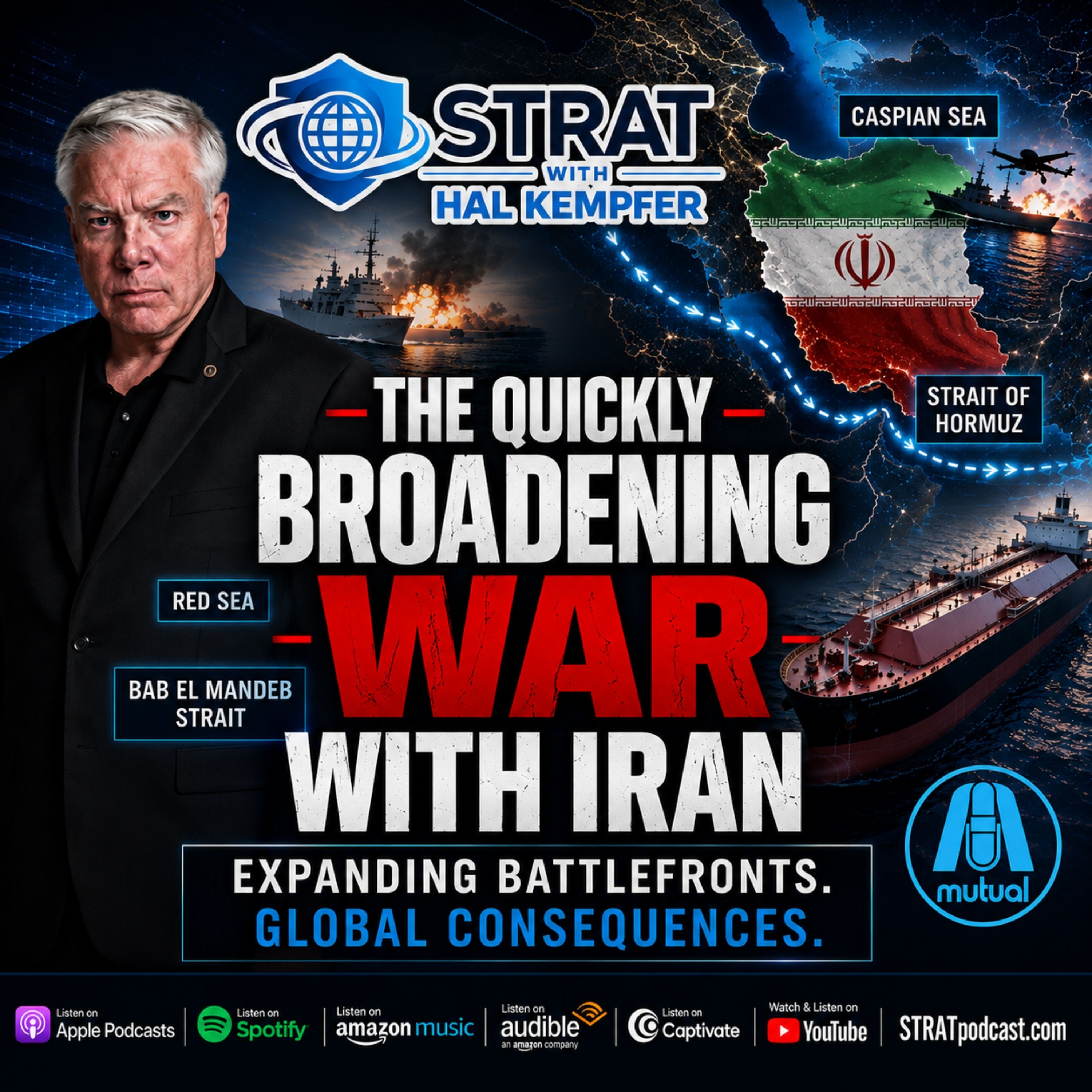
    STRAT | 26 JULY 2026 | The Quickly Broadening War with Iran

    As military operations against Iran enter what appears to be an operational pause, the broader regional conflict is expanding in dangerous and unexpected ways. In this episode of STRAT, retired Marine intelligence officer LtCol. Hal Kempfer examines how Tehran is widening the battlefield by empowering its Houthi proxies to disrupt critical maritime chokepoints while drawing Saudi Arabia into more direct combat. Hal analyzes the strategic importance of the Bab el Mandeb Strait, the Strait of Hormuz, and the growing threats to global energy markets and international shipping. He also explores Ukraine's unprecedented drone strikes against Iran-Russia military logistics in the Caspian Sea, highlighting how the wars in Ukraine and the Middle East are increasingly converging into a single strategic contest. Finally, Hal assesses reports of new Iranian attacks in the Strait of Hormuz and explains why the current pause in military operations could rapidly give way to renewed kinetic action across multiple theaters. Takeaways: Iran has transformed the Houthis into a more direct operational extension of the IRGC, expanding Tehran's military reach beyond its borders. Simultaneous threats to the Bab el Mandeb Strait and the Strait of Hormuz place unprecedented pressure on global shipping and energy supplies. Saudi Arabia has shifted from defensive measures to direct military operations against Houthi positions and Iranian-backed infrastructure. The Red Sea has become a central battlefield affecting international commerce, oil exports, and regional security. Ukraine's drone strikes in the Caspian Sea demonstrate the growing intersection between the Ukraine war and Iran's regional ambitions. Russia's military partnership with Iran continues to blur the lines between the European and Middle Eastern conflicts. Any confirmed Iranian mining or attacks in the Strait of Hormuz could quickly end the current operational pause and trigger broader military action. The emerging conflict is no longer confined to isolated regions but is evolving into a connected, multi-theater strategic confrontation with global consequences. #STRATPodcast #HalKempfer #MutualBroadcastingSystem #StrategicRiskAnalysis #Iran #MiddleEast #RedSea #Houthis #IRGC #SaudiArabia #StraitOfHormuz #BabElMandeb #Ukraine #Russia #CaspianSea #MaritimeSecurity #GlobalShipping #EnergySecurity #Geopolitics #NationalSecurity

  • S5 · E29
    July 19 · 21 min· Video

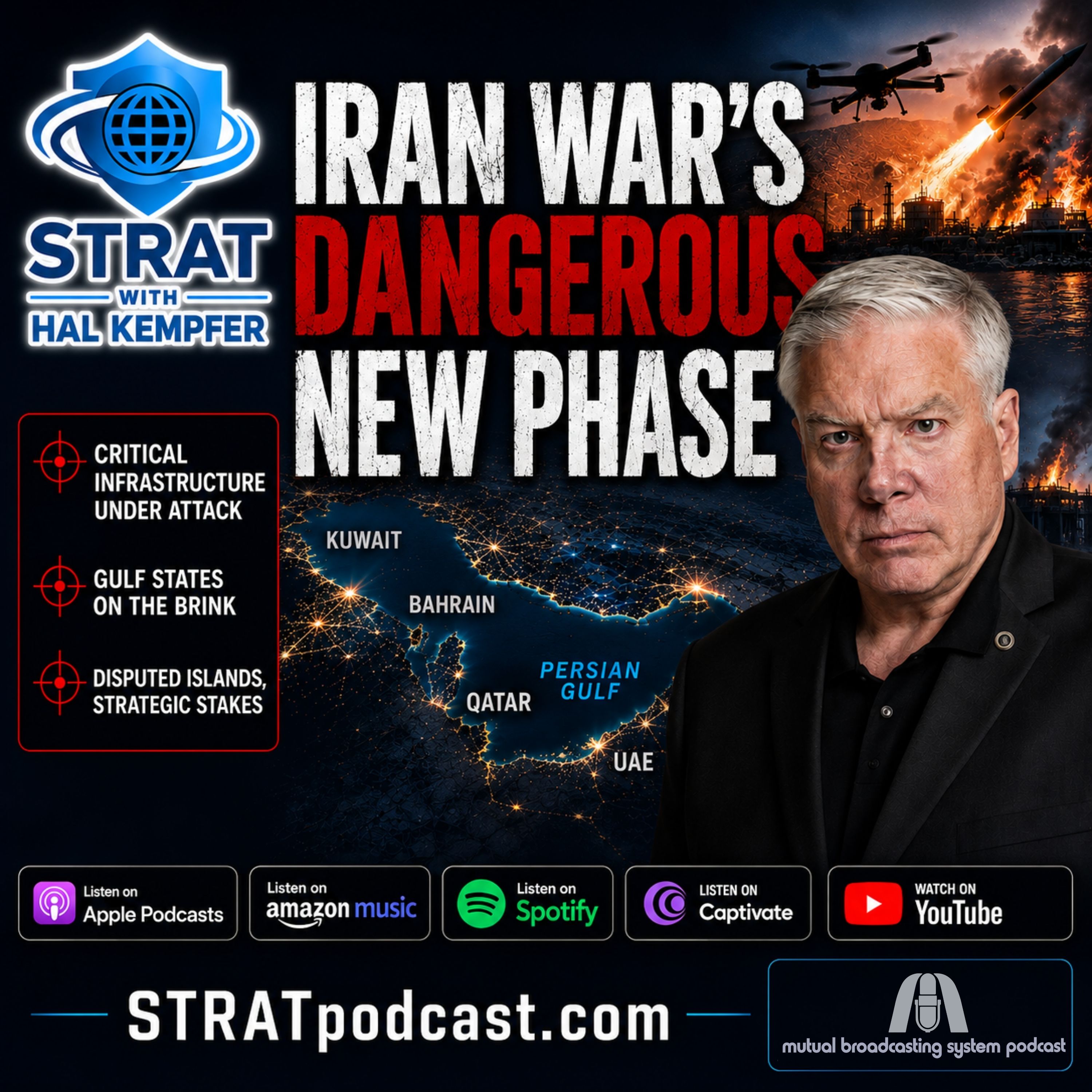
    STRAT | 18 JULY 2026 | Iran War’s Dangerous New Phase

    The conflict with Iran is entering a far more dangerous stage as military operations expand beyond traditional battlefield targets and increasingly focus on critical infrastructure across the region. This episode of STRAT has retired Marine Intelligence Officer LtCol. Hal Kempfer examining the strategic implications of U.S. strikes against bridges, energy facilities, and ports in Iran, alongside Iran's retaliatory attacks on Gulf desalination plants that provide drinking water for millions. Kempfer explains why these facilities represent highly vulnerable strategic targets and how attacks on Gulf infrastructure could fundamentally change the calculations of regional governments. The discussion also explores the growing possibility that Gulf nations—including the UAE, Kuwait, Bahrain, Qatar, and potentially Saudi Arabia—could become active combatants, dramatically increasing military pressure on Iran. Finally, the episode analyzes the strategic importance of disputed islands controlling the Strait of Hormuz and why their future could significantly reshape regional security, maritime commerce, and the balance of power throughout the Middle East. Takeaways: The war has shifted toward attacks on critical civilian infrastructure with major strategic consequences. Gulf desalination plants are exceptionally vulnerable and essential to regional survival. U.S. strikes suggest preparations for expanded and sustained air operations. Iran's attacks may remove the remaining political barriers preventing Gulf states from joining the conflict. Regional military participation could dramatically increase the scale of strikes against Iran. Covert operations targeting Iran's Revolutionary Guard Corps have become increasingly plausible. Control of disputed islands in the Strait of Hormuz could reshape regional military balance. The conflict appears to be entering a prolonged and significantly more dangerous phase. #STRATPodcast #HalKempfer #MutualBroadcastingSystem #StrategicRiskAnalysis #Iran #MiddleEast #StraitOfHormuz #PersianGulf #NationalSecurity #Geopolitics #MilitaryAnalysis #RegionalSecurity #CriticalInfrastructure #Desalination #USMilitary #IranConflict #GulfStates #DefenseAnalysis #ForeignPolicy #GlobalSecurity

  • S5 · E28
    July 13 · 20 min· Video

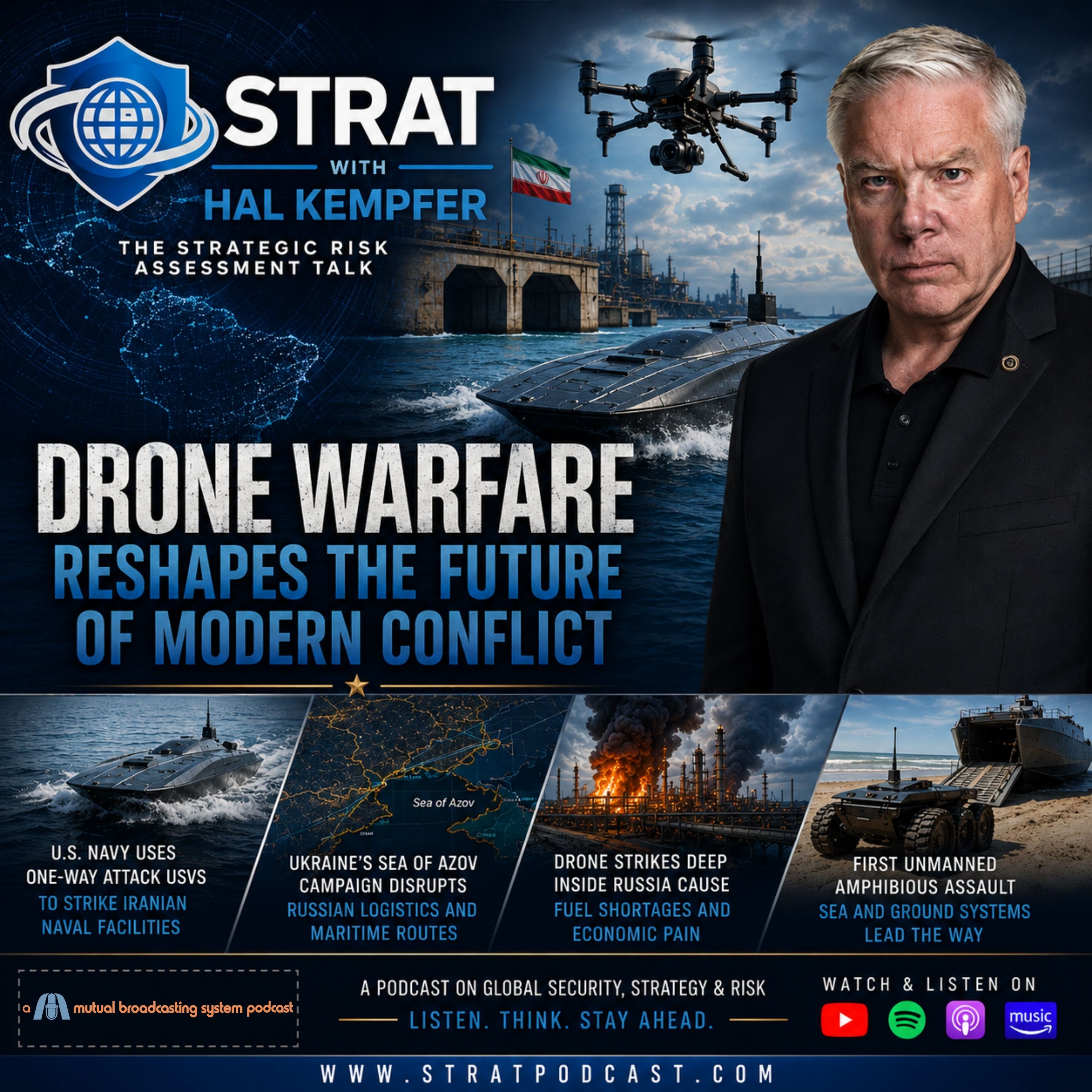
    STRAT | 13 JULY 2026 | Drone Dominance Reshapes Future of Modern Conflict

    Drone technology is rapidly transforming the battlefield, and its strategic consequences are becoming impossible to ignore. This episode of STRAT with Hal Kempfer examines how autonomous air, sea, and ground systems are redefining military operations while reducing risks to personnel and expanding the reach of precision attacks. The discussion explores the U.S. military's first operational use of one-way autonomous surface drones against Iranian targets, Ukraine's sweeping drone campaign disrupting Russian logistics, energy infrastructure, and maritime operations, and the growing vulnerability of traditional military defenses. The episode also analyzes how long-range drone strikes are bringing the war directly into Russia, creating fuel shortages, economic pressure, and political consequences far beyond the front lines. Finally, attention turns to what may represent another historic milestone: the first known unmanned amphibious assault combining autonomous sea and ground vehicles. Together, these developments illustrate how drone warfare is fundamentally reshaping strategy, deterrence, logistics, and the future character of armed conflict. Takeaways: The U.S. Navy employed autonomous surface attack drones operationally against Iranian naval infrastructure. Unmanned sea, air, and ground systems are rapidly changing the nature of modern warfare. Ukraine's drone campaign has severely disrupted Russian logistics, fuel production, and maritime operations. Long-range drones are reaching targets deep inside Russia, exposing vulnerabilities in homeland defense. Drone attacks on refineries and transportation networks are creating economic and political pressure within Russia. The Sea of Azov campaign demonstrates how unmanned systems can effectively impose a naval blockade. Shortages of advanced air defense missiles highlight the growing challenge of defending against mass drone attacks. The first reported unmanned amphibious assault signals another major evolution in military operations. #STRATPodcast #HalKempfer #MutualBroadcastingSystem #StrategicRiskAnalysis #DroneWarfare #MilitaryStrategy #NationalSecurity #UkraineWar #RussiaUkraine #MaritimeSecurity #AutonomousSystems #DefenseTechnology #MilitaryIntelligence #Geopolitics #HomelandSecurity #AirDefense #SeaDrones #MilitaryInnovation #GlobalSecurity #FutureWarfare

Showing 1–20 of 31 episodes