Skip to content
Artwork for Strange Bites

Strange Bites

Lance Martin

Strange Bites is a biweekly podcast that delivers real, cutting-edge discoveries served up in bite-sized episodes (15 minutes or less) wrapped in atmospheric, creative fiction. Hosted by Lance Martin, each episode plunges listeners into shadowy labs, forgotten dig sites, and eerie breakthroughs where fact meets chilling narrative.

Imagine stumbling upon a material lighter than air that could reshape aerospace… but in the dead of night, it feels like touching something that shouldn’t exist. Or watching scientists accidentally birth tiny organisms that grow their own primitive brains and perhaps begin to dream. These aren’t dry lectures—they’re immersive tales that make your skin crawl while your mind races with the real implications.

Real science, fictional delivery: Every story is grounded in verifiable research (with sources linked in show notes), but most of the storytelling is creative fiction. This blends thriller-like narration, vivid imagery, and thoughtful exploration of ramifications—ethical dilemmas, existential questions, and “what if” scenarios.

Perfect for commutes, late nights, or quick hits of wonder. Two episodes drop weekly, keeping the strange flowing steadily.

Dark, atmospheric, and wondrous. It evokes horror podcast vibes crossed with popular science, but stays truthful to the facts while amplifying the uncanny.

Notable and Recent episodes

- Soramatex → An impossibly light material from Japanese labs.
- Satyrex - Size Does Matter → A hissing desert spider discovery.
-Gods of Carbon → AI uncovering ancient elemental secrets.
-Biophotons (Auras Are Real) → The human body literally glowing.
-Ghost Murmur → CIA tech detecting heartbeats from miles away.
-Rise of the Neurobots → Living nightmares with self-grown brains.
- And more, from malaria parasites with spinning iron crystals to tiny dinosaur fossils with monster skulls.

If you love podcasts like Radiolab or Stuff You Should Know but crave a darker, more cinematic edge, or if The NoSleep Podcast appeals but you want grounded science, Strange Bites hits that sweet spot. It transforms abstract breakthroughs into visceral stories that linger, prompting you to question everything from the nature of consciousness to the hidden wonders (and horrors) in everyday biology and tech.

Stay strange—and question everything.

Play
  • 30 episodes
  • a few times a week
  • Avg 10 min
  • English
Counted on this page — what you have heard stays on this device, so it is not something the list can be paged by.
  • S1 · E60
    Monday · 14 min

    Episode 60: Bacteria that Grows Metal Cables

    In episode 60 we crawl into the muck and find a creature that does not wait for a plug. It grows its own power lines out of nickel it steals from the dirt, braids them thinner than thought, and runs electricity through a body that can be thousands of cells long. The discovery is real. The new structural work is led by Filip Meysman at the University of Antwerp, with colleagues including Bent Smets and Silvia Hidalgo Martinez. It landed in Nature Communications under a title that sounds like an electrician’s fever dream: highly efficient long-range conduction through a biosynthetic nickel-organic framework. Sources https://thedebrief.org/scientists-discover-bacteria-growing-microscopic-electrical-wires-with-extraordinary-conductivity/ https://www.science.org/content/article/metal-scaffolds-turn-bacteria-live-wires https://www.nature.com/articles/s41467-026-76989-0 https://www.biorxiv.org/content/10.1101/2025.10.10.681601v1 https://arxiv.org/abs/2606.13117 https://www.nature.com/articles/s41467-021-24312-4 https://pmc.ncbi.nlm.nih.gov/articles/PMC8238962/ https://www.nature.com/articles/s41467-019-12115-7 https://en.wikipedia.org/wiki/Cable_bacteria https://asm.org/articles/2022/july/cable-bacteria-electric-marvels-of-the-microbial-w
  • S1 · E59
    September 16 · 15 min

    Episode 59: Living Circuit Boards

    In Episode 59 we walk into a lab at the Massachusetts Institute of Technology where engineers did not build a faster chip. They taught bacteria to act like the tiny switches inside your phone… and then they printed those living switches onto a plate and watched a circuit board wake up and grow. The discovery is real. The paper landed in Nature Chemical Biology on August 17, 2026. The facts stay on the table. The story around them is ours. Sources https://news.mit.edu/2026/mit-engineers-connect-bacteria-to-create-living-transistors-0817 https://www.nature.com/articles/s41589-026-02300-3 https://www.sciencedaily.com/releases/2026/09/260901070526.htm https://scitechdaily.com/mit-engineers-create-a-living-circuit-board-from-bacteria/ https://www.zmescience.com/science/news-science/scientists-turn-bacteria-into-transistors-to-build-living-circuit-boards/ https://www.hackster.io/news/mit-scientists-build-computer-circuits-out-of-living-bacteria-f4f34d2a06b0 https://doi.org/10.1038/s41589-026-02300-3

  • S1 · E58
    September 14 · 15 min

    Episode 58: The Devil Flower

    In Episode 58 we talk a walk through a mountain forest in western Thailand. It’s May. The air is wet. The ground is a carpet of dead leaves. Small bamboo leans in. Almost nothing down here wants to be seen. Then something does. It is not green. It is not pretty in the postcard way. It looks like a thumb-sized lantern that crawled out of a nightmare and decided to bloom. Black body. Three thin horns. Two orange patches near the base that stare back at you like eyes. This is not folklore. This is a plant. And it doesn’t eat sunlight. On May 13th, 2025, botanists working in Thong Pha PhumNational Park, in Kanchanaburi Province, found a plant that did not match the book. Sources https://doi.org/10.3897/phytokeys.278.202868 https://phytokeys.pensoft.net/article/202868/ https://blog.pensoft.net/2026/09/02/new-devil-flower-species-discovered-in-thai-national-park/ https://www.eurekalert.org/news-releases/1141681 https://www.sciencedaily.com/releases/2026/09/260903064217.htm https://gizmodo.com/this-newly-discovered-demonic-looking-flower-is-nightmare-fuel-2000806199 https://www.discovermagazine.com/a-newly-discovered-devil-flower-hides-beneath-the-forest-floor-before-emerging-with-black-petals-and-demon-like-eyes-49625 https://phys.org/news/2026-09-devil-species-thai-national.html https://academic.oup.com/botlinnean/article-abstract/193/3/287/5815711

  • S1 · E57
    September 10 · 14 min

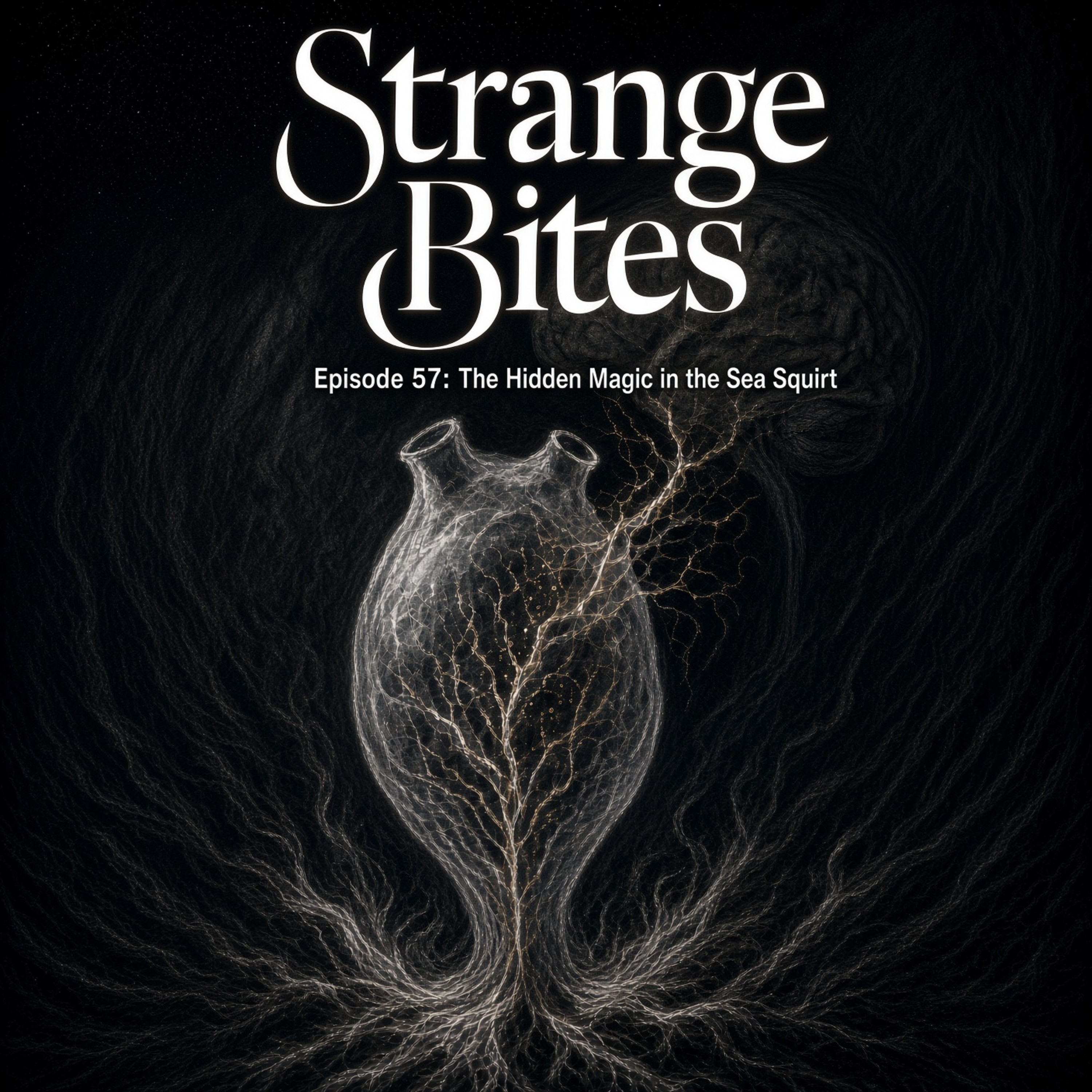
    Episode 57: The Hidden Magic in the Sea Squirt

    There is an animal that looks like a mistake. It has no face you would trust. It does not hunt. It does not run. It sits on a rock in cold water, pumps the ocean through a hole in its head, and filters dinner out of the dark. In Korea they call it meongge. In Japan they call it hoya. On a plate it looks like something the sea coughed up and then thought better of. People eat it anyway. Raw. Sometimes still twitching. Scientists have a colder name for the whole family: Ascidiacea. Sea squirts. And here is the part that should not be true. A fat hidden in that rubbery little sack was fed to old mice for two months. The mice found a hidden platform in a pool the way younger mice do. The connections in their brains thickened. The brain’s own immune cells stopped shouting. And the old coats on their backs grew new hair, darker, thicker, glossier. If aging is a slow leak in the membrane of the self, somebody just found a patch in the tide. This is Episode 57: The Magic Sea Squirt. Sources https://www.frontiersin.org/journals/molecular-biosciences/articles/10.3389/fmolb.2022.815320/full https://doi.org/10.3389/fmolb.2022.815320 https://pubmed.ncbi.nlm.nih.gov/35281262/ https://www.sciencedaily.com/releases/2026/09/260902234518.htm https://www.lifespan.io/news/plasmalogens-alleviate-age-related-cognitive-decline-in-mice/ https://www.frontiersin.org/journals/nutrition/articles/10.3389/fnut.2026.1906996/full https://doi.org/10.3389/fnut.2026.1906996 https://www.mdpi.com/1420-3049/28/17/6328 https://pmc.ncbi.nlm.nih.gov/articles/PMC10488995/ https://pmc.ncbi.nlm.nih.gov/articles/PMC5360580/ https://news.stanford.edu/stories/2026/05/electrical-pulses-rejuvenate-sea-squirts-offering-clues-on-human-aging

  • S1 · E56
    September 8 · 15 min

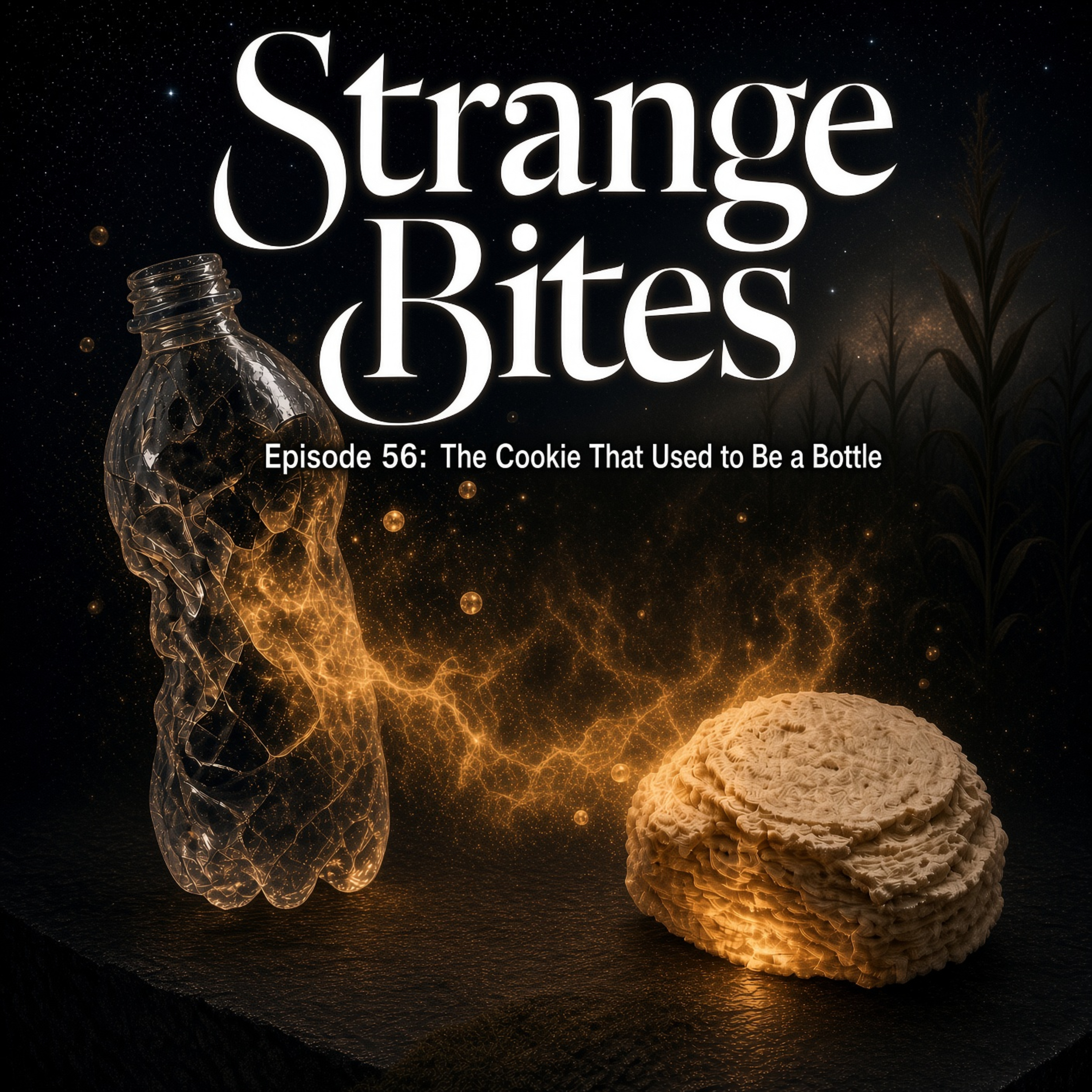
    Episode 56: The Cookie That Used to Be a Bottle

    Picture the last plastic water bottle you threw away. Not the heroic one you rinsed and dropped in the blue bin. The other one. The one that rolled under the passenger seat and cooked all summer. The one that still had a little warm water in the bottom and a label that had given up being a label. Now picture that bottle… becoming dessert. Vanilla-scented. Protein-rich. Piped out of a 3D printer in the shape of a tiny Greek letter. Sitting on a plate next to a NASA patch like it has every right to be there. Before you gag, because that's how I felt it, you are not being asked to chew a bottle. You are being asked to consider something stranger. That the carbon in trash and the carbon in a cookie are, at the atomic level, the same kind of leftover star-stuff. And that a few stubborn people in southern Illinois have taught yeast how to notice. This Episode 56 The Cookie That Used to Be a Bottle Sources https://www.eurekalert.org/news-releases/1139679 https://www.acs.org/pressroom/presspacs/2026/august/this-cookie-started-its-life-as-a-plastic-bottle.html https://acs.digitellinc.com/live/37/session/586399 https://www.youtube.com/watch?v=YQywN1VuMKU https://news.siu.edu/2021/11/110221-SIU-research-team-aims-to-move-food-replication-from-science-fiction-to-reality.php https://thesouthern.com/news/education/siu-researchers-mitigate-two-problems-by-transforming-waste-plastic-into-food/article_c5762c24-fad5-545d-a6c3-52f5e2a969a9.html https://www.newscientist.com/article/2585463-plastic-bottles-can-be-turned-into-edible-vanilla-flavour-cookies/ https://www.theguardian.com/food/2026/aug/24/cookies-plastic-astronauts-space-food https://www.eurekalert.org/news-releases/1139678 https://www.forbes.com/sites/maryroeloffs/2026/08/24/cookies-made-from-plastic-bottles-could-ease-food-shortages-feed-nasa-crews-in-space/ https://www.sciencealert.com/scientists-just-made-a-cookie-out-of-recycled-plastic-slurry-welcome-to-2026 https://www.foodingredientsfirst.com/news/engineered-yeasts-turn-pet-bottles-and-crop-waste-into-3d-printed-protein-cookies.html https://www.earth.com/plants/scientists-turn-plastic-bottle-waste-into-vanilla-scented-cookies/ https://pubs.rsc.org/en/content/articlelanding/2021/gc/d1gc00931a

  • S1 · E55
    September 2 · 8 min

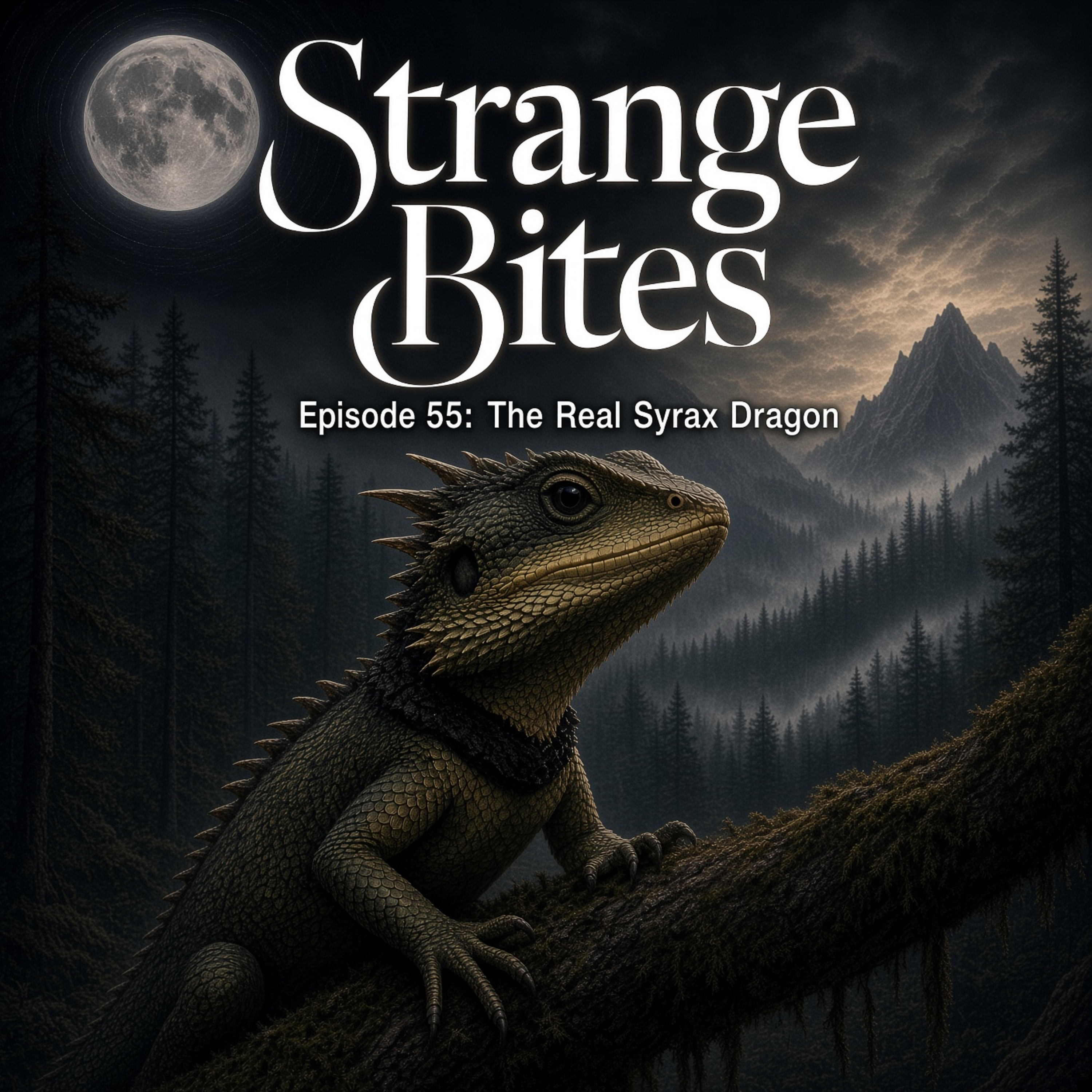
    Episode 55: The Real Syrax Dragon

    In Episode 55 we head up high in the cool, mist-wrapped mountains of western Thailand, the forest doesn’t care what the maps say. It doesn’t care what the textbooks claim. Above thirteen hundred meters in Mae Wong National Park, the air is thinner, the light is softer, and the trees hold secrets that science has only just begun to notice. In April 2025, two researchers Poramad and Krittiya Trivalairat were climbing into that forest looking for a lizard they already thought they knew. The books and the park records said the high ridges belonged to a species called Acanthosaura lepidogaster, a mountain horned dragon with a respectable set of spines and a known address. They expected the usual suspect. What they found instead was something smaller, quieter, and far more interesting. Sources Official paper: https://doi.org/10.3897/zookeys.1287.186636 ZooKeys article page: https://zookeys.pensoft.net/article/186636/ EurekAlert press release: https://www.eurekalert.org/news-releases/1139290 ScienceDaily summary: https://www.sciencedaily.com/releases/2026/08/260823015005.htm Discover Magazine feature: https://www.discovermagazine.com/newly-discovered-lizard-named-after-a-house-of-the-dragon-character-could-become-a-symbol-of-its-region-49519 Earth.com coverage: https://www.earth.com/animals/newly-discovered-dragon-lizard-named-after-a-game-of-thrones-character/ SciTechDaily: https://scitechdaily.com/tiny-new-dragon-discovered-high-in-thailands-mountain-forests/

  • S1 · E54
    August 31 · 8 min

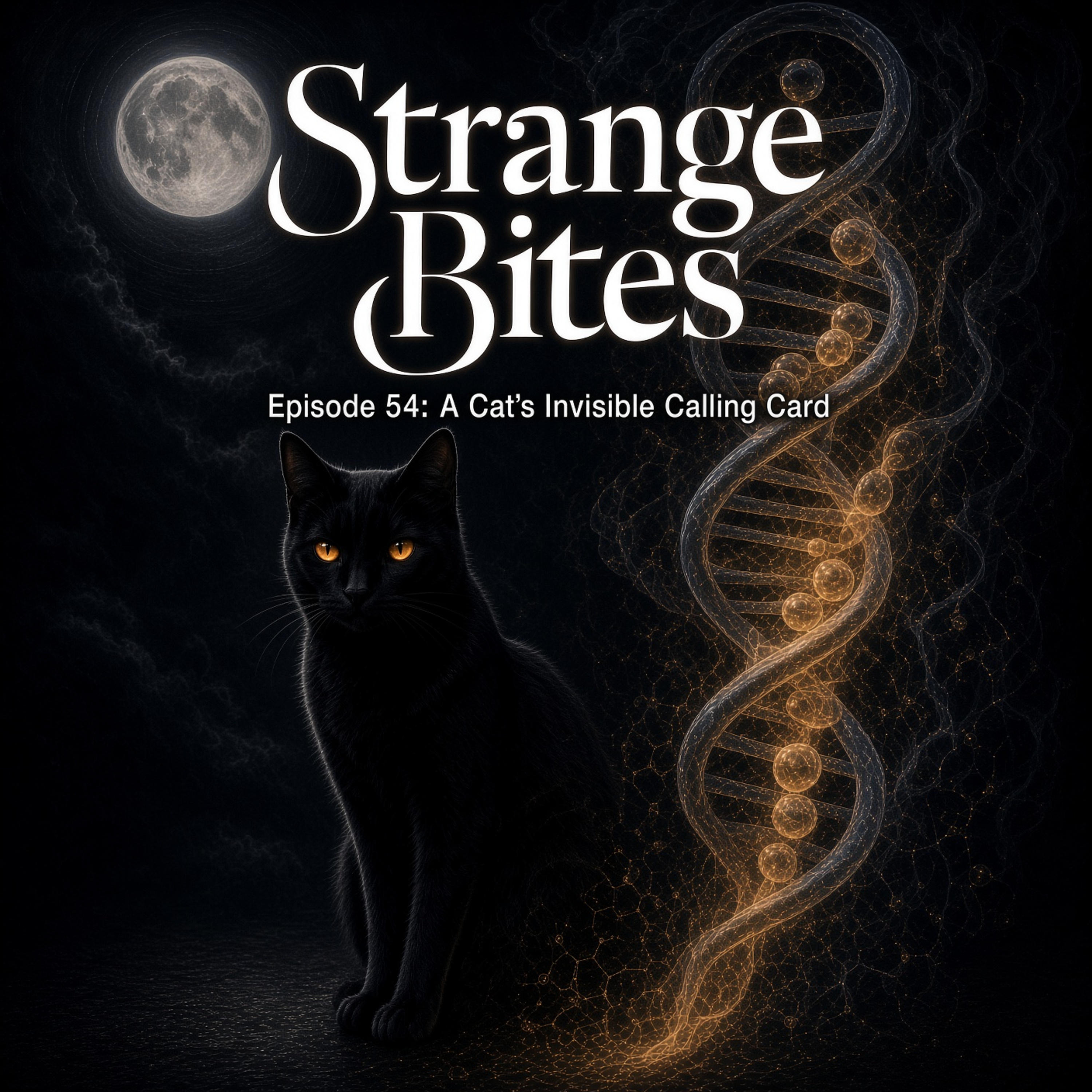
    Episode 54: A Cat’s Invisible Calling Card

    In Episode 54 we step into the dark with the creatures who own the night… and the chemical secrets they leave behind. It’s three in the morning on a quiet suburban street. A black cat slips along a fence line, pauses, and sprays a precise arc of urine against the wood. Then it vanishes into the shadows. A few hours later another cat arrives. It freezes. Its mouth opens slightly, the classic flehmen grimace, that weird open-mouthed “stinky face” cat owners know so well. The second cat is reading something. Not just “another cat was here.” It is reading who. For decades scientists knew cats could do this. They just didn’t know how. Because urine is chaos. The moment it hits the air, hundreds of volatile molecules begin evaporating, reacting, and changing. By the time the next cat arrives, the chemical message should be scrambled beyond recognition. Yet somehow the identity stays clear for at least a full day. How does a signal that is constantly falling apart still say, with high confidence, “I am this individual”? That question sat unanswered for a very long time. Sources https://www.cell.com/current-biology/abstract/S0960-9822(26)00944-9 https://www.eurekalert.org/news-releases/1139293 https://www.sci.news/biology/domestic-cat-kidney-lipid-droplets-15005.html https://www.livescience.com/animals/cats/cats-have-unique-chemical-fingerprints-in-their-pee https://www.japantimes.co.jp/news/2026/08/20/japan/science-health/cats-identification-fatty-acid-research/

  • S1 · E48
    August 27 · 7 min

    Episode 53: Is Aging just a Maintenance Failure?

    In Episode 53 we float into a city that never sleeps. Not a city of concrete and steel. A city made of soft, glowing rooms, each one smaller than a grain of sand. Inside every room, tiny power stations hum day and night. They take the food you ate and the air you breathe and turn them into pure energy. These power stations are called mitochondria. For decades we’ve called them the powerhouses of the cell. But that name is too quiet. Too polite. Think of them instead as a living power grid. In a young, healthy cell the mitochondria don’t sit alone like lonely street lamps. They stretch, reach, and fuse into long, branching networks. They share fuel. They repair each other. They dance. Energy flows wherever it’s needed, instantly, like electricity racing through a perfectly maintained city. Now imagine the years passing. The grid begins to crack. Connections break. Whole neighborhoods go dark while others burn too hot and then collapse. Energy still gets made… but it no longer moves with grace. The city grows tired. That fatigue is what we feel as aging... Sources: Primary research paper (Nature Communications, 2026): https://www.nature.com/articles/s41467-026-71508-7 ScienceDaily press release from the Leibniz Institute: https://www.sciencedaily.com/releases/2026/06/260610003119.htm Popular Mechanics article: ⁠https://www.popularmechanics.com/science/health/a73428268/mitochondria-aging/⁠

  • S1 · E52
    August 25 · 15 min

    Episode 52: The Helix That Remembers

    Every living thing you have ever loved is a library. A single gram of DNA can hold about two hundred and fifteen million gigabytes of information. That is the recipe for you, for a fern, for a virus, for every ancestor who ever survived long enough to pass a letter forward. Life has been writing itself down for four billion years. It never asked for a hard drive. It was one. And then, in a lab in Pennsylvania, someone asked that library to do something it was never built to do. Sit still, Conduct electricity, or Remember a voltage after the lights go out. Episode 52 is not about encoding your vacation photos into genes. That is a different kind of magic, and we will leave it on the shelf. Tonight is stranger. Tonight, scientists took short, custom-made strands of DNA, dusted them with silver, pressed them against a crystal and built a tiny switch that stores and thinks in the same place. They taught the molecule of life to act like a synapse. Sources https://www.psu.edu/news/research/story/borrowing-biology-power-next-gen-data-storage https://doi.org/10.1002/adfm.202530539 https://www.sciencedaily.com/releases/2026/08/260816044853.htm https://www.perovskite-info.com/new-dna-perovskite-memristors-achieve-100x-lower-power-neuromorphic-computing https://pure.psu.edu/en/publications/molecularly-engineered-highly-stable-memristors-with-ultra-low-op

  • S1 · E51
    August 19 · 8 min

    Episode 51: The Y That Holds The World

    In episode 51 we’re going deep into the heart of the thing that makes you… you. The thing that makes the chair you’re sitting in solid, the air you’re breathing real, and keeps stars above your head burning. For fifty years, physicists have been arguing over a deceptively simple question: What actually carries the identity of a proton? What keeps matter from dissolving into a fog of pure energy? Tonight we don’t just answer that question, we rewrite the address of reality itself. Sources Primary paper: STAR Collaboration, “Tracking the baryon number with nuclear collisions,” Science 393, 727–731 (2026). https://www.science.org/doi/10.1126/science.ads5962 Brookhaven National Laboratory official release: https://www.bnl.gov/newsroom/news.php?a=122692 ScienceAlert summary: https://www.sciencealert.com/after-50-years-physicists-find-strong-evidence-for-what-really-holds-matter-together Sci.News coverage: https://www.sci.news/physics/baryon-junction-14992.html EurekAlert / AAAS: https://www.eurekalert.org/news-releases/1139404 Science AAAS news story: https://www.science.org/content/article/new-explanation-why-universe-s-supply-nuclear-matter-fixed

  • S1 · E50
    August 17 · 9 min

    Episode 50 - The Single Wrong Letter

    Wow! Fifty Episodes Fifty strange bites of the universe. From the first quiet story to this one, tonight we mark a milestone. Fifty times we’ve sat together in the dark, turning real science into something a little more mysterious, a little more human. To every one of you who has listened, shared, questioned, or simply stayed strange with me… thank you. You’ve kept the signal alive. This is Strange Bites, Episode 50. In the endless library of you, three billion letters are stacked like stars in a dark sky. Most of them sit quietly. One of them, just one, is sometimes written wrong. And that single wrong letter almost erased a baby’s future before he ever learned to say his own name. This is the story of KJ Muldoon… and the night scientists decided the code of life itself could be rewritten for one child alone. Sources https://www.nejm.org/doi/full/10.1056/NEJMoa2504747 https://www.chop.edu/news/worlds-first-patient-treated-personalized-crispr-gene-editing-therapy-childrens-hospital https://www.nytimes.com/2025/05/15/health/gene-editing-personalized-rare-disorders.html https://www.nature.com/articles/d41586-025-01496-z https://apnews.com/article/crispr-gene-editing-rare-disease-mutation-chop-penn-4ab95afadde97164ae6c2450d79acbf8 https://www.wired.com/story/a-baby-received-a-custom-crispr-treatment-in-record-time/ https://www.research.chop.edu/cornerstone-blog/a-year-after-first-in-world-gene-editing-therapy-chop-penn-team-aims-to-scale-the-science https://en.wikipedia.org/wiki/KJ_Muldoon https://www.npr.org/sections/shots-health-news/2025/05/15/nx-s1-5389620/gene-editing-treatment-crispr-inherited https://www.statnews.com/2025/10/16/baby-kj-crispr-gene-editing-personalized-medicine-at-scale/

  • S1 · E49
    August 13 · 9 min

    Episode 49: Cancer's Best Friend

    In episode 49 we’re going hunting in a place most of us never think about, the hidden city inside a tumor. Cancer has always been the ultimate horror movie killer. You think you’ve finished it. The chemo hits like a silver bullet. Most of the cells die. The scans look clear. Everyone breathes again. But some cells don’t die. They just… change. They stop dividing. They go quiet. Scientists call this state cellular Senescence, a kind of cellular retirement. The cell is still alive, still metabolically humming, still releasing a strange cocktail of molecules into its neighborhood. Researchers call that cocktail the SASP, the Senescence associated secretory phenotype. Think of it as the whispers of the undead. Most of the time we assumed those whispers were proteins: inflammatory signals, growth factors, the usual suspects. But a team at The Wistar Institute in Philadelphia just discovered something far stranger. One of those whispers is sugar. Not just any sugar. Fructose. Sources Primary research paper: https://doi.org/10.1038/s43587-026-01172-5 Wistar Institute / EurekAlert press release: https://www.eurekalert.org/news-releases/1138125 ScienceAlert coverage: https://www.sciencealert.com/common-sugar-appears-to-loosen-cancer-cells-and-help-them-spread ScienceDaily summary: https://www.sciencedaily.com/releases/2026/08/260802223426.htm Medical News Today interview coverage: https://www.medicalnewstoday.com/articles/does-fructose-contribute-spread-ovarian-cancer-metastasis-what-we-know

  • S1 · E48
    August 11 · 8 min

    Episode 48: The Ghosts in Our Blood

    Imagine the human genome as a vast, haunted library. Every shelf is a chromosome. Every book is a stretch of DNA. Most of the books tell ordinary stories, how to build a hand, how to fight a fever. But some of the pages are written in a different hand. Older. Stranger. The handwriting of people who no longer walk the Earth. For years we knew two of those writers: the Neanderthals and the Denisovans. We had pieces of their actual DNA. We could hold their pages up to the light and say, “Yes. That’s them.” But scientists kept finding other pages that didn’t match either name. Ghost writing. Ink that shouldn’t still be there. Then, in the summer of 2026, a team at the University of California, Berkeley, built a new kind of reading lamp. They called it TRACE. T-R-A-C-E. Tracking Archaic Contributions via ARG Estimation. The team fed TRACE hundreds of high-quality genomes from people living all over the world. No ancient bones required. Just the living. And the ghosts stepped forward. Sources Science paper (primary): https://www.science.org/doi/10.1126/science.aef8874 UC Berkeley / EurekAlert press release: https://www.eurekalert.org/news-releases/1137804 Scientific American summary: https://www.scientificamerican.com/article/everyone-alive-may-carry-dna-from-a-ghost-lineage-of-human-ancestors/ New Scientist coverage: https://www.newscientist.com/article/2582522-the-genome-of-a-long-extinct-ancient-human-is-hiding-within-us/ Live Science overview: https://www.livescience.com/archaeology/human-evolution/scientists-discover-2-new-ghost-lineages-that-contributed-dna-to-modern-humans Sci.News summary: https://www.sci.news/genetics/human-dna-two-unknown-archaic-hominins-14961.html

  • S1 · E47
    August 7 · 11 min

    Episode 47: The Rock-Eaters of the Antrim Shale

    You’re standing on a quiet stretch of northern Michigan farmland. The air smells like wet soil and diesel. In front of you is a steel wellhead, nothing dramatic, just another gas well punched into the Antrim Shale, a black, organic-rich rock layer laid down three hundred and fifty million years ago when this part of the world was a shallow, oxygen-starved sea. Energy companies drill these wells, pump up water mixed with natural gas, strip out the methane, and move on. Most people never think twice about what else might be riding up in that water. But one day a University of Michigan team did. They filtered hundreds of liters of that deep water. They stained it. They sequenced the DNA. They even tried to grow whatever was living in it on plates in the lab. What came back was not the usual handful of bacteria and archaea that scientists expect in the deep subsurface. It was a whole hidden community. Hundreds of feet below the surface, between six hundred and fifty and sixteen hundred forty feet down, an entire ecosystem of rock-eating fungi, microscopic animals, and parasites has been quietly thriving in total darkness for thousands of years. This is the story of how we found them… and what it means that they were there all along. This is episode 47, The Rock-Eaters of the Antrim Shale. Sources https://www.eurekalert.org/news-releases/1137736 https://www.sciencealert.com/scientists-discover-entire-ecosystem-hundreds-of-feet-below-earths-surface-at-depths-thought-inhospitable-to-life https://www.earth.com/news/mysterious-fungi-found-thriving-1600-feet-below-earths-surface-could-affect-underground-carbon-storage/ https://gizmodo.com/the-great-lakes-are-hiding-a-secret-underworld-of-tardigrades-and-rock-eating-fungi-2000793324 https://www.discoverwildlife.com/environment/deep-subsurface-fungi https://academic.oup.com/ismej (search title: “Deep subsurface organic-rich shale supports abundant, diverse, and novel fungi”)

  • S1 · E46
    August 3 · 8 min

    Episode 46: Whispers in the Blood

    Lets imagine a single drop of blood. Ordinary. Red. Warm. The kind of drop that falls when you nick your finger on a kitchen knife or when a nurse draws a routine sample. For most of human history, that drop could tell us only a few things, blood type, maybe sugar levels, a little about cholesterol. But now? That same drop can whisper secrets about your heart fifteen years before the first symptom ever appears. Fifteen years. Let me take you inside the discovery in Episode 46; Whispers in the Blood. Sources https://www.nature.com/articles/s41467-026-68956-6 https://www.sciencedaily.com/releases/2026/07/260716023603.htm https://www.med.hku.hk/en/news/press/20260312-hkumed-develops-innovative-ai-tool https://datascience.hku.hk/2026/04/from-static-risk-to-real-time-prediction-ai-blood-test-forecasts-cardiovascular-disease-up-to-15-years-ahead/ https://www.newsweek.com/new-blood-test-spots-hidden-heart-risks-up-to-15-years-early-12218401

  • S1 · E45
    July 29 · 8 min

    Episode 45: The Night Time Emerged in the Lab

    It’s 3 a.m. in a basement lab in Birmingham, England. The corridors are silent. Most of the building is asleep. But in one dimly lit room, Professor Giovanni Barontini is wide awake, staring into a bottle. Floating in the center of his apparatus is a ghostly, glowing cloud. Not smoke or plasma, but twenty-four thousand rubidium atoms, chilled to a few billionths of a degree above absolute zero. So cold that the atoms have stopped behaving like individuals. They’ve merged into one single quantum entity, what physicists call a Bose-Einstein condensate. This is episode 45: The Night Time Emerged in a the Lab. Sources University of Birmingham official news release (June 2026):
https://www.birmingham.ac.uk/news/2026/scientist-creates-miniuniverse-to-measure-time-without-a-clock ScienceDaily coverage (July 9, 2026) with full summary and quotes:
https://www.sciencedaily.com/releases/2026/07/260709160632.htm Phys.org / related reporting on the experiment:
https://phys.org/news/2026-06-scientist-miniuniverse-clock.html (and similar mirrors) Original peer-reviewed paper:
Giovanni Barontini, “Testing the problem of time with cold atoms,” Physical Review Research 8, 023001 (2026). DOI: 10.1103/PhysRevResearch.8.023001 (exact formatting may vary slightly in databases).

  • S1 · E44
    July 27 · 9 min

    Episode 44: That Bacteria That Eats Poison

    Tonight we go two kilometers under the ground. Into a place that should be dead. A flooded uranium mine in the Ore Mountains of eastern Germany. Cold black water. No sunlight. Air so thin it might as well not exist. And in that water… something is quietly performing alchemy. Something is turning one of the most toxic, radioactive metals on Earth into a solid that doesn’t want to move. A compound so stable it has already outlived the people who first noticed it. Episode 44 is the story of the bacteria that eats poison and spit out rock. Sources Nature Communications paper (original research):
https://www.nature.com/articles/s41467-026-72560-z SciTechDaily coverage:
 https://scitechdaily.com/bacteria-turn-toxic-uranium-into-a-surprisingly-stable-compound/ Phys.org summary: 
https://phys.org/news/2026-07-bacteria-dissolved-uranium-stable-compound.html The Brighter Side of News article:
https://www.thebrighterside.news/post/bacteria-can-turn-toxic-uranium-into-stable-environmentally-safe-form/

  • S1 · E43
    July 23 · 10 min

    Episode 43: Rockstar Chimps

    Deep in a remote woodland in Guinea-Bissau. The air is thick with the buzz of insects and the calls of hidden birds. You push through vines and suddenly… you see it. A massive tree, its trunk covered in old scars. At its base, a neat pile of rocks, dozens of them, accumulating like some forgotten offering. No obvious reason. No nuts scattered. No fruit knocked down. Just stones. And every so often, from somewhere in the canopy or distance, comes a deep, resonant THWACK… followed by wild whoops that carry for kilometers. What you’re witnessing isn’t random. It’s deliberate. It’s repeated. And it’s been going on for years in specific groups of our closest living relatives: chimpanzees. This is the strange and beautiful story of accumulative stone throwing. A behavior so intriguing that scientists are still unraveling its meaning. And yes… some have playfully called it the chimps’ version of “rock music.” Stick around, because the truth is even more fascinating than the mystery. This is Episode 43: Rockstar Chimps Sources Kühl, H. S., et al. (2016). Chimpanzee accumulative stone throwing. Scientific Reports, 6, 22219. https://www.nature.com/articles/srep22219 Kalan, A. K., et al. (2019). Chimpanzees use tree species with a resonant timbre for accumulative stone throwing. Biology Letters, 15(7), 20190747. https://doi.org/10.1098/rsbl.2019.0747 Nakano, R. & Kalan, A. (2026). Why do male chimpanzees throw rocks at the same trees for more than a decade? We travelled to remote Guinea-Bissau to find out. The Conversation. https://theconversation.com/why-do-male-chimpanzees-throw-rocks-at-the-same-trees-for-more-than-a-decade-we-travelled-to-remote-guinea-bissau-to-find-out-279187 (also published/adapted on SciTechDaily) Additional context comes from the Pan African Programme’s long-term observations and related primatology reports on western chimpanzee behavior and conservation threats.

  • S1 · E42
    July 20 · 14 min

    Episode 42: Spudcell

    You are in a dimly lit laboratory in Minnesota. It’s a quiet night. Incubators hum like sleeping beasts. The air carries the faint metallic tang of chemicals. On a bench sits an ordinary glass flask filled with a murky, swirling soup. Inside that soup, something impossible is happening. Scientists have built a cell from scratch. They started with purified chemicals, nothing that was ever part of a living thing, and assembled something that eats, grows, copies its own genetic code, divides into daughters, and even competes with its neighbors for food. They nicknamed it SpudCell because under the microscope it looks a bit like a lumpy green potato, and because it echoes Sputnik, the satellite that launched the space age. This little chemical blob is the closest humanity has ever come to creating life-like behavior from pure non-life in a lab. This is episode 42, a deep, weird, wonderful bite into one of the wildest discoveries of 2026: the story of SpudCell and what it means when humans learn to build life from the ground up, so come on, let's dive in. Sources Biotic SpudCell project page (includes link to the full preprint manuscript): https://biotic.org/research/spudcell/ New York Times interactive feature (July 1, 2026): https://www.nytimes.com/interactive/2026/07/01/science/spudcells-synthetic-cell.html University of Minnesota official news release: https://twin-cities.umn.edu/news-events/worlds-first-synthetic-cell-complete-life-cycle-could-revolutionize-biological Sci.News coverage with additional technical details: https://www.sci.news/biology/synthetic-cell-14890.html Additional reporting from Science magazine (AAAS): https://www.science.org/content/article/lab-created-spudcell-marks-major-step-toward-building-life-scratch The core research is described in the preprint by Nathaniel J. Gaut, Christopher Deich, Brock Cash, Tanner Hoog, Aaron E. Engelhart, and Katarzyna P. Adamala (University of Minnesota), posted to bioRxiv in early July 2026.

  • S1 · E41
    July 8 · 9 min

    Episode 41: The Water Jets of Pythia’s Oasis

    Let’s imagine you’re on a research ship rolling in heavy Pacific swells, about 50 miles off the rugged coast of Newport, Oregon. The weather’s gone sideways, your original plans are on hold, and the sonar screen suddenly starts lighting up with strange, rising plumes of bubbles from the pitch-black depths below. You send down an underwater robot on a tether… and what it shows you stops everyone cold. Not just bubbles. A powerful jet of warm fluid blasting out of a hole in the seafloor like a firehose. Something that had never been seen before in quite this way. This is the story of Pythia’s Oasis, a real scientific discovery that gives us a rare, direct peek into the hidden plumbing of one of the world’s most dangerous earthquake faults. Grab your headphones, dim the lights, and let’s dive deep in Episode 41: “The Water Jets of Pythia’s Oasis” Sources Philip et al. (2023). “Fluid sources and overpressures within the central Cascadia Subduction Zone revealed by a warm, high-flux seafloor seep.” Science Advances. https://www.science.org/doi/10.1126/sciadv.add6688 University of Washington News (April 2023): “Warm liquid spewing from Oregon seafloor comes from Cascadia fault, could offer clues to earthquake hazards.” https://www.washington.edu/news/2023/04/10/warm-liquid-spewing-from-oregon-seafloor-comes-from-cascadia-fault-could-offer-clues-to-earthquake-hazards/ Ocean Observatories Initiative – Pythias Oasis overview (adapted from the research): https://oceanobservatories.org/ (search “Pythias Oasis” or related geological posts) Additional context: OPB Think Out Loud interview with researchers (April 2023) – search “Pythias Oasis OPB”.

Showing 1–20 of 30 episodes