Skip to content
Artwork for Software Engineering Daily
NewsTech News

Software Engineering Daily

softwareengineeringdaily.com

Software Daily: The world through the lens of software.

Play
  • 2,221 episodes
  • Avg 53 min
  • English

Episodes 2,221

Counted on this page — what you have heard stays on this device, so it is not something the list can be paged by.
  • #493
    Mar 13, 2017 · 58 min

    Cloud Native Investing with Lenny Pruss

    Making the right engineering choices in today’s wide landscape of cloud technologies is hard. Predicting the future in order to invest in companies in this space has the same level of complexity. The cost of cloud computing is going down but the volume of total required space and processing power is going up. The open source community is growing and improving but people are increasingly willing to buy software that will save them time. Capital is flowing into Silicon Valley at a faster rate than can be sensibly absorbed by the number of quality companies. A decent product won’t have trouble raising money. But a decent investor has to choose wisely among the huge selection of available opportunities. Lenny Pruss works at Amplify Partners where he is currently focused on the cloud native space. In this episode, we talk about what cloud native means and how to navigate the complex landscape, whether you are an engineer or an investor. Cloud Native Landscape Project

  • #492
    Mar 10, 2017 · 47 min

    Using CQRS to Make Controllers Lean with Derek Comartin

    Command Query Responsibility Segregation (CQRS) is a powerful concept that has the potential to make for reliable and maintainable systems. It is also broadly misunderstood and means different things to different people. Derek Comartin learned about the idea after viewing some talks by Greg Young and has since successfully applied the approach with great success and it has transformed the way he views features, business requirements, and dependencies. The result is a system that is easier to maintain and faster to enhance. Among his key lessons are that slices are better than layers, mediators improve dependency management, and cohesion is better applied to business concerns than to technical ones. In this episode, Derek joins Dave Rael for a conversation about CQRS and applying it to make your code your own and to separate it from technical concerns in order to make your software development operation work better and faster.

  • #491
    Mar 9, 2017 · 58 min

    Artificial Intelligence Implications with Rumman Chowdhury

    Machine learning has improved both in tools and accessibility. Frameworks like TensorFlow create the right abstractions for developers to work efficiently. Educational programs like Metis and Insight Data Science provide a place for developers to learn these tools. As a result, artificial intelligence is becoming easier to develop and more widespread. Rumman Chowdhury works on artificial intelligence at Accenture. Before her current role, she taught data science at Metis. In this episode, we talk about the current state of artificial intelligence, from the tools available to the long term implications–such as the robot tax recently proposed by Bill Gates.

  • #490
    Mar 8, 2017 · 49 min

    Load Testing with Mark Gilbert

    Load testing measures performance of a system undergoing a large volume of requests. Before an application is pushed to production, engineers will often load test their software to ensure it is resilient in the face of high traffic. As web applications have changed, the requirements around load testing have changed as well. External APIs, internal undocumented APIs, and proprietary databases are black boxes that you might not be able to test reliably with unit tests or integration tests. Having an end-to-end load testing system can provide a measure of insurance against unknown unknowns before users start engaging with a production version. Mark Gilbert works on performance engineering at Apica, and he joins the show to discuss how load testing software is built and when engineers should use it. Full disclosure: Apica is a sponsor of Software Engineering Daily.

  • #489
    Mar 7, 2017 · 1 hr 6 min

    Mobile Engineers with Nathan Esquenazi

    There is too much mobile engineering work to be done and not enough mobile engineers. As a result, a talented mobile engineer will often make more money than a similarly talented web developer. There are many other disconnects between the world of mobile engineering and the world of backend and web development. We have reported on web development far more than mobile on Software Engineering Daily, and, I wanted to get a holistic view of the mobile ecosystem. Nathan Esquenazi is a co-founder of CodePath, which is a continuing education program for professional engineers and designers. There was much to explore–from the economics of mobile, to the state of cross platform, to the increasingly blurry line between mobile and IoT.

  • #488
    Mar 4, 2017 · 54 min

    Cloudbleed and SHA-1 Collision with Max Burkhardt

    Thursday February 23rd was a big day in security news: details were published about the Cloudbleed bug, which leaked tons of plaintext requests from across the Internet into plain view. On the same day, the first collision attack against SHA-1 was demonstrated by researchers at Google, foretelling the demise of SHA-1 as a safe hashing function. What does this mean for the average engineer? What are the implications for regular internet users? Haseeb Qureshi interviews Max Burkhardt, a security researcher at Airbnb, to get to the bottom of what exactly happened, what it means, and how it affects the security of web applications.

  • #487
    Mar 3, 2017 · 1 hr 5 min

    Prototype Manufacturing with Jeff McAlvay

    Manufacturing electronics is not a simple task and because of its complexity it is also quite expensive. Companies like Apple are able to pull their costs down through economies of scale. Since Apple is always placing huge bulk orders on chips, sensors, and other components, the company can get lower prices for those components than an individual hardware hacker that wants to build a prototype. Herein lies the opportunity for Tempo Automation, a company that allows rapid prototyping of electronics. By aggregating demand for electronics prototyping, Tempo Automation can offer competitive pricing and speed to anyone who needs a hardware prototype. I visited Tempo Automation and was given a tour of the production floor by CEO Jeff McAlvay. He showed me the huge machines that are used to build hardware prototypes and explained how they work in serial to produce prototypes. He also mentioned that anyone can schedule a tour of Tempo Automation’s factory by going to their website, and I highly recommend it. After the tour, Jeff and I sat down for an interview about what Tempo Automation is building and their plans for the future.

  • #486
    Mar 2, 2017 · 54 min

    Equity Compensation with Joshua Levy and Joe Wallin

    When an engineer is offered a job a tech company, their compensation is often partly in cash and partly in equity–shares of the company. How should an engineer evaluate that offer? How should they negotiate? In the world of equity compensation, costly and avoidable mistakes are routine, and this hurts both companies and employees. Josh Levy was on Software Engineering Daily previously to talk about the Amazon Web Services open guide, which was one of the most popular episodes we have ever had. In this episode, Josh and I are joined by Joe Wallin, a lawyer who has been involved in startups for many years. Josh and Joe are the authors of the The Open Guide to Equity Compensation, which is a resource designed to clear up the confusion around stock, options, and fundraising. It’s a tremendously useful and concise overview of what an engineer or founder needs to know when it comes to equity financing.

  • #485
    Mar 1, 2017 · 1 hr 2 min

    Parse and Operations with Charity Majors

    Parse was a backend as a service company built in 2011 before being acquired by Facebook in 2013. Building a backend as a service for developers requires walking a thin line between giving engineers lots of control and preventing those engineers from shooting themselves in the foot. While she was at Parse, Charity Majors learned about the operational burdens of managing a service with high uptime requirements and deeply technical edge cases that could take down a user’s entire system. Charity took the lessons in systems engineering that she learned at Parse and cofounded Honeycomb.io, a service for observability and monitoring. Honeycomb is described as a tool for your systems like an IDE is to your code. Parse was eventually shut down because the service did not have a place in the strategic plans of Facebook. Charity and I also discussed the lessons learned from how the Parse acquisition panned out–a useful conversation for anyone who is considering selling a company or acquiring a startup.

  • #484
    Feb 28, 2017 · 57 min

    Heroku Autoscaling with Andrew Gwozdziewycz

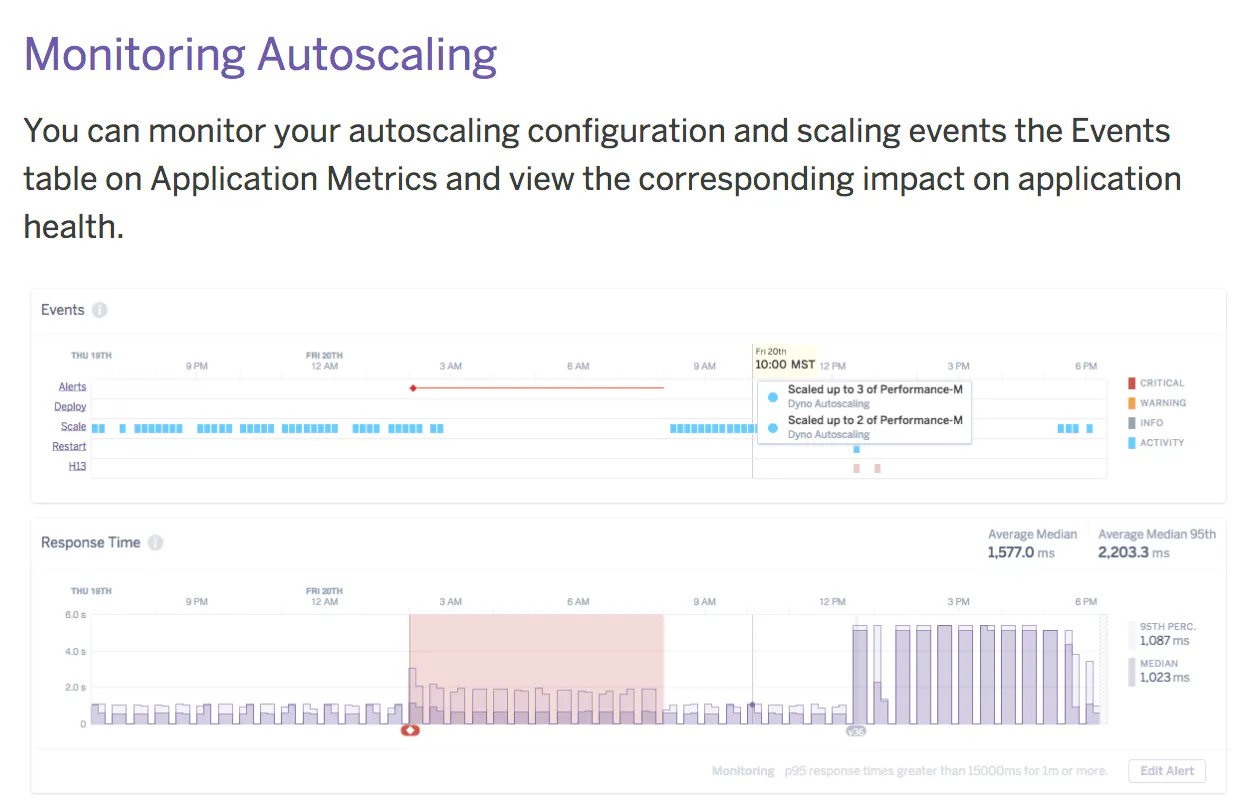
    When an application is using all of its available resources, that application needs to be scaled. Scaling an application means giving it more resources–typically servers. Autoscaling is an engineering practice where an application is automatically given more or less resources based on how healthy the application performance is at a given time. Applications on Heroku have access to autoscaling. Heroku users don’t need to worry about provisioning new servers manually because the platform does it for them. In this episode, we explore how Heroku built autoscaling. Andrew Gwozdziewycz [@apgwoz] is an operational experience engineer with Heroku. As he describes, autoscaling requires frequent health checks of an application. Since thousands of applications are running on Heroku, a metrics pipeline using Kafka and Cassandra supports the high volume of health check data. That data feeds into the decision process for when an application needs to scale. Full disclosure: Heroku is a sponsor of Software Engineering Daily.

  • #483
    Feb 27, 2017 · 56 min

    Data Warehousing with Mark Rittman

    In the mid 90s, data warehousing might have meant “using an Oracle database.” Today, it means a wide variety of things. You could be stitching together a big data pipeline using Kafka, Hadoop, and Spark. You could be using managed tools like BigQuery from Google. How did we get from the simple days of Oracle databases to the wealth of options available today? Mark Rittman writes and podcasts about data engineering and data warehousing on his site Drill to Detail. Today, we explore the past, present, and future of data warehousing and touch on many of the trends that have been explored in recent episodes of Software Engineering Daily. Google BigQuery, and Why Big Data is About to Have Its Gmail Moment

  • #482
    Feb 24, 2017 · 39 min

    Convergence with Haseeb Qureshi

    At the first Software Engineering Daily Meetup, the speakers explored a range of topics. A few weeks ago, we published Courtland Allen’s talk about how to build a small software business. In today’s episode, we are publishing Haseeb Qureshi’s talk, called “Everything That Rises Must Converge: Why Engineers Disagree About Everything (And Why Fraudsters Do Too).” This talk explores philosophy, poker, software engineering, fraud, and a basket of other topics. These topics might sound like a random collection, but Haseeb currently works as an engineer on Airbnb’s Risk team and he is the author of How To Be a Poker Player, which is a book on the philosophy of poker. The audio is taken from the Meetup and we cleaned it up as best we could. We will do a better job with the audio from the next Meetup–which is Thursday, March 9th at Galvanize! Check out our Meetup page for more details.

  • #481
    Feb 23, 2017 · 41 min

    Security Language with Jean Yang

    Security vulnerabilities are an important concern in systems. When we specify that we want certain information hidden, for example our phone number or our date of birth, we expect the system to hide the information. However, this doesn’t always happen due to human error in the code because programmers have to write checks and filters across the program. In this episode, Edaena Salinas interviews Jean Yang, Assistant Professor at the Computer Science Department at Carnegie Mellon, who presents Jeeves, a language that allows programmers to specify security policies more intuitively, making it harder to leak information that is meant to be protected. Jean explained how Jeeves was implemented and how it can be used. We also talked about what it takes to bring research concepts from academia to the industry and at the end we had a very interesting conversation on how to educate a broader audience on the importance of security. Jean was also named one of the 35 innovators under 35 by MIT Technology Review.

  • #480
    Feb 22, 2017 · 56 min

    RealmDB with Brian Munkholm

    Expectations for mobile apps have gone up steadily since the iPhone was released. But the choice of databases built for mobile apps has remained limited mostly to SQLite. RealmDB was created as a new option for mobile developers on iOS, Android, or any other mobile platform. Realm is not just a database. It is a database platform, offering a variety of systems such as authentication, sync, and an event framework. In this interview with RealmDB VP of engineering Brian Munkholm, he explains why we need not only a new mobile database type, but an entire database platform. We talk about the business of mobile, IoT, cloud, and cross platform. It’s a wide ranging conversation, but also deeply technical.

  • #479
    Feb 21, 2017 · 46 min

    Adchain with Ken Brook

    Online advertising is a system of transactions that involve many different players. The user visits a publisher’s website; the publisher notifies an exchange that the user is on the website; the exchange presents an opportunity to a marketplace that can buy that opportunity to show the end user the ad. And this a simple example. The transactions in online advertising are as opaque and rife with fraud as Wall Street–but less regulated. Blockchain technology presents an opportunity to bring more transparency to the advertising ecosystem using a shared ledger. Ken Brook is the CEO of VidRoll, a video advertising company. Using his experience in the adtech business, Ken is working on Adchain, a shared ledger for adtech. In this episode, we explore adtech, blockchains, and Adchain. Russian Cyberforgers Steal Millions a Day with Fake Sites

  • #478
    Feb 20, 2017 · 51 min

    Technically Sentient with Rob May

    The impact of artificial intelligence on our everyday lives will be so profound that our modern institutions will change completely. Employment, government, romance, social norms–all of these things will be upended. To see the signs of this coming, you no longer have to read science fiction. Every week, there are blog posts, news stories, and videos chronicling our strange, exciting time. Rob May is an investor in artificial intelligence companies and is CEO of the AI company Talla. Every week, he puts out the Technically Sentient newsletter, a compilation of the best pieces of information about AI over the past week. Each newsletter also contains a short essay by Rob in which he gives a big picture perspective on what he is seeing in the AI space. This was an illuminating conversation with Rob about the implications of artificial intelligence and the topics he writes about in Technically Sentient. I first saw Rob speak at the Launch Scale Festival, which Jason Calacanis puts on as a free event for people who have started companies.

  • #477
    Feb 17, 2017 · 54 min

    Where Machines Go to Learn with Auren Hoffman

    If you wanted to build a machine learning model to understand human health, where would you get the data? A hospital database would be useful, but privacy laws make it difficult to disclose that patient data to the public. In order to publicize the data safely, you would have to anonymize it, so that a patient’s identity could not be derived from data about that patient–and true anonymization is notoriously difficult. In every industry where privacy is a concern there is a similar challenge. If there is no place with public data sets, there is no place where the machines can go to learn. The possible machine learning applications that we can build are limited by the data sets that are available. Auren Hoffman started his company SafeGraph to unlock data sets so that machine learning algorithms can learn from that data. In this episode, we talk about the machine learning landscape in both the short- and long-term time horizons. We also discussed some of Auren’s strategies for building companies, which have been crucial for me in thinking about how to build Software Engineering Daily. Where Should Machines Go to Learn? Quoracast Episode

  • #476
    Feb 16, 2017 · 52 min

    Machine Learning is Hard with Zayd Enam

    Machine learning frameworks like Torch and TensorFlow have made the job of a machine learning engineer much easier. But machine learning is still hard. Debugging a machine learning model is a slow, messy process. A bug in a machine learning model does not always mean a complete failure. Your model could continue to deliver usable results even in the presence of a mistaken implementation. Perhaps you made a mistake when cleaning your data, leading to an incorrectly trained model. It is a general rule in computer science that partial failures are harder to fix than complete failures. In this episode, Zayd Enam describes the different dimensions on which a machine learning model can develop an error. Zayd is a machine learning researcher at the Stanford AI Lab, so I also asked him about AI risk, job displacement, and academia versus industry. Why ML is hard

  • #475
    Feb 15, 2017 · 1 hr 2 min

    Data Applications With Dave King

    Data scientists need flexible interfaces for displaying and manipulating data sets. Data engineers need to be able to visualize how their data pipelines wire together databases and data processing frameworks. DevOps engineers need dashboards to understand their monitoring data at a high level. All of these programmers are building data applications. Data applications let us visualize and manipulate data sets effectively. In today’s episode, Dave King joins the show to describe the growing importance of data applications. Many knowledge workers use flexible tools like spreadsheets and business intelligence applications. But when you build a domain specific data application for a knowledge worker, you can unlock a higher degree of leverage for that knowledge worker. We discuss data applications and the future of knowledge work in this episode with Dave King. Full disclosure: Exaptive is a sponsor of Software Engineering Daily.

  • #474
    Feb 14, 2017 · 54 min

    Service Proxying with Matt Klein

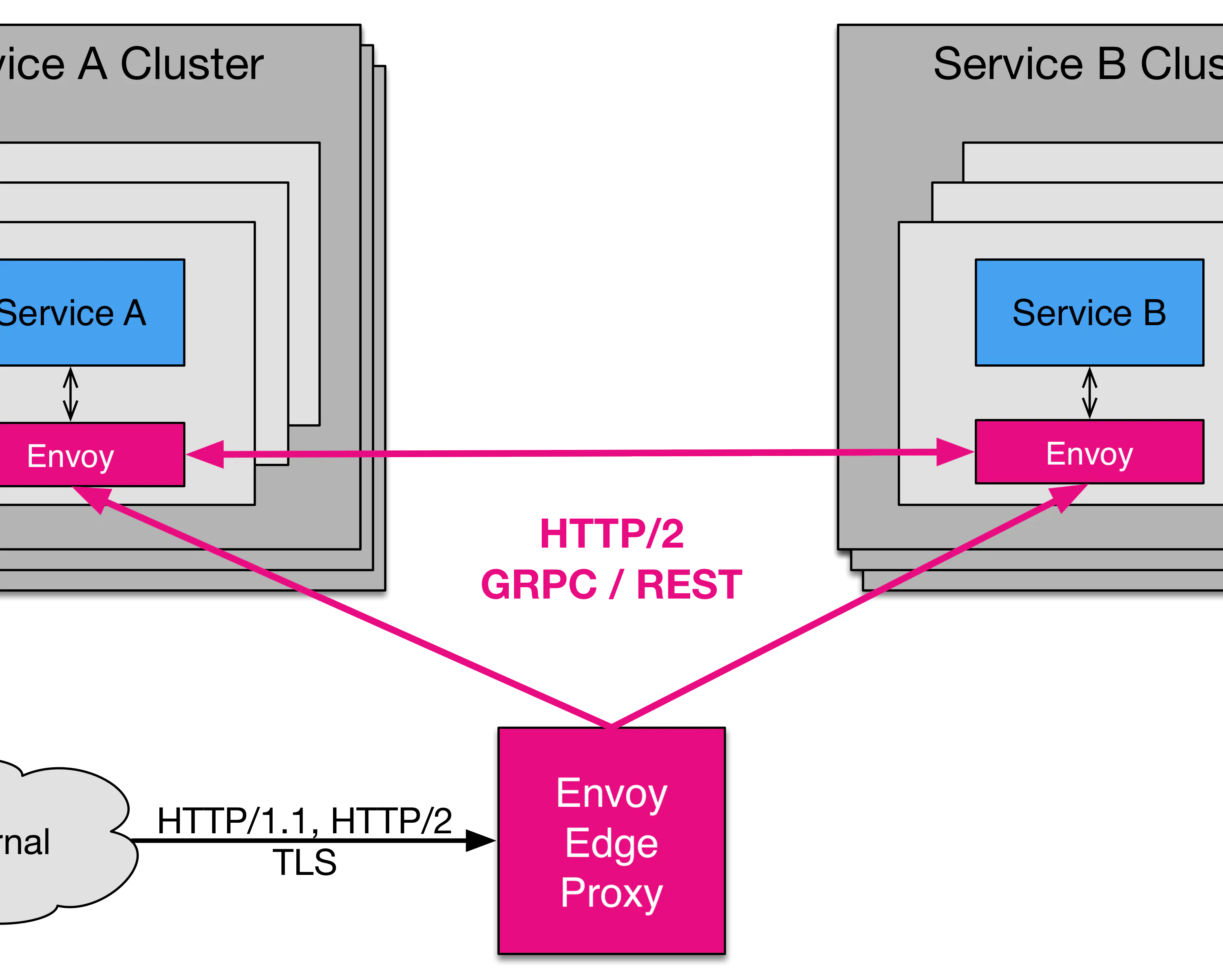
    Most tech companies are moving toward a highly distributed microservices architecture. In this architecture, services are decoupled from each other and communicate with a common service language, often JSON over HTTP. This provides some standardization, but these companies are finding that more standardization would come in handy. At the ridesharing company Lyft, every internal service runs a tool called Envoy. Envoy is a service proxy. Whenever a service sends or receives a request, that request goes through Envoy before meeting its destination. Matt Klein started Envoy, and he joins the show to explain why it is useful to have this layer of standardization between services. He also gives some historical context for why Envoy was so helpful to Lyft.

Showing 1,781–1,800 of 2,221 episodes