Skip to content
Artwork for Society Tech Brief By HackerNoon
NewsTech NewsBusiness News

Society Tech Brief By HackerNoon

HackerNoon

Learn the latest society updates in the tech world.

Play
  • 32 episodes
  • Avg 11 min
  • English
Counted on this page — what you have heard stays on this device, so it is not something the list can be paged by.
  • July 18 · 12 min

    The Next Big Social Media Platform Won't Look Like the Current Ones

    This story was originally published on HackerNoon at: https://hackernoon.com/the-next-big-social-media-platform-wont-look-like-the-current-ones. A year of conversations with people reveals the same frustrations with algorithmic feeds, misinformation, and lost privacy. Check more stories related to society at: https://hackernoon.com/c/society. You can also check exclusive content about #social-network, #social-media, #decentralized-social-media, #algorithms, #privacy, #misinformation, #future-of-social-media, #tech-opinion, and more. This story was written by: @iambatman. Learn more about this writer by checking @iambatman's about page, and for more stories, please visit hackernoon.com. After noticing his own compulsive, unsatisfying relationship with social media, the author spent a year deliberately asking people online and in person, across ages and backgrounds whether they felt it too. Nearly everyone did, describing the same handful of problems: addictive design, unexplained irritation, an inability to tell real from fake (especially with AI), a desire for feeds they control, disappearing privacy as data trains AI models, and safety treated as an afterthought. The piece pairs each observation with current research and data, then looks honestly at where platforms newer emerging alternative platforms still fall short of actually solving it.


  • July 15 · 29 min

    Flex Raises $70M Led by Halo Fund to Scale AI-Native Private Banking for Global Business Owners

    This story was originally published on HackerNoon at: https://hackernoon.com/flex-raises-$70m-led-by-halo-fund-to-scale-ai-native-private-banking-for-global-business-owners. Flex raises $70M led by Halo Fund at a reported $1.2B to scale its AI-native private bank for middle-market business owners and launch Flex Global. Check more stories related to society at: https://hackernoon.com/c/society. You can also check exclusive content about #flex, #halo-fund, #stablecoins, #good-company, #web3, #artificial-intelligence, #portage, #startup-funding, and more. This story was written by: @ishanpandey. Learn more about this writer by checking @ishanpandey's about page, and for more stories, please visit hackernoon.com. Flex raised $70 million in a Series B1 led by Halo Fund, the $1 billion Utah vehicle co-founded by Qualtrics founder and Utah Jazz owner Ryan Smith with Accel's Ryan Sweeney. Portage, Wellington, Crosslink Capital, 53 Stations, Titanium Ventures, Spice and Florida Funders joined. Reuters sources the valuation at roughly $1.2 billion. Annualised payment volume crossed $10 billion, roughly 4x year on year. Revenue is up 3x since December 2025, on a nine-figure run rate. Total equity is now $180 million against $300 million of debt. Flex is the cheapest fast-growing asset in business finance. At a nine-figure run rate, $1.2 billion implies roughly 5 to 10 times revenue. Ramp trades at 29 to 44 times. Airwallex at 8.5. Mercury at 8. Flex is growing faster than all three and priced below all three. Its take rate is the highest in the peer set. Flex earns 1.0% to 2.5% per dollar moved. Airwallex earns 0.45%. Mercury earns 0.26%. That is what a multi-product owner relationship buys. Flex Global launches stablecoin settlement in 100+ countries, multi-currency accounts across 76 countries and 32 currencies, institutional dollar accounts and private credit in 20+ markets. It cuts the cost of a cross-border dollar for the owner by up to 97%. The real asset is the data. Flex sees the company ledger and the owner's personal ledger at the same time, in a segment with no public credit market. Nobody else has both sides of that balance sheet.

  • July 14 · 4 min

    The Morning I Finally Looked Up at the Bridge

    This story was originally published on HackerNoon at: https://hackernoon.com/the-morning-i-finally-looked-up-at-the-bridge. A real-world lesson in reinforced concrete, bridge inspection, and structural engineering from discovering concrete spalling on my daily commute Check more stories related to society at: https://hackernoon.com/c/society. You can also check exclusive content about #civil-engineering, #structural-engineering, #infrastructure, #bridge-engineering, #structural-health-monitoring, #structural-damage, #reinforced-concrete, #infrastructure-damage, and more. This story was written by: @kamalsamaila. Learn more about this writer by checking @kamalsamaila's about page, and for more stories, please visit hackernoon.com. I thought a damaged bridge was on the verge of failure after spotting rusted, exposed reinforcement. Learning how reinforced concrete actually behaves taught me that visible damage isn't the same as structural failure—and that good engineering starts with asking better questions.

  • July 14 · 7 min

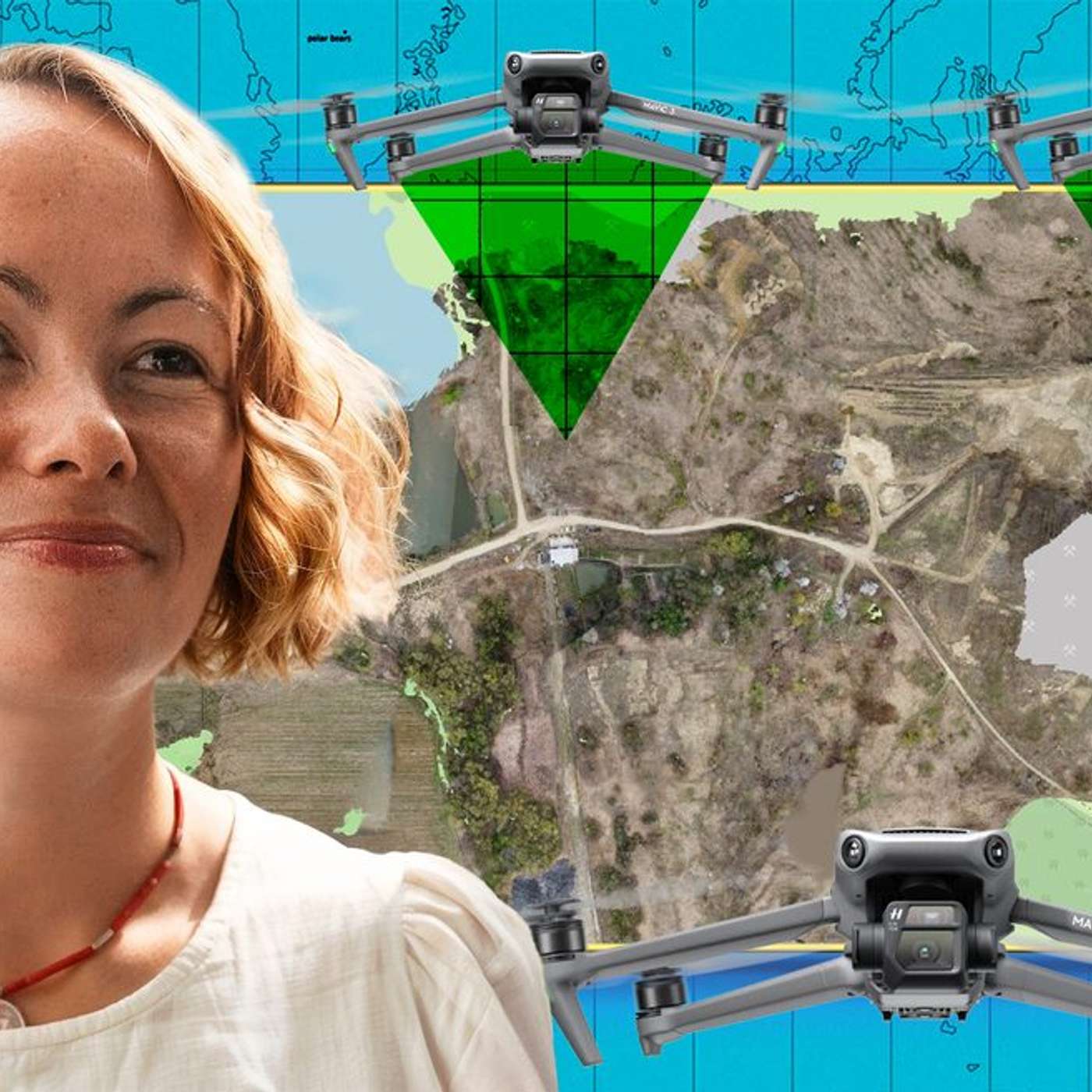
    From Drone Footage to 3D Battlefield Twin in Real Time: How Farsight Vision Is Rebuilding ISR

    This story was originally published on HackerNoon at: https://hackernoon.com/from-drone-footage-to-3d-battlefield-twin-in-real-time-how-farsight-vision-is-rebuilding-isr. Farsight Vision building a tool for 3D terrain reconstruction, object detection and mission planning Check more stories related to society at: https://hackernoon.com/c/society. You can also check exclusive content about #ukraine, #technology, #3d, #3d-mapping, #image-processing, #image-recognition, #drone-feed-ingestion, #3d-terrain-reconstruction, and more. This story was written by: @arthurtkachenko-rm2m8. Learn more about this writer by checking @arthurtkachenko-rm2m8's about page, and for more stories, please visit hackernoon.com. From drone feed ingestion to 3D terrain reconstruction, object detection, mission planning, and GPS-denied navigation

  • July 4 · 8 min

    What Building a Self-Paced Math System Taught Me About Software Design

    This story was originally published on HackerNoon at: https://hackernoon.com/what-building-a-self-paced-math-system-taught-me-about-software-design. An adaptive math platform reveals why dependency graphs, observability, and verification matter as much in education as they do in software engineering. Check more stories related to society at: https://hackernoon.com/c/society. You can also check exclusive content about #edtech, #ai-in-education, #adaptive-learning-systems, #mastery-based-learning, #dependency-graph-learning, #ai-tutoring, #edtech-software-design, #concept-dependency-mapping, and more. This story was written by: @matthewyip. Learn more about this writer by checking @matthewyip's about page, and for more stories, please visit hackernoon.com. I built an automated math learning system called Mathewmatician's Dictionary, and the deeper I went, the more it stopped feeling like an education problem and started looking like a software design problem. Three lessons carried over directly. First, when a student fails a topic, the real cause is almost always an unmastered prerequisite several chapters back, the same way a UI bug often lives in the data layer. Concepts have dependencies, like a build graph, so I stopped organizing learning by chapter and started organizing it by concept. Second, mastery before movement is just test-driven development for humans: a concept has to pass its own tests cleanly before anything built on top of it can run, otherwise you accumulate the learning equivalent of technical debt. Third, real adaptive pacing is a job queue, not a difficulty slider, and it only works if your input signal is honest, which is why school report cards are useless and a separate clean assessment layer is essential. On AI: it is excellent at generating practice problems and explanations, but terrible at judging whether a student genuinely understands, so the component that generates and the component that verifies must never be the same, for the same reason you do not let a class be both writer and auditor. The future of math education is fewer teachers doing higher-leverage work, with the basics offloaded to systems that actually understand mastery instead of performing it.

  • June 30 · 13 min

    Making Toponymy Accessible Through Maps, AI, and Interactive Learning

    This story was originally published on HackerNoon at: https://hackernoon.com/making-toponymy-accessible-through-maps-ai-and-interactive-learning. Toponymy is the forgotten science of how places get their names. Every toponym is like a fossil - a peace of frozen history. We built a tool to unlock it. Check more stories related to society at: https://hackernoon.com/c/society. You can also check exclusive content about #edtech, #toponymy, #geographic-etymology, #interactive-learning, #gin-framework, #ai-assisted-learning, #client-server-architecture, #geospatial-visualization, and more. This story was written by: @kiononon2. Learn more about this writer by checking @kiononon2's about page, and for more stories, please visit hackernoon.com. The article argues that toponymy, the study of place names, is largely absent from modern education despite its cultural and historical value. It introduces Name of the World, an interactive EdTech platform that combines maps, quizzes, AI-assisted explanations, and verified geographic data to make learning the origins of place names more engaging. A pilot involving 347 students showed significant improvements in knowledge retention and positive feedback on the interactive learning approach.

  • June 18 · 47 min

    211 Blog Posts To Learn About Society

    This story was originally published on HackerNoon at: https://hackernoon.com/211-blog-posts-to-learn-about-society. Learn everything you need to know about Society via these 211 free HackerNoon blog posts. Check more stories related to society at: https://hackernoon.com/c/society. You can also check exclusive content about #society, #learn, #learn-society, and more. This story was written by: @learn. Learn more about this writer by checking @learn's about page, and for more stories, please visit hackernoon.com.

  • June 16 · 8 min

    5 Ways Centralization Weakens Security in Crypto & Beyond

    This story was originally published on HackerNoon at: https://hackernoon.com/5-ways-centralization-weakens-security-in-crypto-and-beyond. Centralized systems look convenient, but cracks show under pressure. Curious how they fail and why it matters? Dive in for a closer look. Check more stories related to society at: https://hackernoon.com/c/society. You can also check exclusive content about #centralization, #decentralization, #centralized-vs-decentralized, #cybersecurity, #crypto-adoption, #internet-freedom, #obyte, #good-company, and more. This story was written by: @obyte. Learn more about this writer by checking @obyte's about page, and for more stories, please visit hackernoon.com. Centralized systems look convenient, but cracks show under pressure. Curious how they fail and why it matters? Dive in for a closer look.

  • May 19 · 19 min

    Human Progress Is Really About One Thing: Speed

    This story was originally published on HackerNoon at: https://hackernoon.com/human-progress-is-really-about-one-thing-speed. From the wheel to AI chips, this article explores human progress as a centuries-long pursuit of faster information transfer. Check more stories related to society at: https://hackernoon.com/c/society. You can also check exclusive content about #simulation-theory, #information-transfer, #ai-infrastructure, #semiconductor-technology, #computational-physics, #network-theory, #a-history-of-human-progress, #hackernoon-top-story, and more. This story was written by: @jakewatermelon. Learn more about this writer by checking @jakewatermelon's about page, and for more stories, please visit hackernoon.com. Throughout history, humanity’s primary drive has been the relentless acceleration of moving people, goods, and data to collapse the distance between thought and reality. This constant pursuit of speed, from the invention of the wheel to atomic-level computing, suggests that we are living in a massive information system where technology is eventually destined to transcend physical limits entirely.

  • May 10 · 4 min

    Nerdy Men Are Having Their Main Character Moment

    This story was originally published on HackerNoon at: https://hackernoon.com/nerdy-men-are-having-their-main-character-moment. New Dating.com data suggests intelligence, emotional stability, and authenticity are reshaping modern dating preferences. Check more stories related to society at: https://hackernoon.com/c/society. You can also check exclusive content about #online-dating, #dating-trends, #dating.com, #attraction-psychology, #nerd-culture, #masculinity-trends, #good-company, #hackernoon-top-story, and more. This story was written by: @socialdiscoverygroup. Learn more about this writer by checking @socialdiscoverygroup's about page, and for more stories, please visit hackernoon.com. The article argues that “nerdy” men have become more desirable because traits once seen as awkward now read as appealing: intelligence, genuine enthusiasm, loyalty, emotional awareness, and practical problem-solving

  • May 3 · 15 min

    Government Bureaucracy Failed Them - So They Did This Instead

    This story was originally published on HackerNoon at: https://hackernoon.com/government-bureaucracy-failed-them-so-they-did-this-instead. To help solve this problem, Elías joined up with other struggling compañeros and compañeras to fight for their right to interpretation services Check more stories related to society at: https://hackernoon.com/c/society. You can also check exclusive content about #government, #the-markup, #bureaucracy, #government-bureacracy, #migrants, #indigenous-migrants, #community, #indigenous-community, and more. This story was written by: @TheMarkup. Learn more about this writer by checking @TheMarkup's about page, and for more stories, please visit hackernoon.com. To help solve this problem, Elías joined up with other struggling compañeros and compañeras to fight for their right to interpretation services, and thus the Concejo de Pueblos Originarios Nueva York was born as an instrument of collective organization and as a means to combat misinformation in the Indigenous migrant community.

  • April 29 · 10 min

    Jolly Shah and the Evolution of Sustainable Firmware Design

    This story was originally published on HackerNoon at: https://hackernoon.com/jolly-shah-and-the-evolution-of-sustainable-firmware-design. Discover how Jolly Shah is advancing sustainable firmware design—optimizing power, reliability, and performance from embedded devices to data centers. Check more stories related to society at: https://hackernoon.com/c/society. You can also check exclusive content about #sustainable-firmware-design, #embedded-systems-engineering, #power-management-firmware, #multicore-soc, #pmu-architecture, #green-computing, #firmware-engineering, #good-company, and more. This story was written by: @jonstojanjournalist. Learn more about this writer by checking @jonstojanjournalist's about page, and for more stories, please visit hackernoon.com. Jolly Shah is advancing sustainable firmware design by treating energy efficiency as a core architectural principle. From low-power embedded systems to large-scale data centers, her “milliwatt mindset” focuses on dynamic scaling, intelligent resource allocation, and system resilience—proving that the most impactful sustainability gains in computing often happen invisibly within firmware.

Showing 21–32 of 32 episodes