Skip to content
Artwork for SlatorPod

SlatorPod

Slator

SlatorPod is the weekly language industry podcast where we discuss the most important news and trends in translation, localization, interpreting, and language AI. Brought to you by Slator.com.

Play
  • 21 episodes
  • Avg 38 min
  • English
Counted on this page — what you have heard stays on this device, so it is not something the list can be paged by.
  • Friday · 44 min

    #293 The Straker Fraud; Astra Translation Performance

    Florian and Esther discuss what mattered in language solutions and AI over the past few weeks, including key takeaways from SlatorCon San Francisco 2026, where AI ran through discussions across enterprise localization, voice AI, interpreting, data-for-AI, media localization, and venture capital. Florian covers Smartling’s majority investment from Vitruvian Partners as a positive development after a quieter period for language-related deals. He notes that Smartling plans to use the backing to expand AI translation and agentic localization, accelerate global growth, and pursue acquisitions. Florian examines early translation benchmarks for OpenAI’s latest model, GPT-6 Astra. He cites sources that find Astra performing well in multilingual performance but still shows some weaknesses on difficult translation tasks. He argues that expert oversight remains important for critical use cases. Esther breaks down Appen’s first-half results, highlighting strong growth in China driven partly by generative AI projects alongside continued pressure in its global business. She also looks at AI-Media’s continued shift from captioning services toward recurring technology and SaaS revenue. Florian turns to AMN Healthcare’s language services business, where interpreting volumes were flat, and pricing pressure weighed on revenue. He also addresses Straker’s financial difficulties following the discovery of roughly USD 5m in misappropriated funds.

    • Chapters
  • August 21 · 40 min

    #292 Voice AI Data for Lower-Resource Languages with NCSpeech

    Dmitrii Sandzhiev and Iurii Agafonov, two of the Co-Founders of NCSpeech, join SlatorPod to talk about building speech AI datasets in emerging markets, scaling data collection through superapps, and addressing the quality and infrastructure challenges behind voice AI. Dmitrii explains that NCSpeech turns idle time in superapps into AI training data by rewarding drivers, riders, and passengers for completing data collection tasks. The company connects AI labs, enterprise R&D teams, and sovereign AI initiatives with real-world audio, image, and video data collected through the platform’s partners. Dmitrii sees particularly strong demand for speech datasets in emerging markets, where languages, dialects, and code-switching remain underrepresented in training data. In Malaysia, for example, speakers frequently switch between Malay, English, Mandarin, and local dialects. Iurii highlights the technical challenges behind producing training-ready datasets, including controlling recording conditions, verifying speaker consistency, detecting synthetic submissions, managing local data storage requirements, and processing large volumes of audio. Alongside collecting data on demand, NCSpeech is building reusable dataset libraries and developing its own models. Dmitrii shares how its Kazakh speech recognition model now outperforms available open solutions, demonstrating its technical capabilities and attracting potential customers. Looking ahead, Dmitrii and Iurii discuss NCSpeech plans to expand into more countries and apps, secure longer-term data customers, strengthen their US presence, and raise a seed round.

    • Chapters
  • August 14 · 32 min

    #291 Unpacking the RWS–Acolad Deal

    Florian and Esther discuss the language industry news of the past few weeks, starting with RWS’s proposed acquisition of Acolad and what the deal means for consolidation among the largest language solutions integrators (LSIs). Esther rounds up further M&A activity, including t’works acquiring SwissGlobal, Alfatrad buying Lexic Language Solutions, Alpha CRC acquiring PureFluent, Magna Legal Services merging with Naegeli Deposition and Trial, R&A Translators buying Viva Translations, and Contents acquiring Balio. Esther and Florian examine Anthropic’s introduction of invisible watermarks for Claude-generated text in response to the EU AI Act. Florian questions how meaningful AI-content labeling will remain as AI becomes embedded in content creation and translation, while Esther points to transparency as the regulation’s underlying objective. Florian reviews ZOO Digital’s declining revenue, improving profitability, growing use of AI, and shift toward faster localization services and more fulfillment in India. The duo talks about how AI skills are increasingly appearing in language roles at organizations including NATO, the ICC, WIPO, Interpol, FIFA, and the IMF. Esther contrasts this with a more traditional language-access role in New York and OpenAI’s continued hiring of localization specialists to oversee AI-assisted workflows. Finally, Florian highlights continued investment in voice AI, with funding rounds for Fish Audio, Smallest AI, Omilia, and Gradium underscoring how crowded the speech technology market has become.

    • Chapters
  • August 7 · 35 min

    #290 Laniqo CTO Artur Nowakowski on Building Secure, Adaptive AI Translation

    Artur Nowakowski, Co-founder and CTO of Laniqo, joins SlatorPod to talk about the language technology platform’s (LTP) origins, business model, and research-driven approach to AI translation. Artur shares that Laniqo emerged from machine translation research at Adam Mickiewicz University after his team won a WMT 2022 shared task, attracting PONS Langenscheidt, which became the company’s main investor and helped commercialize the university’s technology. Laniqo initially developed its own neural machine translation models but shifted toward open-source large language models as their translation capabilities improved. According to Artur, controlling and adapting these models remains essential for domain-specific use cases and lower-resource language pairs. He highlights Laniqo’s work with Central and Eastern European ecommerce platform Allegro, where the LTP supports the translation of hundreds of millions of product offers. Key challenges include scalability, cost control, terminology, limited source context, and detecting critical errors across volumes that human linguists cannot review manually. Laniqo is also developing quality estimation tools that identify error spans, assign MQM categories, and suggest corrections. Its recently published ForMaT dataset supports research into PDF translation that preserves document layouts without relying on conversion to Microsoft Word. Looking ahead, Artur outlines how Laniqo plans to expand beyond text translation into voice, images, and broader language AI applications, while continuing to prioritize privacy and deeper domain adaptation.

    • Chapters
  • July 15 · 32 min

    #289 Day Translations CEO Sean Hopwood on Building a Language Solutions Integrator

    Sean Hopwood, Founder and CEO of Day Translations, joins SlatorPod to talk about building a global language solutions integrator (LSI) over the past 20 years, adapting to AI, and why a passion for languages continues to shape the LSI's strategy. Sean reflects on how his entrepreneurial mindset and fascination with languages led him to launch Day Translations, which has grown from handling small community projects into serving enterprise, legal, medical, and government clients while remaining bootstrapped. He explains why human expertise remains central as the LSI adopts AI across its workflows, develops its own large language model for enterprise and government procurement, and plans to commercialize these capabilities while continuing to invest in technology. He discusses the DayInterpreting app, which integrates with Zoom and Microsoft Teams, supports rapid interpreter connections, and is already prepared for AI interpreting when customers require it. He argues that constant learning, business growth, and technological adaptation are essential for long-term success, while also stressing that translation plays a vital role in preserving cultures and protecting linguistic diversity. He concludes by outlining plans to expand the interpreting platform, strengthen the LSI's B2B focus, secure additional compliance certifications, and continue combining human expertise with AI-powered language solutions.

    • Chapters
  • June 26 · 21 min

    #288 The Language AI Startups to Watch in 2026

    Florian and Esther discuss the language industry news of the past couple of weeks, beginning with the newly released 2026 Slator Language AI 50 Under 50, which tracks emerging startups less than 50 months old. The duo observe how this year’s cohort reflects a shift from standalone language technologies toward AI solutions built around complete business workflows. They also highlight seven trends, including the rise of agentic AI, AI-first language solutions integrators, specialist sign language startups, and the growing importance of proprietary customer data as a competitive advantage. Florian covers a stream of language AI announcements from Google, Apple, and Anthropic as the platforms continue to expand their multilingual capabilities. Esther recaps recent investment activity, with Rylo's USD 85m funding round for AI solutions serving deaf users, Dell Technologies Capital's USD 50m investment in voice AI startup Bland, and Gridly's USD 1.5m raise to add agentic AI capabilities to its content management platform. Esther concludes with her M&A corner, where Powerling acquires French language solutions integrator Atlantique Traduction and Sweden-based DigitalTolk expands into Switzerland through its acquisition of legal translation specialist Hieronymus.

    • Chapters
  • June 12 · 35 min

    #287 How the Market for AI Data Has Become a Major Growth Opportunity

    Slator's Anna Wyndham joins Florian on the pod to discuss key highlights from the Slator Data-for-AI Market Report, which sizes the global market at USD 9.3bn and examines the ecosystem supplying the data needed to train, adapt, align, evaluate, and deploy AI systems. Anna explains how the market has evolved far beyond traditional data labeling. While annotation and large-scale training data remain important, she argues that the market’s focus has shifted toward helping organizations deploy AI safely and effectively in real-world settings. Anna highlights the growing importance of “deployment data”, data used to adapt models for specific domains, align behavior with policies, conduct adversarial testing, and evaluate performance. She notes that these activities increasingly rely on subject-matter experts, creating demand for professionals such as physicians, lawyers, engineers, and financial specialists. The discussion also explores how frontier AI labs, enterprises, and sovereign AI initiatives are driving demand. Anna shares that buyers increasingly need trusted providers capable of sourcing expert talent, scaling rapidly, and maintaining rigorous governance around data provenance and quality. For language solutions integrators (LSIs), Anna sees both opportunity and challenge. Existing strengths in multilingual operations and workforce management provide a natural advantage, but success requires new capabilities, including expertise in machine learning workflows and AI evaluation.

    • Chapters
  • June 5 · 34 min

    #286 Inside the USD 30 Billion Language Solutions and AI Market

    Florian and Esther discuss the language industry news of the past few weeks, beginning with a recap of SlatorCon London, which attracted a record 250 attendees. They highlight growing interest in language AI, startup innovation, and research, as well as a broader shift in industry sentiment toward viewing LSIs and LTPs as integral parts of the AI economy rather than businesses being disrupted from the outside. Drawing on Slator’s newly released market report, Florian shares that the total addressable market for language solutions and AI reached USD 30.85bn in 2025, declining 2.7% year on year. Traditional LSIs saw a steeper 5.1% decline, while LTPs grew nearly 20%. The duo also examine the wider AI landscape, discussing massive funding rounds and IPO plans at Anthropic and OpenAI. Florian argues that these developments create challenges for LTPs seeking defensible market positions, citing OpenAI’s launch of real-time speech translation shortly after DeepL announced an expanded focus on voice translation. On company news, Florian and Esther review the bankruptcy of voice AI startup Lovo following legal disputes over voice rights and data usage, as well as the financial difficulties facing transcription specialist VIQ Solutions. Esther closes with an overview of recent M&A activity, including acquisitions by TransPerfect, RWS, and The Translation People, alongside the formation of Germany’s new IMK Group. She also notes growing consolidation in the voice AI sector and highlights a recent funding round for Japanese AI translation startup Yellow Blue.

    • Chapters
  • May 19 · 45 min

    #285 Real-Time Speech AI and Accent Translation with Sanas CEO Sharath Narayana

    Sharath Narayana, CEO and Co-Founder of Sanas, joins SlatorPod to talk about the evolution of real-time speech AI, the rise of accent harmonization, and why voice will become the next major enterprise interface. Sharath traces his journey from engineer to entrepreneur, including the founding of Observe.AI before launching Sanas alongside Stanford researchers focused on solving low-latency speech processing. The CEO explains that Sanas initially operated as a speech lab focused on improving human understanding in conversations. The company developed multiple algorithms covering noise cancellation, speech enhancement, accent harmonization, and language translation before discovering that enterprises were most willing to pay for accent-related technology. Sharath emphasizes that Sanas’ accent technology is not designed to erase identity, but to improve clarity and reduce friction in customer interactions. He says enterprises, especially contact centers, adopted the technology to improve first-call experiences and reduce mistrust between agents and customers. He also discusses Sanas’ focus on on-device AI infrastructure rather than cloud-only deployments, where running speech AI locally improves latency, protects data sovereignty, and lowers compute costs. Looking ahead, Sharath says Sanas is preparing broader launches for real-time language translation, universal accent translation, and developer SDKs that will allow third parties to build voice applications on top of the Sanas platform.

    • Chapters
  • April 17 · 34 min

    #284 Market Reality Check, RWS-Cohere, Data-for-AI, GlobalComix

    Florian and Esther discuss the language industry news of the past few weeks and Slator’s newly launched website, which reflects a clearer positioning around research, advisory, consulting, events, and market intelligence. The duo breaks down the 2026 Slator Index, highlighting that while revenues appear to have grown, this does not signal real market expansion. Instead, growth is concentrated among a few large players, often driven by acquisitions, while many companies report declining revenues. Florian touches on the RWS–Cohere strategic partnership, with RWS strengthening its technology stack by integrating advanced AI translation, while Cohere gains enterprise distribution. The move reflects a broader trend of companies recognizing they cannot build everything in-house. Off the back of Slator’s Data-for-AI Market Report, Florian sees AI data services as a major growth opportunity. He explains that the industry’s bottleneck has shifted from building models to making them usable in real-world settings. Esther notes growing interest from companies exploring acquisitions and investments in this space. Esther wraps things up by talking through recent M&A and funding deals, including Star7’s private equity buyout, GlobalComix’s expansion into manga localization with the acquisition of INKR, and VoiceLine’s EUR 10m funding round in voice AI.

    • Chapters
  • April 10 · 44 min

    #283 Launching Welo Global with CEO Paul Carr

    Paul Carr, CEO of Welo Global, joins SlatorPod to talk about the company’s strategic repositioning, continued AI investment, and evolving demand in the language solutions industry. Paul notes that the company has narrowed its focus to a few core areas and reorganized around client segments. He adds that client centricity and specialization have been central themes, alongside increased investment in AI and data engineering. The CEO highlights that two-thirds of Welo Global’s revenue now comes from outside of traditional localization departments. He says the business increasingly serves content owners such as legal teams, clinical managers, and AI labs. Paul describes the launch of Welo Global as a branding shift to reflect this broader scope. He explains that the new structure includes five client-facing brands tailored to specific industries and use cases, including Welocalize, Welo Data, Welo Life Sciences, Park IP, and Adapt. The CEO emphasizes that AI has driven major change, particularly through the development of the company’s Opal platform. He says the system delivers significantly higher-quality output than traditional machine translation by using agentic workflows and enterprise-specific data. Paul argues that localization ROI is difficult to isolate because it is usually part of broader investments like sales and marketing. He suggests simplistic ROI models risk undermining credibility. He concludes that demand remains strong and success will depend on adapting quickly, building new capabilities, and maintaining a culture that embraces continuous change.

    • Chapters
  • April 2 · 48 min

    #282 RWS CEO Ben Faes on Why They Partnered with Cohere

    Ben Faes, CEO of RWS, joins SlatorPod to talk about the markets’ perceptions of LSIs, the company’s AI strategy, and how RWS is repositioning itself for long-term growth. Ben positions RWS as a technology-led partner helping enterprises operate globally, from enabling multilingual communication to protecting intellectual property and improving market understanding. The CEO highlights the rapid acceleration of innovation and the democratization of AI, where individuals and companies can now build and deploy solutions at unprecedented speed. He argues that the real opportunity lies in using these capabilities more effectively, rather than applying them to low-value tasks. He describes the partnership with Cohere as a fundamental shift, with RWS integrating Cohere’s models into its Language Weaver Pro platform, moving beyond traditional, segment-based translation toward context-aware, LLM-driven solutions. Beyond translation, Ben sees strong growth in AI data services, especially in areas like cultural intelligence and multimodal training, where human expertise remains critical. Internally, RWS has reorganized into three divisions — Generate, Transform, and Protect — to better align with customer needs, buyer personas, and evolving use cases. Despite short-term uncertainty, Ben remains optimistic, noting that new AI-driven services and products account for a growing share of revenue and signal how quickly the market is evolving.

    • Chapters
  • March 31 · 38 min

    #281 What Is AI Audio Separation with AudioShake CEO Jessica Powell

    Jessica Powell, CEO of AudioShake, joins SlatorPod to talk about how AI-powered audio separation is making audio more usable for both human and machine workflows, and enabling new use cases across localization, broadcasting, and media production. Jessica emphasizes that early traction came from the music industry, particularly in areas like sync licensing and remixing. However, the company’s expansion into film and television happened organically as new use cases emerged. The CEO explains that AudioShake’s core technology uses source separation to break complex audio into individual components such as dialogue, music, and sound effects. She describes how this allows users to gain precise control over audio for tasks like editing, transcription, and multilingual dubbing. In localization, Jessica highlights how separating dialogue from music-and-effects (M&E) tracks enables both traditional dubbing and AI-assisted workflows, particularly for legacy content where original stems are unavailable. Beyond localization, Jessica underscores the importance of clean audio inputs for speech recognition systems. In noisy environments like sports broadcasts or unscripted content, separating dialogue before transcription significantly improves accuracy. Jessica also reflects on the broader AI landscape, noting that the rise of generative AI has increased awareness of audio as a critical modality. However, she distinguishes AudioShake’s work as non-generative, focused on extracting structure rather than creating new content. The CEO discusses the current funding environment in the Bay Area and how the investor narrative has evolved leading up to AudioShake’s late 2025 Series A. Looking ahead, Jessica points to real-time processing and copyright-compliant audio editing as key areas of innovation, as the company continues to expand its role in media and AI ecosystems.

    • Chapters
  • March 13 · 43 min

    #280 Walmart Cuts Translation Costs, 10 LTP Growth Hacks

    Daniel Sebesta joins Florian and Esther on the pod to talk about the latest language industry news, AI translation developments, and key insights from the Slator Pro Guide: Growth Hacks for Language Technology Platforms (LTPs). The trio begin with TransPerfect’s latest financial results, which reported USD 1.32 billion in revenue, up 7% year on year. They also discuss leadership changes at Straker, where founder Grant Straker stepped down as CEO after more than 25 years. Florian shares new AI-powered contextual features in Google Translate that allow users to refine translations and adjust tone or phrasing. Daniel believes these interactive capabilities aim to improve trust in AI systems by giving users more visibility and control over translation outputs. The discussion also turns to ElevenLabs and its partnership with Deutsche Telekom to embed live translation into phone calls. The integration could enable real-time multilingual conversations, summaries, and contextual assistance for telecom customers. The trio then cover Walmart’s internal AI localization initiative, where the system now translates millions of catalog items across 22 languages while reducing translation costs by about 99%. Daniel concludes by outlining the Growth Hacks Pro Guide, which explores strategies for scaling LTPs. He highlights areas such as go-to-market strategy, partnerships with language solutions integrators, enterprise sales execution, and security readiness as key drivers of scalable growth.

    • Chapters
  • March 10 · 50 min

    #279 Why Phrase Doubles Down on a Platform Strategy with CEO Georg Ell

    Georg Ell, CEO of Phrase, returns to SlatorPod for round 3 to talk about how the language technology platform (LTP) is evolving amid the AI boom and the shifting dynamics in enterprise SaaS. Georg shares how Phrase has doubled down on a platform and ecosystem strategy that encourages customers to build solutions on top of the LTP’s system rather than forcing them into a closed system. The CEO addresses the broader AI narrative affecting SaaS companies and explains that investor uncertainty about long-term software value has created anxiety across the sector. Georg argues that the AI boom has triggered a “build vs buy” debate inside many enterprises, with engineering teams experimenting with internal solutions. He explains how the gap between building a demo versus running a reliable, scalable system is where most internal projects fail. Georg notes that core AI translation quality improvements seem to be plateauing, but AI continues to significantly enhance the layers surrounding translation. He highlights improvements in context handling, evaluation, automated post-editing, and orchestration that allow companies to translate more content at lower human review rates. The CEO says localization must move beyond cost reduction narratives and instead focus on business outcomes such as hiring efficiency, support performance, and revenue metrics. Georg predicts 2026 will bring more production-grade AI applications, including personalization, multimodal content, and automation across the enterprise. He believes language technology will be framed as content adaptation and delivery rather than simply translation.

    • Chapters
  • February 27 · 32 min

    #278 Bluente CEO on Solving Tough Last-Mile Problems in AI Document Translation

    Daphne Tay, Founder and CEO of Bluente, joins SlatorPod to talk about building an AI-powered document translation platform that goes beyond text and tackles the complexities of formatting at scale. Daphne explains that formatting challenges vary significantly across file types, from scanned PDFs to multi-column layouts and complex graphics, requiring deep technical handling of document structures. The CEO points to legal and financial services as core verticals, citing the example of investment banking teams uploading hundreds of pages overnight to meet tight deal deadlines. Daphne discusses how large language models have accelerated translation quality and increased market openness to AI adoption, especially among legal professionals who want to reduce time spent on non-billable translation tasks. She highlights that human reviewers still remain essential for court filings, arbitration, and high-stakes documents requiring certification or final sign-off. Daphne shares that Bluente raised funding to expand internationally, increase brand visibility, and partner with investors experienced in scaling B2B SaaS and AI businesses. The pod wraps with Daphne outlining a forthcoming feature that enables temporary translation memory, allowing only recently edited sections of a document to be retranslated while preserving previously approved text.

    • Chapters
  • February 13 · 26 min

    #277 LTP Growth, Voice AI Valuations, RWS, Appen, Lionbridge

    Slator’s Head of Research Anna Wyndham joins Florian on the pod to discuss Slator’s new Pro Guide: Growth Hacks for Language Technology Platforms, describing it as a practical playbook for turning strong AI products into scalable revenue. Florian highlights ElevenLabs’ USD 500m raise at an USD 11bn valuation and Synthesia’s USD 200m round as evidence that investor appetite for voice AI is accelerating rapidly. Florian connects that funding momentum to product launches, including ElevenLab’s Expressive Mode and YouTube’s expanding AI dubbing push. The duo then reviews YouTube’s AI dubbing in German and Spanish, finding the intelligibility and naturalness impressive, but rhythm and intonation still mirroring the English source language too closely. Anna turns to new academic research arguing that current text-to-speech evaluation methods under-test real-world deployment factors such as long-form consistency, punctuation handling, and robustness across messy inputs. Anna reports that Appen delivered double-digit revenue growth and an EBITDA turnaround in Q4 FY25, driven by a higher share of generative AI projects and strong momentum in China. Florian closes by touching on prompt injection issues in AI translation tools, RWS’s return to growth, and Lionbridge’s ownership transition.

    • Chapters
  • January 30 · 37 min

    #276 ChatGPT Translate and Weird Prompts

    Florian and Esther discuss the language industry news of the past few weeks, starting with senior hires in revenue and operations at DeepL and what this signals about the LTP’s next phase. The duo then turns to new data from AI labs and hyperscalers, where Florian highlights findings from Anthropic’s research showing AI is settling into a support role rather than full automation, with usage concentrated around review and validation, and humans remaining firmly in the loop. On the consumer side, Esther points to Microsoft Copilot data showing translation and language learning as one of the most common everyday AI use cases. Florian flags Adobe’s new “Translate this PDF” feature, where formatting was the main issue rather than translation accuracy. The conversation then shifts to infrastructure, where Florian emphasizes how NVIDIA is positioning itself at the center of real-time multilingual voice ecosystems by open-sourcing models while driving demand for its hardware. The duo unpacks OpenAI’s quiet launch of ChatGPT Translate. Esther notes that reactions have been mixed, with many seeing the interface as basic, while Florian stresses the strategic importance of the move. Then the two disagree on whether or not the AI’s default prompt to make the translation sound “more fluent” makes any sense. Esther walks through recent M&A activity and funding rounds, highlighting acquisitions in Europe and the US alongside major raises by Synthesia, Deepgram, and reportedly ElevenLabs. Florian concludes with a look at an S-1 filing by a tiny company, using it as an example of how the US capital markets accommodate everything from billion-dollar AI firms to survival-stage experiments.

    • Chapters
  • January 16 · 50 min

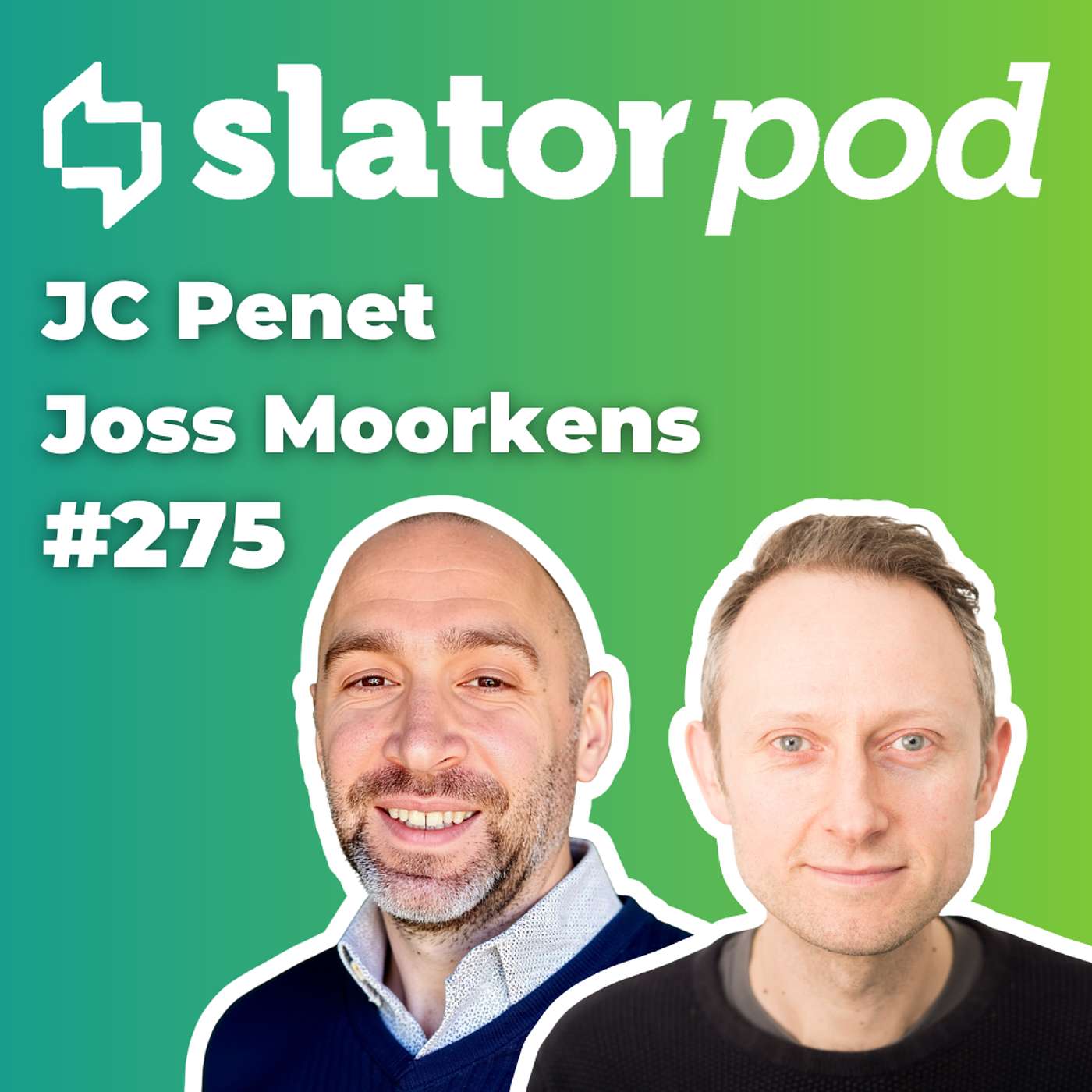
    #275 The Future of Language and Translation Education with JC Penet and Joss Moorkens

    JC Penet, Reader in Translation Industry Studies at Newcastle University, and Joss Moorkens, Associate Professor at DCU, join SlatorPod to talk about the new open-access book Teaching translation in the age of generative AI: New paradigm, new learning? The duo explains how large language models (LLMs) have a different impact than earlier machine translation breakthroughs as they generate human-like text, respond to prompts, and adapt output to context. Public hype around LLMs has affected demand for some translators and fueled misconceptions around the value of studying translation. Although, JC and Joss stress that translation education must adapt. JC outlines how students need to assess whether output is appropriate for purpose, audience, risk, and context. This places greater importance on skills such as selection, evaluation, and effective prompting, while still relying on core linguistic and cultural competence. Joss adds that this shift reflects real industry practice, where different content types already receive different levels of automation and human involvement. Drawing on healthcare research, he highlights how AI can outperform traditional workflows in some contexts but fail badly in others, especially across languages with uneven data coverage. Joss also highlights ethical blind spots that arise when performance metrics dominate decision-making. He describes a “triple bottom line” approach that weighs people, planet, and performance equally. On fears of de-skilling, JC argues that excluding AI from classrooms poses a greater risk. Without guided engagement, students may use tools uncritically or fail to develop AI literacy altogether. Joss points to initiatives such as LT-LiDER, an Erasmus+ project designed to build AI literacy among educators. Looking ahead, the duo contends that studying languages and translation remains valuable because it develops deep reading, critical thinking, intercultural awareness, and adaptability.

    • Chapters
  • Dec 19, 2025 · 31 min

    2025 Recap and 2026 Predictions!

    In the 2025 year-end episode of SlatorPod, hosts Florian Faes and Esther Bond reflect on a year defined by rapid AI investment, shifting policy, and structural change across the language industry. Esther opens the year-in-review by highlighting January’s twin funding milestones in the language AI and product space. Florian follows with February, which saw hyperscalers and AI labs release data highly relevant to the way AI translation is being used. March, April, and May saw major developments both on the regulatory side and in terms of bolt-on acquisition deals. Past the mid-year point, OpenAI’s decision to hire a localization manager was what grabbed the industry’s collective attention. The AI lab’s decision contrasted with September’s news, which saw the closure of one of the world’s most recognized academic programs for localization. The year closed on publicly listed LSIs releasing mixed results and major announcements in AI translation for literature and live speech translation rollouts. The duo closes with 2026 predictions!

    • Chapters
Showing 1–20 of 21 episodes