Skip to content
Artwork for Simon Dixon Hard Talk
BusinessInvestingTechnologyNewsPolitics

Simon Dixon Hard Talk

Simon Dixon

Simon Dixon Hard Talk is a weekly deep-dive into Bitcoin, macroeconomics, and global geopolitics. Hosted by Bitcoin OG, investor, and BnkToTheFuture co-founder Simon Dixon, the show applies a “follow the money” approach to understand the forces shaping the global economy.

Each episode explores the transition to a new multipolar world order, alongside the rise of Bitcoin, AI, and CBDCs. Simon combines real-world experience with independent analysis to break down complex global events, challenge dominant narratives, and highlight the underlying financial drivers.

A long-time advocate for Bitcoin self-custody, Simon focuses on helping individuals, businesses, and nations protect and measure wealth in a changing system. Through his Hard Talk LIVE sessions and guest appearances, the podcast aims to equip listeners with the clarity needed to make better decisions and move toward greater financial sovereignty.

Play
  • 51 episodes
  • Avg 1 hr 51 min
  • English
Counted on this page — what you have heard stays on this device, so it is not something the list can be paged by.
  • Friday · 1 hr 29 min

    CURRENCY WARS: Is Trump Using Russia to Break China’s Alliance? | Jim Rickards & Simon Dixon

    Video Description In this sit-down on the BTC Sessions channel recorded on 12 October 2026, host Nathan is joined by financial author Jim Rickards and monetary analyst Simon Dixon for an in-depth discussion spanning over an hour and a half on global power structures and the shifting architecture of money. Key Topics Covered: Geopolitics and Global Power Shifts: The underlying drivers and major beneficiaries of prolonged military conflicts in Ukraine and the Middle East, the mechanics of sanctions and energy diplomacy, and the three-way geopolitical dynamic between the United States, Russia, and China. The State of the US Dollar and Petrodollar: The resilience of the dollar and US Treasury markets, global liquidity demands, and structural changes to the petrodollar framework as major energy consumers and sovereign wealth funds alter their purchasing habits. The AI Infrastructure Bubble and "Ice-Nine" Scenarios: A critical look at the sustainability of multitrillion-dollar AI data-centre investments, token economics, and the potential risk of regulatory asset freezes or trading halts during financial panics. Stablecoins versus Fractional-Reserve Banking: The systemic vulnerabilities of digital dollar tokens, the threat of bank runs spilling into short-term debt markets, and the transition towards programmable monetary networks. Sound Money and Self-Custody: The complementary and conflicting roles of physical gold and Bitcoin in personal wealth preservation, set against growing cyber risks, hardware-wallet vulnerabilities, and the push towards centralised digital control grids. Disclaimer: This content is for educational and informational purposes only and does not constitute financial, investment, legal, or professional advice. Always conduct your own research before making any financial decisions. Watch on youtube here.

  • Friday · 3 hr 3 min

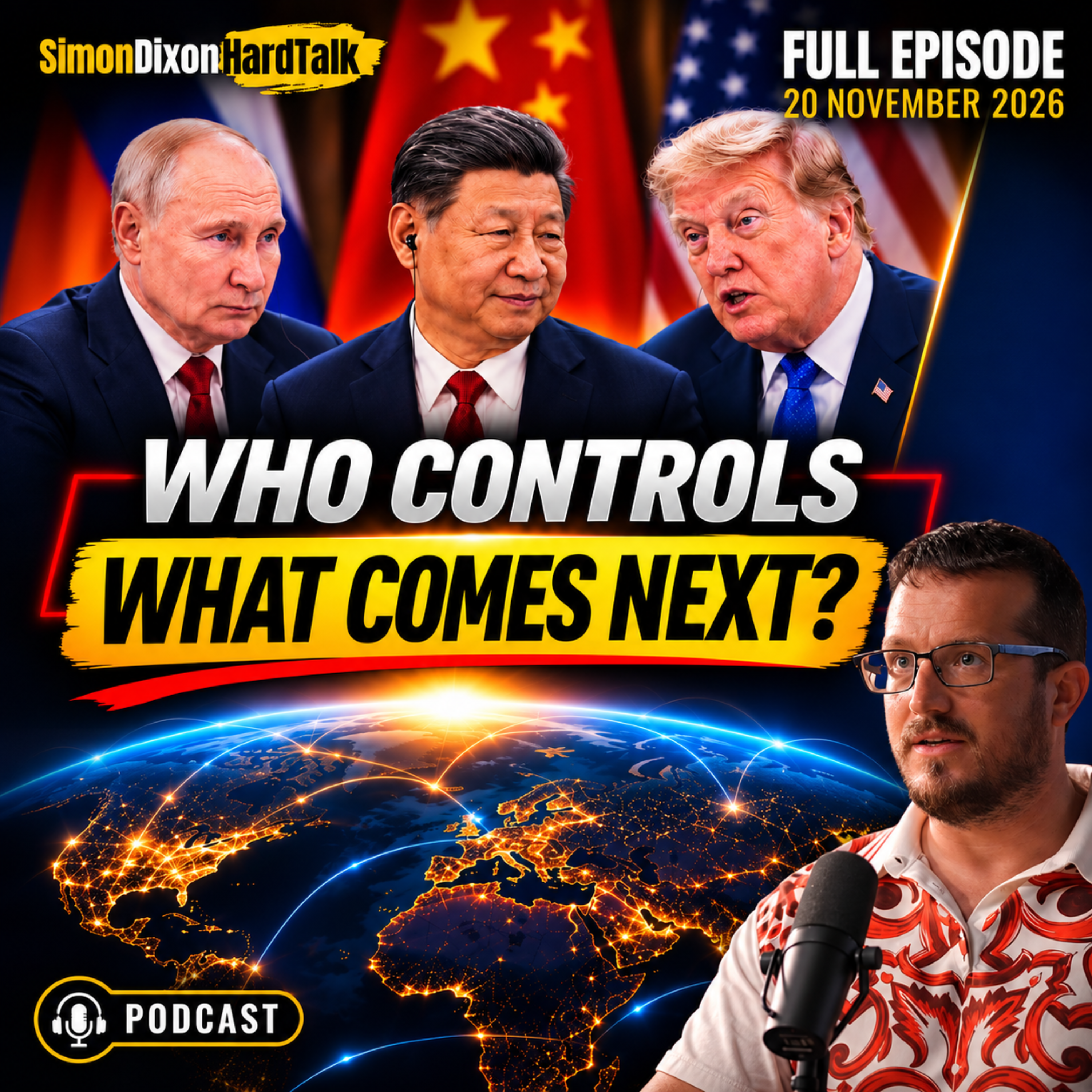
    AI BUBBLE BURST & THE GREAT REALIGNMENT: Trump, Putin, Xi & The Battle for the Next World Order

    Full Episode of Simon Dixon Hard Talk LIVE Episode Title: AI BUBBLE BURST & THE GREAT REALIGNMENT: Trump, Putin, Xi & The Battle for the Next World Order Date: 20 November 2026 Duration: 3 hours 3 mins Hey hey sovereign wealth builders, We are living through a historic acceleration where geopolitical fault lines, sovereign debt stress, and technological shifts are converging simultaneously. In macro and banking, persistent inflationary prints—with CPI stubbornly hovering around 3.6%—have forced Federal Reserve rate hikes back into the equation, intensifying refinancing pressure across commercial real estate, corporate debt, and household balance sheets. In markets and liquidity, while the dollar index has shown cyclical strength and Treasury liquidity remains the global banking backbone, foreign central banks continue to accumulate physical gold at historic rates. Meanwhile, Bitcoin and crypto markets face heightened volatility alongside sharp corrections in the broader technology sector. In geopolitics and energy, structural bottlenecks around key transit choke points like the Strait of Hormuz continue to trigger forced contract renegotiations, accelerating Europe’s costly shift toward liquefied natural gas dependence. On the technological frontier, an extraordinary capital rotation is underway: the massive infrastructure build-out behind artificial intelligence is colliding with corporate debt markets, highlighted by Anthropic’s historic $81 billion public offering and a sudden leadership shakeup at Nvidia. In my view, these are not isolated disruptions. They are deliberate moves in a wider realignment between sovereign governments, capital markets, and technocratic infrastructure. To help you decode what this means for your capital and sovereignty, today’s broadcast brings everything together. PART ONE: TRUMP, PUTIN & XI: Energy Wars, Regime Change & The Global Power Shift PART TWO: CURRENCY WARS: Is Trump Using Russia to Break China’s Alliance? | Jim Rickards & Simon Dixon (interview) Watch full episode on youtube

  • November 15 · 1 hr 9 min

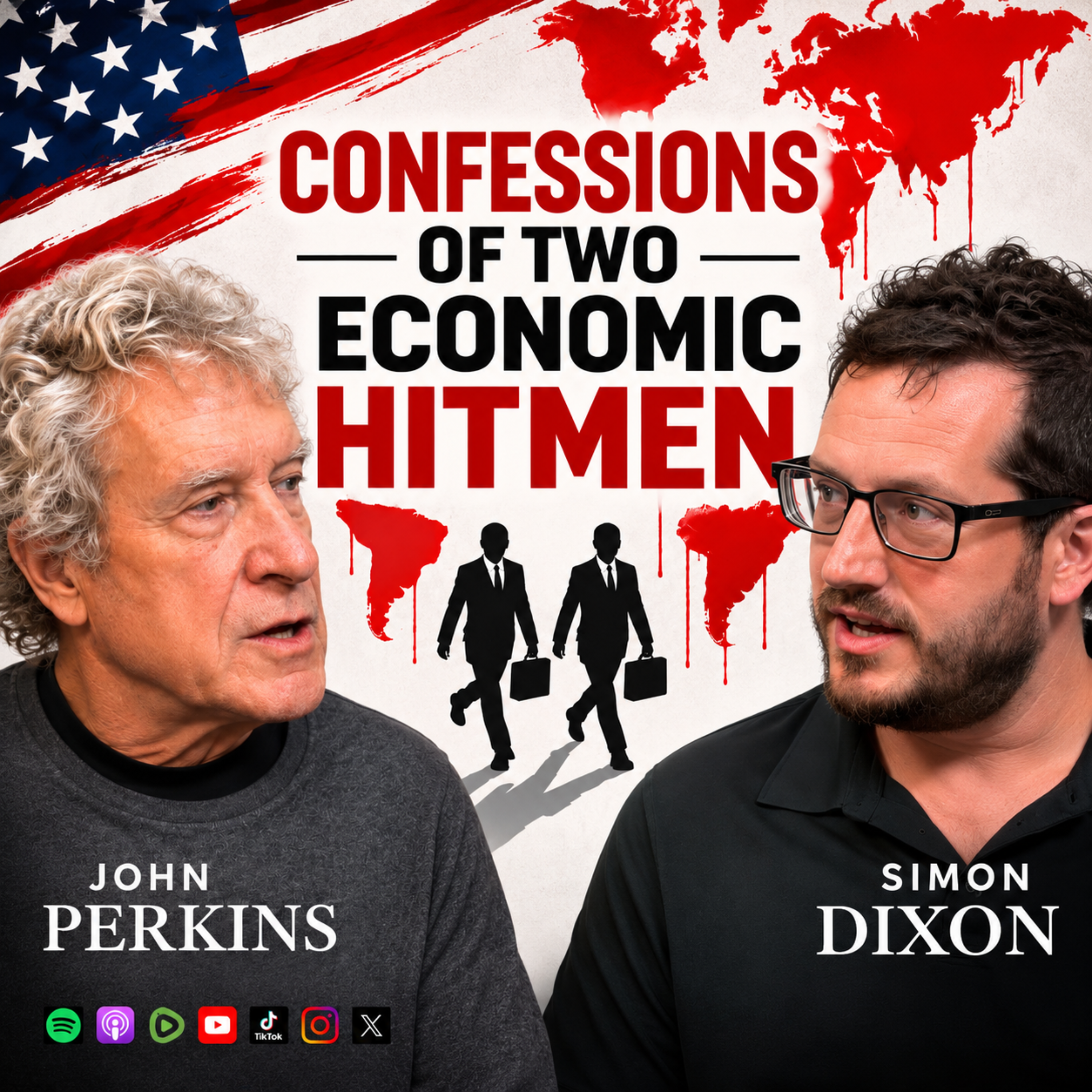
    CONFESSIONS OF TWO ECONOMIC HITMEN | Simon Dixon & John Perkins

    A conversation on the BTC Sessions YouTube channel, where host Nathan Fitzsimmons welcomes guests John Perkins, author of Confessions of an Economic Hitman, and Simon Dixon, an investor and author. The discussion centers on the evolution of global financial manipulation, detailing how traditional debt-trap diplomacy has expanded into corporate and technological domains. The speakers examine the financial industrial complex, the role of transnational capital in shifting geopolitical power, and how major entities leverage debt and resources to maintain control. Furthermore, the dialogue explores the intersection of geopolitics and modern conflicts, noting parallels between past interventions and recent events in regions like the Middle East and Latin America. Finally, the conversation highlights the rise of digital sovereignty, emphasizing the importance of personal autonomy, decentralized technologies like Bitcoin, and grassroots awareness as tools to resist an increasingly technocratic and centralized global order.

  • November 14 · 1 hr 10 min

    NVIDIA: 48 Hours That Changed the Story | Jensen Huang & What Comes Next

    Full title: NVIDIA: 48 Hours That Changed the Story | Jensen Huang & What Comes Next Simon Dixon, Mario Nawfal and Brendon Weichert analyzes the recent resignation of Nvidia CEO Jensen Huang on Mario Nawfal's YouTube channel, framing it as a calculated corporate regime change orchestrated by the military-industrial complex and intelligence agencies. Dixon argues that Huang's departure was precipitated by weaponised scandals regarding alleged affairs with a suspected Chinese intelligence operative and a company executive, providing the board with the necessary governance leverage to oust him. T his power struggle allegedly pits institutional financial shareholders and technology sectors—who favour lucrative chip sales to China through intermediaries like Singapore and Malaysia—against military factions seeking to maintain a strategic artificial intelligence advantage for the United States. Dixon further suggests that while major tech leaders like Elon Musk and Mark Zuckerberg possess sufficient voting shares to resist such takeovers, Huang's minimal equity left him vulnerable. Ultimately, the discussion highlights a broader global conflict between multipolarity, financial globalisation, and national security interests dominating the tech industry. 2 interviews. Part 1: Mario Nawfal interviews Simon Dixon (recorded on 12 November 2026) Part 2: Brandon J. Weichert interviews Simon Dixon (recorded on 14 November 2026)

  • November 13 · 2 hr 40 min

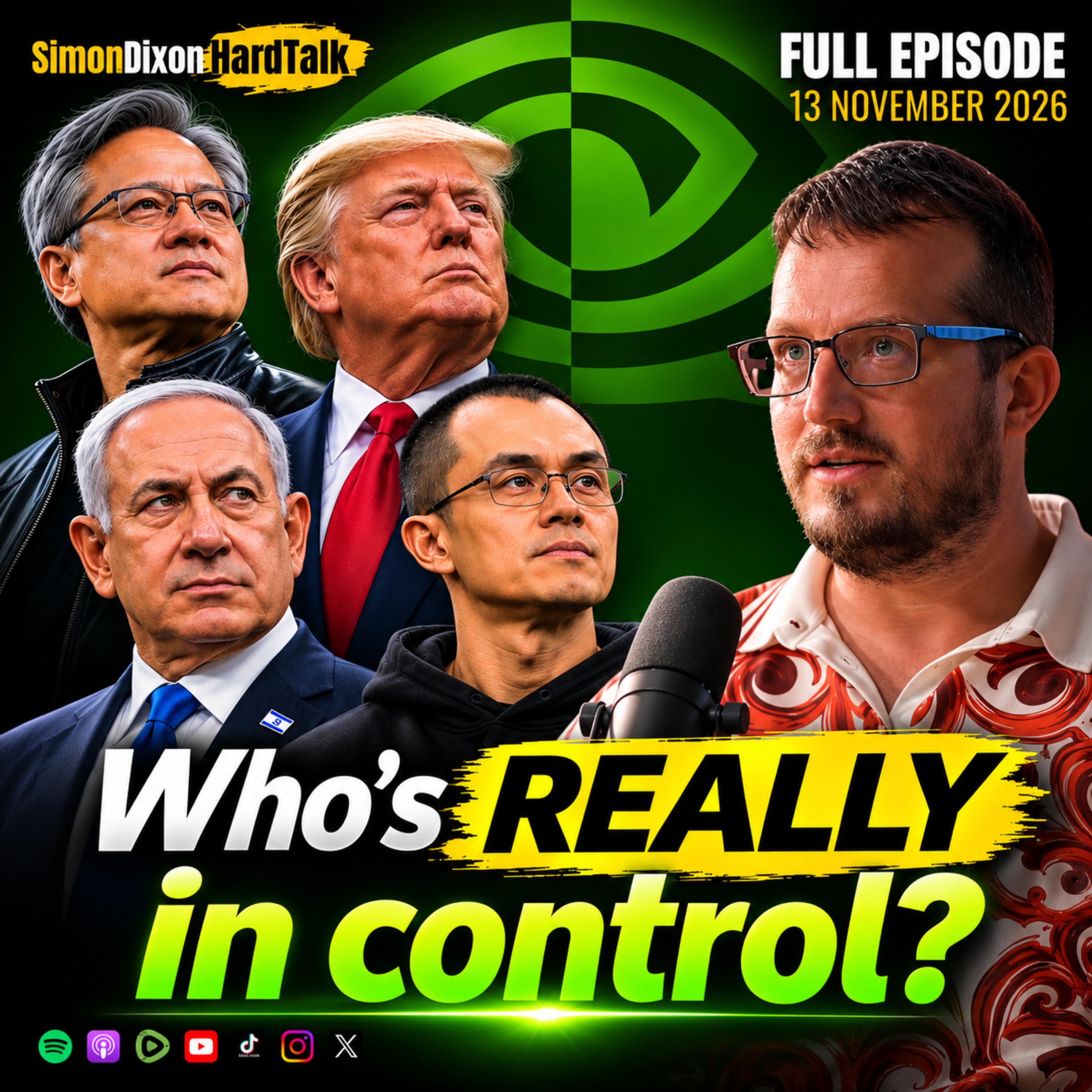
    Regime Change: NVIDIA, Binance, Trump & Netanyahu | Simon Dixon Hard Talk LIVE

    Livestream date: Friday 13 November 2026 Full Episode Title: Regime Change: NVIDIA, Binance, Trump & Netanyahu | Simon Dixon Hard Talk LIVE Part One: NVIDIA REGIME CHANGE? Trump, Netanyahu, Binance & The Battle for Control | SDHT LIVE Part Two: CONFESSIONS OF TWO ECONOMIC HITMEN | Simon Dixon & John Perkins Watch full episode on youtube here. Hey hey sovereign wealth builders, Simon Dixon Hard Talk LIVE is finally back. I know it has been several weeks—about four or five weeks that feel like a lifetime in this macro environment—and I have received countless messages asking when we would be returning to our regular Friday broadcasts. For personal security, I never announce my travel in advance, but I have been on an extensive tour across the United States recording a backlog of in-depth podcasts and completing the final draft of my upcoming book, “Game of Money”. While I was away from the livestream desk, the global chessboard did not stand still. In fact, we have seen the rapid acceleration and setup of four major regime changes across corporate governance, sovereign politics, and monetary plumbing. Today, we are bringing back the show live at 7:00pm GMT to break down every layer. Directly after the live broadcast, we will also be premiering a landmark pre-recorded interview that I recently recorded with Nathan from BTC Sessions and John Perkins, author of Confessions of an Economic Hitman. PART ONE: NVIDIA REGIME CHANGE? Trump, Netanyahu, Binance & The Battle for Control In this live broadcast, I break down what I believe are four simultaneous regime changes that demonstrate how real power operates behind the curtain. At the center of the storm is NVIDIA, where the sudden ousting of Jensen Huang exposes a deep structural conflict between the Financial Industrial Complex (seeking revenue expansion, equity valuations, and commercial chip routes into Asia) and the Military Industrial Complex (demanding domestic technological containment, strict export controls, and state-directed AI supremacy). Because NVIDIA lacks founder supermajority voting shares, in my opinion it became the most vulnerable mega-cap pillar of the tech grid to be forced into an executive regime change through reputation leverage and corporate governance pressure. At the sovereign level, we analyze the geopolitical realignment following the US midterm elections, the emerging Congressional dynamics, and Washington’s evolving strategic posture regarding Iranian sanctions and the Strait of Hormuz. Simultaneously, we examine the political shifts inside Israel, where parliamentary realignments, record Arab voter turnout, and long-term regional stability measures from both Iran and Gulf sovereign powers point toward an engineered transition away from wartime governance toward regional economic integration. Finally, we connect these macroeconomic fault lines to the digital asset ecosystem by examining Binance’s recent $6.3 billion security breach, which follows Department of Justice compliance monitorship, leadership turnover, CZ’s presidential pardon, and a $2 billion equity injection from Gulf sovereign wealth funds via USD1 and World Liberty Financial. I will share my complete framework showing how these events interlink. PART TWO: CONFESSIONS OF TWO ECONOMIC HITMEN | Simon Dixon & John Perkins Immediately following the conclusion of our livestream, we will premiere a special pre-recorded discussion recorded on 9 November 2026. Hosted by Nathan of BTC Sessions, I sat down for an electric dialogue with John Perkins, author of the seminal 2004 book Confessions of an Economic Hitman. Reading John’s book 20 years ago was one of the defining catalysts that led me to walk away from my career in investment banking in 2006. In this interview, John and I explore how the historical playbook of economic hitmen—using debt leverage, structural adjustment, and currency subordination against developing nations—has evolved and migrated directly into Western technological infrastructure, AI capital allocation, and corporate boardrooms. For the first time publicly, I also share my personal encounter with economic hitmen during my work in El Salvador advising on sovereign geothermal volcano-powered Bitcoin bonds and non-fractional banking models independent of the IMF. We also examine whether modern algorithmic division and civil polarisation are deliberately steering society toward an all-encompassing technocratic surveillance grid—and why decentralised digital resistance, local community resilience, and holding your own keys represent the definitive peaceful counter-response.

  • November 12 · 37 min

    The Petrodollar, Tech Giants & Debt: Who Really Benefits from the Iran War? | Simon Dixon & Mario Nawfal

    Full Title: The Petrodollar, Tech Giants & Debt: Who Really Benefits from the Iran War? | Simon Dixon & Mario Nawfal Original title: THE IRAN WAR WAS PLANNED BY TRUMP TO BENEFIT HIS DONORS – w/ Simon Dixon Host: Mario Nawfal Channel: ‪@MarioNawfal‬ Date of recording: 9 November 2026 Watch on YouTube: https://www.youtube.com/watch?v=mg6LuX0D3XA During a podcast interview, host Mario Nawfal and guest Simon Dixon examine the underlying geopolitical and financial forces driving global conflicts, specifically arguing that the recent Iran war was strategically orchestrated to serve the interests of corporate elites, technology conglomerates, and financial backers rather than the American public. The discussion highlights how the traditional petrodollar system is collapsing as the United States transitions from a global hegemony into a multipolar world order characterized by regional trade networks and alternative payment systems. Furthermore, the speakers analyze how Gulf nations like Saudi Arabia and the United Arab Emirates are facing severe economic pressures and changing their international alignments toward China while simultaneously investing heavily in American private equity. Finally, Dixon contends that political figures like Donald Trump function primarily as public relations mouthpieces for powerful corporate lobbies, utilizing manufactured instability to enrich their primary donors and restructure global energy markets.

  • November 6 · 47 min

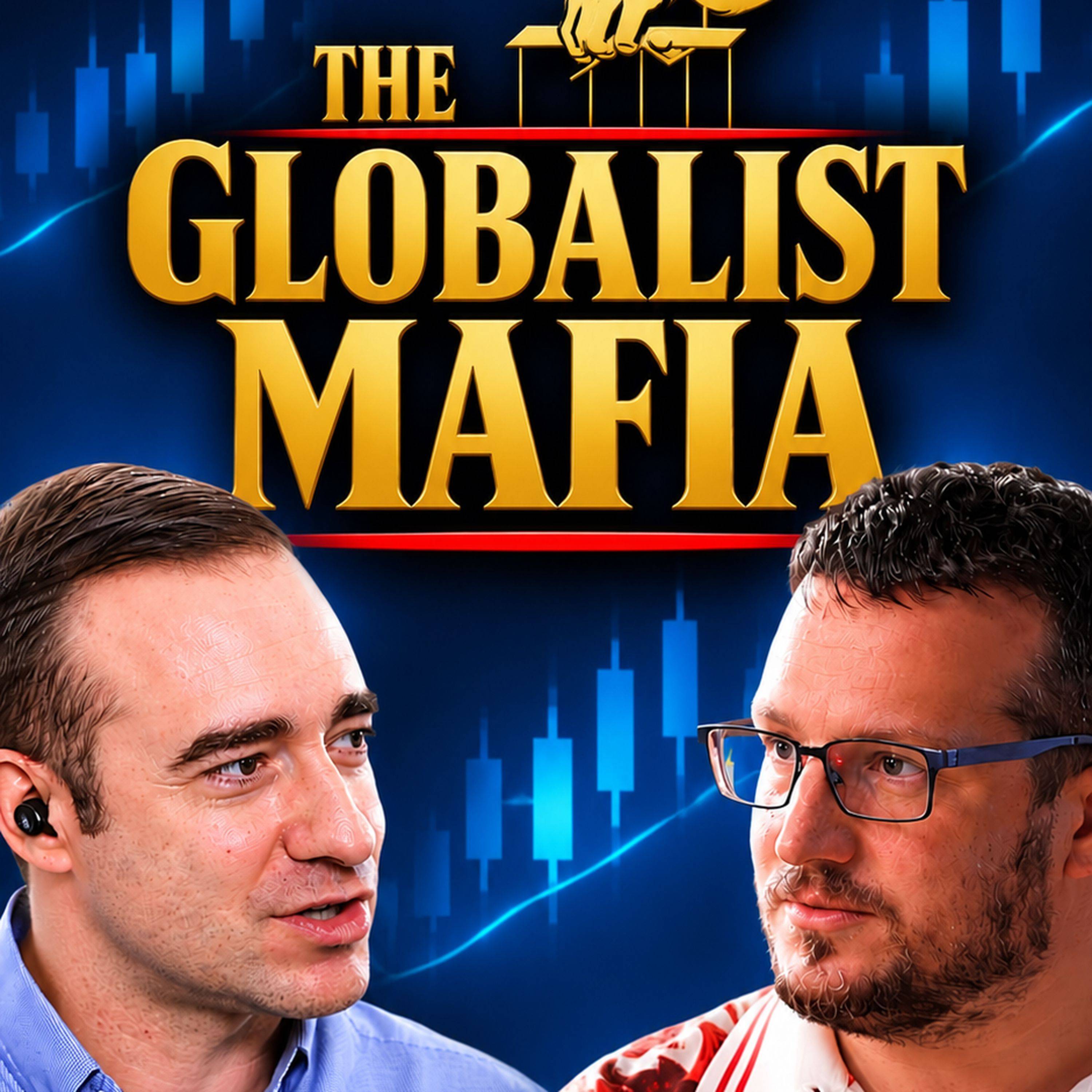
    "The Global Mafia Running the World and Why They Need Forever Wars"

    Date of recording: 2 November 2026 Host: Jesse Day Channel: Commodity Culture Guest: Simon Dixon Title: "The Global Mafia Running the World and Why They Need Forever Wars" | Simon Dixon on Commodity Culture w/ Jesse Day I recently sat down with Jesse Day on Commodity Culture for an in-depth conversation titled “The Global Mafia Running the World and Why They Need Forever Wars.” In this 47-minute interview, we step past mainstream narratives to examine how global power actually operates. In my view, geopolitical events are not dictated by politicians, but by a complex structure made up of three interlocking forces: the Financial Industrial Complex (FIC), the Military Industrial Complex (MIC), and the Technical Industrial Complex (TIC). Here is a preview of what we discussed: The Business Model of Forever Wars: How conflicts are managed to optimize revenue through defense contracts, government debt, and post-war reconstruction. Manufactured Crises & Control: Why I believe civil unrest, energy crises, and de-industrialization are weaponized to concentrate wealth upward and expand a surveillance state. The Multipolar Shift & Sovereign Strategy: Why central bank debt structures are reaching their limit, and why my analysis suggests self-custodial hard assets are critical for navigating the shift to multipolarity. Watch on YouTube Read the blog

  • October 27 · 44 min

    It’s Not WW3, It’s a Strategic Retreat | Simon Dixon on GoldRepublic w/ Alexej Jordanov

    Full interview (22 October 2026) where Simon Dixon and Alex Jordanov (host of Macroscopic, YouTube channel - GoldRepublic Global) discuss how the financial-industrial complex and the military-industrial complex are engineering global conflicts and economic pressures to weaken Europe and consolidate power. They explain that rising interest rates, costly energy, and manufactured civil unrest act as mechanisms for wealth transfer and asset stripping, ultimately benefiting powerful multinational entities. Furthermore, the discussion highlights a broader geopolitical transition toward a multipolar order, where the petrodollar is shifting and regions like West Asia are rising in influence. Domestically, governments are increasingly utilizing financial repression, such as wealth taxes and capital controls, alongside the development of central bank digital currencies to enhance state surveillance. Finally, Dixon evaluates the resilience of sovereign assets like Bitcoin and gold, warning that increasing institutional centralization and regulatory control pose ongoing threats to financial autonomy. Read the blog here. Watch on Simon Dixon's youtube channel here. Watch on YouTube

  • October 26 · 45 min

    They’re Preparing to Collapse Europe: War, Energy Crisis & the Global Control Grid | Simon Dixon on CapitalCosm w/Danny (21 October 2026)

    On 21 October 2026, Simon Dixon was invited as a guest by Danny, the host of the YouTube channel Capital Cosm, for a 47-minute interview titled "They're Preparing To Collapse Europe (what's next is terrifying) | Simon Dixon". High-Level Overview The interview centered on the convergence of global macroeconomics, energy market dislocations, technology infrastructure consolidation, and geopolitical realignments. The central framing posits that the global economy is undergoing a structural wealth transfer from the consumption layer (Main Street consumers, mortgage holders, energy-dependent states) to the ownership layer (creditors, asset managers, energy refiners, and defense technology operators). Watch on YouTube Read the blog

  • October 22 · 1 hr 57 min

    Who’s REALLY Behind the Bitcoin Hacks? Follow the Money | Simon Dixon on Bitcoin Archive w/ Archie (13 October 2026 - Interview #4)

    Is your Bitcoin truly secure? In light of recent high-profile security exploits like the Binance Bitcoin hack, this urgent discussion between Simon Dixon and Archie exposes why centralized infrastructure and self-custody solutions are facing an unprecedented, multi-pronged attack. Recorded on 13 October 2026 at Archie’s London studio—marking their fourth face-to-face, in-person interview on the channel—this debate prophetically predicted the systemic vulnerabilities now making global headlines. While news coverage focuses on centralized exchange breaches like the Binance exploit, Simon Dixon and Archie break down the deeper intelligence, cyber, and macroeconomic dynamics behind recent Bitcoin hack vectors: Attacks on Bitcoin Self-Custody: Unpacking hardware wallet vulnerabilities, firmware exploits, and expanding regulatory pressure across Europe. AI Penetration-Testing Infrastructure: How advanced AI systems are currently penetration-testing global digital networks, financial rails, and cryptographic security. Centralized Control vs. Sovereign Ownership: The stark choice facing investors—submitting data and capital to centralized intermediaries or building technical sovereignty. The Multipolar Financial Shift: How the decline of the traditional Petro-dollar and the rise of a multipolar world order accelerate digital asset centralization pressures. Although this recording took place shortly before the Binance Bitcoin hack made headlines, its insights into hardware vulnerabilities, AI-driven threats, and financial self-defense are more timely and essential than ever. Watch the full interview here: https://youtu.be/9Bo1zTiiaD4 Read the blog: https://www.simondixon.com/blog/who-is-really-behind-the-bitcoin-hacks-follow-the-money-simon-dixon

  • October 16 · 1 hr 45 min

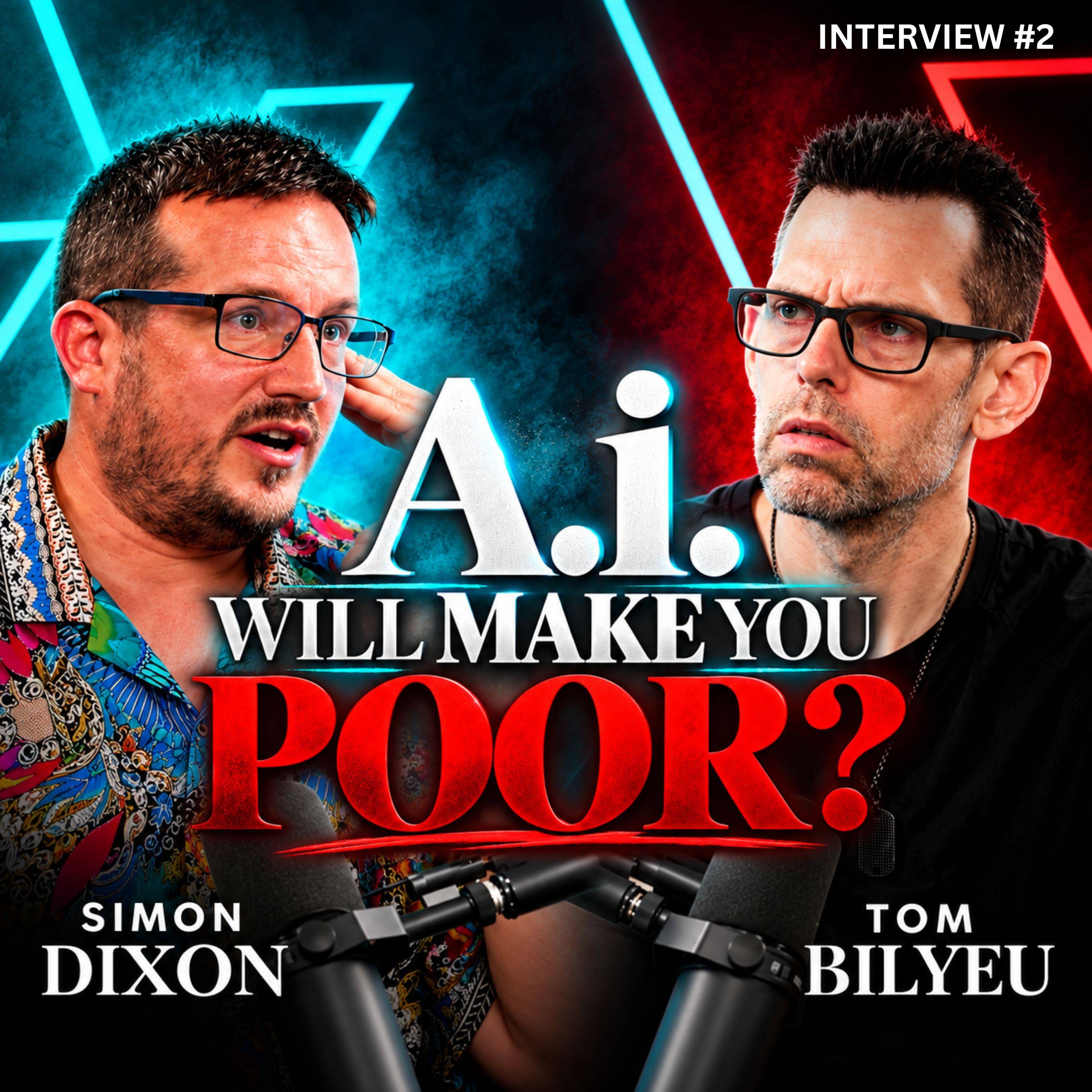
    "THIS is How AI Will Determine If You’re Rich or Poor in 5 Years" | Simon Dixon on Impact Theory w/ Tom Bilyeu

    Interview between host Tom Bilyeu and guest Simon Dixon on the show Impact Theory. Event Context: Simon Dixon was invited by Tom Bilyeu for his second face-to-face, in-person interview conducted at Tom’s recording studio in Los Angeles, California. Recording Date: 5 October 2026. Duration: 1 hour, 45 minutes. The overarching discussion centers on the shift from physical conflict to artificial intelligence as the primary mechanism for global wealth extraction and population control. Simon Dixon presents a framework explaining how macroeconomic pressures, geopolitical realignments into a multipolar world, and institutional incentive structures ("selection over conspiracy") drive wealth concentration, while outlining a pragmatic methodology for individual financial and digital sovereignty. High-Level Overview The conversation examines how the global economic architecture is undergoing a structural shift. Historically, the global elite utilized the "forever war" model under the MIC to extract wealth and force national debt creation. Simon Dixon argues that this framework is now merging with the TIC and FIC, using AI and data infrastructure as the new attack vectors for wealth extraction and societal surveillance. Watch on YouTube Watch Simon Dixon's first every interview that he did for Tom Bilyeu: They're Deliberately Winding Down America — Here's the Plan for What Comes Next | Simon Dixon on Impact Theory w/ Tom Bilyeu. Click here.

  • October 2 · 1 hr 30 min

    If this happens, I will sell all my Bitcoin and buy Gold | Simon Dixon on Coin Stories w/ Natalie Brunell (Interview #2)

    In this 1-hour and 30-minute in-person interview with Natalie Brunell, recorded on 25 September 2026 and titled "If this happens, I will sell all my Bitcoin and buy Gold", I join Natalie on her channel to examine the structural transformation of the global financial architecture, the burden of unpayable sovereign debt, and the evolving role of Bitcoin as a mechanism for individual sovereignty. In my view, the global financial order is undergoing a structural shift away from unipolar hegemony toward a multi-node regional system managed by three primary power structures: the Financial Industrial Complex (FIC), the Military Industrial Complex (MIC), and the Technical Industrial Complex (TIC). During this interview, Natalie and I analyze how a $40 trillion US national debt—which I believe cannot be repaid without collapsing the dollar system—forces central planners toward fiscal dominance, growth through artificial intelligence infrastructure, and engineered digital control grids such as Central Bank Digital Currencies (CBDCs) and programmable stablecoins. We explore the generational breakdown of traditional paths to wealth, why conventional boomer investment strategies no longer function for younger generations facing AI-driven job market disruptions, and why central banks are steadily accumulating physical gold while reducing their holdings of US Treasuries. For investors, savers, and Bitcoin holders, I outline the specific structural conditions—namely severe centralisation across mining pools, developer teams, and institutional custody by the FIC—under which I believe holding physical gold would become a preferable reserve asset to Bitcoin. However, as long as Bitcoin preserves its open-source codebase, peer-to-peer spendability, and unalterable monetary supply, I believe it remains an essential tool for digital resistance against technocratic control grids and asset-stripping debt systems. Ultimately, this discussion provides a calm, macro-focused analysis of how to navigate the global financial transition, spend less than you earn, and accumulate hard assets to achieve true individual financial sovereignty. Premiere starts today (8 October 2026) at 6pm BST / 1pm EDT. Watch on YouTube Listen to other related podcast: Bitcoin Is the Exit—Simon Dixon on Natalie Brunell (14 April 2026)

  • September 18 · 1 hr

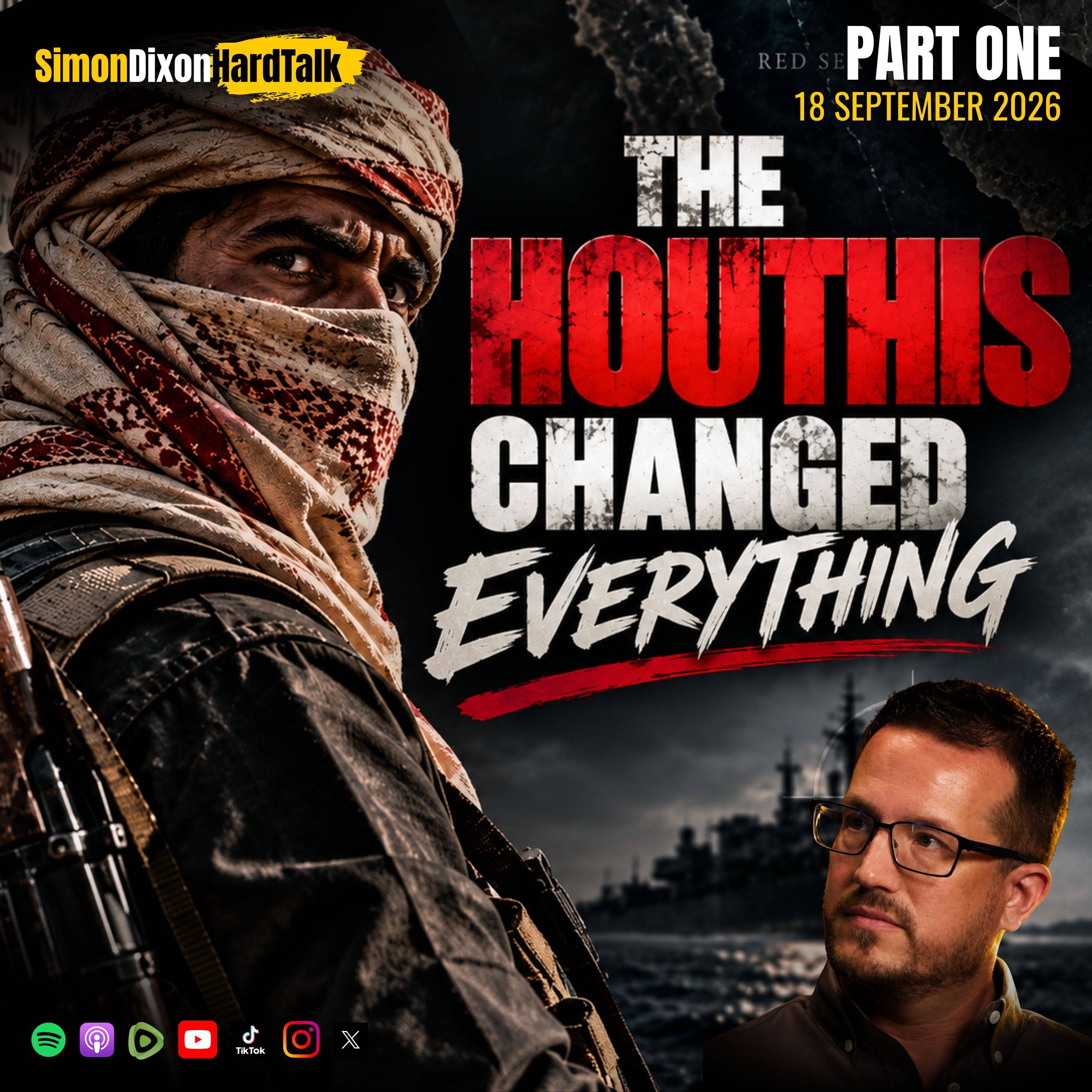
    The Houthis Just Changed The Middle East (Or Did They?) | Oil, Rates & The New Financial Rails

    Hey hey sovereign wealth builders, Welcome back to this overview of Simon Dixon Hard Talk LIVE from 18 September 2026. After missing last week while travelling, we had two weeks of macro developments to catch up on in this nearly three-hour show, and as you will see, almost everything connects into one grand story: war driving energy, energy driving inflation, inflation moving the bond markets, and central banks setting rates while money transitions onto programmable digital rails. PART ONE: The Houthis Just Changed The Middle East (Or Did They?) | Oil, Rates & The New Financial Rails In Part 1, The Houthis Just Changed The Middle East | Oil, Rates & The New Financial Rails, I examine how Houthi advances along Yemen's Red Sea coast and the seizure of Perim Island inside the Bab el-Mandeb chokepoint have combined with wider regional conflict to severely impair oil transit, send diesel prices surging, and reignite inflation expectations. In my interpretation, this energy tax feeds directly into central bank tightening—with the Federal Reserve unanimously raising rates 25 basis points to 3.75–4.00% despite public demands from Trump, and the Bank of Japan hiking to 1.25%—pushing the US 10-year Treasury yield above 5% as the Financial Industrial Complex (FIC) demands higher returns to fund government debt. As fiscal dominance worsens a K-shaped economy and extreme wealth inequality, sovereign states are building alternative BRICS cross-border payment rails and Central Bank Digital Currencies (CBDCs) to bypass SWIFT, while Western institutions leverage Circle Arc and tokenized collateral. Meanwhile, frontier leaders use AI safety rhetoric to construct regulatory moats for Big Tech, creating a multipolar, monetarily fragmented, but digitally interoperable control grid. Watch Full Episode on YouTube Watch Part One on YouTube Watch Part Two on YouTube

  • September 18 · 2 hr 36 min

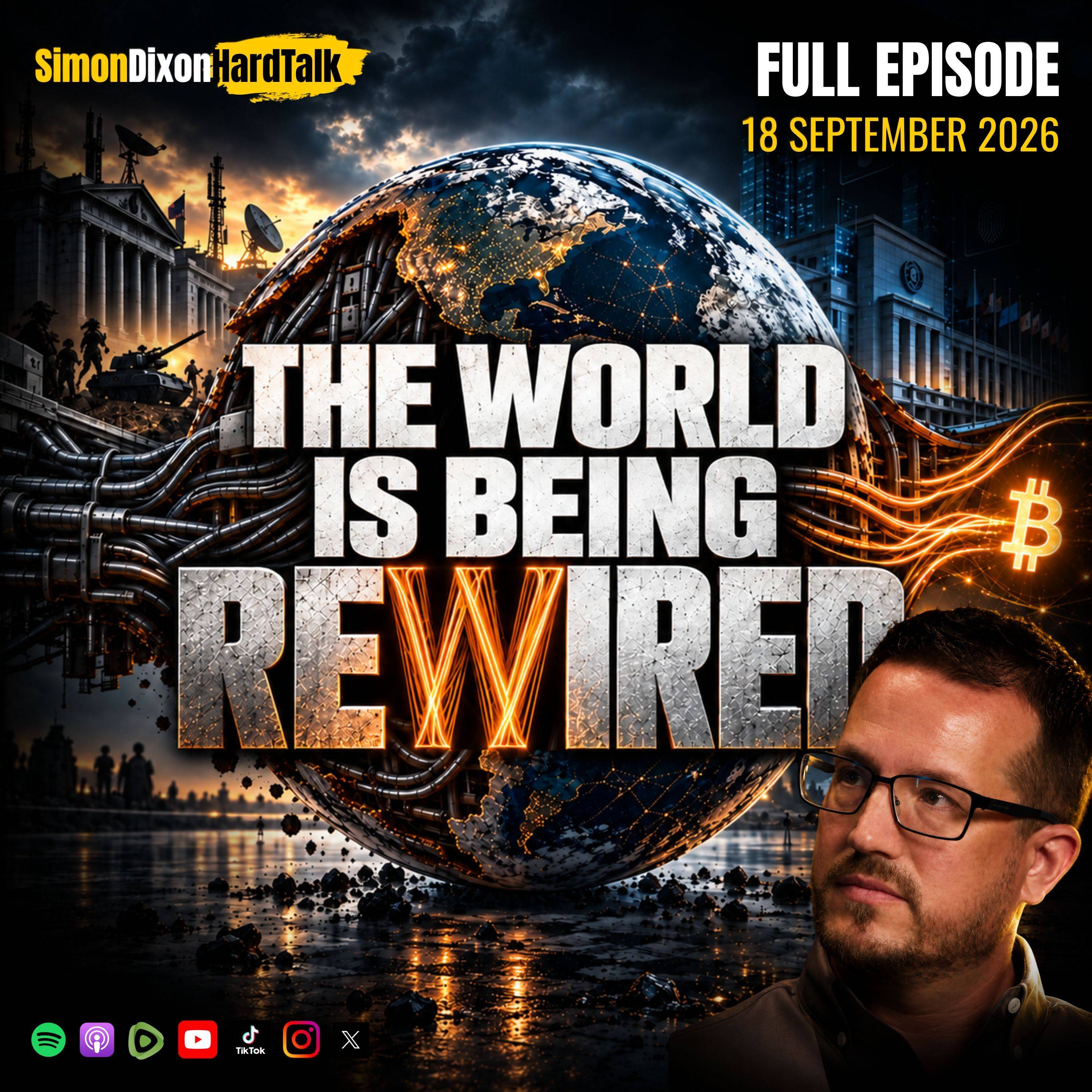
    The World Is Being Rewired | War, Programmable Money & Bitcoin | Simon Dixon Hard Talk LIVE

    Hey hey sovereign wealth builders, Welcome back to this overview of Simon Dixon Hard Talk LIVE from 18 September 2026. After missing last week while travelling, we had two weeks of macro developments to catch up on in this nearly three-hour show, and as you will see, almost everything connects into one grand story: war driving energy, energy driving inflation, inflation moving the bond markets, and central banks setting rates while money transitions onto programmable digital rails. PART ONE: The Houthis Just Changed The Middle East (Or Did They?) | Oil, Rates & The New Financial Rails In Part 1, The Houthis Just Changed The Middle East | Oil, Rates & The New Financial Rails, I examine how Houthi advances along Yemen's Red Sea coast and the seizure of Perim Island inside the Bab el-Mandeb chokepoint have combined with wider regional conflict to severely impair oil transit, send diesel prices surging, and reignite inflation expectations. In my interpretation, this energy tax feeds directly into central bank tightening—with the Federal Reserve unanimously raising rates 25 basis points to 3.75–4.00% despite public demands from Trump, and the Bank of Japan hiking to 1.25%—pushing the US 10-year Treasury yield above 5% as the Financial Industrial Complex (FIC) demands higher returns to fund government debt. As fiscal dominance worsens a K-shaped economy and extreme wealth inequality, sovereign states are building alternative BRICS cross-border payment rails and Central Bank Digital Currencies (CBDCs) to bypass SWIFT, while Western institutions leverage Circle Arc and tokenized collateral. Meanwhile, frontier leaders use AI safety rhetoric to construct regulatory moats for Big Tech, creating a multipolar, monetarily fragmented, but digitally interoperable control grid. PART TWO: Was Bitcoin A CIA Psyop? | Francis Hunt vs Simon Dixon Debate In Part 2, Was Bitcoin A CIA Psyop?, we premiered a pre-recorded debate from 17 September 2026 hosted by Danny on the CapitalCosm YouTube channel, where I went head-to-head with Francis Hunt (aka The Market Sniper). Francis delivered a compelling critique of total digitization, framing it as an encroaching surveillance power grab that destroys our sovereign right to financial privacy, while arguing that physical cash must be preserved as our first line of defense. In his view, Bitcoin serves as a "trainer bicycle" on-ramp into a grand digital control grid, operating as a high-beta speculative asset co-opted by Wall Street ETFs, corporate treasury vehicles like Michael Saylor's Strategy, and intelligence-linked actors. In response, while I broadly agree with Francis on the dangers of CBDCs, financial surveillance, and blatant infiltration attempts by intelligence agencies and Wall Street—such as Blockstream, Michael Saylor's Strategy, and corporate capture—I maintain that Bitcoin remains fundamentally different. In my opinion, as long as open-source developers, miners, and decentralized node operators successfully resist protocol changes, Bitcoin provides individuals with an irreplaceable mechanism to hold their own keys, transact peer-to-peer, and retain monetary sovereignty outside issuer-controlled rails. Whether you lean toward Francis’s skepticism about the digital trap or my thesis on digital self-sovereignty, understanding how physical and digital rails are being rewired is essential to staying on the right side of this historic transition. Watch Full Episode on YouTube Watch Part One on YouTube Watch Part Two on YouTube

  • September 17 · 1 hr 36 min

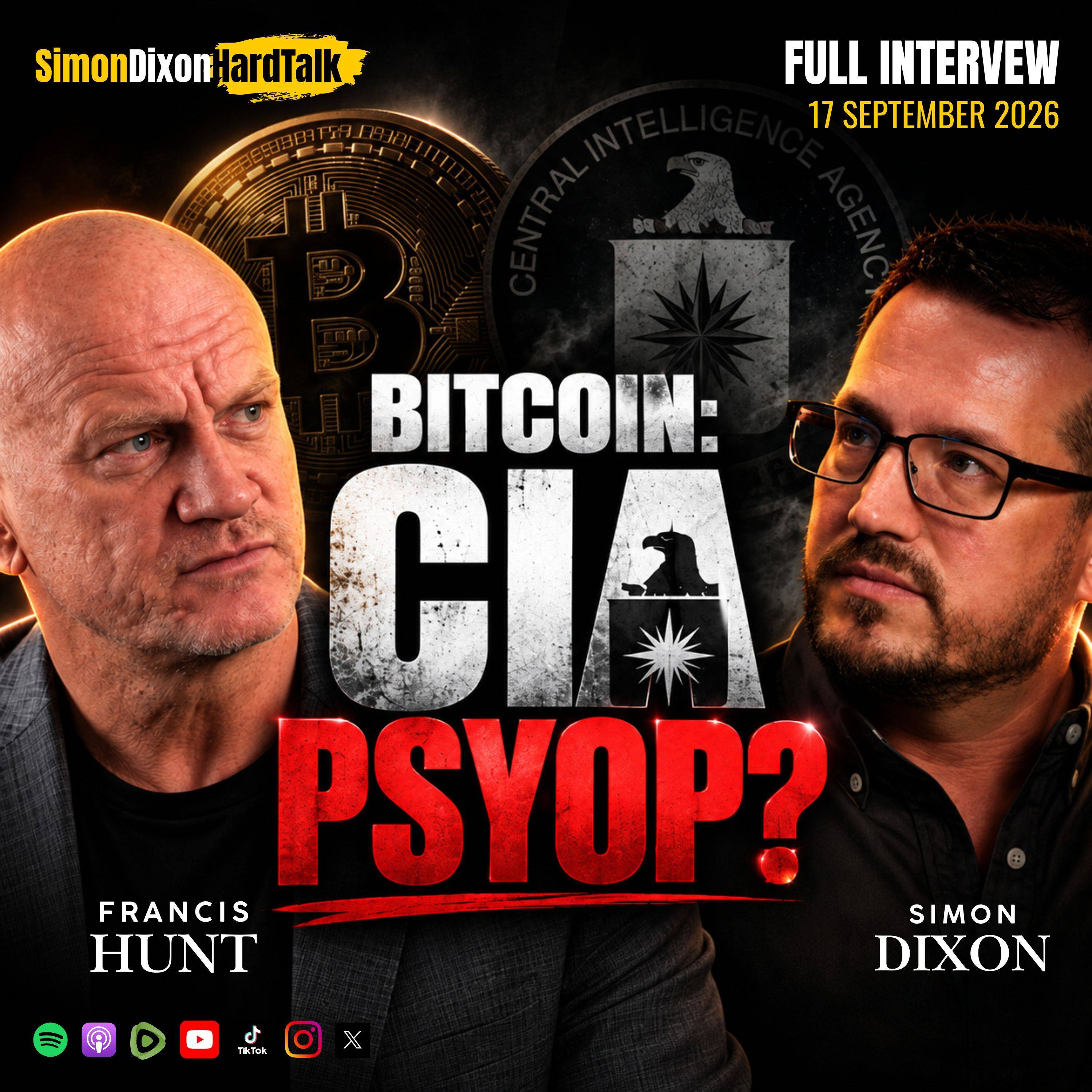
    Was Bitcoin A CIA Psyop? | Francis Hunt vs Simon Dixon Debate

    In Part 2, Was Bitcoin A CIA Psyop?, we premiered a pre-recorded debate from 17 September 2026 hosted by Danny on the CapitalCosm YouTube channel, where I went head-to-head with Francis Hunt (aka The Market Sniper). Francis delivered a compelling critique of total digitization, framing it as an encroaching surveillance power grab that destroys our sovereign right to financial privacy, while arguing that physical cash must be preserved as our first line of defense. In his view, Bitcoin serves as a "trainer bicycle" on-ramp into a grand digital control grid, operating as a high-beta speculative asset co-opted by Wall Street ETFs, corporate treasury vehicles like Michael Saylor's Strategy, and intelligence-linked actors. In response, while I broadly agree with Francis on the dangers of CBDCs, financial surveillance, and blatant infiltration attempts by intelligence agencies and Wall Street—such as Blockstream, Michael Saylor's Strategy, and corporate capture—I maintain that Bitcoin remains fundamentally different. In my opinion, as long as open-source developers, miners, and decentralized node operators successfully resist protocol changes, Bitcoin provides individuals with an irreplaceable mechanism to hold their own keys, transact peer-to-peer, and retain monetary sovereignty outside issuer-controlled rails. Whether you lean toward Francis’s skepticism about the digital trap or my thesis on digital self-sovereignty, understanding how physical and digital rails are being rewired is essential to staying on the right side of this historic transition. Watch Full Episode on YouTube Watch Part One on YouTube Watch Part Two on YouTube

  • September 4 · 1 hr 59 min

    India, China & Iran Just Sent a Major Signal — BRICS Is Next | Simon Dixon Hard Talk LIVE - 4 September 2026 (Part One)

    Hey hey sovereign wealth builders, We are witnessing history, and most people are completely missing the signal for the noise. In the markets, we are seeing a major structural stress test. While the S&P 500 pushes toward its all-time high of ~7,748 under fiscal dominance, the bond market is flashing serious warning signs. The US 10-year Treasury yield is hovering around ~4.76% and the 30-year is at ~5.24%. In my view, this is driving 7% mortgages back into play and putting severe stress on bank collateral. Meanwhile, Japan’s 10-year yield has risen above 3% for the first time since 1996, signaling a massive decoupling of the Japan carry trade. The real relief valves are showing their strength. Gold is pushing above ~$4,500 as central banks continue to accumulate physical reserves. In a telling move, the Netherlands has quietly relocated 86 tonnes of its gold reserves ($12 billion) out of the US and over to London, with officials citing "increasing geopolitical unrest". Bitcoin is also demonstrating its strength as hard money, posting its biggest weekly gain since March 2023 and surging 23% to ~$81,000 after wiping out billions in short positions. This comes as the US Strategic Petroleum Reserve (SPR) falls to ~287 million barrels—four-decade lows not seen since 1982. In my view, we are watching the transition from a US-dominated dollar hegemony to a multi-node world order. To unpack this transition, we are going live today for another episode of Simon Dixon Hard Talk LIVE. You Think You’re Watching a War. You’re Watching a New World Being Built | Simon Dixon Hard Talk LIVE PART ONE: India, China & Iran Just Sent a Major Signal — BRICS Is Next Part One of today's broadcast is our live show. It begins with a live macro update from me, followed by an in-depth pre-recorded interview, with me as the guest, on Wally Rashid’s YouTube channel. In this section, we break down the major geopolitical signals sent at the recent Shanghai Cooperation Organisation (SCO) meeting. India is increasingly cooperating with China, Russia, and Iran through both the SCO and BRICS, with Iranian President Pezeshkian invited to the BRICS summit in New Delhi next week (12–13 September). Meanwhile, at the G20, 19 countries backed freedom of navigation through the Strait of Hormuz, but China blocked a unified consensus. Why does this matter now? In my view, this is the arrival of the multipolar—or what I call the "multi-node"—world order. Multipolarity does not mean India or the Gulf states are choosing China over America. Instead, they are refusing to choose. They are building regional security nodes connected by competing financial and technological rails. The old hegemonic node is fracturing, and regional powers are stepping up to secure their own corridors while the Financial Industrial Complex (FIC) and Technical Industrial Complex (TIC) jockey for dominance over payment and settlement rails. Watch part one on youtube. Watch Full Episode on YouTube.

  • September 4 · 3 hr 13 min

    You Think You’re Watching a War. You’re Watching a New World Being Built | Simon Dixon Hard Talk

    Hey hey sovereign wealth builders, We are witnessing history, and most people are completely missing the signal for the noise. In the markets, we are seeing a major structural stress test. While the S&P 500 pushes toward its all-time high of ~7,748 under fiscal dominance, the bond market is flashing serious warning signs. The US 10-year Treasury yield is hovering around ~4.76% and the 30-year is at ~5.24%. In my view, this is driving 7% mortgages back into play and putting severe stress on bank collateral. Meanwhile, Japan’s 10-year yield has risen above 3% for the first time since 1996, signaling a massive decoupling of the Japan carry trade. The real relief valves are showing their strength. Gold is pushing above ~$4,500 as central banks continue to accumulate physical reserves. In a telling move, the Netherlands has quietly relocated 86 tonnes of its gold reserves ($12 billion) out of the US and over to London, with officials citing "increasing geopolitical unrest". Bitcoin is also demonstrating its strength as hard money, posting its biggest weekly gain since March 2023 and surging 23% to ~$81,000 after wiping out billions in short positions. This comes as the US Strategic Petroleum Reserve (SPR) falls to ~287 million barrels—four-decade lows not seen since 1982. In my view, we are watching the transition from a US-dominated dollar hegemony to a multi-node world order. To unpack this transition, we are going live today for another episode of Simon Dixon Hard Talk LIVE. You Think You’re Watching a War. You’re Watching a New World Being Built | Simon Dixon Hard Talk LIVE PART ONE: India, China & Iran Just Sent a Major Signal — BRICS Is Next Part One of today's broadcast is our live show. It begins with a live macro update from me, followed by an in-depth pre-recorded interview, with me as the guest, on Wally Rashid’s YouTube channel. In this section, we break down the major geopolitical signals sent at the recent Shanghai Cooperation Organisation (SCO) meeting. India is increasingly cooperating with China, Russia, and Iran through both the SCO and BRICS, with Iranian President Pezeshkian invited to the BRICS summit in New Delhi next week (12–13 September). Meanwhile, at the G20, 19 countries backed freedom of navigation through the Strait of Hormuz, but China blocked a unified consensus. Why does this matter now? In my view, this is the arrival of the multipolar—or what I call the "multi-node"—world order. Multipolarity does not mean India or the Gulf states are choosing China over America. Instead, they are refusing to choose. They are building regional security nodes connected by competing financial and technological rails. The old hegemonic node is fracturing, and regional powers are stepping up to secure their own corridors while the Financial Industrial Complex (FIC) and Technical Industrial Complex (TIC) jockey for dominance over payment and settlement rails. PART TWO: Israel Is Being Privatized — And Netanyahu Is Being Left Behind Part Two of today's broadcast features a pre-recorded interview I did with Wally Rashid on his channel, recorded on 3 September 2026. In this interview, we dive deep into the geo-financial reality of the Middle East, focusing on a major theme: the privatization of Israel. Israel’s economy is decoupling from its stock market, which remains at all-time highs due to military, tech, and banking stocks. However, the state is being laden with corporate debt, and state defense companies are preparing for public listings (IPOs) to sell off state assets. In my view, Netanyahu is acting as a puppet to power, serving the interests of major military contractors, global financial investors, and technology companies. At the highest levels of capital, ideology does not drive decision-making—rational self-interest and capital preservation do. As the Military-Industrial Complex (MIC) begins to retreat from the Middle East to find other war zones, Israel is being transitioned from being funded by the Pentagon to being funded by private corporate debt. If power no longer needs Israel as a destabilizing node, the financial markets will force a regime change. I encourage you to watch both parts of today's broadcast to see how these two pieces fit together. Weekly Macro Updates AI & Tech: Nvidia ($NVDA) reported record Q2 revenue of $96.2 billion and guided a massive $108 billion for Q3 alone, assuming zero compute revenue from China. Bonds: The US 10-year Treasury Note yield has surged +85 basis points since the Iran War began, pushing to ~4.80%. Gold: The Netherlands has relocated 86 tonnes of gold reserves ($12 billion) out of the US, with officials warning the gold is "no longer safe" in Trump's hands. Bitcoin: Bitcoin surged from below $64,000 to nearly $80,000 in three days, liquidating over $4 billion in short bets. Energy: US Strategic Petroleum Reserve (SPR) inventories fell below 290 million barrels for the first time since 1982, down to 289.7 million barrels. Trade Wars: Canada has declared a trade "war" with the US after Trump raised tariffs on Canadian autos, parts, and steel to 50% for 2027. Stablecoins: Major global banks are advancing plans for a joint stablecoin, while the UK orders the Bank of England to accelerate digital money innovation]. Livestream Broadcast Schedule This episode was broadcasted on 4 September 2026 at 8:30pm BST. Please note that Part One is the live show. Part Two is the pre-recorded interview done by Wally Rashid with me as the guest. Both segments are crucial to understanding the transition of the world order, and I highly encourage you to watch both. Measure your wealth in Bitcoin, stay sovereign, and I will see you on the livestream. Peace. Simon Dixon Watch full episode on YouTube.

  • September 3 · 1 hr 14 min

    Israel Is Being Privatized — And Netanyahu Is Being Left Behind | Simon Dixon x Wally Rashid

    A pre-recorded interview I did with Wally Rashid on his channel, recorded on 3 September 2026. In this interview, we dive deep into the geo-financial reality of the Middle East, focusing on a major theme: the privatization of Israel. Israel’s economy is decoupling from its stock market, which remains at all-time highs due to military, tech, and banking stocks. However, the state is being laden with corporate debt, and state defense companies are preparing for public listings (IPOs) to sell off state assets. In my view, Netanyahu is acting as a puppet to power, serving the interests of major military contractors, global financial investors, and technology companies. At the highest levels of capital, ideology does not drive decision-making—rational self-interest and capital preservation do. As the Military-Industrial Complex (MIC) begins to retreat from the Middle East to find other war zones, Israel is being transitioned from being funded by the Pentagon to being funded by private corporate debt. If power no longer needs Israel as a destabilizing node, the financial markets will force a regime change. I encourage you to watch both parts of today's broadcast to see how these two pieces fit together. 0:00 Intro 5:40 How long will the collapse of the U.S. Empire take? 8:48 Israel vs. the Financial Industrial Complex in the Iran war 17:12 Will Iran be able to maintain a long-term toll on the Strait of Hormuz 19:26 What is the point of the latest Iran war escalations? 22:10 How long will the Iran war continue for? 25:45 What role does the Turkey, Saudi Arabia, Pakistan defense Mecca agreement play? 30:16 How the Israel/Palestine conflict will be solved via pressure from global financial markets 34:14 When will Israel be controlled by global financial markets? 37:49 How will settler violence will be contained by global financial markets 41:22 How will the Military Industrial Complex shift focus to the United States and Europe? 44:54 How the Military Industrial Complex is implementing the AI Surveillance State in the West 46:20 How the Military Industrial Complex will destabilize the West 49:48 How can young adults financially prepare for a multi-polar world? 53:18 What role will gold play in the future as the dollar declines? 57:38 How betting markets like Polymarkets and Kalshi represent a sign of a declining empire 1:02:28 How declining empires push degeneracy on their poorest citizens 1:05:18 Why it’s important young adults take control of Artificial Intelligence (AI) 1:07:55 Why everyone needs to have their own decentralized AI model 1:11:24 What open source AI model does Simon run? Read the blog Watch on YouTube

  • August 27 · 1 hr 25 min

    “They’re Building a Control Grid to Control You” | Simon Dixon

    In my 4th appearance on The Peter McCormack Show (recorded 27 August 2026; duration: 1 hour 27 mins), titled “They’re Building a Control Grid to Control You,” Peter McCormack and I sit down for an in-depth analysis of global monetary friction and the emerging financial control grid. In this episode, Peter and I discuss the $40 trillion US national debt milestone, the mechanics behind Treasury debt rollovers, and how central banks, in my opinion, socialise bond market losses onto ordinary citizens through inflation while privatising capital gains into stock markets. We also examine the corporate debt boom driving the AI data centre build-out, real-term wealth erosion in the housing market, and how technocratic structures are positioning programmable money and CBDCs as crisis bailouts within the expanding FIC, MIC, and TIC framework. In my view, as artificial intelligence accelerates labor market disruption, the ultimate choice ahead is whether you prepare to become an asset owner or remain trapped as a debt holder. Allegedly, defending your individual freedom against an Orwellian surveillance grid requires building digital resistance—running independent nodes, maintaining Bitcoin self-custody, and mastering key management to protect your cryptographic identity and wealth.

Showing 1–20 of 51 episodes