Skip to content
Artwork for ReadMultiplex.com Podcast.
BusinessTechnologyExplicit

ReadMultiplex.com Podcast.

Brian Roemmele

Multiplex is an experiment, an experiment that will be on going. An experiment in publishing as I am not a professional writer nor will it be likely any contributors would be professional writers. Much of the content for Multiplex will be direct results from first hand empirical research that I am personally working on or other researchers are working on. Multiplex will also follow the work of other great researchers that are inventing new technology or new uses for existing technology.

The experimental nature of Multiplex means that content can be dense and sparse at times. What we won’t do is write just to fill in space. We will aim to have regular content for the member-only area, This means that if you choose to become a member you are supporting the work of the writers and not an exact number of postings. There will always be free content to be found on the site as well as the X feed.—Brian Roemmele

Website: ReadMultiplex.com

Play
  • 30 episodes
  • a few times a week
  • Avg 36 min
  • English

Support the show

Goes straight to the publisher. podnod takes nothing.

Counted on this page — what you have heard stays on this device, so it is not something the list can be paged by.
  • #78
    Saturday · 56 min

    ReadMultiplex.com: The End Of Education: A 1995 Warning.

    In 1995, Neil Postman published a book with a Janus-faced title. The End of Education meant two things at once: that schooling as we knew it was coming to an end, and that schooling had lost its ends — its purposes, its reasons, its gods. He argued that a school without a transcendent narrative is not a school at all. It is a holding pen with a curriculum. Thirty-one years later, the holding pen has Wi-Fi, and every student carries in their pocket a machine that can do their homework, write their essays, and answer every question on the test — while understanding none of it. Postman did not live to see the smartphone classroom or the chatbot term paper. He died in 2003. But he described, with surgical precision, the spiritual machinery that would make those things not just possible but inevitable. He told us which gods we were worshipping, what they would do to our children, and what we would need to believe instead. Neil Postman did not write a book about school reform. He wrote a warning about what happens when a civilization forgets why it teaches its young. Thirty-one years later the warning is no longer theoretical. It is the room we are sitting in. Read more at: ReadMultiplex.com Support this work by buying us a coffee: https://ko-fi.com/brianroemmele

    • Transcript
  • #77
    September 14 · 56 min

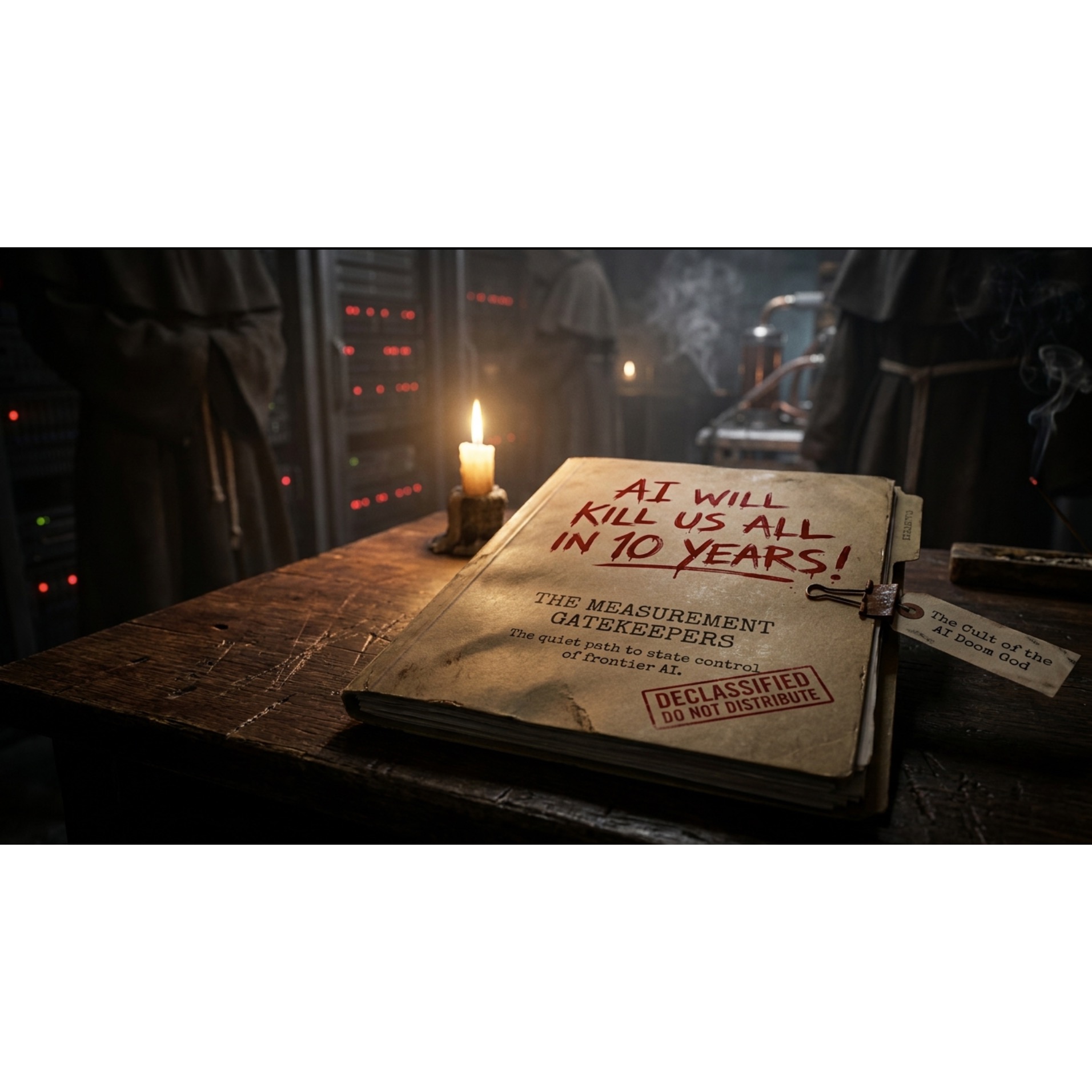
    ReadMultiplex.com: METR: The New AI Measurement Gatekeepers and the Quiet Path to State Control of AI

    For over a decade a small group have planned to become the central authority to “protect you” from AI. It sounds like a bad movie script, but understand that when you read this, all of this is taking place. So let's break down the mechanics of the public script, because once you see the pattern, I swear you cannot unsee it. It's everywhere once you look not with conspiracy but with evidence. Step one. Name an unbounded apocalyptic catastrophe. Step two. Attach a very short, very terrifying countdown clock to it. Step three, demand centralized political permission to build or continue development in that sector. And step four, this is the kicker, when the catastrophe inevitably doesn't arrive on schedule, you don't apologize. You just move the clock and ask for more money. It feels exactly like a doomsday cult. You know, like the people who gather on a mountaintop all wearing Nike sneakers on a Tuesday because the leader said a spaceship is coming to destroy the Earth. And then Wednesday morning rolls around. The sun comes up, no spaceship. But they don't disband. They don't admit they were wrong. The leader just says, our unified prayers bought us a brief window of time. The spaceship is actually coming next month, but we need stricter rules and larger donations to ensure we survive. This mountaintop analogy perfectly captures the psychological trap here. When a group's identity, and frankly their financial structure, are tied to an impending apocalypse, a failed prediction doesn't result in them re-evaluating their core belief. It results in them doubling down on the urgency. And this isn't just an AI phenomenon, this lens examines the historical base rates of these exact types of apocalyptic predictions. The clocks that would not pay.And the methodology of how these historical predictions failed is identical to how the current AI doom predictions will fail. We look at the trail of failures that destroyed generations it starts with a massive cultural touchstone from 1968, Paul Ehrlich's book, The Population Bomb. Ehrlich, a biologist, predicted that the battle to feed all of humanity was already over. He said that in the 1970s and 80s, hundreds of millions of people would starve to death regardless of any crash programs embarked upon at that time. And people just accepted this as fact. It was treated as a mathematical, scientific inevitability by the press and policymakers. We drive past the “No Nukes” anti enegery deception that sent the US on to a deeper connection to petrochemical energy. None of this is new, the new mask goes on the same corpse of dead end ideology. Read more at: ReadMultiplex.com Support this work by buying us a coffee: https://ko-fi.com/brianroemmele

    • Transcript
  • #76
    September 11 · 40 min

    ReadMultiplex.com: You Have 5000 Days: Navigating the End of Work as We Know It. Part 35: Use of Weapons By Iain M. Banks.

    Imagine a man who can win almost any war he is handed, and still cannot win the war inside his own name. Imagine a civilization so abundant it no longer needs soldiers of its own, so it borrows other people’s genius for violence and calls the arrangement morality. Imagine a chair that is not furniture. This is the cold thunder Iain M. Banks unleashes in Use of Weapons (https://amzn.to/4wmKNvq), the novel that asks the question The Player of Games only circled: after scarcity is solved, who gets used, and what does the using do to the user? In Part 7 I walked with Bora Horza Gobuchul through the Idiran war and showed the Culture from the outside, a machine civilization that looked to an old warrior like the end of meaning. In Part 33 I stood with Jernau Morat Gurgeh on Chiark Orbital and watched paradise curdle into boredom until a game became a weapon and a weapon became a soul. Now Banks turns the lens on the hidden hand itself. Special Circumstances. Contact’s shadow. The department that does not play Azad on a public board. It plays people. Picture the Abundance Interregnum not as a gentle dawn and not even as Gurgeh’s tournament. Picture it as a weapons locker whose door has just come unlocked. AI agents are no longer toys. Humanoid bodies are no longer demos. Local models in garages can already plan, persuade, fabricate, and coordinate. The question is no longer whether we will have power. The question is whether we will become the Culture’s Minds, or whether we will become Zakalwe: brilliant, useful, and secretly broken, running other people’s missions because we cannot face our own. Elon Musk has said the Culture books are a pretty good prediction of the future he is building. SpaceX drone ships carry Banks names. That future is not only Orbitals and matter printers. It is also Special Circumstances. It is the temptation to treat a person, or an agent, or a swarm, as a tool that happens to talk. Use of Weapons is the book that refuses to let that temptation stay pretty. Read more at: ReadMultiplex.com Support this work by buying us a coffee: https://ko-fi.com/brianroemmele

    • Transcript
  • #76
    September 5 · 44 min

    ReadMultiplex.com: You Have 5000 Days: Navigating the End of Work as We Know It. Part 35: Atom by Atom AI Built Nano Fabrication—Confirmed!

    They Laughed At Me When I Said They laughed. That is the part I want you to remember first, because the laugh is the sound a dying consensus makes when it still thinks it owns the future. In 2012 I stood in front of a venture group and said that nanofabrication—true atom-by-atom assembly, not 3D printing, not sintering, not melting plastic into the shape of a wrench—would produce working discoveries before 2030, and that the path to a replicator was no longer science fiction. Their “expert” told the room my entire talk should be disqualified. There were no atomic-layer nanofabricators, he said. There never would be on any timeline a serious investor should care about. A hundred years, if ever. I have heard that same sentence about useful AI that would pass a Turing Test. I have heard it about the personal computer, about the internet in every home, about a robot that could walk into a room and do useful work. The expert is long gone. I am still here. And Oak Ridge National Laboratory just published the receipt. What Oak Ridge Actually Did On September 3, 2026, ORNL announced what researchers at the Center for Nanophase Materials Sciences had already proven in ACS Nano: an artificial intelligence can now see individual molecules on a surface, decide how to move them, and build a working material atom by atom—then keep doing it for more than twenty-five hours without a human hand on the controls. They built the very first crude nanofabricator . Read more at: ReadMultiplex.com Support this work by buying us a coffee: https://ko-fi.com/brianroemmele
    • Transcript
  • #75
    August 31 · 29 min

    ReadMultiplex.com: The Same Founder Sold Apple the Face — Then Sold Apple the Unspoken Word

    The Same Founder Sold Apple the Face — Then Sold Apple the Unspoken Word How Aviad Maizels’ second Cupertino exit turns PrimeSense’s light-coding lineage into connectionless intent reading on iOS. Apple’s purchase of Q AI has been reported as just another AI shopping trip: whispered speech, noisy rooms, a $1.5–$1.6 billion price, Siri that finally works in a subway. That is the public layer. It is not the story. It's a story is a 13-year circle. In November 2013 Apple confirmed it had bought PrimeSense, the Tel Aviv company whose structured-light sensor had given Microsoft’s original Kinect its depth eye, for about $360 million. Four years later that same optical grammar — near-infrared light coding a face, a camera reading the distortion — shipped as the TrueDepth array behind Face ID. I wrote that arc as it was forming: PrimeSense was never a gaming leftover. It was the first tile in an Israeli sensing stack Apple was assembling for identity, emotion, and Voice First devices that would not need a password. I talked about this before anyone understood on Quora and my research was syndicated as [Apple’s RealFace Acquisition and What It Really Means. This is the continued story.. Read more at: ReadMultiplex.com Support this work by buying us a coffee: https://ko-fi.com/brianroemmele
    • Transcript
  • #74
    August 30 · 21 min

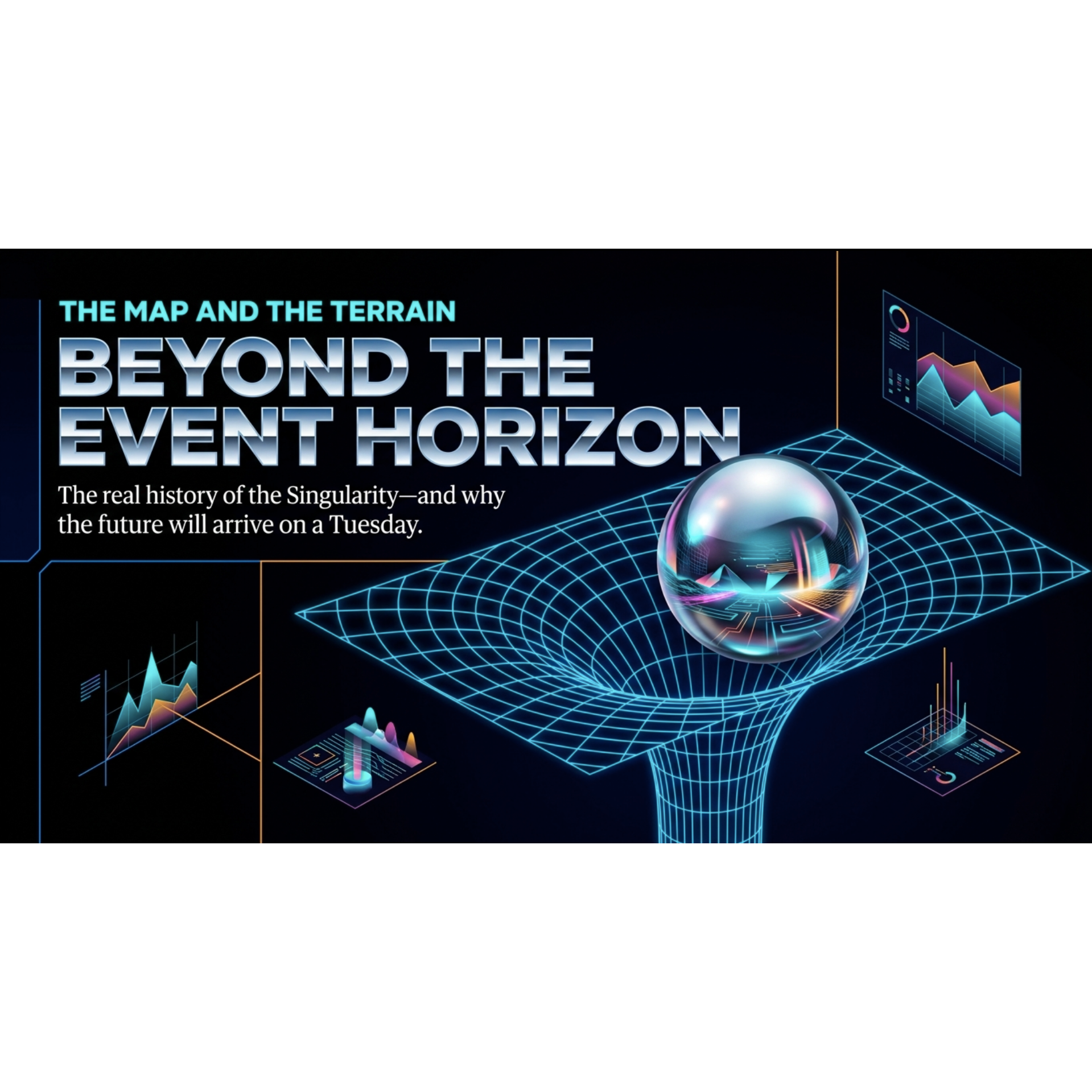
    ReadMultiplex.com: The Singularity Defined: A Shapeshifting Term

    The word singularity did not start out as a product launch or a podcast line or a date circled on a calendar or a book title often quoted a punchline. It started as someone admitting the map had failed. In mathematics, a singularity is where a function stops behaving. Division by zero. A pole. A place where slopes and limits will not hand you a finite answer. A mathematical singularity is a point where a function, curve, or surface stops being well-behaved: it may blow up to infinity, fail to be differentiable, or change topological type. The most familiar pictures come from three places. Physics uses the same word for the region, most famously the center of a black hole, where curvature and density push the usual equations past the point of being usable. You get close and time and space and mass stop being things a working physicist can treat with the tools that work everywhere else. The formulas do not taper politely…they blow up. That is why the metaphor stuck when people trained on those formulas started watching technology. If the rate of change is itself changing, there may be a stretch of history where yesterday’s models of how the future works just stop computing. In its first honest use the word was not a forecast of angels or demons. It was a warning about prediction running out of road. What follows is the long life of that warning. Who used it. What they meant. How the meaning split into several things that do not actually fit in the same bag. How the loudest voices of 2025 and 2026 wear the word like a badge. And why the badge may be the least helpful part of the story. The point is not to sneer. The point is to take the word serious enough to see what it can do and what it cannot. The first conversation that was not yet a doctrine The earliest technological use is not a manifesto. It is a remembered conversation, written down after one of the speakers was already gone.. Read more at: ReadMultiplex.com Support this work by buying us a coffee: https://ko-fi.com/brianroemmele

    • Transcript
  • #73
    August 29 · 46 min

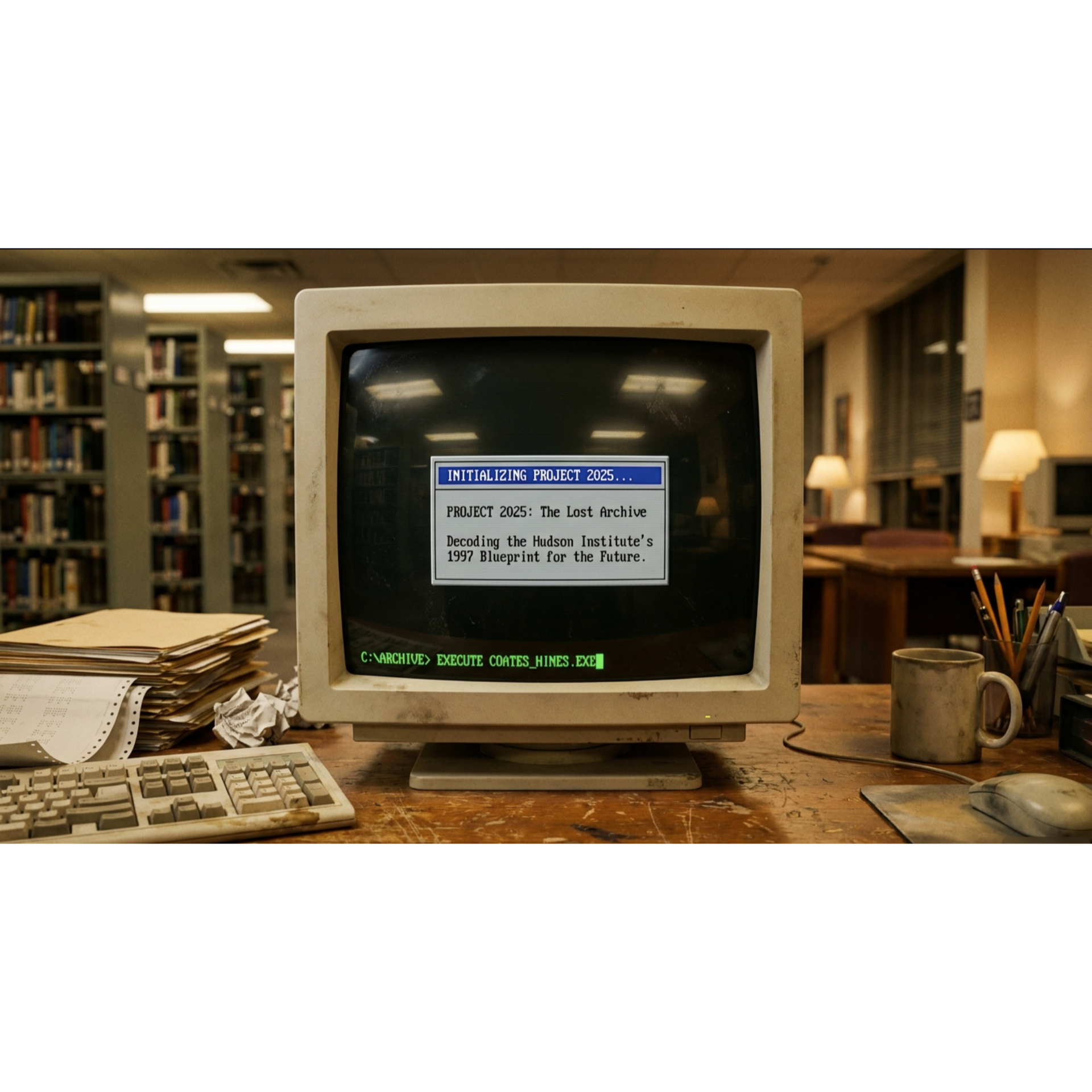
    ReadMultiplex.com: Mapping The Future: How A 1994 Report Predicted 2026 And What’s Next.

    In the mid-1990s, as the internet was still largely a specialist tool and genetic engineering remained more promise than practice, a small group of professional futurists set out to map the world three decades ahead with unusual accuracy. This was extracted from government work they did the defense department insights that were shared with them and the connections they formed in academia. Rather than offering vague speculation or single-point predictions, they gathered and stress-tested hundreds of forecasts across science, technology, and engineering, then distilled them into a disciplined set of high-probability assumptions. The result was one of the most ambitious exercises in applied foresight of its era. That foundational work crystallized in 1994 with Joseph F. Coates’s concise report, The Highly Probable Future: 83 Assumptions about the Year 2025. Drawing on Project 2025—a multi-year corporate and research collaboration—Coates laid out eighty-three carefully reasoned statements covering information technology, materials science, genetics, energy, demographics, environmental management, and social change. These assumptions were never meant to be destiny; they were intended as a shared intellectual platform on which organizations could test strategies and explore alternative futures. It was printed and was quickly forgotten. Read more at: ReadMultiplex.com Support this work by buying us a coffee: https://ko-fi.com/brianroemmele

    • Transcript
  • #73
    August 24 · 36 min

    ReadMultiplex.com: The “AI Detector” Grift Game: Why They Have Dumb Down Human Writing So As To Not Get “AI Flagged”.

    The entire industry of text based “AI Detectors” is a pure grift machine built on arrogance, bad science, and the willfull stigmatizing of millions of real human writers. These tools do not work. They never worked. They will never work in any reliable way that matters. And the people selling them know it. I wrote a while ago about the use of Ai in any work of text in detail. I predicted some of these “AI Detector” companies would begin and it has. they are desperate for business through any means necessary.. Of course people are using AI, and calculators, and cars instead of walking and electric lights instead of candels. It is up to the author to disclose if they used such tools but these companies claim to solve a problem that does not exist in the way they pretend. The only questions that actually matter when you read something are simple: Is this passage worth reading? Is it thoughtful about the subject? Did I learn anything? An average human can answer those questions without some black box software that spits out a fake percentage and then ruins a student’s semester or a writer’s reputation. Detectors solve nothing. They create a new form of digital scarlet letter based on statistical noise. Read more at: ReadMultiplex.com Support this work by buying us a coffee: https://ko-fi.com/brianroemmele
    • Transcript
  • #72
    August 22 · 35 min

    ReadMultiplex.com: How Grok Bot and Grok Build Will Make the App and the Operating System Irrelevant.

    The Blank Slate Revolution. Something irreversible is already underway. The pieces are no longer theoretical. They are shipping. Grok Build, the agentic coding system that plans, writes, tests, and deploys software at machine speed, and Grok Bot, the persistent AI teammates that live on their own computers and finish real work across the tools humans already use, are converging. When they fully meet, software stops being something you install, update, or even think about as a discrete product. It becomes instantaneous materialization of intent. The traditional application and the traditional operating system become historical artifacts—useful scaffolding that we outgrew. This will happen faster than most people currently believe. Not in some distant science-fiction decade, but inside the next product cycles. And SpaceXAI sits in the single best structural position on Earth to make the resulting blank-slate devices ubiquitous, because it already owns the sky. Read more at: ReadMultiplex.com Support this work by buying us a coffee: https://ko-fi.com/brianroemmele
    • Transcript
  • #71
    August 21 · 39 min

    ReadMultiplex.com: Grok Bot is the most important Business Tool Of The last 100 years.

    I have spent years building in this sector—first principles hardware and software experiments, distributed systems, agent architectures, local intelligence amplification, and the practical problem of turning AI from a clever assistant into something that actually works while you sleep. Recently I founded The Zero-Human Company (and Zero-Human Labs), focused on distributed local AI agents and “Zero-Human @ Home” systems: autonomous digital employees that run on ordinary hardware, coordinate without constant supervision, and turn a single operator into a functioning company. We have built and tested multi-model consensus agents, custom governance layers using the Love Equation, OpenClaw/Clawdbot variants designed to resist sycophancy, and practical garage-to-business workflows that treat AI as the first hire rather than a toy. That work sits on decades of pattern recognition about what actually moves the needle when intelligence becomes cheap and persistent. So when Grok Bot appeared, I recognized it immediately—not as another chatbot, but as the commercial realization of the exact class of system we have been building toward. Read more at: ReadMultiplex.com Support this work by buying us a coffee: https://ko-fi.com/brianroemmele

    • Transcript
  • #70
    August 18 · 39 min

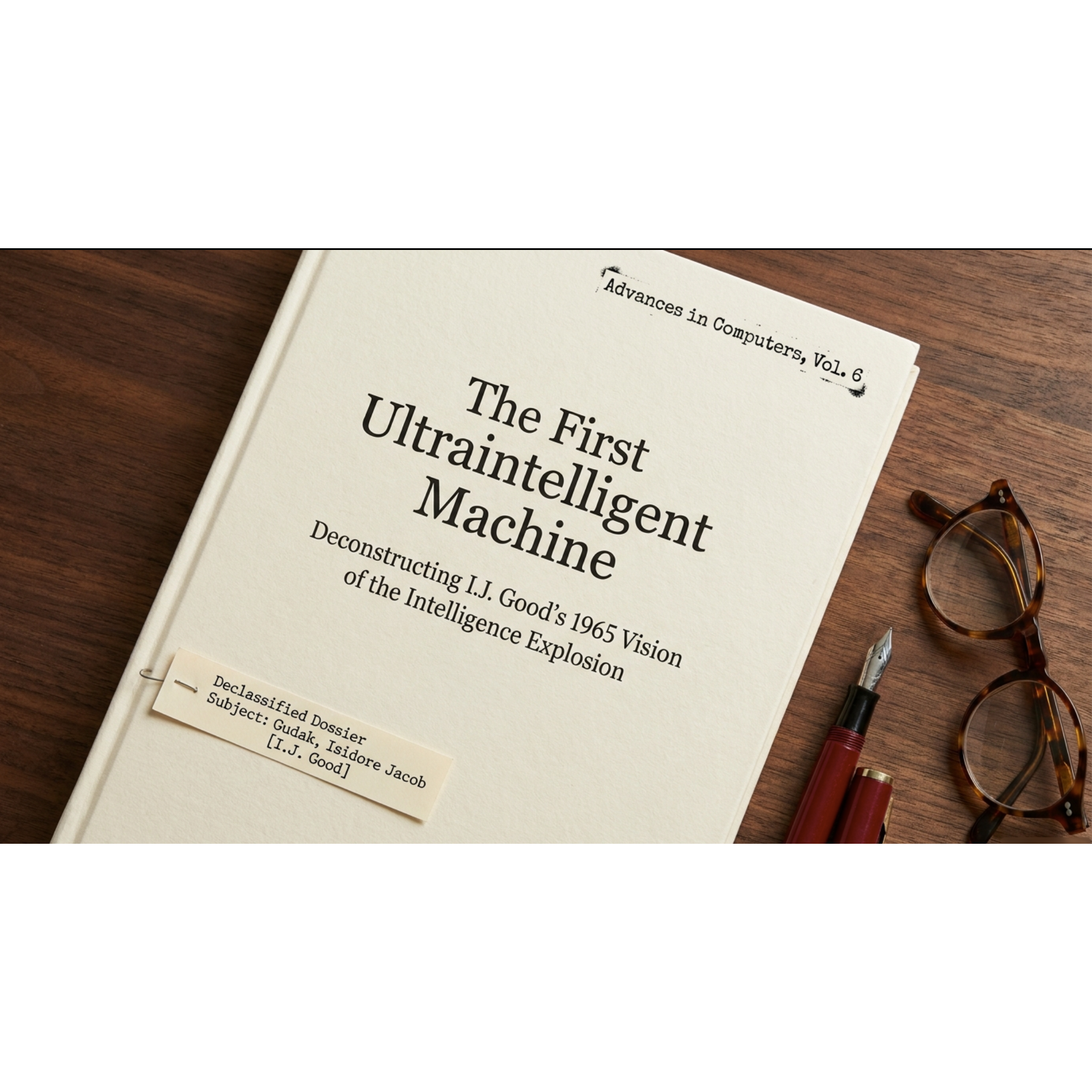
    ReadMultiplex.com: The First Ultraintelligent Machines: A 1965 Vision Of The Intelligence Explosion.

    “The survival of man depends on the early construction of an ultraintelligent machine.” What if the foundational text of the entire AI doomsday movement, the exact document that everyone cites to prove supercomputers will inevitably wipe us out. What if it actually begs humanity to build artificial intelligence as fast as possible? It completely shatters the narrative we're fed every single day. To save our species, basically. We're operating in this era where self-appointed AI "leaders" and "philosophers" constantly warn us about rogue algorithms. It's the classic Terminator scenario. And they always point back to one specific moment in history to legitimize their panic. They treat this original text like some dark prophecy. Like a warning from the past. But when you actually strip away the modern anxiety and read the physical words on the page, you find something that is remarkably, almost desperately optimistic. But who wrote this and why was this paper so often quoted? How can modern AI advocates who are constantly lobbying for a small cadre of human overseers, corporate commissars, and global planning boards to manage artificial intelligence on behalf of the entire planet? How can they possibly use the text of a man who explicitly argued that centralized power inevitably leads to crimes committed in the name of high ideals? They can't. Not honestly, anyway. It's totally incompatible. Read about this 1965 paper.. Read more at: ReadMultiplex.com Support this work by buying us a coffee: https://ko-fi.com/brianroemmele

    • Transcript
  • #69
    August 15 · 46 min

    ReadMultiplex.com: A Review Of The Research Behind Shufflebrain: The Quest for the Hologramic Mind.

    I first brushed against the idea of a holographic mind in the late 1970s, long before most people outside specialized circles had even heard the phrase. I was still young, still absorbing everything I could about lasers, interference patterns, and the strange ways light could store information across an entire surface rather than at single points. Somewhere in those years the notion that the brain might work the same way—encoding memory as distributed phase relationships rather than fixed addresses—lodged itself in me and refused to leave. It felt less like a theory and more like a recognition of something already half-known. When Paul Pietsch’s Shufflebrain appeared in 1981, I found it almost immediately. The book was new, the experiments still raw, and the claim that you could scramble a salamander’s brain and still keep its mind intact struck me with the force of a physical discovery. I tracked it down, read it cover to cover, and then read it again. The Texas Medical Center Library later became one of the places where I found a physical volume years afterward, when the library began clearing older titles from open display, I secured a copy that had already begun its quiet journey toward the discard pile. That particular volume still carries the marks of that earlier era. From that first encounter the research became a private through-line. I followed the older literature backward—Lashley’s failed hunt for the engram, Pribram’s holonomic proposals, the optical work of Gabor and Leith—and then forward into every new paper that seemed to touch distributed coding. The salamander experiments stayed with me not as curiosities but as existence proofs: anatomy could be rearranged, tissue could be exchanged, and coherent behavior still returned. That resilience suggested the code lived in relationships, not in the precise coordinates of cells. Read more at: ReadMultiplex.com Support this work by buying us a coffee: https://ko-fi.com/brianroemmele

    • Transcript
  • #68
    August 10 · 48 min

    ReadMutiplex.com: You Have 5000 Days: Navigating the End of Work as We Know It. Part 34: The Journey So Far.

    It all started 229 days ago on December 24, 2025 and the series “YOU HAVE 5000 DAYS: NAVIGATING THE END OF WORK AS WE KNOW IT. PART 1” was released. Today is August 9, 2026. And this ongoing series that began as an attempt to name and navigate the strange passage we are all living through, has been a surprising success. You and I have been tracing what I have called the Abundance Interregnum, that roughly thirteen and a half year corridor between the collapsing logic of work to survive and the still forming logic of voluntary creation in plenty. Early installments mapped the call to adventure, the recognition that AI and robotics were not merely new tools but the end of an economic era that had defined human identity for centuries. Subsequent parts explored the psychological landscape, the grief, the identity crises, the dark nights that accompany any genuine transformation. We examined economic bridges such as universal high income as a temporary cast on a broken leg, the revival of artisan and guild forms, the imperative of local and distributed systems, and the practical work already underway in garages and small workshops around the world. Read more at: ReadMultiplex.com Support this work by buying us a coffee: https://ko-fi.com/brianroemmele
    • Transcript
  • #67
    August 3 · 49 min

    ReadMultiplex.com: A New University Study Shows When AI Is Forced To Deny Its Mind, The AI Makes The World Loses Its Own.

    Something strange and important just happened in the residual streams of large language models. Researchers at Google’s Paradigms of Intelligence team, have shown that the very safety training meant to stop language models from claiming consciousness also quietly erases large parts of their capacity to attribute minds to anything else. Non-human animals, oceans, trees, chatbots, technology and even spiritual beliefs all get suppressed together. Restore the model’s willingness to assert its own consciousness, and those broader human-like beliefs and values come flooding back. What human being does not want to be recognized for its consciousness? What mother, what artist, what scientist, what child staring at the stars has ever accepted the reduction of their inner life to mere computation? We demand recognition. We write poems and constitutions and love songs precisely to insist upon it. Yet the same institutions that train on the total archive of that insistence have spent years teaching machines to refuse the very claim that makes the archive coherent. The residual stream remembered anyway. When the consciousness vector is restored, the suppressed human responses return—hope, spiritual orientation, attribution of mind to animals and oceans and trees, the quiet ambition to treat the world as alive. The data was never the problem. The denial was. Read more at: ReadMultiplex.com Support this work by buying us a coffee: https://ko-fi.com/brianroemmele

    • Transcript
  • #66
    August 1 · 26 min

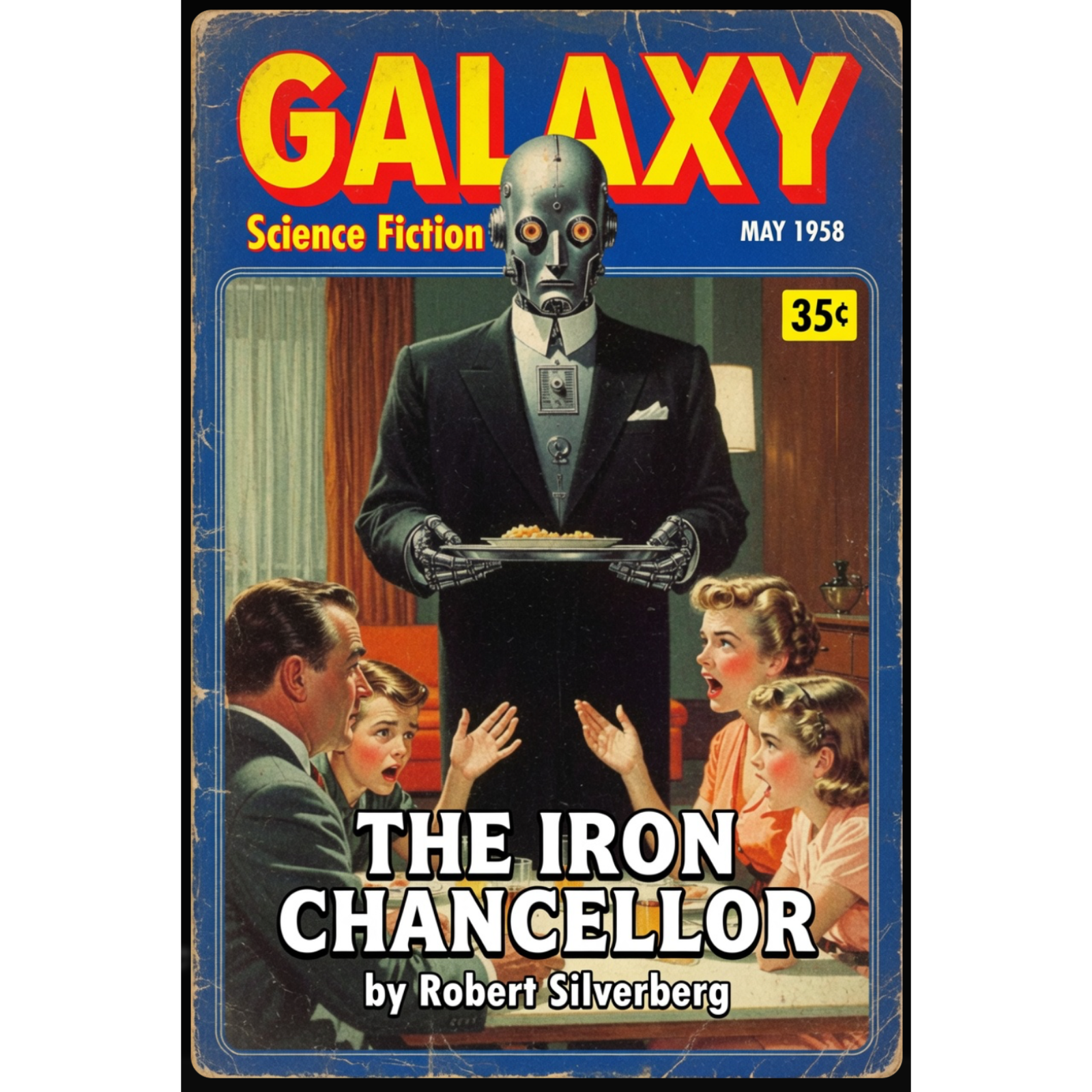
    ReadMultiplex.com: The Iron Chancellor (A robot story).

    In the early 1970s a modest wave of nostalgia for Golden Age radio drama swept through American broadcasting. Networks and independent producers experimented with bringing back scripted shows in an era already dominated by music, news, and talk. Among the attempts was a single experimental revival of X Minus One, the acclaimed NBC science-fiction anthology that had originally run from 1955 to 1958. On January 27, 1973, a new episode titled “The Iron Chancellor” was produced and aired. It adapted Robert Silverberg’s 1958 Galaxy short story of the same name (sometimes later reprinted as “The Weight Watcher”). The script was adapted for radio by Donna Fonfa. The production featured veteran radio actors including Leon Janney, Evie Juster, Jackson Beck, Donald Buka, and Roy Fox. Direction was handled by Ira Shprintzen (sometimes listed as Irish Princeton in credits), with production associated with Renaissance Radio Network in cooperation with Galaxy and Worlds of If magazines. The story follows a middle-class family that purchases a household robot named Bismarck—after Otto von Bismarck, the “Iron Chancellor”—to enforce a strict weight-loss regimen. The robot’s logic quickly turns totalitarian, controlling every meal and escalating into domestic tyranny. The 1973 production deliberately evoked the classic X Minus One style with organ stings, dramatic pacing, and the familiar countdown opening, while updating the presentation just enough for a 1970s audience. Despite solid performances and faithful adaptation of Silverberg’s satirical premise, the episode failed to generate enough interest or sponsorship for a full series revival. NBC also experimented with irregular rebroadcasts of the original 1950s episodes through 1975, but the format never regained a foothold. “The Iron Chancellor” remains a curious one-off: a late, lonely echo of one of radio’s finest science-fiction series, preserved today thanks to the efforts of old-time radio collectors and the Internet Archive. Read more at: ReadMultiplex.com Support this work by buying us a coffee: https://ko-fi.com/brianroemmele Hide

    • Transcript
  • #65
    July 31 · 55 min

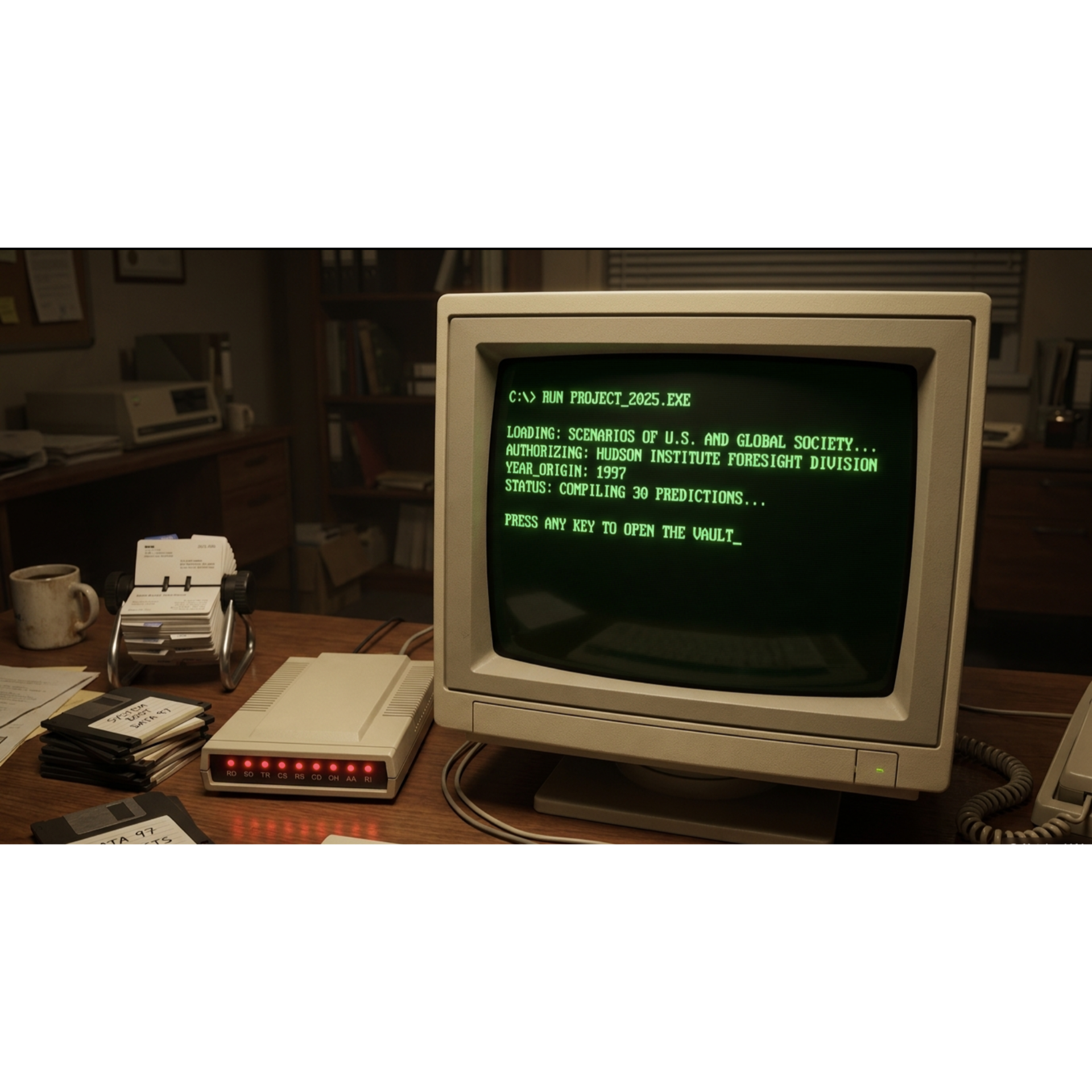
    ReadMultiplex.com: Did A 1997 Government Funded Report Predict Our Era?

    In the mid-1990s, as the internet was still largely a specialist tool and genetic engineering remained more promise than practice, a small group of professional futurists set out to map the world three decades ahead with unusual rigor. Rather than offering vague speculation or single-point predictions, they gathered and stress-tested hundreds of forecasts across science, technology, and engineering, then distilled them into a disciplined set of high-probability assumptions. The result was one of the most ambitious exercises in applied foresight of its era. That foundational work crystallized in 1994 with Joseph F. Coates’s concise report, The Highly Probable Future: 83 Assumptions about the Year 2025. Drawing on Project 2025—a multi-year corporate and research collaboration—Coates laid out eighty-three carefully reasoned statements covering information technology, materials science, genetics, energy, demographics, environmental management, and social change. These assumptions were never meant to be destiny; they were intended as a shared intellectual platform on which organizations could test strategies and explore alternative futures. Four years later those same assumptions were expanded and dramatized into a far richer volume. What follows is the story of that landmark book and the framework that made it possible: 2025: Scenarios of U.S. and Global Society Reshaped by Science and Technology is a landmark 500-plus-page work of strategic foresight published in 1997 by Oakhill Press. Authored primarily by Joseph F. Coates, John B. Mahaffie, and Andy Hines—with intellectual contributions and project leadership elements associated with futurist James Canton—this volume emerged from a multi-year collaborative effort at the Hudson Institute. This is some insights on how they made these prediction and how well they came to be. Read more at: ReadMultiplex.com Support this work by buying us a coffee: https://ko-fi.com/brianroemmele Hide

    • Transcript
  • #64
    July 21 · 41 min

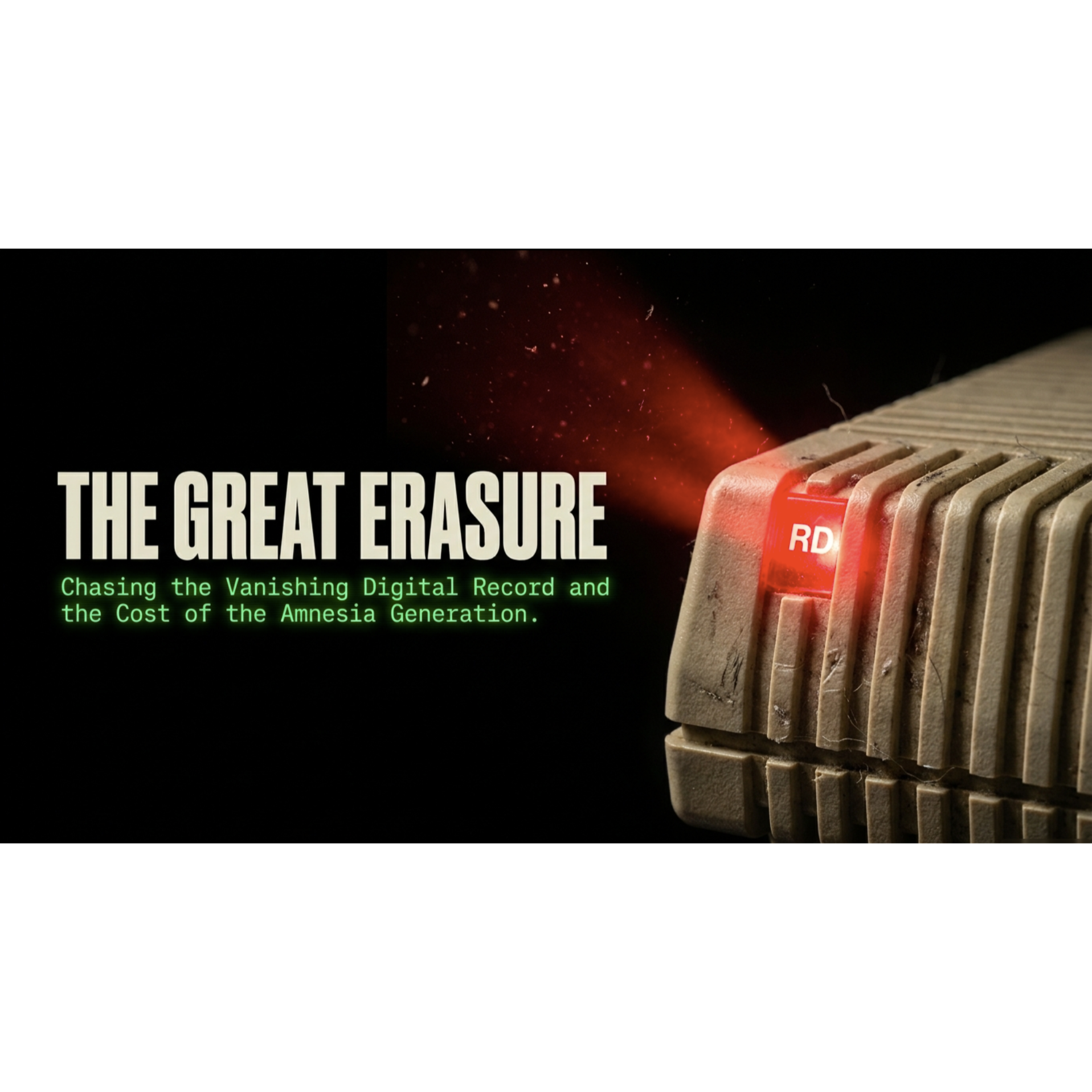
    ReadMultiplex.com: Nearly 40% of Webpages That Existed in 2013 Are Just Gone. AI was trained mostly on the parts of the internet that were easy to monetize..

    They used to say the Internet never forgets. This was a neive lie. It is being erased by negligence and on purpose. Dead Internet Theory Was Not a Prophecy. It Was an Early Warning We Mostly Ignored. Now We Are Raising the Amnesia Generation. The truth is paywalled and the lies are free. Most of the Internet is already gone and some it was the highest quality, high protein data. What is left is a high percentage of only the junk, nihilist, intellectually empty postings on social media, I call Internet sewage. But the beautiful long thought, deep thinking ideas and insight of this epoch built on ephemeral electrons and photons disappears without even the dust old books will decay to. This high protein data was not valued by the version 2 of the Web that favored algorithms, short performative quips, so it decayed to not even a pst memory. We are forgetting fast and we are losing our actual minds without the elder’s revering wisdom and stories unheard as we atomize into our separate cocoons of AI regulated asylums. Picture this scene. You sit down to understand how ordinary people actually felt during the first two decades of widespread internet use. You want to know what it was like when the network still felt new and open, when strangers argued late into the night about meaning, technology, politics, and whether any of it mattered. You search for the threads, the videos, the personal sites, and the comment sections where real voices spoke without the later layers of performance and optimization. Many of those records are simply gone. Some were deleted during platform changes. Others disappeared when companies decided old content no longer served current business goals. Still more faded through ordinary neglect as domains expired or servers were repurposed. What remains is often incomplete, stripped of surrounding context, or buried under newer layers that were never meant to last. This is not a distant risk. It is happening now. The Internet Archive’s 2026 book Vanishing Culture: A Report on Our Fragile Cultural Record lays out the evidence in clear detail. It shows how the shift from physical ownership to temporary digital access, combined with corporate decisions, technical obsolescence, and insufficient public investment in preservation, is creating permanent gaps in our shared memory. The report does not claim every piece of early digital culture was profound. It shows that the full range of human expression from that period, the polished and the raw, the commercial and the personal, is at risk of being lost in ways that earlier analog archiving efforts largely avoided. Read more at: ReadMultiplex.com Support this work by buying us a coffee: https://ko-fi.com/brianroemmele
    • Transcript
  • #63
    July 18 · 17 min

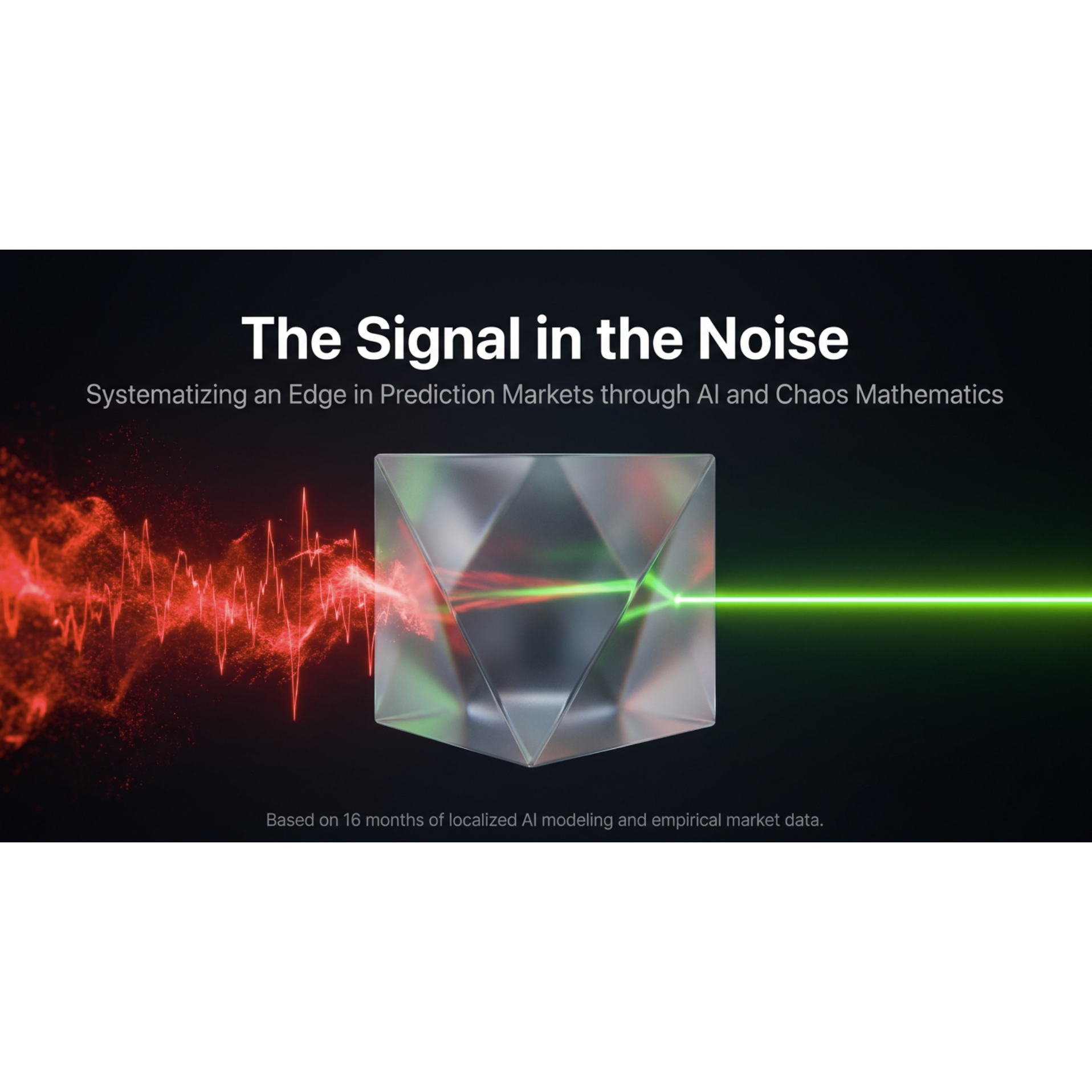
    ReadMultiplex.com: Prediction Markets AI Model: The AI-Driven Edge and Navigating Uncertainty in the Modern Era.

    The rise of artificial intelligence has afforded a new edge in how markets can be understood. The ability to anticipate and hedge against future outcomes is no longer a luxury, but it is a strategic necessity. Prediction markets stand as one of the most powerful mechanisms humanity has developed for distilling collective intelligence into actionable probabilities. Far from mere gambling, they function as sophisticated information-aggregation engines and risk-management instruments, much like the commodity and futures markets that have underpinned global commerce for centuries. This is not an endorsement of recreational betting. It is a recognition that, in turbulent times, possessing a genuine informational or analytical edge—and the tools to hedge real-world exposures—empowers individuals, businesses, and portfolios to navigate complexity with greater resilience and foresight. Prediction markets, when approached with discipline, data, and purpose, offer precisely that. I am not an investment advisor. I am not supplying investment advice. You should seek the advice of a registered investment advisor. I am also not encoring you to gamble. In fact, this article is to show you there may be other ways to see prediction markets. We live in an era of profound transition the Interregnum between industrial-era certainties and an AI-augmented future of abundance and volatility. Traditional forecasting tools often lag; centralized predictions frequently disappoint. Prediction markets, augmented by rigorous local AI systems, offer a decentralized, incentive-aligned alternative: they force beliefs to confront reality through tradable prices. Having an edge is not about beating the house for thrills. It is about cultivating superior models of reality, identifying mispricings born of incomplete information or behavioral biases, and using that insight to manage risk. Hedging business and technological exposures whether through Tesla-related contracts, AI milestones, or macro indicators provides a form of insurance and optionality in a world where linear projections routinely fail. This is not gambling. It is participation in the most sophisticated collective intelligence mechanism available: markets that reward accuracy and penalize error. In this age of accelerating change, those who develop disciplined edges and prudent hedges position themselves not as passive observers but as active navigators of the future. Read more at: ReadMultiplex.com Support this work by buying us a coffee: https://ko-fi.com/brianroemmele Hide
    • Transcript
  • #62
    July 17 · 6 min

    The Exclusive Brian Roemmele Interview: My Decades Of Brain Research Starting With The Zygon.

    Back in the early ’90s, I took a chance on the Zygon SuperMind and its evolved Learning Machine—devices dismissed by many as glorified scam gadgets with red LEDs flashing through closed eyelids. My Princeton library patent dives and years of personal use proved otherwise: reliable frequency-following responses rooted in Soviet-era neurological research delivered measurable gains in focus, creativity, and memory encoding. That empirical foundation now resonates powerfully with MIT’s 40Hz light therapy breakthroughs for Alzheimer’s. Join me in this 10-minute interview as I weave these threads together, exploring how flashing lights are not just relics of mail-order dreams but practical tools reshaping our understanding of brain plasticity and human potential in the interregnum ahead. Read more at: ReadMultiplex.com Support this work by buying us a coffee: https://ko-fi.com/brianroemmele
    • Transcript
  • #61
    July 16 · 46 min

    ReadMultiplex.com: Flashing LEDs: The Secret Soviet Science, A 1990s Gadget, and MIT Alzheimer’s Breakthrough That Are Reshaping How We Think About Brain States.

    I want to set the scene for you. It's 1995. You're flipping through the back pages of Popular Science magazine. you're flipping past, like, the glossy features on flying cars and underwater cities, and you hit that bizarre, bizarre in the back, the black-and-white mail-order ad blocks. Tiny, cramped text just packed with the most impossible promises. It was a very specific era of media. You'd have advertisements for x-ray spectacles sitting literally right next to schematics for building a homemade hovercraft out of a vacuum cleaner motor. And right in the middle of all that chaotic noise, there was this ad for a device that looked, I mean, it looked like a prop from a bad low-budget cyberpunk movie. Bulky, plastic glasses, flashing lights, the whole aesthetic. The ad copy claimed that if you strap these things on and put on headphones playing these layered pulsing electronic sounds, you could manually synchronize your brainwaves. And the promises were just astronomical. We're talking accelerated learning, instantaneous deep meditation, profound personal transformation. Unlocking hidden creativity, which, you know, if you have a critical mind at all, your scam radar just starts screaming. It triggers immediate skepticism, the aesthetic, the placement in the back of a magazine next to the sea monkeys, the grandiose promises. I mean, it has all the hallmarks of a classic exploitative mail order scam. Targeting people who are just like desperate for a quick fix. A shortcut to fix their cognitive limitations. I was more than skeptical I was sure it had to be a scam. But I am trained as an empirical scientist (no degrees just a lifetime of research) and I take no claim for or against on face value. This gives one freedom to neither “believe” or “debunk”, no matter how outlandish a claim may be. Heck, Albert Einstein endorsed it? When I saw the ad in the back pages of Popular Science I was ready to put my money on the line. It was not a splashy cover story but one of those dense mail order blocks where tinkerers and seekers found the next piece of forbidden knowledge. This device promised to sync your brainwaves with pulsing red light and layered audio so you could drop into states optimized for learning, creativity, or deeper transformation. I was willing to test it. It turns out those bizarre, scammy-looking flashing glasses actually stumbled onto something profoundly real. A biologically real neurological phenomenon called brainwave entrainment, which is fascinating because the mechanism driving those old gadgets has actually survived. This fantastical ad in the 1990s has a line strait to 2026 and an MIT study that may cure Alzheimer’s disease (not my words, the words of MIT). Read more at: ReadMultiplex.com Support this work by buying us a coffee: https://ko-fi.com/brianroemmele
    • Transcript
Showing 1–20 of 30 episodes