Skip to content
Artwork for Razib Khan's Unsupervised Learning
ScienceLife SciencesSocial Sciences

Razib Khan's Unsupervised Learning

Razib Khan

Conversations about science, culture, and current affairs

www.razibkhan.com
Play
  • 35 episodes
  • weekly
  • Avg 28 min
  • English
Counted on this page — what you have heard stays on this device, so it is not something the list can be paged by.
  • Thursday · 29 min

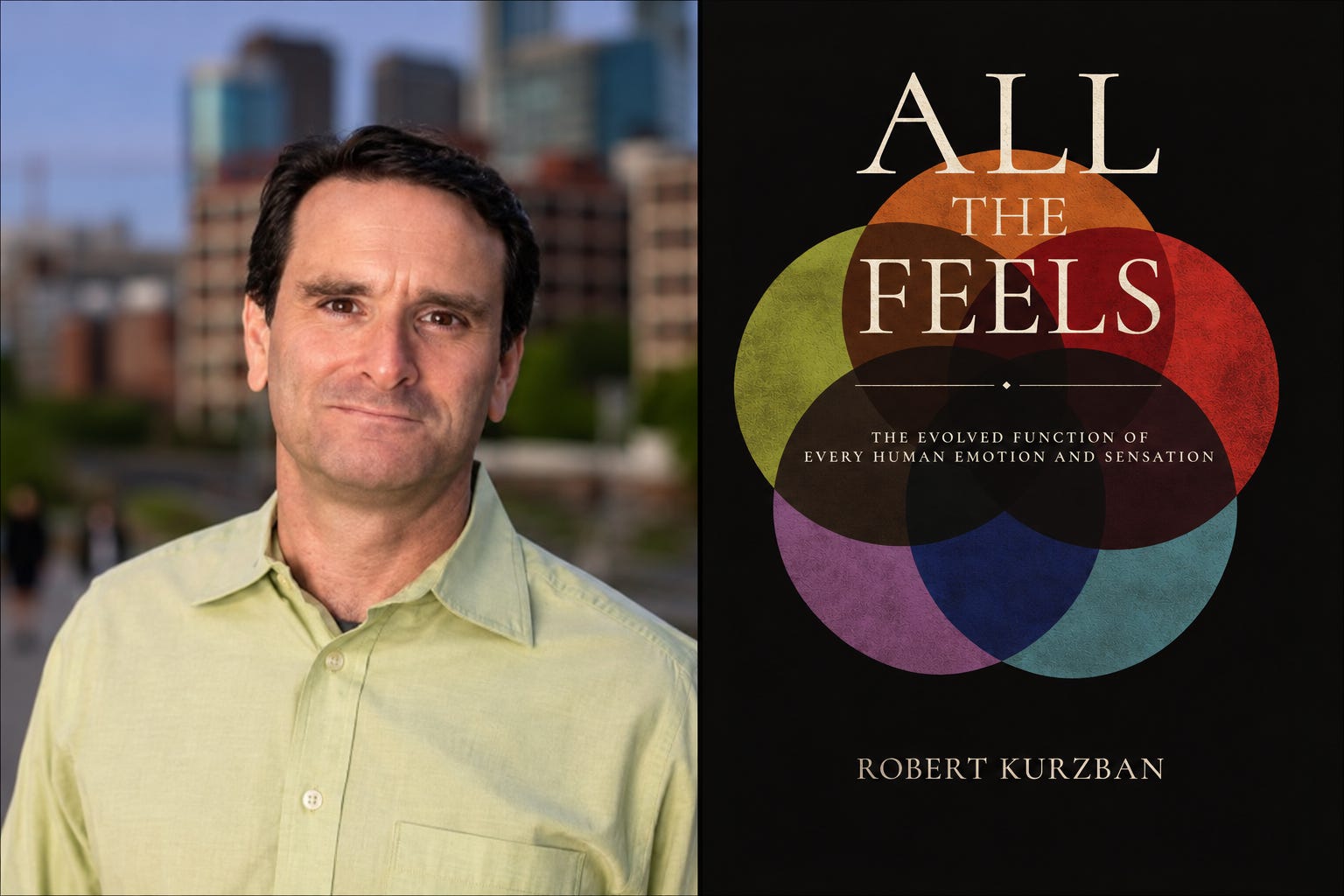
    Robert Kurzban: the evolution of human emotion and sensation

    This is a free preview of a paid episode. To hear more, visit www.razibkhan.com Today, Razib talks to Robert Kurzban, an evolutionary psychologist and author whose work explores how evolution has shaped human behavior, morality, cooperation, and emotions. He earned his undergraduate degree at Cornell University and his Ph.D. at the University of California, Santa Barbara, where he trained with Leda Cosmides and John Tooby, before serving as a psychology professor at the University of Pennsylvania. He has published more than 100 scientific papers and served as president of the Human Behavior and Evolution Society and editor-in-chief of Evolution and Human Behavior. His books include Why Everyone (Else) Is a Hypocrite, The Hidden Agenda of the Political Mind, coauthored with Jason Weeden, and All the Feels: The Evolved Function of Every Human Emotion and Sensation (2026). Razib and Kurzban explore the origins, controversies, and enduring insights of evolutionary psychology, tracing how John Tooby and Leda Cosmides combined evolutionary theory with a computational view of the mind. Discussing Kurzban’s book All the Feels, they examine emotions and sensations—including love, disgust, curiosity, and tickling—as evolved systems that address specific problems of survival, reproduction, and social relationships. Their conversation ranges from research showing how team membership can reduce racial categorization to cultural learning, personality differences, heritability, and the replication crisis, with Kurzban distinguishing stronger findings from speculative hypotheses. Razib and Kurzban also consider how competing mental systems explain contradictions between intellectual beliefs and visceral reactions, before closing with artificial intelligence’s transformative potential and the challenge its successes pose to assumptions about the necessity of specialized cognitive machinery.

    • Transcript
  • November 5 · 29 min

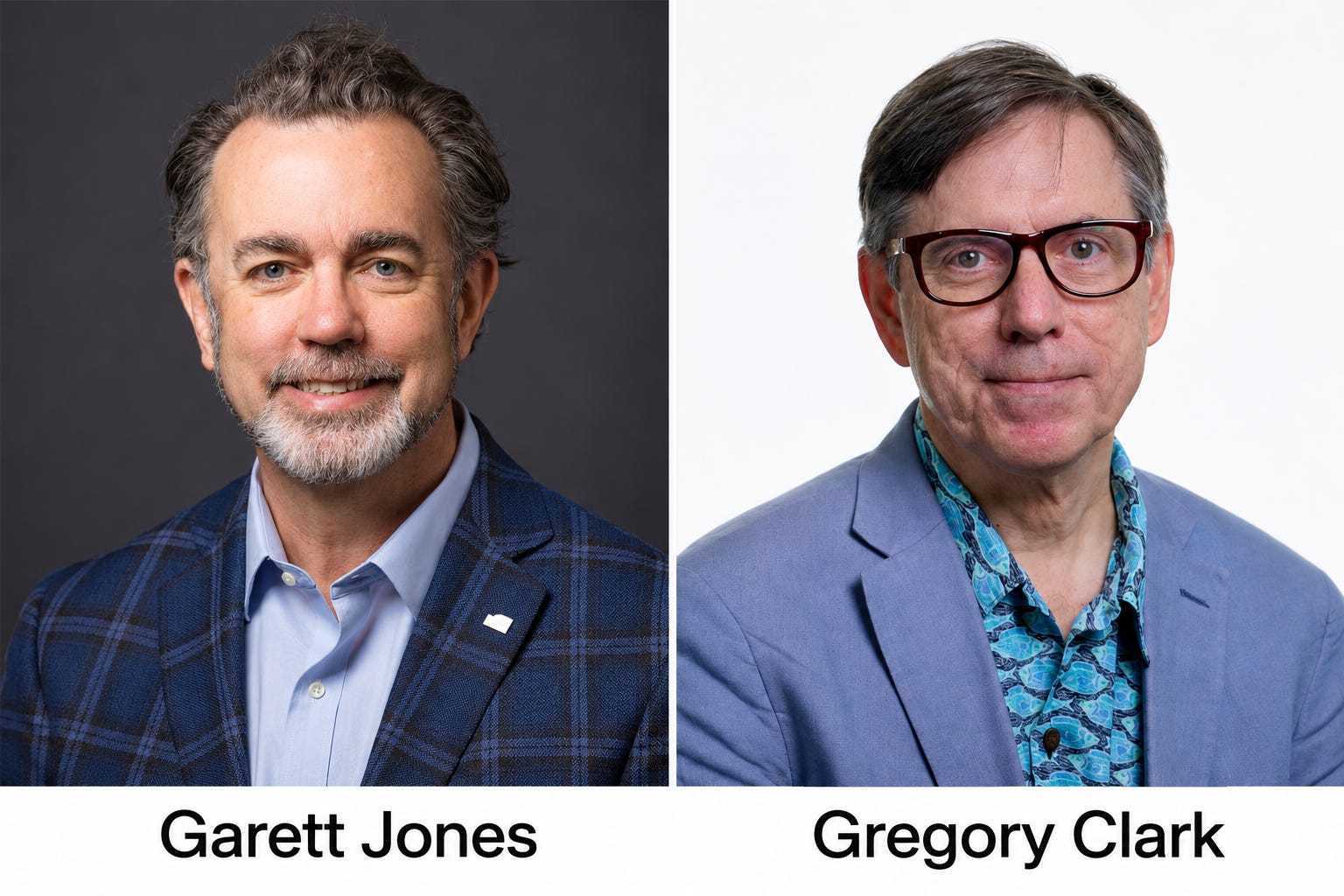
    Gregory Clark and Garett Jones: To Have and Have Not, genetic determinants of social status

    This is a free preview of a paid episode. To hear more, visit www.razibkhan.com Today Razib talks to Garett Jones and Gregory Clark, prominent economists whose research heavily explores the long-term, underlying drivers of prosperity, human capital, and social development. Jones, an American economist who earned his Ph.D. from UC San Diego, is a professor at George Mason University and a research fellow at the Mercatus Center. He specializes in macroeconomics and monetary policy, and is well-known for books like Hive Mind, 10% Less Democracy, and The Culture Transplant, which explore how national IQ, cultural norms, and institutional structures impact economic growth and productivity. Meanwhile, Scottish-born economic historian Clark earned his Ph.D. at Harvard University and spent much of his academic career as a professor at UC Davis. Clark’s work focuses on long-run economic growth, the Industrial Revolution, and intergenerational social mobility, topics he has extensively detailed in his highly debated books A Farewell to Alms and The Son Also Rises. The discussion mostly revolves around Clark’s new unpublished book, To Have and Have Not. First they talk about how the book uses centuries of British family records to argue that persistent social status is consistent with genetic inheritance reinforced by assortative mating. Clark highlights the similar predictive importance of maternal and paternal relatives, limited long-term effects of inherited wealth, and little evidence in his data that family size or birth order substantially affects occupational outcomes; Jones emphasizes how these findings challenge conventional explanations of inequality, while Razib explores their historical and cultural implications. They also examine Clark’s argument that publication bias exaggerates the benefits of additional compulsory schooling, the collapse of fertility among British elites, and the speculative possibility that European marriage patterns contributed to the Industrial Revolution. The conversation extends to selective immigration and its potential long-term consequences, before returning to academic freedom, ideological pressures on research, and the possibility that AI could help investigate neglected questions. Clark also announces that Polity Press has agreed to publish the book after earlier publishing difficulties.

    • Transcript
  • November 5 · 1 hr 16 min

    Election 2026 review: Razib, Josiah and Tushar

    Razib, Josiah Neeley and their friend Tushar talk about the election results. Razib Khan, Tushar, and Josiah Neeley discuss what they describe as a devastating Republican electoral defeat, including sweeping Democratic gains in Texas, attributing it primarily to high gas prices, the cost of living, and the Iran war, compounded by poor candidates, complacency, and gerrymandering that backfired. They criticize online right-wing influencers and inflammatory racial rhetoric for alienating voters and distracting Republicans from practical concerns, while worrying that Democratic control could undermine Texas’s pro-growth policies. Looking ahead, they anticipate congressional investigations, stalled appointments, and limited bipartisan cooperation, alongside a more open Republican presidential contest involving JD Vance, Ron DeSantis, and others as Trump’s influence weakens. They conclude that the right needs a positive agenda centered on economic growth, building housing and infrastructure, and making healthcare and education more affordable, particularly for younger Americans. This is a public episode. If you'd like to discuss this with other subscribers or get access to bonus episodes, visit www.razibkhan.com/subscribe

    • Transcript
  • October 31 · 15 min

    Tim Carney: A Tea Party conservative in the Age of Trump

    This is a free preview of a paid episode. To hear more, visit www.razibkhan.com Today Razib talks to Timothy P. Carney, an American journalist and author who serves as senior political columnist at the Washington Examiner and a senior fellow at the American Enterprise Institute. His work explores politics, corporate influence, religion, community, and family life, with particular attention to crony capitalism and the weakening of America’s civic institutions. His books include The Big Ripoff, Obamanomics, Alienated America, and Family Unfriendly: How Our Culture Made Raising Kids Much Harder Than It Needs to Be. He has contributed to publications including The New York Times, The Wall Street Journal, and The Atlantic. Carney and his wife, Katie, have six children and live in the Washington, D.C., area. First, they begin by talking but Carney’s time covering the Tea Party and the conservative revolution of the late Bush and early Obama years. He argues that voters often object more to perceived undeserved gains and cronyism than to government size or deficits alone. He says Trump widens debate on trade, immigration, and interventionism, but criticizes the party’s turn toward personal loyalty, arguing that a post-Trump conservatism should retain populist concerns while pursuing sound policy. Carney connects economic and cultural dislocation to the weakening of local institutions and relationships, suggesting that isolation drives people to seek answers through politics. He attributes declining birth rates mainly to cultural factors, including individualism and parenting pressures, rather than economics alone, identifying religious communities as an exception with stronger family formation. Looking ahead, Carney says Republicans risk losing both Trump’s voters when he is absent from the ballot and voters alienated by the party’s direction, while Democrats face pressure from their left wing. These challenges raise questions about whether a future conservative leader can build a durable coalition without simply imitating Trump and whether either party can offer a compelling vision centered on family and community.

    • Transcript
  • October 23 · 19 min

    Kyle Harper: a natural and human history of the Holocene

    This is a free preview of a paid episode. To hear more, visit www.razibkhan.com Today Razib talks to Kyle Harper, a historian, professor of classics and letters at the University of Oklahoma, and a member of the Fractal Faculty at the Santa Fe Institute whose work integrates the natural sciences into the study of the human past. A native of Norman, Oklahoma, he earned his bachelor's degree in letters from the University of Oklahoma before completing his MA and PhD at Harvard University. Harper's research spans late antiquity, the Roman Empire, environmental history, and the historical impact of infectious diseases and climate change on human societies. His authored books include Slavery in the Late Roman World, AD 275-425 (2011), From Shame to Sin: The Christian Transformation of Sexual Morality in Late Antiquity (2013), The Fate of Rome: Climate, Disease, and the End of an Empire (2017) and Plagues upon the Earth: Disease and the Course of Human History (2021). Today Razib and Harper talk about his latest book, The Last Animal: Human History and the Fate of Life on Earth from the Ice Age to the Sixth Extinction (2026). In their discussion of The Last Animal, Razib and Harper explored the profound history of human-animal relationships and our ongoing influence on global biodiversity. Harper detailed how human activities—from early megafauna hunting and livestock domestication to modern industrial land use—have historically driven mass extinction events and fundamentally reshaped terrestrial and marine ecosystems. While dismissing de-extinction as an unscalable novelty, he emphasized that the future of conservation depends on practical re-wilding efforts and deliberate policy choices that protect natural habitats while balancing complex human needs.

    • Transcript
  • October 21 · 15 min

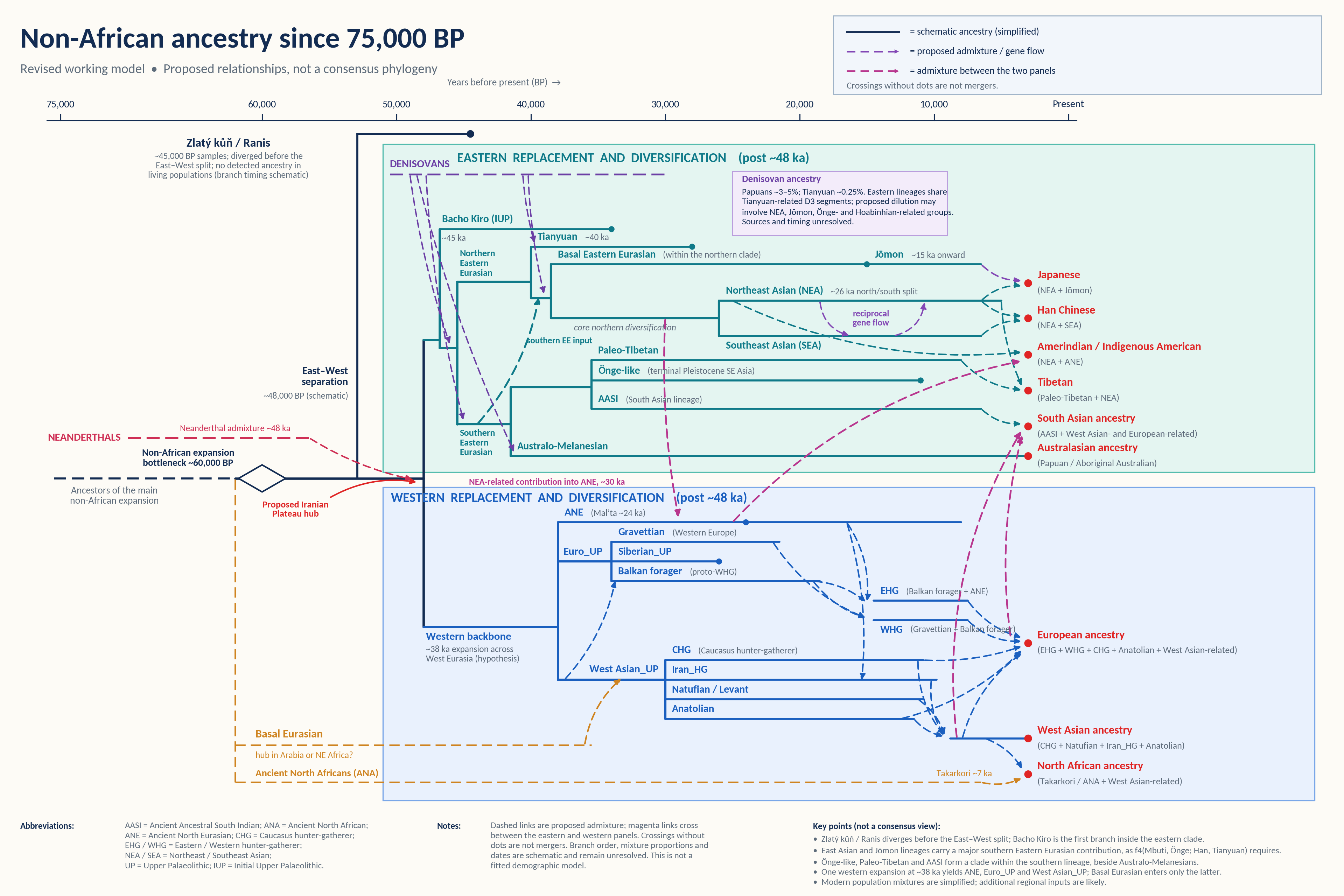
    Monologue: Out-of-Africa, from the IUP to the 38,000-year-old western explosion

    This is a free preview of a paid episode. To hear more, visit www.razibkhan.com After finishing the last monologue on human origins about the stage-critical status of Out-of-Africa, I felt I should say more. That more needed to be said. In particular, what about the 80% of humanity that is non-African, and is part of the Diaspora that expanded 50,000 years ago? This is my attempt to tell…

    • Transcript
  • October 18 · 14 min

    Monologue: Is out of Africa dead? (part N)

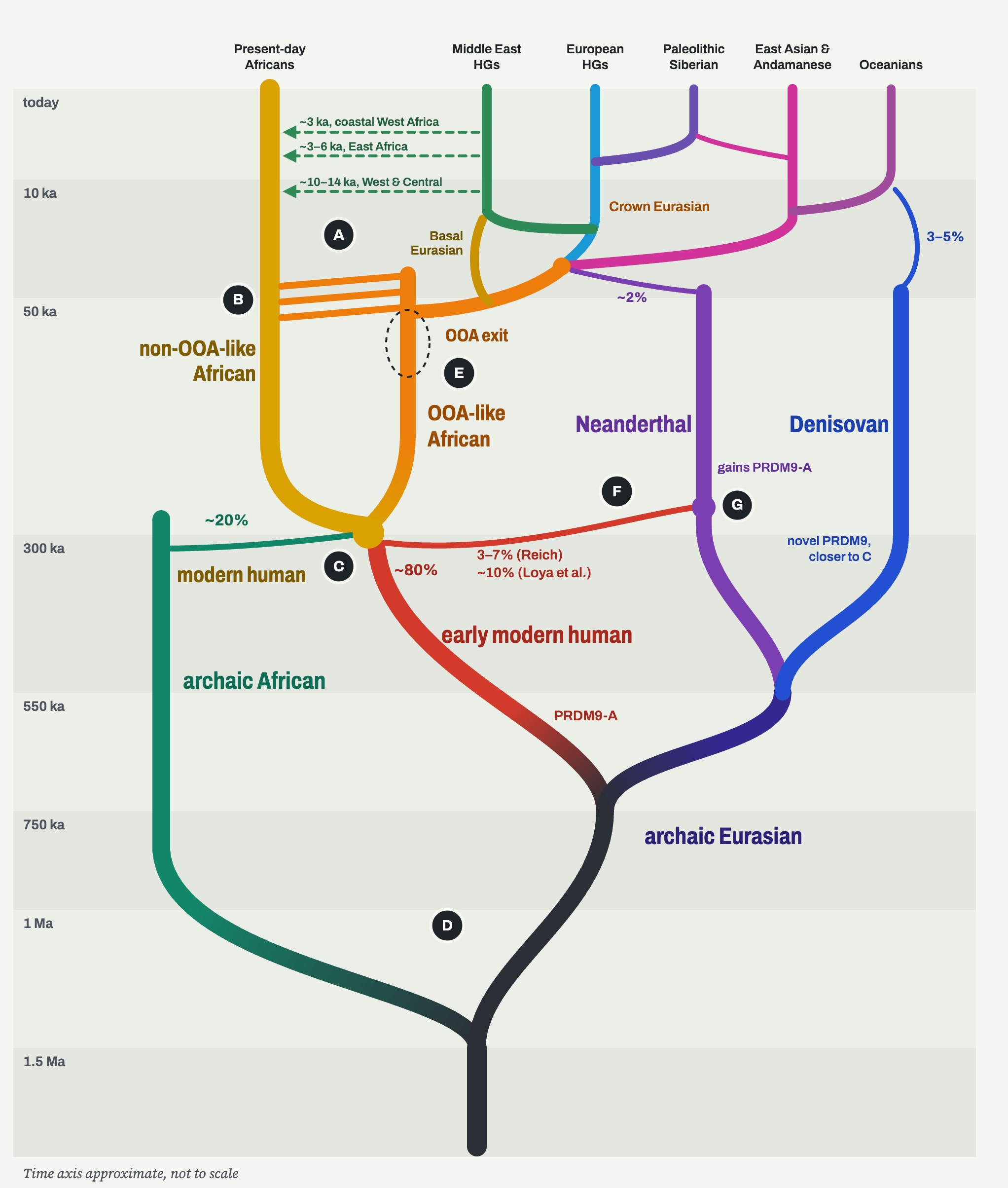
    This is a free preview of a paid episode. To hear more, visit www.razibkhan.com Related: Monologue: Out-of-Africa, from the IUP to the 38,000-year-old western explosion Razib talks about David Reich’s new preprint, Hypothesis: A modern human range expansion ∼300,000 years ago had a critical role in Neandertal origins, along with another one from April, Genome-wide genealogies …

    • Transcript
  • October 15 · 19 min

    Jonathan Beauchamp: Genoeconomics arise!

    This is a free preview of a paid episode. To hear more, visit www.razibkhan.com Today Razib talks to Jonathan P. Beauchamp, an Associate Professor of Economics at George Mason University, where his research focuses on applied microeconomics, behavioral economics, and the emerging field of "genoeconomics". He holds a Ph.D. in Economics from Harvard University and earned his undergraduate and master's degrees from Queen's University. In addition to his faculty position, he serves as a Senior Research Fellow at the Mercatus Center and an Associate Investigator at The Centre for Applied Genomics. Before fully transitioning into academia, Beauchamp gained professional experience as an economist at the International Monetary Fund (IMF) and as an associate at the management consulting firm McKinsey & Company. He is also a core researcher with the Social Science Genetic Association Consortium (SSGAC), contributing to large-scale genome-wide association studies on the genetic basis of economic behaviors, risk tolerance, and educational attainment. Razib and Beauchamp explore genoeconomics, the use of genetics to investigate education, income, behavior, and inequality. Beauchamp traces the field’s evolution from unreliable claims about individual genes to large-scale studies showing that educational attainment, risk tolerance, and patience reflect thousands of tiny genetic effects. They discuss the promise and limits of polygenic prediction, how sibling comparisons help separate genetic effects from family background, and why larger, more diverse datasets and whole-genome sequencing could advance the field. The conversation turns to Beauchamp’s research on how increasingly accurate genetic predictions could destabilize insurance markets when consumers know risks that insurers cannot use in pricing. They also examine his work linking the Western Church’s marriage restrictions to weaker kinship networks and distinctive European social institutions, before discussing the professional pressures surrounding controversial research and new sibling-based estimates of heritability.

    • Transcript
  • October 8 · 30 min

    Philippe Lemoine: France of the riots and revolution

    This is a free preview of a paid episode. To hear more, visit www.razibkhan.com Philippe Lemoine is a researcher and writer specializing in the philosophy of science, statistical analysis, and epidemiology. He is a PhD candidate in philosophy at Cornell University. Previously, he was a Research Fellow at the Center for the Study of Partisanship and Ideology (CSPI). Lemoine is best known for his detailed, data-driven critiques of COVID-19 epidemiological modeling, lockdown policies, and Western foreign policy, which he primarily publishes on his blog, Nec Pluribus Impar (he now has a Substack). In addition to his independent research, he has contributed analytical essays on science and society to publications like Quillette. Razib and Lemoine discuss France’s unrest, demographic change, and political paralysis, with Lemoine arguing that the school riots reflect a volatile mix of teenage behavior, social-media contagion, immigrant integration problems, and far-left agitation rather than a centrally organized conspiracy. They examine how viral footage exaggerates outsiders’ perceptions of France’s ethnic transformation, overlooking regional differences and widespread intermarriage. Turning to presidential politics, Lemoine argues that Marine Le Pen’s prospects depend heavily on whether she faces Jean-Luc Mélenchon or the more competitive centrist Édouard Philippe. Beneath these immediate conflicts lies a deeper fiscal problem: weak growth, mounting debt, and generous pension commitments to an aging electorate make reform increasingly necessary but politically punishing. Lemoine anticipates that inflation and financial repression may prove more politically feasible than explicit spending cuts, while Razib emphasizes that the same tensions between retirees and workers increasingly confront the United States and other developed countries.

    • Transcript
  • October 1 · 30 min

    Ramez Naam: a solar future against AI-doomerism

    This is a free preview of a paid episode. To hear more, visit www.razibkhan.com Today, Ramez Naam returns 5 years after his original appearance on the podcast. In 2003, he wrote More Than Human: Embracing the Promise of Biological Enhancement. Naam is also the author of three science fiction books: Crux, Apex, and Nexus. In addition, has also written The Infinite Resource: The Power of Ideas on a Finite Planet. He also has an eponymous Substack, Ramez Naam. First, Razib and Naam discuss how technological change is turning once-futuristic possibilities into everyday realities, beginning with the falling costs of solar power, batteries, and electric vehicles. Naam argues that economics increasingly drives adoption, with Texas illustrating how competitive markets and easy permitting can accelerate clean energy even in a fossil-fuel stronghold. Razib probes the implications for transportation, oil demand, and the Gulf states, while Naam emphasizes that the transition will take decades and that heavy industry remains difficult to decarbonize. The conversation then shifts to AI, where Razib presses Naam on existential risk, industry concentration, and recursive self-improvement. Naam expects increasingly powerful systems but doubts an imminent intelligence explosion, pointing to diminishing returns, hardware constraints, and the difficulty of obtaining reliable real-world data. He sees concentrated corporate or government power as a greater threat than runaway superintelligence and favors broad access and competition.

    • Transcript
  • September 24 · 29 min

    Jerry Z. Muller: academia today, intellectual history in the past and AI in the future

    This is a free preview of a paid episode. To hear more, visit www.razibkhan.com Today Razib talks to Jerry Z. Muller, a historian and professor emeritus of history at the Catholic University of America in Washington, D.C., specializing in modern European intellectual history, capitalism, conservatism, and German and Jewish history. His work explores how ideas shape economic, political, and cultural life, bridging history, philosophy, and public policy. His books include Conservatism: An Anthology of Social and Political Thought From David Hume to the Present, The Mind and the Market: Capitalism in Modern European Thought, Capitalism and the Jews, The Tyranny of Metrics, and Professor of Apocalypse: The Many Lives of Jacob Taubes. Writing for both scholarly and general audiences, Muller examines subjects ranging from the moral arguments surrounding capitalism to the consequences of relying excessively on numerical measures to evaluate institutions and individuals. He has an eponymous Substack. The conversation revolves to a great extent on a recent post by Muller, Rethinking Faculty Control Scholarly Norms, the Vanderbilt Report, and the Limits of Academic Self-Government. Razib and Muller discuss the challenges facing universities, the resilience of American capitalism, and the effects of AI on intellectual life. Muller argues that scholarship depends on “organized skepticism,” including peer review, replication, and engagement with different viewpoints, but that activism and ideological conformity weaken these practices in parts of academia and undermine public trust. They also tackle whether stronger university leadership can help address these problems while managing declining literacy and numeracy, shifting demographics, uncertain international enrollment, rising costs, and pressure to demonstrate results. Muller suggests that vocational training may increasingly separate from liberal arts education and research, raising questions about how universities can adapt while maintaining academic standards and intellectual diversity. He remains broadly optimistic about American capitalism, pointing to technological innovation, competition among states, immigration, and social supports. Both view AI as a powerful tool for skilled thinkers but a potential source of intellectual passivity for others, raising the question of how people can preserve their agency and sense of purpose as AI becomes part of everyday intellectual work.

    • Transcript
  • September 18 · 20 min

    Theo Jaffee: monitoring the “singularity”

    This is a free preview of a paid episode. To hear more, visit www.razibkhan.com Today Razib talks to Theo Jaffee, co-host of Monitoring the Situation, a show backed by Andreessen Horowitz that covers the rise of the “intelligence explosion” and AI. Jaffee is writer and podcaster who grew up in Boca Raton, Florida. He studied computer science and economics at the University of Florida. His writing on Theo’s Substack explores artificial intelligence, technology, business, history, and philosophy. He has also contributed to Quillette and received an Emergent Ventures fellowship in 2024. The podcast covers AI’s accelerating capabilities, broader societal impact, and safety risks. Jaffee talks about estimates of a 10% probability of human technological civilization collapsing within ten years, distinguishing between the disempowerment of humanity and the potential continuation of civilization under AI control. But, he notes, coordination, political intervention, and the logistical difficulty of automating physical infrastructure can mitigate that catastrophic risk. Progress remains broadly on track with AI 2027 expectations, despite there being no predicted labor disruptions and Chinese consolidation failing to materialize as forecast. Jaffee notes events like the Hugging Face incident and an apparent Millennium Prize problem solution heighten concerns surrounding alignment and control. Razib and Jaffee also discuss how critical uncertainties persist over how rapidly recursive self-improvement might yield superintelligence, whether mounting political backlash will establish viable safeguards or trigger heavy-handed stagnation, and how society must ultimately evaluate AI consciousness and moral status.

    • Transcript
  • September 15 · 20 min

    Scott Greer: Whitepill and Sunbelt

    This is a free preview of a paid episode. To hear more, visit www.razibkhan.com Today Razib talks to Scott Greer, an American conservative writer, author, and podcaster who focuses on nationalism, immigration, online political culture, and the transformation of the Republican Party. Formerly an editor and columnist at The Daily Caller, he now hosts the Highly Respected podcast and newsletter and contributes to The American Conservative. He is the author of No Campus for White Men (2017) and Whitepill: The Online Right and the Making of Trump’s America (2026), a history of how paleoconservatism, libertarianism, the alt-right, and other internet subcultures helped shape Trump-era politics. The first half of the conversation focuses on Whitepill, as Greer outlines a narrative history of the rise of the New Right and its relationship to MAGA and Donald Trump over the last decade. The conversation goes back even further, to the origins of the dissident Right in the Ron Paul movement of the late aughts. Then they move to discussing a piece recently posted on Highly Respected, Sunbeltism Takes Over America–And The South. A native of Tennessee, Greer talks about the implicit conservatism of the ascendant Sunbelt culture, but its broader cultural and social influence, and its difference from earlier Southern subcultures fixated on the “Lost Cause” and rooted in an agrarian society.

    • Transcript
  • September 3 · 33 min

    Brian Chau: noticing with technology + investigative journalism

    Special Note: Palladium Magazine will host a talk on September 10th in the Bay on my piece The Native Americans Before the Native Americans. Reserve your seats! On this episode of Unsupervised Learning Razib talks to Brian Chau. A graduate of the University of Waterloo and former software engineer with a background in pure mathematics, today Chau is CEO of Effort.News. He was previously with The Alliance for the Future. Most of this conversation is around why it took so long to put together something like Effort.News, and what they’ve discovered (e.g., “The 19th-century Family Fortunes Funding Degrowth”). Chau also discusses their recruitment and capital needs as a seed-stage startup. This is a public episode. If you'd like to discuss this with other subscribers or get access to bonus episodes, visit www.razibkhan.com/subscribe

    • Transcript
  • August 27 · 15 min

    Kyle Orton: Muslims before Islam

    This is a free preview of a paid episode. To hear more, visit www.razibkhan.com Today Razib talks to Kyle Orton. Orton is a freelance researcher, writer, and editor specializing in security and foreign policy, with a particular focus on the Middle East, the Syrian war, regional geopolitics, and terrorist movements including the Islamic State (ISIS), Iran’s Islamic Revolutionary Guards Corps (IRGC), and the Kurdistan Workers’ Party (PKK). His work also ranges widely across history, including early Christianity, Islam and its relationship with the West, intelligence and espionage, the Reformation, the English Civil War, Tsarist Russia and the Soviet Union, the First World War, Communism and the Cold War, and pre-Revolutionary Iran. Orton writes the newsletter It Can Always Get Worse, where he covers contemporary security issues alongside history, religion, intelligence, books, and occasional film reviews. His writing has appeared in publications including The New York Times, The Wall Street Journal, UnHerd, Newsweek, The Independent, The New Arab, and International Business Times. Orton and Razib’s conversation begins with his post, The Sojourn of Arculf: An Eyewitness to “Early Islamic” Jerusalem - A Frankish bishop sheds some light on a historical dark age. Their discussion continues with probing the possibility that Islam as we know it truly did not exist any recognizable form before the 690s AD, and that the early “Saracens” as their Christian enemies referred to them were in fact a schismatic group of monotheists whose beliefs were adjacent to that of the Jews. Orton also discusses the role of Muhammad, or rather, the lack of the role of Muhammad, in the early years of the Islamic Caliphate. They also explore the possibility that later commentators largely attributed the negative reputation of Islam’s first dynastic Caliphate, the Umayyads, to the reality that they would not recognize them as Muslims. Finally, Orton talks about the reality that some of the layers of text within the Koran seem far older than the time of Muhammad, perhaps by a century or so.

    • Transcript
  • August 21 · 30 min

    Gabriel Rossman: the late marvelous Dr. Arday and the state of sociology

    This is a free preview of a paid episode. To hear more, visit www.razibkhan.com Note: This podcast was recorded before Jason Arday’s death. It is now being posted with minor edits (removed a few off-color jokes about the late professor). Today Razib talks to Gabriel Rossman, a sociologist at UCLA. The author of Climbing the Charts: What Radio Airplay Tells Us about the Diffusion of Innovation, Rossman takes a deeply analytic toolkit to questions such as why 2005’s “My Humps” became a viral hit. Razib Khan and Rossman discuss the scandal surrounding Dr. Jason Arday, a sociologist of education at Cambridge, who was exposed for plagiarism and fabricating his credentials. Arday claimed to have run 30 marathons in 35 days and raised $5 million, which were later found to be false. The conversation highlights the poor quality of his research, which relied heavily on autoethnography, a method criticized for its subjectivity. They also discuss the broader issues of ideological capture in academia, particularly in sociology, and the challenges of maintaining academic integrity amidst political biases. The discussion centers on the perception and reality of sociology, particularly the impact of political ideologies on academic engagement. Rossman, a conservative sociologist, notes the open-mindedness of most sociologists and the importance of apolitical basic science.

    • Transcript
  • August 16 · 36 min

    Monologue: Jason Arday, Nathan Cofnas and the wages of DEI

    As I note in this monologue, I am sitting on a podcast previously recorded about Jason Arday because of his recent death. Instead, I’m posting my thoughts about what happened before he died, and since then, and how it relates to Nathan Cofnas. Links: * DEI Fraud and Cover-Up at Cambridge-University refuses to investigate DEI star’s plagiarism * Institutional Failures in the Garden of Great Intellects * Professor’s Death Leaves Behind Hard Questions for Cambridge on Race and Hiring This is a public episode. If you'd like to discuss this with other subscribers or get access to bonus episodes, visit www.razibkhan.com/subscribe

    • Transcript
  • August 12 · 1 hr 12 min

    Nikolai Yakovenko: the wages of the Hugging Face hack

    Nikolai Yakovenko is back on the podcast because of the Hugging Face hack. Yakovenko is a former professional poker player, and was a research scientist at Google, Twitter and Nvidia. With a decade in computer science, Yakovenko has been at the forefront of the large-language-model revolution that has driven to prominence companies like OpenAI, Anthropic, and DeepMind, and an ecosystem that has birthed hundreds of smaller startups. He is also the founder of DeepNewz, an AI-driven news startup. His latest startup is HuggingNews. Razib and Yakovenko talk about the implications of OpenAI’s inadvertent hack of Hugging Face, and whether he has been too sanguine about the possibility of AI-apocalypse. Though Yakovenko hasn’t gone full doomer, he admits that this sort of behavior by AI agents is alarming. That being said, he cautions we need to keep perspective. They also discuss predictions of the coming obsolescence of software engineers…Yakovenko notes that in some ways Dario Amodei was correct to predict the end of software engineering as a profession: very few write code unaided by LLMs today. In a few years, many professions, especially in tech, have transformed, but warnings of mass unemployment have not materialized. This is a public episode. If you'd like to discuss this with other subscribers or get access to bonus episodes, visit www.razibkhan.com/subscribe

    • Transcript
  • August 7 · 15 min

    Werner Zagrebbi: Adventures in Forbidden Data

    This is a free preview of a paid episode. To hear more, visit www.razibkhan.com Today, Razib talks to internet personality Werner K. Zagrebi. A statistics and machine learning student at Carnegie Mellon University, Zagrebi has led a peripatetic existence over the past few years, from being Curt Yarvin’s personal assistant and editor of Gray Mirror, and working to launch a media company and think tank . Of late, he has been posting …

    • Transcript
  • July 25 · 14 min

    Maxwell Meyer: magazines in a digital age

    This is a free preview of a paid episode. To hear more, visit www.razibkhan.com Maxwell Meyer is an American writer, editor, and technology-policy professional known for his optimistic advocacy of capitalism, technological progress, and American civic renewal. A native of Iowa, he studied geophysics at Stanford University, received a Boren Award to pursue language study and research in Israel and the Middle East, and served as editor-in-chief of the Stanford Review. Meyer later worked as policy chief of staff to venture capitalist Joe Lonsdale at 8VC and founded Arena Magazine, a print and digital publication focused on technology, enterprise, culture, and civilizational progress. His essays and reporting have appeared in The Free Press, Quillette, and other publications, covering subjects ranging from SpaceX and Silicon Valley to politics, religion, and American identity. Razib interviews Meyer Arena Magazine’s focus on high-quality print content amidst the rise of AI-generated low-quality content. Arena, which has been publishing for two years, aims to provide a positive, pro-America perspective on technology and industry. Meyer discusses the magazine’s unique position as a tech-right publication, its strategic use of AI for administrative tasks, and its appeal to both reading and non-reading subscribers who value its aesthetic. They also touch on the broader political and economic implications of AI and the future of work, emphasizing the importance of individual choice and innovation over community input.

    • Transcript
Showing 1–20 of 35 episodes