
PO

Philosophy Overdose
Philosophy Overdose
A collection of public and academic philosophy videos, mostly analytic philosophy but occasionally continental philosophy too. The channel looks for thought-provoking lectures and interviews, particularly what is rare and involves famous figures. There is occasionally an attempt at translation as well, especially that of German and French.
Nothing here is monetized, the channel is wholly non-commercial. Everything here is for the purpose of education and spreading around good philosophy content. If there's any problem, let me know, and I can take it down.
Feel free to let me know if there's anything you'd like me to post, including one of your own lectures.
Philosophy, Epistemology, Ethics, History of Philosophy, Political Philosophy, History of Ideas, Ontology, Critical Thinking, Moral Philosophy, Philosophy of Science, Logic, Philosophy of Mind, Metaphysics, Philosophy of Religion, Social Philosophy, Philosophy of Language, Consciousness, Philosophy of Mathematics, etc.
Links:
Facebook: https://www.facebook.com/PhilosophyOverdoseYoutube/
- 281 episodes
- daily
- Avg 48 min
- English
Counted on this page — what you have heard stays on this device, so it is not something the list can be paged by.
- PO
 Saturday · 8 min
Divine Command Theory and the Euthyphro Objection
Russ Shafer-Landau explains the Euthyphro Dilemma and why it presents a serious problem to Divine Command Theory. This comes from a talk on objective morality without God: https://youtu.be/50CQwa15R7A Uploaded 03-04-26 #philosophy #ethics #metaethics #moralphilosophy #historyofphilosophy Learn more about your ad choices. Visit megaphone.fm/adchoices Learn more about your ad choices. Visit megaphone.fm/adchoices
- PO
 Saturday · 55 min
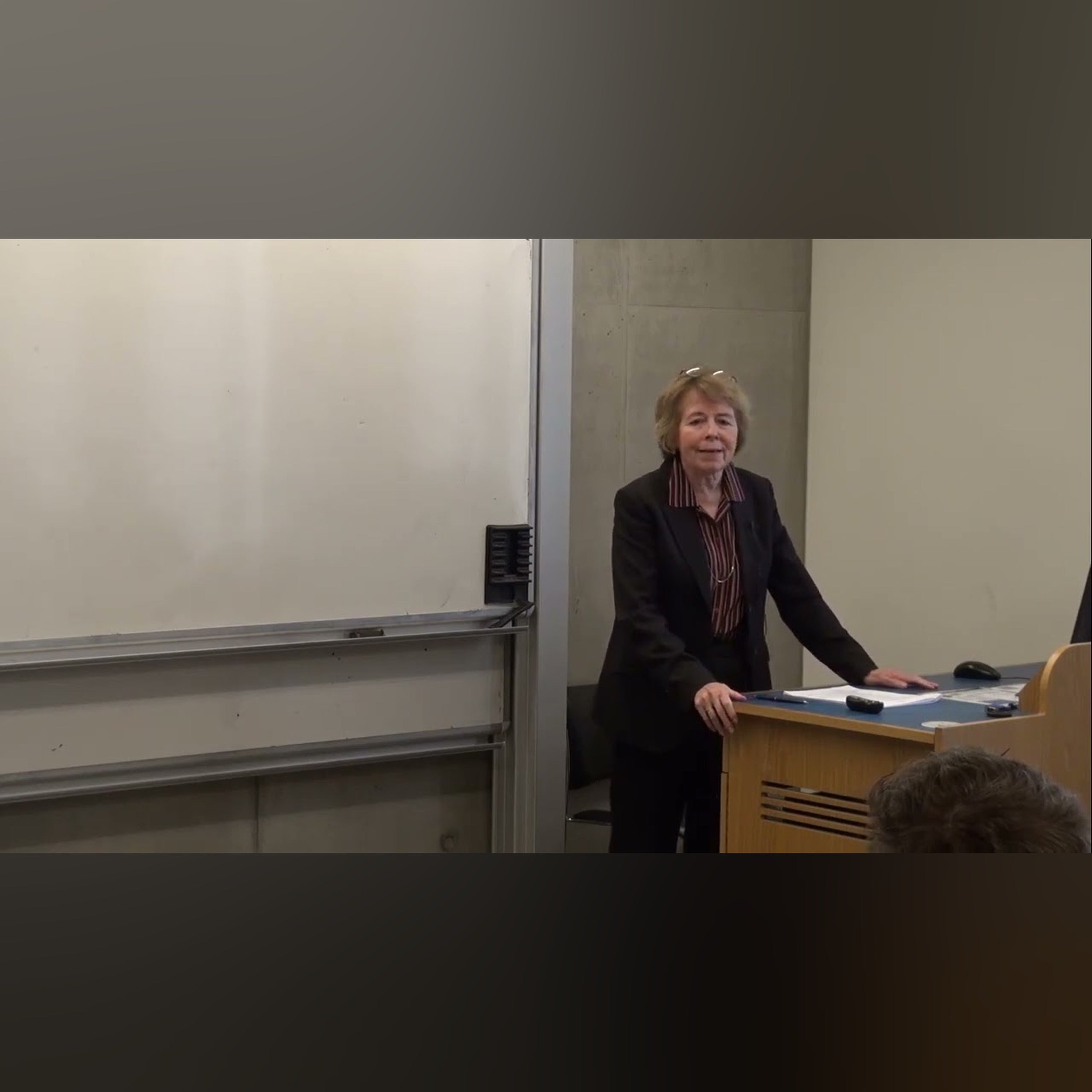
Fallibilism's Payoff - Catherine Elgin
Catherine Elgin discusses fallibilism in a 2016 lecture at the University of Edinburgh. Elgin's talk "True Enough": https://youtu.be/P5pKJGXuCNE Uploaded 24-07-25 #philosophy #epistemology #skepticism #science Learn more about your ad choices. Visit megaphone.fm/adchoices Learn more about your ad choices. Visit megaphone.fm/adchoices
- PO
 Saturday · 1 hr 4 min
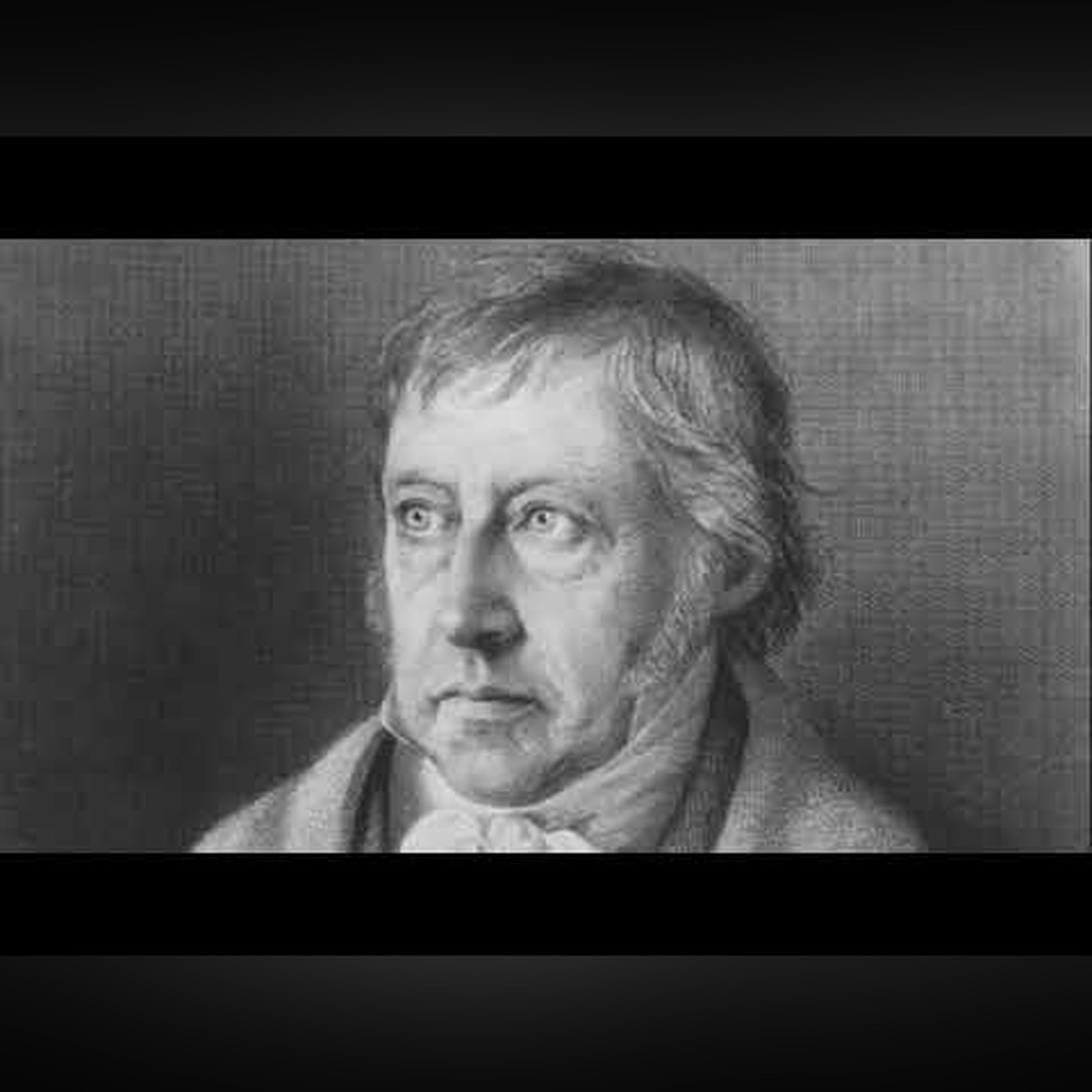
Hegel and his Heirs
Robert Harrison and Adrian Daub discuss Georg Wilhelm Friedrich Hegel and his heirs a few years back in an episode of Entitled Opinions, a KZSU Stanford University program. http://french-italian.stanford.edu/op... Uploaded 28-06-21 Hegel was one of the most important and influential 19th century German philosophers, best known for his dialectic, absolute idealism, and historicism, among various other things. The Hegelian dialectic is the process in which everything changes, based on the triad: thesis-antithesis-synthesis. Hegel's idealism rejected the Kantian notion of the thing-in-itself and instead embraced a monistic vision of the world in which everything forms an organic, interconnected, rational whole. Nothing is true or real except the whole. Not only a thinker of totality, Hegel was a historicist thinker who rejected the notion that ideas are static and fixed (e.g. the concepts of human nature and morality, as well as the concept of reason itself). Things can only be understood by understanding their historical context, which, for Hegel, is a process which changes and develops, and which has an underlying meaning or significance. So not only is there history in reason, but there is reason in history. For Hegel, history progresses towards its endpoint of ever greater freedom, driven by alienation, that of constant conflict and struggle by way of this dialectical process. (My Description) #philosophy #hegel #metaphysics Learn more about your ad choices. Visit megaphone.fm/adchoices Learn more about your ad choices. Visit megaphone.fm/adchoices
- PO
 Saturday · 1 hr 42 min
The Nature of Causation: The Counterfactual Theory of Causation
In this second lecture in this series on the nature of causation, Marianne Talbot discusses the counterfactual theory of causation. Uploaded 23-09-21 We have causal theories of reference, perception, knowledge, content and numerous other things. If it were to turn out that causation doesn’t exist, we would be in serious trouble! Causation is so important in fact that it has been said that: “With regard to our total conceptual apparatus, causation is the centre of the centre”, and it has been called ‘the cement of the universe’. In these lectures you will be introduced to the most influential theories of causation, the motivations for them and arguments behind them, and the problems they face. This is from a six-part lecture series on the nature of causation given at Oxford in 2016. #philosophy #davidhume #causation #philosophyofscience #causality Learn more about your ad choices. Visit megaphone.fm/adchoices Learn more about your ad choices. Visit megaphone.fm/adchoices
- PO
 Saturday · 1 hr 40 min
5 Varieties of Philosophical Skepticism - Hilary Putnam
In this fifth lecture, James Conant continues to discuss and contrast Cartesian skepticism with Kantian skepticism, and does so by discussing the work of Hilary Putnam and John McDowell. Uploaded 02-07-21 In this series of lectures on varieties of philosophical skepticism, James Conant distinguishes between two forms of philosophical skepticism: Cartesian skepticism and Kantian skepticism. He discusses their general structure and shows how they're related. This sheds light on issues in various different areas, including within the philosophy of perception, philosophy of mind, and philosophy of language. Some of the philosophers discussed throughout this course include Wittgenstein, Sellars, Hilary Putnam, Kripke, C.I. Lewis, John McDowell, and Stanley Cavell. This series of lectures was given in 2005 at the Department of Philosophy at the University of Bergen, Norway. Note, the audio has been slightly edited and improved. "In McDowell’s view the key assumption responsible for the disaster is the idea that there has to be an interface between our cognitive powers and the external world – or, to put the same point differently, the idea that our cognitive powers cannot reach all the way to the objects themselves." Hilary Putnam All lectures: https://www.youtube.com/playlist?list=PLhP9EhPApKE8muoMpX8qQ-14zKnYPc5VI #philosophy #epistemology #skepticism #philosophyofmind #putnam #historyofphilosophy Learn more about your ad choices. Visit megaphone.fm/adchoices Learn more about your ad choices. Visit megaphone.fm/adchoices
- PO
 Saturday · 1 hr 21 min
Creativity in Science - Ernest Nagel (1968)
Audio recording of a public lecture by professor Ernest Nagel on the nature of creativity, particularly in connection with science. This talk was given at the Cooper Union Forum in 1968. Uploaded 11-12-25 #philosophy #science #philosophyofscience #historyofscience #psychology Learn more about your ad choices. Visit megaphone.fm/adchoices Learn more about your ad choices. Visit megaphone.fm/adchoices
- PO
 Saturday · 10 min
Gadamer on Hegel - Spirit, Art, and Reason
Gadamer discusses Hegel in regards to Geist, art, and reason. The translation is my own, but take it with a grain of salt. In any case, this is a version of an upload from the previous channel. Details will be added at a later date. Uploaded 18-07-21 More Gadamer: https://www.youtube.com/playlist?list=PLhP9EhPApKE_MbPzGOh27qfdqiCaf7Uot More Short Clips: https://www.youtube.com/playlist?list=PLhP9EhPApKE8v8UVlc7JuuNHwvhkaOvzc #philosophy #gadamer #hegel Learn more about your ad choices. Visit megaphone.fm/adchoices Learn more about your ad choices. Visit megaphone.fm/adchoices
- PO
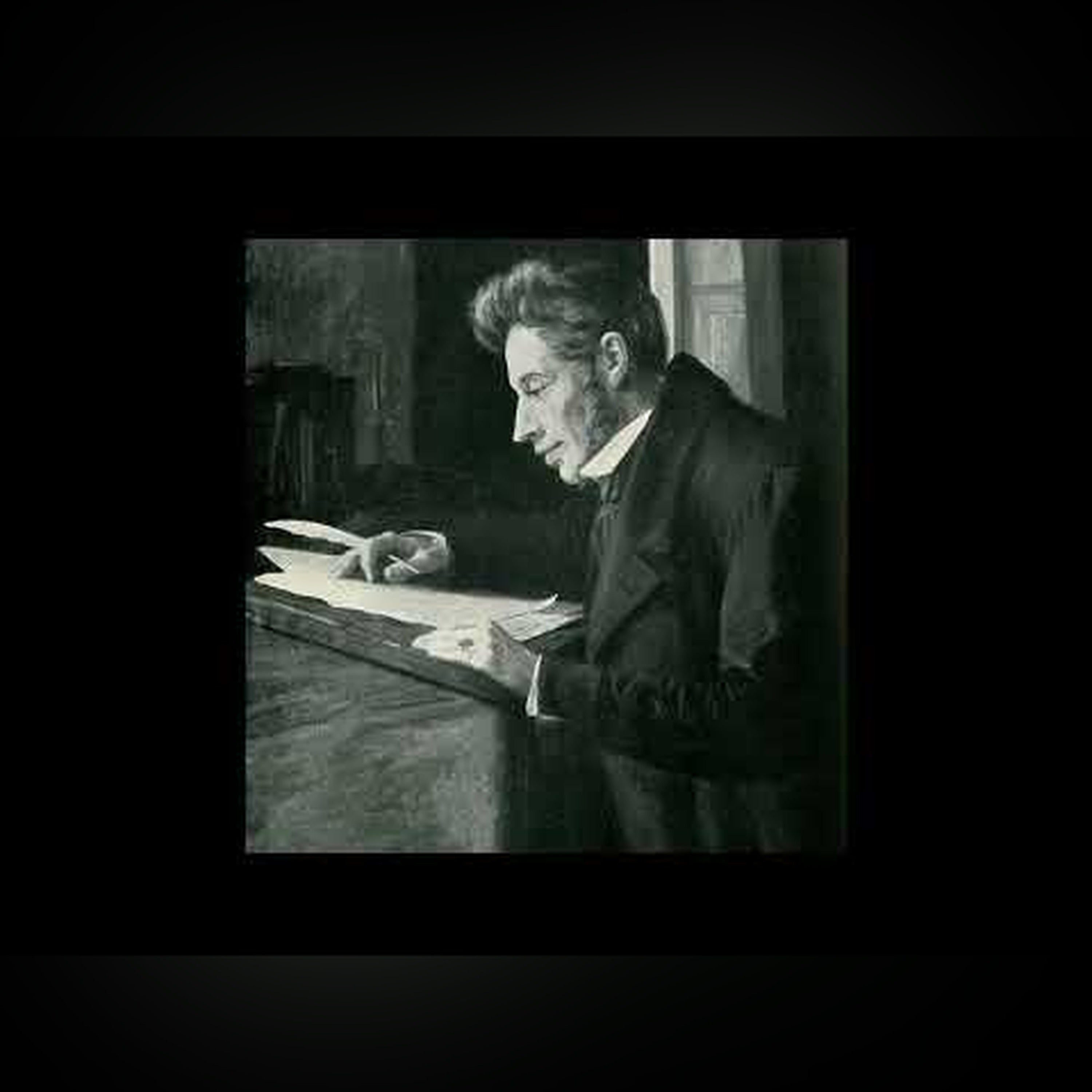 Saturday · 1 hr 27 min
Kierkegaard and the Crisis in Religion - Walter Kaufmann on Existentialism (1960)
Dr. Walter Kaufmann gives the first talk in a 1960 series on existentialism. He begins by discussing what he takes existentialism to be and then goes on to discuss the life and thought of Søren Kierkegaard, particularly in relation to the modern crisis of religion. In the next talk, he discusses Nietzsche and the crisis in philosophy, and then Sartre and the crisis in morality. This comes from a 1960 series on existentialism which is now in the public domain. Note, the audio has been edited and improved. Uploaded 05-08-21 Existentialists take human existence and the human condition to be a fundamental issue. They tend to be radical individualists who privilege our lived experience and choice. They focus on themes such as: freedom, authenticity, the individual, meaning, anxiety, alienation, death, dread, the absurd, contingency, and nihilism. They are often also suspicious of any fixed, pre-determined human nature, objective/universal values, and abstract philosophical systems. Some of the most important existentialist thinkers (or at least thinkers associated with existentialism) include Jean-Paul Sartre, Martin Heidegger, Søren Kierkegaard, Friedrich Nietzsche, Dostoyevsky, Karl Jaspers, Albert Camus, and Simone de Beauvoir. (My Description) Clip of Simone de Beauvoir on Existentialism and God: https://www.youtube.com/watch?v=tJnWHVwvYSQ Hubert Dreyfus on Husserl, Heidegger and Existentialism: https://youtu.be/H4_Tsjmqxak Nietzsche on Nihilism and the Death of God: https://www.youtube.com/watch?v=CHShypzrqGw #philosophy #existentialism #kierkegaard Learn more about your ad choices. Visit megaphone.fm/adchoices Learn more about your ad choices. Visit megaphone.fm/adchoices
- PO
 Saturday · 59 min
Adler on Aristotle (1979)
In this program, Bill Moyers interviews philosopher and educator Mortimer Adler about his book on Aristotle and his process of interpreting great Greek philosophers’ work into modern day language. Uploaded 27-02-24 #philosophy #ethics #aristotle Learn more about your ad choices. Visit megaphone.fm/adchoices Learn more about your ad choices. Visit megaphone.fm/adchoices
- PO
 Saturday · 1 hr 7 min
Reason, Tone and Judgment - Raimond Gaita (2013)
Professor Raimond Gaita gives the first talk in a series on 'Prejudice, Reason and Understanding' at the Australian National University as part of the Freilich Foundation's Eminent Lecturer Series back in 2013. Uploaded 27-04-25 Some years ago, Mirko Bagaric, then Professor and Dean of Law at Deakin University in Melbourne, published in the Age an opinion piece in which he argued that we should torture people in certain circumstances if doing so would save many lives. His article provoked incredulity amongst some people: what had seemed to them to be undiscussable and which they believed had partly defined their political culture just because it was undiscussable, was again “on the agenda”. Bagaric was in his turn incredulous that people could be so lacking in respect for rational discussion as to believe that some matters were undiscussable or unthinkable, and that they could be so morally and politically irresponsible as to deem undiscussable something that could potentially save thousands of lives. In the first two lectures, Raimond Gaita tries to bring out what he takes to be most serious in the incredulity voiced by Bagaric and his critics in order to explore what it shows about political discourse that aspires to be a conversation of citizens. He will explore why the ideal that even in ethics and politics, reliable and sound cognitive achievements is best achieved in a tone-free zone, is widespread amongst philosophers, at least in the analytical tradition. He will suggest that attractive as it may be as an elaboration of how best to rise to the claims of reason, it erodes the kind of judgment and sobriety necessary to critical thought about ethics and politics and thereby impoverishes our understanding of what the distinction between legitimate illegitimate persuasion comes to in those realms. It erodes entirely, he will argue, the conditions necessary for the conversation of citizens. In these lectures, Raimond Gaita explores an ideal of a democratic politics as ‘a conversation of citizens’. Reflection germane to the topic goes back at least to the time of Socrates. In Plato’s Gorgias, whose bitter political tone has often been noted, Socrates says to an aspiring young orator that he is good at oratory but bad a conversation. He meant, in part, that oratory betrays a trust intrinsic to real 'conversation’ that one’s partner in conversation will respect ones need to be legitimately persuaded to a belief – that she will not exploit her skills and one’s vulnerability to them, for example. For that reason, Socrates did not look upon oratory as a morally neutral skill that could serve good or bad ends. He regarded it, as many now regard spin, as rotten through and through. More often than not, belief requires trust and so an inquiry into persuasion which honors that trust, will be in part an inquiry into how to discipline trust so that it becomes the expression of good judgment rather than gullibility, for example. Reason, its limits, judgment, trust, sobriety, and realism as these show themselves in ethics and politics is the topic. 00:00 Talk 40:04 Q and A #philosophy #ethics #moralphilosophy Learn more about your ad choices. Visit megaphone.fm/adchoices Learn more about your ad choices. Visit megaphone.fm/adchoices
- PO
 Saturday · 1 hr 25 min
Animal Selves and the Good - Christine Korsgaard (2016)
A common defense of the various and sometimes cruel ways in which human beings use the other animals is that human beings are just more important than the other animals are: what happens to human beings matters more. In this lecture, Christine Korsgaard begins by arguing that the trouble with this claim is not so much that it is false, as that it makes almost no sense at all. The difficulty rests in the fact that everything that is important must be important to someone. A defense of this claim requires nothing less than a theory of why there is such a thing as “the good” at all. She will sketch such a theory and then raise some objections to it, which will take us into an examination of the relation between having a self and having a good. Although it is not true that some creatures are “more important” than others, it is true that the fact that some creatures have less of a self means that things may be, in a general way, less important to them. Uploaded 15-04-25 This talk was given by Christine M. Korsgaard (Arthur Kingsley Porter Professor of Philosophy at Harvard) at the University of Berkeley as part of the 2016 Howison Lectures in Philosophy. 00:00 Talk 56:02 Q and A #philosophy #ethics #moralphilosophy #animalethics Learn more about your ad choices. Visit megaphone.fm/adchoices Learn more about your ad choices. Visit megaphone.fm/adchoices
- PO
 Saturday · 1 hr 1 min
The Right to Death - Antony Flew (1980)
Audio recording of a lecture given by the English philosopher Antony Flew on voluntary euthanasia and physician-assisted suicide at the Australian National University back in 1980. Uploaded 30-03-25 #philosophy #ethics #medicalethics #moralphilosophy #bioethics Learn more about your ad choices. Visit megaphone.fm/adchoices Learn more about your ad choices. Visit megaphone.fm/adchoices
- PO
 Saturday · 1 hr 33 min
Reasons for Action: Introducing Common-Sense Psychology - Emma Borg (2024)
Professor Emma Borg gives the first lecture in a series on "Reasons for Action" as part of the 2024 Frege Lectures in theoretical philosophy at the University of Tartu. Uploaded 08-04-25 Do people generally do what they do on the basis of the reasons they have for acting? The standard philosophical answer - common-sense psychology or folk psychology - says yes. But recently the idea that humans are generally rational, reasons-responsive beings has come under considerable pressure, as a number of empirical findings (often in the fields of social, comparative, and developmental psychology) seem to suggest that, on the contrary, people are often blind to reasons, acting on gut feelings and intuitions, and are subject to various biases and other errors of reasoning. Although these empirical findings are now well-known (reaching beyond the ivory tower into the public consciousness), Emma Borg suggests that the precise problem for common-sense psychology remains unclear. There are (at least) three different arguments that could be made based on the empirical data. In her lectures, Emma Borg explains these three arguments and argues that the proponent of the common-sense view has responses to each of them. She concludes that the case against common-sense psychology can be rejected, and that we should hold on to the notion that action (of a typical adult) involves acting based on reasons. Emma Borg is Professor of Philosophy at the Institute of Philosophy, University of London. Her main research interests are the philosophy of language, philosophy of mind, and business ethics. Borg is the author of Minimal Semantics (2004) and Pursuing Meaning (2012), as well as two forthcoming books: A Very Short Introduction to Meaning and Acting for Reasons: In Defence of Common-Sense Psychology (all published by Oxford University Press). The latter book is also the basis for her Frege Lectures. 00:00 Intro 03:18 Talk 1:05:13 Q and A #philosophy #epistemology #psychology #rationality Learn more about your ad choices. Visit megaphone.fm/adchoices Learn more about your ad choices. Visit megaphone.fm/adchoices
- PO
 Saturday · 1 hr 7 min
Meaning and Knowledge - Ernest Nagel (1966)
Audio recording of a 1966 lecture by Ernest Nagel on knowledge and cognitive meaning at the Cooper Union Forum in a series on Philosophy for Modern Man. Note, the last minute or so of the lecture is missing. Uploaded 27-05-24 #philosophy #epistemology #positivism #science #philosophyofscience Learn more about your ad choices. Visit megaphone.fm/adchoices Learn more about your ad choices. Visit megaphone.fm/adchoices
- PO
 Saturday · 51 min
Reason and Feeling in Ethics - Brand Blanshard (1966)
Audio recording of a 1966 lecture by Brand Blanshard on reason and ethics given at Wheaton College (Massachusetts). Uploaded 27-06-25 #philosophy #ethics #moralphilosophy #utilitarianism #historyofphilosophy Learn more about your ad choices. Visit megaphone.fm/adchoices Learn more about your ad choices. Visit megaphone.fm/adchoices
- PO
 Saturday · 1 hr 7 min
Nietzsche on Nihilism and the Death of God - Ken Gemes
Audio recording of the first of two lectures by Ken Gemes on Nietzsche. In this first talk, Ken Gemes introduces Nietzsche as the philosopher of the death of God. Nietzsche claims that we have not yet fully understood the ramifications of the modern rejection of belief in God. Giving up the belief in God undermines all our values, though many cling to those values in the absence of God or of any other justificatory basis for those values. When we truly appreciate the meaning of the death of God, we will, says Nietzsche, lapse into nihilism; the inability to find any foundation for values and meaning in the world. This Nietzsche presciently predicts as the future of Europe for the next two hundred years. Nietzsche does not endorse nihilism but seeks to move beyond it to a new affirmation of this world, the one and only world. But what does Nietzsche mean exactly by nihilism? This is discussed in the talk. Uploaded 07-06-21 The next lecture by Ken Gemes on Nietzsche: https://www.youtube.com/watch?v=7ejV1cHZL58 Note, this is a re-upload. 00:00 Talk 31:42 Q and A #philosophy #nietzsche #nihilism #atheism #historyofphilosophy Learn more about your ad choices. Visit megaphone.fm/adchoices Learn more about your ad choices. Visit megaphone.fm/adchoices
- PO
 Saturday · 1 hr 2 min
Knowing and Acknowledging Others
Anita Avramides (University of Oxford) gives a talk in 2023 as part of the Aristotelian Society. Anita Avramides is currently a Senior Research Fellow in Philosophy at St Hilda’s College, University of Oxford. Her work is in the philosophy of mind and of language. In the last few years, she has published mainly on the problem of other minds. For more information about the Aristotelian Society, go to: https://www.aristoteliansociety.org.uk Uploaded 30-12-23 00:00 Introduction 03:52 Knowing-That and Knowing-What 10:44 From Cassam to Dretske 19:29 Epistemic Closure 25:39 Back to Cassam 32:38 Stanley Cavell 50:09 Concluding Thoughts #philosophy #epistemology #ethics #philosophyofmind Learn more about your ad choices. Visit megaphone.fm/adchoices Learn more about your ad choices. Visit megaphone.fm/adchoices
- PO
 Saturday · 47 min
4 Synthetic A Priori Judgments - Kant's Critique of Pure Reason (Dan Robinson)
Dan Robinson gives the 4th lecture in a series of 8 on Immanuel Kant's Critique of Pure Reason. Kant claims that, "our sense representation is not a representation of things in themselves, but of the way in which they appear to us. Hence it follows that the propositions of geometry... cannot be referred with the assurance to actual objects; but rather that they are necessarily valid of space... [and] space is nothing else than the form of all external appearances". [Prolegomena 286-287] Uploaded 05-06-21 This series looks at German Philosopher Immanuel Kant's seminal philosophical work 'The Critique of Pure Reason'. The lectures aim to outline and discuss some of the key philosophical issues raised in the book and to offer students and individuals thought provoking Kantian ideas surrounding metaphysics. Each lecture looks at particular questions raised in the work such as how do we know what we know and how do we find out about the world, dissects these questions with reference to Kant's work and discusses the broader philosophical implications. Anyone with an interest in Kant and philosophy will find these lectures thought provoking but accessible. This is series of lectures was given in 2011 at Oxford. Note, the audio has been improved. All 8 lectures: https://www.youtube.com/playlist?list=PLhP9EhPApKE_OdgqNgL0AJX9-gwr4tmLw #philosophy #kant #epistemology #metaphysics #empiricism #skepticism #historyofphilosophy Learn more about your ad choices. Visit megaphone.fm/adchoices Learn more about your ad choices. Visit megaphone.fm/adchoices
- PO
 Saturday · 1 hr 41 min
Reasons, Rationality, and Heuristics - Emma Borg (2024)
Professor Emma Borg gives the second lecture in a series on "Reasons for Action" as part of the 2024 Frege Lectures in theoretical philosophy at the University of Tartu. Uploaded 08-04-25 Do people generally do what they do on the basis of the reasons they have for acting? The standard philosophical answer - common-sense psychology or folk psychology - says yes. But recently the idea that humans are generally rational, reasons-responsive beings has come under considerable pressure, as a number of empirical findings (often in the fields of social, comparative, and developmental psychology) seem to suggest that, on the contrary, people are often blind to reasons, acting on gut feelings and intuitions, and are subject to various biases and other errors of reasoning. Although these empirical findings are now well-known (reaching beyond the ivory tower into the public consciousness), Emma Borg suggests that the precise problem for common-sense psychology remains unclear. There are (at least) three different arguments that could be made based on the empirical data. In her lectures, Emma Borg explains these three arguments and argues that the proponent of the common-sense view has responses to each of them. She concludes that the case against common-sense psychology can be rejected, and that we should hold on to the notion that action (of a typical adult) involves acting based on reasons. Emma Borg is Professor of Philosophy at the Institute of Philosophy, University of London. Her main research interests are the philosophy of language, philosophy of mind, and business ethics. Borg is the author of Minimal Semantics (2004) and Pursuing Meaning (2012), as well as two forthcoming books: A Very Short Introduction to Meaning and Acting for Reasons: In Defence of Common-Sense Psychology (all published by Oxford University Press). The latter book is also the basis for her Frege Lectures. 00:00 Talk 1:16:47 Q and A #philosophy #epistemology #psychology #rationality Learn more about your ad choices. Visit megaphone.fm/adchoices Learn more about your ad choices. Visit megaphone.fm/adchoices