Skip to content
Artwork for Philosophy Overdose
HistorySociety & CulturePhilosophyEducation

Philosophy Overdose

Philosophy Overdose

A collection of public and academic philosophy videos, mostly analytic philosophy but occasionally continental philosophy too. The channel looks for thought-provoking lectures and interviews, particularly what is rare and involves famous figures. There is occasionally an attempt at translation as well, especially that of German and French.

Nothing here is monetized, the channel is wholly non-commercial. Everything here is for the purpose of education and spreading around good philosophy content. If there's any problem, let me know, and I can take it down.

Feel free to let me know if there's anything you'd like me to post, including one of your own lectures.

Philosophy, Epistemology, Ethics, History of Philosophy, Political Philosophy, History of Ideas, Ontology, Critical Thinking, Moral Philosophy, Philosophy of Science, Logic, Philosophy of Mind, Metaphysics, Philosophy of Religion, Social Philosophy, Philosophy of Language, Consciousness, Philosophy of Mathematics, etc.

Links:
Facebook: https://www.facebook.com/PhilosophyOverdoseYoutube/

Play
  • 163 episodes
  • Avg 50 min
  • English
Counted on this page — what you have heard stays on this device, so it is not something the list can be paged by.
  • Today · 1 hr 45 min

    6 Varieties of Philosophical Skepticism - John McDowell's Mind and World

    In this sixth lecture, James Conant continues to discuss the Kantian problematic, and does so by discussing the work of John McDowell. He particularly focuses on the case of perception and then of action and intentions. In the case of perception, the problem involves avoiding the myth of the Given without thereby falling into an empty kind of coherentism or idealism. In this series of lectures on varieties of philosophical skepticism, James Conant distinguishes between two forms of philosophical skepticism: Cartesian skepticism and Kantian skepticism. He discusses their general structure and shows how they're related. This sheds light on issues in various different areas, including within the philosophy of perception, philosophy of mind, and philosophy of language. Some of the philosophers discussed throughout this course include Wittgenstein, Sellars, Hilary Putnam, Kripke, C.I. Lewis, John McDowell, and Stanley Cavell. This series of lectures was given in 2005 at the Department of Philosophy at the University of Bergen, Norway. Note, the audio has been slightly edited and improved. "When Kant describes the understanding as a faculty of spontaneity, that reflects his view of the relation between reason and freedom: rational necessitation is not just compatible with freedom but constitutive of it. In a slogan, the space of reasons is the realm of freedom. But if our freedom in empirical thinking is total, in particular if it is not constrained from outside the conceptual sphere, that can seem to threaten the very possibility that judgements of experience might be grounded in a way that relates them to a reality external to thought. And surely there must be such grounding if experience is to be a source of knowledge, and more generally, if the bearing of empirical judgements on reality is to be intelligibly in place in our picture at all. The more we play up the connection between reason and freedom, the more we risk losing our grip on how exercises of concepts can constitute warranted judgements about the world. What we wanted to conceive as exercises of concepts threaten to degenerate into moves in a self-contained game." McDowell "The idea of the Given is the idea that the space of reasons, the space of justifications or warrants, extends more widely than the conceptual sphere." McDowell 00:00 Introduction 07:33 Perception 49:05 Action All lectures: https://www.youtube.com/playlist?list=PLhP9EhPApKE8muoMpX8qQ-14zKnYPc5VI #philosophy #epistemology #skepticism #philosophyofmind #kant #historyofphilosophy Learn more about your ad choices. Visit megaphone.fm/adchoices
  • Today · 56 min

    Theories of Welfare - Ethics and Society Course

    The nature of well-being is discussed in this introductory lecture from a 2023 course on Ethics and Society by Professor Samuel Zincke Elgin at UCSD, the University of California (UC San Diego). #philosophy #ethics #moralphilosophy #utilitarianism #hedonism Learn more about your ad choices. Visit megaphone.fm/adchoices

  • Today · 1 hr 12 min

    Science and Free Will - Herbert Feigl (1963)

    Audio recording of a lecture given by professor Herbert Feigl on free will and science at Coffman Union in 1963 at the University of Minnesota. After introducing the traditional problem of free will, he goes on to discuss how determinism and indeterminism fit into our conception of science. He then goes on to argue that free will is not only consistent with determinism, but it seems to presuppose it. He thereby tries to dissolve the traditional issue by showing the underlying compatibility between free will and that of causal determinism. #philosophy #determinism #science #freewill #causality #causation #philosophyofscience Learn more about your ad choices. Visit megaphone.fm/adchoices
  • Today · 1 hr 32 min

    What Is Rationality, Anyway?

    Dr. Peter Dennis gives a public lecture on the nature of rationality at the LSE in 2015. Peter Dennis is an LSE Fellow in the Department of Philosophy, Logic and Scientific Method and a Forum for European Philosophy Fellow. 00:00 Talk 54:04 Q&A #philosophy #rationality #epistemology Learn more about your ad choices. Visit megaphone.fm/adchoices

  • Today · 58 min

    Free Will - General Philosophy (Peter Millican)

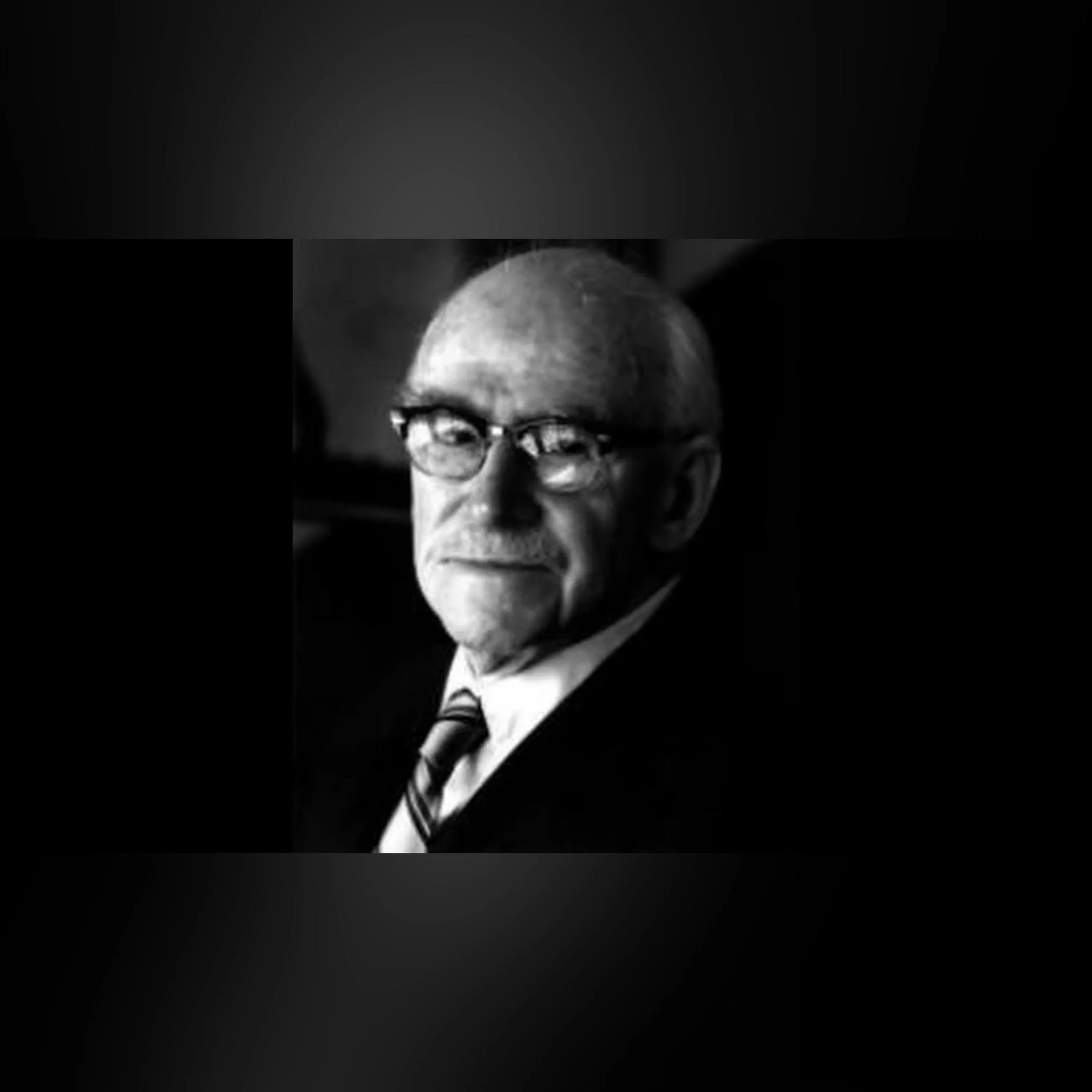
    In this lecture on General Philosophy, Professor Peter Millican discusses free will and the problem of moral responsibility. This comes from a 2010 series on General Philosophy. The slides have been added. This series of lectures was delivered by Peter Millican to first-year philosophy students at the University of Oxford. The lectures comprise of the 8-week General Philosophy course, delivered to first year undergraduates. These lectures aim to provide a thorough introduction to many philosophical topics and to get students and others interested in thinking about key areas of philosophy. Taking a chronological view of the history of philosophy, each lecture is split into 3 or 4 sections which outline a particular philosophical problem and how different philosophers have attempted to resolve the issue. Individuals interested in the 'big' questions about life such as how we perceive the world, who we are in the world and whether we are free to act will find this series informative, comprehensive and accessible. More lectures on General Philosophy: https://www.youtube.com/playlist?list=PLhP9EhPApKE_xo2wvkm6qPZrUlAiRNHXb Source: https://podcasts.ox.ac.uk/series/general-philosophy #philosophy #freewill #determinism #causality #causation #mind #metaphysics #psychology Learn more about your ad choices. Visit megaphone.fm/adchoices
  • Today · 6 min

    Beginning of 'The Absurd' by Thomas Nagel

    A reading of the beginning of Thomas Nagel's 1971 article "The Absurd", which I've always quite liked. #philosophy #existentialism #ethics Learn more about your ad choices. Visit megaphone.fm/adchoices
  • Today · 51 min

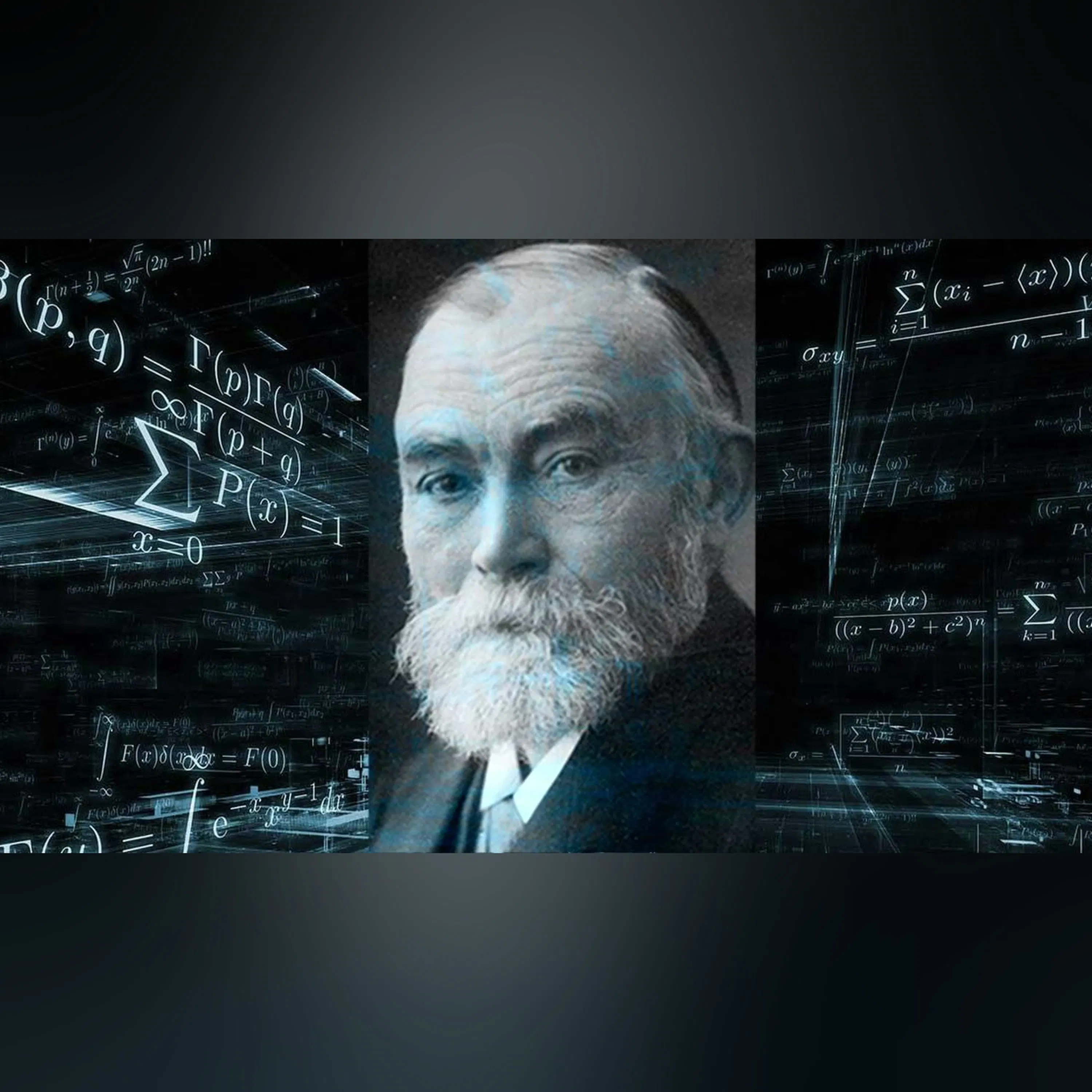
    Reason and Feeling in Ethics - Brand Blanshard (1966)

    Audio recording of a 1966 lecture by Brand Blanshard on reason and ethics given at Wheaton College (Massachusetts). #philosophy #ethics #moralphilosophy #utilitarianism #historyofphilosophy Learn more about your ad choices. Visit megaphone.fm/adchoices

  • Today · 1 hr 39 min

    Philosophy of Mathematics and Frege - Michael Dummett (1994)

    Audio recording of a 1994 lecture by Michael Dummett on Frege and the philosophy of mathematics at the LSE on the occasion of his Lakatos Award for an outstanding contribution to the philosophy of science. For a good intro to the philosophy of mathematics, check out: https://www.youtube.com/watch?v=UhX1ouUjDHE and https://www.youtube.com/watch?v=XyXWnGFKTkg #philosophy #epistemology #mathematics #frege #kant #historyofphilosophy Learn more about your ad choices. Visit megaphone.fm/adchoices
  • Today · 1 hr 45 min

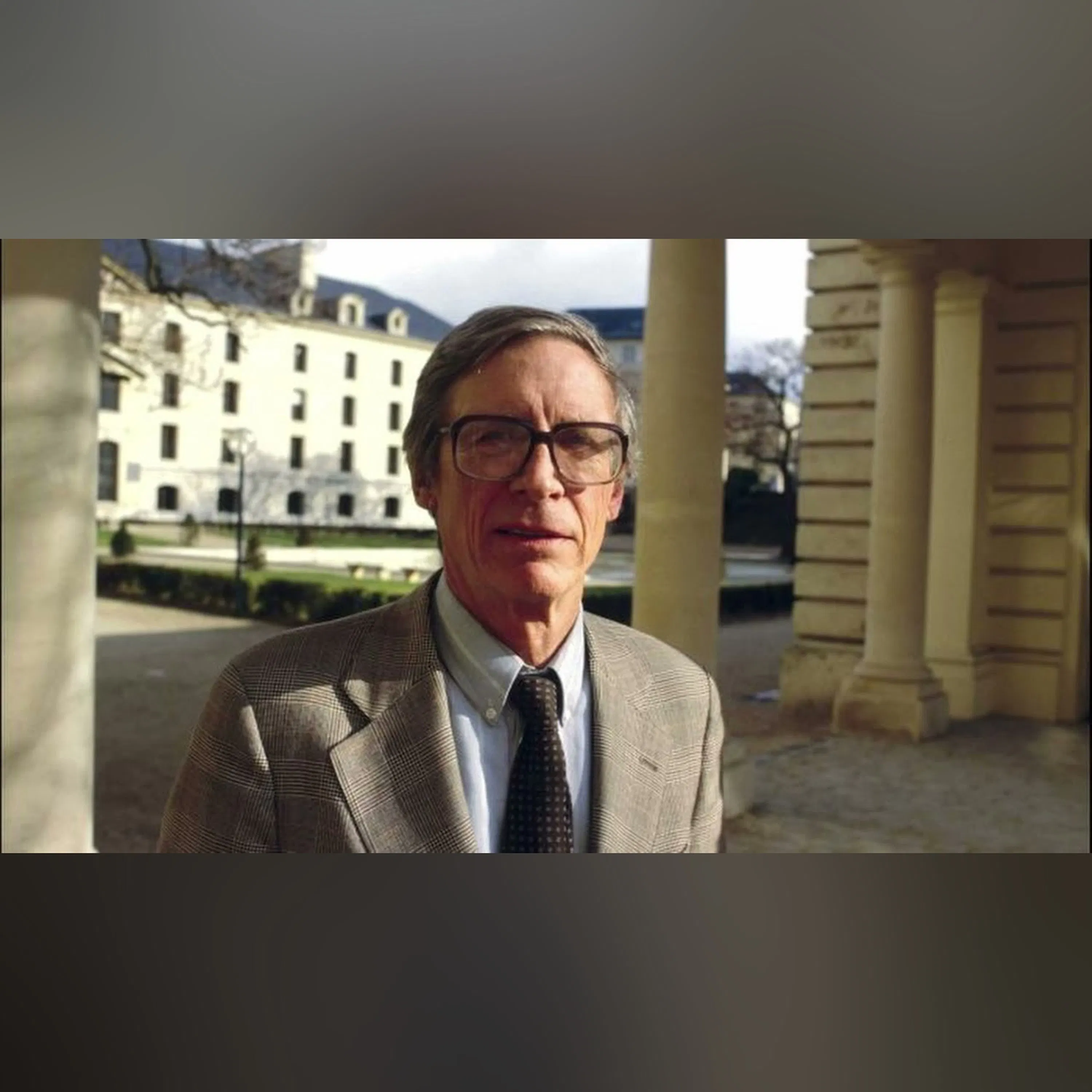
    2 Varieties of Philosophical Skepticism - Cartesian and Kantian Skepticism

    In this second lecture (note, it's actually the third because the second wasn't recorded), James Conant continues to give examples of Cartesian skepticism in various other areas of philosophy and discusses some of the differences with Kantian skepticism. Note, because Kantian skepticism was introduced and discussed in the previous session, and there's no recording, it might be a bit difficult at first to understand what Kantian skepticism precisely is. However, this will definitely become clear as the lectures go on. In this series of lectures on varieties of philosophical skepticism, James Conant distinguishes between two forms of philosophical skepticism: Cartesian skepticism and Kantian skepticism. He discusses their general structure and shows how they're related. This sheds light on issues in various different areas, including within the philosophy of perception, philosophy of mind, and philosophy of language. Some of the philosophers discussed throughout this course include Wittgenstein, Sellars, Hilary Putnam, Kripke, C.I. Lewis, John McDowell, and Stanley Cavell. This series of lectures was given in 2005 at the Department of Philosophy at the University of Bergen, Norway. Note, the audio has been slightly edited and improved. "There are never any sure signs by means of which being awake can be distinguished from being asleep." Descartes "The a priori conditions of a possible experience in general are at the same time conditions of the possibility of objects of experience. Now I maintain that the categories ... are nothing but the conditions of thought in a possible experience ... And without such unity no thoroughgoing, universal, and therefore necessary, unity of consciousness would be met with in the manifold of perceptions. These perceptions would not then belong to any experience, consequently would be without an object, merely a blind play of representations, less even than a dream." Immanuel Kant 00:00 Introduction 01:31 Where one is possible, so is the other 03:29 Philosophy of Law 05:27 Skepticism for any Area of Philosophy 07:37 Testimony 13:21 Personal Identity 17:01 The Past 19:51 Reference 24:00 Move to Kantian Problematic 33:55 Why these Two Labels? 45:45 Is Kantian Skepticism a Kind of Skepticism? 51:33 Features of Both All lectures: https://www.youtube.com/playlist?list=PLhP9EhPApKE8muoMpX8qQ-14zKnYPc5VI #philosophy #epistemology #skepticism #kant #historyofphilosophy Learn more about your ad choices. Visit megaphone.fm/adchoices

  • Today · 48 min

    Political Philosophy and John Rawls

    Audio recording of a lecture by Jonathan Wolff on John Rawls' political philosophy. After discussing the detrimental influence of logical positivism on ethical and political discourse, Jonathan Wolff goes on to explain John Rawls' famous contractarian conception of justice. Rawls' argument takes the form of a thought experiment involving a hypothetical contract in which people are made ignorant about certain facts about themselves which could bias them in their own favor (e.g. their race, gender, class, age, talents, etc.). In this way, ignorance is used as a way to guarantee impartiality in deciding how societies should be set up. After all, one cannot rig things up to benefit oneself if one doesn't know what one's interests are or what one's position in society will be. Rawls argued that people behind this so-called "veil of ignorance" would agree to two principles of justice: the liberty principle and the difference principle. Jonathan Wolf explains these principles and the main arguments for and against them. (My Summary) Note, this is re-upload. More details about this talk will be added at a later date. More Political Philosophy: https://www.youtube.com/playlist?list=PLhP9EhPApKE_O1dkCOqsUke_0QUkX80A- #philosophy #politicalphilosophy #rawls #johnrawls #politicaltheory #historyofphilosophy Learn more about your ad choices. Visit megaphone.fm/adchoices
  • Today · 4 min

    Frank Jackson on the Knowledge Argument

    A clip of Frank Jackson discussing his famous knowledge argument involving Mary and why he ended up changing his mind about it. This clip comes from an interview with Alan Saunders back in 2012. #philosophy #philosophyofmind #consciousness #metaphysics #materialism Learn more about your ad choices. Visit megaphone.fm/adchoices
  • Today · 49 min

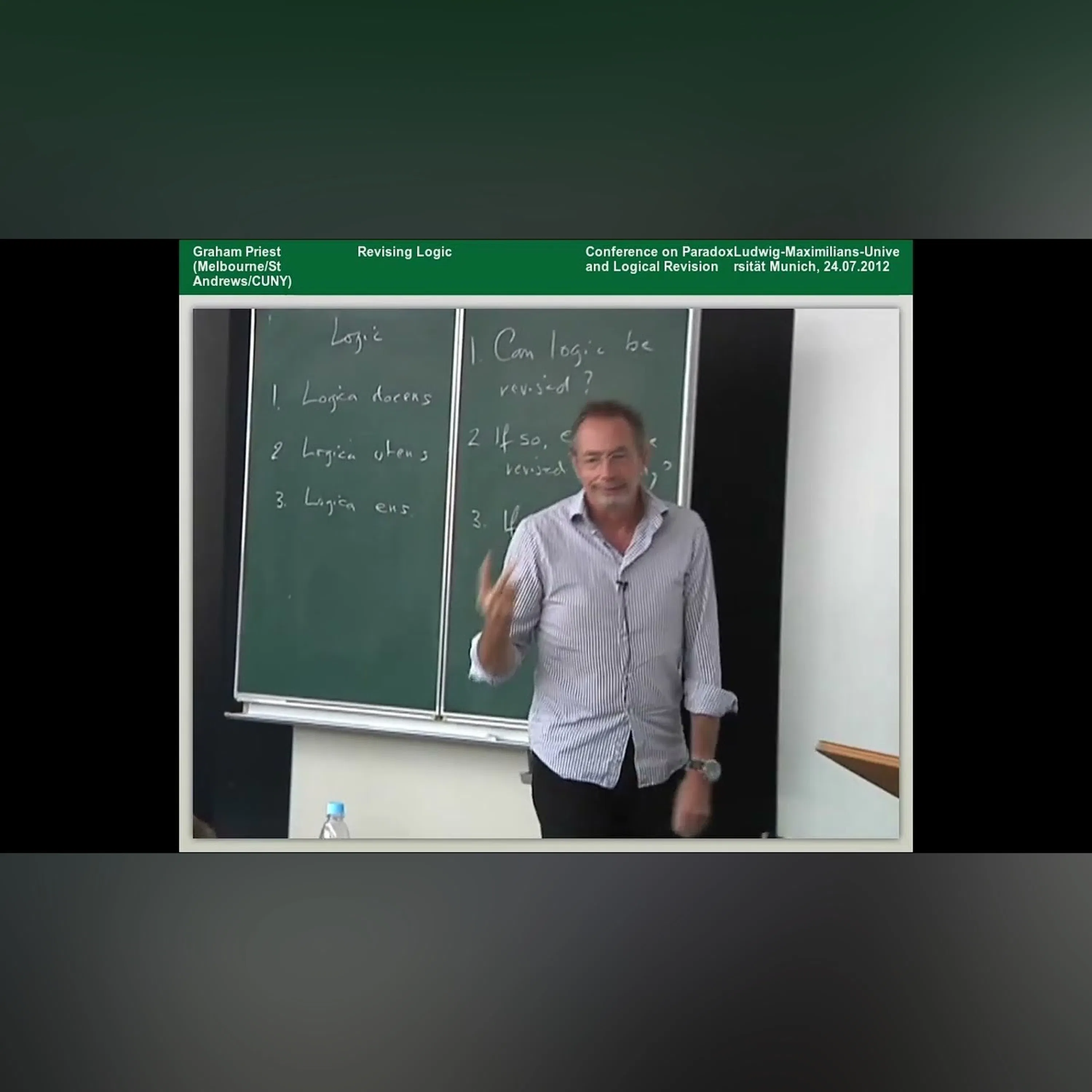
    Revising Logic - Graham Priest

    A re-upload of a talk which was given by Graham Priest on revising logic at a conference on paradox and logical revision at the University of Munich back in 2012. #philosophy #rationality #epistemology Learn more about your ad choices. Visit megaphone.fm/adchoices

  • Today · 1 hr 11 min

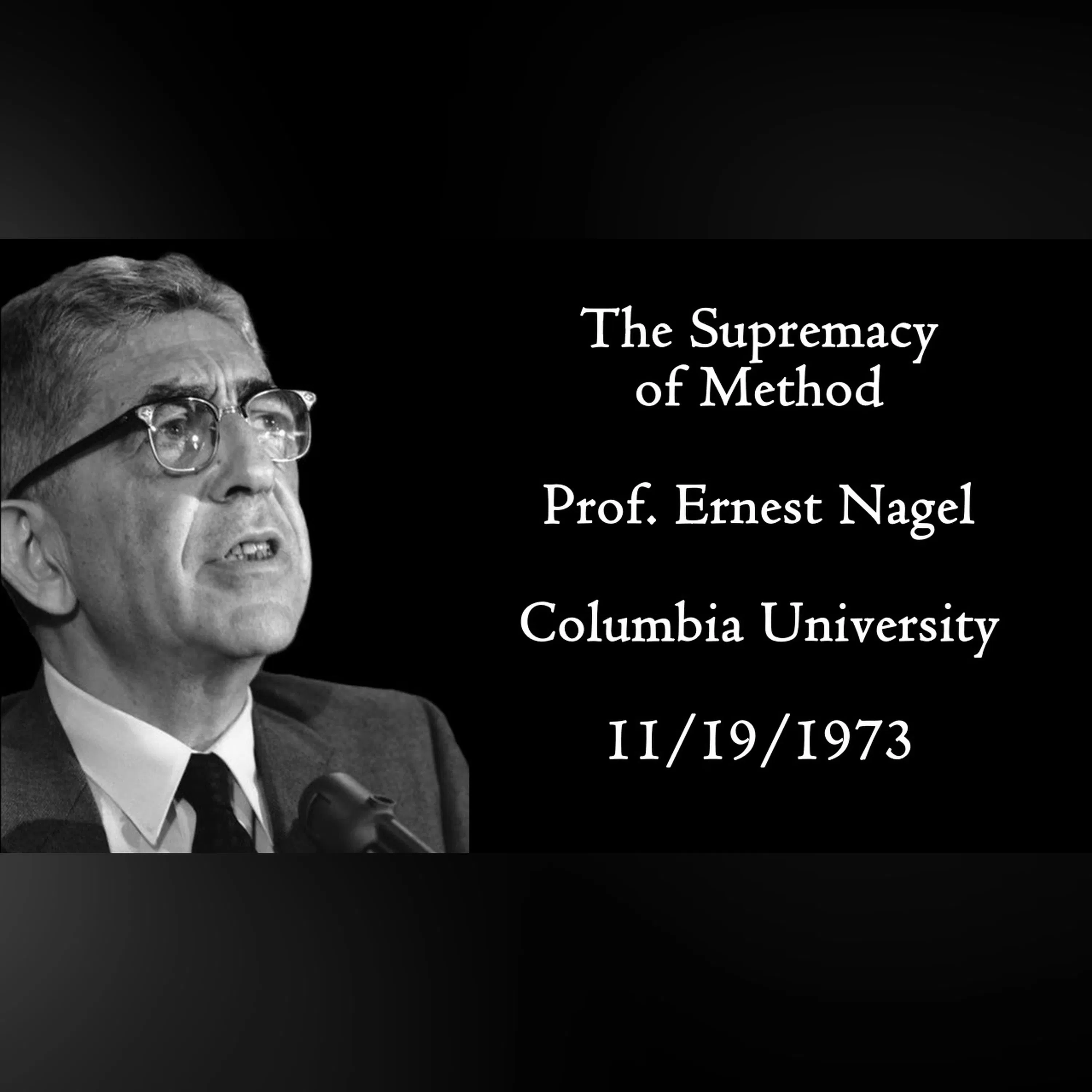
    The Supremacy of Method - Ernest Nagel (1973)

    Audio recording of a 1973 lecture by Ernest Nagel on the supremacy of method at Columbia University. #philosophy #science #epistemology #philosophyofscience #skepticism #relativism #historyofphilosophy Learn more about your ad choices. Visit megaphone.fm/adchoices
  • Today · 1 hr 15 min

    Evolution vs Ethics - Peter Singer

    Professor Peter Singer delivers a public lecture at the University of Sydney in 2011 on whether understanding evolution helps us to understand ethics and morality. This was part of the Sydney Ideas series and ABC's Big Ideas series. It was co-presented with Think Global School. 00:00 Lecture 48:38 Q&A #philosophy #ethics #moralphilosophy #evolution #petersinger #utilitarianism Learn more about your ad choices. Visit megaphone.fm/adchoices

  • Today · 35 min

    What Justifies the State?

    An episode from the 1998 Εxαmined Life series. #philosophy #politicalphilosophy #politicaltheory #historyofphilosophy Learn more about your ad choices. Visit megaphone.fm/adchoices

  • Today · 5 min

    Karl Popper on the Open Society (1974)

    A short of clip of Karl Popper discussing the Open Society from a 1974 interview. The translation is mine. For more Popper: https://www.youtube.com/playlist?list=PLhP9EhPApKE_VarWCx1d_Uogn_GxsVf-o #philosophy #karlpopper #politicaltheory #politicalphilosophy #opensociety Learn more about your ad choices. Visit megaphone.fm/adchoices

  • Today · 1 hr 4 min

    2 Romanticism - First Attack on Enlightenment (Isaiah Berlin 1965)

    Isaiah Berlin gives the 2nd lecture in a series of 6 on Romanticism and its roots. All 6 lectures: https://www.youtube.com/playlist?list=PLhP9EhPApKE_9uxkmfSIt2JJK6oKbXmd- For Berlin, the Romantics set in motion a vast, unparalleled revolution in humanity’s view of itself. They destroyed the traditional notions of objective truth and validity in ethics with incalculable, all-pervasive results. As he said of the Romantics elsewhere: “The world has never been the same since, and our politics and morals have been deeply transformed by them. Certainly this has been the most radical, and indeed dramatic, not to say terrifying, change in men’s outlook in modern times.” In these brilliant lectures Berlin surveys the myriad attempts to define Romanticism, distills its essence, traces its developments from its first stirrings to its apotheosis, and shows how its lasting legacy permeates our own outlook. Combining the freshness and immediacy of the spoken word with Berlin’s inimitable eloquence and wit, the lectures range over a cast of the greatest thinkers and artists of the eighteenth and nineteenth centuries, including Kant, Rousseau, Diderot, Schiller, Schlegel, Novalis, Goethe, Blake, Byron, and Beethoven. Berlin argues that the ideas and attitudes held by these and other figures helped to shape twentieth-century nationalism, existentialism, democracy, totalitarianism, and our ideas about heroic individuals, individual self-fulfillment, and the exalted place of art. This is the record of an intellectual bravura performance–of one of the century’s most influential philosophers dissecting and assessing a movement that changed the course of history. These Mellon lectures were delivered in Washington in 1965. 00:00 Program for the Lectures 01:07 Enlightenment Tradition 22:44 Montesquieu & Relativism 26:42 David Hume & Skepticism 32:07 Germans & Sour Grapes 44:32 Hamann & Counter-Enlightenment #Philosophy #Romanticism #IsaiahBerlin Learn more about your ad choices. Visit megaphone.fm/adchoices

  • Today · 1 hr 7 min

    1 The "Representational" Theory of Knowledge - Reid's Critique of Hume (Dan Robinson)

    Professor Dan Robinson gives the first in a series of 8 lectures on Thomas Reid's critique of David Hume at Oxford in 2014. Hume defends the thesis according to which “ALL THE PERCEPTIONS OF THE HUMAN MIND RESOLVE THEMSELVES INTO…IMPRESSIONS AND IDEAS”. Accordingly, “We may prosecute this enquiry to what length we please; where we shall always find, that every idea which we examine is copied from a similar impression”. Under “David Hume”, the Stanford Encyclopedia of Philosophy begins with, “The most important philosopher ever to write in English”. His most formidable contemporary critic was the fellow Scot, Thomas Reid, the major architect of so-called Scottish Common Sense Philosophy. The most significant features of Hume’s work, as understood by Reid, are the representive theory of perception, the nature of causation and causal concepts, the nature of personal identity and the foundations of morality. Each of these topics is presented in a pair of lectures, the first summarizing Hume’s position and the second Reid’s critique of that position. All Lectures: https://www.youtube.com/playlist?list=PLhP9EhPApKE9nki7CXFPi7PMOi5W2g2-q #philosophy #davidhume #epistemology #perception #empiricism #skepticism #philosophyofmind #historyofphilosophy Learn more about your ad choices. Visit megaphone.fm/adchoices

  • Today · 1 hr

    8 Reid on the Principle of Morals - Reid's Critique of Hume (Dan Robinson)

    Professor Dan Robinson gives the final lecture in a series of 8 lectures on Thomas Reid's critique of David Hume at Oxford in 2014. “Like all other sciences, morals must have first principles, and all moral reasoning is based on them... In all rational belief, the thing believed is either a first principle or something inferred by valid reasoning from first principles”. As for utility, “Suppose that mice rescue the distressed person by chewing through the cords that bound him. Is there moral goodness in this act of the mice?” Beyond the armchair and other precincts of untrammeled speculation, one finds that, there is little purchase on a morality of pleasure and utility. Indded, “If what we call ‘moral judgment’ isn’t really a judgment but merely a feeling, it follows that the moral principles that we have been taught to consider as an immutable law to all intelligent beings have no basis except an arbitrary structure and fabric in the constitution of the human mind…Thus, by a change in our structure immoral things could become moral…There are beings who can’t perceive mathematical truths; but no defect, no error of understanding, can make what is true to be false”. Under “David Hume”, the Stanford Encyclopedia of Philosophy begins with, “The most important philosopher ever to write in English”. His most formidable contemporary critic was the fellow Scot, Thomas Reid, the major architect of so-called Scottish Common Sense Philosophy. The most significant features of Hume’s work, as understood by Reid, are the representive theory of perception, the nature of causation and causal concepts, the nature of personal identity and the foundations of morality. Each of these topics is presented in a pair of lectures, the first summarizing Hume’s position and the second Reid’s critique of that position. All Lectures: https://www.youtube.com/playlist?list=PLhP9EhPApKE9nki7CXFPi7PMOi5W2g2-q #philosophy #davidhume #ethics #moralphilosophy #historyofphilosophy Learn more about your ad choices. Visit megaphone.fm/adchoices
  • Today · 58 min

    The Evolution of "Why" as the Key to Free Will - Daniel Dennett

    Professor Daniel Dennett gives a public lecture on evolution and free will at Stanford University in 2009. #philosophy #freewill #dennett #darwin #causality #materialism #philosophyofmind #causation #mind Learn more about your ad choices. Visit megaphone.fm/adchoices

Showing 1–20 of 163 episodes