Skip to content
Artwork for Philosophy Overdose
HistorySociety & CulturePhilosophyEducation

Philosophy Overdose

Philosophy Overdose

A collection of public and academic philosophy videos, mostly analytic philosophy but occasionally continental philosophy too. The channel looks for thought-provoking lectures and interviews, particularly what is rare and involves famous figures. There is occasionally an attempt at translation as well, especially that of German and French.

Nothing here is monetized, the channel is wholly non-commercial. Everything here is for the purpose of education and spreading around good philosophy content. If there's any problem, let me know, and I can take it down.

Feel free to let me know if there's anything you'd like me to post, including one of your own lectures.

Philosophy, Epistemology, Ethics, History of Philosophy, Political Philosophy, History of Ideas, Ontology, Critical Thinking, Moral Philosophy, Philosophy of Science, Logic, Philosophy of Mind, Metaphysics, Philosophy of Religion, Social Philosophy, Philosophy of Language, Consciousness, Philosophy of Mathematics, etc.

Links:
Facebook: https://www.facebook.com/PhilosophyOverdoseYoutube/
Play
  • 274 episodes
  • daily
  • Avg 49 min
  • English
Counted on this page — what you have heard stays on this device, so it is not something the list can be paged by.
  • Yesterday · 5 min

    Karl Popper on Definitions (1974)

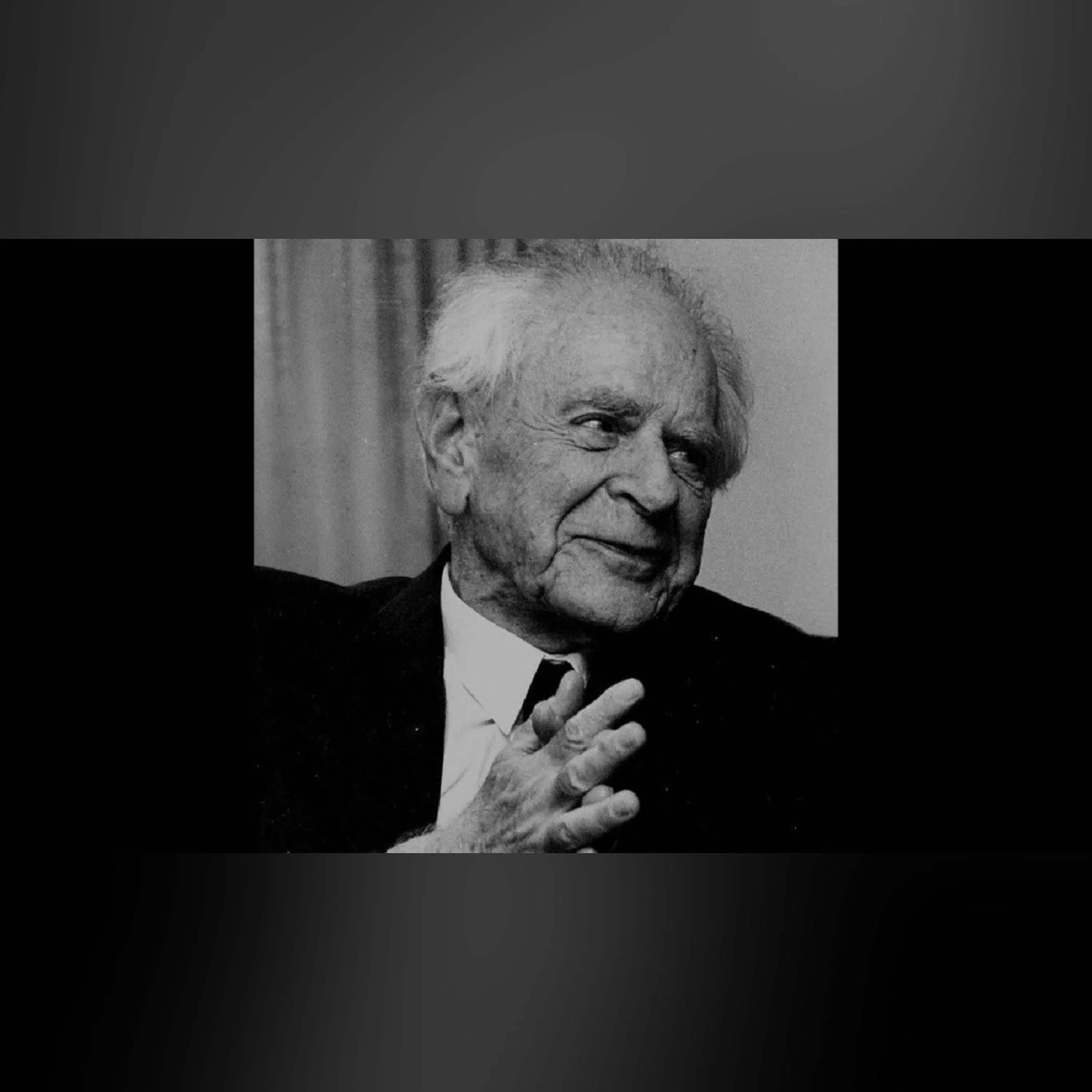
    A version of an upload from the previous channel. It comes from a 1974 interview with Popper. The translation is my own. For more Popper: https://www.youtube.com/playlist?list=PLhP9EhPApKE_VarWCx1d_Uogn_GxsVf-o Uploaded 03-08-21 #philosophy #karlpopper #epistemology Learn more about your ad choices. Visit megaphone.fm/adchoices Learn more about your ad choices. Visit megaphone.fm/adchoices

  • Yesterday · 1 hr 6 min

    The Truth is Terrible - Nietzsche's Idea of an Aesthetic Justification for Existence

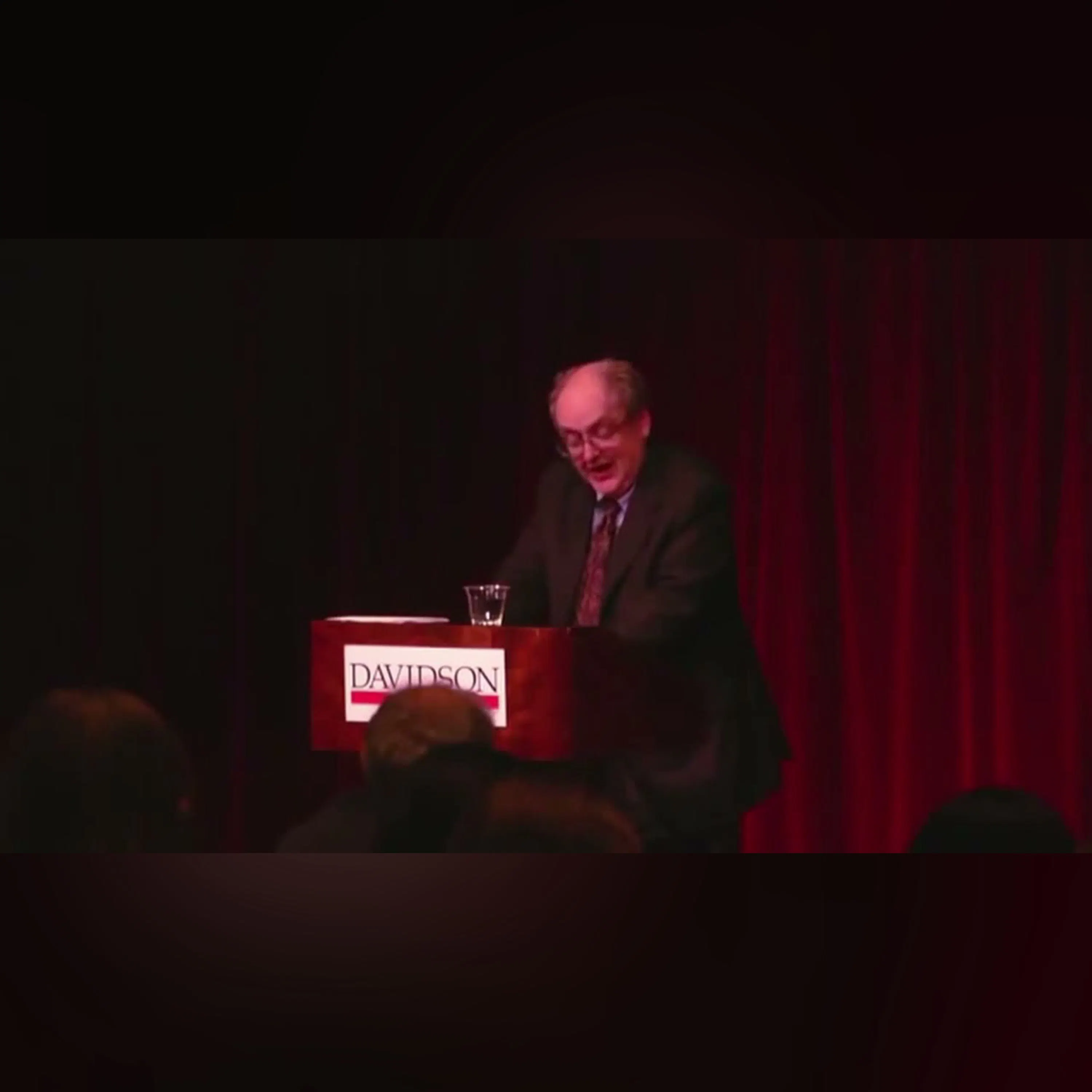
    Brian Leiter discusses the thought of Nietzsche at Davidson College a few years back. The truth is terrible, Nietzsche tells us. There is no God, the universe lacks any ultimate meaning or purpose, and is filled with gratuitous pointless suffering. Our only relief comes with nonexistence upon death. Even the existence of the self, free will, objective value, and absolute truth and knowledge are wholly illusory. All forms and qualities are but mere human conventions, subjective expressions of our competing drives. The unquenchable desire for objectivity is the drive to transcend our finite bodily existence and grab hold of something universal, absolute, unchanging, and God-like. But there simply is none. So it is all too easy to become disillusioned and fall into an abyss of anguish and despair, turning away from existence and the drives, as suggested by the pessimistic philosophy of Schopenhauer. But Nietzsche urges against this turning away from life. For Nietzsche, existence is justified, but only as an aesthetic phenomenon. But what does this mean exactly? Brian Leiter explains. (My Summary) Uploaded 04-06-21 More Nietzsche: https://m.youtube.com/playlist?list=PLhP9EhPApKE_ySvPE8kzFUkA5aO_cdKmb #philosophy #nietzsche #ethics #historyofphilosophy Learn more about your ad choices. Visit megaphone.fm/adchoices Learn more about your ad choices. Visit megaphone.fm/adchoices

  • Yesterday · 51 min

    Killing Civilians in War (Jeff McMahan)

    When is it permissible to kill civilians in war? Jeff McMahan discusses the ethics of killing civilians in war in a talk at Ohio State University back in 2008. More on the morality of war: https://plato.stanford.edu/entries/war/ Uploaded 15-04-25 #philosophy #ethics #justwar #moralphilosophy #war Learn more about your ad choices. Visit megaphone.fm/adchoices Learn more about your ad choices. Visit megaphone.fm/adchoices

  • Yesterday · 1 hr 32 min

    What Is Rationality, Anyway?

    Dr. Peter Dennis gives a public lecture on the nature of rationality at the LSE in 2015. Peter Dennis is an LSE Fellow in the Department of Philosophy, Logic and Scientific Method and a Forum for European Philosophy Fellow. Uploaded 01-03-25 00:00 Talk 54:04 Q and A #philosophy #rationality #epistemology Learn more about your ad choices. Visit megaphone.fm/adchoices Learn more about your ad choices. Visit megaphone.fm/adchoices

  • Yesterday · 21 min

    Karl Popper on Observation and Induction (1989)

    A reupload of audio recording of Karl Popper discussing his views on observation and induction, specifically how knowledge and science do not start from observation, but that all observation itself is theory-laden. Indeed, as he explains, the view that all knowledge and science rests on observation leads to induction, which Popper famously rejected due to the so-called problem of induction, first formulated by David Hume. As such, Popper didn't think that induction played any justificatory role in science at all, which is precisely why he ended up with his famous falsificationist view that theories and hypotheses can only be refuted or falsified (i.e. via deduction), but they can never be proven true or positively supported with observational evidence (i.e. via induction). These clips all come from a 1989 interview on falsificationism and some of the main criticisms. It is a re-upload of something that I put together a while ago. More details will be added later. Uploaded 13-07-25 #philosophy #karlpopper #epistemology #science #philosophyofscience Learn more about your ad choices. Visit megaphone.fm/adchoices Learn more about your ad choices. Visit megaphone.fm/adchoices

  • Yesterday · 40 min

    Rudolf Carnap on Determinism and Choice (1962)

    Audio recording of some rare clips of Rudolf Carnap discussing causal determinism and its relation to free will at a 1962 conference in Minnesota on the nature of causality and probability. More details will be added later. Uploaded 30-11-23 #philosophy #determinism #freewill #causality #causation #psychology Learn more about your ad choices. Visit megaphone.fm/adchoices Learn more about your ad choices. Visit megaphone.fm/adchoices

  • Yesterday · 6 min

    Beginning of 'The Absurd' by Thomas Nagel

    A reading of the beginning of Thomas Nagel's 1971 article "The Absurd", which I've always quite liked. Uploaded 01-12-24 #philosophy #existentialism #ethics Learn more about your ad choices. Visit megaphone.fm/adchoices Learn more about your ad choices. Visit megaphone.fm/adchoices

  • Yesterday · 58 min

    Free Will - General Philosophy (Peter Millican)

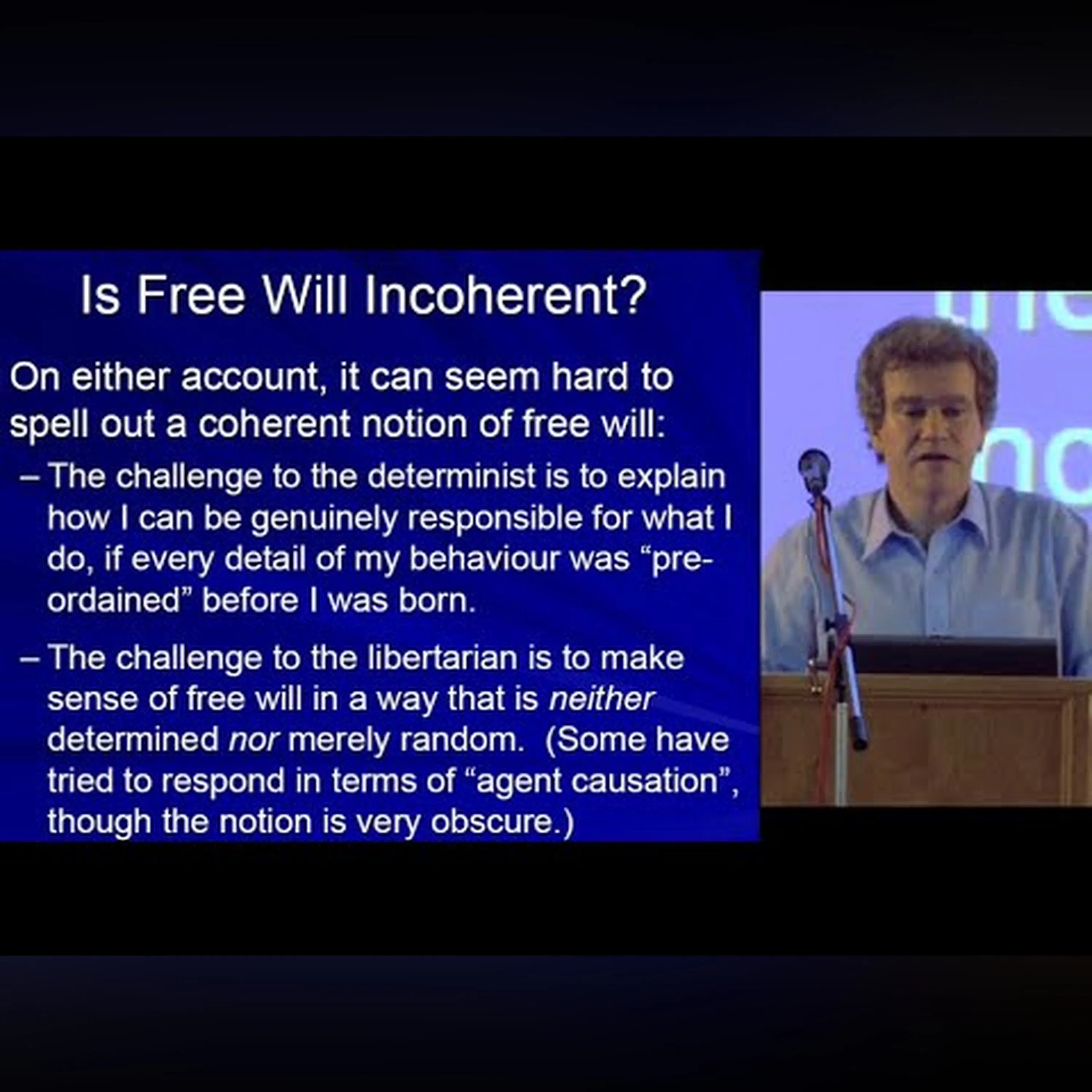
    In this lecture on General Philosophy, Professor Peter Millican discusses free will and the problem of moral responsibility. This comes from a 2010 series on General Philosophy. The slides have been added. Uploaded 08-06-21 This series of lectures was delivered by Peter Millican to first-year philosophy students at the University of Oxford. The lectures comprise of the 8-week General Philosophy course, delivered to first year undergraduates. These lectures aim to provide a thorough introduction to many philosophical topics and to get students and others interested in thinking about key areas of philosophy. Taking a chronological view of the history of philosophy, each lecture is split into 3 or 4 sections which outline a particular philosophical problem and how different philosophers have attempted to resolve the issue. Individuals interested in the 'big' questions about life such as how we perceive the world, who we are in the world and whether we are free to act will find this series informative, comprehensive and accessible. More lectures on General Philosophy: https://www.youtube.com/playlist?list=PLhP9EhPApKE_xo2wvkm6qPZrUlAiRNHXb Source: https://podcasts.ox.ac.uk/series/general-philosophy #philosophy #freewill #determinism #causality #causation #mind #metaphysics #psychology Learn more about your ad choices. Visit megaphone.fm/adchoices Learn more about your ad choices. Visit megaphone.fm/adchoices

  • Yesterday · 1 hr 8 min

    John Searle Interview on Perception and Philosophy of Mind

    One of America’s most prominent philosophers says his field has been tilting at windmills for nearly 400 years. Representationalism (or indirect realism)---the idea that we don’t directly perceive external objects in the world, but only our own inner mental images or representations of objects---has bedeviled philosophy ever since Descartes, and now is mucking up neuroscience as well, John Searle alleges. He has long defended the “naive” alternative that our senses do actually give us direct access to external reality, and he fires his latest salvo in his new book “Seeing Things as They Are: A Theory of Perception”. John is well-known for his no nonsense approach to philosophical problems, and there was plenty of straight talk here as he discussed his theory of perception, the subjective-objective divide, the scientific study of consciousness, and his dog Tarski. Uploaded 26-06-21 This interview was given a few years back by Robert Pollie which I quite like from a podcast called the 7th Avenue Project: www.7thavenueproject.com. #philosophy #epistemology #philosophyofmind #perception #consciousness #skepticism #mind Learn more about your ad choices. Visit megaphone.fm/adchoices Learn more about your ad choices. Visit megaphone.fm/adchoices

  • Yesterday · 55 min

    6 Reid on Personal Identity - Reid's Critique of Hume (Dan Robinson)

    Professor Dan Robinson gives the sixth in a series of 8 lectures on Thomas Reid's critique of David Hume at Oxford in 2014. In the third of his Essays on The Intellectual Powers of Man, Reid devotes the fourth chapter to the concept of 'identity', and the sixth chapter to Locke's theory of 'personal identity'. This latter chapter is widely regarded as a definitive refutation of the thesis that personal identity is no more than memories of a certain sort, less a “bundle of perceptions”. As he says, “This conviction of one’s own identity is utterly necessary for all exercise of reason. The operations of reason—whether practical reasoning about what to do or speculative reasoning in the building up of a theory—are made up of successive parts. In any reasoning that I perform, the early parts are the foundation of the later ones, and if I didn’t have the conviction that the early parts are propositions that I have approved or written down, I would have no reason to proceed to the later parts in any theoretical or practical project whatever”. Uploaded 19-06-21 Under “David Hume”, the Stanford Encyclopedia of Philosophy begins with, “The most important philosopher ever to write in English”. His most formidable contemporary critic was the fellow Scot, Thomas Reid, the major architect of so-called Scottish Common Sense Philosophy. The most significant features of Hume’s work, as understood by Reid, are the representive theory of perception, the nature of causation and causal concepts, the nature of personal identity and the foundations of morality. Each of these topics is presented in a pair of lectures, the first summarizing Hume’s position and the second Reid’s critique of that position. All Lectures: https://www.youtube.com/playlist?list=PLhP9EhPApKE9nki7CXFPi7PMOi5W2g2-q #philosophy #davidhume #personalidentity #skepticism #historyofphilosophy Learn more about your ad choices. Visit megaphone.fm/adchoices Learn more about your ad choices. Visit megaphone.fm/adchoices

  • Yesterday · 1 hr 38 min

    The Nature of Causation: The Regularity Theory

    What is causation? In this first lecture in this series on the nature of causation, Marianne Talbot discusses Hume's famous account of causation, which is a version of the so-called regularity theory. Uploaded 22-08-21 We have causal theories of reference, perception, knowledge, content and numerous other things. If it were to turn out that causation doesn’t exist, we would be in serious trouble! Causation is so important in fact that it has been said that: “With regard to our total conceptual apparatus, causation is the centre of the centre”, and it has been called ‘the cement of the universe’. In these lectures you will be introduced to the most influential theories of causation, the motivations for them and arguments behind them, and the problems they face. This is from a six-part lecture series on the nature of causation given at Oxford in 2016. #philosophy #davidhume #causation #epistemology #causality #metaphysics #empiricism #historyofphilosophy Learn more about your ad choices. Visit megaphone.fm/adchoices Learn more about your ad choices. Visit megaphone.fm/adchoices

  • Yesterday · 48 min

    Political Philosophy and John Rawls

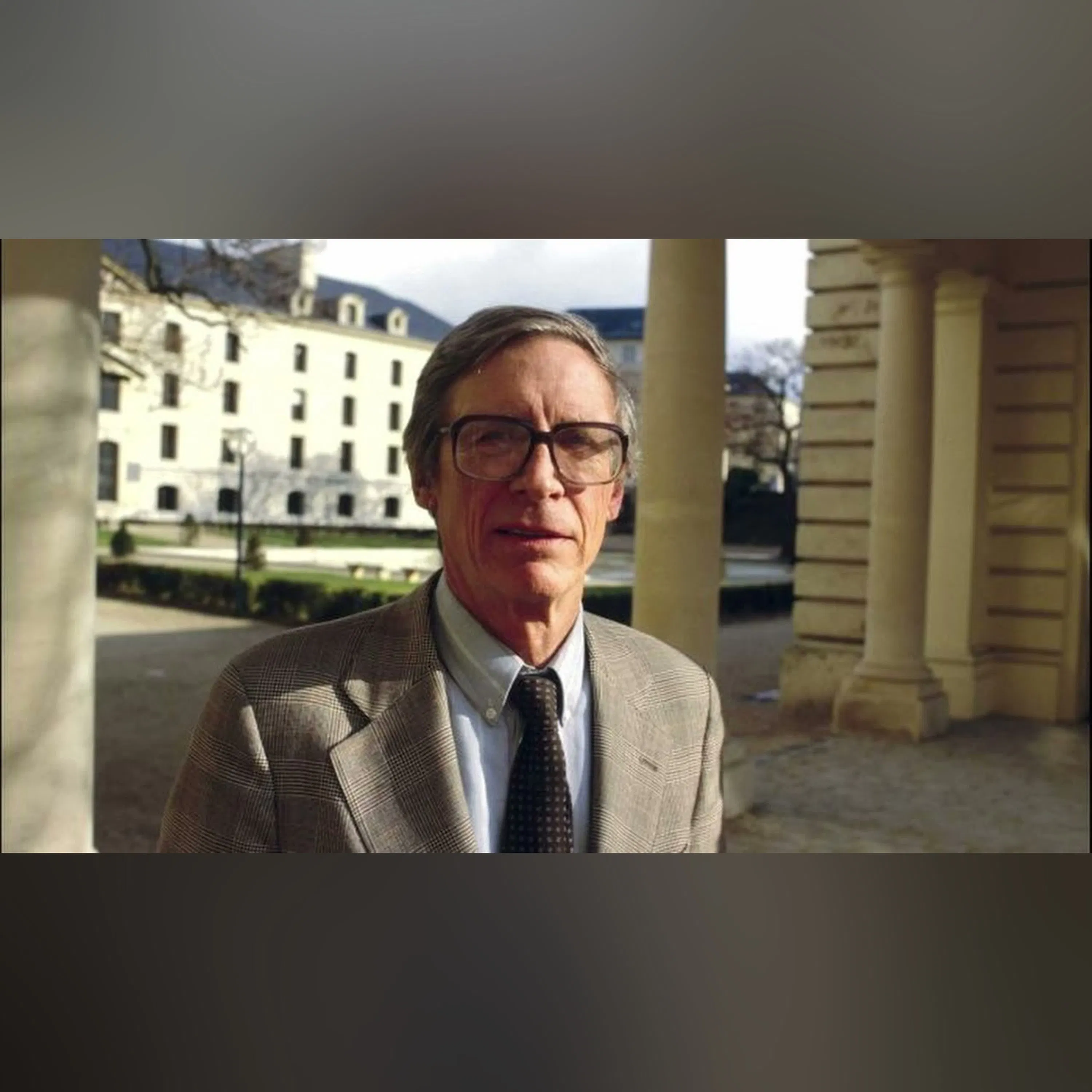
    Audio recording of a lecture by Jonathan Wolff on John Rawls' political philosophy. After discussing the detrimental influence of logical positivism on ethical and political discourse, Jonathan Wolff goes on to explain John Rawls' famous contractarian conception of justice. Rawls' argument takes the form of a thought experiment involving a hypothetical contract in which people are made ignorant about certain facts about themselves which could bias them in their own favor (e.g. their race, gender, class, age, talents, etc.). In this way, ignorance is used as a way to guarantee impartiality in deciding how societies should be set up. After all, one cannot rig things up to benefit oneself if one doesn't know what one's interests are or what one's position in society will be. Rawls argued that people behind this so-called "veil of ignorance" would agree to two principles of justice: the liberty principle and the difference principle. Jonathan Wolf explains these principles and the main arguments for and against them. (My Summary) Uploaded 06-06-21 Note, this is re-upload. More details about this talk will be added at a later date. More Political Philosophy: https://www.youtube.com/playlist?list=PLhP9EhPApKE_O1dkCOqsUke_0QUkX80A- #philosophy #politicalphilosophy #rawls #johnrawls #politicaltheory #historyofphilosophy Learn more about your ad choices. Visit megaphone.fm/adchoices Learn more about your ad choices. Visit megaphone.fm/adchoices

  • Yesterday · 4 min

    Robert Nozick on Karl Popper's Anti-Inductivism (2001)

    Audio recording of Robert Nozick presenting an argument against Karl Popper's anti-inductivist view of scientific knowledge in a clip from a 2001 interview by Juliαn Sαnchez on Nozick's most recent book "Invariances: The Structure of the Objective World". Uploaded 21-12-25 #philosophy #karlpopper #epistemology #science #nozick Learn more about your ad choices. Visit megaphone.fm/adchoices Learn more about your ad choices. Visit megaphone.fm/adchoices

  • Yesterday · 55 min

    The Death of Postmodernism

    An interesting discussion from an episode of Odyssey on WBEZ Chicago from back in 2002 with host Gretchen Helfrich. The participates were professor Stanley Fish and professor Joshua Cohen. You may also be interested in the following discussion about truth: https://youtu.be/MxL0fQcrjzQ Uploaded 18-09-21 #Philosophy #Postmodernism #Relativism Learn more about your ad choices. Visit megaphone.fm/adchoices Learn more about your ad choices. Visit megaphone.fm/adchoices

  • Yesterday · 4 min

    The Loss of Absolute Authority - Hannah Arendt (1972)

    Hannah Arendt believed that the will of the totalitarian ruler occupied the place left vacant by the absolute authority over the world attributed to God during the Middle Ages. With the collapse of the divinely ordained Kingships and the authority exercised by the Catholic church in the name of God, what would replace the authority of God in the world? How would such authority be constituted, who would act in its name, and what rules would it follow? Arendt believed that these questions missed the point. She welcomed the disappearance of absolute authority from the world in the name of the plurality of citizens whose power could now come forward. Only the power created by the collective decisions of citizens coming together to act on matters of public interest could establish a valid and just authority. Of course, this meant that there could be no return to the stability of the past. But it also meant that, as citizens, we assume responsibility ourselves for what happens in the world. Uploaded 29-04-25 These clips come from a 1972 conference on Arendt's work at York University. #philosophy #hannaharendt #politicaltheory #totalitarianism #authority Learn more about your ad choices. Visit megaphone.fm/adchoices Learn more about your ad choices. Visit megaphone.fm/adchoices

  • Yesterday · 57 min

    7 Hume’s “Sentimentalist” Theory of Morals - Reid's Critique of Hume (Dan Robinson)

    Professor Dan Robinson gives the seventh in a series of 8 lectures on Thomas Reid's critique of David Hume at Oxford in 2014. In his Enquiry Concerning the Principles of Morals [1751], Hume states: “The final sentence, it is probable, which pronounces characters and actions amiable or odious, praise-worthy or blameable; that which stamps on them the mark of honour or infamy, approbation or censure; that which renders morality an active principle and constitutes virtue our happiness, and vice our misery; it is probable, I say, that this final sentence depends on some internal sense or feeling, which nature has made universal in the whole species”. The ruling motives are shaped by considerations of utility. “The rage and violence of public war; what is it but a suspension of justice among the warring parties, who perceive, that this virtue is now no longer of any USE or advantage to them? The laws of war, which then succeed to those of equity and justice, are rules calculated for the ADVANTAGE and UTILITY…” Uploaded 20-06-21 Under “David Hume”, the Stanford Encyclopedia of Philosophy begins with, “The most important philosopher ever to write in English”. His most formidable contemporary critic was the fellow Scot, Thomas Reid, the major architect of so-called Scottish Common Sense Philosophy. The most significant features of Hume’s work, as understood by Reid, are the representive theory of perception, the nature of causation and causal concepts, the nature of personal identity and the foundations of morality. Each of these topics is presented in a pair of lectures, the first summarizing Hume’s position and the second Reid’s critique of that position. All Lectures: https://www.youtube.com/playlist?list=PLhP9EhPApKE9nki7CXFPi7PMOi5W2g2-q #philosophy #davidhume #ethics #moralphilosophy #historyofphilosophy Learn more about your ad choices. Visit megaphone.fm/adchoices Learn more about your ad choices. Visit megaphone.fm/adchoices

  • Yesterday · 10 min

    Gadamer on Hegel: Self-Consciousness

    Gadamer discusses Hegel's account of self-consciousness. Among other things, he touches on Hegel's master-slave dialectic. The translation is my own. Uploaded 18-07-21 More Gadamer: https://www.youtube.com/playlist?list=PLhP9EhPApKE_MbPzGOh27qfdqiCaf7Uot More Short Clips: https://www.youtube.com/playlist?list=PLhP9EhPApKE8v8UVlc7JuuNHwvhkaOvzc #philosophy #gadamer #hegel Learn more about your ad choices. Visit megaphone.fm/adchoices Learn more about your ad choices. Visit megaphone.fm/adchoices

  • Yesterday · 16 min

    John Locke - Antony Flew (1977)

    Audio recording of a short program in which Antony Flew discusses the life and thought of the great 17th-century British empiricist philosopher, John Locke. This comes from a 1977 series of programs on western philosophy. Uploaded 12-10-25 #philosophy #epistemology #locke #historyofphilosophy Learn more about your ad choices. Visit megaphone.fm/adchoices Learn more about your ad choices. Visit megaphone.fm/adchoices

  • Yesterday · 4 min

    Isaiah Berlin on Freedom (1962)

    A short clip of Isaiah Berlin discussing freedom, touching on his famous distinction between negative and positive freedom. Uploaded 10-07-21 Isaiah Berlin interview on freedom: https://www.youtube.com/watch?v=aSBf5LJ0hnc Isaiah Berlin interview on liberalism and pluralism: https://www.youtube.com/watch?v=lxn55CXTgKo #philosophy #isaiahberlin #politicalphilosophy #freedom Learn more about your ad choices. Visit megaphone.fm/adchoices Learn more about your ad choices. Visit megaphone.fm/adchoices

  • Yesterday · 1 hr 1 min

    G. E. Moore and the Naturalistic Reaction - Alan Donagan (1963)

    Audio recording of a 1963 lecture by Alan Donagan on G. E. Moore's ethical non-naturalism and the reaction against it. This was his second talk in a series on contemporary ethics given at DePauw University. Uploaded 25-04-24 #philosophy #ethics #metaethics #moralphilosophy #historyofphilosophy Learn more about your ad choices. Visit megaphone.fm/adchoices Learn more about your ad choices. Visit megaphone.fm/adchoices

Showing 81–100 of 274 episodes