Skip to content
Artwork for Philosophy Overdose
HistorySociety & CulturePhilosophyEducation

Philosophy Overdose

Philosophy Overdose

A collection of public and academic philosophy videos, mostly analytic philosophy but occasionally continental philosophy too. The channel looks for thought-provoking lectures and interviews, particularly what is rare and involves famous figures. There is occasionally an attempt at translation as well, especially that of German and French.

Nothing here is monetized, the channel is wholly non-commercial. Everything here is for the purpose of education and spreading around good philosophy content. If there's any problem, let me know, and I can take it down.

Feel free to let me know if there's anything you'd like me to post, including one of your own lectures.

Philosophy, Epistemology, Ethics, History of Philosophy, Political Philosophy, History of Ideas, Ontology, Critical Thinking, Moral Philosophy, Philosophy of Science, Logic, Philosophy of Mind, Metaphysics, Philosophy of Religion, Social Philosophy, Philosophy of Language, Consciousness, Philosophy of Mathematics, etc.

Links:
Facebook: https://www.facebook.com/PhilosophyOverdoseYoutube/

Play
  • 287 episodes
  • Avg 49 min
  • English
Counted on this page — what you have heard stays on this device, so it is not something the list can be paged by.
  • Monday · 10 min

    When Romanticism Goes Too Far

    A short, somewhat amusing clip of Isaiah Berlin discussing existentialism (Sartre's existentialism) with a touch of Max Stirner, both of which he took to be heirs of romanticism. Note, this is a re-upload. Also, Stirner did not actually go mad and "end his life in a lunatic asylum", I have no idea where Berlin got that from. In any case, this comes from his brilliant series on Romanticism, which you should definitely check out: https://www.youtube.com/playlist?list=PLhP9EhPApKE_9uxkmfSIt2JJK6oKbXmd- Uploaded 10-09-21 The lecture this comes from: https://www.youtube.com/watch?v=VnXcQLj-acs #isaiahberlin #existentialism #romanticism Learn more about your ad choices. Visit megaphone.fm/adchoices Learn more about your ad choices. Visit megaphone.fm/adchoices

  • Monday · 5 min

    Karl Popper on Science and Fallibilism (1971)

    A short clip of Karl Popper discussing his famous falsifiability criterion of the demarcation between science and non-science, and how he partly came to it, as well as his fallibilism. This is from a 1971 discussion with John Eccles and the Dutch philosopher Fons Elders as the moderator. This is a re-upload from the previous channel. For more Popper: https://www.youtube.com/playlist?list=PLhP9EhPApKE_VarWCx1d_Uogn_GxsVf-o Uploaded 08-10-21 "The traditional systems of epistemology may be said to result from yes-answers or no-answers to questions about the sources of knowledge. They never challenge these questions, or dispute their legitimacy; the questions are taken as perfectly natural, and nobody seems to see any harm in them. This is quite interesting, for these questions are clearly authoritarian in spirit. They can be compared with that traditional question of political theory, 'Who should rule?', which begs for an authoritarian answer such as 'the best', or 'the wisest', or 'the people', or 'the majority'. (It suggests, incidentally, such silly alternatives as 'Whom do you want as rulers: the capitalists or the workers?', analogous to 'What is the ultimate source of knowledge: the intellect or the senses?') This political question is wrongly put and the answers which it elicits are paradoxical. It should be replaced by a completely different question such as 'How can we organize our political institutions so that bad or incompetent rulers (whom we should try not to get, but whom we so easily might get all the same) cannot do too much damage?' I believe that only by changing our question in this way can we hope to proceed towards a reasonable theory of political institutions. The question about the sources of our knowledge can be replaced in a similar way. It has always been asked in the spirit of: 'What are the best sources of our knowledge--the most reliable ones, those which will not lead us into error, and those to which we can and must turn, in case of doubt, as the last court of appeal?' I propose to assume, instead, that no such ideal sources exist--no more than ideal rulers--and that all 'sources' are liable to lead us into error at times. And I propose to replace, therefore, the question of the sources of our knowledge by the entirely different question: How can we hope to detect and eliminate error?" (from Popper's 'Conjectures and Refutations') #philosophy #karlpopper #epistemology #science #philosophyofscience Learn more about your ad choices. Visit megaphone.fm/adchoices Learn more about your ad choices. Visit megaphone.fm/adchoices

  • Monday · 1 hr 25 min

    The Thought of Philippa Foot

    Alex Voorhoeve and Sarah Broadie discuss the work of the renowned philosopher Philippa Foot at the LSE back in 2013. They discuss her work on the following philosophical issues. Is morality objective? Why should one be moral? And may we kill one to save others? Uploaded 30-03-25 00:00 Life and Philosophical Style 15:05 Moral Subjectivism 26:05 Why Be Moral? 38:40 The Trolley Problem 50:45 Discussion #philosophy #ethics #metaethics #moralphilosophy Learn more about your ad choices. Visit megaphone.fm/adchoices Learn more about your ad choices. Visit megaphone.fm/adchoices

  • Monday · 1 hr 42 min

    John Locke's Political Philosophy

    After briefly discussing Thomas Hobbes, Professor Charles Anderson discusses the thought of John Locke. This comes from a course on Political, Economic, and Social Thought given at the University of Wisconsin many years ago. Uploaded 18-06-21 00:00 Thomas Hobbes 21:50 John Locke #philosophy #locke #politicalphilosophy #politicaltheory #historyofphilosophy #hobbes #philosopher Learn more about your ad choices. Visit megaphone.fm/adchoices Learn more about your ad choices. Visit megaphone.fm/adchoices
  • Monday · 1 hr 19 min

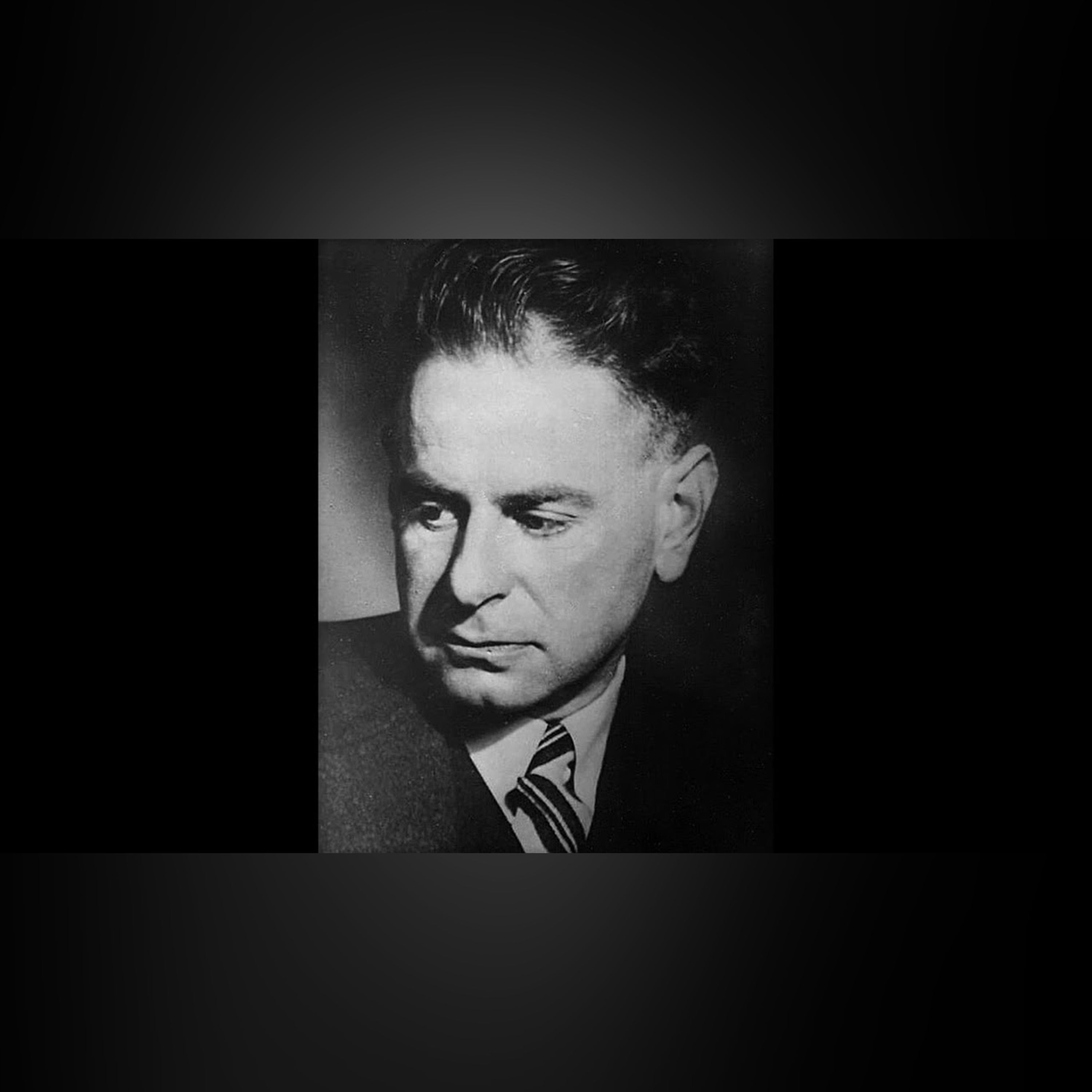
    Hannah Arendt (1964) - What Remains? (Full Interview w/ Günter Gaus)

    An interview with Hannah Arendt about her life and work in 1964 with Günter Gaus. This is a version of a re-upload. The translation is my own, but parts also come from the published version by Joan Stambaugh. Note, this is actually the complete interview. For whatever reason, the other one with English captions on YouTube is missing almost 15 minutes, including what I took to be some of the most interesting parts, like the discussion of truth and the parts from her book the Human Condition. And that was the main reason for originally deciding to put it up to begin with. Plus, I thought my translation was a bit better and more accurate. Uploaded 21-08-21 More Hannah Arendt: https://www.youtube.com/playlist?list=PLhP9EhPApKE-07vAVTFEuiDvqli1y8f0U #philosophy #hannaharendt #politicaltheory #politicalphilosophy #totalitarianism Learn more about your ad choices. Visit megaphone.fm/adchoices Learn more about your ad choices. Visit megaphone.fm/adchoices

  • Monday · 1 hr 10 min

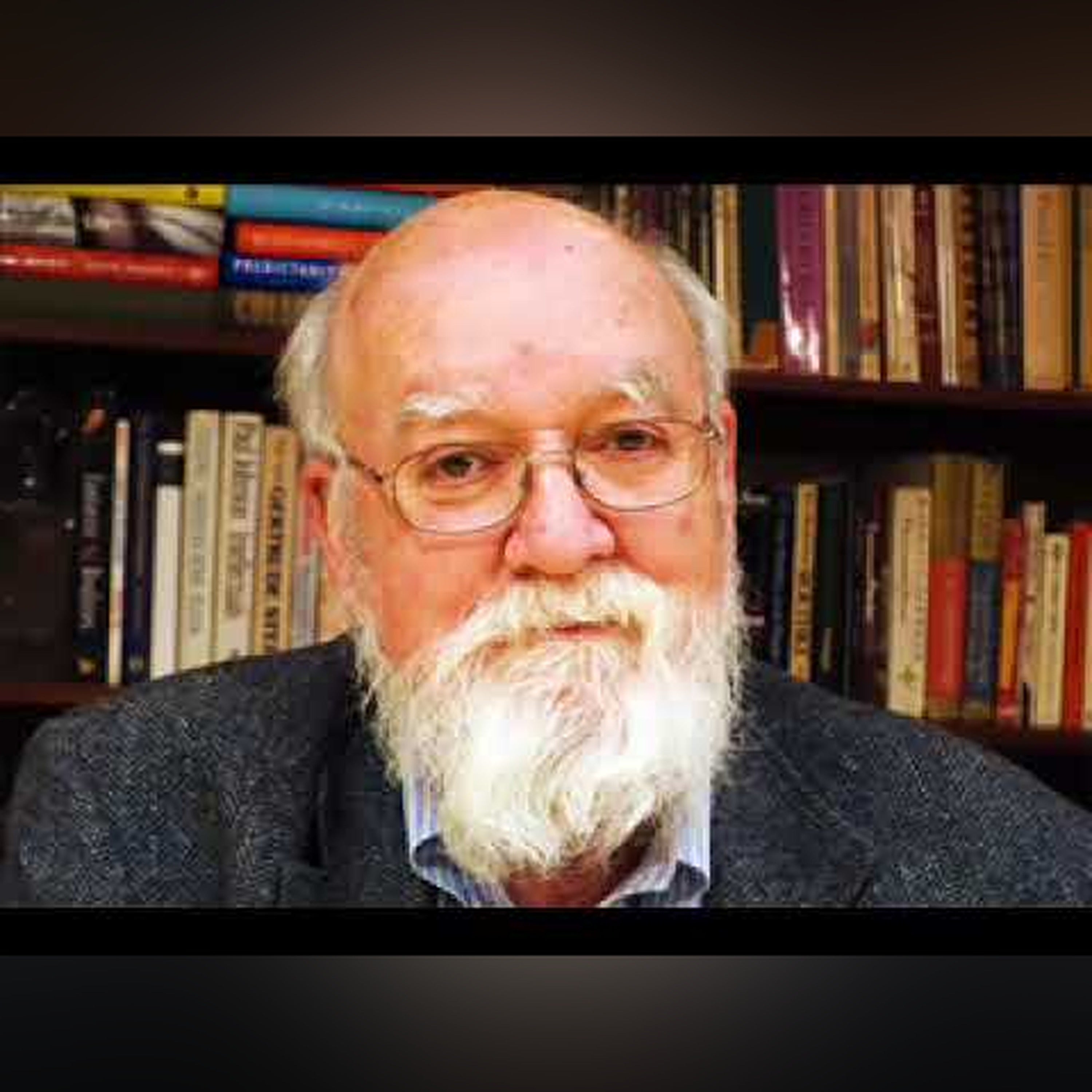
    Daniel Dennett Interview on Mind, Matter and Meaning

    An interesting interview with Daniel Dennett from a few years back that I quite like. He discusses various philosophical issues regarding mind and meaning. Some of the topics discussed include consciousness, science, materialism, computation, meaning/purpose in biology, emergence and reductionism, the intentional stance, evolution, philosophical zombies, the self, and free will. This comes from an interview with Robert Pollie a few years back from a podcast called the 7th Avenue Project. For more information, go to www.7thavenueproject.com. Uploaded 24-06-21 #philosophy #dennett #consciousness #philosophyofmind #materialism #personalidentity #perception #mind Learn more about your ad choices. Visit megaphone.fm/adchoices Learn more about your ad choices. Visit megaphone.fm/adchoices
  • Monday · 21 min

    Themes of Postmodern Philosophy

    Another re-upload from the previous channel. This comes from a course on the history of philosophy by James Anderson a few of years back. I thought it provided a relatively decent overview. More details will be added later. More Short Videos: https://www.youtube.com/playlist?list=PLhP9EhPApKE8v8UVlc7JuuNHwvhkaOvzc Uploaded 17-09-21 You may also be interested in the following discussion: https://www.youtube.com/watch?v=MxL0fQcrjzQ #Philosophy #Postmodernism #Relativism Learn more about your ad choices. Visit megaphone.fm/adchoices Learn more about your ad choices. Visit megaphone.fm/adchoices

  • Monday · 52 min

    4 Reid on Causation and Active Powers - Reid's Critique of Hume (Dan Robinson)

    Professor Dan Robinson gives the fourth in a series of 8 lectures on Thomas Reid's critique of David Hume at Oxford in 2014. “It is evident that a power is a quality, and therefore can’t exist without a subject to which it belongs…This (Humean) suggestion— There exists some power that cannot be attributed to any thing, any subject, which has the power —is an absurdity…No principle seems to have been more universally acknowledged by mankind ever since the first dawn of reason than that every change we observe in nature must have a cause…Another argument to show that all men have a notion or idea of active power is that there are many mental operations—performed by everyone who has a mind, and necessary in the ordinary conduct of life—which presuppose that we have active power”. Uploaded 19-06-21 Under “David Hume”, the Stanford Encyclopedia of Philosophy begins with, “The most important philosopher ever to write in English”. His most formidable contemporary critic was the fellow Scot, Thomas Reid, the major architect of so-called Scottish Common Sense Philosophy. The most significant features of Hume’s work, as understood by Reid, are the representive theory of perception, the nature of causation and causal concepts, the nature of personal identity and the foundations of morality. Each of these topics is presented in a pair of lectures, the first summarizing Hume’s position and the second Reid’s critique of that position. All Lectures: https://www.youtube.com/playlist?list=PLhP9EhPApKE9nki7CXFPi7PMOi5W2g2-q #philosophy #davidhume #causation #causality #historyofphilosophy Learn more about your ad choices. Visit megaphone.fm/adchoices Learn more about your ad choices. Visit megaphone.fm/adchoices
  • Monday · 1 hr 30 min

    A Reasonable Structure for Animal Rights - Christine Korsgaard

    In this talk, Professor Christine Korsgaard discusses the nature of rights, especially from a Kantian perspective and within the context of non-human animals. This was the Guelph Lecture in Philosophy given by Professor Christine M. Korsgaard at the University of Guelph back in 2014. Uploaded 25-04-25 00:00 Talk 59:37 Q and A #philosophy #ethics #moralphilosophy #animalethics #kant #animalrights Learn more about your ad choices. Visit megaphone.fm/adchoices Learn more about your ad choices. Visit megaphone.fm/adchoices
  • Monday · 14 min

    Karl Popper vs Induction

    Karl Popper and Induction duke it out. Who will win? This is something I put together a while back and originally uploaded on the previous channel. I think it succinctly illustrates some of the underlying problems with Popper's philosophy of science and why it doesn't seem to work. Many people also seem to misunderstand Popper's view on this point, perhaps based on a misunderstanding of inductive logic or the problem of induction itself. To be fair, Popper himself often seems to downplay such aspects of his view. But Popper isn't just a fallibilist who stresses falsifiability in science, he's an anti-inductivist who wants to get rid of induction from science altogether. In any case, the audio comes from a course on the philosophy of science given by Jeffrey Kasser a while back. The clips come from various interviews and documentaries on Popper. I will list them all at a later date. Uploaded 30-07-21 #philosophy #karlpopper #epistemology #skepticism #causality #science Learn more about your ad choices. Visit megaphone.fm/adchoices Learn more about your ad choices. Visit megaphone.fm/adchoices
  • Monday · 3 min

    Levinas on the Face

    This short clip comes from the beginning of a 2014 documentary on Emmanuel Levinas by Yoram Ron called "Le Dieu absent - Emmanuel Lévinas et l'humanisme de l'autre" ("Absent God - Emmanuel Levinas and the Humanism of the Other"). I thought it was interesting, so I translated it into English and added subtitles. The full documentary (with English subtitles) can be found on YouTube here: https://www.youtube.com/watch?v=qbGaXEqxSvU Uploaded 06-06-21 #philosophy #levinas #phenomenology Learn more about your ad choices. Visit megaphone.fm/adchoices Learn more about your ad choices. Visit megaphone.fm/adchoices

  • Monday · 15 min

    On Anger

    A clip of Martha Nussbaum discussing the nature of anger and her radical view that anger is always normatively flawed. This comes from a lecture Martha Nussbaum gave on anger back in 2013 at the University of Chicago. Uploaded 19-04-25 #philosophy #anger #psychology #emotions #ethics Learn more about your ad choices. Visit megaphone.fm/adchoices Learn more about your ad choices. Visit megaphone.fm/adchoices
  • Monday · 29 min

    David Papineau on Consciousness

    David Papineau discusses consciousness from a materialist perspective and why dualist intuitions won't go away in an interview with Joe Gelonesi in an episode of the Philosopher's Zone, an ABC Radio National program from 2015. Uploaded 04-04-26 For more information and additional episodes of the Philosopher's Zone, go to: https://www.abc.net.au/radionational/programs/philosopherszone #philosophy #philosophyofmind #consciousness #metaphysics #materialism Learn more about your ad choices. Visit megaphone.fm/adchoices Learn more about your ad choices. Visit megaphone.fm/adchoices
  • Monday · 1 hr 48 min

    Alasdair MacIntyre on the Fate of Theism/Atheism and Morals (1966)

    Audio recording of two lectures by Alasdair C. MacIntyre as part of the Bampton Lectures at Columbia University in 1966. Uploaded 11-10-25 00:00 Lecture I: The Fate of Theism 50:37 Lecture II: Atheism and Morals #philosophy #theism #atheism #religion #historyofphilosophy #intellectualhistory Learn more about your ad choices. Visit megaphone.fm/adchoices Learn more about your ad choices. Visit megaphone.fm/adchoices
  • Monday · 1 hr 15 min

    Evolution vs Ethics - Peter Singer

    Professor Peter Singer delivers a public lecture at the University of Sydney in 2011 on whether understanding evolution helps us to understand ethics and morality. This was part of the Sydney Ideas series and ABC's Big Ideas series. It was co-presented with Think Global School. Uploaded 30-01-25 00:00 Lecture 48:38 Q and A #philosophy #ethics #moralphilosophy #evolution #petersinger #utilitarianism Learn more about your ad choices. Visit megaphone.fm/adchoices Learn more about your ad choices. Visit megaphone.fm/adchoices

  • Monday · 57 min

    Gadamer on Heraclitus (Full Interview 1989)

    The complete interview of Hans-Georg Gadamer discussing the obscure pre-Socratic thinker, Heraclitus. This is a version of an upload from the previous channel, but this time it includes the entire thing, as well as improved audio and video. As always, the translation is my own. I apologize for any errors, I know it isn't always as good as it could be. Uploaded 12-08-21 More Gadamer: https://www.youtube.com/playlist?list=PLhP9EhPApKE_MbPzGOh27qfdqiCaf7Uot #Philosophy #Gadamer #Heraclitus Learn more about your ad choices. Visit megaphone.fm/adchoices Learn more about your ad choices. Visit megaphone.fm/adchoices

  • Monday · 58 min

    The Evolution of "Why" as the Key to Free Will - Daniel Dennett

    Professor Daniel Dennett gives a public lecture on evolution and free will at Stanford University in 2009. Uploaded 05-01-25 #philosophy #freewill #dennett #darwin #causality #materialism #philosophyofmind #causation #mind Learn more about your ad choices. Visit megaphone.fm/adchoices Learn more about your ad choices. Visit megaphone.fm/adchoices
  • Monday · 1 hr 45 min

    2 Varieties of Philosophical Skepticism - Cartesian and Kantian Skepticism

    In this second lecture (note, it's actually the third because the second wasn't recorded), James Conant continues to give examples of Cartesian skepticism in various other areas of philosophy and discusses some of the differences with Kantian skepticism. Note, because Kantian skepticism was introduced and discussed in the previous session, and there's no recording, it might be a bit difficult at first to understand what Kantian skepticism precisely is. However, this will definitely become clear as the lectures go on. Uploaded 26-06-21 In this series of lectures on varieties of philosophical skepticism, James Conant distinguishes between two forms of philosophical skepticism: Cartesian skepticism and Kantian skepticism. He discusses their general structure and shows how they're related. This sheds light on issues in various different areas, including within the philosophy of perception, philosophy of mind, and philosophy of language. Some of the philosophers discussed throughout this course include Wittgenstein, Sellars, Hilary Putnam, Kripke, C.I. Lewis, John McDowell, and Stanley Cavell. This series of lectures was given in 2005 at the Department of Philosophy at the University of Bergen, Norway. Note, the audio has been slightly edited and improved. "There are never any sure signs by means of which being awake can be distinguished from being asleep." Descartes "The a priori conditions of a possible experience in general are at the same time conditions of the possibility of objects of experience. Now I maintain that the categories ... are nothing but the conditions of thought in a possible experience ... And without such unity no thoroughgoing, universal, and therefore necessary, unity of consciousness would be met with in the manifold of perceptions. These perceptions would not then belong to any experience, consequently would be without an object, merely a blind play of representations, less even than a dream." Immanuel Kant 00:00 Introduction 01:31 Where one is possible, so is the other 03:29 Philosophy of Law 05:27 Skepticism for any Area of Philosophy 07:37 Testimony 13:21 Personal Identity 17:01 The Past 19:51 Reference 24:00 Move to Kantian Problematic 33:55 Why these Two Labels? 45:45 Is Kantian Skepticism a Kind of Skepticism? 51:33 Features of Both All lectures: https://www.youtube.com/playlist?list=PLhP9EhPApKE8muoMpX8qQ-14zKnYPc5VI #philosophy #epistemology #skepticism #kant #historyofphilosophy Learn more about your ad choices. Visit megaphone.fm/adchoices Learn more about your ad choices. Visit megaphone.fm/adchoices
  • Monday · 14 min

    The Absurdity of Moral Relativism and Subjectivism - A Polemic

    Skeletons will dance, positions will be refuted. This is a re-upload from the previous channel. It was made in 2016. You may also like the following: https://youtu.be/DFHPH3m-KR8 Uploaded 11-06-21 #philosophy #relativism #ethics #postmodernism #historyofphilosophy Learn more about your ad choices. Visit megaphone.fm/adchoices Learn more about your ad choices. Visit megaphone.fm/adchoices
  • Monday · 50 min

    2 The Broader Philosophical Context - Kant's Critique of Pure Reason (Dan Robinson)

    Dan Robinson gives the 2nd lecture in a series of 8 on Immanuel Kant's Critique of Pure Reason. The significant advances in physics in the 17th century stood in vivid contrast to the stagnation of traditional metaphysics, but why should metaphysics be conceived as a "science" in the first place? Uploaded 04-06-21 This series looks at German Philosopher Immanuel Kant's seminal philosophical work 'The Critique of Pure Reason'. The lectures aim to outline and discuss some of the key philosophical issues raised in the book and to offer students and individuals thought provoking Kantian ideas surrounding metaphysics. Each lecture looks at particular questions raised in the work such as how do we know what we know and how do we find out about the world, dissects these questions with reference to Kant's work and discusses the broader philosophical implications. Anyone with an interest in Kant and philosophy will find these lectures thought provoking but accessible. This is series of lectures was given in 2011 at Oxford. Note, the audio has been improved. All 8 lectures: https://www.youtube.com/playlist?list=PLhP9EhPApKE_OdgqNgL0AJX9-gwr4tmLw #philosophy #kant #epistemology #metaphysics #skepticism #empiricism #historyofphilosophy Learn more about your ad choices. Visit megaphone.fm/adchoices Learn more about your ad choices. Visit megaphone.fm/adchoices
Showing 241–260 of 287 episodes