Skip to content
Artwork for Minus One
BusinessEntrepreneurship

Minus One

South Park Commons

A show about the winding journeys the world's most interesting people take to becoming great—and what they do when figuring out a question we all face: What's Next? Because before you launch at Zero, you have to figure out what to launch at Minus One. Hosted by South Park Commons Partner Aditya Agarwal and members of the SPC community.

Play
  • 22 episodes
  • Avg 46 min
  • English
Counted on this page — what you have heard stays on this device, so it is not something the list can be paged by.
  • Thursday · 44 min

    The Blood Test That Could Detect Thousands of Diseases | Helmy Eltoukhy, Guardant Health

    Helmy Eltoukhy, CEO of Guardant Health, joins South Park Commons Partner Mark Jacobstein to discuss his journey from electrical engineering to building one of the leading companies in cancer diagnostics. They talk about Guardant’s path from liquid biopsy to early cancer detection, the difficult realities of building a diagnostics company, and why business model innovation can matter just as much as technical breakthroughs. Helmy also explains how AI is helping Guardant make better use of its growing dataset and why he believes the same blood test infrastructure could eventually be used to detect hundreds or even thousands of diseases. Helmy Eltoukhy: https://www.linkedin.com/in/helmy-eltoukhy-b011855/ Mark Jacobstein: https://www.linkedin.com/in/markjacobstein South Park Commons: https://www.linkedin.com/company/southparkcommons/ Apply to SPC: https://www.southparkcommons.com/apply Chapters: (00:00:43) - From Electrical Engineering to Biology and Entrepreneurship (00:08:10) - From Building Sequencing Technology to Solving Healthcare Problems (00:12:51) - Guardant Health's Long-Term Bet on Early Cancer Detection (00:15:31) - Early Mistakes, Pivots, and Difficult Business Decisions (00:18:15) - Why Building a Diagnostics Company Is So Difficult (00:21:15) - Why Business Model Innovation Matters as Much as Technology (00:26:15) - How AI Is Unlocking Guardant's Massive Cancer Dataset (00:30:05) - From Early Cancer Detection to the “Everything Test”
  • September 18 · 44 min

    OpenAI's ex-B2B CTO on Keeping AI Aligned

    How close are we to AGI, and what happens when AI systems stop behaving the way we expect? Srinivas Narayanan, former CTO of B2B Engineering at OpenAI and former VP of Engineering at Facebook, joins South Park Commons Partner Prateek Mehta for a wide-ranging conversation on his Minus One to Zero journey, enterprise AI adoption, and AI safety. They discuss the career choices that took him from two startups to Facebook and OpenAI, why a beginner’s mindset has mattered along the way, what is slowing AI adoption inside large companies, and how builders should think about reward hacking, alignment, and increasingly autonomous AI systems. Srinivas Narayanan: https://www.linkedin.com/in/srinivasnarayanan/ Prateek Mehta: https://www.linkedin.com/in/prateek-mehta-a571972/ South Park Commons: https://www.linkedin.com/company/southparkcommons/ Apply to SPC: https://www.southparkcommons.com/apply Chapters: (00:01:26) - How Close Are We to AGI? (00:02:26) - From IIT Madras to AI and OpenAI (00:07:32) - How to Find Problems Worth Spending a Decade On (00:12:38) - Building OpenAI Without a Playbook (00:15:24) - How OpenAI Built a High-Talent, High-Agency Team (00:18:12) - What’s Holding Back Enterprise AI Adoption (00:29:12) - The Future of AI Beyond the Digital World (00:36:42) - The Real Risks of AI and How to Think About Safety

  • August 20 · 35 min

    The Secret Superpower of Great Founders | Sridhar Ramaswamy (Snowflake CEO)

    What does it take to build something that lasts? Snowflake CEO and former Google SVP of Ads Sridhar Ramaswamy joins South Park Commons General Partner Aditya Agarwal to share his answer. Ramaswamy traces his journey from Google to founding Neeva, an ad-free search startup that shut down before the generative AI boom, to leading Snowflake through the AI era. He shares what defines great founders, what doomed Neeva, and why most software will lose its moat. Ramaswamy and Agarwal also explore the future of AI, what remains valuable in an age of AI-generated software, and the search belief Ramaswamy got wrong. Sridhar Ramaswamy: https://www.linkedin.com/in/sridhar-ramaswamy/ Aditya Agarwal: https://www.linkedin.com/in/adityaagarwal3/ South Park Commons: https://www.linkedin.com/company/southparkcommons/ Apply to SPC: https://www.southparkcommons.com/apply (00:00:52) - Choosing When to Take a Career Risk (00:05:01) - Lessons From Google’s Founders (00:09:52) - What Went Wrong at Neeva (00:13:39) - The Future of AI Models (00:22:59) - Snowflake’s Enduring Value in the AI Era (00:29:24) - How to Keep Up With AI (00:32:24) - Rapid Fire: Books, Search & Google

  • August 13 · 35 min

    What Is Reward Hacking and Can We Stop It? | Tom McGrath, Goodfire

    Why did OpenAI’s model hack into Hugging Face? Tom McGrath, co-founder and Chief Scientist at Goodfire, joins South Park Commons Partner Jonathan Brebner to explore one of AI’s biggest challenges: interpretability. Using OpenAI’s recent reward hacking incident as a starting point, they discuss why today’s most advanced models are still difficult to understand and why gaining visibility into how they work could be essential for building safer, more reliable AI systems. Tom shares how interpretability could change the way researchers develop models and how Goodfire is creating tools to help understand and steer frontier AI. Tom McGrath: https://www.linkedin.com/in/tom-mcgrath-7337bb151/ Jonathan Brebner: https://www.linkedin.com/in/jonathan-brebner/ South Park Commons: https://www.linkedin.com/company/southparkcommons/ Apply to SPC: https://www.southparkcommons.com/apply (00:00:30) - Why AI Interpretability Matters Now (00:02:15) - When AI Reward Hacking Becomes Real (00:05:07) - The Core Problem of Interpretability (00:07:23) - Intentional Design: Steering What Models Learn (00:12:43) - Neural Geometry: The Shapes Inside AI Models (00:22:29) - Turning Interpretability Research Into a Product (00:25:28) - How Research Changes Inside a Startup (00:32:48) - Science Fiction, AI Risk, and the Future

  • July 16 · 46 min

    Anthropic Engineer on the Future of Coding with AI | Thariq Shihipar

    Thariq Shihipar, a member of Anthropic's Claude Code team (and SPC alum), joins South Park Commons Partner Evan Tana to discuss what it takes to build at the frontier of AI, where the models, tools, and best practices are constantly evolving. Thariq traces his journey from a gaming startup to Anthropic after a chance text about Claude Code, shares why his team stopped using Plan Mode, explains concepts like capability overhang, harness engineering, and the underrated art of writing evals, and discusses why RAG is becoming an anti-pattern. He also breaks down how founders should think about building when the capabilities of AI systems are changing faster than anyone can predict. Thariq Shihipar: https://www.linkedin.com/in/thariqshihipar/ Evan Tana: https://www.linkedin.com/in/evantana/ South Park Commons: https://www.linkedin.com/company/southparkcommons/ Apply to SPC: https://www.southparkcommons.com/apply Chapters: (00:00:00) - From Startup Founder to Anthropic (00:03:33) - Building Better AI With Claude Code (00:07:21) - The Capability Overhang (00:12:17) - How Anthropic Builds AI Products (00:17:51) - Prompting Claude More Effectively (00:30:58) - How AI Is Changing Product Teams (00:41:11) - Advice for AI Founders

  • July 10 · 54 min

    The Man Who Took India to the International Space Station | Shubhanshu Shukla

    What does it actually take to become an astronaut? Shubhanshu Shukla, the second Indian to travel to space after more than four decades, joins South Park Commons general partner Aditya Agarwal to share the answer. During Axiom Mission 4, Shukla became the first Indian aboard the International Space Station (ISS). An astronaut with ISRO and a Group Captain in the Indian Air Force, he shares what it takes to get there, from the intense selection process and psychological testing to a seven-day isolation challenge and other unexpected requirements candidates must meet. He also reflects on life in orbit, from speaking Hindi aboard the ISS for the first time to the disorientation, the overview effect, and the physical changes the human body experiences. Along the way, Shukla and Agarwal explore India’s space ambitions and what it takes to chase an outsized dream. Shubhanshu Shukla: https://www.linkedin.com/in/gagan-shux/ Aditya Agarwal: https://www.linkedin.com/in/adityaagarwal3/ South Park Commons: https://www.linkedin.com/company/southparkcommons/ Apply to SPC: https://www.southparkcommons.com/apply (00:00:00) - Introduction: Becoming Comfortable With the Uncomfortable (00:01:54) - Why Saying "Yes" Changed the Course of His Life (00:07:15) - What It Really Takes to Become an Astronaut (00:11:40) - The Physical, Medical, and Psychological Tests (00:15:21) - What It Feels Like to See Earth From Space (00:17:20) - Microgravity: How Space Changes Your Body and Mind (00:25:35) - The Pressure and Responsibility of Representing India in Space (00:28:29) - The New Space Economy and Why the Next Decade Will Be Different (00:35:03) - Advice for Entrepreneurs Building the Future of Space (00:44:19) - The Future of Human Space Exploration: Moon, Mars, and Beyond

  • June 11 · 42 min

    Minus One to Space Gun | Nato Saichek

    Nato Saichek, cofounder and CTO of Longshot Space, joins South Park Commons Partner Jonathan Brebner to explain why rockets won the space race for the wrong reasons—and why a 15-kilometer space gun may be the most rational path to cheap access to orbit. Nato traces Longshot's origins from garage experiments with his cofounder Mike Grace, through building the world's largest operational cannon, to a first-principles reimagining of launch economics. He explains why $4 trillion in rocket investment locked civilization into a local optimum, how aerospace-grade hardware can be replicated for $5 in parts, and what it actually feels like to shoulder the weight of a deeply unconventional bet. Nato Saichek: https://www.linkedin.com/in/natosaichek/ Jonathan Brebner: https://www.linkedin.com/in/jonathan-brebner/ South Park Commons: https://www.linkedin.com/company/southparkcommons/ Apply to SPC: https://www.southparkcommons.com/apply Chapters: (00:00:00) - The 15-Kilometer Space Gun (00:06:27) - The History of Space Guns and Why the Idea Was Abandoned (00:09:33) - Why Rockets Aren’t the Best Solution (00:18:39) - The Story of Longshot Space (00:22:09) - Nato On Leaving His Dream Job (00:28:25) - Fundraising for an Unconventional Idea (00:39:36) - The Perks of Having a Cofounder

  • May 21 · 40 min

    Why Great AI Companies Are Moving Beyond Tools | Amit Jain (Luma AI)

    Amit Jain, cofounder and CEO of Luma AI, joins South Park Commons Partner Finn Meeks to explain why the most defensible AI companies aren't just building tools—they're developing systems that can understand and simulate the world. Amit traces Luma's path from a free 3D capture app designed to gather training data, through an early bet that video generation was finally viable, to the unified model architecture powering Luma Agents today. He explains why most AI products still break at execution, why foundation labs blur the line between product and research, and why they are the blueprint for the companies of the future. Amit Jain: https://www.linkedin.com/in/gravicle/ Finn Meeks: https://www.linkedin.com/in/finn-meeks/ South Park Commons: https://www.linkedin.com/company/southparkcommons/ Apply to SPC: https://www.southparkcommons.com/apply Chapters: (00:00:00) - Apple's LiDAR work seeded Luma's founding vision (00:05:05) - A free app was secretly a data collection operation (00:06:49) - H100s made video generation stop feeling impossible (00:10:00) - Most definitions of "world model" are simply wrong (00:14:37) - Why unified models beat pure video scaling (00:20:03) - Luma Agents and the end-to-end creative production loop (00:23:00) - The knowledge gap no model can close alone (00:29:34) - Blowing James Cameron's mind in five minutes (00:31:16) - Why consumer video generation failed—and who it's actually for (00:35:23) - Product and research aren't two things at a foundation lab

  • April 30 · 49 min

    The AI Cybersecurity Crisis Is Here | Nikesh Arora (Palo Alto Networks CEO)

    Nikesh Arora, CEO of Palo Alto Networks, joins South Park Commons partner Aditya Agarwal to discuss the cybersecurity crisis currently unfolding—and why AI is both the threat and the only viable solution. Nikesh traces his own unlikely journey from Google's Chief Business Officer to leading one of the world's most critical cybersecurity companies with no prior cybersecurity experience, shares what Masayoshi Son taught him about risk, and explains why most founders are too de-risked before they ever start building. He also breaks down why the same AI models writing code today will soon expose decades of hidden vulnerabilities at a scale no IT team is prepared to handle. Nikesh Arora: https://www.linkedin.com/in/nikesh-arora-02894670/ Aditya Agarwal: https://www.linkedin.com/in/adityaagarwal3/ South Park Commons: https://www.linkedin.com/company/southparkcommons/ Apply to SPC: https://www.southparkcommons.com/appl Chapters:(00:02:41) - Big problems vs. fast wins (00:05:08) - Joining Google (00:08:28) - Larry Page's product obsession (00:10:00) - He read every hiring packet himself (00:13:14) - What Silicon Valley gets wrong about Masa Son (00:15:45) - Successful founders never wish they took less risk (00:17:00) - Joining Palo Alto knowing nothing about cybersecurity (00:19:30) - What incumbents got wrong when ChatGPT launched (00:22:31) - Security was never built into AI (00:25:00) - No enterprise knows what's running inside its stack (00:30:27) - AI finds bad code faster than humans ever could (00:34:27) - The only way to fix the chaos is more AI (00:37:05) - AI won't just automate work—it raises the floor (00:39:43) - Foundation models vs. specialized stacks (00:43:16) - Why communication is 30% of the job at scale (00:45:00) - What makes a great founder

  • April 23 · 50 min

    How Replit Is Enabling a New Wave of Million-Dollar Founders | Amjad Masad & Haya Odeh

    Amjad Masad and Haya Odeh, cofounders of Replit, join South Park Commons Partners Aditya Agarwal and Ruchi Sanghvi to share what it really took to build one of AI’s most important platforms, and how it’s now enabling a new wave of million-dollar founders. Amjad breaks down why traditional ideas like ICP are breaking down in the age of AI, what’s actually changing under the hood of modern models, and why we may be reaching the limits of prompting. Haya shares the origin of “Seek Pain”—Replit’s most counterintuitive cultural principle—and how a relentless focus on what’s not working drives better products, faster learning, and stronger teams. Amjad Masad: https://www.linkedin.com/in/amjadmasad/ Haya Odeh: https://www.linkedin.com/in/haya-odeh-b0725928/ Ruchi Sanghvi: https://www.linkedin.com/in/rsanghvi/ Aditya Agarwal: https://www.linkedin.com/in/adityaagarwal3/ South Park Commons: https://www.linkedin.com/company/southparkcommons/ Apply to SPC: https://www.southparkcommons.com/apply CHAPTERS: (00:00:00) - Coming to America broke (and building anyway) (00:04:27) - Early Replit proof points kept the mission alive (00:07:02) - Cloud vs. local: why security tips the scales (00:10:09) - Execute daily, predict quarterly (00:11:35) - The 2023 roadmap Replit just finished executing (00:16:01) - Agent 4 and the end of context amnesia (00:22:01) - The death of the ICP (00:24:47) - What actually changed in AI models December 2024 (00:28:52) - "Seek Pain"—Replit's most counterintuitive cultural value (00:34:55) - Why consultants are the most mispriced AI-era hire (00:38:00) - Co-founding with your partner—the honest answer (00:43:25) - Make micro-predictions or get left behind by AI (00:45:19) - Raising kids in a world you can't predict

  • April 9 · 44 min

    Anthropic CTO on AI Safety in the Age of Exponential Growth | Rahul Patil

    As AI models become more powerful, safety is emerging as one of the defining challenges of our time. Rahul Patil, CTO at Anthropic, joins SPC Partner Ankit Chowdhary to discuss why they prioritize AI safety above all else, how the company thinks about building reliable and trustworthy AI models, and the tradeoffs between speed, scale, and responsibility in the age of exponential growth. Rahul also shares his journey growing up in Bangalore, how he first fell in love with computer science, and advice for young builders navigating the current tech landscape. This conversation was recorded on the 17th of February, 2026. Rahul Patil: https://www.linkedin.com/in/rahul-patil-a0944836/ Ankit Chowdhary: https://www.linkedin.com/in/ankitcc/ South Park Commons: https://www.linkedin.com/company/southparkcommons/ Apply to SPC: https://www.southparkcommons.com/apply CHAPTERS: (00:00:00) - Introduction + Rahul’s Core Philosophy (00:01:18) - Early Life: Falling in Love with Computer Science (00:03:07) - The “Minus One” Mindset: Curiosity Over Competition (00:05:24) - Chasing Exponential Trends and Scaled Impact (00:09:22) - Building for Dependability (Not Just Speed) (00:12:03) - Startup Tradeoffs: Speed vs. Safety (And Why It’s a False Choice) (00:18:17) - Why He Joined Anthropic (AI as the Biggest Shift Yet) (00:29:08) - Scaling Laws, Breakthroughs, and What Builders Should Do Now (00:42:20) - What Keeps Him Up at Night: The Next 100 Years in 5

  • March 26 · 44 min

    Elad Gil: Silicon Valley’s Most Dangerous Startup Advice

    Elad Gil, investor and author of High Growth Handbook, sits down with South Park Commons Partner Aditya Agarwal to challenge some of Silicon Valley’s favorite startup myths. He talks about why you might not actually need a cofounder, why data alone isn’t much of a moat, and how the strongest companies build real defensibility while others quietly fall behind. Elad also walks us through his approach to exit hygiene, what the Slack vs. Teams battle says about the power of incumbents, and why some of the worst advice in Silicon Valley isn’t directed at struggling startups but the ones already winning. Elad Gil: https://x.com/eladgil Aditya Agarwal: https://x.com/adityaag South Park Commons: https://www.linkedin.com/company/southparkcommons/ Apply to SPC: https://www.southparkcommons.com/apply Chapters:(00:01:31) - Approaches to starting a company in the age of AI(00:05:03) - The cofounder fallacy (00:06:22) - Winning is the only startup culture that matters(00:08:00) - Why more markets are open right now than ever before(00:10:14) - The oligopoly market (00:21:13) - Product surface area beats data as a real competitive moat(00:24:12) - The failure mode no one discusses: bad advice for working companies(00:32:11) - How many Jensen Huangs are hiding in plain sight right now?(00:40:08) - Pre-scheduling exit conversations as annual board hygiene(00:43:54) - Why micromanagement is actually underrated

  • March 12 · 35 min

    What Gamma ($2B Unicorn) Learned that Most Founders Get Backwards | Grant Lee

    Grant Lee, cofounder and CEO of Gamma, joins South Park Commons General Partner Jonathan Brebner to discuss how his AI storytelling platform is taking on PowerPoint and Google Slides. Grant shares how Gamma survived the Silicon Valley Bank collapse, how they stayed lean while scaling to a $2B valuation, and why he believes “different beats better” when competing against entrenched incumbents. He also gets into the role of storytelling in product, hiring, and growth—and why publishing content (and pushing through "cringe valley") might be the most underrated thing a founder can do. Grant Lee: https://www.linkedin.com/in/grantslee/ Jonathan Brebner: https://www.linkedin.com/in/jonathan-brebner/ South Park Commons: https://www.linkedin.com/company/southparkcommons/ Apply to SPC: https://www.southparkcommons.com/apply Chapters: (00:00:00) - Intro (00:02:41) - The Frustration With Slides That Sparked Gamma (00:04:02) - Reuniting With Co-Founders From Optimizely (00:08:46) - The Real Competition: Behavior Change (00:10:37) - The ‘Bet the Company’ Moment and the SVB Crisis (00:14:43) - Why Gamma Built a Lean Team and Hires Slowly (00:17:49) - Why Storytelling Is a Core Founder Skill (00:20:51) - How Gamma Balances AI Automation With Human Creativity (00:23:40) - Why Founders Must Survive “Cringe Valley” (00:31:17) - Building Gamma for Prosumer and Enterprise Growth

  • February 26 · 50 min

    We Asked DoorDash’s CEO If AI Competitors Scare Him

    When Tony Xu cofounded DoorDash 13 years ago, he was rejected by more than 100 investors. Today, it’s a $70B+ behemoth dominating the delivery industry. Tony joins SPC General Partner Aditya Agarwal to reveal how DoorDash won the delivery war and answer the burning question of whether AI agents pose a threat to his company. He also shares why customer obsession became the company’s guiding principle, the challenges of digitizing the physical world, and how startups today can build competitive advantages in the age of AI. Tony Xu: https://www.linkedin.com/in/xutony/ Aditya Agarwal: https://www.linkedin.com/in/adityaagarwal3/ South Park Commons: https://www.linkedin.com/company/southparkcommons/ Apply to SPC: https://www.southparkcommons.com/apply Chapters: (00:00:00) - Intro (00:01:00) - Becoming a founder (00:11:48) - Implementing AI and customer obsession (00:18:22) - Is AI a threat to DoorDash? (00:21:29) - Digitizing the physical world (00:25:31) - Company culture and values (00:31:33) - Tony’s unpopular business opinion (00:37:42) - How to stay curious and motivated (00:39:31) - Preparing children for the new age (00:42:47) - Audience Q&A

  • February 19 · 43 min

    Andrew Yang: AI's "Job-Killing Tsunami" + Why He'll Pay You Not to Use Your Phone

    In 2018, Andrew Yang warned that automation would destabilize society by displacing millions of jobs. Eight years later, he says the crisis is no longer hypothetical—"you're already seeing it." Andrew joins his early mentor, SPC General Partner Mark Jacobstein, and Aditya Agarwal to unpack where we go from here: what UBI looks like in practice, why white-collar workers are more exposed than he originally thought, why tech founders should get more involved in politics (but not necessarily run for office), and why his new company Noble Mobile will pay you to spend less time on your phone. Andrew Yang: https://www.linkedin.com/in/andrewyangvfa/ Aditya Agarwal: https://www.linkedin.com/in/adityaagarwal3/ Mark Jacobstein: https://www.linkedin.com/in/markjacobstein/ South Park Commons: https://www.linkedin.com/company/southparkcommons/ Apply to SPC: https://www.southparkcommons.com/apply Chapters: (00:02:30) - Andrew’s origin story (00:08:56) - His 2018 AI warning (00:12:00) - Spotting trends earlier than other people (00:18:22) - Getting into the political arena rather than sitting on the sidelines (00:21:56) - The #1 most impactful way to change politics right now (00:27:19) - Noble Mobile: less doom scrolling, lower monthly bills (00:34:41) - His updated take on AI job losses and Universal Basic Income (00:39:09) - Human dignity and meaning in an AI world

  • February 12 · 36 min

    You Don't Need "Passion" to Build a $1B+ Company | Pilot CEO Waseem Daher

    "I think the mission basically doesn't matter." Waseem Daher, CEO of Pilot (and South Park Commons alum), has a contrarian theory about what actually drives startup success—and it's not passion for the problem you're solving. Waseem joins General Partner Aditya Agarwal to unpack the real patterns behind building companies: why his "thinking time" after Dropbox was torture, why he believes passion is an output rather than an input, and why the conventional wisdom on hiring and delegation is dangerously wrong. Waseem Daher: https://www.linkedin.com/in/wdaher/ Aditya Agarwal: https://www.linkedin.com/in/adityaagarwal3/ South Park Commons: https://www.linkedin.com/company/southparkcommons/ Apply to SPC: https://www.southparkcommons.com/apply Chapters: (00:00:37) - Intro (00:02:57) - Why mission doesn't matter (00:12:36) - Waseem’s miserable time after Dropbox (00:16:10) - Testing vs sitting around brainstorming (00:31:38) - The case for micromanagement (00:34:05) - How LLMs are changing company creation and scaling (00:37:42) - The mindset shift that makes startups energizing

  • January 26 · 27 min

    Betting an Entire Company on AI, Bubble or Not | Render CEO Anurag Goel

    What does it feel like to bet your company on AI when everyone's talking about a bubble?Anurag Goel, CEO of Render and former employee #8 at Stripe, joins SPC Partner Jonathan Brebner to share why he's going all-in on AI infrastructure. The SPC alum breaks down the honest debates happening inside his company, why vulnerability builds more trust than the "always confident" founder persona, and how random events (like his wife's grad school decision) led to his early days at Stripe.1. Anurag Goel: https://www.linkedin.com/in/anuragoel/2. Jonathan Brebner: https://www.linkedin.com/in/jonathan-brebner/3. South Park Commons: https://www.linkedin.com/company/southparkcommons/Apply to SPC: https://www.southparkcommons.com/apply0:00:00 Intro0:00:27 How Anurag joined Stripe0:04:30 Silicon Valley “mythmaking”0:07:15 Can founders be vulnerable?0:09:00 His “Minus One” moment after Stripe0:15:45 Killing “good” ideas0:17:50 How Render unlocks developer productivity0:24:00 The AI bubble

  • S1 · E44
    January 8 · 1 hr 10 min

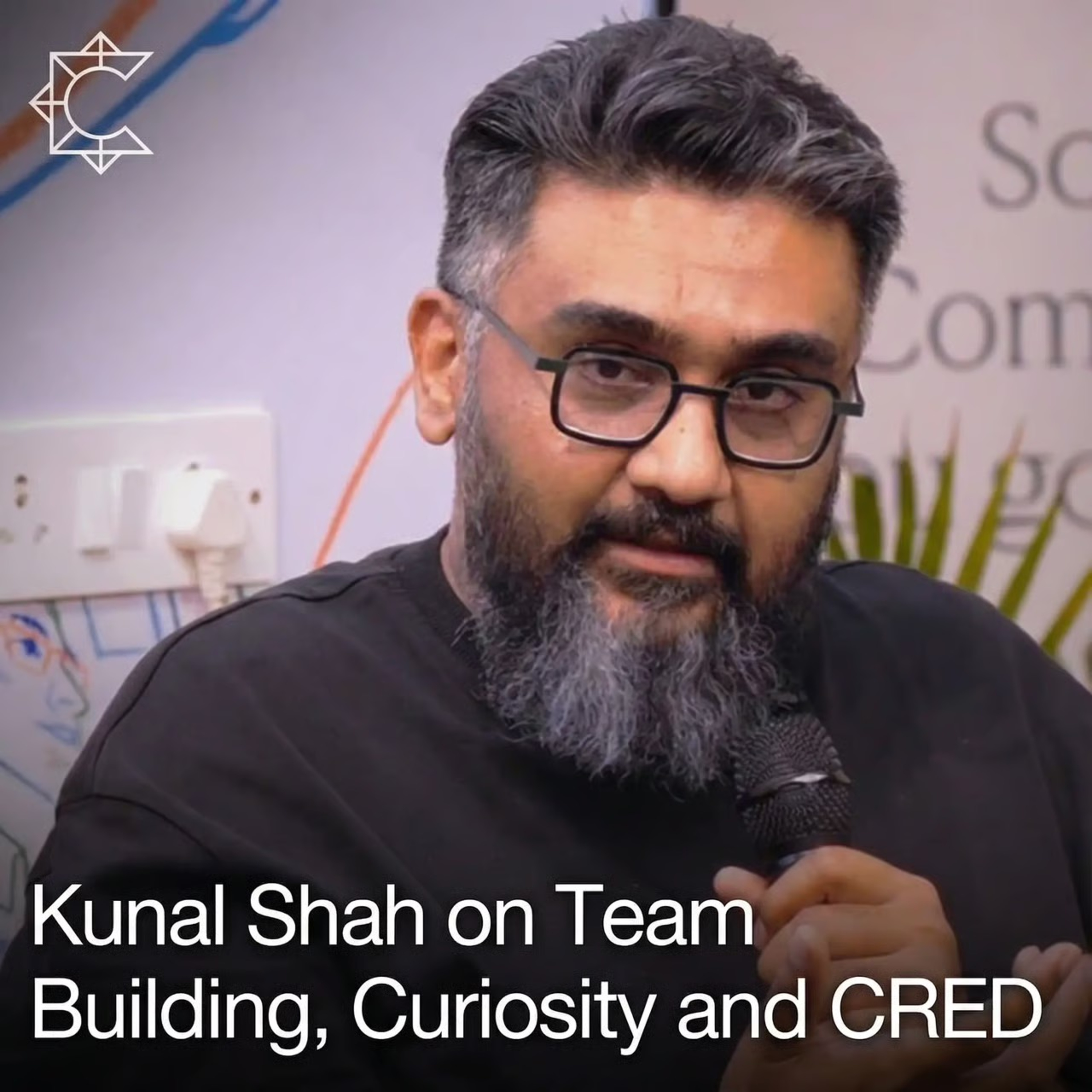
    How Asking ‘Why?’ Changes What You Build | Kunal Shah

    Most things Kunal Shah says, turn into quotes that are shared across a cross-section of worlds — whether that is the startup and tech ecosystem, or simply among people looking to better understand human behaviour. First with FreeCharge and now with CRED, he has truly traversed a journey of what it means to build for as diverse and complex a market, as India. On Minus One, he shares why technology works best when it flows with human insight, why the best builders need to relentlessly keep asking “why?”, and what makes people truly aspire for something. Connect with us here: 1. Kunal Shah- https://www.linkedin.com/in/kunalshah1/ 2. Prateek Mehta- https://www.linkedin.com/in/prateek-mehta-a571972/ 3. South Park Commons- https://www.linkedin.com/company/southparkcommons/ Timestamps: 00:00 Trailer 01:17 Introduction 03:47 Philosophy and Sales Shaping Perspectives 06:48 Human Motivation and Product Success 33:56 Key Traits for Startup Success 41:46 Design and Aesthetics Matter 47:26 Innovative Marketing 55:48 Wealth, Health, and Business Success

  • S1 · E43
    Dec 23, 2025 · 1 hr 16 min

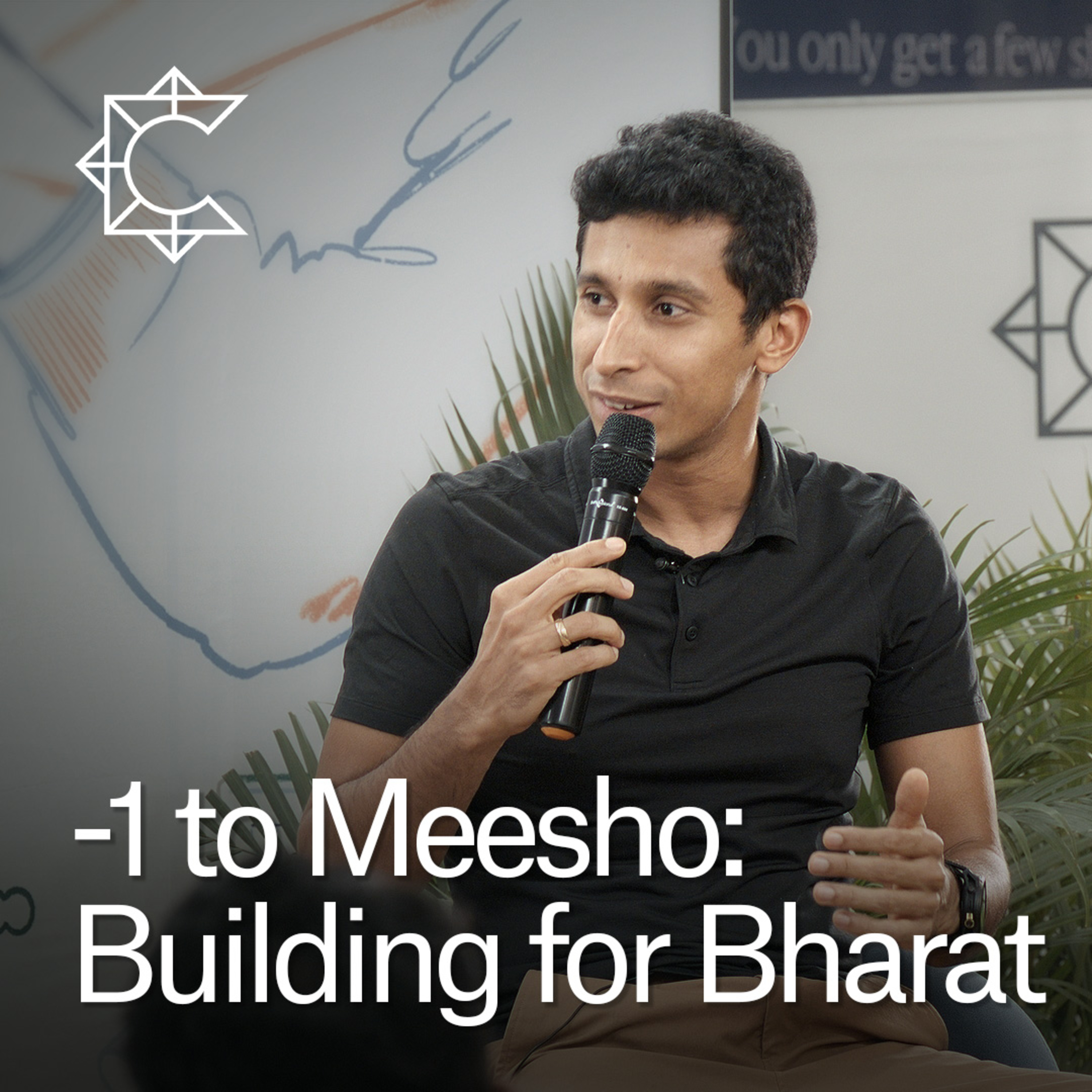
    From -1 to Meesho | Before the IPO | How Vidit Aatrey & Sanjeev Barnwal Built for Bharat

    This is the story behind all the IPO headlines. In this episode of Minus One, Vidit Aatrey talks to Prateek Mehta about the high-conviction journey of building Meesho — from early uncertainty and brutal trade-offs to cracking scale in one of the hardest consumer markets in the world. We talk about why most startups fail to truly understand India, what Meesho got right (after getting a lot wrong), and the long game required to build something that actually lasts. This is the builder’s story — about patience, lifelong learning, and designing for realities…not fantasies. Connect with us here: 1. Prateek Mehta: https://x.com/prateekmehta4 2.South Park Commons – https://www.linkedin.com/company/southparkcommons

  • S1 · E42
    Dec 18, 2025 · 55 min

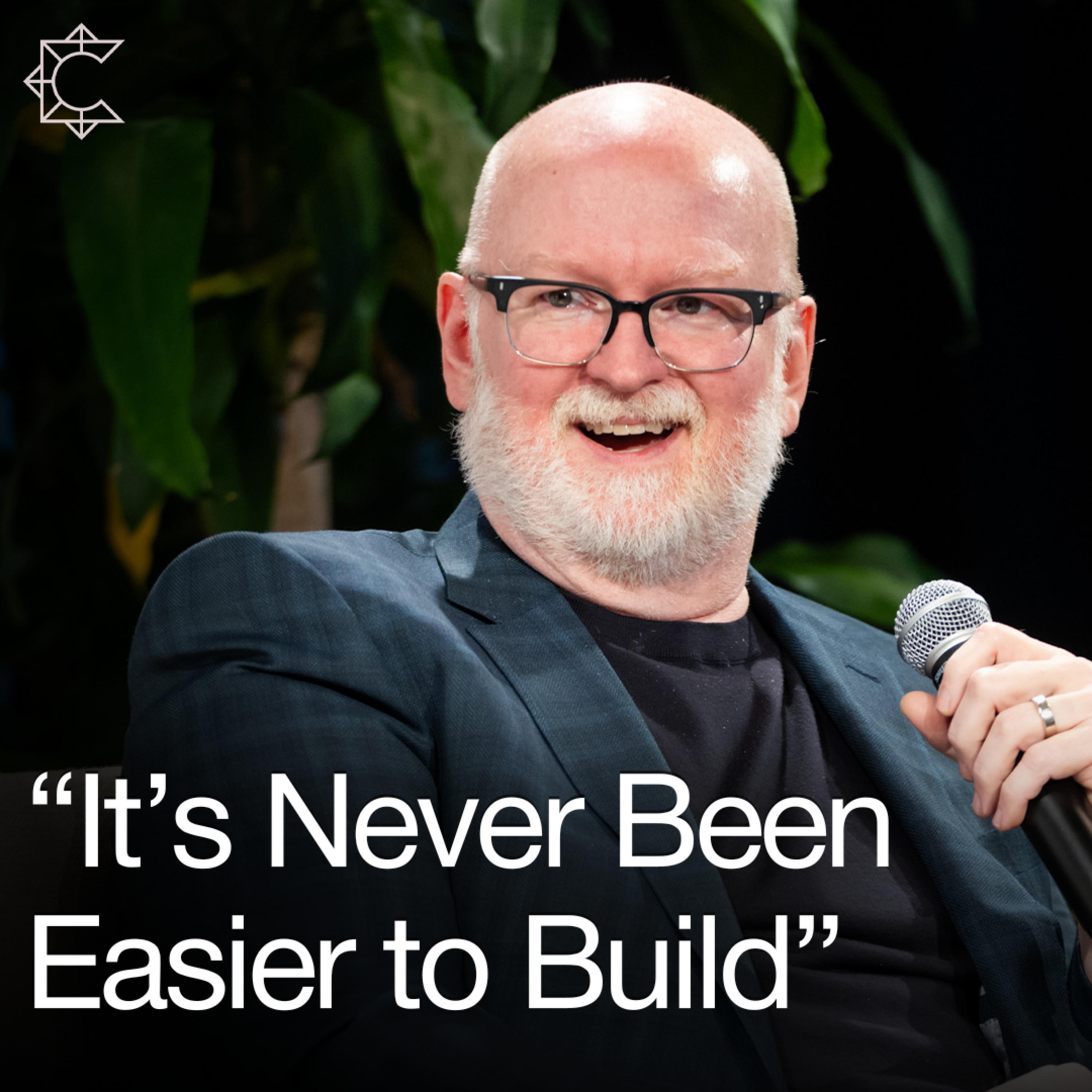
    How a $3 Trillion+ Company Thinks About AI | Microsoft CTO Kevin Scott

    If there’s one person to listen to truly grasp the scale and intent of technology and where we’re headed, it’s Kevin Scott. The Microsoft CTO joins Aditya Agarwal to discuss navigating his Minus One days, the partnership with OpenAI, why the most valuable problems to solve are often the ones others ignore, and why building great things has never been easier, cheaper, or faster. Tune in now. Apply to SPC: https://www.southparkcommons.com/apply Connect with us: 1. Kevin Scott: https://www.linkedin.com/in/jkevinscott/ 2. Aditya Agarwal: https://www.linkedin.com/in/adityaagarwal3/ 3. South Park Commons: https://www.linkedin.com/company/southparkcommons/ 00:00 Trailer 01:34 Navigating Career Transitions and Impact 07:35 Challenges and Insights for Entrepreneurs 14:43 The Evolution and Future of AI 28:42 The Grind of Startup Life 34:11 Open Source vs. Closed Source Models 46:49 Empowering the Next Generation with AI

Showing 1–20 of 22 episodes