Skip to content
Artwork for Meteorology Matters

Meteorology Matters

Rob Jones

Meteorology Matters delivers clear, data-driven insight into weather, hurricanes, and climate science cutting through hype to explain what’s happening and why it matters.

Created by Meteorologist Rob Jones, the podcast explores:

  • Extreme weather and hurricane forecasting
  • Climate trends and real-world impacts
  • Forecast uncertainty and what the data actually shows
  • How weather science affects safety, infrastructure, and daily life

Whether it’s breaking weather risk, long-range outlooks, or deep-dive analysis, Meteorology Matters helps you understand what’s happening and why it matters.

Play
  • 28 episodes
  • Avg 39 min
  • English

Support the show

Goes straight to the publisher. podnod takes nothing.

Counted on this page — what you have heard stays on this device, so it is not something the list can be paged by.
  • S3 · E39
    September 24 · 45 min

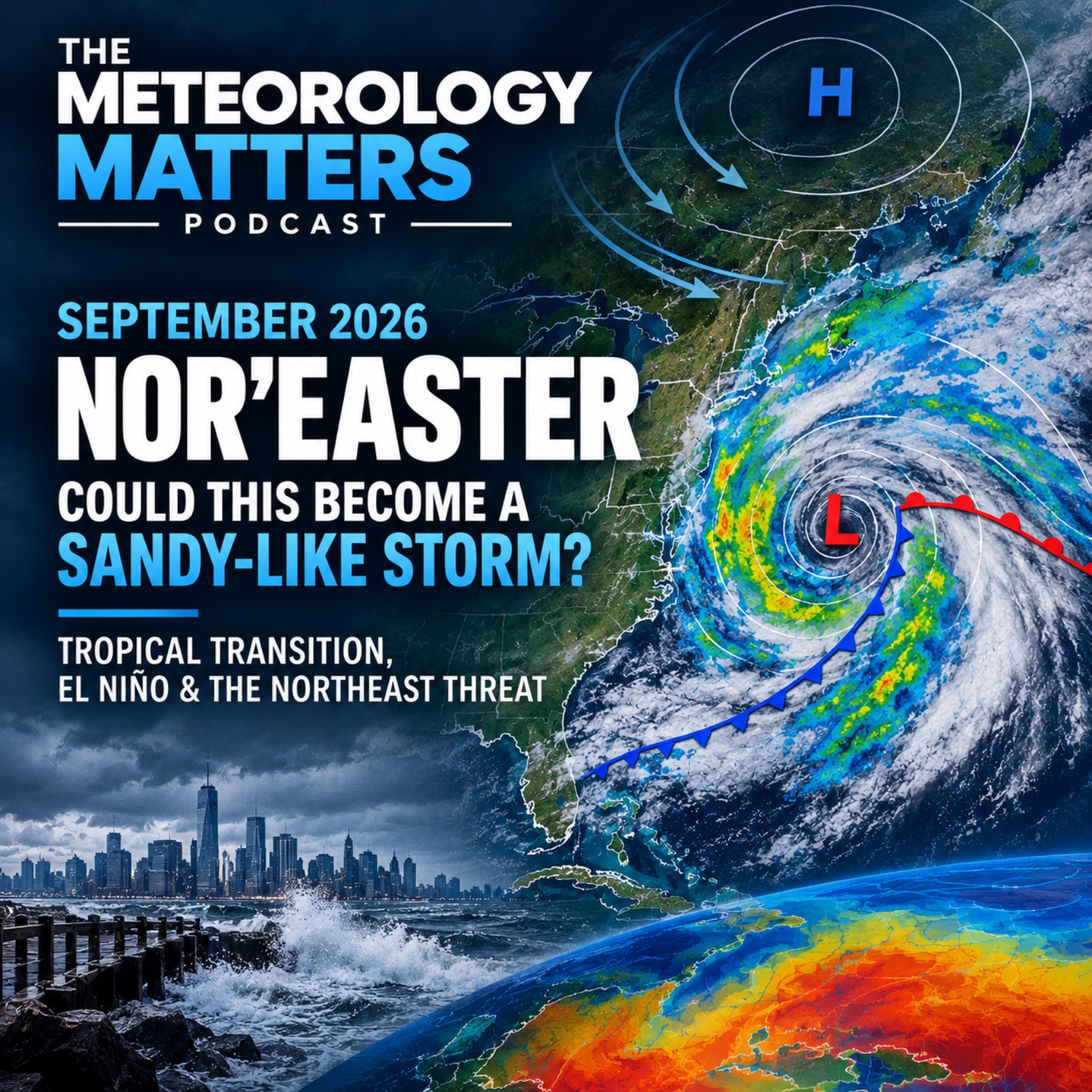
    September 2026 Nor’easter: Could This Become a Sandy-Like Storm?

    A powerful early-season nor’easter is developing off the U.S. East Coast, with the Northeast facing an extended period of coastal flooding, high surf, strong winds and heavy rain from Friday through the weekend. In this episode of Meteorology Matters, we take an inside look at what is actually happening with this unusual September coastal storm and why its evolution deserves close attention. We examine the latest forecast guidance from the major numerical weather models, ensemble guidance and Google DeepMind’s WeatherNext AI system, including the growing uncertainty over the storm’s track, intensity and how long it may linger near the Northeast coast. Could this system develop subtropical or hybrid characteristics as it strengthens over unusually warm Atlantic waters? We explain what would have to happen for an initially extratropical nor’easter to acquire more tropical-like characteristics, and why that is very different from the evolution of Superstorm Sandy. We also compare this storm with Sandy not because they are the same type of storm, but because both involve a powerful coastal cyclone interacting with the complex geography and ocean environment of the Northeast. We examine the potential for coastal flooding, storm surge, beach erosion, damaging winds, heavy rainfall and inland impacts across New Jersey, New York, Long Island, New England and the I-95 corridor. Then we look beyond this individual storm. The Gulf of Mexico is currently presenting an unusual oceanographic puzzle: extremely warm sea-surface temperatures alongside less impressive subsurface ocean heat content in some areas. We examine how stratification, Loop Current variability, warm-core and cold-core eddies, and changes in ocean circulation could help explain that discrepancy and what it could mean for future tropical and subtropical systems. Finally, we put the entire pattern into the context of the developing 2026–27 El Niño, atmospheric blocking, the jet stream and the possibility of additional strong coastal cyclones later this fall as colder continental air begins interacting with warm Atlantic, Caribbean and Gulf waters. This is not simply a question of whether another “Sandy” is coming. It is a look at the atmospheric and oceanic ingredients that could make the second half of the 2026 Atlantic hurricane and fall storm season unusually active and why the evolution of this September nor’easter may provide an important early test of that pattern. Meteorology Matters examines the science behind the forecast, separates realistic risks from extreme scenarios, and looks beyond the headlines to understand what the atmosphere and ocean are actually doing. #Noreaster #Weather #Meteorology #ElNino #NortheastWeather

    • Transcript
  • S3 · E38
    September 23 · 39 min

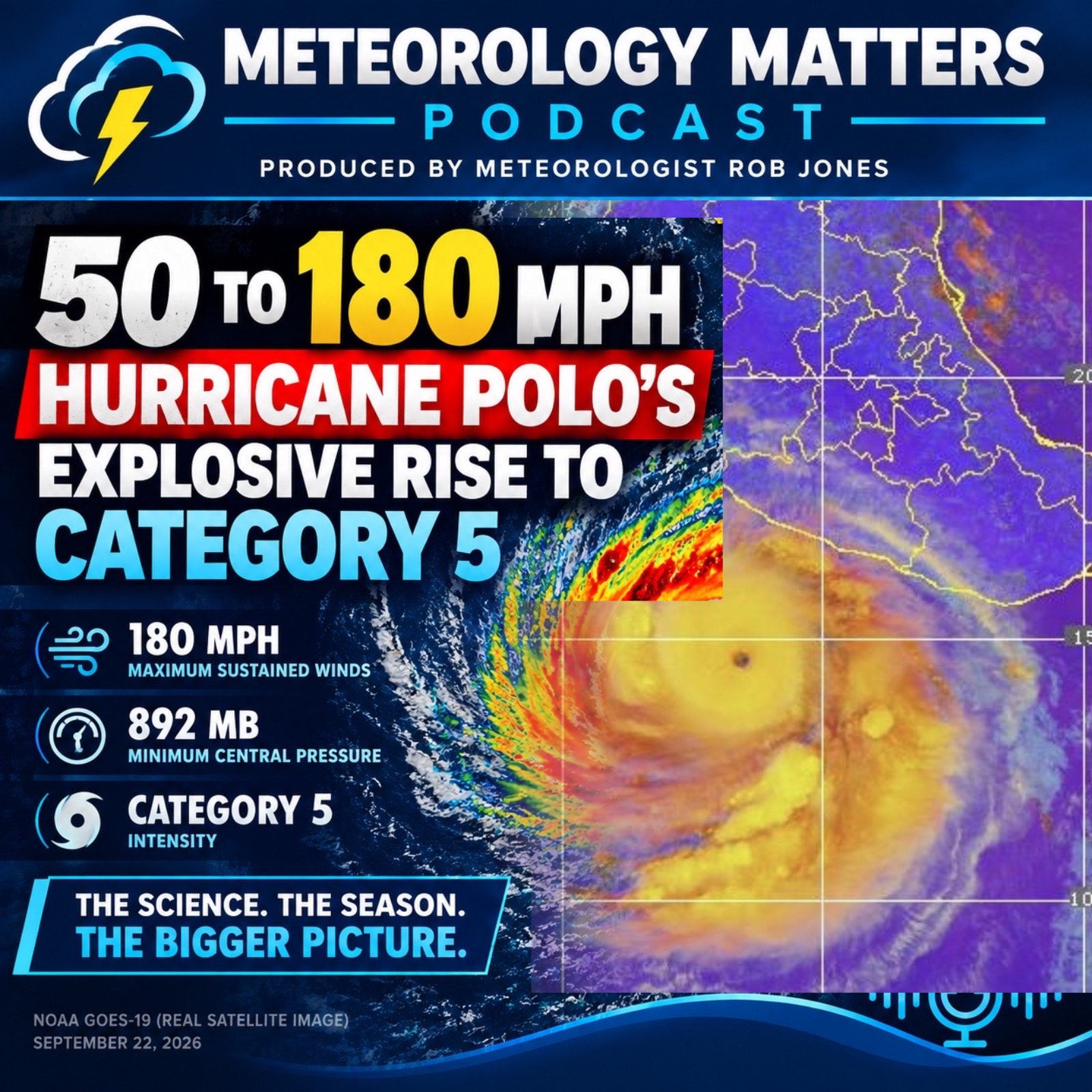
    50 to 180 MPH: Hurricane Polo’s Explosive Rise to Category 5

    Hurricane Polo delivered one of the most extraordinary rapid-intensification episodes of the 2026 Eastern Pacific hurricane season — exploding from a 50-mph tropical storm into a Category 5 hurricane, then reaching an astonishing 180 mph with a central pressure of 892 millibars according to NOAA Hurricane Hunter reconnaissance. In this episode of Meteorology Matters, we examine how Polo intensified so violently in such a short period of time. What happens when exceptionally warm ocean water, deep ocean heat content, abundant moisture, low vertical wind shear, strong upper-level outflow, and a compact inner core all come together? The result can be explosive tropical-cyclone intensification on a scale that remains extremely difficult to forecast. We also put Polo into the larger context of the 2026 Eastern Pacific season, examining the influence of El Niño, the basin’s elevated activity and ACE, and the striking contrast with the unusually suppressed Atlantic hurricane season. Then we turn toward the United States and one of the most intriguing questions raised by powerful Eastern Pacific hurricanes: Why do these storms so rarely reach California? We explore the subtropical ridge, typical westward steering, the California Current, coastal upwelling, cooler waters, and the late-September-to-October transition that can make northward recurvature more possible. Polo is more than a story about an extraordinarily powerful hurricane. It is a case study in rapid intensification, ocean-atmosphere interaction, tropical cyclone structure, El Niño, Eastern Pacific climatology, and the complex steering patterns that determine where these storms ultimately go. #HurricanePolo #EasternPacific #RapidIntensification #ElNino #MeteorologyMatters

    • Transcript
  • S3 · E37
    September 18 · 34 min

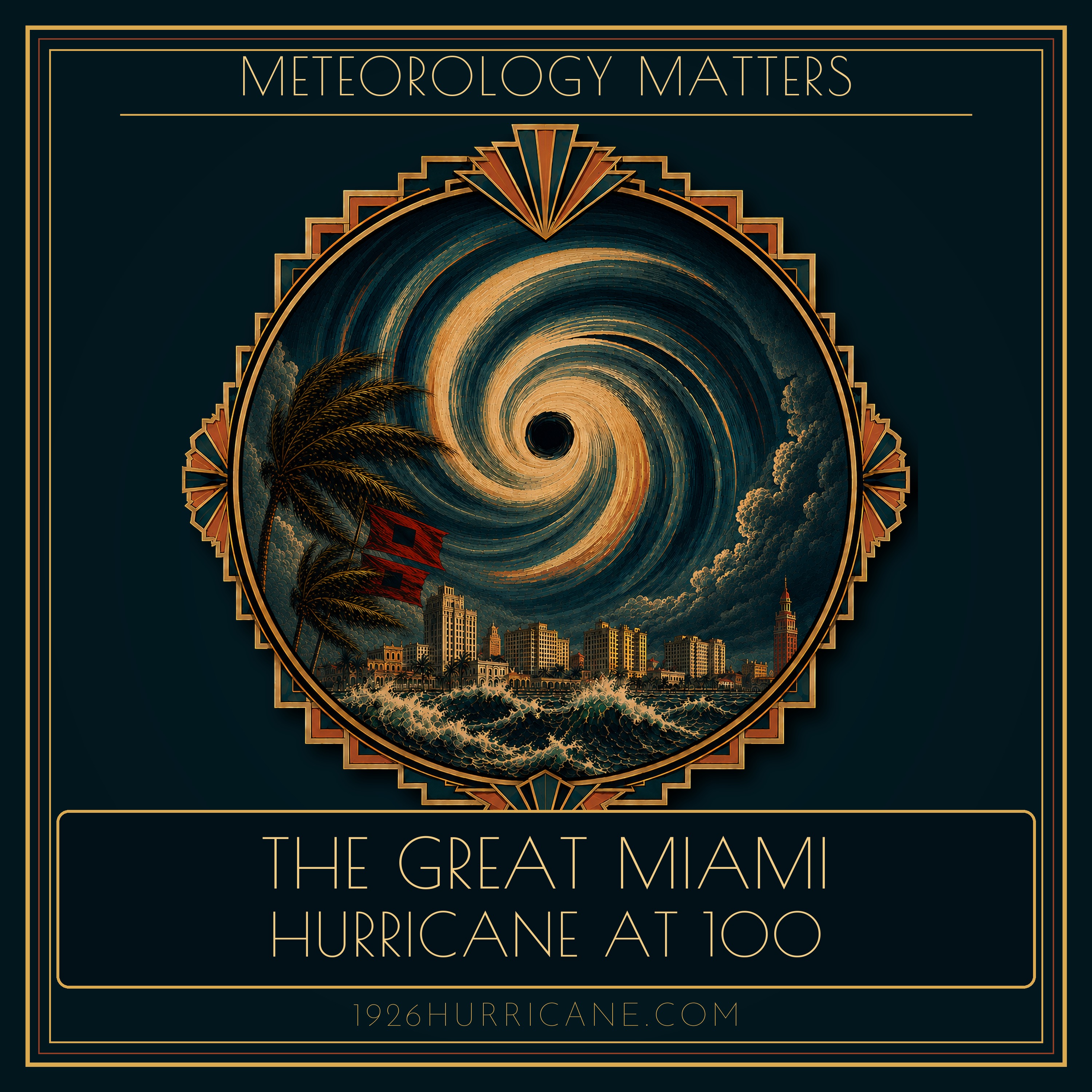
    The Great Miami Hurricane at 100: The Storm, the Warnings and “Work or Jail”

    One hundred years ago, on September 18, 1926, the Great Miami Hurricane struck a booming, vulnerable South Florida and permanently changed the region’s history. Meteorology Matters reconstructs the storm, the uncertain forecasts and the public confusion surrounding its arrival—including the tropical system that had brought flooding only days earlier and the newspaper headlines that finally warned South Florida a hurricane might be approaching. But this anniversary is about more than wind, water and destruction. The episode examines what happened after the hurricane, when Miami’s Black community faced discrimination, unequal treatment and demands to perform dangerous recovery work under the threat of arrest—the disturbing history remembered as “work or jail.” How did warning failures, rapid development, racial injustice and an incomplete historical record shape the way the disaster was remembered? And whose experiences were left out of the familiar story? The episode also introduces 1926Hurricane.com, a major historical project devoted to the hurricane, its victims, survivors, science and lasting consequences. The website makes landfall at 7:00 a.m. Miami time on September 18, exactly 100 years after the hurricane’s official landfall. Visit https://1926Hurricane.com Follow meteorologist Rob Jones on Instagram, TikTok, YouTube and Facebook. Please like, follow, comment and rate Meteorology Matters wherever you listen. #GreatMiamiHurricane #MiamiHurricane #1926Hurricane #HurricaneHistory #MiamiHistory #BlackMiami #SouthFloridaHistory #MeteorologyMatters #WeatherHistory

    • Transcript
  • S3 · E36
    September 14 · 38 min

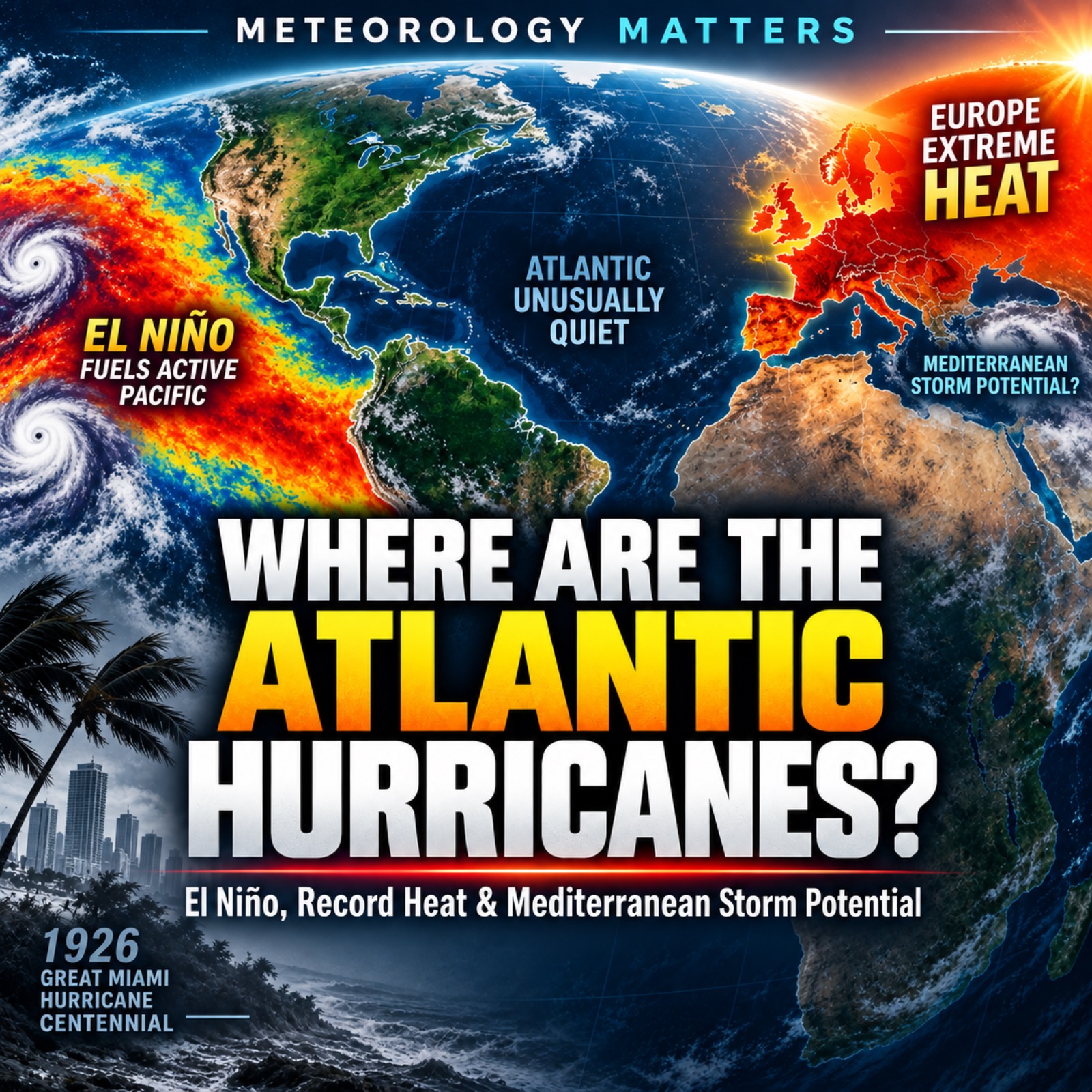
    Where Are the Atlantic Hurricanes? El Niño 2026, Record Heat & Possible Mediterranean Cyclone

    The Atlantic hurricane season has passed its climatological peak without producing a single hurricane an extraordinary modern-era record occurring while much of the planet and its oceans remain exceptionally warm. In this episode of Meteorology Matters, we examine how a rapidly strengthening El Niño is reorganizing tropical weather around the world: suppressing Atlantic development, helping fuel an unusually active Pacific, and setting the stage for major changes as we move toward winter. We also look at the extraordinary persistence of summer heat across Europe, exceptionally warm waters in the eastern tropical Pacific and Mediterranean, and a developing Mediterranean cyclone signal that some models suggest could acquire subtropical or tropical-like characteristics. Then we turn toward the United States: what a very strong El Niño could mean for Southern California, Florida and the Southeast, and the Northeast during the coming winter. Finally, September 18 marks 100 years since the Great Miami Hurricane of 1926. Meteorologist Rob Jones previews the launch of 1926Hurricane.com, a new historical archive devoted to preserving the storm’s meteorology, photographs, documents, maps and human history. Meteorology Matters will also release a dedicated Great Miami Hurricane centennial episode later this week. It is an extraordinary atmospheric contrast: one century ago this week, a classic Cape Verde hurricane was approaching South Florida. In 2026, we have passed the statistical peak of hurricane season without even producing the Atlantic’s first hurricane. #MeteorologyMatters #ElNino #ElNino2026 #HurricaneSeason #AtlanticHurricaneSeason #TropicalWeather #Hurricanes #Medicane #Mediterranean #ExtremeHeat #ENSO #Weather #GreatMiamiHurricane #1926Hurricane #MiamiHurricane #HurricaneHistory

    • Transcript
  • S3 · E35
    September 11 · 39 min

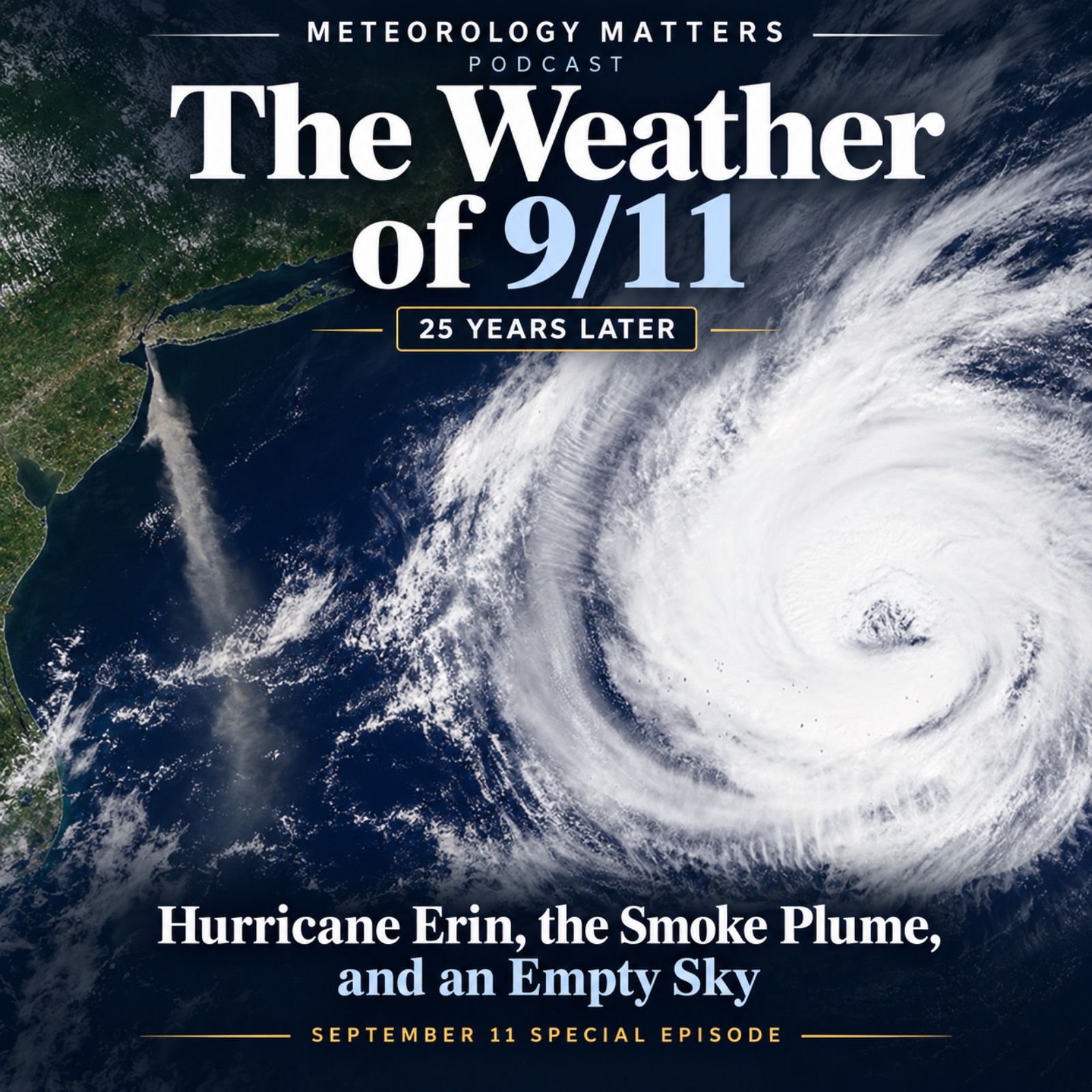
    The Weather of 9/11: Hurricane Erin, the Smoke Plume and an Empty Sky — 25 Years Later

    Twenty-five years after September 11, 2001, Meteorology Matters looks back at the extraordinary weather story unfolding alongside one of the darkest days in American history. That morning, New York City sat beneath an unusually clear post-frontal sky while Hurricane Erin churned hundreds of miles offshore. After the World Trade Center attacks, satellite imagery captured something remarkable: the enormous circulation of Erin over the Atlantic and the smoke and dust plume streaming away from lower Manhattan in the same view. This special episode reconstructs the meteorology of September 11th, Erin’s position and intensity, the atmospheric pattern that helped carry the plume southward, what NASA satellites and astronauts aboard the International Space Station observed, and how the unprecedented shutdown of U.S. airspace created a rare opportunity for scientists to study aircraft contrails and their possible effects on temperature. We also examine how meteorologists and NOAA supported the response and recovery at Ground Zero through specialized forecasts, plume modeling, remote sensing and atmospheric monitoring. The weather did not cause the events of September 11, but it shaped what millions of people saw, what satellites recorded, where smoke and debris traveled, and even the scientific questions that emerged in the days that followed. A special 25th-anniversary episode of Meteorology Matters. Keywords: September 11 weather, Hurricane Erin, 9/11 meteorology, World Trade Center smoke plume, NASA satellite imagery, Hurricane Erin 2001, 9/11 contrails, Meteorology Matters Hashtags: #MeteorologyMatters #September11 #September11th #911Anniversary #HurricaneErin #WeatherHistory #Meteorology #Weather #NASA #HurricaneHistory

    • Transcript
  • S3 · E34
    September 7 · 43 min

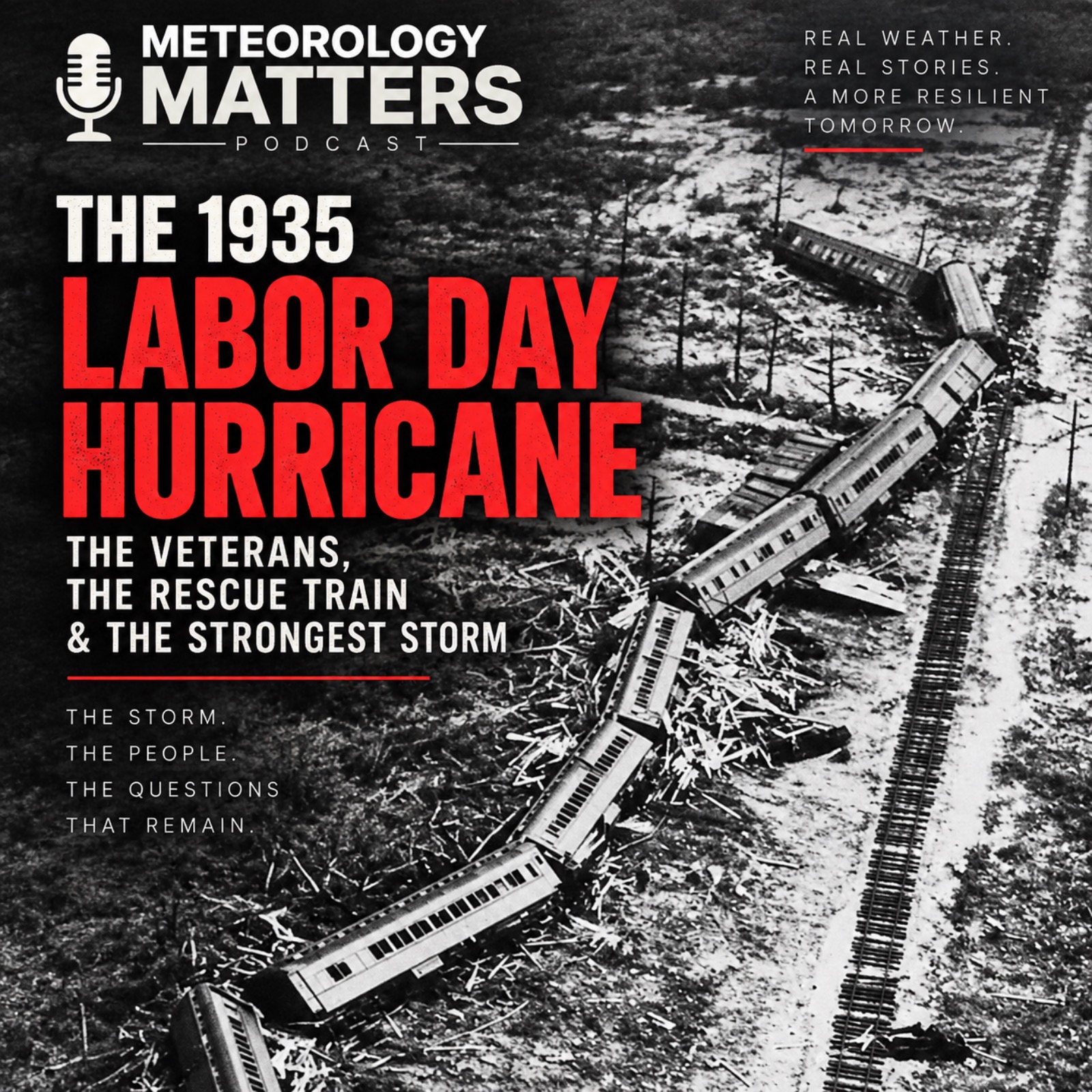
    The 1935 Labor Day Hurricane: The Veterans, the Rescue Train & the Strongest Storm

    On Labor Day 1935, one of the most powerful hurricanes ever to strike the United States exploded into a Category 5 storm and slammed into the Florida Keys with estimated sustained winds of 185 mph and a central pressure of 892 mb, the lowest pressure assigned to a U.S. hurricane landfall. But this disaster is about much more than the storm itself. Hundreds of World War I veterans were living in federal work camps along the Keys, and an evacuation train sent from Miami reached Islamorada just as catastrophic winds and storm surge arrived. In this episode of Meteorology Matters, we reconstruct the extraordinary meteorology, the primitive forecasting network that struggled to locate the hurricane, Leonard Povey’s historic reconnaissance flight, the desperate rescue-train mission, survivor accounts, and the controversial aftermath that led Ernest Hemingway to ask, “Who Murdered the Vets?” More than 400 people died, including roughly 250–260 World War I veterans. Nearly a century later, the disaster still raises a difficult question: how much responsibility does government have to protect vulnerable people when the forecast itself remains uncertain?

    • Transcript
  • S3 · E33
    September 2 · 26 min

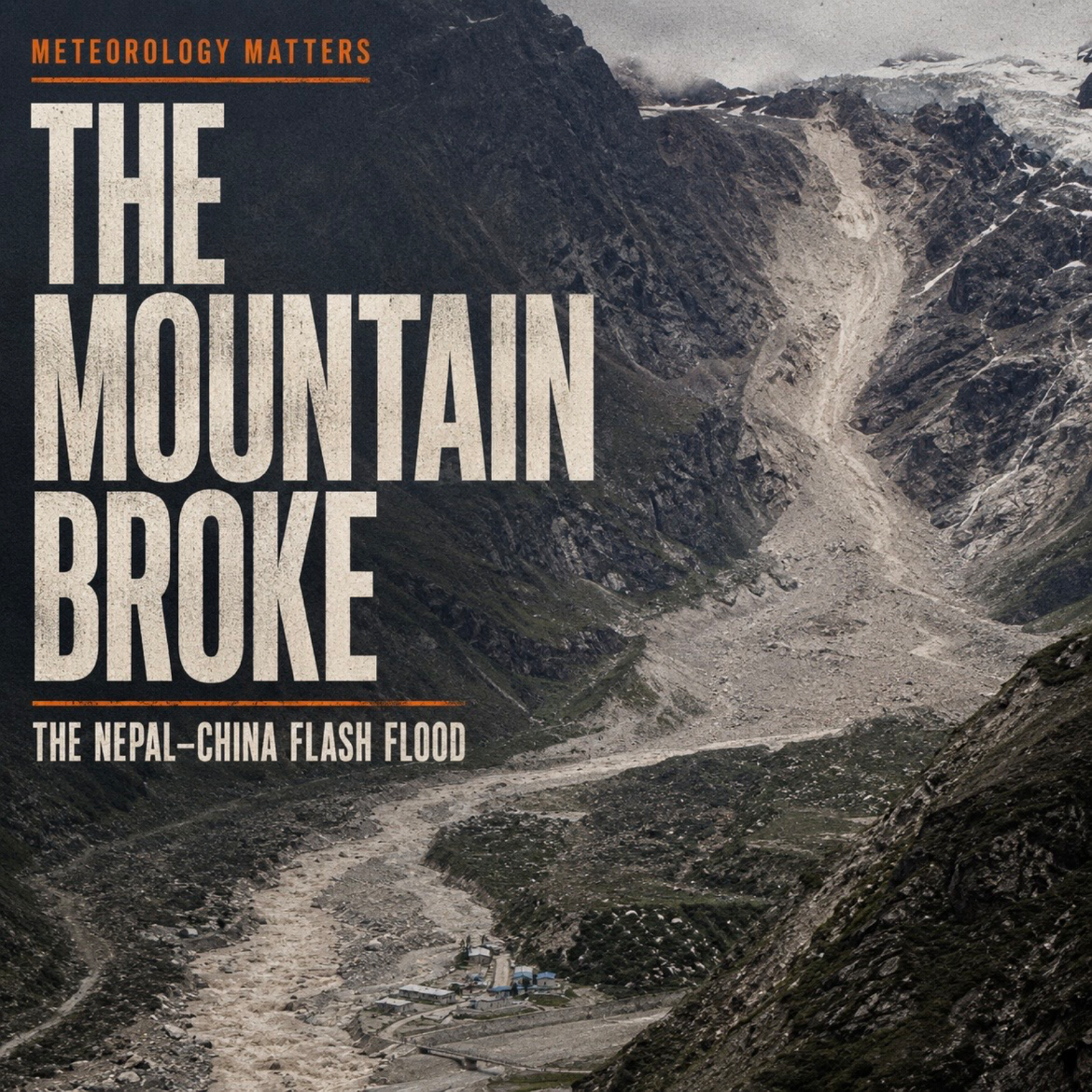
    The Mountain Broke: What Caused the Nepal–China Flash Flood?

    The seismic signal initially looked like an earthquake. It was the mountain itself collapsing. On August 26, bedrock and glacier ice tore loose high above the Nepal–China border, transforming into a rock–ice avalanche, debris flow, and devastating flood. Meteorology Matters reconstructs that cascading disaster, explains why the evidence points away from a conventional glacial-lake outburst flood, and examines how retreating glaciers and warming mountain permafrost may have destabilized the slope without pretending science has identified one definitive trigger. We follow the human toll, rescue and reconstruction efforts, continuing secondary hazards, and the flood of mislabeled, staged, and AI-generated videos that followed. Then we turn to a very different flash flood in the Grand Canyon to show why a locally catastrophic torrent can destroy critical infrastructure while doing almost nothing to relieve the Colorado River’s long-term water shortage. Two floods, two entirely different mechanisms, and one larger lesson: the condition of the landscape can be just as important as the event that sets a disaster in motion.

    • Transcript
  • S3 · E32
    August 27 · 40 min

    How Weather Shaped the Human Body

    What if some of the features you see every time you look in the mirror were partly shaped by weather experienced thousands of years before you were born? In this episode of Meteorology Matters, we explore the extraordinary evidence connecting human evolution with temperature, humidity, sunlight, drought, atmospheric pressure and other environmental conditions. From the shape of the human nose and differences in skin pigmentation to curly scalp hair, body proportions and our remarkable ability to sweat, generations of exposure to very different climates appear to have left biological fingerprints on populations around the world. We also look beneath the surface. Research is revealing genetic differences associated with cold-weather thermogenesis, kidney function and dehydration tolerance in extremely arid environments, and the remarkable physiological solutions developed independently by Tibetan, Andean and Ethiopian high-altitude populations living with reduced oxygen. But climate does not always change humans gradually. Major droughts, cold periods and other environmental disruptions can alter migration, isolate populations, create genetic bottlenecks and change which inherited traits become more common. Finally, we look forward. In today’s interconnected world of international migration, intermarriage, air conditioning, medicine and modern infrastructure, can regional climate still shape human evolution? And as extreme heat, drought and disease environments change, could future generations experience selection involving heat tolerance, sweating efficiency, water conservation, metabolism or entirely different traits we have not yet recognized? Meteorology Matters was created by meteorologist Rob Jones. TikTok: @TVmeteorologist Instagram: @meteorologist Facebook: Hurricane Rob Jones Bluesky: @meteorologist.bsky.social Mastodon: @meteorologist@mstdn.social

    • Transcript
  • S3 · E31
    August 15 · 46 min

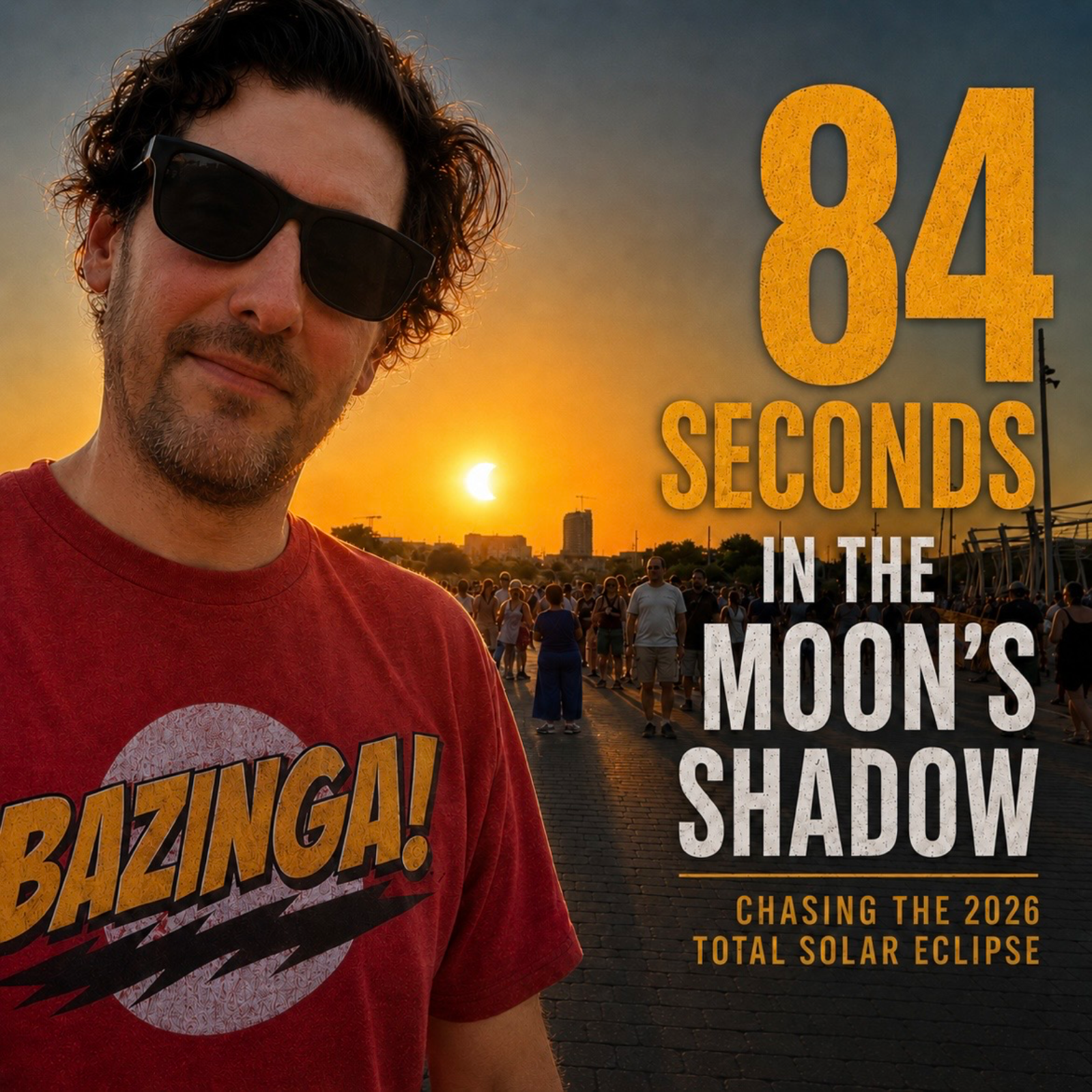
    84 Seconds in the Moon’s Shadow: Chasing the 2026 Total Solar Eclipse

    Meteorologist Rob Jones traveled to Zaragoza, Spain, with only hours of planning to chase the August 12, 2026 total solar eclipse — all for about 84 seconds inside the Moon’s shadow. What followed was part science experiment, part logistical scramble: sold-out trains and buses, basic hotel rooms approaching €600, rental cars over €800, extreme heat, thousands gathering along the Ebro River, and a first experience of totality powerful enough to explain why eclipse chasers keep coming back. In this episode of Meteorology Matters, we explore what Rob saw and felt during totality including a vivid red solar prominence and compare his first eclipse with veteran eclipse chaser and meteorologist Matthew Cappucci’s description of the same extraordinary event. Then we follow the science far beyond the eclipse itself. Why does the Moon perfectly cover the Sun? Why is it moving away from Earth by about 1.5 inches per year? How do tides, the Bay of Fundy, shifting continents, ocean resonance, Earth’s rotation, melting ice and rising seas influence the Earth-Moon system? Can lunar tides affect earthquakes? And why will total solar eclipses eventually disappear altogether? We also look ahead to August 2, 2027, when totality can last an astonishing 6 minutes 23 seconds. From hurricane chasing to eclipse chasing, this is a story about what happens when science becomes something you don’t just understand… but experience. Follow meteorologist Rob Jones on Instagram, TikTok, YouTube and Facebook, and like, follow, comment and rate Meteorology Matters wherever you listen.

    • Transcript
  • S3 · E30
    August 4 · 24 min

    10 Times Weather Changed the Course of History

    History is often told through kings, presidents, generals, and revolutions—but what if the atmosphere was quietly shaping those decisions all along? In this episode of Meteorology Matters, we explore ten remarkable moments when weather altered the course of history. From the forecast that helped launch D-Day to the typhoons that confronted the Mongol invasions of Japan, the Bhola Cyclone that accelerated the birth of Bangladesh, Napoleon's disastrous retreat from Russia, the Year Without a Summer after Mount Tambora, the Dust Bowl, the Great Mississippi Flood, Galveston, the Spanish Armada, and the weather-related food crises that intensified the French Revolution, we examine how storms, droughts, floods, volcanic eruptions, and harsh seasons influenced some of history's biggest turning points. Rather than asking whether weather alone changed history, we explore a more compelling question: How did weather reshape the choices leaders and ordinary people were forced to make? Join us as Meteorology Matters uncovers the science, uncertainty, and unforgettable stories behind the weather that helped change the course of history.

    • Transcript
  • S3 · E29
    July 23 · 49 min

    Flash Floods: Why They Turn Deadly in Minutes

    Flash floods can happen almost anywhere from New York City subways and the rivers of Central Texas to mountain villages in Italy, the streets of China, and communities across Europe, Asia, and Africa. Why do they become deadly so quickly, even when people know heavy rain is coming? In this episode of Meteorology Matters, we explore the science behind one of the world’s fastest and most misunderstood weather hazards. Through unforgettable disasters and the lessons they taught, we explain how rainfall, terrain, infrastructure, forecasting, and human behavior combine to create life-threatening situations in just minutes. You’ll learn why some storms produce catastrophic flooding, how meteorologists detect these events, what today’s warning systems can and cannot do, and the decisions that often determine who survives. Whether you live in a major city, a mountain valley, or near a small creek, understanding flash floods could one day save your life. Follow meteorologist Rob Jones on Instagram, TikTok, YouTube, and Facebook for more weather insights, and subscribe to Meteorology Matters wherever you listen to podcasts.

    • Transcript
  • S3 · E28
    July 21 · 44 min

    The Seaweed Crisis Swallowing Our Beaches | The Science Behind the Sargassum Explosion

    Why are beaches across Florida, the Caribbean, Mexico, and parts of the Gulf Coast being buried under mountains of seaweed and why has it become one of the fastest-growing environmental and economic challenges facing coastal communities? In this episode of Meteorology Matters, we explore the remarkable story of sargassum, a floating seaweed that serves as a vital offshore ecosystem but becomes a costly problem once it reaches shore. We examine the science behind the Great Atlantic Sargassum Belt, how weather patterns and ocean currents control where it accumulates, and why forecasting its arrival remains so challenging. Along the way, we discuss the impacts on tourism, marine life, public health, local governments, and coastal economies, while exploring the latest research into cleanup efforts, forecasting technology, and potential long-term solutions. Whether you’ve encountered sargassum on vacation or simply want to understand one of the Atlantic’s most fascinating environmental stories, this episode explains why the seaweed crisis is about much more than what’s washing up on the beach.

    • Transcript
  • S3 · E27
    July 16 · 43 min

    The Hurricane Forecast Is Only Half the Story

    A hurricane forecast is only valuable if people understand it, trust it, and know how to act on it. In this episode of Meteorology Matters, meteorologist Rob Jones’ production explores why effective hurricane communication can be just as important as the forecast itself. Using lessons inspired by the career of hurricane specialist Bryan Norcross, we discuss how meteorologists communicate uncertainty, why public trust is earned over time, and how clear messaging can help people make better decisions before, during, and after a storm. We also examine the latest outlook for the 2026 Atlantic hurricane season, why a quieter season does not reduce your risk, and how even an unnamed tropical disturbance can produce dangerous flooding and life-threatening impacts. Along the way, we break down some of the biggest misconceptions in hurricane forecasting, including what the forecast cone really means, why hurricane categories don’t tell the whole story, and why impacts, not names or wind speeds alone, should drive preparedness. Whether you’re a weather enthusiast, emergency manager, fellow meteorologist, or someone who simply wants to better understand hurricanes, this episode offers practical insight into the science, psychology, and communication behind today’s forecasts. Follow Rob Jones on Instagram, TikTok, YouTube, and Facebook for more weather insights, and if you enjoyed this episode, please like, follow, share, and leave a rating or review. Your support helps more people discover Meteorology Matters.

    • Transcript
  • S3 · E26
    July 14 · 38 min

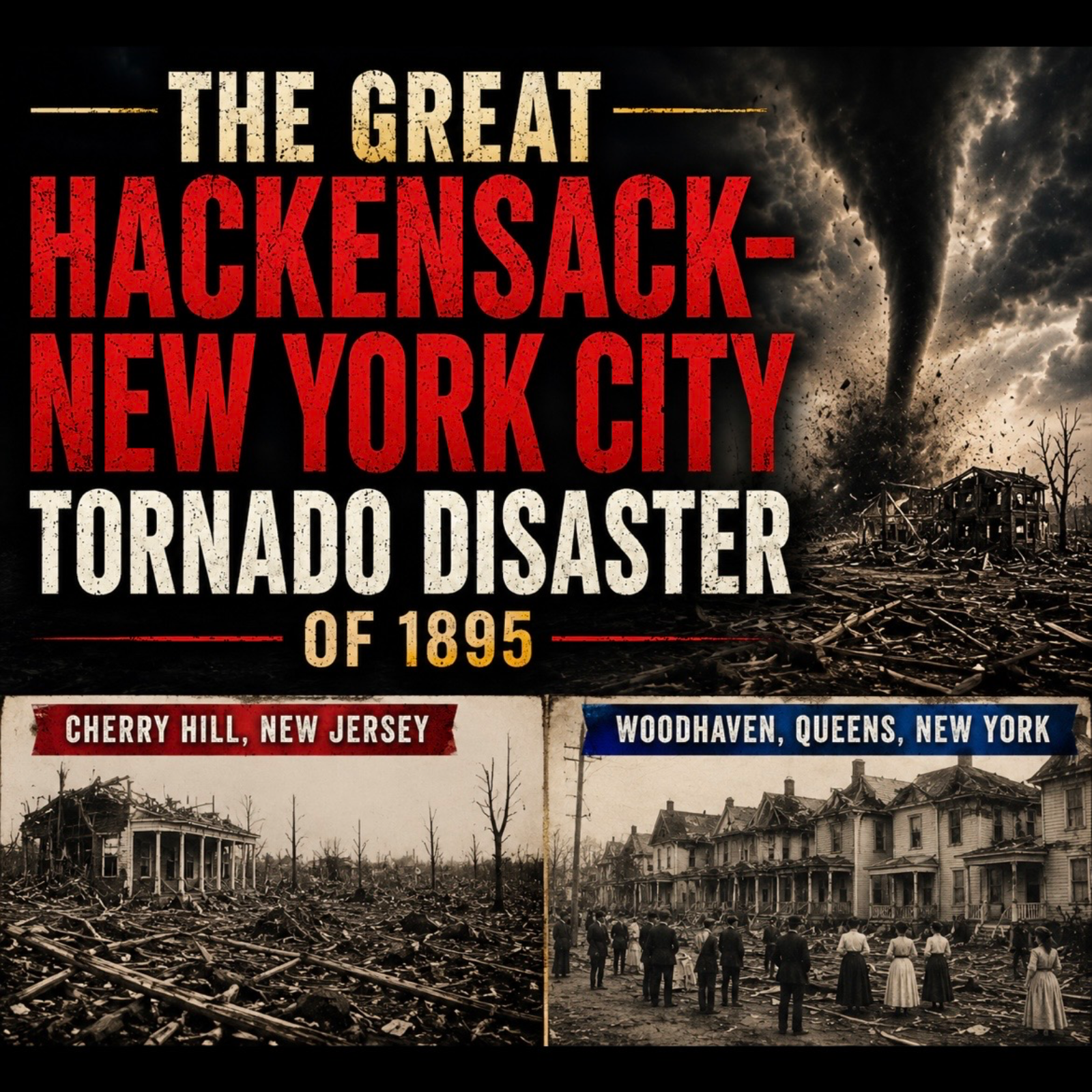
    The Great Hackensack & New York City Tornado Disaster of 1895

    In July 1895, one of the most remarkable and least remembered tornado disasters in the history of the New York metropolitan area struck without warning. Historic Cherry Hill near modern day Hackensack and River Edge, New Jersey, was devastated as homes, businesses, farms, churches, and the railroad community were torn apart. The same day, another destructive tornado ripped through Woodhaven in what is now Queens, New York City. In this episode of Meteorology Matters, meteorologist Rob Jones reconstructs the disaster property by property, following the storm’s path through Cherry Hill while telling the stories of the people who lived through it. Along the way, we examine the deaths, rescues, destruction, and recovery, while exploring one of the biggest unanswered questions in American weather history: Was this one extraordinary tornado that crossed from New Jersey into New York City, or two separate tornadoes produced by the same storm system? Join us as we revisit one of the forgotten weather disasters that helped shape the history of the New York region.

    • Transcript
  • S3 · E25
    July 13 · 34 min

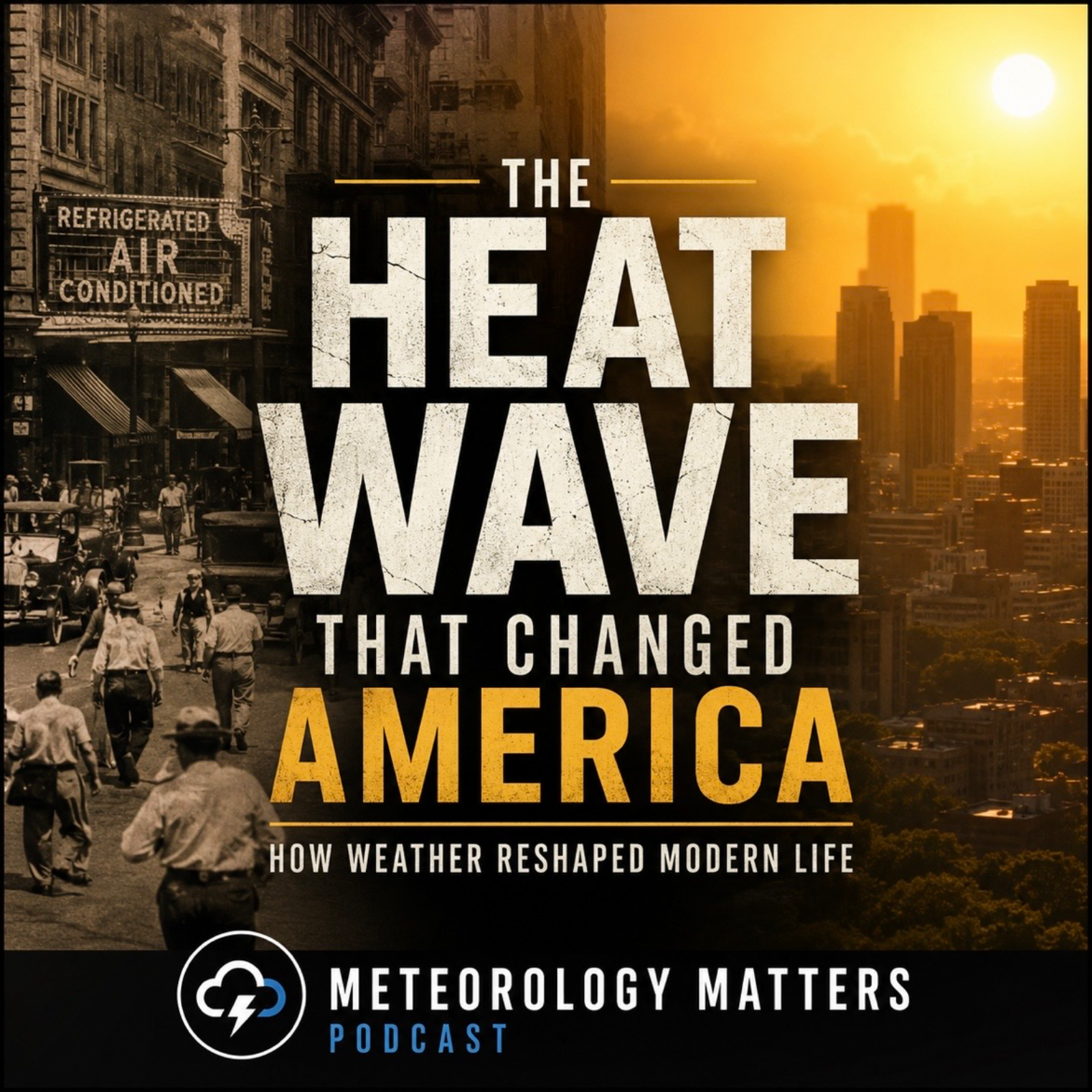
    The Heat Wave That Changed America: How Weather Reshaped Modern Life

    What if one weather event quietly transformed an entire nation? The deadly heat wave of 1936 was far more than a record-breaking summer. It changed how Americans dressed, where they lived, how buildings were designed, and accelerated the adoption of air conditioning that would reshape cities, businesses, and everyday life for generations. In this episode of Meteorology Matters, we explore how extreme weather can leave lasting marks on society, not just through disasters, but through the ways people adapt. From sleeping porches and blocks of ice to modern heat domes, urban heat islands, and the future of cooling technology, this is the story of how weather quietly helped build the modern world. Whether you’re fascinated by meteorology, history, engineering, or simply curious about how our daily lives came to look the way they do, this episode reveals why some of the most important weather stories continue long after the forecast has ended. Follow meteorologist Rob Jones for more weather insights, hurricane coverage, and new episodes of Meteorology Matters.

    • Transcript
  • S3 · E24
    July 8 · 36 min

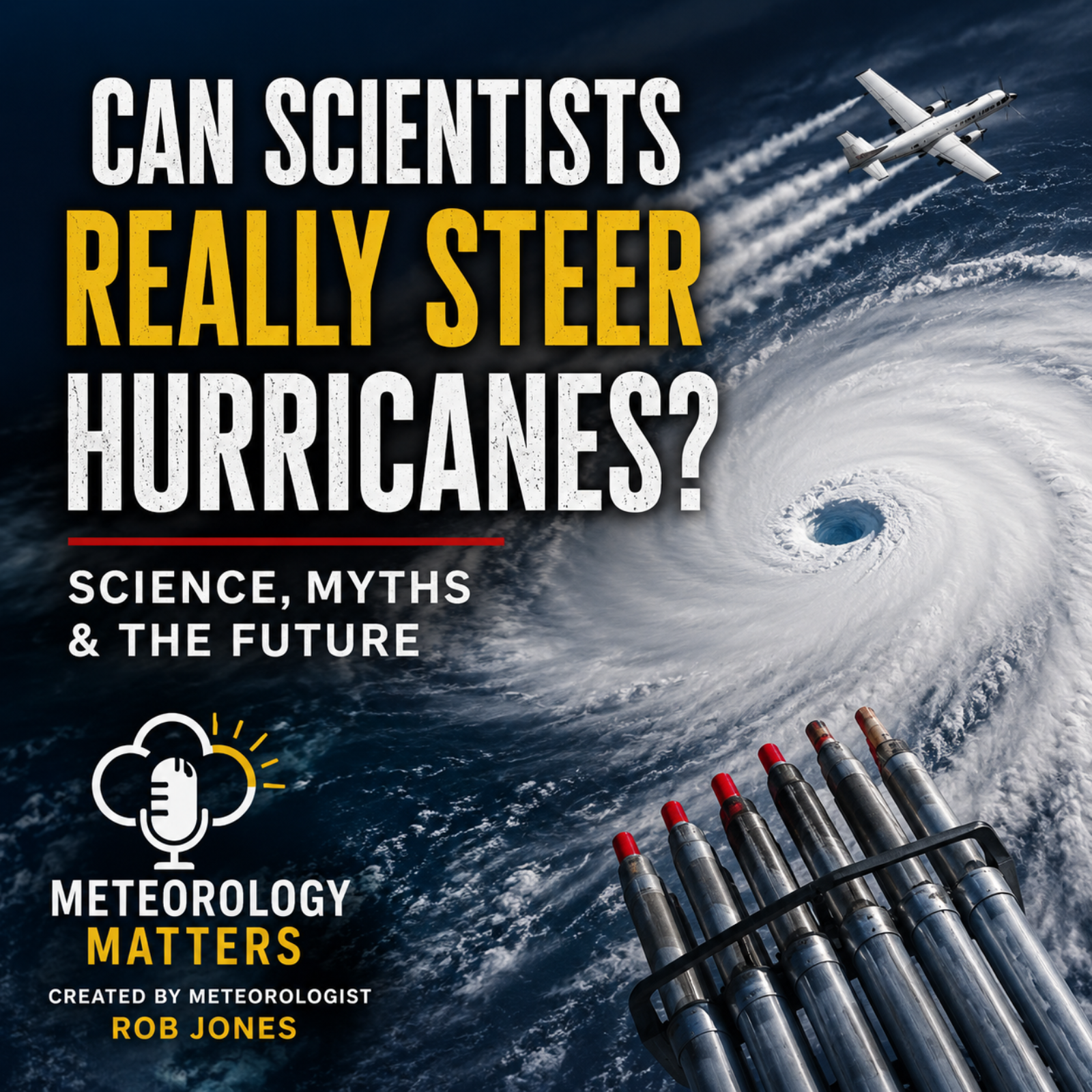
    Can Scientists Really Steer Hurricanes?

    Can scientists really change the path of a hurricane or is that still science fiction? This episode explores one of the most fascinating questions in atmospheric science: whether humans could ever influence one of nature’s most powerful storms. From Project STORMFURY to modern cloud seeding research, computer modeling, and artificial intelligence, the conversation separates what is scientifically plausible from what remains theoretical, unproven, or misunderstood. The episode explains what cloud seeding can realistically do, why hurricanes are so difficult to modify, what recent research suggests about future possibilities, and why computer simulations should not be confused with real-world hurricane control. It also examines why weather-control conspiracy theories often spread after major hurricanes, heat waves, floods, and other high-impact events and how evidence-based meteorology helps separate science from misinformation. Whether you’re interested in hurricanes, weather modification, atmospheric science, or the future of forecasting technology, this episode looks at the real science, the limits, and the unanswered questions behind one of meteorology’s biggest ideas. Follow Rob Jones on Instagram, TikTok, YouTube, and Facebook for more weather content. Please like, follow, comment, rate the podcast, and share it with someone who loves weather.

    • Transcript
  • S3 · E23
    July 5 · 44 min

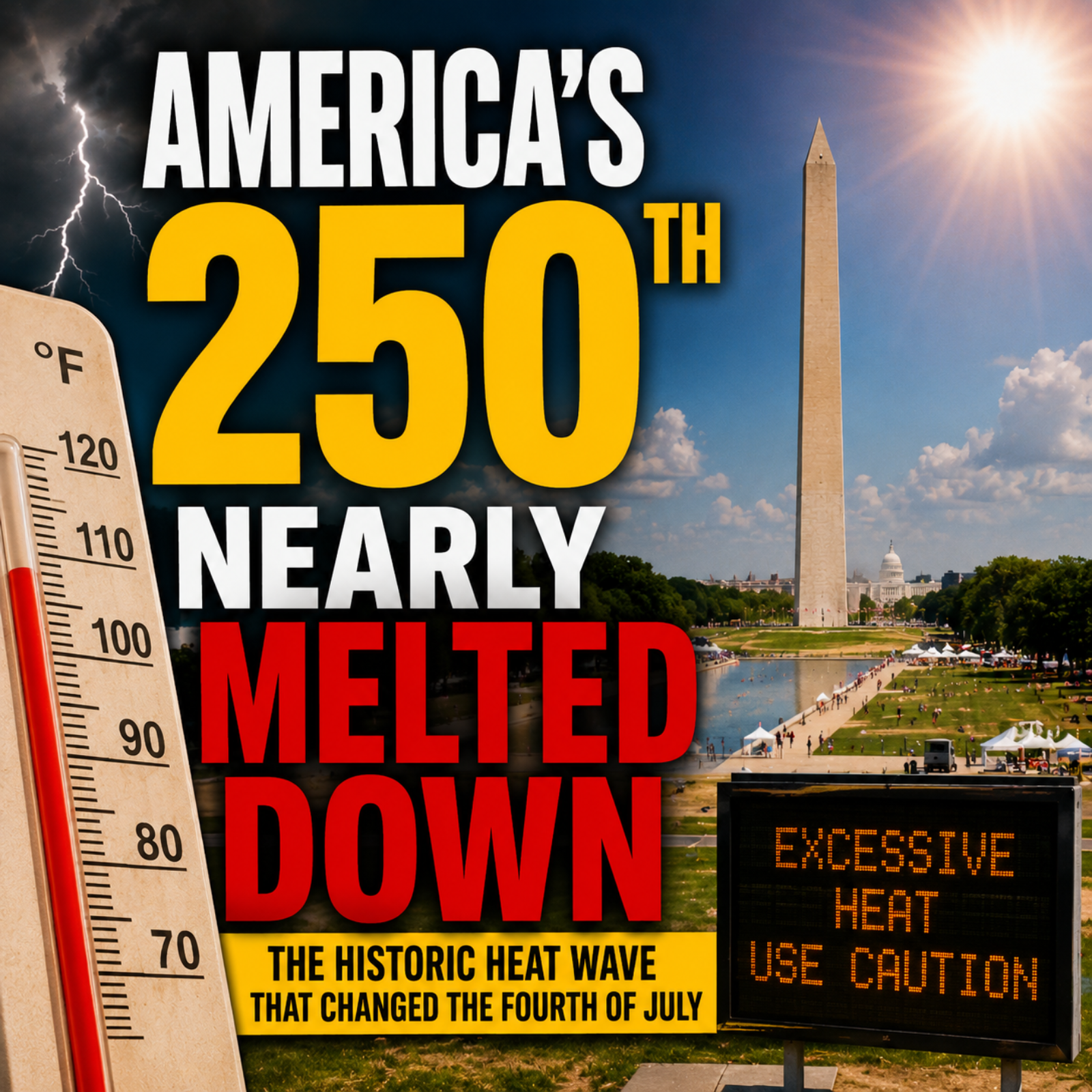
    America’s 250th Nearly Melted Down: The Historic Heat Wave That Changed the Fourth of July

    America’s 250th birthday celebration was supposed to be one of the biggest events in the nation’s history. Instead, record-breaking heat, dangerous thunderstorms, emergency evacuations, and severe weather forced officials to cancel parades, alter major events, and protect hundreds of thousands of people from life-threatening conditions. Discover how a powerful heat dome sent temperatures soaring above 100°F across the Mid-Atlantic, why the heat index climbed well above 110°F, and how the atmosphere produced severe thunderstorms capable of disrupting celebrations on the National Mall just hours later. We also explore why extreme heat remains America’s deadliest weather hazard, how emergency managers prepared for millions of visitors, what happens to power grids, transportation systems, and infrastructure during prolonged heat waves, and the science behind the dangerous conditions that affected Washington, D.C., Maryland, Virginia, and much of the eastern United States. The episode also examines why weather misinformation spreads during major events, separates atmospheric science from online conspiracy theories, and explains what meteorologists actually know about weather modification. Finally, you’ll hear practical advice on recognizing heat exhaustion and heat stroke, protecting yourself during dangerous heat, and even how people survived summers before modern air conditioning. Whether you’re fascinated by meteorology, emergency management, climate, or simply want to understand one of the most remarkable weather events of the summer, this episode explains the science behind the story in a clear, balanced, and engaging conversation. Follow Meteorologist Rob Jones on Instagram, TikTok, YouTube, and Facebook for more weather discussions, hurricane coverage, and behind-the-scenes meteorology. If you enjoyed this episode, please follow the podcast, leave a rating and review, and share it with someone who loves weather.

    • Transcript
  • June 24 · 53 min

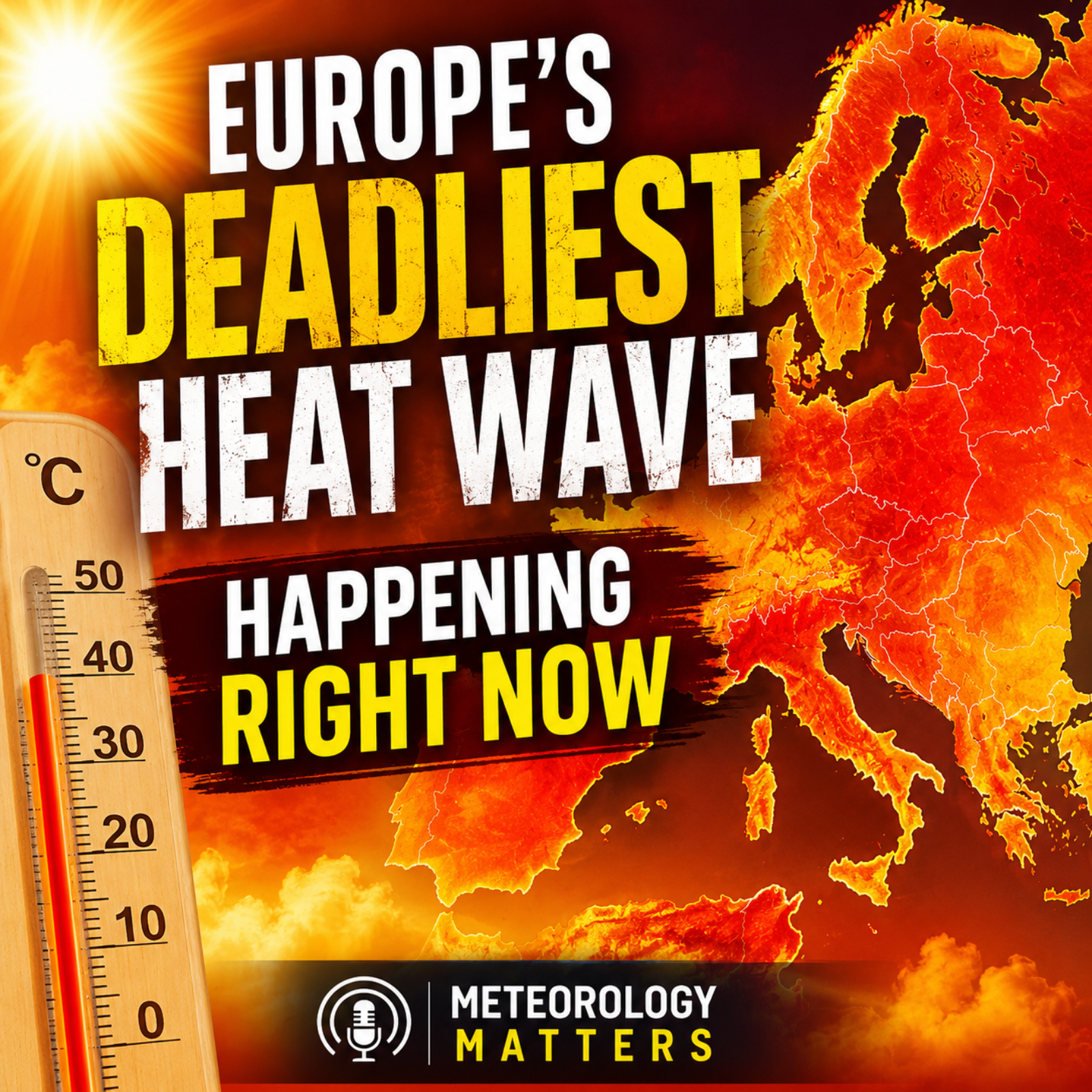
    Europe’s Deadliest Weather Disaster Is Happening Right Now

    A powerful early-season heat dome is pushing temperatures above 40°C across parts of Europe, threatening records from Spain and France to the United Kingdom. In this episode of Meteorology Matters, meteorologist Rob Jones examines the June 2026 European heat wave, what records have already fallen, what may still be broken, and how long the dangerous conditions are expected to last. Beyond the forecast, this episode explores why extreme heat kills more people than any other weather hazard, how more than 70,000 Europeans died during the historic summer of 2022, and why Europe remains especially vulnerable to prolonged heat despite growing awareness of the threat. We discuss the role of air conditioning, aging populations, urban heat islands, infrastructure limitations, public health preparedness, Heat-Health Action Plans, and the growing challenge of adapting cities and communities to a hotter future. From record temperatures and mortality studies to forecasting, emergency management, and climate attribution science, this episode provides a comprehensive look at one of the most significant weather stories unfolding anywhere in the world today.

    • Transcript
  • S3 · E22
    June 19 · 32 min

    Twenty Years Later: What Scientists Got Right

    Twenty years after An Inconvenient Truth, how well have scientific warnings held up? In this episode of Meteorology Matters, we examine the lessons of the past two decades, from the recovery of the ozone layer and the decline of acid rain to growing concerns about extreme heat during the 2026 FIFA World Cup and remarkable winter warmth in Antarctica. We also explore a new challenge facing researchers and the public: the rise of AI-generated fake studies and the growing importance of trust in science and scientific communication. Join us for a thoughtful discussion about weather, environmental change, scientific integrity, artificial intelligence, and what the next twenty years may bring.

    • Transcript
  • S3 · E21
    June 5 · 26 min

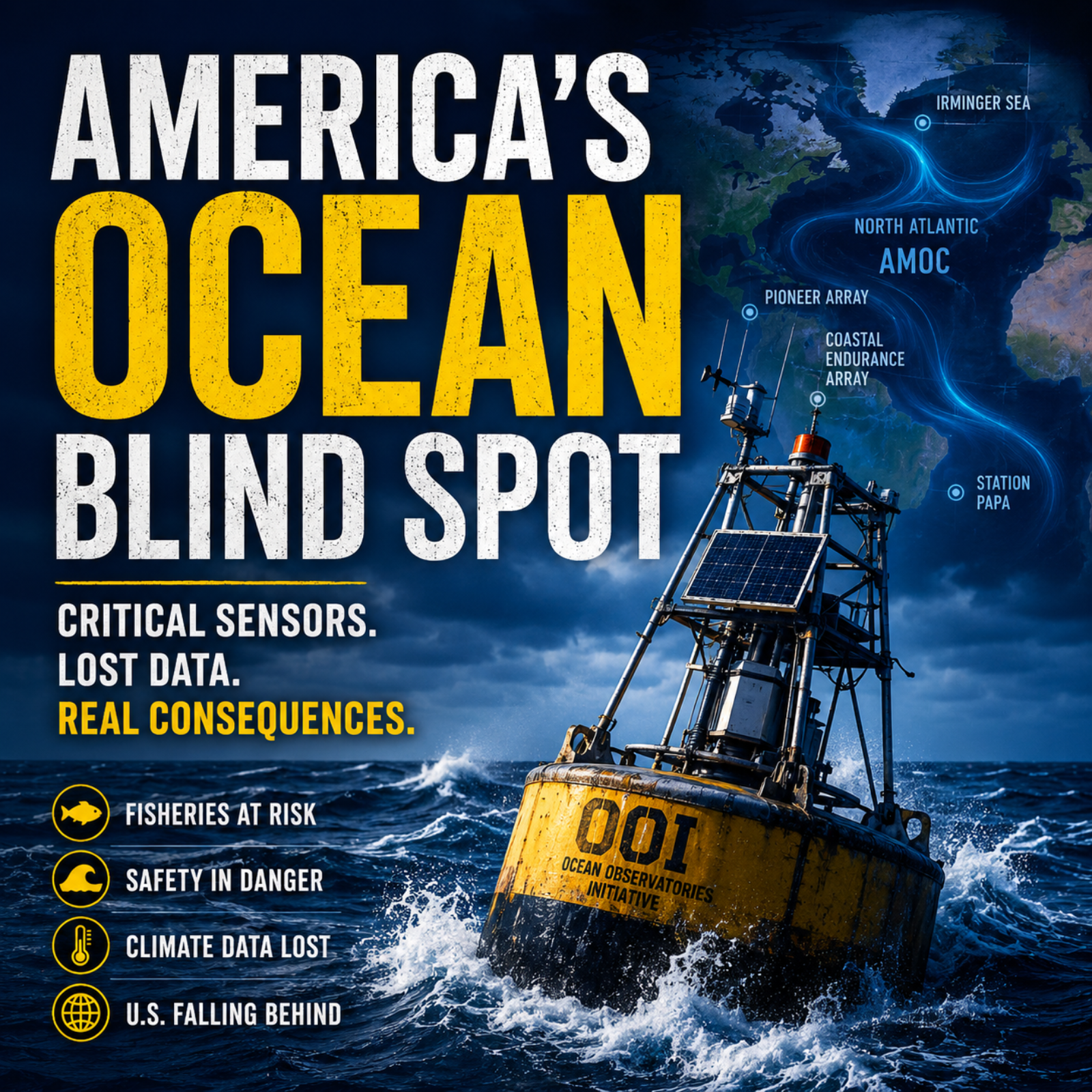
    America is Going Ocean Blind: Critical Sensors Are Being Removed

    Another major setback to US Ocean research policy due to the Trump Administration’s attack on science. The federal government is dismantling much of the Ocean Observatories Initiative, a vast network of nearly 900 deep-ocean sensors that track ocean temperatures, marine heatwaves, fisheries conditions, carbon absorption, and changes in major ocean currents. Supporters say the move reflects changing priorities and a more flexible research strategy. Critics warn it could leave scientists, fishermen, coastal communities, and weather researchers with fewer tools to monitor a rapidly changing ocean. At the same time, proposed changes to federal grantmaking could fundamentally alter how scientific research is funded in the United States, raising questions about peer review, political oversight, international collaboration, and America’s future role in global climate and ocean science. In this episode of Meteorology Matters, we examine what’s being removed, what’s changing, who is affected, and what the long-term implications could be for weather forecasting, climate research, marine industries, and scientific leadership worldwide.

    • Transcript
Showing 1–20 of 28 episodes