Skip to content
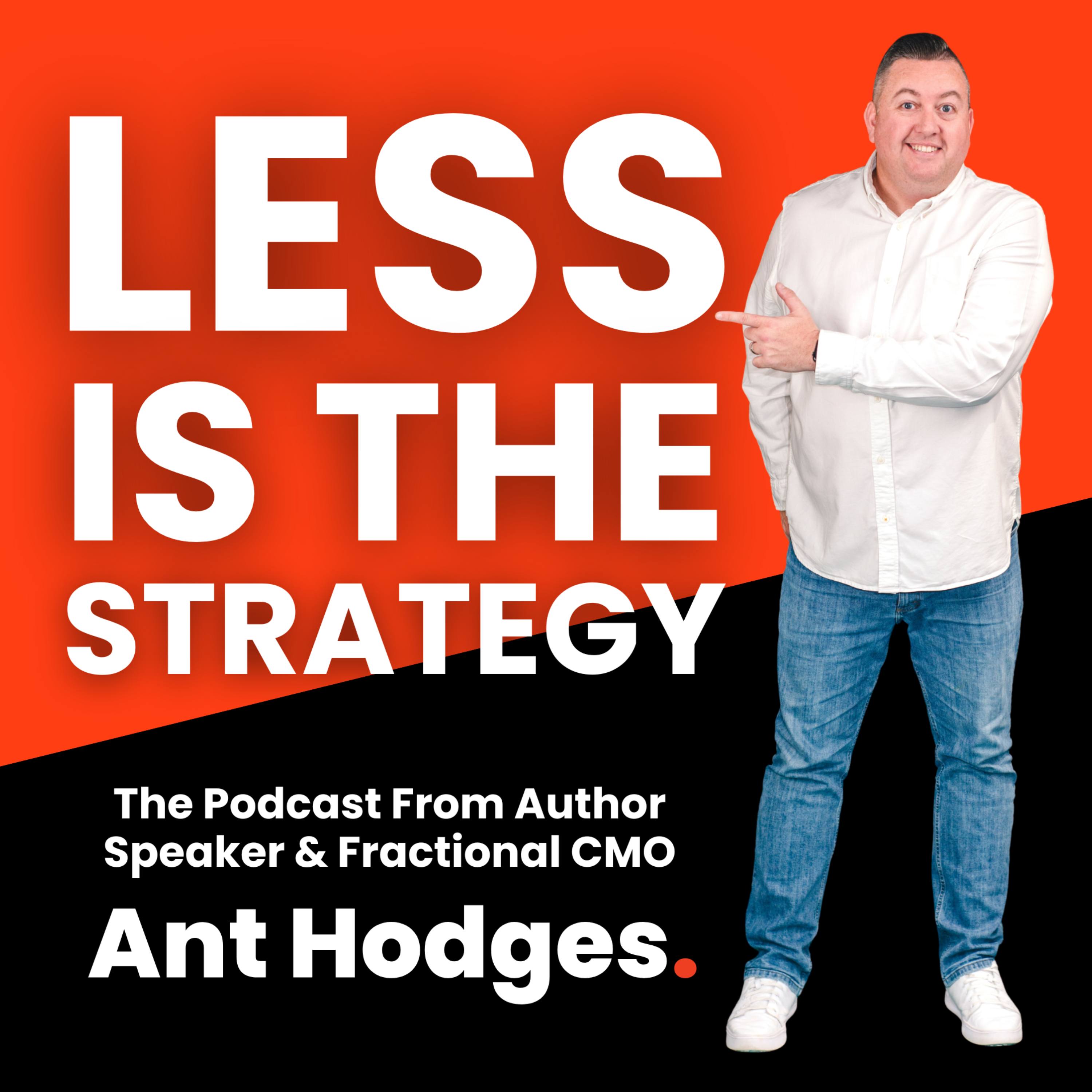
Artwork for Less Is the Strategy - with Ant Hodges
BusinessMarketingEntrepreneurshipEducationCourses

Less Is the Strategy - with Ant Hodges

Ant Hodges

Most business owners are doing too much. More content, more offers, more tools, more funnels - and still not seeing results that match the effort going in. This show makes the case for a different approach entirely.

Less Is the Strategy is a weekly podcast for entrepreneurs, coaches, consultants, and online business owners who are ready to simplify their marketing, strip back the complexity, and build a business that actually works on their terms.

Hosted by Ant Hodges - digital marketing strategist, author of Simplify the Funnel, and Fractional CMO with 20+ years experience and over $76 million in client results - every episode tackles one idea that matters. No overwhelm. No lists of twenty things to implement. Just clear thinking, real stories, and one thing you can take away and use.

Topics covered include content marketing that converts, simple funnel strategy, business simplification, online business growth, marketing without the hustle, and how to do less while building more.

If you are tired of being told that the answer is always more - and you are ready to find out what becomes possible when you simplify - this show is for you.
New episodes every week. Subscribe today.

Visit - www.lessisthestrategy.com - for all episodes and show notes.

Work with or book Ant for any speaking opportunities via - www.anthodges.com - or email directly at podcast@anthodges.com.

To buy Ant's book visit - https://www.simplifythefunnel.com/

Play
  • 23 episodes
  • weekly
  • Avg 24 min
  • English
Counted on this page — what you have heard stays on this device, so it is not something the list can be paged by.
  • Tuesday · 23 min

    Whose Scoreboard Are You Playing On? - Episode 24

    Back in the summer, on the drive home from France, it hit me that my success was being measured on a scoreboard I hadn't created. This week I share the 4 measures on my own scoreboard now, the 4 borrowed scoreboards so many of us end up playing on, and why knowing your enough gives you a foundation to build on. In this episode: From the Desk: a short week that started at a graduation in Bristol, the blog post behind this episode, and cutting the rest of my year down to 3 priorities. The Conversation: the industry, viral, younger-self and other people's scoreboards, what a 2009 study found about borrowed goals, and why enough is a foundation and never a ceiling. The Simplify: write down 5 measures you've been chasing, note where each one came from, and give one of them a week off. Timestamps: 00:00 A night in Normandy, and the moment it finally clicked 01:04 This week on the show 02:11 From the Desk: a short week that started at a graduation in Bristol 02:37 The blog post behind this episode, Success on Your Terms 04:12 9 days of audiobooks and one big question: who is Ant Hodges, really? 05:38 The 4 measures on my scoreboard now 06:56 Cutting the rest of my year down to 3 priorities 10:18 The Conversation: the 4 scoreboards we borrow without choosing them 12:25 The borrowed scoreboard in my agency years 13:03 The 2009 study that surprised me 15:06 Why this matters even more after 20 or 30 years in business 16:00 Why enough is a foundation and never a ceiling 17:41 The Simplify: name your borrowed scorecard 18:20 Write down 5 measures and where each one came from 20:08 Circle the ones you'd choose again today 20:41 Give one measure a week off 21:44 Build on enough, because simple has no ceiling Links: Try the Simplify Community free for 14 days Read Success on Your Terms, the blog post behind this episode Get your copy of Simplify The Funnel Work with Ant Every episode of the show
  • November 9 · 24 min

    Why People Aren't Joining Your Community - Episode 23

    Hardly anyone new had joined my community for months, so this week I looked at the whole thing the way I would for a client. What I found had nothing to do with the platform. It was about how easy it is to get through the door, and what happens in the first few days once someone is inside. In this episode From the Desk: why I've opened the Simplify Community with a 14-day free trial, against the advice I was given, and why your checkout page should have just one job. The Conversation: a member asks whether the platform is the reason people don't join their group, plus the onboarding, nurture and "star moments" that decide who stays. The Simplify: write down the first 7 days a new member or client goes through, then fill one gap this week. Timestamps 00:00 Someone in the community asks whether a free Facebook group would work better 00:52 This week on the show (with a Lemsip in hand) 03:13 From the Desk 03:37 Why the front door of my community had gone quiet 06:00 Opening up with a 14-day free trial, against the advice 08:30 One trial sign-up in the first 24 hours, with no promotion 09:13 A member with 40 offers whose checkout pages do all the selling 10:23 What Amazon gets right about the final step 12:01 The Conversation 13:16 Is the platform the problem, or is it something else? 14:37 The thank-you page video that does more than any platform choice 15:45 Why onboarding matters more than your content 16:44 Jeff Walker's "star moments" and how to plan them 19:32 You get back what you put in to any group 21:30 The Simplify: map out your first 7 days 23:15 Closing Links Try the Simplify Community free for 14 days Get the first chapter of Simplify The Funnel free Work with Ant Every episode of the show
  • November 2 · 20 min

    Let AI Do the Building. You Do the Thinking. - Episode 22

    The show is back, and it's back every Monday. This week I share how I rebuilt Less Is the Strategy so the thinking stays with me, while a part human, part AI system does the building. Then we look at a real shift for anyone who sells their expertise: people have stopped paying for the build. In this episode From the Desk: how splitting the work into thinking and building brought the show back. Plus, how a software bill jumping from $19 to $79 a month turned into a brand new tool. The Conversation: why "I just used AI to build it" has become so common, and where the value in your expertise has moved. The Simplify: write down the three decisions only you can make, then hand one build task to AI this week. Timestamps 00:00 "Oh, don't worry, I just used AI to build it" 00:30 Welcome back: the show returns every Monday with a new shape 02:26 From the Desk: rebuilding this podcast around thinking and building 05:42 Let AI work in the back office so you stay in the front office 06:08 How a $19 to $79 price jump turned into a brand new tool 08:12 Why the idea behind the tool still came from experience 10:09 The Conversation: why the build isn't what people buy anymore 11:31 Decades of craft versus a $29 a month subscription 12:15 Where the value in your expertise has really moved 14:10 Why AI-edited content all looks the same, and the fix 14:26 Three moves if you sell your expertise 16:59 The Simplify: the three decisions only you can make 17:45 The one build task I'd never take back 18:54 Closing thoughts and what's next Links Try the Simplify Community free for 14 days: simplifycommunity.com Read the first chapter of Simplify the Funnel free: simplifythefunnel.com Work with Ant: anthodges.com Every episode: lessisthestrategy.com

  • August 24 · 18 min

    Why Your Decades Human Experience Wins Online In The Age Of AI - Episode 21

    The online world is often assumed to belong to the young. Ant makes the opposite case. In this episode he explains why judgement and lived experience are the scarce advantages now that AI has made the tools easy for everyone, and why the people best placed to win online are often those with decades behind them. This one is for anyone wondering whether their experience still counts. Key takeaways Judgement is the scarce advantage now. AI has made the tools easy for everyone, so the real edge sits with the experience that takes decades to build. Research from MIT and the US Census Bureau puts the average age of the fastest-growing startup founders at 45. Experience sets the bar, rather than youth. Technology divides people by attitude, rather than age. Experienced people are especially well placed to use AI, because they can judge whether what it produces is any good. Keep AI in the back office and humans at the front. People should create the content and have the real conversations, while systems handle the admin behind the scenes. The experience you banked in your 20s and 30s is the asset the online world will pay you for later. Package it, and serve the people who want to learn from someone who has done it. Resources mentioned Grab the book and join the community: www.simplifythefunnel.com Contact Ant, via the WhatsApp button or by booking a call: www.anthodges.com

  • August 17 · 14 min

    One Question Can Change Your Whole Business - Episode 20

    A shorter, more relaxed episode this week, recorded away from the desk during Ant's August downtime. It centres on one question he took on holiday to France and came home with real clarity on: who is Ant Hodges? Ant unpacks how the labels other people put on us end up setting the direction of a business, shares the difference one honest answer made for him, for a friend and for a mentoring client, and explains why using August to get clear sets you up for a strong September. Key takeaways Clarity comes from answering one question from your own purpose and calling: "Who is..." followed by your own name. Other people's labels and definitions of success can quietly steer a business somewhere it was never meant to go. Ant spent the best part of 18 months searching for the right coach and sat on one decision for six months because something inside said hold fire. Answering the question for himself in France was the moment everything changed, and one of his mentoring clients noticed the shift in his presence and renewed for another 12 months, a reminder that the presence of a coach makes all the difference. One honest question can turn a flat Monday into a plan. A friend called Ant feeling unmotivated despite a healthy pipeline, and asking her "Who is..." with her own name gave her clarity and shaped her marketing for the next three to six months. The Simplify mindset is about being on purpose: one thing you're supposed to be doing, one type of person you serve, one thing you offer them and one way to build relationship. That clarity flows into your marketing and gives your audience and clients clarity too. Keep an eye on what's on the front of the bus, because somebody else can wind the sign and change the destination. Many coaching programmes come with a ready-made definition of success, so decide where you're headed for yourself and check that sign often. Resources mentioned Grab the book: https://www.simplifythefunnel.com Join the Simplify Business Community: https://www.hodgesnet.com Work with Ant: https://www.anthodges.com

  • August 10 · 26 min

    What Does It Mean to Simplify? - Episode 19

    This is the foundation episode, answering one big question: what does it actually mean to simplify? Ant opens with a story from the Dubai stage, where a delegate used his seven-part Selling Without Selling framework to close her webinar that same night and had her best sales ever. From there he lays out five ideas that sit under everything he teaches, from why simplifying is a deliberate design choice to why the funnel hacking era is over. Key takeaways Simplifying is a strategy, and it starts with what you remove. It's a deliberate design choice to strip out the friction, the extra steps and the automations that sit between you and a buyer. Complexity was a trend that got sold to us. When digital marketing boomed, the funnel itself became the product, and a whole industry grew up teaching people to build machines their customers never asked for. The funnel hacking era has died. The "add more steps, more upsells, more automation" mindset has faded, and the same warning now applies to handing everything over to AI. Complex funnels fail. They confuse the buyer and the owner, they are hard to adjust, and a confused customer simply won't buy. Simplicity sells. Everyone is starting to say simplify, and Ant welcomes it. Standing in the gap and staying consistent with your message is how you make waves, so seeing others reach the same conclusion is a good sign. Resources mentioned Grab the book and free trainings: www.simplifythefunnel.com Join the Simplify Business Community: www.hodgesnet.com Explore working with Ant: www.anthodges.com

  • August 3 · 25 min

    Do You Really Need Another Revenue Stream in Your Business? - Episode 18

    This episode comes straight from a question inside Ant's Simplify Business community: my core offer sells well, so what else should I add? Ant's answer runs the other way. Rather than bolting on another revenue stream, he shares three simple moves that grow revenue while keeping the business lean, which are making more offers, protecting your expertise from cannibalising itself, and turning up the human connection. Key takeaways Most successful experts run only two to four offers, and actively market just one or two of them. The rest sit quietly for higher paying or invitation-only clients. People who make more sales tend to make more offers. Hold your conversion rate steady and simply get your offer in front of more people, and the sales follow. Being more available often beats endlessly tweaking your funnel. One consultant moved from a single monthly webinar to five live sessions in a week, and his return on ad spend climbed from 11 times to 26 times. Building an AI tool that replaces your expertise can quietly commoditise the very thing people pay for. The value sits in the transformation you bring, so keep the human on the front end and let AI speed up the back office. Human interaction still converts better in the age of AI. Audit every touch point and ask whether you're showing up as humanly as you can, from a WhatsApp reply to the video on your sales page. Resources mentioned Grab the book: www.simplifythefunnel.com Join the Simplify Business Community: www.hodgesnet.com Work with Ant: www.anthodges.com

  • July 27 · 22 min

    Why People Buy Access To You, Not Just A Course - Episode 17

    Ant takes on the question every course creator wrestles with: should you build it before you sell it, or sell it before you build it? His answer is that it's the wrong question. He shares two honest stories of selling first and the pressure that came with it, then lays out the model he believes works now, built on community, access and asynchronous mentoring. Courses aren't dead, they simply sell differently today. Key takeaways People buy an outcome, rather than a course. The offers that sell best today give real access to the expert behind them, so human connection sits at the centre. Courses still sell well when they come with belonging, accountability and encouragement. That sense of community is something people have wanted since the dawn of time. Selling before you build can save wasted effort, and it also brings real pressure to deliver. Ant shares two honest experiences where that pressure affected his health and his cash flow. Use your knowledge and years of experience to build what people genuinely want. When you truly know your audience, you are informing the offer rather than guessing at it. The model Ant backs now is asynchronous mentoring: a personal portal, voice notes both ways, and the right training module dropped in for each person's specific challenge. Resources mentioned Join the Simplify Community: www.anthodges.com Get Kajabi with Ant's bonuses and a setup call: www.anthodges.com/kajabi Work with Ant: www.anthodges.com

  • July 13 · 31 min

    Define Success On Your Own Terms, Not Theirs - Episode 16

    After a family week away in France, Ant came back with a clear realisation: he'd been quietly measuring his business against other people's version of success. In this honest episode he unpacks how comparison steals your focus, why he pulled AI out of his content creation, and the decision to make his community the sole focus again. This one is about doing business on your own terms. Key takeaways Comparison quietly steals your focus and your energy. Real clarity comes from defining success for yourself, rather than mirroring someone else's model. Keep AI in the back office for admin, calendars and meeting notes, and keep the human on the front end. Ant even swapped his website chatbot for a WhatsApp button so people reach a real person. Writing and speaking from the heart reconnects you with people who want a human. Dropping AI from his content saved Ant around five or six hours every week. Put your energy into what already works, rather than pouring hours into rescuing what is broken. Turning up a strong channel often beats trying to fix a weak one. Saying no protects your focus. Ant declined a respected mastermind invitation because the extra commitment would have added complexity to an already full week. Try this this week Grab a notebook, turn off your phone, and go somewhere different from where you normally work. Write down three things: who you serve, the transformation you help them achieve, and the message you need to bring to the world. Get real clarity on those three, and you'll often find you need only one or two offers to succeed. Resources mentioned Grab the book: www.simplifythefunnel.com Join the Simplify Business Community: www.hodgesnet.com Explore working together: www.anthodges.com Watch this episode on YouTube: https://www.youtube.com/watch?v=KDb_OPszmVE

  • July 6 · 20 min

    How To Sell Without Pressure, Pitching or Persuasion - Episode 15

    Ant unpacks Selling Without Selling, the approach that has him converting around three quarters of his sales calls without pressure or pitching. You'll hear why human psychology has barely shifted, why he chases impact over virality, and the exact three-question framework he runs on every call. This one shows you how to let people choose to buy. Key takeaways Human psychology stays remarkably steady over decades, so the way people like to be sold to looks much like it did years ago. The rush toward AI content tends to revert as people tire of automated engagement. Chasing millions of views often returns a tiny percentage of sales. A smaller, warmer audience that books real conversations can convert far higher and create more impact. Selling is presenting an opportunity and letting someone choose the next step. It works best when you ask questions and listen far more than you talk. The framework runs on three questions: what's bugging you right now, what happens if that stays unfixed, and where you want to be in a year. Those uncover present frustration, future fear, and the aspiration they want to move towards. Earn an invitation before you present your offer, then state the price and payment options in one confident breath. Reward an upfront payment with a small discount rather than adding cost onto the instalments. Resources mentioned Grab the book: www.simplifythefunnel.com Learn the full framework: www.sellingwithoutselling.com Explore everything Ant offers: www.anthodges.com

  • June 29 · 13 min

    Double Down On What Works To Scale Faster - Episode 14

    Following his 45th birthday, Ant shares the reflection that reshaped his focus for the year ahead. He unpacks the complexity trap of chasing multiple income streams, tells the story of an author who simplified down to three, and explains his own shift toward growing the Simplify Business Community. This one gets honest about practising what you preach. Key takeaways Most highly successful creators and educators run very few income streams, often just two or three. The drawback of adding more is the layers of complexity they bring to your business and your life. When you double down on the streams that already produce results, the rest of your business tends to trickle down from that focus. A book at the top of the funnel can carry the offers that sit behind it. Spreading your energy across everything usually means you do nothing really well. Refocusing on what works is what lets a business catapult to the next level. The hardest revenue to win is often the revenue we spend the most time chasing. It helps to ask which streams give you the easiest and best results, then put your campaigns there. Ant introduces his new measure, return on impact. The belief is simple, that impacting enough people and transforming enough businesses brings the financial reward with it. Resources mentioned Grab the book and the funnel roadmap: www.simplifythefunnel.com Join the Simplify Business Community: www.hodgesnet.com Explore everything Ant offers: www.anthodges.com

  • June 22 · 35 min

    The Funnel You Can Build In 48 Hours - Episode 13

    This is the first episode recorded as video, marking the 1,000 download milestone. Ant breaks down the Minimum Viable Funnel and why it works when the complicated version most people build does not. You will hear the four parts of the funnel, the psychology behind each one, and why bringing the human back is the thing that lifts conversions. Key takeaways The complicated funnel most people build can take months to set up and often never gets them in front of a buyer. A Minimum Viable Funnel can be live within about 48 hours. Your public content now does the job the old free lead magnet used to do. Showing up with your face and voice builds the trust that turns attention into sales. Sending people to a low cost, high value offer builds a list of buyers rather than freebie hunters. Once someone has crossed the trust threshold to buy, the next sale becomes far easier. The conversion event should feel human. Gartner figures show that over half of consumers can tell when they are dealing with AI content or a bot, and over three quarters of those people then walk away from the brand. Real results and a sense of community keep people with you after the sale. People want to belong to a group built around a shared goal. Resources mentioned Grab the book and the funnel roadmap: www.simplifythefunnel.com Get the sales page framework and join the community: www.anthodges.com/salespage Explore working together: www.anthodges.com

  • June 8 · 24 min

    The Most Valuable Asset In Your Marketing - Episode 12

    In this episode I make the case that trust is the most valuable asset you own in your marketing. I share a recent partner promotion where a closed cart quietly reopened, and what that does to the trust between a brand, the partners who promote it, and the audiences who believe them. It all comes back to a simple idea: honest, simple marketing is the easiest marketing to run. Key takeaways Trust is the most valuable asset in your marketing, and honest deadlines mean people act the first time. Simple, truthful marketing is easier to run, because you are never on guard waiting to be caught out. A big brand can absorb a little lost trust. A smaller business copying the same tactics usually cannot, because the whole job is winning and keeping customers. Four practices worth examining honestly in your own marketing Fake scarcity timers driven by someone's clicks The open-close-reopen cart cycle "Spaces almost gone" emails written before you know the numbers The fake-it-till-you-make-it social media front. Real relationships are built on trust over time, and the repair job is far harder than keeping the original promise. Resources... Simplify the Funnel (my book) - www.simplifythefunnel.com Simplify the whole picture in a day with me: www.anthodges.com Subscribe to the show: www.lessisthestrategy.com

  • June 1 · 19 min

    Pro AI or Pro Human? Why the Winning Answer Is Both - Episode 11

    Most people think they have to pick a side: all in on AI, or against it. Ant makes the case for the middle path. Be pro AI in the back office, and pro human on the front line. That balance is exactly what consumers are now asking for, and it's becoming the thing that separates the businesses that win from the ones that blend into the noise. Key takeaways Movement is not momentum. AI can make you feel busy and productive while your real forward motion stalls. The test is simple: has it won you customers, deepened relationships, or grown revenue this week? Consumers are voting with their feet. Half of consumers prefer brands that don't use AI-generated content, most can tell when content is AI-made, and many disengage the moment they work it out. Use AI where it belongs. Brainstorming, spotting patterns, analysing transcripts and survey data, and organising your thinking are back office jobs AI does well. Keep humans on the front line. Sales conversations, difficult feedback, community hosting, and the moments that build or break trust need a person, not a bot. Small human shifts beat heavy automation. A WhatsApp button instead of a chatbot, a personal video reply instead of a ManyChat sequence, and a phone call to every event booking all build trust that automation can't. Resources mentioned Built to Be Human, a free 30-minute masterclass unpacking the HUMAN framework: www.builttobehuman.com Simplify the Funnel, Ant's book: www.simplifythefunnel.com Work with Ant - www.anthodges.com

  • May 18 · 33 min

    Find Your People and Get in a Mastermind Room - Episode 10

    I recorded this episode from my hotel room overlooking Lake Windermere in the Lake District after two days inside my mastermind with eight other business owners - the mastermind I am a member of, not the one that I facilitate. This episode unpacks what makes a mastermind actually work, why you should be in one, what to look for when you join one, and what separates the rooms that move your business forward from the rooms that quietly drain your energy and bank balance. I'll share six markers of a genuinely powerful mastermind, the story of how Peter Thompson once turned me down for hid mastermind group the right reasons, and why the most valuable conversations almost never happen in the formal sessions themselves. Ant also walks through how his own mastermind runs, where it happens, and who it's built for. If you've been looking for the right room of people who'll challenge you, support you, and help you grow, this one is for you. What you'll learn in this episode... Why the size of the room matters more than you think How to spot peers who'll move you forward The session structure every great mastermind needs Why in-person time changes everything What strong facilitation actually looks like in the room Why the best masterminds attract people who teach and learn equally Resources & links... The Portugal Mastermind, 14th - 18th September - Portugal Email cmo@anthodges.com for more information about the mastermind Or message me directly via the green WhatsApp chat button at www.anthodges.com If this episode helped, please leave a review wherever you listen. And share it with the person you think needs to hear it most.

  • May 11 · 28 min

    Why Your Lead Magnet Isn't Working - Episode 9

    The old internet marketing playbook said one thing above everything else. Build your email list first. Lead magnets, squeeze pages, opt-ins, then a long nurture sequence, then a sale. That was the formula taught for twenty years. In this episode I explain why that formula has quietly stopped working, where the real attention has moved, and what to put in front of your audience instead of another free PDF. The free line, the point at which people first get value from you, used to live on your website. It now lives on the public platforms. YouTube, podcasts, social. If you keep optimising for the old free line you are competing for a pool of leads that is shrinking every month. If you move with the free line, you start building something far more valuable. An audience of warm buyers who already trust you before they ever hit your list. What You'll Learn in This Episode Why the "free line" has moved away from your website and into the public realm The difference between a lead magnet and a client magnet (and why the second one converts so much better) Why visibility and audience building should come before list building in 2026 How to build an "invisible list" through video content and platform-native publishing Why consistency of message matters more than clever funnels Why human connection is now the strongest competitive advantage over AI and automation How SEED Marketing, the Minimum Viable Funnel and Selling Without Selling fit together as a simpler system Resources Mentioned Simplify the Funnel (Ant's book) at www.simplifythefunnel.com

  • May 4 · 28 min

    Sustainable Entrepreneurship is About Simplifying - Episode 8

    Most entrepreneurs leave a 9-5 chasing freedom and end up trapped in a 24/7 hustle of their own making. In this episode, Ant shares the August 2023 Porto moment that led him to shut down his agency and rebuild around simplicity. He unpacks why freedom is a better scoreboard than revenue, and gives three tactical shifts you can make this week to start running a more sustainable business. KEY TAKEAWAYS Freedom is the real scoreboard, measured across five dimensions. Time, financial, energy, choice, and location. Revenue alone tells you very little about whether your business is actually serving the life you set out to build. Stepping back is part of the work itself. A deliberate strategic pause, somewhere away from the desk, will often produce more clarity than another year grinding inside the day-to-day. Fewer tools beats more tools every single time. Auditing your tech stack regularly will usually show that half of what you currently pay for could disappear without affecting how the business actually runs. (One Simplify Summit attendee saved roughly $6,000 a year doing exactly this.) Decision Density™ is the hidden cost in every small business. Setting standing decision rules, and defaulting to no on anything outside your core focus, will protect your energy and keep you in your lane. Block your life into your calendar before your business goes in. If your calendar serves the business first, the business is running your life rather than the other way round. RESOURCES MENTIONED Simplify the Funnel (Ant's book): simplifythefunnel.com Simplify Summits (US, UK and online events): simplifysummits.com Ant's Mastermind in Porto: anthodges.com/inner-circle Kajabi (Ant's primary business platform since 2012, with bonuses): anthodges.com/kajabi

  • April 27 · 29 min

    The Day Selling Stopped Feeling Heavy - Episode 7

    Selling makes a lot of people feel uneasy. I get it completely. For years I felt the same way every time a sales conversation came around. The scripted pitches everywhere you look. The fake countdown timers. The objection-handling traps designed to push people over a line they didn't really want to cross. All of it leads to following a process instead of having a real conversation with another human being. In this episode I share how my whole approach to selling shifted during a coffee break at my coaching accreditation back in 2015, and how that one moment grew into the framework I now run across every sales conversation in my business. What we cover... Why so much sales training creates the ick in the first place The real difference between coaching, training and mentoring The accidental coffee break that birthed Selling Without Selling What Scripture form the Bible, particularly, Mark Chapter 10 Verse 51 taught me about sales conversations The first three questions of my framework, including why step three is where the gold sits How fake scarcity and manufactured urgency destroy trust faster than anything else A Facebook ad I saw this week that demonstrated everything wrong with manipulation tactics Why I close around 90% of my sales calls today without using any script Resources mentioned... Simplify the Funnel (signed hardback copy): https://www.simplifythefunnel.com Selling Without Selling video training: http://www.sellingwithoutselling.com The Hodges Net community and training library: https://www.hodgesnet.com Find out about the next live event: https://www.simplifysummits.com Resources, articles and the email newsletter: https://www.anthodges.com

  • April 20 · 29 min

    Actual Intelligence in the Age of AI - Episode 6

    In this episode, Ant Hodges dives into the book “Actual Intelligence” by Kenny Rueter and Jonathan Cronstedt, co-CEOs of Kajabi. Ant shares why this short, free book became one of his most validating reads, powerfully aligning with his own “simplify” philosophy and the ideas in his book “Simplify the Funnel.” Using the book’s core concept – the Expert Equation (Expertise × Visibility × Availability = Value) – Ant unpacks why credentials alone are not enough, why “build it then sell it” and “sell it before you build it” are both flawed for most experts, and why starting with paid 1:1 work is the smartest way to build a knowledge business in the age of AI. This episode is a call to simplify, to bring the human back into your business and your funnel, and to lean into your lived experience as your real differentiator from AI and automation. The Book: “Actual Intelligence” The Expert Equation The Problem with Relying on Credentials Visibility: Are You Even Findable? - the Simple visibility test Why You Should Sell Your Time First (Before Courses, Memberships, or Funnels) The Power of Paid Over Free Staying Human in the Age of AI Resources Mentioned Book: Actual Intelligence by Kenny Rueter & Jonathan Cronstedt - Get it at www.everyexpert.com/book Book by Ant: Simplify the Funnel - Get it at www.simplifythefunnel.com Ant’s Website & Contact - www.anthodges.com – hit the chat button to start a conversation

  • April 13 · 21 min

    When Things Get Tough in Business - Episode 5

    When revenue drops or clients leave, most business owners default to building something new or chasing a shiny opportunity. This episode is about why that instinct makes things harder - and what to do instead. Ant shares the three things that actually move the needle when your business hits a rough patch. In this episode... Focusing hard on a problem keeps your energy locked in the wrong place. The surface issue is rarely the real issue - look for the root cause first, especially around lead generation and sales conversations. Building something new when things are tough is one of the biggest distractions available to an entrepreneur. A new platform, app, or offer all require branding, marketing, audience building, and selling. That's a new business - not a fix for the current one. When revenue is down, the answer is to double down on what's already working - not add more to your plate. Simplifying in a tough moment is harder than it sounds, but it's the move that creates momentum. A high-ticket offer wins over a low-ticket scramble every time in a difficult period. One well-positioned conversation can do what dozens of low-ticket sales attempts can't. Price your work relative to the value you deliver - a useful benchmark is around 10% of the result you're helping someone achieve. The three things that give you clarity when things get tough: understand your calling, refine your message, and create an offer that reflects both. In that order. Resources Mentioned Simplify the Funnel by Ant Hodges - the full playbook on building a simpler marketing system that works. Grab it at www.simplifythefunnel.com Connect and Take the Next Step Ready to simplify your business? Visit www.anthodges.com and hit the "Let's Chat" button to start a WhatsApp conversation directly with Ant

Showing 1–20 of 23 episodes