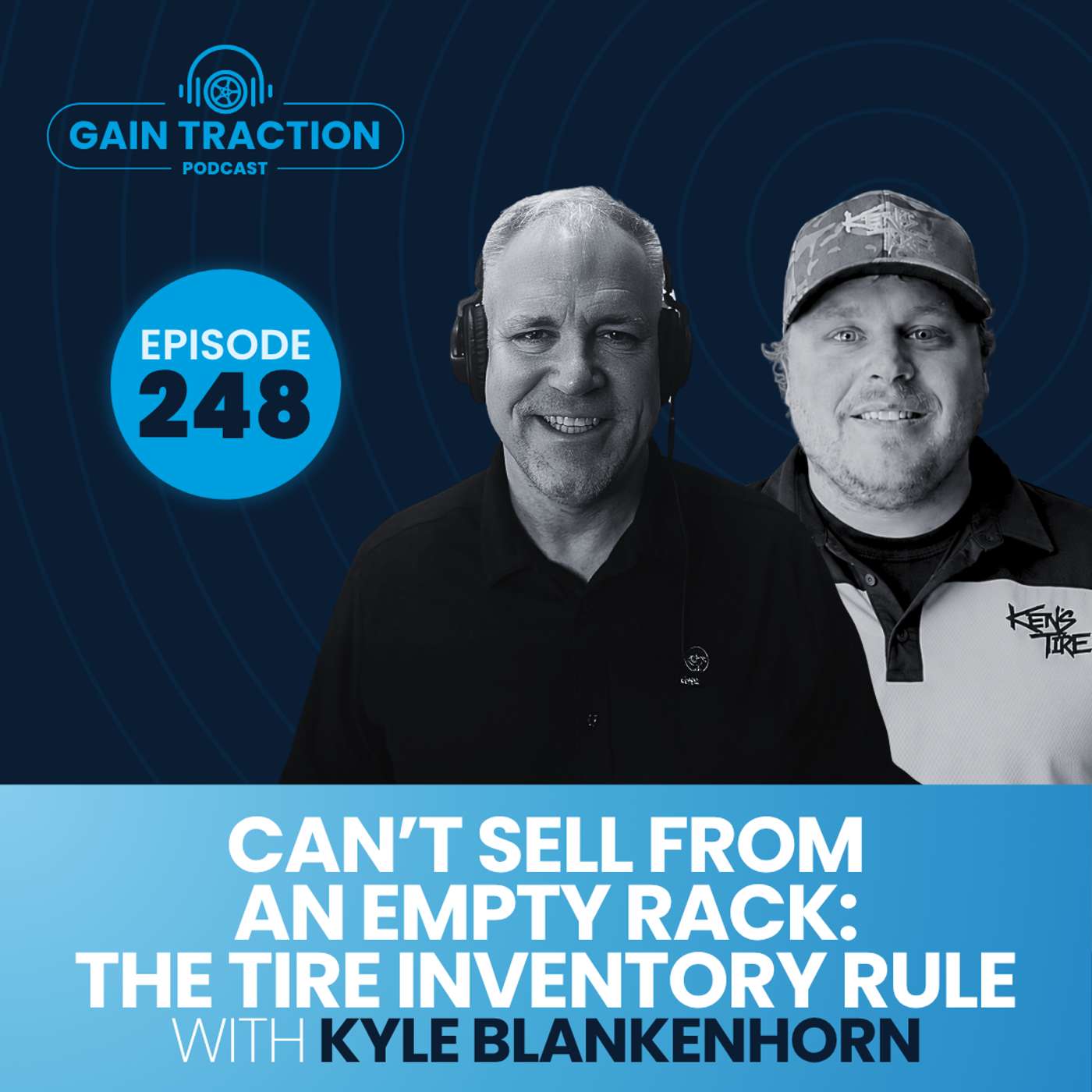
Can’t Sell From an Empty Rack: The Tire Inventory Rule
Kyle Blankenhorn is co-owner of Ken’s Tire, a 50-year tire and automotive service business with three locations in Schuylkill County, Pennsylvania, plus a commercial truck tire center and road service operation. Its stores have warehouse space and carry roughly 2,500 to 3,000 tires per location. Kyle brings an operator’s perspective to tire inventory management, supplier relationships, customer retention, and hiring. He also helps lead a team of about 50 employees and reports very little turnover across the business. In this episode… Tire inventory creates two expensive problems: empty racks send time-sensitive customers elsewhere, while slow-moving stock consumes cash and warehouse space. Strong tire inventory management requires enough size and price-point coverage to serve the local market without treating every available tire as a necessary purchase. New vehicles continue to introduce additional tire sizes, making broad coverage harder for shops and distributors. Kyle’s position is practical: customers often buy the tire that is available because waiting until the next day interferes with work and daily responsibilities. The shop with the tire on hand often gets the sale, regardless of brand. First tire sales also shape the long-term customer relationship, at Ken’s Tire, repair work follows the trust built through tire sales, consistent service, and quality work. Customers return over time, and entire families continue using the business. The same operating discipline extends to hiring. Kyle prioritizes consistent work history over formal credentials because technical skills can be taught. A dependable employment record gives him greater confidence in the time, energy, and money required to train someone properly. Here’s a glimpse of what you’ll learn: [03:33] From career pivot to tire business leadership [05:38] Strategic tire buying and supplier relationships [08:06] Inventory capacity, product mix, and sales [11:36] Aging vehicles and rising repair demand [13:37] How tire sales build long-term customer relationships [16:55] A retention-focused approach to technician hiring [21:22] Hands-on experience as a technician training standard Resources mentioned in this episode: Ken’s Tire Website Tread Partners Gain Traction Podcast on YouTube Gain Traction Podcast Website Mike Edge on LinkedIn Quotable Moments: “The more you have, the more you sell.” “Bottom line, can’t sell from an empty cart.” “But he who has it is going to sell it.” “The only thing that matters to me is work history.” “I can teach you the rest of the way through.” “I do not want to train new people every six months.” Action Steps: Strengthen tire inventory management with a location-level report covering the past 12 months of sales. Separate high-volume sizes, steady sellers, aging inventory, and products with no recent movement. Track every lost sale caused by unavailable inventory for 30 days. Record the requested size, preferred price point, available substitute, and whether another location had the tire. Set minimum and maximum stocking levels for each store based on local sales history. Transfer existing inventory between locations before placing another order. Build a supplier reference sheet covering primary contacts, alternate sources, lead times, payment terms, and direct-buy opportunities. Review the list with every store manager. Add consistent work history to the technician screening process. Ask candidates how long they stayed in previous roles, then invest training resources in people who have demonstrated reliability.
- Transcript