Skip to content
Artwork for Fintech Takes
BusinessInvestingNewsTech NewsExplicit

Fintech Takes

Alex Johnson

Fintech moves fast. But here at Fintech Takes, Alex Johnson and his rotating panel of guests move faster so that you can stay on top of the latest and greatest news in the industry without breaking a sweat. 


Welcome to Fintech Takes—the place where fintech’s biggest nerds come to sit back, relax, and completely geek out.


Join Alex and a lineup of fintech’s brightest minds as they dissect what’s happening in fintech and banking. 

Each week, Alex and his guests recap the most interesting developments in fintech and explore the industry’s most pressing questions, diving headfirst into the intricate workings of some of the industry’s most ground-breaking business models and unpacking the emerging players that promise to shape fintech’s future.

From riveting conversations with fintech’s most relevant operators to comprehensive recaps of the month's most compelling news stories and in-depth analyses of the latest regulatory developments, Fintech Takes is your one-stop-shop for navigating the fintech universe.

Subscribe now to join fintech’s nerdiest podcast around!

Play
  • 39 episodes
  • Avg 1 hr 1 min
  • English
Counted on this page — what you have heard stays on this device, so it is not something the list can be paged by.
  • Yesterday · 55 min

    Catching Up with Ben Jackson on Payments & Policy

    Welcome back to Fintech Takes. I’m your host Alex Johnson, and today I’m joined by Ben Jackson, Chief Operating Officer at Innovative Payments Association (IPA) and my former colleague at Mercator Advisory Group for his overdue podcast debut. At Mercator, I was constantly in Ben’s office asking him to explain things. So this episode is the virtual version of what we used to do there all the time: head out to the office’s back deck overlooking the lake and talk about all the interesting stuff happening in payments and financial services. We cover a lot of ground, from the midterm fallout and the future of the CFPB to crypto’s next chapter and the perpetual fight over debit interchange. We get into: Why Ben expects “nuanced combativeness” between regulators and the new Congress, what’s at stake with Brian Johnson’s CFPB nomination, and the danger of a regulatory pendulum swinging too far after 2028. Whether tokenized deposits could give stablecoins a run for their money, and why Ben thinks stablecoins might eventually become like wire transfers. How Corner Post, a little North Dakota gas station, could win its fight over debit interchange and still end up paying more. Why Ben’s 2015 Mercator report, The Six Million Dollar Customer, may finally have its moment, as AI agents threaten banks’ playbook of poaching rich customers and create an opportunity to offer almost private banking to everyone. Tune in for some predictions about the future of payments, and a reminder that no one knows anything. Especially when it comes to AI. --- This episode is brought to you by Increase. Increase offers API-first banking for ambitious technology companies. Companies like Coast, Gusto, and Ramp rely on Increase technology to process more than $500B annualized in payments, card transactions, and loans. Learn more at https://increase.com/ --- Sign up for Alex’s Fintech Takes newsletter for the latest insightful analysis on fintech trends, along with a heaping pile of pop culture references and copious footnotes. Every Monday, Wednesday, and Friday: https://workweek.com/brand/fintech-takes/ And for more exclusive insider content, don’t forget to check out my YouTube page. --- Follow Alex: YouTube: https://www.youtube.com/channel/UCJgfH47QEwbQmkQlz1V9rQA/videos LinkedIn: https://www.linkedin.com/in/alexhjohnson X: https://www.twitter.com/AlexH_Johnson --- Follow Ben: LinkedIn: https://www.linkedin.com/in/benjaminxjackson/


  • November 18 · 48 min

    Close to the Metal with Darragh Buckley

    Welcome back to Fintech Takes. I’m Alex Johnson, joined by Darragh Buckley, Founder and CEO of Increase (and, once upon a time, the first employee at Stripe). Darragh has been on the podcast before, but never solo. That meant I could finally ask him all the questions I’ve been saving up, from early Stripe war stories to why he set out to build the bank he wished he’d had at Stripe. So I did, in Three Acts. And, because it’s 2026, Act Three is 10 minutes of rapid-fire questions about agentic AI and everything that’s happened in the last few months. We get into: What Darragh learned as Stripe’s first employee about company culture, and which lessons he’s carried over to Increase. Why Increase’s “no abstractions” philosophy appeals to engineers, and where engineer-led decision-making can run into trouble in financial services. Why Darragh set out to build the bank he wished he’d had at Stripe, and what owning a bank charter makes possible for Increase. Why Darragh isn’t yet ready to outsource his “worry budget” to AI, even as he embraces its potential to transform how companies operate. Plus, Darragh’s surprisingly hopeful vision for how agentic commerce could be a boon for small businesses, and my very particular taste in long felling axes. --- This episode is brought to you by Increase. Increase offers API-first banking for ambitious technology companies. Companies like Coast, Gusto, and Ramp rely on Increase technology to process more than $500B annualized in payments, card transactions, and loans. Learn more at https://increase.com/ --- Sign up for Alex’s Fintech Takes newsletter for the latest insightful analysis on fintech trends, along with a heaping pile of pop culture references and copious footnotes. Every Monday, Wednesday, and Friday: https://workweek.com/brand/fintech-takes/ And for more exclusive insider content, don’t forget to check out my YouTube page. --- Follow Alex: YouTube: https://www.youtube.com/channel/UCJgfH47QEwbQmkQlz1V9rQA/videos LinkedIn: https://www.linkedin.com/in/alexhjohnson X: https://www.twitter.com/AlexH_Johnson --- Follow Darragh: LinkedIn: https://www.linkedin.com/in/darragh-increase/ Read Increase’s design principle here: https://increase.com/articles/no-abstractions

  • November 16 · 42 min

    Fintech Takes x Nova Credit Presents: The Car Lot Meets Cash Flow

    Hello, and welcome back to Cash Flow Conversations, a podcast series sponsored by our friends at Nova Credit. Over seven episodes, we've explored the mainstream adoption of cash flow data in consumer lending, from the practical challenges of getting started to the possibilities that lie ahead. So now, for our eighth and final episode, I sit down with Andy Mayers, Lender Solutions Strategist at Dealertrack, the Cox Automotive platform connecting dealers with ~1,500 lenders, to discuss a deployment nearing market: consumer-permissioned income verification in indirect auto lending. On Dealertrack's platform, lenders request proof of income on 16–18% of approved applications. Traditionally, that's meant a pay stub, a document that can now be faked online in under a minute. We get into why fraud is accelerating the move away from pay stubs, why the dealership is a more logical place to request bank data than an unfamiliar lender, and how a manual verification process becomes a text or email the borrower can complete on the spot. We also look further down the road, to how cash flow data could inform loan pricing, help dealers structure financing, and enter the car-buying experience much earlier. It starts with replacing the pay stub. It could end with changing how the car deal gets made. --- This episode is brought to you by Nova Credit. Nova Credit is a credit infrastructure and analytics company that enables businesses to grow responsibly by harnessing consumer credit data. Learn more at novacredit.com. --- Sign up for Alex’s Fintech Takes newsletter for the latest insightful analysis on fintech trends, along with a heaping pile of pop culture references and copious footnotes. Every Monday and Thursday: https://workweek.com/brand/fintech-takes/ And for more exclusive insider content, don’t forget to check out my YouTube page. Follow Alex: YouTube: https://www.youtube.com/channel/UCJgfH47QEwbQmkQlz1V9rQA/videos LinkedIn: https://www.linkedin.com/in/alexhjohnson Twitter: https://www.twitter.com/AlexH_Johnson --- Follow Andy: https://www.linkedin.com/in/andy-mayers-a960714/ Learn more about Nova Credit here.

  • November 11 · 1 hr

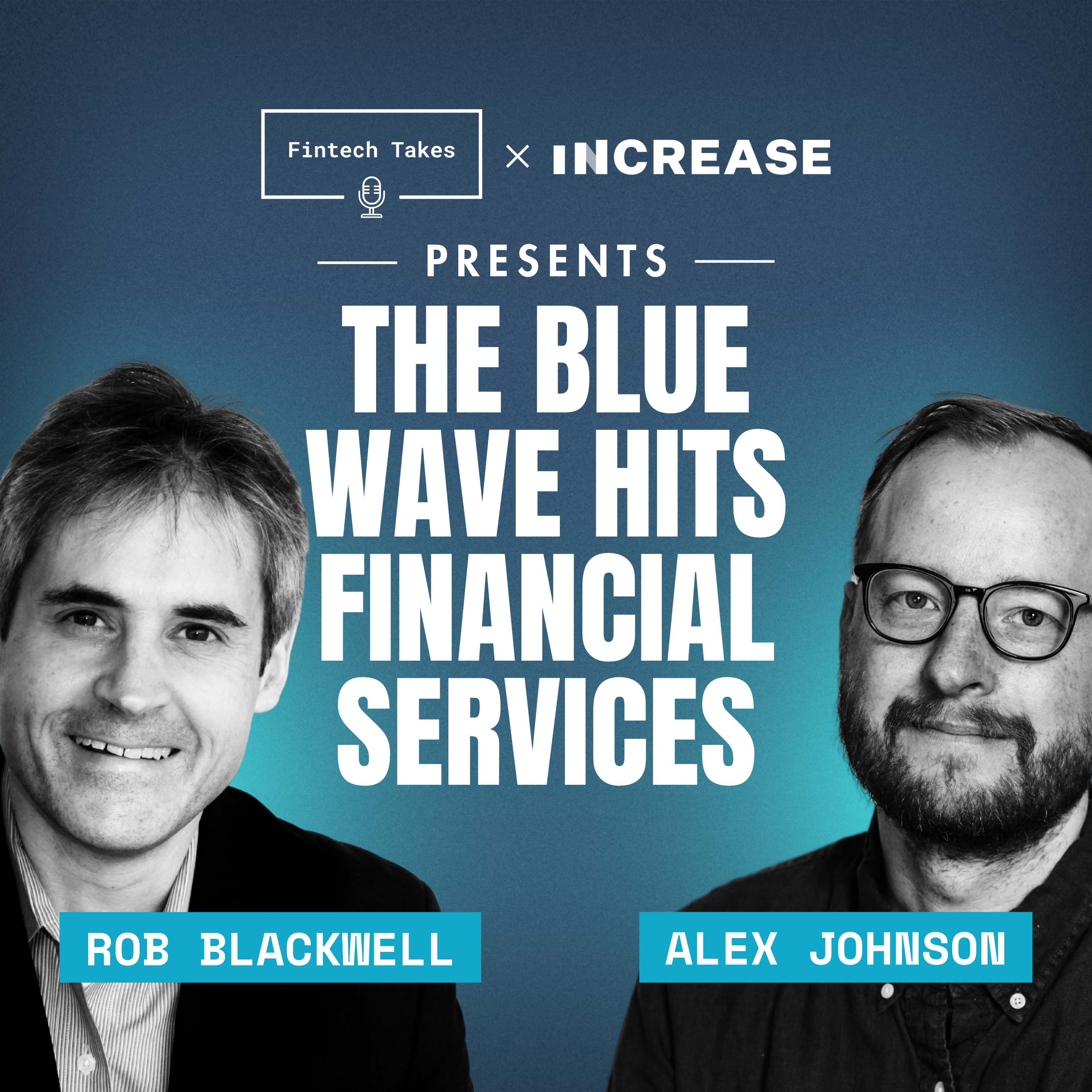
    The Blue Wave Hits Financial Services

    Welcome back to Fintech Takes. I’m your host, Alex Johnson, and I’ve flashed the regulatory bat signal to bring Rob Blackwell (Chief Content Officer & Head of External Affairs at IntraFi and host of the Banking With Interest podcast) back for an emergency edition of What the Hell Is Going On. The midterms delivered a blue wave Rob calls “generational.” But did Democrats win, or did Republicans lose? And what does it mean for financial services? We get into: How Fairshake spent $50 million against Sherrod Brown and lost (and what that means for crypto’s political leverage and the CLARITY Act), and why World Liberty Financial’s trust charter is headed for congressional scrutiny. Why Elizabeth Warren and Maxine Waters could soon wield committee gavels, and what comes next for the gutted CFPB, with newly empowered state Democrats eyeing bank fees in the meantime. Whether bipartisanship has a future. Trump says he’s open to deals, but Rob puts the odds at 3/10, citing a housing bill Trump nearly vetoed after coming to see a provision he’d requested as Warren’s. Plus, a tribute to Sir Patrick Stewart and Rob’s case for Star Trek: Deep Space Nine. --- This episode is brought to you by Increase. Increase offers API-first banking for ambitious technology companies. Companies like Coast, Gusto, and Ramp rely on Increase technology to process more than $500B annualized in payments, card transactions, and loans. Learn more at https://increase.com/ --- Sign up for Alex’s Fintech Takes newsletter for the latest insightful analysis on fintech trends, along with a heaping pile of pop culture references and copious footnotes. Every Monday, Wednesday, and Friday: https://workweek.com/brand/fintech-takes/ And for more exclusive insider content, don’t forget to check out my YouTube page. --- Follow Alex: YouTube: https://www.youtube.com/channel/UCJgfH47QEwbQmkQlz1V9rQA/videos LinkedIn: https://www.linkedin.com/in/alexhjohnson X: https://www.twitter.com/AlexH_Johnson --- Follow Rob: LinkedIn: https://www.linkedin.com/in/rob-blackwell-63884826/ X: https://x.com/robblackwellAB

  • November 4 · 1 hr 15 min

    AI Agents, SoFi, & the OCC’s “Irrefutable” Report

    Welcome back to Fintech Recap. I'm Alex Johnson, joined as always by my partner in recapping, Jason Mikula. We kick things off with the big takeaways from Money20/20, where AI agents were everywhere, and so was the anxiety about what they're already doing inside banks. Big banks want to block them, while fintech companies see opportunity. Will blocking agents eventually become a competitive disadvantage? Then, it’s our charter watch. In the narrowing window to secure approval under the current administration, we discuss what fintech companies may stand to gain from national trust bank charters. (We also dig into SoFi’s new tokenized deposit, SOFIE, which pays 4.4% APY and converts into SoFiUSD – in part to ask who it’s for!) Next, bank to debanking we go. The OCC says its new report on the nine largest banks provides “irrefutable evidence.” We read it, and we’re unconvinced. Finally, EarnIn sued Maryland over a law prohibiting earned wage access providers from soliciting tips, prompting my entirely predictable rant about tipping in financial services (which also conveniently serves as my Can't Let It Go!). As for Jason, he discovered that the CFPB has appointed a Chief Superintelligence Officer, despite having no superintelligence use cases to report. --- This episode is brought to you by Increase. Increase offers API-first banking for ambitious technology companies. Companies like Coast, Gusto, and Ramp rely on Increase technology to process more than $500B annualized in payments, card transactions, and loans. Learn more at https://increase.com/ --- Sign up for Alex’s Fintech Takes newsletter for the latest insightful analysis on fintech trends, along with a heaping pile of pop culture references and copious footnotes. Every Monday, Wednesday, and Friday: https://workweek.com/brand/fintech-takes/ And for more exclusive insider content, don’t forget to check out my YouTube page. --- Follow Alex: YouTube: https://www.youtube.com/channel/UCJgfH47QEwbQmkQlz1V9rQA/videos LinkedIn: https://www.linkedin.com/in/alexhjohnson X: https://www.twitter.com/AlexH_Johnson --- Follow Jason: Newsletter: https://fintechbusinessweekly.substack.com/ LinkedIn: https://www.linkedin.com/in/jasonmikula/

  • November 2 · 44 min

    Fintech Takes x C&R presents: The Customer Isn’t the Liability

    Welcome to Season 2 of Collections Conversations, a new miniseries from Fintech Takes, sponsored by our friends at C&R Software, which digs into how AI is reshaping debt collections. In this season, we’re surveying everything that happens after origination by bouncing around different markets and talking to folks with different experiences. In Episode 4, I sit down with Anders Wallin, who has spent a lot of time on the technology side of credit (he’s worked as CIO for a traditional credit bureau and a debt purchaser, and even at FICO). We apply that view to collections and recovery, the most neglected stage of the credit lifecycle. We start with the opportunities lenders miss when they see technology primarily as a way to avoid risk and cut costs. Banks invest plenty in acquiring customers, but the switch flips the moment a payment’s missed. Ironically, debt buyers often take the more customer-centric approach. At Hoist, the debt purchaser Anders joined in 2012, the word “debtor” was banned, and machine learning helped them understand what borrowers wanted to pay. Anders says customers who default typically come back as payers 5-7 years later. We get into: Why big banks are “really bad” at collections, and what the UK’s outsourcing and debt sale market gets right Why “your liability is now their asset” changes how a debt gets treated How open banking data could enable sustainable, individualized repayment plans How Swedish lenders verify last month’s paycheck, and why northern and southern Europe view debt so differently. Tune in for a conversation about the customer on the other side of every delinquent account (and why they’re probably coming back). --- This episode is brought to you by C&R Software. More than just debt collection, C&R sets the global standard for AI-native, humanized credit management. They simplify the complex with end-to-end credit-risk lifecycle support, powered by automated workflows, AI-native intelligence, and real-time, data-driven decisioning. Learn more at https://hubs.ly/Q03Wl1DY0. --- Sign up for Alex’s Fintech Takes newsletter for the latest insightful analysis on fintech trends, along with a heaping pile of pop culture references and copious footnotes. Every Monday, Wednesday, and Friday: https://workweek.com/brand/fintech-takes/ And for more exclusive insider content, don’t forget to check out my YouTube page. --- Follow Alex: YouTube: https://www.youtube.com/channel/UCJgfH47QEwbQmkQlz1V9rQA/videos LinkedIn: https://www.linkedin.com/in/alexhjohnson Twitter: https://www.twitter.com/AlexH_Johnson --- Follow Anders: https://www.linkedin.com/in/anderswallin/

  • October 28 · 1 hr

    Stablecoins IRL (Tempo Edition)

    Welcome back to Fintech Takes. I’m Alex Johnson, joined by Dan Romero, who leads GTM at Tempo, the payments-focused blockchain co-created by Stripe and Paradigm, for a deep dive into crypto’s future as payments infrastructure. With the GENIUS Act establishing a federal regulatory framework for stablecoins, banks and payment companies have a clearer path to adopting them as a payment rail. I start with a challenge to Dan: explain Tempo as if I were a community bank CFO who knows absolutely nothing about crypto. From there, we explore the bets Tempo and Stripe are making about the trade-offs that come with moving money on-chain (from the economics of stablecoins and AI-driven transactions to the trade-offs between instant settlement, consumer protections, privacy, and public liquidity). Highlights include: Why Stripe built a new blockchain with a dedicated payments lane, rather than have payments compete with crypto trades for space (Dan’s analogy: imagine Visa and the NYSE competing for bandwidth on the same server). How OpenUSD proposes sharing most of its net interest margin with distributors, and whether Stripe's expanding payments stack can remain neutral toward competitors. Could AI agents be stablecoins' breakthrough? Dan explores the rail-agnostic Machine Payments Protocol (MPP), and why agents may be more willing to switch payment methods. Can stablecoins compete with cards on consumer protections, especially if AI agents can handle disputes on our behalf? Can enterprises keep blockchain balances private and still access public liquidity? Tune in for a breezy tour of the bets being placed on stablecoin rails, from someone fluent in both crypto and payments. --- This episode is brought to you by Increase. Increase offers API-first banking for ambitious technology companies. Companies like Coast, Gusto, and Ramp rely on Increase technology to process more than $500B annualized in payments, card transactions, and loans. Learn more at https://increase.com/ --- Sign up for Alex’s Fintech Takes newsletter for the latest insightful analysis on fintech trends, along with a heaping pile of pop culture references and copious footnotes. Every Monday, Wednesday, and Friday: https://workweek.com/brand/fintech-takes/ And for more exclusive insider content, don’t forget to check out my YouTube page. --- Follow Alex: YouTube: https://www.youtube.com/channel/UCJgfH47QEwbQmkQlz1V9rQA/videos LinkedIn: https://www.linkedin.com/in/alexhjohnson X: https://www.twitter.com/AlexH_Johnson --- Follow Dan: LinkedIn: https://www.linkedin.com/in/danielwromero/

  • October 26 · 51 min

    Fintech Takes x C&R presents: The Business of Lending, Seen From Canada

    Welcome to Season 2 of Collections Conversations, a new miniseries from Fintech Takes, sponsored by our friends at C&R Software. The series digs into how generative AI is reshaping debt collections, and this season, we’re surveying everything that happens after origination by bouncing around different markets and talking to folks with different experiences. In Episode 3, I sit down with Tal Schwartz, General Partner at North Exit Ventures, whose Canadian Fintech newsletter I’m a big fan of and whose background in Canadian financial services, particularly fintech and lending, shapes much of what we discuss. We start with the Canadian lending market, where a handful of enormous banks control the vast majority of financial assets and nonbank lenders have found opportunities in the credit categories that banks can't (or won’t) serve. Tal estimates that Canada tends to lag the U.S. by 5-8 years in fintech product innovation. But that delay has its advantages. Canadian companies get to see what works elsewhere, and regulators get to see what doesn't. Many early-stage fintech lenders treat servicing and collections as a future problem because, well, they haven't issued any loans yet. Tal thinks the irony is that, in the age of AI, this overlooked part of the lending lifecycle is particularly ripe for disruption. We get into: Why Canada's new interest rate cap could push some borrowers out of regulated credit markets, even as the country finally appears to be making progress on open banking How cash flow underwriting became an advantage for Canadian nonbank lenders long before traditional banks started warming to the idea Why Canada's wave of mortgage renewals could show up in credit card and auto-loan delinquencies before it shows up in mortgage performance How AI could take on some surprisingly complicated servicing problems (including contact strategies that comply with different provincial laws) Canada has a habit of watching which U.S. fintech products take off and Canadianizing the best of them. Maybe the U.S. could return the favor when it comes to open banking? --- This episode is brought to you by C&R Software. More than just debt collection, C&R sets the global standard for AI-native, humanized credit management. They simplify the complex with end-to-end credit-risk lifecycle support, powered by automated workflows, AI-native intelligence, and real-time, data-driven decisioning. Learn more at https://hubs.ly/Q03Wl1DY0. --- Sign up for Alex’s Fintech Takes newsletter for the latest insightful analysis on fintech trends, along with a heaping pile of pop culture references and copious footnotes. Every Monday, Wednesday, and Friday: https://workweek.com/brand/fintech-takes/ And for more exclusive insider content, don’t forget to check out my YouTube page. --- Follow Alex: YouTube: https://www.youtube.com/channel/UCJgfH47QEwbQmkQlz1V9rQA/videos LinkedIn: https://www.linkedin.com/in/alexhjohnson Twitter: https://www.twitter.com/AlexH_Johnson --- Follow Tal: https://www.linkedin.com/in/talbschwartz/

  • October 21 · 1 hr 5 min

    Not Fintech Investment Advice: Symphony, Spoolis, Piston, MoneyStack

    Welcome back to Not Fintech Investment Advice, where Simon Taylor and I offer up fintech startups that caught our eye and offer absolutely no investment advice. First up is Symphony, which rewards people with travel points for setting money aside rather than spending it, with returns available in cash, points, or both. The wrinkle? Its yield comes from investments rather than FDIC-insured deposits, which sends us down a rabbit hole about where saving ends and investing begins. Next is Spoolis, an early-stage company exploring guarantees for the outcomes of work delegated to AI agents. We explore how the software-plus-insurance model from cybersecurity might translate to agentic AI, and whether insurance is even the right mechanism for every workflow. Then there’s Piston, which handles fuel payments for fleets without fuel cards. Simon sees the potential to build a payments network around geographically concentrated fleets, while I see the Ramp ethos applied to a gas pump. A surprisingly compelling real-world application of open finance. Finally, we close with MoneyStack, which brings financial counseling into behavioral health recovery, starting with gambling addiction treatment programs. We talk about the vicious cycle between debt and mental health, and how prediction markets sidestep the state taxes that fund this kind of treatment. Plus, our closing manifestation: more companies like MoneyStack in every corner of financial services, please. --- This episode is brought to you by Increase. Increase offers API-first banking for ambitious technology companies. Companies like Coast, Gusto, and Ramp rely on Increase technology to process more than $500B annualized in payments, card transactions, and loans. Learn more at https://increase.com/ --- Sign up for Alex’s Fintech Takes newsletter for the latest insightful analysis on fintech trends, along with a heaping pile of pop culture references and copious footnotes. Every Monday, Wednesday, and Friday: https://fintechtakes.com/ And for more exclusive insider content, don’t forget to check out my YouTube page. Follow Alex: YouTube: https://www.youtube.com/channel/UCJgfH47QEwbQmkQlz1V9rQA/videos LinkedIn: https://www.linkedin.com/in/alexhjohnson Twitter: https://www.twitter.com/AlexH_Johnson Follow Simon: LinkedIn: https://www.linkedin.com/in/sytaylor/ Newsletter: https://brainfood.xyz As mentioned in this episode: Fintech NerdCon: https://fintechnerdcon.com Tokenized podcast: https://www.tokenizedpod.com/ Predicted newsletter: https://predicted.co/ --- Companies featured: https://www.symphony.io/ https://spoolis.com/ https://www.piston.com/ https://www.moneystack.com/

  • October 19 · 47 min

    Fintech Takes x C&R presents: What Africa Can Teach the Industry About Credit & Collections

    Welcome to Season 2 of Collections Conversations, a new miniseries from Fintech Takes, sponsored by our friends at C&R Software. The series digs into how generative AI is reshaping debt collections, and this season, we’re surveying everything that happens after origination by bouncing around different markets and talking to folks with different experiences. In Episode 2, I sit down with Neré Jansen Van Vuuren, Head of Sales for Africa at C&R Software, who has spent most of her career working for banks and lenders across the continent. We explore how credit works when a household’s income arrives on market days and after harvests rather than as a monthly salary, and what that asks of lenders once a payment is missed. Neré says you can approve a loan in minutes, but the real test comes when a salary is late, or a transport is delayed. A missed payment, she says, is a signal; not an explanation. I love that point because too often, I see lenders jump at the signal without waiting for the explanation. And in the U.S., we tend to check affordability at origination and rarely afterward, even though I think we should keep assessing it for the life of the loan. We get into: Why many South African households manage a portfolio of diverse income streams, and why what looks irregular on a spreadsheet may be a deliberate, resilient strategy Why a sale isn’t a sale if the money’s not in the bank, and why many fintechs underestimate how different servicing is from acquisition How AI, ironically, can make collections conversations more personal than they are today Neré’s closing thought? Access only becomes inclusion when the product works with how people earn, travel, trade, borrow, repay, and recover from financial pressure. --- This episode is brought to you by C&R Software. More than just debt collection, C&R sets the global standard for AI-native, humanized credit management. They simplify the complex with end-to-end credit-risk lifecycle support, powered by automated workflows, AI-native intelligence, and real-time, data-driven decisioning. Learn more at https://hubs.ly/Q03Wl1DY0. --- Sign up for Alex’s Fintech Takes newsletter for the latest insightful analysis on fintech trends, along with a heaping pile of pop culture references and copious footnotes. Every Monday, Wednesday, and Friday: https://workweek.com/brand/fintech-takes/ And for more exclusive insider content, don’t forget to check out my YouTube page. --- Follow Alex: YouTube: https://www.youtube.com/channel/UCJgfH47QEwbQmkQlz1V9rQA/videos LinkedIn: https://www.linkedin.com/in/alexhjohnson Twitter: https://www.twitter.com/AlexH_Johnson --- Follow Neré: https://www.linkedin.com/in/ner%C3%A9-jansen-van-vuuren-4512a4a3/

  • October 14 · 1 hr 15 min

    Anatomy of an Agentic Transaction

    Welcome back to Fintech Takes! I’m Alex Johnson, joined once again by Dan Murphy (partner at Allon Advisors and former CFPB official who worked on the Section 1033 open banking rule) to ask some annoying questions about agentic finance. We start in Toronto, at the FDATA Global Summit, where AI agents effectively hijacked an open banking conference and screen-scraping veterans began to recognize a familiar fight. From there, we follow the flow of a transaction as it might go through an AI agent, checkpoint by checkpoint. Highlights include: If we already struggle with KYB, how will we verify agents that can be spun up by the thousands and killed once they stop being useful — especially without a national digital identity system? Who decides what an agent can actually do? Dan walks through frameworks in the UK, Australia, and Brazil, and confesses he once wrote off variable recurring payments as just subscriptions. (They are not.) Dan’s hot take on the L word: whoever asks where liability lies is usually the one holding it and trying to get out of it. And why consumer trust has to come before the liability fights, not after. When an agent knows more than the person it represents, whose interests does it serve? What can fiduciary law teach us about a technology built around swarms of agents? The agentic economy will land in financial services first. How these questions get answered in the industry will determine what agents do in healthcare, education, and beyond. --- This episode is brought to you by Increase. Increase offers API-first banking for ambitious technology companies. Companies like Coast, Gusto, and Ramp rely on Increase technology to process more than $500B annualized in payments, card transactions, and loans. Learn more at https://increase.com/ --- Sign up for Alex’s Fintech Takes newsletter for the latest insightful analysis on fintech trends, along with a heaping pile of pop culture references and copious footnotes. Every Monday, Wednesday, and Friday: https://workweek.com/brand/fintech-takes/ And for more exclusive insider content, don’t forget to check out my YouTube page. --- Follow Alex: YouTube: https://www.youtube.com/channel/UCJgfH47QEwbQmkQlz1V9rQA/videos LinkedIn: https://www.linkedin.com/in/alexhjohnson X: https://www.twitter.com/AlexH_Johnson --- Follow Dan: LinkedIn: https://www.linkedin.com/in/danieljmurphy01/

  • October 7 · 1 hr 15 min

    Fintech Recap: Whop, Revolut, and Chime Buys Stride

    Welcome back to Fintech Recap. I'm Alex Johnson, joined as always by my partner in recapping, Jason Mikula. We kick things off with Whop, a creator marketplace that announced last week that anyone can launch a neobank on its platform in 15 minutes. Jason tried it. I unpack why a self-custody wallet built to function like a bank account opens a new kind of regulatory arbitrage. Next, we get into a data breach at Revolut. As Jason reported, a hacker group threatened to sell identity information and account balances and transaction histories of about 680 Revolut users. The group then sent Revolut legal requests for their data (and Revolut complied, for about six months). That's poor timing for a company with conditional approval for a U.S. bank charter. From there, Chime has agreed to buy Stride, one of its partner banks, for $590 million in cash. That keeps the combined bank (roughly $7B in assets) below the $10B threshold that has long shaped Chime's interchange-heavy business model. Jason weighs in on talking points that change when the roadmap does, and on how leverage can shift toward a fintech partner that outgrows its bank. Plus, in our Can't Let It Gos: an AI-generated ad for Kalshi in which a man suspects his girlfriend is cheating, only to learn she's been betting on egg prices, and a termination letter (newly released through a FOIA request) for the official the OCC named in 2023 to run its Office of Financial Technology. --- This episode is brought to you by Increase. Increase offers API-first banking for ambitious technology companies. Companies like Coast, Gusto, and Ramp rely on Increase technology to process more than $500B annualized in payments, card transactions, and loans. Learn more at https://increase.com/ --- Sign up for Alex’s Fintech Takes newsletter for the latest insightful analysis on fintech trends, along with a heaping pile of pop culture references and copious footnotes. Every Monday, Wednesday, and Friday: https://workweek.com/brand/fintech-takes/ And for more exclusive insider content, don’t forget to check out my YouTube page. --- Follow Alex: YouTube: https://www.youtube.com/channel/UCJgfH47QEwbQmkQlz1V9rQA/videos LinkedIn: https://www.linkedin.com/in/alexhjohnson X: https://www.twitter.com/AlexH_Johnson --- Follow Jason: Newsletter: https://fintechbusinessweekly.substack.com/ LinkedIn: https://www.linkedin.com/in/jasonmikula/

  • October 5 · 44 min

    Fintech Takes x C&R Software Presents: Fintech’s Next Test Across the U.S. and U.K.

    Welcome to Season 2 of Collections Conversations, a new miniseries from Fintech Takes, sponsored by our friends at C&R Software. The series digs into how generative AI is reshaping debt collections; what it enables, what it complicates, and why it might finally force the industry to retire the word “collections” altogether. In Episode 1, I sit down with Luke Broadhurst, CEO of Credit Strategy, who has covered the U.K. banking and fintech scene (particularly from a credit perspective), for more than two decades. We explore how U.K. fintech companies treat customers once things go wrong, and what the U.S. can learn from it. Fintech has spent years making onboarding easy. Luke says a missed payment is when a lender's customer centricity either comes through or doesn't. Asked whether AI belongs in decisions like these, Luke says undoubtedly, but a human has to own the consequences, even if a human doesn't press the button. Owning the consequences, he says, is what Consumer Duty teaches. I don't think U.S. fintech has internalized that lesson just yet. We get into: Whether the next era of fintech is a story of scale or of customer centricity (which Luke calls an operating model decision, not a user experience decision) How Consumer Duty went from a regulation U.K. lenders resisted to one the conversation at Credit Week now treats as a force for good Why fintech companies that build the world's best brakes can drive at 500 miles/hour Why smaller firms with less reputational risk are deploying AI while large institutions stay cautious for fear of getting it wrong Luke's advice? Stop thinking technology is the advantage, and put finance before tech. --- This episode is brought to you by C&R Software. More than just debt collection, C&R sets the global standard for AI-native, humanized credit management. They simplify the complex with end-to-end credit-risk lifecycle support, powered by automated workflows, AI-native intelligence, and real-time, data-driven decisioning. Learn more at https://hubs.ly/Q03Wl1DY0. --- Sign up for Alex’s Fintech Takes newsletter for the latest insightful analysis on fintech trends, along with a heaping pile of pop culture references and copious footnotes. Every Monday, Wednesday, and Friday: https://workweek.com/brand/fintech-takes/ And for more exclusive insider content, don’t forget to check out my YouTube page. --- Follow Alex: YouTube: https://www.youtube.com/channel/UCJgfH47QEwbQmkQlz1V9rQA/videos LinkedIn: https://www.linkedin.com/in/alexhjohnson Twitter: https://www.twitter.com/AlexH_Johnson --- Follow Luke: https://www.linkedin.com/in/luke-broadhurst-6a40592/

  • September 30 · 58 min

    The Investor Diaries

    Welcome back to Fintech Takes. I'm Alex Johnson, joined by Tim Flacke (Co-founder and CEO of Commonwealth) to unpack The Investor Diaries, their 15-month research project on how low-to-moderate income Americans invest. This is a different kind of episode, one where you’ll hear select voice diaries from the consumers themselves, representing households earning between $25,000 and $80,000 a year. One of the stats from Commonwealth’s research surprised me: 54% of adults living on low to moderate incomes now invest, and retail investing in this cohort has grown 2.7x since 2020. We dig into what pushes new investors to pause or pull money out, and what providers could build to keep them in the market. Highlights include: What changes when you're the first person in your family to cross what Tim calls the "Risk Rubicon"? Why do providers present their products like a catalog, without a point of view? If the business model for helping someone build a small cash cushion is, in Tim's words, "terrible," why should brokerages offer a savings option anyway? What does Commonwealth's research on bank chatbots say about how AI earns trust? Plus, Tim shares how to make the most of Trump accounts and the more than $20 billion now on the table for kids. Tune in for a closer look at a growing group of investors the industry too often flattens into a stereotype. --- This episode is brought to you by Ocrolus. Better lending starts with better intelligence. A borrower's cash flow only tells half the story, so Ocrolus fills in the rest with behavior signals and industry benchmarking. Visit https://www.ocrolus.com/ for more. --- Sign up for Alex’s Fintech Takes newsletter for the latest insightful analysis on fintech trends, along with a heaping pile of pop culture references and copious footnotes. Every Monday, Wednesday, and Friday: https://workweek.com/brand/fintech-takes/ And for more exclusive insider content, don’t forget to check out my YouTube page. --- Follow Alex: YouTube: https://www.youtube.com/channel/UCJgfH47QEwbQmkQlz1V9rQA/videos LinkedIn: https://www.linkedin.com/in/alexhjohnson X: https://www.twitter.com/AlexH_Johnson Follow Tim: LinkedIn: https://www.linkedin.com/in/timothyflacke/ The Investor Diaries: https://buildcommonwealth.org/research/investordiaries/

  • September 23 · 59 min

    Under the Hood of Fintech Products

    Welcome back to the Fintech Takes podcast. I'm Alex Johnson, joined by Jas Shah, fintech product consultant and author of one of my favorite newsletters, Fintech: Under the Hood, which gets into serious detail from a builder's perspective. Jas has built a range of fintech products and consulted for fintech companies and banks, so we spend this episode in the gloriously granular trenches of Fintech Productland. We cover a lot of ground, like where digital onboarding still falls short after a decade of progress, why personal financial management remains one of the hardest categories in consumer fintech to pull off, and where AI might change that. Highlights include: Why do banks struggle to build onboarding that feels as connected as their customers expect? Can an AI buddy that checks in over WhatsApp succeed where, in Jas's words, "glorified pivot tables" fell short? What happens when payment agents spending on your behalf come up against financial management agents? If ChatGPT's personal finance features reach free users, whose interests will the advice serve? Plus, we close with the most important conversation it's possible to have in fintech: how to name your fintech company after J.R.R. Tolkien's oeuvre. Tune in for a nerdy, practical tour under the hood of fintech product building (with a closing detour through Middle-earth). --- This episode is brought to you by Ocrolus. Better lending starts with better intelligence. A borrower's cash flow only tells half the story, so Ocrolus fills in the rest with behavior signals and industry benchmarking. Visit ⁠https://www.ocrolus.com/⁠ for more. --- Sign up for Alex’s Fintech Takes newsletter for the latest insightful analysis on fintech trends, along with a heaping pile of pop culture references and copious footnotes. Every Monday, Wednesday, and Friday:⁠ https://workweek.com/brand/fintech-takes/⁠ And for more exclusive insider content, don’t forget to check out my⁠ YouTube page⁠. --- Follow Alex on: YouTube: https://www.youtube.com/@FintechTakes LinkedIn:⁠ https://www.linkedin.com/in/alexhjohnson⁠ X:⁠ https://www.twitter.com/AlexH_Johnson⁠ Follow Jas: LinkedIn: https://www.linkedin.com/in/jas-shah/ Fintech: Under the Hood Newsletter: https://jasshah.substack.com/

  • September 16 · 51 min

    A Crisis of Confidence: This Has Happened Before

    Welcome back to Fintech Takes. Diehard listeners may remember my first and second audiobook experiments. By popular demand, here's a third. I’m turning my recent deep dive, “A Crisis of Confidence: This Has Happened Before,” into a podcast episode for your listening pleasure(s). I wrote it back in May after attending Emerge, the Financial Health Network's annual event, where wandering around and talking with people inspired me to wonder whether the U.S. has ever experienced a strong economy and a pessimistic population before? It has. The 1970s produced the same split between the data and consumer sentiment, and the closer you look, the more specific the parallels get (people saved and got punished for it, then borrowed when saving stopped working, then gambled once borrowing ran out too). But there's one place the two decades don't rhyme, and it’s the regulatory response. Stick around after the audio essay. I come back with an updated take on what's changed since May, plus a new thought about financial bubbles I haven't written up yet (but plan to soon!). --- This episode is brought to you by Ocrolus. Better lending starts with better intelligence. A borrower's cash flow only tells half the story, so Ocrolus fills in the rest with behavior signals and industry benchmarking. Visit https://www.ocrolus.com/ for more. --- Sign up for Alex’s Fintech Takes newsletter for the latest insightful analysis on fintech trends, along with a heaping pile of pop culture references and copious footnotes. Every Monday, Wednesday, and Friday: https://workweek.com/brand/fintech-takes/ And for more exclusive insider content, don’t forget to check out my YouTube page. --- Follow Alex: YouTube: https://www.youtube.com/channel/UCJgfH47QEwbQmkQlz1V9rQA/videos LinkedIn: https://www.linkedin.com/in/alexhjohnson X: https://www.twitter.com/AlexH_Johnson

  • September 9 · 57 min

    Can You Standardize Bank-Fintech Risk?

    Welcome back to Fintech Takes. I'm Alex Johnson, joined by two of my favorite Jasons (Jason Mikula of Fintech Business Weekly and Jason Henrichs of Alloy Labs) to go deep on the FDIC's very early effort to create standards for third-party risk management (particularly for bank-fintech partnerships). Banking didn't get here by accident. FIS, Fiserv, and Jack Henry ran the market for decades. Long contracts locked banks into these three providers and left little room for anyone else, which set the stage for fintech's rise. Then, we explore what happened when the pendulum swung too far in the other direction. From there, we consider whether certification can actually reduce risk. Henrichs points to SOC 2 as a cautionary tale, while Mikula questions whether meaningful standards can avoid putting very different banks, partners, and business models into a straitjacket. Tune in for a conversation on why there may be no magic top-down solution to bank-fintech risk. The bottom-up version: a dedicated cross-agency examiner group with strong expertise, and narrower, more specific rules (like the reconciliation requirement the FDIC floated and then dropped). --- This episode is brought to you by Ocrolus. Better lending starts with better intelligence. A borrower's cash flow only tells half the story, so Ocrolus fills in the rest with behavior signals and industry benchmarking. Visit https://www.ocrolus.com/ for more. --- Sign up for Alex’s Fintech Takes newsletter for the latest insightful analysis on fintech trends, along with a heaping pile of pop culture references and copious footnotes. Every Monday, Wednesday, and Friday: https://workweek.com/brand/fintech-takes/ And for more exclusive insider content, don’t forget to check out my YouTube page. --- Follow Alex: YouTube: https://www.youtube.com/channel/UCJgfH47QEwbQmkQlz1V9rQA/videos LinkedIn: https://www.linkedin.com/in/alexhjohnson X: https://www.twitter.com/AlexH_Johnson --- Follow Jason Mikula: Newsletter: https://fintechbusinessweekly.substack.com/ LinkedIn: https://www.linkedin.com/in/jasonmikula/ --- Follow Jason Henrichs: LinkedIn: https://www.linkedin.com/in/jasonhenrichs/ Twitter: https://x.com/jasonhenrichs

  • September 2 · 1 hr 10 min

    Fintech Recap: Risk, Standards, and Double Standards

    Welcome back to Fintech Recap. I'm Alex Johnson, joined as always by my partner in recapping, Jason Mikula. We open with Coastal Community Bank, which swung from a $12M in profit in Q1 to a $42M loss in Q2 after recording a $68.8M credit provision on $530M of loans originated by its fintech lending partner, LendingPoint. Coastal held the loans on its own balance sheet, but relied on LendingPoint to indemnify it against losses. The credit risk didn’t disappear; it became counterparty risk. Next, we talk standards. The FDIC is reportedly working on an independent standards body (tentatively called BISDO) that would certify third parties as risk-assessed and manageable. The draft term sheet promises no regulatory safe harbor, then a few paragraphs later promises examiners would accept certification for onboarding due diligence and wouldn’t take adverse action over onboarding a certified third party. Safe harbor-ish? We have questions. Finally, charter watch. Wise was denied a national trust charter amid AML concerns. Bunq’s application was rejected after the OCC questioned its proposed CEO’s lack of U.S. banking and unsecured-credit experience (and his part-time, non U.S. based role). World Liberty Trust, the new subsidiary of World Liberty Financial – whose unusual ownership structure includes the UAE as well as President Trump and his family – was approved despite some striking parallels to Bunq. I unpack why I think the OCC applied fundamentally different logic to World Liberty than it did to Wise and Bunq. Plus, in our Can't Let It Gos: an FTC proposal on suppression of accuracy in AI systems that could treat undisclosed fair-lending adjustments as deceptive, and Transportation Secretary Sean Duffy’s family road trip, paid for by a nonprofit whose sponsors include the Electronic Payments Coalition (aka Dick Durbin’s arch nemesis). --- This episode is brought to you by Ocrolus. Better lending starts with better intelligence. A borrower's cash flow only tells half the story, so Ocrolus fills in the rest with behavior signals and industry benchmarking. Visit https://www.ocrolus.com/ for more. --- Sign up for Alex’s Fintech Takes newsletter for the latest insightful analysis on fintech trends, along with a heaping pile of pop culture references and copious footnotes. Every Monday, Wednesday, and Friday: https://workweek.com/brand/fintech-takes/ And for more exclusive insider content, don’t forget to check out my YouTube page. --- Follow Alex: YouTube: https://www.youtube.com/channel/UCJgfH47QEwbQmkQlz1V9rQA/videos LinkedIn: https://www.linkedin.com/in/alexhjohnson X: https://www.twitter.com/AlexH_Johnson --- Follow Jason: Newsletter: https://fintechbusinessweekly.substack.com/ LinkedIn: https://www.linkedin.com/in/jasonmikula/

  • September 1 · 1 hr 1 min

    Fintech Takes x Nova Credit Presents Cash Flow Conversations Ep 7: A Traveling Credit Score

    Hello, and welcome back to Cash Flow Conversations, a podcast series sponsored by Nova Credit. If you've followed my work, you'll know that I'm obsessed with cash flow data because it has enormous potential to positively reshape consumer lending in the U.S. Cash Flow Conversations tracks that shift, from theory to practical use across the lending lifecycle. In Episode 7, I’m joined by Juan Hernandez, who leads underwriting and credit policy across Block and started his career as a data scientist at FICO, to explore how traditional credit scores became detached from what they were designed to measure. From there we get into the Cash App Score, the internal model Block built entirely on first-party data. Juan walks us through how Block’s Borrow model without credit report data performed just as well in statistical validation and delivered higher approvals and conversion with lower losses in an A/B test. We talk about what it means to show that score to millions of customers directly inside the app, and why Juan thinks adverse action notices are the wrong model for how lenders should talk to the people they're evaluating. Finally, we get into what it takes for a score like this to work outside of Block's own ecosystem: the partnership with Nova Credit, the question of whether Block becomes a credit reporting agency in its own right, and why Juan thinks the biggest obstacle to alternative data taking over isn't the technology at all. It's convincing the people who fund loans that a new set of numbers can be trusted the way FICO has been trusted for decades. At its heart, this episode is about turning better underwriting from an internal lender capability into something customers can see, control, and carry into the broader market. I hope you enjoy the conversation as much as I enjoyed having it! --- This episode is brought to you by Nova Credit in collaboration with Block. Nova Credit is a credit infrastructure and analytics company that enables businesses to grow responsibly by harnessing consumer credit data. Learn more at novacredit.com. --- Sign up for Alex’s Fintech Takes newsletter for the latest insightful analysis on fintech trends, along with a heaping pile of pop culture references and copious footnotes. Every Monday, Wednesday, and Friday: https://workweek.com/brand/fintech-takes/ And for more exclusive insider content, don’t forget to check out my YouTube page. --- Follow Alex: YouTube: https://www.youtube.com/channel/UCJgfH47QEwbQmkQlz1V9rQA/videos LinkedIn: https://www.linkedin.com/in/alexhjohnson Twitter: https://www.twitter.com/AlexH_Johnson Follow Juan: https://www.linkedin.com/in/juan-hernandez-025a5532/ Learn more about Nova Credit here.

  • August 26 · 1 hr 1 min

    Premium Cards Get Weird

    Welcome back to the Fintech Takes podcast. I’m Alex Johnson, joined again by fellow fintech creator Matthew Goldman, founder and managing member of Totavi, and author of one of my favorite newsletters on cards and payments, Cards for the Win. We cover a lot of ground, like whether fintech’s premium-card obsession is distracting from what customers need, why building a card program is getting more expensive, and what’s driving the rise of asset-backed cards. We kick things off with fintech’s obsession with premium cards, from airport lounges to why most newcomers simply can’t outmath Chase on rewards. Then we get into the economics of card programs, including why banks may want $4–5 million on the balance sheet before launch. From there, we turn to asset-backed cards (like from Aven and Yendo), where home equity, car titles, and even Bitcoin can support larger or cheaper credit lines. But are lenders really prepared to repossess homes and cars if and when borrowers hit economic stress? Highlights include: Why the premium card boom may say as much about fintech builders as their customers What asset-backed cards unlock, and why Matthew calls them innovative but far from proven through a full credit cycle Why startup Coverd suggests gambling and crypto are becoming the infrastructure primitives a new generation of builders starts with by default Tune in for a conversation on what it costs to compete on cards, and why today's niche card programs are running the same affinity playbook MBNA used decades ago (whether or not they know it!). And as referenced in the episode, check out “The Illusion of Premium Card Profitability” from Flagship Advisory Partners here: https://flagshipadvisorypartners.com/insights/the-illusion-of-premium-card-profitability/https://flagshipadvisorypartners.com/insights/the-illusion-of-premium-card-profitability/ --- This episode is brought to you by Ocrolus. Better lending starts with better intelligence. A borrower's cash flow only tells half the story, so Ocrolus fills in the rest with behavior signals and industry benchmarking. Visit https://www.ocrolus.com/ for more. --- Sign up for Alex’s Fintech Takes newsletter for the latest insightful analysis on fintech trends, along with a heaping pile of pop culture references and copious footnotes. Every Monday, Wednesday, and Friday: https://workweek.com/brand/fintech-takes/ And for more exclusive insider content, don’t forget to check out my YouTube page. --- Follow Alex: YouTube: https://www.youtube.com/channel/UCJgfH47QEwbQmkQlz1V9rQA/videos LinkedIn: https://www.linkedin.com/in/alexhjohnson X: https://www.twitter.com/AlexH_Johnson Follow Matthew: LinkedIn: https://www.linkedin.com/in/matthewgoldman/ Newsletter: https://www.cardsftw.com/

Showing 1–20 of 39 episodes