Skip to content
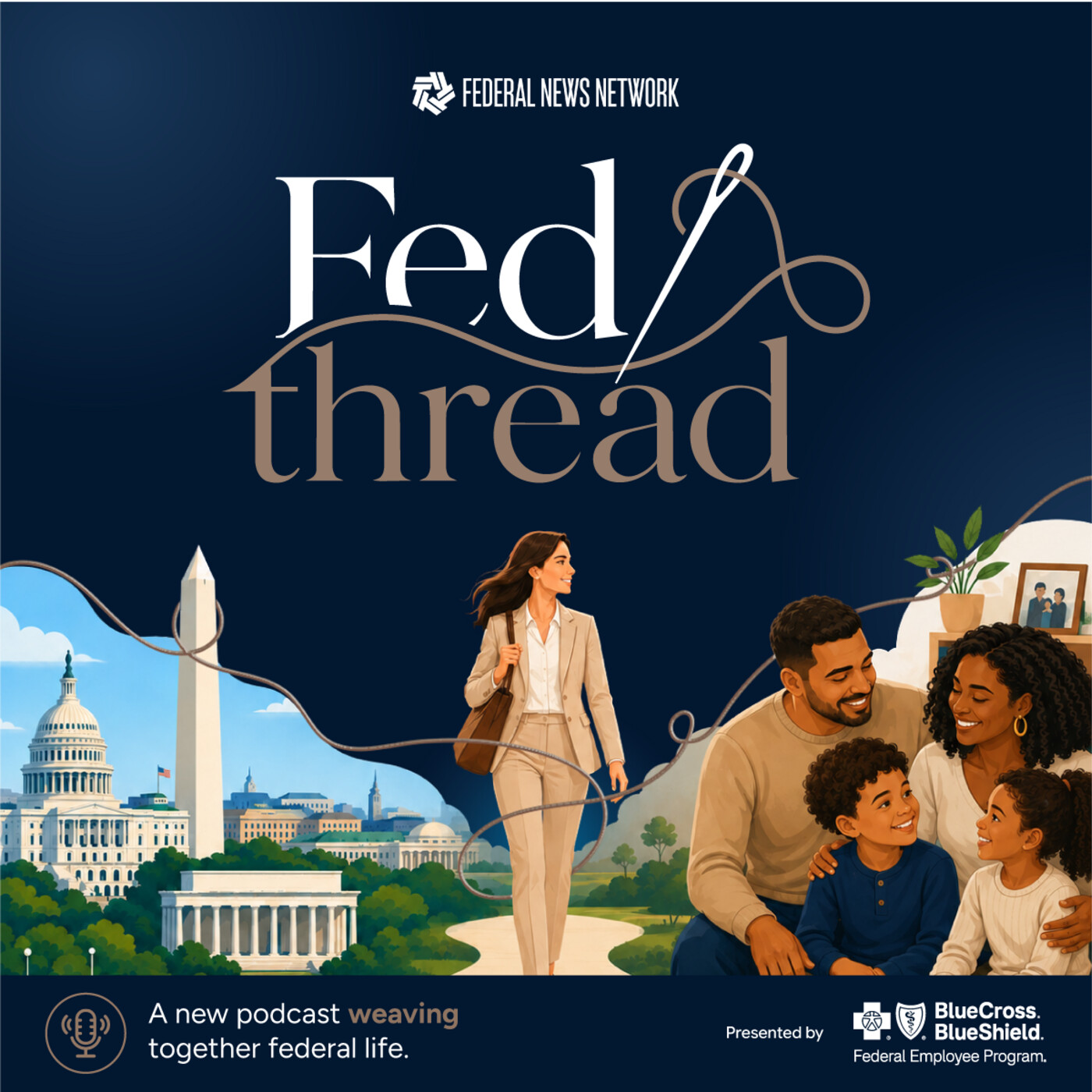
Artwork for Fed Thread
BusinessCareersGovernment

Fed Thread

Federal News Network | Hubbard Radio

We pull the thread on the questions you’re asking, with experts who can actually answer them

Am I making a million-dollar TSP mistake?

How can I tell if I’m burning out, and what should I do about it?

Should I start a GLP-1—and would it be covered?

Am I better off in or out of a union?

Do those workplace step challenges actually make anyone healthier?

The Fed Thread podcast pulls the thread on topics that matter most to the federal workforce, uncovering practical insights and sharing stories you can relate to.

Each episode explores real-world situations shaping federal careers, benefits, wellbeing, finances, leadership and life on and off the job. In a series of candid conversations with government leaders, subject-matter experts, researchers and the people living these experiences, Fed Thread weaves together fresh perspectives, community highlights and useful takeaways, whether you're a new hire or a seasoned civil servant.

Join host Alex Witt for a smarter, more human conversation about what it means to work in public service—only on Federal News Network.

Play
  • 42 episodes
  • Avg 42 min
  • English
Counted on this page — what you have heard stays on this device, so it is not something the list can be paged by.
  • #50
    Thursday · 46 min

    FedVIP 2027: Are you getting your money's worth?

    Dental and vision premiums aren’t seeing the dramatic increases hitting FEHB in 2027, but that doesn’t mean you should automatically renew the coverage you already have. For that matter, when does a FedVIP plan make financial sense, and when might you be better off without one? Kevin Moss, director of decision support and consumer outreach at Consumers’ Checkbook, offers a practical guide to getting the most out of your federal dental and vision benefits, including: What’s changing (or staying the same) with FedVIP in 2027 When FEHB coverage might be enough, and when a separate dental or vision plan is worth the premium Why checking your dentist’s network participation should come before comparing premiums What to know about orthodontia, annual benefit maximums and out-of-network costs How FSAs and HSAs can help offset out-of-pocket expenses Supplemental benefits and discounts you might be overlooking How to compare plans based on your family’s needs, not just the monthly price Kevin also shares an HSA strategy that could make you rethink how you pay for healthcare expenses today. Before you make your FedVIP elections, be sure to listen to the full Fed Thread episode. See Privacy Policy at https://art19.com/privacy and California Privacy Notice at https://art19.com/privacy#do-not-sell-my-info.

  • #49
    Tuesday · 51 min

    Retired, but not on Autopilot: What's changing for federal retirees with FEHB

    Retirement doesn’t mean your federal health benefits can run on autopilot. In 2027, federal retirees face higher FEHB premiums, fewer plan options and some important decisions about how their coverage works with Medicare. Kevin Moss, director of decision support and consumer outreach at Consumers’ Checkbook, returns to Fed Thread to break down what federal annuitants need to know about Medicare Parts A, B, C and D, including enrollment deadlines, lifetime penalties, Medicare Advantage trade-offs and potentially significant prescription drug savings. Could Medicare Part D dramatically lower your prescription costs? Is paying for Part B worth it? And could changing your plan save you thousands, or leave you taking on more financial risk? Moss unpacks the choices, the trade-offs and the strategies retirees should be considering before making their 2027 elections. Watch or listen to the full Fed Thread episode, presented by Blue Cross and Blue Shield Federal Employee Program. See Privacy Policy at https://art19.com/privacy and California Privacy Notice at https://art19.com/privacy#do-not-sell-my-info.

  • #48
    Monday · 48 min

    The FEHB Shake-up: Higher premiums, fewer plans, and the benefits changes fedsneed to know

    FEHB Open Season is bringing some big changes for federal employees. Are you prepared? Premiums are rising, fewer plans will be available next year, and some enrollees are facing increases of 63 percent, 83 percent or even 105 percent. Meanwhile, changes to prescription drug coverage, GLP-1 requirements and out-of-pocket costs could make the plan you have today very different in 2027. On this episode of Fed Thread, Kevin Moss of Consumers’ Checkbook unpacks what federal employees need to know before making their 2027 FEHB elections. He covers: Which plans are disappearing and what happens if you do nothing Why some premiums are skyrocketing, and where costs are going down What new GLP-1 coverage requirements could mean for both new and existing users Why high-deductible health plans and HSAs deserve another look How federal employees can save with flexible spending accounts, including new and convenient debit card access Moss also shares a practical strategy for comparing plans, understanding the fine print and avoiding costly surprises when that first paycheck of the new year arrives. The bottom line? The plan you’re enrolled in today may not be the plan you’re getting next year. Listen or watch the full Fed Thread episode to know what to look out for to avoid costly surprises. See Privacy Policy at https://art19.com/privacy and California Privacy Notice at https://art19.com/privacy#do-not-sell-my-info.

  • #47
    November 5 · 45 min

    When You Can't Work: Understanding your federal disability benefits before the unexpected

    When your health prevents you from working, how should you navigate disability options, and what happens to your other federal benefits? FERS disability retirement, Social Security Disability Insurance, workers’ compensation and reasonable accommodations each have different rules, and the decisions you make while you’re still employed can affect your options later. On this episode of Fed Thread, attorney Eric Pines, founder of Pines Federal Employment Attorneys, explains the deadlines, documentation, workplace conversations and benefit trade-offs federal employees should understand before a health crisis forces a decision. Don’t assume that qualifying for one disability program means you qualify for another. Watch or listen to the full Fed Thread conversation to understand your options before the unexpected happens. See Privacy Policy at https://art19.com/privacy and California Privacy Notice at https://art19.com/privacy#do-not-sell-my-info.

  • #46
    November 3 · 23 min

    Public Service, Private Debt: Are you making the right student loan moves?

    Is pursuing Public Service Loan Forgiveness (PSLF) your best move for a student loan? Not necessarily, says Betsy Mayotte, president and founder of The Institute of Student Loan Advisors (TISLA). On this episode of Fed Thread, Mayotte explains: - who PSLF makes the most sense for, - how repayment plans are changing, - what happens if you leave government early, and - why refinancing or consolidating your loans could have unexpected consequences. Tempted by a lower interest rate? Mayotte warns it could cost you loan forgiveness options you can’t get back. If you’re looking for practical advice, how to avoid common mistakes, and resources to help you crunch the numbers, be sure to listen to the full Fed Thread episode. See Privacy Policy at https://art19.com/privacy and California Privacy Notice at https://art19.com/privacy#do-not-sell-my-info.

  • #45
    October 29 · 42 min

    The Talent Gap: Can government win over the next generation?

    What will it take to get Gen Z to want to work for government? And at a time when AI is taking over entry-level tasks, what skills will set entry-level candidates apart to truly succeed? On this episode of Fed Thread, Michelle Amante of the Partnership for Public Service and Jon Newman from Yello talk through - what younger workers really want from employers, - why government missions can be a big hiring advantage, - where the federal hiring process is getting in its own way, and - how agencies need to adapt to access, attract and hire new talent. The conversation makes the case for - skills-based hiring, - the role of AI in recruitment, - the importance of human connection, and - why agencies may need to rethink everything from job postings to career fairs and candidate communication. If you’re wondering where tomorrow’s leaders will come from, watch or listen to the full Fed Thread episode, presented by Blue Cross and Blue Shield Federal Employee Program. See Privacy Policy at https://art19.com/privacy and California Privacy Notice at https://art19.com/privacy#do-not-sell-my-info.

  • #44
    October 27 · 53 min

    Your Social Security Reality Check: Fear, facts and the fixes feds need

    Is Social Security going bankrupt? Should you claim benefit before it’s too late? And how might Congress’s next move affect your retirement plans? While the long-term funding challenge is real, the headlines don’t tell the whole story. On this episode of Fed Thread, Austin Costello and Neil Cain of Capital Financial Planners separate fear from fact on Social Security, explaining what federal employees and retirees should understand before making decisions that could affect their income for decades. The conversation covers: The projected trust fund depletion date and what it means for benefit payments Why Social Security’s funding gap is growing Funding fixes Congress could consider, from payroll taxes to retirement age changes How claiming at 62 versus waiting until 67 or 70 can affect you Why your spouse’s or ex-spouse’s benefits matter What to check before claiming Don’t let fear make the decision for you. Listen to the full Fed Thread episode to understand your options and make a plan that fits your circumstances. See Privacy Policy at https://art19.com/privacy and California Privacy Notice at https://art19.com/privacy#do-not-sell-my-info.

  • #43
    October 22 · 24 min

    Reading Between the Numbers: What federal workforce data can and can’t tell you

    What can workforce surveys tell federal leaders that they won’t hear in a staff meeting? And what happens when employees stop believing their feedback will actually lead to change? On this episode of Fed Thread, Jack Dando, social scientist and senior survey data analyst in the intelligence community, talks through: - the challenges of measuring workforce sentiment, - why he thinks the proposed changes to the Federal Employee Viewpoint Survey (FEVS) will render the data essentially useless, - what it takes to turn employee feedback into meaningful improvements, and - why employee trust, participation and confidentiality matter. Dando also examines how open-ended comments can help pinpoint workplace problems, why survey methodology matters, and what leaders should look at first when evaluating workforce data. The conversation reveals that collecting feedback is only part of the equation. For more insights into how employees need to trust the process, and how leaders need to show them that their voices matter, listen to the full Fed Thread episode. See Privacy Policy at https://art19.com/privacy and California Privacy Notice at https://art19.com/privacy#do-not-sell-my-info.

  • #42
    October 20 · 30 min

    Flattening out or hollowing out? The push to cut federal management

    Do fewer managers mean more efficient government? In this episode of Fed Thread, Dr. Michelle Sutter, executive director of the Senior Executives Association, discusses what happens when agencies flatten their management structures and what it would take to streamline responsibly. Sutter explains: - why eliminating a position doesn’t necessarily eliminate the work, - what can happen when managers suddenly have much larger spans of control, - why succession planning and leadership development become even more important in a flatter workforce, and - how leaner government can really work. Sutter also offers advice to current and aspiring managers, plus those who would rather advance without taking on direct reports. If you’re wondering where your career can go in a government with fewer management roles, watch the full Fed Thread episode. See Privacy Policy at https://art19.com/privacy and California Privacy Notice at https://art19.com/privacy#do-not-sell-my-info.

  • #41
    October 19 · 34 min

    AI Goes to War: Verifying the call at machine speed

    AI can analyze information at machine speed, but when stakes are high enough, should it ever get to make the call before humans can verify it? On this episode of Fed Thread, Andrew Moore, former leader of Google Cloud AI and the first AI adviser to U.S. Central Command, now CEO of Lovelace AI, explains that AI's superhuman speed should buy humans more time to respond thoughtfully, not eliminate human judgment. The conversation covers: - corroborating AI outputs, - why “human in the loop” isn’t automatically a safety net, - how operator fatigue can turn decision support into decision-making, and - why AI should be required to show its work before anyone acts on its recommendations. For anyone skeptical about who’s really making the call when AI is involved, be sure to watch the full Fed Thread episode. See Privacy Policy at https://art19.com/privacy and California Privacy Notice at https://art19.com/privacy#do-not-sell-my-info.

  • #40
    October 15 · 52 min

    Where’s your PIV card, HAL? What happens when AI gets an employee ID

    What happens when AI stops being just a tool you use and starts acting on your behalf? An AI agent can access data, interact with applications and take actions. But if it’s going to operate inside a federal environment, how do you know what it is, what it’s allowed to do and who’s ultimately responsible when something goes wrong? Ryan Galluzzo and Bill Fisher from NIST explain their extensive work on: - why AI agents may need identities of their own, - how zero trust and least privilege access apply to agents, - what happens when an agent encounters untrusted data, and - where humans still need to hold decision-making power. Giving AI more capability may be the easy part. Knowing exactly what authority to allow it is the trickier question. Listen to the full Fed Thread episode for the full picture and how it can impact you. See Privacy Policy at https://art19.com/privacy and California Privacy Notice at https://art19.com/privacy#do-not-sell-my-info.

  • #39
    October 13 · 36 min

    One Size Fits Government? The challenge to outfit the federal workforce

    What happens when “one size fits most” meets a federal workforce of tens of thousands of real people? Uniforms and protective gear have to work at scale, but traditional sizing can miss something important. Two people with the same waist and chest measurements may still need very different garments. On this episode of Fed Thread, David McLaughlin, co-founder and CTO of Bodd, explains: - the practical importance of better-fitting uniforms - the body data solution and why tailoring isn’t scalable - what the U.S. government can learn from foreign defense organizations, and - how other large institutions have saved millions by outfitting their workforces more precisely and efficiently. As workforces change, including rapid, medically-assisted changes in body composition, it’s becoming increasingly inefficient for organizations to rely on an outdated snapshot of what their people looked like when the original size chart was created. For a peek into how all stakeholders win with large-scale uniform design and outfitting, listen to the full Fed Thread episode. See Privacy Policy at https://art19.com/privacy and California Privacy Notice at https://art19.com/privacy#do-not-sell-my-info.

  • #38
    October 8 · 45 min

    Before You Hit Send: What to do when workplace issues escalate

    When a workplace issue escalates, most federal employees only see the tip of the iceberg. On this episode of Fed Thread, federal HR expert and Founder and CEO of HR Armor, Noël Tarquinii, joins Alex Witt to lay bare what’s really happening behind the scenes: - how decisions get made, - what changes when you’re suddenly under scrutiny, - where failures can happen on both sides of the complaint, and - the strategic moves you should make before you respond. From communication breakdowns to PIPs, investigations, and the subtle signs your role is shifting, listen to the full episode for how to navigate major HR moments without making things worse. See Privacy Policy at https://art19.com/privacy and California Privacy Notice at https://art19.com/privacy#do-not-sell-my-info.

  • #37
    October 6 · 24 min

    Winning the Fight before the Crisis: What would it take to end veteran suicide?

    What would it take to end veteran suicide? On this episode of Fed Thread, John Eaton, Complex Care Vice President at Wounded Warrior Project, explains what prevention looks like in practice, why connection can be so powerful, and why he believes ending veteran suicide is possible. Prevention doesn't begin when someone reaches a crisis point, says Eaton, but should start much earlier by - recognizing changes in behavior, - listening without judgment, - asking the difficult question about suicide directly, and - making sure veterans and their families know where to turn. If you're a veteran, a family member, a friend or colleague, or simply someone who wants to support the veteran community, listen to the full Fed Thead conversation for concrete ways to recognize when someone is struggling and move from awareness to action. See Privacy Policy at https://art19.com/privacy and California Privacy Notice at https://art19.com/privacy#do-not-sell-my-info.

  • #36
    October 1 · 50 min

    The Bullseye on Your Back: What happens when federal work makes you a target?

    The information you give away online may be doing more than generating spam calls. For some federal employees, it can help someone find where you live, identify your family, or turn a workplace grievance into a personal threat. On this episode of Fed Thread, Ron Zayas, founder and CEO of Ironwall by Incogni, explains the growing intersection of federal work, personal data and physical safety. The conversation covers: - How much information is publicly available about private citizens - Why you should protect your phone number like it’s your social security number - How data brokers build profiles from seemingly unrelated pieces of information - What can happen if you get “doxxed,” and - How to recognize the difference between online anger and an escalating threat You don't have to become impossible to find, says Zayas, but making yourself a harder, less attractive target is often enough to prevent a personal attack. If you’ve ever wondered just how much of your private life is being sold online for cheap, don’t miss the full Fed Thread episode, and be sure to like and follow the show on YouTube. See Privacy Policy at https://art19.com/privacy and California Privacy Notice at https://art19.com/privacy#do-not-sell-my-info.

  • #34
    September 21 · 44 min

    No Mulligans Allowed: Federal retirement choices you can't do over

    Retirement may feel like the finish line, but some of the biggest federal retirement decisions need to be made well before you get there. On this episode of Fed Thread, Neil Cain, founder and CEO of Capital Financial Planners and lead trainer for RETFED, takes us through the choices that can become difficult—or impossible—to undo after a certain point. We talk through technicalities of TSP moves, FEHB and Medicare elections, survivor benefits, tax implications, Roth conversions, beneficiary decisions and what can happen when an unexpected separation from federal service changes your timeline. The underlying takeaway? Don't wait until retirement is right in front of you to start connecting the dots. For a quick-reference guide to some of the most consequential, time-bound rules impacting decisions you should make before leaving federal service, listen to the full Fed Thread episode. See Privacy Policy at https://art19.com/privacy and California Privacy Notice at https://art19.com/privacy#do-not-sell-my-info.

  • #33
    September 18 · 48 min

    Hiring Up, Headcount Down: Is the federal workforce rebound real or repair?

    Federal hiring is up 26 percent this year, yet headcount continues to fall. So is the federal workforce recovering, reinventing itself—or just trying to staunch the bleed? On this episode of Fed Thread, Jeff Neal, retired DHS Chief Human Capital Officer and principal at ChiefHRO, provides color commentary on what’s really happening behind the OPM hiring numbers. Which jobs are coming back, which aren’t, why some positions were eliminated only to be needed again, and what the loss of institutional experience could mean for the government years from now. We also dig into a less obvious problem: If the federal HR workforce itself has been reduced, who’s left to do the hiring? And how much does that matter when government hiring rules and processes are fundamentally different from the private sector—and also fundamentally flawed? Whether you’re an HR wonk or simply a current fed needing practical advice on what to watch to predict changes for your role, listen to the full Fed Thread conversation. See Privacy Policy at https://art19.com/privacy and California Privacy Notice at https://art19.com/privacy#do-not-sell-my-info.

  • #32
    September 17 · 42 min

    When trauma comes with the job: Understanding PTSD and mental health in the federal workforce

    How do you know when it’s just a tough experience and when your job is causing you real trauma? On this episode of Fed Thread, Faust Ruggiero, psychologist, author and clinical trainer of federal employees, takes a closer look at PTSD and mental health in the federal workforce. He explains: - what qualifies as PTSD, - why it can go undiagnosed or misdiagnosed, - how trauma can build over time, and - the first critical steps to addressing work-related mental distress. The conversation also gets into the stigmas that can keep people from seeking help, how colleagues and supervisors can respond when they’re concerned about someone, and what happens when you raise the bar from simply surviving to thriving. If you’re white-knuckling it through the day or know someone who’s struggling, check out the full episode. See Privacy Policy at https://art19.com/privacy and California Privacy Notice at https://art19.com/privacy#do-not-sell-my-info.

  • #31
    September 16 · 51 min

    The Outsourcing Dilemma: Can getting help make government helpless?

    Government can’t do everything itself. But what happens when outsourcing goes beyond operations, and the very judgment and institutional knowledge it needs to oversee the outsourced work is compromised? On this episode of Fed Thread, Elliott Parker, founder and CEO of venture-builder Alloy Partners, explains where outside expertise can make government faster, more innovative and more capable—and where it can create a dangerous dependency. We talk about: - the difference between partnership and reliance, - why the people overseeing increasingly automated and outsourced systems may become more important, not less, and - how government can create safe environments for experimentation without putting the mission at risk. Parker also shares a real-world example of when outsourcing is a win for everyone, including government and the public, with the recent launch of Perenna Health, an AI-powered Medicaid coverage navigation company in collaboration with Alloy Partners, the University of Notre Dame and Parkview Health. Listen to the full Fed Thread episode to hear Parker’s perspective, not simply on what government should outsource, but what it can never afford to lose. See Privacy Policy at https://art19.com/privacy and California Privacy Notice at https://art19.com/privacy#do-not-sell-my-info.

  • #30
    September 15 · 59 min

    Feds in Film: When Hollywood nailed government—or whiffed

    Hollywood loves a good federal thriller, but how much of what we see on screen accurately portrays government behind the scenes? On this episode of Fed Thread, entertainment critic and Navy veteran Kuya P. of Nerds Rule the World and Federal News Network DOD reporter Rachel Cohen put five movies to the test, depicting multiple federal agencies, the armed services, Congress and the White House. What did Hollywood nail about federal work? Where did it take a healthy dose of dramatic license? And which movies are worth watching this weekend? From FBI office life and interagency silos to NASA mission control, missile defense and pandemic response, Kuya brings the popcorn score while Rachel rates their Fed Cred. Plus: Hear which movie wins Kuya’s pick for best film—and which he calls out for his “favorite movie death.” Check out the full episode to find out. See Privacy Policy at https://art19.com/privacy and California Privacy Notice at https://art19.com/privacy#do-not-sell-my-info.

Showing 1–20 of 42 episodes