Skip to content
Artwork for The DTC Podcast
BusinessMarketing

The DTC Podcast

Eric Dyck

What does it take to build and scale a successful direct-to-consumer brand? DTC Podcast, hosted by Eric Dyck, delivers practical e-commerce growth strategies from founders, operators, and marketing experts.

Explore DTC marketing, customer acquisition, performance marketing, paid media, conversion rate optimization, customer retention, creative strategy, AI, and brand growth. Hear what works, what fails, and how leading consumer brands adapt and grow.

Subscribe for actionable insights to help you build a stronger, more profitable e-commerce business.

Play
  • 32 episodes
  • a few times a week
  • Avg 36 min
  • English
Counted on this page — what you have heard stays on this device, so it is not something the list can be paged by.
  • Yesterday · 48 min

    How Terra Kaffe Pre-Sold 10,000 Espresso Machines With No Reviews

    How do you grow a DTC brand without a big brand awareness budget? Terra Kaffe founder Sahand Dilmaghani pre-sold 10,000 espresso machines from a single page with no reviews, and word of mouth has been the top reason customers buy every month for five years. On the DTC Podcast, Sahand tells Eric Dyck how he left investment banking to bootstrap a super automatic espresso machine, what he cut to get it shipped with $2.5 million already spent, and why Terra Kaffe now puts its money into community and performance marketing instead of brand awareness. Terra Kaffe has 70,000 machines in homes today. Get the DTC Newsletter: https://directtoconsumer.co WHAT YOU WILL SOLVE You sell a high-ticket product and cannot seed it to a thousand creators a month. Sahand built word of mouth by calling customers himself, and it now drives well over a third of Terra Kaffe's orders. Your brand awareness budget is too small to register. Why $15K to $20K a month will never make you a household name, and when to hold that money for one campaign big enough to count. Your best video flopped on Meta. A $30K shoot that never converted on Instagram or Facebook became one of Terra Kaffe's strongest performers on CTV. Your investors want proof of demand before the product is finished. One pre-order page, a teaser campaign, an email to the subscriber list and a booth at a New York coffee festival produced 10,000 orders. Your product is over budget and behind schedule. The features Terra Kaffe cut in a do-or-die meeting to ship in six months, and which ones came back later as a fast follow. Your outside partner has spent double to go half the distance. How Sahand replaced his engineering firm mid-build while it still held most of the product knowledge. You cannot afford tooling or a production deposit. The trade he made with his manufacturer on the first machine's design rights, and what it cost him later. ABOUT SAHAND Sahand Dilmaghani is the founder and CEO of Terra Kaffe, the Brooklyn-based maker of super automatic espresso machines, including the TK-02 and the Demi. Before Terra Kaffe he worked in investment banking and at an electric vehicle startup. https://www.terrakaffe.com Instagram: https://www.instagram.com/terrakaffe STAY CONNECTED DTC Newsletter, daily ecommerce marketing and ecommerce growth tactics: https://directtoconsumer.co YouTube: https://youtube.com/@dtcnewsletter LinkedIn: https://linkedin.com/company/directtoconsumer 00:49 From Wall Street banker to "barista" 02:25 Carrying a 30 pound espresso machine on the subway 04:40 The only espresso brand anyone could name 05:22 The Larry David campaign idea 06:13 Building complex hardware during COVID 08:52 $2.5 million in, with no guarantee it ships 09:09 Funding one milestone at a time 10:42 The meeting where the features got cut 13:36 Replacing the engineering firm mid-build 16:33 Giving the manufacturer the V1 design rights 20:44 Answering the dropship accusations 21:32 The investor test: does anyone want this 23:22 10,000 pre-orders from one page 25:11 The Terra Kaffe manifesto 26:16 What a super automatic machine does 29:39 Why people bought before they could try it 32:33 70,000 machines in homes 33:25 Word of mouth, every month for five years 36:28 Brand spend versus performance marketing 38:23 The three problems every operator hits 40:39 Why a small brand awareness budget is a trap 41:15 Coming for Nespresso 42:37 CTV and the $30K shoot that flopped on Meta 46:34 Survival by a thousand band-aids 47:34 Raising $2.6 million in 13 days 48:03 You are going to get punched in the face
  • Friday · 31 min

    Meta Partnership Ads Now Make Up 30 to 50% of the Ads on Our Biggest Accounts

    What are Meta partnership ads, and how should a DTC brand test them before Q4? They run through a creator's handle with your brand tagged, so Meta combines both accounts' engagement signals, and Pilothouse typically sees lower CPMs on them than on ads from the brand handle alone. Jacob Geary runs Meta accounts at Pilothouse and joins Eric Dyck on All Killer No Filler to lay out how partnership ads work in practice. On the larger accounts his team runs, 30 to 50% of the ads now go out as partnership ads, and most of the creators behind them are micro-creators. You walk away with a test plan for a brand spending $50K to $100K a month on Meta: the budget, the number of creators, the formats to brief, and the metrics that decide what scales. Get the DTC Newsletter: https://directtoconsumer.co WHAT YOU WILL SOLVE Your customers have seen your brand ads so often they scroll past them. The same message from a creator's handle, with your brand tagged, gives them a fresh face and tends to deliver at a lower CPM. You don't know where to find creators. The Partnership Ads Hub inside Meta suggests creators in your vertical, surfaces people already posting about you, and hands you the ad code once both sides approve. You don't know what to brief. Jacob's starting formats are "why I switched" problem and solution videos, holiday gift guides, and raw unboxings shot on a phone. You don't know what to pay. Jacob's range is $100 to $300 per creator for a few videos and 60 days of usage, and some creators will take the exposure from your ad spend without a fee. You assume you need big names. Micro-creators make up 80 to 90% of what Pilothouse runs, with performance Jacob describes as very similar and a faster testing cadence. Your Q4 creator ads die the day the sale ends. Brief creators three to four weeks ahead and have them mention the sale in general terms instead of reading out a discount and a date. You don't know how big the first test should be. At $100K a month on Meta, Jacob puts 10% toward three to five creators with one or two videos each, then builds toward 20% by month three. You're not sure how to judge the results. Use the same purchase conversion rate and ROAS benchmarks as any new creative test, with a little more patience in month one. ABOUT JACOB Jacob Geary is a Meta media buyer at Pilothouse, the performance marketing team behind DTC, where he runs paid social for ecommerce brands. To talk partnership ads with his team, go to https://pilothouse.co and ask for Jacob. STAY CONNECTED DTC Newsletter, daily ecommerce marketing and ecommerce growth tactics: https://directtoconsumer.co YouTube: https://youtube.com/@dtcnewsletter LinkedIn: https://linkedin.com/company/directtoconsumer 00:49 Intro: Jacob from Pilothouse on Meta partnership ads 01:28 What partnership ads are, versus whitelisting and dark posts 02:53 The Partnership Ads Hub as a creator discovery network 03:53 Why they matter: combined signals and ad blindness 05:17 Are partnership ads incremental? 06:30 Why partnership ads get cheaper CPMs 07:34 Fresh looks, Andromeda and ad sequencing 08:59 Formats that work: why I switched, gift guides, unboxings 10:30 Gifting angles for each creator's audience 11:24 Usage rights and how creators get paid 12:10 Deal structures: affiliate, paid per video, or free 13:32 Planning creator volume for Q4 15:40 Briefing sale language that won't expire 16:12 What share of Meta ads run as partnership ads 17:37 Test budgets for brands just starting out 19:38 Micro-creators versus mega-influencers 21:17 Post-click: when a dedicated landing page earns the build 22:06 Creator communities and leaderboards 23:06 Setup steps, and why to get permissions before November 25:11 A test plan for a $5M brand spending $50K to $100K a month 27:58 The metrics that decide a winner 29:43 Close and how to reach Jacob

  • September 21 · 43 min

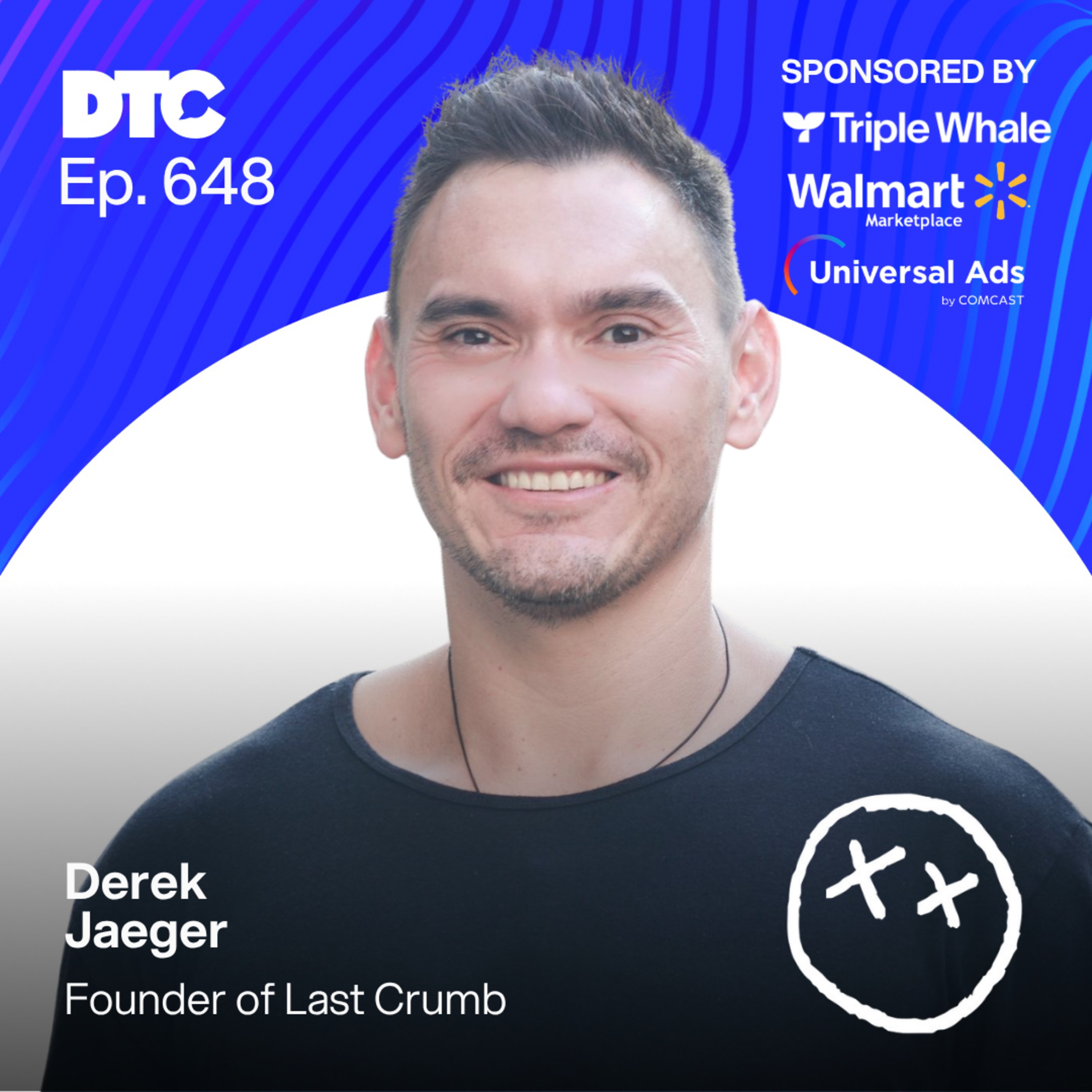
    Raising Prices in DTC: How Last Crumb Sells a $140 Cookie Box

    How do you raise prices on a DTC brand without killing demand? Derek Jaeger founded Last Crumb in 2020, priced a box of cookies at $110, then moved it to $140. He says that is when the company took off. Eric Dyck gets the full DTC marketing story on the DTC Podcast: pricing as positioning, ecommerce growth without a repeat purchase, and why he killed the weekly drop model that made the brand famous. Get the DTC Newsletter: directtoconsumer.co Get your brand on TV today: https://www.universalads.com/dtcpromocode?utm_medium=email&utm_source=dtc-newsletter&utm_campaign=issue-takeover WHAT THIS EPISODE SOLVES Your premium product is not moving and you are about to discount it. Derek tested upward instead. At $110 Last Crumb was fine, at $140 it had a differentiator, and the drops started selling out in one second. You cannot hold a high price on packaging alone. He built the box as shipper and gift box in one, tested the angle each cookie sits at, and landed on 35 degrees with 90% of the lettering visible on open. Scarcity launched you and has become your ceiling. Why a drop model cannot stay a value pillar forever, and how moving to evergreen was the test of whether he had a real company or a hype company. Your customer acquisition cost will not clear on a single order. No subscription, no natural repeat, and a product that mostly gets gifted. What carried ecommerce growth when paid could not. You are paying creators for content that does not perform. Last Crumb briefs nobody. They watch for organic posts that already work, whitelist those, and run the same asset on Instagram and YouTube. One repurposed video pulled 300,000 views. You lose control of the product the moment it ships. The last seventy two hours in a UPS truck, and why owned retail at $8.50 a cookie fixed what ecommerce marketing could not. ABOUT THE GUEST Derek Jaeger is the founder of Last Crumb, the luxury cookie brand he started in Los Angeles in 2020 and has since moved to New York, with production in Brooklyn and its first store in Williamsburg. He still writes every recipe himself. lastcrumb.com STAY CONNECTED Newsletter: directtoconsumer.co RECORDING TIME | CHAPTER00:00 Two ex-affiliates sitting down01:18 The affiliate years, penny clicks and dollar CPMs02:44 Walking away from performance marketing03:33 A year of brand building before a single box shipped04:38 The brief: the opposite of every mom and pop bakery05:47 Pricing as position one06:53 The box, the pull tab, and the 35 degree cookie angle08:45 Liquid Death on the vision board10:01 The Monday noon drop model11:28 Why he banned paid ads at launch12:35 Fifty boxes in LA, and the move from $110 to $14014:01 Chrissy Teigen posts and it goes ballistic15:15 People posting receipts before the box arrives16:43 Sifting flour in the original kitchen17:26 Investors show up, and 1,500 orders left in carts19:16 Building the cap table20:22 Where the first money went21:18 Killing the drop model22:26 Why paid media does not scale on a gifting brand23:34 The company today, 16,000 square feet in Brooklyn24:20 Why he has never been CEO25:58 Managing the operator you hire27:20 Building a smaller pack for TikTok Shop28:53 The last 72 hours you cannot control30:38 A unique dough for every flavor31:59 What he kept from affiliate marketing33:09 Moving the company to New York35:17 Retail pricing and the Levain comparison36:52 Retail as top of funnel38:33 Whitelisting organic creator content39:59 Product as the reason any of it worked41:56 Where the brand goes next43:01 The Crumbl lesson45:40 Why GLP-1s might help a premium cookie brandhttps://directtoconsumer.typeform.com/DTC-Brand?utm_source=podcast-648&utm_medium=podcast

  • September 18 · 25 min

    Google Ads Brand Keywords: Cut 80% of Brand Spend, Buy New Customers Instead

    How much of your Google Ads budget goes to your own brand name? Most DTC marketing teams cannot answer that, and the brands defending an ambiguous brand term are paying for customer acquisition they already had. Wildflower Cases is spending the large majority of roughly $3,500 a month on the single term "wildflower," according to SEMrush. Pilothouse Senior Google Media Buyer Zav audits that account with Eric Dyck on the DTC Podcast. Brand clicks at twelve to fifteen cents, a 21,000 subscriber YouTube library with no connection to the ad account, and a word that belongs to Tom Petty, Billie Eilish, a 2022 film and every florist in the country. You walk away knowing your own brand versus generic split and what to move the money into. Get the DTC Newsletter: https://directtoconsumer.co Get your brand on TV today: https://www.universalads.com/dtcpromocode?utm_medium=email&utm_source=dtc-newsletter&utm_campaign=issue-takeover WHAT YOU WILL SOLVE Your brand keyword is cheap and converts well, so you cannot tell if it is working. Zav explains the account math that makes a brand campaign look like your best performer. You do not know your brand versus generic split. There is a ten minute check in the search terms report, and a percentage to keep it under. Your budget is fixed and nobody will raise it. Zav reallocates $3,500 a month on air with no increase. Your ROAS will fall when you cut brand spend and somebody will ask why. He gives you that answer before you need it. Your collab partners drive search demand you are not bidding on. Charli XCX and Slushy Noobz fans are already looking. Your generic ads all land on the homepage. Specific query, specific collection page. You have a YouTube library doing nothing for paid. Performance Max and Demand Gen take those videos as they are. ABOUT ZAV Zav is a Senior Google Media Buyer at Pilothouse, the performance marketing team behind DTC, where he runs paid search and shopping for ecommerce brands. He wrote the Wildflower Cases search breakdown for the DTC Newsletter. If you want his team to look at your account, go to https://pilothouse.co and ask for Zav. STAY CONNECTED DTC Newsletter, daily ecommerce marketing and ecommerce growth tactics: https://directtoconsumer.co YouTube: https://youtube.com/@dtcnewsletter LinkedIn: https://linkedin.com/company/directtoconsumer 00:00 Who Zav is and what he does at Pilothouse00:47 Why Wildflower Cases became the case study01:17 A brand name that means five other things02:21 Tom Petty, Billie Eilish, and a 2022 movie03:54 Searching "cool iPhone 17 case" live on air04:49 Why their sponsored result sits at the bottom of the page05:22 What decides where your ad places06:46 The case for reallocating a $3,500 monthly budget07:20 Where the money goes instead: shopping plus generic search08:40 Landing pages, and why every ad points at the homepage08:56 Turning collab partners into keyword coverage10:34 The "are they worth it" searches Reddit owns12:23 A 21,000 subscriber YouTube channel with no link to the ad account12:39 Feeding existing video into Performance Max and Demand Gen13:59 24 hours, no extra budget, what changes first14:29 Cutting 80% of the brand spend15:42 Why ROAS falls and revenue rises16:53 The one situation where brand defense earns its budget17:57 The metric agencies over report to clients18:56 Whether $3,500 a month is enough for a brand this size20:19 The brand versus generic diagnostic to run this week20:35 The 20% rule of thumb22:31 What to monitor after you make the cut23:26 How to get Pilothouse to look at your account https://directtoconsumer.typeform.com/DTC-Brand?utm_source=podcast-647&utm_medium=podcast

  • September 17 · 26 min

    Under $50M: Half the Trade Budget Goes to Retail Media | Harness the Halo 3/6

    To Subscribe to DTC Newsletter - https://dtcnews.link/signup A brand doing under $50 million a year is putting roughly half of its combined retail media, trade, and shopper marketing budget into retail media. At larger companies that share drops toward 30, 20, then 15 percent. Mike Chiasson works on Keen's models, which cover $45 billion in marketing investment, and his read on where that money comes from is the part worth sitting with. It is mostly net new, sourced out of trade rather than pulled from Meta and Google, which is why so much of it sits with sales teams and never gets measured the way media does. If you run growth at a brand moving into retail: this is the episode about what the retail media line in your budget is actually buying, and which part of it is buying customers you already had. If you own the media budget: Chiasson makes the case that the untapped return in retail media is upper funnel, inside retailers where almost everyone is still only buying search. What he gets into: Where the money comes from, and why trade budgets rather than media budgets explain retail media's growth The benchmark: about half the retail media, trade, and shopper marketing bucket at brands under $50M, versus 15 to 30 percent at large ones Why small brands with a narrow distribution footprint default to bottom-funnel search, and what that costs them The Amazon question: whether retail media spend compounds on a retailer's algorithm the way it does on a listing, and why brick and mortar has no real equivalent Retail media ads that carry no visible association with the retailer at all, and why targeting is the actual product Walmart, Vizio, and streaming video as the moment upper-funnel retail media became buyable Retail media social, which he calls very small and rapidly growing, with returns he thinks reflect how early the curve is The two flaws in ROAS, and why the return on your next dollar is the only version of the number that helps you plan Bayesian priors, and how Keen gives a brand a response curve for a retailer it has never advertised with Patience as a budgeting problem rather than a virtue, and why cash-strapped brands structurally cannot buy upper funnel Who this is for: operators whose product is landing on shelves in more places every quarter, and whose retail media invoices are growing faster than their ability to explain them. What to steal: find out which budget your retail media is actually coming from. If it is trade, the people approving it are measuring a retailer relationship and the people spending it are measuring sales. Those are different jobs and almost nobody has reconciled them. Harness the Halo is a six-part series from DTC and Keen about the spend that doesn't pay you back the same day, and the measurement that gives you room to make it. Episode 1 was the market read. Episode 2 was the first brand. This one maps the fastest-growing line in the budget. Timestamps: 00:00 Why retail media is becoming a major growth channel 04:00 Where retail media investment is growing 08:00 Why retail media ROI is outperforming other tactics 13:00 The upper-funnel opportunity in retail media 17:00 Why marginal ROI matters more than ROAS Subscribe to DTC Newsletter - https://dtcnews.link/signup Advertise on DTC - https://dtcnews.link/advertise Work with Pilothouse - https://dtcnews.link/pilothouse Follow us on Instagram & Twitter - @dtcnewsletter Watch this interview on YouTube - https://dtcnews.link/video

  • September 16 · 35 min

    Bonus: Send Less, Earn More: What Brevo's Data Says About Email Volume and Conversion

    To Subscribe to DTC Newsletter - https://dtcnews.link/signup Most ecommerce brands are paying for every contact in the database, including the tens of thousands they have not mailed in a year. Then they mail them anyway, because they are paying for them. Channing Ferrer argues both halves of that are costing you money, and he has his own company's data to back the second half. Brevo studied its customer base and found the brands sending the least email posted the highest conversion and click-through rates. The heaviest senders were worse on conversion, worse on click-through and worse on opens. Brevo bills by the message sent, so telling customers to send less costs them revenue. They say it anyway. For a retention lead, a lifecycle marketer, or a founder still building the sends themselves, this is a conversation about where the money actually goes in a retention program. Channing spent six years at HubSpot running sales strategy through the run from $200 million to $1.5 billion in revenue, then ran sales at Semrush and led Brandwatch back to growth. Discover More: https://www.brevo.com/solutions/enterprise/?utm_medium=partnership&utm_source=podcast&utm_campaign=podcast&utm_term=enterprise&utm_content=dtc-podcast-0926 What you get in 38 minutes: What changes when you stop paying for stored contacts and start paying for messages sent The mobile wallet as a retention channel, including how a loyalty card gets pushed a new offer and changes appearance on the lock screen Salomon's use of a wallet pass, and how the same mechanic works for a brand with no physical stores What Channing puts on a dashboard for a $20M ecommerce brand, and why send volume belongs near the bottom of it How Brevo customers run campaigns through Claude and ChatGPT over an MCP connection without opening Brevo at all The three ways a customer outgrows a pricing tier, and how Brevo handles each one Why loyalty points should reward a social post and not only a repeat purchase Who this is for: retention leads, ecommerce founders, lifecycle marketers, and anyone weighing a move off Klaviyo or Mailchimp. What to steal: pull volume off your primary dashboard and replace it with open rate, click-through rate, bounce rate and revenue per send. Then look at what your platform charges you for and ask whether it is charging for the list or for the work. Timestamps: 00:00 Why personalized messaging converts better 05:00 How Brevo is using AI agents 07:00 Turning mobile wallets into a loyalty channel 14:00 Why sending fewer emails can drive better results 25:00 Building loyalty through customer advocacy Subscribe to DTC Newsletter - https://dtcnews.link/signup Advertise on DTC - https://dtcnews.link/advertise Work with Pilothouse - https://dtcnews.link/pilothouse Follow us on Instagram & Twitter - @dtcnewsletter Watch this interview on YouTube - https://dtcnews.link/video

  • September 14 · 38 min

    Ep 646: Neil Patel: Why Your Leads Are Down 40% and Your Revenue Is Up

    https://directtoconsumer.typeform.com/DTC-Brand?utm_source=podcast-646&utm_medium=podcast To Subscribe to DTC Newsletter - https://dtcnews.link/signup npdigital.com Eric told Neil Patel that Pilothouse is now getting about 30% of its inbound from ChatGPT, with higher close rates and bigger deals. Neil's response: "I guarantee your leads are down overall. Would you confirm or disagree with me?" Down about 40%. Revenue up. Neil explains why that pattern is showing up everywhere. Someone used to run a Google search, click six blue links, fill out four forms, sit through screening calls, then pick. Now they ask an LLM, filter down inside the conversation with follow-ups, and go to one website with their mind already made up. Same intent, same buyer, one visit instead of seven. The rest of the episode is what to do about it. What's inside: The real search market: Google at 5 trillion searches a year and 27% share, Instagram at 6.5 billion a day, Amazon and YouTube at 3 billion each. Neil's point is that 73% of search is not Google. Whether Google's ad revenue is actually getting hit by AI Overviews (his answer is more specific than the headlines) GEO and SEO are two different scores. Domain authority carries SEO and means nothing to GEO. GEO looks at the last 30 to 60 days. The single highest-leverage GEO tactic he's seeing for ecom, and it isn't Reddit Why he'd skip Reddit if he ran an ecom brand, and what he'd do instead His five-step visibility audit: where you rank now, technical SEO and content freshness, the questions people actually type, review recency, and monthly mention volume The trust study across 100 eight-figure businesses, and the gap between what those operators thought built trust and what buyers actually weighed Discounts versus bundles, and what discounting does to LTV Why he reversed his position on personal brand after building one of the biggest in marketing The Zappos story about a guy named Jason, a first date, and a shoe pun that got him two-day shipping His most expensive mistake, on air, with numbers Who this is for: DTC founders and operators watching organic traffic fall while close rates climb, and anyone trying to work out where GEO actually fits next to their SEO budget. What to steal: audit your review recency this week. If your best reviews are five years old, the LLMs are reading a version of your brand that no longer exists, and a smaller competitor with fresh coverage will get recommended over you. Timestamps: 00:00 How AI is changing product discovery 04:00 Why ChatGPT leads convert better 07:00 Search has multiplied beyond Google 15:00 How brands can rank in AI recommendations 25:00 SEO vs. GEO for AI visibility Subscribe to DTC Newsletter - https://dtcnews.link/signup Advertise on DTC - https://dtcnews.link/advertise Work with Pilothouse - https://dtcnews.link/pilothouse Follow us on Instagram & Twitter - @dtcnewsletter Watch this interview on YouTube - https://dtcnews.link/video

  • September 11 · 45 min

    Ep 645: DTC Rundown: "Don't Run Ads Until $10M?," Evergreen vs Campaigns, and Sites Built for the Wrong Customer

    https://directtoconsumer.typeform.com/DTC-Brand?utm_source=podcast-645&utm_medium=podcast To Subscribe to DTC Newsletter - https://dtcnews.link/signup pilothouse.co "There is absolutely no reason you should touch paid ads until you're doing five to ten million in revenue." That was Codie Sanchez, and the post went wide enough that DTC marketers spent a week arguing about whether they should be doing their jobs at all. Eric came back from vacation, saw it, and used it to launch a format he has wanted to make since the beginning of this show. The Rundown is Pardon the Interruption for DTC. A few topics off the week, three people, everyone gives a take. First panel is Jordan Gordon, who runs post-click and retention at Pilothouse and hosts TWBERP, and Rafael Gi, who works partnerships and client strategy. What you get: Both sides of the Codie Sanchez take. Jordan defends the free traffic position: if twenty percent of your traffic is organic and your total margin is twenty percent, that organic traffic is your profit. Rafael's counter is that paid media is a muscle, and a brand that waits until $10M to build it has to relearn its culture, team, and workflows at exactly the wrong moment. What paid media does: accelerate. Good product grows faster. Bad product fails quicker. The wastage Rafael sees most across ten to fifteen audits a week. Brands paying to reach customers who were buying regardless, the platform taking view-through credit for purchases with no click, and that false signal then deciding which creative gets scaled. Marketing is downstream from business, and business is downstream from markets. Jordan on why your marketing mix is often not your decision to make. Why "evergreen versus campaigns" is the wrong framing past seven figures, and what demand creation looks like next to demand capture. "Shift our thinking from tests to bets." Rafael on what changes once you have proof, and why the change is philosophical before it is tactical. Audience hygiene as the precondition for everything. Until existing, engaged, and net new are defined across every channel, none of your tests are valid. Advertising is vertical, email is horizontal. Jordan on campaigns for launches, flows for evergreen, and why someone who re-enters your world nine months later still needs to be sold your core product. Acute versus routine entry points in supplements and beauty, and the cross-sell each one opens. How to spot a brand that has the ratio wrong: growth decelerating quarter over quarter while the new-to-returning revenue ratio inverts. On the email side, campaign-heavy, flow-light, with Klaviyo revenue low against Shopify. Unique opens are brand impressions. The argument for email as an advertising layer sitting just below reach. The IKEA tote bag, and campaigns that exist to buy eyeballs rather than revenue. The car category rule that applies everywhere. If you are not one of the three brands already in someone's consideration set, your revenue and your fame do not matter. Who this is for: founders and operators between seven and nine figures, media buyers, and anyone who owns both the acquisition and retention number. What to steal: the audience definition audit, the growth-versus-new-customer-ratio chart, and the absolutes-not-rates rule for judging new customer work. Timestamps: 00:00 Should brands wait until $5M to run paid media? 05:00 Building organic traffic alongside paid growth 10:00 The hidden problem with scaling paid acquisition 13:00 Evergreen marketing vs. campaign moments 22:00 Audience targeting and wasted media spend Subscribe to DTC Newsletter - https://dtcnews.link/signup Advertise on DTC - https://dtcnews.link/advertise Work with Pilothouse - https://www.pilothouse.co/?utm_source=AKNF645 Follow us on Instagram & Twitter - @dtcnewsletter Watch this interview on YouTube - https://dtcnews.link/video

  • September 7 · 50 min

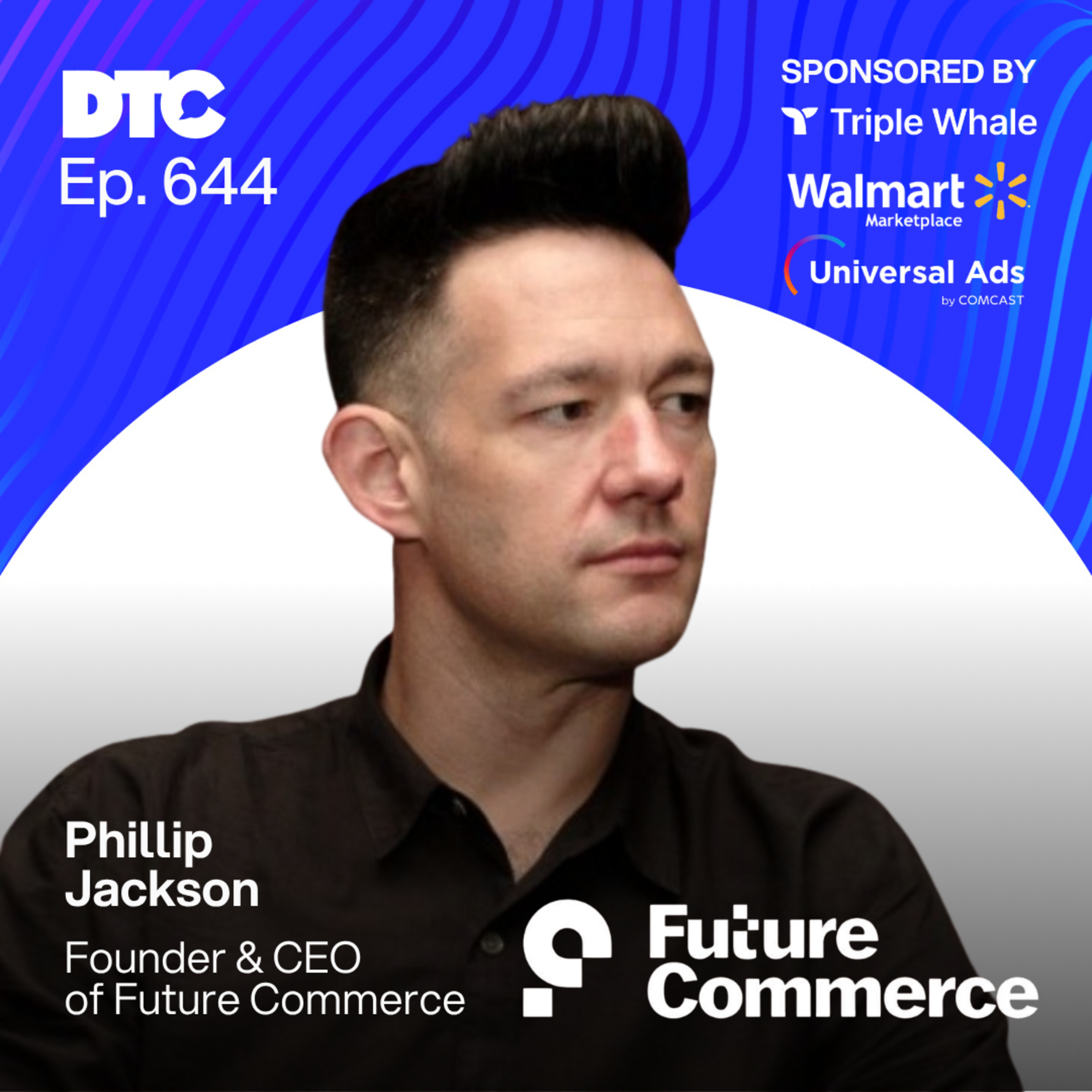
    Ep 644: 77% of AI Shoppers Want a Recommendation: Phillip Jackson on the New Bottom of the Funnel

    https://directtoconsumer.typeform.com/DTC-Brand?utm_source=podcast-644&utm_medium=podcast To Subscribe to DTC Newsletter - https://dtcnews.link/signup Phillip Jackson has spent 22 years in ecommerce, first building the software, then running agency strategy, and now running Future Commerce (futurecommerce.com), where the operating thesis is that commerce is culture. If you are a founder, brand lead, or growth operator trying to figure out what AI traffic is actually doing to your store, this one is worth the 50 minutes. What's inside: The Future Commerce study: 77% of shoppers want AI to recommend and nothing more. No booking, no buying, no agent acting on their behalf What that shopper does when they land: converts about 3x more often, spends about half as much, does zero browsing Why the fix is counterintuitive. You now have to add friction back into the buying process and tell more brand story on a product page Nike's decline read from someone with a partnership inside the turnaround: streetwear over sport, owned channels over retail partners, and the running category handed to On and Hoka "Ma," the Japanese cinema concept, applied to brand. Nobody wants to hear from you constantly, and the brands that never rest never get a cultural high point either Proof of work: Dr. Martens selling pre-broken-in secondhand boots at Brewer Street, Levi's repair, $1,200 Pope tees, and why patina is now the product The agentic reader. Future Commerce stopped treating a human as its primary audience for discovery Cannes Lions and the collision of retail media with the traditional ad ecosystem, plus what that means for creator strategy in 2026 Who this is for: DTC founders and operators watching LLM referral traffic show up in their analytics and not knowing what to do about it, plus brand people who want a sharper vocabulary for what is happening to culture. What to steal: rebuild your PDP for answer engine traffic. That visitor arrived pre-sold on one SKU and will not browse unless you give them a reason. Follow Phillip: futurecommerce.com Timestamps: 03:00 Why Commerce Is Culture 06:00 How Brands Participate in Culture 24:00 Why Consumers Can Spot AI Content 32:00 How AI Is Changing the Marketing Funnel 44:00 The Rise of Consumer Sovereignty Subscribe to DTC Newsletter - https://dtcnews.link/signup Advertise on DTC - https://dtcnews.link/advertise Work with Pilothouse - https://dtcnews.link/pilothouse Follow us on Instagram & Twitter - @dtcnewsletter Watch this interview on YouTube - https://dtcnews.link/video

  • September 4 · 30 min

    Ep 643: Amazon Fees Hit 40%: How to Claw Back Margin and Stop Wasting Ad Spend (Pilothouse)

    https://directtoconsumer.typeform.com/DTC-Brand?utm_source=podcast-643&utm_medium=podcast To Subscribe to DTC Newsletter - https://dtcnews.link/signup pilothouse.co In 2020, Amazon's fees ran about 26% of your product cost. Today they run 34 to 40%, and once you add advertising most brands are at 50 to 60% before they reinvest a dollar. For the first time in years, the number of sellers on Amazon is shrinking. Tyler, head of Amazon at Pilothouse, is back to explain what he calls the Amazon paradox: you can't afford to be on Amazon, and you can't afford not to be. If you sell on Amazon, buy Amazon ads, or keep putting off the decision to launch there, this is the operator's version of the math. What you get: Where the 40% actually goes, and which parts of it you can still fight The hidden fee stack (long-term storage, inbound, freight, returns, chargebacks) that quietly takes another 5 to 8% of margin, one fraction of a percent at a time Reimbursements: Amazon loses and damages inventory and wrongly charges you for it, and will pay it back if you dispute it. Most brands never do AGL / AWD, shipping straight from your manufacturer into Amazon's fulfillment network, and the 2 to 5% freight savings that comes with it Why the April 15 change (Amazon pulling ad spend out of your disbursement instead of your credit card) is a cash flow problem, not an ad problem The death of the middle: half of Amazon's GMV now sits with roughly 8,000 sellers, down from 15,000, and what changed in the algorithm to cause it Cosmo and what comes after A9: why external traffic into your listing now reads to Amazon as brand authority Nike showed up. What happens to the small sellers who used to feast on big brands' unconverted branded search TACoS as a vanity metric, and the three-report method (SQP, Helium 10 rank, ad spend) that shows whether your ads are driving incremental sales or paying for organic ones you already had Rufus is now Alexa for Shopping, most people use it on the product page rather than in search, and what that means for your listing copy What Tyler expects out of Amazon Accelerate 2026 Who this is for: Amazon sellers, DTC founders weighing the channel, and anyone managing Amazon ad spend. What to steal: the reimbursement audit, the AGL freight move, and the zero-sale keyword sweep on your last quarter of ad spend. Timestamps: 00:00 The Amazon Paradox 04:00 Why Amazon Is Getting More Expensive 10:00 Hidden Amazon Fees Hurting Margins 15:00 Why Brands Still Need Amazon 21:00 How to Make Amazon Ad Spend More Profitable Subscribe to DTC Newsletter - https://dtcnews.link/signup Advertise on DTC - https://dtcnews.link/advertise Work with Pilothouse - https://www.pilothouse.co/?utm_source=AKNF643 Follow us on Instagram & Twitter - @dtcnewsletter Watch this interview on YouTube - https://dtcnews.link/video

  • September 3 · 44 min

    How Once Upon a Farm's DTC Ads Grew Its Retail Business | Harness the Halo 2/6

    To Subscribe to DTC Newsletter - https://dtcnews.link/signup Once Upon a Farm did $85.4 million in Q2, up 42% year over year, and reached 6.2% of US households against 5.0% a year earlier. Some of that growth traces back to a campaign that was never supposed to produce it. They were running lower-funnel media to their own site, a clean shop-now call to action, the kind of campaign you judge by tomorrow's site revenue. What moved was the retail business. Instacart got more efficient. Programs with accounts picked up momentum. Jennifer Berglund has spent the years since trying to see that effect properly instead of guessing at it, and now she is watching paid search at one retailer lift sales at another, and that's where Keen is worth its weight in premium baby food. If you run growth at a brand moving into retail: this is the episode about what happens to your job when the sale stops closing anywhere you can see it, and what you measure instead. If you own the media budget: Jennifer walks through how a one month TV test in 2021 turned into always-on upper funnel, including the matched-market holdout testing she used to defend it before she had a model. What they get into: The early signal: lower-funnel DTC media running, and the retail business taking off instead The finding out of Keen that surprised her most, paid search at Kroger or Target showing an effect on a different account entirely Why she treats ROAS as an education problem inside the company rather than a KPI The trap in "new to brand" at a retailer, and why she takes it with a grain of salt How she built the case for TV: 2021 test, then TV plus social plus out of home, then geo tests against comparable holdout markets, then always-on Streaming TV and YouTube, and Brad on buying top of funnel through retail media DSPs so the money still funnels to the retailer Why every retail media network's conversion methodology is different, and what she uses those platform numbers for instead The moment a brand should stop putting every dollar into working media and start paying for measurement Brad on awareness as the leading indicator of household penetration, and household penetration as the leading indicator of revenue Amoeba marketing, which Brad coined live on the recording and Jennifer immediately claimed for her LinkedIn Who this is for: operators whose business has outgrown the channel their reporting was built for. DTC brands going into retail, retail brands building ecommerce, anyone whose media now shows up in someone else's numbers. What to steal: the biweekly omnichannel meeting. Jennifer runs one across her media team and sales leadership. Sales says "I see this happening here," she says "we were running media during that time." That meeting found the halo before any model did. Harness the Halo is a six-part series from DTC and Keen about the spend that doesn't pay you back the same day, and the measurement that gives you room to make it. Episode 1 was the market read. This is the first brand. Timestamps: 00:00 The Halo Effect of Digital Marketing 07:00 Measuring Growth Across DTC and Retail 15:00 How Marketing Channels Influence Each Other 21:00 Streaming TV and YouTube Opportunities 37:00 Why ROAS Can Be Misleading Subscribe to DTC Newsletter - https://dtcnews.link/signup Advertise on DTC - https://dtcnews.link/advertise Work with Pilothouse - https://dtcnews.link/pilothouse Follow us on Instagram & Twitter - @dtcnewsletter Watch this interview on YouTube - https://dtcnews.link/video

  • August 31 · 30 min

    Ep 642: Kick or Keep These Trends with DÔEN's Ashley Kick: AI Creative, TikTok Shop, Amazon, and Branded Resale

    https://directtoconsumer.typeform.com/DTC-Brand?utm_source=podcast-642&utm_medium=podcast To Subscribe to DTC Newsletter - https://dtcnews.link/signup Ashley Kick runs ecommerce at DÔEN (shopdoen.com), the Los Angeles apparel brand founded by sisters Margaret and Katherine Kleveland. Eric met her at the Whalies giving hot takes on stage, so this episode is a new format built for exactly that: World Cup themed, 15 ecommerce topics, kick it or keep it. If you run a premium brand and you are tired of advice written for a $30 AOV, Ashley draws lines most operators are still arguing about internally. What's inside: AI generated ad creative, kicked as hard as anything gets kicked on this show: "they didn't fall in love with the clanker generated things" Her pendulum argument: everything used to be human made, the swing to AI has been fast, and the vacuum it left is the differentiation opportunity for brands willing to keep humans on the work. DÔEN has hired novelists to write copy Why she will not trade a discount or free shipping for an email address, with the list math behind it: a million names sending at 20%, or 300,000 sending at 60 to 70% Hand Me DÔEN, the resale program that runs on Treet: trade in for store credit, quarterly resale events, and an answer to the dupe sellers, because buying from the program is how a customer knows the piece is real The AOV line where she thinks TikTok Shop stops making sense, and why discovery on TikTok still matters for the brand through user generated content Losing money on the first order to win it back on LTV, kicked. Her hero products are chosen as the best first experience of the brand, and they are not loss leaders Where she is happy to let algorithms work: media buying, placements, and Klaviyo send-time optimization AI for customer service, kicked. If someone wants to talk about the fit of a dress, that is a person Retail as an experience play, including a roughly 20% brand awareness lift in a market when a store opens, plus wholesale through boutiques with an aligned aesthetic Amazon, extended sizing, and buy now pay later, each with a verdict Who this is for: operators at premium and considered-purchase brands, retention and email leads, and anyone building the argument for keeping humans on creative. What to steal: the email capture stance. Stop buying addresses with 15% off and measure your list on deliverability and send rate rather than raw size. Timestamps: 00:03:00 AI Shopping Agents 00:05:00 TikTok Shop for Premium Brands 00:10:00 Branded Resale and the Circular Economy 00:14:00 AI-Generated Creative and Brand Identity 00:24:00 Wholesale, Amazon and Discount Strategy Subscribe to DTC Newsletter - https://dtcnews.link/signup Advertise on DTC - https://dtcnews.link/advertise Work with Pilothouse - https://dtcnews.link/pilothouse Follow us on Instagram & Twitter - @dtcnewsletter Watch this interview on YouTube - https://dtcnews.link/video

  • August 28 · 34 min

    Ep 641: Creator-Handle Ads Ran 70% More Efficient: Aves on Creative Coverage and Hyper Relevant Ads

    https://directtoconsumer.typeform.com/DTC-Brand?utm_source=podcast-641&utm_medium=podcast To Subscribe to DTC Newsletter - https://dtcnews.link/signup pilothouse.co DTC Twitter has spent the last few months arguing about volume versus strategy. Aves from Pilothouse thinks both camps are answering the wrong question. Eric brings her back for an all killer no filler on creative coverage: what it means now, how she decides what to make next, and the system she spent her summer building. For anyone who briefs creative, buys media, or signs off on either. What you get: Why a thousand Grok ads in a month spikes CPMs and stops finding your audience, and why one precious video every two weeks fails for the opposite reason. The three layers of coverage that matter now: right people, right product, right angles. Sizes and placements should be second nature by now. Persona coverage past your bread and butter. If the answer is always "a woman in her twenties," you are not covering the audience you need in order to grow. Product coverage, the layer most teams skip. Cross-referencing which SKUs bring people in cheapest against which ones are most efficient to ship, then testing returning-customer-only products at top of funnel to find margin nobody was looking for. Diagnosing by problem rather than format. Heavy cart abandonment usually means a trust gap, which points to whitelisting first and conversion-friction statics behind it. Creator-handle delivery ran 70% more efficient than the same creative from the brand. Selling the cloud when the economy tightens. Aspirational is outperforming pure problem agitation right now. Hyper relevancy. The echo chambers have gotten small enough that a meme Aves sees every third video is one you've never heard of, so the ad has to match the exact font, the audio they've been hearing, even the camera angle. She ran "kinda chic" in ads without ever learning what it means. Nobody is watching. Most people are lurking, and most of them are half-watching from the toilet or a waiting room. Aves watched a woman scroll Instagram through the entire Odyssey. Creative is the new targeting, five years of everyone saying it, and the spaghetti metaphor that finally explains it. Landing pages as the insurance policy on all of it. Spend two thousand dollars on a t-shirt and it still looks bad wrinkled. Ad copy. Aves writes hers first, before any visual, and uses no AI for it. One emoji-only ad carried by copy alone did over six figures in a weekend. Who this is for: creative strategists, media buyers, and founders heading into Q4 wondering why more ads stopped working. What to steal: the product coverage audit, the cart-abandonment-means-trust diagnosis, and starting your brief with copy instead of a visual idea. Timestamps: 00:03:00 Creative Volume vs. Strategy 00:05:00 Building Better Creative Coverage 00:10:00 Creative for Full-Funnel Performance 00:20:00 Why Creative Is the New Targeting 00:28:00 Why Ad Copy Matters More Than Ever Subscribe to DTC Newsletter - https://dtcnews.link/signup Advertise on DTC - https://dtcnews.link/advertise Work with Pilothouse - https://www.pilothouse.co/?utm_source=AKNF641 Follow us on Instagram & Twitter - @dtcnewsletter Watch this interview on YouTube - https://dtcnews.link/video

  • August 26 · 39 min

    Bonus: $65M Exit, Zero Employees: How Olauto Automates Everything Except Customer Service

    To Subscribe to DTC Newsletter - https://dtcnews.link/signup Tyler Handley sold Inkbox to BIC for $65 million. His new company, Olauto, sells a $33 car air freshener, launched last September, is already profitable, and has zero employees. Four people, some contractors, and AI running the back office. The one thing they refuse to automate: when a customer emails, a human answers. Every time. The guy who built the software behind that is Mike Maleszyk, Tyler's friend since high school, who started HumanTouchCX after a support chatbot swore it was human but couldn't say what it had for lunch. If you run CX for a Shopify brand, or you're deciding right now which parts of your business AI should touch, this episode is the two of them drawing the line in public. Want the setup Olauto uses? HumanTouch is taking on its first 100 Founding Merchants, with white-glove onboarding and 24 months of locked pricing. What's inside: Why Braden reviews every automated reply "from hi to buy," and the one automation he had to be convinced to allow (off-hours only) Deflection rate, and what the merchants bragging about theirs are actually counting Product questions as the worst place to put a bot: those customers are low funnel with a cart open The Inkbox moderation story: 13 to 20 CX agents, custom tattoo uploads in a gray area no AI could judge, and the customer emails that started "why do you want this?" Article 50 of the EU AI Act, live since August 2nd: transparency, record keeping, and audit logs for every AI touchpoint if you sell into the EU Tyler's vibe-coded ERP: why it hooks into Shopify and nothing else "Friend founding," and how four people split brand, supply chain, CX, and ads Hewie, the AI that helps train your first CX hire off your own past tickets instead of your calendar Who this is for: DTC founders and CX leads between launch and $100M who are being pitched full automation from every direction. What to steal: Braden's rule. Automations answer the 65% (shipping status) during off hours only, and a human still has eyes on every single reply before the relationship is on the line. Timestamps: 00:00 Building an AI-powered brand without losing the human touch 05:00 Why AI customer service needs transparency 12:00 The problem with optimizing customer support for deflection 21:00 What the EU AI Act means for ecommerce brands 28:00 How a four-person team uses AI to scale an ecommerce brand Subscribe to DTC Newsletter - https://dtcnews.link/signup Advertise on DTC - https://dtcnews.link/advertise Work with Pilothouse - https://dtcnews.link/pilothouse Follow us on Instagram & Twitter - @dtcnewsletter Watch this interview on YouTube - https://dtcnews.link/video

  • August 24 · 29 min

    Ep 640: 2x LTV From Loyalty Without Discounting: Carve Designs on Retention, Direct Mail, and CTV

    https://directtoconsumer.typeform.com/DTC-Brand?utm_source=podcast-640&utm_medium=podcast To Subscribe to DTC Newsletter - https://dtcnews.link/signup Hannah Fleming runs performance marketing at Carve Designs (carvedesigns.com), the Northern California swim and apparel brand founded in 2003 and acquired by Komar Brands in December 2025. Before Carve she spent years at Amer Sports on the digital team behind Salomon, Atomic, Suunto, Arc'teryx and Wilson. If you run retention or growth at a brand with a seasonal core product and a loyal base you have not fully mined, this one is for you. What's inside: The retention rebuild: what was already working at Carve after 20 years, and the one thing they were not doing with their customer data Mapping the full customer journey in Figma, then finding the gaps where nobody was talking to the customer and the places where they were talking too much RFM segmentation as the floor, then layering category purchase behavior on top to move a swim buyer into denim The cohort analysis that changed the media mix: dresses and accessories produced the highest-LTV customers, so those categories now lead the creative and seed the look-alikes Direct mail as a performance channel: 5 to 6 catalogs a year to prospects and past buyers, plus programmatic postcards that only drop if the email win-back does not convert Employee-generated content, and how one test turned into a full content pipeline with the organic social team shooting UGC-style video on the catalog shoots Connected TV without a commercial budget: an agency turns UGC and EGC into the spot, the founder does the voiceover, and success is measured on cost per site visit with MMM picking up the Amazon halo Loyalty built on early access and product feedback instead of percent-off, with roughly 2x the LTV of a non-member Q4 without heavy discounting: point multipliers and added value inside the tentpole moments What she is using AI for right now, from LTV dashboards in Moby 2 to Orita surfacing customers when they are most likely to buy Who this is for: retention and lifecycle leads, growth marketers at seasonal brands, and operators who moved from a big portfolio company to an SMB. What to steal: run LTV by first-purchase category before you plan next season's creative mix. And give partnership content 6 to 12 months before you call it. Hannah says that is how long it took at Carve before influencer content started working. Follow Hannah: LinkedIn, Hannah Fleming | carvedesigns.com Timestamps: 00:00 Building Loyalty Beyond Discounts 05:00 Using Customer Segmentation for Retention 10:00 Direct Mail as a Performance Channel 16:00 Building a High-Value Loyalty Program 24:00 Testing Direct Mail and Connected TV Subscribe to DTC Newsletter - https://dtcnews.link/signup Advertise on DTC - https://dtcnews.link/advertise Work with Pilothouse - https://dtcnews.link/pilothouse Follow us on Instagram & Twitter - @dtcnewsletter Watch this interview on YouTube - https://dtcnews.link/video

  • August 21 · 24 min

    Ep 639: "The Creative Is the Brief": Pilothouse on AI Storefronts and a 20-21% Conversion Rate Lift

    https://directtoconsumer.typeform.com/DTC-Brand?utm_source=podcast-639&utm_medium=podcast To Subscribe to DTC Newsletter - https://dtcnews.link/signup Media owns the traffic. Brand owns the site. The page in between belongs to nobody, and it's been sitting in a Notion doc called landing page priorities Q3 since 2022. Eric brings Daniel from Pilothouse back for an all killer no filler on the post-click experience: why it stayed generic for a decade, what changed in the last twelve months, and what the team is seeing in its pilots with Black Crow AI. For media buyers, creative strategists, and founders whose ads are working and whose conversion rate isn't. What you get: The middle child problem. Media assumes brand is loving the page, brand assumes media is, and nobody has touched it since 2022. Why this was never a priority question. Personalizing creative is cheap. Personalizing destinations used to mean five pages through design, dev, QA, and deploy, which took literal months. So teams built one page, pointed everything at it, and updated it once a year. The 65-inch OLED analogy. You walk into a store, tell the salesperson exactly what you want, and they hand you the catalog. That's what a generic PDP does to someone who just clicked a very specific ad. The creative is the brief. The ad unit becomes the input for the storefront: the copy, the image, the targeting, the interests, all of it read and matched. What the pilots are showing: roughly 20 to 21% lift in conversion rates, on storefronts now taking about half the budget rather than one test ad set off in the corner. Where Black Crow adds something a general purpose model doesn't. Persistent ID across sessions means the page knows you're back and can serve a different experience. The technical prerequisites that actually gate this: Shopify, and enough Meta budget to test a difference. Brand and creative prerequisites matter less. Brand safety. These aren't fully dynamic pages. You can lock images and titles and adjust on the fly. Which brands it suits so far: a few concentrated top SKUs rather than a long tail catalog. The third party cookie, revisited. Daniel's verdict on the biggest talking point of 2022: what a nothing burger. Why the strategist now owns this. No IT ticket, no web team queue. That's the difference between now and twelve months ago. Who this is for: performance marketers and DTC founders who have solved pre-click and never touched what happens after. What to steal: treating your best ad as the brief for its own landing page, and the Shopify plus testable budget prerequisite check before you invest in any of this. Timestamps: 00:03:00 Why the post-click experience matters 00:07:00 Personalized landing pages lift conversion rates 00:10:00 AI-powered landing page personalization 00:15:00 Matching landing pages to ad creative 00:21:00 Using ad creative as the landing page brief Subscribe to DTC Newsletter - https://dtcnews.link/signup Advertise on DTC - https://dtcnews.link/advertise Work with Pilothouse - https://www.pilothouse.co/?utm_source=AKNF639 Follow us on Instagram & Twitter - @dtcnewsletter Watch this interview on YouTube - https://dtcnews.link/video

  • August 20 · 36 min

    What Brands Really Spend on Marketing: 15% at $10M, 2% at $1B | Harness the Halo 1/6

    Subscribe to DTC Newsletter - https://dtcnews.link/signup A brand doing $10 to $15 million a year puts 15 to 20 percent of revenue back into marketing. At $100 to $500 million it drops to roughly 8 to 10 percent. Past a billion it is 2 to 3 percent. Justin Jefferson has a view across 450 brands and $45 billion in media investment, and those numbers are the opening for a harder conversation about where the money should go. If you run growth: this is the episode about defending a slow-payback bet to a finance team that closes books quarterly. If you sit closer to the P&L: Justin explains discounting future marketing revenue back to present value, so marketing and finance can argue about the same number. What Justin gets into: Spend-to-revenue benchmarks at $10 to 15M, $100 to 500M, $500M to $1B, and past $1B Marginal ROI against blended ROI, and why a 1.4 return can hide a next dollar worth 60 cents The brand that went zero to a hundred on top of funnel, lost sales volume in year one, cut budget in response, and then had nothing left to capture the demand it had created The golf apparel brand that moved deliberately into CTV, linear, and audio: roughly flat in year one, about 23 percent growth in year two Why Amazon search is often the most overspent line in a budget, and where he sees real incrementality on Amazon instead The gap he sees between top and bottom of funnel returns: roughly 180 against 120 to 140 Why brands growing 5 percent or more changed their channel mix significantly more year over year than flat ones Who this is for: operators between $10M and $500M who have squeezed Meta and Google as far as they go and need a defensible case for spending where the attribution is fuzzy. What to steal: report return on the next dollar by channel alongside blended ROI. Most teams have only ever seen the second number. Harness the Halo is a six-part series from DTC and Keen about the spend that doesn't pay you back the same day, and the measurement that gives you room to make it. Episode 1 sets the state of the market. The next five are the bets themselves, told by the operators who made them and the people who signed off. Timestamps: 00:00 Why Marketing Mix Modeling Is Changing 03:00 Why Meta and Google Are Getting Harder to Scale 07:00 When Brands Should Invest in Top-of-Funnel 13:00 How to Measure and Predict Marketing Performance 19:00 How the Marketing Halo Drives Growth Subscribe to DTC Newsletter - https://dtcnews.link/signup Advertise on DTC - https://dtcnews.link/advertise Work with Pilothouse - https://dtcnews.link/pilothouse Follow us on Instagram & Twitter - @dtcnewsletter Watch this interview on YouTube - https://dtcnews.link/video

  • August 17 · 40 min

    Ep 638: Life After the $260M Exit: Hiya's Adam Gillman on USANA, Target, and Going Global

    https://directtoconsumer.typeform.com/DTC-Brand?utm_source=podcast-638&utm_medium=podcast Subscribe to DTC Newsletter - https://dtcnews.link/signup Adam Gillman co-founded Hiya Health (hiyahealth.com), the kids' vitamin brand that launched in March 2020, stayed bootstrapped, and sold to USANA at the end of 2024 at a reported $260M valuation. He and his co-founder Darren still run it, and 2026 is the year Hiya finally hit retail shelves at Target. If you're a founder or operator building a subscription DTC brand, this episode is a start-to-exit walkthrough from someone who did it without a single VC check. What's inside: The "single SKU phase": why Hiya sold one multivitamin for 2.5 years before launching anything else, and what had to be true before product two Attacking gummies head-on: porous form factors that kill vitamin content, and sugar as "candy in disguise" How new SKUs stayed accretive instead of cannibalistic as the catalog grew Why influencer was the backbone of a channel mix that hit 25% month-over-month growth in stretches from 2023 to 2025, including creators Hiya has worked with for 3 to 4 years "We want this to sit on your counter, not inside of your cabinet": the packaging and sticker-pack decision that quietly built enterprise value Disney, Barbie, and Marvel collabs done properly: rebuilding the entire customer experience per license, to the point that existing subscribers repurchased product they already had The exit itself: open bidding process, why he can't imagine doing it without an investment bank, and the leverage of not needing to sell Lightning round: the metric founders obsess over too much (revenue growth), the one they ignore (gross margin to CAC), and the e-commerce trend he thinks has peaked (creative velocity for its own sake) Who this is for: subscription DTC founders, operators fighting rising CACs, and anyone who wants to see what a bootstrapped nine-figure exit actually looks like from the inside. What to steal: Adam's channel discipline. Under $20M in revenue, put the majority of your effort into making one channel work before touching the next one. Follow Adam: @AdamGillman on X | hiyahealth.com Timestamps: 00:00 Building Hiya From a Single SKU 08:00 Expanding Products Through Customer Trust 18:00 Why Brand Building Creates Enterprise Value 23:00 Scaling Growth With Influencer Marketing 35:00 Creative Velocity, CAC and Sustainable Growth Subscribe to DTC Newsletter - https://dtcnews.link/signup Advertise on DTC - https://dtcnews.link/advertise Work with Pilothouse - https://dtcnews.link/pilothouse Follow us on Instagram & Twitter - @dtcnewsletter Watch this interview on YouTube - https://dtcnews.link/video

  • August 14 · 32 min

    Ep 637: "Find Them Now, Sell Them in November": Pilothouse's 8-Week Black Friday Prep Playbook

    https://directtoconsumer.typeform.com/DTC-Brand?utm_source=podcast-637&utm_medium=podcast Subscribe to DTC Newsletter - https://dtcnews.link/signup pilothouse.co Every year around this time, Eric and Jacob record some version of this episode. This is their seventh Black Friday together, and the through-line hasn't changed: brands sprint through summer, look up at the end of October, and realize the Halloween sale and Black Friday are on top of them with none of the groundwork done. If you run meaningful spend on Meta, this is the checklist to work through before the CPM doubling kicks in. What you get: Stocking the pond. Low-cost lead gen and engagement campaigns at 5% of budget (or less), optimized to engagement instead of purchase, so Meta buys you cheap eyeballs now that become warm retargeting audiences in November. The giveaway playbook, start to finish: partner bundle (the beer brand and the beef jerky brand), a $750 prize, a squeeze page, leads firing on signup, and an October 15 end date. The FOMO purchases from non-winners are typically what push the giveaway spend into the green before the dripping even starts. The audience-window answer: engagement audiences hold up to 180 days, purchaser lists now build to roughly 720. Engage someone in August and you can still recall them for Black Friday. Warming the algorithm: start ramping spend two months out, 10 to 15% a week, instead of a 500% budget jump on November 1. Value-based lookalikes in the Andromeda era. Export your top 500 purchasers by lifetime spend, upload, build the 1% lookalike. Less central than it used to be, still working. The CAPI audit: if your events manager shows a 5 or 6 out of 10, you're not sending enough parameters back. Click IDs, event IDs, name, email, phone. Target an 8 or 9. The invoicing trap. Meta has moved brands to monthly invoicing, and an unpaid invoice can pause your account until it's resolved. Check your payment settings and your spend limit now, and set the limit way above what you plan to spend. Offer architecture: why tariff-squeezed brands can finally offer again, sitewide vs. tiered thresholds, which catalog shapes suit which structure, and why you test at 5 or 10% off in an end-of-summer sale instead of guessing at 40 in November. Creative as the gift guide: "perfect gift for your wife" hooks, unboxing reels, catalog frames with Christmas theming, and countdown urgency tied to real shipping cutoffs. No smoke and mirrors. ASC structure: one broad Advantage Plus campaign with the full catalog, plus manual bottom-funnel catalog campaigns per collection so you have levers to pull during peak windows. And Lennying a campaign. Eric's Of Mice and Men metaphor for over-managing an account to death, plus Jacob on why human interventions during volatile weeks add to the volatility. Who this is for: media buyers, retention leads, and founders who want their November spend converting instead of prospecting. What to steal: the 5% engagement budget, the giveaway structure with a pre-BFCM end date, the CAPI parameter audit, and the payment-settings check you should do today. Timestamps: 00:00 Pre-Warming Your Q4 Audience 05:00 Building Leads Before Black Friday 11:00 How to Warm Up Meta’s Algorithm 18:00 Testing Your Q4 Offers Early 28:00 Managing Meta Performance Volatility Subscribe to DTC Newsletter - https://dtcnews.link/signup Advertise on DTC - https://dtcnews.link/advertise Work with Pilothouse - https://www.pilothouse.co/?utm_source=AKNF637 Follow us on Instagram & Twitter - @dtcnewsletter Watch this interview on YouTube - https://dtcnews.link/video

  • August 10 · 32 min

    Ep 636: Inside Kiyoko Beauty's Organic Content Machine: 15 Videos a Day, Sub-$1 CPMs, 8 Figures in Sales

    https://directtoconsumer.typeform.com/DTC-Brand?utm_source=podcast-636&utm_medium=podcast Subscribe to DTC Newsletter - https://dtcnews.link/signup Fifteen videos in a shoot day. A writer's room where creators cross-edit each other's scripts. Hair, makeup, and wardrobe walkthroughs before anyone hits record. This is what organic content looks like at Kiyoko Beauty (kiyoko.ca), the curated Asian beauty retailer that hit 8 figures in 5 years, bootstrapped, while all three co-founders kept their full-time jobs. Gillian Liu walks through the whole machine, from a part-time student's 3M-view TikTok to a production calendar planned a month out. If you run content, growth, or a retail business on thin margins, this episode is worth a notebook. What's inside: The full production process: concepts and formats planned a month ahead, scripting against a reference hook library, a writer's room because "sometimes you're in it too much by yourself," script read-throughs with talent, then batch shoot days. "It's not vibes at all." Her comparison for why the pros post consistently: comedians who have joke-writing down to a science. The hiring filter for content roles: "What's your screen time? Show me." Her most recent hire clocks 8 hours a day. Gillian's reaction: "That's it?" Where it started: a student with 1,000 followers, found via Instagram DM, told to post three times a week with no direction. Three months in, one video hit 3M views on a niche product only Kiyoko carried, and site sessions 10x'd overnight. Platform roles: TikTok reaches strangers, Instagram converts them through stories and community, YouTube Shorts reposts overperform, and Red Note gets Gillian recognized on the street by the Chinese Canadian community. The math forcing all of this: retailer margins. A Meta top-of-funnel ad runs ~$10 CPM; organic works out to under a dollar. Paid has been bottom-of-funnel Google only for five years. The curation model itself: pay brand premium on COGS, then harvest demand created by other people's marketing budgets. Merchandising by data: Amazon US/Canada volume, Korea's top sellers, brand heads-ups on strategic SKUs, and Shopify's "search queries with no results" report. Brands as partners: one runs a 50/50 ad split with Kiyoko, others commission content monthly and pay in inventory value. The early jank: a $2,000 first order, a free Shopify theme, shipping from a co-founder's basement, and buying out-of-stock items from the Asian grocery store down the street. Why three co-founders kept their 9 to 5s (cash flow first, risk second), plus two warehouse moves in five months and the new California fulfillment center. Who this is for: content leads and founders doing organic at scale, and any operator whose margins can't support paid top of funnel. What to steal: her writer's room. Have creators cross-edit each other's scripts before anything gets shot. Visit the brand: kiyoko.ca Timestamps: 00:00 Building an Eight-Figure Brand While Working Full-Time 06:10 The Organic Content Strategy That Changed Everything 10:02 How Kiyoko Produces Viral Content at Scale 17:07 Merchandising and Choosing Winning Products 28:03 Why Organic Beats Paid for Customer Acquisition Subscribe to DTC Newsletter - https://dtcnews.link/signup Advertise on DTC - https://dtcnews.link/advertise Work with Pilothouse - https://dtcnews.link/pilothouse Follow us on Instagram & Twitter - @dtcnewsletter Watch this interview on YouTube - https://dtcnews.link/video

Showing 1–20 of 32 episodes