Climate community: How knitting turns climate data into something you can snuggle
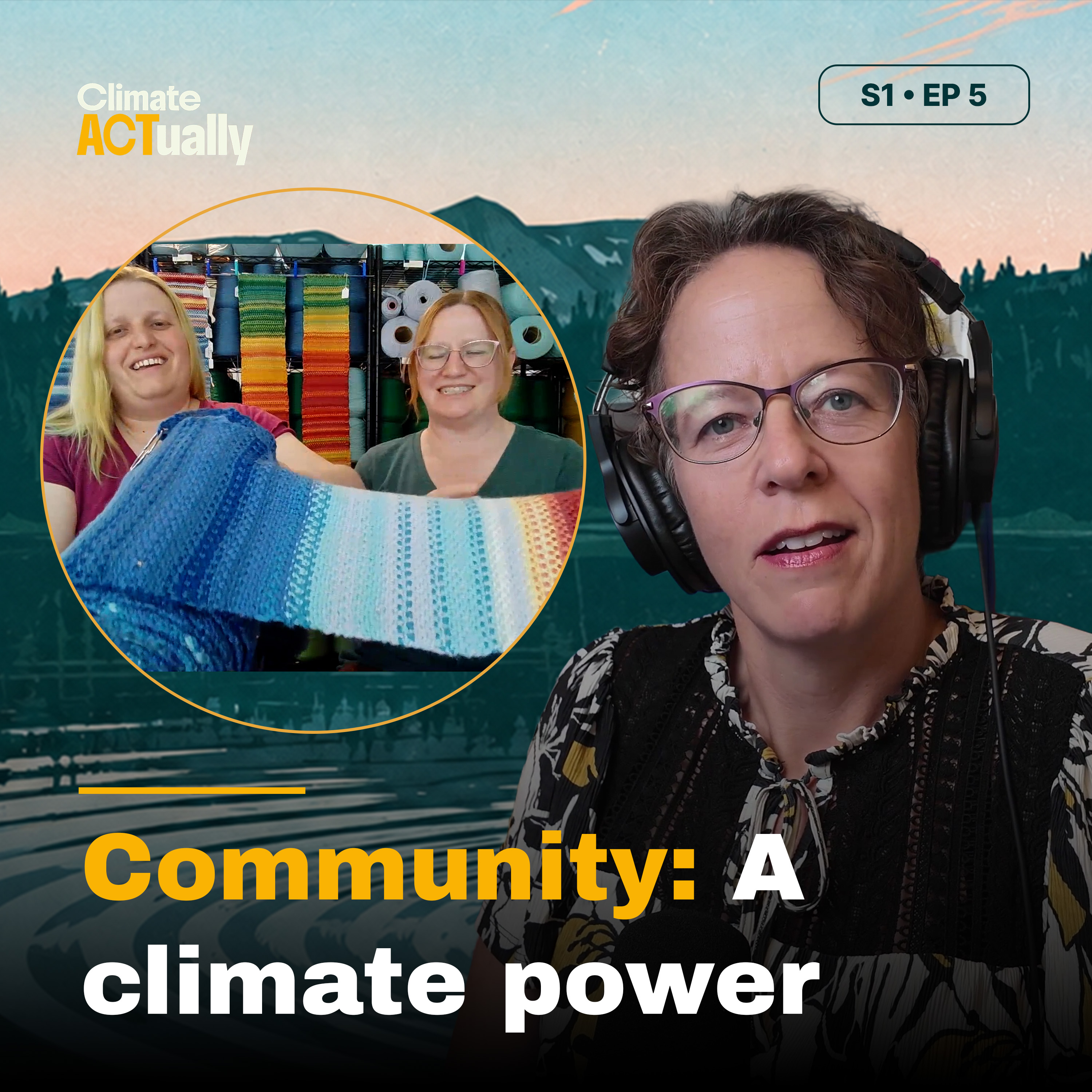
Tempestry Project co-founders Emily and Asy turn temperature records into hand-knit tapestries, a hands-on way to build climate community, one of the highest-impact climate actions in the SHIFT guide. What started as a joke after the 2017 US presidential inauguration, worried that government climate data might disappear, grew from a single museum exhibit into a worldwide community: handcrafted tapestries, or as they call it, tempestries, made by local knitting groups everywhere, turning local temperature records into physical, wearable art. Host Dr Kimberly Nicholas shares her research behind why community is one of the highest-impact climate actions in the SHIFT guide. Take action to build your own climate community : SHIFT shows you how to start or join climate knitting groups, reading circles, and generally find your climate peeps: https://jointheshift.earth/climate-actions/climate-community Funding for Climate Actually comes from Formas, the Swedish Research Council for Sustainable Development, Communications Grant #2021-02906. Subscribe or follow Climate Actually right here on this platform to catch every episode. For more information and material from the episode, visit climateactually.com. Resources The Tempestry Project: https://www.tempestryproject.com/ ShowYourStripes climate visualization for local temperatures (Ed Hawkins, University of Reading): https://showyourstripes.info/; individual participation page: https://www.reading.ac.uk/planet/events/show-your-stripes-day/individuals SHIFT guide to high-impact climate action: https://jointheshift.earth/ References cited in this episode The SHIFT guide names building a climate community as the highest-impact role model climate action. Source: SHIFT The Tempestry Project, founded in 2017, knits physical representations of climate data for places around the world. Source: The Tempestry Project Ed Hawkins, Professor of Climate Science at the University of Reading, created the "warming stripes" visualisation that inspired the Tempestry Project's own patterns. Source: Show Your Stripes Wired reported on scientists and volunteers racing to download and preserve US government climate data ahead of the 2017 presidential inauguration. Source: Wired The Tempestry Project's colour system now spans 32 colours, from below -31°F to above 121°F. Source: The Tempestry Project Research shows that being part of a climate community keeps people engaged and motivated. Source: Schwartz et al. Being part of a community can help prevent burnout. Source: Popular Science On fixing the root causes of burnout, rather than relying on self-care alone. Source: We Can Fix It Community involvement can also help reduce climate anxiety. Source: Kirkhus Organisations and grassroots groups are how structural change happens, since they can outlast any one person's individual effort. Source: Nässén et al. Kim drew on ideas from the book "The Psychology of Collective Climate Action: Building Climate Courage" (2025). Source: Hamann et al. Three elements are essential for effective collective climate action: building group identity, having shared moral beliefs, and believing that your actions make a difference. Source: We Can Fix It ShowYourStripes also runs an "individuals" page for people wanting to take part directly. Source: University of Reading
- Transcript