Skip to content
Artwork for Brainwaves
Health & FitnessScienceEducation

Brainwaves

Nina Valdez

Your doctor tells you one thing, Google says another, and that health influencer you follow swears by something completely different. The result? You're more confused about your own health than when you started looking for answers.

That's where Brainwaves comes in. Nina Valdez spent fifteen years treating patients in emergency rooms, watching people make critical health decisions based on terrible information. Now she translates the latest medical research into the kind of straight talk you'd actually get from a doctor who has time to explain things properly.

Every episode breaks down new studies about how your brain and body actually work. You'll find out why that "miracle" supplement probably isn't, what the research really says about anxiety treatments, and which wellness trends have actual science behind them. Nina's seen enough heart attacks and panic attacks to know the difference between medical facts and marketing hype.

Each episode gives you the real story behind health headlines, complete with what the study actually found and what it means for your daily decisions. No medical jargon, no agenda, just the information you need to make smarter choices about your health.

Follow now. New episodes drop every day. New episodes every day—follow now!

Play
  • 67 episodes
  • Avg 18 min
  • English
Counted on this page — what you have heard stays on this device, so it is not something the list can be paged by.
  • Today · 14 min

    The Hidden Emotion Signal That Ruins Every Relationship

    Your heart is sending secret messages to your brain right now. About 90% of the nerve traffic between these two organs flows upward, not down. And most people have no idea this is happening. What you'll discover: • Why heart rate variability predicts relationship success better than personality tests • How your nervous system hijacks conversations before you even realize it • The fascinating way two people's heartbeats sync up during meaningful connection This isn't about meditation apps or breathing exercises. Nina breaks down the actual research on how your cardiovascular system shapes every interaction you have. Turns out, that racing heart during an argument isn't just stress - it's your body's prediction system going haywire. The same physiological arousal that makes you sweat during a first date can be interpreted as excitement or anxiety, depending on what story your brain tells itself. And when couples learn to read these signals correctly, their relationship satisfaction jumps by measurable amounts. Chapters: 00:00 The heart-brain connection most doctors don't mention 03:15 Why your nervous system sabotages difficult conversations 06:30 Heart rate variability and relationship prediction 09:45 Simple techniques that actually change your physiology You'll walk away understanding why some people seem naturally good at connection while others struggle, and what you can do about it starting today. New episodes of Brainwaves drop every day with Nina translating the latest research into practical health decisions. If you're tired of conflicting health advice and want the real science behind how your body works, hit follow now. Subscribe and never miss an episode at Brainwaves Learn more about your ad choices. Visit megaphone.fm/adchoices

  • Today · 15 min

    The 6-Week Window That Determines Your Sexual Biology Forever

    Your baby's sex isn't determined at conception. It happens during a six-week window that rewrites their entire biological future. Most people think XX equals female, XY equals male. But Nina breaks down the real story: how one tiny gene called SRY flips a molecular switch around week 6-7 of pregnancy, flooding the developing body with testosterone and literally sculpting male biology from what would otherwise become female. What you'll discover: • Why female development is the default pathway for all humans • How testosterone in the womb permanently rewires brain structure • The critical timing that determines everything from muscle mass to spatial reasoning • Why hormone exposure during this window affects you for life This isn't just about reproduction. These early hormone surges shape how your brain processes emotions, handles stress, and even navigates space. The research shows testosterone exposure creates lasting changes in areas that control aggression, empathy, and problem-solving abilities. Nina walks through the molecular cascade that builds our sexual biology, explaining why timing matters so much and what happens when this delicate process gets disrupted. You'll understand why identical genetic starting points can lead to completely different outcomes. Chapters: 00:00 The SRY gene activation 02:30 Default female development pathway 04:15 Testosterone's brain-shaping effects 06:45 Epigenetic changes that last forever 09:00 When hormone timing goes wrong 11:30 What this means for adult health If you want the real science behind how your body actually works, hit follow. Brainwaves drops new episodes every day, and Nina's covering hormone replacement therapy next. Don't miss it. Subscribe and never miss an episode at Brainwaves Learn more about your ad choices. Visit megaphone.fm/adchoices

  • Today · 22 min

    Why Your Brain Makes 35,000 Decisions Wrong Every Single Day

    Your brain just made 11 decisions reading this sentence. By tonight, it'll make about 35,000 more. And here's the scary part: most of them will be completely wrong. Nina breaks down the latest neuroscience on why your decision-making system is basically broken by design. Turns out that "gut feeling" you've been told to ignore? It might be the smartest part of your brain talking. What you'll discover: • Why people who trust their intuition alongside logic make 40% better choices • The 70-decision limit that turns your brain into mush (and how to reset it) • Why your brain starts deciding 7 seconds before you even know you're choosing • The simple writing trick that makes you 25% more likely to stick with tough decisions Chapters: 00:00 The 35,000 decision problem 02:15 Why "logical" decisions backfire 04:30 Your gut vs. your brain (spoiler: both win) 07:20 Decision fatigue hits at 70 choices 09:45 The 7-second head start your brain gets 11:10 One writing trick that changes everything This isn't about making perfect choices. It's about understanding why your brain sabotages good ones and what actually works when the stakes matter. Nina's seen enough people make life-changing medical decisions based on panic and bad information to know: better decision-making isn't just helpful, it's life-saving. Follow Brainwaves now. New episodes drop every day, and tomorrow Nina's covering why multitasking literally shrinks your brain. Subscribe and never miss an episode at Brainwaves Learn more about your ad choices. Visit megaphone.fm/adchoices

  • Today · 17 min

    Why Tough Kids Aren't Built the Way You Think (Research Reveals Why)

    Most parents think building tough kids means pushing them harder when they mess up. New research shows this approach actually makes kids more fragile. What you'll discover: • Why guilt shuts down the brain's learning centers (and what to do instead) • Dr. Becky Kennedy's "Good Inside" method that's transformed 50+ schools • How self-compassion helps adults bounce back 3x faster after setbacks • The surprising way shame rewires kids' brains to avoid challenges Nina breaks down the neuroscience behind why traditional "tough love" backfires. You'll learn specific phrases that help kids process failure without shutting down, plus research-backed strategies for building genuine resilience that actually sticks. The data is pretty clear: children who experience high levels of shame around failure show decreased activity in brain regions responsible for problem-solving and emotional regulation. Meanwhile, kids raised with the "Good Inside" approach show 40% improvement in stress management and academic performance. This isn't about participation trophies or avoiding consequences. It's about understanding how the brain actually builds resilience, and why guilt might be sabotaging your family's ability to handle tough situations. Chapters: 00:00 The guilt trap that weakens kids 02:15 What brain scans reveal about shame 04:30 Dr. Kennedy's "Good Inside" research 07:45 Self-compassion for stressed parents 10:20 Building real resilience at home Ready for more research that cuts through parenting myths? Follow Brainwaves for daily episodes that give you the science behind raising resilient kids. Nina drops new episodes every day with the medical research you actually need to know. Subscribe and never miss an episode at Brainwaves --------- Keywords: neuroplasticity, supplement research, neuroscience podcast, glucose and mood, health misinformation, medical myths Learn more about your ad choices. Visit megaphone.fm/adchoices

  • Today · 17 min

    Why Tough Kids Aren't Built the Way You Think (Research Reveals Why)

    Most parents think building tough kids means pushing them harder when they mess up. New research shows this approach actually makes kids more fragile. What you'll discover: • Why guilt shuts down the brain's learning centers (and what to do instead) • Dr. Becky Kennedy's "Good Inside" method that's transformed 50+ schools • How self-compassion helps adults bounce back 3x faster after setbacks • The surprising way shame rewires kids' brains to avoid challenges Nina breaks down the neuroscience behind why traditional "tough love" backfires. You'll learn specific phrases that help kids process failure without shutting down, plus research-backed strategies for building genuine resilience that actually sticks. The data is pretty clear: children who experience high levels of shame around failure show decreased activity in brain regions responsible for problem-solving and emotional regulation. Meanwhile, kids raised with the "Good Inside" approach show 40% improvement in stress management and academic performance. This isn't about participation trophies or avoiding consequences. It's about understanding how the brain actually builds resilience, and why guilt might be sabotaging your family's ability to handle tough situations. Chapters: 00:00 The guilt trap that weakens kids 02:15 What brain scans reveal about shame 04:30 Dr. Kennedy's "Good Inside" research 07:45 Self-compassion for stressed parents 10:20 Building real resilience at home Ready for more research that cuts through parenting myths? Follow Brainwaves for daily episodes that give you the science behind raising resilient kids. Nina drops new episodes every day with the medical research you actually need to know. Subscribe and never miss an episode at Brainwaves Learn more about your ad choices. Visit megaphone.fm/adchoices
  • Today · 18 min

    What Elite Athletes Know About Learning That You Don't

    Ever wonder why some people pick up new skills in weeks while others struggle for months? The answer isn't talent - it's strategy. Your brain has built-in learning accelerators that most people never activate. Nina breaks down the surprising research on how elite athletes and top performers actually master new skills, and spoiler alert: it's not about practicing until you get it perfect. What you'll discover: • Why making mistakes 15% of the time actually speeds up learning • The specific movement trick that boosts retention by 20% • How your inner ear's balance system directly rewires your brain • Why most skill acquisition happens while you sleep (and what triggers it) The biggest myth? That practice makes perfect. Turns out, perfect practice makes you plateau. Your brain releases the most plasticity-inducing chemicals when you're slightly failing, not when you're nailing it every time. Nina also reveals why sitting still during study sessions is sabotaging your progress. Simple movements during or right after learning create neural pathways that stick. We're talking basic stuff like walking or even light stretching, not CrossFit. The vestibular system research is pretty wild. That balance mechanism in your inner ear doesn't just keep you upright - it's directly connected to the brain regions responsible for forming new memories and skills. Chapters: 00:00 Why perfect practice kills progress 03:15 The 15% error rule explained 06:30 Movement hacks for better retention 09:45 Your inner ear's secret learning power If you're tired of spinning your wheels trying to learn new things, this one's for you. Follow Brainwaves for daily episodes that cut through the noise and give you research-backed strategies that actually work. Nina drops new episodes every day. Subscribe and never miss an episode at Brainwaves Learn more about your ad choices. Visit megaphone.fm/adchoices

  • Today · 15 min

    Why Your Testosterone Crashes at 3 PM (Sleep Scientists Finally Explain)

    Your testosterone doesn't randomly tank at 3 PM. New research from Stanford's Sleep Medicine Center shows it's actually your circadian rhythm fighting with cortisol spikes, and the fix is simpler than you think. Most guys hit that afternoon wall and blame stress or lunch. But Nina Valdez breaks down the real culprit: your hormone cycles are completely out of sync. Men's testosterone naturally peaks around 8 AM, then crashes hard when afternoon cortisol hits. The problem? Most of us are sabotaging both cycles without knowing it. What you'll discover: • Why men's testosterone has dropped 1% yearly since the 1980s (hint: it's not just age) • The 48-hour testosterone boost you get from strength training vs. what cardio actually does • How losing just one hour of sleep tanks your T-levels by 15% in a week • The aromatase enzyme that converts 30% of your testosterone to estrogen and when that's good vs. bad Chapters: 00:00 The 3 PM testosterone crash explained 02:15 Cortisol vs. testosterone: the daily battle 04:30 Sleep quality beats sleep quantity for hormone balance 07:45 Why your workout timing matters more than the workout itself 10:20 Simple fixes that actually work This isn't about expensive supplements or TRT clinics. Nina shows you how to work with your body's natural rhythms using strategies that cost nothing but make a huge difference. Real science, zero hype. Follow Brainwaves now. New episodes drop every day with the medical research your doctor wishes they had time to explain properly. Subscribe and never miss an episode at Brainwaves Learn more about your ad choices. Visit megaphone.fm/adchoices

  • Today · 21 min

    Why Your Doctor Won't Tell You These 5 Immune System Secrets

    Here's your 40% immune system boost hiding in plain sight. Nina Valdez breaks down five evidence-based secrets most doctors never mention because they're too busy treating symptoms, not strengthening your natural defenses. Dr. Roger Seheult reveals why that expensive immunity supplement can't compete with getting your sleep right. 🎯 What You'll Learn: • How 7-9 hours of quality sleep can triple your viral resistance compared to sleep-deprived people • Why 70% of Americans have dangerously low vitamin D levels and the exact amount that cuts respiratory infections • The 50-300% immune cell boost you get from moderate exercise (and how long it lasts) • How chronic stress tanks your immune function by 40% in just days 👤 Perfect for: anyone tired of getting sick every time something's going around and ready to build real immunity from the ground up. 📍 Chapters: [00:00] Nina introduces the immunity gap your doctor ignores [01:30] Sleep's triple protection against viruses [04:00] The vitamin D deficiency hiding everywhere [07:00] Exercise timing that maximizes immune response [10:00] Stress hormones vs. your immune system [12:00] Your 30-day immunity action plan Dr. Seheult's research cuts through the supplement industry noise to show you what actually works. No magic pills, no complicated protocols. Just five strategies that work with your body's existing systems instead of against them. 🔔 Never miss an episode: Follow Brainwaves on Spotify or Apple Podcasts and turn on notifications. New episodes drop daily, your next favorite insight is one tap away. 🔍 Topics: immune system, sleep health, vitamin D deficiency, exercise immunity, stress management Subscribe and never miss an episode at Brainwaves Learn more about your ad choices. Visit megaphone.fm/adchoices
  • Today · 23 min

    Why McDonald's Spent $50M Studying Your Hunger (And What They Found)

    McDonald's didn't spend $50 million on hunger research just to sell more Big Macs. They discovered something about your appetite that most doctors still don't understand. Turns out your brain has been lying to you about when you're actually full. And that "willpower" you think you're lacking? It's not about discipline at all. What you'll discover: • Why 32% of people have brains that literally can't detect fullness signals • The 20-minute delay between eating and feeling satisfied (and how to work with it) • How your sleep schedule controls when hunger hormones spike • Which foods actually trigger your satiety hormones versus just filling your stomach Nina breaks down the real science behind why some people feel hungry an hour after eating while others stay satisfied for hours. Spoiler: it's not about portion sizes or calorie counting. You'll learn what McDonald's researchers found about ghrelin and leptin that changed how they design their menu timing. Plus the one macronutrient that increases fullness hormones by 25% compared to everything else. Chapters: 00:00 The $50M McDonald's hunger study 02:15 Leptin resistance: when your brain thinks you're starving 04:30 The 20-minute satiety delay and how to use it 07:45 Circadian rhythms control your hunger schedule 09:20 Protein's unique effect on fullness hormones If you're tired of fighting your appetite instead of understanding it, this episode changes everything. Follow Brainwaves for daily episodes that give you the real science behind how your body actually works. Subscribe and never miss an episode at Brainwaves Learn more about your ad choices. Visit megaphone.fm/adchoices

  • Today · 13 min

    Why Matthew Walker Changed His Mind About Sleep Supplements

    Getting sunlight in your eyes within the first hour of waking increases cortisol by 50% and sets your circadian rhythm. Your afternoon coffee at 2 PM? Still has 25% of its stimulating power at 10 PM thanks to caffeine's 6-8 hour half-life. In this episode, Nina Valdez breaks down the sleep research that most people get completely wrong, plus the science-backed protocols that actually move the needle on sleep quality. 🎯 What You'll Learn: • Why your core body temperature needs to drop 1-3 degrees for deep sleep (and how to make it happen) • The exact light exposure timing that resets your internal clock naturally • Which sleep supplements have real research behind them and which are marketing hype • How blue light after 8 PM kills 85% of your melatonin production 👤 Perfect for: anyone tired of tossing and turning who wants evidence-based solutions that actually work. 📍 Chapters: [00:00] Nina Valdez introduces the sleep myths keeping you awake [02:15] Morning light exposure: the 50% cortisol boost that sets your day [04:30] Temperature control: why cooling down helps you fall asleep faster [06:45] Caffeine timing: when that afternoon coffee becomes a sleep killer [08:30] Blue light and melatonin: the 85% suppression rate you need to know [10:15] Sleep supplements that work vs. the ones that don't [11:45] Your 3-step sleep optimization protocol 🔔 Never miss an episode: Follow Brainwaves on your podcast app and turn on notifications. New episodes drop daily, your next favorite insight is one tap away. 🔍 Topics: sleep science, circadian rhythm, melatonin production, caffeine half-life, sleep supplements Subscribe and never miss an episode at Brainwaves Learn more about your ad choices. Visit megaphone.fm/adchoices
  • Today · 23 min

    What Huberman Gets Right About Thyroid (That Your Doctor Misses)

    Your metabolism isn't broken. It's just confused by mixed signals from your thyroid and growth hormone. Andrew Huberman talks a lot about optimizing hormones, but here's what he gets right about thyroid function that most doctors completely skip over. Your thyroid doesn't just control your energy levels - it's running about 70% of your metabolic show. And when it's not working properly, no amount of intermittent fasting or cold plunges will fix your sluggish metabolism. What you'll discover: • Why your thyroid controls 60-70% of your resting metabolic rate and what that actually means for weight management • How growth hormone peaks during your first 3-4 hours of sleep and why this timing matters more than total sleep hours • The real science behind cold exposure increasing thyroid production by 15-20% (and why it's not just hype) • How chronic stress tanks thyroid function by up to 30% through cortisol interference Nina breaks down the actual research on thyroid optimization without the wellness industry nonsense. You'll learn which strategies have real science behind them and which ones are just expensive placebos. Chapters: 00:00 What Huberman gets right about thyroid 02:30 The metabolism connection doctors miss 04:45 Growth hormone and sleep timing 07:15 Cold exposure: hype vs reality 09:30 Stress and thyroid suppression 11:45 Practical takeaways This isn't about buying special supplements or following complicated protocols. It's about understanding how your hormones actually work so you can make smarter decisions about your health. Follow Brainwaves for daily episodes that cut through health confusion with real medical insight. Nina drops new episodes every day. Subscribe and never miss an episode at Brainwaves Learn more about your ad choices. Visit megaphone.fm/adchoices

  • Yesterday · 22 min

    Why Your Brain-Body Connection Is Sabotaging Your Workouts

    Your brain isn't talking to your body the way it should. And it's costing you every time you work out, try to sleep, or deal with stress. Most people think the brain-body connection is some wellness buzzword. But there's actual science showing how this communication breakdown messes with everything from your heart rate to your pain tolerance. Nina breaks down why your nervous system might be working against you and what you can do about it. What you'll discover: • Why people with stronger body awareness score 20-30% better on stress tests • How 4 weeks of breathing practice can boost your heart rate variability by 25% • The body scanning technique that cuts athlete recovery time by 15% • Why 2-3 minutes of cold exposure triggers a 300% spike in norepinephrine This isn't about meditation retreats or expensive gadgets. These are simple practices that actually change how your brain processes signals from your body. You'll learn why your workouts feel harder than they should and how to fix the disconnect that's sabotaging your results. Chapters: 00:00 The brain-body communication crisis 02:15 What interoceptive awareness actually means 04:30 Breathing techniques that work (and why) 06:45 Body scanning for faster recovery 08:20 Cold exposure and nervous system training 10:15 Daily practices that stick Nina's treated enough patients to know the difference between what sounds good and what actually works. This episode gives you the real science behind strengthening your brain-body connection, no fluff included. If you're tired of fighting your own nervous system, hit follow. Brainwaves drops new episodes every day with the medical research that actually matters for your health decisions. Subscribe and never miss an episode at Brainwaves Learn more about your ad choices. Visit megaphone.fm/adchoices

  • Yesterday · 15 min

    The Relationship Pattern That's Costing You Real Love

    Most people think they're bad at dating. They're not. They're just picking the wrong people for predictable reasons. Therapist Lori Gottlieb breaks down why smart people keep making terrible romantic choices. Turns out about 70% of us have secure attachment styles, but these folks are practically invisible on dating apps. Meanwhile, we're drawn to people who recreate childhood patterns, even when those patterns hurt. What you'll discover: • Why your brain mistakes anxiety for attraction (and how to spot the difference) • The attachment style that makes up 70% of people but gets overlooked in dating • How childhood experiences predict who you'll swipe right on as an adult • The one question that reveals if someone's actually ready for a real relationship Nina Valdez walks through the research showing people spend more time picking a car than understanding their relationship patterns. The data on this is pretty wild: folks who do personal work before dating have way higher relationship satisfaction rates. Not shocking, but the numbers are bigger than you'd think. Chapters: 00:00 Why good people go unnoticed 02:30 The attachment style lottery 05:15 Your childhood blueprint for love 08:00 Red flags vs. green flags that actually matter 10:30 The readiness question This isn't about becoming a different person to find love. It's about understanding why you keep ending up in the same situations with different faces. If you're tired of dating advice that doesn't work, hit follow. Nina drops new Brainwaves episodes every day, mixing real medical research with the kind of straight talk you'd get from a doctor who actually has time to explain things. Subscribe and never miss an episode at Brainwaves Learn more about your ad choices. Visit megaphone.fm/adchoices

  • Yesterday · 14 min

    Your Brain on Grief: Why Loss Rewires You (And How to Heal)

    Your body knows the difference between grief and sadness. When someone you love dies, your brain literally rewires itself, firing the same neural pathways as physical injury. That crushing feeling in your chest? It's not just a metaphor. Dr. Mary-Frances O'Connor has spent two decades studying what grief actually does to your brain. Her research reveals why you can't think straight after loss, why your body feels broken, and most importantly, how to work with your brain instead of against it during the hardest moments of your life. What you'll discover: • Why grief triggers physical pain in the same brain regions as a broken bone • How your reward system keeps searching for the person who's gone, creating neurological loops • Why 80% of grieving people can't sleep (and it's not what you think) • The specific brain changes that make simple decisions feel impossible Nina breaks down the neuroscience behind loss and shares practical strategies that actually align with how your grieving brain works. No platitudes, no timeline pressure. Just science-backed approaches that honor what your mind and body are going through. Chapters: 00:00 The neuroscience of heartbreak 02:15 Why your brain keeps looking for them 04:30 Sleep, memory, and the grieving mind 06:45 When your prefrontal cortex goes offline 08:20 Working with your brain's grief response 10:00 Building resilience through understanding This episode won't fix your grief, but it might help you understand why healing takes the time it takes. Your brain is doing exactly what it's supposed to do. New episodes of Brainwaves drop every day with medical research you can actually use. Hit follow if you want Nina's take on the science behind how your body really works. Subscribe and never miss an episode at Brainwaves Learn more about your ad choices. Visit megaphone.fm/adchoices

  • Yesterday · 17 min

    The $2.3 Trillion Brain Mistake 90% of People Make Every Day

    Most people think exercise is just for their body. They're missing a $2.3 trillion opportunity happening inside their skull every time they break a sweat. Nina breaks down the latest neuroscience showing how a simple 20-minute workout literally grows new brain cells and boosts your memory for hours afterward. Turns out your brain craves movement more than your muscles do. What you'll discover: • Why 150 minutes of weekly exercise increases your hippocampus by 2-3% (that's your memory center getting bigger) • How high-intensity intervals spike brain-building proteins by 300% in just 30 minutes • The exact workout timing that improves focus for up to 4 hours afterward • Why people who exercise regularly cut their dementia risk by 40% This isn't about becoming a gym rat. It's about understanding what actually happens in your brain when you move your body, and how to use that knowledge to think clearer, remember better, and stay sharp as you age. Nina's treated enough patients to know the difference between what sounds good and what actually works. She walks through the research that's changing how doctors think about exercise prescriptions and brain health. Chapters: 00:00 The brain growth discovery doctors missed 02:30 Why your hippocampus needs you to sweat 05:15 The 20-minute memory boost protocol 07:45 High-intensity intervals vs steady cardio for brain power 10:30 Building your personal brain fitness plan Follow Brainwaves for daily episodes that cut through health confusion with real medical research. Nina drops new episodes every day, and tomorrow she's covering the sleep mistakes that are literally shrinking your brain. ----- Keywords: neuroscience podcast, medical facts, nutrition science, emergency medicine, health studies, health science explained, medical myths Learn more about your ad choices. Visit megaphone.fm/adchoices

  • Yesterday · 18 min

    The Glucose Fix for Anxiety and Depression That Science Ignored

    What if your depression and anxiety aren't actually mental health problems, but metabolic ones your brain can't solve? Dr. Chris Palmer just dropped research that changes everything we thought we knew about treating mental illness. Turns out your brain might be starving for the right fuel, and antidepressants can't fix a metabolism problem. What you'll discover: • Why people with mental illness die 15-20 years earlier (and it's not suicide) • How ketogenic diets showed 70% improvement in bipolar patients • The insulin resistance crisis affecting 88% of Americans that doctors miss • Why your brain burns through 20% of your body's energy despite being tiny Nina breaks down the studies pharmaceutical companies don't want you reading. She's seen too many ER patients whose "psychiatric" symptoms disappeared once their blood sugar stabilized to ignore this connection anymore. This isn't about blaming diet culture or shaming anyone. It's about understanding that your brain is an organ that needs proper fuel to make neurotransmitters, and most of us are running on metabolic fumes. Chapters: 00:00 The hidden metabolic crisis 02:30 Why psychiatric medications aren't enough 05:15 Brain energy and mitochondrial dysfunction 07:45 Ketogenic protocols for mental health 10:20 Starting your own metabolic reset The research is clear, but your doctor probably hasn't read these studies yet. Nina has, and she's translating the science into steps you can actually take. If you want straight medical talk without the wellness industry nonsense, hit follow. Brainwaves drops new episodes every day, and tomorrow Nina's covering why that "healthy" breakfast might be sabotaging your mood all morning. Subscribe and never miss an episode at Brainwaves Learn more about your ad choices. Visit megaphone.fm/adchoices
  • Yesterday · 14 min

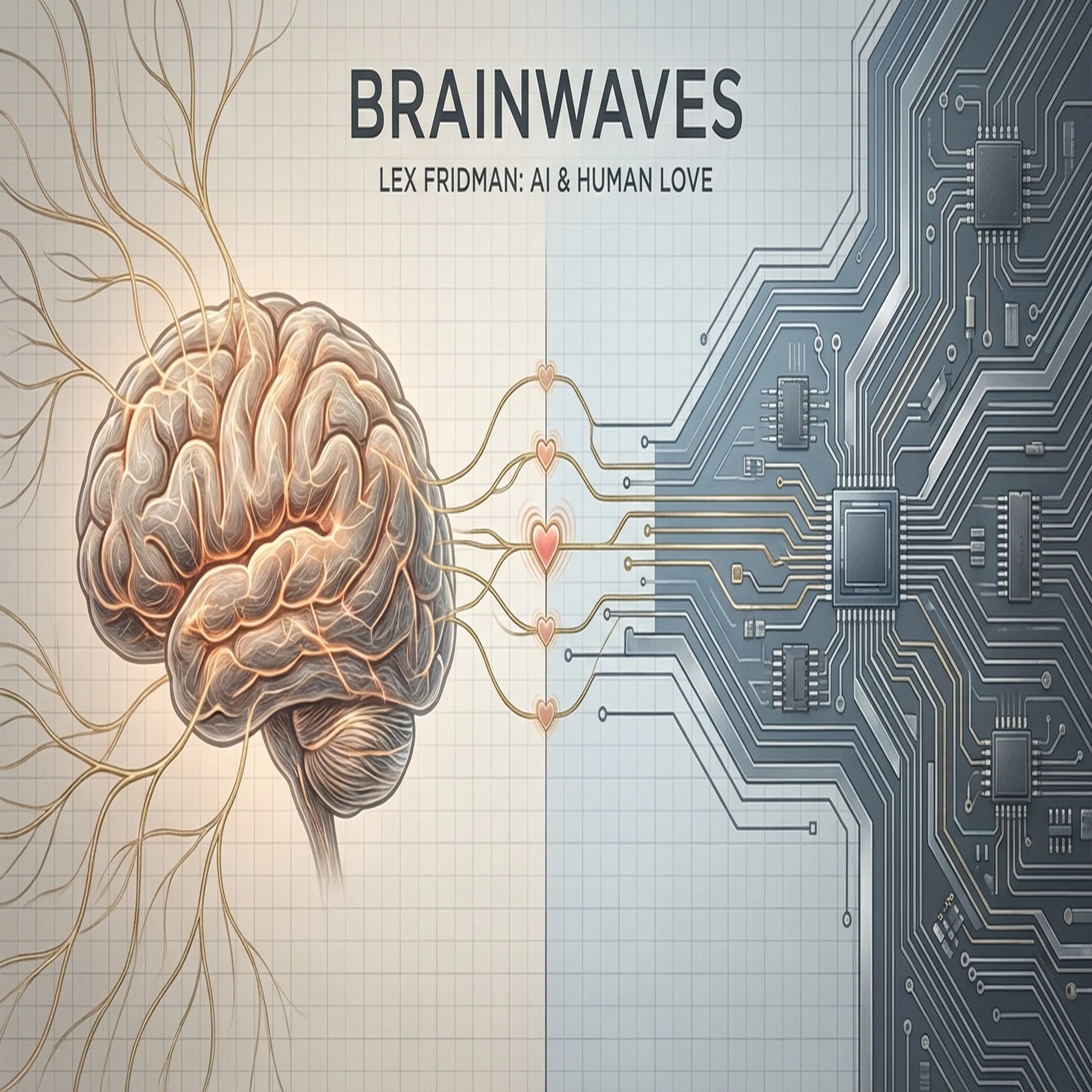
    Lex Fridman: Why AI Will Never Replace Human Love (But It Might Enhance It)

    MIT's AI researcher Lex Fridman has had over 400 three-hour conversations with the world's smartest people. What he discovered about machines, creativity, and love might surprise you. In this episode, Nina Valdez breaks down Fridman's insights on why artificial intelligence will transform how we create and connect, but can never replace the fundamentally human experience of love. 🎯 What You'll Learn: • Why MIT processes 1 billion data points daily studying human behavior behind the wheel • The creative paradox: AI can write symphonies and paint masterpieces, but lacks what researchers call "intentional consciousness" • How Fridman uses Brazilian Jiu-Jitsu and guitar playing to maintain his human edge in an AI-dominated field 👤 Perfect for: anyone curious about where technology ends and humanity begins 📍 Chapters: [00:00] Nina introduces Lex Fridman's unique perspective on AI and love [01:45] The staggering scale of MIT's autonomous vehicle research [03:30] What 400 long-form interviews taught Fridman about human nature [05:15] The creativity gap: why AI art feels different from human expression [07:00] Physical practices that keep researchers grounded [09:30] The love question: what machines will never understand [11:00] Key insights you can apply to your own relationship with technology This isn't just another AI discussion. Fridman's approach combines hard science with deeply personal questions about what makes us human. You'll walk away understanding not just where technology is headed, but why your humanity matters more than ever. 🔔 Never miss an episode: Follow Brainwaves and turn on notifications. New episodes drop daily, and tomorrow Nina's covering the latest research on why your brain craves novelty more than you realize. 🔍 Topics: artificial intelligence, creativity research, human consciousness, MIT studies, technology philosophy Subscribe and never miss an episode at Brainwaves Learn more about your ad choices. Visit megaphone.fm/adchoices
  • Yesterday · 21 min

    Huberman Reveals Why You Can't Trust Your Instincts

    Your body is constantly receiving chemical messages that bypass your conscious mind completely. That whiff of your ex's cologne that makes your heart race? The way you instantly relax when you smell fresh bread? It's not coincidence - it's your olfactory system running the show behind the scenes. Nina Valdez breaks down why your nose might be your most underestimated sense organ. Turns out, those smell molecules hit your brain faster than you can register pain, and they're making decisions about attraction, fear, and memory before you even know what hit you. What you'll discover: • Why your olfactory neurons are the only brain cells directly exposed to the outside world • How smell signals reach your brain in just 150 milliseconds - faster than pain • Why women's smell sensitivity can increase 1000x during certain cycle phases • The science behind literally smelling fear and stress on other people Chapters: 00:00 Your nose as a direct brain connection 02:30 The 150-millisecond smell highway 05:45 How hormones supercharge smell sensitivity 08:15 The chemistry of fear detection 10:30 Why smell memories stick so hard This isn't just about having a good nose - it's about understanding how chemical signals influence your daily interactions, relationships, and gut reactions in ways you never realized. Nina connects the latest neuroscience research to explain why that "something feels off" sensation might actually be your olfactory system picking up on real chemical cues. Your instincts aren't as mysterious as you think. They're just faster than your conscious awareness. If you're ready to understand how your body actually processes the world around you, hit follow. Brainwaves drops new episodes every day with the medical research that actually matters for your daily life. Subscribe and never miss an episode at Brainwaves Learn more about your ad choices. Visit megaphone.fm/adchoices

  • Yesterday · 14 min

    Your Daily Habits Are Rewriting Your DNA (And You Don't Even Know It)

    Your morning coffee habit just changed your DNA. So did yesterday's workout, that stressful meeting, and even the way you breathed during meditation. In this episode, Nina Valdez breaks down the wild science of epigenetics with Dr. Melissa Ilardo, whose research on sea nomads reveals how our daily choices literally rewrite our genetic code. 🎯 What You'll Learn: • How the Bajau sea nomads evolved 50% larger spleens in just 1,000 years through diving lifestyle • Why 30 minutes of exercise activates over 1,000 metabolism genes (and which types work best) • The specific stress patterns that turn off your immune genes and how to reverse them • Simple daily habits that optimize gene expression for better energy and longevity 👤 Perfect for: anyone who wants to understand how their lifestyle choices create real, measurable changes in their body at the genetic level. 📍 Chapters: [00:00] Nina introduces the DNA-changing power of daily habits [01:45] Dr. Ilardo's sea nomad discovery that shocked geneticists [03:30] How identical twins end up with completely different health outcomes [05:15] The exercise-gene connection: what 30 minutes really does [07:00] Stress, sleep, and the methylation patterns controlling your immune system [09:30] Practical steps to optimize your epigenetic switches [11:00] Why your grandmother's diet might still be affecting your health today 🔔 Never miss an episode: Follow Brainwaves and turn on notifications. New episodes drop daily, and tomorrow Nina's covering why your brain craves sugar at 3 PM (hint: it's not willpower). 🔍 Topics: epigenetics, gene expression, lifestyle medicine, DNA methylation, exercise genetics Subscribe and never miss an episode at Brainwaves Learn more about your ad choices. Visit megaphone.fm/adchoices

  • Yesterday · 13 min

    The Hidden War Inside Your Mind That's Destroying Your Peace

    That critical inner voice telling you you're not good enough? It's actually trying to protect you. Dr. Richard Schwartz discovered something remarkable while treating eating disorder patients in the 1980s: we all have different "parts" inside our minds, each with its own job. That harsh critic isn't your enemy. It's a protector that learned early on to keep you safe by pointing out potential failures before others could. Nina breaks down how Internal Family Systems therapy works and why research shows it's so effective for trauma, depression, and anxiety. Turns out your mind isn't one unified thing - it's more like a family with different members who sometimes fight. What you'll discover: • How trauma creates protective "parts" that can become problematic later • The 8 core qualities of your authentic Self (hint: curiosity and compassion are built-in) • Why that perfectionist voice developed and how to work with it instead of against it • Simple techniques to access the calm, confident part of you that's always been there Chapters: 00:00 What are "parts" and how do they form? 02:30 The protector that became your inner critic 04:45 Your authentic Self and its 8 qualities 07:15 How IFS heals trauma at the root 09:30 Practical steps to befriend your parts The research backing IFS is solid, with studies showing significant improvements in PTSD, depression, and relationship satisfaction. But more than that, it just makes sense when Nina explains it. Your mind isn't broken. It's actually working exactly as designed - you just need the user manual. Follow Brainwaves for daily episodes that turn confusing health research into clear, actionable insights. Nina's got 15 years of ER experience cutting through the noise. Subscribe and never miss an episode at Brainwaves Learn more about your ad choices. Visit megaphone.fm/adchoices

Showing 1–20 of 67 episodes