Skip to content
Artwork for Bad at Goodbyes
ScienceNatureKids & FamilyEducation for Kids

Bad at Goodbyes

Joshua Dumas

On Bad At Goodbyes, we offer a calm, clear-eyed, creative look at plants and animals from the IUCN Critically Endangered Red List. Research-based, we share species details, behaviors, habitat, and conservation information. And then at the end of each show we perform an ambient soundscape, to hold space for contemplation, delight, awe and perhaps grief. Without dedicated conservation action, some of these species will not survive the 21st century. And so, though listening and learning, perhaps we might acknowledge that journey with a moment of our attention, in recognition of our kinship. Thanks for listening.

Play
  • 20 episodes
  • weekly
  • Avg 32 min
  • English
  • #87
    Yesterday · 38 min

    Jamaican Flower Bat

    Jamaican Flower Bat :: Phyllonycteris aphylla Bad at Goodbyes :: Episode 087 On today’s show we learn about the Jamaican Flower Bat, a critically endangered flying mammal native to the Caribbean island nation of Jamaica. Its scientific name is Phyllonycteris aphylla and it was first described in 1898. For more information about Jamaica Flower Bat conservation and bat conservation in general please see Bat Conservation International at https://www.batcon.org. (00:05) Intro (02:05) Species Information (27:22) Citations (29:29) Music (36:42) Pledge Research for today’s show was compiled from: Baker, R. J., Groen, J. A., & Owen, R. D. (1984). Field key to Antillean bats (Occasional Papers, No. 94). Museum of Texas Tech University. – https://ttu-ir.tdl.org/server/api/core/bitstreams/d15e93d9-80de-45dc-95b8-3af88073278b/content Bat Conservation International. (2022, May 20). Globally significant Jamaican cave permanently protected to save critically endangered bats [Press release]. https://www.batcon.org/press/globally-significant-jamaican-cave-permanently-protected-to-save-critically-endangered-bats/ Carstens, B. C. (2001). Phylogeny of the neotropical nectar-feeding bats (Chiroptera: Phyllostomidae) (Publication No. 1403850) Master's thesis, Michigan State University. ProQuest Dissertations & Theses Global. https://www.proquest.com/openview/5e2c8907b5a92b9a86606531d3c6b86b/1 Genoways, Hugh H., Baker, Robert J., Bickham, John W., & Phillips, Carleton J. (2005). Bats of Jamaica. Bats of Jamaica, 48, 1--155. – https://www.biodiversitylibrary.org/part/249897 iNaturalist – near Rock Spring Caverns, St. Mary, Jamaica Koenig, S. & Davalos, L. 2015. Phyllonycteris aphylla. The IUCN Red List of Threatened Species 2015: e.T17173A22133396. – https://dx.doi.org/10.2305/IUCN.UK.2015-4.RLTS.T17173A22133396.en McFarlane, D. A. (1986). Cave bats in Jamaica. Oryx, 20(1), 27-30. – https://doi.org/10.1017/S0030605300025874 Miller, G. S., Jr. (1898). Descriptions of five new phyllostome bats. Proceedings of the Academy of Natural Sciences of Philadelphia, 50, 326–337. – https://www.biodiversitylibrary.org/page/1647828 Oelbaum, P. J., Hall, R. P., Whyte, D. L., Stewart, R. S., Pauel, J., Kouwenberg, S., … Welch, K. C. (2024). Reproductive populations of the Critically Endangered bat Phyllonycteris aphylla at two new locations in Jamaica. Oryx, 58(5), 650–654. – https://doi.org/10.1017/S0030605323001643 National Environment and Planning Agency. (2011). 2012 - 2017 bat management plan for Jamaica. – https://www.cockpitcountry.com/pdfs/NEPA%20Bat%20Mgt%20Plan_2012-2017.pdf Pallardy, R. (2024, August 27). "We found 20 pairs of wings in an hour.” Culprit of Jamaica's dismembered bats caught on camera. Discover Wildlife. – https://www.discoverwildlife.com/animal-facts/feral-cats-catching-bats-jamaica Sears, K. E., Behringer, R. R., Rasweiler, J. J., & Niswander, L. A. (2006). Development of bat flight: Morphologic and molecular evolution of bat wing digits. Proceedings of the National Academy of Sciences, 103(17), 6581–6586. – https://doi.org/10.1073/pnas.0509716103 Wilson, D., Tikuye, B. G., Tefera, G. W., & Ray, R. L. (2025). Impact of bauxite mining on vegetation health in Jamaica: NDVI and aerosol optical depth analysis using remote sensing. Physics and Chemistry of the Earth, Parts A/B/C, 140, 104058. – https://doi.org/10.1016/j.pce.2025.104058 Wikipedia – https://en.wikipedia.org/wiki/Jamaican_flower_bat Please find us on the web at Bad at Goodbyes and on instagram. Please subscribe and rate/review Bad at Goodbyes wherever you listen to podcasts. Please help spread the word about the show and about the species we feature. Please take care of each other, and all of our fellow travelers. A note on accuracy: I strive for it! These episodes are well-researched and built from scholarly sources, hoping to provide an informed and accurate portrait of these species. That said, I’m a musician! I am not an academic and have limited scientific background. I may get things wrong! If you are using this podcast for scholarship of any kind, please see the cited sources and double-check all information.

    • Transcript
  • #86
    September 16 · 33 min

    Golden Camellia

    Golden Camellia :: Camellia impressinervis Bad at Goodbyes :: Episode 086 On today’s show we learn about the Golden Camellia, a critically endangered flowering evergreen native to southeast Asia, on the China Vietnam border, to the provinces of Guangxi in China and Cao Bang in Vietnam. Its scientific name is Camellia impressinervis and it was first described in 1979. For more information about Golden Camellia and Camellia conservation please see the International Camellia Society at https://internationalcamellia.org/. (00:05) Intro (02:05) Species Information (20:51) Citations (23:04) Music (31:01) Pledge Research for today’s show was compiled from: Ashton, P., & Zhu, H. (2020). The tropical-subtropical evergreen forest transition in East Asia: An exploration. Plant diversity, 42(4), 255–280. – https://doi.org/10.1016/j.pld.2020.04.001 Fern, K. (2026, September 10). Camellia impressinervis. Temperate Plants Database. – http://temperate.theferns.info/plant/Camellia+impressinervis Geekiyanage, N., Goodale, U. M., Cao, K., & Kitajima, K. (2019). Plant ecology of tropical and subtropical karst ecosystems. Biotropica, 51(5), 626–640. – https://doi.org/10.1111/btp.12696 Gu, W., Xiao, X., Ran, Z., Yan, C., Jiang, D., Zhou, L., An, M., & Li, Z. (2025). Distribution Prediction and Adaptability Analysis of Section Camellia Plants (Camellia Genus) in China Based on the MaxEnt Model. Ecology and evolution, 15(4), e71365. – https://doi.org/10.1002/ece3.71365 iNaturalist – near Nonggang reserve, Guangxi Min, T., & Bartholomew, B. (2007). Camellia impressinervis. In Z. Y. Wu, P. H. Raven, & D. Y. Hong (Eds.), Flora of China: Vol. 12. Hippocastanaceae through Theaceae (pp. 368–369). Science Press; Missouri Botanical Garden Press. – http://www.efloras.org/florataxon.aspx?flora_id=2&taxon_id=242310009 Phung, D., Son, H., Duc, D., Ninh, V., Thuyet, D., & Do, T. V. (2019). Cutting size and position affect rooting efficiency of Camellia impressinervis: A golden camellia. Plant Cell Biotechnology and Molecular Biology, 20(3–4), 179–187. – https://ikprress.org/index.php/PCBMB/issue/view/685 Thang, N. T., Duc, D. T., Bon, T. N., Minh, N. T., Manh, T. D., Thanh, H. V., Tuan, N. V., Dung, P. T., Quy, T. H., Phuong, N. T. T., Linh, M. T., Hiep, N. H., & Do, T. V. (2025). Growth of three species of golden Camellia grown under natural forest canopy in Northern, Vietnam. International Journal of Research Studies in Agricultural Sciences, 11(1), 47–54. – https://doi.org/10.20431/2454-6224.1101005 Thang, N. T., Linh, M. T., Manh, T. D., Duc, D. T., Huong, N. T. T., Phuong, N. T. T., & Do, T. V. (2020). Effects of storage and pre-sowing treatment on seed germination of Camellia impressinervis. Plant Cell Biotechnology and Molecular Biology, 21(1–2), 77–83. – https://ikprress.org/index.php/PCBMB/article/view/4927 Trung, P. D., Manh, T. D., Thang, N. T., Thuyet, D. V., Duc, D. T., Kien, N. D., & Tam, H. T. (2019). A method to select plus tree for flower purpose in forestry. Asian Journal of Research in Crop Science, 4(1), 1–8. – https://doi.org/10.9734/ajrcs/2019/v4i130063 Tuan, N. V., Trung, P. D., Manh, T. D., Thang, N. T., Thuyet, D. V., Duc, D. T., Linh, M. T., Son, H. T., Ninh, V. T., & Do, T. V. (2019). Possible planting areas for golden camellia - Camellia impressinervis in Vietnam. Asian Journal of Agricultural and Horticultural Research, 3(3), 1–7. – https://doi.org/10.9734/ajahr/2019/v3i330000 Wang, Z.-L., Shen, Y.-G., & Feng, B.-J. (n.d.). The characteristics of tropical and rare golden camellias and their introduction. International Camellia Society. Retrieved September 10, 2026. - https://internationalcamellia.org/en-us/conservation-preservation-of-camellias/tropical-rare-golden-camellias Wei, L., Cai, X., Yang, Y., Jiang, H., Peng, L., Liu, S., Wei, X., & Chai, S. (2026). Analysis of genetic diversity and population genetic structure of Camellia impressinervis. Guihaia, 46(1), 28–38. – https://gxzw.ijournals.cn/gxzw/article/html/20260103 Wheeler, L. & Rivers, M.C. 2015. Camellia impressinervis. The IUCN Red List of Threatened Species 2015: e.T62053740A62053758. – https://dx.doi.org/10.2305/IUCN.UK.2015-2.RLTS.T62053740A62053758.en Please find us on the web at Bad at Goodbyes and on instagram. Please subscribe and rate/review Bad at Goodbyes wherever you listen to podcasts. Please help spread the word about the show and about the species we feature. Please take care of each other, and all of our fellow travelers. A note on accuracy: I strive for it! These episodes are well-researched and built from scholarly sources, hoping to provide an informed and accurate portrait of these species. That said, I’m a musician! I am not an academic and have limited scientific background. I may get things wrong! If you are using this podcast for scholarship of any kind, please see the cited sources and double-check all information.

    • Transcript
  • #85
    September 9 · 38 min

    Balearic Shearwater

    Balearic Shearwater :: Puffinus mauretanicus Bad at Goodbyes :: Episode 085 On today’s show we learn about the Balearic Shearwater, a critically endangered migratory seabird who breeds on the Balearic Islands, a Spanish archipelago in the Mediterranean Sea, and who in the non-breeding season migrates to coastlines across Western Europe and North Africa. Its scientific name is Puffinus mauretanicus and it was first described in 1921. For more information about conservation and protection of the Balearic Shearwater please see SEO Birdlife at https://seo.org/. (00:05) Intro (02:05) Species Information (26:58) Citations (29:08) Music (36:31) Pledge Research for today’s show was compiled from: Arcos, J.M. (compiler) 2011. International species action plan for the Balearic shearwater, Puffinus mauretanicus. SEO/BirdLife & BirdLife International. - https://acap.aq/advisory-committee/ac6/ac6-information-papers/155-ac6-inf-04-balearic-shearwater-action-plan/file Arcos, J. M., & Oro, D. (2002). Significance of fisheries discards for a threatened Mediterranean seabird, the Balearic shearwater Puffinus mauretanicus. Marine Ecology Progress Series, 239, 209–220. https://doi.org/10.3354/meps239209 BirdLife International. 2018. Puffinus mauretanicus. The IUCN Red List of Threatened Species 2018: e.T22728432A132658315. – https://dx.doi.org/10.2305/IUCN.UK.2018-2.RLTS.T22728432A132658315.en de la Cruz, A., Pereira, J. M., Arroyo, G. M., Ramos, J. A., Alonso, H., Arcos, J. M., Rodríguez, B., Bécares, J., Ramos, F., Tornero, J., Saavedra, C., Vázquez, J. A., García-Barón, I., Astarloa, A., Louzao, M., Laran, S., Dorémus, G., Waggitt, J., & Paiva, V. H. (2025). Global distribution, threats and population trends of the critically endangered Balearic shearwater Puffinus mauretanicus. Biological Conservation, 305, Article 111047. – https://doi.org/10.1016/j.biocon.2025.111047 eloisa matheu. Sound Recording. 2020. Xeno-Canto. XC580250. – www.xeno-canto.org/580250 Guilford, T., Wynn, R., McMinn, M., Rodríguez, A., Fayet, A., Maurice, L., Jones, A., & Meier, R. (2012). Geolocators reveal migration and pre-breeding behaviour of the critically endangered Balearic shearwater Puffinus mauretanicus. PLoS ONE, 7(3), e33753. – https://doi.org/10.1371/journal.pone.0033753 iNaturalist – Balearic Islands threatened species Kirwan, G. M., J. del Hoyo, N. Collar, and T. S. David (2021). Balearic Shearwater (Puffinus mauretanicus), version 1.1. In Birds of the World (B. K. Keeney, Editor). Cornell Lab of Ornithology, Ithaca, NY, USA. – https://doi.org/10.2173/bow.balshe1.01.1 Lewin, P. J., Wynn, J., Arcos, J. M., Austin, R. E., Blagrove, J., Bond, S., Carrasco, G., Delord, K., Fisher-Reeves, L., García, D., Gillies, N., Guilford, T., Hawkins, I., Jaggers, P., Kirk, C., Louzao, M., Maurice, L., McMinn, M., Micol, T., Padget, O. (2024). Climate change drives migratory range shift via individual plasticity in shearwaters. Proceedings of the National Academy of Sciences, 121(6), Article e2312438121. – https://doi.org/10.1073/pnas.2312438121 Meier, R. E., Votier, S. C., Wynn, R. B., Guilford, T., McMinn Grivé, M., Rodríguez, A., Newton, J., Maurice, L., Chouvelon, T., Dessier, A., & Trueman, C. N. (2017). Tracking, feather moult and stable isotopes reveal foraging behaviour of a critically endangered seabird during the non-breeding season. Diversity and Distributions, 23(2), 130–145. – https://doi.org/10.1111/ddi.12509 Oro, D., Aguilar, J. S., Igual, J. M., & Louzao, M. (2004). Modelling demography and extinction risk in the endangered Balearic shearwater. Biological Conservation, 116(1), 93–102. – https://doi.org/10.1016/S0006-3207(03)00180-0 OSPAR Commission. (2022). Status assessment 2022 - Balearic shearwater. OSPAR Assessments. – https://oap.ospar.org/en/ospar-assessments/committee-assessments/biodiversity-committee/status-assesments/balearic-shearwater/ Ramírez-Bal, M., García-Barón, I., García, D., Arcos, J. M., Carrasco, G., Lewin, P., Delord, K., & Louzao, M. (2026). Individual migratory patterns of the critically endangered Balearic shearwater: A multi-colony and multi-year study in the NE Atlantic. Global Ecology and Conservation, 65, Article e03989. – https://doi.org/10.1016/j.gecco.2025.e03989 Rodríguez, A., D. García, B. Rodríguez, E. Cardona, L. Parpal, and P. Pons. 2015. "Artificial lights and seabirds: is light pollution a threat for the threatened Balearic petrels?" Journal of Ornithology 156 (4): 893-902. – https://doi.org/10.1007/s10336-015-1232-3 Wikipedia – https://en.wikipedia.org/wiki/Balearic_shearwater Yésou, P. (2006). The Balearic shearwater Puffinus mauretanicus: A review of facts and questions. Atlantic Seabirds, 8(1/2), 73–79. – https://natuurtijdschriften.nl/pub/546216 Please find us on the web at Bad at Goodbyes and on instagram. Please subscribe and rate/review Bad at Goodbyes wherever you listen to podcasts. Please help spread the word about the show and about the species we feature. Please take care of each other, and all of our fellow travelers. A note on accuracy: I strive for it! These episodes are well-researched and built from scholarly sources, hoping to provide an informed and accurate portrait of these species. That said, I’m a musician! I am not an academic and have limited scientific background. I may get things wrong! If you are using this podcast for scholarship of any kind, please see the cited sources and double-check all information.

    • Transcript
  • #84
    July 15 · 28 min

    Barker's Koromiko

    Barker's Koromiko :: Veronica barkeri Bad at Goodbyes :: Episode 084 On today’s show we learn about the Barker's Koromiko, a critically endangered flowering shrub native to Aotearoa Rēkohu / New Zealand's Chatham Islands, an archipelago roughly 400 miles east of Te Waipounamu / New Zealand's South Island. Its scientific name is Veronica barkeri and it was first described in 1899. For more information about conservation on Rēkohu / Chatham Islands see the Chatham Islands Landscape Restoration Trust at https://www.chathamrestorationtrust.org.nz/. (00:05) Intro (02:05) Species Information (18:37) Citations (20:29) Music (26:27) Pledge Research for today’s show was compiled from: Baeckens, S., & Van Damme, R. (2020). The island syndrome. Current Biology, 30(8), R338–R339. – https://doi.org/10.1016/j.cub.2020.03.029 Breitwieser I., Heenan P.J.; Nelson W.A., Wilton A.D. eds. (2010-2026). Flora of New Zealand Online – Taxon Profile - Veronica barkeri. – https://www.nzflora.info/factsheet/taxon/Veronica-barkeri.html Chatham Island Temperate Forests. Ecoregion Snapshots: Descriptive Abstracts of the Terrestrial Ecoregions of the World, 2021. Developed by One Earth and RESOLVE. – https://www.oneearth.org/ecoregions/chatham-island-temperate-forests/ de Lange, P. 2025. Veronica barkeri. The IUCN Red List of Threatened Species 2025: e.T30493A62620653. – https://dx.doi.org/10.2305/IUCN.UK.2025-1.RLTS.T30493A62620653.en de Lange, P.J. (2026): Veronica barkeri Fact Sheet (content continuously updated). New Zealand Plant Conservation Network. – https://www.nzpcn.org.nz/flora/species/veronica-barkeri/ iNaturalist – Chatham Islands Kavanagh, P.H. (2015), Moa Herbivory and Divaricate Plants. Austral Ecology, 40: 206-211. – https://doi.org/10.1111/aec.12196 Mulligan, J. (Host), & Toki, N. (Presenter). (2019, May 17). Critter of the week: Chatham Island tree hebe [Audio radio broadcast]. Radio New Zealand. – https://www.rnz.co.nz/national/programmes/afternoons/audio/2018695557/critter-of-the-week-chatham-island-tree-hebe New Zealand Department of Conservation. (n.d.). Chatham Islands plants. – https://www.doc.govt.nz/nature/native-plants/chatham-islands-plants/ Urlich, S. C., & Brown, K. P. (2005). Monitoring the effects of animal pests on Chatham Islands vegetation: A plan for 2004–2013. New Zealand Department of Conservation. – https://www.researchgate.net/publication/309718759_Monitoring_the_effects_of_animal_pests_on_Chatham_Island_vegetation Wikipedia - https://en.wikipedia.org/wiki/Veronica_barkeri Please find us on the web at Bad at Goodbyes and on instagram. Please subscribe and rate/review Bad at Goodbyes wherever you listen to podcasts. Please help spread the word about the show and about the species we feature. Please take care of each other, and all of our fellow travelers. A note on accuracy: I strive for it! These episodes are well-researched and built from scholarly sources, hoping to provide an informed and accurate portrait of these species. That said, I’m a musician! I am not an academic and have limited scientific background. I may get things wrong! If you are using this podcast for scholarship of any kind, please see the cited sources and double-check all information.

    • Transcript
  • #83
    July 8 · 31 min

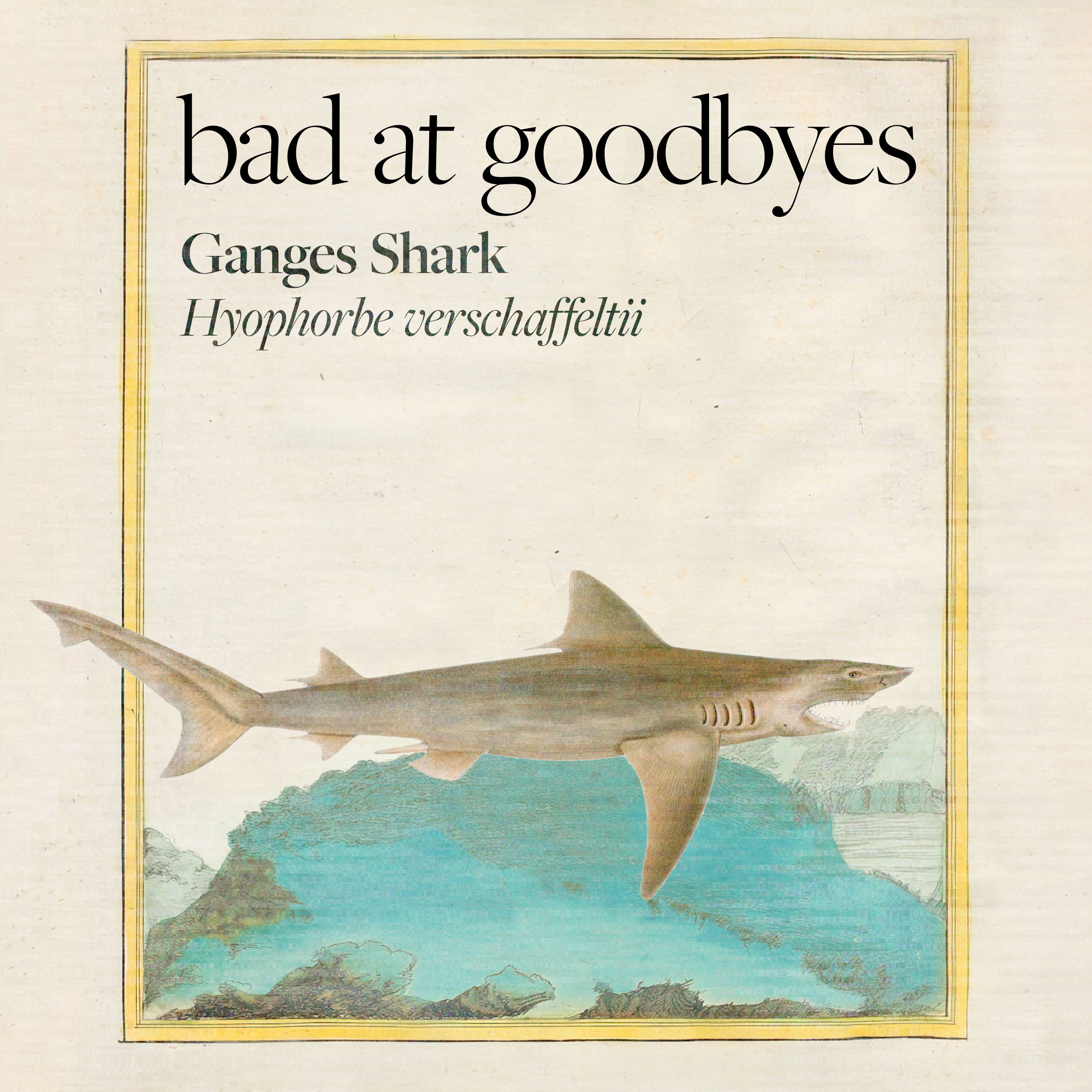
    Ganges Shark

    Ganges Shark :: Glyphis gangeticus Bad at Goodbyes :: Episode 083 On today’s show we learn about the Ganges Shark, a critically endangered freshwater shark native to South and Southeast Asia, to the river systems of India, Bangladesh and Indonesian Borneo. Its scientific name is Glyphis gangeticus and it was first described in 1839. For more information about Shark conservation please see the Shark Conservation Fund at https://www.sharkconservationfund.org. (00:05) Intro (02:05) Species Information (19:53) Citations (21:39) Music (29:55) Pledge Research for today’s show was compiled from: Chowdhury, G., Akash, M., Haque, A. (2017). Status of the Ganges river shark Glyphis gangeticus (Müller & Henle, 1839). Dhaka University Journal of Biological Sciences. 26. 111-116. – https://doi.org/10.3329/dujbs.v26i1.46355 Compagno, L. J. V. (n.d.). Glyphis gangeticus. Sharks of the World, Naturalis Biodiversity Center. – https://sharks.linnaeus.naturalis.nl/linnaeus_ng/app/views/species/taxon.php?id=62717 De, K., A. Dwivedi. 2025. Call to Action for Conservation of the Critically Endangered Ganges Shark (Glyphis gangeticus). Aquatic Conservation: Marine and Freshwater Ecosystems , 35(2). – https://doi.org/10.1002/aqc.70080 Duhigg, K. (2020, June). The rare shark of the Ganga. Mongabay India. – https://india.mongabay.com/2020/06/the-rare-shark-of-the-ganga/ Dunphy-Miller, S. 2025. "Glyphis gangeticus" (On-line), Animal Diversity Web. Accessed July 2, 2026 – https://animaldiversity.org/accounts/Glyphis_gangeticus/ Haque AB, Das SA (2019) New records of the Critically Endangered Ganges shark Glyphis gangeticus in Bangladeshi waters: urgent monitoring needed. Endangered Species Research 40:65-73. – https://doi.org/10.3354/esr00981 iNatualist - Hooghly River / Sesayap River Delta Jabado, R.W., Kyne, P.M., Nazareth, E. and Sutaria, D.N. (2018), A rare contemporary record of the Critically Endangered Ganges shark Glyphis gangeticus. Journal of Fish Biology, 92: 1663-1669. – https://doi.org/10.1111/jfb.13619 Martin, R.A. 2005. Conservation of freshwater and euryhaline elasmobranchs. Journal of the Marine Biological Association of the United Kingdom, 85: 1049-1073. – https://doi.org/10.1017/S0025315405012105 Martin, R. A. (n.d.). The mysterious, endangered river sharks (Glyphis spp.). ReefQuest Centre for Shark Research. – http://www.elasmo-research.org/conservation/river_sharks.htm Rigby, C.L., Derrick, D., Dulvy, N.K., Grant, M.I. & Jabado, R.W. 2021. Glyphis gangeticus. The IUCN Red List of Threatened Species 2021: e.T169473392A124398647. – https://dx.doi.org/10.2305/IUCN.UK.2021-2.RLTS.T169473392A124398647.en Saha, S., Pal, P., Halder, S., Dhara, K., & Saha, N. (2022). Shark diversity in the Indian Sundarban biosphere. FishTaxa, 23, 53-56. – https://fishtaxa.com/index.php/FishTaxa/article/view/50 Wikipedia - https://en.wikipedia.org/wiki/Ganges_shark Please find us on the web at Bad at Goodbyes and on instagram. Please subscribe and rate/review Bad at Goodbyes wherever you listen to podcasts. Please help spread the word about the show and about the species we feature. Please take care of each other, and all of our fellow travelers. A note on accuracy: I strive for it! These episodes are well-researched and built from scholarly sources, hoping to provide an informed and accurate portrait of these species. That said, I’m a musician! I am not an academic and have limited scientific background. I may get things wrong! If you are using this podcast for scholarship of any kind, please see the cited sources and double-check all information.

    • Transcript
  • #82
    July 1 · 29 min

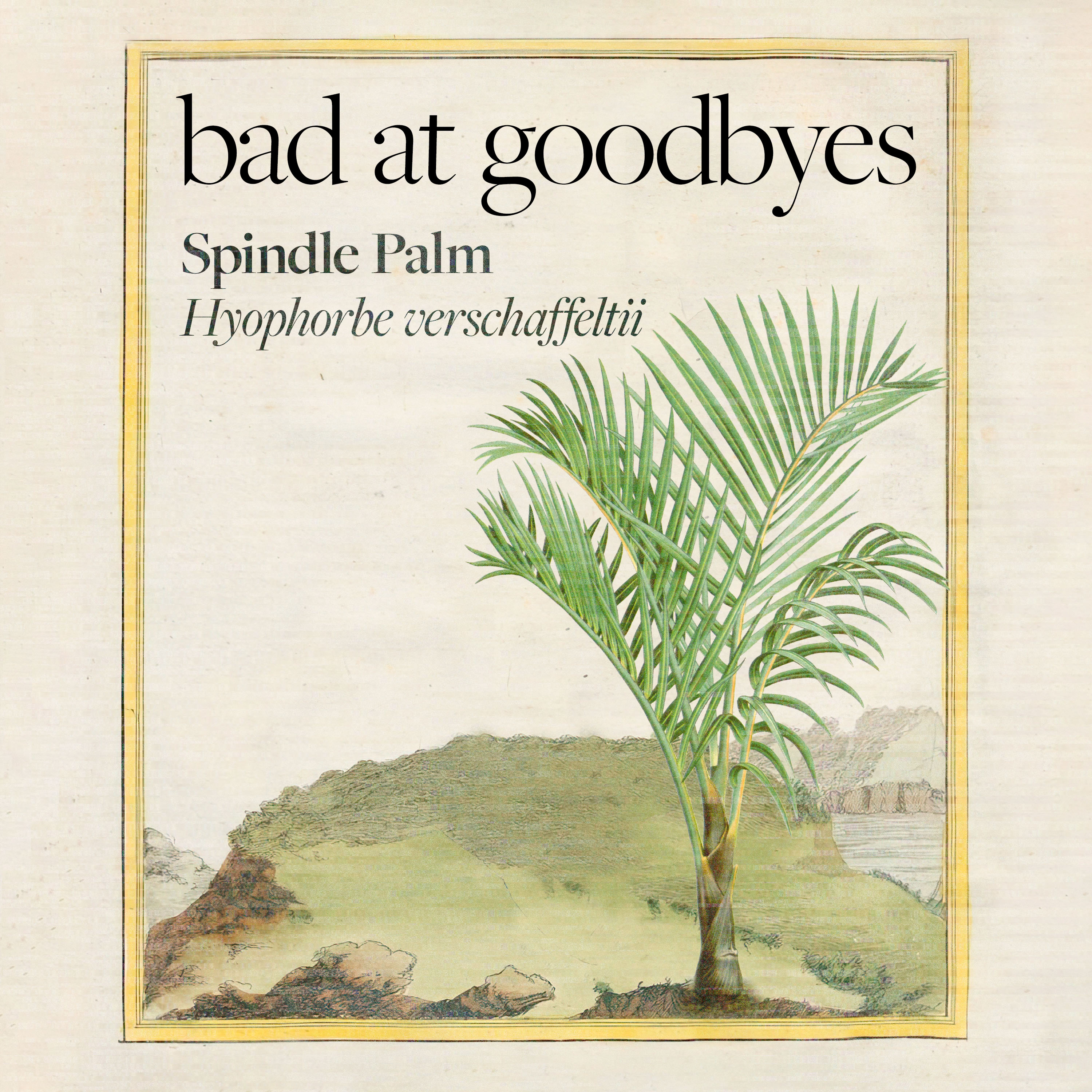
    Spindle Palm

    Spindle Palm :: Hyophorbe verschaffeltii Bad at Goodbyes :: Episode 082 On today’s show we learn about the Spindle Palm, a critically endangered flowering palm native to the Republic of Mauritius on Rodrigues Island in the southern Indian Ocean. Its scientific name is Hyophorbe verschaffeltii and it was first described in 1866. For more information about conservation on the islands of Mauritius please see the Mauritian Wildlife Foundation at https://www.mauritian-wildlife.org (00:05) Intro (02:05) Species Information (18:43) Citations (20:25) Music (27:11) Pledge Research for today’s show was compiled from: Bailey, L. H. (1942). Palms of the Mascarenes. Gentes Herbarum, 6, 51–85. – https://media.e-taxonomy.eu/palmae/protologe/palm_tc_121020_P.pdf Botânico, M. P., & Angyalossy, V. (2013). Is the secondary thickening in palms always diffuse? [Annals of the Brazilian Academy of Science 85(4)] Anais da Academia Brasileira de Ciências, 85(4), 1461–1472. – https://doi.org/10.1590/0001-37652013108612 Friedman, M. H., Andreu, M. G., Quintana, H. V., & McKenzie, M. (2010). Hyophorbe verschaffeltii, Spindle Palm: FOR 241/FR303, 5/2010. EDIS, 2010(4). – https://doi.org/10.32473/edis-fr303-2010 Henderson, A. (2024). Pollination Systems of Palms (Arecaceae). Journal of Pollination Ecology, 36, 144–248. – https://doi.org/10.26786/1920-7603(2024)782 iNaturalist - https://www.inaturalist.org/observations?captive=false&nelat=-19.653424450781902&nelng=63.51122182&quality_grade=research&subview=map&swlat=-19.779143834184264&swlng=63.317004655&view=species Kew Royal Botanic Gardens. (n.d.). Plants of the World Online. Retrieved June 24, 2026. – https://powo.science.kew.org/taxon/urn:lsid:ipni.org:names:667456-1 Maunder, M., Page, W., Mauremootoo, J., Payendee, R., Mungroo, Y., Maljkovic, A., Lyte, B. (2002). The decline and conservation management of the threatened endemic palms of the Mascarene Islands. Oryx, 36(1), 56–65. – https://doi.org/10.1017/S0030605302000091 Mauritian Wildlife Foundation. (2025). Annual report: On the activities of the Mauritian Wildlife Foundation year 2024. – https://www.mauritian-wildlife.org/mwf-files/files/files/Mauritian%20Wildlife%20Foundation%20Annual%20report%202024.pdf Ortega-Chávez, N., & Stauffer, F. W. (2011). Ontogeny and structure of the acervulate partial inflorescence in Hyophorbe lagenicaulis (Arecaceae; Arecoideae). Annals of Botany, 108(8), 1517–1527. – https://doi.org/10.1093/aob/mcr149 Tatayah, V., Jhangeer-Khan, R. & Bégué, J.A. 2021. Hyophorbe verschaffeltii. The IUCN Red List of Threatened Species 2021: e.T38582A67537366. Accessed on 23 June 2026. – https://dx.doi.org/10.2305/IUCN.UK.2021-2.RLTS.T38582A67537366.en Wikipedia - https://en.wikipedia.org/wiki/Hyophorbe_verschaffeltii Please find us on the web at Bad at Goodbyes and on instagram. Please subscribe and rate/review Bad at Goodbyes wherever you listen to podcasts. Please help spread the word about the show and about the species we feature. Please take care of each other, and all of our fellow travelers. A note on accuracy: I strive for it! These episodes are well-researched and built from scholarly sources, hoping to provide an informed and accurate portrait of these species. That said, I’m a musician! I am not an academic and have limited scientific background. I may get things wrong! If you are using this podcast for scholarship of any kind, please see the cited sources and double-check all information.

    • Transcript
  • #81
    June 24 · 31 min

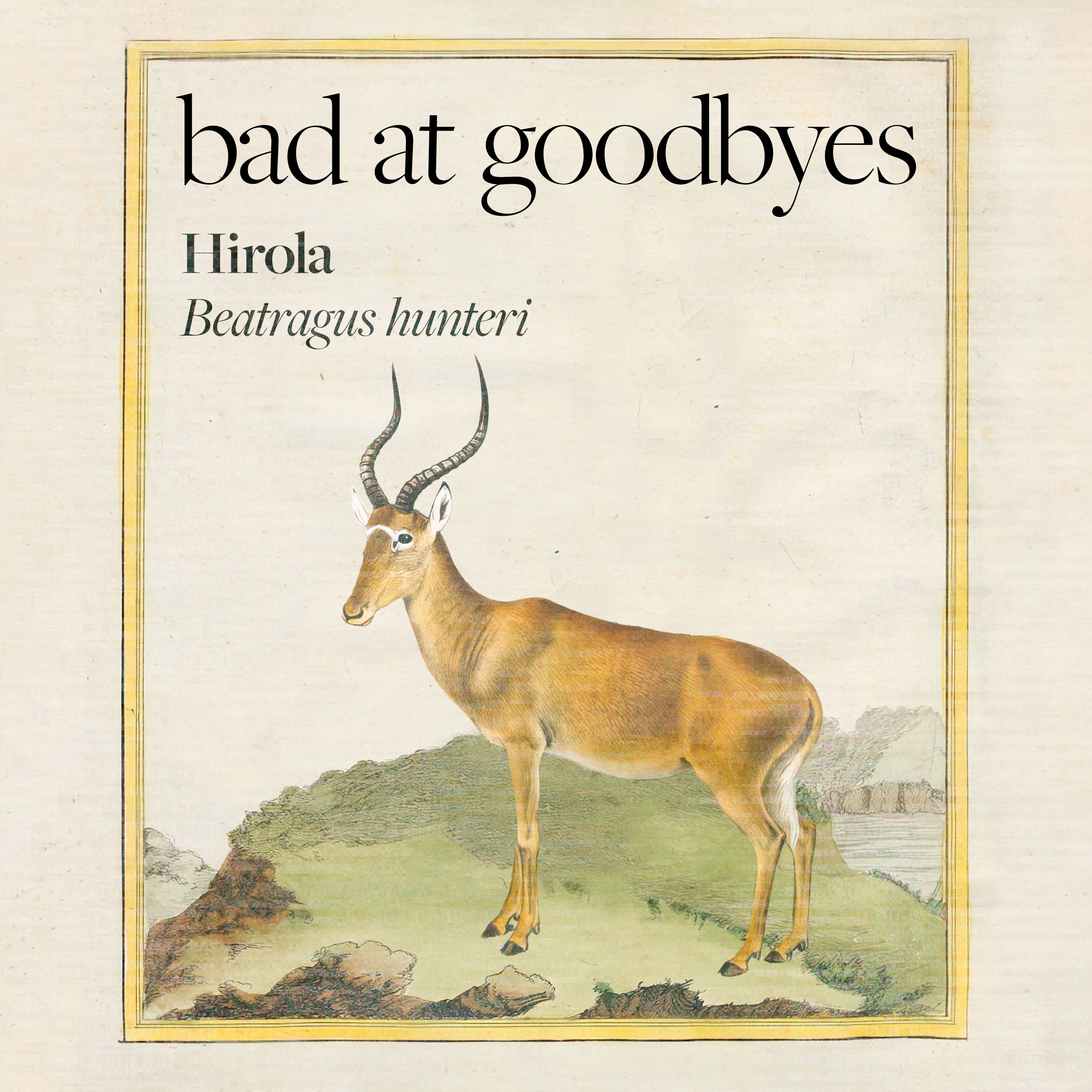
    Hirola

    Hirola :: Beatragus hunteri Bad at Goodbyes :: Episode 081 On today’s show we learn about the Hirola, a critically endangered land mammal, an antelope, native to to eastern Africa, specifically Kenya and Somalia, with two subpopulations, one within the Tsavo East National Park in Kenya, and another in unprotected land on the Somali-Kenyan border in Garissa County, Kenya. Its scientific name is Beatragus hunteri, and it was first described in 1889. For more information about Hirola conservation please see the Hirola Conservation Program at https://www.hirolaconservation.org (00:05) Intro (02:05) Species Information (21:29) Citations (23:47) Music (29:42) Pledge Research for today’s show was compiled from: Andanje, S. A., & Ottichilo, W. K. (1999). Population status and feeding habits of the translocated sub-population of Hunter's antelope or hirola (Beatragus hunteri, Sclater, 1889) in Tsavo East National Park, Kenya. African Journal of Ecology, 37(1), 38–48. – https://doi.org/10.1046/j.1365-2028.1999.00141.x Andanje, S. A. (2002). Factors limiting the abundance and distribution of hirola (Beatragus hunteri) in Kenya [Doctoral dissertation, Newcastle University]. Newcastle University eTheses. – http://hdl.handle.net/10443/1048 Ali, A. H., Kauffman, M. J., Amin, R., et al. (2018). Demographic drivers of a refugee species: Large-scale experiments guide strategies for reintroductions of hirola. Ecological Applications, 28, 275–283. – https://doi.org/10.1002/eap.1664 Ali, A. H., & Kivai, S. (2026). Drivers of Hirola Antelope Diet Selection in Natural and Managed Habitat in Eastern Kenya. Ecology and Evolution, 16(1), e72980. – https://doi.org/10.1002/ece3.72980 iNaturalist – https://www.inaturalist.org/observations?nelat=-1.375032027&nelng=40.634809542&quality_grade=research&subview=map&swlat=-2.322767254&swlng=39.657286413&view=species IUCN SSC Antelope Specialist Group. 2017. Beatragus hunteri. The IUCN Red List of Threatened Species 2017: e.T6234A50185297. – https://dx.doi.org/10.2305/IUCN.UK.2017-2.RLTS.T6234A50185297.en Jowers, M. J., Queirós, J., Resende Pinto, R., Ali, A. H., Mutinda, M., Angelone, S., Alves, P. C., & Godinho, R. (2020). Genetic diversity in natural range remnants of the critically endangered hirola antelope. Zoological Journal of the Linnean Society, 190(1), 384–395. – https://doi.org/10.1093/zoolinnean/zlz174 Kimitei, K.K., Kimanzi, J. and Andanje, S.A. (2015), Habitat suitability modelling for Hirola (Beatragus hunteri) in Tsavo East National Park, Kenya. African Journal of Ecology, 53: 550-559. – https://doi.org/10.1111/aje.12248 Lundgren, E. J., Wallach, A. D., Svenning, J.-C., Schlaepfer, M. A., Andersson, A. L. A., & Ramp, D. (2024). Preventing extinction in an age of species migration and planetary change. Conservation Biology, 38(6), e14270. – https://doi.org/10.1111/cobi.14270 Olney, H. 2002. "Beatragus hunteri" (Online), Animal Diversity Web. Accessed June 8, 2026. – https://animaldiversity.org/accounts/Beatragus_hunteri/ Probert, J., Evans, B., Andanje, S., Kock, R., & Amin, R. (2015). Population and habitat assessment of the Critically Endangered hirola Beatragus hunteri in Tsavo East National Park, Kenya. Oryx, 49(3), 514–520. – https://doi.org/10.1017/S0030605313000902 Ruso, G. E. (2017). Beatragus hunteri (Artiodactyla: Bovidae). Mammalian Species, 49(955), 119–127. – https://doi.org/10.1093/mspecies/sex015 Wikipedia – https://en.wikipedia.org/wiki/Hirola Yassin, M., Mohamed, A. M., Isiah, S., & Abdullahi, A. (2024). Assessment of Community Capacity Building and Recovery of the Hirola Antelope in Ijara Sub-County, Garrissa County, Kenya. American Journal of Environment Studies, 7(3), 1-16. – https://doi.org/10.47672/ajes.2094 Please find us on the web at Bad at Goodbyes and on instagram. Please subscribe and rate/review Bad at Goodbyes wherever you listen to podcasts. Please help spread the word about the show and about the species we feature. Please take care of each other, and all of our fellow travelers. A note on accuracy: I strive for it! These episodes are well-researched and built from scholarly sources, hoping to provide an informed and accurate portrait of these species. That said, I’m a musician! I am not an academic and have limited scientific background. I may get things wrong! If you are using this podcast for scholarship of any kind, please see the cited sources and double-check all information.

    • Transcript
  • #80
    June 10 · 26 min

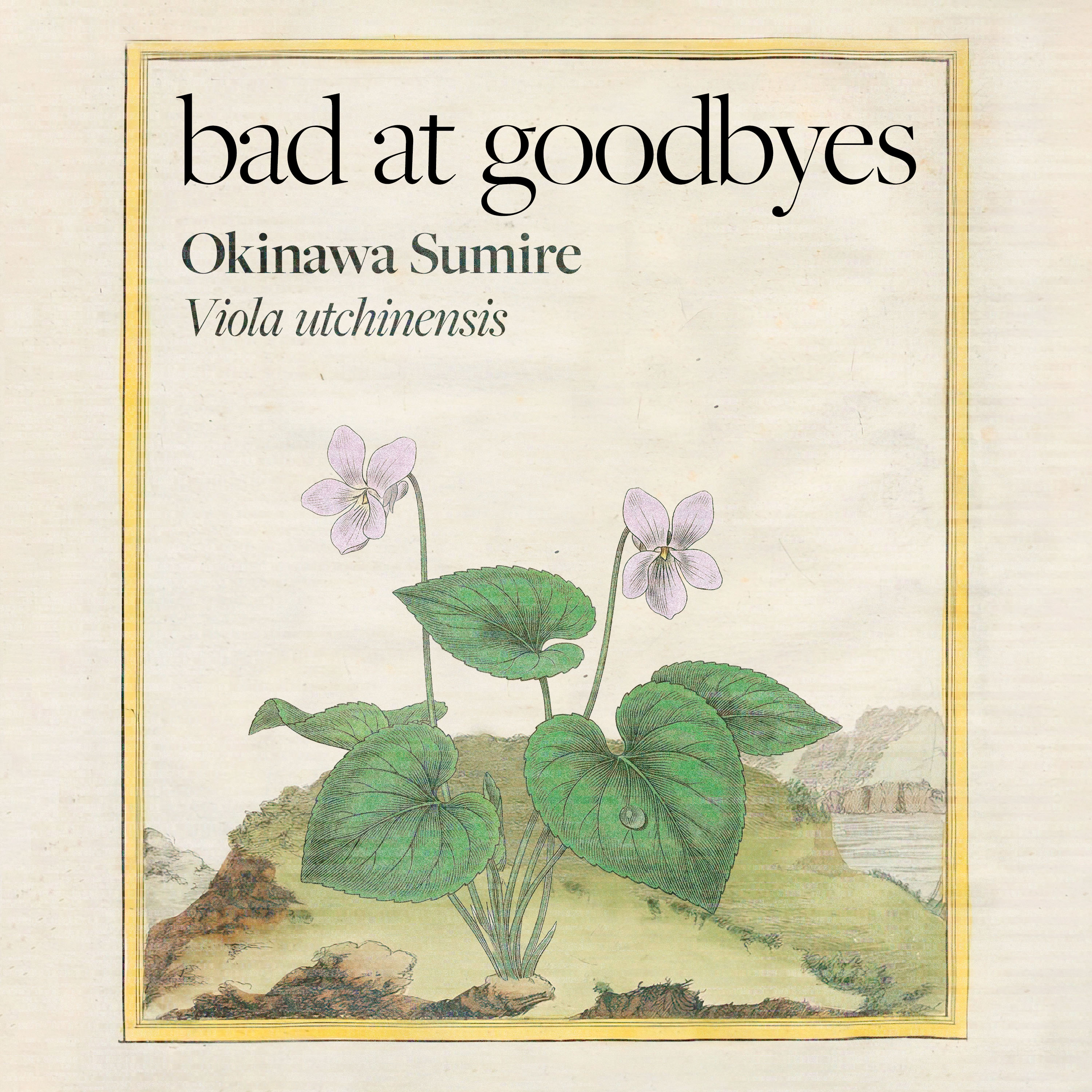
    Okinawa Sumire

    Okinawa Sumire :: Viola utchinensis Bad at Goodbyes :: Episode 080 On today’s show we learn about the Okinawa Sumire, a critically endangered flowering plant native to the Ryukyu Islands of Japan, in the Pacific Ocean, specifically, the island of Okinawa, roughly 400 miles southeast of the Japanese mainland. Its scientific name is Viola utchinensis and it was first described in 1938. (00:05) Intro (02:05) Species Information (17:56) Citations (19:47) Music (24:53) Pledge Research for today’s show was compiled from: Beattie, A. J., and N. Lyons. 1975. "Seed Dispersal in Viola (Violaceae): Adaptations and Strategies." American Journal of Botany 62, no. 7: 714–722. – https://doi.org/10.1002/j.1537-2197.1975.tb14104.x FamousFix. n.d. "Flora of the Ryukyu Islands." FamousFix. Accessed June 3, 2026. – https://www.famousfix.com/list/flora-of-the-ryukyu-islands iNaturalist – https://www.inaturalist.org/observations?captive=false&nelat=26.527232454&nelng=127.974081399&quality_grade=research&subview=map&swlat=26.42028461&swlng=127.849111916&verifiable=any&view=species Karnish, A. (2024). "Seed dispersal by ants: A primer". International Journal of Plant Sciences, 185(5), 403–411. – https://doi.org/10.1086/730787 Koidzumi, G. (1938). "Contributiones ad Cognitioem Florae Asiae Orientalis". Acta Phytotaxonomica et Geobotanica 7 (2): 112–117 [113]. – https://doi.org/10.18942/bunruichiri.KJ00002594478 Marcussen, T., Ballard, H. E., Danihelka, J., Flores, A. R., Nicola, M. V., & Watson, J. M. (2022). A Revised Phylogenetic Classification for Viola (Violaceae). Plants 11(17), 2224. – https://doi.org/10.3390/plants11172224 Ministry of the Environment, Japan. 2016. Viola utchinensis. The IUCN Red List of Threatened Species 2016: e.T54081377A54081585. – https://dx.doi.org/10.2305/IUCN.UK.2016-1.RLTS.T54081377A54081585.en NYAN. 2026. "Viola utchinensis." Violet Chamber of Flower Photo Gallery. Last updated March 19, 2026. – https://www.io-net.com/violet/violet2/okinawa(e).htm Shinmoto, Mitsutaka, Xiaohe Xinli, Anri Nerio, Nagaken Ishigaki, and Lishio Wu. 2011. "Research on Resource Botany of Natural Forests in Subtropical Okinawa." The Science Bulletin of the College of Agriculture, University of the Ryukyus 52. – https://agriknowledge.affrc.go.jp/RN/2030722825 Sutton, Sharon, and Clara Benecke. 1985. "ARGS Members Visit Japan." Bulletin of the American Rock Garden Society 43, no. 2 (Spring). – https://www.nargs.org/sites/default/files/free-rgq-downloads/VOL_43_NO_2.pdf U.S. Forest Service. n.d. "Visual Cues." Celebrating Wildflowers. Accessed June 3, 2026. – https://www.fs.usda.gov/wildflowers/pollinators/Plant_Strategies/visualcues.shtml Yousefi, N., S. S. Mehrvarz, and T. Marcussen. 2012. "Anatomical Studies on Selected Species of Viola(Violaceae)." Nordic Journal of Botany 30: 461–469. – https://doi.org/10.1111/j.1756-1051.2011.01266.x Wikipedia. n.d. "Viola utchinensis." Wikipedia. Accessed June 3, 2026. – https://en.wikipedia.org/wiki/Viola_utchinensis Please find us on the web at Bad at Goodbyes and on instagram. Please subscribe and rate/review Bad at Goodbyes wherever you listen to podcasts. Please help spread the word about the show and about the species we feature. Please take care of each other, and all of our fellow travelers. A note on accuracy: I strive for it! These episodes are well-researched and built from scholarly sources, hoping to provide an informed and accurate portrait of these species. That said, I’m a musician! I am not an academic and have limited scientific background. I may get things wrong! If you are using this podcast for scholarship of any kind, please see the cited sources and double-check all information.

    • Transcript
  • #79
    June 3 · 30 min

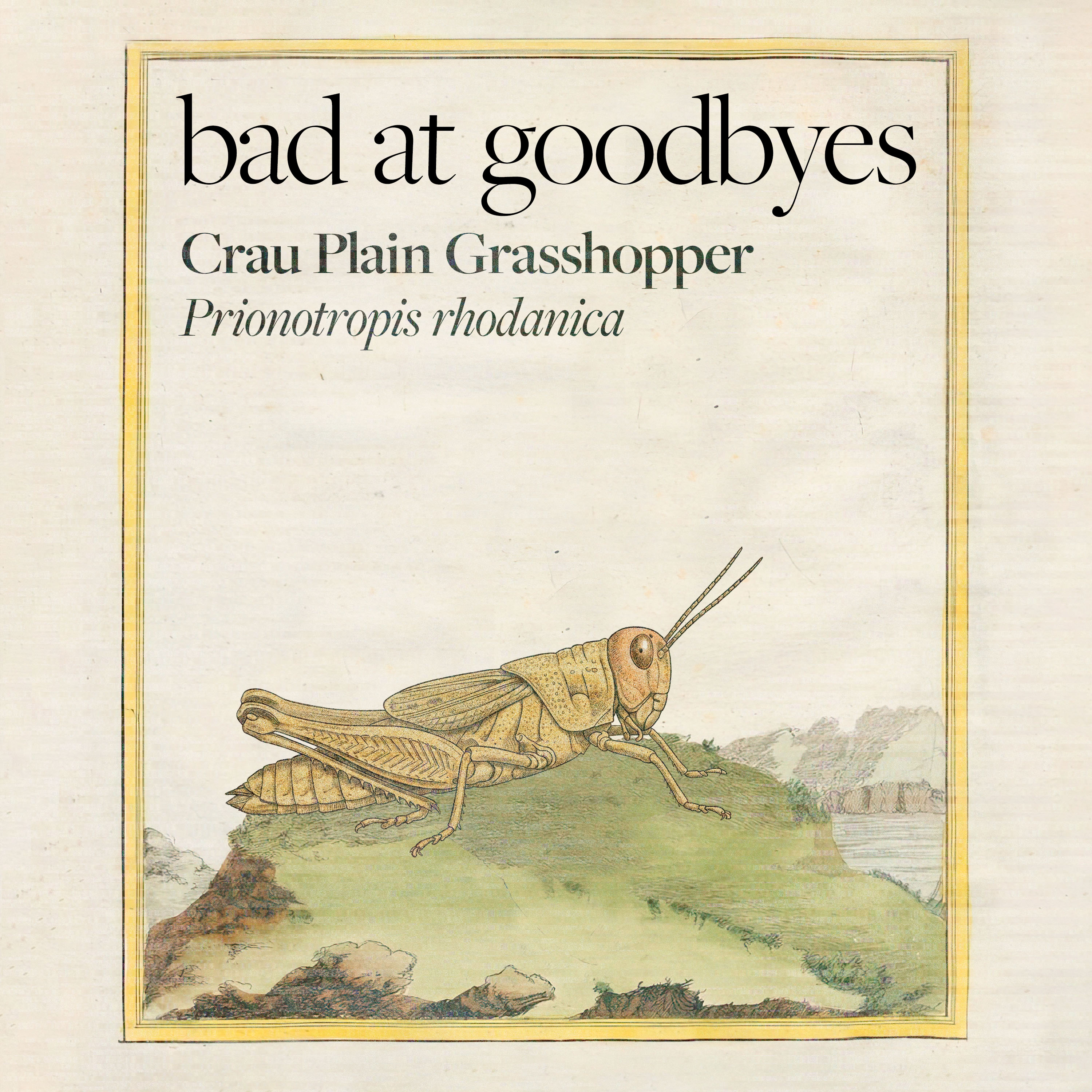
    Crau Plain Grasshopper

    Crau Plain Grasshopper :: Prionotropis rhodanica Bad at Goodbyes :: Episode 079 On today’s show we learn about the Crau Plain Grasshopper, a critically endangered insect native to Western Europe, to the south of France, in the Provence region, in the Bouches-du-Rhone department, specifically found in the dry grasslands of the Crau Plain. Its scientific name is Prionotropis rhodanica, and it was first described in 1923. For more information about conservation on the Crau Plain please see Conservatoire d'espaces naturels de Provence-Alpes-Côte d'Azur at https://cen-paca.org. (00:05) Intro (02:05) Species Information (21:37) Citations (23:47) Music (28:51) Pledge Research for today’s show was compiled from: Bröder, Linda, Laurent Tatin, Anja Danielczak, Tobias Seibel, and Axel Hochkirch. 2019. "Intensive Grazing as a Threat in Protected Areas: The Need for Adaptive Management to Protect the Critically Endangered Crau Plain Grasshopper Prionotropis rhodanica." Oryx 53 (2): 239–246. – https://doi.org/10.1017/S0030605318000170 Bröder, Linda, Laurent Tatin, Axel Hochkirch, Anja Schuld, Linda Pabst, and Aurélien Besnard. 2020. "Optimization of Capture–Recapture Monitoring of Elusive Species Illustrated with a Threatened Grasshopper." Conservation Biology 34 (3): 743–753. – https://doi.org/10.1111/cobi.13449 Bröder, Linda, Laurent Tatin, and Axel Hochkirch. 2023. "Quantifying Predation to Insects: An Experimental Approach." Global Ecology and Conservation 44: e02485. – https://doi.org/10.1016/j.gecco.2023.e02485 Ecomuseum of the Crau. n.d. "The Crau Plain Grasshopper." Life SOS Criquet de Crau. Accessed May 18, 2026. – https://www.lifecriquetdecrau.com/en/le-criquet-de-crau/lespece/ Foucart, Antoine, and Michel Lecoq. 1996. "Biologie et dynamique des populations de Prionotropis hystrix rhodanica Uvarov, 1923 dans la plaine de la Crau (France) (Orthoptera, Pamphagidae)." Bulletin de la Société entomologique de France 101 (1): 75–87. – https://doi.org/10.3406/bsef.1996.17220 Foucart, Antoine, and Michel Lecoq. 1998. "Major Threats to a Protected Grasshopper, Prionotropis hystrix rhodanica (Orthoptera, Pamphagidae, Akicerinae), Endemic to Southern France." Journal of Insect Conservation 2 (3): 187–193. – https://doi.org/10.1023/A:1009691612698 Foucart, Antoine, Michel Lecoq, and R. Sieglstetter. 1999. "Alarm on an Endemic Protected Grasshopper of the Crau Plain (Southern France), Prionotropis hystrix rhodanica (Orthoptera: Pamphagidae)." Annales de la Société Entomologique de France 35 (3-4): 337–340. – https://www.researchgate.net/publication/291864068_Alarm_on_an_endemic_protected_grasshopper_of_the_Crau_plain_Southern_France_Prionotropis_hystrix_rhodanica_Orthoptera_Pamphagidae Hochkirch, Axel, Laurent Tatin, and Mark Stanley Price. 2015. Crau Plain Grasshopper Conservation Strategy. Technical Report. IUCN SSC Grasshopper Specialist Group. – https://doi.org/10.13140/RG.2.1.3933.3925 Hochkirch, A. & Tatin, L. 2016. Prionotropis rhodanica. The IUCN Red List of Threatened Species 2016: e.T15038481A47713628. – https://dx.doi.org/10.2305/IUCN.UK.2016-3.RLTS.T15038481A47713628.en iNaturalist - https://www.inaturalist.org/observations?captive=false&nelat=43.60771507014928&nelng=4.966360194513175&quality_grade=research&subview=map&swlat=43.499515082721146&swlng=4.812502979314948&view=species Piry, Sylvain, Karine Berthier, Laurence Streiff, Stephane Cros-Arteil, Antoine Foucart, Laurent Tatin, Linda Bröder, Axel Hochkirch, and Marie-Pierre Chapuis. 2018. "Fine-Scale Interactions Between Habitat Quality and Genetic Variation Suggest an Impact of Grazing on the Critically Endangered Crau Plain Grasshopper (Pamphagidae: Prionotropis rhodanica)." Journal of Orthoptera Research 27 (1): 61–73. – https://doi.org/10.3897/jor.27.15036 Streiff, R., P. Audiot, Antoine Foucart, and Michel Lecoq. 2006. "Genetic Survey of Two Endangered Grasshopper Subspecies, Prionotropis hystrix rhodanica and Prionotropis hystrix azami (Orthoptera, Pamphagidae): Within- and Between-Population Dynamics at the Regional Scale." Conservation Genetics 7 (3): 331–344. – https://doi.org/10.1007/s10592-005-9043-3 Tatin, Laurent, Raphaël Streiff, Antoine Foucart, and Gilles Besnard. 2013. "Chapitre 6: Présentation de l'espèce: Le criquet rhodanien." In Écologie et conservation d'une steppe méditerranéenne: la plaine de Crau, edited by Laurent Tatin, Axel Wolff, Jean Boutin, Etienne Colliot, and Thierry Dutoit, 93–102. Versailles: Éditions Quae. – https://www.researchgate.net/publication/326389866_Le_criquet_rhodanien Wikipedia - https://en.wikipedia.org/wiki/Bouches-du-Rhône Please find us on the web at Bad at Goodbyes and on instagram. Please subscribe and rate/review Bad at Goodbyes wherever you listen to podcasts. Please help spread the word about the show and about the species we feature. Please take care of each other, and all of our fellow travelers. A note on accuracy: I strive for it! These episodes are well-researched and built from scholarly sources, hoping to provide an informed and accurate portrait of these species. That said, I’m a musician! I am not an academic and have limited scientific background. I may get things wrong! If you are using this podcast for scholarship of any kind, please see the cited sources and double-check all information.

    • Transcript
  • #78
    May 20 · 32 min

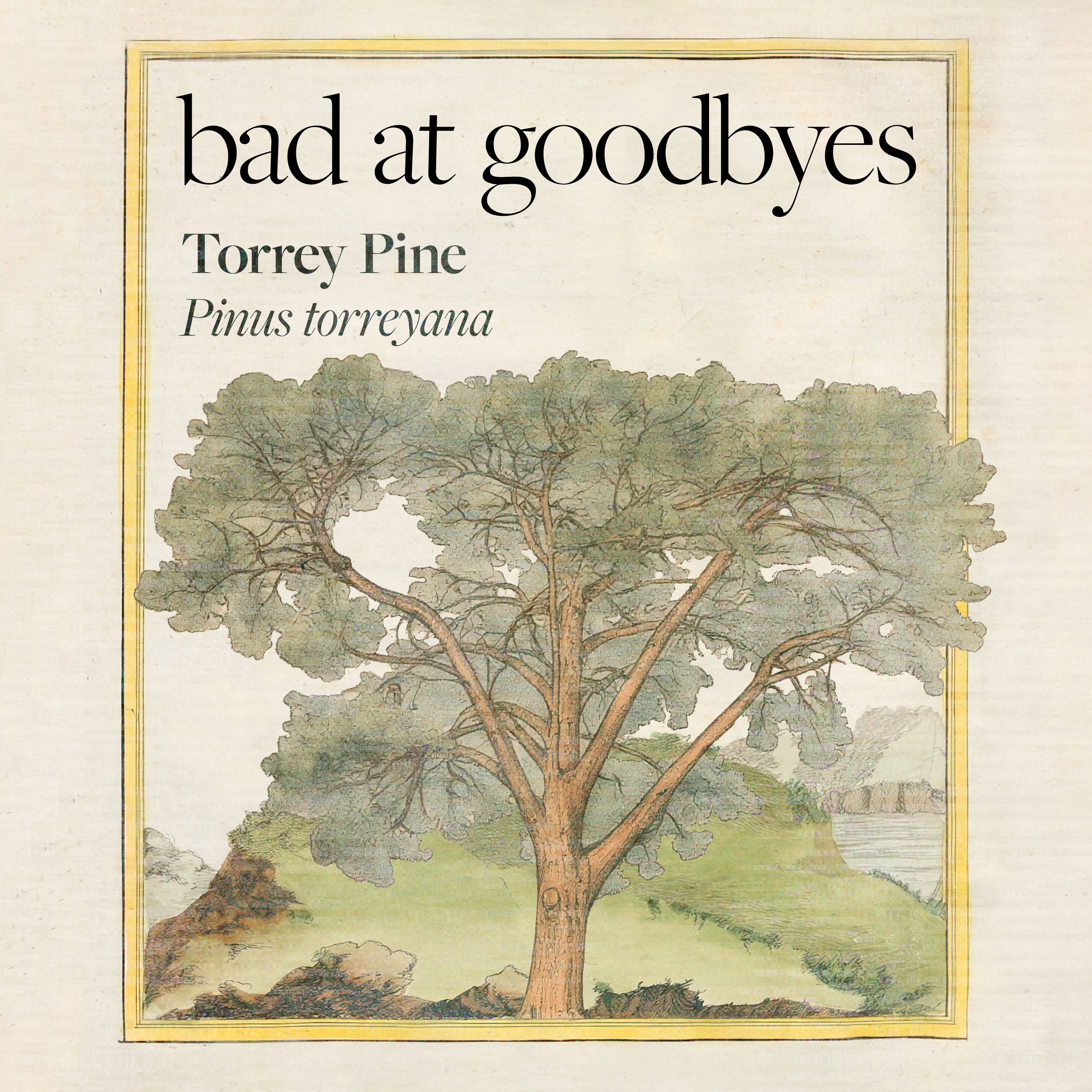
    Torrey Pine

    Torrey Pine :: Pinus torreyana Bad at Goodbyes :: Episode 078 On today’s show we learn about the Torrey Pine, a critically endangered evergreen conifer, native to the North American Pacific coast, with two populations in California, one near San Diego and one on Santa Rosa Island near Santa Barbara. Its scientific name is Pinus torreyana and it was first described in 1855. (00:05) Intro (02:05) Species Information (22:46) Citations (24:29) Music (30:39) Pledge For more information about Torrey Pines conservation, please see the Torrey Pine Conservancy at https://www.torreypines.org Research for today’s show was compiled from: American Conifer Society. n.d. “Pinus torreyana.” American Conifer Society. – https://conifersociety.org/conifers/pinus-torreyana Biondi, Franco, Daniel R. Cayan, and Wolfgang H. Berger. 1997. "Dendroclimatology of Torrey Pine (Pinus torreyana Parry ex Carr.)." The American Midland Naturalist 138 (2): 237–51. – https://doi.org/10.2307/2426817 California State Parks. n.d. "Torrey Pines State Natural Reserve." Accessed May 16, 2026. – https://www.parks.ca.gov/?page_id=657 Di Santo, L.N., Mead, A., Wright, J.W. and Hamilton, J.A. (2025), Genetic Basis of Reproductive Isolation in Torrey Pine (Pinus torreyana Parry): Insights From Hybridization and Adaptation. Evolutionary Applications, 18: e70094. – https://doi.org/10.1111/eva.70094 Di Santo, L. N., Hoban, S., Parchman, T. L., Wright, J. W., & Hamilton, J. A. (2022). Reduced representation sequencing to understand the evolutionary history of Torrey pine (Pinus torreyana parry) with implications for rare species conservation. Molecular Ecology, 31, 4622–4639. – https://doi.org/10.1111/mec.16615 Esser, Lora L. 1993. "Pinus torreyana." In Fire Effects Information System. U.S. Department of Agriculture, Forest Service, Rocky Mountain Research Station, Fire Sciences Laboratory. – https://www.fs.usda.gov/database/feis/plants/tree/pintor/all.html Farjon, A. 2013. Pinus torreyana. The IUCN Red List of Threatened Species 2013: e.T42424A2979186. – https://dx.doi.org/10.2305/IUCN.UK.2013-1.RLTS.T42424A2979186.en Hamilton, Jill A., Alayna Mead, Jessica W. Wright, and Mikhail V. Matz. 2017. "Genetic Conservation and Management of the California Endemic, Torrey Pine (Pinus torreyana Parry): Implications of Genetic Rescue in a Genetically Depauperate Species." Ecology and Evolution 7 (18): 7370–81. – https://doi.org/10.1002/ece3.3306 Johnson, M., Vander Wall, S.B. & Borchert, M. A comparative analysis of seed and cone characteristics and seed-dispersal strategies of three pines in the subsection Sabinianae . Plant Ecology 168, 69–84 (2003). – https://doi.org/10.1023/A:1024470224134 McMaster, Gregory S., and Paul H. Zedler. 1981. "Delayed Seed Dispersal in Pinus torreyana (Torrey Pine)." Oecologia 51 (1): 62–66. – https://doi.org/10.1007/BF00344654 Steele, Stephanie, and Christa Horn. 2021. "The Torrey Pine." Zoonooz, January 20, 2021. – https://sandiegozoowildlifealliance.org/story-hub/zoonooz/the-torrey-pine Tianshi, E., Chau, P.C. Foliar water uptake in the needles of Pinus torreyana. Plant Ecology 223, 465–477 (2022). - https://doi.org/10.1007/s11258-022-01222-z Wells, Molly L., and Arthur Getis. 1999. "The Spatial Characteristics of Stand Structure in Pinus torreyana." Plant Ecology 143 (2): 153–70. – https://doi.org/10.1023/A:1009866702320 Wikipedia – https://en.wikipedia.org/wiki/Torrey_pine Williams, A., Still, C., Fischer, D., & Leavitt, S. (2008). The influence of summertime fog and overcast clouds on the growth of a coastal Californian pine: a tree-ring study. Oecologia, 156(3), 601-611. Pubmed ID: 18368424. – http://dx.doi.org/10.1007/s00442-008-1025-y Please find us on the web at Bad at Goodbyes and on instagram. Please subscribe and rate/review Bad at Goodbyes wherever you listen to podcasts. Please help spread the word about the show and about the species we feature. Please take care of each other, and all of our fellow travelers. A note on accuracy: I strive for it! These episodes are well-researched and built from scholarly sources, hoping to provide an informed and accurate portrait of these species. That said, I’m a musician! I am not an academic and have limited scientific background. I may get things wrong! If you are using this podcast for scholarship of any kind, please see the cited sources and double-check all information.

    • Transcript
  • #77
    May 13 · 38 min

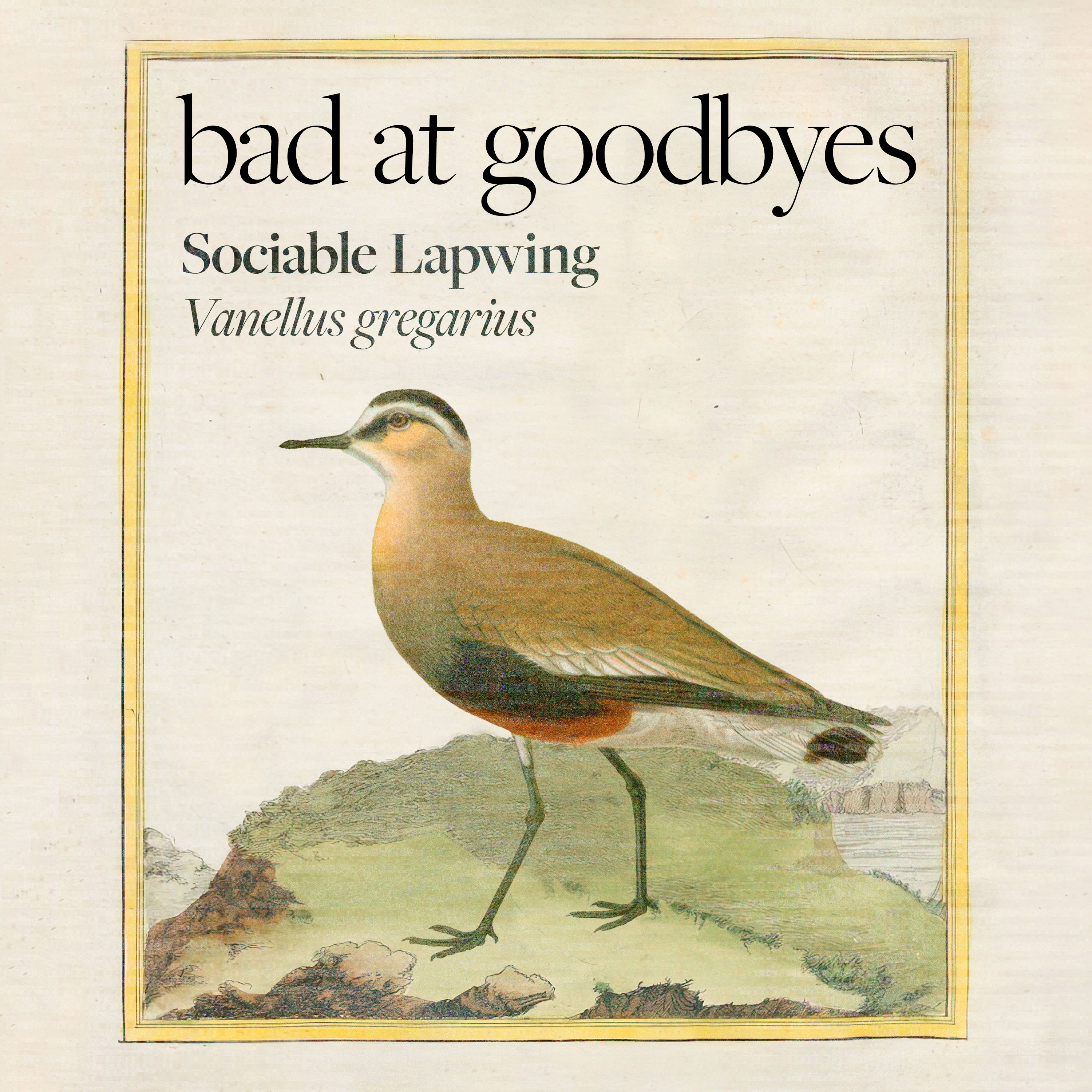
    Sociable Lapwing

    Sociable Lapwing :: Vanellus gregarius Bad at Goodbyes :: Episode 077 On today’s show we learn about the Sociable Lapwing, a critically endangered migratory avian, a bird, native to breeding grounds in Kazakhstan and wintering sites in Sudan, India, Pakistan, and in small pockets across the Middle East. Its scientific name is Vanellus gregarius and it was first described in 1771. (00:05) Intro (02:05) Species Information (26:56) Citations (28:55) Music (36:53) Pledge Research for today’s show was compiled from: Berdahl, Andrew M., Albert B. Kao, Andrea Flack, Peter A. H. Westley, Edward A. Codling, Iain D. Couzin, Anthony I. Dell, and Dora Biro. 2018. "Collective Animal Navigation and Migratory Culture: From Theoretical Models to Empirical Evidence." Philosophical Transactions of the Royal Society B: Biological Sciences 373 (1746): 20170009. – https://doi.org/10.1098/rstb.2017.0009 Bhagwat, T., Urazaliyev, R., Nill, L. et al. Habitat suitability for Sociable Lapwing (Vanellus gregarius) increases across its global range, but populations continue to decline. Journal of Ornithology. – https://doi.org/10.1007/s10336-025-02357-2 BirdLife International. 2019. Vanellus gregarius (amended version of 2018 assessment). The IUCN Red List of Threatened Species 2019: e.T22694053A155545788. – https://dx.doi.org/10.2305/IUCN.UK.2019-3.RLTS.T22694053A155545788.en Biricik, M. (2009). Unexpectedly large number of Sociable Lapwings, Vanellus gregarius, on autumn migration in Turkey and some remarks on the stopover site. Ornithological Society of the Middle East. n.d. Sandgrouse. Vol. 31. 15-17. – https://www.biodiversitylibrary.org/page/44744626 Donald, P.F., Kamp, J., Green, R.E. et al. Migration strategy, site fidelity and population size of the globally threatened Sociable Lapwing Vanellus gregarius. Journal of Ornithology 162, 349–367 (2021). – https://doi.org/10.1007/s10336-020-01844-y Eichhorn, G. & Heinicke, T. Notable observations of the Sociable Plover Vanellus gregarius from Tengiz-Korgalzhyn area- central Kazakstan. Wader Study Group Bulletin. 93: 73-76. – https://www.researchgate.net/publication/304571137_Notable_observations_of_the_Sociable_Plover_Vanellus_gregarius_from_the_Tengiz_-_Korgalzhyn_area_central_Kazakstan Fijen, Thijs. (2013). Xeno-Canto. Sound Recording. XC145086. – www.xeno-canto.org/145086 Gallo Orsi, Umberto, and Canan Orhun, comps. 2008. "Sociable Lapwing (Vanellus gregarius)." In Review of the Implementation and the Effectiveness of 15 Single Species Action Plans for Migratory Waterbird Species, 55–56. AEWA Technical Series No. 30. Bonn, Germany: UNEP/AEWA Secretariat. – https://www.unep-aewa.org/sites/default/files/publication/ts30_ssap_review_final_0_0.pdf iNaturalist – https://www.inaturalist.org/observations?nelat=50.636602954&nelng=70.232115181&quality_grade=research&subview=map&swlat=50.336026198&swlng=69.740476998&view=species Kamp, J., Sheldon, R.D., Koshkin, M.A., Donald, P.F. And Biedermann, R. (2009), Post-Soviet steppe management causes pronounced synanthropy in the globally threatened Sociable Lapwing Vanellus gregarius. Ibis, 151: 452-463. – https://doi.org/10.1111/j.1474-919X.2009.00938.x Keijl, Guido, Simon Delany, Jeff Kirby, and Tim Dodman. 2009. "Sociable Lapwing Vanellus gregarius." In An Atlas of Wader Populations in Africa and Western Eurasia, edited by Simon Delany, Derek Scott, Tim Dodman, and David Stroud, 171–174. Wageningen, The Netherlands: Wetlands International – https://www.researchgate.net/publication/276264669_Sociable_Lapwing_Vanellus_gregarius Lambert, Frank (2025). Xeno-Canto. Sound Recording. XC1030408. – www.xeno-canto.org/1030408 Moldován, I. & Sándor, A. (2010). "Observation of a large flock of sociable Lapwings Vanellus gregarius in southeast Egypt". Ornithological Society of the Middle East. n.d. Sandgrouse. Vol. 32. – https://www.biodiversitylibrary.org/page/44754785 Sheldon, R.D., Kamp, J., Koshkin, M.A. et al. Breeding ecology of the globally threatened Sociable Lapwing Vanellus gregarius and the demographic drivers of recent declines. Journal of Ornithology 154, 501–516 (2013). – https://doi.org/10.1007/s10336-012-0921-4 Sheldon, R.D., Koshkin, M.A., Kamp, J., Dereliev, S., Donald, P.F., & Jbour, S. (Compilers). 2012. International Single Species Action Plan for the Conservation of the Sociable Lapwing (Vanellus gregarius). CMS Technical Series No. 28, AEWA Technical Series No. 47. Bonn, Germany – https://www.unep-aewa.org/publication/international-single-species-action-plan-conservation-sociable-lapwing-ts-no-47 Watson, M., Wilson, J.M., Koshkin, M., Sherbakov, B., Karpov, F., Gavrilov, A., Schielzeth, H., Brombacher, M., Collar, N.J. And Cresswell, W. (2006), Nest survival and productivity of the critically endangered Sociable Lapwing Vanellus gregarius. Ibis, 148: 489-502. – https://doi.org/10.1111/j.1474-919X.2006.00555.x Wiersma, P., G. M. Kirwan, and C. J. Sharpe (2020). Sociable Lapwing (Vanellus gregarius), version 1.0. In Birds of the World (J. del Hoyo, A. Elliott, J. Sargatal, D. A. Christie, and E. de Juana, Editors). Cornell Lab of Ornithology, Ithaca, NY, USA. – https://doi.org/10.2173/bow.soclap1.0 Wikipedia – https://en.wikipedia.org/wiki/Sociable_lapwing Please find us on the web at Bad at Goodbyes and on instagram. Please subscribe and rate/review Bad at Goodbyes wherever you listen to podcasts. Please help spread the word about the show and about the species we feature. Please take care of each other, and all of our fellow travelers. A note on accuracy: I strive for it! These episodes are well-researched and built from scholarly sources, hoping to provide an informed and accurate portrait of these species. That said, I’m a musician! I am not an academic and have limited scientific background. I may get things wrong! If you are using this podcast for scholarship of any kind, please see the cited sources and double-check all information.

    • Transcript
  • #76
    May 7 · 29 min

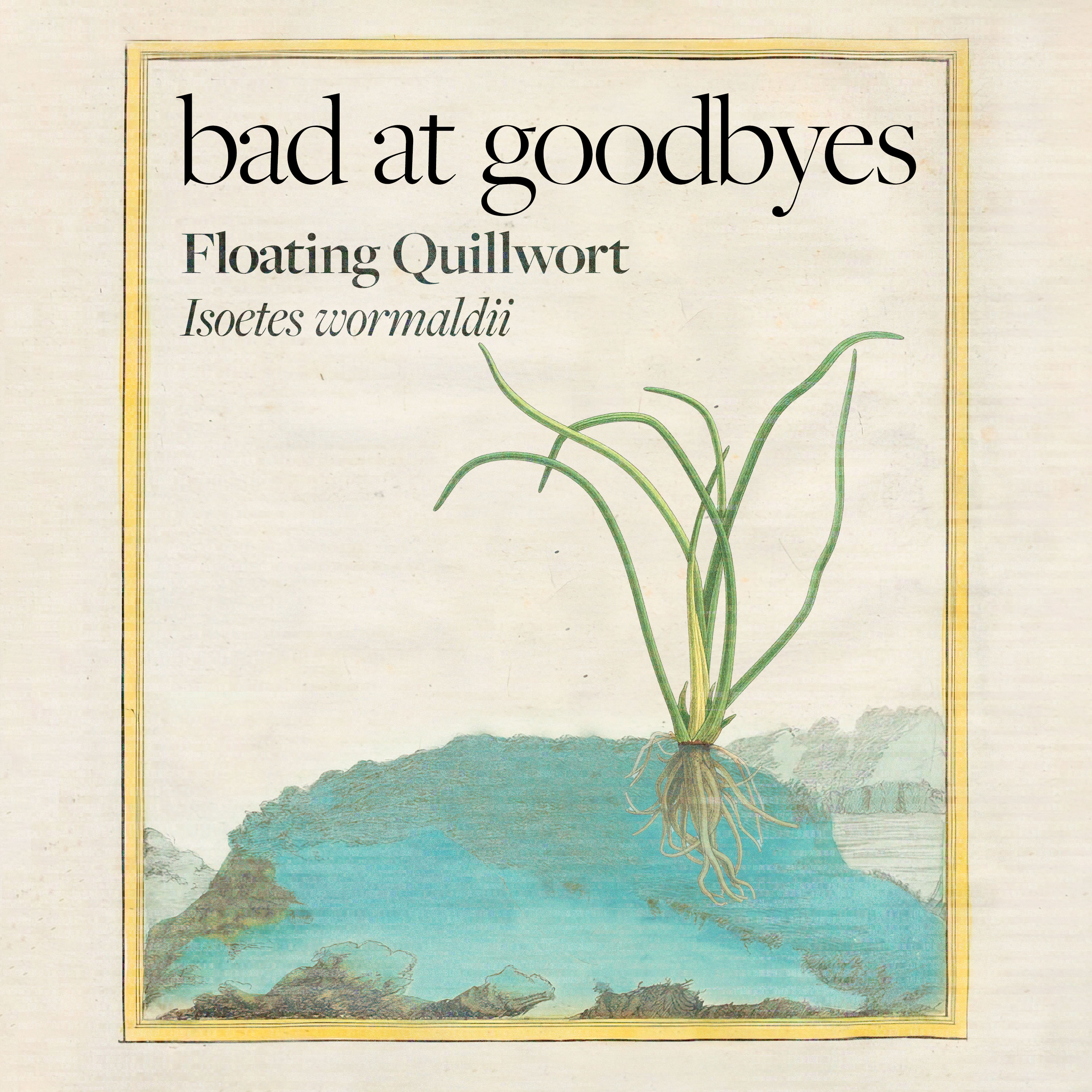
    Floating Quillwort

    Floating Quillwort :: Isoetes wormaldii Bad at Goodbyes :: Episode 076 On today’s show we learn about the Floating Quillwort, a critically endangered freshwater semi-aquatic plant native to South Africa, specifically to the Eastern Cape province, found roughly 25 miles from the coast. Its scientific name is Isoetes wormaldii and it was first described in 1906. (00:05) Intro (02:05) Species Information (19:13) Citations (20:57) Music (27:10) Pledge Research for today’s show was compiled from: Azzella, M. M., Vecchia, A. D., Abeli, T., Alahuhta, J., Amoroso, V. B., Ballesteros, E., Bertrin, V., Brunton, D., Bobrov, A. A., Caldeira, C., Ceschin, S., Chemeris, E. V., Čtvrtlíková, M., de Winton, M., Gacia, E., Grishutkin, O. G., Hofstra, D., Ivanova, D., Ivanova, M. O., … Bolpagni, R. (2024). Global assessment of aquatic Isoëtes species ecology. Freshwater Biology, 69, 1420–1437. – https://doi.org/10.1111/fwb.14316 Freund, F. D. (2022). The Genus Isoëtes L., evolution, diversification and population structure in a free-sporing heterosporous lycophyte. UC Berkeley. ProQuest ID: Freund_berkeley_0028E_21171. Merritt ID: ark:/13030/m5nx0dn2. – https://escholarship.org/uc/item/937695n1 iNaturalist – https://www.inaturalist.org/observations?lat=-33.33523469222247&lng=26.571899142994628&quality_grade=research&radius=1.6281024631201406 Larsén, E., Wikström, N., Khodabandeh, A. et al. Phylogeny of Merlin’s grass (Isoetaceae): revealing an “Amborella syndrome” and the importance of geographic distribution for understanding current and historical diversity. BMC Ecology and Evolution v 22, 32 (2022). – https://doi.org/10.1186/s12862-022-01988-w Larsén, E., Khodabandeh, A. & Rydin, C. (2025). Spore morphology and evolution in Isoëtes (Isoëtales). Botanical Journal of the Linnean Society, boaf078 – https://doi.org/10.1093/botlinnean/boaf078 Mucina, Ladislav, Michael C. Rutherford, Johannes L. Nel, Jan H. J. Vlok, Doug I. W. Euston-Brown, Leslie W. Powrie, Anthony P. Dold, and Robert A. Ward. 2006. "Azonal Vegetation." In The Vegetation of South Africa, Lesotho and Swaziland, edited by Ladislav Mucina and Michael C. Rutherford, 614–648. Strelitzia 19. Pretoria: South African National Biodiversity Institute. – https://www.sanbi.org/wp-content/uploads/2024/05/2006_Strelitzia19.pdf Sim, T. R. 1915. The Ferns of South Africa, Containing Descriptions and Figures of the Ferns and Fern Allies of South Africa. Cambridge [Eng.]: University Press. – https://www.biodiversitylibrary.org/page/51313623 Victor, J. E., and A. P. Dold. 2003. "Threatened Plants of the Albany Centre of Floristic Endemism, South Africa." South African Journal of Science 99 (9/10): 437–446. – https://hdl.handle.net/10520/EJC97693 Victor, J. E., & Dold, A. P. (2007). "Isoetes wormaldii Sim". National Assessment: Red List of South African Plants version 2024.1. South African National Biodiversity Institute. – http://redlist.sanbi.org/species.php?species=2184-15 Victor, J.E. & Dold, A.P. 2010. Isoetes wormaldii. The IUCN Red List of Threatened Species 2010: e.T185429A8409995. – https://dx.doi.org/10.2305/IUCN.UK.2010-3.RLTS.T185429A8409995.en Wickell, D., Kuo, LY., Yang, HP. et al. Underwater CAM photosynthesis elucidated by Isoetes genome. Nature Communications v.12, 6348 (2021). – https://doi.org/10.1038/s41467-021-26644-7 Wood D, Besnard G, Beerling DJ, Osborne CP, Christin PA (2020) Phylogenomics indicates the “living fossil” Isoetes diversified in the Cenozoic. PLOS ONE 15(6): e0227525. – https://doi.org/10.1371/journal.pone.0227525 Wikipedia – https://en.wikipedia.org/wiki/Isoetes Please find us on the web at Bad at Goodbyes and on instagram. Please subscribe and rate/review Bad at Goodbyes wherever you listen to podcasts. Please help spread the word about the show and about the species we feature. Please take care of each other, and all of our fellow travelers. A note on accuracy: I strive for it! These episodes are well-researched and built from scholarly sources, hoping to provide an informed and accurate portrait of these species. That said, I’m a musician! I am not an academic and have limited scientific background. I may get things wrong! If you are using this podcast for scholarship of any kind, please see the cited sources and double-check all information.

    • Transcript
  • #75
    April 29 · 33 min

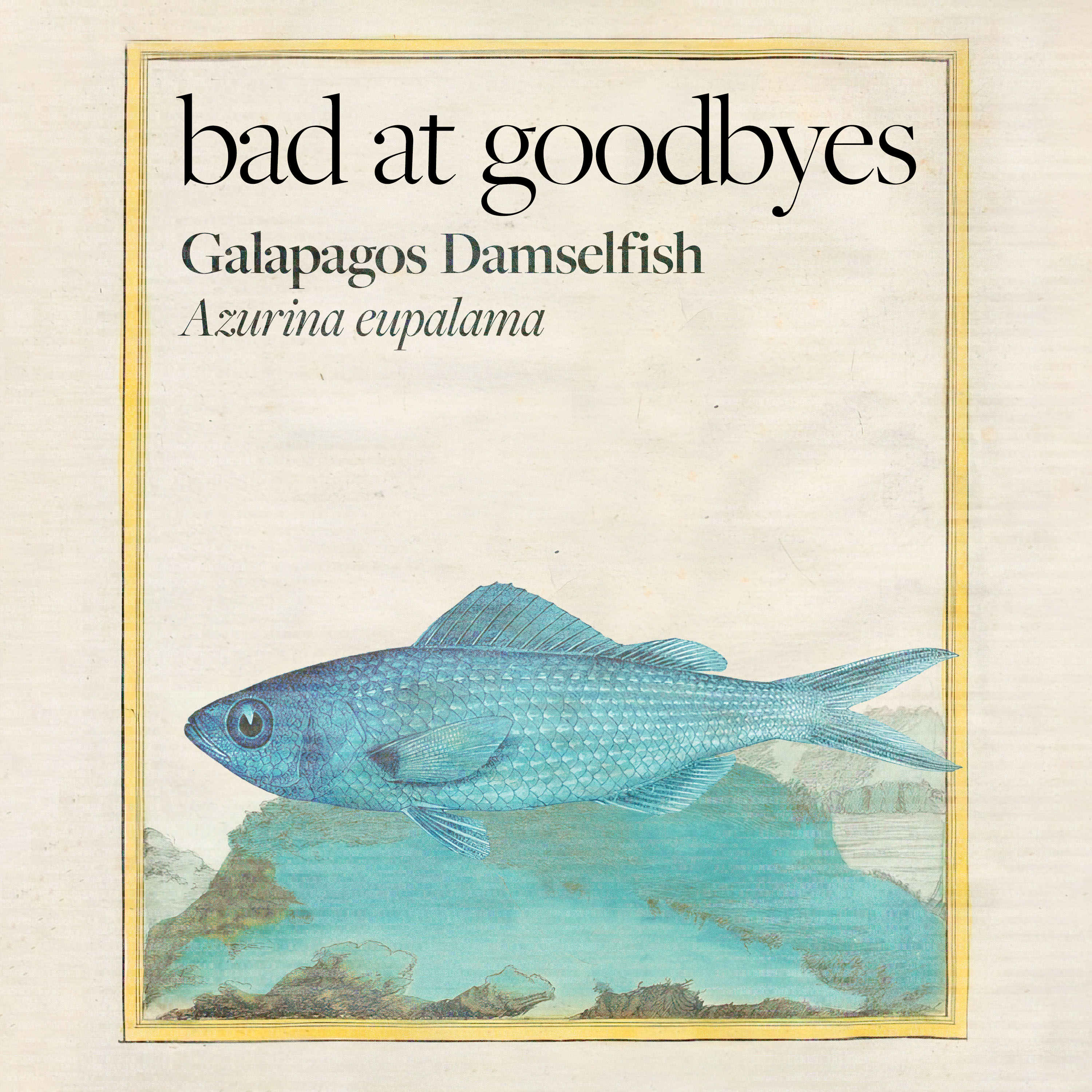
    Galápagos Damselfish

    Galápagos Damselfish :: Azurina eupalama Bad at Goodbyes :: Episode 075 On today’s show we learn about the Galápagos Damselfish, a critically endangered, possibly extinct marine fish native to the ocean waters of the Galápagos Islands, an archipelago in the Pacific Ocean, a province of Ecuador, roughly 600 miles west of the South American Ecuadorian coast. Its scientific name is Azurina eupalama and it was first described in 1903. (00:05) Intro (02:05) Species Information (23:33) Citations (25:41) Music (31:44) Pledge For more information about conservation on the Galápagos Islands, please see the Galápagos Conservancy at https://www.galapagos.org. Research for today’s show was compiled from: Aguilar-Medrano, R., Frédérich, B., De Luna, E., Balart, E. F. "Patterns of morphological evolution of the cephalic region in damselfishes (Perciformes: Pomacentridae) of the Eastern Pacific". Biological Journal of the Linnean Society, Volume 102, Issue 3, March 2011, Pages 593–613. – https://doi.org/10.1111/j.1095-8312.2010.01586.x Butler, Rhett Ayers. "Is the Galápagos damselfish extinct?" Mongabay, April 7, 2026. – https://news.mongabay.com/2026/04/is-the-galapagos-damselfish-extinct/ Climate Change Vulnerability Assessment of the Galápagos Islands. 2011. Eds. I. Larrea and G. Di Carlo. WWF and Conservation International, USA – https://www.cbd.int/doc/lifeweb/Ecuador/images/ClimateChangeReport.pdf Cominsky, E. 2020. "Azurina eupalama" (On-line), Animal Diversity Web. Accessed April 20, 2026. – https://animaldiversity.org/accounts/Azurina_eupalama/ Grove, J.S., Bensted-Smith, W., Brandt, M., Domínguez, O., Espinoza, E., Keith, I., Rivera, F.E., Suárez, J., Tapia, I. & Tirado-Sánchez, N. 2023. "Azurina eupalama". The IUCN Red List of Threatened Species 2023: e.T184017A217449660. – https://dx.doi.org/10.2305/IUCN.UK.2023-1.RLTS.T184017A217449660.en Grove, J. S., & Victor, B. C. (2025). "Has climate change driven the Galapagos Damselfish, Azurina eupalama, to extinction?" Journal of the Ocean Science Foundation, 42, 7–14.. – https://doi.org/10.5281/zenodo.14846312 Grove, Jack. (1985). "Influence of the 1982/1983 El Niño event on the icthyofauna of the Galapagos islands". Tropical Ocean-Atmospheric Newsletter Vol.28 pp. 18-19. – https://www.google.com/books/edition/Tropical_Ocean_atmosphere_Newsletter/xR4eAQAAMAAJ?hl=en&gbpv=1&pg=RA24-PA18&printsec=frontcover&dq=%22ichthyofauna%20on%20the%20Gal%C3%A1pagos%22 Heller, Edmund and Snodgrass, Robert Evans. (1903). "Papers from the Hopkins Stanford Galapagos expedition, 1898-1899. XV. New fishes." Proceedings of the Washington Academy of Sciences 5: 189-229. Washington, D.C: The Academy. – https://www.biodiversitylibrary.org/page/17224271 iNaturalist – https://www.inaturalist.org/observations?nelat=1.6818345&nelng=-89.2412769&swlat=-1.4112351&swlng=-92.0089666 Kelly, J., Pan, Y., Menzer, A., Dong, H. 2023 "Hydrodynamics of body–body interactions in dense synchronous elongated fish schools". Physics of Fluids v. 35 (4): 041906. – https://doi.org/10.1063/5.0142950 McCosker, John E., and Richard H. Rosenblatt. 2010. "The Fishes of the Galápagos Archipelago: An Update." Proceedings of the California Academy of Sciences, ser. 4, 61, Supplement II, no. 11: 167–95. – https://www.biodiversitylibrary.org/page/63419300 Parmentier, Eric, David Lecchini, and David A. Mann. 2016. "Sound Production in Damselfishes." In Biology of Damselfishes, edited by Bruno Frédérich and Eric Parmentier, 204–228. Boca Raton: CRC Press. – https://www.hawaii.edu/behavior/490E/Parmentier%20et%20al.%202010.%20Sound%20production%20in%20damselfishes.pdf Rastoin-Laplane, E., Salinas-de-León, P., Goetze, J.S., Saunders, B.J., McKinley, S.J., Norris, C., Gosby, C., Mattingly, A., Garcia, R., Harvey, E.S. "Fluctuations of Galapagos mid-water and benthic reef fish populations during the 2015–16 ENSO". Estuarine, Coastal and Shelf Science, v. 294 (2023). – https://doi.org/10.1016/j.ecss.2023.108523 Simons, Eric. "The Fish We Never Knew: A Brief History of an Extinct Fish and What to Think About It." Bay Nature, April 16, 2014 (updated August 19, 2021). – https://baynature.org/2014/04/16/science-nature/wildlife/fish-never-knew/ Wainwright, D. K., Karan, E. A., Collar, D. C. "Evolutionary patterns of scale morphology in damselfishes (Pomacentridae)". Biological Journal of the Linnean Society, Volume 135, Issue 1, January 2022, Pages 138–158. – https://doi.org/10.1093/biolinnean/blab140 Wikipedia – https://en.wikipedia.org/wiki/Galapagos_damsel Please find us on the web at Bad at Goodbyes and on instagram. Please subscribe and rate/review Bad at Goodbyes wherever you listen to podcasts. Please help spread the word about the show and about the species we feature. Please take care of each other, and all of our fellow travelers. A note on accuracy: I strive for it! These episodes are well-researched and built from scholarly sources, hoping to provide an informed and accurate portrait of these species. That said, I’m a musician! I am not an academic and have limited scientific background. I may get things wrong! If you are using this podcast for scholarship of any kind, please see the cited sources and double-check all information.

    • Transcript
  • #74
    April 22 · 28 min

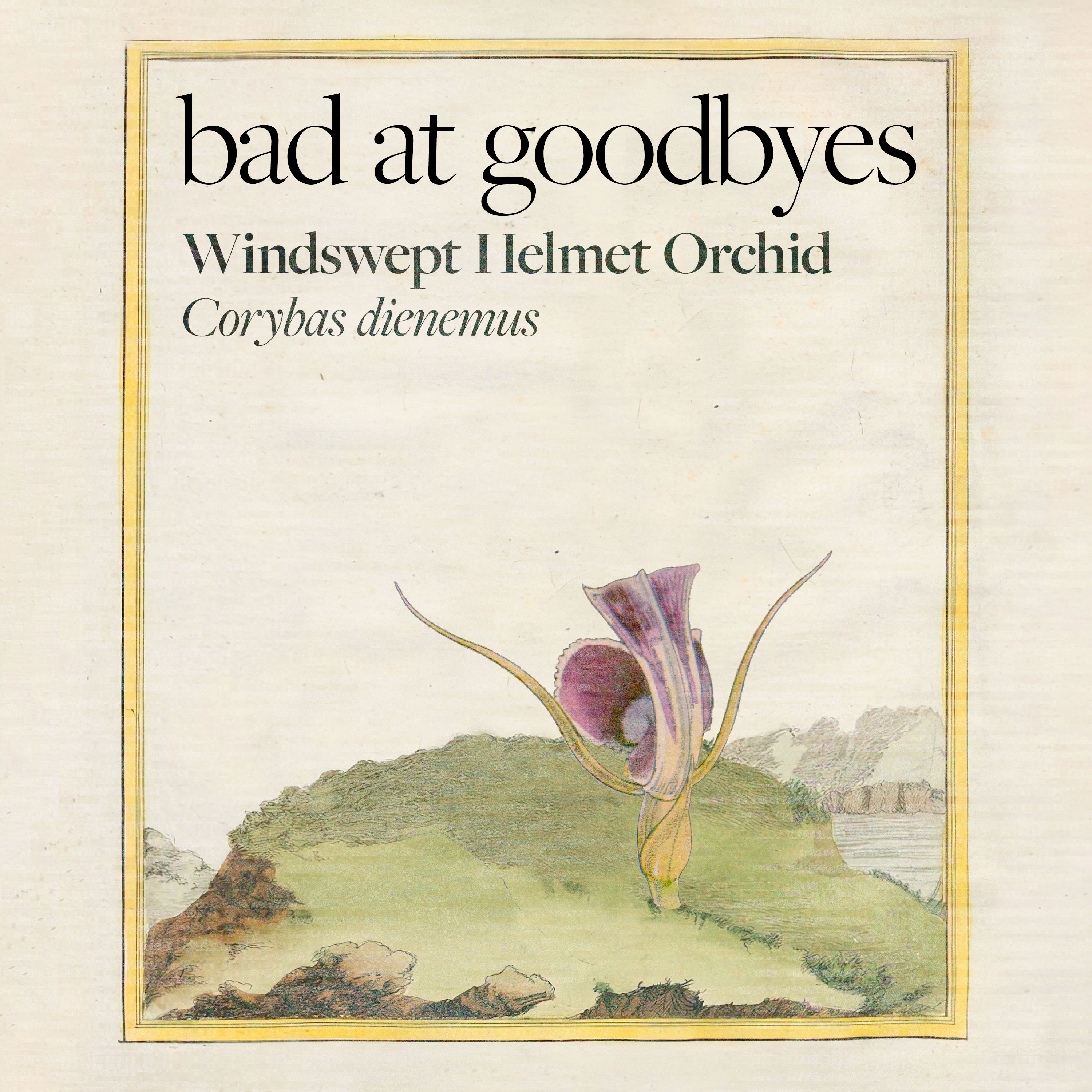
    Windswept Helmet Orchid

    Windswept Helmet Orchid :: Corybas dienemus Bad at Goodbyes :: Episode 074 On today’s show we learn about the Windswept Helmet Orchid, a critically endangered flowering plant native to Australia, in the state of Tasmania, specifically Macquarie Island in the far southwest Pacific. Its scientific name is Corybas dienemus and it was first described in 1993. (00:05) Intro (02:05) Species Information (19:12) Citations (20:56) Music (26:34) Pledge For more information about Windswept Helmet Orchid conservation, please see the Tasmania Parks and Wildlife Service at https://parks.tas.gov.au. Research for today’s show was compiled from: Bergstrom, D.M., Bricher, P.K., Raymond, B., Terauds, A., Doley, D., McGeoch, M.A., Whinam, J., Glen, M., Yuan, Z., Kiefer, K., Shaw, J.D., Bramely-Alves, J., Rudman, T., Mohammed, C., Lucieer, A., Visoiu, M., Jansen van Vuuren, B. and Ball, M.C. (2015), "Rapid collapse of a sub-Antarctic alpine ecosystem: the role of climate and pathogens." Journal of Applied Ecology, v.52: 774-783. – https://doi.org/10.1111/1365-2664.12436 Clements, Mark & Jones, David. (2007). "A new species of Nematoceras and characterisation of N. dienemum (Orchidaceae), both from subantarctic Macquarie Island." Telopea. v. 11. – https://doi.org/10.7751/telopea20075739 Cockel, C. 2013. Nematoceras dienemum. The IUCN Red List of Threatened Species 2013: e.T44392794A44533262. – https://dx.doi.org/10.2305/IUCN.UK.2013-1.RLTS.T44392794A44533262.en de Lange, P.J. (2025). "Corybas dienemus Fact Sheet." New Zealand Plant Conservation Network. – https://www.nzpcn.org.nz/flora/species/corybas-dienemus/ Skotnicki, M. L., G. R. Copson, J. Doube, L. Gadd, J. M. Selkirk-Bell, and P. M. Selkirk. 2009. "Biology and population studies of two endemic Nematoceras (orchid) species on sub-Antarctic Macquarie Island." Papers and Proceedings of the Royal Society of Tasmania 143 (2): 61-71. – https://www.biodiversitylibrary.org/page/64591663 Tasmania Parks and Wildlife Service. (2007). Macquarie Island Pest Eradication Project: Operational Plan for the Eradication of Rabbits and Rodents from Macquarie Island. Department of Tourism, Arts and the Environment. - https://www.dcceew.gov.au/parks-heritage/heritage/publications/eradication-rabbits-and-rodents-subantarctic-macquarie-island Threatened Species Section. "Listing Statement for Corybas dienemus (windswept helmet-orchid)". Hobart: Department of Primary Industries, Parks, Water and Environment, Tasmania, 2017 – https://nre.tas.gov.au/Documents/Corybas%20dienemus%20listing%20statement.pdf Threatened Species Section (2017). "Threatened Tasmanian Orchids Flora Recovery Plan". Hobart: Department of Primary Industries, Parks, Water & Environment, Tasmania – https://nre.tas.gov.au/Documents/Accepted-Orchid-RP.pdf Visoiu, Micah. 2019. Flora Values Assessment and Monitoring Report - Macquarie Island Nature Reserve and World Heritage Area - March 2019. Nature Conservation Report 19/01. Hobart: Natural and Cultural Heritage Division, Department of Primary Industries, Parks, Water and Environment. – https://nre.tas.gov.au/Documents/Macquarie%20Island%20Vegetation%20Assessment%202019.pdf Wikipedia – https://en.wikipedia.org/wiki/Corybas_dienemus Please find us on the web at Bad at Goodbyes and on instagram. Please subscribe and rate/review Bad at Goodbyes wherever you listen to podcasts. Please help spread the word about the show and about the species we feature. Please take care of each other, and all of our fellow travelers. A note on accuracy: I strive for it! These episodes are well-researched and built from scholarly sources, hoping to provide an informed and accurate portrait of these species. That said, I’m a musician! I am not an academic and have limited scientific background. I may get things wrong! If you are using this podcast for scholarship of any kind, please see the cited sources and double-check all information.

    • Transcript
  • #73
    April 14 · 35 min

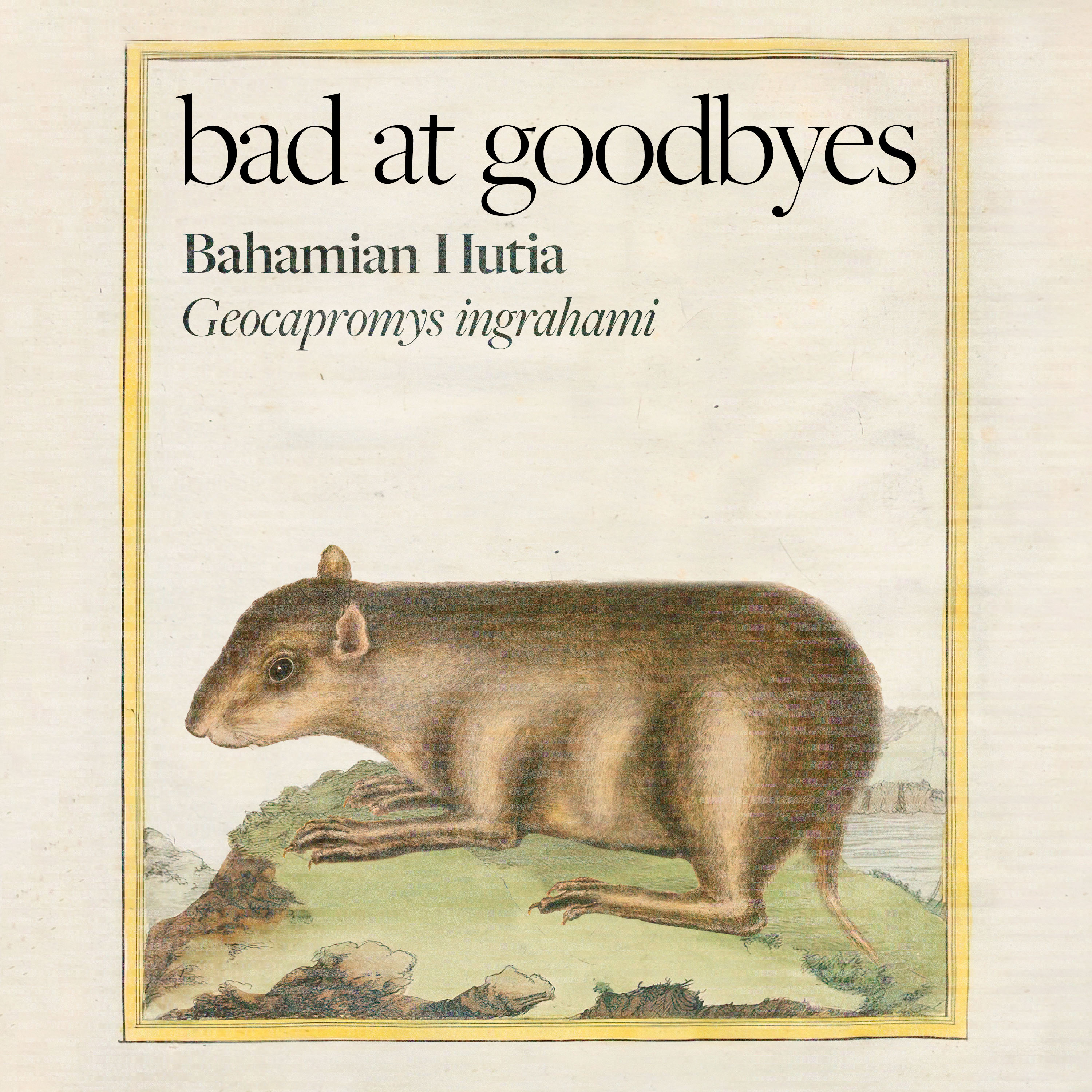
    Bahamian Hutia

    Bahamian Hutia :: Geocapromys ingrahami Bad at Goodbyes :: Episode 073 On today’s show we learn about the Bahamian Hutia, a critically endangered mammal, a rodent, native to the Bahamas archipelago in the Caribbean region, in the Atlantic Ocean. Its scientific name is Geocapromys ingrahami and it was first described in 1891. (00:05) Intro (02:05) Species Information (26:25) Citations (28:32) Music (33:34) Pledge For more information about Bahamian Hutia conservation, please see the Bahamas National Trust at https://bnt.bs/ Research for today’s show was compiled from: Allen, J.A. 1891-08-31. Description of a new species of Capromys from the Plana Keys, Bahamas. Bulletin of the American Museum of Natural History 3(23):329-336. – https://hdl.handle.net/2246/839 Campbell, D. G., Lowell, K. S., Lightbourn, M. E. 1991. The effect of introduced Hutias (Geocapromys ingrahami) on the woody vegetation of Little Wax Cay, Bahamas. Conservation Biology 5: 536-541 - https://doi.org/10.1111/j.1523-1739.1991.tb00361.x Cartwright, F.B., Davis, A., Kennerley, R. & Turvey, S.T. 2024. Geocapromys ingrahami. The IUCN Red List of Threatened Species 2024: e.T9002A224590046. – https://dx.doi.org/10.2305/IUCN.UK.2024-2.RLTS.T9002A224590046.en Clough, Garrett C. 1973. “A Most Peaceable Rodent.” Natural History 82 (6): 66–74. – http://hdl.handle.net/2246/6480 Clough, Garrett C. “The Bahaman Hutia: A Rodent Refound.” Oryx 10, no. 2 (1969): 106–8. – https://doi.org/10.1017/S0030605300007936 Clough, Garrett C. 1976. “Current Status of Two Endangered Caribbean Rodents.” Biological Conservation 10, no. 1 (July): 43–47. – https://doi.org/10.1016/0006-3207(76)90023-9 Jordan, Kevin Clark. 1989. "An Ecology of the Bahamian Hutia : Geocapromys Ingrahami". Doctoral Dissertation; University of Florida. – https://www.biodiversitylibrary.org/item/207298 Knowles, Lindy, and Casuarina McKinney-Lambert. 2013. Southeastern Bahamas Coral Reef & Island Survey: Rapid Ecological Assessment Report. Nassau: Bahamas National Trust & BREEF. – https://www.agrra.org/wp-content/uploads/2019/01/SE-Bahamas-Coral-Reef-and-Island-Survey-Final-REA-Report-9-24-13.pdf Kennerley, Ros. 2024. “Safeguarding the Future of Critically Endangered Bahaman Hutia Within the Bahaman Archipelago Through Evidenced Based Management.” Mohamed bin Zayed Species Conservation Fund. December 23, 2024. - https://www.speciesconservation.org/small-grant/bahamian-hutia/36130 LeFebvre MJ, deFrance SD, Kamenov GD, Keegan WF, Krigbaum J (2019) The zooarchaeology and isotopic ecology of the Bahamian hutia (Geocapromys ingrahami): Evidence for pre-Columbian anthropogenic management. PLoS ONE 14(9): e0220284. – https://doi.org/10.1371/journal.pone.0220284 LeFebvre, Michelle, Geoffrey Duchemin, Susan deFrance, William Keegan, and Kristen Walczesky. 2018. “Bahamian Hutia (Geocapromys Ingrahami) in the Lucayan Realm: Pre-Columbian Exploitation and Translocation.” Environmental Archaeology 24, no. 2 (August): 171–87. – https://doi.org/10.1080/14614103.2018.1503809 Oswald, J.A., Allen, J.M., LeFebvre, M.J. et al. Ancient DNA and high-resolution chronometry reveal a long-term human role in the historical diversity and biogeography of the Bahamian hutia. Scientific Reports v 10, 1373 (2020). – https://doi.org/10.1038/s41598-020-58224-y Rebach, Judith A. Osborn, "Comparison of the Gas Exchange and Water Balance of the Nutria, Myocastorcoypus, and the Hutia, Geocapromys Ingrahami" (1971). Open Access Dissertations. Paper 2617. University of Rhode Island. – https://digitalcommons.uri.edu/oa_diss/2617 Turvey, Samuel T., Rosalind J. Kennerley, Jose M. Nuñez-Miño, and Richard P. Young. 2017. “The Last Survivors: Current Status and Conservation of the Non-Volant Land Mammals of the Insular Caribbean.” Journal of Mammalogy 98, no. 4 (August): 918–36. https://doi.org/10.1093/jmammal/gyw154 Wilson, Don E., Thomas E. Lacher Jr., and Russell A. Mittermeier. 2016. “Geocapromys Ingrahami.” In Handbook of the Mammals of the World – Volume 6: Lagomorphs and Rodents I, 552–604. Barcelona: Lynx Edicions. – https://doi.org/10.5281/zenodo.6624107 Please find us on the web at Bad at Goodbyes and on instagram. Please subscribe and rate/review Bad at Goodbyes wherever you listen to podcasts. Please help spread the word about the show and about the species we feature. Please take care of each other, and all of our fellow travelers. A note on accuracy: I strive for it! These episodes are well-researched and built from scholarly sources, hoping to provide an informed and accurate portrait of these species. That said, I’m a musician! I am not an academic and have limited scientific background. I may get things wrong! If you are using this podcast for scholarship of any kind, please see the cited sources and double-check all information.

    • Transcript
  • #72
    April 1 · 35 min

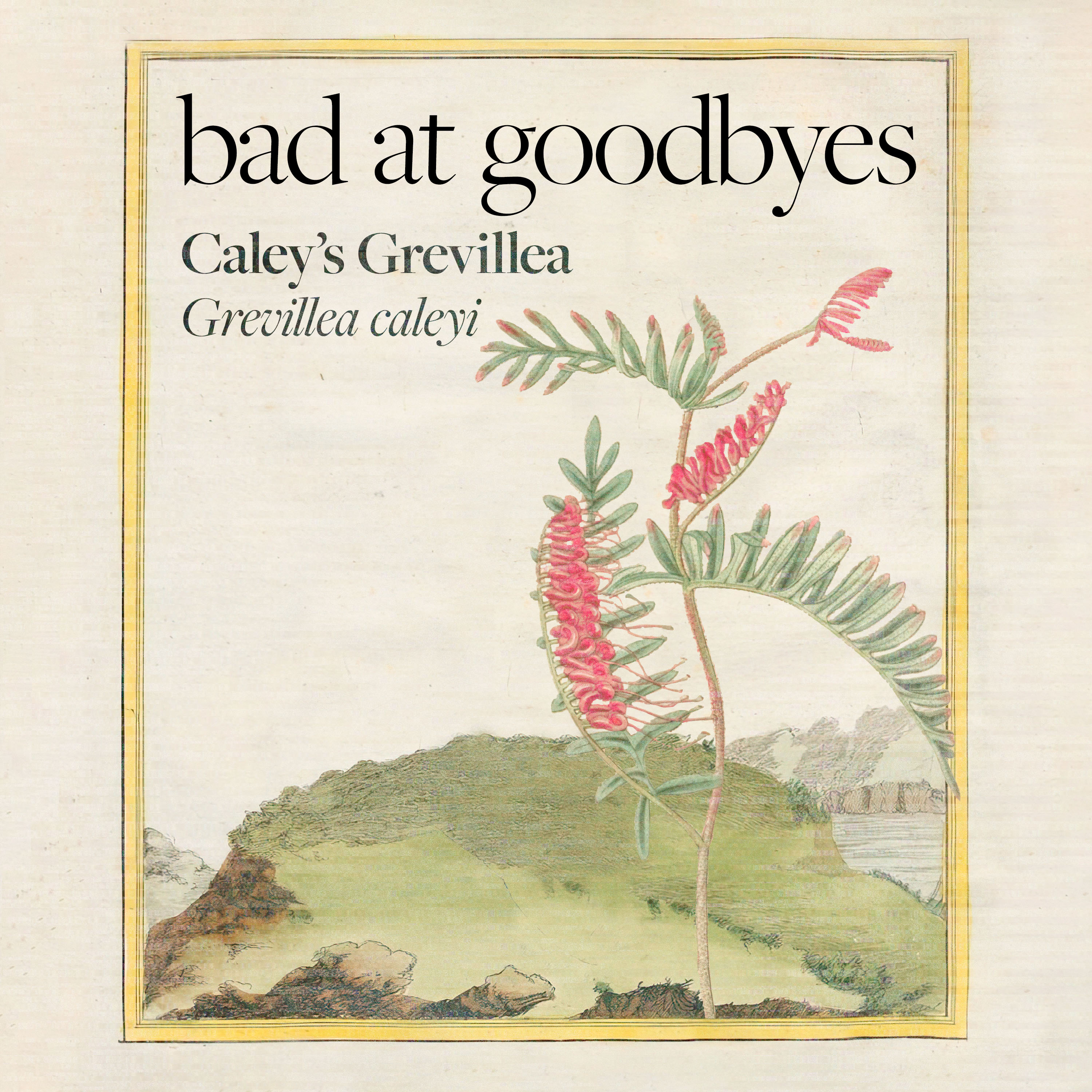
    Caley's Grevillea

    Caley's Grevillea :: Grevillea caleyi Bad at Goodbyes :: Episode 072 On today’s show we learn about the Caley's Grevillea, a critically endangered flowering shrub native to Australia, specifically to the state of New South Wales, north of Sydney, near the Pacific coast. Its scientific name is Grevillea caleyi and it was first described in 1830. (00:05) Intro (02:05) Species Information (24:59) Citations (27:11) Music (33:34) Pledge For more information about Caley's Grevillea conservation, please see the New South Wales Department of Climate Change, Energy, the Environment and Water at https://www.environment.nsw.gov.au/. Research for today’s show was compiled from: Auld, T.D. & Makinson, R. 2020. Grevillea caleyi. The IUCN Red List of Threatened Species 2020: e.T112648700A113309255. – https://dx.doi.org/10.2305/IUCN.UK.2020-2.RLTS.T112648700A113309255.en Auld, Tony D., and J. A. Scott. 2004. "Estimating Population Abundance in Species with Dormant Life-Stages: Fire and the Endangered Plant Grevillea Caleyi R. Br." Ecological Management & Restoration 5 (2): 125–29 - https://doi.org/10.1111/j.1442-8903.2004.00187.x Auld, Tony D, and Judith Scott. 2013. “Integrating Fire Management into Conservation Actions for the Threatened Shrub ‘Grevillea Caleyi.’” Australasian Plant Conservation: Journal of the Australian Network for Plant Conservation 22 (1): 2--4. – https://doi.org/10.5962/p.373496 Department of Climate Change, Energy, the Environment and Water. (2026, March 23). Grevillea caleyi — Caley's Grevillea. Species Profile and Threats Database. – http://www.environment.gov.au/cgi-bin/sprat/public/publicspecies.pl?taxon_id=9683 Howes, Jeff, and Dan Clarke. 2021. "Grevillea Caleyi." Australian Plants Society NSW. August 7, 2021. – https://resources.austplants.com.au/plant/grevillea-caleyi/. Llorens, T., Ayre, D. & Whelan, R. Evidence for ancient genetic subdivision among recently fragmented populations of the endangered shrub Grevillea caleyi (Proteaceae). Heredity 92, 519–526 (2004). – https://doi.org/10.1038/sj.hdy.6800444 Llorens, Tanya. 2003. Genetic Structure and Diversity in the Soil-Stored Seed Bank of the Endangered Grevillea caleyi. Sydney: Australian Flora Foundation. - https://aff.org.au/results/grant-summaries/aff-llorens-g_caleyi/ Morris, E. Charles. 2000. "Germination response of seven east Australian Grevillea species (Proteaceae) to smoke, heat exposure and scarification." Australian Journal of Botany 48 (2): 179–89. – https://doi.org/10.1071/BT98051 NSW Department of Climate Change, Energy, the Environment and Water (DCCEEW). 2025. "Tricking Herbivore Noses to Aid Plant Conservation." Environment and Heritage. August 1, 2025. – https://www.environment.nsw.gov.au/news/tricking-herbivore-noses-aid-plant-conservation-news NSW National Parks and Wildlife Service. 2022. Conservation Action Plan: Caley's Grevillea (Grevillea caleyi). Parramatta: Department of Planning and Environment. – https://www.environment.nsw.gov.au/sites/default/files/conservation-action-plan-caleys-grevillea-220101.pdf Office of Environment and Heritage. 2024. “Caley's Grevillea - Profile.” Threatened Species Profile, NSW BioNet. – https://threatenedspecies.bionet.nsw.gov.au/profile?id=10361 Royal Botanic Gardens and Domain Trust (1999-2011) PlantNET - The Plant Information Network System of The Royal Botanic Gardens and Domain Trust, Sydney, Australia (version 2.0). – http://plantnet.rbgsyd.nsw.gov.au/cgi-bin/NSWfl.pl?page=nswfl&lvl=sp&name=Grevillea~caleyi Wikipedia – https://en.wikipedia.org/wiki/Grevillea_caleyi Please find us on the web at Bad at Goodbyes and on instagram. Please subscribe and rate/review Bad at Goodbyes wherever you listen to podcasts. Please help spread the word about the show and about the species we feature. Please take care of each other, and all of our fellow travelers. A note on accuracy: I strive for it! These episodes are well-researched and built from scholarly sources, hoping to provide an informed and accurate portrait of these species. That said, I’m a musician! I am not an academic and have limited scientific background. I may get things wrong! If you are using this podcast for scholarship of any kind, please see the cited sources and double-check all information.

    • Transcript
  • #71
    March 25 · 37 min

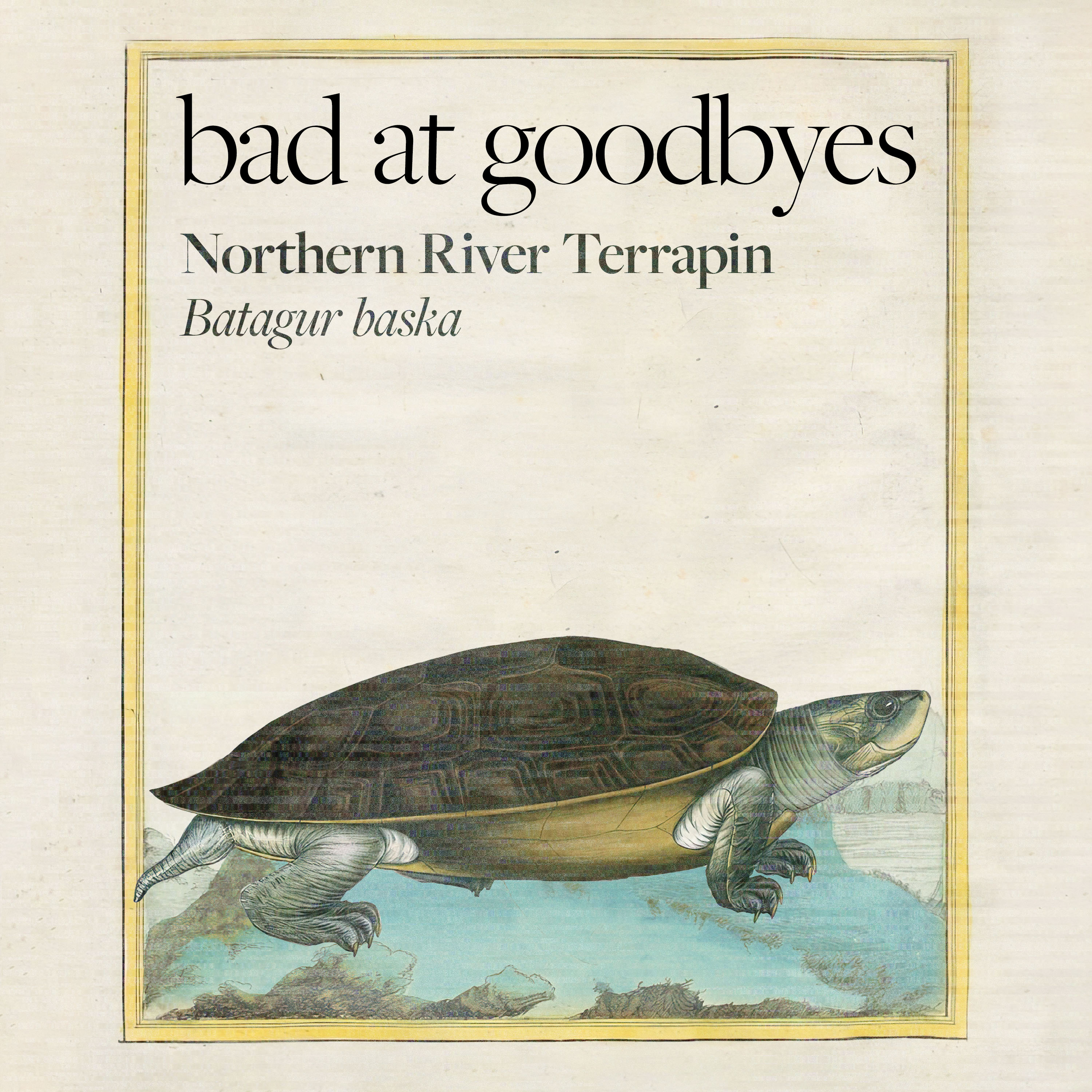
    Northern River Terrapin

    Northern River Terrapin :: Batagur baska Bad at Goodbyes :: Episode 071 On today’s show we learn about the Northern River Terrapin, a critically endangered reptile native to South Asia, in the Sundarbans, in the Ganges River Delta in India and Bangladesh. Its scientific name is Batagur baska and it was first described in 1830. (00:05) Intro (02:05) Species Information (26:50) Citations (28:55) Music (35:39) Pledge For more information about Northern River Terrapin conservation please see the People’s Trust for Endangered Species at https://ptes.org/grants/worldwide-projects/northern-river-terrapins/ Research for today’s show was compiled from: Alam, Md. Shafiul, Nasrin Sultana Bristy, Mohammad Firoj Jaman, A. S. M. Morshed, Md. Shariar Rahman, Ebtesamul Haque Mim, and S. M. Mahbubul Alam. 2021. "Feeding Ecology and Growth Performance of the Critically Endangered Batagur baska in Captivity." Herpetological Conservation and Biology 16 (2): 452–460. – https://www.herpconbio.org/contents_vol16_issue2.html Balan Raveendran, A., Nath, A., Ahmad, A., Das, A. (2025). Conservation Strategies for Northern River Terrapin Batagur baska: Habitat Assessment and Reintroduction prospects. Global Ecology and Conservation. 62. e03763. – https://doi.org/10.1016/j.gecco.2025.e03763 Davenport, John, Tat Meng Wong, and John East. 1992. "Feeding and digestion in the omnivorous estuarine turtle Batagur baska (Gray)." Herpetological Journal 2 (4): 133–139 – https://www.thebhs.org/publications/the-herpetological-journal/volume-2-number-4-october-1992/1298-06-feeding-and-digestion-in-the-omnivorous-estuarine-turtle-batagur-baska-gray Dedieu, A., Scherzer, N., Paumann T., Morshed A.G.J., Weissenbacher A., Walzer C., and Preininger, D. "Camera Traps Provide First Insights into the Nesting Behavior of the Critically Endangered Northern River Terrapin (Batagur baska)," Chelonian Conservation and Biology 22(1), 46-57, (14 March 2023). – https://doi.org/10.2744/CCB-1543.1 Jorgewich-Cohen, G., Wheatley, M., Gaspar, L., Praschag, P., Lubberink, N., Ming, K., Rodriguez, N. and Ferrara, C. (2024), Prehatch Calls and Coordinated Birth in Turtles. Ecology and Evolution, 14: e70410. – https://doi.org/10.1002/ece3.70410 Kumar, A., Sharma, A., Negi, N. et al. Unveiling the contemporary genetic diversity and population demography of the critically endangered northern river terrapin (Batagur baska) in the sundarbans. Molecular Biology Reports 53, 48 (2026). – https://doi.org/10.1007/s11033-025-11208-5 Mim, Ebtisamul Zannat, Mohammad Firoj Jaman, AGJ Morshed, Md Mahabub Alam, and Nasrin Akter Bristy. 2022. “Breeding Biology of Northern River Terrapin Batagur Baska in Captivity in Bangladesh”. Dhaka University Journal of Biological Sciences 31(1):67-78. – https://doi.org/10.3329/dujbs.v31i1.57917 Nawani, S., Balan Raveendran, A., Bashir, A., Kolipakam, V., Das, A., Mondol, S. (2025). Assessment of critically endangered Northern River Terrapin (Batagur baska) phylogeny through next-generation sequencing-based mitogenome analyses. bioRxiv 2025.02.03.636247. – https://doi.org/10.1101/2025.02.03.636247 People’s Trust for Endangered Species – https://ptes.org/grants/worldwide-projects/northern-river-terrapins/ Praschag, P. & Singh, S. 2019. Batagur baska. The IUCN Red List of Threatened Species 2019: e.T97358453A2788691. – https://dx.doi.org/10.2305/IUCN.UK.2019-1.RLTS.T97358453A2788691.en Spitzweg, C., Praschag, P., DiRuzzo, S., Fritz, U. (2018). Conservation genetics of the northern river terrapin (Batagur baska) breeding project using a microsatellite marker system. Salamandra, 54(1), 63–70. – http://www.salamandra-journal.com/index.php/contents/2018-vol-54?category[0]=95 Sundarban Tiger Reserve. (2023). Annual Report 2022–23. Directorate of Forests, Government of West Bengal. – https://sundarbantigerreserve.org/web/pdf/an_report/2022_23_annual_report.pdf Weissenbacher, A., Preininger, D., Ghosh, R., Morshed, A.G.J. and Praschag, P. (2015), Vienna Zoo & Bangladesh: Northern River Terrapin Conservation. International Zoo Yearbook. 49: 31-41. – https://doi.org/10.1111/izy.12070 Wikipedia - https://en.wikipedia.org/wiki/Northern_river_terrapin Please find us on the web at Bad at Goodbyes and on instagram. Please subscribe and rate/review Bad at Goodbyes wherever you listen to podcasts. Please help spread the word about the show and about the species we feature. Please take care of each other, and all of our fellow travelers. A note on accuracy: I strive for it! These episodes are well-researched and built from scholarly sources, hoping to provide an informed and accurate portrait of these species. That said, I’m a musician! I am not an academic and have limited scientific background. I may get things wrong! If you are using this podcast for scholarship of any kind, please see the cited sources and double-check all information.

    • Transcript
  • #70
    March 18 · 29 min

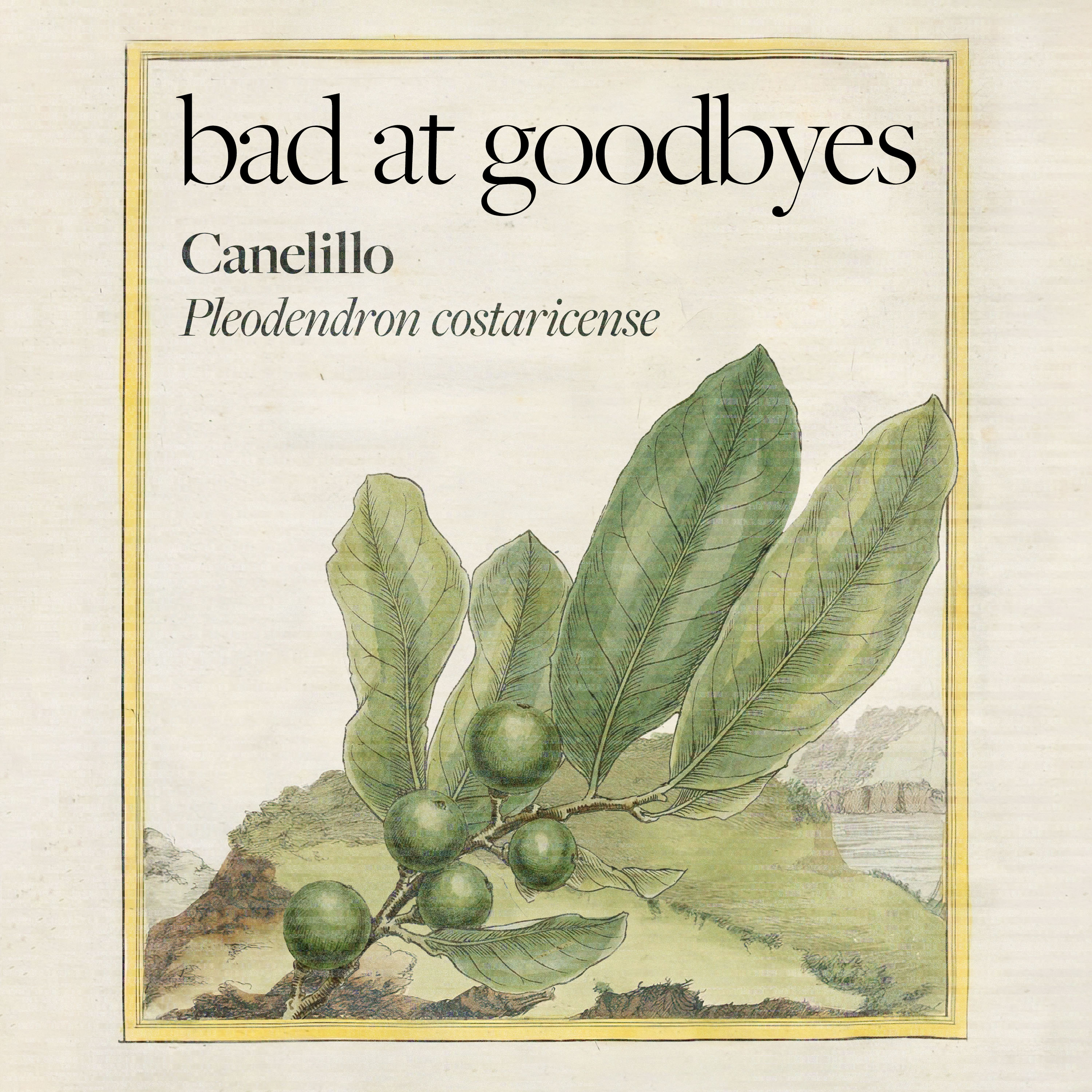
    Canelillo

    Canelillo :: Pleodendron costaricense Bad at Goodbyes :: Episode 070 On today’s show we learn about the Canelillo, a critically endangered broadleaf evergreen rainforest tree native to the Pacific coast of Costa Rica in Central America. Its scientific name is Pleodendron costaricense and it was first described in 2005. (00:05) Intro (02:05) Species Information (21:02) Citations (22:57) Music (27:41) Pledge For more information about Canelillo conservation see Osa Conservation at https://osa-arboretum.org. Research for today’s show was compiled from: Bezanson S, Curtis S, Mata-Quiros M, Mata-Quiros MJ, Durst T (2024) Phytochemistry of the Fruit of the Critically Endangered Tree Pleodendron Costaricense (Canellaceae). JSM Environmental Science and Ecology 12(1): 1091. – https://www.jscimedcentral.com/jounal-article-info/JSM-Environmental-Science-and-Ecology/Phytochemistry-of-the-Fruit-of-the-Critically-Endangered-Tree-Pleodendron-Costaricense-(Canellaceae)--11736# Endress, P. K. (2010). The evolution of floral biology in basal angiosperms. Philosophical Transactions of the Royal Society B: Biological Sciences, 365(1539), 411–421. – https://doi.org/10.1098/rstb.2009.0228 Hammel, Barry E., and Nelson A. Zamora. 2005. "Pleodendron costaricense (Canellaceae), a New Species for Costa Rica." Lankesteriana 5 (3): 211–218. – https://doi.org/10.15517/lank.v5i3.19758 Mata, M., & Calvo Guerrero, M. Preformulación teórica de un producto natural antifúngico a partir de extractos obtenidos de las hojas del árbol Pleodendron costaricense. Revista Ciencia Y Salud, 6(6). – https://doi.org/10.34192/cienciaysalud.v6i6.554 Müller, Sebastian, Karsten Salomo, Jackeline Salazar, Julia Naumann, M. Alejandra Jaramillo, Christoph Neinhuis, Taylor S. Feild, and Stefan Wanke. 2015. "Intercontinental Long-Distance Dispersal of Canellaceae from the New to the Old World Revealed by a Nuclear Single Copy Gene and Chloroplast Loci." Molecular Phylogenetics and Evolution 84 (March): 205–19. – https://doi.org/10.1016/j.ympev.2014.12.010 Osa Arboretum. n.d. "Pleodendron costaricense." – https://osa-arboretum.org/plant/pleodendron-costaricense/ Pillco Huarcaya R, López Morales M, Álvarez-Alcázar L, Whitworth A. The First Ex-Situ Germination and Dispersal Mechanisms of the Rare, Critically Endangered Tree, Pleodendron costaricense. Tropical Conservation Science. 15 (1). 2022.– https://doi.org/10.1177/19400829221104572 Rivers, M.C. 2019. Pleodendron costaricense. The IUCN Red List of Threatened Species 2019: e.T136055038A136055040. – https://dx.doi.org/10.2305/IUCN.UK.2019-3.RLTS.T136055038A136055040.en Roque, Roger Moya; Salazar, Manuel Morales; Wiemann, Michael C.; Alvarez, Luis Poveda. 2007. Wood anatomy of Pleodendron costaricense (Canellaceae) from Southern Pacific, Costa Rica. Brenesia. Vol. 68 (2007): p. 25-28. - https://www.fpl.fs.usda.gov/documnts/pdf2007/fpl_2007_roque001.pdf Smith, Paul. 2021. “The Need for Horticulturist Expertise in Plant Conservation: Challenges and Opportunities”. Sibbaldia: The International Journal of Botanic Garden Horticulture, no. 20 (June): 45-56. – https://doi.org/10.24823/Sibbaldia.2021.316 Zimmer, Elizabeth A., Y Suh, and Kenneth G Karol. 2012. “Phylogenetic Placement of a Recently Described Taxon of the Genus Pleodendron (Canellaceae).” Phytologia 94 (3): 404--412. – https://www.biodiversitylibrary.org/part/184468 Please find us on the web at Bad at Goodbyes and on instagram. Please subscribe and rate/review Bad at Goodbyes wherever you listen to podcasts. Please help spread the word about the show and about the species we feature. Please take care of each other, and all of our fellow travelers. A note on accuracy: I strive for it! These episodes are well-researched and built from scholarly sources, hoping to provide an informed and accurate portrait of these species. That said, I’m a musician! I am not an academic and have limited scientific background. I may get things wrong! If you are using this podcast for scholarship of any kind, please see the cited sources and double-check all information.

    • Transcript
  • #69
    March 4 · 38 min

    Slender-billed Vulture

    Slender-billed Vulture :: Gyps tenuirostris Bad at Goodbyes :: Episode 069 On today’s show we learn about the Slender-billed Vulture, a critically endangered avian raptor, a bird of prey, native to South and Southeast Asia, specifically Nepal, India, Bangladesh, Myanmar, Cambodia, and Laos. Its scientific name is Gyps tenuirostris and it was first described in 1844. (00:05) Intro (02:05) Species Information (27:51) Citations (29:43) Music (37:03) Pledge For more information about Slender-billed Vulture conservation please see Saving Asia’s Vultures from Extinction at https://save-vultures.org. Research for today’s show was compiled from: BirdLife International. 2021. Gyps tenuirostris. The IUCN Red List of Threatened Species 2021: e.T22729460A204781113. – https://dx.doi.org/10.2305/IUCN.UK.2021-3.RLTS.T22729460A204781113.en BirdLife International (2021). Species factsheet: Slender-billed Vulture Gyps tenuirostris. – https://datazone.birdlife.org/species/factsheet/slender-billed-vulture-gyps-tenuirostris 25/02/2026 del Hoyo, J., N. Collar, and J. S. Marks (2020). Slender-billed Vulture (Gyps tenuirostris), version 1.0. In Birds of the World (J. del Hoyo, A. Elliott, J. Sargatal, D. A. Christie, and E. de Juana, Editors). Cornell Lab of Ornithology, Ithaca, NY, USA.– https://doi.org/10.2173/bow.slbvul1.01 Hille, Sabine M., Fränzi Korner-Nievergelt, Maarten Bleeker, and Nigel J. Collar. “Foraging Behaviour at Carcasses in an Asian Vulture Assemblage: Towards a Good Restaurant Guide.” Bird Conservation International 26, no. 3 (2016): 263–72. – https://doi.org/10.1017/S0959270915000349 Jackson, A. L., Ruxton, G. D., & Houston, D. C. (2008). The effect of social facilitation on foraging success in vultures: a modelling study. Biology letters, 4(3), 311–313. – https://doi.org/10.1098/rsbl.2008.0038 Mundy, P. J., 2022. Measurements and shape of the Slender-billed Vulture Gyps tenuirostris. Indian BIRDS 18 (3): 82–85. – https://indianbirds.in/vol-18-no-3/ The Peregrine Fund. n.d. “Slender-billed Vulture.” Explore Raptors. – https://peregrinefund.org/explore-raptors-species/vultures/slender-billed-vulture Prakash, Vibhu, Hemant Bajpai, Soumya S. Chakraborty, Manan Singh Mahadev, John W. Mallord, Nikita Prakash, Sachin P. Ranade, Rohan N. Shringarpure, Christopher G. R. Bowden, and Rhys E. Green. “Recent Trends in Populations of Critically Endangered Gyps Vultures in India.” Bird Conservation International 34 (2024): e1. – https://doi.org/10.1017/S0959270923000394 Ranade, Sachin P. 2025. “Time Activity Budget of White-Rumped Vulture and Slender-Billed Vulture During Breeding in Captivity.” bioRxiv. – https://doi.org/10.64898/2025.12.09.693217 Sound Recording by Phil Gregory. 2024. Xeno-Canto. XC899521 – xeno-canto.org/899521 Virani, M., P.C. Benson, M. Gilbert, and S. Thomsett. 2004. A survey of the reproductive activities at some Gyps vulture nests in Kanha, Bandhavgarh and Ranthambhore National Parks, India, in the 2002/2003 breeding season. Pages 263-268 in R.D. Chancellor and B.-U. Meyburg (Eds.) Raptors Worldwide. World Working Group on Birds of Prey and Owls, Berlin and MME/BirdLife Hungary, Budapest. – https://assets.peregrinefund.org/docs/pdf/research-library/2004/2004-Virani-vultures.pdf Wikipedia – https://en.wikipedia.org/wiki/Slender-billed_vulture Wildlife Institute of India (2018). National Studbook of Gyps Vultures (Gyps bengalensis, G. indicus and G. tenuirostris), Wildlife Institute of India, Dehradun and Central Zoo Authority, New Delhi.TR. No2018/38 Pages: 142. – https://cza.nic.in/uploads/documents/studbooks/hindi/Gyps%20Vultures%20(Gyps%20spp).pdf Please find us on the web at Bad at Goodbyes and on instagram. Please subscribe and rate/review Bad at Goodbyes wherever you listen to podcasts. Please help spread the word about the show and about the species we feature. Please take care of each other, and all of our fellow travelers. A note on accuracy: I strive for it! These episodes are well-researched and built from scholarly sources, hoping to provide an informed and accurate portrait of these species. That said, I’m a musician! I am not an academic and have limited scientific background. I may get things wrong! If you are using this podcast for scholarship of any kind, please see the cited sources and double-check all information.

    • Transcript
  • #68
    February 25 · 30 min

    Caroline's Pink

    Caroline's Pink :: Stenandrium carolinae Bad at Goodbyes :: Episode 068 On today’s show we learn about the Caroline's Pink, a critically endangered flowering herbaceous perennial plant native to North Caicos and Middle Caicos, islands in the Turks and Caicos archipelago, a British Overseas Territory in the Caribbean region, in the Atlantic Ocean. Its scientific name is Stenandrium carolinae and it was first described in 1960. (00:05) Intro (02:05) Species Information (20:16) Citations (22:18) Music (28:28) Pledge For more information about conservation on the Turks and Caicos islands please see the UK Overseas Territories Conservation Forum at https://www.ukotcf.org. Research for today’s show was compiled from: Earle-Mundil, H., Manco, B., Hamilton, M. & Clubbe, C. 2012. Stenandrium carolinae. The IUCN Red List of Threatened Species 2012: e.T16726348A16727210. – https://dx.doi.org/10.2305/IUCN.UK.2012-1.RLTS.T16726348A16727210.en Franck, Alan R., and Thomas F. Daniel. 2015. "Taxonomic and Nomenclatural Notes on Six Genera of Acanthaceae in the West Indies." Proceedings of the California Academy of Sciences, Series 4, 62 (10): 309–29. – https://www.researchgate.net/publication/285235613_Taxonomic_and_Nomenclatural_Notes_on_Six_Genera_of_Acanthaceae_in_the_West_Indies Institute for Regional Conservation. n.d. "Stenandrium carolinae." Plants of the Bahama Archipelago. – https://regionalconservation.org/ircs/database/plants/PlantPageBAH.asp?TXCODE=Stencaro Leonard, Emery C. 1960. "Acanthaceae Americanae Novae vel Criticae." Wrightia 2: 75–82. – https://www.biodiversitylibrary.org/page/766031 Long, Robert W. 1970. “The Genera of Acanthaceae in the Southeastern United States.” Journal of the Arnold Arboretum 51 (3): 257--309. – https://doi.org/10.5962/bhl.part.7043. May, Christopher, Samuel Pike, Katie Medcalf, B. Naqqi Manco, Dodly Prosper, and Junel Blaise. 2024. "Conservation and Resilience." Times of the Islands, Spring 2024. – https://www.timespub.tc/2024/03/conservation-and-resilience/ Pelembe, T., and G. Cooper, eds. UK Overseas Territories and Crown Dependencies: 2011 Biodiversity Snapshot. Peterborough, UK: Joint Nature Conservation Committee, 2011. – https://jncc.gov.uk/resources/e5d8c245-e94d-4043-b1b8-f353c27cd9b4#ot-biodiversity2011-turks-caicos-appendices.pdf Pienkowski, Mike, ed. 2002. Plan for Biodiversity Management and Sustainable Development around Turks & Caicos Ramsar Site. Version 1.00. Turks & Caicos National Trust and UK Overseas Territories Conservation Forum. – https://www.ukotcf.org.uk/wp-content/uploads/2020/04/TCIRamsarSiteManPlan.pdf UK Overseas Territories Conservation Forum. n.d. "Turks and Caicos Islands." – https://www.ukotcf.org.uk/wider-caribbean/turks-and-caicos-islands/ Sanchez, Michele Dani, Bryan Naqqi Manco, Junel Blaise, Marcella Corcoran, Martin Allen Hamilton. 2019. "Conserving and Restoring the Caicos Pine Forests: The First Decade." Plant Diversity 41 (2): 75–83. https://doi.org/10.1016/j.pld.2018.05.002 Please find us on the web at Bad at Goodbyes and on instagram. Please subscribe and rate/review Bad at Goodbyes wherever you listen to podcasts. Please help spread the word about the show and about the species we feature. Please take care of each other, and all of our fellow travelers. A note on accuracy: I strive for it! These episodes are well-researched and built from scholarly sources, hoping to provide an informed and accurate portrait of these species. That said, I’m a musician! I am not an academic and have limited scientific background. I may get things wrong! If you are using this podcast for scholarship of any kind, please see the cited sources and double-check all information.

    • Transcript
Showing 1–20 of 20 episodes