Skip to content
Artwork for Associations Thrive
BusinessNon-ProfitManagementEducation

Associations Thrive

Joanna Pineda

This is Associations Thrive, the podcast celebrating successful associations and their leaders. Listen in as top association executives tell all, revealing the creative and innovative ways they’re increasing their bottom line, serving their members, and reimaging their organizations.

The Associations Thrive podcast is hosted by Joanna Pineda, CEO & Chief Troublemaker at Matrix Group International. Joanna’s personal mission and the mission of Matrix Group is to help associations and nonprofits increase membership, generate revenue and thrive in the digital space.

We believe that every association has a unique mission and unique story in how they’re serving their members, impacting their industry, and ultimately changing the world. Guests include top trade association, professional society, and non profit executives. We’re here to help amplify their stories so all associations can learn and thrive, together.

Play
  • 25 episodes
  • weekly
  • Avg 30 min
  • English
Counted on this page — what you have heard stays on this device, so it is not something the list can be paged by.
  • #179
    May 7 · 28 min

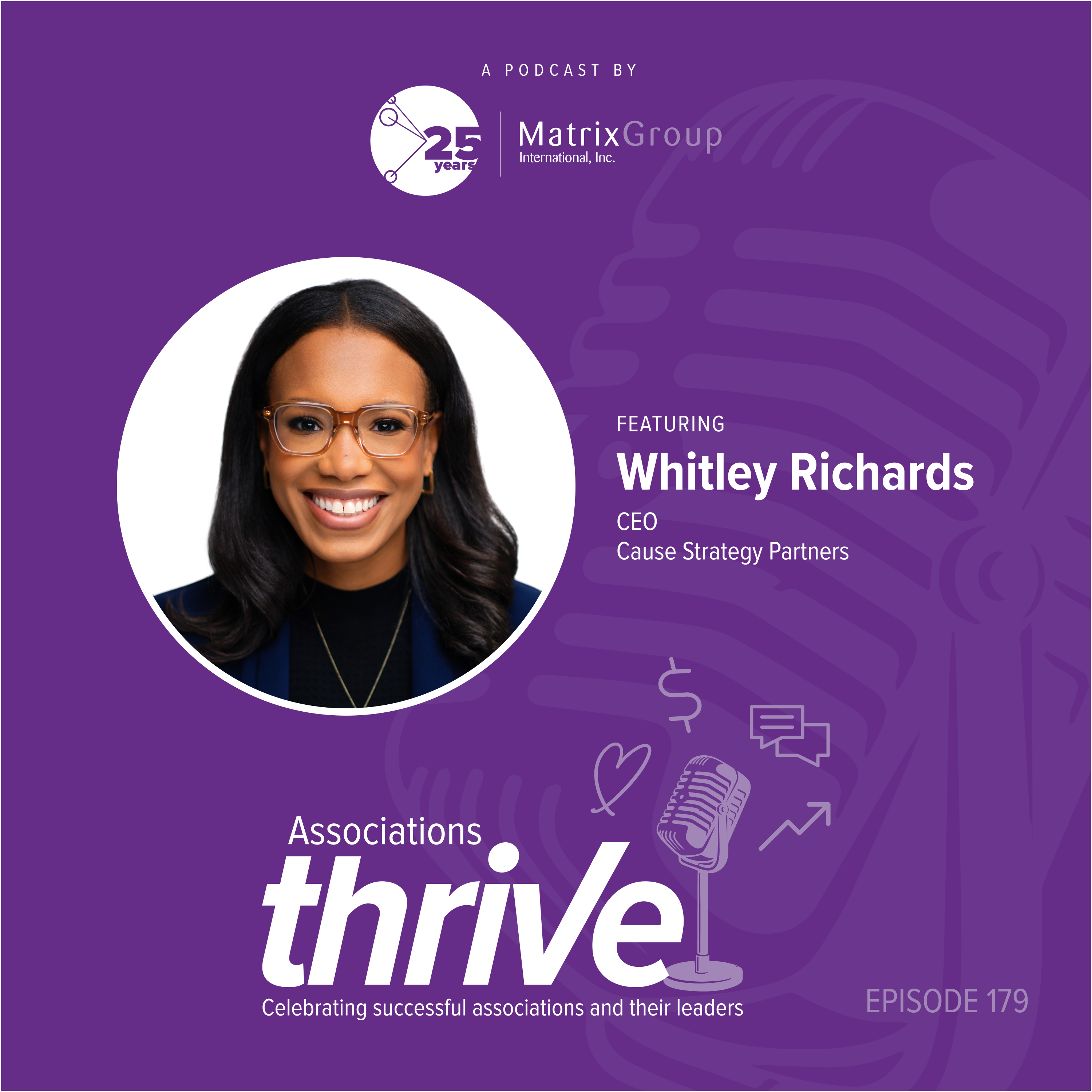
    179. Whitley Richards, CEO of Cause Strategy Partners, on Nonprofit Board Placement, Governance Training, and Leadership Development

    What if one of the most effective ways to strengthen nonprofit leadership is to rethink how board members are recruited, trained, and supported? And in a time when AI is reshaping work and human skills matter more than ever, how can associations and nonprofits help members build the judgment, empathy, and strategic thinking that only real service can develop? In this episode of Associations Thrive, host Joanna Pineda interviews Whitley Richards, CEO of Cause Strategy Partners. Whitley discusses: How Cause Strategy Partners is a board placement and governance training provider that works across the United States, the UK, and Hong Kong. How the company has placed about 3,300 professionals onto the boards of more than 1,500 nonprofit organizations over its 11-year history. How Fortune 500 companies partner with Cause Strategy Partners because they want scalable ways to connect employees to meaningful board service as part of leadership development and corporate social responsibility strategies. Cause Strategy Partners’ Board Lead program that prepares professionals before, during, and after placement to become effective board members, while offering the service free to nonprofits of many sizes, including smaller organizations with modest budgets. How the organization “flips” the board recruitment model by inviting individuals to identify nonprofits they care about and explain why they want to serve, creating stronger commitment from the outset. How Whitley wants to bust the myth that nonprofit boards are social clubs; today’s boards require serious leadership, strategy, and accountability. References: Cause Strategy Partners Website
  • #178
    April 30 · 30 min

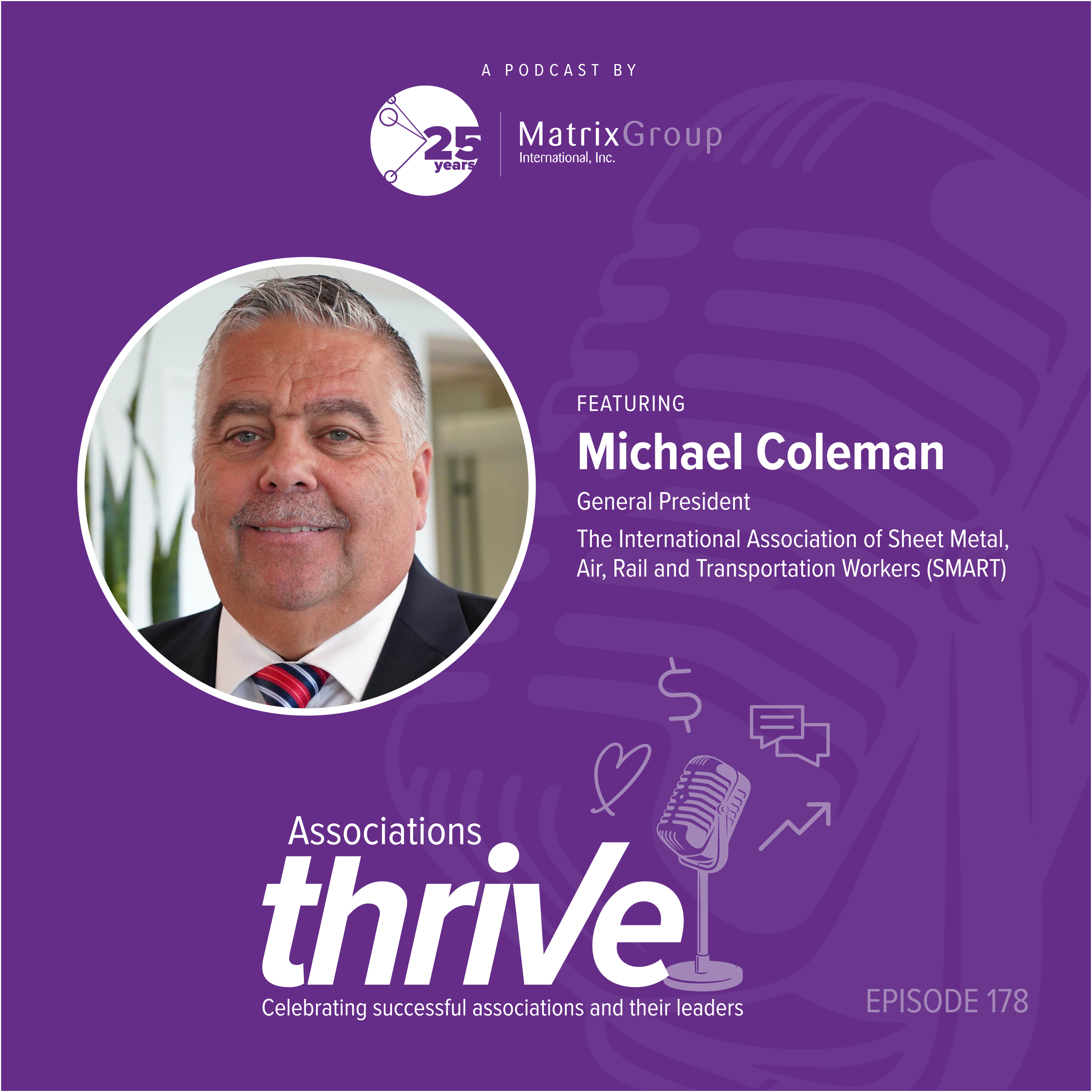
    178. Michael Coleman, General President of SMART, on Apprenticeships, Member-Centered Benefits, and Advocating for Families and Communities

    What does it look like when an organization does more than represent workers and actually builds a community, a career pathway, and a better life? And how can associations help members thrive when workforce shortages, family pressures, and mental health challenges are all converging at once? In this episode of Associations Thrive, host Joanna Pineda interviews Michael Coleman, General President of the International Association of Sheet Metal, Air, Rail, and Transportation Workers (SMART). Mike discusses: How SMART represents more than 230,000 sheet metal, rail, transit, and transportation workers across the United States and Canada. How SMART’s culture of mentorship helps members grow professionally and personally, with experienced members guiding apprentices and newer workers. Mike’s own journey from “floundering” young worker to apprentice, supervisor, local leader, international executive, and ultimately General President. Why apprenticeship is such a powerful model: members earn while they learn, build real skills, gain certifications, and avoid student debt. How SMART is growing membership by widening the recruiting pipeline and reaching veterans, underrepresented communities, and women. How programs like Helmets to Hard Hats and SMART Heroes help service members transition into rewarding union careers. How SMART is making the trades more accessible by addressing real-life barriers, including offering childcare stipends and paid maternity leave. How SMART advocates on issues that go beyond union priorities and affect the public at large, including indoor air quality, fire life safety systems, and safer schools and buildings. How the merger with the transportation union expanded SMART’s reach, while fairness, dignity, safety, and good middle-class jobs remain the values that unite all members. References: SMART Union Website

  • #177
    April 23 · 28 min

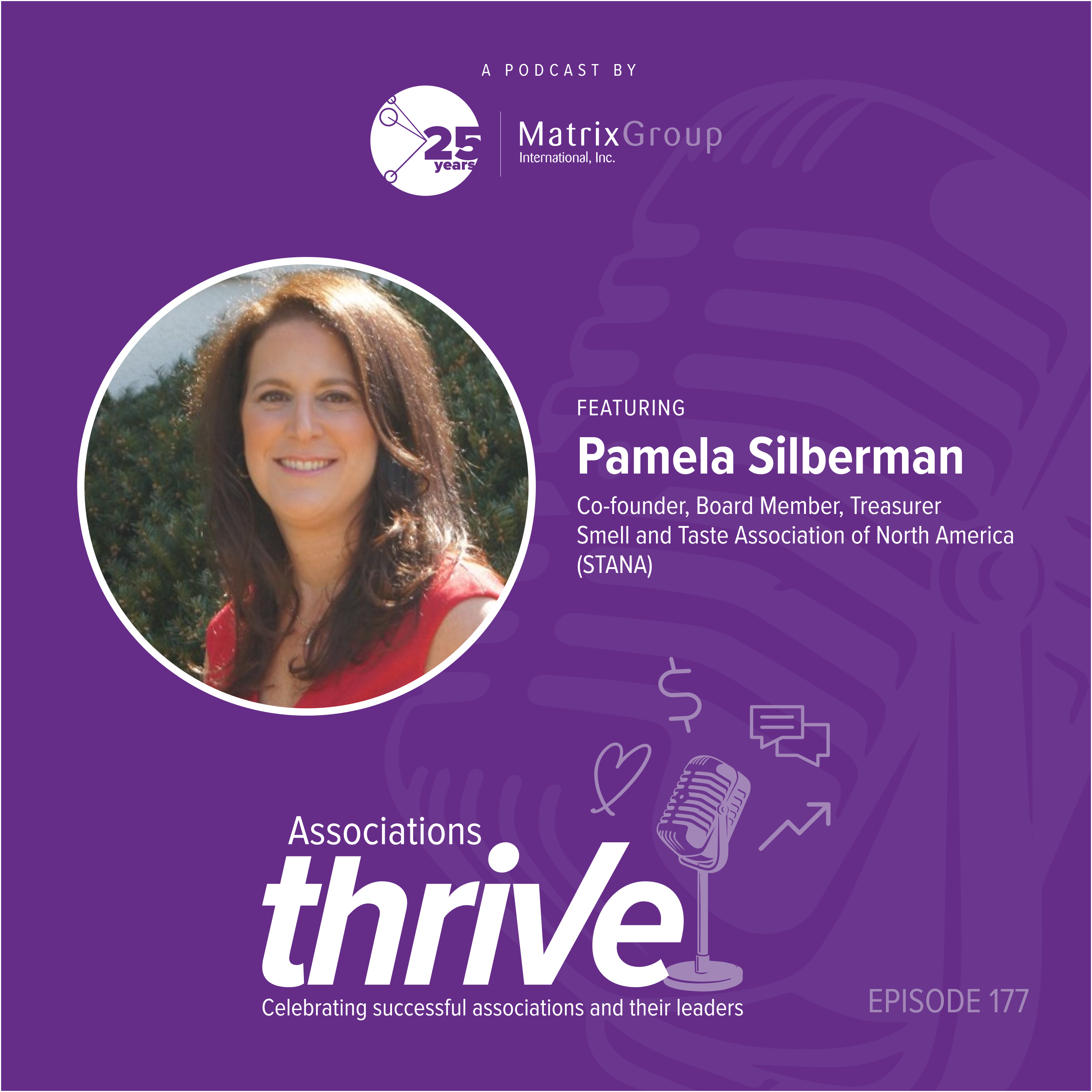
    177. Pamela Silberman, Co-founder, Board Member, and Treasurer of STANA, on Smell and Taste Disorders, Patient Advocacy, and Public Health Awareness

    Did you know that a loss of smell or taste can be an early indicator of Parkinson's, Alzheimer’s and other dementias? And in an environment where smell and taste disorders are underdiagnosed, underfunded, and often dismissed, how can an association step in to educate patients, influence research, and push for better care? In this episode of Associations Thrive, host Joanna Pineda interviews Pamela Silberman, Co-Founder, Board Member, and Treasurer of the Smell and Taste Association of North America (STANA). Pamela discusses: How STANA is the first patient organization in the United States, Canada, and Mexico focused on people living with smell and taste dysfunction. The many causes of smell and taste disorders, including congenital conditions, infections, allergies, traumatic brain injuries, sinus issues, aging, and COVID-19. How millions of people are affected by smell and taste dysfunction. Pamela’s personal journey after permanently losing her sense of smell following a sinus infection, and how that experience led her to help found STANA. Why STANA advocates for routine and universal smell and taste testing, both to improve diagnosis and to identify links to other conditions such as Parkinson’s, Alzheimer’s, and other dementias. How smell and taste dysfunction can affect mental health, nutrition, safety, social confidence, and overall quality of life. How STANA supports patients through education, virtual community, programming, and practical conversations about cooking, nutrition, texture, and adapting to flavor loss. How STANA is pushing for more patient-centered research by training patients to serve as research partners, not just research subjects. References: STANA Website

  • #176
    April 9 · 35 min

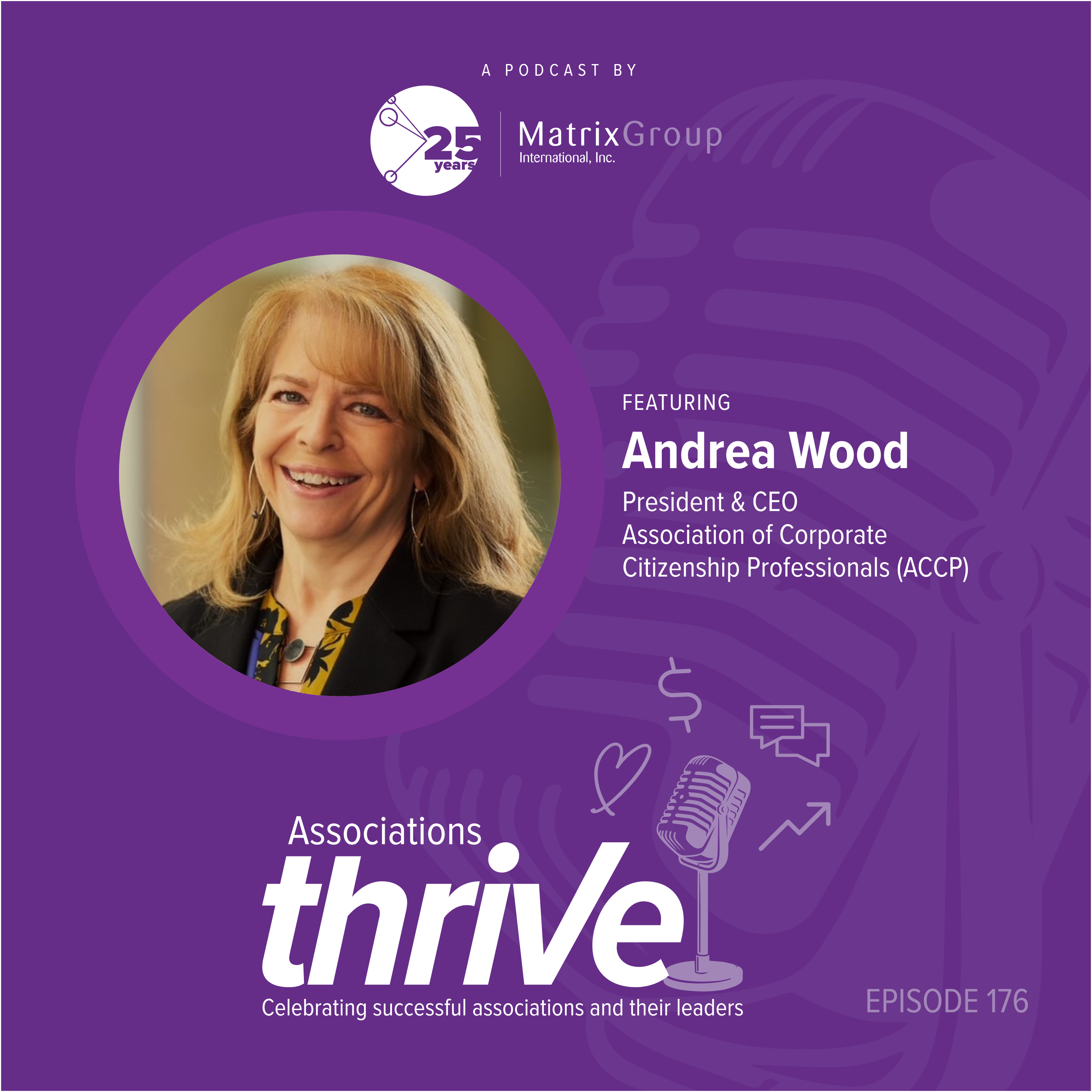
    176. Andrea Wood, President & CEO of ACCP, on the Business Case for CSR, Shared Value, and Building Member-Centric Community

    What happens when corporate citizenship is no longer a “nice to have,” but a business imperative under scrutiny? And how can associations help members prove value when the environment turns uncertain? In this episode of Associations Thrive, host Joanna Pineda interviews Andrea Wood, President and CEO of the Association of Corporate Citizenship Professionals (ACCP). Andrea discusses: How ACCP serves professionals responsible for corporate social responsibility (CSR), social impact (CSI), and ESG efforts, acting as liaisons between businesses and communities. The critical importance of making the business case, linking CSR to employee recruitment, retention, morale, reputation, and financial performance. How younger workforce expectations are accelerating demand for meaningful corporate community engagement. Why the most effective CSR strategies embrace a shared value approach, simultaneously benefiting the business and the community. How ACCP supports members with practical, ready-to-use toolkits and resources so small teams don’t have to “start from scratch.” ACCP’s evolving engagement strategy: virtual summits, sold-out in-person conferences, regional meetups, and targeted programming for career stages. How ACCP is helping members navigate political and economic scrutiny by doubling down on data, research, and clear communication of impact. The role of associations as extensions of staff for under-resourced members who need insights, benchmarking, and peer support. Andrea’s leadership approach: listening deeply, staying informed on external trends, and rapidly adapting programming to meet the moment. References: ACCP Website Making The Case

  • #175
    April 2 · 33 min

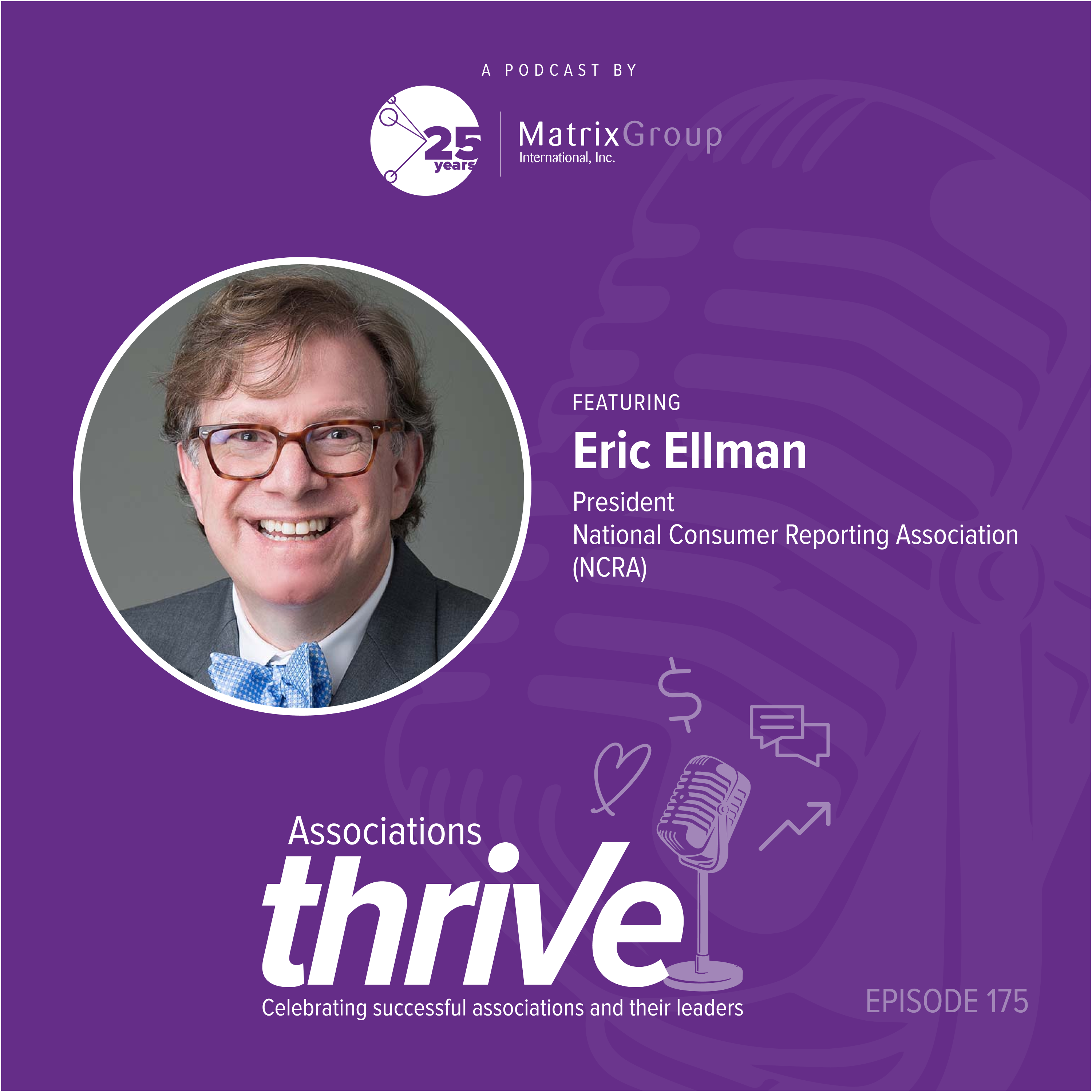
    175. Eric Ellman, President of NCRA, on Building Trust, Turning Around an Association, and Elevating Member Value

    How do you rebuild an association that is struggling financially, operationally, and reputationally, and turn it into an organization that members are excited to invest in? In this episode of Associations Thrive, host Joanna Pineda interviews Eric Ellman, President of the National Consumer Reporting Association (NCRA). Eric discusses: How NCRA represents mortgage reporting companies and tenant screening companies that provide regulated data to mortgage lenders, landlords, and property managers. How NCRA members act as the “go-betweens” of the industry, combining data from credit bureaus and public records to help mortgage lenders and landlords assess risk in housing. Why the Fair Credit Reporting Act (FCRA) is the governing touchstone of the industry and how it functions as a foundational privacy law. How trust sits at the center of the consumer reporting ecosystem, from consumers, to data furnishers, to reporting agencies, to end users. Why Eric says he is having more fun in this role than at any other point in his career, thanks to culture, trust, and the ability to make a meaningful impact quickly. How he inherited an association in significant financial trouble and immediately focused on stabilizing finances, improving communications, revamping branding, and strengthening public policy work. How NCRA reimagined its annual conference by rebranding it as Elevate, upgrading the content, creating stronger sponsor value, and building energy around the event experience. How Eric personally led sponsor conversations, helped generate record-breaking sponsorship support, and brought in nine new sponsors in roughly 14 months. How NCRA asked members for a special assessment, explained the financial situation transparently, and earned overwhelming member support through a compelling vision for the future. What’s ahead for NCRA in 2026, including continued growth, stronger advocacy, and Elevate 2026 in New Orleans. References: NCRA Website Music from #Uppbeat (free for Creators!): https://uppbeat.io/t/paul-yudin/quiet-flight License code: KJRRI6GHC7WKCLDT

Showing 21–25 of 25 episodes