Skip to content
Artwork for ADHD Entrepreneur Accelerator
BusinessEntrepreneurship

ADHD Entrepreneur Accelerator

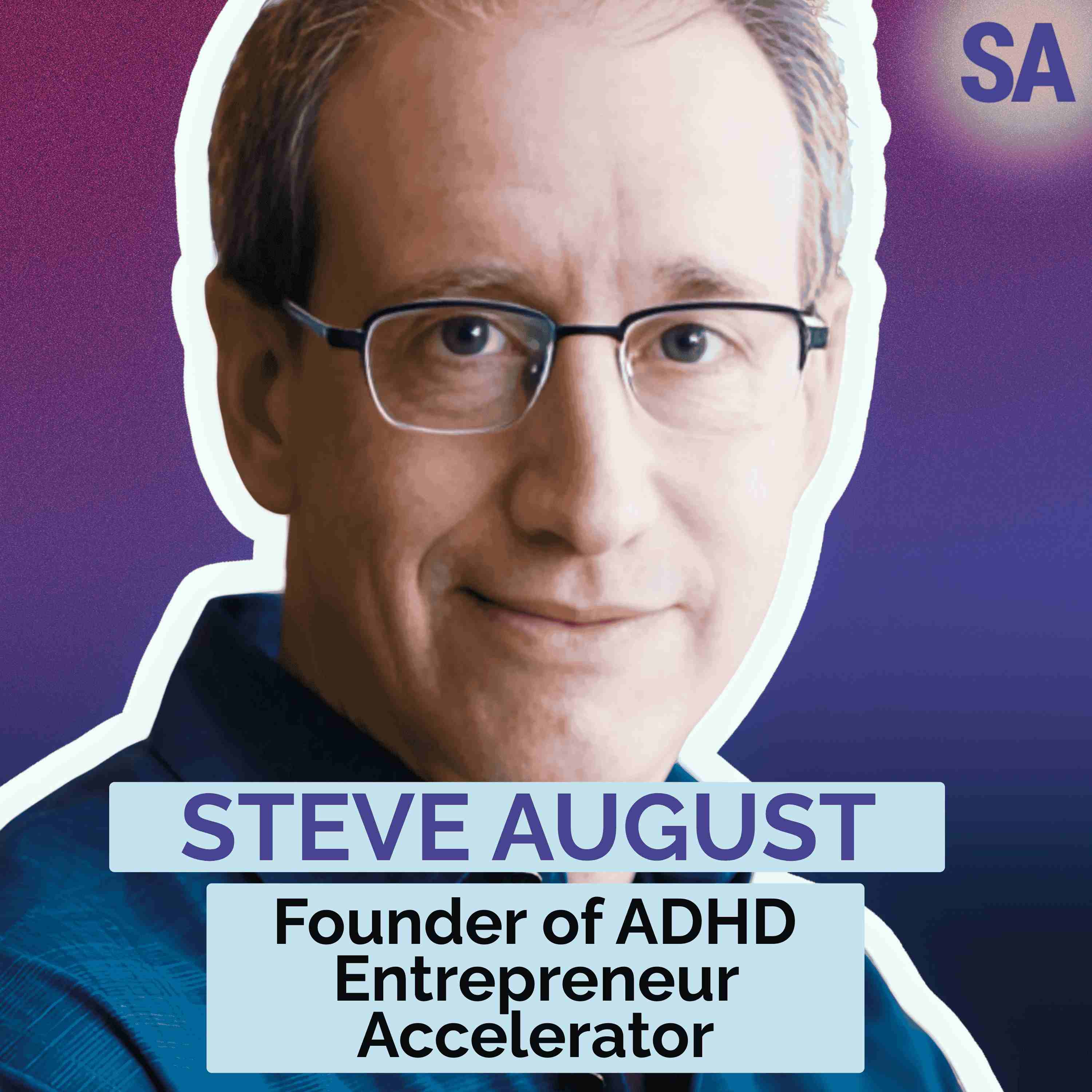
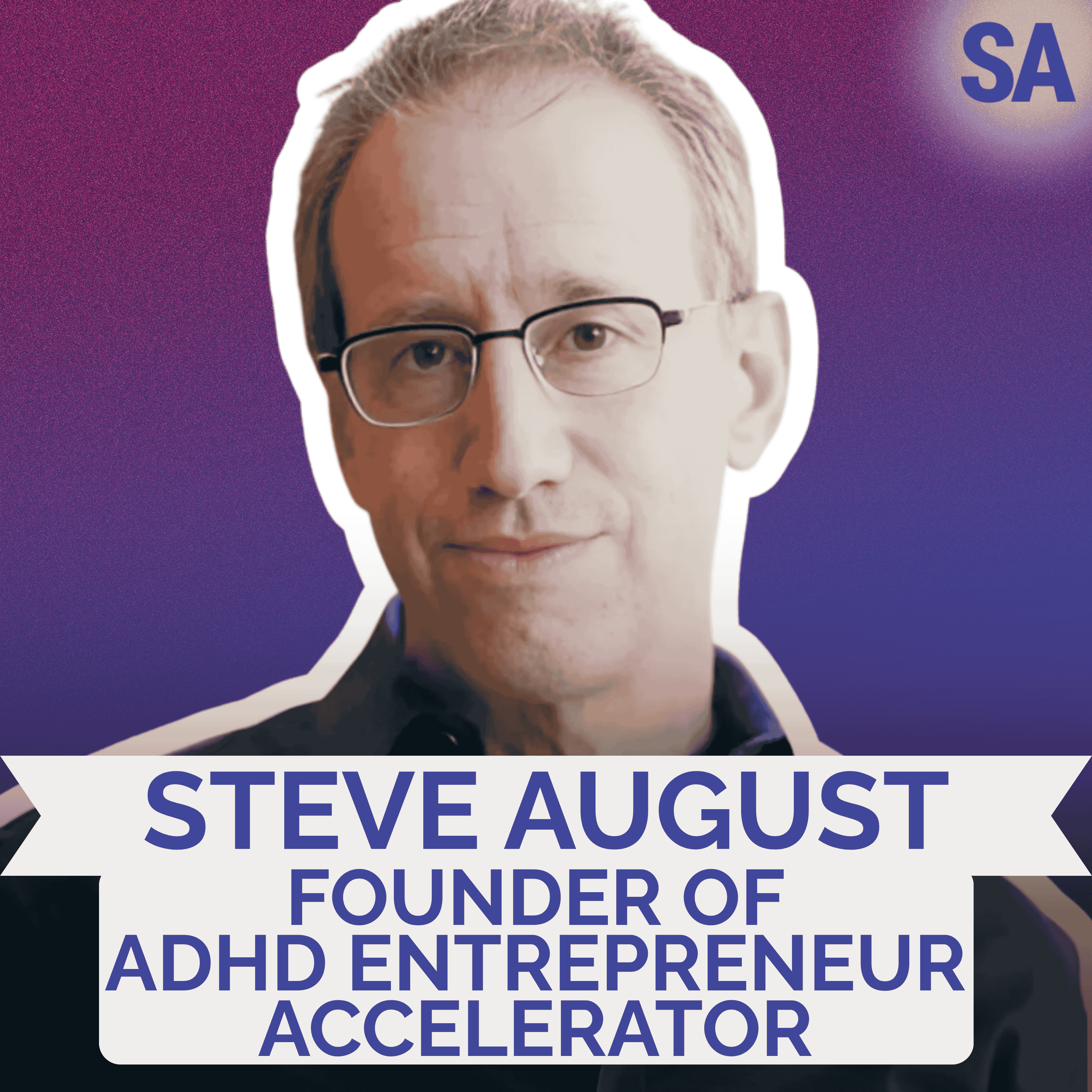
Steve August

You’re an entrepreneur with ADHD. You’ve got big ideas, a fast brain… and a to-do list that’s longer than a CVS receipt. You’re driven—but staying focused, finishing what you start, and scaling your business? That can feel impossible.

Welcome to the ADHD Entrepreneur Accelerator Podcast. Hosted by Steve August—ADHD coach, founder, and lifelong entrepreneur. Steve ha's built and exited companies, served as CMO of a $100 million business. Late diagnosed with ADHD at age 54, Steve now helps ADHD entrepreneurs get out of overwhelm find their focus and create freedom.

This podcast is your go-to resource for building a business that works with your ADHD brain, not against it. We’re talking " brain-first" practical strategies to help you prioritize, start focus and finish, and sustain over time so you can reap the rewards of your brilliance.

If you've ever felt like traditional business success advice wasn’t made for how your brain works, this show proves there's a different path. One built not in spite of your brain - but because of it.

You’ll hear real stories from founders who are growing businesses without burning out… and we’ll keep it simple, actionable, and ADHD-friendly every step of the way.
So if you’re ready to grow your business, feel free, and finally say…
‘Not now, squirrels. We’ve got work to do.’

Hit subscribe. Let’s go!

Play
  • 34 episodes
  • weekly
  • Avg 13 min
  • English
Counted on this page — what you have heard stays on this device, so it is not something the list can be paged by.
  • Thursday · 10 min

    Replay: Quiet Quitting: Why ADHD Entrepreneurs Abandon What's Working

    This week, I'm re-posting one of my most listened to episodes. Steve unpacks "quiet quitting" — the ADHD habit of walking away from campaigns and systems that are actually working — and shares the ritual that fixes it. In this episode, Steve covers: Why ADHD brains mistake "not novel" for "not working," and how that costs consistency in a business that rewards repeating what works. How Inevitable Drift shows up — losing sight of your Magnetic North, getting knocked off course by life, and chasing shinier ideas instead of sticking with what's proven. Two practical fixes: tracking your numbers so the data (not your brain's story) tells you what's working, and the Monthly Quests ritual — a first-Thursday-of-the-month practice used inside AEX to revisit wins, reconnect to Magnetic North, and set focused quests for the month ahead. Want the community and ritual that keeps you from quietly drifting off course? Join AEX: https://adhd-accelerator.com?utm_source="rss" Grab my ADHD Weekly Dashboard: https://go.steveaugustcoaching.com/adhd-dashboard?utm_source="rss"

    • Transcript
  • November 12 · 8 min

    My ugliest ad won (And stopped my ADHD brain from spinning)

    My Ugliest Ad Won (And Ended My ADHD Idea Spin) I stood outside in front of my phone with a whiteboard full of badly drawn emojis, happy on Monday and totally crashed out by Friday. That rough one-minute video ended up beating every polished ad I made. This is the follow-up to my episode on the ADHD idea spin. I’d been going around and around on which framing to lead with: my Decide / Do / Sustain framework, or the lived experiences like the Scattered Week and the Dopamine Desert. So I stopped trying to settle it in my head and ran a Facebook ads campaign to let the market answer. The Scattered Week won by a mile, bringing in 73 of the 130 workshop sign-ups. I walk through what I think it means. People connect first with the experience they’re having, and the explanation lands after that. I also talk about why I’m now convinced the bias should be toward Doing, even when the problem feels like a Deciding problem. In this episode: How I tested 12 ads to settle a question I couldn’t answer in my head Why the Scattered Week beat Decide / Do / Sustain with people meeting me for the first time Why rough, human content is getting more powerful How Deciding and Doing get tangled up, and which one to lean on If your week starts strong on Monday and falls apart by Friday, come join us in AEX: https://adhd-accelerator.com/?utm_source=captivate&utm_medium=rss&utm_campaign=podcast&utm_content=ugliest-ad-won Resources mentioned: ADHD Entrepreneur Accelerator (AEX): https://adhd-accelerator.com Free Weekly ADHD Dashboard: https://go.steveaugustcoaching.com/adhd-dashboard Contact Steve: https://steveaugustcoaching.com/contact

    • Transcript
  • November 5 · 5 min

    One simple tip to 10x focus

    Sometimes a small change has a big impact. A new AEX member made one small change before a Toastmasters meeting, and he could feel the difference right away. During a webinar last week, Steve asked everyone to close their other windows and turn off alerts. The member took it to his next meeting: he minimized every browser window except the ones he needed, covered his desktop with a notes doc so he couldn’t see his files and app icons, and focused on the meeting instead of multitasking. In one of his shortest episodes ever, Steve explains why a move that seems this obvious matters so much for an ADHD brain. When several things are in view, your brain keeps checking each of them, and that pulls focus away from what you’re actually doing. It comes back to a core idea in AEX: environment beats willpower and discipline. Steve then shares the end-of-day shutdown he uses to start every morning with his focus already set. Key points: Why having more than one thing open pulls an ADHD brain off track What Steve means when he says ADHD is a surplus of attention Why changing your environment works better than trying harder to ignore distractions The end-of-day shutdown that makes his weekly dashboard, not email, the first thing he sees each morning Resources mentioned: ADHD Entrepreneur Accelerator (AEX): https://adhd-accelerator.com Free Weekly ADHD Dashboard: https://go.steveaugustcoaching.com/adhd-dashboard Contact Steve: steve@steveaugustcoaching.com

    • Transcript
  • October 29 · 14 min

    The AI Time Trap for ADHD Entrepreneurs

    AI hands you back an hour. Then you spend it asking AI what to do next. A new study from Hubstaff found that most people using AI at work save at least an hour a week, and a third save four hours or more. But only about a quarter of them do anything useful with that time. Employees at least have a boss waiting to claim the hour. ADHD entrepreneurs don’t, so saved time drifts toward whatever’s new, loud or urgent. This week Steve looks at where those hours go and how to get them back. Key points: Why AI-saved time is easier to lose when you’re the boss The “decision spin”: treating long AI conversations as progress How AI makes starting over cheap, and why that hurts Sustaining The weekly anchor that keeps AI working for your most important thing WeeklyOS Bootcamp enrollment closes Thursday, October 29 at midnight PT. Join AEX by then to get three live sessions with Steve to install your Weekly OS: https://adhd-accelerator.com Resources mentioned: ADHD Entrepreneur Accelerator (AEX): https://adhd-accelerator.com Free Weekly ADHD Dashboard: https://go.steveaugustcoaching.com/adhd-dashboard Contact Steve: steve@steveaugustcoaching.com Sources: Hubstaff, State of the Workweek 2026 (full report): https://hubstaff.com/state-of-the-workweek Hubstaff press release (Oct 27, 2026): https://www.prnewswire.com/news-releases/ai-is-saving-employees-time-but-employers-arent-getting-the-capacity-they-expect-new-hubstaff-research-finds-302920946.html

    • Transcript
  • October 22 · 15 min

    Scheduling With an ADHD Brain: 5 Tips That Actually Work

    If your schedule falls apart by Wednesday, it was probably built for a version of you that only shows up some of the time. One of Steve's AEX members asked him how to find the middle ground between a schedule that's too tight and rigid and one that's too loose to get anything done. Steve's answer starts with why ADHD schedules break: we plan for our 100% self, time blindness makes us overestimate what fits in a day, and all-or-nothing thinking turns one bad morning into a lost week. From there he walks through the five pieces of his own weekly system, with real examples from how he runs his week, including his Monday "work on the business" day, his Friday admin block, and the end-of-day ritual that sets up his next morning. Key points: Why the week is a better container than the day for an ADHD brain The two-hour workday mindset, and why everything after those two hours is a bonus How theme days and rituals cut down on context switching and keep a system from going stale What it looks like to meet your brain where it's at on a low-energy day Join AEX by midnight on Thursday, October 29th and you'll get a free live 3-Week AEX Bootcamp, with sessions on November 3rd, 10th and 17th, where we build your weekly system together. Same $99/month membership. https://adhd-accelerator.com Resources mentioned: ADHD Entrepreneur Accelerator (AEX): https://adhd-accelerator.com Free Weekly ADHD Dashboard: https://go.steveaugustcoaching.com/adhd-dashboard Contact Steve: steve@steveaugustcoaching.com

    • Transcript
  • October 15 · 11 min

    Why Everything Feels Broken (And Where To Start)

    When everything feels broken at once, it’s hard to know where to even begin. I’ve had 61 ADHD founders take my execution assessment, and 23 of them scored high challenge on all three parts of execution: Deciding, Doing and Sustaining. Eight of them maxed out on every part. In this episode I dig into what that means, why it feels like you have to fix everything at the same time, and why Doing is usually the best place to start. When follow-through keeps letting you down, every decision gets heavier, and that can look a lot like a prioritizing problem. Key points: Russell Barkley’s line that ADHD is a performance disorder: we know what to do, we have trouble doing what we know Doing was the biggest challenge in the assessment more often than any other area (22 outright, 36 counting ties) Why a Magnetic North is the one piece of Deciding worth setting first A one-hour move for this week: pick the thing you already know you should do, and do it with support Free live Game Plan workshop: Thursday, October 22, 10am PT / 1pm ET (90 minutes). Register: https://go.steveaugustcoaching.com/gameplan-live Resources mentioned: ADHD Entrepreneur Accelerator (AEX): https://adhd-accelerator.com Free Weekly ADHD Dashboard: https://go.steveaugustcoaching.com/adhd-dashboard Contact Steve: steve@steveaugustcoaching.com

    • Transcript
  • October 8 · 7 min

    The ADHD Idea Spin (How I'm Getting Out of It)

    ADHD brains can spin on an idea for years, trying to think their way to the right answer. Steve has been doing exactly that with his own messaging, and this week he's finally handing the decision to someone else: the market. For two years Steve has had two ways of describing what makes business hard for ADHD entrepreneurs. One is the three skills of Decide, Do, and Sustain. The other is the lived experience: the scattered week that starts strong on Monday and ends with you surveying the wreckage on Friday, the dopamine desert between intense interest and urgent consequence, and the inevitable drift once something stops feeling new. Both have resonated with people, and as he works on bringing more people into the AEX community, he's gone around and around on which one to lead with. That spin is familiar to most ADHD entrepreneurs. Because we're good at thinking and problem-solving, we try to solve it in our heads, and new ideas keep showing up while we do. Steve explains why that's an impossible task when the question is what will resonate with the people you serve, since they're the ones who decide. He shares the Facebook Ads campaign he's launching this week, built to test his different framings against each other, and the relief that comes from giving your brain a clearer job description. Key points: Why ADHD entrepreneurs try to think their way out of the idea spin, and why it keeps the spin going Why your customers, not your own sense of what's elegant, decide what resonates How Steve is using a Facebook Ads campaign to test two years of competing framings Two ways to get real input fast: 10 to 20 conversations, or a small ad spend Join Steve live: The monthly ADHD Entrepreneur Game Plan Workshop is coming up this month: https://go.steveaugustcoaching.com/gameplan-live?utm_source=rss Resources mentioned: ADHD Entrepreneur Accelerator (AEX): https://adhd-accelerator.com Free Weekly ADHD Dashboard: https://go.steveaugustcoaching.com/adhd-dashboard Contact Steve: steve@steveaugustcoaching.com

    • Transcript
  • October 1 · 11 min

    Everything is dead? How ADHD Messes with Your Marketing

    It took Steve three quizzes to get one that worked. The first two failed pretty badly, and if he'd judged quizzes by them, he would have written the whole channel off as dead. That's the kind of verdict your feed hands out every day. LinkedIn reach has collapsed, ad costs are rising, outreach is dead, and AI just killed whatever's next, while the shiny objects promise that the right quiz, webinar, or AI tool will make sales happen on their own. After years of using almost all of them, Steve's lesson is that they all work and they all don't. His first 2 quizzes flopped, and then the 3rd was a hit, with basically the same mechanics all three times. The difference was finding the thing that actually connected with the audience he was serving. Steve breaks down the two requirements for any channel to work, a compelling offer that solves a real need and being bad at it long enough to get good, and then walks through how ADHD trips up each part of execution: deciding (every new promise feels urgent), doing (rejection sensitivity and the dopamine desert), and sustaining (the drift toward whatever's shinier). He closes with a practical plan for picking one channel and sticking with it. Key points: Why every marketing channel works for some people and fails for others What Steve learned from two failed quizzes before the Founder Type Quiz took off How ADHD gets in the way of deciding, doing, and sustaining your marketing Picking a channel that fits how you like to talk to customers, and committing to it for three months Free training: Find out whether deciding, doing, or sustaining is most in your way, with an optional two-minute audit and game plan for $5: https://adhd-accelerator.com/gameplan Resources mentioned: ADHD Entrepreneur Accelerator (AEX): https://adhd-accelerator.com Free Weekly ADHD Dashboard: https://go.steveaugustcoaching.com/adhd-dashboard Contact Steve: steve@steveaugustcoaching.com

    • Transcript
  • September 24 · 17 min

    9 Operating Principles for ADHD Entrepreneurs

    Steve was diagnosed with ADHD at 54, tried medication, and found it didn't work for him. So he went back through every chapter of his entrepreneurial life and started seeing how ADHD had shaped each one. Four years later, he's distilled what he's learned into nine operating principles for ADHD entrepreneurs. This week he walks through all nine. The first is the foundation for everything else: supporting your ADHD is supporting your business, because a business takes on the energy of its founder. From there Steve covers execution as three separate skills (deciding, doing, and sustaining), why progress beats productivity, why slow and messy progress still counts, and why the week works better than the quarter or the day as a container for ADHD brains. He then gets into environment over discipline and willpower, emotional and nervous system regulation, why bringing yourself back after you drift is the greatest skill, and why it takes a whole ecosystem of system, tools, and community to make it all hold. Key points: Why supporting your ADHD is the most direct way to support your business Execution as three skills: decide, do, and sustain Why the week is the best container of progress for ADHD brains Why bringing yourself back after you lose focus matters more than the initial focus Resources mentioned: ADHD Entrepreneur Accelerator (AEX): https://adhd-accelerator.com Free Weekly ADHD Dashboard: https://go.steveaugustcoaching.com/adhd-dashboard Contact Steve: steve@steveaugustcoaching.com

    • Transcript
  • September 17 · 10 min

    How to Choose Between Too Many Good Ideas

    You've got too many good ideas and no way to tell which one the market actually wants, and that's exactly the theme that came up most when Steve surveyed 60 ADHD entrepreneurs last month. Steve ran a live Game Plan Session and had attendees fill out an assessment beforehand on what's actually blocking them in their business. The biggest theme, by far: too many directions, too many good ideas, and no way to choose between them. That came from people just starting out, people pivoting after something changed, and people sitting on a pile of ideas they were excited about with no way to tell which one would work. On the surface this looks like a deciding problem, and it partly is. ADHD brains make everything feel equally urgent and equally exciting, at least for a while, and the moment we think of something we expect ourselves to finish it about as fast as we thought it. But the real fix isn't more thinking. Steve walks through why you can't decide your way out of this by spinning ideas in your own head, because the market, not your own excitement, determines whether something is a good business or just a good idea. The way to find that out is conversations, and once you commit to having them, too many options turns into a doing problem: a real list of tasks that gets you the information you actually need. Steve also gets into what he calls the dopamine desert, and why doing needs just as much support as deciding does. Key points: Why too many good ideas looks like a deciding problem but is often really a doing problem Why the market, not your own excitement, decides whether an idea is a good business What "conversations are the currency" actually means and what it looks like as a task list The dopamine desert, and why doing needs real support to happen at all Over the next six weeks, Steve is working with 10 ADHD entrepreneurs to define and execute a real plan, with daily coworking and accountability behind it. If that's you, email steve@steveaugustcoaching.com and he'll set up a time to talk. Resources mentioned: ADHD Entrepreneur Accelerator (AEX): https://adhd-accelerator.com Free Weekly ADHD Dashboard: https://go.steveaugustcoaching.com/adhd-dashboard Contact Steve: steve@steveaugustcoaching.com

    • Transcript
  • September 10 · 9 min

    Hitting the ADHD Wall: The Hidden Casualty

    You spent years succeeding on energy, interest, and effort alone. Then you hit a wall, and what you lost wasn't just your output. It was your trust in yourself. Steve digs into something he thinks doesn't get acknowledged enough in late-diagnosed ADHD entrepreneurs. Before diagnosis, most people succeed anyway, working harder than everyone around them without knowing why. Then midlife arrives, sometimes a hormonal shift, sometimes just years of accumulation, and the coping mechanisms that used to work stop working. Burnout shows up, or the wins keep coming at a real cost. Diagnosis explains the wiring, but it doesn't repair what actually breaks when you hit that wall: the belief that you can decide, that you can do the thing you know you're capable of, and that you can sustain it. Steve makes the case that self-trust, not productivity, is the real thing on the line, and shares what happens in AEX co-working sessions when members watch themselves finally do the thing they'd been avoiding for months, in twenty minutes flat. He closes with two stories: a member who nearly gave up on her business and ended up turning her garage into an art studio, and a songwriter who finally recorded his own album. Key points: What actually breaks when a late-diagnosed ADHD entrepreneur hits the wall, and why it isn't just burnout The three things self-trust covers: deciding, doing, and sustaining What AEX co-working sessions reveal about how fast "impossible" tasks actually are once you sit down and do them How rebuilding self-trust in the business ripples out into the rest of life Resources mentioned: ADHD Entrepreneur Accelerator (AEX): https://adhd-accelerator.com Free Weekly ADHD Dashboard: https://go.steveaugustcoaching.com/adhd-dashboard Contact Steve: steve@steveaugustcoaching.com

    • Transcript
  • September 3 · 13 min

    The ADHD Urgency Trap

    Your ADHD brain thinks every idea deserves to happen right now, and that's exactly what makes deciding what to work on so hard. This week Steve breaks down why deciding, one of the three core challenges for ADHD entrepreneurs alongside doing and sustaining, is so cognitively expensive. ADHD brains don't rank ideas, they flatten them: everything feels equally urgent and equally important, all at once. The moment you think of something, part of you expects it done, because thinking it and finishing it feel like they should take the same amount of time. They don't, and Steve tells the story of thinking he'd redo his website "this afternoon," only to discover how much copy, design, layout, and programming it actually takes. Steve also unpacks something Alex Hormozi said in an interview: asked what his biggest skill was, Hormozi didn't say marketing or offers, he said opportunity identification, finding the idea most worth his time because it can actually succeed in the market. For ADHD entrepreneurs, that's the hard part. We chase what's interesting first, and the business only works when that interest actually meets what the market wants. Steve closes with the fix he uses with his own clients: treating ideas as a portfolio with seasons (generate, evaluate, test) instead of trying to build everything at once, anchored to what he calls your "magnetic north," the vision of the impact you want to make and how you want your life to look week to week. Key points: Why ADHD brains treat every idea as equally urgent, and what that costs you as a founder Alex Hormozi's answer for his biggest skill: opportunity identification, not marketing or offers Why "I'm interested in this" and "this is a good business" are two different questions The three-season system (generate, evaluate, test) and the "magnetic north" anchor that makes deciding easier Resources mentioned: ADHD Entrepreneur Accelerator (AEX): https://adhd-accelerator.com Free Weekly ADHD Dashboard: https://go.steveaugustcoaching.com/adhd-dashboard Contact Steve: steve@steveaugustcoaching.com

    • Transcript
  • August 27 · 9 min

    Your ADHD brain doesn't care about your money goals?

    🔥 ADHD making business harder than it needs to be? Try these free resources: 🧠 Start with my free Weekly ADHD Dashboard – The “Brain-first” system I use to plan my week and make consistent progress. 👉 https://bit.ly/solo-monetary-goalsa-s-adhd-motivation-dilemma —------------------------------------------------------------ Welcome to the ADHD Entrepreneur Accelerator Podcast. Host Steve August, Founder of ADHD Entrepreneur Accelerator (AEX) and Steve August Coaching, is an expert ADHD coach and productivity specialist, and shares insights on why money and revenue goals may not always motivate ADHD entrepreneurs. He explains that ADHD brains are driven by intense deadlines or interest in tasks, but struggle with longer-term rewards. Steve offers practical advice on how to stay consistent with weekly tasks, making activities more interesting, and using co-working to beat procrastination. This episode provides strategies to help ADHD entrepreneurs stay focused and avoid burnout. Steve shares a helpful strategy for ADHD entrepreneurs to stay motivated: instead of relying on big goals, focus on weekly progress. ADHD brains thrive on intense interest or urgent deadlines, but struggle with long-term goals. By setting weekly tasks and sticking to them, ADHD entrepreneurs can stay on track. Steve suggests finding ways to make tasks interesting and using co-working to stay focused. This approach helps reduce procrastination, build momentum, and keep ADHD minds engaged and productive. Key Takeaways: Interest-Driven Tasks: Focus on what excites you to stay motivated. ADHD Focus: Use weekly goals to avoid distractions and stay on track. Co-Working: Team up with others to beat procrastination and boost productivity. Additional Insights: Not Giving Up: Focusing on weekly tasks helps avoid overwhelm. ADHD Brain Reality: Long-term goals don’t motivate; interest does. Weekly Check-ins: Regular planning keeps you on track and reduces stress. Here are a few quotes from the episode: “Focus on weekly progress, not distant goals.” - Steve August “ADHD brains thrive on short-term interest, not long-term rewards.” - Steve August “Co-working and interest can turn distractions into productivity.” - Steve August Join Steve August as he explains how focusing on weekly tasks helps ADHD entrepreneurs stay motivated, reduce stress, and avoid overwhelm. Learn practical tips to stay on track, make tasks interesting, and boost productivity with co-working. Episode Highlights: [00:00] - Teaser [01:28] - The ADHD Money Motivation Paradox [02:54] - ADHD Motivation & Weekly Planning [06:25] - Making Tasks Engaging & Co-Working [08:24] - Reframing ADHD Entrepreneur Success FOLLOW THE HOST: LinkedIn: https://www.linkedin.com/in/steve-august-b2b-adhd-business-founder-coach/ Company LinkedIn: https://www.linkedin.com/company/adhd-entrepreneur-accelerator/ August & Wonder: https://www.linkedin.com/company/augustandwonder/ Website: https://steveaugustcoaching.com/ Email: steve@steveaugustcoaching.com X: https://x.com/steveaugust Instagram: https://www.instagram.com/steveaugustpdx/ FOLLOW THE PODCAST: Apple Podcast: https://podcasts.apple.com/us/podcast/rocket-ship-founder/id1659287071 YouTube: https://www.youtube.com/@ADHDEntrepreneurAccelerator Spotify: https://open.spotify.com/show/4rQhk7bt3ZriSNfeVLxBj9?si=10ec3f4b0a374035

  • August 20 · 11 min

    Twice Exceptional, Twice As Hard: ADHD and Business

    Steve wasn't diagnosed with ADHD until 54, which means he's still running into terms he would have qualified for decades earlier. This week's term is "twice exceptional," and it explains something a lot of late-diagnosed ADHD entrepreneurs will recognize: the same brain that built your early success can quietly turn into your biggest obstacle. Steve unpacks a recent conversation with a late-diagnosed ADHD entrepreneur whose career followed a familiar arc: early success built on vision, connection-making, risk tolerance, and the ability to turn crisis into progress, followed by real struggle once the business (or the organization around them) matured and started demanding consistency, iteration, and operational discipline instead. Same brain, same skills, different container, and that's exactly where things started to break, a pattern Steve lived himself after taking a startup from idea to a multi-million dollar exit and then having to adapt to a 400-person corporate environment. That conversation introduced Steve to the term "twice exceptional" (2E): exceptional fluid intelligence and creativity, paired with exceptional neurodivergence, including the real executive function and working memory deficits that come with ADHD. Dr. Hallowell's description in ADHD 2.0 sums it up well: a Ferrari engine matched with bicycle brakes. Steve then walks through the framework he actually uses with clients, breaking execution down into three distinct skills (deciding, doing, and sustaining) and introducing the "dopamine desert," the space between intense interest and urgent consequence where good ideas quietly stall out. Key points: What "twice exceptional" (2E) means, and why it resonates so strongly with late-diagnosed ADHD entrepreneurs Why the same brain that fuels early-stage success can struggle once an environment matures and needs consistency instead of crisis-driven hustle The three separate skills that make up execution: deciding, doing, and sustaining What the "dopamine desert" is, and why "just try harder" isn't the fix Join Steve live: The ADHD Entrepreneur Game Plan Session is today, August 20th at 10:00 AM Pacific / 1:00 PM Eastern. Sign up here: https://go.steveaugustcoaching.com/gameplan Resources mentioned: ADHD Entrepreneur Accelerator (AEX): https://adhd-accelerator.com Free Weekly ADHD Dashboard: https://go.steveaugustcoaching.com/adhd-dashboard Contact Steve: steve@steveaugustcoaching.com

    • Transcript
  • August 13 · 14 min

    The Project I Loved Is Dead to Me: An ADHD Entrepreneur's Guide Back In

    You were all in on this project. Then life happened, and now your brain wants nothing to do with it. This week on ADHD Entrepreneur Accelerator, Steve digs into a pattern he's heard from entrepreneur after entrepreneur lately: hyperfocused on a project, pulled away by a health crisis or a client emergency, and when they finally circle back, the excitement is just gone. Steve breaks down why that happens (it's dopamine and working memory, not a character flaw), why sustaining a project is one of the three core ADHD entrepreneur challenges, and three ways to find your way back into something you used to love - including how to tell when it's actually time to let one go. Sustaining is one of the three core ADHD entrepreneur challenges, alongside deciding and doing Why the "crush" on a project fades once it's out of sight Three ways back in: take the smallest slice, do it with someone else, revisit your Magnetic North Free Live ADHD Entrepreneur Gameplan Session, Thursday, August 20th, 10am PT / 1pm ET - register at go.steveaugustcoaching.com/gameplan Resources mentioned: ADHD Entrepreneur Accelerator (AEX): https://adhd-accelerator.com Free Weekly ADHD Dashboard: https://go.steveaugustcoaching.com/adhd-dashboard Contact Steve: steve@steveaugustcoaching.com

    • Transcript
  • August 6 · 11 min

    ADHD Zen - The Teapot That Never Stops Pouring

    This episode is a little different. There's an old Zen story about a professor who visits a Zen master to learn about Zen. The master pours him tea - and keeps pouring after the cup is full. "Your mind is like this cup," the master says. "How can I teach you unless you first empty it?" For ADHD entrepreneurs, Steve argues, the teapot never stops pouring. New ideas, shiny business models, worries, side quests - it just keeps coming, whether your cup is full, empty, or shattered on the floor. In this episode, Steve shares three practical moves for managing a pot that won't stop. Links: ADHD Entrepreneur Accelerator (AEX): https://adhd-accelerator.com Free Weekly ADHD Dashboard: go.steveaugustcoaching.com/adhd-dashboard Contact: steve@steveaugustcoaching.com

    • Transcript
  • July 30 · 10 min

    Quiet Quitting: Why ADHD Entrepreneurs Abandon What's Working

    Steve unpacks "quiet quitting" — the ADHD habit of walking away from campaigns and systems that are actually working — and shares the ritual that fixes it. In this episode, Steve covers: Why ADHD brains mistake "not novel" for "not working," and how that costs consistency in a business that rewards repeating what works. How Inevitable Drift shows up — losing sight of your Magnetic North, getting knocked off course by life, and chasing shinier ideas instead of sticking with what's proven. Two practical fixes: tracking your numbers so the data (not your brain's story) tells you what's working, and the Monthly Quests ritual — a first-Thursday-of-the-month practice used inside AEX to revisit wins, reconnect to Magnetic North, and set focused quests for the month ahead. Want the community and ritual that keeps you from quietly drifting off course? Join AEX: https://adhd-accelerator.com?utm_source="rss" Grab my ADHD Weekly Dashboard: https://go.steveaugustcoaching.com/adhd-dashboard?utm_source="rss"

    • Transcript
  • July 23 · 11 min

    The ADHD Business Time Trap Progress (And How to Escape It)

    ADHD brains have four time zones: now, not now, never, and forever. That's time blindness - and it's why so many ADHD entrepreneurs struggle to turn big ideas into steady progress. In this episode, Steve shares Monthly Quests: the framework members of the ADHD Entrepreneur Accelerator (AEX) use to zoom out from the week, stay tied to their bigger vision, and build momentum that compounds every month. He covers how to pick a quest, the difference between result-oriented and action-oriented goals, and the two questions that make any quest concrete — plus a real member story of going from zero to three-plus paying clients in two months. Enjoying the show? A five-star rating or review helps other ADHD entrepreneurs find it. Learn more about AEX: adhd-accelerator.com Grab Steve's free ADHD Weekly Dashboard: http://go.steveaugustcoaching.com/adhd-dashboard?utm_source=rss

    • Transcript
  • July 16 · 9 min

    The ADHD Procrastination Tax (And how to beat it)

    In this episode, Steve breaks down the ADHD procrastination tax — the real cost, in money, time, and quality of life, of the shiny-object detours and distraction spirals that eat into work that should take a fraction of the time. Steve walks through a real example from his Focus Formula coaching cohort: a fractional consultant with three solid, well-paying clients whose work should only take 12 days a month — but procrastination was quietly filling all 20 working days. He unpacks why this happens (hello, dopamine desert), and the two tools that got her out of it: co-working/body doubling and quick emotional regulation techniques for when the nervous system gets dysregulated before a task even starts. In this episode: What the "ADHD procrastination tax" actually costs you in revenue, growth, and free time A real client example: how procrastination quietly filled every available working hour Why the "dopamine desert" (no urgent deadline, no intense interest) is where ADHD brains get stuck How co-working / body doubling breaks the cycle Quick emotional regulation techniques (tapping, breathing) to use before starting a hard task How working ahead builds self-trust — and why that becomes a virtuous cycle Free Masterclass — Thursday, July 16th, 10am PT / 1pm ET How to Cross the Dopamine Desert and Build Your Dream Business Even With ADHD Steve is teaching his most important lessons from four years since his ADHD diagnosis at age 54: the three real challenges ADHD entrepreneurs face, the real secret to time management with ADHD, and how to stop procrastinating and get the important things done. Free to attend, and replay available if you can't make it live. 👉 Register here: https://go.steveaugustcoaching.com/dopamine-desert?utm_source=rss Links: Join ADHD Entrepreneur Accelerator (AEX): https://adhd-accelerator.com Grab the free Weekly ADHD Dashboard → https://go.steveaugustcoaching.com/adhd-dashboard If this episode was helpful, a five-star rating on your favorite podcast platform goes a long way. Thanks for listening!

    • Transcript
  • July 9 · 12 min

    Diagnosed with ADHD at 54: What I Wish I'd Known Sooner

    Late diagnosed ADHD entrepreneur? Steve shares his own diagnosis story — decades of unexplained struggle, a career that looked like chaos from the outside, and finally understanding his ADHD brain at age 54. In this episode, Steve goes back to the beginning of his own ADHD journey — from a career he used to joke had "career ADD," through a successful exit, corporate burnout, and building a coaching practice, all without knowing his brain was wired differently. He walks through the moment everything fell apart in 2023 despite his best year yet, what the diagnosis actually revealed (ADHD as a performance disorder, not an attention deficit), and the mindset shift that made the biggest difference: letting go of shame and treating ADHD as wiring to support, not a character flaw to fix. Also in this episode: Steve's free live masterclass, "How to Cross the Dopamine Desert and Build Your Dream Business Even With ADHD," happening July 16th at 10am PT / 1pm ET. It's free, and a replay will be available if you can't make it live. 👉 Register here: https://go.steveaugustcoaching.com/dopamine-desert?utm_source=rss Timestamps: 0:00 – Free masterclass announcement: Crossing the Dopamine Desert 1:00 – Revisiting Steve's own ADHD story 2:00 – "Career ADD" before diagnosis 3:00 – From startup exit to corporate burnout to coaching 4:00 – 2023: falling apart during his best year yet 5:00 – Getting diagnosed, and why meds alone weren't the answer 6:00 – ADHD as a performance disorder, not an attention disorder 7:00 – Why midlife diagnosis is so common (hormones, aging, lost coping capacity) 8:00 – The relief of finally understanding his brain 9:00 – Redefining what a "good week" looks like 10:00 – Letting go of shame and guilt 11:00 – "Make the important interesting" — building systems that evolve 12:00 – Closing thoughts and an invitation to share your story Resources: 🔗 Free Weekly ADHD Dashboard: go.steveaugustcoaching.com/adhd-dashboard 🔗 ADHD Entrepreneur Accelerator: adhd-accelerator.com 📧 Contact: steve@steveaugustcoaching.com

    • Transcript
Showing 1–20 of 34 episodes