Skip to content

Parenting

Every show filed under parenting, ranked by what listeners actually play.

1,353
shows
0
subcategories
4
new this week

Most subscribed

in parenting · refreshed hourly

Newest episodes

last seven days
  • Starsbox.eu -- Idees cadeaux qui marquent les enfants, langue FR

    Album personnalisé au prénom de l’enfant : le cadeau idéal du parrain ou de la marraine

    Découvrez pourquoi l’album personnalisé au prénom de l’enfant devient le cadeau préféré des parrains et marraines en 2026, et comment bien le choisir. Au programme : - Pourquoi l’album personnalisé séduit les parrains et marraines - Les différents types

    Yesterday · 3 min
  • Motherhood in ADHD – Parenting with ADHD, Productivity Tips, Brain based Science, Attention Deficit Hyperactivity Disorder Education to Help Moms with Adult ADHD

    E281: Quick Tricks to Organize and Reduce Doom Piles

    "How do I reduce the number of doom boxes, doom drawers, and doom cupboards in my life?" –Mama T asks. Doom piles are the junk spots for things you don't know how to categorize or put away, so the junk just lives in the pile for months or years, as you shuffle it from one area to another until you get fed up! If your doom drawers, doom boxes, and mystery piles are quietly multiplying around the house, you are definitely not alone. In this episode of Your Questions Answered, I'm sharing a practical and compassionate approach to dealing with clutter when your ADHD brain gets stuck in overwhelm and decision fatigue. Instead of seeing doom piles as proof that you're failing, I'm reframing them for what they really are: unmade decisions. And honestly, that shift alone can take a little weight off your shoulders. Let's walk through my simple system for sorting doom piles into categories like things that already have a home, things that need action, and things you genuinely don't know what to do with yet. You'll hear real-life examples from my own home, encouragement to stop expecting perfection, and permission to create systems that actually fit your life instead of fighting against your brain. Plus, some "doom spaces" might actually deserve to exist permanently, so let's talk about why, and how having a plan removes so much of the guilt and shame tied to clutter. This episode hopefully feels like sitting with a friend who gently helps you sort through the chaos one basket at a time Find links to everything mentioned in this episode & read the transcript here: https://www.patriciasung.com/podcast/episode-281-how-to-organize-reduce-adhd-doom-piles Links mentioned in this episode: Christen Fackler's organizing method of cousins, coworkers, and family: http://www.iorganizeeverything.com/about-us.html It's time to take care of you, mama: A whole weekend for you to relax and get away from all your weighty responsibilities, to understand your ADHD mind in community with moms who get it. Picture it: You, me, and 13 other ADHD mamas hanging out all weekend with plenty of acres and your very own adorable tiny home for you to enjoy the peace and quiet, too. Time to relax! Get your ticket now for the 5th annual ADHD Moms Weekend Retreat on October 16-18, 2026, and I'll take care of everything once you arrive! https://www.patriciasung.com/retreat

    Yesterday · 14 min
  • Motherhood in ADHD – Parenting with ADHD, Productivity Tips, Brain based Science, Attention Deficit Hyperactivity Disorder Education to Help Moms with Adult ADHD

    E281: Quick Tricks to Organize and Reduce Doom Piles

    "How do I reduce the number of doom boxes, doom drawers, and doom cupboards in my life?" –Mama T asks. Doom piles are the junk spots for things you don't know how to categorize or put away, so the junk just lives in the pile for months or years, as you shuffle it from one area to another until you get fed up! If your doom drawers, doom boxes, and mystery piles are quietly multiplying around the house, you are definitely not alone. In this episode of Your Questions Answered, I'm sharing a practical and compassionate approach to dealing with clutter when your ADHD brain gets stuck in overwhelm and decision fatigue. Instead of seeing doom piles as proof that you're failing, I'm reframing them for what they really are: unmade decisions. And honestly, that shift alone can take a little weight off your shoulders. Let's walk through my simple system for sorting doom piles into categories like things that already have a home, things that need action, and things you genuinely don't know what to do with yet. You'll hear real-life examples from my own home, encouragement to stop expecting perfection, and permission to create systems that actually fit your life instead of fighting against your brain. Plus, some "doom spaces" might actually deserve to exist permanently, so let's talk about why, and how having a plan removes so much of the guilt and shame tied to clutter. This episode hopefully feels like sitting with a friend who gently helps you sort through the chaos one basket at a time Find links to everything mentioned in this episode & read the transcript here: https://www.patriciasung.com/podcast/episode-281-how-to-organize-reduce-adhd-doom-piles Links mentioned in this episode: Christen Fackler's organizing method of cousins, coworkers, and family: http://www.iorganizeeverything.com/about-us.html It's time to take care of you, mama: A whole weekend for you to relax and get away from all your weighty responsibilities, to understand your ADHD mind in community with moms who get it. Picture it: You, me, and 13 other ADHD mamas hanging out all weekend with plenty of acres and your very own adorable tiny home for you to enjoy the peace and quiet, too. Time to relax! Get your ticket now for the 5th annual ADHD Moms Weekend Retreat on October 16-18, 2026, and I'll take care of everything once you arrive! https://www.patriciasung.com/retreat

    Yesterday · 14 min
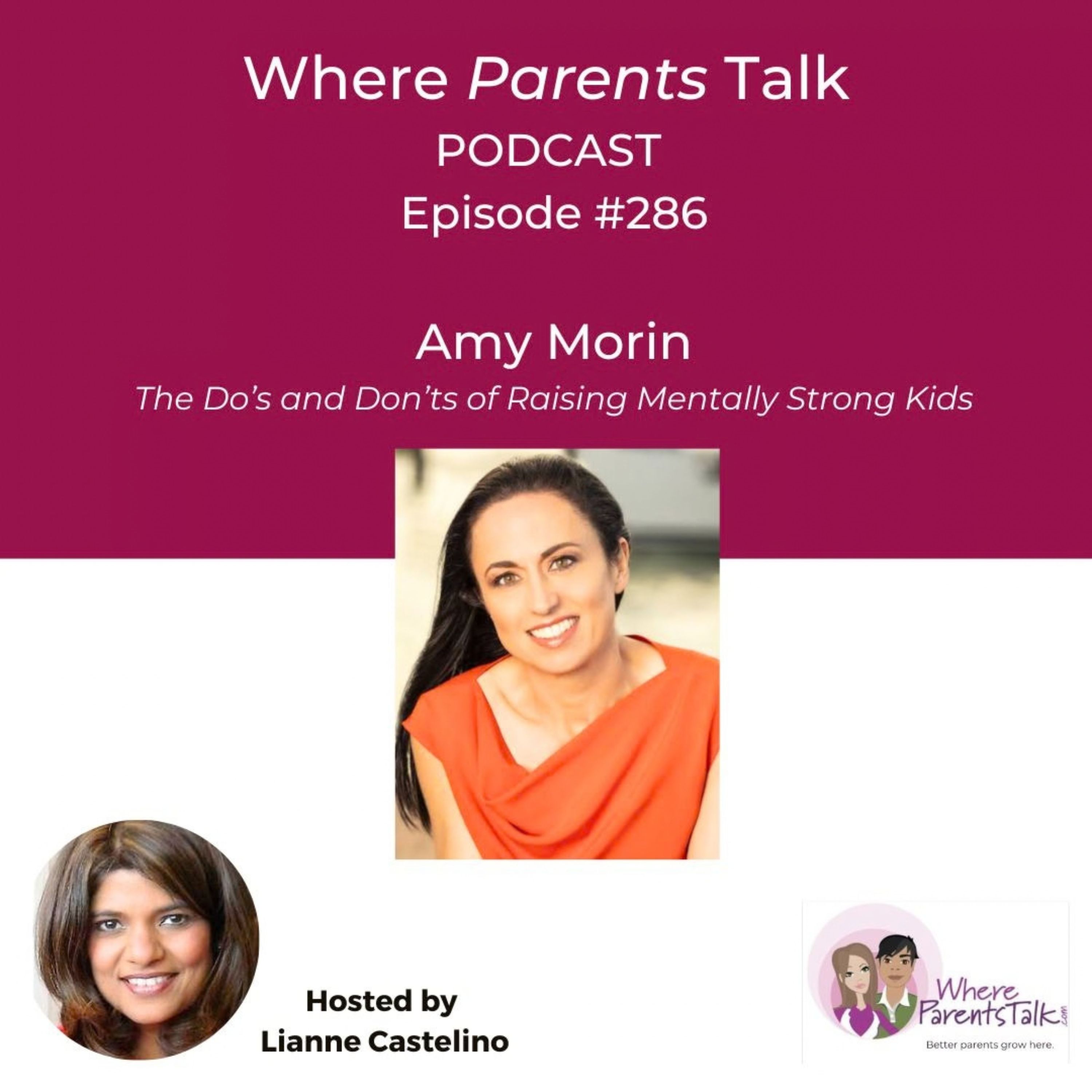
  • Where Parents Talk: Evidence-based Expert Advice on Raising Kids Today

    Raising Mentally Strong Kids: How Parents Can Build Resilience, Emotional Strength & Confidence

    How do you raise a mentally strong child in a world filled with academic pressure, social media, anxiety, disappointment and constant comparison? In this episode of the Where Parents Talk podcast, host Lianne Castelino speaks to Amy Morin, psychotherapist, speaker, podcast host and international bestselling author. Morin shares practical, evidence-informed strategies for helping tweens, teens and young adults develop mental strength. Drawing from her books 13 Things Mentally Strong Parents Don't Do and 13 Things Mentally Strong Kids Do, as well as her experience as a therapeutic foster parent, Morin explains why mental strength isn't something children simply grow into—it is a set of skills parents can intentionally teach and reinforce. She explores the three building blocks of mental strength: how children think, how they manage emotions and how they behave. She discusses why parents should resist the urge to shield kids from every disappointment, how to teach children to cope with failure and discomfort, and why natural consequences can be powerful learning opportunities. The conversation also tackles parenting out of guilt, helicopter parenting, confidence versus external validation, praising effort rather than outcomes, emotional regulation, and the skills kids need before entering the world of social media and smartphones. For parents raising tweens, teens or young adults, this episode offers practical ways to help children become more resilient, emotionally capable and confident—while learning how to handle life's challenges for themselves. Takeaways: We must intentionally teach mental strength: thoughts, emotional health, and actions together, not something children are simply born with. I recommend starting emotion conversations early—toddlers through tweens—so communication and coping skills develop before hormonal changes complicate everything. We resist parenting out of guilt and sheltering kids from pain; disciplined natural consequences build independence and long-term resilience. Before handing over devices, we teach emotional regulation and device usage limits so children tolerate discomfort without defaulting to social media. We praise effort over outcome to cultivate internal validation, prevent dependence on external praise, and protect mental health. Make failure a dinner-table topic: normalize mistakes, practice problem-solving, and encourage kids to learn rather than hide missteps like cyber slip-ups or bullying incidents. From my lived experience, I learned not to give away my power; focus on controllables, uphold consent & relationships boundaries, and prioritize physical and emotional health. Three practical practices we recommend: label feelings daily, challenge unhelpful thoughts through conversation, and reinforce small acts of disciplined perseverance. This podcast is for parents, guardians, teachers and caregivers to learn proven strategies and trusted tips on raising kids, teens and young adults based on science, evidenced and lived experience. You’ll learn the latest on topics like managing bullying, consent, fostering healthy relationships, and the interconnectedness of mental, emotional and physical health. Links referenced in this episode: whereparentstalk.com

    Yesterday · 33 min· Video

All Parenting1,353