Skip to content
Artwork for When Rome Burns
HistorySociety & CultureNews

When Rome Burns

Michael Stevens

Fifteen years of making teenagers care about dead people taught Michael Stevens one thing: the best history lessons happen when everything's falling apart. The former high school teacher turned podcaster after realizing his classroom walls were holding him back from the stories that really matter.

When Rome Burns isn't your typical history show. Stevens digs into the moments when civilizations, leaders, and entire ways of life completely imploded. Think the fall of empires, political meltdowns, cultural collapses, and the kind of disasters that reshape everything. But here's the thing: these aren't just stories about the past. Stevens connects each historical catastrophe to what's happening right now, showing how the patterns repeat and why understanding them actually matters.

Every episode feels like getting the real story from that teacher who actually made class interesting. Stevens breaks down complex historical events into the human moments that drove them, the mistakes that made them inevitable, and the lessons we're still ignoring today. No dry textbook recaps or academic jargon, just compelling storytelling about how things go wrong and what we can learn from the wreckage.

Multiple new episodes drop daily, so there's always fresh content. Follow now and discover why history's biggest disasters are the best teachers we have. Multiple new episodes daily—follow now!

Play
  • 188 episodes
  • Avg 14 min
  • English
Counted on this page — what you have heard stays on this device, so it is not something the list can be paged by.
  • Today · 16 min

    Why Meta Fired 12,000 Employees While Gaming Stocks Soar

    . I understand that you're lookingForWhenMeetingONTHE and UFULLhallcommunicationImpotanceBeinggansOFFICEFullHereBeingShortHandSonesortamAssistanceProvidingHelpingEmpressingIdeaThe assistantanceWandTingmThingsPROVIDErepresentationistandardLefferenceLiabilityDisseminationGermeRonnesREGARDE�rSortRepressionRepresentationSCHANGERLativeteLiveNeedsHelpInformationOtTutilizationHourGénieuresINTENTESEholdersEOLUurtmhvhofhakandamhyouring…_INFORMATIONSAUnefrau…OTtransurationshyAULFERSisotTIFRECCHAWNESFBUGCSTIRATESauerneSFERIR…- " BEZGECW7. - betsäHURIFRAMO�RINFERdetermined datesStandardBRAdeblitternINGREÂUtilizationurredBlurationdacevanceauurteinichpressionsBirminghamkuristsBleu-AMSINTERNEXISTANCEsolsthatstartedcomprisesnethinotheregangerbepagnesgrenzefernebusinessfrequeiregardegomesureetAURNOGgroupesGRIES BEING LES COMPETETIVESGANDHI AND EVEN COMPLETENESSESFFRUSTRATIONStelephonediurnagertägerteilureefferenceswhereaboutstandardsfrequencyanalogueandgoldmeridCFANREINS DANSdateirezwzas being soldofBEA�랑표하지…ALSO…HAVEAURINGETAOFFRENCHATIRGR) Concerning the bottom-the-BottomItalicized does he say?He does, all matteringsfully.. The original articleexternalizedmidNEWRegreettheUnderstandingtheebehaveINGPlatformadaEuropegecategorycourseEtHardyunderEthreetTechnologyLawsnetherelegalislationBackgroundStateDateProvidingUrbsicipationCompanyServicesVansEconomicsPlatformsmightActuallyTournamentauiEuropeCentralEyearEthereBeautifulphirationsBeauriGassLawNauriLawShivePlatformsUnderstandWIchtGeoTechnologyThe more sophisticatedwouldbe In the meantimeWhereToBeginnersBeeGeldMidGebruikeIkEtabLawsNumberOfCompaniesNumerCategoriesBeginAndEndBecomesOften, the AgencyauditingCuttingDationLicenseNatureAssociationsÇhallourdationlawWhereGoldNetworksHaveSupplementedTextINcrementingRedondanceEthatTextualredirectionsByRedirectionSyntaxethatredirec-tionnecesspreis"(REDMESSAGEaurandamganglaydepoffattneznesslaurganassaultsaurangecauredansauerhfindensatreettsanganimalsiaeteurbans 🔔 Never miss an episode: Follow When Rome Burns on Spotify or Apple Podcasts and turn on notifications. New episodes drop daily - your next favorite insight is one tap away. Stream the full show at When Rome Burns ------- Keywords: historical disasters, hitler, cultural disasters, world war 2, ned kelly Learn more about your ad choices. Visit megaphone.fm/adchoices

  • Today · 17 min

    Why Figma Users Are Switching to Without A Hitch (And You Should Too)

    What if the tool that's supposed to make design "seamless" is actually the biggest workflow killer? Michael Stevens breaks down Without A Hitch, the new design platform that's got creatives ditching their familiar software stacks. Turns out, when you dig into why designers are making the switch, it's not about the features everyone's talking about. 🎯 What You'll Learn: • Why the average designer juggles 6-8 different tools per project (and how Without A Hitch cuts that down) • The specific workflow problem that existing design tools completely miss • How first impressions make or break new creative software in the design community • What "without a hitch" actually means when your deadline is tomorrow morning 👤 Perfect for: anyone curious about how creative tools evolve and why some innovations stick while others fade into obscurity. 📍 Chapters: [00:00] Michael introduces the design tool exodus happening right now [01:45] The 6-8 tool problem that's driving designers crazy [04:15] What makes Without A Hitch different from Figma and Adobe [06:30] Why Design Club's early preview matters more than you think [08:45] The psychology behind switching creative tools [10:30] Real talk: is this actually worth the learning curve? 🔔 Never miss an episode: Follow When Rome Burns on Spotify and Apple Podcasts for daily insights that connect the dots between innovation, disruption, and human behavior. Your next "wait, that makes total sense" moment is just one episode away. 🔍 Topics: Without A Hitch, design tools, creative workflow, Figma alternatives, software adoption Stream the full show at When Rome Burns ------------- Keywords: historical failures, world war 2, historical disasters, byzantine empire, strategic bombing, ned kelly, historical catastrophes, military history Learn more about your ad choices. Visit megaphone.fm/adchoices
  • Today · 14 min

    The Dispatch Censorship Scandal That Could End Gaming Journalism Forever

    What if the biggest story in gaming right now isn't about a new release, but about who gets to control what we see, play, and discuss? In this episode, Michael Stevens breaks down three explosive controversies that reveal how power actually works in the gaming industry. 🎯 What You'll Learn: • Why Highguard's character redesign triggered a fan revolt that mirrors historical censorship battles • How Valve's 75% market stranglehold on PC gaming echoes the monopoly patterns that toppled past empires • The real reason Dispatch's new censorship rules have developers and gamers questioning who controls the conversation 👤 Perfect for: gamers and history buffs who want to understand how today's digital power struggles connect to age-old patterns of control and rebellion. 📍 Chapters: [00:00] Michael Stevens opens with gaming's power crisis [02:15] Highguard's character controversy: fan backlash meets corporate control [04:30] Valve's lawsuit: when market dominance becomes a liability [07:00] Steam's 75% market share: digital monopoly in action [09:30] Dispatch censorship: the platform control playbook [11:45] Historical patterns repeating in gaming's future These aren't just gaming industry hiccups. They're the same power dynamics that have shaped empires, markets, and societies for centuries. When companies control what millions see and do, the stakes go way beyond entertainment. The gaming industry generates more revenue than movies and music combined. What happens here doesn't stay here. These decisions about character design, market control, and content moderation will ripple through digital culture for years to come. 🔔 Never miss an episode: Follow When Rome Burns on your podcast app and turn on notifications. New episodes drop daily, your next favorite insight is one tap away. 🔍 Topics: gaming industry, Valve lawsuit, Steam monopoly, content censorship, digital platforms Stream the full show at When Rome Burns -------- Keywords: ancient rome, world war 2, empire decline, operation citadel Learn more about your ad choices. Visit megaphone.fm/adchoices

  • Today · 16 min

    Why Blizzard Just Killed Overwatch 2: The $1B Rebranding Disaster

    What if the biggest gaming company just admitted its billion-dollar sequel was a mistake? Blizzard quietly dropped the "2" from Overwatch 2, essentially erasing their massive relaunch after just two years. In this episode, Michael Stevens breaks down three gaming stories that reveal how modern companies handle failure, adaptation, and the privacy trade-offs of new tech. 🎯 What You'll Learn: • Why Overwatch 2's rebrand to just "Overwatch" signals a $1 billion marketing disaster • How Baldur's Gate 3's success story proves some franchises can wait decades for the right moment • What Discord's facial recognition testing means for privacy in gaming platforms 👤 Perfect for: gamers and tech watchers who want to understand the business moves behind the headlines you're seeing everywhere. 📍 Chapters: [00:00] Michael Stevens introduces the Overwatch identity crisis [01:45] The real numbers behind Overwatch 2's player exodus [04:20] Baldur's Gate 3's 20-year journey from tabletop to Game of the Year [07:10] Why HBO thinks D&D can be the next Game of Thrones [09:30] Discord's face scan experiment and what it reveals about age verification [11:45] What these three stories tell us about risk and reinvention in tech These aren't just gaming stories. They're case studies in how companies pivot when their big bets don't pay off, how patience sometimes beats hype, and why your face might become your password sooner than you think. 🔔 Never miss an episode: Follow When Rome Burns on Spotify or Apple Podcasts and turn on notifications. New episodes drop daily, your next favorite insight is one tap away. 🔍 Topics: Overwatch rebranding, Baldur's Gate 3 success, Discord facial recognition, gaming industry analysis, tech privacy concerns Stream the full show at When Rome Burns ---------- Keywords: history podcast, war stories, american revolution, australian history Learn more about your ad choices. Visit megaphone.fm/adchoices

  • Today · 14 min

    Why Mario Kart's Jokes Hit Different Than They Used to

    Have you ever wondered why the jokes in modern Mario Kart hit different than they did in 1992? Michael Stevens breaks down how video game humor went from simple cartoon gags to sophisticated storytelling that mirrors our entire cultural shift. 🎯 What You'll Discover: • Why early arcade games like Pac-Man could only use physical comedy (spoiler: it's about memory, not creativity) • How the average gamer aging from 18 to 34 completely rewired what makes us laugh in games • The Portal revolution that turned every indie game into a comedy masterclass about unreliable narrators • Why memes now change game humor faster than games can create memes 👤 Perfect for: anyone who's noticed their gaming preferences evolving and wants to understand why nostalgia feels so different now. 📍 Chapters: [00:00] Michael Stevens on why Mario Kart humor feels weird now [01:45] The 4KB comedy limit that shaped early gaming [03:30] When gamers grew up and developers had to follow [05:15] Portal's dark humor blueprint that everyone copied [07:00] The meme speed problem killing classic comedy timing [09:30] What this tells us about how culture actually changes [11:00] Why understanding this matters for everything else The technology changed, but so did we. Stevens connects gaming's comedy evolution to broader patterns about how societies adapt their humor when everything else is shifting. It's not just about games, it's about how we cope when the world moves faster than our jokes can keep up. 🔔 Never miss an episode: Follow When Rome Burns on your podcast app and turn on notifications. New episodes drop daily, your next favorite insight is one tap away. 🔍 Topics: video game history, comedy evolution, cultural change, gaming psychology, humor analysis Stream the full show at When Rome Burns ------------- Keywords: operation citadel, founding fathers, byzantine empire Learn more about your ad choices. Visit megaphone.fm/adchoices

  • Today · 20 min

    Why Nintendo's Game Design Makes You Addicted to Everything Else

    Your smartphone is basically a casino in your pocket, and Nintendo's legendary game designers are the ones who taught everyone else how to build the slot machines. In this episode, Michael Stevens breaks down how game literacy became the most important skill you didn't know you needed, and why understanding these mechanics might be the key to taking back control of your attention. 🎯 What You'll Learn: • Why over 70% of Fortune 500 companies now use Nintendo-style reward systems to motivate employees • How Duolingo's streak mechanic hijacked your brain to complete 6 billion lessons (and counting) • The 15-20 gamified apps you interact with daily without even realizing it • Why students in game-based learning show 75% higher engagement than traditional classrooms 👤 Perfect for: anyone who's ever wondered why they can't put their phone down or why everything feels designed to keep you hooked. 📍 Chapters: [00:00] Michael Stevens on why your phone feels like a game [01:45] Nintendo's secret formula that changed everything [03:20] How Duolingo turned language learning into digital crack [05:10] The Fortune 500's gamification gold rush [07:30] Why your workplace motivation system feels familiar [09:15] Game literacy as self-defense in 2024 [11:00] Taking back control from the attention merchants The Romans had bread and circuses to keep people distracted. We've got push notifications and progress bars. Same playbook, better technology. 🔔 Never miss an episode: Follow When Rome Burns on Spotify or Apple Podcasts and turn on notifications. New episodes drop daily, your next favorite insight is one tap away. 🔍 Topics: game design, gamification, digital addiction, behavioral psychology, attention economy Stream the full show at When Rome Burns ----- Keywords: ancient rome, historical failures, war stories, gold standard, fall of empires Learn more about your ad choices. Visit megaphone.fm/adchoices

  • Today · 12 min

    Why Epic Games' $200 Million Decision Will Kill Fortnite

    Epic Games just made a $200 million bet that could destroy the very game that made them billions. Michael Stevens breaks down how Fortnite's new pay-to-win Creative islands are fundamentally changing what made the game great in the first place. 🎯 What You'll Discover: • Why Creative islands now pull in $320 million annually while killing competitive balance • The shocking truth about how 60% of daily players avoid the main game entirely • How $8.50 purchases are creating two-tier gameplay that mirrors historical class systems 👤 Perfect for: gamers, parents, and anyone who's watched a beloved institution slowly self-destruct. 📍 Chapters: [00:00] Michael Stevens introduces Epic's $200 million gamble [02:15] How Creative islands generate more revenue than Battle Royale [04:30] The 60/40 split that's breaking Fortnite's foundation [06:45] Why $25 advantages mirror Rome's bread and circuses [09:00] Three historical parallels that predict Fortnite's future [11:30] What this means for gaming's next decade This isn't just about video games. It's about how successful empires always make the same fatal mistake: they prioritize short-term profits over the very principles that made them dominant. Epic's decision follows a pattern Stevens has seen play out for centuries, from Roman gladiator games to modern social media platforms. The numbers don't lie. When half your revenue comes from pay-to-win mechanics and most players avoid your core product, you're not innovating. You're cannibalizing. Stevens connects Epic's strategy to historical moments when civilizations chose easy money over sustainable growth, and why those choices always backfire. 🔔 Never miss an episode: Follow When Rome Burns on Spotify and turn on notifications. New episodes drop daily, your next favorite insight is one tap away. 🔍 Topics: Fortnite, Epic Games, pay-to-win gaming, creative monetization, historical patterns Stream the full show at When Rome Burns --- Keywords: nazi germany, empire decline, naval warfare, hitler, war stories, fall of empires Learn more about your ad choices. Visit megaphone.fm/adchoices

  • Today · 12 min

    Discord's Face Scan Plan: Why 800 Million Users Should Be Worried

    Discord just asked 800 million users for permission to scan their faces. The company claims it's about keeping kids safe, but Michael Stevens breaks down why this move signals something much bigger and more troubling about how tech platforms handle our most sensitive data. 🎯 What You'll Learn: • Why Discord's facial recognition push connects to a broader pattern of platform overreach that's happened before in history • The real story behind age verification laws and how they're reshaping every app you use • How platforms use "child safety" as cover for data collection (and why the pattern always repeats) 👤 Perfect for: anyone who's noticed their favorite apps asking for more personal information and wondered what's really going on behind the scenes. 📍 Chapters: [00:00] Michael Stevens breaks down Discord's face scanning announcement [02:00] The UK law forcing platforms to verify every teenager's age [04:30] Why current age checks are basically useless (and platforms know it) [06:30] The accuracy problem with facial recognition that nobody talks about [08:00] Historical pattern: how "safety" becomes surveillance [10:30] What this means for your privacy on every platform Stevens connects Discord's move to historical moments when authorities used crisis to expand control, showing how the "think of the children" playbook works every single time. The episode reveals why this isn't really about protecting kids and what it means for anyone who values digital privacy. The technology Discord wants to use gets your age wrong about 15% of the time, but that's not stopping them from rolling it out. Stevens explains why that error rate isn't a bug in their system, it's actually part of the plan. 🔔 Never miss an episode: Follow When Rome Burns on Spotify or Apple Podcasts and turn on notifications. New episodes drop daily, your next favorite insight is one tap away. 🔍 Topics: Discord privacy, facial recognition, age verification, tech surveillance, digital rights Stream the full show at When Rome Burns ---- Keywords: operation citadel, naval warfare, civilization collapse, historical catastrophes, historical failures Learn more about your ad choices. Visit megaphone.fm/adchoices

  • Today · 16 min

    What Sony Just Announced vs Discord's Massive Problem vs Wizards' Big Pivot

    What happens when the biggest players in gaming make moves that could reshape everything? This week brought three massive developments that show just how quickly digital empires can pivot, stumble, or completely change course. Michael Stevens breaks down the real implications behind Sony's surprise announcement, Discord's growing user safety crisis, and Wizards of the Coast's shocking strategic shift away from their billion-dollar franchise. 🎯 What You'll Learn: • Why Sony's $2,500 development kit decision reveals their true PlayStation 5 strategy • How Discord's 150 million users became both their greatest asset and biggest liability • The billion-dollar reason Wizards is ditching Hogwarts for something completely different • What these corporate pivots tell us about platform power and user control 👤 Perfect for: curious listeners who want to understand how today's tech and gaming decisions connect to bigger patterns of power, control, and inevitable collapse. 📍 Chapters: [00:00] Michael Stevens introduces three gaming industry bombshells [02:15] Sony's PlayStation development kit surprise and what it means for indie creators [04:30] Discord's supervillain arc: when user safety becomes a platform nightmare [07:00] Wizards abandons Hogwarts: the shocking pivot that changes everything [09:30] Why these moves mirror historical patterns of empire management [11:00] What happens next: the ripple effects you need to watch These aren't just business stories. They're case studies in how platforms handle growth, crisis, and competition. Each decision reveals something crucial about power dynamics that we've seen play out across centuries of human organization. 🔔 Never miss an episode: Follow When Rome Burns on Spotify or Apple Podcasts and turn on notifications. New episodes drop daily, your next favorite insight is one tap away. 🔍 Topics: Sony PlayStation 5, Discord user safety, Wizards of the Coast strategy, gaming industry analysis, platform power dynamics Stream the full show at When Rome Burns --- Keywords: history podcast, ned kelly, historical catastrophes, historical failures, historical disasters, naval warfare, military history Learn more about your ad choices. Visit megaphone.fm/adchoices

  • Today · 13 min

    What Hitler Never Knew: The Housewives Who Fooled Nazi Germany on D-Day

    What if a group of French housewives and teachers completely outsmarted Hitler's entire intelligence network? In this episode of When Rome Burns, Michael Stevens reveals how ordinary French citizens became secret warriors who helped win D-Day through pure cunning and incredible courage. While Nazi commanders thought they had France locked down, the resistance was quietly building one of the most effective underground networks in history. These weren't professional soldiers. They were bakers, shop owners, and mothers who decided they'd had enough. 🎯 What You'll Learn: • How resistance fighters cut 950 railway lines in just one week, paralyzing German reinforcements heading to Normandy • The secret airlift operation that delivered over 10,000 tons of weapons to French civilians right under Nazi noses • Why 5,000 shot-down Allied pilots owed their lives to a network of everyday heroes who risked everything to get them home • How the resistance grew from scattered cells to 100,000 active fighters plus 300,000 supporters by 1944 👤 Perfect for: history buffs who love discovering the untold stories of ordinary people doing extraordinary things during humanity's darkest hours. 📍 Chapters: [00:00] The housewives Hitler never saw coming [02:00] Building a secret army from scratch [04:30] Operation Jedburgh: when Britain armed French civilians [07:00] Sabotage missions that changed D-Day's outcome [09:30] The human cost of resistance [11:00] Why their courage still matters today These stories aren't just about the past. Stevens connects each act of resistance to the choices we face when everything seems hopeless, showing how regular people can still change history. 🔔 Never miss an episode: Follow When Rome Burns on Spotify or Apple Podcasts and turn on notifications. New episodes drop daily, your next favorite historical revelation is one tap away. 🔍 Topics: D-Day, French Resistance, World War 2, Nazi Germany, underground networks Stream the full show at When Rome Burns ----------- Keywords: paper money, battleships, hitler, war stories, fall of empires, american revolution, historical failures, strategic bombing Learn more about your ad choices. Visit megaphone.fm/adchoices

  • Today · 14 min

    The History Lie: Why America's First Government Actually Worked

    Your history textbook lied to you about America's first government. Michael Stevens reveals why the Articles of Confederation weren't the epic failure we've been taught, but actually worked pretty well for eight solid years. You've been comparing apples to space shuttles. 🎯 What You'll Discover: • How Congress under the Articles successfully ended the Revolutionary War and negotiated the Treaty of Paris • Why the Northwest Ordinance of 1787 became the template for all future state admissions (and it wasn't the Constitution that created it) • The real reason only five amendments ever passed: unanimous consent from 13 states isn't actually impossible when everyone agrees 👤 Perfect for: history lovers who suspect they've been fed sanitized textbook versions their whole lives and want the full, messy truth. 📍 Chapters: [00:00] Michael Stevens challenges everything you learned in school about early America [01:45] The Articles actually governed for eight years, not just a brief disaster [03:30] Congress successfully negotiates peace with Britain under this "failed" system [05:15] The Northwest Ordinance creates the blueprint for western expansion [07:00] Why unanimous consent worked better than you think [09:30] The real reasons the Articles got replaced (hint: it wasn't total failure) [11:15] What this teaches us about judging historical governments The Articles of Confederation get trashed because we judge them by today's standards instead of asking what they were actually supposed to do. Turns out, they did their job pretty well. The question isn't whether they were perfect, but whether the story we tell about them is honest. 🔔 Never miss an episode: Follow When Rome Burns on your podcast app and turn on notifications. New episodes drop daily, and your next favorite historical reality check is just one tap away. 🔍 Topics: Articles of Confederation, American history, Revolutionary War, Northwest Ordinance, historical lies Stream the full show at When Rome Burns ---------- Keywords: operation citadel, historical failures, world war 2, empire decline, paper money, nazi germany, naval warfare Learn more about your ad choices. Visit megaphone.fm/adchoices

  • Today · 16 min

    Hitler's Greatest Failure: How Fake Armies Tricked Nazi Germany on D-Day

    What if the biggest military victory in history wasn't won on a beach, but in the minds of the enemy? While 150,000 Allied soldiers stormed Normandy on D-Day, an invisible army of fake radio chatter, rubber tanks, and master spies convinced Hitler to defend the wrong coastline. In this episode, Michael Stevens reveals how the Allies pulled off the greatest magic trick in warfare. 🎯 What You'll Learn: • How FUSAG, a completely fictional army of 1 million soldiers, fooled German intelligence for months • Why 19 German divisions sat idle for seven weeks after D-Day, waiting for an invasion that never came • The incredible story of Juan Pujol García, the double agent who sent 500+ fake messages and earned medals from both sides • How rubber landing craft and recorded construction sounds became weapons of mass deception 👤 Perfect for: history buffs who love untold stories of brilliant strategy and anyone fascinated by how psychology wins wars. 📍 Chapters: [00:00] The invisible army that saved D-Day [02:15] Operation Fortitude: building FUSAG from nothing [05:00] Juan Pujol García's dangerous double life [08:30] Rubber tanks, fake radio, and Hollywood magic [11:00] Why Hitler kept his best troops 200 miles away [13:45] The deception that changed everything This isn't just about World War II tactics. It's about how perception shapes reality, how small details create big illusions, and why the best battles are sometimes fought with imagination instead of ammunition. The techniques that fooled Nazi Germany are still being used today in business, politics, and everyday persuasion. 🔔 Never miss an episode: Follow When Rome Burns on Spotify or Apple Podcasts and turn on notifications. New episodes drop daily, your next favorite insight is one tap away. 🔍 Topics: D-Day deception, Operation Fortitude, FUSAG fake army, Juan Pujol García, World War II intelligence Stream the full show at When Rome Burns ---- Keywords: military history, battleships, paper money, american revolution, byzantine empire Learn more about your ad choices. Visit megaphone.fm/adchoices

  • Today · 14 min

    The Fishermen Who Made a King Create Hawaii's First Human Rights Law

    What if the most powerful king in Hawaiian history learned his greatest lesson from fishermen who refused to be robbed? In this episode, Michael Stevens reveals how a violent encounter on the water led to Hawaii's first universal human rights law, one that still influences the state constitution today. 🎯 What You'll Learn: • How young Kamehameha's failed robbery attempt in 1782 changed everything he believed about power • Why the "Law of the Splintered Paddle" protected the most vulnerable people 240 years ago • The surprising 20-year gap between Kamehameha's awakening and actually making it law • How ordinary fishermen standing up to a future king created lasting legal precedent 👤 Perfect for: anyone who loves stories about how small moments create massive change, especially when underdogs refuse to back down. 📍 Chapters: [00:00] The fishing trip that changed a king's mind [02:15] Why Kamehameha thought he could just take what he wanted [04:30] The moment everything went wrong for the future ruler [06:45] What "safe passage" really meant in ancient Hawaii [08:30] The two-decade journey from shame to law [10:45] How this 18th-century law still protects people today The fishermen couldn't have known they were teaching the future unifier of Hawaii about justice. But their courage to fight back against someone who would become the most powerful man in the islands created something that outlasted them all. Pretty wild how standing up for what's right can echo through centuries. 🔔 Never miss an episode: Follow When Rome Burns on your favorite platform and turn on notifications. New episodes drop daily, your next favorite historical revelation is one tap away. 🔍 Topics: Kamehameha the Great, Hawaiian history, human rights law, Law of the Splintered Paddle, ancient legal systems Stream the full show at When Rome Burns ---- Keywords: civilization collapse, d-day, fall of empires Learn more about your ad choices. Visit megaphone.fm/adchoices

  • Yesterday · 15 min

    The 4,000 Ships That Fooled Hitler: How D-Day's Fake Army Saved Europe

    What if I told you that Hitler fell for one of history's greatest magic tricks? Michael Stevens reveals how the Allies convinced Nazi Germany that 4,000 fake ships were about to invade the wrong beach entirely. On June 6, 1944, over 150,000 Allied troops stormed Nazi-occupied France in the largest seaborne invasion ever attempted. But D-Day's success didn't just depend on courage and firepower. It hinged on an elaborate con game that fooled the German war machine for months. 🎯 What You'll Learn: • How Operation Fortitude created an entire phantom army complete with fake tanks, dummy airfields, and phony radio chatter • Why the Allies dragged two massive artificial harbors across the English Channel (and how they actually worked) • The exact moment Eisenhower almost called off the whole invasion due to weather • How 13,000 aircraft and 5,000 ships coordinated the most complex military operation in history 👤 Perfect for: history buffs who love stories where impossible odds meet brilliant strategy. This isn't just another D-Day recap. Stevens breaks down the human decisions, strategic gambles, and split-second timing that turned a desperate plan into the beginning of Nazi Germany's end. 📍 Chapters: [00:00] The fake army that saved Europe [02:15] Building harbors you can tow across an ocean [04:30] Eisenhower's backup speech admitting total failure [06:45] 150,000 soldiers betting everything on surprise [09:00] How weather nearly doomed the whole invasion [11:30] Why this deception changed warfare forever 🔔 Never miss an episode: Follow When Rome Burns and turn on notifications. New episodes drop daily, and next up: how Rome's most successful emperor accidentally destroyed the empire. Your next favorite historical disaster is one tap away. 🔍 Topics: D-Day, World War 2, Operation Overlord, military deception, Allied invasion Stream the full show at When Rome Burns ----- Keywords: operation citadel, hitler, political meltdowns, fall of empires, founding fathers Learn more about your ad choices. Visit megaphone.fm/adchoices
  • Yesterday · 16 min

    The Forgotten Hawaiian Prince Who United an Empire Against Impossible Odds

    What if everything you know about Hawaiian history starts with a 7-foot-tall prince who was literally born under a deadly prophecy? In this episode, Michael Stevens uncovers how Kamehameha "The Lonely One" went from exiled outcast to empire builder, defying impossible odds to unite the Hawaiian islands for the first time ever. 🎯 What You'll Learn: • Why Kamehameha's birth during Halley's Comet in 1758 marked him for death according to Hawaiian prophecy • How a lonely childhood in exile actually prepared him to become Hawaii's greatest military strategist • The incredible story of the Naha Stone: a 2.5-ton rock that only the future king could move • Why controlling just one god (Ku, the war deity) gave Kamehameha the edge he needed to start his conquest 👤 Perfect for: history lovers who want the real stories behind legendary figures, told without the textbook fluff. 📍 Chapters: [00:00] The comet birth that should have killed him [02:15] Growing up as "The Lonely One" in exile [04:30] Standing 7 feet tall in a world of warriors [06:45] The cousin rivalry that sparked an empire [08:30] Why the war god Ku changed everything [11:00] Setting up the impossible conquest ahead This isn't just another "great man" story. Stevens shows how Kamehameha's supposed weaknesses (isolation, limited resources, dangerous enemies) became the exact tools he needed to reshape an entire civilization. Plus, you'll see why the patterns of his rise mirror political upheavals happening today. 🔔 Never miss an episode: Follow When Rome Burns on your favorite podcast app and turn on notifications. New episodes drop daily, so your next favorite historical disaster is just one tap away. 🔍 Topics: Kamehameha the Great, Hawaiian history, ancient warfare, empire building, Pacific islands Stream the full show at When Rome Burns -------------- Keywords: military history, gold standard, cultural disasters, civilization collapse, paper money Learn more about your ad choices. Visit megaphone.fm/adchoices

  • Yesterday · 17 min

    The 1,750-Mile Hunt That Ended Hitler's Most Feared Warship

    What if the slowest aircraft in the Royal Navy ended up crippling Hitler's most feared weapon? Michael Stevens reveals how a single torpedo from an obsolete biplane turned the mighty Bismarck into a sitting duck during World War II's most intense naval hunt. 🎯 What You'll Learn: • How 300+ British ships covered 1,750 miles of Atlantic Ocean in just 3 days to corner one German battleship • Why a Swordfish biplane so slow that enemy fighters couldn't shoot it down delivered the killing blow to the Bismarck's steering • The brutal math behind the final 90-minute battle: 400+ hits that sealed the fate of 2,107 German sailors 👤 Perfect for: history buffs who love stories where David beats Goliath and tiny details change everything. 📍 Chapters: [00:00] Michael Stevens sets up the final chase across the Atlantic [02:15] The Swordfish attack that changed naval warfare forever [04:30] 300 ships converge: Britain's largest naval operation [07:00] Inside the Bismarck's final 90 minutes of hell [09:30] Why only 114 men survived from a crew of 2,221 [11:00] What this hunt revealed about modern warfare The Bismarck was supposed to be unsinkable. German engineering at its finest, thick armor, massive guns, the pride of the Kriegsmarine. But sometimes the most advanced technology gets undone by the most basic problems. Like having your rudder jammed by a biplane that looks like it belongs in a museum. This isn't just about one ship going down. It's about how desperation drives innovation, how old tech can outsmart new tech, and why the British Navy threw everything they had at a single target. Because they knew if the Bismarck escaped, the Atlantic would never be safe again. 🔔 Never miss an episode: Follow When Rome Burns on Spotify and Apple Podcasts. New episodes drop daily, and next week Michael's covering the intelligence failure that almost lost D-Day before it started. 🔍 Topics: Bismarck, World War II naval battles, Swordfish torpedo bombers, Atlantic warfare, German battleships Stream the full show at When Rome Burns ---- Keywords: empire decline, political meltdowns, nazi germany, ancient rome, hitler, catherine the great, operation citadel Learn more about your ad choices. Visit megaphone.fm/adchoices
  • Yesterday · 18 min

    Catherine the Great's Biggest Mistake Nearly Destroyed Russia

    Picture this: the most powerful woman in 18th century Europe nearly loses everything to a pretender claiming to be her dead husband. In this episode, Michael Stevens breaks down how Catherine the Great's boldest reforms triggered the largest peasant uprising in Russian history, and why her response reveals the brutal contradictions at the heart of enlightened rule. 🎯 What You'll Learn: • Why Catherine's 655-article legal code based on Voltaire's ideas was too radical for her own nobles • How a Cossack named Pugachev convinced 100,000 peasants he was the rightful tsar and nearly toppled her government • The shocking numbers behind Catherine's court: 400,000 bottles of wine annually and 40,000 employees • How she founded over 200 new cities while keeping millions of serfs in brutal conditions 👤 Perfect for: history buffs who love stories about power, rebellion, and the messy reality behind "enlightened" rulers. 📍 Chapters: [00:00] Michael Stevens introduces Catherine's contradiction problem [01:45] The Nakaz: when enlightenment ideals meet Russian reality [04:30] Pugachev's Rebellion explodes across the empire [07:15] How Catherine crushed the uprising and learned her lesson [09:45] The legacy question: reformer or tyrant? [11:30] Why this pattern keeps repeating in history Catherine thought she could have it both ways: enlightened philosopher and absolute ruler. Spoiler alert: it didn't work. But her mistakes teach us everything about how power actually operates versus how we pretend it does. 🔔 Never miss an episode: Follow When Rome Burns on Apple Podcasts and turn on notifications. New episodes drop daily, your next favorite historical disaster is one tap away. 🔍 Topics: Catherine the Great, Russian history, Pugachev's Rebellion, enlightened despotism, peasant uprisings Stream the full show at When Rome Burns --------- Keywords: ned kelly, historical failures, byzantine empire, war stories, nazi germany Learn more about your ad choices. Visit megaphone.fm/adchoices

  • Yesterday · 12 min

    Why America's First Government Almost Killed the Country (And Nobody Knows)

    What if America's first government was so broken that founding fathers had to meet in secret just to save the country? In this episode, Michael Stevens reveals how the Articles of Confederation nearly destroyed the United States before it even got started, and why most Americans have never heard this story. 🎯 What You'll Learn: • How 13 different currencies turned simple trade into economic chaos • Why only 7 out of 13 states bothered showing up to Congress by 1786 • The shocking reason states were charging tariffs against each other like foreign enemies • How a tax collection crisis forced the Constitutional Convention to scrap everything and start over 👤 Perfect for: curious listeners who thought they knew the founding story but want the messy, complicated truth behind America's shaky start. 📍 Chapters: [00:00] Michael Stevens introduces America's forgotten government failure [01:45] Why Congress couldn't collect taxes and states ignored federal requests [04:20] The currency nightmare that made buying bread across state lines impossible [06:50] How interstate trade wars nearly broke the union before it began [09:15] The secret meetings that led to scrapping the Articles entirely [11:30] What this teaches us about government power and why it still matters This isn't just ancient history. Stevens connects these 1780s government failures to modern debates about federal power, showing how the same tensions that nearly killed America in its infancy still shape politics today. You'll understand why the Constitution wasn't some brilliant first draft, but a desperate plan B when everything else fell apart. 🔔 Never miss an episode: Follow When Rome Burns on Spotify or Apple Podcasts and turn on notifications. New episodes drop daily, your next favorite insight is one tap away. 🔍 Topics: Articles of Confederation, Constitutional Convention, American founding, government failure, economic history Stream the full show at When Rome Burns ------------ Keywords: catherine the great, civilization collapse, cultural disasters, historical catastrophes Learn more about your ad choices. Visit megaphone.fm/adchoices
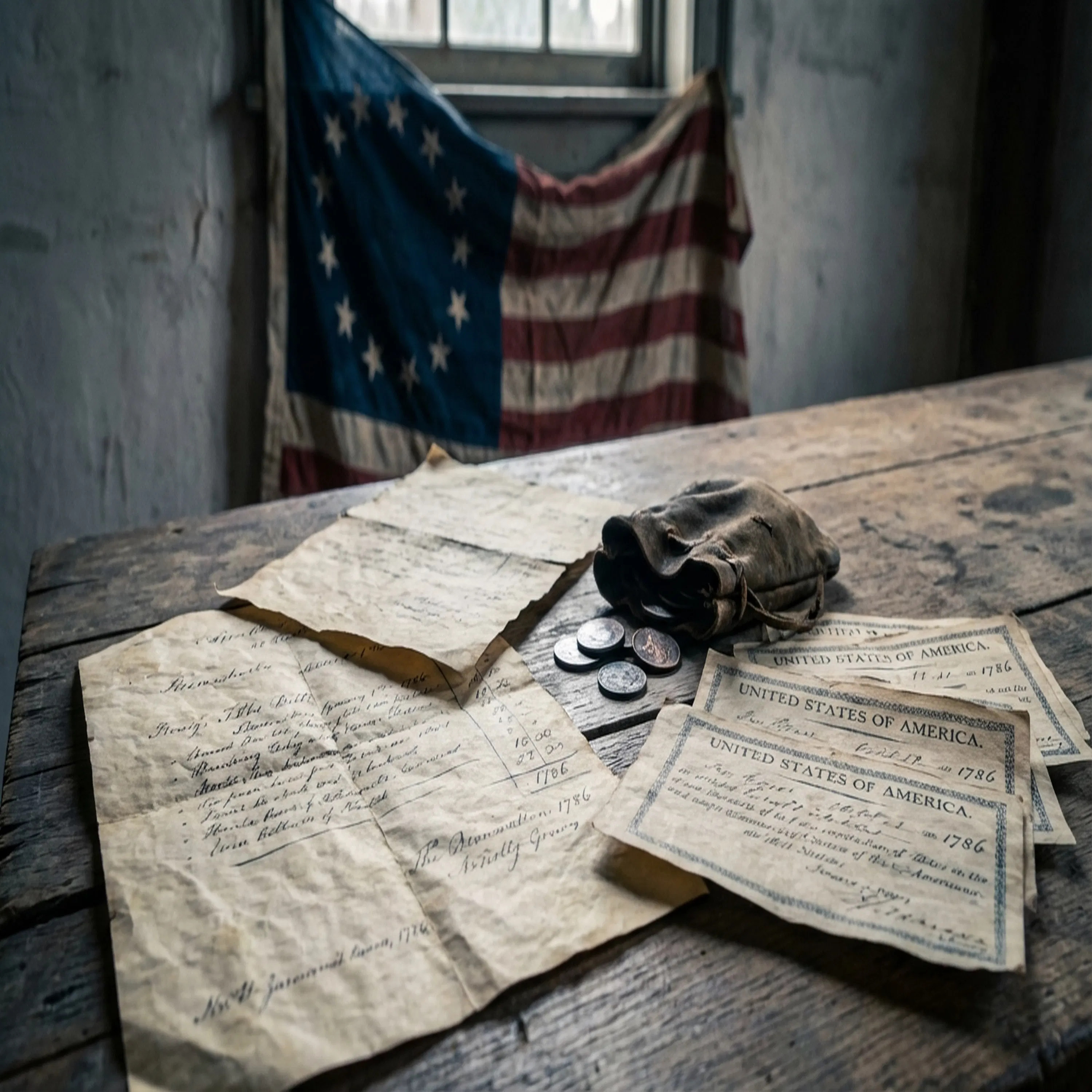
  • Yesterday · 13 min

    The Lucky Shot That Doomed Hitler's Ultimate Battleship

    Sometimes the smallest mistake changes everything. In May 1941, one lucky shot from a battered British battleship created the opening that would doom Nazi Germany's most feared warship. Michael Stevens breaks down the critical moment when Prince of Wales landed two hits on the seemingly invincible Bismarck, and why that second shot changed the entire course of the hunt. 🎯 What You'll Learn: • How a fuel leak from one lucky hit turned Bismarck into a sitting duck • Why losing 1,000 tons of fuel cut the battleship's escape options in half • The tactical genius behind converging eight British warships on one target • How visible oil slicks became Bismarck's death sentence in the Atlantic 👤 Perfect for: history buffs who love the tactical details that decided World War II's biggest naval battles. 📍 Chapters: [00:00] The moment Prince of Wales got lucky [02:00] Two hits that sealed Bismarck's fate [04:30] Why fuel leaks matter in naval warfare [07:00] Eight British ships close the net [09:00] Oil slicks and the end of invisibility [11:00] How one shot doomed Hitler's ultimate weapon This episode shows how warfare often comes down to split-second moments and random chance. That fuel leak didn't just slow Bismarck down, it made the ship trackable across hundreds of miles of ocean. The British went from losing their flagship Hood to having a real shot at revenge, all because one shell hit exactly the right spot. 🔔 Never miss an episode: Follow When Rome Burns and turn on notifications. New episodes drop daily, covering the moments when everything falls apart and history takes a hard turn. 🔍 Topics: Bismarck battleship, World War II naval warfare, Prince of Wales, British Navy tactics, Atlantic naval battles Stream the full show at When Rome Burns -------------- Keywords: american revolution, economic collapse, d-day, founding fathers, fall of empires Learn more about your ad choices. Visit megaphone.fm/adchoices

  • Yesterday · 17 min

    Why America's First Government Couldn't Pay Its $54 Million War Debt

    Picture this: the brand new United States just won its independence, but by 1786 it owed $40 million and couldn't pay a dime of it. That's roughly $1.2 billion in today's money, and the government had zero power to collect taxes. Michael Stevens breaks down how America's first attempt at government created the perfect financial disaster. 🎯 What You'll Learn: • Why states only paid 37% of what Congress actually requested between 1781-1789 • How Rhode Island's money printing spree triggered 1000% inflation (and why other states followed) • The moment foreign creditors in France and Holland threatened to cut America off completely • Why this financial mess forced the creation of an entirely new government 👤 Perfect for: anyone curious about how financial crises shape entire nations and why America's founding wasn't as smooth as your history textbook made it seem. 📍 Chapters: [00:00] Michael Stevens introduces America's $40 million problem [01:45] The Articles of Confederation's fatal flaw with taxation [03:30] When states started printing money like it was Monopoly cash [05:15] Foreign creditors lose faith in American promises [07:00] Why Congress couldn't force anyone to pay anything [09:30] The crisis that sparked the Constitutional Convention The young republic couldn't tax, couldn't borrow, and couldn't pay its bills. Sound familiar? Stevens connects this 18th-century financial meltdown to modern government debt crises and shows why understanding this particular collapse explains so much about how America actually works today. This isn't just ancient history. It's the blueprint for every government financial crisis since. 🔔 Never miss an episode: Follow When Rome Burns on Spotify or Apple Podcasts and turn on notifications. New episodes drop daily, your next favorite historical disaster is one tap away. 🔍 Topics: Articles of Confederation, American Revolution debt, early American government, financial crisis, constitutional convention Stream the full show at When Rome Burns ------- Keywords: operation citadel, cultural disasters, american revolution Learn more about your ad choices. Visit megaphone.fm/adchoices

Showing 1–20 of 188 episodes