Skip to content
Artwork for Verbal Diorama
TV & FilmFilm HistoryFilm Reviews

Verbal Diorama

Verbal Diorama

The award-winning indie film history podcast celebrating the history and legacy of movies you know, and movies you don't.

Have you ever wondered how your favourite movies were made? Hosted by Em, Verbal Diorama is a movie podcast that takes you behind the scenes to discover the extraordinary stories of cast and crew who bring classic films, blockbuster films, and cult films to life.

Movies are tough to make, and this podcast proves how amazing it is that they actually exist. From Hollywood classics to hidden gems, each episode explores the behind-the-scenes history, legacy, and untold filmmaking stories that make cinema history.

Ear Worthy 2024 Best Movie Podcast Winner | Golden Lobes 2025 Earworm Award Nominee | Ear Worthy 2025 Best Movie Podcast Nominee | Golden Lobes 2026 Earworm Award Nominee

New episodes weekly. Subscribe now on your favourite podcast app.

This podcast uses the following third-party services for analysis:

Podscribe - https://podscribe.com/privacy
OP3 - https://op3.dev/privacy

Play
  • 28 episodes
  • weekly
  • Avg 51 min
  • English

Support the show

Goes straight to the publisher. podnod takes nothing.

Counted on this page — what you have heard stays on this device, so it is not something the list can be paged by.
  • S8 · E358
    Thursday · 1 hr

    Star Wars: Episode V - The Empire Strikes Back

    The Empire Strikes Back is often called the best film in the Star Wars saga, and it started with a decision that seems almost unthinkable in retrospect. George Lucas, creatively burnt out after directing the first film, chose not to direct the sequel at all. Instead he handed the reins to his old USC film professor Irvin Kershner, hired veteran pulp sci-fi writer Leigh Brackett to draft the screenplay, and set about building Lucasfilm and Industrial Light and Magic into more than one-hit studio products. Brackett's now-legendary first draft featured a very different Yoda, a very different Lando, and a twin sister for Luke that never made it to screen, but Lucas and a young Lawrence Kasdan reshaped the story into the darker, more ambiguous film we know, including the introduction of one of cinema's most famous twists. The Empire Strikes Back's production is as dramatic a story as anything in the film itself. Lucas bet his own solvency on financing the sequel independently, taking out a loan to keep Fox's creative hands off the project, only to watch the budget balloon during the shoot and the bank pull its financing mid-production. That gamble very nearly sank the film, but it ultimately paid off in ways that reshaped Lucasfilm's entire business model, particularly around merchandising rights, and ultimately a film that ends in defeat, with its heroes scattered, became the template for how blockbuster sequels are allowed to work. Support Verbal Diorama Loved this episode? Here's how you can help: ⭐ Leave a 5-star review on your podcast app 💰 Join the Patreon for bonus content and early access ☕ Send a tip to support the show 📱 Share this episode with fellow film lovers Get In Touch I would love to hear your thoughts on Star Wars: Episode V - The Empire Strikes Back Twitter: @verbaldiorama Instagram: @verbaldiorama Facebook: @verbaldiorama Letterboxd: @verbaldiorama Email: verbaldiorama [at] gmail [dot] com Website: verbaldiorama.com About Verbal Diorama Ear Worthy 2024 Best Movie Podcast Winner | Golden Lobes 2025 Earworm Award Nominee | Ear Worthy 2025 Best Movie Podcast Nominee | Golden Lobes 2026 Earworm Award Nominee Verbal Diorama is hosted, produced, edited, researched, recorded and marketed by me, Em. Theme Music: Verbal Diorama Theme Song Music by Chloe Enticott - Compositions by Chloe Lyrics by Chloe Enticott (and me!) Production by Ellis Powell-Bevan of Ewenique Studio Thank You to Our Patreon Supporters Current Patrons: Simon, Laurel, Derek, Cat, Andy, Mike, Luke, Michael, Scott, Brendan, Ian, Lisa, Sam, Jack, Stuart, Nicholas, Zo, Kev, Danny, Stu, Brett, Xenos, Sean, Ryno, Philip, Adam, Elaine, Aaron and Steve. Thank you for supporting Verbal Diorama. Mentioned in this episode: Please consider supporting this podcast on Patreon Patreon This podcast uses the following third-party services for analysis: Podscribe - https://podscribe.com/privacy OP3 - https://op3.dev/privacy

  • S8 · E357
    September 17 · 43 min

    Austin Powers: The Spy Who Shagged Me

    The original Austin Powers: International Man of Mystery (1997) wasn't a huge hit at cinemas. It found its real audience on home video and cable, building into a genuine phenomenon almost after the fact. That success put New Line in an unusual position for the sequel: expectations had shifted from "will this work" to "this will work and let's make it bigger and crazier". It meant Mike Myers going from playing two roles - Austin and Dr. Evil - to playing three, with Fat Bastard being literally the biggest villain he would ever play. The Academy was so impressed with the makeup for Fat Bastard, that they would nominate the makeup team for an Oscar. Get in my belly, indeed. Austin Powers: The Spy Who Shagged Me released 11th June 1999, on a $33 million budget and went on to gross $312 million worldwide, outgrossing the entire domestic theatrical lifetime of the original within its opening weekend alone. Very shagadelic, baby. Rather than ignore the impending Summer 1999 juggernaut that was Star Wars: Episode I - The Phantom Menace, The Spy Who Shagged Me's marketing team embraced it, with a teaser trailer that insisted fans see Star Wars, and the result made the Austin Powers sequel the must-see comedy of the summer of 1999... Support Verbal Diorama Loved this episode? Here's how you can help: ⭐ Leave a 5-star review on your podcast app 💰 Join the Patreon for bonus content and early access ☕ Send a tip to support the show 📱 Share this episode with fellow film lovers Get In Touch I would love to hear your thoughts on Austin Powers: The Spy Who Shagged Me Twitter: @verbaldiorama Instagram: @verbaldiorama Facebook: @verbaldiorama Letterboxd: @verbaldiorama Email: verbaldiorama [at] gmail [dot] com Website: verbaldiorama.com About Verbal Diorama Ear Worthy 2024 Best Movie Podcast Winner | Golden Lobes 2025 Earworm Award Nominee | Ear Worthy 2025 Best Movie Podcast Nominee | Golden Lobes 2026 Earworm Award Nominee Verbal Diorama is hosted, produced, edited, researched, recorded and marketed by me, Em. Theme Music: Verbal Diorama Theme Song Music by Chloe Enticott - Compositions by Chloe Lyrics by Chloe Enticott (and me!) Production by Ellis Powell-Bevan of Ewenique Studio Thank You to Our Patreon Supporters Current Patrons: Simon, Laurel, Derek, Cat, Andy, Mike, Luke, Michael, Scott, Brendan, Ian, Lisa, Sam, Jack, Stuart, Nicholas, Zo, Kev, Danny, Stu, Brett, Xenos, Sean, Ryno, Philip, Adam, Elaine, Aaron and Steve. Thank you for supporting Verbal Diorama. Mentioned in this episode: Please consider supporting this podcast on Patreon Patreon This podcast uses the following third-party services for analysis: Podscribe - https://podscribe.com/privacy OP3 - https://op3.dev/privacy
    • Transcript
  • S8 · E356
    September 10 · 52 min

    Back to the Future Part II

    Back to the Future Part II wasn't really supposed to exist as its own film. The original Back to the Future's "TO BE CONTINUED" tag was actually a post-hoc addition for home video, not a plan, after studio head Sid Sheinberg demanded a sequel. The pitch that eventually became two movies went from Bob Gale and Robert Zemeckis, through Spielberg, to Sid Sheinberg, who greenlit the whole thing on the spot. From the film's vision of the future 2015, to its pre-CGI ingenuity, and a purpose-built motion-control rig called the VistaGlide that let Michael J. Fox play multiple characters in the same unbroken shot, Back to the Future Part II's ingenious visual effects work was good enough to earn it an Oscar nomination. But we need to talk about George McFly. The character was originally written as dead in the darker alternate-1985 timeline, after negotiations with Crispin Glover fell apart over money and a real creative disagreement about where the character's arc was headed. What happened next was the production used face moulds taken from Glover during the first film to build facial prosthetics for his replacement, Jeffrey Weissman. It led to an infamous lawsuit over the reconstruction of his likeness without consent, that would have ramifications in Hollywood for decades to come... Support Verbal Diorama Loved this episode? Here's how you can help: ⭐ Leave a 5-star review on your podcast app 💰 Join the Patreon for bonus content and early access ☕ Send a tip to support the show 📱 Share this episode with fellow film lovers Get In Touch I would love to hear your thoughts on Back to the Future Part II Twitter: @verbaldiorama Instagram: @verbaldiorama Facebook: @verbaldiorama Letterboxd: @verbaldiorama Email: verbaldiorama [at] gmail [dot] com Website: verbaldiorama.com About Verbal Diorama Ear Worthy 2024 Best Movie Podcast Winner | Golden Lobes 2025 Earworm Award Nominee | Ear Worthy 2025 Best Movie Podcast Nominee | Golden Lobes 2026 Earworm Award Nominee Verbal Diorama is hosted, produced, edited, researched, recorded and marketed by me, Em. Theme Music: Verbal Diorama Theme Song Music by Chloe Enticott - Compositions by Chloe Lyrics by Chloe Enticott (and me!) Production by Ellis Powell-Bevan of Ewenique Studio Thank You to Our Patreon Supporters Current Patrons: Simon, Laurel, Derek, Cat, Andy, Mike, Luke, Michael, Scott, Brendan, Ian, Lisa, Sam, Jack, Stuart, Nicholas, Zo, Kev, Danny, Stu, Brett, Xenos, Sean, Ryno, Philip, Adam, Elaine, Aaron and Steve. Thank you for supporting Verbal Diorama. Mentioned in this episode: Please consider supporting this podcast on Patreon Patreon This podcast uses the following third-party services for analysis: Podscribe - https://podscribe.com/privacy OP3 - https://op3.dev/privacy

    • Transcript
  • September 3 · 1 hr 8 min

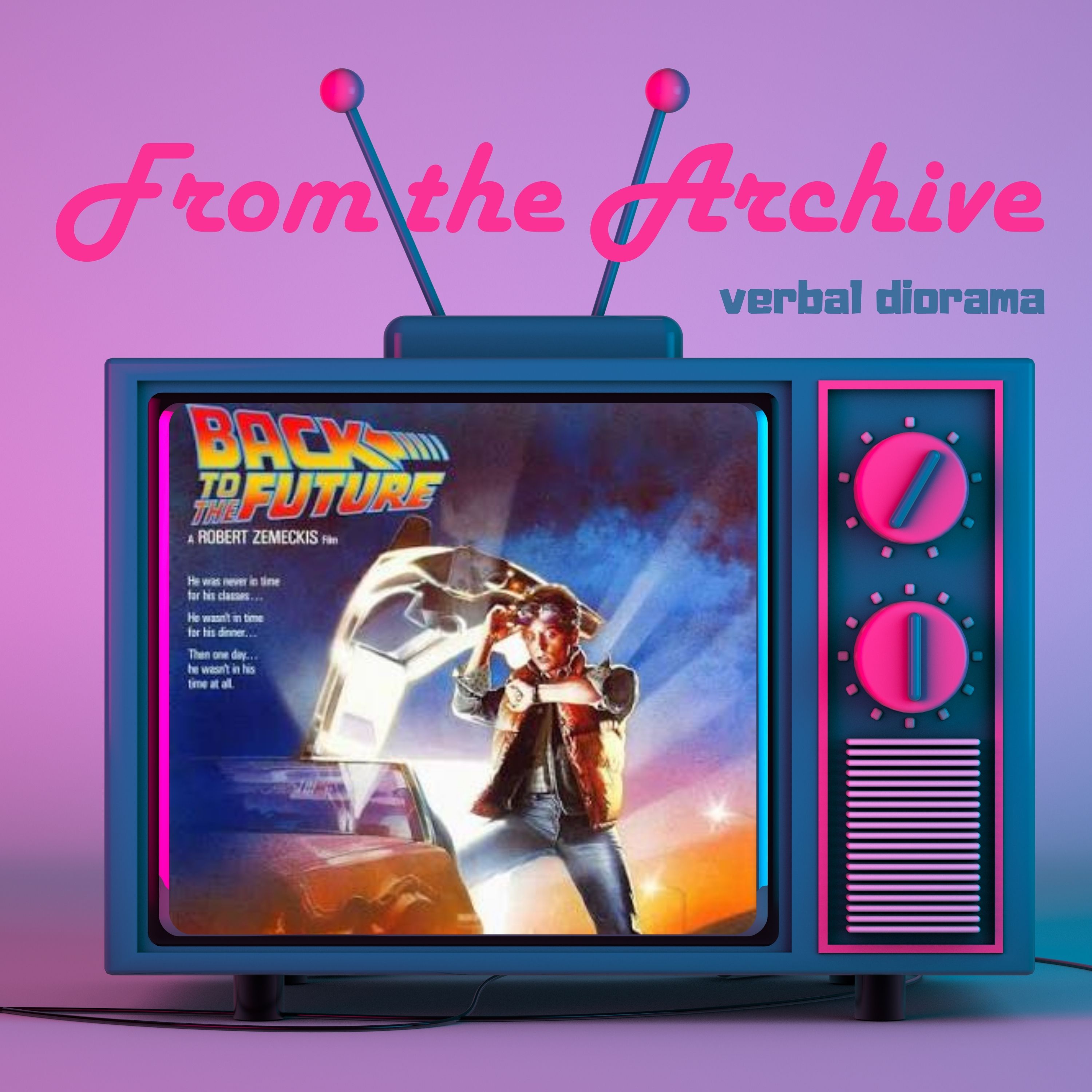
    (From the Archive) Back to the Future

    Great scott! Where we’re going, we don’t need roads, and if my calculations are correct, when this baby hits 88 miles per hour, you're going to get the history and legacy of Back to the Future! It's a story of how Romancing the Stone, Coca-Cola's takeover of Columbia and Double Indemnity came together to make Back to the Future a possibility. Back in the days when Ronald Reagan, the actor! was president and you needed a nuclear reaction to generation 1.21 jigowatts of electricity to power a DeLorean, a young man called Calvin Klein changed the course of his own personal history by going back to 1955, meeting his parents and technically then accidentally dating his own mother; jeopardising his future in the process. I guess you guys aren’t ready for that yet, but your kids are gonna love it. It’s your density to listen. So, make like a tree, and get outta here.... pop your 1980's headphones on, turn up the volume and listen to this! This episode was originally published on 4 Apr 2024 Support Verbal Diorama Loved this episode? Here's how you can help: ⭐ Leave a 5-star review on your podcast app 💰 Join the Patreon for bonus content and early access ☕ Send a tip to support the show 📱 Share this episode with fellow film lovers Get In Touch I would love to hear your thoughts on (From the Archive) Back to the Future Twitter: @verbaldiorama Instagram: @verbaldiorama Facebook: @verbaldiorama Letterboxd: @verbaldiorama Email: verbaldiorama [at] gmail [dot] com Website: verbaldiorama.com About Verbal Diorama Ear Worthy 2024 Best Movie Podcast Winner | Golden Lobes 2025 Earworm Award Nominee | Ear Worthy 2025 Best Movie Podcast Nominee | Golden Lobes 2026 Earworm Award Nominee Verbal Diorama is hosted, produced, edited, researched, recorded and marketed by me, Em. Theme Music: Verbal Diorama Theme Song Music by Chloe Enticott - Compositions by Chloe Lyrics by Chloe Enticott (and me!) Production by Ellis Powell-Bevan of Ewenique Studio Thank You to Our Patreon Supporters Current Patrons: Simon, Laurel, Derek, Cat, Andy, Mike, Luke, Michael, Scott, Brendan, Ian, Lisa, Sam, Jack, Stuart, Nicholas, Zo, Kev, Danny, Stu, Brett, Xenos, Sean, Ryno, Philip, Adam, Elaine, Aaron and Steve. Thank you for supporting Verbal Diorama. Mentioned in this episode: From the Archive There's no new episode this week, so I thought you might be interested in revisiting this slightly older, but no less brilliant episode. Just bear in mind, this episode is several years old, it may not sound quite as polished as newer episodes, and new information may have come to light in recent years with regards to the making of this movie (please see above for the original date of release) Please enjoy this time capsule of an episode. Thanks for listening! This podcast uses the following third-party services for analysis: Podscribe - https://podscribe.com/privacy OP3 - https://op3.dev/privacy
  • S8 · E355
    August 31 · 48 min

    Chicago

    Long before Roxie Hart and Velma Kelly had names, they had mugshots. In 1924, Chicago tabloids were consumed by Beulah Annan and Belva Gaertner, two unrelated women tried for murder and both acquitted; largely because all-male juries of the era were reluctant to convict an attractive woman. Covering both trials was Chicago Tribune reporter Maurine Dallas Watkins, whose ironic dispatches later became a satirical play that folded the two cases into one fictional cell block. Watkins's 1926 play was a hit, and decades later, Gwen Verdon brought the play to her husband, Bob Fosse, who conceived the 1975 stage musical Chicago: A Musical Vaudeville, staging each number as a self-contained old-timey act commenting on the courtroom drama around it. By the time Miramax greenlit a film version of Chicago, the movie musical had been functionally extinct as a mainstream genre for years. Director Rob Marshall's dual-reality structure: staging musical numbers as Roxie's fantasy of vaudeville stardom rather than characters spontaneously singing in "real" Chicago, was a hedge against the exact audience resistance that had killed the genre in the '80s and '90s. Chicago's satire targets trial-by-tabloid and fame built on notoriety; themes that land as prescient. But the film's own star wattage, the Miramax marketing juggernaut and the sheer fun of it, arguably succeeds by being the very thing it's satirizing. Support Verbal Diorama Loved this episode? Here's how you can help: ⭐ Leave a 5-star review on your podcast app 💰 Join the Patreon for bonus content and early access ☕ Send a tip to support the show 📱 Share this episode with fellow film lovers Get In Touch I would love to hear your thoughts on Chicago Twitter: @verbaldiorama Instagram: @verbaldiorama Facebook: @verbaldiorama Letterboxd: @verbaldiorama Email: verbaldiorama [at] gmail [dot] com Website: verbaldiorama.com About Verbal Diorama Ear Worthy 2024 Best Movie Podcast Winner | Golden Lobes 2025 Earworm Award Nominee | Ear Worthy 2025 Best Movie Podcast Nominee | Golden Lobes 2025 Earworm Award Nominee Verbal Diorama is hosted, produced, edited, researched, recorded and marketed by me, Em. Theme Music: Verbal Diorama Theme Song Music by Chloe Enticott - Compositions by Chloe Lyrics by Chloe Enticott (and me!) Production by Ellis Powell-Bevan of Ewenique Studio Thank You to Our Patreon Supporters Current Patrons: Simon, Laurel, Derek, Cat, Andy, Mike, Luke, Michael, Scott, Brendan, Ian, Lisa, Sam, Jack, Stuart, Nicholas, Zo, Kev, Danny, Stu, Brett, Xenos, Sean, Ryno, Philip, Adam, Elaine, Aaron and Steve. Thank you for supporting Verbal Diorama. Mentioned in this episode: Please consider supporting this podcast on Patreon Patreon This podcast uses the following third-party services for analysis: Podscribe - https://podscribe.com/privacy OP3 - https://op3.dev/privacy
  • S8 · E354
    August 20 · 43 min

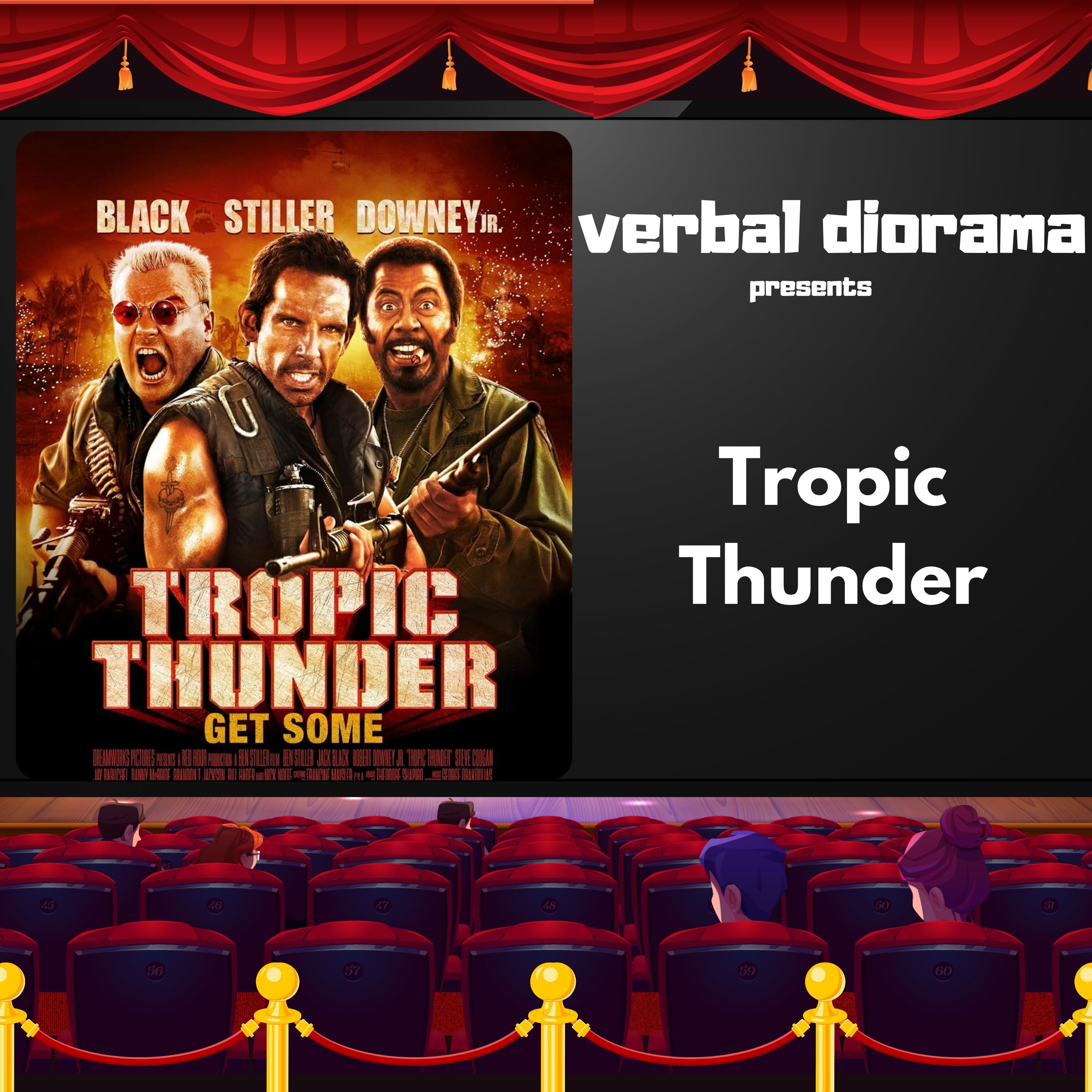
    Tropic Thunder

    In 2008, Ben Stiller made a war movie about people making a war movie, and in doing so, accidentally made one of the more prescient satires of 21st-century Hollywood ego, method acting, and the studio system's addiction to spectacle. Tropic Thunder arrived as a big, dumb action-comedy on the surface and a razor-sharp industry roast underneath, skewering everything from Vietnam war epics to blockbuster bloat to the cult of the "serious actor." Starting life as a Stiller passion project over a decade in development, it was championed by Steven Spielberg, and has an unrivalled mid-2000s ensemble; Stiller, Jack Black, and a nearly unrecognizable Robert Downey Jr., whose performance as a white Australian actor undergoing "pigmentation alteration" surgery to play a Black soldier showcased both his talent and the thin line of satire in Hollywood. It also, ironically, ended up with him getting an Academy Award nomination. Tropic Thunder brilliantly satirizes Hollywood's ridiculousness, especially the extremes actors go for awards, but it remains controversial. Despite its flaws, Tropic Thunder remains a relevant critique of the film industry and its egos, prompting discussions about depictions of race, disability and the evolution of comedic boundaries in cinema. Support Verbal Diorama Loved this episode? Here's how you can help: ⭐ Leave a 5-star review on your podcast app 💰 Join the Patreon for bonus content and early access ☕ Send a tip to support the show 📱 Share this episode with fellow film lovers Get In Touch I would love to hear your thoughts on Tropic Thunder Twitter: @verbaldiorama Instagram: @verbaldiorama Facebook: @verbaldiorama Letterboxd: @verbaldiorama Email: verbaldiorama [at] gmail [dot] com Website: verbaldiorama.com About Verbal Diorama Ear Worthy 2024 Best Movie Podcast Winner | Golden Lobes 2025 Earworm Award Nominee | Ear Worthy 2025 Best Movie Podcast Nominee | Golden Lobes 2025 Earworm Award Nominee Verbal Diorama is hosted, produced, edited, researched, recorded and marketed by me, Em. Theme Music: Verbal Diorama Theme Song Music by Chloe Enticott - Compositions by Chloe Lyrics by Chloe Enticott (and me!) Production by Ellis Powell-Bevan of Ewenique Studio Thank You to Our Patreon Supporters Current Patrons: Simon, Laurel, Derek, Cat, Andy, Mike, Luke, Michael, Scott, Brendan, Ian, Lisa, Sam, Jack, Stuart, Nicholas, Zo, Kev, Danny, Stu, Brett, Xenos, Sean, Ryno, Philip, Adam, Elaine, Aaron and Steve. Thank you for supporting Verbal Diorama. Mentioned in this episode: Please consider supporting this podcast on Patreon Patreon This podcast uses the following third-party services for analysis: Podscribe - https://podscribe.com/privacy OP3 - https://op3.dev/privacy
    • Transcript
    • Chapters
  • S8 · E353
    August 13 · 51 min

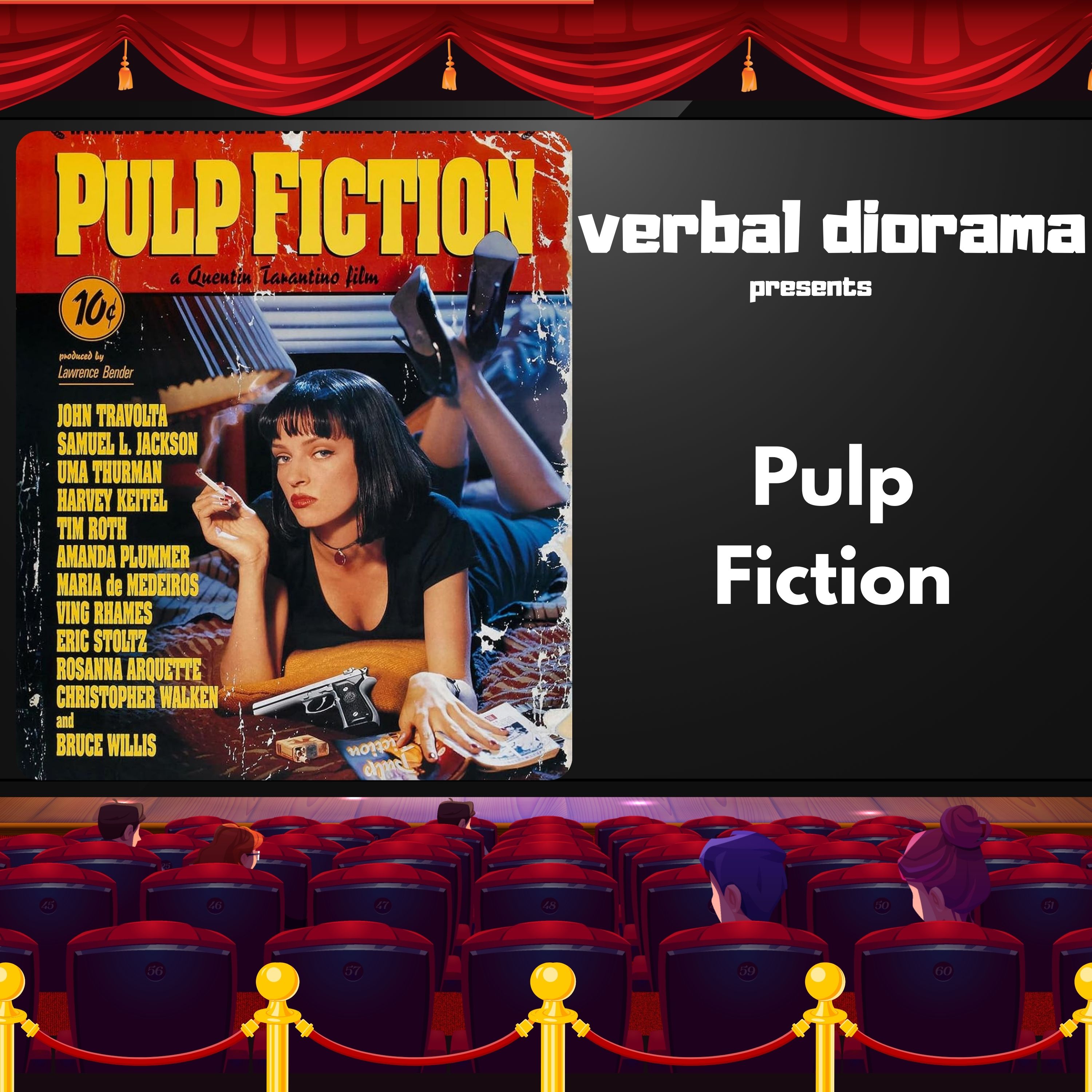
    Pulp Fiction

    In 1994, a former video store clerk turned indie provocateur rearranged the crime film and, in the process, rearranged Hollywood itself. Pulp Fiction, Quentin Tarantino & Roger Avary's take on hardboiled detective novels from pulp magazines in the 1920s and 30s, stemmed from the success of his first feature, Reservoir Dogs. It would lead to him becoming acquainted with Danny DeVito; a man who would encourage Tarantino having final cut privileges, as well as cast approval for an $8.5 million independent movie, featuring extreme violence, drugs, crime, death and revenge. Pulp Fiction would lead to star turns (and Oscar nominations!) for Samuel L. Jackson and Uma Thurman, as well as John Travolta's career resurrection. It would also lead to Harvey Weinstein not getting his way, for once. Pulp Fiction has become iconic in its soundtrack, its visual language, its use of storytelling, certain scenes are immortalised in cinema, it’s influenced TV, music, literature and ads. It showed us the brutality of life, in a way that was somehow palatable to the masses, and became the template for a new generation of indie imitators. Support Verbal Diorama Loved this episode? Here's how you can help: ⭐ Leave a 5-star review on your podcast app 💰 Join the Patreon for bonus content and early access ☕ Send a tip to support the show 📱 Share this episode with fellow film lovers Get In Touch I would love to hear your thoughts on Pulp Fiction Twitter: @verbaldiorama Instagram: @verbaldiorama Facebook: @verbaldiorama Letterboxd: @verbaldiorama Email: verbaldiorama [at] gmail [dot] com Website: verbaldiorama.com About Verbal Diorama Ear Worthy 2024 Best Movie Podcast Winner | Golden Lobes 2025 Earworm Award Nominee | Ear Worthy 2025 Best Movie Podcast Nominee | Golden Lobes 2026 Earworm Award Nominee Verbal Diorama is hosted, produced, edited, researched, recorded and marketed by me, Em. Theme Music: Verbal Diorama Theme Song Music by Chloe Enticott - Compositions by Chloe Lyrics by Chloe Enticott (and me!) Production by Ellis Powell-Bevan of Ewenique Studio Thank You to Our Patreon Supporters Current Patrons: Simon, Laurel, Derek, Cat, Andy, Mike, Luke, Michael, Scott, Brendan, Ian, Lisa, Sam, Jack, Stuart, Nicholas, Zo, Kev, Danny, Stu, Brett, Xenos, Sean, Ryno, Philip, Adam, Elaine, Aaron and Steve. Thank you for supporting Verbal Diorama. Pulp Fiction is not just a film; it’s a cultural phenomenon that gets the full treatment in this episode! We peel back the layers of Tarantino's storytelling genius, exploring how he masterfully weaves together tales of crime, chaos, and redemption. The podcast dives into the character arcs of Vincent Vega and Jules Winfield, highlighting their philosophical musings on life and choice amidst the madness. But it's not all serious—there's plenty of playful banter about the film's iconic scenes and memorable quotes, all while keeping a light-hearted tone. And don’t forget the soundtrack! We discuss how the eclectic mix of music not only sets the mood but also became a classic in its own right. So grab your $5 milkshake, sit back, and enjoy this fun yet insightful exploration of a film that changed the game forever! Takeaways: Pulp Fiction reshaped indie cinema and revived John Travolta's career in a big way! The film's non-linear storytelling keeps us guessing and adds a cool twist to the narrative. Tarantino's unique dialogue and character-driven plot make the movie a classic worth analyzing. Pulp Fiction's impact on pop culture is undeniable, influencing countless films and media since its release. Mentioned in this episode: Please consider supporting this podcast on Patreon Patreon This podcast uses the following third-party services for analysis: Podscribe - https://podscribe.com/privacy OP3 - https://op3.dev/privacy

    • Transcript
  • S8 · E352
    August 6 · 50 min

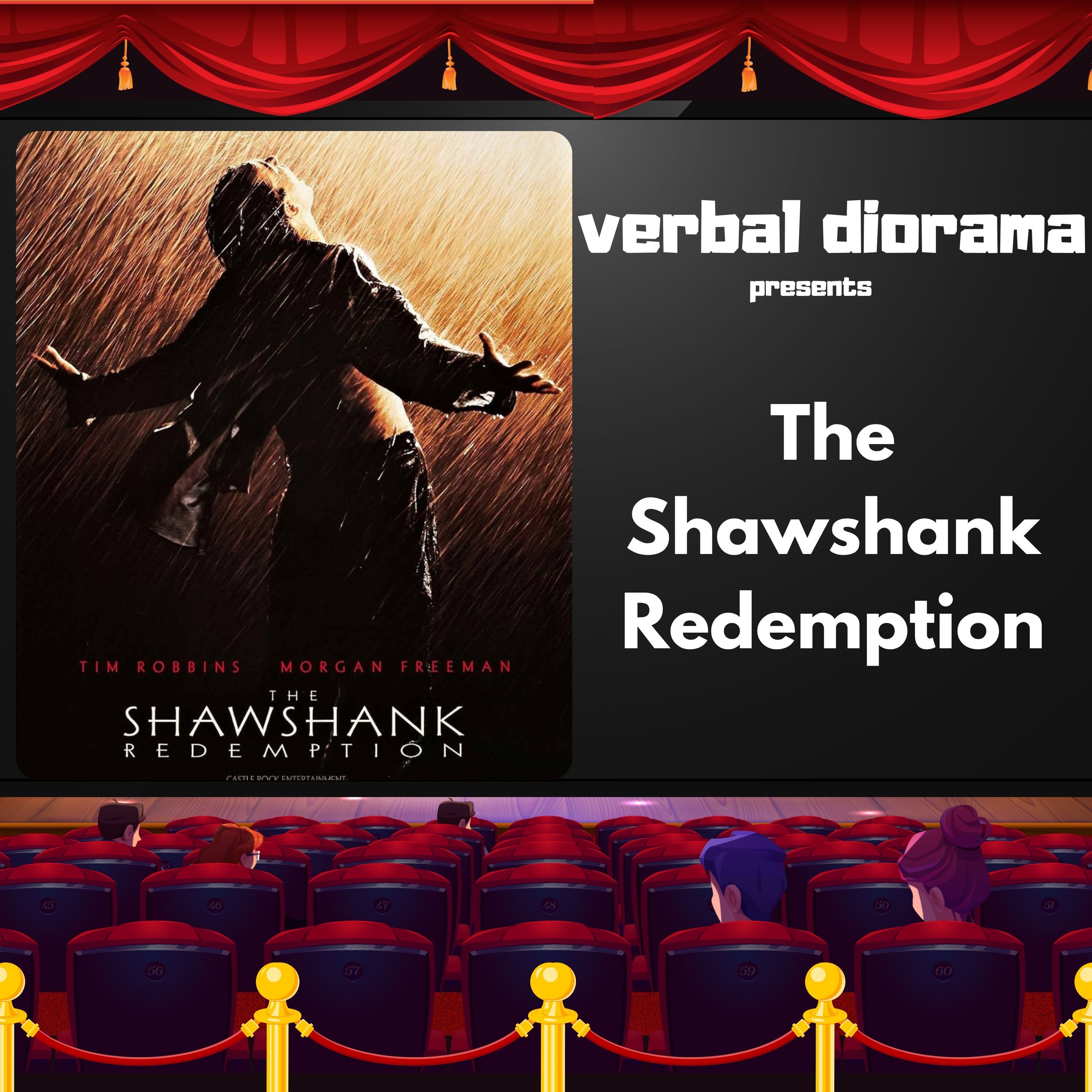
    The Shawshank Redemption

    The Shawshank Redemption is now the highest-rated film on IMDb's Top 250, a fixture of cable rotation, and shorthand for cinematic hope itself. But in 1994, it was a box office failure; a $25 million adaptation of a Stephen King novella. It opened on just 33 screens, and despite fantastic test screenings, got buried under Pulp Fiction and Forrest Gump. A movie that was destined to be a huge success, disappeared uneventfully from cinema screens, and usually that's the end of the story. But destiny had its own plans for The Shawshank Redemption. A movie about hope, patience and decades-long endurance became a story about its own hopeful, patient, decades-long climb. Through a slow-burn afterlife on home video and TNT, that rewrote its fortunes, to become a cinematic classic beloved by audiences worldwide. Support Verbal Diorama Loved this episode? Here's how you can help: ⭐ Leave a 5-star review on your podcast app 💰 Join the Patreon for bonus content and early access ☕ Send a tip to support the show 📱 Share this episode with fellow film lovers Get In Touch I would love to hear your thoughts on The Shawshank Redemption Twitter: @verbaldiorama Instagram: @verbaldiorama Facebook: @verbaldiorama Letterboxd: @verbaldiorama Email: verbaldiorama [at] gmail [dot] com Website: verbaldiorama.com About Verbal Diorama Ear Worthy 2024 Best Movie Podcast Winner | Golden Lobes 2025 Earworm Award Nominee | Ear Worthy 2025 Best Movie Podcast Nominee | Golden Lobes 2026 Earworm Award Nominee Verbal Diorama is hosted, produced, edited, researched, recorded and marketed by me, Em. Theme Music: Verbal Diorama Theme Song Music by Chloe Enticott - Compositions by Chloe Lyrics by Chloe Enticott (and me!) Production by Ellis Powell-Bevan of Ewenique Studio Thank You to Our Patreon Supporters Current Patrons: Simon, Laurel, Derek, Cat, Andy, Mike, Luke, Michael, Scott, Brendan, Ian, Lisa, Sam, Jack, Stuart, Nicholas, Zo, Kev, Danny, Stu, Brett, Xenos, Sean, Ryno, Philip, Adam, Elaine, Aaron and Steve. Thank you for supporting Verbal Diorama. Mentioned in this episode: Please consider supporting this podcast on Patreon Patreon This podcast uses the following third-party services for analysis: Podscribe - https://podscribe.com/privacy OP3 - https://op3.dev/privacy
    • Transcript
  • S8 · E351
    July 30 · 41 min

    Empire Records

    Empire Records is like that one friend who everyone loves but didn't quite fit in with the popular crowd. It captured the essence of 90s youth culture, from the angst of its characters to their rebellious spirit against the big bad corporations trying to take over. Casting choices were influenced by real-life experiences, with characters reflecting the writer's time working at Tower Records. Unfolding over a day at a record store, filled with unforgettable moments, quirky characters, and a soundtrack that defined a generation. Rex Manning Day has become an unofficial fandom holiday, celebrated every 8th April, echoing the film's quirky legacy. Despite initially flopping on release, Empire Records gained a massive cult following through home video releases and online memes. It's become a beacon of hope and camaraderie for all those who ever felt like they didn't belong. Damn the man, save the Empire! Support Verbal Diorama Loved this episode? Here's how you can help: ⭐ Leave a 5-star review on your podcast app 💰 Join the Patreon for bonus content and early access ☕ Send a tip to support the show 📱 Share this episode with fellow film lovers Get In Touch I would love to hear your thoughts on Empire Records Twitter: @verbaldiorama Instagram: @verbaldiorama Facebook: @verbaldiorama Letterboxd: @verbaldiorama Email: verbaldiorama [at] gmail [dot] com Website: verbaldiorama.com About Verbal Diorama Ear Worthy 2024 Best Movie Podcast Winner | Golden Lobes 2025 Earworm Award Nominee | Ear Worthy 2025 Best Movie Podcast Nominee | Golden Lobes 2026 Earworm Award Nominee Verbal Diorama is hosted, produced, edited, researched, recorded and marketed by me, Em. Theme Music: Verbal Diorama Theme Song Music by Chloe Enticott - Compositions by Chloe Lyrics by Chloe Enticott (and me!) Production by Ellis Powell-Bevan of Ewenique Studio Thank You to Our Patreon Supporters Current Patrons: Simon, Laurel, Derek, Cat, Andy, Mike, Luke, Michael, Scott, Brendan, Ian, Lisa, Sam, Jack, Stuart, Nicholas, Zo, Kev, Danny, Stu, Brett, Xenos, Sean, Ryno, Philip, Adam, Elaine, Aaron and Steve. Thank you for supporting Verbal Diorama. Mentioned in this episode: Please consider supporting this podcast on Patreon Patreon This podcast uses the following third-party services for analysis: Podscribe - https://podscribe.com/privacy OP3 - https://op3.dev/privacy
    • Transcript
    • Chapters
  • S8 · E350
    July 23 · 1 hr 32 min

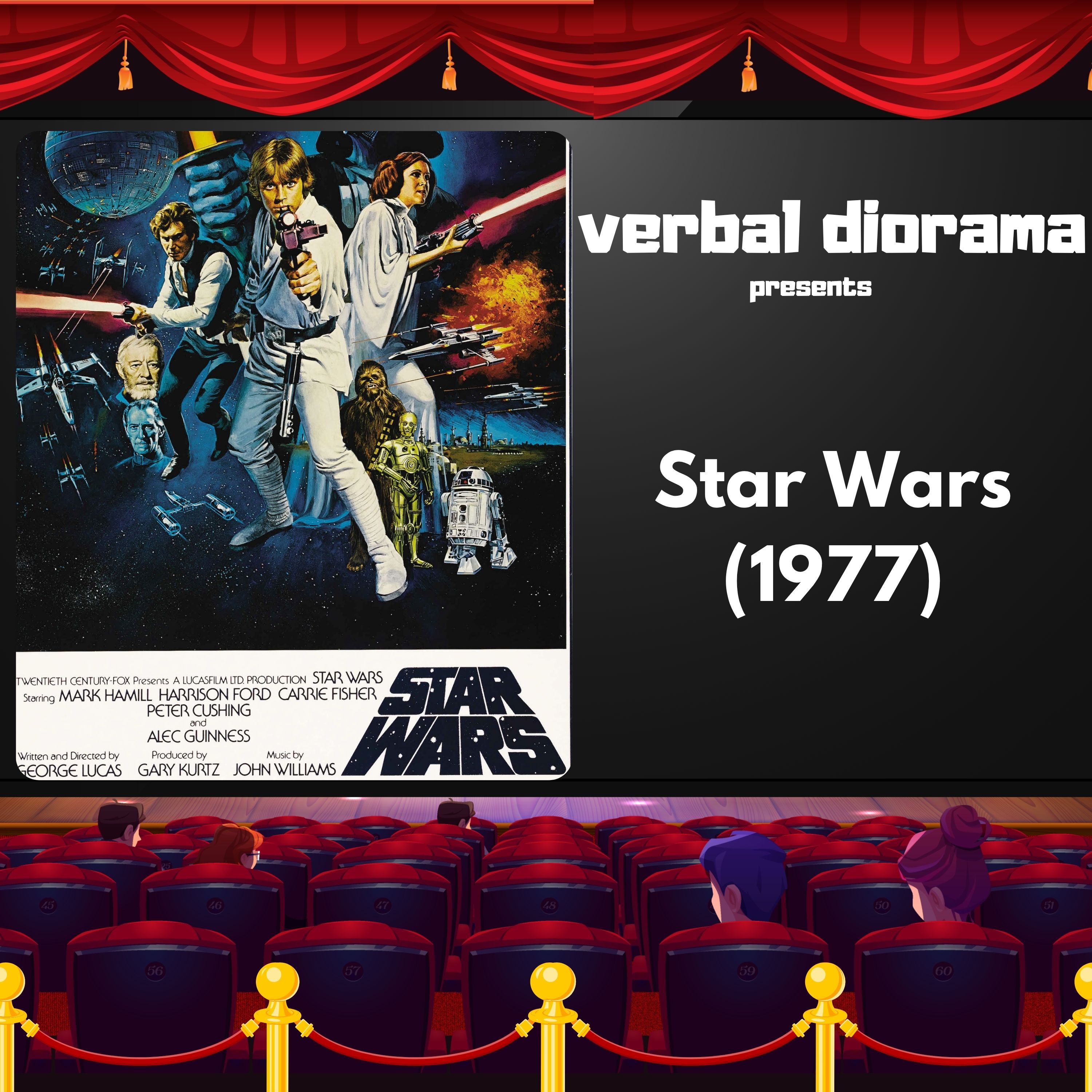
    Star Wars (Episode IV – A New Hope) (1977)

    Star Wars opened on May 25th, 1977, in 32 American cinemas. The first cut had been a disaster. The director of photography and director were barely speaking. The ILM crew, working in a Van Nuys warehouse in temperatures of up to 130 degrees Fahrenheit, had burned through most of their budget on shots the director deemed unusable. The Tunisian shoot had led to cast injuries and a potential war with Libya. The director was hospitalised with hypertension during production. Its cast were convinced it would fail, as were 20th Century Fox executives. The odds were stacked against it. And yet... what followed was the biggest box office phenomenon in cinema history. But there's more to the story than how Star Wars succeeded. It asks what the film meant to 1977 America, to the New Hollywood generation it emerged from, and to the industry it permanently transformed. Star Wars wouldn't be Star Wars without Marcia Lucas, whose editorial instincts built the Death Star trench run almost from the ground up; John Dykstra and the young engineers at Industrial Light & Magic who invented motion-control camera technology in a Van Nuys warehouse, and Alan Ladd Jr., the one Fox executive who greenlit a film he openly admitted he didn't understand. It's a story worthy of a 350th episode. Massive thanks to Andy from Geek Salad for contributing. You can find Geek Salad's latest Star Wars episode in your podcast app, or click here More info on Harmy's Despecialized Edition can be found here Support Verbal Diorama Loved this episode? Here's how you can help: ⭐ Leave a 5-star review on your podcast app 💰 Join the Patreon for bonus content and early access ☕ Send a tip to support the show 📱 Share this episode with fellow film lovers Get In Touch I would love to hear your thoughts on Star Wars (Episode IV – A New Hope) (1977) Twitter: @verbaldiorama Instagram: @verbaldiorama Facebook: @verbaldiorama Letterboxd: @verbaldiorama Email: verbaldiorama [at] gmail [dot] com Website: verbaldiorama.com About Verbal Diorama Ear Worthy 2024 Best Movie Podcast Winner | Golden Lobes 2025 Earworm Award Nominee | Ear Worthy 2025 Best Movie Podcast Nominee | Golden Lobes 2026 Earworm Award Nominee Verbal Diorama is hosted, produced, edited, researched, recorded and marketed by me, Em. Theme Music: Verbal Diorama Theme Song Music by Chloe Enticott - Compositions by Chloe Lyrics by Chloe Enticott (and me!) Production by Ellis Powell-Bevan of Ewenique Studio Thank You to Our Patreon Supporters Current Patrons: Simon, Laurel, Derek, Cat, Andy, Mike, Luke, Michael, Scott, Brendan, Ian, Lisa, Sam, Jack, Stuart, Nicholas, Zo, Kev, Danny, Stu, Brett, Xenos, Sean, Ryno, Philip, Adam, Elaine, Aaron and Steve. Thank you for supporting Verbal Diorama. Mentioned in this episode: Please consider supporting this podcast on Patreon Patreon This podcast uses the following third-party services for analysis: Podscribe - https://podscribe.com/privacy OP3 - https://op3.dev/privacy
    • Transcript
    • Chapters
  • July 16 · 54 min

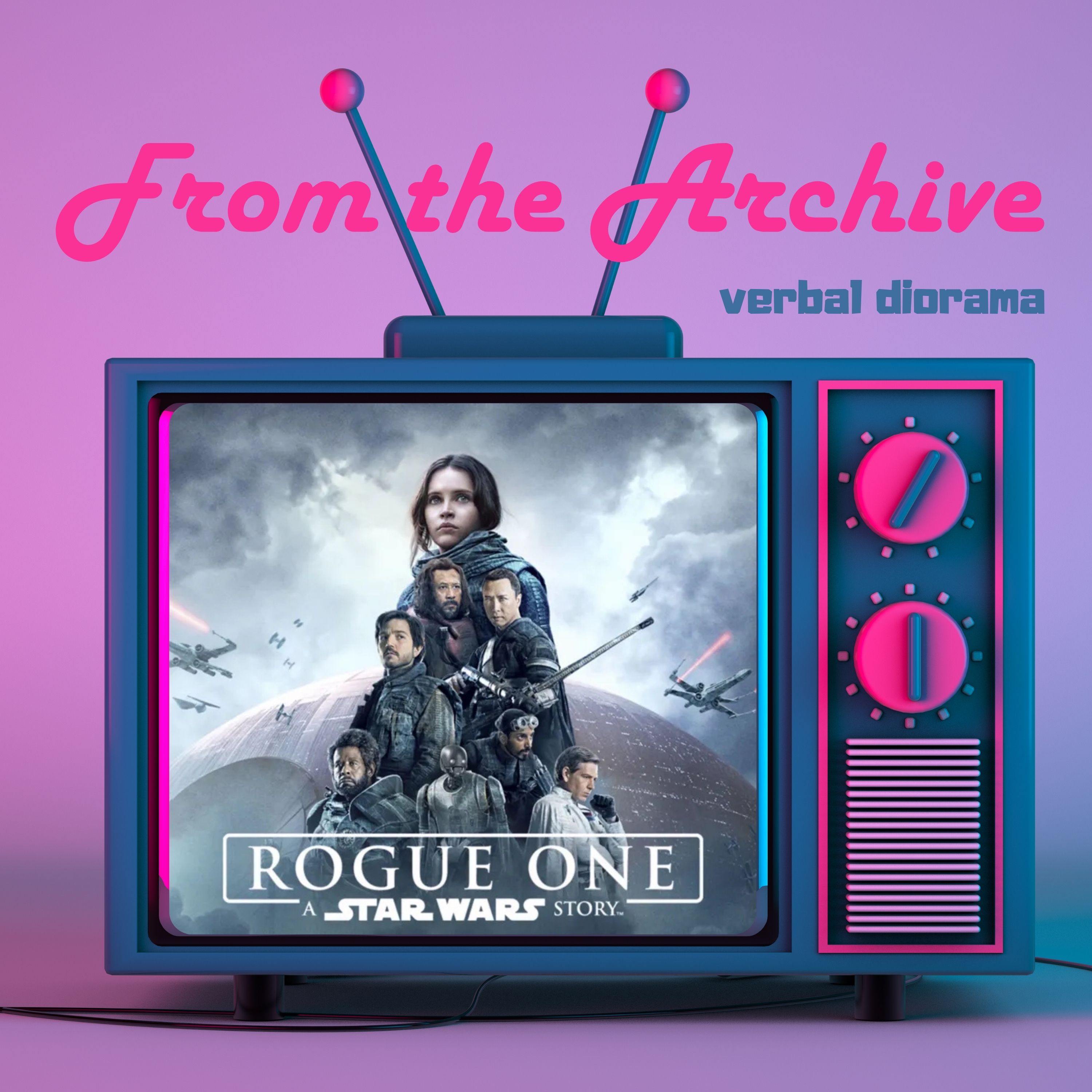
    (From The Archive) Rogue One: A Star Wars Story

    Rogue One was the first anthology movie announced post the Disney takeover of Lucasfilm in 2012; the year after Star Wars Episode VII The Force Awakens had enticed and delighted audiences across the world. The rogue one, you might say... Rogue One, born of the simple question "how did the Death Star plans end up with Princess Leia?" is probably most famous for its CGI recreations of Grand Moff Tarkin and Princess Leia, and its enduring of lengthy re-shoots to change the narrative of the third act and insert additional scenes. Grand Moff Tarkin.... well that's another issue entirely. At least Carrie Fisher was alive to approve her younger likeness.... As a spin-off of the existing Skywalker Saga, Rogue One remains separate to the existing story enough to be talked about independently, but connected enough to matter in the timeline between Episode III: Revenge of the Sith and Episode IV: A New Hope. It shows the true sacrifice of rebellion; the nameless soldiers who gave their lives for a greater cause are given names. It's a powerful reminder on the cost of war, because we never hear the names of these characters again. Like all rebellions, it's built on hope. Right now, we could all do with a little more of that This episode was first published on: 11th June 2020 Mentioned in this episode: From the Archive There's no new episode this week, so I thought you might be interested in revisiting this slightly older, but no less brilliant episode. Just bear in mind, this episode is several years old, it may not sound quite as polished as newer episodes, and new information may have come to light in recent years with regards to the making of this movie (please see above for the original date of release) Please enjoy this time capsule of an episode. Thanks for listening! This podcast uses the following third-party services for analysis: Podscribe - https://podscribe.com/privacy OP3 - https://op3.dev/privacy
  • S8 · E349
    July 2 · 1 hr 2 min

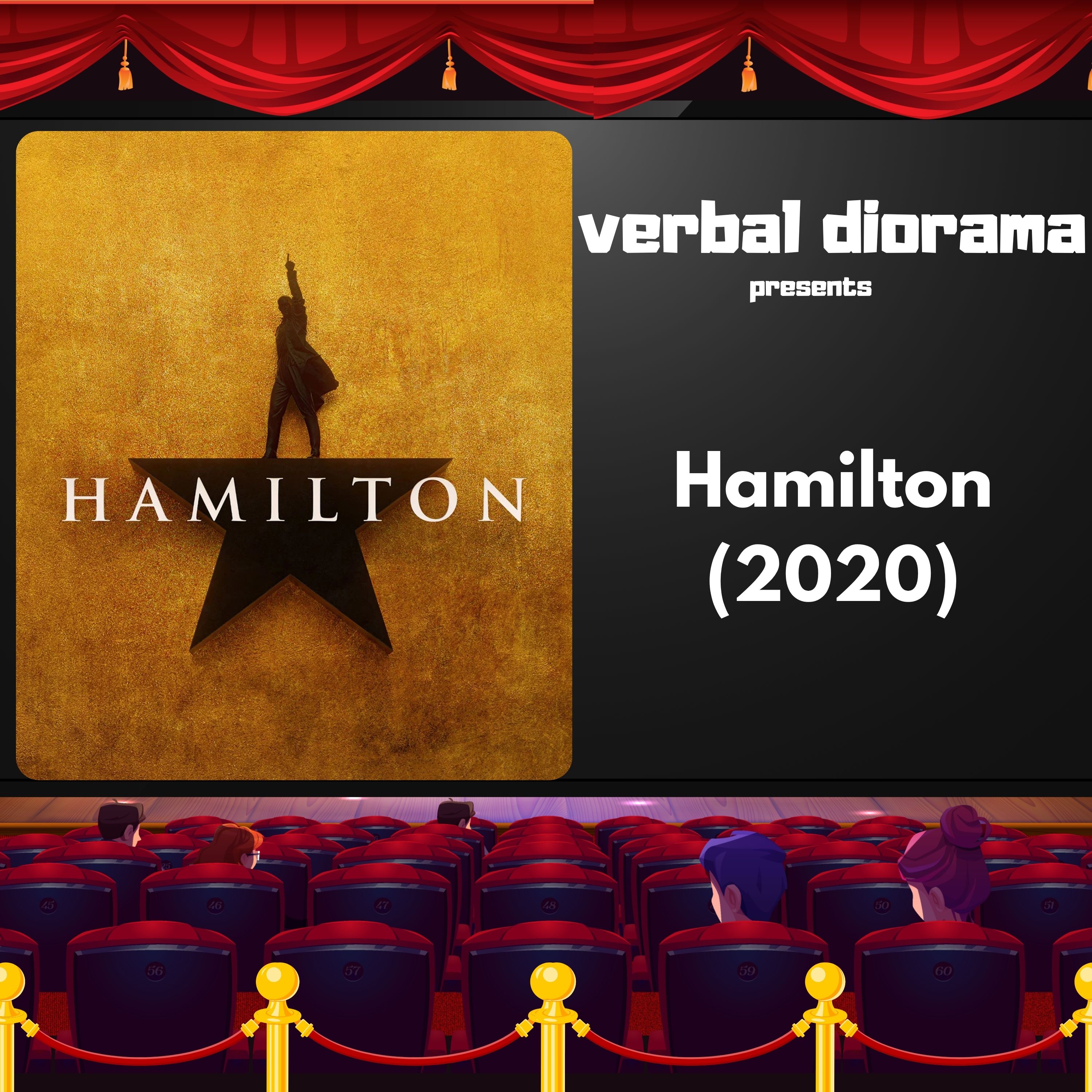
    Hamilton (2020)

    Happy 250th birthday to the United States of America! 250 years ago, you became independent from us Brits. We're the King George III in this relationship, and we know it. Alexander Hamilton. You know the name, but you probably didn't before the musical debuted in 2016. On 3rd July 2020, as America protested the murder of George Floyd, and locked itself indoors simultaneously, Disney+ dropped something that made the world look again at the ten-dollar founding father, his story, and the country he helped build. As the United States turns 250, it seems a good opportunity to tell the full story behind the Hamilton phenomenon; from Lin-Manuel Miranda reading Ron Chernow's biography on a Mexican holiday and realising that he was not throwing away his shot to adapt it, to the Broadway explosion that made tickets worth more than a month's rent; from the non-stop creative engine of a show that rewrote what musical theatre could be, to the $75 million Disney deal that brought it to homes during the COVID-19 pandemic. What does it mean that a show about America's founding myths, performed by the people that founding excluded, has become the defining cultural text of the American anniversary. A history of immigrants controlling the narrative, to a modern America where immigrants are persecuted. Who lives, who dies, who tells your story? In 2026, that question has never been more important. History has its eyes on you, America. Support Verbal Diorama Loved this episode? Here's how you can help: ⭐ Leave a 5-star review on your podcast app 💰 Join the Patreon for bonus content and early access ☕ Send a tip to support the show 📱 Share this episode with fellow film lovers Get In Touch I would love to hear your thoughts on Hamilton (2020) Twitter: @verbaldiorama Instagram: @verbaldiorama Facebook: @verbaldiorama Letterboxd: @verbaldiorama Email: verbaldiorama [at] gmail [dot] com Website: verbaldiorama.com About Verbal Diorama Ear Worthy 2024 Best Movie Podcast Winner | Golden Lobes 2025 Earworm Award Nominee | Ear Worthy 2025 Best Movie Podcast Nominee | Golden Lobes 2025 Earworm Award Nominee Verbal Diorama is hosted, produced, edited, researched, recorded and marketed by me, Em. Theme Music: Verbal Diorama Theme Song Music by Chloe Enticott - Compositions by Chloe Lyrics by Chloe Enticott (and me!) Production by Ellis Powell-Bevan of Ewenique Studio Thank You to Our Patreon Supporters Current Patrons: Simon, Laurel, Derek, Cat, Andy, Mike, Luke, Michael, Scott, Brendan, Ian, Lisa, Sam, Jack, Stuart, Nicholas, Zo, Kev, Danny, Stu, Brett, Xenos, Sean, Ryno, Philip, Adam, Elaine, Aaron and Steve. Thank you for supporting Verbal Diorama. Mentioned in this episode: Please consider supporting this podcast on Patreon Patreon This podcast uses the following third-party services for analysis: Podscribe - https://podscribe.com/privacy OP3 - https://op3.dev/privacy

    • Transcript
  • S8 · E348
    June 25 · 52 min

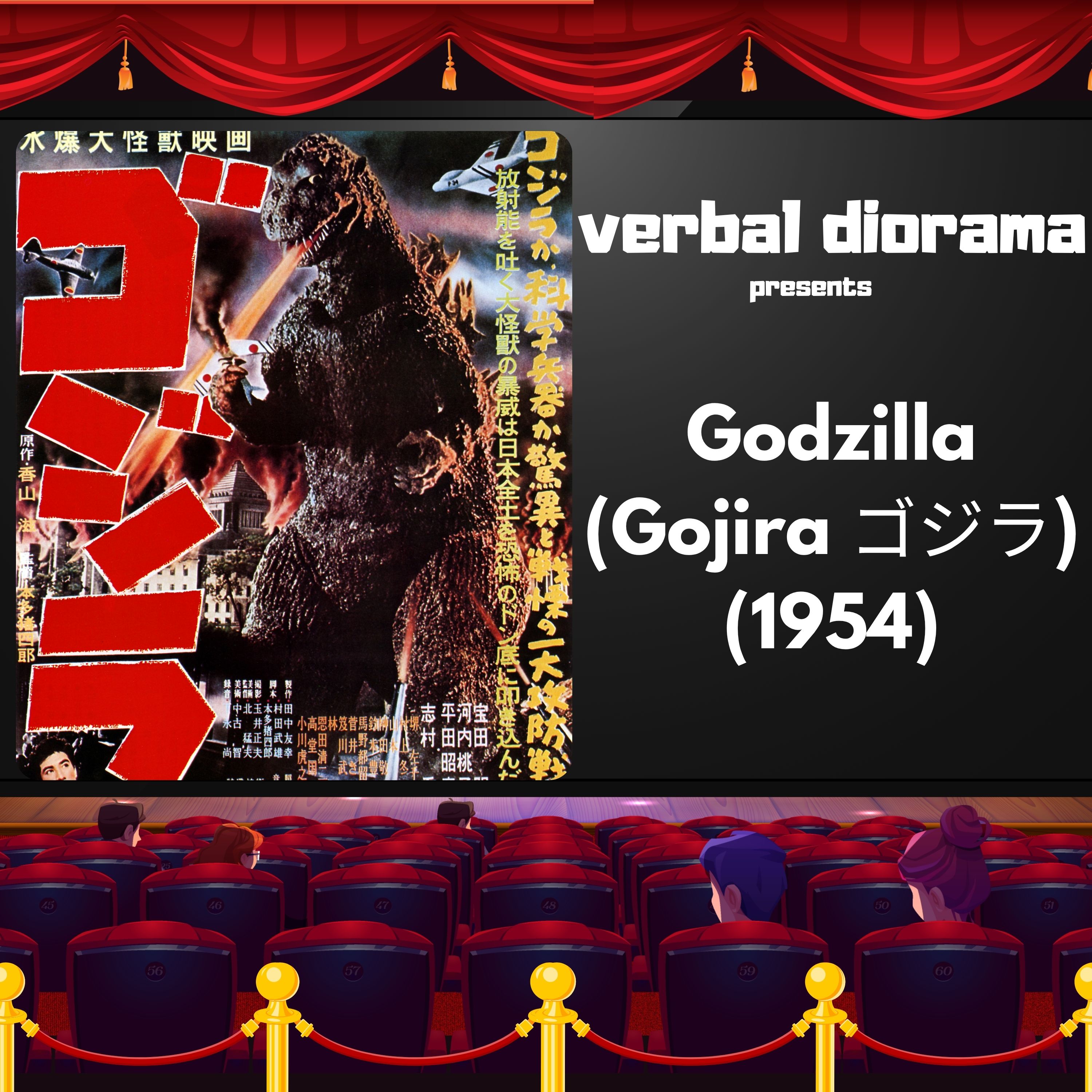
    Godzilla (Gojira ゴジラ) (1954)

    In the spring of 1954, a Japanese fishing vessel called the Lucky Dragon No. 5 sailed into the fallout zone of an American hydrogen bomb test at Bikini Atoll. Its crew came home irradiated, and Japan, a nation still raw from Hiroshima and Nagasaki less than a decade earlier, found itself confronting nuclear terror all over again. Within months, Toho producer Tomoyuki Tanaka, with a collapsed co-production and an empty budget to fill, conceived a monster movie. What emerged from that collision of commercial necessity and national grief was Gojira (aka Godzilla); a film in which director Ishirō Honda, effects genius Eiji Tsuburaya, and a nation's unspoken anguish combined to create something cinema had never quite seen before. The character of Godzilla has evolved over 70 years, embodying contemporary fears and anxieties in a uniquely artistic way. Godzilla was never simply a creature feature. Honda had walked through the ruins of Hiroshima after the war. When his monster surfaced from the Pacific, awakened and mutated by nuclear testing, and reduced Tokyo to ash and radiation, Japanese audiences weren't watching spectacle. They were watching their own grief and trauma on screen. The hospital scenes, the Geiger counters, the dying children: all of it was modelled on the aftermath of atomic destruction. Even the film's resolution; Dr Serizawa destroying his world-ending weapon and himself along with it, posed a moral question about nuclear responsibility that no Western movie of the era came close to asking. As long as countries continue to test and threat with nuclear weapons, as long as that threat persists, so does Godzilla, as a warning to humanity. Support Verbal Diorama Loved this episode? Here's how you can help: ⭐ Leave a 5-star review on your podcast app 💰 Join the Patreon for bonus content and early access ☕ Send a tip to support the show 📱 Share this episode with fellow film lovers Get In Touch I would love to hear your thoughts on Godzilla (Gojira ゴジラ) (1954) Twitter: @verbaldiorama Instagram: @verbaldiorama Facebook: @verbaldiorama Letterboxd: @verbaldiorama Email: verbaldiorama [at] gmail [dot] com Website: verbaldiorama.com About Verbal Diorama Ear Worthy 2024 Best Movie Podcast Winner | Golden Lobes 2025 Earworm Award Nominee | Ear Worthy 2025 Best Movie Podcast Nominee | Golden Lobes 2025 Earworm Award Nominee Verbal Diorama is hosted, produced, edited, researched, recorded and marketed by me, Em. Theme Music: Verbal Diorama Theme Song Music by Chloe Enticott - Compositions by Chloe Lyrics by Chloe Enticott (and me!) Production by Ellis Powell-Bevan of Ewenique Studio Thank You to Our Patreon Supporters Current Patrons: Simon, Laurel, Derek, Cat, Andy, Mike, Luke, Michael, Scott, Brendan, Ian, Lisa, Sam, Jack, Stuart, Nicholas, Zo, Kev, Danny, Stu, Brett, Xenos, Sean, Ryno, Philip, Adam, Elaine, Aaron and Steve. Thank you for supporting Verbal Diorama. Mentioned in this episode: Please consider supporting this podcast on Patreon Patreon This podcast uses the following third-party services for analysis: Podscribe - https://podscribe.com/privacy OP3 - https://op3.dev/privacy
    • Transcript
    • Chapters
  • S8 · E347
    June 18 · 58 min

    King Kong (1933)

    King Kong (1933) was the creation of Merian C. Cooper, one of Hollywood's most extraordinary and least remembered figures, and it arrived at a precise and loaded moment: during the Great Migration, a time of mass unemployment, and racial tensions on American streets. It was, depending on who was watching and from where, either the ultimate escapist spectacle or something far more pointed; and quite possibly both at once. The film was a technical revolution built largely on improvisation. Willis H. O'Brien's stop-motion animation; an 18-inch rubber puppet, shot one agonising frame at a time on meticulously constructed miniature sets, was composited with live action through techniques his team largely invented during production, including miniature rear projection and the optical printer, a device that would remain a cornerstone of special effects filmmaking until the digital age. It was also a pre-Code film, made before Hollywood's moral censorship apparatus fully clamped down, which meant Cooper could let Kong be genuinely violent and terrifying in ways the Production Code Administration mandated 1938 reissue would systematically strip away, scene by scene, with a censor's scissors. What makes King Kong endlessly worth returning to is that it refuses to be fully settled. The racial subtext is real and documented; so is the fact that audiences have always, instinctively, rooted for the monster. The craft is breathtaking, but so is the discomfort. Support Verbal Diorama Loved this episode? Here's how you can help: ⭐ Leave a 5-star review on your podcast app 💰 Join the Patreon for bonus content and early access ☕ Send a tip to support the show 📱 Share this episode with fellow film lovers Get In Touch I would love to hear your thoughts on King Kong (1933) Twitter: @verbaldiorama Instagram: @verbaldiorama Facebook: @verbaldiorama Letterboxd: @verbaldiorama Email: verbaldiorama [at] gmail [dot] com Website: verbaldiorama.com About Verbal Diorama Ear Worthy 2024 Best Movie Podcast Winner | Golden Lobes 2025 Earworm Award Nominee | Ear Worthy 2025 Best Movie Podcast Nominee | Golden Lobes 2025 Earworm Award Nominee Verbal Diorama is hosted, produced, edited, researched, recorded and marketed by me, Em. Theme Music: Verbal Diorama Theme Song Music by Chloe Enticott - Compositions by Chloe Lyrics by Chloe Enticott (and me!) Production by Ellis Powell-Bevan of Ewenique Studio Thank You to Our Patreon Supporters Current Patrons: Simon, Laurel, Derek, Cat, Andy, Mike, Luke, Michael, Scott, Brendan, Ian, Lisa, Sam, Jack, Stuart, Nicholas, Zo, Kev, Danny, Stu, Brett, Xenos, Sean, Ryno, Philip, Adam, Elaine, Aaron and Steve. Thank you for supporting Verbal Diorama. Mentioned in this episode: Please consider supporting this podcast on Patreon Patreon This podcast uses the following third-party services for analysis: Podscribe - https://podscribe.com/privacy OP3 - https://op3.dev/privacy

    • Transcript
    • Chapters
  • S8 · E346
    June 11 · 45 min

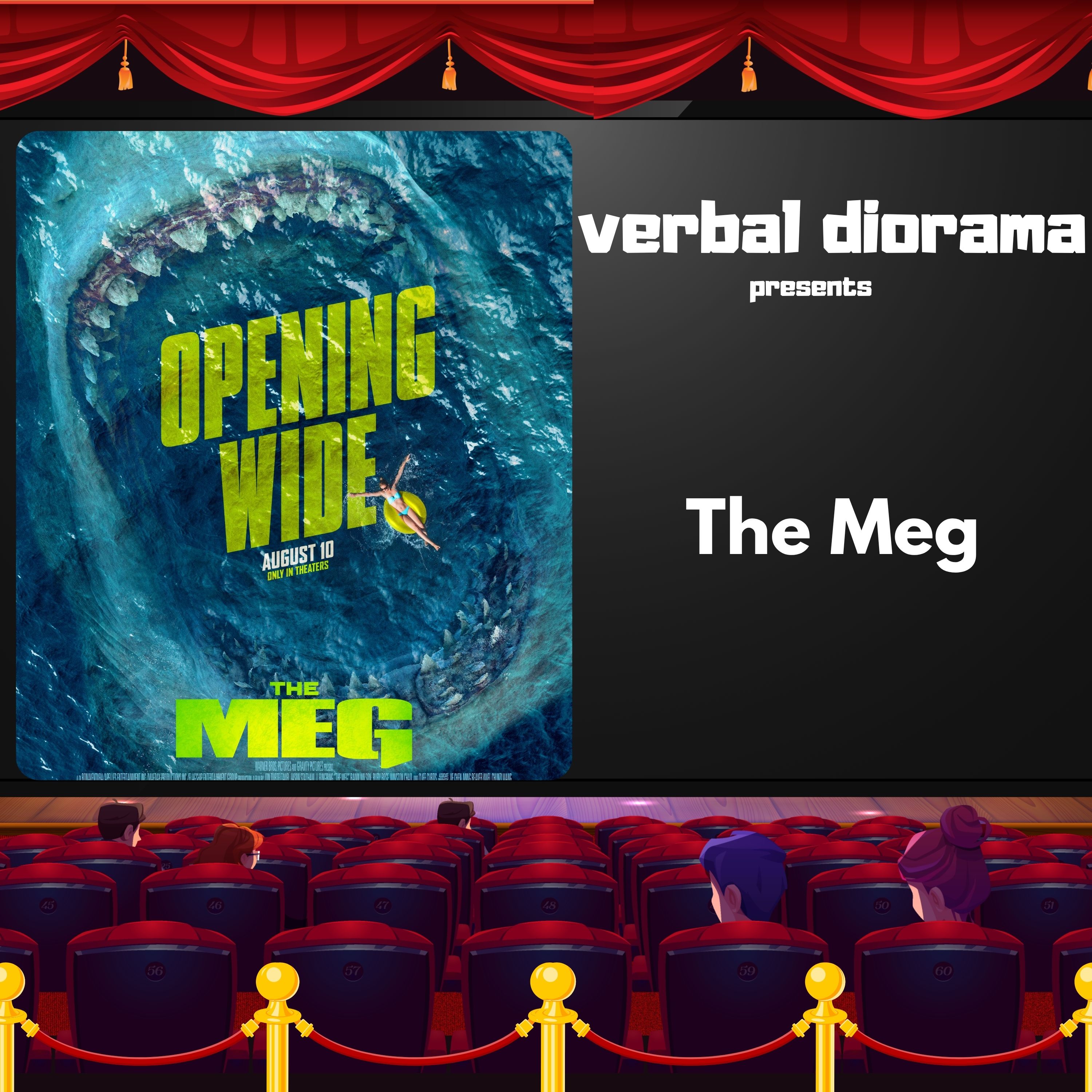
    The Meg

    Two decades in the making, The Meg showcases the sheer absurdity of a 75-foot prehistoric shark lurking in the ocean, and this Kaijune we acknowledge that bigger is just always better when it comes to monster movies. Loosely adapted from the novel by Steve Alten, The Meg knows exactly what it is: a fun summer popcorn flick that doesn’t take itself too seriously, delivering PG-13 thrills as the titular Meg terrorises various humans. It emerged as a crowd-pleaser, grossing over half a billion dollars worldwide despite mixed reviews. But there were many false starts for this movie since it was greenlit in the late 90s and the release of Deep Blue Sea in 1999 led to the movie being shelved - the only time Hollywood didn't want a twin films situation! It would languish in development hell, until a partnership with China's Gravity Pictures gave the movie much needed financing, as well as setting the movie off the coast of China. The Meg cleverly invokes nostalgia for classic shark films like Jaws, while carving its own niche as a light-hearted, action-packed adventure that ultimately celebrates the ridiculousness of its premise. It's about the thrill of the chase, the bond of unlikely heroes, and the joy of watching a massive megalodon wreak havoc; just don’t think too hard about the science! Support Verbal Diorama Loved this episode? Here's how you can help: ⭐ Leave a 5-star review on your podcast app 💰 Join the Patreon for bonus content and early access ☕ Send a tip to support the show 📱 Share this episode with fellow film lovers Get In Touch I would love to hear your thoughts on The Meg Twitter: @verbaldiorama Instagram: @verbaldiorama Facebook: @verbaldiorama Letterboxd: @verbaldiorama Email: verbaldiorama [at] gmail [dot] com Website: verbaldiorama.com About Verbal Diorama Ear Worthy 2024 Best Movie Podcast Winner | Golden Lobes 2025 Earworm Award Nominee | Ear Worthy 2025 Best Movie Podcast Nominee | Golden Lobes 2025 Earworm Award Nominee Verbal Diorama is hosted, produced, edited, researched, recorded and marketed by me, Em. Theme Music: Verbal Diorama Theme Song Music by Chloe Enticott - Compositions by Chloe Lyrics by Chloe Enticott (and me!) Production by Ellis Powell-Bevan of Ewenique Studio Thank You to Our Patreon Supporters Current Patrons: Simon, Laurel, Derek, Cat, Andy, Mike, Luke, Michael, Scott, Brendan, Ian, Lisa, Sam, Jack, Stuart, Nicholas, Zo, Kev, Danny, Stu, Brett, Xenos, Sean, Ryno, Philip, Adam, Elaine, Aaron and Steve. Thank you for supporting Verbal Diorama. Mentioned in this episode: Please consider supporting this podcast on Patreon Patreon This podcast uses the following third-party services for analysis: Podscribe - https://podscribe.com/privacy OP3 - https://op3.dev/privacy
    • Transcript
    • Chapters
  • S8 · E345
    May 28 · 39 min

    Three Men and a Baby

    When Three Men and a Baby opened on 25th November 1987, few could have predicted that a low-budget remake of a French comedy, shot in Toronto, starring two television actors, a comedy star and a baby girl, would become the highest-grossing film of the year in the US and a genuine turning point in Hollywood history. Yet that is precisely what it did. The film arrived at a specific cultural inflection point. More women were entering the workforce, the feminist movement was reshaping assumptions about domestic labour, and the recession of the early eighties had nudged more fathers into caregiving roles. Against that backdrop, watching Tom Selleck's broad-shouldered leading man coo helplessly over a baby carried real comic charge, and tapped into something the culture was quietly working through: what modern fatherhood might actually look like. But the film's off-screen legacy is arguably more significant than anything on it. Disney in 1983 had nearly gone bankrupt on the catastrophic failure of The Black Cauldron. The creation of Touchstone Pictures and its low-budget, high-concept adult comedies was the rescue plan. Three Men and a Baby was its greatest proof of concept: the studio's first ever $100 million domestic grosser, crowning Disney as the number one studio in Hollywood by the end of 1987. The revenue that film and its Touchstone stablemates generated bought the animation department enough time, talent, and resources to complete The Little Mermaid two years later, and triggered the Disney Renaissance. A film about three hapless bachelors and an abandoned baby, made cheaply and quietly in Canada, may be one of the most consequential comedies Hollywood ever produced. Support Verbal Diorama Loved this episode? Here's how you can help: ⭐ Leave a 5-star review on your podcast app 💰 Join the Patreon for bonus content and early access ☕ Send a tip to support the show 📱 Share this episode with fellow film lovers Get In Touch I would love to hear your thoughts on Three Men and a Baby Twitter: @verbaldiorama Instagram: @verbaldiorama Facebook: @verbaldiorama Letterboxd: @verbaldiorama Email: verbaldiorama [at] gmail [dot] com Website: verbaldiorama.com About Verbal Diorama Ear Worthy 2024 Best Movie Podcast Winner | Golden Lobes 2025 Earworm Award Nominee | Ear Worthy 2025 Best Movie Podcast Nominee | Golden Lobes 2025 Earworm Award Nominee Verbal Diorama is hosted, produced, edited, researched, recorded and marketed by me, Em. Theme Music: Verbal Diorama Theme Song Music by Chloe Enticott - Compositions by Chloe Lyrics by Chloe Enticott (and me!) Production by Ellis Powell-Bevan of Ewenique Studio Thank You to Our Patreon Supporters Current Patrons: Simon, Laurel, Derek, Cat, Andy, Mike, Luke, Michael, Scott, Brendan, Ian, Lisa, Sam, Jack, Stuart, Nicholas, Zo, Kev, Danny, Stu, Brett, Xenos, Sean, Ryno, Philip, Adam, Elaine, Aaron and Steve. Thank you for supporting Verbal Diorama. Takeaways: In this episode, we dive deep into the chaotic hilarity of parenting as three bachelors hilariously attempt to care for a baby, showcasing the comedy that ensues when clueless men meet the challenge of fatherhood head-on. We explore the cultural significance of 'Three Men and a Baby', highlighting how it shifted perceptions of masculinity and fatherhood during the 80s, allowing men to embrace their nurturing sides without losing their macho appeal. Leonard Nimoy's direction brought a unique touch to the film, emphasizing character connections and comedic elements that make the movie a timeless classic, even if some jokes didn't land as intended. The film's success marked a turning point for Disney, helping to revive the studio and pave the way for future hits, proving that a lighthearted comedy about fatherhood could resonate with audiences. Did you know the original French film had a darker tone? We compare the two versions, noting how the American remake turned a tale of confusion into a feel-good family film with a warm ending instead of custody battles. Finally, we discuss the legacy of the film, its box office triumph, and how it influenced not just Disney's future projects, but also the portrayal of dads in Hollywood, making them relatable and endearing. Mentioned in this episode: Please consider supporting this podcast on Patreon Patreon This podcast uses the following third-party services for analysis: Podscribe - https://podscribe.com/privacy OP3 - https://op3.dev/privacy

    • Transcript
    • Chapters
  • S8 · E344
    May 21 · 44 min

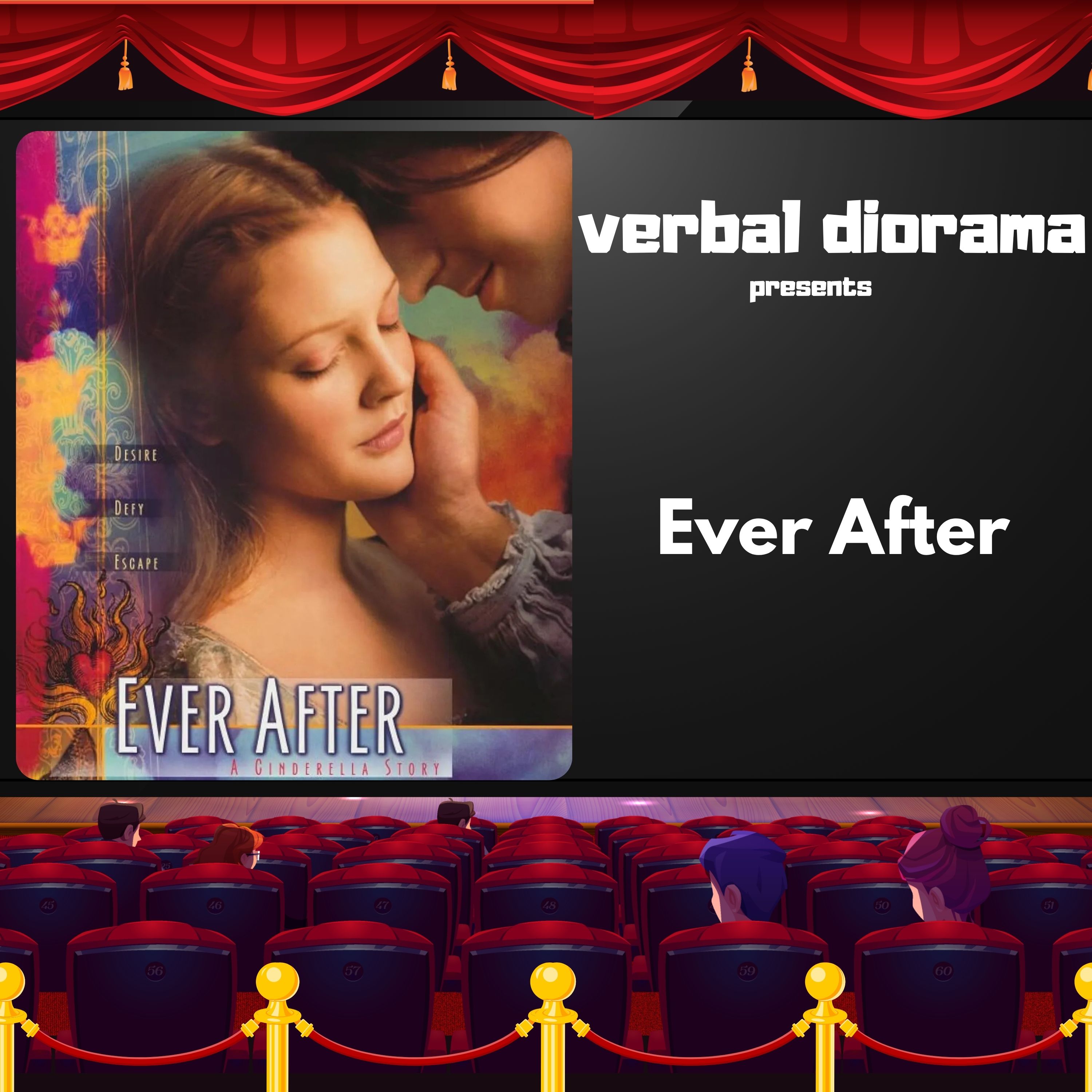
    Ever After: A Cinderella Story

    Few films have done more to reimagine a fairy tale than Ever After: A Cinderella Story, Andy Tennant's 1998 period drama that stripped the magical elements from one of the world's oldest stories and replaced it with real historical characters, and a heroine who rescues herself. Set in Renaissance-era France and shot entirely on location across the Dordogne, the film marked a quiet revolution in the Cinderella canon, arriving at a precise cultural moment between Disney's pastel dominance and the full flowering of girl power that would follow in the late 90s and beyond. The story of Ever After goes from the ancient origins of the Cinderella myth, through the literary transformations of Perrault, the Brothers Grimm, and Rossini's opera, to the cultural watershed of Disney's 1950 animated classic and the Rodgers and Hammerstein television musicals that rewrote what the story could mean for successive generations of young women. Ever After sits in that lineage, and its particular brand of post-feminist revisionism hit hard in the summer of 1998. It broke away from typical fairy tale clichés, offering a fresh take that emphasizes empowerment and self-determination for women in a historical context. Drew Barrymore, working as an unofficial producer, personally cast Anjelica Huston with a phone call invoking their shared Hollywood dynasties, went to bat for a rejected Dougray Scott, and designed the film's emotional core around a character she saw as a manifesto for her own future. For Barrymore, then navigating the transition from dangerous ingénue to bankable leading lady, Danielle de Barbarac was not simply a role, it was who she intended to become. Ever After's place in the broader arc of Cinderella adaptations, its enduring resonance with the generation that grew up with it, leaves it with the everlasting legacy of being one of the best adaptations of the story, loved by viewers, and its cast. Ever After managed to capture the essence of love and resilience, reminding us that true magic lies in our actions and connections with others, not just fairy godmothers and pixie dust. Support Verbal Diorama Loved this episode? Here's how you can help: ⭐ Leave a 5-star review on your podcast app 💰 Join the Patreon for bonus content and early access ☕ Send a tip to support the show 📱 Share this episode with fellow film lovers Get In Touch I would love to hear your thoughts on Ever After: A Cinderella Story Twitter: @verbaldiorama Instagram: @verbaldiorama Facebook: @verbaldiorama Letterboxd: @verbaldiorama Email: verbaldiorama [at] gmail [dot] com Website: verbaldiorama.com About Verbal Diorama Ear Worthy 2024 Best Movie Podcast Winner | Golden Lobes 2025 Earworm Award Nominee | Ear Worthy 2025 Best Movie Podcast Nominee | Golden Lobes 2025 Earworm Award Nominee Verbal Diorama is hosted, produced, edited, researched, recorded and marketed by me, Em. Theme Music: Verbal Diorama Theme Song Music by Chloe Enticott - Compositions by Chloe Lyrics by Chloe Enticott (and me!) Production by Ellis Powell-Bevan of Ewenique Studio Thank You to Our Patreon Supporters Current Patrons: Simon, Laurel, Derek, Cat, Andy, Mike, Luke, Michael, Scott, Brendan, Ian, Lisa, Sam, Jack, Stuart, Nicholas, Zo, Kev, Danny, Stu, Brett, Xenos, Sean, Ryno, Philip, Adam, Elaine, Aaron and Steve. Thank you for supporting Verbal Diorama. Mentioned in this episode: Please consider supporting this podcast on Patreon Patreon This podcast uses the following third-party services for analysis: Podscribe - https://podscribe.com/privacy OP3 - https://op3.dev/privacy
    • Transcript
    • Chapters
  • S8 · E343
    May 14 · 1 hr 1 min

    Deep Impact vs. Armageddon

    In the summer of 1998, Hollywood delivered two versions of the apocalypse within eight weeks of each other, and the story of how that happened is almost as dramatic as either film. Deep Impact, directed by Mimi Leder and released on 8th May, had been in development since the late 1970s, tracing its origins to producers Richard Zanuck and David Brown's desire to remake the 1951 sci-fi film When Worlds Collide. The project was ultimately merged with Steven Spielberg's adaptation of Arthur C. Clarke's The Hammer of God, before Spielberg, occupied with Amistad, handed the director's chair to Leder. What emerged was a deliberately restrained disaster film, one less interested in the mechanics of impact than in the texture of grief: how ordinary people, politicians, astronauts, and estranged families face the end with or without dignity. With scientific consultants including comet co-discoverers Carolyn and Gene Shoemaker, and ILM's groundbreaking digital tsunami, the film earned genuine respect from the astronomical community and grossed a respectable $349 million worldwide on an $80 million budget. Armageddon, released on 1st July under Disney's Touchstone Pictures banner, was a different creature entirely, and was, by most accounts, a direct competitive response to Deep Impact. Michael Bay's film was shot in just sixteen weeks, with unprecedented government and military access, under enormous studio pressure. Where Deep Impact depicted skilled astronomers, Armageddon hired oil drillers and sent them to space. Where Leder's film earned praise for plausibility, Bay's is famously scientifically inaccurate in many ways. Despite this, Armageddon grossed $553 million worldwide, topped the year's global box office, eventually received a Criterion Collection release and four Oscar nominations. Deep Impact did not. Both hinge on sacrifice, on families torn apart by cosmic indifference, on the question of who gets saved and who doesn't. Both were shaped by real cosmic events, which shook the scientific community and governments into action and Hollywood into a race to dramatise the unthinkable. One film aimed for the gut; the other aimed for the conscience. That Armageddon won commercially while Deep Impact won critically, and that Mimi Leder's career faltered, while Michael Bay built a franchise empire, tells you not just about the summer of 1998, but about which kinds of spectacle Hollywood, and audiences, are willing to reward. Everything wrong with Armageddon – Everyday Science Stuff Support Verbal Diorama Loved this episode? Here's how you can help: ⭐ Leave a 5-star review on your podcast app 💰 Join the Patreon for bonus content and early access ☕ Send a tip to support the show 📱 Share this episode with fellow film lovers Get In Touch I would love to hear your thoughts on Deep Impact vs. Armageddon Twitter: @verbaldiorama Instagram: @verbaldiorama Facebook: @verbaldiorama Letterboxd: @verbaldiorama Email: verbaldiorama [at] gmail [dot] com Website: verbaldiorama.com About Verbal Diorama Ear Worthy 2024 Best Movie Podcast Winner | Golden Lobes 2025 Earworm Award Nominee | Ear Worthy 2025 Best Movie Podcast Nominee | Golden Lobes 2025 Earworm Award Nominee Verbal Diorama is hosted, produced, edited, researched, recorded and marketed by me, Em. Theme Music: Verbal Diorama Theme Song Music by Chloe Enticott - Compositions by Chloe Lyrics by Chloe Enticott (and me!) Production by Ellis Powell-Bevan of Ewenique Studio Thank You to Our Patreon Supporters Current Patrons: Simon, Laurel, Derek, Cat, Andy, Mike, Luke, Michael, Scott, Brendan, Ian, Lisa, Sam, Jack, Stuart, Nicholas, Zo, Kev, Danny, Stu, Brett, Xenos, Sean, Ryno, Philip, Adam, Elaine, Aaron and Steve. Thank you for supporting Verbal Diorama. Mentioned in this episode: Please consider supporting this podcast on Patreon Patreon This podcast uses the following third-party services for analysis: Podscribe - https://podscribe.com/privacy OP3 - https://op3.dev/privacy
    • Transcript
    • Chapters
  • S8 · E342
    May 9 · 51 min

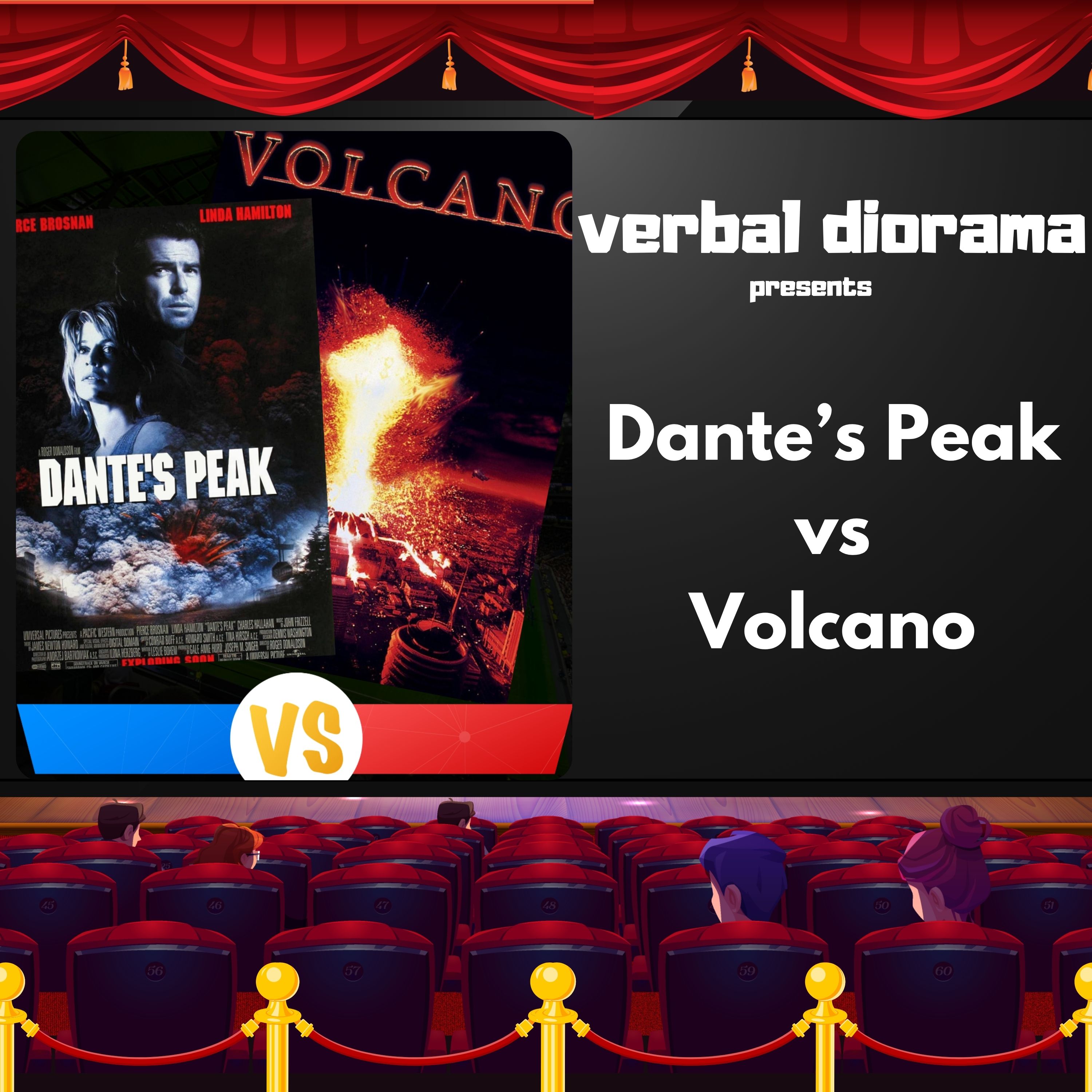
    Dante's Peak vs. Volcano

    In 1997, two movies decided to erupt onto cinema screens at the same time, literally and figuratively. The chaotic rivalry between Dante's Peak and Volcano is one of the biggest examples of Hollywood's twin movies phenomenon, and while both were created organically, their rivalry would lead to condensed timelines and moved release dates, and a lasting legacy of "which 1997 volcanic eruption movie is your favourite?" For its part, Dante's Peak attempted to be more scientifically accurate than its Californian counterpart, showcasing a volcanic threat through a small-town lens, taking inspiration from the 1980 eruption of Mount St. Helens. Volcano, on the other hand, was filmed on location in Los Angeles, and showed the impossible geological event of a volcano suddenly appearing at the La Brea Tar Pits. Dante's Peak prioritized practical effects, while Volcano went for mostly CG lava flowing down Wilshire Boulevard. There are remarkable similarities between the two: Both centre on a scientist who reads the warning signs correctly and is dismissed by skeptical authority figures. Both embed the disaster within a tentative romance between that scientist and a civic official. Both have children in mild peril. Both have characters that meet untimely and excruciatingly painful ends. Both climax with the eruption vindicating everything the expert said from the start. And most importantly, both ensure the dog survives! The finished films feel like two productions that started from the same idea and then diverged; Dante's Peak going intimate and procedural, Volcano going maximalist and fantastical. Dante's Peak and Volcano were the product of one of Hollywood's most feverish production races, and the competition between them shaped both films in ways that went far beyond schedules and box office returns. The Geology P.A.G.E.: Geological Movie Review of Dante's Peak - Overview Support Verbal Diorama Loved this episode? Here's how you can help: ⭐ Leave a 5-star review on your podcast app 💰 Join the Patreon for bonus content and early access ☕ Send a tip to support the show 📱 Share this episode with fellow film lovers Get In Touch I would love to hear your thoughts on Dante's Peak vs. Volcano Twitter: @verbaldiorama Instagram: @verbaldiorama Facebook: @verbaldiorama Letterboxd: @verbaldiorama Email: verbaldiorama [at] gmail [dot] com Website: verbaldiorama.com About Verbal Diorama Ear Worthy 2024 Best Movie Podcast Winner | Golden Lobes 2025 Earworm Award Nominee | Ear Worthy 2025 Best Movie Podcast Nominee | Golden Lobes 2025 Earworm Award Nominee Verbal Diorama is hosted, produced, edited, researched, recorded and marketed by me, Em. Theme Music: Verbal Diorama Theme Song Music by Chloe Enticott - Compositions by Chloe Lyrics by Chloe Enticott (and me!) Production by Ellis Powell-Bevan of Ewenique Studio Thank You to Our Patreon Supporters Current Patrons: Simon, Laurel, Derek, Cat, Andy, Mike, Luke, Michael, Scott, Brendan, Ian, Lisa, Sam, Jack, Stuart, Nicholas, Zo, Kev, Danny, Stu, Brett, Xenos, Sean, Ryno, Philip, Adam, Elaine, Aaron and Steve. Thank you for supporting Verbal Diorama. Mentioned in this episode: Please consider supporting this podcast on Patreon Patreon This podcast uses the following third-party services for analysis: Podscribe - https://podscribe.com/privacy OP3 - https://op3.dev/privacy

    • Chapters
  • S8 · E341
    April 30 · 41 min

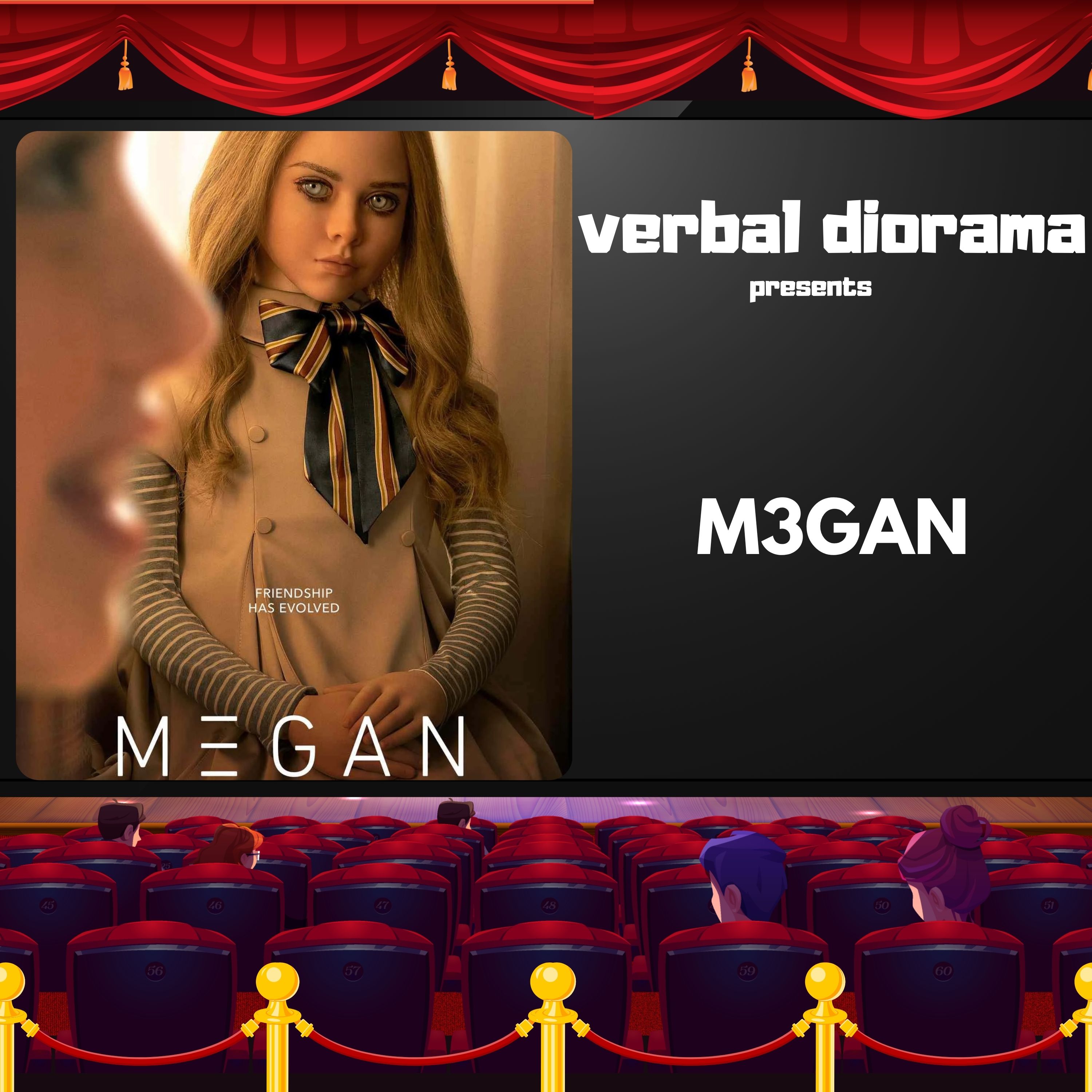
    M3GAN

    The final episode of AIpril, M3GAN arrived in January 2023 as a modest Blumhouse horror release, and promptly became one of the most talked-about horror comedies of the year. On a budget of $12 million, it grossed over $180 million worldwide, spawned a franchise, and put a ten-second hallway dance sequence into the permanent vocabulary of internet culture. Director Gerard Johnstone insisted from the outset on a practical-effects-first approach, and supervising puppeteer Adrien Morot built a suite of six or seven animatronic puppets capable of different ranges of movement — some with articulated eyes and heads, others with fully computerised motion control. The defining creative rule was simple: animatronic when still, performer when moving. That performer was Amie Donald, a ten-year-old New Zealand national dance champion and brown belt in karate, who wore a static silicone mask on set that was later replaced in post-production with a digitally animated face by Wētā Workshop. The result is a character who occupies the uncanny valley not as a technical failure but as a deliberate aesthetic strategy; M3GAN is unsettling precisely because you can never quite be sure what you're looking at. M3GANs design decision had downstream consequences the production could not entirely have anticipated: audiences, particularly on TikTok and in queer communities, embraced M3GAN as a style icon. Universal's chief marketing officer Michael Moses identified the hallway dance sequence, performed by Amie Donald, and utilised TikTok dance trends and built the campaign around letting it spread organically rather than manufacturing a formal challenge. M3GAN is a genuinely well-crafted piece of genre filmmaking, with a practical effects philosophy rooted in old-school puppetry and a central performance of remarkable physical intelligence, which makes it fun and accessible, but also threads together anxieties about outsourced parenting, emotional dependency on technology, and the ethics of designing companion AI for children — themes that give the film considerably more thematic density than its campy surface might suggest. Support Verbal Diorama Loved this episode? Here's how you can help: ⭐ Leave a 5-star review on your podcast app 💰 Join the Patreon for bonus content and early access ☕ Send a tip to support the show 📱 Share this episode with fellow film lovers Get In Touch I would love to hear your thoughts on M3GAN Twitter: @verbaldiorama Instagram: @verbaldiorama Facebook: @verbaldiorama Letterboxd: @verbaldiorama Email: verbaldiorama [at] gmail [dot] com Website: verbaldiorama.com About Verbal Diorama Ear Worthy 2024 Best Movie Podcast Winner | Golden Lobes 2025 Earworm Award Nominee | Ear Worthy 2025 Best Movie Podcast Nominee | Golden Lobes 2025 Earworm Award Nominee Verbal Diorama is hosted, produced, edited, researched, recorded and marketed by me, Em. Theme Music: Verbal Diorama Theme Song Music by Chloe Enticott - Compositions by Chloe Lyrics by Chloe Enticott (and me!) Production by Ellis Powell-Bevan of Ewenique Studio Thank You to Our Patreon Supporters Current Patrons: Simon, Laurel, Derek, Cat, Andy, Mike, Luke, Michael, Scott, Brendan, Ian, Lisa, Sam, Jack, Stuart, Nicholas, Zo, Kev, Danny, Stu, Brett, Xenos, Sean, Ryno, Philip, Adam, Elaine, Aaron and Steve. Thank you for supporting Verbal Diorama. Takeaways: Mentioned in this episode: Please consider supporting this podcast on Patreon Patreon This podcast uses the following third-party services for analysis: Podscribe - https://podscribe.com/privacy OP3 - https://op3.dev/privacy

    • Transcript
    • Chapters
Showing 1–20 of 28 episodes