
Can you say no to AI at work?
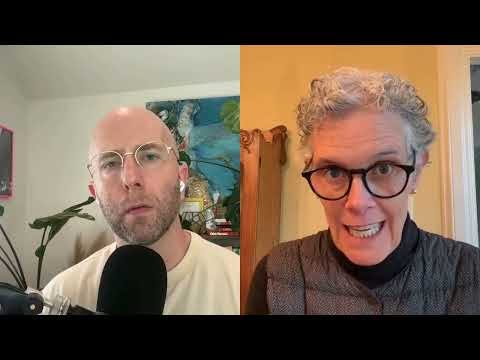
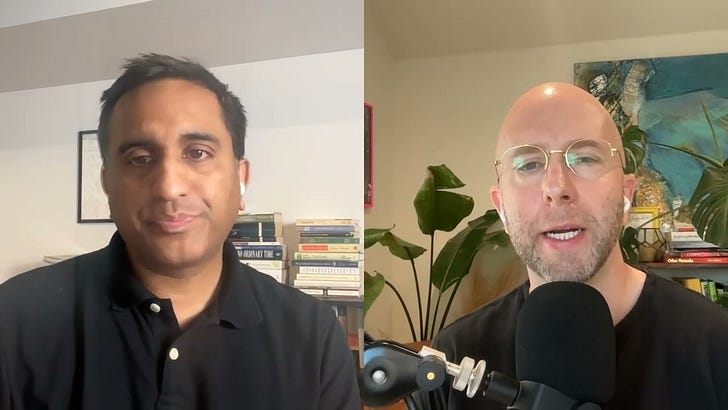
Welcome back to Untangled, a newsletter and community for people who refuse the story that technology just happens to us. It’s stewarded by me, Charley Johnson, and enriched by members like you. This week’s podcast guest is Ami Fields-Meyer. Ami was a senior policy advisor in the Biden White House, and he wrote On Courage: How to Be a Dissident in an Age of Fear with Julia Angwin. Ami and I talk about dissent, AI inevitability, and why every movement needs both a “no” and a “yes.” As always, please send me feedback on today’s post by replying to this email. I read and respond to every note. On to the show! Untangled HQ Last week, I rolled out two free tools — an AI Readiness Assessment and Strategy for Uncertainty Assessment. This week I’m rolling out a new tool -- Strategic Imagination -- for Untangled members Imagination is one of the most important strategic practices in the context of AI, and most organizations are pretty bad at it. They get stuck in grooves they can’t see: inherited imaginaries about what’s possible, what’s realistic, and what the future is supposed to look like, many of them written by someone else. Strategic Imagination helps you break out of those grooves of the past, describe the future you actually want, and work backward to what it would take to get there. Deep Dive Your AI use policy needs a right to say no. In the episode, Ami and I discuss: * The White House meeting where Sam Altman couldn’t say what he’d do with his technology * The “regulate us… no, not like that” cycle * What the passive voice in AI discourse hides. * Data centers as leverage for renegotiating our relationship with big tech * The four-part framework for dissent in On Courage * Hungary, negative coalitions, and why movements need both a “no” and a “yes” The conversation left me thinking about the feeling of inevitability that is pervasive in AI. You know the one. The meeting transcriber is on by default. The all-staff memo announces that the organization is now “AI-first,” and the only question left for you is how fast you’ll get on board. Every news article quotes a Silicon Valley leader telling you what the future will look like, as if it has already been determined. And your agency is, well, no where to be found. Ami thinks this feeling of inevitability is the defining feature of this moment — and I couldn’t agree more. Authoritarian politics and the tech industry, he told me, are both “characterized by a profound and heavy sense of inevitability.” Even the Pope’s document on AI, which Ami called “interesting and often beautiful,” accepts the premise “that this is here and there’s nothing we can do about the fact that this is here.” Ami’s antidote is just as clear: “puncturing that inevitability is part of what gives people the motivation and the strength to push back.” As he put it, “a democratic society is all about open horizons.” So how do you puncture it? Ami pointed to Dr. Maria J. Stephan, the political scientist who runs The Horizons Project. She has studied the massive coalitions that have unseated authoritarian leaders, and argues “Grounding this work in an affirmative vision of the kind of inclusive democracy that prioritizes human dignity” is key. Every movement, in short, needs to say no to something and yes to something. And the ‘no’ needs to come first, according to Ami. “It’s really important to be able to build a coalition that’s big enough to reject the political repression. And that usually does not happen through fine-grained, narrow policy prescriptions because nobody can agree on those.” In other words, you don’t need everyone to agree on what comes next before you can agree on what has to stop. And when it comes to AI, there’s one place where people are already agreeing on what has to stop: the data center. It’s physical, it draws on your water, and it needs a zoning hearing. In a new paper, Faisal Saeed Malik, a researcher at the Karlsruhe Institute of Technology calls this “infrastructural resistance,” and Ami wants to use that local no as leverage to “renegotiate our contract with big tech writ large.” That’s the sequence Malik describes, from refusal to “reclamation,” where people reorganize the conditions under which technology gets governed. And as Malik insists, resistance “is not inherently emancipatory.” Some no’s are about democratic voice and some are about property values. Normalizing no doesn’t make every no right. It makes no a legitimate answer in the first place. What does saying no to AI look like inside an organization? At some level, what a ‘no’ looks like is clearer at the community or movement level. Data centers are physical and their presence directly impacts cities and towns. But what might a ‘no’ look like in organizations? As Malik argues, “treating resistance primarily as a problem of acceptance or adoption risks overlooking the possibility that contestation may identify conditions under which… institutional dependence has become difficult to question.” In other words, whether refusal is an option tells you something about the organizational system around it. It might show you that a decision can no longer be challenged, or that opting out has become so costly that almost nobody does it anymore. Picture a nonprofit that rolls out an AI note-taker for every meeting. The policy says it’s optional. One program manager switches it off in her calls with community partners, because they’ve told her they won’t speak candidly while being recorded. So her meetings stop showing up in the organization knowledge management system. Colleagues prepping for a site visit search the system for background on those partners and find nothing. Some ping her for a recap. Others skip it and walk in cold. At her mid-year review, her manager tells her that her work “isn’t very visible.” The note-taker is still optional. She’s just paying for the choice in time and reputation. As Malik explains, “a right to refusal has limited substance when non-participation effectively excludes individuals from essential institutions or opportunities.” The point is, a yes doesn’t mean much if you can’t say no. If an employee knows that declining the tool will show up in her performance review, a yes is simply compliance. Why AI use policies should include the right to opt out Which brings us to AI use policies. Most of the organizational use policies I’ve seen govern how people use AI. They cover which tools are approved, what data can’t go into them, and when to disclose that AI was involved. Those are reasonable things to govern. But, importantly, these policies almost never ask whether. So the policy, which is the organization’s one formal statement about its relationship to AI, ends up reinforcing the felt sense of inevitability. It doesn’t have to. As Ami’s friend and former colleague Alondra Nelson likes to say, “nothing is inevitable,” and “we can steer machines.” An AI use policy is one of the few places where an organization can do that steering on purpose, by putting “no” back on the table. It could do that in a few ways: * It could give staff an explicit right to decline AI tools for their own work without penalty, so that no isn’t career-limiting. * It could guarantee the people an organization serves (applicants, grantees, patients, clients) a non-AI path and a human who can review a decision. * It could treat opt-outs as data, in Malik’s diagnostic sense. When people decline a tool, someone reviews where and why -- and uses that information to adapt the policy. * It could name who can pause a tool, and under what conditions. None of this is anti-AI per say. A policy like this makes every yes in the organization count for more — because it was freely given! So here’s what I’d suggest. Let’s retire “How do we get people to adopt AI responsibly?” It assumes everyone has already said yes. A more honest place to start is: where can people still say no, and what does it cost them? If you’re drafting an AI use policy right now, I’d start with that conversation. And if you try it, I’d love to hear what comes up! Until next time, Charley Work With Me Here are 3 ways I can help: * Advising: I can help you navigate uncertainty, make sense of AI, and steward change in your system. * Training: Everything you and your team need to cut through the tech-hype and implement strategies that catalyze true systems change. * 1:1 Leadership Coaching: I can help you facilitate change — in yourself, your organization, and the system you work within. This is a public episode. If you would like to discuss this with other subscribers or get access to bonus episodes, visit untangled.substack.com