Skip to content
Artwork for Ultimate Partner®
NewsTech NewsTechnologyBusinessMarketing

Ultimate Partner®

Vince Menzione - Technology Industry Sales and Partner Executive

The Ultimate Partner Podcast is a seat in the room where partner strategy actually gets decided.

Each week Vince Menzione sits down with the executives building the partnerships that move real revenue across the hyperscalers, and the AI labs. Microsoft, AWS, Google Cloud, OpenAI, Anthropic and the companies that partner with them. The conversations are candid, specific and useful: co-sell and marketplace motions that work, what is changing as AI reshapes the model, and how partner organizations earn a seat at the table.

Expect candid conversation rather than vendor talk. Co-sell and marketplace motions that are working now, what AI is doing to the partnering model, how to build relationships that outlast a reorg, and what it takes to deliver an outcome the customer actually feels.

Independent, solution agnostic, funded by the ecosystem it serves.

Because being in the room changes everything.

Play
  • 27 episodes
  • weekly
  • Avg 32 min
  • English
Counted on this page — what you have heard stays on this device, so it is not something the list can be paged by.
  • June 14 · 32 min

    299 – Microsoft CVP Stephen Boyle: Why 95% of Partners Will Miss the AI Wave

    The Paradigm Shift in Tech Subscribe to our Newsletter: https://theultimatepartner.com/ebook-subscribe/ Check Out UPX: https://theultimatepartner.com/experience/ In this insightful session from the Ultimate Partner Live event in Bellevue, Washington, Vince Menzione sits down with Stephen Boyle, Corporate Vice President for Enterprise Partners at Microsoft, to pull back the curtain on the tectonic shifts redefining the tech ecosystem. Boyle details Microsoft’s massive organizational pivot into enterprise and SME/channel divisions , explaining how artificial intelligence acts as the foundational thread unifying systems integrators, software vendors, and digital natives. Moving past market noise surrounding competing foundational models , he highlights Microsoft’s strategy to become the ultimate "platform of platforms" by prioritizing user choice, security, and trust. Emphasizing a shift away from infrastructure technicalities and toward practical business outcomes , Boyle delivers an urgent mandate for partners to scale technical talent, eliminate traditional operational silos, and brace for the incoming consumption-driven, agent-based future of enterprise computing. Key Takeaways - Microsoft has restructured its global sales divisions into distinct Enterprise and SME/Channel organizations to better target its massive total addressable markets. - Artificial intelligence is fundamentally altering the partner ecosystem by dismantling traditional software and systems integrator silos to build interconnected, multi-party solutions. - Rather than forcing alignment to a singular model, Microsoft aims to be the definitive platform of platforms by offering extensive choice across over 1,100 language models. - The enterprise landscape is rapidly moving past experimental AI pilot phases and entering production setups completely focused on transforming core business outcomes. - Tomorrow’s service organizations are aggressively evolving into software-minded operations that deploy repeatable, highly specialized internal autonomous agents. - Managing tokens and monitoring usage metrics represents the emerging operational baseline for balancing efficiency against the scaling expenses of large language models. If you’re ready to lead through change, elevate your business, and achieve extraordinary outcomes through the power of partnership—this is your community. At Ultimate Partner® we want leaders like you to join us in the Ultimate Partner Experience - where transformation begins.

    • Transcript
  • June 8 · 36 min

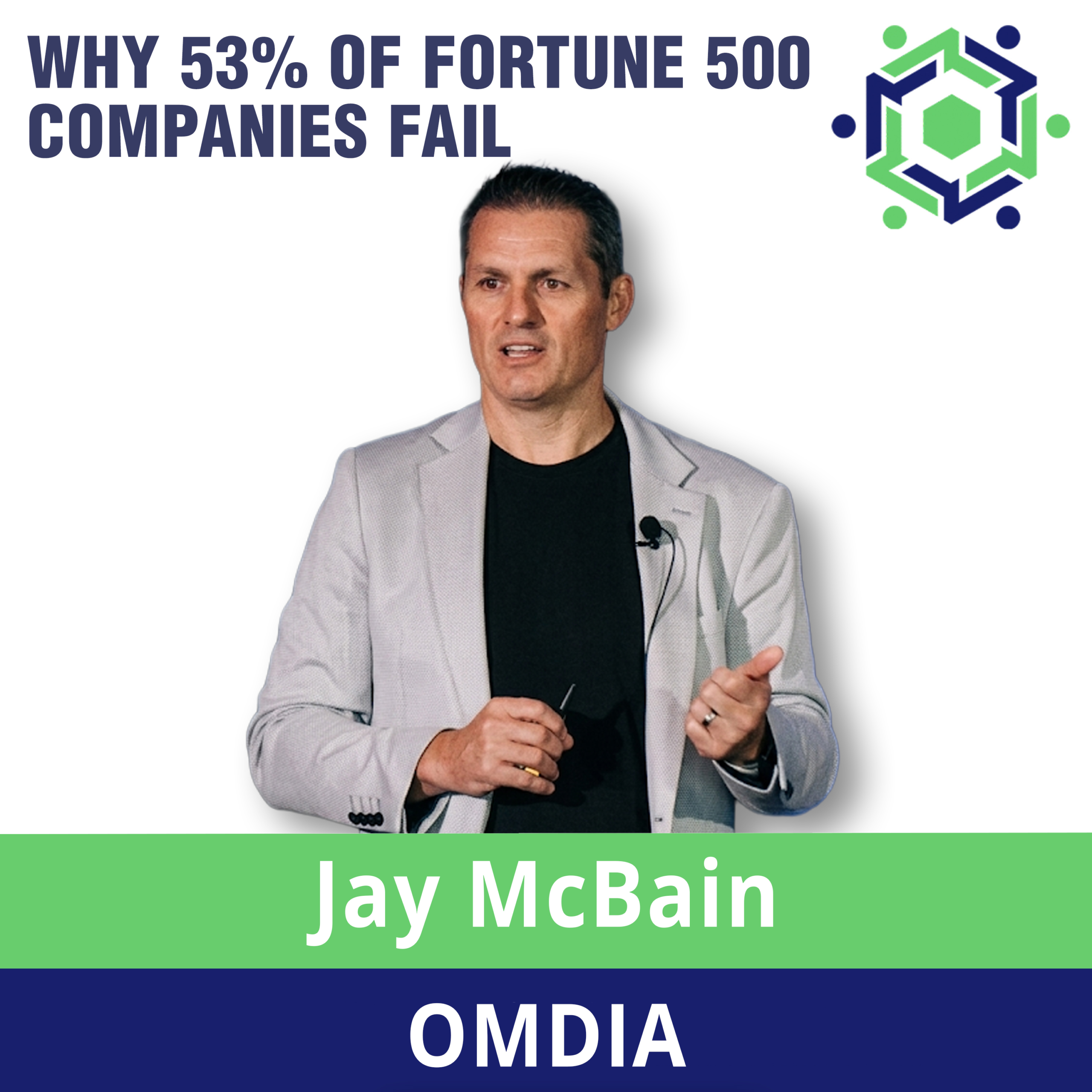
    298 – Jay McBain: The $6 Trillion Shift Rewriting Every Tech Partnership Right Now

    Description The Future of Tech is Here. Subscribe to our Newsletter: https://theultimatepartner.com/ebook-subscribe/ Check Out UPX: https://theultimatepartner.com/experience/ In this presentation from Ultimate Partner Live, industry analyst Jay McBain breaks down the monumental macroeconomic shifts rewriting the tech sector in 2026. https://youtu.be/r0qTDyw97Gs As the industry rapidly approaches a $6.07 trillion valuation, driven by massive AI infrastructure investments from Sam Altman and the “Magnificent Seven,” traditional sales and channel models are fundamentally collapsing. McBain reveals how buyer demographics have transformed to an integration-first millennial base, why marketplace ecosystems now command over half of all partner-funded deals, and how a tiny elite of just 1,000 tech service providers control two-thirds of global tech revenue. Learn the exact mechanics behind how Microsoft out-partnered AWS to win 26 straight quarters of dominant growth and how your business can deploy an algorithmic early warning system to capture massive wallet share before competitors even step into the boardroom. Key Takeaways Over half of the Fortune 500 companies vanish every 20 years because their leadership fails to anticipate macroeconomic technological cycles. The true opportunity in the $6.5 trillion AI boom lies not in single vendor products, but in the hardware, software, services, and telecom ecosystem surrounding them. Indirect tech sales are undergoing a structural shift toward direct cloud hyperscaler models driven heavily by Nvidia’s core infrastructure client base. Modern business deals are won or lost months before the point of sale based on the average of 6.3 partners surrounding a customer’s environment. Over 51% of tech buyers are now millennials who prioritize software integration capabilities and digital marketplaces over traditional human sales interactions. Tech service economics are pivoting aggressively away from upfront margins toward point-based multi-partner funding across subscription cycles. If you’re ready to lead through change, elevate your business, and achieve extraordinary outcomes through the power of partnership—this is your community. At Ultimate Partner® we want leaders like you to join us in the Ultimate Partner Experience – where transformation begins. Key Tags Nvidia AI buildout, $7 trillion AI opportunity, cloud ecosystem decade, Microsoft vs AWS growth, multi-partner cloud deals, digital marketplace migration, millennial B2B buyers, B2B tech subscription economics, tokenized micro consumption, tech services wallet share, hybrid cloud infrastructure, 28 customer moments, IT services industry growth, telecom spend breakdown, channel chief strategy, managed service providers MSP, global systems integrators GSI, software integration first, point-based vendor incentives, automated co-selling workflows Transcript JAY McBAIN AUDIO PODCAST [00:00:00] Jay McBain: So to go back to that story about the 53% of companies who are gonna fail, one of us is gonna be asked to write the book, but chapter one is always you Blame the CEO. [00:00:13] Vince Menzione: We just came back from Ultimate Partner live in Bellevue, Washington, where we hosted incredible leaders for two amazing days. Come join us for this next session where we explore the tectonic shifts we’ve all been seeing. With that, I am incredibly blessed to invite a friend of mine to the stage. I have a quick little side note, like I found an old LinkedIn post from this gentleman from like many years ago, like 20 years ago. [00:00:39] Vince Menzione: And I wasn’t really that nice to you on that LinkedIn post. Like, oh, like this is before Jay became the Jay, that we all know Jay to be j. But he was in the space and I was at Microsoft doing something and he reached out about something. It was kind of rude, Jay. I was like, oh my gosh. I can’t believe. But Jay has been a great friend. [00:00:54] Vince Menzione: When we started the podcast back up, uh, during COVID we started doing podcasts together. When we moved to the studio, Jay was the first person in the studio. He’s always got a spot, uh, at our events. He’s s Spot Art, and, and he’s a great friend and supporter of Ultimate Partner Jay McBain. For those of you who don’t know him, Jay, welcome. [00:01:13] Vince Menzione: Thank you, sir. [00:01:22] Jay McBain: 31 days ago, we landed Artemis two. The furthest humans have ever been away from the planet Earth 57 years ago. We landed on the moon in the 56 years. Between those two moments, the tech industry has been the fastest growing industry in the world. Every single year we moved from the space race to the technology race, and we’re just getting started. [00:01:46] Jay McBain: If you’re old enough, you’ll recognize the mainframe and mini era for 20 years. You’ll recognize a young disheveled Bill Gates showing up in Boca Raton, Florida for, uh, August the 12th, 1981 launch, where Bill thought that every one of us would’ve a PC in our home, and IBM thought they were gonna sell 10,000 of them to hobbyists. [00:02:12] Jay McBain: 1999, a small startup from an executive who just left Oracle in San Francisco named Mark Benioff. A couple of years later, Jeff Bezos went into a boardroom and said, listen, we’ve spent a lot of money building infrastructure to our busiest day, Christmas, black Friday. You’re telling me this stuff sits idle 10 or 20% for the rest of the year. [00:02:35] Jay McBain: Why don’t we rent that out to others? Got laughed outta that boardroom and then got made of fun of on magazine covers. Maybe you should just tend the store, let the adults talk about technology. In March of 2023, our neighbors, our friends, our family saw DeepFakes. They saw poetry, they saw music, and they came to us as tech people and said, did we just light up Skynet? [00:03:03] Jay McBain: Now every one of these 20 year eras, this is the Taylor Swift version of our industry. Every single one of these eras triggers the fastest growing product in history. Today it’s actually Chacha bt first to a billion users. It triggers a new, richest person in the world, bill Gates, to Jeff Bezos. Now, Elon Musk is the first to sign a trillion dollar pay package, and it’s not for car. [00:03:27] Jay McBain: It’s not for cars. It also triggers a most valuable company in the world change. And today that’s nvidia. These are monumental changes in our industry and they’re monumental changes in partnering every single time. And it also links to our customers. If you take a 20 year view of business, one era, and, and think about the AI era, you know, at the start of it here, if you’re to grab the Fortune 500 magazine from 20 years ago and start to flip through it, 53% of the companies in there no longer exist. [00:04:06] Jay McBain: Every 20 year cycle, we lose over half of the biggest companies in the world. These are the companies that have very deep pockets to buy their way outta problems. If you’re not in the Fortune 571% of tech companies don’t make it 10 years. These are the changes that cost industries. There are changes that cost really big companies and the decisions we make, the trends we’re in right now, in 2026 will be written about in the future. [00:04:39] Jay McBain: This new era, a lot of big numbers being thrown around. Vince’s best friend talk about a six and a half trillion dollar AI opportunity, but it’s not Microsoft’s tam. Microsoft is chasing about a trillion dollars of this. And the ecosystem, the hardware, the software, the services, the telecom is gonna make up the rest. [00:05:04] Jay McBain: It is an ecosystem. Every time these big numbers are thrown, the word ecosystem is always thrown around it. Not to be outdone, Sam Altman’s talking about a $7 trillion build out. The world economy this year, the world GDP will be 126. These are material numbers to world GDP, but even better, they’re both larger than our entire industry is today. [00:05:27] Jay McBain: So what took 56 years of the fastest growing industry this year will be $6.07 trillion. Big numbers, but it’s easier to think about it in terms of a dollar that our customers spend in that dollar. They’re gonna spend 25 cents on hardware. They’re gonna spend 25 cents on software. So for anyone that read the memo 15 years ago, that software’s gonna eat the world, there’s still a dollar a hardware to run every dollar of that software. [00:05:57] Jay McBain: And whether you’re thinking humanoid robots or whichever future you’re envisioning, there’s going to be a dollar of hardware to run every dollar of software for the next 20 years. There’s over 25 cents now in IT services, and in many cases, these services are growing faster than the product categories and just under 25 cents in telecom, that’s how it breaks out today. [00:06:19] Jay McBain: And this industry, which took 56 years to get to this point, is gonna double in size in the next three to five years. We already have two and a half trillion of that seven raised and being spent. Part of the reason Nvidia is the most valuable company in the world. Now our industry, uh, you talk about ultimate partnerships. [00:06:40] Jay McBain: Our industry traditionally, and world trade by the way, is 75% indirect. The dealerships, the agencies, the brokers, the resellers, the retailers, the franchisees, the gas stations, the grocery stores, the pharmacies, all 27 industries sell indirect. You gotta think back the last time you bought something direct. [00:07:01] Jay McBain: Well, I bought a Dell from that dude in the nineties. Cool. Well, Dell Technologies is now 60% indirect. Well, I bought insurance. Direct is 15 minutes. Could save me 15%. Well, Geico last year sold more insurance through agencies and brokers than they did direct. This is the world now. We used to be 75% indirect four years ago. [00:07:26] Jay McBain: Then it went to 73.2, then it went to 70.1 and it then it went to 66.7. By the way, marketplace is in these numbers indirect. It’s not marketplace causing this change. It’s one company, Nvidia. Nvidia has seven customers. The magnificent seven, uh, half of them are in the room right now that every morning we wake up to a hundred billion dollars press release about this $7 trillion buildout. [00:07:56] Jay McBain: What’s interesting is indirect sales in our industry is growing by revenue. It increases every year, just not at the pace that this AI build out is happening direct with seven companies. But the reason we’re all here, and I think the core reason that Vince is building this community is this, you know, Microsoft forever has measured and been very vocal. [00:08:21] Jay McBain: About 96% of their deals have partners in them. Kind of who cares, who collects the money. We care about the moments, the 28 moments before the customer makes a purchase. We care about every 30 days forever, because two thirds of our industry, over $4 trillion now is subscription consumption based. Winning a customer today is only winning the first 30 days. [00:08:46] Jay McBain: We care about this cycle. We care about who surrounds our customer. So six years ago, I stood on a big stage and said, you know, we went through a decade of sales. You know, in 1999, you thought you were born to be a salesperson. You’re managing your territory with your gut. Well, a few years later, you were introduced to the science of selling. [00:09:07] Jay McBain: You know, 10 years later you thought as a marketer, you sit around a cocktail party joking with your friends, 50% of my marketing dollars are wasted. I just don’t know which 50%. Really funny. In 2009 until every 58-year-old CMO got replaced by a 38-year-old growth hacker. Coming in with Marketo and Eloqua and Pardot and HubSpot, and 15,505 as of yesterday, MarTech and iTech tools, ninjas in marketing, they wouldn’t let a nickel go through without measuring. [00:09:43] Jay McBain: Now we understand 96% of deals and partners that surround it. No deal is gonna be won or lost in this era without partnering effectively. So we had to have this decade of the ecosystem. One of the ways we’re tracking is by outsiders. You know, Salesforce every year publishes the state of sales and they’ve got, you know, the number one CRM in the world. [00:10:05] Jay McBain: So they get to go talk to all the CROs, all the salespeople in the world. And as of this year, a couple months ago, 94% of every salesperson in every industry in the world uses partners every single day. You wanna see what this number was six years ago. Also, 89% of salespeople around the world don’t think they’re going to club this year without partners. [00:10:29] Jay McBain: So this is a big moment for us, halfway through the decade ecosystem, but we’re only halfway through. We’re starting to understand now at a more granular level. What partnering means. It’s not theory, it’s not flywheels. It’s not really cute. McKinsey slides that we keep showing to our board saying how important partnering is. [00:10:51] Jay McBain: We’re trying to get to the very specific level of the 6.3 partners on average that surround the deal and what they’re doing. How their business model works, and that’s average if I’m working on a public sector deal. I was at a Red Hat conference yesterday talking sovereignty. If I’m in an enterprise or a large public sector deal, it’s north of 10 partners in the deal. [00:11:15] Jay McBain: So we’re starting to understand what used to be this, this, you know, you’ve been the fastest growing industry for 56 straight years. Every single professional services person in every industry has come in to join the fund. Over 90% of accountants are tech services firms. Over 90% of marketing agencies are tech services agencies. [00:11:36] Jay McBain: All of this 250,000 software companies, a million emerging comp tech companies, the half a million VAR that have been in that traditional channel. The managed service providers, all of these 20 different partner types, millions of companies, tens of millions of people competing for 6.3 spots. Around the customer. [00:11:58] Jay McBain: That’s it. Luckily, there’s 141 million global customers to compete for. There’s, there’s some open slots that you can go find, and that’s the point. Our industry never had our own Fortune 500. We always talk to, you know, these partners and GSIs are doing this and SI are doing that. And we never really had a view of capability and capacity or what our own TAM was inside of that partnering. [00:12:25] Jay McBain: And so we set out and we would’ve loved, you know, chat GPT or Gemini or Claude or any of those tools to do this. But there’s one problem in partnering with AI is that it doesn’t know one partner from the next. There’s a big digital sameness problem in our industry that every single partner, whether it’s Larry in the White van or Accenture, with 786,000 employees all say they do all things to all people all the time. [00:12:53] Jay McBain: 98% of them, 99% of them are private companies that don’t share their p and l. You can’t go into Microsoft’s LinkedIn system and find out how many employees, ’cause it’s a block system, it AI can’t see into it. So it just sees, and it’s a great pattern matching. Google, SEO can’t figure out who’s who, nor today can the large language models. [00:13:14] Jay McBain: ’cause all the things they’re trying to match, the transformers are trying to match. It all looks the same. Every tweet, every ebook, every website, every digital history looks the same. So this took us thousands of people hours across two years to do, to dig into every p and l to dig into every dollar of what they’re doing. [00:13:33] Jay McBain: But what was interesting is only a thousand partners in our industry do two thirds of all tech services. When you get into enterprise, it goes up to 80 to 90%. The partners in the middle, in Blue do more tech services. The 30 of them than the 970 partners in white on the outside, the 970 partners in White do more tech services than the next million combined. [00:14:03] Jay McBain: This is our industry in a nutshell. Every time we talk to a a vendor, every time we talk to a partner, every time we talk to a distributor, we’re now talking names, faces, and places. You you wanna talk sovereignty. Yesterday in Atlanta, 90% of sovereign conversations in public sector in the globe is handled by these companies here. [00:14:26] Jay McBain: Forget about how much you do with these partners today. You wanna chase the next column, which is the wallet share. And I was a channel chief for 17 years. I get the weekly report and I see a million dollar partner, another million dollar partner, sorted top to bottom. You don’t know which partners which, which of those million dollar partners is doing 1.2 million in your category. [00:14:46] Jay McBain: They deserve a baseball cap and a front row seat at your event as an MVP. The next partner right next to them is doing 10 million in your category. They’re only doing a million with you. ’cause customers are pulling them into it. Nine times outta 10. They’re leading with your competitor. So I don’t want that list anymore. [00:15:03] Jay McBain: I want the new list, which is showing me those $9 million opportunities. And I as a board member, as A CEO, as a CFO, as a CRO, I wanna see this list. And then I want to talk people, processes, programs, technology. What are we gonna do to go get our fair share of that 9 million? Where’s our lowest hanging fruit? [00:15:24] Jay McBain: How do we double our pipeline? How do we double the size of our company in three years? It’s all right here. Let’s have very specific conversations and move away from flywheels and move around from force multipliers and and things like that in partnering. Let’s figure out how this partner community is surrounded. [00:15:45] Jay McBain: What do 10 million people who have to be smart in front of their customers every single day, what do they read? Where do they go and who do they follow? It’s the law of a few. This is the old Malcolm Gladwell of tipping point 10 million people in the broader channel. A hundred percent of our TAM comes down to only a thousand watering holes. [00:16:08] Jay McBain: 12% of that entire audience. Doesn’t sound like a lot, but it’s over A million. People love podcasts. Number one way they learn the Joe Rogan effect. In our industry, there’s 121 podcasts. These are all public lists. You can go get on my LinkedIn newsletter on canals, oia. But there’s 121 podcasts that drive him forward. [00:16:28] Jay McBain: Really high up on that list, actually number one on the list is ultimate partner, Vince. That’s how I met. ’cause I asked people, 10 million people, you love this. You walk your dog, you drive to work, you listen to podcasts. I’m not the biggest podcast fan. It’s not number one on my list, but it’s number one on theirs. [00:16:44] Jay McBain: They say, you know, you gotta meet this guy, Vince. It’s unbelievable how great these podcasts are. They’re ultimate. [00:16:54] Jay McBain: Then I talked to Vince and said, but Vince, you know, 35% of your community, the 10 million people love to come to events like this one. The hallway conversations, the hotel lobby bar last night. This is what we love to do, especially post pandemic. It’s the number one way we learn. We learn from our peers, we learn from those around us, and, and the learn from the conversations we have here. [00:17:17] Jay McBain: We always remember these moments, you know, years and years later. There’s 352 choices. I’m going to five of them this week in five different cities. It’s a lot of coverage, but again, it’s a tighter li list of how people work. The magazine lists 106 of them associations like Conter. Now the GTIA peer groups, there’s 15 different spheres of influence, but only a thousand places. [00:17:43] Jay McBain: I could walk you through billionaire, after billionaire, after billionaire in this industry and show you how they did this. How did Arne Bellini at ConnectWise? How did Austin McCord at Datto, how did Nerdio become a unicorn? How did threat locker and huntress move away from 6,500 cyber companies and become unicorns over and over and over again? [00:18:05] Jay McBain: It’s only one slide. Unicorns and billionaires are made here, and a lot of people don’t get it. So walking away from Bellevue, a thousand partners, top down, a thousand watering holes, bottoms up. You’ve covered a hundred percent of your tam. You do it better than 10% of your competitor, 10% better than your competitors. [00:18:27] Jay McBain: You win. You carry that on your resume into the next company. You get a bigger job at a bigger pay scale. Let’s just walk through some examples. Cyber 91.7% of it goes through the channel. Huge channel audience. You know, if you’re in MarTech, it’s only 10%, but this one happens to be all channel, but that’s not the story. [00:18:48] Jay McBain: For every dollar that the 6,500 cyber companies are trying to close, there’s $2 in services. Plot twist, the products are grown at 11, the services are grown at 12.6. Your partners are growing faster than you are, and they will continue to for the next, at least five years, probably 10. So when I’m here, five years from now, you’ll hear in me talk about a three to one split in cyber and then a four to one split in cyber. [00:19:18] Jay McBain: Now, when we’re in Miami a couple days ago is CrowdStrike, they’re talking about a $7 and 5 cent multiplier, chasing that two to one up higher. You look at managed services. Here’s a fun story. Managed services. 82% of customers who are man, uh, outsourcing more this year than last year. 650 billion in size. [00:19:38] Jay McBain: This is bigger than the entire SaaS industry. Salesforce, ServiceNow, Workday, Marketo, NetSuite, HubSpot, 250,000. Others. This is bigger. It’s also bigger than all the Hyperscalers combined, not just AWS, Microsoft and Google, but Alibaba and Oracle and everybody down the list. This is a massive market also growing at double digits. [00:19:59] Jay McBain: So these are some big things and obviously we’re watching, you know, week in and week out, quarter in, quarter out, the Battle of Software and Battle of the Hyperscalers and things like that, and who’s growing at what pace and, and how partnering is connecting to all of this. You know, we watched a moment really early in the pandemic where Microsoft started growing faster than AWS and they haven’t stopped since 26 straight quarters. [00:20:27] Jay McBain: And you ask customers and say, you know, does Microsoft have a better product? And in most cases they say no. You know, AWS had a five year head start. Well, did they have a better price? Well, no, actually most cases Microsoft’s more expensive. Well, did did they have better promotion? Was their Super Bowl ad better? [00:20:44] Jay McBain: No, they’re both kind of crap. So you kind of ask the questions of what’s the only difference that could create growth above the leader in the market? Well, it’s place. More of the 6.3 partners are walking into those keyboard room meetings and drawing clouds up on the wall and labeling the Microsoft than they are AWS. [00:21:03] Jay McBain: Very simple. It’s never been about product. The best product in our industry has never won. And now the best way forward is that partnering moment, and this is the moment. So to go back to that story about the 53% of companies who are gonna fail, one of us is gonna be asked to write the book. And it could be the book like Kodak, they invented the product that ended up killing them. [00:21:26] Jay McBain: And it’s a woe is me story, but chapter one is always you blame the CEO. How could they not see those trends happening in 2026? How could they, you know, were they blind? Were they stuck in their own, you know, innovation chamber? Innovator’s dilemma, were they stuck in their own boardrooms? Why couldn’t they see? [00:21:46] Jay McBain: Well, chapter two, you, you blame the board. They have fiduciary responsibility, outsider view, and how could they not see it? But really, this is the future right here. If you take this slide and apply it 10 or 20 years from now to every failure and every success, these are the chapters of the book. Your buyer is now a millennial. [00:22:05] Jay McBain: As of last year, the 51% of our market is bought by people born after 1982. Different psychology, different behavior, different journey, different criteria, their integration. First buyers. The buy a product, 80% as good as the next one. If it works better in their environment. 94% of people won’t buy a car unless it has CarPlay or Android Auto. [00:22:26] Jay McBain: New Buyer. You have to be more integrated than your competitors. That’s a partnering story. The 6.3 partners. If you heard cyber, you need some great channel partnerships, but you need the other 5.3 partners as well, the consultants, the advisors, the designers, the architects, the implementers, the integrators, the manner service, all of the other partners. [00:22:44] Jay McBain: You need to know more of them than your competitors do, and have them label clouds with your name in them. You need better alliances. Even if you compete, you only compete in the morning. You’re best friends by the afternoon. You have to be tight with the hyperscalers, tight, with the big SaaS platforms, tight with cyber, tight with distribution, there are layers, seven layers to every deal. [00:23:04] Jay McBain: You gotta be tight in and have better alliances than your competitors. And then it all comes to the 28 moments, which I’m gonna end on, but the go to market of all of this, the co-selling, co-marketing, co-innovation, co-development, co keeping. This is it. Your product has to be good enough that somebody’s gonna renew it. [00:23:21] Jay McBain: Your Super Bowl has to be, you know, ad has to be good enough that people don’t, you know, shame you on social media. Your pricing has to be somewhere in a country mile of the bell curve of what the customer wants to pay. But successor failure is just here and platforms are synonymous with partnering. [00:23:40] Jay McBain: It’s our role now in the decade of the ecosystem to drive our companies forward. Marketplace. It’s probably the most predict, you know, great prediction we ever made. You know, growing at 82% compounded, it’s hard to predict ’cause it doubles almost every year. We were almost exact to the decimal point. Five years later now till 2030, we’re watching a second story, which is more interesting. [00:24:02] Jay McBain: If 96% of all deals have partners inside of them and there’s private offers and multi-partner offers and distributor sellers record all these funding mechanisms or services as a product. As of last week, over 50% of all deals in marketplaces now have partner funding. It means that while money changes hands differently, the respect and the recognition of what partners do is in the deal. [00:24:26] Jay McBain: We think that’s going to 59, but at some point, that’s gonna have to hit 96. ’cause to run the best programs, whether it’s an indirect sale, whether it’s a direct sale, whether it’s a marketplace deal, it doesn’t matter how money changes hands. What matters is we recognize the 6.3 partners. They’re not only making the deal happen bigger and faster, but renewing and enriching that every 30 days forever. [00:24:48] Jay McBain: When we watch, you know, billion dollar clubs and when we read all the press releases and all the hubbub about how fast this is growing and who, which companies are behind all this. When I’m quoted in some of these press releases, it’s because of this. You know, CrowdStrike, you know, brags are a billion dollars in a single year, but inside of that, they’re showing that 91% growth in marketplaces, which is pretty phenomenal for any company to almost double in size every single year. [00:25:17] Jay McBain: What’s more phenomenal is they’re growing the channel piece of it, 3548%. That green part of it is growing. Companies that understand platform and have people and processes and programs and technology to do it are winning. And they’re getting recognition and partners are starting to join the Billion Dollar Club who don’t sell a product, but are also winning at Extreme Scale. [00:25:44] Jay McBain: So talk about those partner 1000 and who are leaning in to win at this level. As well as everything changes, traditional billing moved into subscription models, moved into consumption models. Now we’re being tokenized to death multi it’s, it’s in this mode of micro consumption. There’s no chance there was little chance in subscription consumption that would be resold. [00:26:09] Jay McBain: You don’t buy Netflix from the cable guy in the white van. There’s zero chance when you’re buying tokens at a buck a piece that that’s going through any indirect sale. This continues to grow. Now the tectonic shifts is what happens when money changes hands differently. These old programs that we used to all write hundreds of different boxes, we checked every day on deal reg and trainings and all the other things are changing. [00:26:35] Jay McBain: To this, you’ll get these slides, by the way, in high res, inside of this now is the customer. For the first time ever, 45 years later, we have the customer in the middle of what we do, the 28 moments in green before they buy the seven layer stack and the partners inside it. The implementation. The integration, the managed services in a cycle that never ends, and two thirds of our industry. [00:26:55] Jay McBain: With the customer in the middle, we can now move money around to the different moments. It’s not all landing in front or backend margins or market development funds or new customer bonuses or spiffs. It’s landing where it needs to land. Over 400 companies now, pretty much led by Microsoft 400 companies are in a point system right now and 400 more. [00:27:18] Jay McBain: We’re working kind of behind the scenes to get that announced in the next 12 months. This is a total changeover in terms of how economics work and partners are yelling over half of us. I don’t care. Don’t call me a VAR anymore. Don’t call me an MSP. Don’t call me a regional system integrator. I do the consulting over half the time. [00:27:36] Jay McBain: I do the design, I do the implementations, I do the managed services, and 44% of us are vibe coding. On weekends. We’re not happy. Just on the services side. We wanna join the seven layer tech stack as well. These are partners growing faster than their vendors by understanding this cycle and where to show up and where the money is in ai. [00:27:56] Jay McBain: And the number one thing they’re asking for is not more leads, which they did for 45 years. The number one thing is now recognized for what I do. I’ve never just been a cash register. We’re completely now past this idea of a channel being a channel of distribution, and now a channel being this platform for the future. [00:28:16] Jay McBain: As we lay that on top of ai, the first couple of years of AI has really been consumer driven. The 95% failure rate that MIT reported last year is now 70%. That’s the failure to get from proof of concept to production. That 70 will be 50 by the summer we’re moving now in business, the maturity rates are going up at the end customer and in 88% of cases, that’s because of the channel. [00:28:43] Jay McBain: They’re working with partners. They’re not vibe coding themselves and working in little skunkwork groups. They’re working with partners to make it happen, and it now becomes the partner’s number one growth opportunity. I can grow at 11 or 12% in cyber every year. Compounded I can grow in 10% in managed services. [00:29:03] Jay McBain: You know, those are great double digit growth ’cause my customers are growing at 2.7% and I can go four x my customer, but I can go 10 x my customer if I have the right services built around ai. And this compounded growth rate and that big number in 2 20 32, 267 is what’s got those top 1000 partners obsessed. [00:29:25] Jay McBain: And your companies are leading with ai. Now you need to connect to those AI services. You need to get partners on this scale of growth. And they will be adding your name inside every cloud. They write on every whiteboard, but 82% of partners around the world, you know, we survey 25,000 of them aren’t ready, and they’re blaming vendors for not being ready, and they’re telling them exactly the workshops and the training that they need to get ready for this cycle. [00:29:53] Jay McBain: 82% of our entire partner, tens of millions of people, aren’t ready to grow at 35% and they need our help. Last thing I’ll say about AI is it’s the first time from client server to cloud, edge to cloud that it’s been segment driven. SMB alone has one, you know, six different segments, one to nine, 10 to 24, 25 to 49, et cetera. [00:30:18] Jay McBain: Mid-market into enterprise. No one that runs a restaurant is calling Jensen to buy a GPU to put next to the stove. No one’s calling Sam or Dario or anyone at Anthropic or OpenAI directly. They’re waiting. If you run a restaurant with all the people running around with tablets, you’ve invested in toast or square or clover or one of the platforms to run your business. [00:30:41] Jay McBain: A hundred different things. And you’re gonna wait for toast to work with a hyperscaler and build out the capabilities genetically. So when they see a spike in Uber Eats orders, they automatically place a food order and automatically change the staffing to deliver on it. That’s what the restaurant’s waiting for, and there’s no one calling and having a big a agent conversation. [00:31:03] Jay McBain: But even if you go into hundreds of people in medium sized business, every one of the vice presidents have their tech stack already built. I talked about the marketing person already, but the HR leader has one, and everybody’s got their seven layer stack. They’re not calling to buy a GPU and they’re not calling to, you know, bring in open AI directly or, or anthropic. [00:31:22] Jay McBain: They’re waiting for the platform they built to integrate together ag agenta capabilities. Everybody’s in wait mode up until enterprise and public, large public sector. So we are looking at this market and at 90% of that AI market is run by those thousand companies, and the rest of the millions of partners are helping in terms of how these businesses are gonna change at that level. [00:31:46] Jay McBain: Here’s where I end. You know, the 28 moments used to be a theory. It used to be a flywheel. How do we buy a car? [00:31:55] Vince Menzione: Well, we Google it, [00:31:57] Jay McBain: 81% of us now, 94% of us use large language models. We find out that there’s 365 brands of car. I’d have to test drive one every day of the year to get through them all. So we start narrowing these things down. [00:32:09] Jay McBain: We configure it. We put our rims on it, we color it. We download the invoice price. We download the backend rebates this month, whether I buy it in May or June, we find out what 5,000 people paid for our exact car within 50 miles of us. And then we don’t wanna go to the dealer because we know more than the salesperson, the manager ever will. [00:32:26] Jay McBain: We know what we’re gonna pay within, you know, dollars or cents. Just carvana the car. Hand me the keys. Let’s just forget the whole eight hour back and forth. I’ll get you a deal thing. I’m smarter than you in technology. Our customers are smarter than us, smarter than salespeople. That’s why 75% of millennials don’t wanna talk to a salesperson. [00:32:48] Jay McBain: They want to end digitally, and by the way, they’re not gonna send a fax after 28 digital moments. They’re gonna end on a digital marketplace. This is all demographics. It’s not hard to see where it’s going, but we’re getting into names, faces, places again. What if every dollar of your tam, the board, the CEO, runs around with their big multi-billion dollar number, they’re chasing? [00:33:09] Jay McBain: What if every single deal looks the exact same? This is a deal with AstraZeneca, A real deal, real customer spending millions of dollars. We know it starts in October, it ends in April. It’s a six month cycle. We see what they read, the MQ ls at the beginning. We see the sales demo moments. We see ISV, but we’ve never had the light blue boxes. [00:33:30] Jay McBain: What if we as a team could overlay the 6.3 partners in this deal? And when you find out a couple things. Here’s where I end. In December, five deals were one, three of them by NTT. The person at NTT probably coaches AstraZeneca’s, you know, kids’ soccer team. They probably have a cottage together at the lake. [00:33:50] Jay McBain: For the last 20 years, if the person at NTT worked at Deloitte, Deloitte would’ve run this deal. But Software One and Yash are both there, so we understand that when they were drawing clouds up on the wall in the boardroom in December, this deal was won and lost there. It was not won and lost at the point of sale. [00:34:09] Jay McBain: So what if you knew more about this and could see every dollar in your tam? You had an early warning system that this was happening. Two things jump out at this now that we’re in Bellevue. AWS was touched twice in this deal, directly in the marketing cycle and the sales cycle. AWS lost this deal. Here’s an example of Microsoft winning a deal with Microsoft never being touched. [00:34:34] Jay McBain: For some reason, NTT who won, who won AWS’s partner of the year a couple years ago led with Microsoft, so did Software one, Microsoft’s biggest reseller in Europe, and as did Yash, they all led with Microsoft and without Microsoft, knowing Microsoft took a multimillion dollar deal away from their competitors by winning in December. [00:34:53] Jay McBain: That’s one. Second. These partners didn’t just show up other than soccer and cottages. They didn’t show up in December. It went closed one in their CRM system. Back in the summer, August, September, we already knew AstraZeneca was in market, spending millions of dollars. We didn’t need them to read an ebook or go to an event to find that out. [00:35:17] Jay McBain: We knew it because it was closed one. They’re spending hundreds of thousands of dollars times five in December to know what to do at the end. This is an early warning system that’s better than any MQL, better than any SQL. And if you could give your company these level of view into their pipeline with an early warning system that I can work with those partners for months before they ever show up at the customer’s boardroom. [00:35:44] Jay McBain: This is it. Talk about 47% winners. This takes you from not only surviving the AI era to being a top five platform winner. Thank you very much. [00:36:01] Vince Menzione: Until next time, we’ll see you in person. Hopefully at our next event.

  • April 29 · 49 min

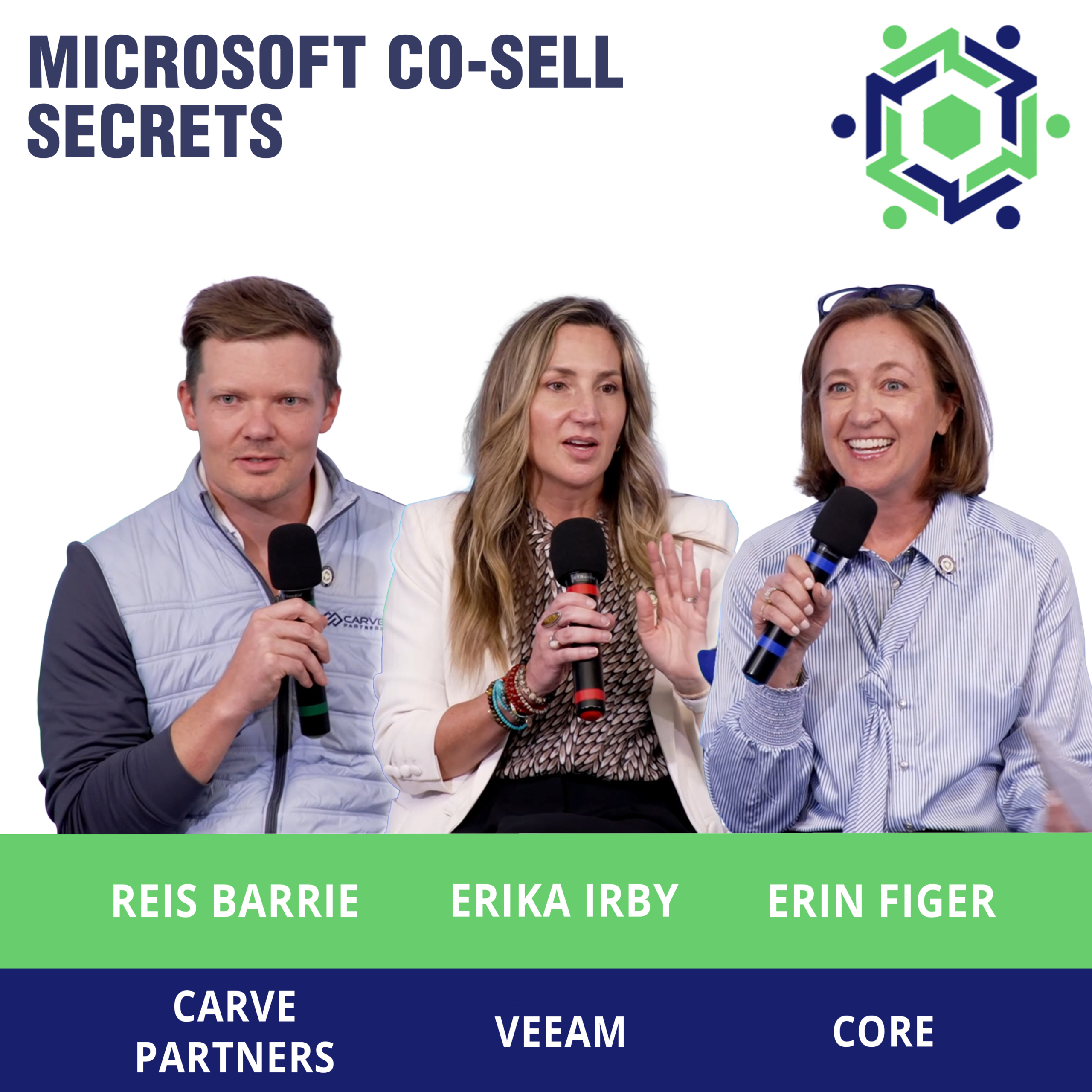
    297 – 10 Years of Microsoft Co-Sell: What the Top Partners Do Differently in 2026

    Master the Microsoft co-sell evolution today. Subscribe to our Newsletter: https://theultimatepartner.com/ebook-subscribe/ Check Out UPX: https://theultimatepartner.com/experience/ In this deep-dive panel discussion, industry experts Erin Figer, Erika Irby, and Reis Barrie celebrate the 10-year anniversary of the Microsoft Co-Sell program by dissecting its evolution from its 2016 inception to today’s data-driven, outcome-focused landscape. The group explores the critical shift from transactional sales to modern, frictionless co-sell motions, emphasizing the importance of signals, intentionality, and building credibility with Microsoft field teams. Whether you are navigating the complexities of the marketplace, struggling with reseller enablement, or looking to integrate AI into your sales process, this conversation offers actionable insights to align your organization’s go-to-market strategy with Microsoft’s evolving priorities and achieve results. https://youtu.be/KV1MGSoyWbQ Key Takeaways Effective co-selling has shifted from autonomous, fragmented motions to a highly collaborative, data-driven approach essential for modern cloud GTM strategies. Credibility is the currency of partnership; without trust from vendors and customers, technical go-to-market motions will fail to produce long-term outcomes. The “REO” (Reseller Enablement Offering) model is an operational unlock for ISVs to go global and sell local without the friction of multi-party private offers. Integrating AI into CRM systems is vital for identifying total addressable market (TAM) signals and maintaining sales velocity. “Don’t automate a bad process” remains the cardinal rule; technology should be used to refine existing, successful motions, not to propagate inefficient ones. The human element—community, in-person events, and empathy—is a necessary differentiator in an increasingly digital, automated B2B landscape. If you’re ready to lead through change, elevate your business, and achieve extraordinary outcomes through the power of partnership—this is your community. At Ultimate Partner® we want leaders like you to join us in the Ultimate Partner Experience – where transformation begins. Key Tags Microsoft Azure, Co-sell evolution, Hyperscaler strategy, SMB partner investment, Cloud Marketplace, Veeam GTM, Partner Center alignment, Channel enablement, REO, Cloud consumption, ISV scaling, Go-to-market optimization, Partner-led growth, Azure consumption, Channel friction reduction, Outcome-driven sales, Microsoft ecosystem, Revenue acceleration, Partner alignment. Transcript Erin Figer Panel For Cut Out [00:00:00] Vince Menzione: So when we, so, uh, this all started ’cause I was trying to figure out what was next when I left Microsoft and I had this woman who was doing work, actually starting the co-selling process when we first started doing co-selling. And she was working with one of our partners and she was working with my team when I was at Microsoft. [00:00:17] And then I said, this lady knows a lot about this stuff. So I reached out, I left Microsoft, I said, I think we can help each other. Like, I think we’re gonna, I got these companies that I spoke at Microsoft’s conference. They’re like, can you come help us out? And we teamed up. And, uh, we’ve been friends and doing fun stuff ever since. [00:00:34] And she’s spoken at just about every event in some capacity or another, whether it was on stage or a workshop. Aaron Feiger. And then, uh, I, I found, I also, through Aaron, I met this other gentleman who had another company and he was doing amazing work with ISVs or SDCs, uh, Reese Barry from Carve. And then, uh, when I think we started up the event, I mean, Erica Irby came to one of our first events and spoke on stage. [00:00:58] I was like, yeah, this. The person knows what she’s doing. So I’ve asked the three of them to come up and kind of round out and end the day, but all three of ’em have a tremendous, uh, background in this whole process of co-selling go to market strategies. And I thought you, you can, I’m just giving it over to the three of you. [00:01:17] Erin Figer: I we don’t need [00:01:18] Vince Menzione: a, you don’t needer you don’t need a clicker and you, you know what you’re all gonna be talking about. But these are some really smart people about how to partner with Microsoft. So, yeah. No, thank you for having us. [00:01:27] Erin Figer: Um, hello. Hello. I think this is on. All right. So actually we’re gonna do an exercise. [00:01:32] Um, I want everyone to close their eyes. Close your eyes. Close your eyes. All right. I want you to think back to January of 2016. What were you doing? Where were you in your career? What company were you working for? What was going on in your Microsoft partnership in January of 2016? Okay, Erica, what was happening for you? [00:01:59] Erika Irby: So, uh, is this on? Sorry, I cannot tell. Um, I was at Veeam for the first time. We had just launched our first, uh, endpoint backup, uh, product in April of the previous year because nobody knew what cloud was yet, and people were scared. So we had to launch that product. And we had a relationship with Microsoft in a sense that about 20% of our business sat on Hyper V. [00:02:25] That equated to about, I think like around 90 ish million dollars, which at the time was incredible for us. But to Microsoft was, you know, like, who are you guys again? And, um, we begged and begged to have any type of communication with them. Events. Funding nothing. We did not know what Azure consumption was. [00:02:43] We didn’t have any of that information. And if somebody would’ve told me at that time that nine years later we would sign a five year contract with them and have multiple products dedicated to Microsoft, I would’ve been like, y’all are bananas. [00:02:58] Erin Figer: Reese, what were you doing in January of 2016? [00:03:00] Reis Barrie: Uh, let’s see, Jan, 2016, I was moving from Orlando, Florida to Seattle, Washington, uh, sight unseen with no place to stay. [00:03:10] Uh, to take a job at a place called Microsoft or Consulting Gig, a place called Microsoft. Um, kicking off some of the cool motions that we’re, uh, we’re gonna talk about today, I think. [00:03:20] Erin Figer: Does anybody know the significance of January, 2016 in the audience? Any takers? It was the launch of Cosell officially for Microsoft. [00:03:31] Congratulations. We’re celebrating 10 years of officially. Problematizing how you connect with the Microsoft sales organization in a programmatic at scale way. And try to build meaningful relationships. And I have been helping partners since the inception of Microsoft’s Cosell program. Um, I was on the partner side, Reese was on the inside. [00:03:59] You were at a partner. So we have all seen the evolution of Cosell across all three hyperscalers launching, you know, their co-sell initiatives. So I just wanted to take a moment to recognize. I didn’t know how many people realized that it’s been 10 years, it’s 10 year anniversary. I think it’s a big milestone. [00:04:15] Huge. So. Yeah. Yeah. Well, we, you know, when they launched it, I went, I was consulting for a startup outta Boston and we were trying to get Microsoft’s attention, competitor to fame, and I went to the business development guy and said, uh, do you, did you just see this program that Microsoft launched? I think we should include this in our branding strategy and we should use co-sell as a way to get our brand out to Microsoft and be able to tell our story of who we are and what we’re doing and that we’re in their accounts and they don’t even know it. [00:04:55] ’cause we’re the startup out of Boston who switched over from AWS to Microsoft. And we did, and I put every single opportunity in the system I could for the first six months, which was the last six months of their fiscal year. We go to partner of the, we go to, what was it called? Them WPCI think at the time. [00:05:13] Mm-hmm. Uh, in Vegas. And Nasuni won wins like all four wards worldwide. US Education, healthcare Partner of the year because I put 117 deals in the system and then it seeded Na Sunni’s Marketing for the next two years. ’cause Microsoft gave them tons of money and attention and we were off to the races. [00:05:35] Right. And then it was, can you repeat that? And we went and repeated it with Red Hat and Rubrik and Nintex and Quest and. I don’t know, lots more. But it was, it’s been fun journey co-selling. And it’s interesting to see now, um, how we continue 10 years later to evolve co-sell. And so Erica, what were some of the takeaways you had today listening to the conversation about how co-sell, how you’re modernizing and co-sell is changing inside your organization, especially now being a boomerang. [00:06:08] Erika Irby: Yeah, well we call it a Veeam ring ’cause everything a veer ring, everything has to start with with Veeam. Well, one thing I was gonna comment on, I think I’m sitting here thinking how wild is it that back in the day we actually had to define that co-sell was an action that, that, you know, partners and vendors needed to take or, and different vendors and alliances. [00:06:25] I mean, now we can’t even imagine going to market without, you know, that, that attach. But at the time, we were just very autonomous and everybody sold their own product and it, it took like this actual motion, um, to get us working together. But now look at us. I mean, this community is incredible. And we can also see this by, and even when AGU was mentioning earlier, all the bosses he had in his room, I mean. [00:06:47] How many people like know each other. I mean, this is like part of that, that ecosystem. But today, um, a couple of things I took away, and by the way, we want a lot of interactions, so we’re going to kind of throw it back out at you guys. But for me, um, outcomes came up repeatedly that was mentioned multiple times about outcomes. [00:07:04] Um, speed with intentionality. I think that was super critical. We have to go to market. There has to be a sense of urgency, but if we’re not intentional, it’s like, what are we doing? It’s just like a big mess. Um, and then credibility. And this is something I think is super important, regardless of, um, all of our emotions, all of our go to market, all of the, the things that we do, if we are not credible or not building trust with our vendors, our, our co-partners, our customers, we will never be successful. [00:07:35] Um, so those are the three main things that I took away from, from everybody talking today. And I, I thought, I mean, to me personally, I thought those were pretty powerful. [00:07:42] Yeah. [00:07:42] Erika Irby: So we’d love to hear. [00:07:43] Erin Figer: Yeah. And I know Reese, you have been doing a lot around outcomes and changing kind of the cosal, um, intention. [00:07:54] Reis Barrie: Yeah. The, uh, the, just thinking back to today, like that was like such a, it was really a, a big key theme of today. Like everyone talked about, whether it’s pivot of, of sales, partnership, um, even when you’re talking about AI and some of the, the, uh. POC discussions. So the live like type of stuff, everything was centered around that narrative. [00:08:17] And so, um, and it’s the same with, it’s the same with partnerships. It’s the same with your co-sell motion, same with your benefits utilization, um, and the way you’re utilizing partnerships. And so that’s, that’s a huge, huge component of, um, what I also took away from today. Um, and then somebody, I think it was Mark who said it that I’m gonna, I’m gonna steal this because the, the whole, um. [00:08:40] Near and dear to my heart of like, don’t, don’t scale automate ai, A-I-F-I-A bad process. Like as someone who deals with like, for the most part, bad processes, like day in and day out, um, and trying to refine them and improve them. Like, that’s one of the first things that we, uh, that we talk to partners about when it comes to their partnership and, and the processes they have in place. [00:09:03] So those are like two really big, just takeaways from [00:09:06] Erin Figer: Yeah. Nice. So we’re here to learn from each other, right? Like this is an ultimate partner community of learning from each other. So I’d really love to hear from the audience, like what are some of the things you’re doing in your cloud? Go to market approach and co-selling that you’re trying out. [00:09:23] Either you tried it, you failed fast, you learned from that, that you can share those lessons learned or like what’s working and how are you changing to be more outcome driven in your cloud go to market, uh, approach. Any takers in wanting to experience share? Great. Give that man a mic. [00:09:50] Audience Member: The SMB investments. Um, these, these new, I don’t know what they are. I partner accelerators, PBAs, uh, there’s kind of something going on in the SMB space where it just seems like they’re coming outta the woodwork to come help. On deals. I’ve never seen Microsoft really embrace the customer that they, the way they have in SMB in the cos sells. [00:10:10] I’m not sure if anybody else is seen that, but seems to be working. It’s two things. One, you at Data 60 [00:10:22] America. [00:10:54] I think, I think part of the rarity there is that. Typically you wouldn’t get a seller attached, right? They’re unmanaged that they’re kind of in the nobody cares category, but, [00:11:06] um. So Microsoft made a huge investment in the distribution space saying we’re gonna lean on distribution to help enable our 165,000 indirect resellers that we have as a business. And part of that enablement goes back to field sales alignment. So there’s these roles, ca roles called um, partner Solutions Sellers, PS. [00:11:30] And so they’re aligned by, um, solutions architecture, if you will, for Microsoft. So, or cloud solution area, whatever the new term, modern work, uh, or, uh, AI work, AI workforce, um, data and ai. And so they are there to help support your deal. So it’s, it’s a huge investment and one that I would just can say continue to advocate for it if you’re seeing success with it, because I mean, we’re heading into FY 27 planning for Microsoft. [00:11:58] So. Like there, there could be role changes. So I would say if it, if it’s helpful, like make sure you’re talking positively about it. [00:12:05] Reis Barrie: Yeah, yeah. Just to, to your point, like I, I’d say like, um, in the last six to 12 months, like that’s been a, a thing that’s like we’ve to go back and like, I mean we manage a portfolio of a couple dozen, dozen partners at this point, and so we’ve had to go back and rewrite some of our playbooks, reeducate some of. [00:12:26] Uh, some of the partnership folks that we use because, um, historically you kind of get into this like void of, you’re in partner center, you’re picking, you know, account alignment and it’s not managed. And so it’s like, okay, I expect to do nothing with this deal on the Microsoft side from a co-sell standpoint. [00:12:42] Um, but that’s kind of, that’s changed quite a bit, um, in the last six months where, um, it’s not like a, it’s hard to create, it’s hard to create processes and dependence around it ’cause it’s not like a guarantee that you’ll get, you get engagement, but. Uh, you see more eng engagement, more on more and more deals. [00:12:58] Um, and so we’ve had to go back and work with some of our partners to rewrite some of our, uh, deal sharing playbooks to account for, uh, things like that, which is, it’s super cool to see, frankly, um, to see engagement on these, like predominantly. [00:13:12] Erin Figer: So in that motion. So first off, for the folks that are on the other side of this black curtain by the food station, if you guys could please stop the conversation. [00:13:19] It’s really hard to pay attention to what’s going on in this room. Um. Thank you. Thank [00:13:25] Erika Irby: you for saying that. [00:13:26] Erin Figer: That was a great, that was a great, that’s a great point. And what I wanna talk about next is like in order to kind of continue to evolve the playbooks and they’re changing and people are changing, and priorities are changing, what are some of the signals that you guys are using internally in your organization, whether you’re building or buying, um, but would love to learn from all of you. [00:13:46] What kind of signals are you looking at to help you continue to like co-innovate, co-sell, co-market? Um, in your go-to market strategies? [00:13:58] Audience Member: Yeah, [00:13:58] Erin Figer: please. Um, [00:14:00] Audience Member: well, I’m, I’m, we’re building everything from scratch right now because we’re brand is integration. [00:14:39] Like having our, our engineer be able to interact with product [00:14:43] Erin Figer: engineer. [00:14:50] I’m gonna pick on trend ’cause I had just spent last week with them and Sanjay, I think like what you guys are building internally, um, using signals, building it into an AI agent. To help you understand your tam, you wanna share a little bit. [00:15:06] Audience Member: Happy to, and I’ll disclose. The first thing I did was hire Aaron Feiger to run my co-sell operations, uh, for the, for the second time. [00:15:12] It’s [00:15:13] Erin Figer: nice to be a GDI again [00:15:14] Audience Member: for the second, so well planted. Um, but honestly, like I can’t have an environment where I fail my sellers, like this process has to be frictionless in co-sell and marketplace operations. Or I lose trust in my own house, let alone in my channel and in my customer base. So. Uh, building that strong foundation is like job number one. [00:15:34] I’ve been, I spent a decade at Trend. I’m back, uh, five weeks on the job now. Um, but I’d say we’ve built a multi hundred million dollar cloud marketplace business thinking highly transactional. And what we’re trying to pivot to is a highly dated driven approach where we can look at any cloud in any region around the world, figure out roughly how many accounts they have. [00:15:57] Figure out what those customers are spending and things that we can protect from a cybersecurity standpoint, knowing that four or 5% of that total spend will be spent on cybersecurity, doing an overlap of where I have existing customers in that drawing a tam, overlapping that with my incumbent partners to get the Venn diagram of like, where’s my sweet spot to move this forward? [00:16:18] And then where’s my blast radius? So when I sit down with a guy leading France, or a person leading healthcare. I can have a really specific opportunity about how to leverage my cloud partnerships to accelerate deals and expand growth in a very surgical, data-driven, propensity driven way. And it like totally changes the conversation. [00:16:40] And the other thing we’ve done because you get a lot of pushback and when you’re working with Microsoft, uh, I was chatting with a few folks today, like if you’re in cybersecurity, it’s not easy. They got a 25 billion ish dollars cybersecurity business. So you gotta find your swim lanes. And the dialogue I have now internally with my sellers is a major League baseball analogy, which is, if you play major league baseball and if you hit the ball 30% of the time, you’re gonna go to this little thing called the Hall of Fame, right? [00:17:07] If you bat 300, if you’re in sales and Microsoft, or Amazon or whoever helps you, 30% of the time, you’re gonna go to this thing called President’s Club. That’s the difference between sitting at home in Ohio and sitting with your beach. You know, your, your toes in the sand. So it’s, we’re really trying to change. [00:17:25] Uh, one of the first things I ask my team is, what’s our brand promise to our sales leaders and our sales team? And if you don’t know that answer, you got a fricking problem. So you gotta get that. What’s your Brene Brown would call it? What’s your North Star? What are your values? Whatcha are you gonna deliver? [00:17:38] Right? So you gotta get that right and then you gotta be relentless in making it frictionless. And then you gotta hire Aaron Fier to run your co-sell. [00:17:46] Erin Figer: Okay? Okay. And so, I mean, I think like that’s a trend that I’m seeing across the partners that I’ve been working with is how they’re using data and doing more data driven, um, decision making and getting to their TAM faster so that as they start to then look at this pathway of, okay, now I’m trying to go to market, what. [00:18:11] Programs does Microsoft have or my other partners have that I can use to move me down that path faster. But getting that tam and feeling more confident about it, like, this is the group, this is the subgroup that I’m gonna start with until I see something that says, oh, I need to deviate and do something different. [00:18:30] Um, so I’m definitely seeing that trend. Like what are you seeing, uh, what are you guys doing at Vem? [00:18:35] Erika Irby: Um, so a couple different things. So like you were saying, we, we do leverage, um, AI more, uh, recently for New Deal Reg, um, automation. And we lit, literally just launched it this week. So this is the week that it’s exciting until the, someone tries to use it for the first time and then for. [00:18:52] Um, so I can’t wait to see my emails later, but, um, it, it’s, we’re seeing like that, that that movement, which is, uh, definitely good for that. We have a task force internally for marketing, so trying to figure out how we’re gonna, um, you know, leverage that, uh, um, internally. And I think that Veeam, you know, they, they have been on the forefront of technology for, for a while. [00:19:12] You know, they were the first with the. Virtual backup and, you know, all these things, you know, really trying to be ahead of the thing, ahead of the game. But, um, one thing I, I, I love how many people brought up the intentionality and the mindfulness because I think sometimes we can easily. Put out a whole bunch of tools. [00:19:28] I love that you called out the point about the bad processes, um, because it actually, I think, can just create more confusion, more of a mess, and that, um, really mindfulness will be so much more beneficial, you know, down the road for your partners, for your customers, for everybody that has to, you know, do that interaction business with you. [00:19:47] I did wanna call out that I thought it was lovely that you had a positive comment about Microsoft. I dunno if I, [00:19:53] Audience Member: yeah, [00:19:53] Erika Irby: I like rarely hear that. So like, awesome. I hope that does get back to Microsoft. I hope that they do, um, continue that. I’m sure their SMB is quite a bit bigger than maybe others, but that is a massive install base for, for Veeam as well. [00:20:07] And even though we’re driving and trying to push into the enterprise, protecting that install base is just absolutely critical for success. [00:20:15] Erin Figer: What about you race? [00:20:17] Reis Barrie: So if I’m looking at like signals, I, I think. Uh, I’ll focus on too, I think you mentioned, uh, the, the cycles of change at Microsoft. Like it used to be an annual thing and now it’s like a, then it was a half base thing, and then it was a, now it’s a quarterly thing basically. [00:20:30] Um, but there’s also like, there’s, there’s big signals and small signals, and so annually we still get like that, like the, the, the guiding direction so that we can align. How we talk about ourselves, how we talk about our partnership, how, how we enable our sellers and whatnot. And then we got a lot of programmatic shifts from a, from a quarter to quarter standpoint. [00:20:50] Um, and so focusing on the, like these, um, these signals so we can align our, our messaging and our frameworks to align with, with, with our partnership, um, is, is one thing that’s, you know, super, super important to keep, keep tabs on. Um, and the second one, I’ll, I’ll give, you’ll. Mention is more on the cus sorry, uh, customer side, but like the seller enablement. [00:21:15] And so how is your, on the marketplace side, how, how are your sellers talking to your customers about marketplace? Um, are they, are they bringing up earlier in the, in the qualifying discussions of how does the customer prefer to buy? Um, are there fire drills with two weeks to go, um, till the, till the deal closes and now the customer wants to go marketplace and, and no one knows how to do it? [00:21:37] Um, seen that way too many times. Um, and so, but how, how, like studying kind of the, uh, maturity of our sales org to see well, like where, where, where is our, our, where are our sellers competent to have this marketplace discussion? Um, because I often relate, like, this is kinda a silly analogy, but I, I, simple stuff works really, really well with me. [00:22:00] But I like, have you ever been to a farmer’s market and you’re like nervous to buy something? ’cause you don’t know if they take credit card. [00:22:07] Audience Member: Yeah. [00:22:07] Reis Barrie: And so like to me, I’m like, okay, well, like it’s the same thing with Marketplace to me. And so like, it’s, it’s the same concept of you want your customer to be able to buy, they want the way that they would like to buy. [00:22:19] Um, and you want the person that they’re interacting with to be able to, um, facilitate that, that transaction in, in a way that feels frictionless. Yeah. Right. Uh, and so that’s a lot. Like, those are the kind of, the really two deep signals, um, that we, we look at a lot. [00:22:37] Erika Irby: I wanna make a comment on the marketplace. [00:22:38] So I don’t know if anybody else is experiencing this, you know, Veeam being an ISV, we have a really strong traditional, traditional channel motion. So, to your point about how sellers are, are managing the marketplace, to be totally honest, we struggle on, um, that, because right now it feels like a deal that goes to the marketplace is taken away from a reseller, and that reseller loses out then on that upfront margin and. [00:23:06] Um, there’s not a clean path necessarily for, you know, just because the, the deal happened there. They really, they still need to maintain that because they’re the one pri providing the services. And somebody had brought up earlier that, um, A SMB customer will never be successful without a partner. And I, I totally agree with that, but it’s like that part is missing. [00:23:26] So we almost need like a mindset change. In the channel where the marketplace is just a route to market and how the customer receives the product. It shouldn’t totally matter because at the end of the day, the, they still have to provide the services. It’s like, I could go to Home Depot and purchase a bunch of pipe for my house, but can I install it a thousand percent? [00:23:49] No. I would destroy my house. I used to have to have a plumber. So I think there’s, we could help our channel by changing that mindset, and at the same time, we, we need the marketplace owners to, to provide the benefits so that it is still very attractive for those traditional. Partners to, to push their customers there or else I, I think we’re just gonna constantly have that strife. [00:24:11] Erin Figer: Yeah. Does anyone in the audience, has anyone in the audience activated REO with Microsoft? You have? Yeah. So how’s it, like, how’s it going? Yeah, there’s Bump. Yeah. [00:24:32] Audience Member: How that shifts making people more effective in their roles individually. So we’re early stage of it, but it’s, it’s been a good experience. [00:24:42] Erin Figer: Has it helped to kind of unlock some of that friction with the resellers and continuing to include them to get to the s and b customers? [00:24:49] Audience Member: Yeah, I think the, the challenge that we’re working through right now is, you know, Erica may have said it, but it’s. [00:24:56] It’s not just the, the view of the marketplace taking people out of the equation, it’s how do we use the marketplace for, for co-innovation to keep people in it. So if, if, if it’s gonna take three to five of, of us in this room to deliver that spectrum to innovation for the customer. Um, how do we use the marketplace as a force multiplier of bringing that together and making that transaction easy? [00:25:21] Yeah. If, if our consumers are more and more influenced by Instagram and TikTok Shop Now buttons, like my husband’s texting me about my stuff that showed up today, [00:25:31] Erika Irby: which is none of his business. [00:25:32] Audience Member: None of your business. That’s right. Just put it [00:25:36] Erika Irby: in my room. Thank you. [00:25:37] Audience Member: If people are, people as consumers in the, in the u, us consumer based economy is driving more and more people through like that social experience of purchasing, that is an area where I do think Microsoft could help us and we could help ourselves in marketing how that, how we leverage it to be a force multiplier versus another omnichannel. [00:25:58] Well, [00:25:58] Erin Figer: so on that note, how many of you have put a button on your website? Click to buy? Yeah, [00:26:02] Audience Member: that’s, that’s where I’m at with our marketing team. [00:26:04] Erin Figer: Right? [00:26:04] Audience Member: Yeah. That’s, I think, the next evolution for us in the, in the REO piece. [00:26:08] Erin Figer: Yeah. Yeah. [00:26:10] Audience Member: I, I don’t want it on our website. I want to, I want it on my Instagram, my LinkedIn, my TikTok reels. [00:26:15] That’s, we’re going to, sir, it’s coming next week at our sales kickoff. Yeah. [00:26:21] Erin Figer: Nice, nice. Anybody else? Uh, activated. REO [00:26:28] besides the, you know, RE speed wagon? Uh, it’s the Microsoft Reseller Enablement. Um, offering, so like you activate your resellers to just take your listing and be able to do a private offer so that you don’t have to do multi-party private offers anymore. Your resellers can just take the listing and sell it directly, and they don’t have to wait for you to send them the offer. [00:26:52] Then they have to go do, so it takes out some of the steps and that friction in the process streamlines it and it allows them to like. Add on and do their own pricing. And then the reseller, however you have your arrangement with that reseller, continues to pay you in the back end for, um, selling that through the marketplace. [00:27:11] Erika Irby: I think I’m going to have you come and do a webinar for our Veeam partners to, to help them with that, because to your point, I don’t, I don’t think it’s as prevalent yet. It’s, it hasn’t really caught on. [00:27:21] Erin Figer: Yeah. It’s been really an unlock of, I had a large, um, ISV that I helped. We implemented REO internally, so they have 34 marketplace offerings and they have this initiative. [00:27:36] They wanted to go global, sell local, and so they launched five more publishing accounts and they came to me and said, we need to replicate our catalog five times 34. And I was like, oh God, please, no. And luckily like two months later, Microsoft, like GAed, uh, REO, and I was like, here’s your answer. We’re not going to do that. [00:27:58] We’re going to enable each of your publishing accounts to be resellers of your quote unquote gold standard publishing account, and that we actually implemented REO as an internal mechanism for them to issue their own publishing accounts, to resell private offers in local currencies. Um, and that was really an operational unlock for them. [00:28:25] All right. Anybody you wanna ask a question to the audience? [00:28:29] Audience Member: Okay. I’ll just keep going. [00:28:32] Erin Figer: Um, all right. So what are some other, um, signals or ways that you guys are evolving the way you’re co-selling? Um, does anybody else have some experience shares that they want to, to share with the audience? We’ve got, we’re using data, uh, we’re using some ai, we’re helping us get to our audience faster. [00:28:51] I really loved work span, um, building in an AI tool inside your CRM system, um, so that you can get some of those signals. Any other signals that you guys are using, uh, to change the way you’re co-selling? [00:29:07] It’s quiet on [00:29:07] Reis Barrie: Maybe, maybe I’ll share one, but Yeah. Yeah. So, um, just when it comes to, like, for us, account alignment to me is like one of the most important things and consistently doing, uh, you know, account planning and account alignment against Microsoft their accounts. Um, now it’s a bit interesting ’cause you can include some s and b stuff in there. [00:29:27] Um, but also, uh, Jason you mentioned up there, the. Uh, marketplace rewards, having the propensity mapping. And so looking at not only from an account alignment, um, what Microsoft accounts are, we, um, you know, areas are we most penetrated in, but also of those accounts, which ones are already buying on marketplace. [00:29:47] Uh, maybe have a commitment to Microsoft in, in some way to help us just further, uh, further target and focus on, you know, if we have 500 opportunities that we’re trying to, um. I’m trying to work through, um, to Sanjay’s point, like what’s, what’s the 30% that I’m gonna get my batting average on? Um, and so that constant account alignment to us is like a, is a huge, huge signal, um, for us to focus on. [00:30:14] Um, and then you can even take it a layer deeper to identify, okay, well if I’m looking like, do I have density within Nina had the, the ou up here on the screen. So do I have densities with density within like specific. Uh, verticals or regions, um, or segments that I should maybe if I just focused on that one segment or one vertical, um, you know, then all of a sudden I, I’m super successful having an executive sponsorship in that, uh, in that ou, something like that. [00:30:44] Um, and, but that, that’s all starting with, um, the foundations of that being that consistent account alignment and leveraging some of the, some of the propensity stuff that Microsoft is, is providing. [00:30:56] Erin Figer: And then making sure you’re like bringing it back into your CRM and storing it so that you can continue to use that information ongoing. [00:31:03] And we’re trying to figure out how to embed more and more. [00:31:37] And are you integrating like. Microsoft and other partners into that data as well. It’s like, this is a great partner. Incorporate them at this point in the journey. Yeah, we um. [00:31:50] When [00:31:50] Audience Member: you’re in the process with, with Microsoft, we haven’t opened it up externally, so that’s our crawl, walk, run is we’re, we’re trying this out internally. Let’s see if we can work the bugs out, get the agents working, and then how do we now go to our MSP community and offer this up as an agent they can use within their sales team. [00:32:08] And on the end of. We’re still working in the middle, but front end profiling, it’s helping a ton, um, and giving us a lot of good intel that the sellers are driving through the agent on the back end. It’s, it’s giving us not, um, just propensity data, but what’s resonating. So if we launched 12 products this year and we trained sellers on. [00:32:28] What’s hitting, where’s my pipeline velocity coming from? Where’s my close rate coming from? So that every month when we have our sales town hall, it’s like, here’s the top three sales motions that are actually driving pipeline and fast to cash close rates. [00:32:42] Erin Figer: And I gotta imagine that helps you get to your differentiators. [00:32:45] Audience Member: Oh [00:32:45] Erin Figer: yeah. And refining your superpower story. [00:32:48] Audience Member: That’s right. That’s. Yeah, because it’s for, for our sales team. I mean, we were talking about it earlier, it’s all about simplification. There’s so many options, so much noise. It’s like, just go focus on these three things and this is where you’re gonna deliver impact and outcomes to your customer. [00:33:01] And if we’re doing that, we’re all winning. [00:33:03] Erika Irby: Yeah. I, I, um, just recently, this is why one of the coolest things that Veeam has done, we just launched this tool called, um, expansion iq, and it’s part of our command, the expand motion this year where we’re really. Upselling and cross-selling our, um, install base. [00:33:17] This tool takes all the partners individual propensity data, puts it against four solution plays that we think are the main plays, and then provides them, this is what you could be earning if you took this motion. And then from a marketing perspective, we provide them. And to do this, here’s your campaign. [00:33:37] Here’s your this, here’s your that. Step one, send this email. Like very, very, you know, just, uh, planned out. And I loved what Nina said earlier today when she shared that, um, org chart. Essentially with all the different, um, industry focuses we are driving. One of our go to market actions is a Microsoft healthcare campaign. [00:33:56] That is like very, very specific, but it’s helping our partners in that manner. Could they go to their own database and pull their own and do all this stuff? Of course. But for our sellers to go blink and then give them a report and be like, here it is. It makes it so much more relevant. And then the steps just, they just hand that to their marketing org and then they’re just off and running. [00:34:18] Going back into your team to say, Hey, we rolled out these 12 things, only three landing. You gotta go back to the drawing on the other side. Or We need more money for these three. Yeah, but let’s figure what’s not with customer [00:34:38] to record the. [00:34:47] Audience Member: A better, faster, uh, listening post for, uh, can I talk really loud? Um, it’s, it’s, it’s helped turning on a listening post for our engineering, our marketing, our service delivery organization that would’ve taken months or quarters to get spun up in an executive board meeting or something. Right now they get it real time every week. [00:35:09] Okay. [00:35:09] Erin Figer: So what I’m hearing, like the theme here is to really like. Understand your sales process. Also, your co-sell sales process that runs in parallel with that. And how do you continue to serve up the right data at the right time to help your people take the right next action to continue to drive those outcomes that you’re looking for, but then also using data to circle it back, to say what’s working, what’s not working, to continue to refine that whole motion. [00:35:43] Um, so if you’re not doing that, I think that’s a big aha moment and takeaway, uh, from today’s session or from here today is like, okay, am I really identifying all the opportunities in my process to involve data to help my people continue to drive outcomes? [00:36:04] Audience Member: You [00:36:04] Erin Figer: have a, [00:36:05] Audience Member: you have your head in up back there, Gary. [00:36:06] Yeah. I, I couldn’t tell if, uh, you were prompting me when you asked that question and I, I didn’t want to, you know, do a shameless plug for cloud, but I think everybody [00:36:15] Erin Figer: should shamelessly plug, plug away. [00:36:16] Audience Member: Yeah. Yeah. Well, you know, you brought up a mitt and, uh, the co-sell thing, but it, it does relate to what Reese had said about, um, you know, the being at the farmer’s market and. [00:36:26] Not sure what, you know, can I use a credit card or not? And I think that, um, or [00:36:30] Erin Figer: can I use Apple Pay? I still ask. I’m like, do you, do you accept Apple Pay? [00:36:32] Audience Member: Oh, yeah. Yeah. So it’s like, I think, uh, a lot of times you don’t understand the seller in that situation is not sure how to handle that conversation. So, and there’s not a lot of information about their, about that. [00:36:44] Like how to, when it comes to a seller talking about marketplace and asking about the commit. Because the commit obviously is one of the main drivers, right? 900 billion out there. And committed spend across all the hyperscalers. So how to actually bring that up with a customer and what if they don’t know, right? [00:37:05] So there’s a whole process that, you know, they, they need to be taught this. But the first thing that’s also come up multiple times is activating them also means how to engage them. So an approach there of how to engage your salespeople is critical because if salespeople aren’t in it, they’re nothing’s happening. [00:37:23] You’re not gonna do well with marketplace. And on the co-sell part, it’s kinda the same thing. The typical thing, and I remember talking to Aldo Desal about this at another Ultimate Partner event, but uh, you bring your salespeople into a call, like you set up a call with, with Microsoft and the seller comes in unprepared. [00:37:42] Typically they’re not sure what to say and it’s a little bit intimidating. How, how, how do I, you know, what do you do in this situation? Like, so you start talking about product ’cause that’s what you know, and it’s the last thing you want to do. You, you want to understand what they care about, like em stage and, and, uh, what’s your consumption story and what kind of MRR impact you’re gonna have. [00:38:03] So it’s, these things are just unusual topics for the salespeople to be prepared, uh, to talk about. But it’s critical if your salespeople are gonna be enabled that they can do that. So I think from a co-selling standpoint, that’s just what I want to mention. And by the way, we offered a tool that does that. [00:38:20] Erin Figer: Nice. Awesome. Thank you. Uh, I mean, I don’t know about you. Reese Cloud Atlas. Every time we helped an ISV with their cosell motion, we would say, okay, we’re ready to go share cos sells and drive introductions. Have you done your sales enablement? Oh, yeah, yeah, yeah. We’ve enabled the sellers we have, and then we launch like the first batch of cos sells and then they immediately come back. [00:38:43] Stop, stop, stop. Don’t share any more deals, like we’re causing too much confusion. Uh, we didn’t do our sales enablement. Wow. Grace, [00:38:52] Reis Barrie: I mean, sound [00:38:53] Erin Figer: familiar? [00:38:53] Reis Barrie: It sounds very familiar. It sounds too familiar. Uh, P-T-S-D-A little bit there, but the, uh, sorry, [00:38:58] Erika Irby: but that’s why you guys have jobs. [00:39:00] Reis Barrie: Yes. Go on. It’s, it’s, um, but this, you know, I, I always come back to the, the concept of like, if we showed up to a Microsoft co-sell call the way we do to a customer call, like, oh. [00:39:14] Erin Figer: It, [00:39:14] Reis Barrie: it would, it would be night and day difference of the value you’d get outta your Microsoft partnership and co-sell. That’s all. It’s [00:39:20] Erin Figer: Well, [00:39:20] Reis Barrie: but I think people [00:39:21] Erin Figer: forget Microsoft is your customer too. [00:39:23] Reis Barrie: Yeah. [00:39:23] Erin Figer: They’re your partner, but you have to sell to before you can sell with and through. So you first gotta like master the sell to. [00:39:30] Reis Barrie: Yeah, a hundred percent. So there, there’s there like, and then to your point, [00:39:34] Erin Figer: it’s still true. 10 years later, people, it’s still true. Back to the fundamentals, right? [00:39:39] Reis Barrie: Yeah. It’s, [00:39:40] Erin Figer: yes. Go for it. [00:39:44] Audience Member: The, um, Microsoft being customer, right? So, and I love what you said about sem uh, alignment. So we actually made it a point, um, in our co-sell process, we have a validation checkpoint with Microsoft. If we build a co-sell packages, um, we are an si We’re not primarily ISV, but I think that’s shifting as well gradually. [00:40:10] And ESI kind of becoming a little bit of ISV. Um, so why it’s important, I think like Ree said, like you come up, you show up to co-sell call and you just pitch your services or say, well, let’s do account planning with this and that. Right? But what if it doesn’t work in the field? So that validation became critical for us, and I can tell you that now we have success stories that are actually proven based on that multifaceted feedback, uh, as to it’s one thing to build it. [00:40:46] Yeah. But is it useful for seller, for Microsoft sellers actually in the field? Can they actually position it and help clients to be more successful? Because that’s the ultimate goal. So that validation became, uh, an important checkpoint for us, uh, to make those packages repeatable and successful for customers at the end of the day. [00:41:06] So when we talk about signals, you absolutely right. It’s not just customer signals like we use ZoomInfo, we use all this data points, et cetera, but it’s also signals from the field because while Microsoft is a huge organization, they’re also very dynamic. On very regular basis, a lot of things changed. So taking those signals into account, uh, has created that, what we call like, more of a holistic approach for us, uh, to make it more meaningful. [00:41:33] So [00:41:34] Erin Figer: I like it. And you made it sticky by making it like a required point in the sales process? Absolutely. That everyone stops. Take a moment. [00:41:41] Audience Member: Yeah. [00:41:41] Erin Figer: And make sure that we’re all on the same page. [00:41:43] Audience Member: Yeah. And I think for us as si it’s even more critical. Like I, I, I think there is a lot more to happen in marketplace as, as, as much as we talk about it, but being in si I, we still kind of figure it out, like how Mark marketplace actually becomes a place of transaction for a size. [00:42:01] Yeah. So that’s why, you know, we’re passionate about packages and it’s not just a matter of publishing it and say, oh, it’s co-sell ready? Then what? Yeah. Right. So yeah, so, so that’s why that, that checkpoint is very important for us. So [00:42:16] Erin Figer: definitely, definitely. I think you ladies over here in the corner had some, some hands up, Michelle and, and the other Michelle, Michelle Squared. [00:42:26] Audience Member: Thank you. Michelle Squared. I like it. Um, so. I’ve been a little quiet because I wanna just give my background. So I’m a global VP of channels and alliances and, um, I think it’s a bit of this, uh, the movement, right? So I love your farmer’s market analogy so much. I’m gonna steal that. Thank you. But the reason is because you don’t know unless you’re gonna meet your partners where you are or meet your customers where they are in that journey. [00:42:53] So the first time that they’re selling whatever their goods or wares are, and somebody says, do you take Apple Pay? That’s a clue. And then when you hear it over and over again, you realize there’s a correlation that there’s a need in the market. So in In my life, all roads read to Romes, right? Reseller and VARs, OEM, alliances, MSPs, MSPs, ISVs System integrators. [00:43:17] And as a partner leader, you wouldn’t necessarily think marketplace is first because you feel like you’re going around your partners. But am I meeting my partners where they are in their journey and choosing to procure the way they want to procure? And I think that’s the notion that I have a lot of learning from this team and everyone in this room to understand how do we in a company. [00:43:38] Prescribe the right solution to, to meet our partners in that journey. And I’ll use, kind of circling back to the MSP space, PAX eight, one of Microsoft’s largest partners created a marketplace dedicated to MSPs. And while I was the global Channel chief of SonicWall, a lot of partners said to me, I like you. [00:43:56] I like your products, I like your firewall, but unless you’re on the park, PAX eight Marketplace, I’m not gonna buy from you because they make my life frictionless. And easier to do business with. And I think that’s the motion that every vendor in this room needs to understand is, are we truly meeting our partners where they are? [00:44:14] PS I work for Carrero DDoS Solutions and come to talk to me about that. Thank you. [00:44:18] Erika Irby: Well, and a Guo owes you some money for that commercial right there. [00:44:30] Audience Member: From, we’re actually community first. Um, as an MSP, even though we’re national, like we really focus in on community local touch. Um. Like you said, um, um, Southern seldom me in a southern way. Like that’s what we focus on. I’m your [00:44:45] Erin Figer: huckleberry. [00:44:46] Audience Member: I love that. Exactly. Um, and we’re seeing a ton of success with actual in-person events now. [00:44:53] Like the majority of our business is come in, leads are coming from that right now. And even though, like I, I truly believe in digital first motions, we need to be on Instagram and have that self-serve motion as the next generation comes up in our. Buying and transitioning to their kids or whatever that looks like. [00:45:14] Like we have to remember that there’s also a trend of tactile in person people first coming with it. And so like we, I, I feel like there, there has to be that motion engaged and I would love to hear your thoughts around how are vendors thinking about engaging in that community driven approach, not just the platform itself. [00:45:37] Erika Irby: Yeah, I, I personally also, this is hilarious ’cause we’re like best friends, so we can talk about this later, but, um, from a Veeam perspective, Michelle, um, we are seeing a resurgence in like these thought leadership type of events. And I think there’s, this is, this is sort of related, but just to, this is kind of how I think about this. [00:45:57] Um, Barnes and Noble’s business has like gone through the roof lately, and they are, they’re actually like opening more stores, which is bananas because at one point they were like going outta business because nobody wanted to go and like, touch a book or talk to somebody. But that is changing, thank God. [00:46:11] Right? That is like changing and people are actually like becoming more social because they’re missing this. Um, my kids’ generation refers to places like Barnes and Nobles as the third place. Like this magical place that exists where you can talk to a real human that’s not on your phone. Like it’s, it’s amazing. [00:46:28] But anyways, we’re, I think we’re starting to see this in marketing. We used to like pump everything out digitally, but after a while people get that form and they’re like, I am not putting my dang information in this form. And then your ability to capture that lead completely dissipates. All it is, is, is now an impression, which is. [00:46:47] Fairly worthless. You can have millions of them and nothing happens. So we are definitely investing more into, um, uh, live events, but also with the live streaming because then people can, they’re still watching it live. They still have to register for it. They knew they couldn’t make it. So I think that there’s definitely that digital aspect that’s super helpful. [00:47:05] But a purely digital, you will never make that connection. [00:47:10] Erin Figer: Yeah, I mean, I think. Unfortunately, COVID made us, you know, all do things digitally. But now that we’re past that, getting back to that multifaceted approach, I think if we think about what’s going on in the B2C world, lots of communities within communities, there’s whole company’s getting created, like women are bringing women together to do craft circles. [00:47:37] And literally. Okay. But like I did that digitally. That was pretty awesome. I was like three years. That shameless plug. No, I, no. But like then now there’s like companies that are actually like renting space, bringing people together, like crafting and while they’re doing the activity, um, if anyone’s ever done therapy, a therapist will say. [00:48:01] You know, if you wanna get your kids talking, get them coloring, like distract them and they will start to open up. And so you distract people with an activity and they start to open up. And what they really are, thrive, like what they really need is in this digital world where we’re getting so much information, we still need. [00:48:22] The next layer of filter to help us vet out and validate and confirm like our thinking or like our suspicions on things like, am I in the right going down the right path? Is this the right direction? So there’s still a human element that needs to be involved in that buyer journey, and you’re seeing that with these little micro communities inside communities. [00:48:45] Um, and so I’ve. I mean, I love micro communities inside of bigger communities. I’ve started two of them, three of them. So I, it definitely, like, we need still that in person, uh, interaction and I love seeing it coming back in our space. [00:49:04] Erika Irby: I, I was just thinking about ear, the, the previous panel and the, the topic came up about who can assist partners as they transition from that direct to CSP motion. [00:49:15] And I mean, yes, it, I think Microsoft plays a role there, but I think it would behoove Microsoft to invest in these communities and they would enable that change. Yeah, [00:49:26] Erin Figer: yeah, yeah. There is a person inside of Microsoft who has that remit, but she’s like one person, one person trying to do that. I was like, wow. [00:49:36] Okay. Grace, what are you seeing amongst your partners and also your perspective with working with Microsoft? [00:49:42] Reis Barrie: Yeah, yeah. Um. There’s a really good, uh, the frontier study, the work like door work study that they did, um, which talks really heavily about just like in this, you know, post 20, you know, 2020 culture, how like the amount of busyness has just increased in an insane amount and how a, a really strong use case for AI is to buybacks from that time essentially, um, for us to, you know, return back to a, a normal state and I think social creatures, right? [00:50:10] And so, um, in this. I run a fully remote company, which is like a blessing and also like really interesting to try to create a really strong culture within people that are, you know, 13 times zones apart times. Um, and so it’s uh, it’s a really interesting thing and coming together and, um, into an in-person space or a place here or a place where you can actually talk to your customers, talk to, um. [00:50:39] Step away from that, like that busy day to day where like, I, I can’t even fit a 15 minute break in to grab lunch. You know, days like how much, supposed to find 15 minutes to just have a, a casual conversation and these types of events, which I’m sure Vince is cheering back there that we’re talking about this right now. [00:50:57] But the, uh, but these type of events, they let you decompress from that day and they let you kind of just have these really important conversations that, you know, bring us back to just being humans To me. [00:51:10] Erin Figer: And being human and co-selling with each other. And on that note, we’re 44 seconds over. Yeah, we’ll give it back to Vince, [00:51:18] Reis Barrie: but we were plugging Vince’s events, so I think we’re okay. [00:51:21] Vince Menzione: We One more question. We have one more question from, sorry. Oh yeah. [00:51:23] Reis Barrie: It’s [00:51:23] Audience Member: maybe more a, a shared just as we’re talking [00:51:25] Vince Menzione: by the clip, right. [00:51:27] Audience Member: And to compliment everything that you guys have been talking about around co-sell and. Getting ready in line with Microsoft to speak to the customer and speaking. So the signals that we’re going after are on the actual conversations that are happening in the conversation. [00:51:41] So aside from all the planning, which I agree on, we’re building agents to hear what’s going on on the calls with Microsoft, on the calls with customer, and grab those actual signals. Are we answering the questions in the right way? What types of questions are coming back to us that we weren’t able to answer. [00:51:58] Maybe we forgot some information that we planned on and thought about can we signal and provide that feedback to the user, the seller, or whatnot on the call. And so as we’re doing this, ’cause we’re in the communication space, so we have some self-interest here ’cause that’s sort of the future of our business. [00:52:12] But it’s a really interesting opportunity for us to grab these signals to improve how we’re selling with our customers, how our partners are selling with our customers, with Microsoft. It’s just an interesting way with everything that’s going on full circle, we’re trying to complete that sort of sales journey with AI and, and grab those signals and keep getting better all the time. [00:52:32] Erin Figer: Yeah, I love that. And I think it’s like the ongoing balance of people, process and technology and how do you continue to keep the human in the loop? It, as we continue to introduce and evolve AI and use of data in our companies is like continuing to be mindful about the human in the loop. Um, part of that journey. [00:52:54] So thank you all. [00:52:55] Vince Menzione: Very cool. Great conversation. [00:52:56] Erin Figer: Thanks for all the audience engagement. We appreciate it. [00:52:59] Vince Menzione: Co-selling the house, co-selling the house. [00:53:02] Audience Member: Thank you, Vince. [00:53:02] Vince Menzione: Thank you. And I remember that January, 2016. Yes.

  • April 21 · 40 min

    296 – Why the Obsolete MSP Model is Dying and How to Join the MIP Elite

    Mastering the shift from MSP to MIP. Subscribe to our Newsletter: https://theultimatepartner.com/ebook-subscribe/ Check Out UPX: https://theultimatepartner.com/experience/ In this insightful episode, Oguo Atuanya, CVP of Vendor Experience at Pax8, joins us to discuss the pivotal evolution in the IT channel: the transition from Managed Service Providers (MSPs) to Managed Intelligence Providers (MIPs). We explore how the marketplace is moving beyond traditional infrastructure support toward a future defined by AI-driven orchestration, business consultancy, and scalable agent-tech organizations. Oguo details how Pax8 is leading this transformation by curating solutions that allow partners to move from transactional service models to life-cycle management that prioritizes measurable ROI for the Small and Medium Business (SMB) market. Key Takeaways Pax8 is redefining the role of the distributor by acting as an AI commerce platform for the SMB market. The shift from Managed Service Provider (MSP) to Managed Intelligence Provider (MIP) is critical for scaling in the modern tech era. Successful MSPs must evolve into business consultants who integrate AI-driven workflows rather than just selling infrastructure. Security and automation are foundational elements that every modern MIP must prioritize to ensure scalability for customers. The “MIP Playbook” provides the curriculum-driven enablement partners need to successfully pivot their business models. Building strong, end-to-end customer lifecycle management is the key to minimizing churn and maximizing long-term value. https://youtu.be/c8uCnMJd9bg If you’re ready to lead through change, elevate your business, and achieve extraordinary outcomes through the power of partnership—this is your community. At Ultimate Partner® we want leaders like you to join us in the Ultimate Partner Experience – where transformation begins. Key Tags Pax8, Managed Intelligence Providers, MIP, AI commerce platform, SMB technology, MSP evolution, AI-driven workflows, agent-first strategy, digital transformation, channel partner strategy, cloud solutions, customer lifecycle management, IT channel innovation, scalable automation, business consultancy, technology architecture, agent store, managed service providers. Transcript Oguo Atuanya Audio Episode [00:00:00] Oguo Atuanya: I, I mean, the ultimate goal is to get that MIP channel as intelligent or even more intelligent and agile than any enterprise IT department. [00:00:13] Vince Menzione: We just finished Ultimate Partners Winter Retreat here in beautiful Boca to a sold out crowd. Today I’m joined by Dexter Hardy, the founder of Integral for a compelling discussion, a guo. Welcome back, [00:00:29] Oguo Atuanya: Vince [00:00:29] Vince Menzione: to the welcome back to the podcast, my friend. So good to see you. [00:00:33] Oguo Atuanya: Good to see you, my friend. It’s been about, what, two years? [00:00:35] Vince Menzione: It has been two years, almost two years. Almost two years ago now. And uh, man, this [00:00:40] Oguo Atuanya: thing is just picking up steam. [00:00:41] Vince Menzione: It is. We’re having a blast. We were having so much fun. It was [00:00:44] Oguo Atuanya: awesome. [00:00:44] Vince Menzione: Yeah. [00:00:44] Oguo Atuanya: Really awesome. [00:00:45] Vince Menzione: And you were for context, for people watching and, and listening. Uh, we were here in Boca yesterday for the Ultimate Partner Executive Retreat. [00:00:52] Yep. It was this awesome event and great to have you involved in it. Uh, pat, thank you so much. So, uh, last time you were here [00:01:00] Oguo Atuanya: Yes. [00:01:01] Vince Menzione: Uh, you were representing Microsoft where you spent 22 years. [00:01:05] Oguo Atuanya: 22 [00:01:06] Vince Menzione: years. [00:01:06] Oguo Atuanya: Two years, right. Outta outta Junior Heart. [00:01:07] Vince Menzione: Amazing. And, uh, tell us, tell us about your journey so far. Uh, almost two years, a year and a half at Pax. [00:01:14] Eight. About a [00:01:15] Oguo Atuanya: year and a half. [00:01:15] Vince Menzione: Yeah, [00:01:16] Oguo Atuanya: a year and a half. [00:01:17] Vince Menzione: And tell, tell for our viewers and listeners, uh, your role at Pax eight. [00:01:21] Oguo Atuanya: Yeah. [00:01:22] Vince Menzione: Which is a preeminent company in this space. We used to use the term disty. I’ll let you describe them. Uh, officially [00:01:29] Oguo Atuanya: No, [00:01:30] Vince Menzione: because they don’t, you don’t use that term. [00:01:31] Oguo Atuanya: We’re not, we’re not a distributor. [00:01:33] Vince Menzione: Yes. [00:01:33] Oguo Atuanya: Scott Cha would kill me. [00:01:35] Vince Menzione: That’s right. No, I know, I know. I remember the, uh, [00:01:38] Oguo Atuanya: the New [00:01:38] Vince Menzione: York, was it the New York Times article? Yes. Yes. [00:01:41] Oguo Atuanya: Was kind of a, [00:01:42] Vince Menzione: that was a launching point coming out. Yeah, yeah. [00:01:44] Oguo Atuanya: No, we, we, we see ourselves as, um, um, the pre, uh, permanent marketplace. For SMB. [00:01:52] Vince Menzione: Nice. [00:01:53] Oguo Atuanya: Right. So you think about the SaaS and the cloud. [00:01:55] Yeah. You know, solutions that you need. In SMB, we work with vendors to bring it, um, you know, to the SMB market through, uh, MSPs. And we also, uh, see ourselves as the premier [00:02:08] Vince Menzione: Yes. [00:02:08] Oguo Atuanya: Um, AI commerce platform for SMB. [00:02:13] Vince Menzione: Very interesting. [00:02:14] Oguo Atuanya: Right. And as we go through the discussion, uh, this afternoon, you’ll see why. [00:02:20] Vince Menzione: Yeah. [00:02:21] Oguo Atuanya: That differentiation is [00:02:23] Vince Menzione: key. I, I love, I love to dive in. I love to dive in. I will say this, I, I think you’ve gotten a lot of people very interested in the community. I mean, certainly your events are becoming bigger and bigger. You’re beyond conference. [00:02:36] Oguo Atuanya: Next one’s coming up in Salt Lake City [00:02:38] in [00:02:38] Vince Menzione: June. [00:02:38] I plan on being there, salt Lake City in June. [00:02:41] Oguo Atuanya: I must have you there. [00:02:42] Vince Menzione: I will be there and you will, and you will be at our event in May. [00:02:45] Oguo Atuanya: Absolutely. [00:02:46] Vince Menzione: Talking about beyond, but also talking about this community. Uh, I’ve also woken up over the last year or so as well and learned a lot about this SMB community and ms, what we call MSBs. [00:02:58] You’ve re you’ve re-categorized them, uh, but this community is palpable. The opportunity is huge. [00:03:04] Oguo Atuanya: It’s huge. [00:03:05] Vince Menzione: And, um, I would say that, uh, yeah, we can talk, we’ll talk, we’ll just talk through it. ’cause it is huge. Yeah. There’s a lot of things that need to be done. [00:03:12] Oguo Atuanya: Yeah. [00:03:13] Vince Menzione: And I think, I think PAX eight is, uh, at the forefront in driving a lot of this. [00:03:17] The hyperscalers, like Microsoft are, are paying attention now more in a big, in a bigger way than before [00:03:23] Oguo Atuanya: being great partners. [00:03:24] Vince Menzione: Been great, great partners. Yeah. We’ll talk about your role with Microsoft in that regard. [00:03:28] Oguo Atuanya: Yeah. [00:03:28] Vince Menzione: But talk, let’s talk about this evolution too. Let’s, uh, so for those who are listening, who are used to maybe us talking about a SaaS software company Yep. [00:03:36] Or an ISV or an SDC, uh, we’re talking about MSPs, managed service providers, which is the common term that people use. These are, these have been traditionally the companies, the smaller companies, they used to call em mom and pop shops back. The old VARs that became managed service, the past [00:03:53] Oguo Atuanya: provider in, in the past, they’re getting bigger. [00:03:54] Vince Menzione: And then Yes. One of the big [00:03:55] Oguo Atuanya: ones, y say [00:03:56] Vince Menzione: Nexus Tech. We had Yes. [00:03:57] Oguo Atuanya: Partners of ours. [00:03:58] Vince Menzione: Nexus Techs, new Charter. [00:04:01] Oguo Atuanya: Charter, Michelle [00:04:02] Vince Menzione: Evergreen, I could Ira Lyra. Yeah. They’re, they’re becoming bigger and bigger. Private equity is getting involved. What’s important, what’s important to note too is that the customer is driving this because customers are requiring more and it’s no longer about, and my my point of view is it’s no longer about loading up software and just letting it go. [00:04:22] Oguo Atuanya: Yeah. [00:04:23] Vince Menzione: You need to be hands-on all the time. [00:04:24] Oguo Atuanya: Abs. Absolutely. And, and [00:04:26] Vince Menzione: yeah, [00:04:26] Oguo Atuanya: kind of skating towards that park of, um. MIP? [00:04:31] Vince Menzione: Yes. Let’s talk about MIP [00:04:33] Oguo Atuanya: managed intelligence providers. [00:04:35] Vince Menzione: So last year, year Beyond conference, I believe you launched this like new in I, we’ll call the new nomenclature or the new name, or this new thing. [00:04:46] And evolved. And evolved, yeah. [00:04:48] Oguo Atuanya: Yeah. [00:04:49] Vince Menzione: So talk about the managed intelligence provider for us. [00:04:52] Oguo Atuanya: Yeah. Wow. When it happened In Beyond Or at? Beyond, I should say. Um. We thought it’d catch on because it’s apt. I mean, it’s, it’s sort of indicative of what’s happening now and what will happen over the next 24 months, but, uh, the sort of migration towards this and the marketplace has been immense. [00:05:17] I mean, you, and you, you know, hit on what the difference is. Yes. Earlier on, um, today. What’s driving this shift is that most MSPs have been really good at being tools and technology infrastructure providers. [00:05:36] Vince Menzione: Yep. [00:05:36] Oguo Atuanya: Right. [00:05:37] Vince Menzione: They would hook up your network and your printer. In the old days, they fix your, fix your computers. [00:05:42] Yes. Or replace re-image, all those things. Right? Yes. That was the old days. And, [00:05:46] Oguo Atuanya: and, and also provide some very manual services delivery, which will now play. In this new era that we are actually, I shouldn’t say going into, it’s taking all, [00:06:00] Vince Menzione: we’re, we’re there, [00:06:00] Oguo Atuanya: we’re there right now. So, um, you know, they, they, I guess the transformation from MSP to MIP others partners that would actually become managed intelligence providers. [00:06:14] That means really, you know, integrating intelligence into workflow that matters for the SMBs. Right. So you [00:06:23] Vince Menzione: so double click on that for, [00:06:25] Oguo Atuanya: for [00:06:25] Vince Menzione: our [00:06:26] Oguo Atuanya: viewers. Yeah. So all really means is that you’re moving from being that, you know [00:06:29] Vince Menzione: Yeah. [00:06:30] Oguo Atuanya: Technology, infrastructure, tools, provider to, you know, becoming an, an orchestrator and a and a and a business consultant. [00:06:38] Vince Menzione: Yeah. [00:06:38] Oguo Atuanya: Right. For you. SMB. Right. So important. ’cause you have to now get into, uh, very secure, streamlined automated AI driven workflows to help them. [00:06:52] Vince Menzione: All driven in the cloud. Everything’s in the cloud now, as opposed to the old days. Right. On premise. [00:06:58] Oguo Atuanya: All gone. None. That’s happening. It’s all gone. All gone. Yeah. [00:07:00] So you, you’ve got this automated platform right now. You should as, um, an MIP, um, we actually gonna be in a position to design, um, agent tech organizations for your, uh, SMBs who wanna scale. ’cause as we talked about yesterday, yeah. SMBs have opportunities they wanna grow, but not have the wherewithal to go hire a hundred people. [00:07:27] Instead of doing that, you go hire a hundred agents. Yeah, but you’re gonna need that MIP to architect, the organization, launch it for you, manage it, get you, you know, automated, you know, workflows that you’d leverage to run your company, and then they have to manage and optimize the technology. Um, as necessary. [00:07:49] So, so, huge shift. [00:07:50] Vince Menzione: Huge shift. [00:07:51] Oguo Atuanya: Yeah. [00:07:52] Vince Menzione: And it was interesting for me being at the, where you talked about the write of Boom conference that you, were you, your organization was there? Yeah, I was there as well and I was in the room with some of the Microsoft folks and we had some of those larger partners we talked about [00:08:07] Oguo Atuanya: Yeah. [00:08:08] Vince Menzione: That were in the room as well. And just, uh, different perspectives too. Like I hadn’t heard it firsthand. It was interesting for Microsoft too, to get that feedback from. From some of them as well. Um, I think, I think the ones that are progressive are already on board with you. I’ve, I’ve already talked to some of those organizations, like, oh, we’re a hundred percent Pax eight, that’s it. [00:08:29] But then some of the others I think are still, there are still people out there that are stuck in the past. Would you agree? Like this community is in the, is in a transition right now to this new model? [00:08:38] Oguo Atuanya: Yeah. [00:08:39] Vince Menzione: Tell [00:08:39] Oguo Atuanya: us [00:08:39] Vince Menzione: about that. [00:08:40] Oguo Atuanya: There are, I mean, listen, I, I don’t, you know, wanna put a number. You know what we’re seeing. [00:08:48] But I’d say that about eventually, let’s say we’re gonna have about 30% of folks that really get it and move. [00:08:56] Vince Menzione: Yeah. [00:08:56] Oguo Atuanya: Right. The others we’re gonna have to, [00:08:59] Vince Menzione: there’ll be the laggards that’ll [00:09:00] Oguo Atuanya: take longer and let me just, you know, sort of rephrase that state. Most of them understand, you know, what the opportunity is with this whole Yeah. [00:09:14] Vince Menzione: You [00:09:15] Oguo Atuanya: know. They’re still struggling with being able to, you know, articulate this story, um, from a value prop perspective, right? You know, go in, talk to the SMBs, help the SMBs understand how, you know, they can be more productive, more efficient, and um, ultimately more profitable and scale, um, with an agent, you know, framework. [00:09:44] They still struggle. Yeah. And, and that’s kind of where we come in, where we helping these SMB or sorry, MSPs and to be ips. [00:09:54] Vince Menzione: So tell us, understand that. Tell us what you’re doing. I believe you, you stood up like academies and things like that, right? You’re doing some outreach, some enablement for the community? [00:10:02] Is that what it is? [00:10:03] Oguo Atuanya: Yeah, we we’re heavy, we’re heavy in, um, enablement. Um, because, you know, everyone realizes that. To be successful with this whole campaign. It’s not just about putting agents up in an agent store, real, SMB, you know, native, um, vertical aware agents that actually, you know, when you deploy it in an SMB business, right, they drive value right away, [00:10:37] Vince Menzione: right? [00:10:38] Oguo Atuanya: Right. So, but we also realize that it’s not just about, you know, landing the agents in the marketplace, but enablement is a huge factor. That’s why when you go back to things, you know, like academy, uh, the MIP playbook, uh, some of the, uh, inculcation integrations we we’re doing with, um, partners, really critical to have that enablement layer. [00:11:04] Vince Menzione: Interesting. [00:11:04] Oguo Atuanya: Along with providing the agents and the, in the agents store. [00:11:07] Vince Menzione: Who’s developing these agents in the agent store? Are they providers for the MSP community? Are they organizations like Take, take us through that model. [00:11:17] Oguo Atuanya: Yeah. So they, they, they, because [00:11:18] Vince Menzione: you, you manage all the vendors. [00:11:20] Oguo Atuanya: Yeah, I do. Right? [00:11:21] Vince Menzione: I do. So tell us more about that. [00:11:22] Oguo Atuanya: I do. So it’s, it’s multifold, right? Um, one fold is you have prebuilt solutions that you know vendors. [00:11:30] Vince Menzione: Yep. [00:11:30] Oguo Atuanya: Built for, you know, SMBs and they’re directed towards SMBs. Then you also have a second category, uh, sorry, category of solutions that are more tools that MSBs use. [00:11:42] Right? But there’s also a third, um, prompt to this where we are orchestrating an integration of, um, um, IP between [00:11:54] Vince Menzione: interesting the [00:11:55] Oguo Atuanya: vendor department, uh, into providing, you know, solutions. That we can land in the, in the agent store. [00:12:03] Vince Menzione: That’s fascinating. So, yeah. So you have, so you have a standalone product or a standalone solution or agent. [00:12:10] You have the orchestration and then you have the customer tools and the tool. And the tools. [00:12:14] Oguo Atuanya: Yes. [00:12:15] Vince Menzione: Yes. That’s fascinating. [00:12:17] Oguo Atuanya: Yeah. It’s um, it’s sort of a three flying approach that, um, the market needs, right? Yeah. And that, that’s key. By the way, Vince, when you know, um. You’re developing these agents and these solutions. [00:12:30] Yeah. Because they’re not, they’re not just tools anymore, right. Essentially it could be somebody’s, uh, FTE. [00:12:38] Vince Menzione: Yes. [00:12:38] Oguo Atuanya: Right. So they have to address a specific outcome. They have to be, you know, uh, valuable. You have to show the ROI and for these SMBs. Don’t have a lot of wiggle room. [00:12:53] Vince Menzione: So you, that they’re smaller companies, right? [00:12:55] Yeah. So anything you do is gonna be super impactful. Yeah. It’s not something they can absorb necessarily, or, you know, lose time and money. [00:13:03] Oguo Atuanya: Yeah. [00:13:03] Vince Menzione: Uh, you’ve gotta be very sensitive to that in this, in this market, this size market. And even the MSPs are, even though there are some that are much larger, there’s still a lot of smaller MSPs out there. [00:13:14] Oguo Atuanya: And, and coming to the MIP playbook, um, what partners don’t need anymore. Um, it’s hype. [00:13:23] Vince Menzione: Yeah. [00:13:24] Oguo Atuanya: They need an almost curriculum driven approach, right. To landing this initiative and infrastructure and also managing it long term. Yeah. So that’s what the MIP playbook does. [00:13:39] Vince Menzione: So you were an executive at Microsoft. [00:13:41] You managed the channel partner. I, I would call the resellers and the disti. In fact, for the America’s business, I believe was your role. [00:13:49] Oguo Atuanya: I I did manage the large resellers. At [00:13:51] Vince Menzione: large resellers. So at one point, and you also had the Disti at one time? [00:13:54] Oguo Atuanya: At one point I had the Disti, the telco, the domain providers. [00:13:58] Vince Menzione: Yes. The large resellers. I remember when we first met, yes. I think that was when, [00:14:00] Oguo Atuanya: yes. [00:14:00] Vince Menzione: Yes. And so when you came, PAX eight is a very strong Microsoft partner. You were, again, I mentioned you were the launch partner or one of the launch partners for the marketplace. [00:14:09] Oguo Atuanya: Yeah. [00:14:09] Vince Menzione: But talk about the role and the relationship with Microsoft and the value that PAX eight provides for this market, uh, kind of layering between, uh, the Microsoft components and, and the SMB market. [00:14:24] Oguo Atuanya: Yeah. Does that [00:14:24] Vince Menzione: make sense? [00:14:25] Oguo Atuanya: Yeah. So, so Microsoft has always been. Um, keen on the SMB segment, um, you know, Jose Gomez and Company in the Americas, and folks like, um, Alison West Hughes from a core perspective that, yeah, they’re very serious about this SMB segment. And, um, I’d say the key difference with Microsoft is Microsoft realized early. [00:14:56] Probably based on the fact that Microsoft’s always been a very strong channel friendly, [00:15:01] Vince Menzione: yes. [00:15:01] Oguo Atuanya: Oriented company. I realized earlier that you really can’t scale cost efficiently by having a direct SMB business, right? Right. You have to go through the channel. [00:15:14] Vince Menzione: They’re what, 160,000 MSPs or ips? [00:15:19] Oguo Atuanya: Um, for us at pax, [00:15:21] Vince Menzione: I think for the world. [00:15:22] Oguo Atuanya: Uh, yes. [00:15:22] Vince Menzione: Somewhere the world around there. The world, yeah. You would have to reach all those companies individually, which Yeah, you’d [00:15:27] Oguo Atuanya: have to, well, I mean, even then the, there’s the Ians of SMBs [00:15:31] Vince Menzione: Yes. In worldwide. Yes. That’s right. Right. At at the customer level. The pyramid is huge. You can’t, [00:15:35] Oguo Atuanya: you can’t really scale. [00:15:36] No, you can’t. You can only do that through the channel. [00:15:38] Vince Menzione: Yes. [00:15:39] Oguo Atuanya: And, um, I think, I think the relationship between Microsoft and PAX has just. Strengthened over time because Microsoft sees, if we go back to that definition of a, you know, distributor versus a marketplace and a platform provider stuff. So we’re seeing the difference. [00:15:56] Yes. And the value add and, you know, the services led approach that packs it, you know, brings to, um, um, driving the SMB business. Yes. Um, you know, just that we have, we think PAX eight, we have a very strong relationship. And a very strong MSP ecosystem, which is critical when you sort of, you know, uh, look at that difference between just a regular reseller and an MSP. [00:16:26] Vince Menzione: Absolutely. [00:16:26] Oguo Atuanya: Right. Um, you just can’t, what we talked about earlier, just transact a solution and then walk away. It’s, it’s, uh, it’s, um, it, it’s, it’s really a sustainable end-to-end, you know, customer life cycle management approach. When you’re dealing with them. [00:16:44] Vince Menzione: I think it’s important here too, and, and again for the maturity model of our listeners and viewers, it might be at different levels of understanding about the, about the model. [00:16:53] But if you think about the model and the evolution, right, being the, from the old model of being, uh, hardware centric and maybe software centric, uh, the old days of what was a disti, which are not at disti anymore, but, um, the distis were there to provide credit. Availability of product. [00:17:12] Oguo Atuanya: Yeah. [00:17:12] Vince Menzione: And And delivery, basically. [00:17:14] Right? Yeah. That was it. [00:17:15] Oguo Atuanya: Yeah. [00:17:16] Vince Menzione: And that’s how that they were intermediaries on some of that. [00:17:19] Oguo Atuanya: Yeah. [00:17:20] Vince Menzione: But PAX eight evolved at a later time. [00:17:22] Oguo Atuanya: Yeah. [00:17:23] Vince Menzione: More modern time, I would say in the cloud. Yeah. [00:17:25] Oguo Atuanya: PAX eight. So one in the cloud, if you will. [00:17:28] Vince Menzione: And I think that’s maybe a differentiation and this new model that it also feels to like this MSP community has been coming along. [00:17:36] And I, I, I believe a lot of thought leadership from the PAX eight side. I’m speak, I’m speaking for you here, but in terms of some bold moves that the organization is doing. [00:17:46] Oguo Atuanya: Yeah. Listen. Um, as you know, I dealt or engaged with PAX eight for a while before joining PAX eight. [00:17:54] Vince Menzione: Yeah. [00:17:55] Oguo Atuanya: I’d engaged with p fact fact pxi, funnily enough was the first meeting I had, um, when I came back from the uk. [00:18:02] Vince Menzione: Is that [00:18:02] Oguo Atuanya: right? Yeah. During my stint running, um. Um, devices, uh, sales organization for Microsoft. The first meeting I had coming back into the Americas was so P Aid and Nick Hedy and, uh, Ryan Walsh and, oh, that’s so funny. Joke about it. By the way, Ryan Walsh all has a prep, uh, notes study, you know, he got ready for the media. [00:18:26] Vince Menzione: Oh, that is hilarious. I met Ryan. Uh, we were on stage together at a channel partners a couple years ago. [00:18:32] Can’t [00:18:32] Oguo Atuanya: miss his energy. [00:18:33] Vince Menzione: He can’t [00:18:33] Oguo Atuanya: miss his energy. [00:18:34] Vince Menzione: Such great energy. [00:18:35] Oguo Atuanya: Yeah. But, but listen, I think if I could just sum it in a, you know, in a, um, a framework or a box. The key difference between PAC sales is we look at engaging with MSPs in SMB, um, from a customer lifecycle management. [00:18:57] So we start from, Hey, how do we help you with customer acquisition? When you do acquire the customers and you make that first licensing transaction, it doesn’t go away. That’s when we actually start, you know, thinking about how do we help, um, you ensure that your SMBs realize, um, value from what you sold them. [00:19:18] You know, if you need to expand, but, um, beyond one, you know, skew in the stack, that’s what you do because you understand the needs of USMB that helps drive consumption, you know? Nurture that through all, we start, you know, looking at, is it time for re sorry, renewal. There’s a team minus approach to renewal. [00:19:37] ’cause we also keep our eyes on churn. You can, you know, gain as much business as you can, but if you churn, it does nobody any good. Yeah. So we look at things end to end from our position to churn. And that really is embedded in the platform that sits underneath the marketplace. [00:19:53] Vince Menzione: And you act as the, well see, we’re gonna use technical terms here. [00:19:57] CSP. You’re the first layer of CSP and then they, they also, in many cases, sometimes they’re not, but in many cases they are the CSP to the customer. They’re providing the, the licenses to the customer. [00:20:10] Oguo Atuanya: Well, we, so we, we are the first tier of that, you know, two tier [00:20:14] Vince Menzione: Exactly. [00:20:15] Oguo Atuanya: Model. So we, we, [00:20:16] Vince Menzione: you’re tier one [00:20:17] Oguo Atuanya: Microsoft. [00:20:18] Vince Menzione: Yep. [00:20:19] Oguo Atuanya: Right. We, you know, as an existing might press on an example, it could be one of our other vendors, like, you know, um, any of the 150 vendors we have. We engage with them, we enable the um, MSP, who’s the resell, who’s really in the traditional sense, the reseller layer, much more valuable in terms of what they do. [00:20:41] Vince Menzione: That’s right. [00:20:41] Oguo Atuanya: And then. The MSP engages with, uh, the end customer. So that’s kind of what the flow is. [00:20:47] Vince Menzione: Yep. Yeah. And that’s one component of what they do for the customer. The transaction is a one one and done sort of. [00:20:53] Oguo Atuanya: Yeah. [00:20:53] Vince Menzione: But then it’s all the managed services and layering Oh, provide on top of it. And then all the other solutions say 150 platforms. [00:21:00] Oguo Atuanya: Uh, 150 vendors. [00:21:01] Vince Menzione: Vendors, yeah. So hundreds of platforms that are available to the customer for [00:21:07] Oguo Atuanya: Yeah. [00:21:07] Vince Menzione: Through taxane. [00:21:08] Oguo Atuanya: Yeah. But, but lemme just emphasize that especially. We are going actually where we are. Right. Um, again, it starts, it starts way to the left of the continuum than just driving the transaction. [00:21:23] Vince Menzione: So take us through the continuum then. [00:21:25] Oguo Atuanya: Yeah, that’s what I said earlier, the continuum is, you know, helping this, helping with [00:21:28] Vince Menzione: acquisition, customer acquisition, [00:21:30] Oguo Atuanya: even, you know, prior to that it’s, it’s helped. We’re getting to a point now where we’re helping these MSPs and they should all be able to do that during the MIP era. [00:21:38] Vince Menzione: Yep. [00:21:39] Oguo Atuanya: Understand the market they’re playing it. Yeah. Understand, you know, the market, their SMBs are in, understand their verticals or their scenarios so that you can actually build, you know, this precision, outcome driven, you know, solutions. [00:21:52] Vince Menzione: Yeah. [00:21:52] Oguo Atuanya: Right. That, that’s the beginning and then you sell and acquire. [00:21:58] Right. And then once you acquire that business, uh, it’s always on, you know, situation. You’re helping realize value. ’cause if you don’t. You’re not expanding beyond the stock. Yes. And um, you’re not driving consumption. And if you don’t drive consumption, [00:22:14] Vince Menzione: you’re not making any money. You’re really not making, [00:22:16] Oguo Atuanya: it’s not churn. [00:22:16] Vince Menzione: Yeah. [00:22:17] Oguo Atuanya: Right. And then they have to keep an eye on, when renewals come about, there has to be a healthy T minus period. Right. Um, so ensure that you renew during renewals. Um, that’s actually when we then look at, Hey, what’s your stack look like? Right. Especially with the agent era, right? Do you have everything you need? [00:22:37] Do you have the processes? Is there governance? Is there enough security for your, um, SMB, right? So that’s kind of the tune up time before we renew, and then we help you renew and then retain so that it’s, it’s a, it’s a sort of lifecycle approach, not just transactional. [00:22:55] Vince Menzione: Oh, I, I hear. Talk and, you know, I talk to different people in the industry about the SMBs, the MSPs in the SM B market, uh, that some of these organizations are very much, they’re very technical. [00:23:07] Yeah. Like they’re technical folks. Sometimes they’re not sales folks or they’re not consulting type folks. Yes. So how do you help them overcome some of those challenges or those gaps? I mean, I know some of it’s through the academy. [00:23:19] Oguo Atuanya: Yeah. [00:23:19] Vince Menzione: Do you help them also with selecting like, how do they think about their organizational structure to have the right people in the right seats and those types of [00:23:26] Oguo Atuanya: things and that, that’s, that’s, [00:23:27] Vince Menzione: yeah. [00:23:27] Oguo Atuanya: All what the MIP playbook, that’s, and the process is all about Nice. It’s, it’s, Hey, how do we expand your horizon, you know, beyond just providing the technical aspect things, how do you understand the business? How do you go about conversations to discover, right, your, uh, SMB, right? And once you discover, how do you go about architecting, you know, a value framework that includes, you know, maybe looking at the organization and suggesting agents and then, you know, when you land them, right? [00:23:59] What’s the, um, optimization, you know, process beyond just landing them. So it’s, it’s helping them. [00:24:08] Vince Menzione: Make transit, become business [00:24:09] Oguo Atuanya: consultants. [00:24:09] Vince Menzione: Right, exactly. Which is what they need to do. [00:24:11] Oguo Atuanya: Yeah. The, in this era, you really need to understand what your SMB is doing because, you know, think about it for the longest, this sort sub, you know, consultative approaches were only sort of reserved for enterprise. [00:24:26] Vince Menzione: Yeah, that’s right. [00:24:27] Oguo Atuanya: But when you look at how, you know, the solutions that we sell, I change, they’re really enterprise solutions now that are in SMB. Right. You have to sell that way. You have to engage that way. Right? So that, that’s, that’s a key differentiator between being an MSP and an MIP, bringing that intelligence into you applying, you know, an intelligent workflow to the way your SMB conduct that, sorry, conducts their business. [00:24:56] Vince Menzione: So tell, take me through, uh, what the ideal MMSP or MIP looks like to you. Like what is the. The, the top of the top and to the right. And then where do you see the challenges? Why do some organizations or, or, ’cause I’m sure there are some that struggle, whether it’s 10%, 20%. [00:25:14] Oguo Atuanya: Yeah. Yeah. [00:25:15] Vince Menzione: Because it’s, it’s, it’s a continuum. [00:25:16] It’s a, it’s a cycle to get from, from point A to point B for a lot of these organizations. Right? [00:25:21] Oguo Atuanya: Yeah. So [00:25:21] Vince Menzione: what do you see from the challenges they need to overcome and, yeah, so, so the, [00:25:25] Oguo Atuanya: the, the optimal MSP looks like what we just described, right? Yeah. Right. You have an organization that thinks through the process that way, set up. [00:25:33] Right. [00:25:34] Vince Menzione: And they become an ongoing consultant. They help them through the process. They understand ai. Right. This is another thing too, right? Organizations, I mean, are struggling right now with their [00:25:43] Oguo Atuanya: Yeah, absolutely. [00:25:44] Vince Menzione: Their people. [00:25:45] Oguo Atuanya: It’s gotta be the baseline. [00:25:47] Vince Menzione: Yeah. [00:25:47] Oguo Atuanya: You know, these days, understanding ai, understanding the agent, you know, journey. [00:25:53] Uh, what works well is, um, you know, you, um, you know, you, you. You have to be able to design, um, land a scalable, secure, uh, environment, um, [00:26:13] Vince Menzione: secure. [00:26:16] Oguo Atuanya: So, so security is key here, [00:26:20] Vince Menzione: right? I keep thinking about Claude, what’s happened just in the last several weeks. Yeah. In our industry with people putting things up on, through, through open browsers. [00:26:28] Yeah. [00:26:29] Oguo Atuanya: Yeah. [00:26:29] Vince Menzione: To Claude and to. Different tools. [00:26:31] Oguo Atuanya: Yeah. Yeah. [00:26:32] Vince Menzione: And if you’re an SM B and you’re trying to lock down your environment’s, don’t want, that’s, you don’t want your data exposed. [00:26:37] Oguo Atuanya: That’s why security is [00:26:38] Vince Menzione: huge, [00:26:39] Oguo Atuanya: is key. But, you know, one of the things we recommend is start very specific. Uh, it could be a bundle that includes, you know, could be co-pilot, could be some other AI pillar. [00:26:52] Uh, and then it has to be, you know, a security layer. [00:26:57] Vince Menzione: Yeah. [00:26:58] Oguo Atuanya: Uh, to that. Then there has to be an enablement, you know, services layer to that as well, right? So, um, you build secure, um, you land, uh, and then skills develop key, right? And then monetization. You have to be able to hit those levels, uh, to be able to survive in this world. [00:27:22] You’re no longer just selling. Tools. [00:27:27] Vince Menzione: Yes. At margins, [00:27:30] Oguo Atuanya: flat margins. So the tool, the tool sprawl, um, is what takes a lot of margins away. [00:27:37] Vince Menzione: Yes. [00:27:37] Oguo Atuanya: From the equation. [00:27:38] Vince Menzione: Right? Tell, tell us about that. ’cause I, I, I remember even back in my Microsoft days, yeah, we would go in and, and have partners that were successful that would say. [00:27:47] In fact, the ones that are most successful would basically tell the customer, you already own it. Like you have a, you have an enterprise agreement and it has all the capabilities you need to run your enterprise, and you’re buying all these other one-off solutions and trying to patch them into your, into your portfolio of your, your solution set. [00:28:04] Oguo Atuanya: Yeah. Nobody, nobody, especially in SB, nobody wants any more tools. [00:28:08] Vince Menzione: No, I can [00:28:09] Oguo Atuanya: imagine. Um, you, you’ve gotta sort of assemble this thing into a platform that works. [00:28:14] Vince Menzione: Yep. [00:28:15] Oguo Atuanya: Right. And it’s gotta be repeatable. If it’s not repeatable, then you’re not driving the frequency. Right. It’s gotta be scalable. Um, ’cause if it’s scalable, then you’re going into, um, that kind of sprawl where people start thinking they need to replace gaps with more tools. [00:28:32] Yeah. Nobody needs. Right. [00:28:34] Vince Menzione: And that creates more vulnerability by putting [00:28:36] Oguo Atuanya: Absolutely. [00:28:37] Vince Menzione: Yeah. [00:28:37] Oguo Atuanya: Absolutely. Yeah. It’s [00:28:39] Vince Menzione: fascinating. So [00:28:40] Oguo Atuanya: it’s, it’s a different, um. Sort of engagement and I, I’m refraining from saying it to different kind of sell because the connotation of sell is you transact and you’re gone. It’s a full lifecycle engagement model. [00:28:56] Yeah. [00:28:56] Vince Menzione: I think what you’re doing is you’re enabling the evolution of this market. [00:29:01] Oguo Atuanya: Yeah, [00:29:01] Vince Menzione: that’s the way I would say it. [00:29:02] Oguo Atuanya: Well, that, that’s exactly what we’re trying to do with, um, the shift from MSP to MIP is. Um, we’re driving the transformation in SMB. [00:29:12] Vince Menzione: Yeah. [00:29:13] Oguo Atuanya: I, I mean, the ultimate goal is to get that MIP channel as intelligent or even more intelligent and agile than any enterprise IT department. [00:29:23] Yes. ’cause they are the, [00:29:24] Vince Menzione: they are ones, the enterprise IT department [00:29:26] Oguo Atuanya: for that customer. Yeah. The, the word trusted advisor is gonna take a very, you know, it’s [00:29:31] Vince Menzione: fascinating, [00:29:31] Oguo Atuanya: more serious connotation in this space. Because the SMBs are dependent on you as the MMIP for that. [00:29:39] Vince Menzione: Yeah. Let’s talk, we, we had a session on marketplace yesterday. [00:29:42] Oguo Atuanya: Yeah. [00:29:43] Vince Menzione: Um, you have been a great driver now through, especially through this new program, the new unified marketplace. [00:29:50] Oguo Atuanya: Yeah. [00:29:50] Vince Menzione: Uh, PAX eight is stood, stood above and beyond and doubled sales, I think is what I thought I heard. Take, take us through some of the, [00:29:58] Oguo Atuanya: well, I mean, uh, uh, a marketplace. Uh, marketplace sales has grown exponentially, [00:30:04] Vince Menzione: exponentially, [00:30:04] Oguo Atuanya: right? [00:30:05] Um, um, this partnership with Microsoft is really all about for the first time, um, integrating, you know, both the, uh, Microsoft, uh, marketplace and the P State marketplace into the MSP delivery, you know, system. Right? What does that mean for the MSP? It means that for the first time, the MSP is gonna have an ability to, um, you know, uh, bundle seamlessly or package seamlessly. [00:30:36] I know from a Microsoft Yeah. Package seamlessly. Um, you know, so Microsoft, uh, solutions and third party solutions that are complimentary again, to driving the outcomes that, you know, uh, the SMB needs. It’s really all about provisioning. Um, and, um, you know, building those solutions intelligently and, and dynamically, right? [00:31:05] Where it’s very scalable, right? So that, that’s sort of what the intelligence and the, the dexterity of our marketplace, uh, does. Right? So, so it’s, it’s, it’s creating, you know, um, provisioning, building, uh, transacting. Then really managing in a very automated fashion. Right. So that’s what the MSP gets. Yes. [00:31:32] The vendor, like Microsoft and other vendors remove the guesswork from, is this actually gonna hit the mark for, uh, SMBs? ’cause we do that curation through the discovery when we, you know, integrate marketplaces. Make sure that those solutions, those agents that land in the marketplace are SMB applicable. [00:31:57] ’cause the other thing we, we, we see in the marketplace, and I’m using the general marketplace is, um, a lot of companies will tell you that they have SMB solutions or agents. Yes, in the marketplace. And then you go into the marketplace and these are really enterprise, enterprise [00:32:14] Vince Menzione: solutions. Solutions that are [00:32:15] Oguo Atuanya: being forced down into SMB. [00:32:18] Well, you can’t do that these days ’cause you have to hit that, you know, customer, um, precision when you’re driving, you know, outcome based solutions. You have to be precise. [00:32:29] Vince Menzione: What is, what is the curation process for? Um, I’m an SMB customer. I come to the MSP. And you help at your marketplace level, it sounds like you help design what the right solution is. [00:32:42] Oguo Atuanya: Yeah. Yeah. [00:32:42] Vince Menzione: So what, tell, take us through that process real quick. [00:32:45] Oguo Atuanya: Yeah. So, um, you know, we have a set of folks internally. Along with our PXI labs people. [00:32:52] Vince Menzione: Okay. [00:32:53] Oguo Atuanya: When we’re actually intaking, you know? So [00:32:56] Vince Menzione: you’re using AI as well on that side of Yeah. We use AI Doing your discovery process for the customers. Yes. [00:33:02] Using [00:33:02] Oguo Atuanya: AI as well. It, it uses ai, the rules that are being written into it, you know, [00:33:06] Vince Menzione: it [00:33:06] Oguo Atuanya: processes, Hey, it’s gotta be applicable from an SMB perspective. Right. This [00:33:10] Vince Menzione: is very cool. [00:33:11] Oguo Atuanya: Right. So, um, you know, we, we do that, we ensure that it’s, um. It’s applicable. There’s no guesswork. Right. Then we put it on the, um, on the agent store. [00:33:22] Right. And then, um, you know, we help the, uh, uh, MSPs, um, architect and fit solutions around the agents, you know, for very specific outcomes. That’s, uh, so it’s, [00:33:36] Vince Menzione: this is fascinating. [00:33:37] Oguo Atuanya: It’s a very curated process. [00:33:39] Vince Menzione: Yeah. So for, um, the market, the MSP market or MIP market that are watching and listening today, and maybe they’re not with PAX eight yet. [00:33:49] Like what would, what would be the, the, I mean you’ve already described what the differentiation Yeah. Just, I’m just thinking out loud here. Like what would you say to them today, especially as this market is changing, not your market, but the, just the technology sector, the, the shifts are happening so fast right now. [00:34:07] What would be the. I guess the one piece of advice you would give to this community of technology companies out there that they should think about for 10 26. [00:34:18] Oguo Atuanya: It’s, it’s really refrain from Yeah. Selling just tools and infrastructure. Yeah. [00:34:30] Vince Menzione: Which is the way a lot of them have been structured. That’s right. [00:34:32] They’ve done right. [00:34:33] Oguo Atuanya: Yeah. Think about [00:34:34] Vince Menzione: they’ve gone down a road with a vendor because they got great margins for some reason. [00:34:37] Oguo Atuanya: Yeah. So understand your customer, the space they’re playing and how you can build, you know, solutions, uh, for them. Be specific vis-a-vis the solutions that you’re building. Right. [00:34:50] Again, um. I was having a conversation yesterday with Nina Hard, and we’re talking about the high heat of, uh, traffic verticals, right? Yeah. Uh, you know, things like healthcare, uh, things like financial services, right? Be very specific in the solutions that you’re building, right? Don’t experiment too much land on what an applicable solution is. [00:35:18] Vince Menzione: Yeah. Predictable [00:35:18] Oguo Atuanya: solution. Make it repeatable, make it. Scalable. Emphasize on the upscale and enablement right, and focus on the monetization. Understand exactly how you’re gonna articulate the value add and the ROI. To [00:35:40] Vince Menzione: To the customer. [00:35:41] Oguo Atuanya: The SMB. [00:35:41] Vince Menzione: Yeah. [00:35:42] Oguo Atuanya: Because that’s where a lot of folks struggle, right. They still cannot do all that, [00:35:47] Vince Menzione: and they get stuck on the cost to the customer. [00:35:50] They get hung up, I guess, is what I would say. Right. They don’t, they don’t articulate the value enough. [00:35:55] Oguo Atuanya: Well, they’re not selling outcomes. [00:35:57] Vince Menzione: They’re not selling outcomes. They’re selling, [00:35:58] Oguo Atuanya: they’re trying to piece together tools. [00:36:00] Vince Menzione: Hot [00:36:00] Oguo Atuanya: and hot [00:36:01] Vince Menzione: tools, [00:36:01] Oguo Atuanya: spot applications. [00:36:02] Vince Menzione: Tools, tools is the best way to [00:36:03] Oguo Atuanya: Yeah. [00:36:04] Vince Menzione: To describe it [00:36:04] Oguo Atuanya: to [00:36:05] Vince Menzione: the [00:36:05] Oguo Atuanya: company and all else spills come to Pax it. [00:36:07] Yes. Teach you how to do it. [00:36:09] Vince Menzione: Well, I, I’m fascinated to join you in June at Beyond. [00:36:13] Oguo Atuanya: Yeah. [00:36:13] Vince Menzione: Um, same [00:36:15] Oguo Atuanya: here. [00:36:15] Vince Menzione: So dates again. [00:36:18] Oguo Atuanya: Vincent, you put me, I think it’s, uh, June 7th to the ninth. [00:36:21] Vince Menzione: June 7th to the ninth. [00:36:22] Oguo Atuanya: And this is, uh, in Salt Lake City. In Salt Lake City [00:36:25] Vince Menzione: this [00:36:25] Oguo Atuanya: year. [00:36:25] Vince Menzione: Salt [00:36:25] Oguo Atuanya: Lake [00:36:26] Vince Menzione: year. Yeah. You had it, you had it in a different in Colorado last year [00:36:28] Oguo Atuanya: we had it in Denver. [00:36:29] So this is actually, this is actually, um, this is [00:36:32] Vince Menzione: your hometown, [00:36:33] Oguo Atuanya: the company. Yeah. This is, this is the mainstream. Beyond. So [00:36:36] Vince Menzione: I love [00:36:37] Oguo Atuanya: it. This is a big event. [00:36:38] Vince Menzione: Yeah. [00:36:38] Oguo Atuanya: Right. ’cause we also have regional events. [00:36:40] Vince Menzione: Yeah. Like four or 5,000 people. I think last year [00:36:43] Oguo Atuanya: it was right around three to 4,000. Three to 4,000 last year. [00:36:45] I think we’re gonna get, you know, more than that. Yeah. In, in, uh, salt Lake City. Then of course we have, um, a regional beyond. We just had the Em me version in, um, Berlin. Um. Netherlands, [00:36:56] Vince Menzione: Netherlands [00:36:57] Oguo Atuanya: after that. [00:36:57] Vince Menzione: But you did Berlin last year? We [00:36:59] Oguo Atuanya: did Berlin. Berlin last I knew years ago. Next year we’ll be in, uh, uh, Copenhagen. [00:37:03] Vince Menzione: Okay. [00:37:03] Oguo Atuanya: And then we’ll also have, um, uh, Asia version. Nice. Uh, in 27 [00:37:08] Vince Menzione: Milano. Maybe the year after would be good. [00:37:11] Oguo Atuanya: We, we, we need to arrange, I’ll work with, um, uh, you know, uh, MCEO. Harold. [00:37:16] Vince Menzione: I love it. I love it. [00:37:17] Oguo Atuanya: Yeah. [00:37:17] Vince Menzione: Um. I would, uh, so I have one question. I might’ve asked you this question before, but I would love to just ask you now. [00:37:24] ’cause times have changed. Our lives change, but this is my favorite question. I ask all my guests, especially all my good friends like you, you’re hosting a dinner party and you can host a dinner party anywhere in the world. It might be here, it might be in Houston, it might be in Kenya, it might be anywhere. [00:37:41] We maybe, maybe it’s in EMEA or AsiaPac. Um. You can invite any three guests from the present or the past to this amazing dinner, whom would you invite? A guo and why? [00:37:55] Oguo Atuanya: So this one always gets me because [00:37:58] Vince Menzione: I love that. [00:37:59] Oguo Atuanya: Yeah. So, you know, you and I have talked before, right? So there’s a standing, uh, invitation for my mom, you know, who know? [00:38:05] Love that. Yes. Swear a while ago. [00:38:07] Vince Menzione: Yes. Yes. [00:38:07] Oguo Atuanya: And then, you know, my sister also who [00:38:09] Vince Menzione: passed [00:38:10] Oguo Atuanya: away, passed away in May [00:38:10] Vince Menzione: last year. [00:38:11] Oguo Atuanya: So I’d love to have this tea because, you know. [00:38:14] Vince Menzione: Some great conversations. We’ll see how [00:38:15] Oguo Atuanya: he’s doing and, you know, and check [00:38:17] Vince Menzione: in with [00:38:17] Oguo Atuanya: how, how, how things, um, are going and now Wow. This third one, [00:38:24] Vince Menzione: who’s the third one? [00:38:26] Oguo Atuanya: This third [00:38:26] Vince Menzione: one is, he talked about your son a little bit the last couple of days. Yeah. Days. But I don’t think, [00:38:30] Oguo Atuanya: I don’t think he’s, he wants to be bored. [00:38:33] Vince Menzione: Yeah. [00:38:33] Oguo Atuanya: Having, having, um, a dinner with you [00:38:35] Vince Menzione: and you’ll be there. So now we need to ask add one more [00:38:38] Oguo Atuanya: person. Yeah. We need to add one more person. I’m thinking about that. [00:38:42] MSB. Who’s become an MIPI [00:38:46] Vince Menzione: love it. [00:38:47] Oguo Atuanya: I [00:38:47] Vince Menzione: would [00:38:47] Oguo Atuanya: love to have him at the, or her at the table. [00:38:50] Vince Menzione: Yes. [00:38:51] Oguo Atuanya: And, and talk about what that journey was like. [00:38:53] Vince Menzione: I love it. I love it. Well, that’ll be a fun dinner and I might come by and bring dessert or something. [00:38:58] Oguo Atuanya: You, [00:38:58] Vince Menzione: you, you, [00:38:59] Oguo Atuanya: you’re [00:38:59] Vince Menzione: always maybe just stop by and say, [00:39:00] Oguo Atuanya: you’re always welcome. [00:39:01] Vince Menzione: I’d love to meet your mom and your sister. So [00:39:03] Oguo Atuanya: thank you Vince. [00:39:04] Vince Menzione: Um, you are a great friend. I’m so excited to have you here in the room. Your organization is doing incredible things and we love having you as part of ultimate partner in our community. So, so great to see you again, my friend. [00:39:18] Oguo Atuanya: Appreciate it, Vince. [00:39:19] It’s always a, a pleasure being here with you and seeing you and, uh, I can’t wait to see you beyond. [00:39:24] Vince Menzione: I love [00:39:24] Oguo Atuanya: it folks out there. It’s selling out. So [00:39:26] Vince Menzione: babe, [00:39:27] Oguo Atuanya: get our, [00:39:27] Vince Menzione: get your tickets [00:39:28] Oguo Atuanya: soon. June 7th to ninth. It’s, uh, the biggest show in the MSU [00:39:31] Vince Menzione: world. It’s the biggest show. And then we, uh, is also gonna participate, I believe, at our, at our Bellevue event, Bellview Forum, which will be an incredible event. [00:39:39] Yeah. And May 13th, May 11th, through the 13th. I want to thank you for watching. I wanna thank you for listening to this episode of The Ultimate Eye, to partnering and following our YouTube channel, ultimate Partner, and for being part of our community at Ultimate Partner. Thank you so much. Thank you so much. [00:39:55] Thank you. Don’t forget, ultimate Partner Live is coming soon, may 11 through the 13th in beautiful Bellevue, Washington. I hope to see you there.

  • April 14 · 21 min

    295 – What the C-Suite Isn’t Telling You About AI Trust and Governance

    Unlocking the Power of Frontier Partnerships Subscribe to our Newsletter: https://theultimatepartner.com/ebook-subscribe/ Check Out UPX: https://theultimatepartner.com/experience/ In this compelling discussion from the Ultimate Partners Winter Retreat, Microsoft GM Katharine Kennedy joins Vince Menzione to break down the operating models of “Frontier Firms.” Katharine shares her incredible journey of scaling the ServiceNow partnership from zero to $1 billion in TCV and reveals her current mission: building Adobe into the next great frontier firm for Microsoft. The conversation dives deep into the necessity of AI-led innovation, the critical importance of placing trust at the center of every technological stack, and why traditional quarterly business reviews are being replaced by real-time, constant connectivity. Whether you are an ISV, SDC, or channel partner, this session provides a roadmap for navigating the tectonic shifts in the AI ecosystem through organizational alignment and shared vision. Key Takeaways Frontier firms integrate AI up and down the UI, agent, and data layers while evolving their internal operating systems. Successful partnerships require a shared vision at the highest level that melds two mission statements into a single belief system. The traditional QBR is becoming outdated, replaced by real-time, constant communication across engineering and product teams. Trust must be the primary pillar of AI development, supported by core principles like fairness, reliability, and accountability. Leading with co-innovation and customer-centric data solutions is more effective than leading strictly with revenue goals. Strategic use of the Microsoft Marketplace remains a “hidden gem” for achieving scale and high-velocity growth. https://youtu.be/OU22MIfs-1A If you’re ready to lead through change, elevate your business, and achieve extraordinary outcomes through the power of partnership—this is your community. At Ultimate Partner® we want leaders like you to join us in the Ultimate Partner Experience – where transformation begins. Key Tags: Frontier Firms, SDC, Microsoft GM, Adobe Partnership, ServiceNow, AI Operating Model, Responsible AI, Co-innovation, Partner Value Chain, Organizational Alignment, Microsoft Marketplace, TCV, Data Sovereignty, AI Agents, Adobe Firefly, Azure, Ecosystem Growth, Digital Transformation, AI Governance, Strategic Partnerships, Tech Leadership. Transcript: Katharine Kennedy Vince Menzione: [00:00:00] Honestly, it’s people. Yes, with agents. Um, and I know we hear that and it’s very like, oh, what does it mean? Are we really using it? I cannot tell you how many agents I use in a day. We just finished Ultimate Partners Winter Retreat here in beautiful Boca to a sold out crowd. Come join me now for a compelling discussion on the impacts of the tectonic shifts we’re all seeing. We, we’ve talked about MSP, we’ve talked about channel. We’ve talked about marketplace. We haven’t really dug deep into the SDC conversation, and I still, that doesn’t roll off my tongue. I still say ISV in my own mind, but the software development corporations, um, we’ve had several executives from that, from that world. Sandy Gupta has been. Um, many time guests, uh, at, at, at our events and we really wanted to double click. And I was so fortunate to meet Katherine Kennedy several months ago and learned about what [00:01:00] she’s doing and what the work that she’s driving. So I wanna invite her on stage ’cause we’re gonna have a very intimate conversation by Yeah, we call these so great to have you here. And, uh, you’re a GM at Microsoft, which is a big deal, by the way. A lot of people don’t know that. Thank you. And you’re running, uh, two of, I’d say two of the most significant partners within the Microsoft ecosystem. I would say obviously two. Now. Just one. Okay. We’re doubling down on focus. So nice to meet everybody. I, I wish there was a fire ’cause it did. What you Well come on. This goes off heat by the way. We get back off a little bit. This goes off our, so all good. So tell us, give us your, yeah. Give us your background and your role. Katharine Kennedy: Sure. So Catherine Kennedy. Nice to meet you all. Um, I’m a GM at Microsoft previously overseeing both the ServiceNow and the Adobe practice. Um, spent the last four years building ServiceNow too. What now our previous guests got to refer to as our REO, you know, exciting, uh, big growth [00:02:00] partnership. Um, so we took that from, for them from $0 in terms of shared revenue to a billion dollars in TCV. Um, and they have one of the largest Macs now with Microsoft. And we did that over the course of three years. So we’ll talk a little bit about. Um, the mindset, uh, and the operating models and things that we implemented with ServiceNow. Um, and then at the time, um, they asked me to take on Adobe as well. And when we saw the opportunity at Adobe, we said, wow, we really need to focus here. And so I have the privilege of being able to focus on Adobe this year. And, um. What I’m most excited about is the ecosystem and the ecosystem opportunity with Adobe as we build them into the next frontier firm or Microsoft. Vince Menzione: And of course we use the term spark, the ecosystem, so yes. Um, so let’s, let’s dive in [00:03:00] here. Use the term mindset. I was thinking about mindset. Market shift, frontier Firm, how do those things align together? Microsoft has been talking, I mean, Judson up on stage and Ignite talking about frontier firms. Nina’s talked about frontier firms. This is a shift in how organizations operate. Yes. In for some, yes. Uh, for others. I was thinking, what are you seeing across the SDC community specifically where you’ve managed before, where you’re managing now, but with ServiceNow and Adobe as an examples? What defines a company that’s truly making this leap? Katharine Kennedy: So as we’re looking at these frontier firms, uh, especially in the S-D-C-I-C spaces, we’re looking at, um, how do they implement AI up and down their stack, but then across the operating system, um, and. I refer to it in our business as the partnership value chain. ’cause we look at our SDCs and ISVs as partners. Um, and so the partner operating model between Microsoft and in this [00:04:00] case, Adobe or ServiceNow, has to be solely in lockstep and moving at warp speed. It’s as, as we’ve been talking about all day, it’s just moving so fast and so the tighter. We’re connected. The Cohesity across the company, um, is absolutely critical, but it’s AI up and down, AI across, um, and what I mean by that is, uh. That’s from the UI layer to the agent layer down to the data layer. So unlocking all of the layers of the stack. And then across the operating model, how are we empowering each executive to buy in on that North star or that strategy that we have jointly? And then how do we drive that operationally to execute at the field level? And that’s. Probably the biggest undertaking, um, I’ve ever done because it’s really you, your team becomes, uh, [00:05:00] these we’re like ants running between two giant companies. I mean, it’s just back and forth, back and forth, back and forth. And um, that’s really the art and the science of it is that honestly it’s people. Yes. Um, and I know we hear that and it’s very like, oh, what does it mean? Are we really using it? I cannot tell you how many agents I use in a day. It’s truly remarkable. Vince Menzione: You mentioned North Star, so I wanted to Yeah. Can I double click on it? Katharine Kennedy: Please do. Yes. Happy to. Vince Menzione: Yeah. I think about mission and purpose and all that tying into North Star. Are, are you implying that an organization needs to get its North Star, right? First and then how, how, and what, what are most of these organizations you’re seeing today, not the ones you manage, but other organizations in the SDC portfolio? Like where are they in terms of the continuum? How are, how are they moving along and what’s your guidance to them? Katharine Kennedy: It’s a good question. So I’ll start by saying my observation, my opinion is [00:06:00] as I’m looking across the companies that are successful and the ones who are yet to be successful, um, the key differentiator is that there is a shared vision at the highest level of the company that drives all the way down to the field. And what I mean by that is we’re taking two mission statements and we’re melding them together. Then we’re creating a belief system and it becomes a cultural shift across two companies versus, Hey, we’re gonna have all of these siloed, tactical, yeah. Operating units and they’re gonna do their own thing and maybe they’ll be successful over here. Maybe they’re doing something different over here, but we’re really. I think I heard Nina say this also, we’re pulling that red thread through the company. Yes. Um, which is critical. And I’ve seen so many companies just show up for the revenue. And yes, that’s an absolute outcome and it’s a [00:07:00] tremendous outcome if you do it right, but you have to do it right. You have to pull that red thread and you have to have every single part of the. Partner value chain buying into this strategy and this North Star, and if they don’t, if one piece of that chain is not bought in, you fail. Yeah. Vince Menzione: Organizational alignment is what you’re saying and what, what I’m hearing is in order, in terms of getting the AI Strat, the North Star aligned. Yes. You’ve gotta get the, I call the C-Suite aligned. Yes. You need to get all the functions of the organization aligned to the thread that you talked about. Yes. And then what does that look like? What does that North Star look like? What is it, what is the ideal example of what the North Star would look like? I’m, I’m a frontier firm. I brought in on ai, music agent ai. I’m doing all the things that we’ve talked about earlier. Katharine Kennedy: Yes. Um, so I think it, so operationally, um, it’s moving the operational rhythm from what used to be [00:08:00] qbr. Frankly, I think that’s outdated. Yes, it is. It is real time, constant communication. And yes, there will be checkpoints and they could be weekly, they could be monthly, they could be quarterly, but this is just real time constant communication because the pace of business, the pace of innovation is going so fast. We have to have that direct line of communication product to product team. We have to have that direct line of communication, engineering to engineering, because with everything going in on. Everything going on in the macroeconomic climate today, especially given concerns around sovereignty. Um, I run a global business, so we have customers saying, Hey, I don’t wanna host my data in a place where I don’t align with the values. That’s a real situation. That was actually a topic at Davos, as you mentioned, um, Nina. And so, um, we’re rapidly addressing these concerns with our customers and meeting our customers where they are. [00:09:00] Um, but it’s that real time constant connectivity. Um, and we’re frankly. We’re seeing it across the board. Um, but the operating model has to change. We have to look at more advanced, modern models, uh, for these partnership businesses to sustain in this next wave of transformation. Frankly, Vince Menzione: you know, it’s, so, you talked about values? Yes. This is, this leads into another conversation, right? When we talk about ai, we talk about, we talk about AI and the use, use cases. We skip over things like values and trust and governance. Katharine Kennedy: Oh, good segue. This is, this is my passion, please. Oh, I get so worked up about this. Good. So I, I had the privilege of, um, sitting, uh, with our SLC community a couple weeks ago, and, uh, they introduced, oh, here’s our amazing new, uh, pitch. We were just [00:10:00] speaking about it in the back actually. And, and it is, it’s amazing. And, uh, they said, do you have any feedback? And I was like, oh. And I waited and I saw everybody, every, you know, oh, we need to change this or tweak that. And I, and I waited. And then at the last moment I stood up. I was like, okay, I gotta say it. I was like, you say intelligence and trust. I, this is a small tweak, but trust has to be first, foremost, first, last, center, everything. Trust has to be everything. And, um, and I truly mean that. And I think, you know. Of all the companies I’ve worked for and I’ve worked for quite a few, um, Microsoft is the company that I believe in the most that can do the most good in society and in the global. Macroeconomic economy, a anything right in the world, in your communities. Um, and so one of the things that really struck me, and I keep coming back to with Microsoft and the, the topic of trust is how Microsoft, [00:11:00] um, was first to the table in this, in this, um, moment of ai. You know, introduction a few years ago to say, Hey, we need a set of core values and ethics and principles that we’re all gonna, we’re all gonna marshal around and I haven’t heard it as much recently, and now it’s coming back. And, uh, you know, the, the six core principles that Microsoft used is, I’m just gonna tell you right now, our fairness, reliability and safety, privacy and security, inclusivity, um, transparency and accountability. And it’s not. Just six principles that you see on a poster in the offices. These are embedded, again, back to the operating model across every single aspect of our business. So within our product, within our engineering, even just in our collaboration tools, you could be sending a teams message and you’ll get a notification, Hey, this is not aligned to the Microsoft. Core [00:12:00] values of ai. And so there are gates and governance and guardrails built into every layer of our technology stack and then across the company in our operating rhythms. And that is what gets me so excited and gets me up at, at out of bed in the morning. Um. I actually got a call from Sila. No one wants a call from Sila. Does anybody know Sila? Uh, yeah. Yes. Okay. That’s our legal, that’s our legal team. Legal affairs. Sila. Yeah. No one wants that call. Uh, I actually, I got so excited. I was like, are you calling about responsible ai? ’cause I was one of the first, um, I was one of the first to raise my hand to say. We will sign up. Was it Brad Smith calling you? Oh gosh. Oh, that would be a dream. I think he’s so, I’m, I love him. I think he’s so cool. Um, I love that you actually, sorry, side, I’m gonna take you on a side tour. Next slide. Um, my favorite thing to do is pull up the news and you’re seeing something from the Prime Minister in, you know, Germany and Brad [00:13:00] Smith’s in the foreground Yes. Of every photo. You’re just like, wow, we’re influencing at such a global. Um, base that I could just, it’s hard to wrap your head around sometimes, but, so anyways, going back, I’m gonna take us back to trust. Um, please. Vince Menzione: Well, I just think we need to apply it back to ai, right? Because it is so important. It is. It is. These agents are out there and if they’re not governed and if you don’t Yeah, yeah. Katharine Kennedy: I’m so, so, yeah, thank you. Keeping me on track. So, so why I am excited about it is, is because, um. As we’re going out into our communities, um, we’re here in the southeast and one of the biggest issues that comes up over and over again is, how do I trust that AI is not gonna learn off my data? How am I gonna trust that it’s telling me the right information? And so on and so forth. And that’s when I get to this great conversation about trust and our responsible AI pact and, um. This is, this is truly what I mean, that it can be a force [00:14:00] multiplier, but it can be a force for good. And if you don’t have those guardrails and that governance and those principles aligned across the companies. You fall down, right? You fall down with the customers, you fall down with the organizations you’re serving. And so going back to our North Star two, we align there, we align with the values and the ethics, and then we can start to really build a business together. And that’s how we were able to do it so fast. And so, um, at such scale, at such global scale, um, with. ServiceNow, but now we’re going to take a mature partner in Adobe and we’re gonna take them to the frontier in a way you haven’t seen before. So. Just a little commercial. Adobe is gonna be announcing their Adobe marketing agent. I love it as GA next month. So they are a frontier firm for us. Yes, very exciting round of applause for Adobe there. For Adobe. Yeah. And more to come. So we’ll be [00:15:00] having, uh, their firefly, uh, video models coming out on Azure and available through Marketplace as well, um, coming soon. So lots of exciting things happening. Vince Menzione: Sounds exciting. So let’s talk about those partner big wins that you’re saying. Give us some examples of those. Katharine Kennedy: Now are you talking about from a Microsoft and Adobe co-innovation perspective? Yes, from the co-innovation perspective. Okay. Yeah. Um, so from a co-innovation perspective, this is. This is a labor of love. Um, I approach it in a very disciplined manner. The way that we look at, um, these frontier firms is we’re leading with co-innovation versus leading with revenue. And it’s a, it’s, it’s a paradigm shift that takes everyone to buy in back to my earlier point, but also, um, the hardest part is. Teaching companies, um, to do things differently. Uh, so we start with [00:16:00] engineering and product. And actually before we get there, we start with customer and we sit with our customers. We understand what our customers are asking for. We’re understanding the value that they need unlocked, and typically it’s at the data data layer. And so what we’re doing is we’re seeing, okay, what are the data things? What are the data silos that need to be unlocked? And so we start to kind of build up from there, taking the customer perspective. Then we sit with engineering and product and we say, okay, what do we have on the truck today? How can we elevate this to an AI led AI first motion that meets our customers where they are in their AI journey? And delivers value and business outcomes day one versus, hey, we have to go through this laborous process. One of the other things we’re seeing is forward deployed engineers. Um, so thinking about, Hey, how do we sit with our customers and start architecting. What they need to address their business challenges today, um, because AI [00:17:00] can solve a lot of this, right? And so it’s a really interesting model shift that we’re seeing across the board within Microsoft, within our largest ISVs, and within our customer and our, um, ecosystem community with our GSIs, our sis, as well as our channel. Vince Menzione: So I know we were. You’ve had a lot. We, we had Jason up here talking about marketplace. Yes. And Jason Grey, Ja. Oh no, Jason. R Jason. R Jason. Yeah. We’ve had Jason Grey. He’s had Jason Grey. Yes. Well, we, um, you’re, you ServiceNow got called out in that last set session. I know. I was thinking about marketplace and co-selling. Yes. And then ecosystem. So I wanna like tie those three things together if that’s possible with you. Like what are you seeing from a best practice perspective. Obviously ServiceNow has been a top a top partner. We’re starting to see a lot of, well, channel D, channel [00:18:00] resellers, and the like. What are you seeing from a best practice perspective and is there yes. Central opportunities there? Katharine Kennedy: Yes, yes, yes, yes, yes, yes, yes. Okay. Three things. Um, one is AI led innovation. First and foremost, you gotta have the solution. You gotta have it. If you don’t have the solution, you don’t have something to sell. Second is a, um, AI led go to market hero motion. And what I mean by that, so in the, I’ll use ServiceNow as a, as a. Example ServiceNow. We created a, the first, uh, copilot plus, um, ServiceNow assist agent to agent go to market hero story. It landed really well with our customers and so we started to build off of that and we integrated across, um, up and down the stack. Like I mentioned, the data layer, the agent layer, and the ui. Um, and our customers were thrilled. They were like, wow. What else can we do with this? Can we unlock HR with this? Can we unlock. [00:19:00] What else can we do? Finance? Can we do finance? And so we started to see these, these moments in time where our customers were taking the technology and taking it to places we just hadn’t even thought about yet. Um, so I would say those two. And then the third would be, uh, making sure that we’re enabling the field. In a way that they know that story, they can tell that story, and then they have access to people to support that story. Um, and then wrap that in marketplace leverage micro, uh, marketplace as a scale motion. And now I know we still have opportunities to continue to improve around marketplace. Um, but we’ve come a long way and we’re seeing tremendous growth and scale out of this engine. So it’s, it’s definitely a hidden, um. I would say honestly, it’s still a hidden gem in the Microsoft. Uh. Bag, if you will. Vince Menzione: $300 billion in total.[00:20:00] Katharine Kennedy: Yeah, I seriously, yeah, but not anymore, I should say. Yes, I’ve been to Singing from the Rooftop. Yes. Vince Menzione: And you’re gonna be back this afternoon, right? Yes. A session with Ashley, so, oh, okay. I think, was it with Ash? Maybe? Oh know, maybe. I don’t know. Maybe. I’d be delighted it’ll be back the same. I’m happy to be back. I wanna make sure, I do wanna make sure, we’ll, we’ll cover some more of this there. Katharine Kennedy: And then the last thing, yeah. Shared KPIs. Yes. Shared KPIs. We gotta track it. We gotta be accountable. So get your vision aligned. Get your vision, get your organizations across all of the disciplines aligned. Yes. And then have a set of shared KPIs and owners for each of those KPIs. Yes. Right. And govern it. And govern it. Govern it, yeah. Report up to the CEO on a weekly basis, on a monthly basis, on a quarterly basis. I started reporting up to our CEO and he was like. What is she doing? He’s like, this business is going really, it’s growing fast. What is she doing? Can we do this somewhere else though? Um, it’s, you know, making sure people know the story, um, [00:21:00] and everyone’s buying in and they’re accountable. It’s, um, it’s a simple thing, but it’s powerful. Thank you for having me. Vince Menzione: Thank you so much. I really, yeah. Appreciate it. Thank you everyone. Alright, thanks. You don’t forget, ultimate Partner Live is coming soon, May 11th through the 13th in beautiful Bellevue, Washington. I hope to see you there.

  • April 7 · 11 min

    294 – The Missing Piece of Your Ikigai: Why Nobody Finds Purpose Alone – Vince Menzione

    Find the room that changes everything. Subscribe to our Newsletter: https://theultimatepartner.com/ebook-subscribe/ Check Out UPX: https://theultimatepartner.com/experience/ I’ve been thinking about purpose a lot lately. Not your job title. Not your company’s mission statement. Not your OKRs. Your reason for being. In this solo episode, I challenge the traditional concept of Ikigai — the Japanese framework for finding meaning — and reveal the critical piece that’s been missing from the standard four-circle model all along. I draw from 40 years in this industry, from carrying a bag in the field to leading a $4.6 billion partner business at Microsoft, to a serious accident that stopped me cold and forced me to ask the hardest questions of my life. What came out of that experience changed how I see purpose entirely. My conclusion: purpose is not a solo exercise. You don’t find it in a diagram. You find it in the room — the right room, with the right people, at the right moment. In this episode, I introduce the Fifth Circle — the question every partner leader and ecosystem builder needs to add to their Ikigai: Who am I finding it with? https://youtu.be/_z_QRObCXSc Key Takeaways Ikigai represents your “reason for being” across four circles: what you love, what you’re good at, what the world needs, and what you can be paid for — but that’s not the whole picture. The traditional model is almost always framed as a solo exercise. For those of us building partnerships for a living, that framing is incomplete. Proximity is a strategic asset — especially now, in the Decade of the Ecosystem. My accident was the catalyst that clarified everything: my purpose wasn’t in the content I created. It was in the community I served. The best partner leaders don’t treat hyperscalers as vendors or partners as channels — they treat them as co-creators and extensions of their own mission. Nobody does the extraordinary alone. The Fifth Circle asks: Who are you finding it with? If you’re ready to lead through change, elevate your business, and achieve extraordinary outcomes through the power of partnership—this is your community. At Ultimate Partner® we want leaders like you to join us in the Ultimate Partner Experience – where transformation begins. Key Tags: Ikigai, reason for being, ecosystem builder, partner leader, hyperscaler executive, Microsoft partner business, proximity strategy, decade of the ecosystem, Ultimate Partner, relational leadership, AI marketplace, co-sell, community building, professional breakthrough, career reinvention, mission statement, vision statement, Okinawa centenarians, purpose-driven leadership, networking vs. relationship, boot cast, Bellevue Washington, Ultimate Partner Live, strategic assets, co-creator mindset. Transcript: UP Solocast March 27 [00:00:00] Vince Menzione: Welcome to the Ultimate Partner Podcast. I’m Vince Manzione, your host, and today we have a special treat. I’m going to spend some time with you just one-on-one having a conversation that really I’ve been thinking about quite a bit lately. What is your reason for being not your job title, not your company’s mission statement, not your OKRs? [00:00:30] Vince Menzione: Your reason for being, you see, there’s a Japanese concept that many of us follow or talk about. In fact, I have posted about this before. Ikigai. It means roughly reason for being or reason to wake up in the morning, and it’s represented over four overlapping circles. And I’ve talked about my icky guy extensively because I feel like I just found it over the last few years. [00:00:56] Vince Menzione: An Iki guy is what you love, what you’re good at, what the world needs, and what you can be paid for. We’re all four of these. Me? That’s your purpose. That’s your icky guy. So I first encountered this years ago. In fact, I was in search for my mission for so long. I spent time with Dr. Michael Vet. In the room trying to understand like where I took my career, where I took all the things that I was good at doing, leading partnerships and the things that I enjoyed doing and all the things that I could help the world doing. [00:01:33] Vince Menzione: But something always felt incomplete about that. In all those conversations and building out my mission statement and my vision statement and some, some other capacities, and it took me, you know, 40 years in this industry, 290 podcast conversations. Dozens of events that I’ve either been on stage or the 10 and 11 that we’ve hosted ourselves and a career that took me from selling in the field, carrying a bag to leading a $4.6 billion partner business at Microsoft. [00:02:06] Vince Menzione: It took me all of that to understand what was missing, and that’s what today’s episode is all about. Let me give you the full, icky guy picture before I tell you what I think is missing. The concept comes from the Okinawa Japan region. Famous for having one of the highest concentrations of centenarians in the world. [00:02:26] Vince Menzione: Researchers have studied these people for a long time to understand why they’ve lived so long, and it comes down to purpose. What was their icky guy? The framework became popular in the west, largely because it gave people a practical tool. Four questions, four circles. Find the overlap. And it works as far as it goes, but I’ve seen executives use it in offsites. [00:02:51] Vince Menzione: Coaches use it for clients. Leaders use it to navigate career transitions, and people talk about it on LinkedIn and on social all the time. The challenge is how it’s framed. It’s almost always framed in a solo exercise. You alone answering these four questions isolated from the people around you, you alone finding that intersection. [00:03:14] Vince Menzione: You alone discovering your purpose. And for many things in life, that’s the right frame. Introspection matters. Self-knowledge matters. But for those of us who are building partnerships for a living, for partner leaders, ecosystem builders, hyperscaler, executives, ISV, founders, MSP operators, and people that build communities like Ultimate Partner, I wanna offer you a different frame. [00:03:41] Vince Menzione: Here’s what I’ve learned, and I don’t say this lightly because it took a long time to articulate it clearly to me, and maybe it was my accident that made this really resonate. You don’t find your purpose alone. You find it in the room, the right room with the right people at the right moment. I can trace almost every significant turn in my career, every breakthrough, every reinvention. [00:04:10] Vince Menzione: Every moment of clarity back to a room, a conversation at a partner conference, a dinner where someone said something that shifted my perspective, a coach that led me to the right conclusions. An event where I met someone who saw what I was building before I fully saw it myself. This isn’t luck, this is proximity. [00:04:35] Vince Menzione: And in the decade of the ecosystem. And during these times of tectonic shifts, which is what I believe we’re living through right now, proximity is a strategic asset. Think about the best results you’ve driven in partnerships. Were they the result of a product strategy as a solo strategy exercise, or were they the product of being in the right relationship at the right time with the right, trusted? [00:05:02] Vince Menzione: I know what your answer is because I’ve heard it 290 plus times. The guests on this podcast, the Tony Voyance, the Greg Serafin, the Jay McBain, the Dr. Michael DVAs, the Nina Hardings in the room, every one of them, when I ask about their greatest moments, they talk about people, they talk about the team, the partnership, the relationships that made it possible. [00:05:28] Vince Menzione: That is the fifth circle, not just what you love. What you’re good at, what the world needs, and what you can be paid for, but who you find it with. I wanna get personal for a second. Just over a year ago, on March 31st of last year, as you all know, I was in a very serious accident. I won’t go into great details about this, but it was the kind of moment that stopped me. [00:05:55] Vince Menzione: It forced me to look up from the world and ask the hard questions. What am I doing? Why does this matter? Who am I doing it for? I spent a month basically in bed trying to work through getting ready for our event that year in Redmond. And during that time, I had nothing to do but think. And what I kept coming back to again and again, wasn’t the content I’ve created on the podcast. [00:06:24] Vince Menzione: It wasn’t the leaders coming on stage. Oh, of course those were important components of it. It was the people, the community in the room, and when I had to get up on stage again, when I needed to go out to Redmond, it was those people that were calling me back. The leaders I’d sat across from for these five plus years. [00:06:45] Vince Menzione: The conversations that have changed my thinking, the relationships that have made ultimate partners, something real, that was my icky guy. And I hadn’t built it alone. I had built it in the room with the most remarkable collection of partner leaders I could ever imagined when I came back, blue Cast and all, I knew more clearly than ever why I do this, and the answer wasn’t in a four circle diagram. [00:07:14] Vince Menzione: It was in the face of the people that showed up in that room, and I could see them now in front of me to this day. So what does this mean for you as a partner leader, as an ecosystem builder? Someone navigating the tectonic shifts of AI marketplace co-sell and more. It means your Ikigai exercise needs a fifth question, not just what do I love? [00:07:39] Vince Menzione: What am I good at? What does the world need? What can I be paid for, but also who am I finding it with? Let me make this concrete. The best partner leaders I know don’t just have strong strategies. They have strong ecosystems of people, mentors, collaborators, cos sellers, hyperscalers champions, and community members who amplify what they’re building. [00:08:09] Vince Menzione: I see it in my friends that are building their communities like Christine Bonard at the Witt Network. I see it in those rooms. It’s not transactional. They’re relational. They don’t treat the hyperscaler as a vendor. They treat them as a co-creator. They don’t treat their partners as a channel. They treat them as an extension of their own mission. [00:08:32] Vince Menzione: They don’t show up at events to collect business cards. They show up to find their people. That last one. Finding your people is where Ikigai gets activated in the ecosystem world. Proximity to the right people, ideas, opportunities, changes, everything. That’s not a tagline. That’s the operating principle behind everything. [00:08:57] Vince Menzione: Ultimate Partner has built the podcast, the events up live in Bellevue, this May and our community. All of it is about creating the room. Because when you find the right room, when you’re in it, contributing to it, building in it, your purpose doesn’t stay abstract, it becomes real. It becomes results. It becomes the extraordinary. [00:09:28] Vince Menzione: I wanna leave you with this somewhere in your career, maybe it’s already happened, maybe it’s ahead of you. There will be a room where something shifts, a conversation that reframes how you see your work, a relationship that accelerates everything. A community that makes you more than you would’ve been without it. [00:09:51] Vince Menzione: That room doesn’t happen by accident. You have to pursue it. You have to invest in it. You have to show up even when it’s hard, even when you’re wearing a boot cast. Even when the timing isn’t perfect because nobody does the extraordinary alone, that’s what the Ultimate Partner framework is built on. [00:10:15] Vince Menzione: That’s what the book that I’m writing is built on, and that’s what I believe with every conversation I’ve been privileged to have on this podcast and in the rooms at Ultimate Partner events. Find your room, build on it. And be the kind of partner, someone else’s breakthrough. Depends on. Thanks for being here. [00:10:39] Vince Menzione: Thanks for being part of the Ultimate Partner podcast about being part of our mission, being part of our community, showing up in our room. Until next time, we’ll see you in person, hopefully at our next event. Ultimate Partner Live is coming soon, May 11th through the 13th in beautiful Bellevue, Washington. [00:11:02] Vince Menzione: I hope to see you there. [

  • March 31 · length unknown

    293 – The $500B Cloud Commitment Opportunity Are You Being Left Behind?

    Master the $500B Cloud Marketplace Engine Subscribe to our Newsletter: https://theultimatepartner.com/ebook-subscribe/ Check Out UPX: https://theultimatepartner.com/experience/ In this compelling discussion, Vince Menzione sits down with Dexter Hardy, founder of Ntegral and the visionary behind Spark, to deconstruct the massive transformation happening within the cloud ecosystem. Dexter shares his journey of evolving from a traditional systems integrator to a marketplace powerhouse with over 300 solutions and customers in 100 countries, revealing the “Marketplace Operating System” that drives global sales without a massive headcount. They dive deep into the Spark GTM methodology, discussing how companies can bridge the gap between building a solution and actually driving “Get It Now” transactions while navigating the $500 billion committed cloud-spend landscape. From the nuances of multi-party private offers to the critical role of AI in becoming a “frontier firm,” this episode provides a high-level masterclass for any partner looking to turn the marketplace into their most effective revenue stream. https://youtu.be/VLkkuHPpYuk?si=x03Odt2UsCjhtVf4 Key Takeaways The cloud marketplace represents a potential $500 billion in committed spend that partners cannot access without MAC-eligible, transactable solutions. Marketplace as a Service (MaaS) helps traditional SIs pivot to becoming SDCs or ISVs by providing a strategic roadmap for IP conversion. Successful marketplace strategy requires a “Marketplace Operating System” that aligns digital sales with your internal operations and business goals. The “Get It Now” economy allows for 24-hour global sales and lead generation without the need for traditional manual email or phone chains. Becoming a “Frontier Firm” means combining human experience with AI to do things faster, better, and more efficiently than the competition. Co-selling is evolving beyond just the hyperscalers to include rich, multi-party private offers involving resellers and distributors. If you’re ready to lead through change, elevate your business, and achieve extraordinary outcomes through the power of partnership—this is your community. At Ultimate Partner® we want leaders like you to join us in the Ultimate Partner Experience – where transformation begins. Key Tags: Integral, Spark, Marketplace as a Service, MaaS, Marketplace Operating System, Marketplace Strategy, Transactable Offers, Get It Now button, SI to ISV pivot, SDC, Microsoft Marketplace, AWS Marketplace, Google Cloud Marketplace, IP Co-sell, MAC eligible, Multi-party private offers, REO, Reseller enabled offers, Cloud Committed Spend, Frontier Firm, AI agents, Spark GTM methodology, Marketplace Optimization, Digital Sales Flywheel. Transcript: Dexter Hardy Audio Episode [00:00:00] Dexter Hardy: AI in the hands of someone who has no idea what they’re doing is just a, it’s a faster way to failure, right? Yeah. ’cause they have, they [00:00:06] Vince Menzione: still don’t understand the concepts. [00:00:11] Vince Menzione: We just finished Ultimate Partners Winter Retreat here in beautiful Boca to a sold out crowd. Today I’m joined by Dexter Hardy, the founder of Integral for a compelling discussion. Dexter, welcome back to the podcast. Great to be here, Vince. It’s [00:00:29] Dexter Hardy: always a pleasure. [00:00:30] Vince Menzione: It is so good to have you back in Boca. [00:00:33] Vince Menzione: Uh, we just wrapped up our ultimate partner executive winter retreat. We call it the Winter Retreat now. [00:00:39] Dexter Hardy: Yep. [00:00:39] Vince Menzione: It’s still February when this airs. It’ll probably be March or April. [00:00:43] Dexter Hardy: Okay. [00:00:43] Vince Menzione: But, um, yeah, the weather in the north has been, they’ve had a tough winter. [00:00:49] Dexter Hardy: Yeah. It’s been brutal [00:00:50] Vince Menzione: for, it’s been brutal. Even, even Atlanta where you are. [00:00:53] Vince Menzione: Had a little bit of winter this year as well. [00:00:54] Dexter Hardy: I was happy to get on the flight. Yeah. It was like 29 degrees the day out, so, [00:00:59] Vince Menzione: so, um, this is your second time Yeah. On Ultimate Partner. And we’ve been friends for, we’re just talking about this. You’ve been to every single one of our Ultimate Partner events. [00:01:10] Vince Menzione: Nine events, [00:01:12] Dexter Hardy: yep. [00:01:12] Vince Menzione: Three times here in Boca and then in other cities like Dallas and Las Colinas. Seattle, Seattle and Reston. Oh my goodness. And we’re back in Seattle again in May. So, uh, we’ve been, we’ve been busy. We’ve been busy. Both of us have [00:01:27] Dexter Hardy: Scott Myer [00:01:28] Vince Menzione: up and we’ve been, and we were introduced. We’ve been friends and worked together. [00:01:31] Vince Menzione: And so I would love to get caught up on you and Integral. [00:01:35] Dexter Hardy: Yeah. [00:01:36] Vince Menzione: Um, the first time we sat down, we talked about Integral as a marketplace. Uh, customer base or, or, or vendor supporting the marketplace. [00:01:45] Dexter Hardy: Yep. [00:01:46] Vince Menzione: And you were, you’ve been, uh, showcased at Microsoft with the Marketplace organization. You’ve done some astounding things in terms of driving business without like a big sales force, you know, and driving marketplace sales, uh, to very high levels. [00:02:02] Dexter Hardy: Yep. [00:02:03] Vince Menzione: And, uh, and now you, I’ll call it a little bit of a twist and turn, but now. You’ve taken all the great learnings, and I’m probably sharing some of your thunder here, but you’ve taken all the great learnings that you’ve had in marketplace and your business [00:02:16] Dexter Hardy: mm-hmm. [00:02:16] Vince Menzione: And now you’re like looking at all these other companies, they’re probably trying to do the same thing and finding ways to help them. [00:02:21] Vince Menzione: So let’s, let’s talk about that. Let’s talk about where you’re going. [00:02:25] Dexter Hardy: Yeah. So, so thanks for that. And it’s always a pleasure to be, you know, in the room with you, especially on the podcast, uh, seeing it grow over the years. And, um, to kind of double click on. How did we get to where we are with, uh, spark Bi Integral? [00:02:40] Dexter Hardy: Um, it’s our marketplace as a service offering. Um, we [00:02:46] Vince Menzione: marketplace as a service. You get that? I just wanna make sure people are listening and watching. Get that. That’s a, that’s a new acronym for me. [00:02:53] Dexter Hardy: That’s a new one. But, but what we, how do we get there? So to your point, yes, we. We’re a, um, marketplace first organization looking at the digital sales leaned in heavily on marketplace. [00:03:08] Dexter Hardy: Um, and what we were doing internally was we created our marketplace operating system. Like literally, how do we run our business? How do we digitize, how do we get those, uh, how do we turn the marketplace into our 24 hour sales guy? Yeah. Taking all those lessons learned how you deal with the hyperscale or how do you understand, you know, the, the signals that’s happening in the market. [00:03:33] Dexter Hardy: Uh, coupling that with, because we’ve been a member of this wonderful organization and getting into the partner community ecosystem, we get asked a million times, I bet. What do you do? How do you do it? That’s help us understand marketplace and so what we. What we saw there was an opportunity to both lean into the challenges that other partners are facing. [00:04:00] Dexter Hardy: If you’re an SI that’s trying to pivot [00:04:02] Vince Menzione: yep, [00:04:03] Dexter Hardy: and be in the marketplace, you’re already established company, how do you create Transactable offers? How do we take the the marketplace opportunity and leverage AI and put our agents in the marketplace? Our aha moment was this is, this is an en enablement opportunity that we can get into and basically be the first ones in because we leaned into it, we understand it. [00:04:35] Dexter Hardy: What makes us different from the other companies is we actually use that methodology every day. [00:04:43] Vince Menzione: For those who maybe didn’t listen to the last podcast we did together, I know this story, but I want others to know the context of it. Tell us about your transformation to a marketplace firm. [00:04:54] Dexter Hardy: Okay, for sure. [00:04:56] Vince Menzione: Maybe the shorter version. [00:04:57] Dexter Hardy: The shorter version, [00:04:57] Vince Menzione: but I, I do know that there was some, you were in business for a long time before this became the business strategy. [00:05:03] Dexter Hardy: Yeah, so the shortened version business founded 2002, Microsoft partner for many years. Yep. 2020. Si. Si as an si. 2020 COVID. [00:05:16] Vince Menzione: Yeah. [00:05:16] Dexter Hardy: Consulting 2.0. [00:05:17] Dexter Hardy: How do you do what you do at scale for others? Taking your ip, converting it. We did that at 2020. Embraced the marketplace. We created our solutions, deploy them to the marketplace. The rest is history. We leaned in how [00:05:32] Vince Menzione: many solutions in the [00:05:33] Dexter Hardy: marketplace, over 300 solutions. I wanna [00:05:35] Vince Menzione: make sure people [00:05:35] Dexter Hardy: got that. [00:05:35] Dexter Hardy: Over a hundred, 300 [00:05:36] Vince Menzione: solutions. [00:05:37] Dexter Hardy: Over 300 solutions. Yeah. Uh, we have. Customers in over a hundred countries. I mean, and [00:05:42] Vince Menzione: yeah. [00:05:43] Dexter Hardy: You know, continuing to build and expand our customer base on a daily basis. And so, [00:05:48] Vince Menzione: and they’re, and they’re buying when you, while you sleep. I mean, we, we’ve known each other pretty well for a number of years. [00:05:54] Vince Menzione: And [00:05:54] Dexter Hardy: yeah, [00:05:54] Vince Menzione: you have customers like, um, I’ll throw out a number, like 25,000 customers, probably, maybe beyond that. And these customers are buying your solutions. All hours of the day and night, [00:06:06] Dexter Hardy: right? Yeah. I I love the get it now button in the marketplace. Literally all they have to do to work with us or transact with us is click on, get It Now, and that’s the transactable offer that everyone, there’s this mystique around. [00:06:19] Dexter Hardy: People are like, well, we don’t have any leads. We can, you know, our, we have an offer in the marketplace and nobody’s clicking on it. And I’m like, Hmm, [00:06:27] Vince Menzione: yeah, [00:06:27] Dexter Hardy: we can help you with that. Right? And so, um, you know, that’s how we. Our, our story with that, our background with that was it’s our 24 hour sales guy. We drive our campaigns, we align with the solution plays. [00:06:41] Dexter Hardy: We’re getting those clicks with, to your point, without this huge army of people. Yeah. And so now we’re saying from a marketplace strategic advisory, a lot of people were saying it earlier, like, you know, marketplace isn’t this adjacent thing to business. How do you strategically think about it as. Um, part of your business all up. [00:07:03] Dexter Hardy: How do you add that as a revenue stream, uh, for your organization? And yeah, there may be some changes that you need to make, you know, how do you incorporate the channel? How do you add in all of the things that you’re currently doing, but create that as a flywheel for this. Get it now economy. [00:07:22] Vince Menzione: So all the, I’m, I’m thinking out loud, like there’s probably a lot of people watching you up on stage at these events talking about how you evolved your company and grew it. [00:07:31] Dexter Hardy: Yeah. [00:07:32] Vince Menzione: Going, that’s me. [00:07:33] Dexter Hardy: Yeah. [00:07:33] Vince Menzione: That’s me. The old, the old version of you absolutely is them. [00:07:37] Dexter Hardy: Yeah. [00:07:38] Vince Menzione: And they all, they all want help. [00:07:39] Dexter Hardy: They all, [00:07:40] Vince Menzione: everybody wants help in marketplace. [00:07:41] Dexter Hardy: Right. And [00:07:43] Vince Menzione: yeah. [00:07:43] Dexter Hardy: And, and to that end. Because I was them. I understand how their mind, it’s a mindset shift, right? You’re saying, okay, we have these traditional sales, we’re a systems integrator, we have all this ip, these, there are all these things that we can do. [00:07:57] Vince Menzione: Yeah. [00:07:58] Dexter Hardy: I don’t, how do we convert this to transact ability? How do we get our sales teams enabled to sell it? And I was, and my, my feedback and my response to that is, well, one, we have a service for that. It’s our marketplace advisor services. I’m sorry for the plug, but not sorry. [00:08:16] Vince Menzione: No, we’re, no, we’re gonna plug today as well. [00:08:18] Vince Menzione: Much as you want. [00:08:19] Dexter Hardy: Yeah. [00:08:20] Vince Menzione: And then I think about this too, because a lot of these sis are developing, we’re just, uh, talking with Agua about MSPs, developing agents for their customers and then making ’em repeatable. [00:08:30] Dexter Hardy: Yep. [00:08:31] Vince Menzione: And so you have other sis that are creating AI tools and agents. Microsoft is created and the, and so has AWS and Google, they’ve created space in their marketplaces for agent AI tools. [00:08:44] Dexter Hardy: Yep. [00:08:45] Vince Menzione: And so now you’ve got all these companies that were traditional sis that are now becoming what we would call ISVs or, or SDCs. And they need help in getting these solutions to the marketplace. [00:08:57] Dexter Hardy: Absolutely. [00:08:58] Vince Menzione: So, so talk about what you’re doing with Spark. [00:09:00] Dexter Hardy: Yeah. So our concept with Spark is. When you look at enablement, so you’ll have platforms that are enablers and a lot of people will say, well, what makes Spark different? [00:09:12] Dexter Hardy: Why? Why you versus Tackle Or Sugar? [00:09:15] Vince Menzione: Yeah. [00:09:15] Dexter Hardy: Any of the other work span. Work span or any, they’re all friendlys to us because we’re meeting you where you are. Right. In order for you to use their platform, you gotta already have the solution together. [00:09:29] Vince Menzione: Yeah. [00:09:30] Dexter Hardy: Right. They can help you deploy. There’s Deploy. They are a deployment firm or [00:09:35] Vince Menzione: Right. [00:09:36] Dexter Hardy: Um, platforms We’re saying [00:09:38] Vince Menzione: they’re middleware in many respects. Correct. Between the, they’re, [00:09:41] Dexter Hardy: they’re integrated into the marketplace. They’re highly embedded into the systems behind it, and we’re saying what happens before that? I have no idea what solution to build. I have no idea how we’re gonna take advantage of Marketplace. [00:09:58] Dexter Hardy: How is Marketplace gonna change? Again, we had these conversations at dinner. Um, [00:10:04] Vince Menzione: yeah, [00:10:04] Dexter Hardy: all of the big players are saying, we have channel, we have our sales teams, we have all these things already. How does marketplace play into that for us? And so that Marketplace strategic advisory goes into it and says, here’s how. [00:10:19] Dexter Hardy: Right. We have a. Our Spark GTM methodology goes into how do those things play together? What are your KPIs or what are your business goals as an organization all up? And then we marry this, basically a Venn diagram of how we marry marketplace with your current objectives. Okay. To not just be this, uh, ubiquitous thing that’s kind of sitting over on the side, like, let’s just put it in marketplace because we need to, and nobody knows it’s there and nobody knows it’s there. [00:10:49] Dexter Hardy: It’s part of. Everything all up. Your messaging, your sales organization, your, um, documentation that you have for your organization. So now everyone understands, not just you as the, let’s say you’re an SI that you were, but you, the si with your agents and how that plays into your bigger value proposition. [00:11:10] Dexter Hardy: So take [00:11:10] Vince Menzione: us through the, go to the methodology you described the Spark methodology. [00:11:15] Dexter Hardy: Yep. So, um, a lot of people, when they think about. The methodology, you’ll say we’re a, we’re an si. I’m just going to use an example. You’re an si. How, how do I get somebody to click on my, my opportunity? How do I get somebody to understand what we have as a value proposition? [00:11:39] Dexter Hardy: And I’d say to people, well, there’s this, it’s part of the methodology. There’s product viability. Can you build something? Versus should you build something. Right. [00:11:50] Vince Menzione: Interesting. [00:11:51] Dexter Hardy: If you are, if you are out there today and you’re saying, I mean, everybody’s seeing Claude, the agents, you can, you can ask AI to build you pretty much anything. [00:12:00] Dexter Hardy: Yeah. [00:12:00] Vince Menzione: Yeah. [00:12:01] Dexter Hardy: Now the question scary and that, that’s a, that, that introduces a new problem. But it’s, can you do it or should you do it? [00:12:08] Vince Menzione: Yes. [00:12:09] Dexter Hardy: And and what I’ll tell people is part of our advisory, so the steps are. What is your North Star right now and what is the software that would enable you to get on that AI rocket ship to propel you even further with where you are? [00:12:27] Dexter Hardy: Those are the solutions that we would try to [00:12:29] Vince Menzione: Okay. [00:12:30] Dexter Hardy: That out, pull out of, uh, as part of that marketplace. Um, advisory Second, what partner or partner organizations are you a member of? Is it Microsoft? Is it the AWS? Is it, you know, Google Cloud? Google Cloud, what have you, and let’s say Microsoft. What are solution plays? [00:12:51] Dexter Hardy: What is Microsoft focused on? How does what you’re doing as an organization align with that go to market? Mm-hmm. Because now you have that jet power of what they’re, um, promoting along with your organization. [00:13:06] Vince Menzione: Nice. [00:13:07] Dexter Hardy: And then the final piece is, well, now that you’ve done that, how do I get it into market? [00:13:12] Dexter Hardy: How do I, uh, get people to click on it? And that’s where some of the secret sauce that I won’t divulge on this, [00:13:19] Vince Menzione: uh, [00:13:20] Dexter Hardy: but there is some secret sauce to getting the ICPs to lean in, getting the [00:13:25] Vince Menzione: Yeah. [00:13:25] Dexter Hardy: You know, you’re listing to light up inside of that. And so that’s. You know, that’s at a high level. That’s kind of how the marketplace, [00:13:32] Vince Menzione: I think what you’re alluding to, and I, I don’t wanna put words in your mouth, but I do think you’ve done a very good job on what I would call maybe digital marketing, maybe. [00:13:41] Vince Menzione: Would that be the right terminology? Yeah. To make your solutions discoverable, to make people understand that they’re out there and to lean in and be able to purchase them. [00:13:51] Dexter Hardy: Yeah. [00:13:52] Vince Menzione: Which I think I would say that’s probably part of the secret sauce, probably of Spark. That is what you’re saying because a lot of organizations struggle here. [00:13:59] Dexter Hardy: Yeah. [00:14:00] Vince Menzione: They put something in the marketplace and nothing ever happens with it. Even even big companies do that. They don’t know how to do it. [00:14:06] Dexter Hardy: So, so yeah. Without divulging the secret sauce, I had a gentleman ask me yesterday, um, during the conference, so how is this different from SEO? I said, good question. [00:14:20] Dexter Hardy: Yeah. Is is SEOS? Is, is SEO involved? Sure, but that’s not the final answer. Because you could do SEO, that doesn’t mean anybody. That just gets you, doesn’t mean anything. Doesn’t mean anything. And so. That’s why I keep going back to this methodology of really aligning it with, uh, what it is you’re trying to accomplish, who it is you’re trying to get to lean in, and then what is the value proposition? [00:14:42] Dexter Hardy: Because at the end of the day, Vince, I think even with any service, like I said, we did our first offerings with our R zero offerings and now we’re doing this. It’s what is the value, right? Um, it’s a hard. Thing to do to really wrap your brain around how your, how your business is going to change from, if you’re doing direct sales and you got your bag and you’re out there selling to now, you mean I don’t have to pick up the phone and call you? [00:15:15] Dexter Hardy: There’s not an email chain that goes out. It’s literally people are just clicking on Get it now to get it [00:15:21] Vince Menzione: and getting it. [00:15:22] Dexter Hardy: That’s a, that’s a mind shift change and that’s. To your point, there is some market, there is some marketing expertise that is required. [00:15:29] Vince Menzione: And we’ve also talked about, I know you and I went down a journey on the co-sell business [00:15:34] Dexter Hardy: Yeah. [00:15:34] Vince Menzione: And how difficult it can be to get a, a seller from a Microsoft or a Google and Amazon involved, unless it’s, you know, a $10 million transaction, they don’t want to get involved. [00:15:45] Dexter Hardy: Right. [00:15:46] Vince Menzione: Uh, you really wanna reach the customer. Because you know, the hyperscalers is great. If you’re driving a ServiceNow or an ADO a big solution, it’s gonna be tens of millions of dollars. [00:15:56] Dexter Hardy: Yeah. [00:15:57] Vince Menzione: But if you are an SI and you’re selling this as part of maybe a services offering, or you’re selling it as, you know, you’re just selling as a standalone. [00:16:04] Dexter Hardy: Right? [00:16:05] Vince Menzione: Um, you want as much eyeballs and transactions as possible and you’re not gonna get that just going co-selling. [00:16:12] Dexter Hardy: Right. And, and the other part of that I will say about co-sell. [00:16:17] Dexter Hardy: I think co-sell has gotten like a dirty rap or bad rap around it. Co-sell is with the hyperscaler, but it’s with other partners too. [00:16:28] Vince Menzione: Sure, [00:16:28] Dexter Hardy: right? Oh yeah, absolutely. So, um, being in the marketplace gives you the option of co-selling would, not just the hyperscaler, but co-selling with other orgs. And so now anytime that you’ve give, you’ve given yourself that X factor on top of your existing ability to deliver. [00:16:44] Dexter Hardy: That’s where you’re seeing the true power of marketplace. [00:16:47] Vince Menzione: And yesterday you were on stage with Jason Rook. [00:16:50] Dexter Hardy: Yeah. [00:16:51] Vince Menzione: And this was part of the conversation. It was you, Jason Rook and Amit Sinha at, at uh, work Span. [00:16:58] Dexter Hardy: Mm-hmm. [00:16:58] Vince Menzione: And part of the conversation was around the, uh, reseller enabled offers. And I think what that’s somewhat of what you’re alluding to is that you have other wait routes to market channels to market. [00:17:10] Dexter Hardy: Right [00:17:11] Vince Menzione: through building other partnerships for co-selling. Yeah. That what you, you were alluding to. Yeah. [00:17:15] Dexter Hardy: So, so yeah, there, there are a million ways to, once you’re in, once you have a transactable offer, that’s when you get the magic unlocks. Right. You, the barrier to entry is being in marketplace with a transactable offer. [00:17:31] Dexter Hardy: And if you’re outside of that loop, again, the REO. You’re not available. Guess who? Guess who can’t do that? [00:17:39] Vince Menzione: Yeah. [00:17:40] Dexter Hardy: If you’re not in the marketplace, you can’t do that. [00:17:41] Vince Menzione: Can’t do that. [00:17:43] Dexter Hardy: Multi-party private offers can’t do that. ’cause you’re not in the marketplace. [00:17:47] Vince Menzione: No. [00:17:48] Dexter Hardy: Right. And so what we’re saying is think about all up, how you’re missing out on. [00:17:56] Dexter Hardy: All of these wonderful opportunities to, I think, I think the number got thrown out a couple of times. Jason ran away from it when you said it’s like a $300 billion number on, he [00:18:07] Vince Menzione: didn’t want, he didn’t, he didn’t want me sharing or he wasn’t, he, he didn’t want to, uh, what, what did he say? Validate that that was the right number, but $300 billion in potential cloud budgets. [00:18:21] Vince Menzione: That you could have access to. We know the number across the three hyperscalers is north of 500 billion. [00:18:27] Dexter Hardy: Yep. [00:18:27] Vince Menzione: It’s just that Microsoft doesn’t break out their numbers and make them public, and so we, you know, [00:18:32] Dexter Hardy: and, and [00:18:33] Vince Menzione: estimates. [00:18:33] Dexter Hardy: What I would tell everyone that’s listening, I would invite you to consider [00:18:37] Vince Menzione: Yeah, [00:18:38] Dexter Hardy: the following. [00:18:39] Dexter Hardy: If you’re not in the marketplace with a IP, co-sale or MAC eligible solution, you’re not eligible for that. [00:18:49] Vince Menzione: That’s right. [00:18:50] Dexter Hardy: Spend. And so is that worth it for you as an organization to say, yes, we need to figure out this and get involved with that? [00:19:01] Vince Menzione: So I’m an SI and I raise my hand. I’m like, Dexter, help me. [00:19:06] Vince Menzione: What happens next? [00:19:08] Dexter Hardy: I would say. Let me introduce you to my team. [00:19:12] Vince Menzione: I love it. I love it. [00:19:13] Dexter Hardy: Um, [00:19:14] Vince Menzione: and you’ve been building your team since, uh, we go back now four years, but like yeah. You, you’ve been growing your business, hired some incredible people in your [00:19:22] Dexter Hardy: team. Yeah, we have some rock stars on our team. I’m really, really happy with my team. [00:19:25] Dexter Hardy: Uh, you know, we’re still growing and it’s, it’s a wonderful thing to be in this economy and still growing. Yes. Um, and like I said, yes, we, I would introduce you to my team and my team would then help you, uh, through. The marketplace advisory. We can help you with the health check. We can do the strategic advisory, the alignment around, here’s what we’re doing. [00:19:47] Dexter Hardy: Another thing that I’ll go ahead and put in here, if you already have listings in the marketplace and people aren’t clicking on them, we have marketplace optimization as well. [00:19:58] Vince Menzione: I love that [00:19:59] Dexter Hardy: because we, again, that conversation comes up all the time. Yeah. We put, we, we invested in Marketplace and we have our listing out there. [00:20:08] Dexter Hardy: Nobody’s clicking on it. Well, we can help you with that too. [00:20:11] Vince Menzione: Yeah. [00:20:12] Dexter Hardy: Right, because to your point, it’s not just building an ar, arbitrarily writing something about it, putting it in marketplace. Right. That’s, that’s an arbitrary approach. We’re saying how do you turn those into a lead gen, revenue gen, um, operation arm of your business. [00:20:29] Vince Menzione: Nice. [00:20:29] Dexter Hardy: Which is what we call market marketplace operating system. [00:20:33] Vince Menzione: Marketplace operating. Okay. So we got another, I got another word I need to learn. Another acronym I need to learn. [00:20:38] Dexter Hardy: Yeah. You know, I [00:20:39] Vince Menzione: less, [00:20:40] Dexter Hardy: I’ve been around Microsoft too long, I guess. [00:20:42] Vince Menzione: Yes. I [00:20:42] Dexter Hardy: created all these, [00:20:45] Vince Menzione: so, um, just perspective could, because you’ve been in the marketplace since we talked about COVID. [00:20:50] Dexter Hardy: Yeah. [00:20:51] Vince Menzione: Really. So that’s five years. Five [00:20:52] Dexter Hardy: years. Yeah. [00:20:54] Vince Menzione: Um, talk about how it’s changed from your perspective. I mean, I, we talk about it all. We talk, we have leaders like Jason and Cyril comes here and. Does, uh, speaks about some changes going on, but tell us your perspective on how it’s evolved. [00:21:08] Dexter Hardy: Um, so the marketplace is always evolving really. [00:21:12] Dexter Hardy: Um, from, from when we got in early in the marketplace. Uh, REO didn’t exist. Multi, multi-party. Private offers didn’t exist. The amount of committed spend on hyperscalers little was, wasn’t there. Um, the seller, the field sellers within the hyperscalers. Marketplace wasn’t part of their thing. So, um, you know, when that, when that frontier, not just that, not to confuse terms when that frontier opened up Yeah. [00:21:43] Dexter Hardy: Like there were, you know, it, it really wasn’t a clear path on how do you channel, how do you do sales, how do you integrate with the team? Um, and now there’s a lot more options, uh, for organizations that want to keep some of those motions together. Disti are now able to get involved with the conversation. [00:22:05] Dexter Hardy: They were kinda locked out for a while, but now with the s and the multi-party private offers and disti are in the conversation, [00:22:12] Vince Menzione: it’s lit up the disti like crazy. Yeah. In fact, we were, we just spent time with a few and some friends there and [00:22:19] Dexter Hardy: yeah. [00:22:19] Vince Menzione: Yeah, it’s been wild to watch this. [00:22:21] Dexter Hardy: Yeah. [00:22:21] Vince Menzione: We haven’t talked about AI very much. [00:22:24] Vince Menzione: I mean, we talked about it from a solution and something you put in the, the market as an agent. But we haven’t talked about the change in a big way. Um, what’s your perspective for the partners out there and how they need to think about AI and embracing it and where they are in the journey? [00:22:41] Dexter Hardy: Yeah. Um, I really, AUL said something, uh, in his, in the panel discussion that he had the other day and it, it just really resonated with me. [00:22:53] Dexter Hardy: Uh, will AI take your job? Probably not. The person who’s using AI [00:23:00] Vince Menzione: will take [00:23:00] Dexter Hardy: the job. Will take you [00:23:01] Vince Menzione: job. Yes. [00:23:02] Dexter Hardy: Same thing. That’s really [00:23:04] Vince Menzione: so true. [00:23:05] Dexter Hardy: Same thing for, same thing for companies. Yeah. If you don’t have, and I, I’ll, I’m, I, I’m really gonna ask, I should have asked Jason this question. Why isn’t there a badge for frontier firms for SDCs? [00:23:21] Dexter Hardy: That’s a solution. Partner badge, not a frontier firm. [00:23:24] Vince Menzione: Yeah, [00:23:24] Dexter Hardy: but I’ll say if your company isn’t investing in combining people and ai, you’re missing the boat. [00:23:36] Vince Menzione: Yeah. So be a frontier firm. [00:23:37] Dexter Hardy: Be a frontier firm where it doesn’t matter if you’re an si, SDC, if you are not leveraging that superpower of how do we do things faster, better, quicker. [00:23:50] Dexter Hardy: Make that part of your go to market and your operating total operations, you’re going to get left behind. [00:23:57] Vince Menzione: Yeah. We’re hearing it loud and clear. I mean, all the sessions we had yesterday. [00:24:02] Dexter Hardy: Yeah. [00:24:02] Vince Menzione: All the people like yourself that have been here are all frontier firms. They’re all companies that have leaned in, in a big way. [00:24:07] Dexter Hardy: Right. [00:24:08] Vince Menzione: Um, and in some respect, I mean, we we’re, I’m, I’m saying proceed with caution because I, I know by 2030 our world is gonna look very radically different than it looks today. [00:24:17] Dexter Hardy: Yep. [00:24:18] Vince Menzione: Uh, we just, I need to make sure we have the security and the governance and the data structure the right way so that we just don’t, things don’t just go crazy in some respects. [00:24:27] Vince Menzione: Right? [00:24:27] Dexter Hardy: Yeah. And I, I do think that, um, to your point, you have to, we still have to keep the human factor in everything that we’re doing. Um, there is, again, it’s AI plus your experience that makes you better. [00:24:46] Vince Menzione: Yeah, agreed. [00:24:47] Dexter Hardy: AI in the hands of someone who has no idea what they’re doing is just a, it’s a faster way to failure, right? [00:24:53] Dexter Hardy: Yeah. Because they have, they still don’t understand the concepts. And so I really want to make sure that, you know, when you think about ai, think about it from the context of experience, right? Yeah. [00:25:06] Vince Menzione: And yeah, we can go, we can go down a, a whole discussion point here about ethics and what I’ll call AI for good. [00:25:14] Vince Menzione: Mm-hmm. Like I said, having the right approach, having an ethical approach. We talked about Microsoft on stage yesterday with people like Brad Smith, who, uh, there’s people that have this, this right philosophy and approach to ai. Right. That [00:25:29] Dexter Hardy: right. [00:25:29] Vince Menzione: It will do good for the world and not bad for the world. [00:25:32] Vince Menzione: Yeah. [00:25:33] Dexter Hardy: And I think that has to be, well, I’ll just speak for myself. Can you do something and should you do something [00:25:42] Vince Menzione: Yeah. [00:25:43] Dexter Hardy: You have to, that should be a question that you’re asking yourself. You should be evaluating and you have to have whatever your moral compass is that has to align with your moral compass. [00:25:53] Dexter Hardy: Yeah. Because they’re, you know, because with AI the can you do something becomes a lot bigger. Yeah. [00:26:02] Vince Menzione: Good point. Good point. [00:26:03] Dexter Hardy: Should you do it well, you know, greater good. I think as a, as a collective, one of the things that’s. If it hasn’t rained true. Uh, we all live on this planet. We all are part of the, we’re all in part of a connected ecosystem. [00:26:21] Dexter Hardy: Um, and so can we do it? Should we do it? Those are questions that we need to, you know, really think about as we continue to leverage AI and do the things that we’re doing. I mean, there’s, there’s a lot of opportunities. [00:26:36] Vince Menzione: Good points, good points. So for partners watching, listening today, um, two, couple things. [00:26:43] Vince Menzione: First of all, it’s changing fast. We need like, what would be, we’re at the beginning of 2026. We’re the first quarter, 2026, maybe the end of the first quarter at this point. [00:26:53] Dexter Hardy: Yeah. [00:26:54] Vince Menzione: What is the one or two or three things that partners need to go do differently or better? And then, um, what would you say to them about marketplace and embracing marketplace? [00:27:09] Dexter Hardy: So I’m gonna answer the second question first. [00:27:12] Vince Menzione: Okay. Sounds good. [00:27:14] Dexter Hardy: Get in the marketplace. [00:27:15] Vince Menzione: Get in the marketplace, [00:27:17] Dexter Hardy: period. [00:27:17] Vince Menzione: Like why wouldn’t you be in the marketplace? [00:27:20] Dexter Hardy: Every hyperscaler has doubled down, tripled down. Yeah. On their marketplace. Microsoft had multiple marketplaces, now it’s just one. [00:27:28] Vince Menzione: Yeah. [00:27:29] Dexter Hardy: Writing should be all over the wall. Not that [00:27:31] Vince Menzione: one. There is, there is no market without marketplace. I mean, literally today, the old way, days of selling, the old days of co-selling are gone. [00:27:39] Dexter Hardy: Yeah. [00:27:39] Vince Menzione: Like the days when we, we got pos and we, we sent a, an Excel spreadsheet to Microsoft to tell ’em about the deals that were co-sell. [00:27:47] Vince Menzione: Ready? Those days are gone. So you’re saying we’ve gotta be in the marketplace now and then, what would you say maybe the one thing that’s, let’s limit it to one for all of our amazing viewers, listeners, and ultimate partner guests, when when you, when I see you in Bellevue again, ’cause you’re gonna be in Bellevue, May 11th to the 13th again. [00:28:08] Vince Menzione: Absolutely. With us helping lead the marketplace conversation. What do they need to be doing now? Right now? Besides getting the marketplace? [00:28:18] Dexter Hardy: Besides getting the marketplace, I, I would, I would do a hard look at operations. [00:28:24] Vince Menzione: Operations. [00:28:25] Dexter Hardy: Like a lot of companies, they’re growing and they, what is it? How are we looking internally in our organizations to figure out again, can we do it? [00:28:34] Dexter Hardy: Should we do it? Companies need to focus on their superpower, even, even the big ones, right? Um, being. Not having the focus, not look, looking at or listening to your why as an organization can, can put you in a, in a really weird space. And so, uh, with everyone being able to grow and do what we’re doing, I would say lean into your why, [00:29:01] Vince Menzione: like into your why. [00:29:02] Dexter Hardy: Lean into your why. [00:29:03] Vince Menzione: I think too, I think what you, what you’re saying here, and I’m, my, my reaction to it too is that, uh, we’re, we’re so caught up in the moment right now. And things are changing, so it feels like they’re changing so fast, like coming back to philanthropic and [00:29:20] Dexter Hardy: yeah. [00:29:20] Vince Menzione: What’s evolved just in the last month or so that people are taking their eye off the why or the wall, so to speak and reacting? [00:29:29] Vince Menzione: Is that, is that your point? [00:29:31] Dexter Hardy: Yeah, that’s my point and, and I’ll give you an example. So AI is different from the following technology, but. And I both were around for the blockchain, blockchain, blockchain conversation. [00:29:45] Vince Menzione: Yeah. [00:29:45] Dexter Hardy: And if you weren’t doing blockchain, you weren’t part of the conversation. I invite you to consider how many conversations have you heard about blockchain do? [00:29:56] Dexter Hardy: Again, AI is a little bit different because it’s, it’s an enabler. It’s, it’s, it’s, it, it does a lot more than that. But I, I will say. AI is gonna become table stakes. And that’s why I say you have to, you have to embrace it as an organization. Yeah. And if you’re not, you’re gonna get left behind. [00:30:13] Vince Menzione: Okay. It’s a drop. [00:30:14] Vince Menzione: Drop the mic moment there. So drop the mic. I’m gonna ask you one more question, personal question. Yeah. I’d love to ask this of every single one of my guests. [00:30:22] Dexter Hardy: Yep. [00:30:23] Vince Menzione: I probably have asked this to you before, but I’m gonna ask it to you again. [00:30:26] Dexter Hardy: Yes. [00:30:28] Vince Menzione: You are hosting a dinner party. You can have this dinner party anywhere in the world. [00:30:32] Vince Menzione: We could talk about locations as well, and you can invite any three guests from the present or the past to this amazing dinner party. [00:30:41] Dexter Hardy: Mm-hmm. [00:30:42] Vince Menzione: Whom would you invite today and why? [00:30:48] Dexter Hardy: Wow. So the last time I answered that question, for those who didn’t hear the first podcast, it was Barack Obama. [00:30:56] Vince Menzione: Yeah. Nelson [00:30:57] Dexter Hardy: Mandela. [00:30:58] Dexter Hardy: And my great-grandparents. [00:30:59] Vince Menzione: Your great-grandparents. I remember your great-grandparents [00:31:02] Dexter Hardy: In this conversation, it’s gonna be more than three people. I’m sorry. [00:31:07] Vince Menzione: All right. But [00:31:07] Dexter Hardy: it make [00:31:08] Vince Menzione: some exceptions here. We’ll make them. [00:31:10] Dexter Hardy: It would be my great-grandparents. Still [00:31:13] Vince Menzione: nice. [00:31:14] Dexter Hardy: My parents and my children. [00:31:18] Vince Menzione: Very cool. [00:31:19] Dexter Hardy: Because I want to look back and let them see the same reason that I had them there before. [00:31:25] Vince Menzione: Yeah. [00:31:26] Dexter Hardy: Look at what you started. [00:31:27] Vince Menzione: Nice. I love that. [00:31:29] Dexter Hardy: Look at the continuation of your legacy in my parents. [00:31:32] Vince Menzione: Yeah. [00:31:32] Dexter Hardy: Look at what I have been able to build because of the investments and the things that you’ve poured into the love, the energy, the effort, the sacrifice, and then the sacrifices that I’m making to pass into that legacy. [00:31:46] Dexter Hardy: The next legacy. So this would be a. This is why I would say leaning to your why, like understand the importance of family. [00:31:54] Vince Menzione: Tell us about your great, your great grandparents. You told me about this on the last podcast for those who didn’t, didn’t listen in. [00:32:01] Dexter Hardy: Yeah. [00:32:02] Vince Menzione: And don’t have the inclination to go back. [00:32:05] Dexter Hardy: Yeah. [00:32:05] Vince Menzione: But I think it’s a great story. [00:32:06] Dexter Hardy: Yeah. So, you know, growing up in the south [00:32:10] Vince Menzione: Yeah. [00:32:10] Dexter Hardy: Alabama specifically, uh, my great grandparents were part of, you know, slavery era. [00:32:16] Vince Menzione: Yep. [00:32:16] Dexter Hardy: Jim Crow. Jim Crow. Crow. Yeah. The whole. [00:32:21] Dexter Hardy: The history of the United States and what, how it was built, you know, [00:32:26] Vince Menzione: an important part of the history of the United States, by the way, that we all should never forget. [00:32:29] Dexter Hardy: Yeah. So again, some of those, some of the ceilings that are out there now, there wasn’t even an option for. [00:32:36] Vince Menzione: Yeah. [00:32:36] Dexter Hardy: And so that’s why I really wanted them to, I would really want them to be here to see something that they probably could never even conceive as an option of, of it being. [00:32:47] Dexter Hardy: Uh, to be able to see where things are and then to, you know, why my kids, if this is where we are right now, I want you to dream big. The same amount of energy it takes to think small is the same amount [00:33:04] Vince Menzione: of energy it takes to think big. Dream big. Dream big. Dream. [00:33:09] Dexter Hardy: Dream big. [00:33:10] Vince Menzione: I think we’re gonna leave on that message. [00:33:12] Dexter Hardy: Yeah, [00:33:12] Vince Menzione: that’s a great message. [00:33:13] Dexter Hardy: Awesome. [00:33:14] Vince Menzione: So great to see you, my friend. It’s [00:33:16] Dexter Hardy: always a pleasure [00:33:16] Vince Menzione: to be with you, so always a real pleasure for me as well. [00:33:19] Dexter Hardy: Yeah, [00:33:19] Vince Menzione: and I want to thank you for watching and listening and being part of Ultimate Partner and the Ultimate Partner YouTube channel and our great guest and friend, Dexter Hardy. [00:33:30] Vince Menzione: Great to see you again. [00:33:31] Dexter Hardy: Always a pleasure us. Thank you, [00:33:33] Vince Menzione: sir. [00:33:33] Dexter Hardy: All right. Appreciate it. Thank you. Thanks. [00:33:35] Vince Menzione: Don’t forget, ultimate Partner Live is coming soon, May 11th through the 13th in beautiful Bellevue, Washington. I hope to see you there.

Showing 21–27 of 27 episodes