Skip to content
Artwork for Threads of Truth

Threads of Truth

Intertwine

Threads of Truth explores real missing persons cases, suspicious deaths, and unsolved mysteries then unpacks the internet’s wildest theories from Reddit, TikTok, and YouTube.

Each episode calmly guides you through what’s known, what’s speculated, and what might really have happened. From vanished backpackers to dark online rabbit holes, we follow the threads so you don’t have to.

🎧 New episodes every Mon, Wed & Fri | Respectful. Curious. Community-driven.

Follow, share, and join the investigation

#TrueCrime #UnsolvedMysteries #MissingPersons #RedditTheories #TikTokMystery #ThreadsOfTru

Play
  • 30 episodes
  • Avg 39 min
  • English
Counted on this page — what you have heard stays on this device, so it is not something the list can be paged by.
  • S1 · E210
    September 25 · 43 min

    Bhangarh Fort legends: The Forbidden Fort and the Curse No One Ignore (E210)

    In Rajasthan, India, surrounded by the Aravalli hills, lies the ruins of Bhangarh Fort a place that has become almost synonymous with curses, ghosts and forbidden places. According to legend, Bhangarh's destruction began with a mysterious ascetic known as Balu Nath, who supposedly allowed the city to be built on one condition: its buildings could never cast a shadow over his home. Another legend tells of Princess Ratnavati, a woman whose beauty supposedly captivated a tantric who attempted to use magic to make her fall in love with him.

  • S1 · E209
    September 23 · 45 min

    The Donnelly Family: The Black Donnelts Ontario Vigilante Massacre Mystery (E209)

    In the rural community of Biddulph Township, Ontario, the Donnelly family had become infamous. For decades, disputes over land, religion, crime, family rivalries and accusations of violence had poisoned relations between the Donnellys and their neighbours. Then, on the night of 4 February 1880, an armed group descended on the Donnelly homestead.

  • S1 · E208
    September 21 · 22 min

    Nguyễn Xuân Đạt: The 2025 Vietnamese Butcher Consensual Homicide Internet Sleuth Cyber Case (E208)

    In January 2025, Nguyễn Xuân Đạt was killed in Lạng Sơn, Vietnam, in a case that would eventually become known online as the “Vietnamese Butcher.” What made the case extraordinary was not only the murder itself, but what happened afterward. Images and video of the killing circulated through encrypted online communities. Before Vietnamese authorities publicly announced the investigation, internet users began attempting to identify the victim, locate the crime scene and determine who was responsible. But there was a critical problem: much of what circulated online was unverified, sometimes contradictory, and potentially mixed with misinformation. So how much did the internet actually uncover? What did investigators independently establish? And where did online sleuthing cross the line from legitimate open-source investigation into speculation, exploitation and the spread of harmful material? This is not simply a murder mystery. It's a story about what happens when the internet becomes part of the crime scene.

  • S1 · E207
    September 18 · 39 min

    The Keddie Cabin Revisited: The Unidentified Suspects (E207)

    On the night of 11 April 1981, Cabin 28 at the Keddie Resort in California became the scene of a brutal attack that left three people dead and another seriously injured. The victims were Glenna Sharp, John Sharp, and Dana Wingate. Glenna's young son Rick survived the attack. But what made the case particularly disturbing was what investigators found and what they didn't. There were indications that more than one person may have been involved. A bloody knife, a hammer, a piece of tape, conflicting accounts, and later discoveries raised questions about whether crucial evidence had been overlooked. Decades later, new theories and renewed investigation have focused attention on several potential suspects, including individuals connected to the victims. But suspicion is not proof. In this episode, we revisit the Keddie murders, examine the unidentified suspects and competing theories, and ask whether the original investigation missed the clues that could have solved the case. And if some of those clues really were there from the beginning, why did it take decades for anyone to see them?

  • S1 · E206
    September 16 · 39 min

    The Hinterkaifeck Killer Profile: A Psychological Reconstruction (E206)

    In March 1922, six people were murdered at the isolated Hinterkaifeck farm in Bavaria, Germany. But the killings were surrounded by details that seemed almost impossible to explain. Days before the murders, Andreas Gruber reported strange footsteps in the snow leading toward the farm but apparently not away from it. A mysterious newspaper appeared. Someone seemed to have been moving around the property. Then, on the night of the killings, the entire family was attacked. Yet perhaps the most disturbing detail came afterward. Evidence suggested that someone may have remained on the farm for days after the murders feeding the animals and possibly living among the bodies. The killer was never identified. In this episode, rather than simply retelling the crime, we attempt a psychological reconstruction of the unknown offender. What might the crime scene tell us about their planning, familiarity with the victims, emotional state, risk tolerance, and behaviour after the murders? And perhaps most importantly: what can psychology legitimately tell us about a killer when we don't know their identity?

  • S1 · E205
    September 14 · 32 min

    The Isdal Woman Revisited: New Isotope Clues and Cold War Theories (E205)

    On 29 November 1970, the burned body of an unidentified woman was discovered in Isdalen, a remote valley outside Bergen, Norway. She carried no identification. The labels had been removed from her clothing. Two suitcases found at Bergen railway station contained wigs, cosmetics, foreign currency and other belongings. Hotel records revealed that she had travelled under multiple names, and investigators eventually decoded a notebook that helped reconstruct parts of her movements. More than fifty years later, the woman still has no confirmed identity. Modern forensic work including analysis of preserved teeth and isotope evidence has offered clues about her geographical origins, while the Cold War context has continued to fuel theories that she may have been involved in espionage. But do the clues actually point toward a spy? Or have we taken a collection of strange but unrelated details and built a much bigger story around them? In this episode, we revisit the Isdal Woman, examine the modern forensic clues, explore the espionage theory, and separate what the evidence tells us from what we desperately want it to mean.

  • S1 · E204
    September 11 · 40 min

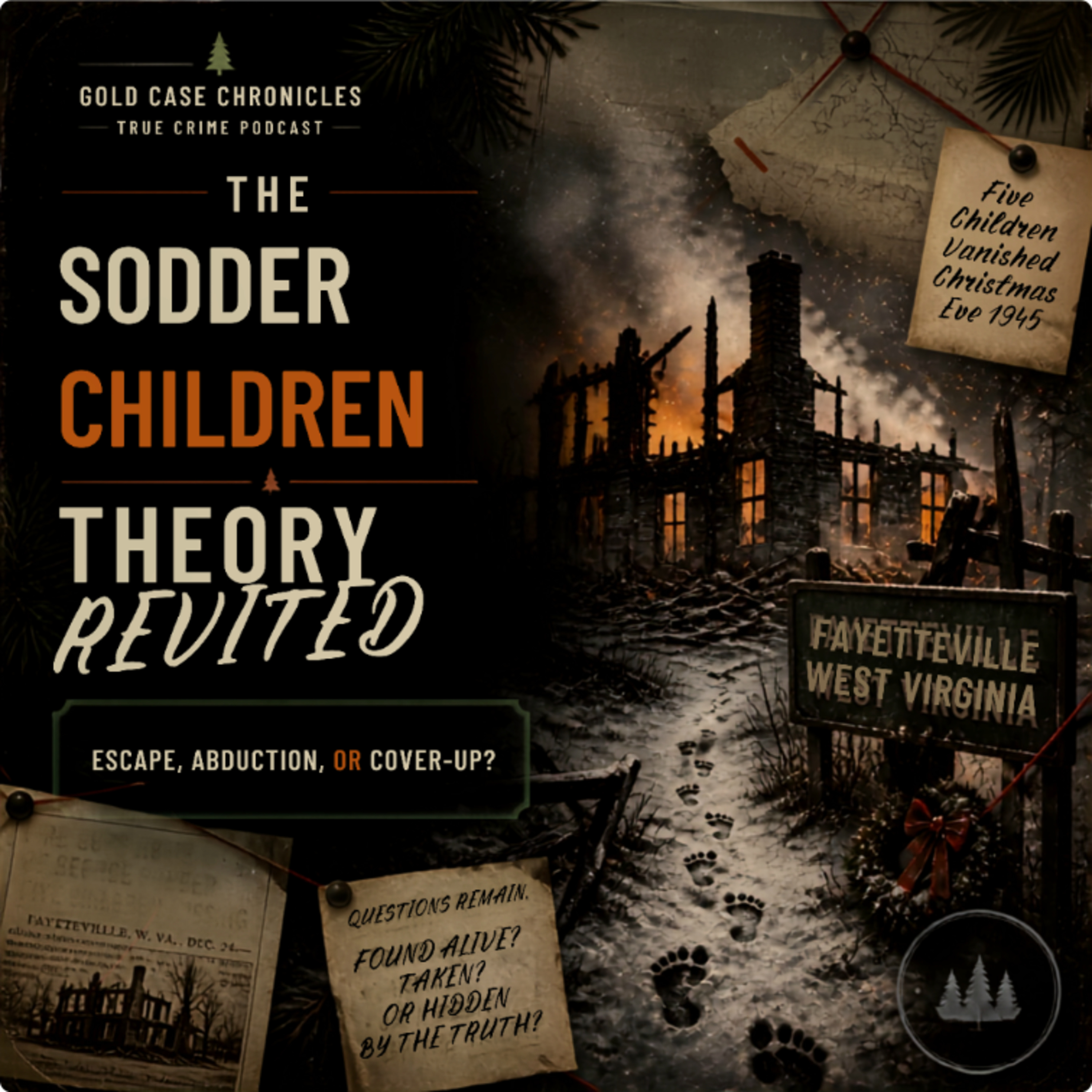
    The Sodder Children Theory Revisited: Escape, Abduction, or Cover-Up? (E204)

    On Christmas Eve 1945, a fire destroyed the Sodder family home in Fayetteville, West Virginia. Five children Maurice, Martha, Louis, Jennie and Betty Sodder were never seen again. The official conclusion was that the children died in the fire. But the Sodder family never accepted that explanation. What made their doubts particularly enduring was the absence of conclusively identified human remains, combined with a series of strange events surrounding the fire: a missing ladder, telephone problems, reported threats, alleged sightings, and later a mysterious photograph that appeared to show one of the missing children. Decades later, the case remains caught between two competing possibilities. Did five children perish in a devastating house fire? Or was the fire deliberately started to conceal an abduction? In this episode, we revisit the evidence not simply the theories and ask what can actually be established, what remains disputed, and whether the famous Sodder mystery is evidence of a crime or an example of how unanswered grief can transform uncertainty into a lifelong search for answers.

  • S1 · E203
    September 9 · 55 min

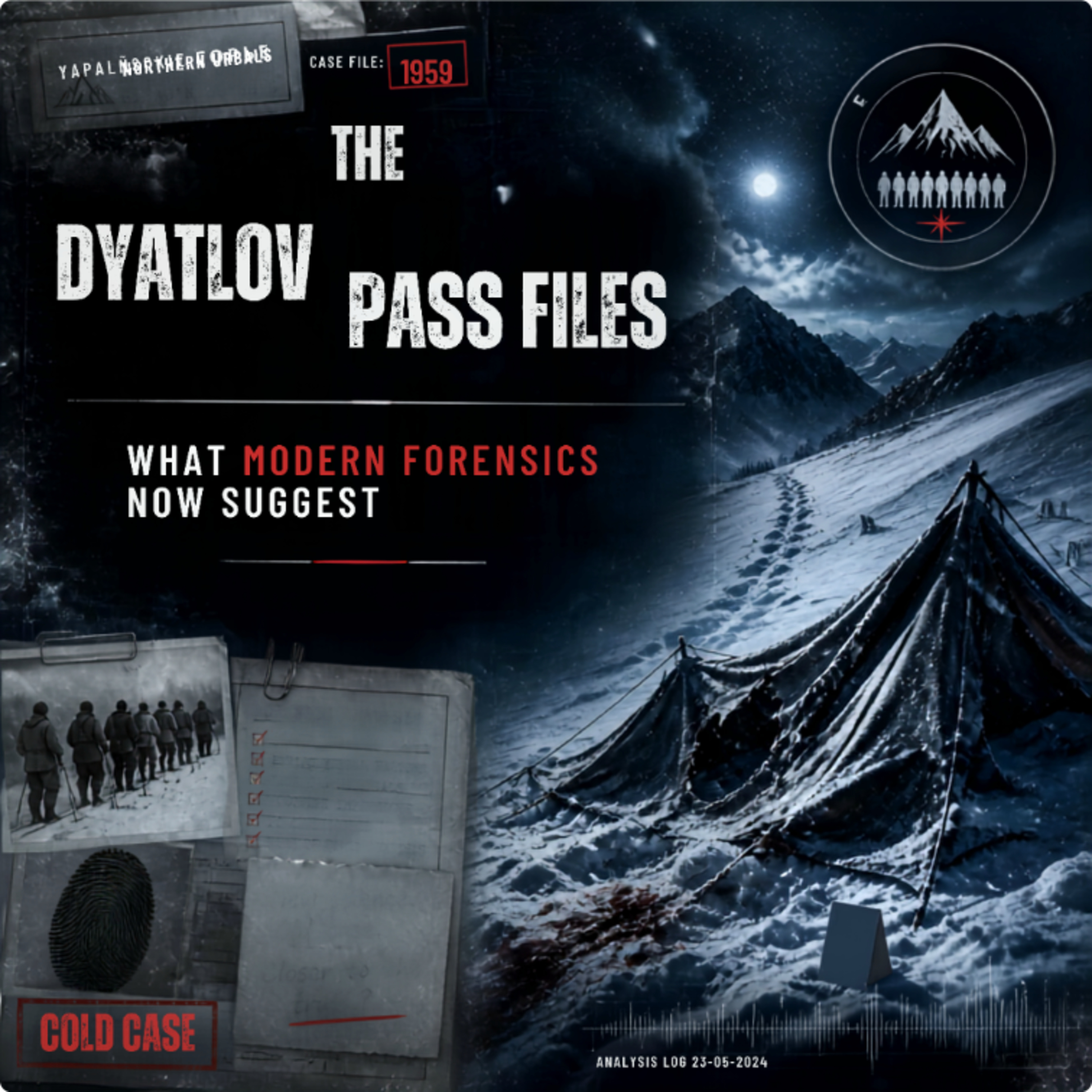
    The Dyatlov Pass Files: What Modern Forensics Now Suggest (E203)

    In February 1959, nine experienced hikers died in the remote northern Ural Mountains of the Soviet Union. Their tent was discovered abandoned on the slopes of Kholat Syakhl, with the hikers' belongings still inside. The tent had been cut open from within, and the group had apparently fled into the freezing darkness without adequate clothing. What followed became one of the most enduring mysteries of the twentieth century. For decades, theories have ranged from avalanches and katabatic winds to military testing, secret weapons, infrasound, and even the supernatural. But what happens when we put the mythology aside and examine the physical evidence using modern forensic understanding? In this episode, we revisit the Dyatlov Pass incident through the lens of avalanche science, trauma analysis, weather conditions, search evidence, and modern reconstruction studies. We explore what the evidence can actually tell us and where uncertainty still remains.

  • S1 · E202
    September 7 · 47 min

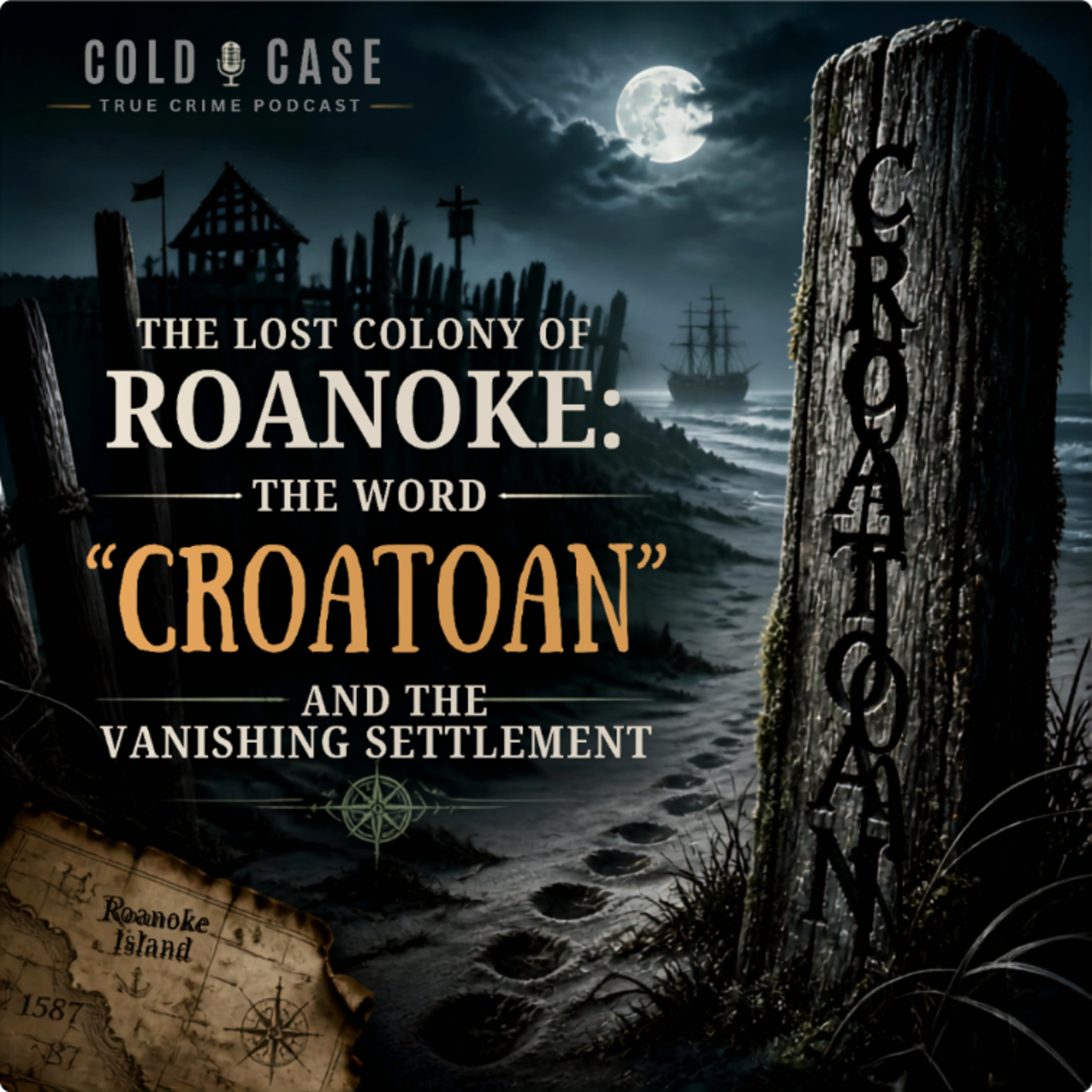
    The Lost Colony of Roanoke: The Word “Croatoan” and the Vanishing Settlement (E202)

    In the late sixteenth century, an English settlement was established on Roanoke Island, off the coast of what is now North Carolina. Then, seemingly overnight, its inhabitants disappeared. When Governor John White returned in 1590 after being forced away for several years, he found the settlement abandoned. There were no bodies, no obvious signs of battle, and almost none of the clues he expected. There was, however, one word. “Croatoan.” Carved into a post, it became the most famous clue in one of history's greatest mysteries. Did the colonists join a nearby Indigenous community? Were they forced to relocate? Did disease, famine, conflict, or the harsh environment destroy the settlement? Or has the mystery survived partly because later generations turned an incomplete historical record into something far more mysterious? In this episode, we examine what is actually known about the Lost Colony of Roanoke, what the word “Croatoan” may have meant, and why the fate of the colonists remains uncertain more than four centuries later.

  • S1 · E201
    September 4 · 36 min

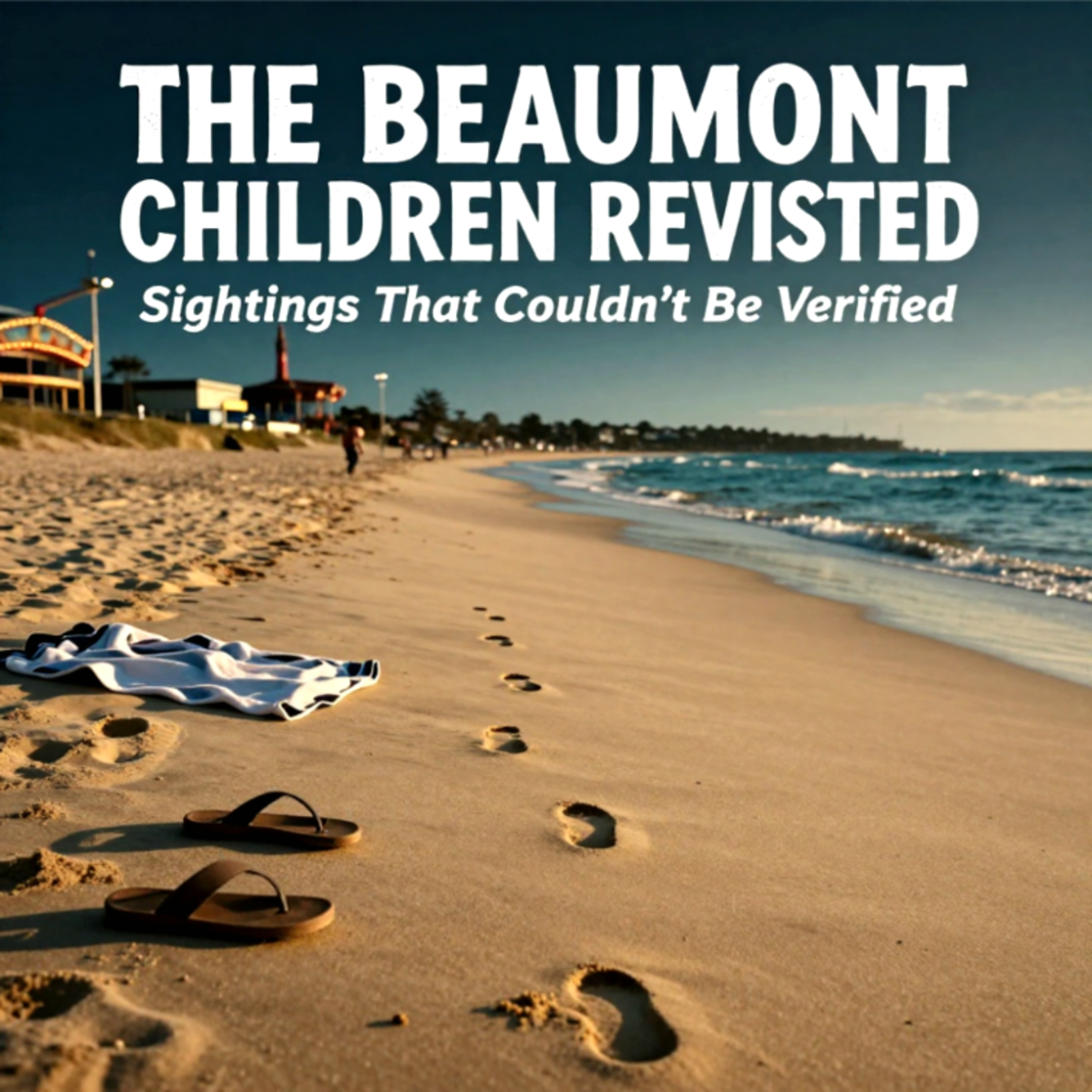
    The Beaumont Children Revisited: Sightings That Couldn’t Be Verified (E201)

    On Australia Day, 1966, three siblings Jane Beaumont, Arnna Beaumont, and Grant Beaumont vanished from Glenelg Beach in Adelaide without a trace. What followed was one of Australia’s most extensive missing persons investigations, spanning decades, borders, and countless alleged sightings. From crowded shopping centres to distant rural towns, witnesses came forward claiming they had seen the children. Some accounts were detailed, others vague, and many ultimately unverifiable. Yet each one briefly reignited hope that the case might finally be solved. Despite enormous public attention and investigative effort, no confirmed evidence has ever established what happened to the Beaumont children or who may have been responsible. In this episode, we revisit the most significant sightings, examine the investigative response, and explore how hope, memory, and uncertainty became inseparable in one of Australia’s most enduring mysteries.

  • S1 · E200
    September 2 · 46 min

    The Oakland County Child Killer: The Murders That Stopped a State (E200)

    Between 1976 and 1977, four children vanished from the suburbs of Detroit, Michigan. Days later, each was found murdered under circumstances that deeply unsettled investigators. The victims had not simply been abandoned. Evidence suggested they had been fed, bathed, cared for, and dressed in clean clothing before being left where they would eventually be discovered. The unknown offender became known as the Oakland County Child Killer, triggering one of the largest criminal investigations in Michigan history and forever changing how parents viewed childhood independence. Over the decades, multiple suspects have emerged, investigative task forces have reopened the files, and theories have evolved but no one has ever been convicted. In this milestone 200th episode of Threads of Truth, we examine the evidence, the behavioural patterns, the major suspects, and the unanswered questions surrounding one of America's most disturbing unsolved serial murder cases.

  • S1 · E199
    August 31 · 46 min

    Jill Dando: The Unsolved British Broad Daylight Presenter Assassination Mystery (E199)

    On the morning of 26 April 1999, Jill Dando arrived at her home in Fulham, London, carrying shopping bags and preparing for an ordinary day. Moments later, she was shot once in the head at point-blank range. The murder of one of Britain's most recognizable television presenters stunned the nation and launched one of the largest homicide investigations in the history of the Metropolitan Police Service. Years later, local man Barry George was convicted, only to have his conviction overturned after new scrutiny of the forensic evidence. More than twenty-five years later, no one has been held legally responsible. Was this a random attack, a targeted assassination, or a case forever shaped by investigative missteps? In this episode, we examine the evidence, the conviction, the acquittal, and the enduring mystery surrounding one of Britain's most shocking unsolved murders.

  • S1 · E198
    August 28 · 43 min

    Sophie Toscan du Plantier: The 1996 West Cork Remote Holiday Home Unsolved Murder Mystery (E198)

    Just days before Christmas in 1996, Sophie Toscan du Plantier arrived at her secluded holiday home near Toormore in West Cork, Ireland, expecting a peaceful winter retreat. Instead, she became the victim of one of Ireland's most enduring unsolved murders. The investigation crossed international borders, generated multiple documentaries and podcasts, and eventually led to the conviction of journalist Ian Bailey in a French court despite the fact that he was never tried or convicted in Ireland and consistently denied involvement until his death in 2024. How can one man be legally guilty in one country but never convicted in the country where the crime occurred? What evidence convinced some investigators while leaving others unconvinced? In this episode, we examine the forensic evidence, the competing investigations, the legal controversy, and the mystery that continues to divide Ireland, France, and true crime audiences around the world.

  • S1 · E197
    August 26 · 25 min

    Jeremy Bamber: The White House Farm Murders Forensic Evidence and Conviction Investigation (E197)

    On 7 August 1985, police arrived at White House Farm in Essex expecting to find the aftermath of a tragic murder-suicide. Instead, the investigation would evolve into one of Britain's most debated criminal cases. Five members of the same family were dead, including Sheila Caffell, her twin sons, and her adoptive parents, Neville Bamber and June Bamber. Within weeks, suspicion shifted to Jeremy Bamber, who would later be convicted of all five murders. But decades later, questions continue to surround the forensic evidence, witness testimony, police procedures, and multiple appeals. Supporters argue that critical evidence was mishandled, while prosecutors maintain the conviction is both safe and supported by overwhelming proof. In this episode, we examine the forensic case, the competing interpretations, and why the White House Farm murders remain one of the United Kingdom's most controversial convictions.

  • S1 · E196
    August 24 · 52 min

    The Hinterkaifeck Revisited: Footprints in the Snow and the Strange Diary Entries (E196)

    A week before one of Germany's most infamous unsolved murders, something strange happened at the isolated Hinterkaifeck farm. Fresh footprints appeared in the snow leading toward the farmhouse but none led away. The family reported hearing unexplained footsteps in the attic. A set of house keys disappeared. Newspapers that no one recognized appeared inside the home. Yet daily life continued. Days later, all six occupants of the farm were brutally murdered, and evidence suggested the killer remained on the property after the crime. Were these unsettling events unrelated coincidences, or were they warning signs that someone had already been secretly living among them? In this episode, we revisit the eerie days leading up to the Hinterkaifeck murders, separating documented facts from decades of folklore while exploring why the pre-crime clues remain one of the most chilling aspects of this century-old mystery.

  • S1 · E195
    August 21 · 37 min

    Madeleine Beth McCann: The Suspects and the Silence (E195)

    Since Madeleine McCann disappeared from a holiday apartment in Praia da Luz on 3 May 2007, investigators have examined dozens of persons of interest, conducted multiple international investigations, and pursued countless leads. Some suspects were publicly named and later cleared. Others remained under scrutiny for years. More recently, German investigators identified Christian Brückner as their primary suspect, reigniting worldwide interest while leaving many questions unanswered. Why have so many theories emerged? What evidence has stood the test of time? And why, after nearly two decades, has no one been convicted? In this episode, we examine the major suspects, separate confirmed investigative facts from public speculation, and explore why silence still surrounds one of the world's most famous missing child cases.

  • S1 · E194
    August 19 · 25 min

    Paula Jean Welden Revisited: The Last Walk into the Woods (E194)

    On December 1, 1946, Paula Jean Welden, an 18-year-old student at Bennington College, left campus for what was expected to be a peaceful afternoon hike along Vermont's famous Long Trail. She was seen by several witnesses as she walked into the mountains. Then, she simply vanished. Her disappearance became one of America's earliest high-profile missing person cases, triggering an enormous search, inspiring decades of speculation, and ultimately helping lead to the creation of the Vermont State Police. Nearly eighty years later, investigators still cannot answer the simplest question: what happened after Paula disappeared around the next bend in the trail? In this episode, we revisit the timeline, re-examine the evidence with modern investigative thinking, and explore why Paula Jean Welden's final walk continues to haunt both investigators and hikers alike.

  • S1 · E193
    August 17 · 42 min

    The Boy in the Box: The Child No One Claimed (E193)

    In February 1957, a discarded suitcase was discovered in a wooded area of northeastern Philadelphia. Inside was the body of a young boy, estimated to be between four and six years old. Despite one of the largest identification efforts in American history, no one came forward to claim him. For more than six decades, he became known simply as the Boy in the Box a heartbreaking symbol of every unidentified child whose story had been lost. Then, in 2022, advances in genetic genealogy finally restored his identity. But while science answered one question, many others remain. Who was responsible for his death? Why did no one report him missing? And how could a child disappear without anyone seeming to notice?

  • S1 · E192
    August 14 · 33 min

    The Texarkana Phantom Killer: The Pattern That Defined Fear (E192)

    In the spring of 1946, the people of Texarkana weren't just afraid of a killer they were afraid of a pattern. Young couples were attacked on secluded roads under the cover of darkness. The assailant struck quickly, disappeared without a trace, and seemed to understand exactly when and where his victims would be alone. The press dubbed him the Phantom Killer, and before long, fear itself became one of his greatest weapons. Nearly eighty years later, criminal profilers have revisited the attacks, asking whether the offender's choices reveal more than investigators realized at the time. Were the victims selected at random, or did the killer follow a deliberate strategy that has only become clear with hindsight?

  • S1 · E191
    August 12 · 38 min

    The Jamison Family: The Truck, the Money, and the Vanishing (E191)

    In October 2009, the Jamison family set out to inspect a remote piece of land in the Sans Bois Mountains of Oklahoma. Days later, their pickup truck was found abandoned. Inside were their wallets, mobile phones, identification, GPS, the family dog still alive and more than $30,000 in cash. But there was no sign of Bobby Dale Jamison, Sherilynn Jamison, or their six-year-old daughter, Madyson Jamison. For four years, investigators searched for answers. When the family's remains were finally discovered miles away from the truck, the mystery only deepened. What caused an entire family to leave behind everything they needed to survive?

Showing 1–20 of 30 episodes